Gaza: UN relief chief welcomes growing support for aid teams to resume vital work

We value the support of more and more Member States who are joining our call: Let us work,” Mr. Fletcher said, his comments coinciding with the announcement that the US and Israeli-backed aid hub in southern Gaza operating independently of the UN had been suspended on Wednesday.

“The world is watching, day after day, horrifying scenes of Palestinians being shot, wounded or killed in Gaza while simply trying to eat,” Mr. Fletcher said.

New Security Council resolution

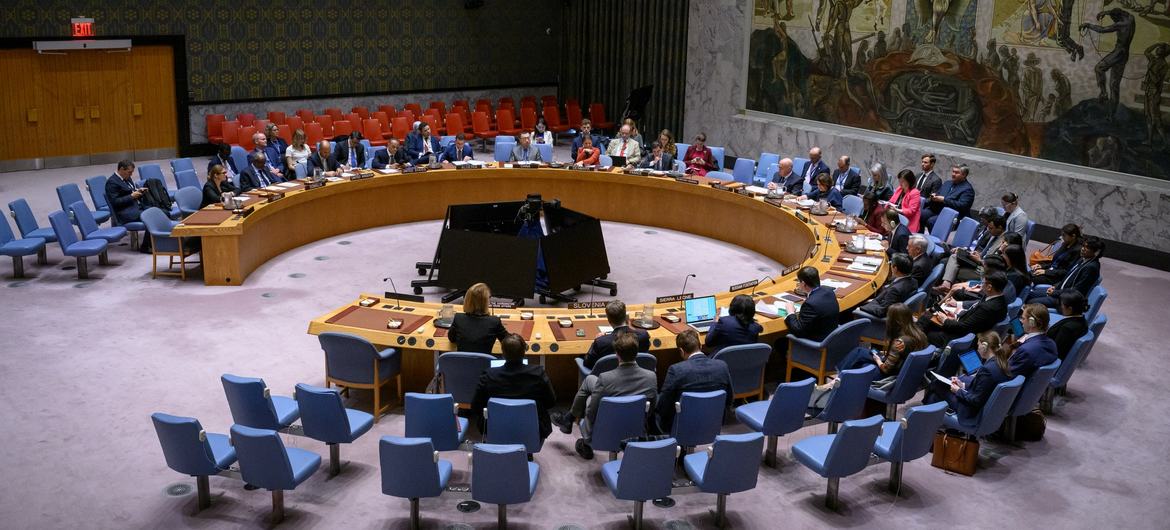
The development comes ahead of a Security Council meeting on Gaza on Wednesday seeking agreement on a draft resolution calling for an immediate ceasefire and the release of all remaining hostages taken during Hamas-led terror attacks in Israel on 7 October 2023.

The resolution push is the result of lobbying by the body’s 10 non-permanent Members. It remains to be seen if it will garner the support of the US and the four other countries that hold just five permanent seats on the 15-Member body: China, France, the UK and Russia. Any one of them could veto it.

Meanwhile in Gaza, local authorities on Wednesday claimed that at least 12 people including children had been killed in an Israeli strike on a school-turned-shelter in the southern city of Khan Younis.

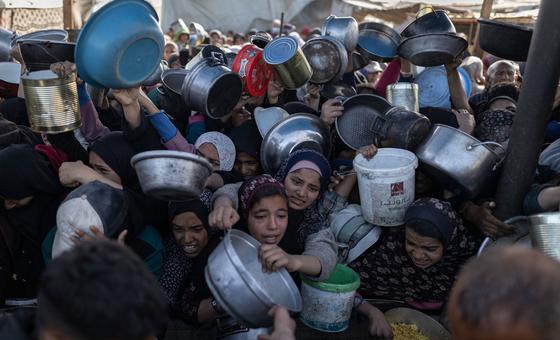
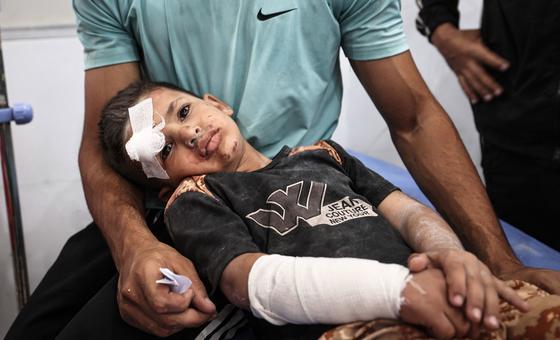
In his appeal, Mr. Fletcher noted that medical teams had confirmed treating “hundreds of trauma cases” in recent days after footage showed chaotic scenes of Palestinians rushing to take food from the US and Israeli-run aid hubs in southern Gaza.

Yesterday alone, dozens were declared dead at hospitals after Israeli forces said they had opened fire,” Mr. Fletcher continued.

He insisted: “Open the crossings – all of them. Let in lifesaving aid at scale, from all directions. Lift the restrictions on what and how much aid we can bring in. Ensure our convoys aren’t held up by delays and denials.”

Haiti: WFP concerned over humanitarian situation as hurricane season begins

With roughly half the population, 5.7 million people, facing some sort of emergency level of hunger, Haiti is one of five countries in the world with catastrophic levels of hunger.  

“Despite all the violence, displacement and collapse”, WFP remains in Haiti, Lola Castro, Regional Director in Latin America and the Caribbean, said during a briefing on Tuesday, having recently returned from the country. 

More than one million people in Haiti are displaced due to ongoing gang violence and insecurity.

As the hostilities are disrupting the food systems and supply chains in the capital Port-au-Prince, WFP is facing a “quite dramatic” situation, Ms. Castro said. 

Displaced population 

Displaced populations, notably in and around Port-au-Prince, are faced with a “very problematic” situation, she said, as hostilities have recently uprooted around 14,000 people from the commune of Kenscoff.  

“Kenscoff is a commune where people used to come and sell their food,” she said, and the same people are now relying on food assistance after their houses were burned and their livelihoods “destroyed.” 

Gender-based violence  

With 6,000 cases of gender-based violence having been reported this year, the situation of women and girls in Port-au-Prince is dramatic, according to Ms. Castro.  

The city is probably “one of the most dangerous places in the world” for women and girls. “We need to provide them support to assure that they become less vulnerable and are not exposed to all this violence,” she said.  

Dwindling aid stocks  

The 2025 Humanitarian Response Plan for Haiti calls for just over $908 million but is only eight per cent funded. Ms. Castro said WFP alone needs $46.4 million over the next six months to sustain its emergency response and address the root causes of hunger and malnutrition. 

The hurricane season began on 1 June and runs through the end of November. She warned that at this moment when half of all Haitians are already going hungry, a single storm could push millions into a humanitarian catastrophe. 

While in past years, WFP had humanitarian stocks ready in the country and could assist between a quarter to half a million people in the immediate aftermath of a disaster, “this year, we start the hurricane season with an empty warehouse,” she said.  

Unless resources are made available, the agency will have no capacity to respond—there are no contingency supplies, no logistical buffer, and no lifeline for the most vulnerable. 

“We cannot forget the people of Haiti,” Ms. Castro said, calling on the humanitarian community to provide urgent support.  

Source link

World News in Brief: Aid for Syria, children under attack in Mozambique, rights-based climate action

Despite limited resources, the UN and partners are reaching some 2.5 million people each month across the country. In May alone, more than one million people received assistance, according to the Office for the Coordination of Humanitarian Affairs (OCHA).

Cross-border aid has significantly increased this year. Since January, 1,185 humanitarian trucks have crossed from Türkiye into Syria – six times the number recorded during the same period last year. The uptick reflects growing needs and intensified delivery efforts.

Syria’s health system, however, remains under severe strain. Fewer than 60 per cent of hospitals and less than half of primary health centres are fully functional. Essential medicines are in short supply, treatment costs are beyond the reach of many families and overcrowded shelters continue to heighten the risk of disease outbreaks.

Meanwhile, explosive remnants of war and unexploded ordnance pose a deadly and ongoing threat to civilians. Since 8 December, 2024, more than 1,000 casualties have been reported – over 400 of them fatal and nearly 600 resulting in injuries – children accounting for over a third of the victims.

“The humanitarian community is calling for urgent support to expand risk education, professional clearance operations and assistance for survivors,” UN Spokesperson Stéphane Dujarric told journalists at the regular news briefing in New York.

Funding shortfalls are compounding the crisis. The Syria Humanitarian Response Plan requires $2 billion by the end of June to support 8 million of the most vulnerable people. To date, it has received just $236 million – less than 12 per cent of the total needed.

Northern Mozambique has been mired in what has been described as a “triple crisis” – violence and insecurity, climate shocks, and post-electoral unrest. (file photo)

Children targeted by armed groups in northern Mozambique

Children also continue to bear the brunt of a worsening crisis in Mozambique, where over 1.3 million people have been displaced by violence, extreme weather shocks and post-electoral unrest.

These crises have also left 5.2 million in urgent need of humanitarian assistance.

The situation is particularly dire in the northern Cabo Delgado province, which has witnessed a spike in reports of abduction, forced recruitment and use of children by non-state armed groups.

According to the UN Children’s Fund (UNICEF), at least three girls aged 12, 14 and 17 were killed in an attack last month, and eight other children abducted – highlighting the grave risks facing children in the conflict.

The agency expressed deep concern over such gross violations of children’s rights, stressing that “every child has the right to live in safety, free from violence and fear.”

UNICEF is working with partner agencies to assist impacted children and their families, support the safe return and reintegration of children abducted by non-state armed groups, and provide access to vital services such as health, protection, and education.

UN rights chief calls for bold climate action grounded in human rights

The UN’s top rights official warned on Tuesday that humanity’s survival is inseparable from the health of the planet.

Speaking at Oxford University, Volker Türk highlighted the need for a new kind of politics to tackle the climate crisis and rising global inequality, urging strong leadership to push for urgent, just and rights-based solutions.

“Not only have we created a false separation from nature, we are deluded enough to believe we can make nature bend to our will,” Mr. Türk said, criticizing the continued exploitation of fragile ecosystems.

The High Commissioner linked environmental degradation with systemic injustice, stating that the world’s richest one per cent are responsible for more carbon emissions than the poorest two-thirds. He stressed that those least responsible for the climate crisis are often the ones suffering its worst impacts.

He also expressed concern over the lack of adequate climate finance and called for reforms to international financial systems, noting growing support for a proposed fossil fuel non-proliferation treaty that would aim to end the expansion of new oil, coal and gas projects.

“Our rights call for all people, now and in the future, to live in safety, security and opportunity, on a healthy planet,” he said.

Mr. Türk concluded by urging governments, institutions and individuals to join a global movement for change, grounded in human rights, to address the climate emergency and build a more sustainable and equitable future.

Source link

Five humanitarians killed in ‘horrendous’ attack on aid convoy in Sudan

The World Food Programme (WFP) and the United Nations Children’s Fund (UNICEF) condemned the attack on the joint humanitarian convoy and reminded the international community that under humanitarian law, aid must be able to move securely.  

“Aid convoys must be protected and parties have the obligation to allow and facilitate rapid and unimpeded passage of humanitarian relief for civilians in need,” the two agencies said in a joint press release.

UN Spokesperson Stéphane Dujarric reiterated this sentiment, saying that the United Nations condemns this “horrendous attack in the strongest possible terms.”  

‘Devastating’ attack  

According to WFP and UNICEF, the aid convoy had travelled over 1,800 kilometres from Port Sudan, which has itself endured ongoing drone strikes.  

The 15 trucks were carrying vital nutritional supplies to North Darfur, a region in which hundreds of thousands of internally displaced people are at high risk of malnutrition and starvation. 

The agencies noted that all parties on the ground had been notified about the convoy and its movements. 

“They were 80 kilometres from El Fasher, parked on the side of the road, waiting for clearance, and they were attacked,” said Mr. Dujarric. 

This would have been the first convoy to reach El Fasher in over a year. In April, the city and the nearby Zamzam displacement camp were attacked, displacing hundreds of thousands, many of whom had already been displaced.  

The attack on the convoy comes amidst a two-year conflict which has ravaged Sudan, displacing over nine million people. Famine has been declared in multiple places, including in El Fasher, and many more regions remain at risk.   

Broader attacks on aid 

The attack on the convoy comes amidst other attacks on humanitarian operations and civilians and civilian infrastructure in Sudan.  

Last week, the WFP premises in El Fasher were bombed and damaged and an international hospital in Al Obeid also experienced a deadly drone strike. 

Civilian infrastructure around the country continues to be targeted, including electricity infrastructure in Khartoum. The damage of this infrastructure in the capital has worsened an already spreading cholera outbreak in the city.   

WFP and UNICEF reiterated that attacks on humanitarian activities and personnel are unacceptable and must stop immediately.  

“Attacks on humanitarian staff, aid, operations as well as civilians and civilian infrastructure in Sudan have continued for far too long with impunity,” they said.  

Source link

As displacement surges in South Sudan, regional humanitarian crisis deepens

Violence between armed groups in Upper Nile state and other flashpoints has crippled essential services, triggered food insecurity and worsened disease outbreaks, including cholera – forcing some to be displaced repeatedly.

Roughly 65,000 have been internally displaced in Upper Nile state alone. 

Access to aid in conflict hotspots is limited, with fighting and movement restrictions cutting off assistance.

Lifesaving supplies, including medicine and healthcare to curb rising cholera cases, have halted, while rains threaten to worsen the crisis, flooding roads and driving up transport costs.

South Sudan has also absorbed over a million people fleeing conflict in Sudan.

Regional crisis

Another 103,000 South Sudanese have sought refuge in neighbouring countries, pushing the total number of South Sudanese refugees to 2.3 million.

“This emergency could not have come at a worse time,” said Mamadou Dian Balde, UNHCR’s Regional Director for the East, Horn of Africa and Great Lakes region.

“Many of the refugees are seeking safety in countries which have challenges of their own or are already dealing with emergencies amidst ongoing brutal funding cuts, straining our ability to provide even basic life-saving assistance.”

Despite the conflict in Sudan, 41,000 South Sudanese have sought refuge there – 26,000 in White Nile state, where over 410,000 South Sudanese already live, many repeatedly displaced due to ongoing violence in their host country.

The surge in arrivals in Sudan has created an urgent need for additional space, while essential services are overwhelmed due to cholera outbreaks and ongoing security challenges.

In the Democratic Republic of the Congo (DRC), 23,000 have arrived amid the country’s own insecurity.

Some 21,000 South Sudanese have sought refuge in Ethiopia. Previously living in makeshift shelters along riverbanks near the border, new arrivals are now receiving UNHCR aid further from the border; however, infrastructure and services in the area remain severely overstretched, worsened by a cholera outbreak.

Uganda, which hosts one million South Sudanese refugees, has taken in 18,000 since March – a 135 per cent year-on-year increase. Nearly 70 per cent are children; many forced to take longer and more hazardous routes to safety.

Call for support

UNHCR is providing refugees with critical relief items, documentation and specialised support to survivors of gender-based violence. 

But to provide necessary support for the next six months – including shelter, water, health and nutrition screening, as well as cash assistance – the agency requires $36 million. 

Calling for an immediate end to hostilities, UNHCR urged all parties to spare civilians further suffering. 

Unrest in Warrap state

In related developments, the UN Mission in South Sudan (UNMISS) voiced deep concern over escalating intercommunal violence in Tonj East county, Warrap state, urging the Government to intervene and deploy security services to address the situation. 

The violence has been driven by attempts to recover stolen cattle and revenge for the previous loss of lives, resulting in more than 80 casualties, although the numbers are yet to be verified. 

UNMISS is intensively engaging with state and local authorities to calm the situation, in addition to increasing patrols, however peacekeepers are experiencing significant challenges reaching some of the impacted areas due to a proliferation of checkpoints manned by armed youth.

Source link

Sudan: Rise in people fleeing to Chad as violence surges

Overall, some 1.2 million Sudanese have found shelter in eastern Chad, mostly after fleeing intensifying violence in their country. 

More than 844,000 crossed the border after war broke out in Sudan in April 2023. Prior to this, Chad was hosting roughly 409,000 Sudanese refugees who had fled earlier conflict in Darfur.

‘A crisis of humanity’

The situation is “a crisis of humanity”, said UNHCR’s Principal Situation Coordinator in Chad, Dossou Patrice Ahouansou.

The latest wave of displacement began in April following attacks by armed groups in North Darfur. Violence has surged since war erupted in Sudan in April 2023 between the Sudanese Armed Forces (SAF) and the paramilitary Rapid Support Forces (RSF).

Camps for people uprooted by the most recent violence have been attacked including Zamzam and Abu Shouk, along with the town of El Fasher, killing more than 300 civilians. 

Last Thursday, the UN World Food Programme’s facility in El Fasher was repeatedly shelled, according to a report from UN aid coordination office OCHA.

A day later, Eldaman International Hospital in Al Obeid was struck by a drone attack, killing at least six health workers and injuring more than 15 others.

Both attacks were reportedly carried out by the RSF.

Exodus and arrival

In just over a month, 68,556 refugees have crossed into Chad’s Wadi Fira and Ennedi Est provinces, at an average of 1,400 new arrivals per day.

More than seven in 10 “report serious human rights violations — physical and sexual violence, arbitrary detention, forced recruitment”, said Mr. Ahouansou.

Based on interviews with 6,810 newly arrived refugees, he said that six out of 10 reported being separated from their family members.

Horrendous testimonies

Mr. Ahouansou spoke of seven-year-old Hawa, whose family home in Zamzam was bombed. After her mother was killed, she fled to the Zamzam camp for internally displaced people. 

“There again had been bombing” and this time it killed Hawa’s father and two brothers, he said. 

With only her 18-year-old sister remaining, Hawa escaped to Chad. She was severely injured and had to have a leg amputated.

“It’s difficult to hear, but this is the reality,” said Mr. Ahouansou, emphasizing that there were thousands facing similar situations.

The UNHCR official also recounted chilling testimonies of forced labour along the perilous journeys, where many reportedly die because of the heat and lack of water.

“When armed groups see you leaving, they decide to let the donkey or the horse go. And you, as a human being, as a man… they will use you as a horse and ask you now to draw all your family members,” he said.

Funding shortfalls

Despite efforts by humanitarian actors and local authorities, the emergency response remains severely underfunded.

Just 14 per cent of shelter needs have been met and refugees receive only five litres of water per person per day — far below the 15–20 litre international standard. Around 239,000 refugees remain stranded at the border.

“The lives and futures of millions of innocent civilians hang in the balance,” said UNHCR spokesperson Eujin Byun, who stressed that this was also a “crisis of women and children” as they make up to nine out of 10 refugees crossing the border.

“Without a significant increase in funding, life-saving assistance cannot be delivered at the scale and at the speed that is required,” Mr. Ahouansou said. 

Source link

Five countries elected to serve on UN Security Council

They will serve through the end of 2027 on the UN body responsible for maintaining international peace and security.

They will join the five non-permanent members elected last year – Denmark, Greece, Pakistan, Panama, and Somalia – who will serve through 2026.

The Security Council has 15 members: five permanent members – China, France, Russia, the United Kingdom, and the United States – who hold veto power, and ten non-permanent members elected by the General Assembly for staggered two-year terms.

Elections are held annually by secret ballot, with seats allocated by regional group. Candidates must secure a two-thirds majority in the 193-member General Assembly to be elected.

More to follow…

Source link

Gaza: UN rights chief condemns new killings around private aid hub

Attacks directed against civilians constitute a grave breach of international law and a war crime,” the High Commissioner said in a statement, issued after Palestinians were reportedly killed seeking assistance for a third day running.

Mr. Türk also urged Israel to respect “binding orders” issued by the International Court of Justice to fully cooperate with the UN and ensure that aid reaches the people of Gaza “without delay” and “at scale”.

“There is no justification for failing to comply with these obligations,” he said.

Access calls denied

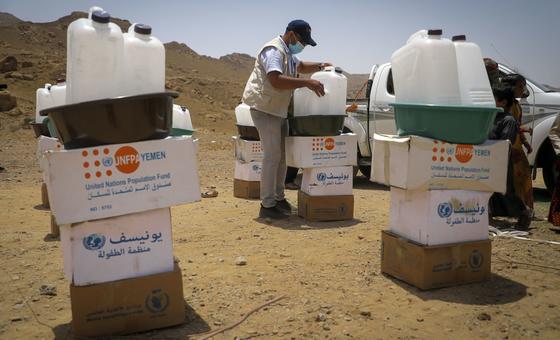
The controversial new aid initiative run by the Gaza Humanitarian Foundation bypasses the work of UN aid agencies which have repeatedly appealed for unimpeded access to Gaza in order to bring in thousands of tonnes of supplies. To date, the little aid that has been allowed into the enclave has fallen far short of what is needed.

In an update, the UN World Health Organization (WHO) insisted that it still had “teams on the ground” in Gaza ready to distribute supplies where they are needed across the war-torn enclave, if only they could be allowed to move.

“We have right now 51 trucks waiting loaded with medical supplies to go to those few hospitals that are still functional,” said WHO spokesperson Tarik Jasarevic. “We need access so that we can bring in supplies within Gaza to health facilities so they can function. Unfortunately, what is happening is just the opposite. There is no hospital in north Gaza functional anymore.”

On Monday, Mr. Jasarevic said that a WHO team went to the Indonesian Hospital in northern Gaza “and basically evacuated all remaining patients and medical staff…now that hospital is completely empty”. In Jabalia, also in northern Gaza, three Israeli soldiers were reportedly killed on Monday when their vehicle struck an explosive device.

Most vulnerable miss out

Critics of the US-Israeli scheme – which include the UN – have warned that it prevents children, the elderly and those with disabilities from receiving aid, since recipients often have to walk long distances to retrieve boxes of supplies distributed on a first-come, first-serve basis.

“The wilful impediment of access to food and other life-sustaining relief supplies for civilians may constitute a war crime,” Mr. Türk said.

His lengthy statement also condemned “the threat of starvation” faced by Gazans today, the “20 months of killing of civilians and destruction on a massive scale”.

Gazans have also been repeatedly displaced by evacuation orders from the Israeli military and faced “intolerable, dehumanizing rhetoric and threats by Israel’s leadership to empty the Strip”, the UN rights chief noted. All of these facts constitute elements of the most serious crimes under international law, he insisted.

‘Am I going to get shot?’

Jeremy Laurence, spokesperson for the UN human rights office, OHCHR, highlighted the High Commissioner’s call for a prompt, independent investigation into the dozens of reported killings in Gaza since the new aid hub opened on 27 May.

“I think there’s so much which has happened in the past three days apart from the tragic circumstances of human beings trying to gather food to survive and then being killed in the process,” he told journalists in Geneva. “[Gazans] are being forced to walk to these centres and now they’re terrified. Probably they go there and they’re thinking, ‘Am I going to get food or am I going to get shot?’”

Mr. Laurence noted multiple media reports on killings around the southern Gaza aid hub in recent days indicating engagement by helicopters, naval vessels, tanks and ground troops.

“We are aware of those reports,” he said, noting that the Israel Defense Forces (IDF) had also published an account on X of what had happened on Tuesday.

“My colleagues who are working on the ground have conducted interviews with witnesses and they do report fire from the IDF on those trying to access the food distribution centres. We’ve received reports from other organizations on the ground to a similar effect.”

He added: “We’ve gathered our own information; we’ve spoken to witnesses on the ground who have shared what they have seen, heard and felt themselves.”

Asked to explain what the High Commissioner meant when he expressed concerns that the “most serious crimes under international law” may have been committed, Mr. Laurence explained that this referred to war crimes, crimes against humanity and genocide.
Source link

World News in Brief: Guterres condemns antisemitic attacks, ILO to debate pros and cons of working online, Sudan, Ukraine updates

A man was arrested in Boulder after reportedly using a flamethrower and Molotov cocktails to set people on fire at an event in support of Israeli hostages in Gaza on Sunday.

The suspect reportedly yelled “Free Palestine” during the attack and now faces federal hate crime charges along with multiple felonies.

The attack injured at least eight people, ranging in age from 52 to 88. The injuries have been described by local police as ranging from minor to “very serious”.

Holocaust memorial targeted

In a further antisemitic act in Paris, vandals targeted the Shoah Memorial, three synagogues and the Jewish restaurant Chez Marianne on Saturday morning, according to news reports.

Photos show green paint splashed on the Le Mur Des Justes wall, which lists names of French men and women who helped Jews during the World War II.

No suspects have been arrested so far and no group has claimed responsibility, news reports noted.

UN Spokesperson Stéphane Dujarric told correspondents at the Noon Briefing in New York that “The Secretary-General condemns these acts.”

“The United Nations firmly stands against all forms of antisemitism, as well as all other manifestations of extremism and any incitement to religious hatred and violence, and he calls for swift action to hold those responsible accountable,” 
Mr. Dujarric said.

UN labour agency sheds light on potential risks of online work

Governments, employers, and workers from the 187 UN ILO Member States are currently meeting in Geneva for the International Labour Organization’s annual conference.

The potential pitfalls of online platforms will be one key area for debate, as countries mull reforms to protect workers and promote development.

Digital platforms have grown rapidly in recent decades in line with the gig economy, boosting online education, tourism and transport, for example.

Lack of protections

But although businesses that use digital platforms offer flexibility for workers, there’s concern that they don’t offer enough social protection or decent conditions.

According to senior ILO official Angelika Muller many online workers lack protections as part of the informal economy.

As such, many face poor working conditions while many employers turn to  algorithms to evaluate worker performance.

Member States are also expected to agree on new ways to help countries transition from the informal to the formal economy and address the issue of health dangers from exposure to biological hazards at work.

Attacks on Sudanese civilians continue

On May 29, the World Food Programme’s facility in Al Fasher was repeatedly shelled, resulting in extensive damage, according to a report on Monday from UN aid coordination office, OCHA.

The next day, Eldaman International Hospital in Al Obeid was struck by a drone attack, killing at least six health workers and injuring more than 15 others.

Both attacks were reportedly carried out by the Rapid Support Forces (RSF) militia which has been fighting the Sudanese Armed Forces (SAF) for control of the country since April 2023.

Acting Resident and Humanitarian Coordinator for Sudan, Kristine Hambrouck, released a statement on Sunday calling the attacks a “blatant violation of international humanitarian law,” calling on all sides to protect civilian lives.

UN relief chief Tom Fletcher, also expressed concern over these attacks in a social media post Monday: “These attacks must stop.”

Continued cholera threats

Meanwhile, in Khartoum state, strikes on electricity infrastructure have aggravated water shortages, forcing many residents to rely on unsafe water sources and endangering over one million children with waterborne diseases, as cholera continues to spread across Sudan.

Thanks to the efforts of health workers and community volunteers, daily cholera cases in the capital region have fallen compared to previous weeks.

There have been more than 16,500 cases and over 340 reported deaths in Khartoum since the outbreak began.

Dozens of cases are also emerging in the South Darfur state, prompting officials to declare a health emergency and appeal for urgent support to contain the outbreak.

With UN support, local health authorities have established treatment centers and initiated surveillance and community health efforts. 

is urging the international community to act now to ensure that aid reaches those most in need, to halt the spread of cholera, and to protect the millions of civilians at risk.

Recent attacks on Ukrainian civilians 

The UN on Monday reported that attacks in Ukraine over the weekend and Monday left more than 20 civilians dead, including one child, and injured over 100 others.

Civilian infrastructure – including homes, medical and educational facilities and power and gas lines – was also affected.

Notably, the attacks occurred just hours before Ukrainian and Russian delegations met for a second round of preliminary peace talks in Türkiye on Monday.

Humanitarian response

Humanitarian organizations are providing critical support to affected families, including emergency repair materials, legal and psychological assistance, and evacuations from areas where heavy fighting is continuing.

On 30 May, an inter-agency convoy delivered essential aid – including solar lamps, charging stations, kitchen sets, diapers, food, hygiene items and first aid kits – to over 700 residents in the frontline Mylivska community of Kherson.

Source link

UN calls for ‘immediate and unconditional’ release of aid workers arbitrarily detained in Yemen

In a statement on Monday, António Guterres strongly condemned the death in detention of a World Food Programme (WFP) staff member earlier this year.

The Houthis have yet to provide “an explanation for this deplorable tragedy,” António Guterres said, renewing his call for “an immediate, transparent and thorough investigation and accountability.”

Profound injustice

“The UN and its humanitarian partners should never be targeted, arrested or detained while carrying out their mandates for the benefit of the people they serve,” said the UN chief.

These detentions have further constrained the UN’s ability to operate effectively in Yemen and have “undermined mediation efforts to secure a path toward peace,” he added.

These detentions have further constrained the UN’s ability to operate effectively in Yemen and have “undermined mediation efforts to secure a path toward peace,” he added.

Safe and immediate release

Making the occasion of Eid Al-Adha this Friday, “a time to show compassion,” the Secretary-General urged the Houthis to “immediately release those arbitrarily detained” and “end the ordeal of families who face celebrating yet another holiday without their loved ones.”

“I renew my call for their immediate and unconditional release, including those held since 2021 and 2023, and most recently this January,” Mr. Guterres said.

“You are not forgotten,” he added, addressing the detained aid workers, assuring them that the UN will continue to work through all possible channels to secure their safe and immediate release.

He also welcomed the support of international partners, NGOs and all those working to support the people of Yemen, urging Member States to express solidarity with those detained and “intensify advocacy towards their release.” 

Source link

Deadly flooding in Nigeria displaces thousands

Nigerian officials estimate that over 500 people are still missing and presumed dead, according to news reports.

Deputy Secretary-General Amina Mohammed, a former Nigerian Government minister, said she was heartbroken at the extent of the loss and damage.

“My deepest condolences to all those affected – especially the families who have lost loved ones. My prayers are with you,” she said.

UN relief operation 

United Nations agencies and partners are working alongside the Nigerian Government to provide essential humanitarian aid to individuals and households in Niger State who have been affected.

Beginning 29 May, heavy rains in the Local Government Area of Mokwa – known as a trading hub – prompted flash flooding which flattened entire neighbourhoods.

Hundreds were killed, thousands displaced and key roads and bridges were damaged, disrupting movement and economic activity.

Nigeria’s rainy season extends from April-October, making it particularly prone to flooding, which has become more severe in recent years.

Climate change factor

In 2024, a flood in September killed 230 people in Borno state in eastern Nigeria and displaced over 600,000 people. In 2022, severe flooding across the country impacted 34 out of the 36 states, killed hundreds and displaced more than 1.3 million.

A recent report from the UN weather agency (WMO) said the worsening severity is related to climate change and increasing surface and water temperatures, all of which is taking a high toll throughout the African continent.

Agencies on the ground

According to UN Spokesperson Stéphane Dujarric Nigerian authorities are leading recovery efforts and UN agencies and partners are providing supplementary assistance.

The World Health Organization (WHO) is preparing to ship medicine and medical equipment to supplement and support existing primary care systems.

For their part, the International Organization for Migration (IOM) is providing materials for temporary shelter and other non-essential food items.

The UN reproductive health agency (UNFPA) is working to establish temporary clinics and safe spaces for women and girls displaced by the flooding. In these spaces, women can access maternal and reproductive health services, dignity kits and psychosocial assistance. UNFPA is also working to deploy midwives and nurses.

Mohammed M. Malik Fall, resident and humanitarian coordinator in Nigeria, commended Government efforts to respond to the humanitarian situation in Mokwa and said that the UN “stands ready to support the response.”

Germany’s Annalena Baerbock elected President of the 80th General Assembly

She assumes the role at a challenging time, with ongoing conflicts, faltering development goals, mounting financial pressures, and the upcoming selection of the next Secretary-General.

Ms. Baerbock received 167 votes following the secret ballot. Write-in candidate Helga Schmid (also from Germany) received seven. Fourteen delegations abstained.

She becomes the first woman from the Western European group to hold the post and the fifth woman overall to lead the General Assembly. The presidency rotates among the world body’s five regional groups.

At 44 years, Ms. Baerbock is also one of the youngest leaders to secure the top job.

Crucial juncture

Ms. Baerbock’s election comes at a critical juncture for the multilateral system, spearheaded by the United Nations.

With the Security Council deadlocked – especially on moves to help end the wars in Ukraine and Gaza – the Assembly has become a vital forum for diplomatic engagement and consensus-building, even without binding authority on peace and security issues.

As conflicts rage, the Assembly has passed a series of resolutions calling for ceasefires, humanitarian access and the protection of civilians.

Many now see the Assembly as an essential platform for accountability and maintaining international focus on intractable crises, especially through the “Veto Initiative” adopted in 2022 which ensures that issues blocked by permanent members on the Security Council are debated in the Assembly as a priority.

A power wielded by the five permanent members – China, France, Russia, the United Kingdom, and the United States – a veto (or negative vote) can block Council action even when all other members support a motion.

Pledge to be an honest broker

In her acceptance speech, President-elect Baerbock acknowledged the current global challenges and pledged to serve as “an honest broker and a unifier” for all 193 Member States, emphasising her theme of “Better Together.”

She outlined three priorities for her presidency: making the Organization more efficient and effective; advancing the 2030 Agenda for Sustainable Development; and making the Assembly a “truly inclusive forum”.

She called for a UN “that embraces everyone. I see the diversity of the General Assembly as our strength. This is the place where all nations come together and where every country has a seat and a voice.”

She also highlighted the importance of promoting gender equality, multilingualism, and engagement with civil society and youth.

UN Video | Annalena Baerbock elected to lead 80th session of the UN General Assembly

UN80 initiative

Ms. Baerbock also touched on the UN80 initiative, which was launched by Secretary-General António Guterres in March.

The UN80 Initiative should not be a mere cost-cutting exercise,” she said, stressing the need for bold ambition and readiness to take difficult decisions.

Our common goal is a strong, focused, nimble and fit-for-purpose organization. One that is capable of realising its core objectives – we need a United Nations that delivers on peace, development and justice.”

A career defined by multilateralism

In congratulating Ms. Baerbock, current President Philemon Yang described her as a leader defined by “an unwavering commitment to multilateralism”, praising her “Better Together” vision.

Mr. Yang, who steered the Assembly through a year marked by the Summit of the Future and persistent global crises, expressed confidence in her ability to build trust and foster dialogue across divides.

Secretary-General António Guterres said Mr. Yang’s successor was taking the gavel amid a “difficult and uncertain moment for the multilateral system,” noting she was only the fifth woman to lead the body.

The UN chief warned that “conflicts, climate catastrophe, poverty and inequality continue to challenge the human family,” and called on the Assembly to unite in forging common solutions.

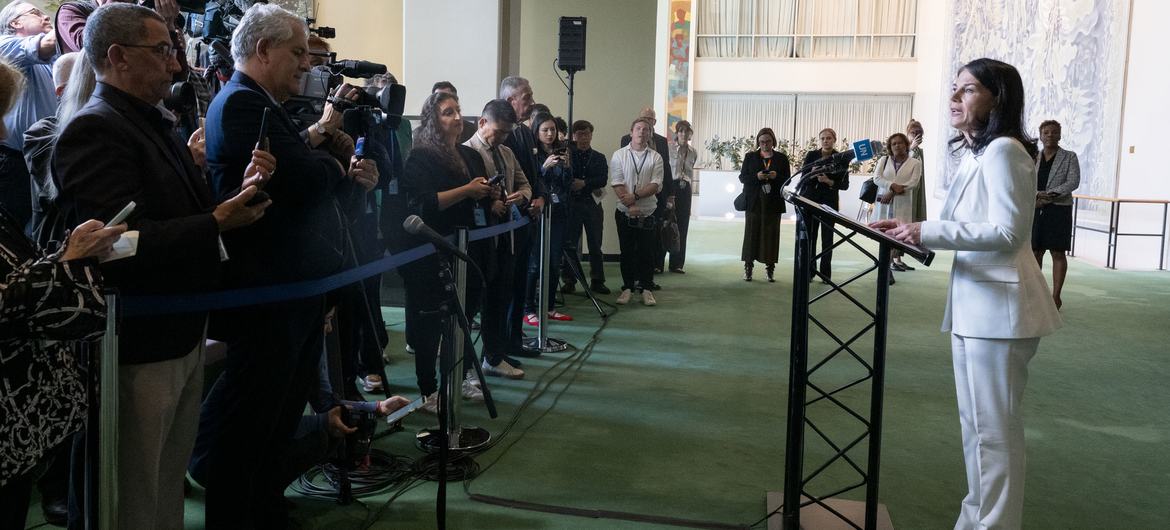
Annalena Baerbock, President-elect of the eightieth session of the UN General Assembly, speaks to the media following her election.

The world parliament

The General Assembly remains the UN’s most representative body, where each Member State has an equal voice – and an equal say in decisions.

While its resolutions are non-binding, the GA – as the acronym goes in New York – helps define global diplomatic norms, convenes dialogues on worldwide challenges and holds the Security Council to account.

The 80th session, starting 9 September, is expected to be pivotal – not only for sheer number and intensity of crises ongoing – but for advancing long-term reforms, including the UN80 initiative and the selection of the next Secretary-General before his term ends in 2026.

Source link

Lifting of Israeli blockade ‘the only way to avert mass starvation’ in Gaza: UNRWA chief

Philippe Lazzarini posted on social media saying that aid distribution “has become a death trap,” citing reports from international medical staff on the ground and local health authorities who reported at least 31 deaths and more than 150 injured as civilians were lining up to receive aid from the Israel and United States-backed Gaza Humanitarian Foundation – which bypasses existing aid agencies.

‘Humiliating system’

“A distribution point by the Israeli-American plan was put far south in Rafah,” Mr. Lazzarini said on X.

This humiliating system has forced thousands of hungry and desperate people to walk for tens of miles to an area that’s all but pulverized due to heavy bombardment by the Israeli army.”

He said aid delivery and distribution “must be at scale and safe. In Gaza, this can be done only through the United Nations including UNRWA.”

Gaza’s defence agency said Israeli forces had been responsible for the gunfire. The Gaza Humanitarian Foundation – which uses private contractors and involves Israel Defense Forces (IDF) to secure its sites – has strongly denied that civilians were fired on, accusing Hamas militants of misinformation.

Disputed events

The IDF said on social media that reports of them firing towards residents receiving aid from the foundation were false: “Findings from an initial inquiry indicate that the IDF did not fire at civilians while they were near or within the humanitarian aid distribution site.”

The IDF posted video which it said showed gunmen shooting at civilians collecting aid, adding that “Hamas is doing everything in its power to prevent the successful distribution of food in Gaza.”

Medical staff at Nasser hospital in nearby Khan Younis told media outlets that around 79 people were admitted on Sunday, mostly with gunshot wounds, along with the bodies of some of those killed. Journalists on the scene posted video footage of bodies being carried on carts along with wounded arrivals.

‘Lift the siege’

UNRWA chief Lazzarini called on Israel to lift the three-month old aid blockade and allow safe and unhindered access. “This is the only way to avert mass starvation including among one million children.”

Highlighting the difficulties of clearly establishing facts on the ground due to Israel’s ban on international media from entering the Gaza Strip, the UNRWA chief said that amid competing narratives and “disinformation campaigns in full gear,” the ban on eyewitness reporting must be lifted immediately.

Gaza: Guterres urges probe into killings at food distribution sites

More than 30 people were killed and over 100 wounded while waiting in the early morning to get food from two sites in Rafah and Middle Gaza run by the newly established Gaza Humanitarian Foundation (GHF), according to media reports.

The organization is backed by Israel and the United States and uses private US security contractors supervised by the Israeli military. Aid distributions began at the end of May, bypassing the UN and other humanitarian agencies.

Risking their lives

UN chief António Guterres issued a statement on Monday saying he was “appalled” by the reports.

“It is unacceptable that Palestinians are risking their lives for food,” he said.

“I call for an immediate and independent investigation into these events and for perpetrators to be held accountable.”

He stressed that Israel has clear obligations under international humanitarian law to agree to and facilitate humanitarian aid. 

Allow UN operations

“The unimpeded entry of assistance at scale to meet the enormous needs in Gaza must be restored immediately,” he said.

The UN must be allowed to work in safety and security under conditions of full respect of humanitarian principles.

Meanwhile, the Secretary-General continues to call for an immediate permanent, sustainable ceasefire in Gaza and the immediate and unconditional release of all hostages.

“This is the only path to ensuring security for all. There is no military solution to the conflict,” he said.

More to follow… 

Source link

Ukraine’s frontline families struggle to cultivate mined fields amid conflict

According to the UN, many frontline Ukrainian families are at risk of missing critical planting and harvesting windows.

“Agriculture is a fabric of rural society. It’s not just a way to make a living – it’s a way of being. And vulnerable rural families are holding on. They need support not just to survive, but to thrive and rebuild,” said Rein Paulsen, Director of Emergencies and Resilience at the UN Food and Agriculture Organization (FAO) during a recent visit to Ukraine.

Rural households across Ukraine – many headed by an elderly relative or woman – depend on agriculture for survival, often tending a single cow or a small flock of chickens.

But these families are among the most vulnerable and least supported, especially those living near the frontlines.

Hardship growing

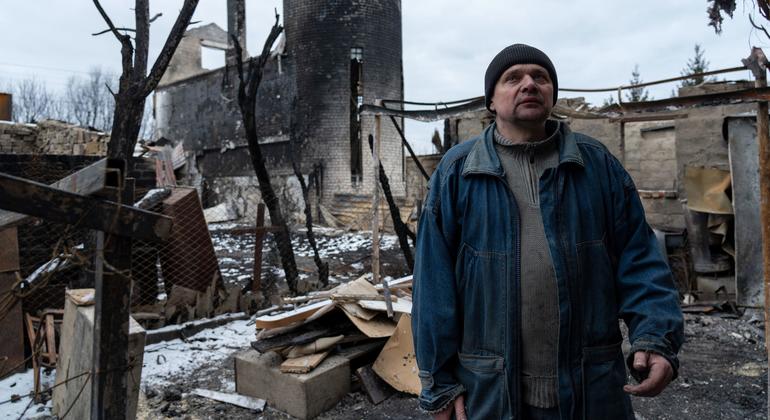
As the war provoked by Russia’s invasion of Ukraine enters its fourth year, these households face growing challenges cultivating their land due to anti-personnel mines, land contamination, labour shortages, lack of inputs, shelling and frequent electricity cuts.

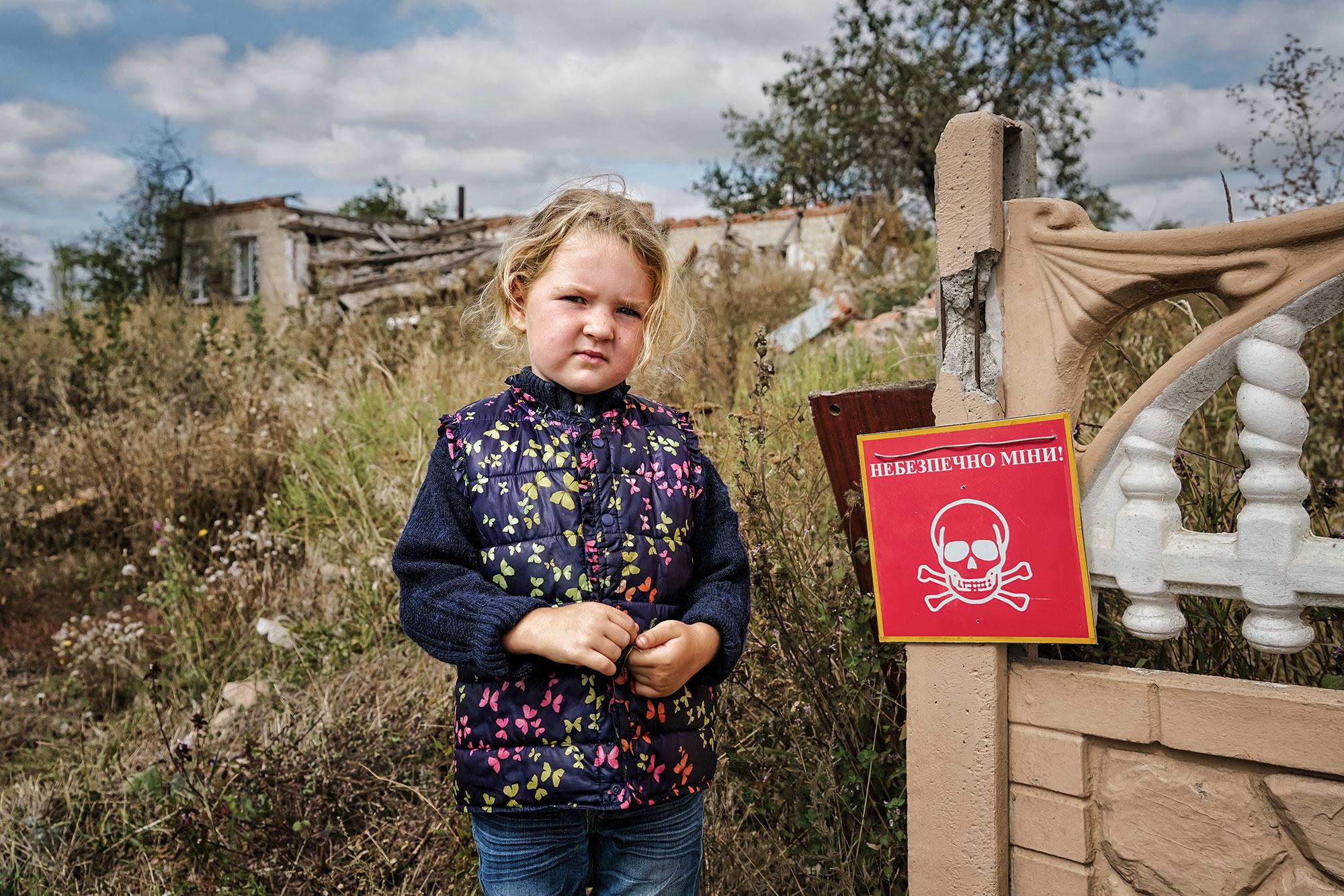
Veronika, 4, stands near a sign that reads “Danger of Mines”. Chistovodivka, Kharkiv region, Ukraine (file, May 2025)

According to the Fourth Rapid Damage and Needs Assessment, Ukraine’s agriculture sector has suffered $83.9 billion in damages and losses since the war began, with an additional $1.6 billion in the irrigation sector. A significant portion of this burden falls on rural households.

Call for support

On Monday, the FAO warned that without urgent and sustained support, thousands of rural households may be unable to plant or harvest on time, jeopardising national food security and rural livelihoods. 

Since the start of the war, FAO has supported more than 250,000 rural families with vegetable seeds, animal feed, day-old chicks, cash and vouchers. Over 15,000 farmers have also received crop seeds, temporary storage, and financial assistance.

In addition, the FAO and partners have worked to survey mined areas, restore access to farmland, and support national systems for monitoring and recovery.

But this assistance is not enough, especially as funding shortfalls limit the full implementation of the FAO’s Emergency and Early Recovery Response Plan for 2025–2026 in Ukraine.

The organization is calling for urgent support to help rural households safely access their land and secure essential resources such as seeds, fertiliser, storage and reliable energy.

This requires more than emergency funds alone – a sustained and coordinated response is needed to meet long-term needs.

Without increased support, these families’ ability to plant, harvest and recover remains under serious threat.

Source link

Helpless in the face of hunger: Gaza families pray for deliverance – or death

Zeenat and her husband, Moamen Abu Asr, live with their children in a flimsy canvas tent, one of thousands that now line Gaza’s coastline. 

Once a place of rest and leisure, the beach has become a last refuge for Palestinians displaced by relentless Israeli bombardment and military operations.

As displacement orders push people into ever smaller pockets of land, the strip of coast around Gaza’s seaport has turned into a makeshift camp. Its frayed tents and overcrowded conditions reflect the gravity of a humanitarian crisis that has plunged to unprecedented depths after more than 600 days of conflict between Israeli forces and Hamas.

The seaport, once a centre of Gaza’s fishing economy, is now a wasteland. All the boats have been destroyed, and in their place stands a sprawling encampment – a harsh and barren environment with almost none of the basic necessities for survival.

Moamen Abu Asr fixing a water tank by his tent.

A family with nothing left

Moamen and his family have been living in the camp for around two months, surviving in a tent cobbled together from salvaged mats and broken utensils recovered from nearby rubble.

He sits outside with his children, scrolling through pictures on his phone – fragments of a past life left behind in Shujaiya, east of Gaza City, when residents were ordered to evacuate without warning.

“There have been times when we’ve been displaced once every two months,” he told UN News. “Every day is suffering for us. We came to Gaza port with no food, no water – not even our iron tent.”

“There is nothing of life’s basics for us,” he said. To feed his family, Moamen repairs small water tanks for five shekels – about $1.43 – barely enough for anything in a place where prices have soared. “One kilo of flour is a hundred shekels [around $28.60],” he explained. “Our situation is very difficult, and we do not know what to do. By God, this is not life. We would rather die.”

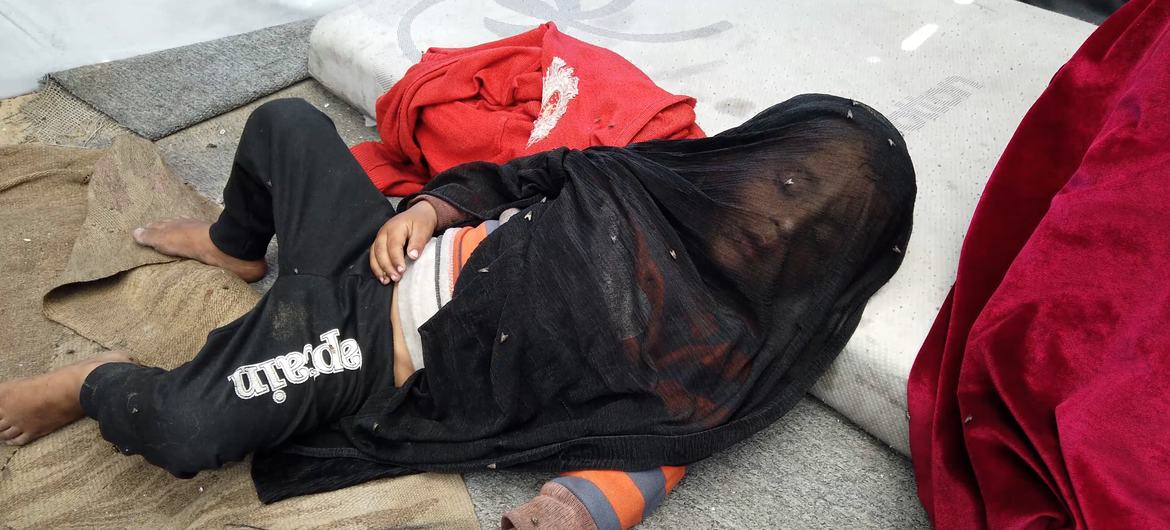
Flies hover over one of the Abu Asr family’s sleeping children in their tent in Gaza.

‘We live on water’

The humanitarian situation has worsened since March, when Israeli authorities imposed a complete blockade on aid. Though this was slightly eased in recent weeks, the limited trickle of supplies cannot meet the overwhelming demand. Desperate civilians, starving and fearful, have resorted to looting whatever aid does arrive.

In their tent, Zeenat washes a few cooking utensils – all she could find in the communal makeshift kitchen. Most days, there is no food to prepare.

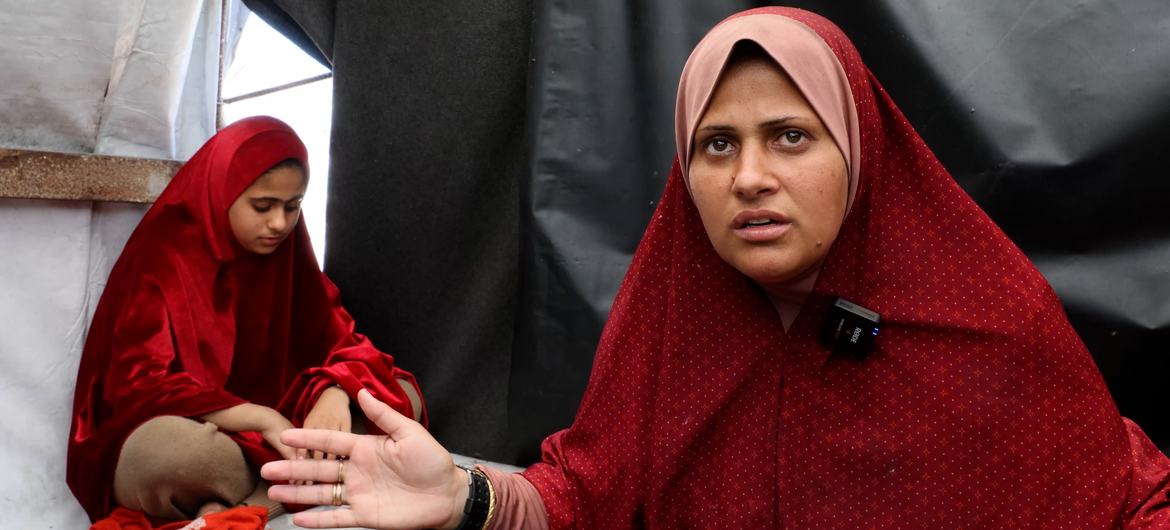
“Yesterday I cried a lot about my son,” she said. “He told me, ‘Mum, I want to eat.’ I stood helpless, not knowing what to do. The food didn’t come from the charity kitchen. We now live on fresh water. I recommend it to my children to help fill their stomachs. Today, thank God, we got a plate of food and ate it.”

Zeinat Abu Asr describes the hardship her family is facing in Gaza.

‘Enough is enough’

Conditions in the tent are dire. Flies swarm everywhere, and stray dogs – thin and hungry – prowl nearby. “Yesterday, a dog came into the tent and was pulling on a tarpaulin while my son was sleeping. I thought it was pulling my baby. I screamed and my husband kicked the dog out.”

“We don’t know where to go or what to do. They uprooted us. Our hearts are extinguished. We can’t be patient anymore. Our patience has run out.”

The tents scattered along Gaza’s coastline are a stark symbol of the deepening humanitarian tragedy. The cries of hunger are louder than any voice of hope. There is no shelter left – only the sea remains.

Nothing encapsulates the despair more than Zeenat’s final plea: “Let the war end. Give us a break. Otherwise, let all countries come together and drop a nuclear bomb on us and end our misery, because we are tired of this life. Enough is enough.”

As AI evolves, pressure mounts to regulate ‘killer robots’

Every day, we voluntarily give up information about ourselves to machines. This happens when we accept an online cookie or use a search engine. We barely think about how our data is sold and used before clicking “agree” to get to the page we want, dimly aware that it will be used to target us as consumers and convince us to buy something we didn’t know we needed.

But what if the machines were using the data to decide who to target as enemies that need to be killed? The UN and a group of non-governmental organisations are worried that this scenario is close to being a reality. They are calling for international regulation of Lethal Autonomous Weapons (LAWS) to avoid a near-future where machines dictate life-and-death choices.

Large-scale drone warfare unfolding in Ukraine

For several months, the Kherson region of Ukraine has come under sustained attack from weaponised drones operated by the Russian military, principally targeting non-combatants. More than 150 civilians have been killed, and hundreds injured, according to official sources. An independent UN-appointed human rights investigation has concluded that these attacks constitute crimes against humanity.

The Ukrainian army is also heavily reliant on drones and is reportedly developing a “drone wall” – a defensive line of armed Unmanned Aerial Vehicles (UAVs) – to protect vulnerable sections of the country’s frontiers.

Once the preserve of the wealthiest nations that could afford the most high-tech and expensive UAVs, Ukraine has proved that, with a little ingenuity, low-cost drones can be modified to lethal effect. As conflicts around the world mirror this shift, the nature of modern combat is being rewritten.

© UNICEF/Oleksii Filippov

Creeping ‘digital dehumanisation’

But, as devastating as this modern form of warfare may be, the rising spectre of unmanned drones or other autonomous weapons is adding fresh urgency to ongoing worries about ‘killer robots’ raining down death from the skies, deciding for themselves who they should attack.

“The Secretary-General has always said that using machines with fully delegated power, making a decision to take human life is just simply morally repugnant,” says Izumi Nakamitsu, the head of the UN Office for Disarmament Affairs. It should not be allowed. It should be, in fact, banned by international law. That’s the United Nations position.”

Human Rights Watch, an international NGO, has said that the use of autonomous weapons will be the latest, most serious example of encroaching “digital dehumanisation,” whereby AI makes a host of life-altering decisions on matters affecting humans, such as policing, law enforcement and border control.

Several countries with major resources are investing heavily in artificial intelligence and related technologies to develop, land and sea based autonomous weapons systems. This is a fact,” warns Mary Wareham, advocacy director of the Arms Division on Human Rights Watch. “It’s being driven by the United States, but other major countries such as Russia, China, Israel and South Korea, have been investing heavily in autonomous weapons systems.”

Advocates for AI-driven warfare often point to human limitations to justify its expansion. Soldiers can make errors in judgment, act on emotion, require rest, and, of course, demand wages – while machines, they argue, improve every day at identifying threats based on behavior and movement patterns. The next step, some proponents suggest, is allowing autonomous systems to decide when to pull the trigger.

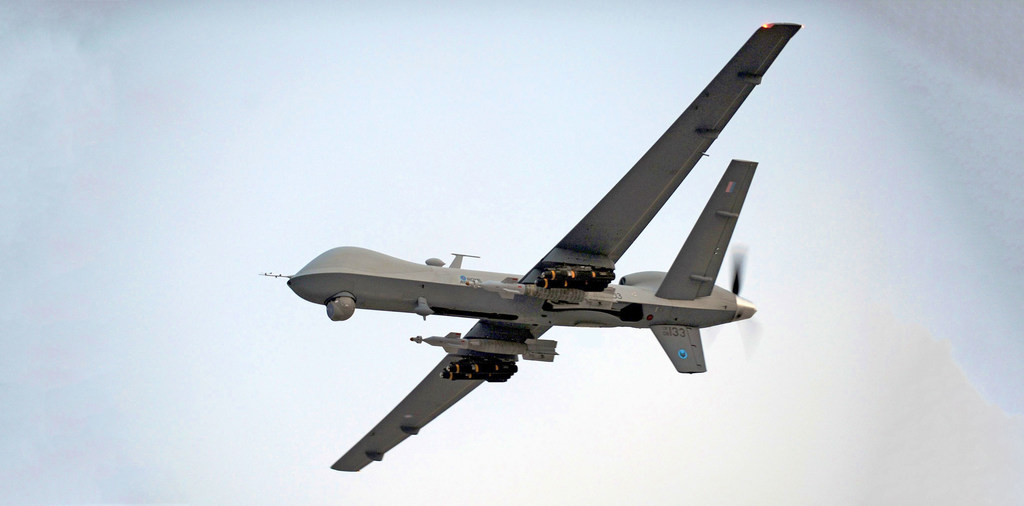
A UAV (Unmanned Aerial Vehicle) is pictured airborne over Afghanistan.

There are two main objections to letting the machines take over on the battlefield: firstly, the technology is far from foolproof. Secondly, the UN and many other organisations see the use of LAWS as unethical.

“It’s very easy for machines to mistake human targets,” says Ms. Wareham of Human Rights Watch. “People with disabilities are at particular risk because they of the way they move. Their wheelchairs can be mistaken for weapons. There’s also concern that facial recognition technology and other biometric measurements are unable to correctly identify people with different skin tones. The AI is still flawed, and it brings with it the biases of the people who programmed those systems.”

As for the ethical and moral objections, Nicole Van Rooijen, Executive Director of Stop Killer Robots, a coalition campaigning for a new international law on autonomy in weapons systems, says that they would make it very difficult to ascertain responsibility for war crimes and other atrocities.

“Who is accountable? Is it the manufacturer? Or the person who programmed the algorithm? It raises a whole range of issues and concerns, and it would be a moral failure if they were widely used.”

A ban by 2026?

The speed at which the technology is advancing, and evidence that AI enabled targeting systems are already being used on the battlefield, is adding to the urgency behind calls for international rules of the technology.

In May, informal discussions were held at UN Headquarters, at which Mr. Guterres called on Member States to agree to a legally binding agreement to regulate and ban their use by 2026.

Attempts to regulate and ban LAWS are not new. In fact, the UN held the first meeting of diplomats in 2014, at the Palais des Nations in Geneva, where the chair of the four-day expert talks, Ambassador Jean-Hugues Simon-Michel of France, described LAWS as “a challenging emerging issue on the disarmament agenda right now,” even though no autonomous weapons systems were being used in conflicts at the time. The view then was that pre-emptive action was needed to get rules in place in the eventuality that the technology would make LAWS a reality.

11 years later, talks are ongoing, but there is still no consensus over the definition of autonomous weapons, let alone agreed regulation on their use. Nevertheless, NGOs and the UN are optimistic that the international community is inching slowly towards a common understanding on key issues.

“We’re not anywhere close to negotiating a text,” says Ms. Rouijen from Stop Killer Robots. “However, the current chair of the Convention on Certain Conventional Weapons (a UN humanitarian law instrument to ban or restrict the use of specific types of weapons that are considered to cause unnecessary or unjustifiable suffering to combatants or to affect civilians indiscriminately) has put forward a rolling text that is really quite promising and that, if there is political will and political courage, could form the basis of negotiations.”

Ms. Wareham from Human Rights Watch also sees the May talks at the UN as an important step forward. “At least 120 countries are fully on board with the call to negotiate a new international law on autonomous weapons systems. We see a lot of interest and support, including from peace laureates, AI experts, tech workers, and faith leaders.”

“There is an emerging agreement that weapon systems that are fully autonomous should be prohibited,” says Ms. Nakamitsu, from the UN Office for Disarmament Affairs. “When it comes to war, someone has to be held accountable.”

Source link

‘Justice is long overdue’: Guterres calls for reparations for enslavement and colonialism

“Africa is a continent of boundless energy and possibility. But for too long, the colossal injustices inflicted by enslavement, the transatlantic slave trade and colonialism have been left unacknowledged and unaddressed,” he said.

The United Nations has repeatedly said that slavery and the transatlantic slave trade constituted crimes against humanity, and the Secretary-General has repeatedly called for redress for these injustices.

Speaking to the Africa Dialogue Series — which is focused on the theme of justice through reparations — the Secretary-General noted that the movement for reparatory justice is gaining momentum around the world as reflected by the declaration of the Second Decade for People of African Descent, which runs through 2035. 

The last decade, which ended in 2024, yielded tangible results, with over 30 Member States revising laws to better tackle racial discrimination. However, the Secretary-General noted that much work remains.

“We point to the poisoned legacies of enslavement and colonialism, not to sow division but to heal them,” he said.

‘Long shadow of colonialism’

Mr. Guterres underlined the entrenched nature of racism and exploitative systems, saying that these systems have disadvantaged African countries and people of African descent beyond the end of colonialism and enslavement.

“Decolonization did not free African countries, or people of African descent, from the structures and prejudices that made those projects possible,” he said.

In fact, when the United Nations was founded and many of the global structures established, some African countries were still colonies.

“When African countries gained their independence, they inherited a system built to serve others — not them,” the Secretary-General said.

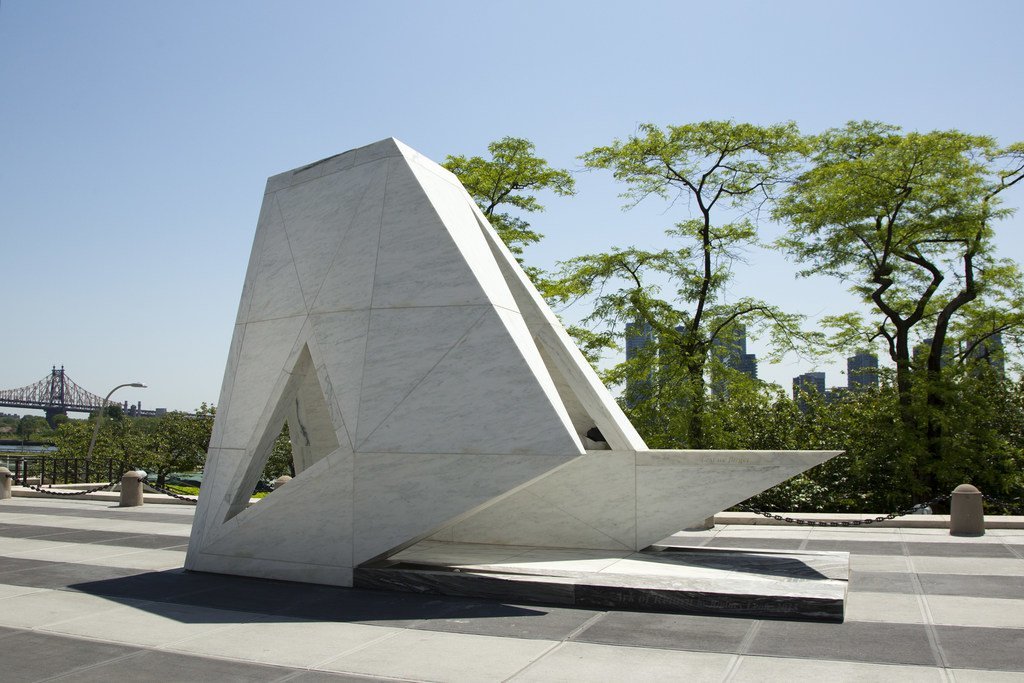
The President of the General Assembly, Philémon Yang, underlined the importance of teaching this history through national curricula and monuments such as The Ark of Return at UN Headquarters.

“Knowledge of our true history can serve as a powerful compass in our onward march towards progress,” he said.

The Ark of Return, the Permanent Memorial to Honour the Victims of Slavery and the Transatlantic Slave Trade, located at the Visitors’ Plaza of UN Headquarters in New York.

Transforming ‘poisoned legacies’

To address the inequities of this system, the Secretary-General called upon the global community to take action on international financial systems which are burdening developing economies in Africa and the Caribbean. Specifically, he emphasized the importance of restructuring debt systems which are “suffocating” these countries’ economies.

Previous UN reports have noted that some poor countries spend more on debt repayments than they do on health, education and infrastructure combined

Mr. Guterres also called for massive investments into clean energy infrastructure in Africa which has been deeply impacted by climate change.

“African countries did not cause the climate crisis. Yet the effects of our heating planet are wreaking havoc across the continent,” he said.

He also reiterated his call for the establishment of a permanent Security Council position for an African Member State.

Mr. Yang, the General Assembly President, underlined the urgency of the Secretary-General’s remarks, urging member states to act imminently.

“Now is the moment to turn recommendations into rights, apologies into action and aspirations into accountability.”  

Source link

World News in Brief: Education suffers amid DR Congo violence, WHO greenlights RSV vaccines, more hurricanes ahead for Haiti

According to UN Children’s Fund, UNICEF, more than 290 schools have been damaged or destroyed in Ituri this year alone, bringing the total number of out-of-school children in the province to over 1.3 million.

Protection crisis

Between January and April 2025, a surge in violence displaced more than 100,000 people – half of them children. During this period, reported cases of abduction, maiming, sexual violence, and the recruitment and use of children by armed groups rose by 32 per cent compared to the same timeframe last year.

John Adbor, UNICEF’s representative in the DRC, referred to the situation as a “protection crisis”, stating: “Violence and conflict are shattering children’s right to learn – putting them at far greater risk of being recruited by armed groups, exploited, and abused.”

“The needs are immense, and our resources are not enough,” Mr. Adbor added, referring to UNICEF’s emergency response in the region.

With more than 1.8 million conflict-affected children now out of school across the DRC, UNICEF is prioritising mental health and psychosocial support through child-friendly spaces, reintegration of children formerly associated with armed groups, and treatment for acute malnutrition.

WHO approves two new vaccines to protect infants from RSV

Respiratory syncytial virus (RSV) is the leading cause of severe lung infections in young children globally, resulting in approximately 100,000 deaths each year among children under the age of five.

Alarmingly, 97 per cent of these deaths occur in low and middle-income countries.

Although RSV can infect people of all ages, “it is especially harmful to infants, particularly those born prematurely,” said Kate O’Brien from the World Health Organization (WHO).

Around half of all RSV-related deaths occur in babies younger than six months.

New immunisation products

On Friday, WHO issued recommendations for two new immunisation tools: a maternal vaccine, administered to pregnant women in their third trimester to protect their newborns; and a long-acting antibody injection for infants, which begins to protect within a week of administration and lasts for at least five months.

Considering the global burden of severe RSV illness in infants, WHO recommends  that all countries adopt either the maternal vaccine or the antibody injection as part of their national immunisation strategies.

“These RSV immunisation products can transform the fight against severe RSV disease, dramatically reduce hospitalisations and deaths, and ultimately save many infant lives worldwide,” said Ms O’Brien.

Dire hurricane forecasts compound Haiti woes

UN humanitarians have raised alarm over Haiti’s heightened vulnerability to natural disasters, warning that the country’s limited capacity to respond could be severely tested during the 2025 hurricane season – forecast to be significantly more intense than average across Latin America and the Caribbean.

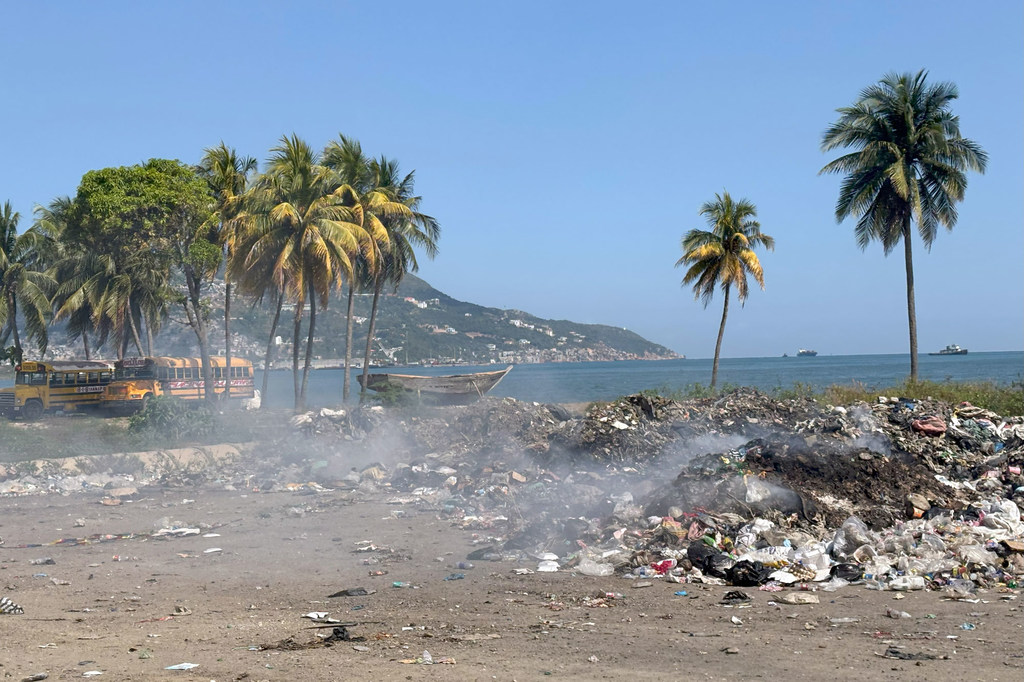
Rubbish burns on the coast of Haiti.

Running from June to November, the upcoming season poses a serious threat to the impoverished island nation, where economic crisis, ongoing gang-related violence and rampant insecurity have already displaced over one million people.

Displacement sites at risk

More than 200,000 people are currently living in displacement sites across the country, many of which are situated in flood-prone areas.

Lacking proper shelter, drainage and sanitation, these camps “leave families acutely vulnerable to storms,” said UN Spokesperson Stéphane Dujarric.

The UN Office for the Coordination of Humanitarian Affairs (OCHA) is working with national authorities and humanitarian partners to prepare for the hurricane season. Ongoing efforts include contingency planning, mapping of high-risk areas – particularly displacement sites – and strengthening early warning systems.

However, humanitarian access remains limited, and preparedness is severely hindered by the lack of pre-positioned supplies throughout the country.

This is a “direct consequence of underfunding,” said Mr. Dujarric, adding that “funding remains a major obstacle” to the UN’s emergency response in Haiti.

Source link

Songs of hope rise from Gaza’s ruins

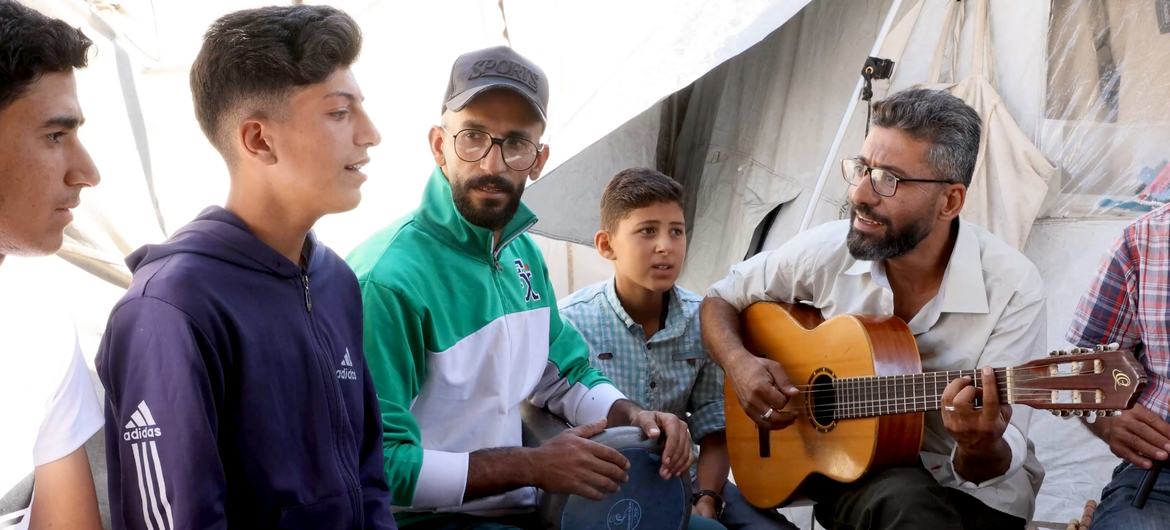
Among them is Ahmed Abu Amsha, a music teacher who has become something of a humanitarian troubadour.

Fleeting moments of joy

Living in a worn tent with his family, he refuses to let despair drown out hope. Instead, he teaches music to displaced children, helping them find moments of joy through rhythm and song.

Originally from Beit Hanoun, Abu Amsha is a guitar instructor and regional coordinator at the Edward Said National Conservatory of Music. Since the war began, his family has been displaced 12 times. Each time they fled, they took their instruments.

“They’re the only thing that keeps us hopeful,” he said, sitting beside bottles of water outside his tent, a guitar resting gently in his lap.

UN Video | Music amid the rubble: A Gazan musician plants seeds of hope

Daily horror

Daily life in the camp is a grind of hardship – narrow alleys, water queues, a constant struggle to survive. Yet within this bleakness, Abu Amsha has created something extraordinary: Gaza Bird Singing (GBS), a musical group made up of displaced children with budding talents.

The idea came during a period of displacement in Al-Mawasi, Khan Younis, where he began training children to sing and play. The group has since performed in various camps, their music echoing on social media and offering a rare glimpse of hope amid rubble.

Clinging to music

His son Moein, who plays the ney – an end-blown wind instrument similar to a flute – carries his instrument wherever they go. “We’ve been displaced more than 11 times, and I always carry my ney with me. It’s the only thing that helps me forget the sound of the bombing,” he said.

Finding a quiet space is hard, but they try to practise inside their tent, cocooned from chaos.

For Yara, a young violinist learning under Abu Amsha’s guidance, each new displacement deepens her anxiety. “But whenever I’m scared, I play. Music makes me feel safe,” she said.

Under the tarpaulin roofs of the camp, children gather to play, plucking strings, blowing wind instruments, tapping rhythms into existence – trying to transcend the horrific soundtrack of war.

Ahmed Abu Amsha (right, with guitar) surrounded by children who play, sing and learn music.

Sacred space

In a place stripped of necessities, the sound of music feels both surreal and sacred.

Yet Abu Amsha remains steadfast in his mission. “We sing for peace, we sing for life, we sing for Gaza,” he says softly, as the melody of the oud rises behind him – a fragile beauty in a scene shattered by war.

Source link