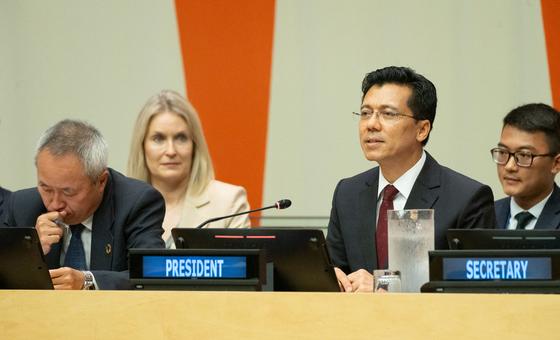
‘There is no military solution’ to end Israel-Palestine conflict, Security Council hears, as starvation stalks the Gaza Strip

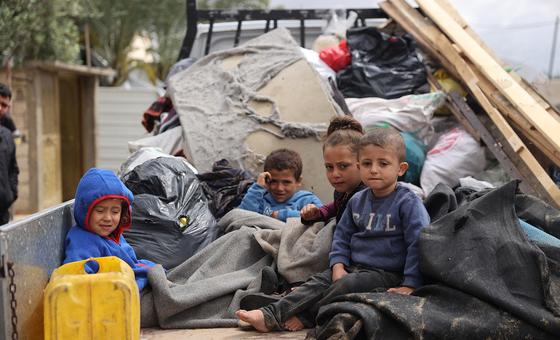
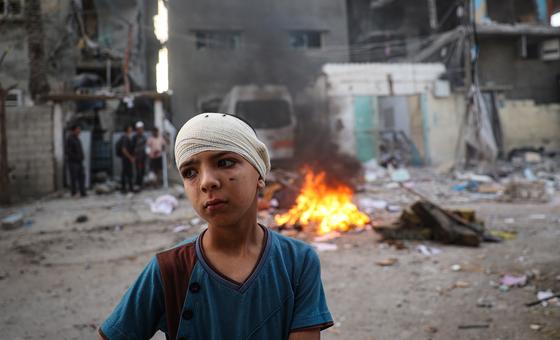
Two top UN officials warned that the Israeli cabinet’s green light this week for a fresh offensive aimed at gaining total military control of Gaza City – home to around one million Palestinians – would only risk igniting “another horrific chapter” of displacement, death and destruction.

Miroslav Jenča, Assistant Secretary-General for Europe, Central Asia and the Americas, told ambassadors that Israeli Prime Minister Benjamin Netanyahu’s proposed plan for “defeating Hamas” and the establishment of an alternative civilian administration that is neither Hamas nor the Palestinian Authority, risked “yet another dangerous escalation” that would destabilise the entire region.

However, according to Israeli media reports, the senior political affairs official continued, the Israeli plan foresees the displacement of all civilians from Gaza City by 7 October, affecting some 800,000 people – many previously displaced.

Reports indicate that forces would then surround the city for three months.  This would reportedly then be followed by an additional two months to seize control of central Gaza’s camps and clear the entire area of Palestinian armed groups.

Calamitous plan

If these plans are implemented, they will likely trigger another calamity in Gaza, reverberating across the region and causing further forced displacement, killings, and destruction – compounding the unbearable suffering of the population,” said Mr. Jenča, calling for a full, immediate, and permanent ceasefire, the unconditional, immediate release of all hostages and compliance with international humanitarian law by Israel.

He said there was no military solution to end the conflict adding that planning for Gaza’s future “as we address the urgency of developments on the ground today,” is critical.

Mr. Jenča called for establishing political and security frameworks to ease the humanitarian crisis, while beginning recovery and reconstruction efforts that address the legitimate concerns of both Israelis and Palestinians – in line with realising a two-State solution.

United Palestine

“Critically these frameworks must facilitate a legitimate Palestinian Government that can reunify Gaza and the West Bank, including East Jerusalem, politically, economically and administratively.”

Furthermore, it must be made up of a united leadership representing all of Palestine. He called on the Palestinian Authority to “advance its stated goal of holding elections” to this end.

‘This is starvation’: Rajasingham

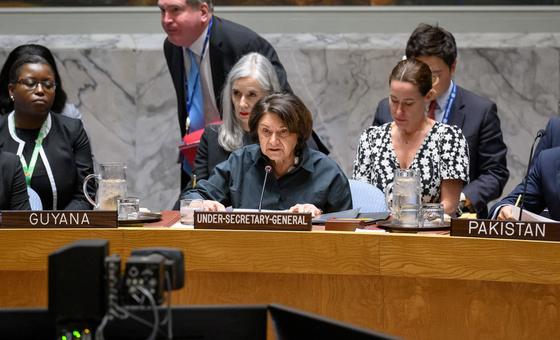
Senior humanitarian affairs official Ramesh Rajasingham told ambassadors that hunger-related deaths were already rising, ahead of any new mass-displacement policy for Gaza City.

“Whatever lifelines remain, are collapsing under the weight of sustained hostilities, forced displacement and insufficient levels of life-saving aid.”

He said with local authorities documenting the deaths of 98 children from severe acute malnutrition – 37 since 1 July – “this is no longer a looming hunger crisis – this is starvation.”

The head of the humanitarian affairs coordination office (OCHA) in Geneva said he was extremely concerned over the “prolonged conflict and further human toll that is likely to unfold following the Government of Israel’s decision to expand military operations in Gaza.”

“This marks a grave escalation in a conflict that has already inflicted unimaginable suffering.”

‘Grim milestone’

“A grim milestone has also been crossed in the humanitarian community,” he lamented, noting that over 500 humanitarian workers have been killed in Gaza since hostilities escalated, including at least 167 women. Smear campaigns against aid operations continue unabated.  “As we approach World Humanitarian Day, we must insist on the protection of all aid workers,” he added.  

States – all those with any influence – must look within our bruised collective conscience and summon the courage to do what is necessary to end this inhumanity and pain, he said.

Civilians must be protected, and hostages must be released unconditionally.  Arbitrarily detained Palestinians must be freed. Israel must agree to and facilitate humanitarian relief operations, both into and within the Gaza Strip, to reach the population in need.

The International Court of Justice’s (ICJ) provisional measures in the case on the application of the Genocide Convention in Gaza remain in place, the top OCHA official added, including the demand that Israel take immediate and effective measures to enable the provision of urgently needed basic services and humanitarian assistance.

SECURITY COUNCIL LIVE: Ambassadors meet in emergency session, amid starvation in the Gaza Strip

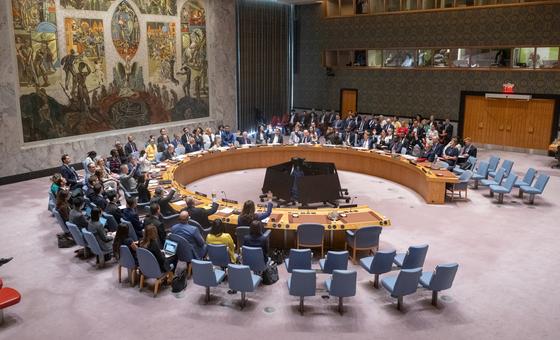
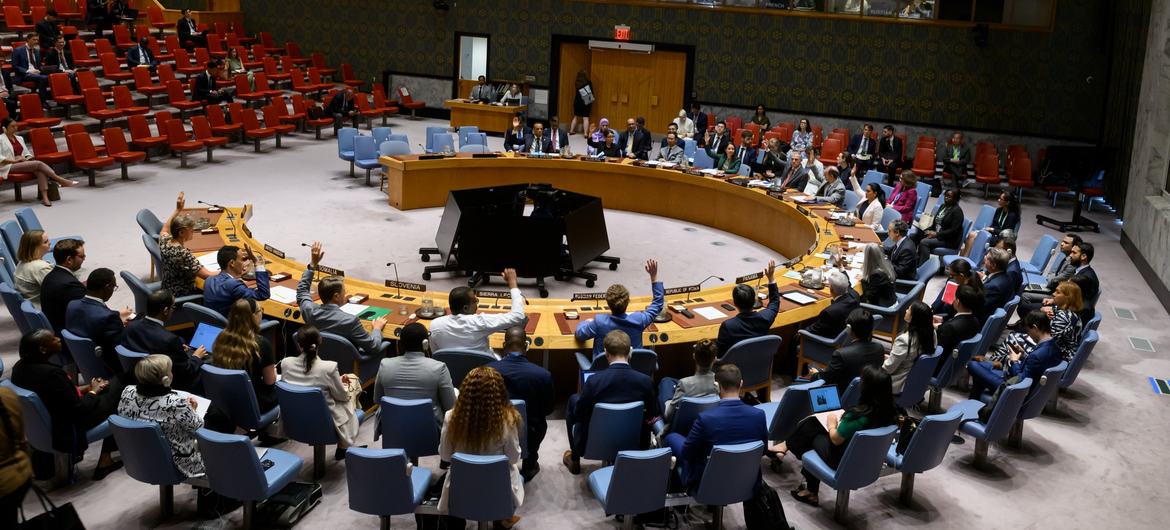
The UN Security Council is meeting in New York following the Israeli cabinet’s decision to again expand its military operation inside the Gaza Strip and take full control of the key population centre of Gaza City. UN chief António Guterres described it as a “dangerous escalation” for the two million civilians trapped in the enclave as well as the remaining Israeli hostages still held captive. Follow our Meetings Coverage Section’s live reporting of the crisis meeting and UN News app users can follow here.

Source link

Gaza: Security Council meets on hostage crisis amid ‘unbearable’ conditions facing Palestinian civilians

Assistant Secretary-General Miroslav Jenča briefed a Security Council meeting on Tuesday called by Israel to discuss the plight of hostages still being held in the war-ravaged enclave.

It comes after Hamas and Palestinian Islamic Jihad released images and videos of two emaciated hostages, Evaytar David and Rom Braslavsky, sparking outrage and condemnation. 

‘An affront to humanity itself’

The scenes of Evaytar apparently being forced to dig his own grave are appalling,” he said.

“These images, and their own accounts of their treatment, have horrified us all. They are an affront to humanity itself.”

Mr. Jenča acknowledged the presence of Mr. David’s brother, Ilay, who participated in the meeting via videoconference, saying the UN recognises “the profound pain and hardship endured by the families and loved ones of those who remain in captivity.”

He recalled that this week the Jewish community commemorated Tisha B’Av, a day of mourning and remembrance of tragedies endured throughout its history.

“I pay tribute to your courage and determination, and I share your dearest wish: for your brother, and all hostages held in Gaza, to be immediately and unconditionally released,” he said.

A war crime

Currently, 50 hostages continue to be held by Hamas and other Palestinian armed groups in horrific conditions and 28 are thought to be deceased, while freed hostages “have relayed distressing accounts of deprivation, ill-treatment, and abuse.”

Since the conflict began, Hamas and other armed groups have circulated dozens of videos of hostages, including statements made under duress and while clearly suffering, including the most recent footage of the two men.

“International law is clear,” said Mr. Jenča.  “Hostage-taking is prohibited – it is a war crime.”

He stressed that people deprived of their liberty must be treated humanely and with dignity and allowed to be visited by the International Committee of the Red Cross (ICRC). 

“They must never be subject to ill-treatment, abuse, or humiliation, as these would also constitute violations of relevant rules of international law,” he added, before reiterating UN Secretary-General António Guterres’s call on Hamas and other Palestinian armed groups for the immediate and unconditional release of all hostages. 

Gaza situation ‘unbearable’

Meanwhile, “the situation in Gaza is horrifying – it is unbearable,” he continued, noting that “Palestinians are subjected to squalid, inhumane conditions on a daily basis.”

More than 60,000 Palestinians have been killed since the conflict began, according to local health authorities.

Since the end of May, over 1,200 Palestinians have been killed and over 8,100 injured while trying to access food supplies, including in the vicinity of militarized aid distribution sites,” said Mr. Jenča.

“The deaths and injuries continue to mount, day by day, with no end in sight to the suffering.”

This is happening as Israel continues to severely restrict humanitarian assistance entering Gaza, while the aid that is allowed to enter “is grossly inadequate.”

‘Hunger is everywhere’

He told the Council that “hunger is everywhere in Gaza, visible in the faces of children and in the desperation of parents risking their lives to access the most basic supplies.”

Here, he echoed the Secretary-General’s condemnation of the ongoing violence in Gaza, including the shooting, killing, and injuring of people trying to get food. 

“International law is clear. Civilians must be respected, protected and never targeted or deliberately deprived of food or access to other lifesaving aid – doing so is a war crime,” he said.

“Israel must immediately allow and facilitate rapid and unimpeded passage of sufficient amounts of humanitarian relief for civilians in need, to avert further suffering and loss of life.”

Potential military expansion ‘deeply alarming’

Mr. Jenča also addressed latest reports regarding Israeli Prime Minister Benjamin Netanyahu’s possible decision to expand military operations through the entire Gaza Strip.

If true, they are “deeply alarming,” he said, as “this would risk catastrophic consequences for millions of Palestinians and could further endanger the lives of the remaining hostages in Gaza.”

He again turned to international law, which is clear that Gaza is and must remain an integral part of a future Palestinian State.

He cited the July 2024 Advisory Opinion by the International Court of Justice (ICJ) which declared that Israel is under an obligation to immediately cease all new settlement activities, evacuate all settlers from the Occupied Palestinian Territory, and to bring an end to its unlawful presence there as rapidly as possible.

No military solution

Mr. Jenča concluded his briefing by underlining the UN’s position that the only way to end the violence and humanitarian catastrophe in Gaza is through a full and permanent ceasefire, the immediate and unconditional release of all hostages and allowing aid to enter at scale and without obstruction.  

Civilians also must be guaranteed safe, unhindered access to assistance.

He stressed that there is no military solution to the conflict in Gaza or the broader Israel-Palestine conflict. 

“We must establish political and security frameworks that can relieve the humanitarian catastrophe in Gaza, start early recovery and reconstruction, address the legitimate security concerns of Israelis and Palestinians, and secure an end to Israel’s unlawful occupation and achieve a sustainable two-State solution,” he said.

This would mean “Israel and a fully independent, democratic, contiguous, viable and sovereign Palestinian State, of which Gaza is an integral part – living side by side in peace and security within secure and recognized borders, on the basis of the pre-1967 lines, with Jerusalem as the capital of both States.” 

Source link

SECURITY COUNCIL LIVE: Israel calls for focus on Gaza hostages’ plight

The Security Council is meeting to discuss rising concern in Israel and elsewhere over the dire conditions facing the hostages who remain in Gaza. It follows the release of recent videos by Hamas and other Palestinian militants showing emaciated captives, which the UN Secretary-General called “an unacceptable violation of human dignity.” A senior UN political affairs official reiterated the “unbearable” conditions faced by Palestinians across the war-ravaged enclave. Stay with UN News for live updates in coordination with UN Meetings Coverage. App users can follow the coverage here.

Source link

LIVE: UN Security Council meets on crisis in Ukraine

The UN Security Council meets Friday afternoon to discuss the ongoing crisis in Ukraine, where recent attacks have left dozens dead or injured. A senior UN political affairs official is expected to brief on the situation. Follow our live coverage from UN News, in coordination with UN Meetings Coverage, for real-time updates and key developments from the chamber. UN News App users can follow the coverage here.

Source link

‘Delivering better’: New ECOSOC president emphasises climate action, food security

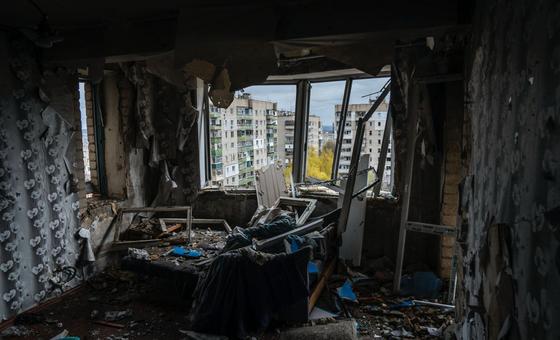
Mr. Thapa said that the motto of his presidency will be “Delivering Better,” which requires strengthening partnerships and multilateralism to achieve more effective implementation of initiatives, including the 2030 Agenda adopted 15 years ago.  

“Delivering better is not an option — it is an imperative. It is our pathway to restoring trust in multilateralism, bridging divides, empowering the most vulnerable and translating commitments into action,” he said.  

Four vice-presidents were also elected for the coming year: Amar Bendjama (Algeria), Héctor Gómez Hernández (Spain), Wellington Darío Bencosme Castaños (Dominican Republic) and Paruyr Hovhannisyan (Armenia).

80 years of ECOSOC 

The UN Economic and Social Council (ECOSOC) is one of the six principal organs of the United Nations, responsible for promoting international economic and social cooperation and development.

It has 54 member States, elected by the General Assembly for three-year terms on a rotating basis, with seats distributed by region.

ECOSOC coordinates the work of UN specialized agencies, commissions and bodies on issues ranging from sustainable development and human rights. It also serves as a central platform for fostering debate, forging consensus, and promoting action on global economic and social issues.

For Mr. Thapa, this body is central to shaping the world’s development agenda and ensuring that no one is left behind.  

“ECOSOC is our place. It needs dedication, participation and active engagement of all UN membership and stakeholders,” he said.  

Five ways to deliver better

While “delivering better” will be the motto of Mr. Thapa’s presidency, he outlined five specific areas upon which he and the Council will focus in the coming year.

With over 735 million people worldwide experiencing hunger, his first priority area is transforming agriculture to strengthen rural resilience and end hunger.  

Digital entrepreneurship and youth engagement are tied to this — and are his second priority area. He noted the “youth bulge” in many developing countries which he said will be a powerful demographic asset if it can be taken advantage of.  

Like ECOSOC presidents before him, his third priority area deals with climate action and resilience. This time, however, he would like ECOSOC to focus specifically on glacier lakes and floods.  

His final two priority areas are reforming the international financial architecture so that it is more inclusive and commemorating the 80th anniversary of ECOSOC.  

Mr. Thapa noted that he and ECOSOC’s membership will be working to achieve these challenges in the midst of multiple, interlinking crises including accelerating climate change, rising geopolitical tensions and decreasing trust in the multilateral system.  

“These challenges are systemic and interconnected. They demand integrated, inclusive and forward-looking responses,” Mr. Thapa said.  

Fix, repair, mend

Before Mr. Thapa’s remarks, Bob Rae, the outgoing president of ECOSOC and Canada’s Ambassador to the UN, reflected on his tenure. He acknowledged that the world is currently in a time of great hardship and genuine anguish.  

But he said that it must be the job of ECOSOC — and UN Member States more broadly — to not only give voice to this anguish and hardship but to actually find solutions for it as well.  

“We hear a lot in the UN discourse about how things are broken, how things have fallen apart, how things are unhinged … But our job is to fix, it’s to repair, it’s to mend, it’s to allow things to heal, it’s to make change happen,” Mr. Rae said.  

Both Mr. Thapa and Mr. Rae affirmed that multilateralism can work and that ECOSOC should play a unique role in rewriting the narrative surrounding international cooperation.  

“We must reaffirm our collective belief in the power of multilateralism — not as an abstract ideal, but as a pragmatic tool for delivering better outcomes for all,” Mr. Thapa said.  
Source link

SECURITY COUNCIL LIVE: Meeting on the situation in Ukraine

The UN Security Council meets Thursday morning to discuss threats to international peace and security, with a focus on the situation in Ukraine. The meeting was requested by Russia. Follow our live updates as UN News, in coordination with UN Meetings Coverage, brings you key highlights and takeaways from today’s session. UN News App users can follow the coverage here.

Source link

UN urges restraint as Thailand-Cambodia clashes displace thousands; Security Council meets

The clashes, which began on 24 July, reportedly involved exchanges of gunfire, artillery shelling and rocket fire, with Thailand having conducted airstrikes inside Cambodian territory.

UN humanitarian officials confirmed civilian casualties, including children.

More than 131,000 people in Thailand and over 4,000 in Cambodia have been displaced, according to relief partners. Temporary shelters, including schools and temples, are overcrowded, and food, shelter and medical assistance are urgently needed.

The United Nations stands ready to support humanitarian efforts if requested, spokesperson Stephanie Tremblay said at a regular briefing in New York.

Protect children at all times

The UN Children’s Fund (UNICEF) also appealed for “maximum restraint”.

June Kunugi, Regional Director for East Asia and the Pacific – based in Bangkok – urged both countries to protect children and the critical services they depend on, in line with their obligations under international law, including the Convention on the Rights of the Child.

Children must be protected at all times and their safety and wellbeing must be prioritised, while schools must remain safe spaces for learning,” she said.

Security Council private meeting

At UN Headquarters in New York, ambassadors convened for an emergency private meeting of the Security Council to discuss the situation.

Representatives of Thailand and Cambodia were said to be in attendance, with Khaled Khiari, Assistant Secretary-General for the Asia and the Pacific at the UN Department of Political Affairs (DPPA), briefing.

Private meetings of the Security Council are closed to the public, but considered a formal meeting.

A longstanding dispute

The last major flare-up between the two countries occurred in 2011, when days of border fighting near the historic Preah Vihear temple – a UNESCO World Heritage Site – left multiple casualties on both sides.

Then-Secretary-General Ban Ki-moon had called for an immediate, verifiable ceasefire and urged both countries to resolve their dispute through dialogue, not military means.

That escalation followed a 2008 troop build-up around the 11th-century Hindu temple, which sits on the Cambodian side of the border.

Source link

SECURITY COUNCIL LIVE: Situation in Ukraine

The UN Security Council is meeting on Friday morning to discuss the situation in Ukraine amid mounting concerns over the intensifying hostilities and growing humanitarian needs. Senior UN political affairs and humanitarian officials are expected to brief the Council. Follow our live coverage from UN News, in coordination with UN Meetings Coverage, for updates from the chamber. UN News App users can follow here.

Source link

SECURITY COUNCIL LIVE: Debate on the situation in the Middle East

The Security Council meets today for its quarterly open debate on the situation in the Middle East, with a focus on the worsening crisis in Gaza. UN Assistant Secretary-General Khaled Khiari is expected to brief on the situation in the war-ravaged enclave where food entry and distribution remain severely restricted, malnutrition is rising, and fuel and shelter supplies are critically scarce. UN News, in coordination with UN Meetings Coverage, brings you live updates from today’s discussions. UN News App users can follow here.

Security Council, in unanimous vote, presses nations to resolve disputes peacefully

The text, sponsored by Pakistan and adopted unanimously, reiterated that all States “shall settle their international disputes by peaceful means through dialogue, diplomatic engagement and cooperation in such a manner that international peace and security, and justice, are not endangered.”

It also reiterated that nations must “refrain in their international relations from the threat or use of force against the territorial integrity or political independence of any state, or in any other manner inconsistent with the Purposes of the United Nations.”

Highlighting the need to prevent disputes from arising and escalating, the resolution further called on Member States to take “necessary measures for the effective implementation of Security Council resolutions for peaceful settlement of disputes.”

Mediation and preventive diplomacy

The text encouraged the Secretary‑General to ensure that the United Nations can “lead and support mediation and preventive diplomacy efforts,” while continuing to deploy his good offices.

It also took note “with appreciation” of the work of the UN’s Mediation Support Unit (MSU) and urged the Secretariat to ensure the availability of “well-trained, experienced, independent, impartial, and geographically and linguistically diverse mediation experts at all levels.”

The MSU is the UN system-wide focal point on mediation expertise and support, providing tailored operational support to peace and dialogue processes globally.

Participation of women and youth

The resolution also underscored the importance of integrating inclusive approaches to peaceful settlement of disputes; ensuring the full, equal and meaningful participation of women, and meaningful participation of youth in conflict prevention and dispute resolution efforts.

It also highlighted the role of regional and subregional organizations in complementing UN efforts, calling for enhanced information-sharing and cooperation.

The Council further requested that the Secretary‑General present “concrete recommendations for further strengthening the mechanisms for peaceful settlement of disputes” within one year, alongside plans for an open debate to review progress.

Source link

SECURITY COUNCIL LIVE: High-level debate on peaceful settlements of dispute

The UN Security Council meets today for a high-level open debate on Promoting International Peace and Security through Multilateralism and Peaceful Settlement of Disputes, chaired by Pakistan’s Deputy Prime Minister and Foreign Minister Mohammad Ishaq Dar. UN Secretary-General António Guterres is expected to brief as over 80 Member States join discussions on strengthening diplomacy and mechanisms for conflict prevention. UN News, in coordination with UN Meetings Coverage, brings you live updates. UN News App users can follow here.

Source link

SECURITY COUNCIL LIVE: Emergency meeting on rising tensions in Syria

The Security Council met on Thursday afternoon for an emergency session on Syria after deadly violence in the south and a wave of Israeli airstrikes that reportedly hit military sites and key locations in Damascus. Khaled Khiari, a senior UN political affairs official briefed ambassadors, warning that renewed bloodshed could derail prospects for a credible, inclusive political transition and widen regional fault lines. UN News App users can follow here.

Source link

SECURITY COUNCIL LIVE: ‘Aid must go where needs are greatest’ in Gaza, urges UN relief chief

The UN Security Council is meeting on the escalating humanitarian crisis in Gaza, where fresh Israeli evacuation orders have uprooted tens of thousands amid relentless bombardment claiming hundreds of civilian lives in recent weeks – many of them children. “Food is running out. Those seeking it risk being shot. People are dying trying to feed their families,” UN relief chief Tom Fletcher has just told ambassadors. Follow our real-time updates and key moments through our live UN Meetings Coverage page. UN News App users can join here.

Source link

Yemen: Security Council extends UN mission in crucial port city amid escalating Red Sea strife

Adopted unanimously, the resolution extending the UN Mission to support the Hudaydah Agreement (UNMHA) until 28 January 2026, underscores the Mission’s critical role in maintaining fragile stability amid signs of renewed military escalation and deepening humanitarian need.

The resolution – 2786 (2025) – reaffirms the Council’s support for the 2018 Stockholm Agreement, including the ceasefire in the Houthi-controlled port city – and demilitarisation of its docks, where the majority of Yemen’s imports and vital aid shipments pass through.

The mission’s future

It also signals a growing debate over the mission’s future, requesting the Secretary-General to submit a review by November to enhance coordination and coherence of UN operations, “bearing in mind challenges” that have directly impeded UNMHA’s capacity to deliver.

The Security Council…expresses its intention to review the full range of options for UNMHA’s mandate, including assessing the future viability and sunsetting of the Mission, and make any necessary adjustments to gain efficiencies and reduce costs or otherwise, as may be required to UN operations in Hudaydah by developments on the ground, including inter alia a durable nationwide ceasefire,” the resolution noted.

UNMHA was established in 2019 to support implementation of the Stockholm Agreement between the Government of Yemen and Ansar Allah (as the Houthis are formally known), which sought to prevent major conflict over the region.

The mission monitors the ceasefire, facilitates redeployments and supports de-escalation through liaison mechanisms between the parties.

Tensions mounting

While the military situation on the ground remains tenuously stable, tensions are mounting on multiple fronts.

According to a letter from the Secretary-General to the 15-member Council in June, a growing number of ceasefire violations – averaging over 100 per day between June 2024 and May 2025 – highlight the fragile state of the region.  

Government-aligned forces fortified positions in anticipation of a possible offensive on the city, while Houthi units increased infiltration attempts and public mobilisation, including military-style youth camps in areas they control.

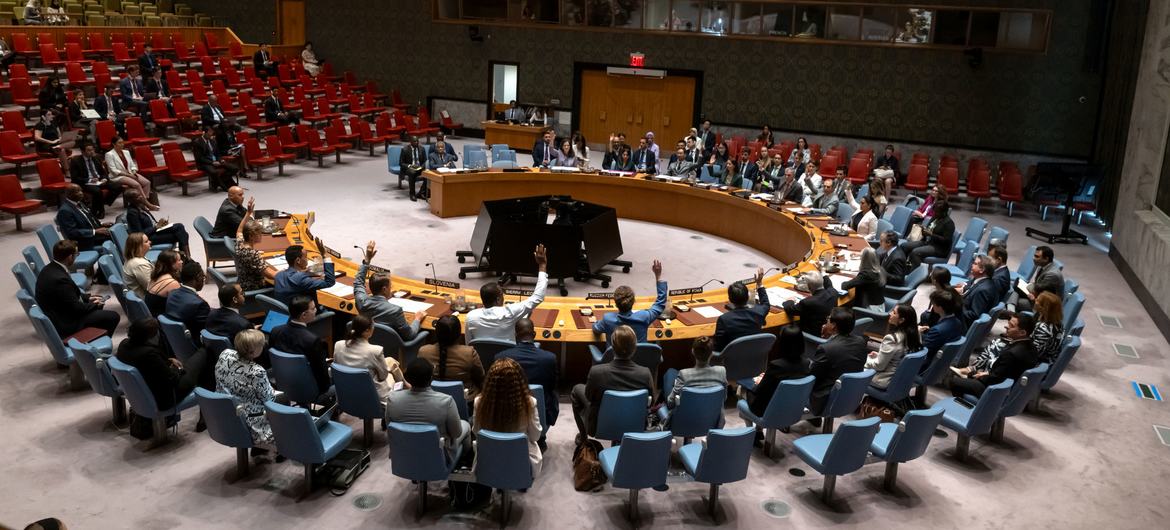
Security Council unanimously adopts Resolution 2786 (2025) extending until 28 January 2026 the mandate of the UN Mission to support the Hudaydah Agreement (UNMHA).

Deadly Red Sea passage

Compounding this, Houthi attacks on international shipping in the Red Sea have intensified. On 8 July, the commercial vessel Eternity C was sunk, killing several crew members and leaving others missing. This followed the sinking of the Magic Seas vessel two days earlier.

In a statement, UN Special Envoy Hans Grundberg condemned the attacks, calling them violations of international maritime law and warning they risked serious environmental and geopolitical fallout.

He called on Ansar Allah to cease attacks that risk escalating tensions in and around Yemen.

“[He urges them] to build on the cessation of hostilities with the United States in the Red Sea and to provide durable guarantees to the region and the wider international community, ensuring the safety of all those using this critical waterway,” the statement noted.

Significant operational constraints

Within Hudaydah itself, UNMHA faces significant constraints.  

The June letter by the Secretary-General details restrictions by Houthi authorities on UN patrols to the critical Red Sea ports – Hudaydah, Salif and Ras Issa.

Damage from repeated airstrikes, including by the US and Israel in response to Houthi attacks, has left key port infrastructure partially inoperable, disrupting fuel, food and medical imports.

With Hudaydah responsible for 70 per cent of Yemen’s commercial imports and 80 per cent of humanitarian deliveries, the stakes are high.

© UNICEF/Mahmoud Alfilastini

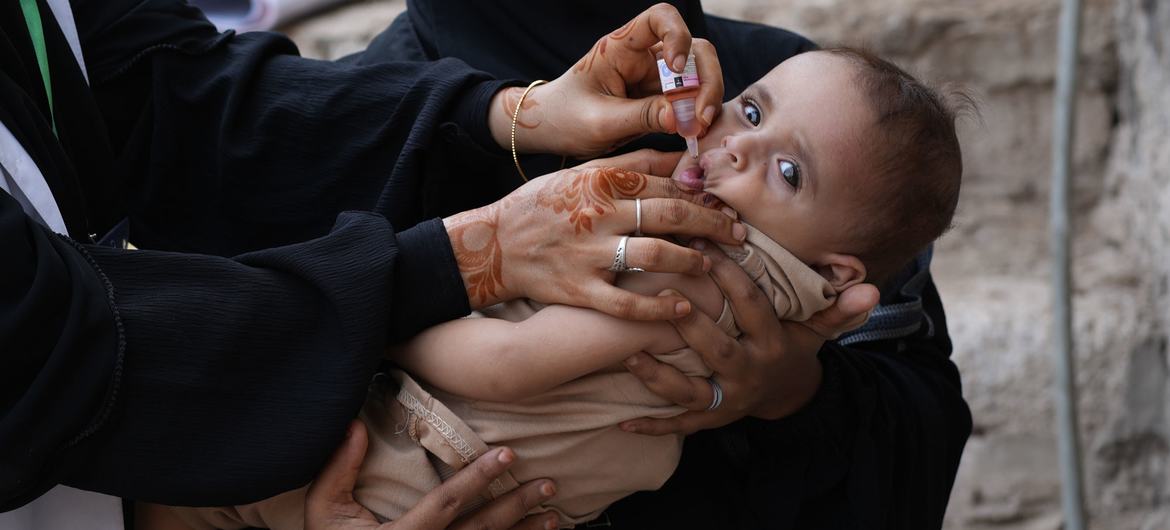
A child receives a polio vaccination in Yemen.

Polio vaccination drive

Meanwhile, a new round of polio vaccinations is underway in Government-controlled areas of southern Yemen, amid mounting concerns over the continued spread of the virus.  

From 12 to 14 July, health workers deployed across 12 governorates, aimed at curbing the outbreak of variant type 2 poliovirus.

The campaign, led by Yemen’s Ministry of Public Health with support from UN Children’s Fund (UNICEF) and World Health Organization (WHO), came as 282 cases have been reported since 2021, with environmental surveillance confirming ongoing transmission.

The campaign is essential to interrupt transmission and protect every child from the debilitating effects of polio,” said Ferima Coulibaly-Zerbo, acting WHO Representative in Yemen.

UNICEF’s Peter Hawkins echoed the urgency, warning of the “imminent threat” to unvaccinated children if immunisation gaps persist.

“But, through vaccination, we can keep our children safe,” he said.

Source link

Security Council renews UN’s Haiti mission amid spiralling crises

By adopting resolution 2785, the Council renewed the authorization of the UN Integrated Office in Haiti (BINUH), reaffirming support for a Haitian-led solution to the island nation’s overlapping crises.

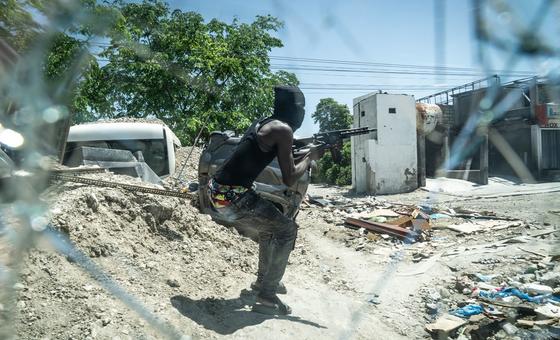
The decision comes as armed gangs maintain their grip on most of the capital, Port-au-Prince, with over 1.3 million people displaced and more than 4,000 killed in the first half of 2025 alone, according to UN figures.

Conditions have deteriorated dramatically amid growing food insecurity and the erosion of public institutions. Of particular concern is the safety of women and girls, with a sharp rise in reports of sexual violence since the start of the year – including rape, gang rape, and sexual enslavement.

Time is running out

The Security Council also “expressed its intention to consider, without delay” the recommendations by the Secretary-General on possible future roles for the UN in sustaining security and stability in Haiti.

In February, António Guterres presented the Council with a range of options.

Each new wave of criminal attacks against the communities and institutions of Haiti is a distressing sign that time is running out,” the UN chief said in a letter.

He urged Member States to support the Multinational Security Support (MSS) mission, which the Council authorized in October 2023 to assist Haiti’s national police in tackling gang violence and restoring order. He also emphasized that international efforts to improve security must be matched by national progress toward resolving the political crisis.

Several Council members voiced willingness to engage on the Secretary-General’s proposals. The Chinese representative, for instance, said Beijing was open to working with others to chart a constructive way forward.

“With regard to how to improve the situation in Haiti, including how to respond to the Secretary-General’s recommendations, we are ready to have candid communication with all parties, explore viable solutions and seek the broadest possible consensus,” said Geng Shuang, Deputy Permanent Representative of China to the UN.

Security Council adopts resolution extending the mandate of the UN Integrated Office in Haiti (BINUH) during the meeting on the question concerning Haiti.

Mission critical

The Council’s action was welcomed by Haiti’s Ambassador, who underscored the political and security stakes ahead of a critical 2026 transition timeline.

This extension should help Haitian authorities undertake a real, genuine political dialogue, to strengthen good governance, bolster security and bring about justice and promote human rights,” said Pierre Ericq Pierre, Permanent Representative to the UN.

He also expressed his Government’s expectation that the UN mission will support implementation of the national roadmap, including constitutional reforms and elections.

Emphasizing national ownership, he added: “BINUH must work as part of a holistic plan to support Haitian authorities in confronting the grave crisis shaking the country to its core.”

The United States, which led negotiations on the resolution alongside Panama, stressed the urgency of political progress and called on international partners to increase support.

“Less than one year remains on the Transitional Presidential Council’s planned roadmap for the restoration of democratic institutions,” said Ambassador Dorothy Shea, acting representative.

Supporting the security of elections and the participation of all sectors of society is key to sustainable political progress in Haiti. Without BINUH, realizing the vision of a stronger, more resilient society would be less likely.

New mission leadership

Council members also welcomed Carlos G. Ruiz Massieu, appointed as the new Special Representative of the Secretary-General and Head of BINUH, succeeding María Isabel Salvador.

Mr. Ruiz Massieu, who currently leads the UN Verification Mission in Colombia, brings decades of diplomatic and political experience, including in peace negotiations and institution-building.

The UN Integrated Office in Haiti (BINUH) – a special political mission – was established in 2019 to advise and support Haitian authorities on political dialogue, justice, human rights and governance.

It succeeded a series of UN peacekeeping and political missions on the island, dating back to 1993, including the large-scale MINUSTAH operation, which wrapped up in 2017 after 13 years.

Source link

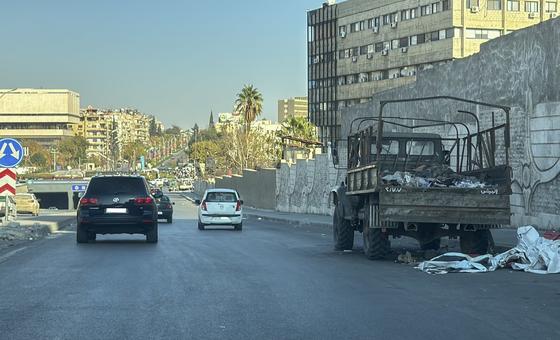
World News in Brief: Inter-ethnic violence in Syria, Indigenous Peoples’ rights, global information security

The violence erupted two days after a Druze merchant was abducted on the highway to Damascus.

The incident marks the latest episode of sectarian bloodshed in Syria, where fears among minority groups have surged since Islamist rebels toppled former dictator Bashar al-Assad in December and installed a new caretaker Government, which is gaining increasing international recognition.

Those targeted include the Druze sect, an offshoot of Shia Islam.  

UN voices ‘deep concern’

On Monday, UN Deputy Special Envoy for Syria, Najat Rochdi, expressed “deep concern” over these reports and urged authorities and stakeholders to “take immediate steps to protect civilians, restore calm and prevent incitement.”

She also underscored the need for inclusion, trust-building and meaningful dialogue to advance a credible and inclusive political transition in Syria.

UN human rights chief says ‘wisdom’ of Indigenous Peoples needed in climate change, digital policy upgrades

The UN human rights chief spoke at a high-level political forum on the rights of Indigenous Peoples on Monday.

Underscoring how crucial such forums are to advancing the rights of Indigenous Peoples, Volker Türk highlighted developments in Colombia, Finland and Guatemala that have given them more self-determination.

But despite these advances, violations against Indigenous Peoples’ rights continue.

Many still lack formal land recognition, while mining activity, deforestation and large-scale agricultural development often cause environmental destruction.

Indigenous Peoples also experience immense discrimination and face the brunt of climate chaos, Mr. Türk stressed.

Toll on activists

Furthermore, data from the human rights office reveals that 26 per cent of rights activists killed in 2023 and 2024 were Indigenous, largely in the Americas.

Additionally, states are using AI in ways that harm Indigenous Peoples through surveillance, data exploitation and exclusion from decision-making. Türk thus called for human rights-based approaches that uphold Indigenous data sovereignty and self-determination.

The High Commissioner also called for future policies on climate, digital technologies and other areas to “reflect the wisdom and experience of Indigenous Peoples.”

“This is not only essential to respect and fulfil the human rights of Indigenous Peoples,” he concluded. “There is growing recognition that the ideas and approaches of Indigenous Peoples hold important lessons for all of us.”

Guterres welcomes step forward in securing digital technology worldwide

The UN chief Antonio Guterres on Monday, welcomed the adoption by consensus of the UN Open Ended Working Group on Information and Communication Technologies.

It was established in 2020 with a five-year mandate to promote regular institutional dialogue and initiatives focused on keeping digital technologies safe and secure.  

The Secretary-General welcomed the Final Report of 10 July, which summed up the past five years of negotiations, said a statement issued by his Spokesperson.  

It reflects shared views on current and emerging threats, responsible government policies, international law, norms and efforts such as confidence-building and capacity development.  

Call for cooperation

It also establishes a permanent mechanism to continue discussions about responsible State behaviour in the use of information and communications technologies, which the Secretary General particularly appreciated.  

“The Secretary-General now calls upon all States to work together through the Global Mechanism to tackle digital risks and ensure these technologies are leveraged for good,” the statement said.  

The Secretary General congratulated the group on its accomplishments, saying the consensus adoption “demonstrates that even in the most challenging international security environment, collective action is still possible.” 

Source link

Yemen deserves hope and dignity, Security Council hears

For over a decade, Yemen has endured conflict between Houthi rebels and government forces. Millions of lives and livelihoods remain at risk, and the conflict shows no sign of ending.

The appetite for a military escalation remains,” Hans Grundberg, UN Special Envoy for Yemen, told ambassadors.

While violence remains an immediate threat, he noted that the economy has now become the “most active frontline” of the conflict: the national currency in free fall and purchasing power rapidly declining, poverty is a daily threat.

The little money people do have in their pockets is either falling in value or literally falling apart,” he said.

Currently, 17 million people face food insecurity – a number that could rise to 18 million by September without swift and expanded humanitarian aid.  More than one million children under the age of five are suffering from life-threatening malnutrition, putting them at risk of permanent physical and cognitive harm.

“We haven’t seen this level of deprivation since before the UN-brokered truce in early 2022,” said Tom Fletcher, UN Under-Secretary-General for Humanitarian Affairs.

Regional instability deepens the crisis

Broader instability in the Middle East has further worsened Yemen’s situation, Mr. Grundberg said, pointing to recent attacks by Ansar Allah (as the Houthi rebels are formally called) on commercial ships in the Red Sea and retaliatory strikes by Israel on key Yemeni infrastructure, including ports and a power station.

Yemen must not be drawn deeper into the regional crisis that threatens to unravel the already extremely fragile situation in the country. The stakes for Yemen are simply too high,” he said.

Nevertheless, he noted that the ceasefire between Iran and Israel did spark hope that momentum for negotiations in Yemen might resume.

Still, he stressed that Yemen’s peace process must solely depend on regional dynamics.

“Yemen must advance regardless, moving from simply managing shocks and volatility to developing practical steps that lay the groundwork for lasting solutions,” he said.

Negotiations must prevail

Without meaningful peace negotiations, Yemen’s humanitarian crisis will only deepen, Mr. Grundberg warned.

A military solution remains a dangerous solution that risks deepening Yemen’s suffering,” he said.

He highlighted recent progress in Taiz governorate, where both parties agreed to jointly manage water supplies – a move that will provide safe drinking water to over 600,000 people.

This agreement also promotes sustainable water access, reducing reliance on humanitarian aid.

“While negotiations may not be easy, they offer the best hope for addressing, in a sustainable and long-term manner, the complexity of the conflict,” Mr. Grundberg said.

Call for international support

Mr. Grundberg called on the Security Council to continue prioritizing Yemen.

He also reiterated UN calls for all detained humanitarians, including UN staff, and called on donors to ensure sufficient funding to sustain aid organizations on the ground.

Yemen’s future depends on our collective resolve to shield it from further suffering and to give its people the hope and dignity they so deeply deserve,” Mr. Grundberg said.

Haitian capital ‘paralysed and isolated’ by gang violence, Security Council hears

 Since January, the UN Integrated Office in Haiti (BINUH), recorded over 4,000 individuals deliberately killed – a 24 per cent increase compared to the same period in 2024.  

The capital city was for all intents and purposes paralysed by gangs and isolated due to the ongoing suspension of international commercial flights into the international airport,” Miroslav Jenča, Assistant Secretary-General for the Americas at the department of political affairs (DPPA), told ambassadors in the Security Council on Wednesday.

Having visited the country recently, he warned that, gangs have only “strengthened their foothold”, which now affects all communes of the Port-au-Prince metropolitan area and beyond, “pushing the situation closer to the brink.”

He called on the international community to act decisively and urgently or the “total collapse of state presence in the capital could become a very real scenario”.

Gang control expands

Ghada Fathi Waly, Executive Director of the UN Office on Drugs and Crime (UNODC), echoed that warning.

“As gang control expands, the state’s capacity to govern is rapidly shrinking, with social, economic and security implications,” she told ambassadors, briefing remotely from Vienna.

“This erosion of state legitimacy has cascading effects,” she said, with legal commerce becoming paralysed as gangs control major trade routes, such conditions worsening “already dire levels of food insecurity and humanitarian need,” she added.  

Rise of ‘vigilante’ groups

Amidst increasing public frustration with the limited protection capacity of the state, “vigilante” or self-defence groups are now gaining in popular appeal.  

Although some are motivated by the urgent need to protect their communities, many operate outside existing legal frameworks, in some cases, engaging in extrajudicial actions and colluding with gangs.  

The rise of these actors is pushing demand for guns and military-grade weapons, “fuelling illicit arms markets and raising the risk of licit weapons being diverted to criminal elements,” Ms. Waly said.  

Human trafficking

Meanwhile, the broader deterioration of the security and economic situation in the capital and the rest of the country continues to fuel a sharper escalation in human rights violations.  

Despite persistent under-reporting of sexual violence due to fear of reprisals, social stigma and lack of trust in institutions, BINUH reported an increase in sexual violence committed by gangs in the past three months.  

In May, Haitian police raided a medical facility in Pétion-Ville suspected of being involved in illicit organ trade, as allegations of trafficking in persons for the purpose of organ removal are now arising.  

As the situation in Haiti remains desperate, “there is not a moment to lose,” Mr. Jenča urged. 

Source link

Sevilla: Without sustainable development, there is neither hope nor security

Development benefits all countries because it is linked to other areas of activity and society, including basic security itself. Without it, there is no hope – and no stability.

That is the key message from the Director of the UN Development Programme’s Bureau for Policy and Programme Support (UNDP), Marcos Neto, to all other nations gathered in Sevilla who have signed up to the plan of action, which gets underway immediately.

The Sevilla Agreement is the centrepiece of the 4th International Conference on Financing for Development, and it has been adopted by 192 of the 193 UN members.

The United States withdrew citing fundamental disagreements with many policy approaches and is absent from the summit taking place amid scorching temperatures in the southern city of Sevilla, Spain.

No lack of money

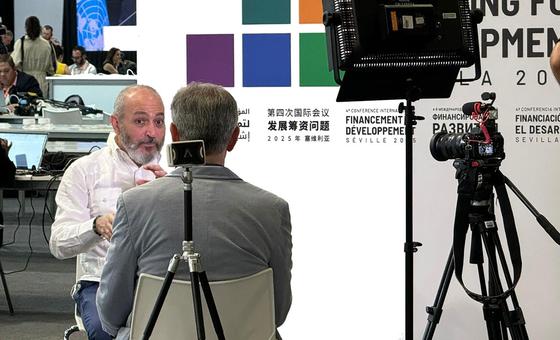
In his interview during the conference, we asked Mr. Neto to explain in plain language what the Seville Commitment is all about.

This interview has been edited for length and clarity.

Marcos Neto: We are five years away from the Sustainable Development Goals [SDGs]. One of the biggest obstacles to this shared agenda of global solidarity is financing. In other words: where is the money? Where will the money come from?

The Sevilla Commitment is a document that makes it clear that this is not about a lack of money – it’s about aligning public and private capital flows toward those Goals, toward the Paris Agreement, and toward all other international commitments.

The commitment outlines what to do with every kind of money – national, international, public, and private. It is a roadmap that was agreed upon through consensus among UN Member States, involving the private sector, civil society, and philanthropy.

UN News: One of the major absences at this Conference was the United States, which left the negotiations on the Undertaking. How did Washington’s withdrawal influence the Conference?

Marcos Neto: A consensus among 192 countries was reached and approved here. Now, clearly, the United States is one of the world’s largest economies and holds significant weight. I believe it’s crucial to keep the dialogue open and continue engaging all Member States, each according to their own needs.

For example, development financing is directly linked to security. Without development, you cannot have a stable society – one without conflict. What’s your level of poverty? What’s your level of inequality? Development is a security strategy. Development is hope. A people without hope is a people in trouble.

UN News: In conferences like this, documents are adopted, but often people feel they are just empty words that don’t really affect their daily lives. What would you say to those citizens to convince them that these decisions actually make a difference?

Marcos Neto: I’ll give you a very clear example. At the last Conference on Financing for Development ten years ago in Addis Ababa, there was a phrase that envisioned the creation of what we now call Integrated National Financing Frameworks (INFFs). We at UNDP developed this concept in 86 countries. This is real: 47 billion dollars were aligned and mobilized through that mechanism.

50 billion dividend

So, in practice, I can say we have helped put more than 50 billion dollars into the hands of countries. We’ve also helped them reform their national budget processes so that the money reaches where it’s supposed to go.

Our current commitment is to implement the Seville Commitment. We are committed to delivering on it.

From Seville to Belém

UN News: In addition, the Sevilla Platform for Action will also serve to implement various initiatives…

Marcos Neto: Yes, we are leading 11 of the initiatives under the Seville Platform, and I think it was a great move by the Government of Spain to have created this action platform in Sevilla to turn this into implementation.

It’s very similar to what Brazil wants to do at the end of the year at COP30. There is a direct connection between Seville and Belém – the host city of the UN Climate Change Summit in Brazil later this year. These connections are important.

Source link