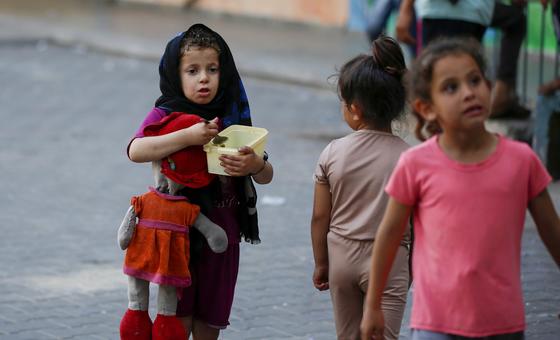
Yemen: Nearly half the population facing acute food insecurity in some southern areas

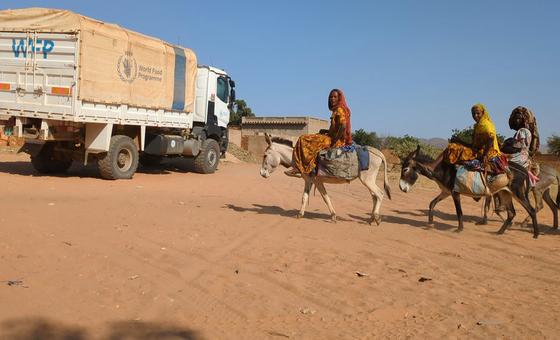
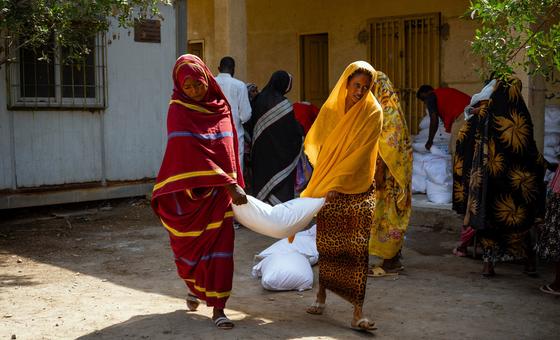
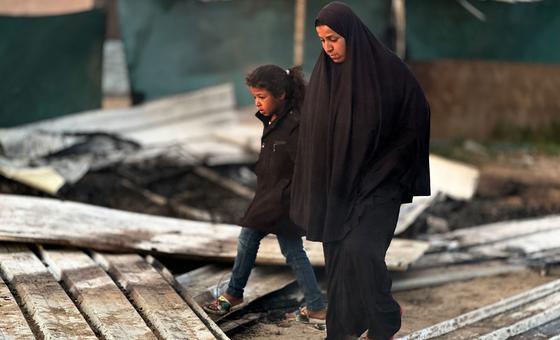
Yemen remains trapped in a prolonged political, humanitarian and development crisis, after enduring years of conflict between government forces and Houthi rebels, with populations in the south of the country now facing a growing food insecurity crisis.

partial update released Monday by the UN-backed Integrated Food Security Phase Classification (IPC) system – which ranks food insecurity from Phase 1 to famine conditions, or Phase 5 – paints a grim picture.

Starting in May 2025, around 4.95 million people have been facing crisis-level food insecurity or worse (Phase 3+), including 1.5 million facing emergency-level food insecurity (Phase 4).

These numbers mark an increase of 370,000 people suffering from severe food insecurity compared to the period from November 2024 to February 2025.

Further deterioration

The UN World Food Programme (WFPwarned that “looking ahead, the situation [was] expected to deteriorate further,” with 420,000 people potentially falling into crisis-level food insecurity or worse.

This would bring the total number of severely food-insecure people in southern governorate areas to 5.38 million – more than half the population.

Multiple compounded crises – such as sustained economic decline, currency depreciation in southern governorates, conflict, and increasingly severe weather – are driving food insecurity in Yemen.

High-risk areas

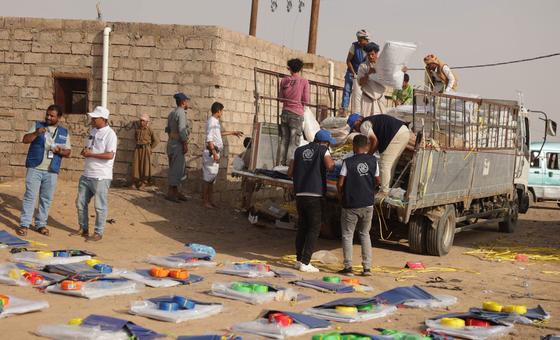
Amid Yemen’s growing food crisis, humanitarian agencies including WFP, the UN Children’s Fund (UNICEF), and the Food and Agriculture Organization (FAO) are reorienting their efforts towards high-risk areas, delivering integrated support across food security, nutrition, sanitation, health, and protection to maximise life-saving impact.

“The fact that more and more people in Yemen don’t know where their next meal will come from is extremely concerning at a time when we are experiencing unprecedented funding challenges,” said Siemon Hollema, Deputy Country Director of WFP in Yemen.

Immediate support needed

WFP, UNICEF and FAO are urgently calling for sustained and large-scale humanitarian and livelihood assistance to prevent communities from falling deeper into food insecurity, and to ensure that the UN “can continue to serve the most vulnerable families that have nowhere else to turn,” he said.

Internally displaced persons, low-income rural households, and vulnerable children are particularly affected, and are now facing increased vulnerability, as approximately 2.4 million children under the age of five and 1.5 million pregnant and lactating women are currently suffering from acute malnutrition.

The situation is dire, but with urgent support, “we can revitalise local food production, safeguard livelihoods, and move from crisis to resilience building, ensuring efficiency and impact,” said FAO Representative in Yemen, Dr. Hussain Gadain.
Source link

Gaza: UN warns of ‘weaponised hunger’ and growing death toll amid food chaos

Speaking to journalists in Deir al Balah on Saturday, Jonathan Whittall, who heads the UN humanitarian coordination office (OCHA) in Gaza and the West Bank, said: “The attempt to survive is being met with a death sentence.”

Since Israel eased its total blockade last month, more than 400 people are reported to have died trying to reach food distribution points.

We see a chilling pattern of Israeli forces opening fire on crowds gathering to get food,” Mr. Whittall said, noting many of these sites are in militarised zones. Others have been killed along access routes or while protecting aid convoys.

“It shouldn’t be this way,” he said. “There shouldn’t be a death toll associated with accessing the essentials for life.”

Empty warehouses, overwhelmed hospitals

Conditions across Gaza continue to deteriorate. Water wells have run dry or are located in dangerous areas, sanitation systems have collapsed, and disease is spreading rapidly.

“Our warehouses stand empty,” Mr. Whittall said. “Displaced families flee with nothing – and we have nothing to give them.”

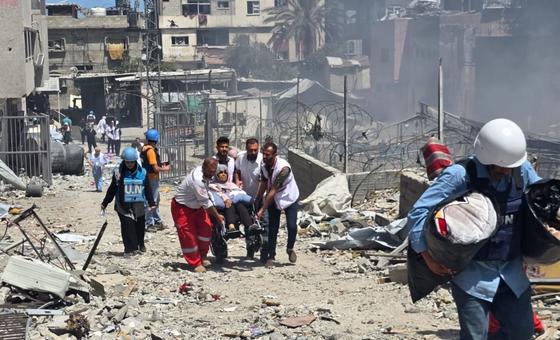
Partially functioning hospitals are overwhelmed by near-daily mass casualty events. Some have been directly hit, while others are choked by fuel shortages and forced evacuation orders.

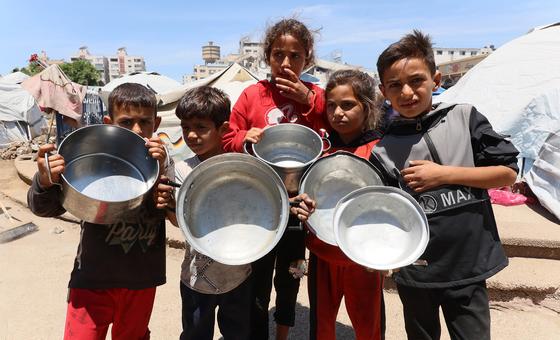
UNICEF reports more than 110 children are being treated for malnutrition every day. Mr. Whittall said humanitarian agencies are capable of reaching every family in the shattered enclave but are being systematically blocked. “We have a plan…but we are prevented from doing so at every turn.”

Death sentence

He described the situation as “weaponised hunger”, “forced displacement”, and “a death sentence for people just trying to survive”.

“This is carnage,” Mr. Whittall said. “It appears to be the erasure of Palestinian life from Gaza.”

He urged the international community to act: “We need a lasting ceasefire, accountability, and real pressure to stop this. This is the bare minimum.”

UN rights office ‘horrified’ by deadly violence at Gaza food distribution sites

The UN human rights office (OHCHR) in the Occupied Palestinian Territory on Wednesday called on the Israeli military to cease the use of lethal force near aid convoys and food distribution sites.

It cited “repeated incidents” of Palestinians being shot or shelled while seeking food, warning that such attacks could constitute war crimes under international law.

“We are horrified at the repeated incidents, continuously reported in recent days across Gaza, and we call for an immediate end to these senseless killings,” the office said in a statement.

Hundreds killed

Since 27 May, when the Gaza Humanitarian Foundation (GHF), an initiative backed by Israel and the United States began food distribution in southern Gaza – bypassing the established UN-led system – hundreds have been killed and many more wounded near four distribution points or while waiting to pick up aid.

In one of the deadliest recent incidents, Israeli military reportedly shelled a crowd waiting for UN food trucks in southern Gaza on 17 June, killing at least 51 people and injuring some 200 others, according to Gazan health authorities.

A day earlier, three Palestinians were reportedly killed and several injured in a similar incident in western Beit Lahiya.

There is no information to suggest that the people killed or injured were involved in hostilities or posed any threat to the Israeli military or to staff of GHF distribution points,” OHCHR said.

Protect civilians, aid workers

The UN World Food Programme (WFP), which has managed to dispatch only 9,000 metric tons of food within Gaza over the past month – a fraction of what is required for the 2.1 million people in need – echoed calls for immediate protection of civilians and aid workers.

“Far too many people have died while trying to access the trickle of food aid coming in,” the agency said in a separate statement.

“Any violence resulting in starving people being killed or injured while seeking life-saving assistance is completely unacceptable.”

Massive scale-up needed

The UN emergency food relief agency said the fear of starvation and desperate need for food is causing large crowds to gather along well-known transport routes, hoping to intercept and access humanitarian supplies while in transit.

Only a massive scale-up in food distributions can stabilize the situation, calm anxieties and rebuild the trust within communities that more food is coming,” it said, calling urgently for safer convoy routes, faster permissions, restored communication channels and additional border openings.

“The time to act is now. Delays cost lives. We must be allowed to safely do our jobs,” the agency said.

Source link

More Gazans killed trying to get food, healthcare near to ‘full disaster’

 “We are walking the fine grey line between operational capacity and full disaster, every day,” said Dr Thanos Gargavanis, WHO trauma surgeon and emergency officer, speaking from the enclave.

The veteran UN medic’s comments came amid new reports on Tuesday morning that more Palestinians had been killed trying to access food, this time near an aid distribution site in Khan Younis in southern Gaza.

The mass casualty event left “hundreds of casualties, completely overwhelming Nasser Medical Complex” in Khan Younis, said WHO’s Representative in the occupied Palestinian territory, Dr Rik Peeperkorn.

No-go zone

Across Gaza today, health services are “barely available” and difficult to access, Dr Peeperkorn said, since more than 80 per cent of Gaza’s territory is under evacuation orders.

“The shrinking humanitarian space makes every health activity way more difficult than the previous day,” Dr Gargavanis added.

Nasser Medical Complex is the largest referral hospital in Gaza and the only remaining main hospital in Khan Younis. It is situated within the evacuation zone announced by the Israeli military on 12 June.

The nearby Al-Amal Hospital – operated by the Palestinian Red Crescent Society (PRCS) – continues to provide services to patients already there, but it is unable to admit anyone else because of ongoing military operations.

“It is what we call a completely minimal functional hospital,” Dr Peeperkorn said.

Deadly impact of fuel shortages

Only 17 of Gaza’s 36 hospitals are currently partially functional, medical supplies are critically low and no fuel has entered the Strip for more than 100 days.

The latest mass casualty event is just the latest involving Gazans trying to access aid amid ongoing severe restrictions placed on the amount of aid allowed into the Strip by Israel.

On Monday, more than 200 patients arrived at the Red Cross Field Hospital in Al Mawasi – the highest number received by the facility in a single mass casualty incident. Of that number, 28 patients were reportedly declared dead, WHO’s Dr Peeperkorn said.

Just one day earlier, on 15 June, the same hospital received at least 170 patients, who reportedly had been trying to access a food distribution site.

“The recent food distribution initiatives by non-UN actors every time result in mass casualty incidents,” WHO’s Dr Gargavanis insisted.

Private aid plan fallout

Since late May, the UN and humanitarian partners have been sidelined in Gaza as a new aid distribution model backed by Israel and the United States began operations under the framework of the Gaza Humanitarian Foundation (GHF), which uses private military contractors. 

The WHO trauma surgeon highlighted a “constant correlation” between the locations of food distribution spots and the mass casualty incidents in Rafah, in Khan Younis and along the Netzarim corridor.

Asked about the type of injuries sustained by those seeking aid, and who is responsible, Dr Garavanis stressed that WHO is not a forensic agency.

“We’re not in a position to clearly identify from the nature of the injury” who has caused it, he said. “What we can say, though, is that we’re talking of gunshot wound injuries, and we’re talking of very few incidents of shrapnel injuries.”

The UN has repeatedly warned that the new aid distribution system does not meet humanitarian principles of humanity, impartiality, independence and neutrality. The global body has also called for aid restrictions to be lifted.

Dr Peeperkorn insisted that the WHO must be facilitated to move supplies into Gaza in a cost-effective manner “via all possible routes” to prevent further shutdowns of medical services. He said that 33 WHO trucks with supplies are waiting at Al Arish in Egypt to be granted passage into the enclave, with another 15 standing by in the occupied West Bank.

Source link

World News in Brief: Rights abuses in Haiti, Sudan war sees exodus to Chad, food trade optimism

Between 1 January and 30 May, at least 2,680 people – including 54 children – were killed, 957 injured, 316 kidnapped for ransom, and many more subjected to sexual violence and child gang recruitment.

“Alarming as they are, numbers cannot express the horrors Haitians are being forced to endure daily,” said Mr. Türk.

Conflicts on all sides

In recent months, gangs have attacked Mirebalais in the centre of the country, looting police stations, destroying property and freeing over 500 inmates from the local prison.

Meanwhile, so-called self-defence groups have targeted individuals they suspect of gang affiliation. On 20 May, at least 25 people were killed and 10 injured by a group accusing them of supporting gangs.

Law enforcement has ramped up operations against them. Since January, police have killed at least 1,448 people, including 65 during extrajudicial executions.

Mr. Türk called on the international community to take decisive action to end the violence, including renewed support for the Security Council-backed Multinational Security Support (MSS) mission and full enforcement of the council’s arms embargo.

He also reiterated his call for States to not forcibly return anyone to Haiti.  

“The coming months will be crucial and will test the international community’s ability to take stronger, more coordinated action – action that will help determine the future stability of Haiti and the wider region,” Mr. Türk added.

Outlook for food trade ‘relatively optimistic’, FAO says

The Food and Agriculture Organization (FAO) released their annual Food Outlook report Thursday which provides a “relatively optimistic” look at international food markets.  

According to the report, production is expected to increase across almost all categories, with grain production expected to reach record levels. And while prices do remain higher this year than last, between April and May there was an overall decrease of almost one per cent. 

The report noted, however, that global trends — including rising geopolitical tensions, climate shocks and trade uncertainties — may still negatively impact production.  

“While agricultural production trends appear solid, drivers that could negatively impact global food security are increasing,” said FAO Chief Economist Máximo Torero.

Fowl, fish fraud and fertilizer flows

The report noted that outbreaks of avian influenza have become more persistent and constitute “one of the most significant biological threats to the global poultry sector.” Nevertheless, poultry exports have largely remained largely resilient so far.  

The issue of fish fraud – the misrepresentation of the location or manner of the catch – was also discussed, with FAO warning that risks are growing.  

Additionally, the report examined fertilizer flows, noting Russia’s growing exports and the decrease in fertilizer prices since the COVID pandemic.  

Overall, the report noted, the cost of imports worldwide has increased by 3.6 percent or nearly $2.1 trillion.  

Eastern Chad ‘reaching a breaking point’ as Sudan war refugees continue to arrive  

Aid teams in eastern Chad warn on Friday that host communities are reaching breaking point because of climate shocks and the pressure of hosting war refugees from neighbouring Sudan.

In an alert, the UN’s top aid official in Chad, François Batalingaya, warned that a humanitarian catastrophe is unfolding almost unnoticed by the world’s media.

“Right now, nearly 300,000 people are stranded at the border, waiting to be relocated inland,” he noted.  

“Tens of thousands, mostly women and children, are sleeping in the open without shelter, clean water and health care. These are survivors of war. They arrive traumatized, hungry, and with nothing. They recount stories of mass killings, sexual violence and entire communities destroyed.” 

Major exodus

Since the outbreak of war in Sudan in April 2023, more than 850,000 Sudanese refugees have crossed into Chad. They’ve joined the 400,000 existing Sudanese refugees who have arrived over the last 15 years.

The UN aid official explained that even before the latest Sudanese arrivals, nearly one million people in eastern Chad were in urgent need of help.  

Today, “they are sharing what little they have – food, water, and space – with those fleeing the war,” Mr. Batalingaya said.

In an appeal for international assistance, he warned that clinics are overwhelmed, malnutrition is rising and basic services are buckling.  

Gaza: Search for food puts lives on the line

Since the end of May, aid distribution in Gaza has been carried out by a mechanism backed by Israel and the United States bypassing UN agencies and their established partners, which has been plagued by deadly incidents and chaos.

On Monday, UN partner the International Committee of the Red Cross (ICRC) reported that 29 casualties arrived at its field hospital in west Rafah that morning, eight of whom had died. 

Almost all had explosive trauma wounds, with two others suffering gunshot wounds. 

Forced to choose

“The UN reiterates that civilians must always be protected,” said Deputy Spokesperson Farhan Haq, speaking from Headquarters in New York.

No person, anywhere, should be forced to choose between risking one’s life and feeding one’s family.”  

Fuelling aid efforts

Meanwhile, fuel stocks in Gaza are dangerously low, putting further strain on critical services and humanitarian operations. 

Mr. Haq said that some 260,000 litres of fuel were looted in northern Gaza over the weekend.

Prior to this, the UN had repeatedly tried to reach these stocks to retrieve them, but the Israeli authorities denied these attempts – with 14 denials since 15 May. 

“Our attempts to reach fuel supplies in Rafah, in the south of Gaza, also continue to be denied,” he added.

“The UN warns that unless a solution is found in the coming days, the entire aid operation could come to a standstill.”

© UNRWA/Louise Wateridge

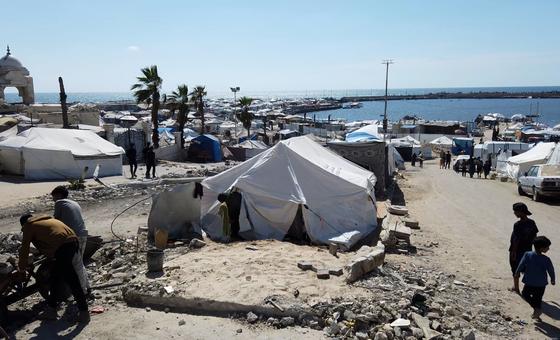
Palestinians who have taken refuge in a UNRWA school in Deir al-Balah camp in central Gaza are struggling to survive as they lack access to basic humanitarian needs in the central Gaza city of Deir al-Balah.

‘Desperate, starving people’

Mr. Haq also updated on efforts to bring desperately needed humanitarian assistance into the Gaza Strip, where the entire population, more than two million people, faces famine conditions.

On Monday, the UN led a mission to deliver supplies that entered the enclave via the Kerem Shalom border crossing to Gaza City, which was still ongoing. 

Since Israel allowed limited amounts of aid to enter on 19 May, the UN and partners have only been able to collect about 4,600 metric tonnes of wheat flour from Kerem Shalom.

“Most of it was taken by desperate, starving people before the supplies reached their destinations. In some cases, the supplies were looted by armed gangs,” he said.

Resume aid flow now

Mr. Haq emphasized that as the occupying power, Israel bears responsibility when it comes to public order and safety in Gaza. 

“That should include letting in far more essential supplies, through multiple crossings and routes, to meet humanitarian needs and help reduce looting,” he said.

UN partners working on food security estimate that between 8,000 and 10,000 metric tonnes of wheat flour is required to reach all families across Gaza with at least a single bag.

He stressed that “the sustained and unrestricted flow of aid into Gaza must resume as soon as possible.” 

Dangerous routes, driver shortages and delays

He said no missions to collect supplies from Kerem Shalom took place at the weekend as Israel informed that the crossing would remain closed on Friday and Saturday.

Humanitarians also continue to face major impediments that affect their ability to conduct these operations, including unacceptably dangerous routes, a severe shortage of vetted drivers, and delays.

West Bank update

Mr. Haq also touched on the situation in the occupied West Bank.

He said operations by the Israeli forces in the north have continued over the past week, destroying roads and disrupting Palestinians’ access to essential services. 

The UN and partners continue to respond, including by providing water, sanitation and hygiene assistance to tens of thousands of displaced Palestinians.  

In Gaza, daily food intake has fallen well below ‘survival’ level

Latest data simulations from the Food and Agriculture Organization (FAO) point to the average Gazan eating just 1,400 calories per day – “or 67 per cent of what a human body needs to survive” (2,300 calories) as of May.

Between October 2023 and the end of December 2024, average intake was 1,510 calories per day, or 72 per cent of the minimum recommended amount.

“The findings reveal systemic and escalating violations of both international human rights law and international humanitarian law, particularly concerning the right to adequate food, the prohibition of starvation as a method of warfare, and the protection of civilians in armed conflict,” FAO insisted.

Even based on its most optimistic food availability scenario, the UN agency estimated that energy intake was just 1,470 calories per person per day on 11 May, during the complete aid blockade imposed by Israel, beginning 2 March.

This has critical implications for hunger and undernutrition, especially for families without cash and/or able-bodied men, as well as children, pregnant and lactating women, person with disabilities and the elderly,” FAO explained.

The agency noted that its analysis is in line with dire warnings of acute hunger across Gaza issued by UN-backed food security experts last month, based on the lack of available wheat flour, pulses, rice, dairy products, and vegetable oil.

Without an improvement in the amount of aid being allowed into Gaza for distribution by established agencies, FAO warned that the already dire humanitarian situation could deteriorate even further.

This is despite repeated calls to Israel from the United Nations including from the Secretary-General to allow more aid in at scale, in line with “binding orders” issued by the International Court of Justice to fully cooperate with the UN and ensure that aid reaches the people of Gaza without delay.

Unknown numbers of dead

Gaza’s population today is approximately 2.1 million, down from 2.23 million in October 2023 before the war began following Hamas-led terror attacks in Israel.

Citing the Palestinian authorities, FAO said that as of 30 April, 52,400 Palestinians had been reported killed, while another 11,000 were feared missing, presumably under the rubble.

While more than 60,000 children have been born in the Gaza Strip during the conflict, “an unknown number of Palestinians have died of natural causes or indirectly from the conflict, due to hunger, untreated diseases or injuries since October 2023”, FAO said.

The UN agency also referred to a June 2024 article by the authoritative medical journal The Lancet suggesting that up to 186,000 people would likely die from indirect causes because of the conflict, at a “conservative” rate of four indirect deaths for every direct death.

According to FAO’s simulation, 2,297 tonnes – equivalent to 120 trucks – per day are required to deliver food baskets providing 2,100 calories per person per day to the entire population of the Gaza Strip. On Wednesday, UN teams requested access for 130 truckloads of aid via Kerem Shalom, but only 50 carrying flour were approved to enter from Israel.

Source link

Gaza: Guterres urges probe into killings at food distribution sites

More than 30 people were killed and over 100 wounded while waiting in the early morning to get food from two sites in Rafah and Middle Gaza run by the newly established Gaza Humanitarian Foundation (GHF), according to media reports.

The organization is backed by Israel and the United States and uses private US security contractors supervised by the Israeli military. Aid distributions began at the end of May, bypassing the UN and other humanitarian agencies.

Risking their lives

UN chief António Guterres issued a statement on Monday saying he was “appalled” by the reports.

“It is unacceptable that Palestinians are risking their lives for food,” he said.

“I call for an immediate and independent investigation into these events and for perpetrators to be held accountable.”

He stressed that Israel has clear obligations under international humanitarian law to agree to and facilitate humanitarian aid. 

Allow UN operations

“The unimpeded entry of assistance at scale to meet the enormous needs in Gaza must be restored immediately,” he said.

The UN must be allowed to work in safety and security under conditions of full respect of humanitarian principles.

Meanwhile, the Secretary-General continues to call for an immediate permanent, sustainable ceasefire in Gaza and the immediate and unconditional release of all hostages.

“This is the only path to ensuring security for all. There is no military solution to the conflict,” he said.

More to follow… 

Source link

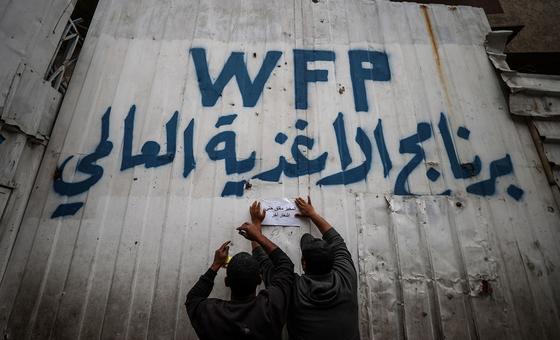
Desperate hunger drives crowd to storm UN food warehouse in Gaza

UN agencies warn that the decimated enclave is teetering on the brink of further chaos after months of war and the collapse of all essential services.

The incident took place at WFP’s Al-Ghafari facility in Deir Al-Balah, where limited stocks of wheat flour had been pre-positioned for use by the few bakeries which have been able to resume operations.

Tragic consequences

Corinne Fleischer, WFP’s Regional Director for the Middle East, described it as a “tragedy [that] should never have happened”.

She called for immediate and steady flow of aid to avoid further scenes desperation.

When people know food is coming, desperation turns to calm,” she said.

The storming of the warehouse is the latest sign of a hunger crisis spiralling out of control after 80 days of near-total blockade on aid into Gaza. While limited supplies of aid have resumed, “it is a drop in the ocean of what is urgently needed,” UN officials have said.

In a statement, WFP said it has consistently warned of alarming and deteriorating conditions on the ground, and the risks of limiting humanitarian aid – despite the looming threat of famine.

The agency reiterated its call for safe, unimpeded humanitarian access to enable orderly food distributions across Gaza immediately.

Collapse of fishing sector

The UN-led Protection Cluster – a coalition of UN entities and NGOs working on protecting civil rights during crisis – warned on Thursday of a collapse of Gaza’s fishing sector.

The sector was a vital source of food and livelihoods before the conflict erupted on 7 October 2023, when Hamas and other Palestinian armed groups attacked Israeli communities.

Monitoring from the UN human rights office, OHCHR, “found a consistent pattern” of Israeli military attacks on fishers in Gaza.

This included firing on vessels at sea by Israeli Naval Forces, as well as drone attacks at sea and on land.

According to the UN Food and Agriculture Organization (FAO), Gaza’s fishing industry is now operating at just 7.3 per cent of its pre-October 2023 capacity, with the fleet all but decimated.

Around 94 per cent of trawlers, 100 per cent of large fishing vessels and 70 per cent of smaller boats have been destroyed.

This dramatic decline is having a devastating impact on food security, income generation, and community resilience across Gaza, triggering negative coping strategies and risks to fishers,” the Protection Cluster said in a report.

Darkest point

Meanwhile, the UN Humanitarian Country Team (HCT) warned that the humanitarian situation in Gaza, six hundred days into the crisis, is at its darkest point yet.

As relentless, deadly bombardment and mass displacement intensify, families are being starved and denied the basic means of survival,” the team said in statement on Wednesday, adding that conditions for humanitarians to deliver aid safely and at scale are absent.

The HCT noted that over the past days, it had submitted 900 truckloads for Israeli approval – about 800 were cleared and just over 500 were cleared for offloading on the Israeli side of Kerem Shalom.

However, humanitarians have been able to collect only about 200 on the Palestinian side of the crossing due to insecurity and restricted access.

“While letting us bring in some nutrition and medical supplies, as well as flour, Israeli authorities have banned most other items, including fuel, cooking gas, shelter and hygiene products,” the HCT said.

Let us work

The UN and partners underscored Israel’s obligations under international humanitarian law, and urged it to treat civilians humanely, with respect for their inherent dignity, refrain from forcible transfer and facilitate the aid that is needed.

“We echo the Secretary-General’s calls: a permanent ceasefire, the immediate and unconditional release of all hostages, and full humanitarian access,” it said, adding:

We are ready to save lives. Let us work. The window to prevent famine is closing fast.

Source link

UN aid teams plead for access amid reports Gazans shot collecting food

Unverified footage from Rafah where the privately-run but Israeli military-supported Gaza Humanitarian Foundation is based showed scenes of panic with crowds of people rushing in different directions, while others carried away boxes of supplies.

The UN human rights office, OHCHR, said that it had received information that at least 47 people had been hurt on Tuesday trying to collect aid.

Those numbers could increase as information on the incident is still being gathered, said Ajith Sunghay, Head of OHCHR in the Occupied Palestinian Territory, speaking to journalists in Geneva on Wednesday.

From January to March 2024, our office has documented 26 incidents where the Israel Defense Forces fired shots while people were collecting humanitarian aid, causing casualties at Al Kuwaiti roundabout and Al Naburasi roundabout,” Mr. Sunghay told UN News.

Renewed appeal for aid access

Meanwhile, UN aid teams have continued to appeal to Israel for access to Gaza to deliver and distribute thousands of tonnes of food, medicine and other basic items waiting just outside Gaza.

Jens Laerke from the UN agency OCHA insisted that the its staff have “everything needed to get aid to civilians safely: the people, the networks and the trust” of Gazans.

Right now, nearly 180,000 pallets of food and other life-saving aid stand ready to enter Gaza, the hungriest place on earth,” he told UN News.

“The supplies have already been paid for by the world’s donors. It is cleared for customs, approved and ready to move. We can get the aid in – immediately, at scale and for as long as necessary.”

50,000 kids killed or injured

In a related development, UNICEF announced that the war in Gaza has killed or injured more than 50,000 children in less than 600 days.

UNICEF spokesperson Tess Ingram said that since the ceasefire ended on 18 March, approximately 1,300 children have been killed and 3,700 injured alone.

That number is enough children to fill more than 1,600 classrooms, Ms. Ingram told UN News: “Every one of these children is in life. A child with a family, with hopes for the future,” she said. “And yet we continue to count their deaths and live stream their suffering to the world. This must end immediately. 

She added: “The children of Gaza desperately need protection from these ongoing bombardments, as well as food, water, medicine and other basic supplies that they need to survive. The blockade must end. Aid must flow freely and at scale, and more than anything else, we need a ceasefire we need collective action to stop these atrocities and to protect children.”

The UNICEF official’s comments follow an attack on a home last weekend that reportedly killed nine out of 10 siblings of one family, the Al-Najars; all the victims were 12 years old or younger.

Escalating violence drives food crisis across eastern DR Congo, warns WFP

Conflict has plagued the DRC for decades, particularly in the east. Armed clashes escalated sharply this year as M23 rebels wrested control of Goma, the capital of North Kivu, in January, followed by Bukavu in South Kivu a month later.

The security and humanitarian situation further deteriorated with recent outbreaks of anthrax and mpox in April and May, fuelled by overcrowded conditions and poor sanitation.

Deepening food insecurity

WFP’s latest report estimates that 7.9 million people are food insecure in the conflict-affected eastern provinces, with 28 million in need across the country.

Food production in Grand Nord, an important agricultural hub in eastern DRC, has been slashed due to recent conflict and displacement. In addition, the closure of Goma’s airport – critical for aid delivery – continues to disrupt operations.

Despite these challenges, WFP reached 1.1 million people in the east between January and March, providing school meals and take-home rations for 100,000 children, nutrition supplements for 340,000 children and pregnant or breastfeeding women – along with logistics and supply chain assistance.

Regional turbulence

The 140,000 Congolese who have fled to neighbouring countries since January – mainly Burundi, Uganda, Rwanda and Tanzania – have turned a national emergency into a regional crisis.

Refugee camps in these countries, already under strain from refugees from other countries, are struggling to absorb the new arrivals.

WFP warned that the surge in need is outpacing available resources. Budget constraints have forced the agency to make sharp cuts: food rations have been halved in Burundi, while cash support has also been halved in Rwanda.

In Uganda, the number of refugees receiving assistance has dropped from 1.6 million to 630,000. In Tanzania, food rations have been reduced from 82 to 65 per cent.

To sustain its emergency operations, WFP is appealing for $433 million to support its work inside the DRC through October.

Additional funding needs include $16.6 million to provide full food assistance in Burundi through 2025, $12 million to maintain full rations for refugees in Rwanda through 2025, $26 million to sustain operations in Uganda through 2025, and $18 million to provide just 75 per cent of full rations in Tanzania through April 2026.

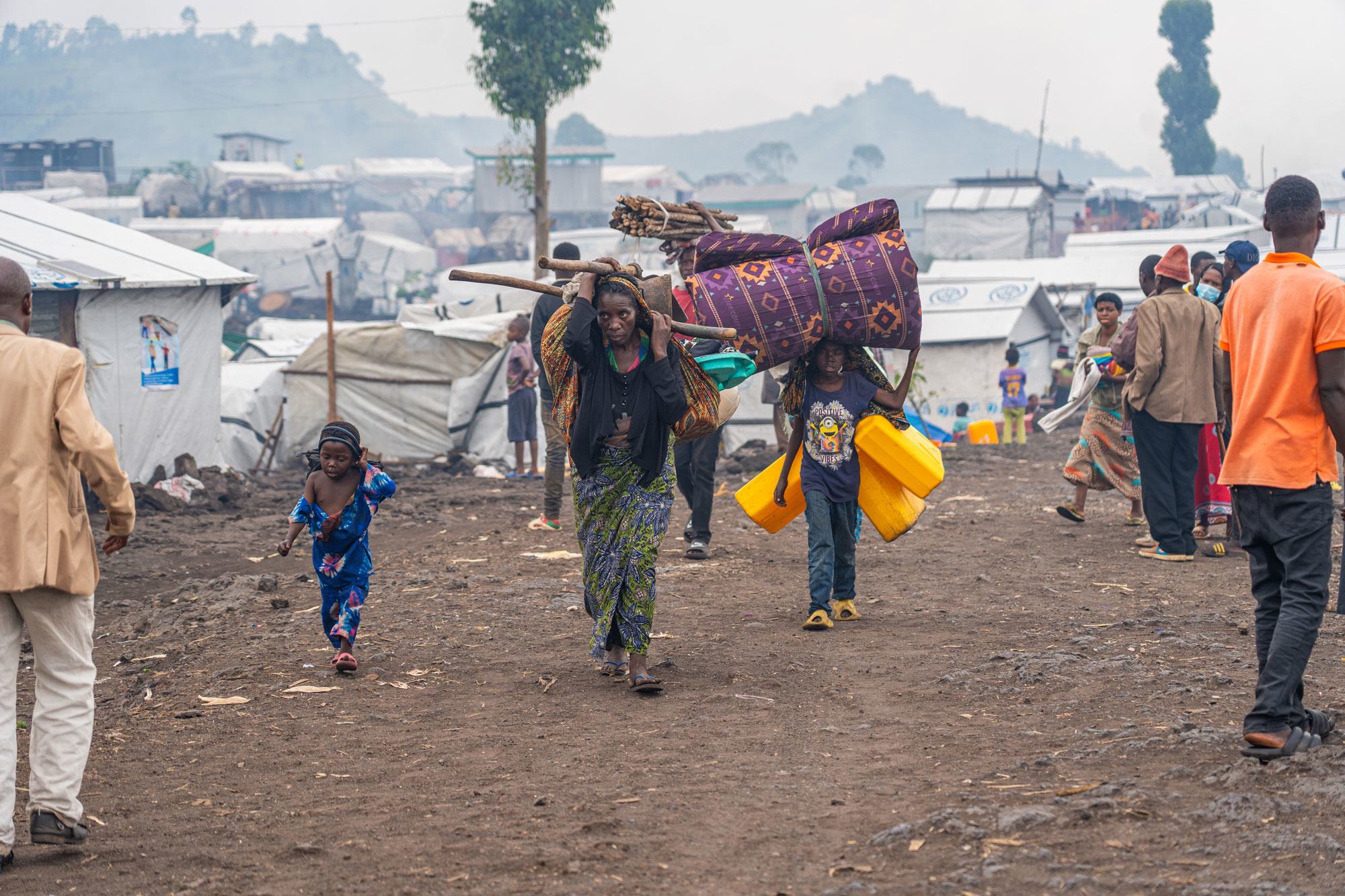
Displaced families in the Bulengo camp on the outskirts of Goma face a dire and uncertain future as M23 authorities instruct them to dismantle their makeshift shelters.

Source link

Aid teams highlight growing anxiety in Gaza after food is looted

“Fifteen World Food Programme trucks were looted late last night in Southern Gaza, while en route to WFP-supported bakeries,” the UN agency said. “These trucks were transporting critical food supplies for hungry populations waiting anxiously for assistance.”

The development is a blow to continuing efforts to help Gaza’s most vulnerable people after Israel allowed a limited number of aid trucks into Gaza earlier this week, following an 11-week total blockade.

Today, Gazans face “hunger, desperation and anxiety over whether more food aid is coming”, WFP said, noting that the uncertainty “is contributing to rising insecurity”.

“We need support from the Israeli authorities to get far greater volumes of food assistance into Gaza faster, more consistently and transported along safer routes, as was done during the ceasefire,” it insisted.

More to come on this developing story…

Kenya: Refugees facing ‘lowest ever’ emergency food rations amid funding crisis

Over the past five years, the refugee population in Kenya has surged by more than 70 per cent – from approximately 500,000 to 843,000 – driven largely by conflict and drought in neighbouring Sudan and Somalia. Of these, around 720,000 people are sheltering in the Dadaab and Kakuma camps, as well as the Kalobeyei settlement.

In Sudan, the civil war that erupted in April 2023 has killed over 18,000 people, displaced 13 million, and left 30.4 million in need of assistance, according to the UN.

WFP provides emergency food and nutrition support to 2.3 million Sudanese as violence and the collapse of essential infrastructure deepen the crisis. 

In Somalia, severe drought has placed 3.4 million people – including 1.7 million children – at risk of acute malnutrition.

At the weekend, Secretary-General António Guterres recommended that the Security Council ensure financing for the African Union’s Support and Stabilisation Mission there (UNSOM), as the country continues to battle insecurity and attacks from Al-Shabaab militants.

Shrinking rations, rising need 

Previously, a monthly WFP ration for a refugee in the camps included 8.1 kilogrammes of rice, 1.5 kg of lentils, 1.1 litres of oil, and cash for purchasing essentials. That support has now been halved, and cash payments have stopped entirely.

Without emergency funding, food rations could drop to just 28 per cent of their original level. WFP is appealing for $44 million to restore full food and cash assistance through August.

Cuts compound existing crises

Although cuts to foreign aid by many developed nations this year has further constrained operations, WFP began reducing services for Kenya’s refugee population in 2024.

Many of the families arriving are already food insecure, and Global Acute Malnutrition (GAM) rates among children and pregnant or breastfeeding women exceed 13 per cent – three percent above the emergency threshold. Targeted nutrition programmes ended in late 2024 due to lack of resources.

Source link

Another year, another rise in food insecurity – including famine

It is the first time since 2017 that a famine has been declared anywhere on Earth.

In the 20 months since the war between rival militaries erupted, 13 million Sudanese have been forcibly displaced and over 30.4 million are in desperate need of humanitarian assistance, according to UN estimates.

The inhabitants of the Zamzam camp, like others in the Darfur region, have once again been displaced as extreme violence permeates every corner of the country.

In short, Sudan has quickly become one of the most severe food insecurity crises in history.

‘Scar’ of hunger

But in a year when the number of people experiencing acute food insecurity increased for the sixth consecutive year, Sudan is far from the only place marked by what the UN Secretary-General António Guterres has called the “scar” of hunger.

According to the 2025 Global Report on Food Crises, which was released Friday, over 295.3 million people in the 53 countries and territories selected for the report faced acute food insecurity, a number which amounts to 22.6 per cent of the population analysed.

The report “is another unflinching indictment of a world dangerously off-course,” the UN chief said.

‘A failure of humanity’

The report identified 36 countries and territories which have had prolonged food crises, with 80 per cent of their inhabitants facing high levels of food insecurity every year since 2016.

Moreover, the number of people facing catastrophic levels of food insecurity, as determined by the IPC standards, doubled between 2023 and 2024.

“After years of recurring emergencies in the same contexts, it’s clear that business-as-usual is not working,” the report concluded.

For the first time, the annual report also provided data on nutrition, estimating that 37.7 million children aged 6-59 months experienced acute malnutrition in 26 countries.

Numbers like this do not emerge randomly, nor do they emerge in a vacuum. Rather, the report notes that this level of worldwide food insecurity is the result of multiple, intertwined factors.

No region is immune, with crises overlapping and interacting, eroding decades of development gains and leaving people unable to recover,” the report said.

More than a systems failure

Increased conflict was one of the driving causes for increasing food insecurity in 2024, specifically in the Democratic Republic of Congo, Haiti, the Sudan, South Sudan, Myanmar and Palestine – the Gaza Strip.

Gaza experienced the highest share of its population facing food insecurity, with 100 per cent of its inhabitants facing acute food shortages in 2024. Continued aid blockages since March 2025 have only worsened this insecurity.

The report also underlined the role that climate change plays in food shortages, pointing specifically to changing weather patterns which have impacted agriculture.

For example, the food situation in Sudan was worsened by low rainfall in 2024 while other parts of Southern Africa such as Namibia experienced crop failures due to flooding.

War, climate, economic shocks

Economic shocks, including inflation and projected trade wars, also played a large role in worsening food insecurity crises, especially in places like Syria where long-term systemic instabilities increased vulnerabilities to economic shocks.

The Secretary General emphasized, however, that food insecurity at this level cannot simply be explained by one cause.

“This is more than a failure of systems – it is a failure of humanity,” he said.

New strategies, fewer funds

Recent funding shortages are projected to further exacerbate abilities to track and deal with food insecurity with funding for food-based humanitarian initiatives expected to drop by 45 percent

Cindy McCain, Executive Director of the World Food Programme (WFP), said that the funding shortages are impacting every aspect of food distribution, from decreasing the amount of food WFP can provide and the funding for transport to remote areas.

As things stand, I do not know if we will be able to keep our planes in the sky,” Ms. McCain said.

Because recent funding cuts will negatively impact efforts to provide aid, the report underlined the importance of finding “cost-efficient” strategies which do more to invest in long-term community resilience and capacity development.

“[Addressing the root causes of food insecurity] requires better alignment of humanitarian and development investments, and a shift from treating food crises as seasonal shocks to confronting them as systemic failures,” the report said.

The UN Pact for the Future agreed in September 2024 dealt in part with the question of food insecurity in the 21st century, advocating for more resilient, inclusive and sustainable food systems.

Building on this, the Food and Agriculture Organization (FAO) is advocating for expanded investment in sustainable agriculture, which is four times more cost-effective than direct food assistance but only accounts for three percent of  humanitarian funds.

“At FAO, we know that agriculture is one of the most powerful yet underused tools we have to curb food insecurity … Agriculture can be the answer,” said Rein Paulsen, Director of FAO’s Office of Emergency and Resilience.

Hunger is ‘indefensible’

In his video message on the report, the Secretary-General said that the Second UN Food Systems Summit Stocktake, which will be held in July in Addis Ababa, is an opportunity for the international community to work collaboratively towards addressing the challenges laid out in the GRFC report.

Hunger in the 21st century is indefensible. We cannot respond to empty stomachs with empty hands and turned backs,” he said. 

Source link

Gaza: Starvation looms for one in five people, say food security experts

“Goods indispensable for people’s survival are either depleted or expected to run out in the coming weeks…The entire population is facing high levels of acute food insecurity,” said the Integrated Food Security Phase Classification (IPC) platform.

In its latest update, the IPC estimated that one in five people in Gaza – 500,000 – faces starvation.

Prices have soared for basics such as a 25 kilogramme sack of wheat flour, which now costs between $235 and $520, representing a 3,000 per cent price spike since February.

“In a scenario of a protracted and large-scale military operation and continuation of the humanitarian and commercial blockade, there would be a critical lack of access to supplies and services that are essential to survival,” the IPC said.

New strikes on UN shelters

The development comes amid continuing reports of Israeli bombardment across Gaza on Monday. 

On Saturday, another school run by the UN agency for Palestine refugees, UNRWA was hit, this time in Gaza City at around 6.30pm, reportedly killing two people and injuring an unknown number.

A day earlier, four more people were reportedly killed when another UNRWA facility was bombed in Jabalia camp, north Gaza. The agency’s office was “completely destroyed” and three surrounding buildings sustained severe damage, including a distribution centre. There were no supplies in the distribution centre when it was hit, owing to the continuing Israeli blockade, UNRWA said, noting that it ran out of food for Gaza “more than two weeks ago”. 

Echoing the wider aid community’s rejection of the Israeli plan to manage deliveries of food and non-food items across Gaza’s governorates, the IPC deemed it “highly insufficient to meet the population’s essential needs for food, water, shelter and medicine”.

IPC’s assessments help aid agencies decide where needs are greatest around the world. Food insecurity is measured on a scale of one to five, with IPC1 indicating no hunger and IPC5 denoting famine conditions.

According to the latest data, 15 per cent of people in the governorates of Rafah, North Gaza and Gaza are classified as IPC5. Most of the remainder are little better off.

Israel plan scepticism

Amid this disastrous and deteriorating situation, Israel’s proposed distribution plan will likely create “significant access barriers [to aid] for large segments of the population”, the IPC said.

And pointing to Israel’s recently announced large-scale military operation across the Gaza Strip and persistent obstacles impeding the work of aid agencies, it warned that there was “a high risk that ‘Famine (IPC Phase 5)’ will occur” between now and 30 September.

With hunger everywhere, a high number of households have reported having to resort to “extreme coping strategies” such as collecting rubbish to sell for food. But one in four of this number say that “no valuable garbage remains”, while social order “is breaking down” the IPC reported.


Source link

DR Congo aid operation reaches Beni with food supplies for thousands

The UN World Food Programme (WFP) said that trucks packed with cereals, beans and cooking oil reached the city of Beni in North Kivu province from neighbouring Uganda, amid clashes between Rwanda-backed M23 rebel fighters and Congolese forces.

Aid for 140,000

WFP said that it intends to use the thousands of tonnes of relief supplies transported to warehouses in Beni to help around 140,000 people living in Lubero territory, south of the city of Butembo.

Violence escalated on 2 May across Lubero territory, uprooting some 30,000 people, according to the UN aid coordination office, OCHA.

The development comes amid ongoing peace talks in Qatar between the DRC Government and the M23 rebels. At previous talks in April, both sides pledged to work towards peace.

Amid rampant insecurity caused by proliferating armed groups, the Rwandan-backed M23 rebels have been at war for years with the Congolese army and allied forces in the mineral-rich region. In 2021, negotiations between the group and Kinshasa collapsed.

January offensive

Hostilities ramped up in January this year when M23 fighters captured Goma, the capital of North Kivu Province. A month later they seized Bukavu, the capital of South Kivu and threatened to take Kinshasa, on the other side of the huge country.

Since then, ongoing fighting has caused mass displacement, killed more than 7,000 people and fuelled fears of regional conflict.

A total of 21 million people need humanitarian assistance in DRC today. UN aid teams and partners remain on the ground to help and have condemned the looting of aid warehouses by armed groups which have destroyed food and medicine.

Source link

Sudan situation ‘absolutely devastating’ as UN ramps up food aid

Speaking in Port Sudan after a visit to Khartoum, Samantha Chattaraj, Emergency Coordinator for the UN’s World Food Programme (WFP) in Sudan, said that “vast parts of the city are destroyed. Levels of hunger and desperation are extremely high,” but she added “people remain hopeful.”

Sudan is currently the only country in the world where famine has been officially confirmed.

Half of its population is facing extreme hunger, and nearly five million children and breastfeeding mothers are severely malnourished.

Ms. Chattaraj said that in March, WFP was able to reach four million people across Sudan, the highest number since the conflict broke out over two years ago.

“This marked an important step in getting food to people who have been cut off from aid for a long time,” she added.

However, she added that “the need is far greater. With 27 areas either in famine or at high risk, the recent progress still covers only a small part of what’s required to stop the crisis.”

Destruction and hunger

In Darfur, in the west of Sudan, nearly 450,00 people who were already facing famine and horrific levels of violence have been forced to flee from El Fasher and Zamzam camps in the last few weeks, amidst an increase in fighting.

Reports from the ground are shocking,” said Mrs Chattaraj, explaining that WFP is currently mobilising assistance to reach populations wherever they have fled to – across various parts of Darfur and Northern State.

Planning for returnees

Many people are expected to return to Khartoum in the coming months and WFP is working to strengthen its presence in the city and ensure it can deliver food regularly to those coming back.

Together with local authorities, the UN aims to provide emergency food aid to one million people in the greater Khartoum area next month.

Racing against the rain

Ahead of the rainy season set to begin in June, which will leave many routes across Darfur impracticable, WFP only has a few weeks to pre-stock food close to populations in need, Ms. Chattaraj said.

In preparation WFP is setting up mobile warehouses across Darfur to safely store food supplies and keep operations running even during the rains.

Meanwhile, around 100,000 people remain trapped in the besieged city of El Fasher.

WFP is urgently calling for more funding and safe access to areas in need so it can continue its work in what is now the world’s largest humanitarian crisis.

Source link

WFP runs out of food stocks in Gaza

On Friday, WFP announced it had delivered its last remaining supplies to kitchens preparing hot meals which are expected to be completely gone within days.

The UN agency warned that it may be forced to end critical assistance to families unless urgent action is taken.

Back to ‘breaking point’

The situation inside the Gaza Strip has once again reached a breaking point: people are running out of ways to cope, and the fragile gains made during the short ceasefire have unravelled,” it said.

The kitchens have been the only consistent source of food assistance in Gaza for weeks, representing a critical lifeline even though they reached just half the population with only a quarter of their daily food needs.

WFP also supported 25 bakeries which all fully closed on 31 March as wheat flour and cooking fuel ran out. Furthermore, food parcels distributed to families – containing two weeks of rations – were exhausted that same week.

No aid for nearly two months

No humanitarian or commercial supplies have entered Gaza for more than seven weeks as all main border points remain closed. 

UN agencies and senior officials, including Secretary-General António Guterres, have repeatedly appealed for humanitarian access.

WFP said the closure is the longest that Gaza has faced, and it is exacerbating already fragile markets and food systems. 

Open aid corridors

Food prices have skyrocketed 1,400 per cent compared to the ceasefire period earlier in the year, while essential food commodities are in short supply.

This is raising serious concern about malnutrition – especially for young children, pregnant and breastfeeding women, older people, and other vulnerable persons.

Meanwhile, more than 116,000 metric tonnes of food assistance – enough to feed a million people for up to four months – are ready and waiting to be brought into Gaza by WFP and partners as soon as borders reopen.

“WFP urges all parties to prioritize the needs of civilians and allow aid to enter Gaza immediately and uphold their obligations under international humanitarian law,” the agency said.

More to follow… 

Source link

Hidden black diamond: Delicious, aromatic, rare ‘Appalachian truffle’

A hallmark of a truly luxurious meal is a sprinkling of truffle shavings — the fungal kind, not the chocolate. Nicknamed “diamonds” of the culinary world, these fanciful fungi are prized for their unique flavor and scent. But newer truffle species are fighting to achieve that same gourmet status. Now, researchers reporting in ACS Omega have performed the first full aroma characterization of the Appalachian truffle, unlocking the potential for a new North American “black diamond.”

The gourmet delicacies known as truffles are subterranean fungi of the Tuber species that require several years and very particular conditions to grow. Figuring out how to cultivate the fungi efficiently has been very difficult, so most people forage for them in the wild using trained animals, such as pigs or dogs, that can uncover these hidden gems. Because truffles are so rare and challenging to obtain, they are very expensive.

These Appalachian truffles might one day be just as prized as those from Europe/ Photo:David Fortier

For example, a large 3.3-pound behemoth from Italy cost $330,000 at auction several years ago. Commercial truffles most often originate from Europe, Australia and the western U.S., but different species exist all over the world. Unlike the fancy white or black truffles grown in Italy or France, however, many unearthed in North America have not been well studied. So, Normand Voyer and colleagues wanted to thoroughly analyze the aromatic profile of one of these North American varieties, known as Tuber canaliculatum, or Appalachian truffle.

To accomplish this, the researchers investigated three T. canaliculatum samples using headspace solid-phase microextraction (HS-SPME) and gas chromatography-mass spectrometry (GC/MS). With these techniques, the team identified the species’ “volatilome,” or the chemical fingerprint responsible for its aroma.

A total of 30 different compounds, including six that had never been reported in other truffle species, were identified. Some, such as 2,4-dithiapentane, are found in many truffle species and give truffle oil its unique smell. The most prevalent compounds were described as having strong odors of garlic, fungus and even a cabbage-like, rotten smell that was found in higher concentrations in older samples. The researchers say that this work could spur future studies of T. canaliculatum, which might one day place it at the same high status as its European cousins.

More than 1.1 million sea turtles poached over last three decades: Study

One of the most serious threats to wildlife biodiversity, in addition to the climate crisis, is the illegal killing and trafficking of animals and plants. Despite many laws against the black-market wildlife trade, it is considered to be one of the most lucrative illicit industries in the world.

Animals, especially endangered and threatened species, are often exploited and sold for their pelts or used as medicine, aphrodisiacs, curios, food and spiritual artifacts.

In a new study published in Global Change Biology, Arizona State University researchers estimate that more than 1.1 million sea turtles have been illegally killed and, in some cases, trafficked between 1990 and 2020. Even with existing laws prohibiting their capture and use, as many as 44,000 sea turtles were exploited each year over the past decade in 65 countries or territories and in 44 of the world’s 58 major sea turtle populations.

Hawksbills turtle/Photo:en.wikipedia.org

Despite the seemingly large number of poached turtles, the study shows that the reported illegal exploitation of sea turtles declined by approximately 28% over the last decade —something that surprised the researchers. They initially expected to see an overall increase in reported poaching.

“The decline over the past decade could be due to increased protective legislation and enhanced conservation efforts, coupled with an increase in awareness of the problem or changing local norms and traditions,” says Kayla Burgher, co-first author of the study and a doctoral student in ASU’s environmental life sciences program in the School of Life Sciences.

In addition to the slight decline, the researchers found that most of the reported illegal exploitation over the past decade occurred in large, stable and genetically diverse sea turtle populations.

Jesse Senko, co-first author of the study and an assistant research professor with the ASU School for the Future of Innovation in Society says this discovery may be a silver lining to the high number of turtles illegally exploited. “What this means is that most of these sea turtles came from healthy, low-risk populations, which suggests that, with a few exceptions, current levels of illegal exploitation are likely not having a major detrimental impact on most major sea turtle populations throughout the world’s oceans.”

Sea turtle/Photo:en.wikipedia.org

Our assessment also did not include eggs or turtle products, such as bracelets or earrings made from sea turtle shells that could not be easily attributed to individual turtles,” says Senko.

The study revealed additional patterns and trends that may assist in determining conservation management priorities. For example, Vietnam was the most common country of origin for illegal sea turtle trafficking, while China and Japan served as destinations for nearly all trafficked sea turtle products. Similarly, Vietnam to China was the most common trade route across all three decades.

Across the 30-year study period, 95% of poached sea turtles came from two species — green and hawksbill turtles — both of which are listed under the U.S. Endangered Species Act. Also, Southeast Asia and Madagascar emerged as major hotspots for illegal sea turtle take and trade, particularly for critically endangered hawksbills, which are prized in the illicit wildlife trade for their beautiful shells.

“Our assessment is an important foundation for future research and outreach efforts regarding illegal sea turtle exploitation. We believe this study can help conservation practitioners and legislators prioritize conservation efforts and allocate their resources to best help protect sea turtle populations from harmful levels of exploitation worldwide,” says Burgher.

The research team says much more needs to be done to sustain global biodiversity.

“Increased support for governments lacking the resources to protect sea turtles is needed, along with support for communities to sustain human well-being in the face of restrictions or bans on sea turtle exploitation. We must develop conservation strategies that benefit both people and turtles,” says Senko.