
Eating behavior of parents plays key role in child’s emotional eating

Emotional eating, or eating as a coping mechanism for negative, positive, or stress-driven emotions, is associated with unhealthy dietary patterns and weight gain. A research article featured in the Journal of Nutrition Education and Behavior, published by Elsevier, discusses adolescent vulnerability to emotional eating and how various feeding practices used by parents, such as restriction, food as reward, and child involvement, influence eating behavior.

“Emotional eating was previously found to be more learned than inherited. This study examined not only the interaction between parents when feeding their children, but also what children learned from watching their parents eat,” said lead author Joanna Klosowska, MSc, Department of Public Health and Primary Care, Ghent University, Ghent, Belgium.

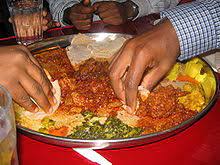
Eating/Photo:en.wikipedia.org

Over the four years between 2013 −2017, covering the time from late childhood to middle adolescence, changes occurred in some parental practices. Parents reported higher monitoring and healthy modeling feeding practices, while the reported levels of food restriction and the healthy environment remained unchanged. During the same time period, adolescents reported a considerable increase in emotional eating from below the average in 2013 to above the average in 2017, according to the norms for the Dutch population. Additionally, the maladaptive way in which they regulated their emotions was also associated with emotional eating.


Dining/Photo:en.wikipedia.org

Food as a reward and monitoring food increased emotional eating especially in instances where the adolescent employed maladaptive strategies in regulating their emotions. Child involvement in meals had an opposite effect since it was associated with higher levels of emotion regulation and lower levels of emotional eating. Interestingly, a parent’s restrained eating behavior was linked to less emotional eating in adolescents.

“This study suggests that parents continue to play an important role in their child’s eating behavior into their teen years,” said Klosowska. “Additional research is needed to understand the impact restrained eating demonstrated by a parent impacts the emotional eating of a child.”


Wheat prices spike due to climate change: Study

Rising temperatures are harmful to wheat yields. However, crop yields do not provide a holistic vision of food security. The impacts of climate change on wheat price, livelihood and agricultural market fundamentals are also important to food security but have been largely overlooked.

An international research team has now estimated the comprehensive impact of climate change and extreme climate events on global wheat supply and the demand chain in a 2 ℃ warmer world by using a novel climate-wheat-economic ensemble modelling approach.

The effect of CO2 fertilization could cancel out temperature stress on crops, with a slightly greater wheat yield under 2 ℃ warming as a result. However, increases in global yield do not necessarily result in lower consumer prices. Indeed, the modelling results suggest that global wheat price spikes would become higher and more frequent, thus placing additional economic pressure on daily livelihood.

The findings, by scientists from six countries, were published in One Earth on August 19.

“This counterintuitive result is initially driven by uneven impacts geographically. Wheat yields are projected to increase in high-latitude wheat exporting countries but show decreases in low-latitude wheat importing countries,” said lead author ZHANG Tianyi, an agrometeorologist at the Institute of Atmospheric Physics, Chinese Academy of Sciences.

Co-author Karin van der Wiel, a climate scientist at the Royal Netherlands Meteorological Institute, further explained: “This leads to higher demand for international trade and higher consumer prices in the importing countries, which would deepen the traditional trade patterns between wheat importing and exporting countries.”

Earlier researchers pointed out that trade liberalization would help mitigate climate stress via improving market mobility. The current research team revealed that such policies could indeed reduce consumers’ economic burden from wheat products. However, the impact on farmers’ income would be mixed. For example, trade liberalization policy under 2 ℃ warming could stabilize or even improve farmers’ income in wheat exporting countries but would reduce income for farmers in wheat importing countries.

“These results would potentially cause a larger income gap, creating a new economic inequality between wheat importing and exporting countries,” said WEI Taoyuan, co-author and an economic scientist at the CICERO Center for International Climate Research. ZHANG further explained more dependence on imports could lower the wheat self-sufficiency ratio, thus causing a “vicious negative cycle” for wheat importing and less-developed countries in the long term.

“This study highlights that effective measures in trade liberalization policies are necessary to protect grain food industries in importing countries, support resilience, and enhance global food security under climate change,” said Frank Selten, a researcher at the Royal Netherlands Meteorological Institute and co-author of the study.

Consumer Protection Act

The Consumer Protection Act, 1986 provides a consumer the right to be informed about the quality, quantity, potency, purity, standard and price of goods or services.

In so far as drugs are concerned, the manufacture, sell and distribution of drugs is regulated under the Drugs and Cosmetics Act, 1940 and Rules, 1945. The said Rules require various statutory details on the label of the drugs. However, labelling of drugs in regional Indian languages is not mandatory in the said Rules. As regards bank pass books, the Reserve Bank of India has issued a circular in July, 2011 to all the scheduled banks to the effect that in order to ensure that banking facilities percolate to the vast sections of the population, banks should make available all printed material used by retail customers including account opening forms, pay-in-slips, passbooks etc in trilingual form, i.e., English, Hindi and the concerned Regional language.

This information was given by Shri C. R. Chaudhary, the Minister of State for Consumer Affairs, Food and Public Distribution, in a written reply to a question in Lok Sabha, today.

Regulating Contents of Sugar and Salt in Food and Beverages

Increased consumption of soft drinks, colas and other canned foods, contribute to obesity which is risk factor of Hypertension, Cardio-vascular problems, Diabetes, Stoke, etc. Further, as per sub-regulation 2.2.2.3(ii) of the Food Safety and Standards (Packaging and Labelling) Regulations, 2011, quantity of sugar per 100g or 100 ml or per serving of the products, is required to be specified on the label. However, there is no proposal to fix quantity of sugar in aerated drinks and energy tonics, under consideration in the Food Safety and Standards Authority of India (FSSAI).

Strengthening of Food and Drugs Administration at Central and State levels is a continuous process. FSSAI has rolled out a scheme for strengthening of food testing system in the Country with an outlay of Rs. 481.95 Crore. Further, the Government has also approved a proposal for strengthening of drug regulatory system in the country, both at the Central and State levels at a cost of Rs.1750 cr. Out of this, Rs.900 cr. are for strengthening of Central regulatory structure, while Rs.850 cr. have been approved as the Central Government’s contribution for upgrading and strengthening the States’ Drug Regulatory System.

The Minister of State (Health and Family Welfare), Sh Faggan Singh Kulaste stated this in a written reply in the Rajya Sabha here today.