Gaza: Over 400 Palestinians killed around private aid hubs, UN rights office says

The alert comes nearly a month since the Israeli and US-backed Gaza Humanitarian Foundation (GHF) started operating on 27 May in select hubs, bypassing the UN and other established NGOs.

Its food distribution points have been associated frequently with confusion and shooting as desperate and hungry Gazans rush to fetch supplies, said UN human rights office spokesperson Thameen Al-Keetan.

“Israel’s militarized humanitarian assistance mechanism is in contradiction with international standards on aid distribution,” he insisted. “The weaponization of food for civilians, in addition to restricting or preventing their access to life-sustaining services, constitutes a war crime and, under certain circumstances, may constitute elements of other crimes under international law.”

In its latest update on the emergency, the UN aid coordination office, OCHA, reported that “scores of people of all ages are being killed and injured every day” in the shattered enclave.

“Humanitarian operations of sufficient scale are not facilitated, leaving unaddressed the critical needs of those who have so far survived,” it said.

Shelled or shot 

In Geneva, meanwhile, OHCHR’s Mr. Al-Keetan explained that private aid hub victims were either “shelled or shot” by the Israel Defense Forces. They have endangered civilians and contributed to the “catastrophic humanitarian situation in Gaza”, he maintained.

At least 93 people have also been reportedly killed by the Israeli army while attempting to approach the few remaining aid convoys of the UN and other aid partners still operating in Gaza.

In a previous alert, the UN human rights office has condemned the possible summary execution of Palestinian staff associated with the Gaza Humanitarian Foundation by armed men allegedly affiliated with Hamas.

“These killings must end immediately, and those responsible held to account,” the UN office said in a statement.

Most vulnerable miss out

The OHCHR spokesperson noted that women and children, along with older people and those with disabilities continue to face “multiple challenges” accessing food in Gaza today.

Looting of aid convoys is now commonplace in Gaza after more than 20 months of daily Israeli bombardment as a result of a near-total blockade on humanitarian supplies including food, fuel and medicine.

The result is that Gaza’s most vulnerable individuals are unable to access any of this diverted aid, the UN human rights office told UN News.

To date, at least 3,000 Palestinians have been injured in incidents associated with the non-UN aid hubs and looting.

“Desperate, hungry people in Gaza continue to face the inhumane choice of either starving to death or risk being killed while trying to get food,” the UN human rights office explained.

Ongoing aid obstacles

Although the UN and other aid providers still function in Gaza, they are reliant on the Israeli authorities to facilitate their missions. On Saturday and Sunday, only eight out of 16 requests for humanitarian operations were approved, aid teams reported.

“Half of [the missions] were denied outright, hindering the tracking of water and fuel, the provision of nutrition services and the retrieval of the bodies,” said Alessandra Vellucci, Director of the Information Service at UN Geneva.

Her comments followed a warning from the UN’s top aid official in Gaza on Sunday who described dire scenes and “carnage”.

“It is weaponized hunger. It is forced displacement. It’s a death sentence for people just trying to survive. All combined, it appears to be the erasure of Palestinian life from Gaza,” said OCHA’s Head of Office in the Occupied Palestinian Territory, Jonathan Whittall.

Telecommunications have now been restored across Gaza after damaged fibre cables were repaired at the weekend.

“For the first time in days, humanitarian teams have had more than 24 hours of relatively stable connectivity – something that is essential to coordinate emergency relief and save lives,” OCHA said in Monday evening’s update.

But without urgent fuel deliveries, telecommunications “will go down again very soon”, the UN aid wing warned.

Fuel crisis

“Fuel is also needed to keep emergency rooms running, power ambulances, and operate water desalination and pumping stations,” it explained.

“Right now, teams on the ground are rationing what little fuel remains and working to retrieve stocks stored inside Gaza, in areas that are hard to reach.”

Access to Nasser Medical Complex is also limited because there is not enough fuel for transportation “and health workers and patients fear for their safety”, OCHA continued.

“Last week, in Khan Younis, in-patient admissions at field hospitals increased threefold, largely due to access challenges at Nasser, which also saw an influx of trauma patients and has been overwhelmed since.”

Most of Gaza remains under displacement orders issued by the Israeli military, including another one on Monday for two neighbourhoods in Khan Younis city, reportedly following Palestinian rocket fire from these areas.

“These neighbourhoods were already subject to earlier displacement orders and include two hospitals – Al Amal and Nasser,” OCHA said. “While Israeli authorities have clarified that the hospitals are not required to evacuate, OCHA says the designation is nonetheless hindering access to those critical facilities for both patients and medical staff.”

Human Rights Council hears concerns over displacement, genocide risks and migrant trafficking

Of the record 83 million people internally displaced worldwide, at least 1.2 million were displaced by crime-related violence in 2024 – more than double the 2023 figure – amid a global decline in support for international norms, human rights and the rule of law.

The growing reach of organised crime in driving displacement and rights violations was the focus of a report delivered Monday morning by the Special Rapporteur on the human rights of internally displaced persons, Paula Gaviria Betancur.

Driving displacement

As violent conflicts worsen globally, displacement is increasingly driven by the threat of violence or the desire of criminal groups to control territory, resources and illicit economies.

Additionally, in places like Sudan, Palestine and the Democratic Republic of the Congo (DRC), occupying powers and criminal groups are systematically uprooting communities to alter demographics, treating IDPs as military targets.

“Displacement is no longer just a consequence of conflict – it is increasingly its deliberate objective,” Ms. Betancur warned.

In these regions, either the State enables impunity for violent groups or national security operations worsen the crisis by punishing victims and fuelling further displacement, eroding state legitimacy.

IDPs in these contexts “face grave violations of their human rights,” including “murder, violent assault, kidnapping, forced labour, child recruitment and sexual exploitation,” she said.

The rise in global displacement is the result of systemic failure – the failure of States and the international community to tackle its root causes,” Ms. Betancur concluded, calling for stronger support for the UN and accountability for criminal groups.

Genocide risks in conflict areas

Virginia Gamba, Special Adviser on the Prevention of Genocide, briefed the council on escalating risks in Sudan, Gaza, the DRC and beyond during Monday’s session.

In Sudan, where over 10.5 million have been displaced since fighting erupted in April 2023, both the Sudanese Armed Forces and the Rapid Support Forces (RSF) are committing grave rights violations.

Ethnically motivated attacks by the RSF in certain regions mean “the risk of genocide, war crimes and crimes against humanity in Sudan remains very high,” Ms. Gamba underscored.

Turning to Gaza, she called the scale of civilian suffering and destruction “staggering and unacceptable,” noting the conflict has also fuelled rising antisemitism and Islamophobia worldwide.

Hate speech fuelling violence

As attacks on civilians and ethnic violence continue in the DRC, hate speech and discrimination have surged.

But this surge is also occurring worldwide, further exacerbating the risk of genocide.

“Hate speech – which has been a precursor for genocide in the past – is present in far too many situations, often targeting the most vulnerable,” said Ms. Gamba, highlighting refugees, Indigenous peoples and religious minorities.

For genocide prevention, she urged greater efforts to monitor hate speech, expand education efforts, and strengthen partnerships with regional organizations.

The task of preventing genocide remains critical and urgent—the moment to act is now,” she stressed.

Trafficking of migrant domestic workers

Special Rapporteur on trafficking in persons, Siobhán Mullally, presented her report on the trafficking risks faced by migrant domestic workers.

“The specific nature of domestic work, and weak regulatory responses by States, produce a structural vulnerability to exploitation,” Ms. Mullally said.

The crisis disproportionately affects women, as they make up the majority of domestic workers and 61 per cent of trafficking victims detected globally in 2022.

Conditions of domestic work

Many women from disadvantaged communities are promised jobs abroad, but upon arrival, realise they have been conned. They endure violence, labour abuses and sexual exploitation but are unable to pay the exorbitant penalty for terminating their work contracts.

Ms. Mullally cited the legacy of slavery, gendered and racialised views of domestic work and intersecting discrimination as key factors behind poor conditions and trafficking risks.

Most States lack the political will to enforce labour laws in the domestic work sector, reinforcing this crisis, she said, calling for stronger labour laws, safe migration pathways, bilateral agreements grounded in human rights and an end to the criminalisation of trafficking victims.

Source link

Human Rights Council hears alarming updates on executions in Iran and global civic space crackdown

At least 975 people were executed in Iran in 2024, the highest number reported since 2015, according to a report Deputy High Commissioner for Human Rights, Nada Al-Nashif, presented to the Geneva-based Council on Wednesday. 

Of the total executions, just over half were for drug-related offenses, 43 per cent for murder, two per cent for sexual offenses, and three per cent for security-related charges. At least four executions were carried out publicly. 

“These cases are marked by serious allegations of torture and due process violations, including lack of access to a lawyer,” said Ms. Al-Nashif. 

Violence and discrimination against women

At least 31 women were reportedly executed in Iran last year, up from 22 in 2023. Of the 19 women executed for murder, nine had been convicted of killing their husbands in cases involving domestic violence or forced or child marriage, areas in which Iranian women have no legal protections.

Some executions were reportedly linked to protests that began in September 2022 under the banner “Women, Life, and Freedom.”

Beyond executions, femicide cases surged, with 179 reported in 2024 compared to 55 the year before. Many stemmed from so-called “honour” crimes or family disputes, often involving women and girls seeking divorce or rejecting marriage proposals.

Ms. Al-Nashif also warned that the suspended Chastity and Hijab Law, if enacted, would pose a serious threat to women’s rights. Penalties for violations such as improper dress could include heavy fines, travel bans, long-term imprisonment, or even the death penalty.

In addition, of the 125 journalists prosecuted in 2024, 40 were women, many reporting on human rights and women’s rights issues.

Religious and ethnic minorities

“In 2024, the death penalty continued to have a disproportionate impact on minority groups,” Ms. Al-Nashif told the Council.

At least 108 Baluchi and 84 Kurdish prisoners were executed in 2024, representing 11 and 9 per cent of the total, respectively.

The report also raised concerns over the lack of official data on the socioeconomic conditions of ethnic and ethno-religious minorities and non-citizens, which hampers efforts to assess their situation and measure the impact of targeted policies and programmes.

Looking ahead

While Iran continued engagement with the Office of the UN High Commissioner and other human rights mechanisms, it denied access to the Independent International Fact-Finding Mission on the Islamic Republic of Iran.

“Our Office remains ready to continue and build on its engagement with the Iranian authorities on the range of issues highlighted in the report of the Secretary-General for the promotion and protection of all human rights,” Ms. Al-Nashif concluded. 

Global ‘Super Election’ cycle undermined democratic participation

In the Council’s afternoon session, Gina Romero, UN Special Rapporteur on the rights to freedom of peaceful assembly and association, presented her report on how the 2023–2025 “super election” cycle has affected civic space around the world.  

In 2024, half of the world’s population elected their local, national and international representatives. While Ms. Romero’s report on this cycle does not assess the integrity of the elections, it identifies troubling global patterns of systematic repression of the exercise of peaceful assembly and association.

“The misuse of restrictive laws, smear campaigns, disinformation targeting civil society intensified globally in the super electoral cycle, undermining electoral participation and freedom of association,” she said.  

Political repression and violence

As criminal justice systems are used to repress the opposition, leaders and members of political parties faced undue restrictions and political persecution. Civil society activists and election observers have also faced harassment, arbitrary detention, torture and murder.  

“When political parties, civil society, and peaceful assemblies are suppressed, genuine political pluralism and competition cannot exist,” argued Ms. Romero. “I stress that these conditions are incompatible with free and genuine elections and risk legitimising undemocratic rule.”

Minority representation

Ms. Romero also underscored that women’s political leadership remains severely underrepresented, while LGBTIQ individuals and their organizations faced attacks during the super electoral cycle.  

Both groups experienced physical and online political violence, restricting their electoral participation and accelerating the decline of their rights after the elections.

Calls to protect freedoms  

Amid global crises and a rapid democratic decline, Ms. Romero emphasized the urgent need to protect the rights to peaceful assembly and association throughout the entire electoral cycle.  

She outlined key recommendations, including strengthening legal protections before elections, ensuring accountability afterward, regulating digital technologies and promoting non-discriminatory participation throughout.  

“Dissent is a fundamental element of democratic societies,” she concluded in Spanish. “Rather than being suppressed, it should be welcomed and permanently protected.” 

Source link

Civilian deaths in conflict are surging, warns UN human rights office

At least 48,384 individuals – mostly civilians – were killed in 2024, based on casualties recorded by OHCHR.

“Behind every statistic is a story. Behind every data point, a person,” said UN rights chief Volker Türk.

This alarming rise in civilian deaths exposes major failures to protect some of the most vulnerable in both peacetime and conflict situations, “painting a picture of a global human rights landscape in need of urgent action,” he said.

Human rights defenders

Just over 500 of those killed in 2024 were human rights defenders, with the number of journalists killed also rising by 10 per cent, comparing 2023 to 2024.

The level of targeting of human rights defenders and journalists remained alarmingly high: at least one human rights defender, journalist, or trade unionist was killed or forcibly disappeared every 14 days.

Detentions of rights defenders was most widespread in northern Africa, central, southern and western Asia. Killings were most prevalent in Latin America and the Caribbean.

Alarming rise in deaths of women and children

Violence against children and women in armed conflicts has been devastating over the past two years.

Between 2023 and 2024, approximately four times more children and women were killed in armed conflicts than during 2021–2022.

Women reported experiencing gender-based discrimination at more than twice the rate of men, and the poorest households were hardest hit, perpetuating cycles of poverty and inequality.

Discrimination does not exist in isolation,” said Mr Türk, as OHCHR’s findings revealed widespread and compounding discrimination, with nearly one in three persons with disabilities reporting having experienced discrimination, compared to fewer than one in five without disabilities.

Source link

UN rights office ‘horrified’ by deadly violence at Gaza food distribution sites

The UN human rights office (OHCHR) in the Occupied Palestinian Territory on Wednesday called on the Israeli military to cease the use of lethal force near aid convoys and food distribution sites.

It cited “repeated incidents” of Palestinians being shot or shelled while seeking food, warning that such attacks could constitute war crimes under international law.

“We are horrified at the repeated incidents, continuously reported in recent days across Gaza, and we call for an immediate end to these senseless killings,” the office said in a statement.

Hundreds killed

Since 27 May, when the Gaza Humanitarian Foundation (GHF), an initiative backed by Israel and the United States began food distribution in southern Gaza – bypassing the established UN-led system – hundreds have been killed and many more wounded near four distribution points or while waiting to pick up aid.

In one of the deadliest recent incidents, Israeli military reportedly shelled a crowd waiting for UN food trucks in southern Gaza on 17 June, killing at least 51 people and injuring some 200 others, according to Gazan health authorities.

A day earlier, three Palestinians were reportedly killed and several injured in a similar incident in western Beit Lahiya.

There is no information to suggest that the people killed or injured were involved in hostilities or posed any threat to the Israeli military or to staff of GHF distribution points,” OHCHR said.

Protect civilians, aid workers

The UN World Food Programme (WFP), which has managed to dispatch only 9,000 metric tons of food within Gaza over the past month – a fraction of what is required for the 2.1 million people in need – echoed calls for immediate protection of civilians and aid workers.

“Far too many people have died while trying to access the trickle of food aid coming in,” the agency said in a separate statement.

“Any violence resulting in starving people being killed or injured while seeking life-saving assistance is completely unacceptable.”

Massive scale-up needed

The UN emergency food relief agency said the fear of starvation and desperate need for food is causing large crowds to gather along well-known transport routes, hoping to intercept and access humanitarian supplies while in transit.

Only a massive scale-up in food distributions can stabilize the situation, calm anxieties and rebuild the trust within communities that more food is coming,” it said, calling urgently for safer convoy routes, faster permissions, restored communication channels and additional border openings.

“The time to act is now. Delays cost lives. We must be allowed to safely do our jobs,” the agency said.

Source link

Iran-Israel crisis: UN rights office appeals for urgent de-escalation

Israel began targeting nuclear and military sites across Iran last Friday, prompting a barrage of retaliatory strikes on Israeli cities.

“The UN human rights office urges de-escalation and urgent diplomatic negotiations to end these attacks and find a way forward,” said Ms. Al-Nashif. “We are following closely and are aware of reports that many thousands of residents are fleeing parts of the capital, Tehran, as a result of warnings covering broad areas.”

Latest reports from the region indicate that more than 200 people have been killed in Iran and 24 in Israel to date. The violence continued unabated overnight in both countries. 

Addressing the Human Rights Council in Geneva at a scheduled meeting to discuss Iran’s rights record, the Deputy High Commissioner highlighted serious concerns that populated areas have been hit in the escalation.

“It is imperative that both sides fully respect international law, in particular by ensuring the protection of civilians in densely populated areas and of civilian objects,” she said. “We urge all those with influence to engage in negotiation as a matter of priority.”

Nuclear watchdog update

In a related development, the UN-backed nuclear watchdog said on Wednesday that two Iranian centrifuge production facilities had suffered major damage after being targeted.

“The TESA Karaj workshop and the Tehran Research Centre, were hit,” it said in an update. “At the Tehran site, one building was hit where advanced centrifuge rotors were manufactured and tested. 

At Karaj, two buildings were destroyed where different centrifuge components were manufactured,” said the International Atomic Energy Agency (IAEA).

Speaking at the Council after the Deputy High Commissioner, Iran’s Permanent Representative of Iran, Ambassador Ali Bahreini, condemned the Israeli strikes: 

“There has been no violation worse than [the] 13 June act of aggression against Iran,” he said, pointing to “continuous blind attacks on residential areas, bombardment of vital supplies, explosion of drinking water resources and reckless strikes on nuclear facilities are immediately impacting the civilians and people of Iran.”

Such “deliberate targeting” of his country’s nuclear facilities risked exposing local communities to a “possible hazardous leak”, the Iranian ambassador continued. “This is not an act of war against our country, it is war against humanity.”

In a short statement to the Council from which Israel announced its withdrawal earlier this year, Mr. Bahreini called for accountability and international condemnation of the Israeli attacks. 

“This impunity must come to [an] end,” he said. “Israel activities are not just against one or two countries. It is acting against all humanity and their actions target all human rights.”

Source link

Israeli actions in Palestinian territories constitute war crimes, Human Rights Council hears

“The goal of the Israeli government is abundantly clear: the destruction of life in Gaza.”

That’s how Navi Pillay, Chair of the Commission of Inquiry on the Occupied Palestinian Territory, opened her statement to the 59th session of the Council on Tuesday.

Calling the war in Gaza “the most ruthless, prolonged and widespread attack against the Palestinian people since 1948,” Ms. Pillay addressed the findings of the Commission’s report, released to the HRC on 6 May.

Attacks on educational facilities in Gaza

It found that 90 per cent of Gaza’s schools and universities have been damaged or destroyed by Israeli attacks – including airstrikes, shelling, burning and controlled demolitions.

“With the loss of education, Palestinians are also losing their source of stability, hope and possibility of a future,” said Ms. Pillay.

By not issuing adequate warnings to civilians sheltering inside, these attacks caused extensive casualties, amounting to war crimes, including knowingly launching attacks that caused excessive and disproportionate civilian harm, and the crime against humanity of extermination.

The Commission found no military necessity to justify the destruction of schools, concluding that the intent was to restrict long-term Palestinian access to education.

Notably, while Israeli forces often claimed they were targeting Hamas operatives allegedly based in schools, the Commission verified only one instance of Hamas using a school for military purposes, compared to the systematic Israeli use of schools as military bases.

Education restrictions in the West Bank

Ms. Pillay also warned that education in the West Bank remains under threat. Demolition orders, military raids, restrictions, and operations have significantly reduced school days, while settler violence has endangered students and teachers. The Israeli government has either incited or failed to prevent such violence, she said.

Attacks on religious and cultural sites

In Gaza, Israeli forces have damaged 53 per cent of religious and cultural sites.

Many were being used for refuge or worship, causing further civilian casualties, constituting war crimes and, in some cases, the crime against humanity of extermination.

This completely avoidable damage “has a cascading effect and deeply affects intangible cultural elements, such as religious and cultural practices, memories and history, undermining the identity of Palestinians as a people,” said Ms. Pillay.

Because Israeli forces should have known where these sites were and planned their assaults accordingly, the Commission found these acts constituted war crimes including intentionally targeting historic and religious sites and widespread destruction without military necessity.

Seizure of cultural heritage sites in the West Bank

In the West Bank and East Jerusalem, the Commission documented repeated cases of Israeli authorities or settlers seizing cultural heritage sites, displacing Palestinians, excluding non-Jewish history and restricting Palestinian access.

The report highlights increasing restrictions and assaults on Palestinians at Haram al-Sharif/Temple Mount, a long-standing flashpoint in East Jerusalem.

Ms. Pillay argued that through these actions, “Israel has been using cultural heritage and settlements as leverage for its unlawful territorial claims in the occupied West Bank, in flagrant defiance of multiple United Nations resolutions and the 2024 advisory opinion of the International Court of Justice (ICJ).”

These actions violate international law, including the right to cultural life, freedom of religion, and protection of cultural heritage.

Recommendations

Ms. Pillay concluded her speech by underscoring that Israel’s attacks on education, infrastructure and heritage sites aim to “erode Palestinians’ historical ties to the land and weaken their collective identity, thereby hindering their right to self-determination” and the possibility of a peaceful, sustainable two-State solution.

Accordingly, the Commission calls for Israel to end the unlawful occupation and enable Palestinian self-determination; stop attacks and seizures of educational, religious and cultural sites; end the systematic erasure of Palestinian history; and comply fully with international law, including the 2024 ICJ ruling.

Sudan’s war intensifies amid starvation, rights probe warns

Meanwhile in Sudan, heavy fighting continues to escalate as a “direct result” of the continued flow of arms into the country meaning that the war is far from over, top independent human rights investigators said on Tuesday, ahead of briefing the Human Rights Council.

In an update on the emergency in the northeast African nation, the Independent International Fact-Finding Mission for the Sudan highlighted the increased use of heavy weaponry in populated areas – and a sharp rise in sexual violence.

“Many Sudanese are dying from hunger and especially those who have been detained and in detention – they are dying and millions affected,” said Joy Ngozi Ezeilo, Expert Member of the Fact-Finding Mission.

“In terms of international responsibility, we urge all States to respect and enforce the arms embargo of the United Nations Security Council Resolution 1556,” she added.

Humanitarian relief continues to be weaponized and hospitals and medical facilities remain under siege, warned the investigators, whose mandate was established by the Council in October 2023.

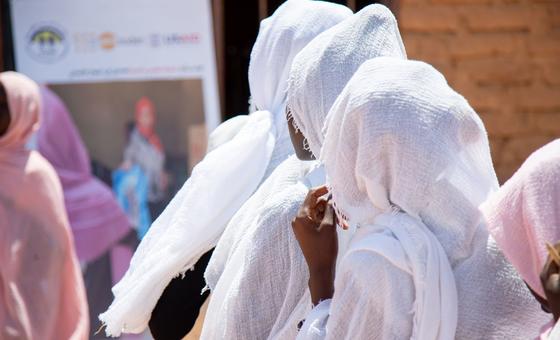
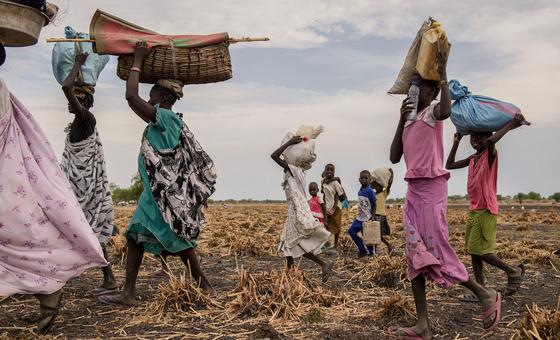
Two young women carry water at a site for displaced people in eastern Sudan.

Direct link

There is a direct link between the flow of arms in Sudan, armed hostilities and the resulting violence amounting to violations of international humanitarian law and human rights violations,” said Mohamed Chande Othman, Chair of the Fact-Finding Mission.

We know the kind of arms that are being used: heavy artillery, modern warfare, drones and in fact, they have escalated.”

Fellow investigator Mona Rishmawi insisted that testimonies gathered pointed to “both sides” continuing to commit war crimes – a reference to the Sudanese Armed Forces (SAF) and the Rapid Support Forces (RSF) which turned on each other in April 2023, following a breakdown in transition to civilian rule.

Around El Fasher, for instance, civilians have been “assaulted, detained and killed while villages have been attacked, burned and looted” by the RSF. During one RSF attack from 10 to 13 April, more than 100 civilians were reportedly killed, while a SAF bombing in Al Koma killed at least 15 civilians.

Now into its third year, the war has killed tens of thousands of civilians so far, displacing over 13 million Sudanese and subjecting many more to sexual violence, looting and the destruction of homes, health facilities, markets and other infrastructure. 

Crimes against humanity continue, “particularly in the context of persecution of certain ethnic groups”, Ms. Rishmawi insisted.

The result of restrictions to aid relief has been to drive famine, “especially in Darfur”, said the investigators, who are respected human rights experts and not UN staff.

In their latest update to the Human Rights Council, the investigators documented a sharp rise in sexual and gender-based violence, with women and girls subjected to rape, gang rape, abduction, sexual slavery and forced marriage, mostly in RSF-controlled displacement camps.

About UN experts

The members of both the Commission of Inquiry on the Occupied Palestinian Territory and the Fact-Finding Mission for the Sudan receive their mandates from the UN Human Rights Council.

They are not UN staff and do not receive payment for their work. 

Source link

DR Congo: Human rights violations could amount to war crimes, UN experts say

Volker Türk told the Human Rights Council that the investigation and analysis undertaken by his office, OHCHR, had revealed “an apparent total disregard for the protection of civilians during and after military operations.”

The OHCHR’s Fact-Finding Mission in the eastern DRC is also investigating other alleged violations of international humanitarian law, “many of which may amount to war crimes,” he said.  

Arbitrary Arrests

After capturing cities and villages in early 2025, the M23 Rwanda-backed rebels arbitrarily arrested police officers and large numbers of other civilians, including children, the UN human rights office reported.  

According to witnesses, those captured were, and are, still being held in “inhumane conditions,” and many were forcibly recruited into the ranks of the M23.  

The Mission is also investigating alleged arbitrary arrests and enforced disappearances of suspected M23 supporters by the military intelligence arm of the DRC armed forces.  

Extrajudicial Killings

OHCHR also reported that members of the M23 carried out summary and extrajudicial executions, which likely amount to war crimes, said Mr. Türk.  

The Mission is also investigating alleged summary executions by members of the DRC armed forces and DRC-backed Wazalendo militias.  

UN human rights is also investigating reports of death threats, detention and other reprisals against human rights defenders, journalists, and members of civil society perceived as critical of the M23; including the alleged killings of at least two activists.  

Sexual Violence

The Mission received reports of “horrific” use of sexual violence by all parties as a means of reprisal against communities, relatives of perceived opponents, and people from other ethnic groups, said Mr. Türk.  

In North and South Kivu, nearly 40 per cent of survivors of sexual and gender-based violence are children. The UN International Children’s Emergency Fund (UNICEF) estimated that during the most intense phase of the conflict, a child was raped every 30 minutes.  

Mr. Türk called on “all parties to the conflict to commit immediately to a ceasefire and resume negotiations, and to respect international humanitarian and human rights law.” 

Source link

‘Behind each crisis, people are suffering,’ Türk tells Human Rights Council

We are on an indefensible path of escalating conflict and open disregard for international human rights and humanitarian law,” said Volker Türk, addressing the UN Human Rights Council in Geneva.

Offering a global overview, he painted a stark picture of a world in crisis – with surging armed conflict, deepening climate disruption, emerging technological threats, and a worrying rise in authoritarianism.

Spiralling conflicts

Conflicts around the world are spiralling, as civilians are deliberately attacked and starvation and rape is used as weapons of war by parties. Yet, “accountability is often absent,” said Mr. Türk, who heads the office of human rights, OHCHR.  

From Ukraine to Myanmar, conflicts are plunging countries deeper into chaos and lawlessness.  

In Sudan, the number of arbitrary killings of civilians as rival militaries battle for control, tripled between February and April, OHCHR reports.  

In Gaza, “Israel has weaponised food and blocked lifesaving aid,” Mr. Türk continued, calling for an “immediate ceasefire leading to a two-State solution, with Gaza as an integral part of a Palestinian State.”  

Describing the military escalation between Israel and Iran as “deeply worrying,”  Mr. Türk appealed “for de-escalation and urgent diplomatic negotiations to end these attacks and find a way forward.”  

“This violence must end,” he said.  

Civil society under attack

Around the world, at least 625 human rights defenders and media workers were killed or disappeared in 2024, OHCHR has reported.  

That is one every 14 hours,” the human rights chief said.  

In many places around the world, civil society and the media are being vilified, harassed and silenced; yet it is civil society and the media who play a vital role holding power to account.  

As investigating and reporting human rights abuses and violations are necessary tools to mitigate conflict and build peace, Mr. Türk said he was “deeply disturbed” by attacks on the international institutions, including the International Criminal Court (ICJ).  

“Sanctioning judges and prosecutors at national, regional or international levels, for doing their jobs, is an assault on the rule of law and corrodes justice,” he said.  

Persecuted minorities

From anti-immigrant rhetoric to hate speech targeting the LGBTIQ+ community, one in five people across 119 countries reported experiencing discrimination in the past year, OHCHR said.  

Discrimination is neither rare nor random, it is widespread,” said Mr. Türk.  

For instance, data gathered by the UN shows that women face discrimination at more than double the level experienced by men.  

Highlighting the war on women and girls in Afghanistan, the de facto authorities continue to enforce a systematic policy of erasing women and girls from public life, he continued.  

In these troubled times, “we need governments and societies to stand up for human rights, in word and deed,” concluded Mr. Türk.  

Source link

World News in Brief: Rights abuses in Haiti, Sudan war sees exodus to Chad, food trade optimism

Between 1 January and 30 May, at least 2,680 people – including 54 children – were killed, 957 injured, 316 kidnapped for ransom, and many more subjected to sexual violence and child gang recruitment.

“Alarming as they are, numbers cannot express the horrors Haitians are being forced to endure daily,” said Mr. Türk.

Conflicts on all sides

In recent months, gangs have attacked Mirebalais in the centre of the country, looting police stations, destroying property and freeing over 500 inmates from the local prison.

Meanwhile, so-called self-defence groups have targeted individuals they suspect of gang affiliation. On 20 May, at least 25 people were killed and 10 injured by a group accusing them of supporting gangs.

Law enforcement has ramped up operations against them. Since January, police have killed at least 1,448 people, including 65 during extrajudicial executions.

Mr. Türk called on the international community to take decisive action to end the violence, including renewed support for the Security Council-backed Multinational Security Support (MSS) mission and full enforcement of the council’s arms embargo.

He also reiterated his call for States to not forcibly return anyone to Haiti.  

“The coming months will be crucial and will test the international community’s ability to take stronger, more coordinated action – action that will help determine the future stability of Haiti and the wider region,” Mr. Türk added.

Outlook for food trade ‘relatively optimistic’, FAO says

The Food and Agriculture Organization (FAO) released their annual Food Outlook report Thursday which provides a “relatively optimistic” look at international food markets.  

According to the report, production is expected to increase across almost all categories, with grain production expected to reach record levels. And while prices do remain higher this year than last, between April and May there was an overall decrease of almost one per cent. 

The report noted, however, that global trends — including rising geopolitical tensions, climate shocks and trade uncertainties — may still negatively impact production.  

“While agricultural production trends appear solid, drivers that could negatively impact global food security are increasing,” said FAO Chief Economist Máximo Torero.

Fowl, fish fraud and fertilizer flows

The report noted that outbreaks of avian influenza have become more persistent and constitute “one of the most significant biological threats to the global poultry sector.” Nevertheless, poultry exports have largely remained largely resilient so far.  

The issue of fish fraud – the misrepresentation of the location or manner of the catch – was also discussed, with FAO warning that risks are growing.  

Additionally, the report examined fertilizer flows, noting Russia’s growing exports and the decrease in fertilizer prices since the COVID pandemic.  

Overall, the report noted, the cost of imports worldwide has increased by 3.6 percent or nearly $2.1 trillion.  

Eastern Chad ‘reaching a breaking point’ as Sudan war refugees continue to arrive  

Aid teams in eastern Chad warn on Friday that host communities are reaching breaking point because of climate shocks and the pressure of hosting war refugees from neighbouring Sudan.

In an alert, the UN’s top aid official in Chad, François Batalingaya, warned that a humanitarian catastrophe is unfolding almost unnoticed by the world’s media.

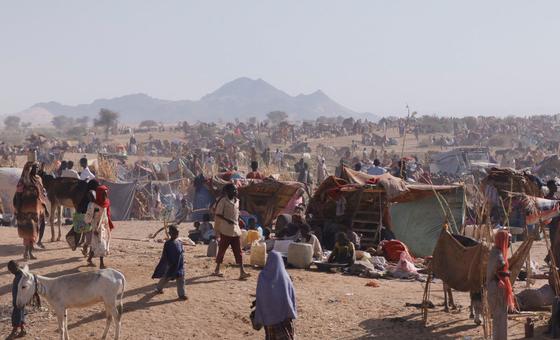
“Right now, nearly 300,000 people are stranded at the border, waiting to be relocated inland,” he noted.  

“Tens of thousands, mostly women and children, are sleeping in the open without shelter, clean water and health care. These are survivors of war. They arrive traumatized, hungry, and with nothing. They recount stories of mass killings, sexual violence and entire communities destroyed.” 

Major exodus

Since the outbreak of war in Sudan in April 2023, more than 850,000 Sudanese refugees have crossed into Chad. They’ve joined the 400,000 existing Sudanese refugees who have arrived over the last 15 years.

The UN aid official explained that even before the latest Sudanese arrivals, nearly one million people in eastern Chad were in urgent need of help.  

Today, “they are sharing what little they have – food, water, and space – with those fleeing the war,” Mr. Batalingaya said.

In an appeal for international assistance, he warned that clinics are overwhelmed, malnutrition is rising and basic services are buckling.  

US decision to sanction ICC judges ‘deeply corrosive’ to justice: UN rights chief

Mr. Türk was responding to an announcement by Marco Rubio, the US Secretary of State, on Thursday, of measures targeting the judges, who are overseeing a 2020 case of alleged war crime committed in Afghanistan by US and Afghan military forces, and the 2024 ICC arrest warrants issued against Israeli Prime Minister Benjamin Netanyahu and Yoav Gallant, the former Defence Minister.

“I am profoundly disturbed by the decision of the Government of the United States of America to sanction judges of the International Criminal Court – specifically four women judges, from Benin, Peru, Slovenia and Uganda – who had been part of rulings in the situations in Afghanistan or in the State of Palestine,” said Türk, who called for the prompt reconsideration and withdrawal of the measures.

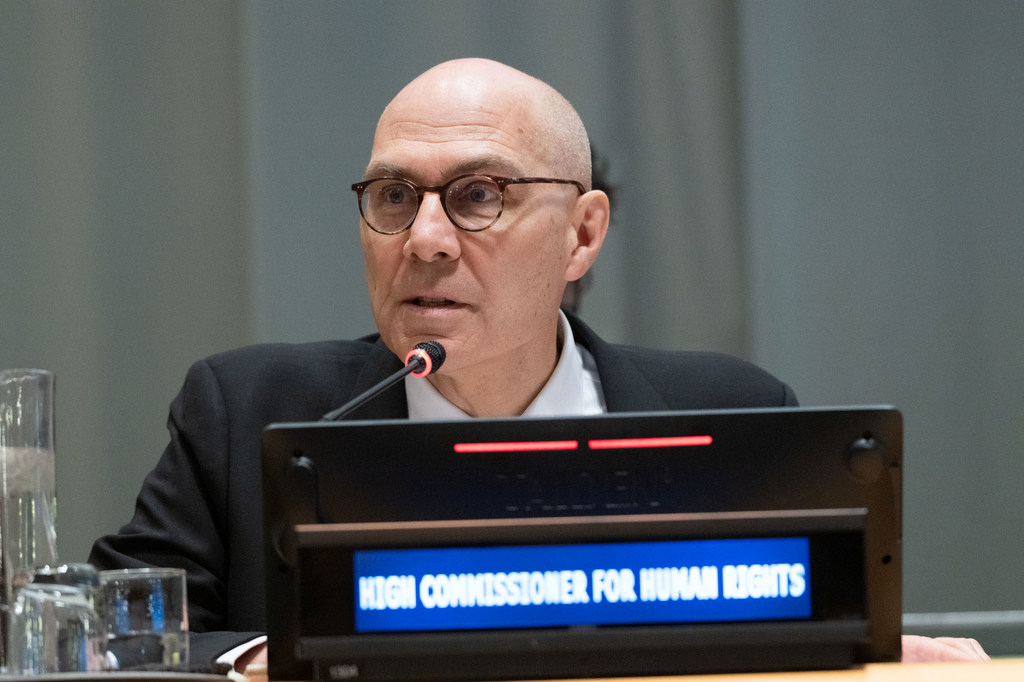
Volker Türk, UN High Commissioner for Human Rights, briefs a General Assembly informal meeting on missing persons.

The sanctions, the statement continues, attack the judges for performing their judicial functions, an act which, he said, runs “directly counter to respect for the rule of law and the equal protection of the law – values for which the U.S. has long stood.”

The statement by Mr. Türk follows the ICC’s strongly worded press release on Thursday, describing the sanctions as “a clear attempt to undermine the independence of an international judicial institution which operates under the mandate from 125 States Parties from all corners of the globe.”

The ICC reinforced its position on Friday with a release from the Assembly of State Parties –the management oversight and legislative body of the court – rejecting the US sanctions which, it declared, “risk undermining global efforts to ensure accountability for the gravest crimes of concern to the international community and erode the shared commitment to the rule of law, the fight against impunity, and the preservation of a rules-based international order.”

Source link

World News in Brief: Women’s health in Sudan, childhood wasting, Belarus trade unions, Guatemala child rights violation


As hostilities rage in Sudan, access constraints and devastating funding cuts are isolating rape survivors and pregnant women from essential health services, the UN sexual and reproductive health agency UNFPA said on Thursday. 

Source link

Gaza: UN rights chief condemns new killings around private aid hub

Attacks directed against civilians constitute a grave breach of international law and a war crime,” the High Commissioner said in a statement, issued after Palestinians were reportedly killed seeking assistance for a third day running.

Mr. Türk also urged Israel to respect “binding orders” issued by the International Court of Justice to fully cooperate with the UN and ensure that aid reaches the people of Gaza “without delay” and “at scale”.

“There is no justification for failing to comply with these obligations,” he said.

Access calls denied

The controversial new aid initiative run by the Gaza Humanitarian Foundation bypasses the work of UN aid agencies which have repeatedly appealed for unimpeded access to Gaza in order to bring in thousands of tonnes of supplies. To date, the little aid that has been allowed into the enclave has fallen far short of what is needed.

In an update, the UN World Health Organization (WHO) insisted that it still had “teams on the ground” in Gaza ready to distribute supplies where they are needed across the war-torn enclave, if only they could be allowed to move.

“We have right now 51 trucks waiting loaded with medical supplies to go to those few hospitals that are still functional,” said WHO spokesperson Tarik Jasarevic. “We need access so that we can bring in supplies within Gaza to health facilities so they can function. Unfortunately, what is happening is just the opposite. There is no hospital in north Gaza functional anymore.”

On Monday, Mr. Jasarevic said that a WHO team went to the Indonesian Hospital in northern Gaza “and basically evacuated all remaining patients and medical staff…now that hospital is completely empty”. In Jabalia, also in northern Gaza, three Israeli soldiers were reportedly killed on Monday when their vehicle struck an explosive device.

Most vulnerable miss out

Critics of the US-Israeli scheme – which include the UN – have warned that it prevents children, the elderly and those with disabilities from receiving aid, since recipients often have to walk long distances to retrieve boxes of supplies distributed on a first-come, first-serve basis.

“The wilful impediment of access to food and other life-sustaining relief supplies for civilians may constitute a war crime,” Mr. Türk said.

His lengthy statement also condemned “the threat of starvation” faced by Gazans today, the “20 months of killing of civilians and destruction on a massive scale”.

Gazans have also been repeatedly displaced by evacuation orders from the Israeli military and faced “intolerable, dehumanizing rhetoric and threats by Israel’s leadership to empty the Strip”, the UN rights chief noted. All of these facts constitute elements of the most serious crimes under international law, he insisted.

‘Am I going to get shot?’

Jeremy Laurence, spokesperson for the UN human rights office, OHCHR, highlighted the High Commissioner’s call for a prompt, independent investigation into the dozens of reported killings in Gaza since the new aid hub opened on 27 May.

“I think there’s so much which has happened in the past three days apart from the tragic circumstances of human beings trying to gather food to survive and then being killed in the process,” he told journalists in Geneva. “[Gazans] are being forced to walk to these centres and now they’re terrified. Probably they go there and they’re thinking, ‘Am I going to get food or am I going to get shot?’”

Mr. Laurence noted multiple media reports on killings around the southern Gaza aid hub in recent days indicating engagement by helicopters, naval vessels, tanks and ground troops.

“We are aware of those reports,” he said, noting that the Israel Defense Forces (IDF) had also published an account on X of what had happened on Tuesday.

“My colleagues who are working on the ground have conducted interviews with witnesses and they do report fire from the IDF on those trying to access the food distribution centres. We’ve received reports from other organizations on the ground to a similar effect.”

He added: “We’ve gathered our own information; we’ve spoken to witnesses on the ground who have shared what they have seen, heard and felt themselves.”

Asked to explain what the High Commissioner meant when he expressed concerns that the “most serious crimes under international law” may have been committed, Mr. Laurence explained that this referred to war crimes, crimes against humanity and genocide.

Source link

UN rights chief calls for end to daily killings in Ukraine after deadly weekend attacks

The majority of those killed and injured were in major cities such as Kyiv, Kharkiv, and Mykolaiv, or in populated areas in other regions.

Meanwhile, large numbers of long-range drones launched into Russia by Ukrainian armed forces injured at least 11 civilians over the weekend, according to Russian authorities.

Silence the guns

High Commissioner Volker Türk underscored the urgency for an end to hostilities.

“It is time to put an end to Russia’s invasion of Ukraine, to commit to – and implement – a comprehensive ceasefire that stops the daily killing and destruction, and to start genuine peace negotiations, built on respect for international law,” he said.

He highlighted that – even amid ongoing hostilities – people deprived of their liberty must be protected. Summary executions, torture and all forms of inhumane and degrading treatment of prisoners are always prohibited, in any circumstances, and must stop immediately.

In addition, civilian detainees should be released as soon as the lawful reason for their detention ceases to exist and their protection against refoulement must be ensured, he said.

Relief, but also loss

High Commissioner Türk welcomed the recent exchange of prisoners of war and civilian detainees.

Nearly 900 prisoners of war and 120 civilians from each side were exchanged. Most of the civilians appeared to have been detainees, but details on individuals included in the exchange are not yet available, according to his office, OHCHR.

“Many families can now breathe a sigh of relief because their loved ones have finally returned home,” Mr. Türk said.

“But at the same time, other families have lost relatives and their homes, as their communities across Ukraine came under attack.”

Impact on children

In a separate statement, the UN Children’s Fund (UNICEF) expressed deep concern for the impact of the latest attacks on Ukraine’s children.

Munir Mammadzade, UNICEF Representative in Ukraine, said that in the past three days, at least three children were reportedly killed in Zhytomyr, and at least 13 children were injured in several regions across the country.

“Ukraine’s children have suffered for far too long. How many more futures must be stolen? The senseless violence and loss of young lives must stop,” Mr. Mammadzade said.

According to UNICEF, more than 220 children were killed or injured between January and April 2025 – a 40 per cent increase compared to the same period last year.

“Attacks on civilian areas must end, and children must always be protected,” Mr. Mammadzade emphasised. “Above all, children need an end to this war.”

Source link

UN warns of ‘catastrophic’ human rights crisis in Myanmar as violence and economic collapse deepen

Published ahead of the Human Rights Council’s upcoming session, the report highlighted the worsening situation since the military coup in 2021, which derailed Myanmar’s democratic transition and ignited widespread armed resistance.

In the years since, military forces have targeted civilian populations with airstrikes, artillery bombardments and other forms of violence, while anti-military armed groups have gained ground, particularly in Rakhine state.

The country has endured an increasingly catastrophic human rights crisis marked by unabated violence and atrocities that have affected every single aspect of life,” said UN High Commissioner for Human Rights Volker Türk.

Grim toll

The report documents a grim toll: military operations killed more civilians in 2024 than in any previous year since the coup.

In Rakhine, the Arakan Army seized control of most of the state, displacing tens of thousands, while Rohingya civilians were caught between warring factions, facing killings, torture, arbitrary arrests and widespread destruction of villages.

Some Rohingya armed groups have also been drawn into the conflict, according to reports.

Economic crisis deepening

The escalating violence has had a cascading effect on Myanmar’s economy, worsening already dire humanitarian conditions.

Myanmar’s economy has lost an estimated $93.9 billion since the coup, with the gross domestic product (GDP) not expected to recover to pre-pandemic levels before 2028.

Inflation has surged, the kyat has lost 40 per cent of its value, and over half the population now lives below the poverty line, facing food insecurity and soaring prices.

The March earthquakes further exacerbated the crisis, leaving thousands more displaced, homeless and without basic services.

Military control of revenue

Meanwhile, the military continues to control key revenue sources, including the central bank and state-owned enterprises, particularly in the extractive sector.

While targeted international sanctions slowed some revenue streams, the junta has maintained its financial lifelines through forced currency conversion, import restrictions, and a crackdown on informal money transfers.

Myanmar has also become the world’s largest producer of opium and synthetic drugs, with transnational criminal networks thriving under military rule.

Multifaceted approach needed

The report urged a multifaceted response to the crisis, including urgent humanitarian support, cross-border aid for displaced populations and increased political engagement with Myanmar’s democratic forces and emerging governance structures.

It also emphasised the need for accountability through international justice mechanisms, including a referral of the situation to the International Criminal Court (ICC).

The report also identified key “constituents for change” in the country’s future – women, youth, ethnic minorities, civil society and pro-democracy actors – and highlighted the work of communities who have established local institutions and forms of governance, often with increased participation from women.

Buildings lie in ruins in Mandalay region, central Myanmar, following the devastating 7.7 magnitude earthquake that struck in March.

Hopes for a peaceful future

The report underscored the importance of planning for the day-after, ensuring human rights are central to a future Myanmar – from rebuilding systems to restoring fundamental freedoms.

There are strong, resourceful and principled individuals and groups rallying and creating the conditions for an inclusive and democratic future,” High Commissioner Türk said. “They are a shining example of hope for a peaceful future.

The report will be formally presented to the UN Human Rights Council in Geneva on 1 July.

UN rights mission deplores deadly Russian strikes in Ukraine

According to the UN mission, the overnight assault from Saturday into Sunday – one of the largest of its kind since Russia’s full-scale invasion in February 2022 – resulted in civilian casualties and damage to homes and infrastructure across 10 regions of Ukraine, including the capital, Kyiv.

At least three children were among those killed and nine children were reported injured. The mission is currently working to verify the full extent of the casualties and the broader impact of the attack.

“With at least 78 people reported killed or injured across the country, last night’s attack tragically demonstrates the persistent deadly risk to civilians of using powerful weapons in urban areas, including those far away from the frontline,” Danielle Bell, HRMMU Head, said in a news release on Sunday.

“It is yet another addition to the staggering human toll this war continues to inflict on civilians, with more families across the country now grieving their losses.”

No place is safe

Matthias Schmale, the UN Humanitarian Coordinator for Ukraine, also voiced deep concern over the civilian suffering.

“I am horrified that yet again civilians – among them children – were killed in last night’s massive attacks,” he said in a statement posted on the social media platform X.

“Across Ukraine, no place is safe. Homes and civilian infrastructure were hit. Grateful to humanitarian NGOs and state services who are immediately supporting affected people. Civilians must never be a target.”

Use of long-range weapons

Ukrainian authorities reported that the Russian armed forces launched at least 367 missiles and loitering munitions during the night, in a coordinated attack with air, sea and land-based systems.

The strike followed a similar assault the previous night, which had mainly targeted the Kyiv region.

HRMMU noted that the use of long-range weapons in urban areas has been a major driver of civilian casualties in March and April. While the number of casualties in May had been somewhat lower than April before the latest attack, the toll from this weekend’s strikes will add to the monthly figures.

Source link

UN rights chief calls on South Sudan’s warring parties to end renewed fighting

At least 75 civilians have been killed in hostilities between the national army (SSPDF) and the Sudan People’s Liberation Army-In Opposition (SPLA-IO) – which is both a political party and militia group loyal to First Vice President Riek Machar – and their respective allied armed groups, said UN human rights office, OHCHR, in a press release.

Thousands have been displaced from their homes.

South Sudan was plunged into civil war in 2013 between supporters of the President Salva Kiir and his rival Mr. Machar but a 2018 peace accord led to a fragile power-sharing agreement.

Escalating hostilities “portend a real risk of further exacerbating the already dire human rights and humanitarian situation,” said Volker Türk, head of the UN human rights office (OHCHR), urging all parties to the conflict to “urgently pull back from the brink.”

Intensifying hostilities

The latest armed violence erupted in February when a militia group identified as the White Army reportedly launched a series of attacks in Upper Nile State, OHCHR said.

Hostilities intensified between 3 May and 20 May with reports of indiscriminate aerial bombardments and river and ground offensives by the SSPDF on SPLA-IO positions in the states of Jonglei and Upper Nile.

Civilian displacement further increased on 21 May because of the SPLA-IO and allies’ counter-offensive in Jonglei State.

I urge all parties to uphold the 2018 peace agreement,” said the UN human rights chief, calling for the warring parties to “ensure protection of civilians and civilian objects,” and facilitating “humanitarian access in line with their obligations under international law.”

Concern of arbitrary detention

Between 5 and 26 March, at least 55 high-ranking government officials affiliated with the SPLM-IP, among them civilians, have been arrested across the country. Notably, South Sudan’s first vice-president, ministers, members of parliament and military officers were among the dozens of politicians who have been detained.

“I am concerned that many of the detentions are arbitrary in nature,” Mr Türk said, as these arrests were conducted without warrant or due process.”

Mr Türk called for the immediate and unconditional release of those arbitrarily detained, as he urged for authorities to grant the UN Mission in South Sudan (UNMISS) access to National Security Service detention sites to assess the welfare of those detained there.

Finally, the UN also urged the authorities to take “prompt, effective and meaningful” steps to halt the spread of hate speech in the country.

Source link

Scam centres are a ‘human rights crisis’, independent experts warn

It’s believed that hundreds of thousands of trafficked individuals of various nationalities are forced to carry out fraud in the centres located across Cambodia, Myanmar, Laos, the Philippines and Malaysia.

The situation has reached the level of a humanitarian and human rights crisis,” said right experts Tomoya Obokata, Siobhán Mullally and Vitit Muntarbhorn. They stressed that thousands of released victims remain stranded in inhumane conditions at the Myanmar-Thailand border.

The underground operations are often linked to criminal networks that recruit victims globally, putting them to work in facilities principally in Cambodia, Myanmar, Laos, the Philippines and Malaysia.  

Many victims are kidnapped and sold to other fraudulent operations, said the rights experts who are known as Special Rapporteurs, reporting to the Human Rights Council. They are not UN staff and work in an independent capacity.

They noted that workers are not freed unless a ransom is paid by their families and that if they try to escape, they are often tortured or killed with total impunity and with corrupt government officials complicit.  

“Once trafficked, victims are deprived of their liberty and subjected to torture, ill treatment, severe violence and abuse including beatings, electrocution, solitary confinement and sexual violence,” the Special Rapporteurs said.

‘Address the drivers of cyber-criminality’

The rights experts added that access to food and clean water is limited and that living conditions are often cramped and unsanitary.

The experts urged Southeast Asian countries, as well as the countries of origin of the trafficked workers, to provide help more quickly and increase efforts to protect victims and prevent the scams from taking place.  

This should include efforts that “go beyond surface-level public awareness campaigns” and which address the drivers of forced cyber-criminality – poverty, lack of access to reasonable work conditions, education and healthcare.

Other recommendations to governments included addressing the insufficient regular migration options that push people into the arms of people traffickers.

Tomoya Obokata, Special Rapporteur on contemporary forms of slavery, including its causes and consequences; Siobhán Mullally, Special Rapporteur on trafficking in persons, and Vitit Muntarbhorn, Special Rapporteur on the situation of human rights in Cambodia, are neither staff members of the UN nor paid by the global organization. 

Proliferation of scam farms post-pandemic

The dark inner workings of scam farms were revealed in a UN News investigation last year which found that they had proliferated following the COVID-19 pandemic.

“Southeast Asia is the ground zero for the global scamming industry,” said Benedikt Hofmann, from the UN agency to combat drugs and crime, UNODC

“Transnational organised criminal groups that are based in this region are masterminding these operations and profiting most from them,” said Mr. Hofmann, Deputy Regional Representative for Southeast Asia and the Pacific, at a Philippines scam farm that was shut down by the authorities in March 2024. 

When UN News gained access to the compound, it was found to have housed 700 workers who were “basically fenced off from the outside world,” Mr. Hofmann explained.

“All their daily necessities are met. There are restaurants, dormitories, barbershops and even a karaoke bar. So, people don’t actually have to leave and can stay here for months.” 

Escaping was a near-impossible task and came at a hefty price.

“Some have been tortured and been subjected to unimaginable violence on a daily basis as punishment for wanting to leave or for failing to reach their daily quota in terms of money scammed from victims,” the UNODC official insisted.

“There are multiple types of victims, the people who are being scammed around the world, but also the people who are trafficked here held against their will and who are exposed to violence.” 

Source link

Civilians killed in drone strike in eastern Ukraine: UN rights monitors

At least nine people were killed and seven injured when a Russian drone struck a minibus near the town of Bilopillia in the Sumy region, according to local authorities.

HRMMU monitors are in the process of gathering additional information on the circumstances of the attack and its victims.

Preliminary reports suggest that the minibus was carrying civilian evacuees from an area close to the frontline, the majority of whom were women.

‘A stark reminder’

“With nine civilians reported killed, this would be the deadliest attack in weeks,” said Danielle Bell, Head of HRMMU.

“This is a stark reminder that civilians continue to be killed and injured on a daily basis across Ukraine.”

If confirmed, the strike would represent the deadliest attack since 24 April, when at least 11 civilians were killed and 81 injured in the capital, Kyiv.

HRMMU said that while the number of civilian casualties in May has been somewhat lower than in April, it continues to document daily civilian casualties, particularly along the frontline.

Source link

End senseless killings in the West Bank: UN rights office

OHCHR has urged Israel to stop all extrajudicial executions and other unlawful use of force and ensure all those responsible are brought to justice.

Over the last two weeks, Israeli security forces killed two Palestinian men in planned summary executions, while seven others were killed in conditions that raise concerns over the use of unnecessary or disproportionate lethal force, the office said in a statement.

On 8 May, Israeli undercover forces appear to have summarily executed a 30-year-old Palestinian man who was being sought in the old city of Nablus.  

CCTV footage suggests that an undercover officer killed the man while he tried to surrender and then shot him again as he lay on the ground, seemingly to “confirm the killing”, OHCHR said.

No evidence of threat

Moreover, the video evidence appears to contradict claims that the man was armed and posed a threat to the officers.

In another incident in Nablus, disguised Israeli security forces chased and killed a 39-year-old Palestinian man they were seeking out in Balata refugee camp on 2 May.  

“Although Israeli security forces claimed that they found a gun and cartridges in his car, they made no claim that he posed a threat to life at the moment he was shot,” the statement noted.

This past Wednesday, Israeli security forces reportedly fired live ammunition and injured a young Palestinian man near the Qalandiya Refugee Camp in Jerusalem. A video shows two Israeli soldiers repeatedly kicking him in the head while he lay injured on the floor from a wound to the thigh.

OHCHR said the soldiers then walked away, without carrying out an arrest or providing medical assistance to the man. 

End collective punishment

The pregnant Israeli woman, 30, was reportedly shot and killed by armed Palestinians while on the highway near Brukhin settlement, west of Salfit, on Thursday.

She was on the way to the hospital to give birth and was being driven by her husband, who was badly injured, according to media reports.

Following the incident, Israeli security forces closed several checkpoints in the northern and central West Bank. 

They also imposed severe movement restrictions particularly around Burqin and Salfit, while an Israeli minister called for the “flattening” of Palestinian villages in response. 

OHCHR said Israeli security forces must ensure that measures adopted following the attack comply with international law, including the prohibition of collective punishment.

UN deplores ‘criminalisation’ of education

Meanwhile, the UN agency that assists Palestine refugees, UNRWA, reported that its schools in East Jerusalem remain empty after Israeli forces enforced their closure last week, affecting nearly 800 students.

“Schools that have been providing education for decades now stand silent, and the daily life of these children has been shattered,” the Director of UNRWA Affairs for the West Bank, Roland Friedrich, said in a tweet on Friday.

He said Israeli forces returned to the schools at the Shu’fat camp and forced their way inside “in a clear attempt to verify that no educational activities were taking place.”

Heavily armed personnel also roamed the schoolyards searching for children and teachers, he added.

“The criminalisation of education at UN schools in East Jerusalem by Israeli authorities is reprehensible at all levels,” said Mr. Friedrich, calling for classrooms to be re-opened immediately.