Tech Giants Bet on Mini-Reactors to Power AI Boom

The relentless growth of artificial intelligence is creating an energy crisis of its own. To feed the staggering power demands of massive data centers, the technology industry is turning to a new, compact solution: small modular reactors, or SMRs.

These next-generation nuclear units represent a stark departure from the traditional, colossal power plants that can take a decade to build and require enormous upfront investment. Instead, SMRs are designed to be leaner, safer, and faster to deploy.

“These kinds of reactors have a small footprint and upgraded safety systems, and can be deployed in nearby industrial areas, including data centre campuses,” explained Rafael Mariano Grossi, Director General of the International Atomic Energy Agency (IAEA). He highlighted a key advantage for tech companies, noting they “don’t have to worry about regional grid supply constraints or transmission losses. This will be a decisive advantage in areas where grid upgrades are slow, and interconnection queues are long.”

While SMR technology is still advancing from research into real-world application, momentum is building. The IAEA is actively collaborating with global regulators and the nuclear industry to clear the path for widespread deployment. The goal is to see these smaller units operating in large numbers to meet surging electricity demands.

Google’s Nuclear Energy Pact

In a landmark move, Google has signed a pioneering agreement to purchase nuclear energy generated from multiple small modular reactor, a first-of-its-kind deal globally. If development stays on track, the reactors could be supplying clean power to Google’s operations by 2030.

Not content with terrestrial solutions alone, Google is also gazing skyward. The company is investigating the potential of space-based solar networks, which would use unfiltered solar energy in orbit to power large-scale machine learning operations. To test the concept, two prototype satellites are scheduled for launch in early 2027, where their radiation tolerance and data processing capabilities will be put to the test.

From restarting shuttered plants to constructing giant new reactors, and from betting on miniature atomic units to capturing sunlight in space, the strategies vary wildly. Yet energy experts observe that all these paths converge on the same inevitable conclusion: building a future-proof energy system capable of supporting advanced civilization will require a foundation built largely upon nuclear power.


Wall Street’s Magnificent Seven Wipe Out $2 Trillion in Market Value

The elite group of U.S. tech megacaps, popularly dubbed the “Magnificent Seven,” has witnessed a sharp $2 trillion erosion in market value since April 2, following renewed trade tensions triggered by President Donald Trump’s announcement of sweeping reciprocal tariffs on nearly all trading partners. The announcement sent shockwaves through global equity markets, igniting a broad selloff across the tech-heavy Nasdaq and shaking investor sentiment.

However, a partial recovery was seen this week after Trump announced a 90-day pause on the proposed tariffs — excluding China — providing temporary relief to a market already under strain from elevated interest rates and weak earnings expectations. The move helped the group regain over $1.5 trillion in value in just a few trading sessions. Still, the recent bounce has not fully reversed the broader decline that began earlier this year.

Despite the rebound, volatility remains elevated. Nvidia emerged as the standout performer, surging nearly 25 percent in the past five trading sessions alone, fueled by renewed investor optimism around artificial intelligence infrastructure and rising global demand for AI chips. The company, which gained over 183 percent in 2024, continues to command strong interest despite a year-to-date correction of around 20 percent, partly driven by competition from China’s DeepSeek.

Tesla, by contrast, has become the biggest laggard within the group. Its stock has fallen 34 percent since the start of the year, battered by disappointing delivery numbers, ongoing price cuts, and concerns over slowing EV demand. While the stock has rebounded 13 percent in the past five days, it remains deeply in the red, raising fresh questions about the company’s near-term outlook and market positioning.

Other members of the group, including Apple, Alphabet, Meta Platforms, Amazon, and Microsoft, posted gains this week in the range of 9 to 22 percent. Yet many remain underwater for the year. Apple has lost nearly 19 percent year-to-date, while Meta is down 10 percent despite a strong five-day rally. Microsoft, which saw an 11 percent gain this week, is still down roughly 7 percent for the year. Alphabet reiterated plans to invest $75 billion into data center expansion, while Microsoft is set to exceed $80 billion in infrastructure spending — both signaling long-term confidence in AI and cloud technologies.

The current pause in tariffs has been welcomed by global markets. Equity indices in the U.S., Europe, and Asia posted broad gains this week, with the Nasdaq jumping 12 percent in a single session — its strongest one-day rally since October 2008. Analysts, however, warn that the 90-day window could be merely a temporary reprieve unless meaningful progress is made on trade negotiations. Tariffs on Chinese imports have been raised to 125 percent, keeping geopolitical risk firmly in the picture.

With macroeconomic uncertainty persisting and tech valuations still elevated, institutional investors are likely to remain cautious. While the “Magnificent Seven” continue to dominate the technology and innovation landscape, their vulnerability to policy shocks, competition, and shifting demand is once again in focus. The coming weeks will test whether the recent recovery has legs or if another wave of selling is on the horizon.

Telegram’s new update brings infinite reactions, emoji statuses

Sep 18 (IANS) Encrypted messaging app Telegram has announced that it is rolling out a new update that gives users more ways to use new emojis to express how they are feeling — with infinite reactions and emoji statuses.

The company said that premium users can pick reactions from an infinite selection of custom emojis. To make choosing from thousands of emojis easier, they can now attach up to three reactions per message.

“All users now have access to dozens of reactions – including those that were previously only available with Telegram Premium,” the company said in a blogpost.

“To accommodate all the new emojis, we have redesigned the reaction panel, making it expandable. The reactions you use frequently will show up at the top,” it added.

Telegram/Ians

These changes to reactions are currently available in groups and 1-on-1 chats.

With the new update, group admins can control whether custom reactions may be used in their groups.

Now, the premium users can add an animated emoji status displayed next to their name — to quickly let everyone know how they are feeling or what they are doing.

“This custom status takes the place of your Premium Premium Badge in the chat list, in your profile and in groups,” the company said.

Users can set one of seven standard statuses that change their colour to match different Telegram themes — or choose from an infinite number of custom emoji. Popular suggestions for working, sleeping, traveling and more will be shown at the top.

“Tap the premium badge at the top of your chat list or go to settings to change your status. Press and hold an emoji to set a status for a specific duration,” as per Telegram.

“Anyone can use Telegram’s open emoji platform to upload custom packs with unique art styles and characters for Telegram Premium users,” it added.

Users, who log out and log back in frequently, can now receive login codes through their email address or using Sign in with Apple or Sign in with Google.

Look inside, not at your competition: Google CEO Sundar Pichai advises

In an interview at the Code Conference in Beverly Hills early this week, Google CEO Sundar Pichai retorted to a question about competition in artificial intelligence stating clearly that it’s not always the competition but lack of focus within that leads to failure.

“I have always held the view that you tend to go wrong by focusing too much on competition. Big companies, particularly, fail because they stumble internally.”

In a well-connected world, companies are often struck in their plans based on the capabilities and pursuit of their competitors than what their own assessment is. Almost every business ends up paying more attention and time about the competition than it should, which is detrimental, he elaborated.

He reiterated that big companies also fail because they make bad decisions or fail to execute decisions on time. While competition remains to be watched, it should not leverage on your own plans and future prospects. Instead, it should help you revamp inside and be prepared, he suggested.

Sundar Pichai on competition and “Dharma”

“You want to be aware of everything that is going outside. But at the end of the day, your success depends on your execution,” he reminded, which means not to be naive or ignorant of happenings around you but focus on your job first. Your job is to deliver whatever it is you do.

Here, people familiar with Hindu holybook ‘Bhagavad Gita’ can infer that Pichai was referring to Indian philosophy that a person’s “Dharma” is to do his job sincerely regardless of results or rewards. At a broader level, it encompasses ideas such as duty, rights, character, vocation, religion, customs and all behavior considered appropriate, correct or morally upright, but in this context, it entails doing one’s job properly.

Since nobody knows from where the competition might come, Pichai advised companies to focus on serving customers better and at the same time take a note of the competition. “Look, I think–the thing about being in tech is competition comes from nowhere. None of us were talking about TikTok three years ago,” he reminded the audience at the code conference.

His advise remains simple — focus on what you can control.

Facebook and Google may have to reveal algorithm changes to Australian media firms soon

In a new move, Facebook and Google will be forced to share advertising revenue with Australian media companies and inform them in advance about algorithm changes that would affect content rankings, favour original source news content in search page results, and share data with them.

The move come in the wake of an inquiry in December by the Australian Competition and Consumer Commission to develop a code between media companies and digital platforms including Google and Facebook. Following the findings, the treasurer, Josh Frydenberg has asked the competition watchdog to develop a mandatory code of conduct for the digital platforms in view of a steep decline in advertising revenue due to the coronavirus pandemic.

To be finalised in November this year, the ACCC will implement the code mandatorily in the country. It will propose a voluntary adherence to the code but spell out penalties and binding dispute resolution mechanisms for negotiations between the digital platforms and news businesses. Besides news content, the code will also cover other social media platforms such as Instagram and Twitter.

The government informed the Australian media that the draft code will be finalised by the end of July and the final text will be made soon after that. Defending the government move, Frydenberg said that it was a fair play for both media companies that created the content and the aggregators who deliver it on their platforms. “This will help to create a level playing field,” he said.

The communications minister, Paul Fletcher, said the code will enable to create a fair news media ecosystem. “Digital platforms have fundamentally changed the way that media content is produced, distributed and consumed… Digital platforms need to do more to improve the transparency of their operations for news media providers as they have a significant impact on the capacity of news media organisations to build and maintain an audience and derive resources from the media content they produce.”

The sudden disappearance of advertisement revenue for the print media has forced many newspapers to shut down during the pandemic already, while the online editions are struggling to make revenue out of aggregators or online advertisement. Several media companies in Australia have asked staff to take a pay cut or stand down in view of the onslaught on the print media.

Google makes its AI-driven tool open-sourced, takes on Apple, Samsung with Portrait mode in Pixel phones

Google has made its Artificial Intelligence tool open-sourced technology and it can make portraits on its smartphone Pixel 2 possible.

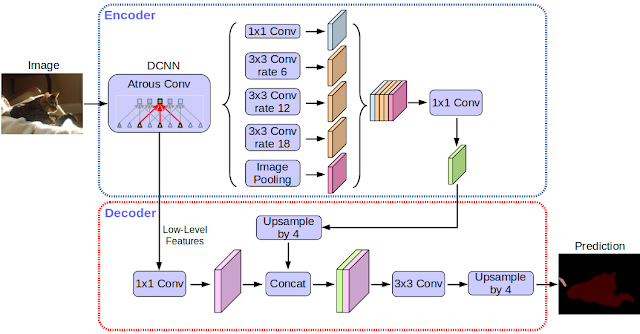
Google Pixel 2 and Pixel 2 XL without a dual-rear camera can be used with a Portrait mode on the front and rear camera, driven by AI software known as “semantic image segmentation model” or “DeepLab-v3+” and implemented in TensorFlow.

According to a blog post by Liang-Chieh Chen and Yukun Zhu, Software Engineers of Google Research, “semantic image segmentation” stands for “assigning a semantic label, such as ‘road’, ‘sky’, ‘person’, ‘dog’, to every pixel in an image.”

Google team said the will power various new applications, including the the synthetic shallow depth-of-field effect in the portrait mode of the Pixel 2 and Pixel 2 XL smartphones.

Explaining the feature, Google engineers said when each pixel or subject in the image is assigned one of these labels, it automatically figures out the outline of the objects for the Portrait mode, whether the object is a flower or a dog or a person. Rest of the background remains blurred, creating a shallow depth of field.

“Assigning these semantic labels requires pinpointing the outline of objects, and thus imposes much stricter localization accuracy requirements than other visual entity recognition tasks such as image-level classification or bounding box-level detection,” said the team in its blog post.

Other smartphone players like Apple or Samsung providing the same feature based on dual sensors but Google relies on the AI-driven technology to bring the same effect in Pixel 2 and Pixel 2 XL. The DeepLab-v3+ open source release includes “models built on top of a powerful convolutional neural network (CNN) backbone architecture for the most accurate results.”

As part of this release, the blog post said, “We are additionally sharing our Tensorflow model training and evaluation code, as well as models already pre-trained on the Pascal VOC 2012 and Cityscapes benchmark semantic segmentation tasks.”

The new image segmentation has been improved vividly over the last couple of years and the Google team hopes that it would help academics and the industry in their newer applications.


Trump Ban on Immigration Unnerves Indian IT Workers in US

India, first among the countries playing to the gallery when congratulating US President-elect Donald Trump, is slowly biting its fingers for the knee-jerk reaction as the first week of his presidency has clearly spelled Doomsday on H1B visas, while the ban on Muslims from 7 countries, though partially, was rolled out in haste.

Though a New York federal judge issued an emergency stay on the order on Saturday, the shocking weekend Visa ban from the Trump Administration was not entirely unexpected and the music to many ears is that there are still four more drafts in his war chest to be fired off in the next weekend, affecting all IT companies, hitting hard the business returns of Indian companies in particular.

Ironic but our budget will be out on February 1, increasing the Service tax and an array of other corporate taxes choking the business environment in India further from within and outside. Trump cannot be faulted as India is equally harping on “Make in India” slogan for foreign companies, which is in the same spirit as “Buy American and America First” policy of Modi’s counterpart.

Trump’s Friday order was on illegal immigration, which Trump has put at 30 million while national research institutes like the Pew Research Center reported in March 2015 that the number of illegal immigrants could be 11.2 million as of 2012. On the issue of legal immigration, especially of Indians under the H1B visa, his next order is reportedly drafted already impacting them with a variety of limits on their legal immigration and guest-worker visas, including a “temporary ban” on granting green cards.

Wary about the weekend developments, several US tech companies have asked their employees on H1B to return to the US immeidately, but the over-reactive immigration at the airports has already created chaos augmenting the fears of Indians, who are the major beneficiaries of the H-1B visa program.

Google CEO Sundar Pichai in an internal note to employees said that more than 100 Google staff are affected by the order. “It’s painful to see the personal cost of this executive order on our colleagues. We’ve always made our view on immigration issues known publicly and will continue to do so.”

Facebook founder and CEO Mark Zuckerberg criticised Trump’s decision to limit immigrants and refugees from Muslim nations as against the spirit of America which is essentially an immigrants’ nation.

Besides these announcements, reports said other drafts on “improved monitoring of foreign students”, “making site visits” of workplaces that employ L1 visa holders by US Department of Homeland Security officials, scrapping of visa permit to students with STEM degrees to stay in the US for as much as three years after graduating from college among others.

Indian tech lobby NASSCOM chief R Chandrashekhar said the industry is in a “wait-and-watch” mode over the rising protectionist sentiments in its largest free market.

The current ban of Syrians and travellers with passports from Iran, Iraq, Libya, Somalia, Sudan, Syria and Yemen, including those with dual nationality that includes one of those countries, will have to bear the brunt of ban for the next 90 days while the courts and executive will strive to wriggle out a solution.