Madagascar: ‘Overwhelming’ destruction, surging needs after back-to-back cyclones – WFP

Madagascar is grappling with a growing humanitarian emergency after two powerful cyclones struck the island nation within three weeks, leaving widespread destruction and pushing hundreds of thousands of people into urgent need of assistance.

The United Nations World Food Programme (WFP) says around 400,000 people are now facing acute humanitarian needs following the storms, which damaged homes, infrastructure and vital services across several regions.

Powerful Cyclone Hits Key Coastal City

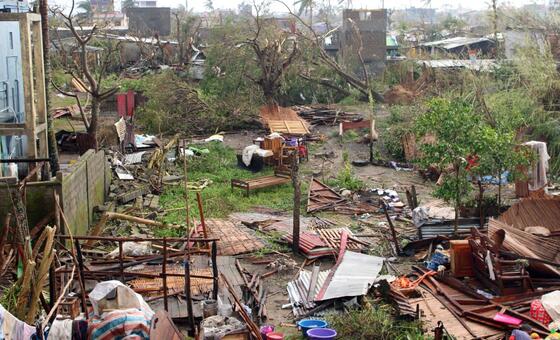
Cyclone Gezani made landfall on Tuesday evening near the port city of Toamasina, also known as Tamatave, Madagascar’s second largest urban centre. The storm brought powerful winds reaching up to 250 kilometres per hour, leaving extensive destruction in its wake.

Tania Goossens, WFP’s country director in Madagascar, described the devastation after returning from a field visit to the city.

“The scale of the destruction is really overwhelming,” she told reporters during a briefing from the capital, Antananarivo.

Local authorities estimate that roughly 80 percent of Toamasina has sustained damage. Essential services have also been severely disrupted, with electricity functioning at only a fraction of normal capacity.

“It’s running on roughly five percent electricity at the moment,” Goossens said, adding that large areas remain without water supply. Even the WFP’s warehouse and office in the city were completely destroyed by the cyclone.

Casualties And Widespread Damage

Initial assessments indicate that at least 38 people have died and more than 370 others have been injured as a result of the storm.

Beyond the human toll, the cyclone has caused extensive damage to homes, businesses, schools and healthcare facilities. The city’s main hospital was among the structures affected.

Goossens said many families have been forced to abandon their homes after roofs were ripped off buildings or entire structures collapsed under the force of the winds.

During her visit to the disaster zone, she saw residents attempting to recover what little remained of their belongings from the wreckage.

“Many are spending the night in homes where the roofs have been torn off,” she said.

Streets throughout the city remain blocked by uprooted trees and debris, making movement difficult. Fuel shortages are also complicating relief efforts.

Families Struggle To Find Food And Shelter

The storm has left thousands of residents uncertain about how they will secure food and shelter in the coming days.

According to WFP officials, many families have lost nearly all of their possessions. Some are sheltering in damaged homes while others have moved to temporary sites with limited facilities.

“Families are telling us that they have lost everything,” Goossens said, warning that access to basic necessities remains a major concern.

Humanitarian agencies are particularly worried about deteriorating water, sanitation and hygiene conditions. Damaged infrastructure and shortages of clean water could increase the risk of disease outbreaks in affected communities.

Aid workers are also monitoring rising protection risks for vulnerable groups, including women, children, elderly people and individuals with disabilities.

Aid Efforts Underway Amid Funding Shortfall

Before the storm struck, the WFP and partner organisations had already begun distributing cash assistance to vulnerable households so they could purchase food and prepare for the cyclone.

Now, the agency is deploying its remaining emergency food supplies to assist affected communities, working closely with Madagascar’s national disaster response teams.

However, Goossens warned that the scale of the crisis is exceeding the resources currently available.

The country was already facing serious food insecurity even before the cyclones hit. According to the latest data from the Integrated Food Security Phase Classification (IPC), about 1.57 million people across Madagascar were experiencing food shortages, with around 84,000 facing emergency levels of hunger.

Concern As Cyclone Season Begins

The humanitarian challenge is compounded by the timing of the disaster. Madagascar is currently entering the peak of its lean season, the period before harvests when food supplies are typically at their lowest.

At the same time, funding shortages are threatening to limit the response.

The WFP estimates that it faces an $18 million funding gap over the next six months to support both lean season assistance and cyclone relief operations.

“We will need sustained support over the coming months to help people recover, rebuild and strengthen their resilience against further shocks,” Goossens said.

With the cyclone season only just beginning, aid agencies fear that additional storms could further strain already fragile communities across the island nation.

Political violence against MPs rising worldwide: IPU


Violence and intimidation against elected lawmakers are rising across the world, increasingly fuelled by online hostility and political polarisation, according to a new report presented at the United Nations.

Martin Chungong, Secretary General of the Inter-Parliamentary Union (IPU), warned that the growing hostility directed at parliamentarians could have serious consequences for democratic institutions if left unchecked.

“If the phenomenon goes uncontrolled, there will be major implications for democracies, parliaments and human rights worldwide,” he told a UN conference in New York on Wednesday.

Online Abuse Dominates Political Violence

The report, titled When the Public Turns Hostile: Political Violence Against Parliamentarians, draws on responses from lawmakers in 85 countries. It also includes detailed case studies from Argentina, Benin, Italy, Malaysia and the Netherlands to examine how the problem manifests in different political environments.

One of the report’s most striking findings is the scale of online abuse faced by politicians. Between 65 percent and 77 percent of members of parliament in the five case-study countries reported experiencing harassment or threats on digital platforms.

The most common forms of intimidation include insults and degrading language, the spread of false or misleading information, and direct threats.

Researchers also found that hostile online behaviour tends to surge during politically sensitive moments, such as national or local elections, heated parliamentary debates or discussions on polarising social and cultural issues.

Women Lawmakers Face Greater Risk

The report highlights a clear gender gap in exposure to political violence.

About 76 percent of women lawmakers reported experiencing some form of abuse, compared with 68 percent of male parliamentarians.

Women are also more likely to face gendered or sexualised harassment, particularly online. Such attacks often include derogatory comments about appearance, threats of sexual violence or attempts to undermine credibility based on gender.

Lawmakers from minority communities, including racial minorities, people with disabilities and members of the LGBTQIA+ community, are also more frequently targeted by online abuse and harassment.

Social Media And AI Amplifying Hostility

The IPU report identifies several factors contributing to the growing hostility directed at politicians.

Rising political polarisation, economic pressures and public frustration with institutions are all contributing to an increasingly confrontational political climate. Social media platforms, researchers say, often amplify anger and misinformation, making it easier for abusive messages to spread widely.

New technologies are also playing a role. The report notes that artificial intelligence tools and deepfake technology are increasingly being used to create manipulated images or videos aimed at discrediting political figures.

Italian MP Valentina Grippo, who is part of the European delegation to the IPU, said lawmakers now face constant scrutiny and criticism in the digital age.

“If you say something that is not perfectly in line with what your audience wants to hear, then you have multiple attacks,” she said in an interview with UN News.

Grippo added that political debate is increasingly shifting away from policy disagreements toward identity-based conflicts.

“You no more have the confrontation between ideas, which is normal, which is part of politics, but you really have a fight between identities,” she said.

Anonymous Users Often Behind Attacks

According to the survey, most incidents of political intimidation are carried out by individuals rather than organised groups.

In the online sphere, anonymous users were identified as the main perpetrators in several countries. Nearly nine out of ten lawmakers surveyed in Argentina, Italy, Malaysia and the Netherlands said anonymous accounts were responsible for most abusive messages.

Chungong said the effects of sustained online harassment often extend beyond digital platforms.

“Those we surveyed consistently told us that sustained online abuse affected their offline behaviour, including their willingness to engage publicly and their sense of personal safety,” he said.

Threats To Democratic Participation

The IPU warns that increasing hostility toward politicians could weaken democratic systems over time.

Many lawmakers reported altering their behaviour to avoid attacks, including limiting public appearances, avoiding controversial topics or self-censoring their views.

Some politicians have also chosen to leave office or decided not to seek re-election because of sustained threats and harassment.

These trends, the report says, could discourage diverse groups from entering politics and ultimately undermine representative democracy.

“It makes it more difficult to somehow be able to deliver a message without fearing that it is misunderstood,” Grippo said, noting that in many parts of the world political expression still carries serious personal risks.

Call For Stronger Political Leadership

The report urges political leaders and parliamentary institutions to set clearer boundaries around acceptable public discourse and to respond more firmly to intimidation directed at elected officials.

It stresses that protecting lawmakers from threats is essential to ensuring that dissenting voices and minority perspectives are not silenced.

The Inter-Parliamentary Union, founded in 1889, is the global organisation representing national parliaments. Today it brings together 183 member parliaments and 15 regional parliamentary bodies, working to promote democracy, peace and sustainable development while defending the rights of parliamentarians worldwide.

World News in Brief: Violence, Terror Attacks And Digital Security Dominate Global Concerns At UN

Rising conflict, humanitarian emergencies and growing concerns over critical digital infrastructure dominated recent discussions involving United Nations agencies and global leaders, with crises unfolding from South Sudan to Pakistan and new efforts launched to safeguard global communications networks.

Fighting In South Sudan Displaces Thousands

Renewed violence in South Sudan’s Jonglei state has triggered a large-scale humanitarian crisis, forcing at least 250,000 people to flee their homes since the beginning of 2026.

The clashes, concentrated in northern and central parts of the state, have left families cut off from basic services in regions already struggling with some of the country’s worst malnutrition rates.

UNICEF warned that the situation poses a grave threat to children, many of whom are already suffering from severe food shortages.

“We are extremely concerned for women and children impacted by these violent clashes,” said UNICEF’s country representative in South Sudan, Noala Skinner. “A malnourished child without treatment is 12 times more likely to die.”

Humanitarian agencies face major obstacles in reaching affected communities. Movement by road, river and air remains heavily restricted, making it difficult to deliver emergency assistance.

Several areas are running dangerously low on therapeutic food used to treat severely malnourished children. Six counties in Jonglei are close to exhausting these supplies.

Across the country, at least 17 health facilities have been forced to shut down due to insecurity, further weakening an already fragile healthcare system.

UNICEF has also reported ten incidents in which health and nutrition supplies were looted.

Despite the challenges, aid workers continue to deliver support where possible. The organisation has sent water purification equipment to prevent potential cholera outbreaks and delivered malaria treatment kits, emergency medical supplies and therapeutic food intended to reach more than 10,000 people.

UN Condemns Deadly Attacks In Pakistan

Meanwhile, the United Nations has strongly condemned a series of violent attacks in Pakistan’s southwestern province of Balochistan that left dozens of people dead, including children.

UNICEF expressed deep concern after reports confirmed that children were among those killed or injured during the attacks last weekend.

“Children cannot be targets nor collateral damage, and their lives must always be protected,” said UNICEF representative in Pakistan Pernille Ironside.

She extended condolences to the victims’ families and warned that escalating violence is creating fear and insecurity among communities.

The attacks took place on January 31 and were later condemned by the UN Security Council.

In a statement issued on Tuesday, council members described the violence as “heinous and cowardly” acts of terrorism that resulted in the deaths of 48 people, including 31 civilians.

Among the civilian victims were five women and three children.

Authorities say the attacks were claimed by the Balochistan Liberation Army, a separatist militant group. Local officials later told reporters that security forces killed 145 members of the banned organisation in subsequent operations.

The Security Council expressed its deepest sympathy to the victims’ families and to the government and people of Pakistan, while wishing those injured a full recovery.

Global Summit Focuses On Submarine Cable Security

In a separate development, governments and industry representatives from more than 70 countries gathered in Porto, Portugal, to address growing concerns over the security and resilience of submarine communication cables.

These undersea cables carry the majority of the world’s digital traffic and form the backbone of global internet connectivity.

During the International Submarine Cable Resilience Summit 2026, participants adopted a declaration aimed at strengthening international cooperation to protect the network.

Today roughly 500 submarine cables stretch across more than 1.7 million kilometres of ocean floor, linking continents and supporting the global digital economy.

ITU Secretary-General Doreen Bogdan-Martin said safeguarding these systems is a shared responsibility.

“When it comes to critical digital infrastructure like submarine cables, resilience is both an end-to-end imperative and a shared responsibility,” she said.

Participants also discussed ways to improve repair times, strengthen monitoring systems and increase investment in infrastructure protection.

Protecting Connectivity For Vulnerable Regions

Experts at the summit warned that cable disruptions can have serious consequences, particularly for smaller countries and remote island communities that rely on only a few connections to the global network.

Sandra Maximiano, chairwoman of Portugal’s telecommunications regulator ANACOM, said international cooperation would be key to reducing the risks.

“I firmly believe the advisory body is already delivering concrete and meaningful impact,” she said, pointing to ongoing efforts to improve preparedness and response capabilities.

The Porto meeting followed the first global summit on submarine cable resilience held in Abuja, Nigeria, as governments and technology leaders seek stronger collaboration to protect one of the world’s most critical digital systems.

UN Condemns Russian Strikes On Ukrainian Cities As Energy Infrastructure Comes Under Pressure

United Nations officials have expressed alarm over renewed Russian strikes targeting Ukrainian cities and critical infrastructure, warning that the attacks are worsening conditions for civilians as winter temperatures continue to grip the country.

Matthias Schmale, the UN Humanitarian Coordinator in Ukraine, said he was “appalled” by the latest attacks reported in the cities of Dnipro, Kharkiv and Kyiv. The strikes have also contributed to widespread power outages affecting multiple regions, including Dnipro, Odesa and Vinnitsya.

Infrastructure Attacks Affect Millions

Schmale warned that continued assaults on Ukraine’s energy infrastructure are placing millions of civilians at risk by disrupting essential services.

“Systematic attacks by the Russian Federation Armed Forces on critical infrastructure affect the daily lives of millions and cause life-threatening conditions for the most vulnerable, including older people and children,” he said in a statement shared on social media.

He also emphasised that international humanitarian law prohibits attacks on civilian infrastructure and called for greater protection of essential facilities that support daily life.

The strikes come as Ukraine continues to face repeated attacks on energy facilities that supply electricity, heating and water to major population centres.

UNICEF Steps Up Emergency Support

In response to the continuing disruptions, the UN children’s agency UNICEF has increased efforts to support basic services across the country.

The organisation has been working to help keep heating systems, hospitals and water supply networks functioning during the cold winter months.

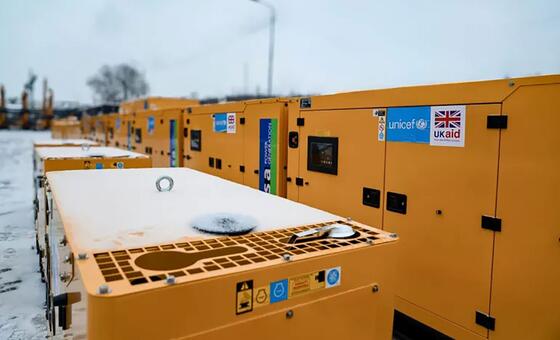
Since November, UNICEF has delivered 106 mid- and large-capacity generators across Ukraine. These units are being used to support water utilities and district heating companies that provide essential services to homes and public institutions.

Another 149 generators are expected to be distributed in the coming weeks to strengthen backup electricity systems and ensure continued operations in key facilities.

UNICEF Representative in Ukraine Munir Mammadzade said families across the country are struggling to cope with the disruptions.

“Across the country, vital services for children and families are strained and parents are struggling to keep their children warm, prepare hot food and access regular running water,” he said.

“These generators will help the brave technicians on the ground to keep systems running, to keep the heating on, hospitals open and water flowing.”

Drone Attack Kills Coal Miners

In a separate incident, UN human rights monitors confirmed that a Russian drone strike killed and injured coal miners in eastern Ukraine over the weekend.

The attack occurred on Sunday in the city of Ternivka in the Dnipropetrovsk region, an area located roughly 65 kilometres from the frontline.

According to local authorities, the strike killed 12 civilians and wounded 16 others.

Danielle Bell, head of the UN Human Rights Monitoring Mission in Ukraine, said the attack highlights the growing risks civilians face even in areas distant from active combat zones.

“This incident highlights the dangers civilians face when hostilities extend into areas of everyday life, even well beyond the active fighting zone,” she said.

Civilians Targeted During Commute

The victims were coal mine workers travelling home by bus after completing their shift at a nearby mine.

Witnesses said several drones struck the road near the bus over a period of several minutes, triggering explosions that shattered the vehicle’s windows and caused heavy casualties among passengers.

Other civilians driving nearby and individuals who rushed to assist the injured were also reportedly among the victims.

UN investigators visited the site on Monday to document the aftermath. They observed two large craters, one in front of and another behind the damaged bus, as well as fragments believed to be from the drones used in the strike.

Survivors Describe Chaos

Human rights monitors interviewed survivors who described scenes of panic and confusion following the explosions.

One injured miner said he managed to escape through a shattered bus window after the first blast. As passengers tried to help one another, a second explosion occurred shortly afterwards.

He told investigators that the victims were ordinary workers simply trying to return home after their shift.

“This is all wrong,” the miner said. “We are ordinary coal mine workers. People were simply returning to their homes, to their families.”

UN officials say the incident underscores the continuing human toll of the conflict, as civilians remain exposed to deadly attacks even far from the main battlefield.

Sensex Jumps Over 2,000 Points After India-US Deal; Rupee Logs Best Day Since 2018

Indian equity markets closed sharply higher on Tuesday, extending a powerful rally as investors welcomed the finalisation of the long-awaited India–US trade deal, which is expected to improve trade prospects and revive foreign investor interest.

Benchmark indices posted broad-based gains through the session. The Sensex rose 2,072.67 points, or 2.54 per cent, to end at 83,739.13, while the Nifty climbed 639.15 points, or 2.55 per cent, to close at 25,727.55.

Market sentiment turned decisively positive after U.S. President Donald Trump announced that reciprocal tariffs on Indian goods would be reduced to 18 per cent, easing a major source of uncertainty that had weighed on equities in recent months.

Technical analysts said momentum remains favourable in the near term. “The key support zone remains at 25,500–25,600 (gap support), while 25,900–26,000 acts as a major psychological and supply resistance area,” an analyst said.

Heavyweight stocks led the rally on the Sensex. Shares of Adani Ports, Bajaj Finance, InterGlobe Aviation (IndiGo) and Power Grid Corporation posted strong gains, reflecting renewed confidence across infrastructure, financials and transport-related counters. Tech Mahindra and Bharat Electronics Limited (BEL) were the only stocks to close in negative territory.

Gains Broad-based

Gains were broad-based across sectors. All sectoral indices ended higher, with the Nifty Realty index emerging as the top performer, rising more than 4 per cent. Chemical, pharmaceutical and consumer durables stocks also saw strong buying interest, with their respective indices advancing over 3 per cent each.

The rally extended beyond frontline stocks into the broader market. The Nifty MidCap 100 index gained 2.84 per cent, while the Nifty SmallCap 100 index rose 2.82 per cent, underscoring improving risk appetite among investors.

Analysts said the market performance reflected growing optimism around the trade outlook and expectations of improved economic prospects. “Indian equities experienced a significant rally today, driven by the long-anticipated India–US trade deal and a strengthening rupee, which boosted expectations of renewed FII inflows,” an expert said.

The currency market mirrored the positive sentiment. The rupee strengthened sharply, appreciating by Rs 1.28, or nearly 1.40 per cent, following the trade deal announcement. The move marked the rupee’s best single-day gain since December 2018.

Market participants said the combination of tariff relief, a firmer currency and expectations of capital inflows could continue to support equities in the near term, even as investors watch global cues and domestic macro developments closely.

Sensex Soars Over 2,400 Points as Markets Cheer India–US Trade Deal

Indian equity markets staged a powerful rally on Tuesday morning, surging nearly 3 per cent in early trade, as investors reacted enthusiastically to the announcement of the India–US trade deal that promises immediate tariff relief for Indian exports.

By 9.25 a.m., the Sensex had jumped 2,421 points, or 2.97 per cent, to 84,088, while the Nifty climbed 741 points, or 2.96 per cent, to 25,829, marking one of the strongest single-session opening rallies in recent months.

The sharp upmove followed confirmation that India and the United States have agreed to a trade arrangement under which reciprocal tariffs on Indian goods will be cut to 18 per cent from 25 per cent. In addition, the extra 25 per cent duty imposed on India over its purchases of Russian crude oil will be scrapped. U.S. President Donald Trump said the agreement would be “effective immediately” after a phone call with Prime Minister Narendra Modi late on Monday, delivering instant relief to exporters and markets.

The rally was broad-based, extending well beyond frontline stocks. The Nifty Midcap 100 index surged 3.10 per cent, while the Nifty Smallcap 100 rose 3.25 per cent, signalling renewed risk appetite across market segments that had remained under pressure amid trade uncertainty.

All sectoral indices traded firmly in the green, led by realty, auto, consumer durables and information technology. The realty index jumped 4.47 per cent, auto rose 3.78 per cent, consumer durables gained 3.69 per cent, and IT stocks advanced 3.04 per cent, reflecting expectations of stronger demand, improved export competitiveness and higher earnings visibility.

At 18 per cent, India’s new U.S. tariff rate now undercuts that of several key export-oriented Asian economies. Bangladesh, Sri Lanka, Taiwan and Vietnam face tariffs of 20 per cent, while Indonesia, Malaysia, Thailand, the Philippines and Pakistan are subject to tariffs of 19 per cent. Market participants said this relative advantage could help Indian exporters gain market share in labour-intensive and manufacturing segments.

Technically, analysts said immediate support for the Nifty lies in the 25,600–25,800 zone, while resistance is seen at 26,200–26,350. A sustained move above these levels could open the door to further upside, they added.

“The dramatic announcement of the long-awaited US–India trade deal and the US decision to cut tariffs on India from 50 per cent to 18 per cent is a game changer for the Indian economy and stock markets as its delay was the single important factor weighing on the markets,” an analyst said, underscoring how prolonged uncertainty had capped valuations.

Market watchers said the deal could lift India’s growth trajectory, with GDP growth seen rising to around 7.5 per cent in FY27, supported by stronger exports to the U.S. Corporate earnings, which are already showing signs of revival, could accelerate to 16–18 per cent growth in FY27, aided by improved demand conditions and operating leverage.

Rupee Rebounds 

Analysts also expect the rupee to rebound sharply in the near term. They said the combined impact of the US–India trade deal, the recently concluded EU–India trade agreement, and the growth-focused Union Budget has materially improved India’s macro outlook. The positive sentiment could trigger renewed foreign capital inflows, potentially strengthening India’s Balance of Payments position.

Large-cap stocks in banking, non-banking financials, telecom, capital goods and IT — sectors traditionally favoured by foreign institutional investors — are expected to attract significant inflows if risk-on sentiment sustains, market participants said.

Global cues were largely supportive. In Asia, China’s Shanghai Composite rose 0.38 per cent and Shenzhen gained 0.93 per cent. Japan’s Nikkei jumped 3.23 per cent, South Korea’s Kospi surged 5.04 per cent, while Hong Kong’s Hang Seng edged up 0.11 per cent.

U.S. markets had ended the previous session mostly higher, with the Nasdaq gaining 0.56 per cent, the S&P 500 advancing 0.54 per cent, and the Dow Jones Industrial Average adding 1.05 per cent.

Despite the sharp rally, data showed that foreign institutional investors remained net sellers on February 2, offloading equities worth ₹1,832 crore. Domestic institutional investors, however, continued to provide strong support, with net purchases of ₹2,446 crore, cushioning the market ahead of the trade deal announcement.

The scale and breadth of Tuesday’s rally suggest that investors are now repositioning for a post-tariff-reset environment, with expectations of stronger growth, improved earnings visibility and renewed foreign interest shaping near-term market sentiment.

India–U.S. Deal: What We Know, What We Don’t

The announcement by U.S. President Donald Trump and Prime Minister Narendra Modi that Washington will cut its “reciprocal” tariffs on Indian goods from 25% to 18% has brought immediate relief to Indian exporters and signalled a thaw after nearly a year of strained ties. The rollback also includes the removal of a punitive 25% penalty tariff imposed last August, which had pushed total U.S. tariffs on Indian exports to 50%, among the highest in the world, on par with Brazil.

Yet, beyond the headline tariff cut, the statements from Washington and New Delhi diverge sharply. While Mr. Trump has framed the move as part of a sweeping trade deal involving oil, investments and zero tariffs, Mr. Modi has confined himself to welcoming the tariff relief alone. This gap leaves several fundamental questions unanswered.

Is There Actually a US-India Trade Deal?

Mr. Trump’s repeated references to a “Trade Deal” have created ambiguity over whether the two sides have concluded a comprehensive agreement or merely agreed on a tariff rollback. One possibility is that he is referring to the long-discussed “first tranche” of an India–U.S. Free Trade Agreement (FTA), negotiations for which gathered pace after Mr. Modi’s visit to Washington in February 2025.

If so, the absence of detail is striking. Unlike the EU–India FTA concluded last week, where the negotiated text and scope were clearly outlined, neither Washington nor New Delhi has released any documentation, timelines or sectoral commitments for an India–U.S. FTA. Tariffs, non-tariff barriers, market access and investment rules were all meant to be part of this package, yet none of these elements has been formally disclosed.

Compounding the uncertainty is Mr. Trump’s claim that India has agreed to reduce “Tariffs and Non-Tariff Barriers against the United States, to ZERO”. New Delhi has not confirmed this, nor clarified which tariff lines would be reduced to zero. Sensitive sectors such as agriculture, particularly soyabean and dairy, which India has consistently opposed, remain conspicuously unaddressed.

The confusion is not new. In January, U.S. Commerce Secretary Howard Lutnick said a deal had been ready for months but stalled because, according to him, Mr. Modi did not make a phone call to clinch it, a claim the Ministry of External Affairs (MEA) firmly denied.

Does 18% Figure Indicate Level Playing Field for India?

The reduction to 18% is unquestionably an improvement from the earlier 25% rate imposed in April 2025. That earlier hike had left Indian exporters worse off than many regional competitors: Bangladesh and Vietnam faced tariffs of around 20%, Pakistan 19%, while China’s 34% rate was largely deferred until November 2026.

For labour-intensive sectors such as apparel, and for gems and jewellery exporters who were among the hardest hit, the new rate restores some competitiveness. However, Indian exporters are still not on equal footing. Many neighbouring and Asian economies continue to enjoy a Generalised System of Preferences (GSP) concession of about 5%, a benefit the U.S. withdrew from India in June 2019 during Mr. Trump’s first term.

As a result, Indian industry had hoped that any revised reciprocal tariff would land closer to 15%, not 18%. The current rate narrows the gap, but does not eliminate it.

What Is Actually Happening With Russian Oil?

Perhaps the most contentious claim from Washington is Mr. Trump’s assertion that Mr. Modi has “agreed to stop buying Russian Oil, and to buy much more from the United States and, potentially, Venezuela”, a move he linked to ending the war in Ukraine. The MEA has so far declined to comment on this assertion.

This silence matters because it cuts against India’s long-stated position. When the U.S. imposed a 25% penalty tariff last August over India’s Russian oil purchases, the MEA called the move “unfair, unjustified and unreasonable”, stressing that energy imports are driven by “market factors” and the need to ensure energy security.

In practice, however, India’s Russian oil imports have already been declining. After peaking in 2024, refiners began scaling back purchases. In October, imports of Russian Ural crude fell about 38% year-on-year. By December, the trend had deepened.

According to the European Centre for Research on Energy and Clean Air (CREA), “India’s Russian crude imports recorded a sharp 29% month-on-month reduction to the lowest volumes since the implementation of the price cap policy.” On January 6, 2026, Reliance Industries said it would not receive any Russian oil in January and had not taken Russian crude for the previous three weeks.

The key question is whether these reductions reflect commercial recalibration, or a political commitment now being formalised under U.S. pressure.

India Under US Sanctions Pressure?

There is historical precedent for concern. In 2019, India “zeroed out” imports of Iranian and Venezuelan oil after U.S. sanctions threats, with then U.S. Ambassador Nikki Haley publicly pressing New Delhi. Following the U.S. operation against Venezuelan President Nicolás Maduro in January this year, Mr. Trump has suggested that Washington would now “allow” imports of Venezuelan oil, a position that offers India flexibility, but also underscores how contingent its energy choices appear on U.S. approval.

The pressure extends beyond oil. The U.S. has warned of 25% tariffs on countries doing business with Iran and has withdrawn the sanctions waiver for Indian investment in Iran’s Chabahar port. Government sources indicate India is prepared to give up its “minimal levels” of trade with Iran to avoid further tariffs.

Significantly, the Union Budget presented on February 1 makes no allocation for Chabahar in the coming year. After 23 years of strategic investment, this omission suggests New Delhi may be preparing to pause or retreat from the project until the sanctions environment eases.

What’s $500 Billion Commitment?

Mr. Trump’s claim that Mr. Modi committed to “BUY AMERICAN” at a much higher level, including purchases of over $500 billion in U.S. energy, technology, agricultural products, coal and more, is one of the boldest assertions yet the least substantiated.

The MEA has declined to confirm any such commitment. Context matters here. India–U.S. bilateral trade in goods currently stands at about $131 billion. India’s cumulative investment in the U.S. has hovered around $40 billion.

A $500 billion figure, therefore, can only be meaningful if spread over many years and across multiple sectors, much like similar claims Mr. Trump has made about the European Union, Japan and others following their trade deals. Without timelines, sectoral break-ups or binding mechanisms, the number functions more as a political headline than a verifiable obligation.

The tariff cut to 18% is real, immediate and economically significant. Beyond that, much remains unresolved. The gulf between Washington’s expansive claims and New Delhi’s carefully limited confirmations raises fundamental questions about the scope of the agreement, India’s energy autonomy, and the true balance of concessions.

Until the fine print is released, the India–U.S. deal remains less a finished treaty and more a framework shaped as much by geopolitics and pressure as by trade economics.


Invisible highways: Undersea Cables Power 99% Of Global Internet Traffic, Despite Growing Risks

The world’s digital economy depends heavily on a vast network of undersea cables stretching across the ocean floor, quietly carrying nearly all international internet traffic and enabling trillions of dollars in financial transactions every day.

Despite their central role in modern connectivity, these cables remain largely invisible to the public, even as governments and technology experts grow increasingly concerned about their security and resilience.

Tomas Lamanauskas, Deputy Secretary-General of the International Telecommunication Union (ITU), highlighted the importance of the infrastructure ahead of a global summit on submarine cable resilience in Porto, Portugal.

“About 99 per cent of the international internet traffic goes through submarine cables. Even the conversation you and I are having right now is carried through these cables,” he said in an interview with UN News.

Backbone Of The Digital Economy

While most people associate internet access with mobile networks, satellites or broadband connections, the global exchange of data actually relies on a complex system of fibre-optic cables lying hundreds of metres beneath the ocean surface.

These cables act as the “digital highways” of the modern world, linking continents and enabling the rapid movement of information across countries and markets.

Today more than 500 commercial submarine cables connect different parts of the world, carrying vast volumes of data every second. Together, they stretch across roughly 1.7 million kilometres of ocean floor, long enough to circle the Earth multiple times.

Though relatively thin, roughly the width of a garden hose, the cables transmit hundreds of terabits of information per second using fibre-optic technology.

A Technology With Deep Historical Roots

The idea of connecting nations through underwater cables dates back more than a century.

The first undersea telegraph cable was laid between England and France in 1850, marking the beginning of a technological transformation in global communications.

Over time, these systems evolved from telegraph lines to telephone networks and eventually to high-speed fibre-optic cables capable of transmitting massive volumes of digital data.

Before cables are installed, engineers survey the seabed to identify routes that minimise environmental impact and reduce the risk of damage. Specialised ships then deploy the cables, unrolling large reels onto the ocean floor.

Disruptions Can Have Global Impact

Because submarine cables form the backbone of international communications, any disruption can quickly affect economies, financial markets and essential services.

According to the ITU, between 150 and 200 cable incidents occur globally each year, averaging three to four disruptions every week.

Some of the most significant disruptions in recent years occurred in the Red Sea, where cable damage in 2024 interrupted roughly a quarter of data traffic flowing between Europe and Asia.

Outages can also be triggered by natural disasters such as earthquakes, underwater landslides or volcanic eruptions.

However, experts say human activity accounts for the majority of incidents. Around 80 percent of cable damage is caused by fishing trawlers or ship anchors dragging across the seabed.

Remote Regions Face Greater Risks

When cables fail, the consequences can be particularly severe for remote island nations and regions with limited connectivity.

Lamanauskas pointed to the Pacific island nation of Tonga as an example. Since 2019, the country has experienced three major internet disruptions linked to an earthquake, volcanic eruptions and accidental damage caused by ship anchoring.

In areas with only a single cable connection, even minor damage can leave entire populations without internet access for days or weeks.

“Imagine your entire community being offline for a week, unable to access digital healthcare, information or education,” he said.

Even small delays in data transmission can have significant economic consequences. For instance, a millisecond delay caused by cable congestion could affect financial trading systems in major global markets.

Repairs And Maintenance Challenges

Maintaining the vast network of undersea cables presents logistical challenges.

Some of the infrastructure installed during the early 2000s technology boom is now nearing the end of its typical 25-year lifespan, increasing the need for maintenance and replacement.

When a cable is damaged, engineers can usually identify the problem quickly using monitoring systems. However, the repair process often involves complex international coordination.

Obtaining permits and approvals from multiple jurisdictions can sometimes delay repair operations more than the technical work itself.

Depending on the location of the damage and the availability of specialised repair vessels, restoring a cable may take anywhere from several days to several months.

Global Efforts To Strengthen Cable Resilience

The growing dependence on digital connectivity has prompted governments and industry leaders to focus more closely on protecting submarine cables.

The International Telecommunication Union is working with countries and private companies to strengthen the resilience of the global network.

Its efforts include developing technical standards, improving coordination between countries and encouraging faster permitting processes for repairs.

The agency also promotes measures to prevent accidental damage and ensure that cable maintenance can be carried out more efficiently.

Lamanauskas said the rapid expansion of internet use continues to drive massive growth in cable capacity.

“Over the last 40 years, the capacity of these optical cables has been increasing by about 40 per cent every year,” he said, describing the growth as exponential.

As global demand for data continues to surge, strengthening the reliability and security of these underwater connections will remain a critical challenge for governments, businesses and international organisations alike.

Budget 2026 Puts Technology At Heart Of Inclusive Growth, Says Nasscom

Industry body Nasscom on Sunday welcomed the Union Budget 2026, saying it firmly positions technology as a central driver of inclusive and sustainable economic growth under the government’s Viksit Bharat vision.

Reacting to Finance Minister Nirmala Sitharaman’s ninth consecutive Budget, Nasscom described it as forward-looking and consultative, reinforcing the partnership between government and industry while strengthening India’s ambition to remain a global technology and services hub.

Tax Certainty, Ease Of Doing Business Boost For IT Sector

Nasscom said a key positive for the technology industry was the rationalisation of international taxation and transfer pricing rules, noting that tax policy has been effectively deployed as a competitiveness lever.

It highlighted the consolidation of software development services, IT-enabled services, knowledge process outsourcing and contract R&D into a single category of Information Technology services, along with a uniform safe harbour margin of 15.5 per cent. The move, coupled with the expansion of the safe harbour eligibility threshold from Rs 300 crore to Rs 2,000 crore, is expected to significantly widen access to certainty mechanisms for routine cross-border IT service models.

The industry body also welcomed steps to strengthen the Advance Pricing Agreement (APA) framework, particularly the proposal to fast-track unilateral APAs for IT services with a targeted two-year resolution timeline, addressing long-standing concerns over delays and uncertainty.

Cloud, Semiconductors And Digital Infrastructure In Focus

Nasscom said the Budget made a decisive intervention to strengthen India’s cloud and digital infrastructure ecosystem. It pointed to the proposed tax holiday till 2047 for foreign companies providing global cloud services using Indian data centres, calling it a strong signal to attract long-term global investment and expand India’s compute capacity.

The industry body also welcomed the emphasis on building domestic capability in strategic technologies, including the launch of India Semiconductor Mission 2.0 and the enhanced Rs 40,000 crore outlay for the Electronics Components Manufacturing Scheme.

Taken together, Nasscom said, the measures reflect a more mature policy approach that places technology, digital infrastructure and tax certainty at the core of India’s long-term competitiveness, setting a clear direction for sustainable growth driven by innovation and manufacturing depth.

Indian Markets Crash After Budget Disappointment Over STT Hike

Indian equity markets witnessed a sharp sell-off on Budget Day, with benchmark indices sliding nearly 2 per cent after Finance Minister Nirmala Sitharaman announced a steep hike in Securities Transaction Tax (STT) on futures and options, unsettling investor sentiment in a special Sunday trading session.

The Sensex closed at 80,723, while the Nifty ended at 24,825, down 495 points, marking the steepest Budget Day decline in six years. The fall reflected disappointment over higher trading costs and the absence of immediate growth or sentiment-boosting triggers for the markets.

Sharp Intraday Volatility As Traders Unwind Positions

Markets were far more volatile during the session. The Sensex plunged nearly 3,000 points from the day’s high to hit an intraday low of 79,899.42, while the Nifty slipped to 24,572, before recovering modestly towards the close.

Traders attributed the sharp swings to rapid unwinding of leveraged positions following the STT announcement. The tax on futures trades was raised to 0.05 per cent from 0.02 per cent, while STT on options premium was increased to 0.15 per cent from 0.10 per cent, significantly raising transaction costs in the derivatives segment that drives daily market volumes.

PSU Banks, Metals Drag As Volatility Spikes

The sell-off was broad-based, extending well beyond frontline stocks. The Nifty Midcap 100 fell about 2 per cent, while the Nifty Smallcap 100 dropped nearly 2.7 per cent, underlining the risk-off mood across the market. Investor anxiety surged, with the India VIX jumping nearly 12 per cent, signalling heightened volatility.

Sector-wise, PSU banks were the worst hit, with the Nifty PSU Bank index tumbling close to 6 per cent, followed by metal stocks, which fell around 4 per cent. Banking and financial services indices declined over 2 per cent each. Among individual stocks, Bharat Electronics, Hindalco and ONGC fell about 6 per cent, while IT stocks offered limited relief, with Wipro, TCS and Max Healthcare gaining around 2 per cent each.

Budget 2026 Raises Aid For Nepal, Afghanistan; Allocation To Bangladesh Cut

India has recalibrated its neighbourhood development assistance in the Union Budget 2026–27, increasing allocations for countries such as Nepal, Afghanistan, Bhutan and Sri Lanka, while sharply reducing aid to Bangladesh, signalling a selective realignment of regional priorities.

According to Budget documents, India’s development assistance to Bhutan has been raised to Rs 2,288.56 crore, reaffirming Thimphu’s position as the largest recipient of Indian aid. Allocation for Afghanistan has been increased from Rs 100 crore to Rs 150 crore, indicating that New Delhi expects to scale up development projects in the country despite continuing political uncertainty.

Aid to Nepal has been enhanced by Rs 100 crore to Rs 800 crore, while Sri Lanka will receive Rs 400 crore, up from Rs 300 crore in the previous Budget. India has also significantly increased assistance to Mongolia, raising the allocation from Rs 5 crore to Rs 25 crore.

Bangladesh Aid Halved

In contrast, financial support for Bangladesh has been halved, with the allocation reduced from Rs 120 crore to Rs 60 crore. Assistance to the Maldives has been marginally cut from Rs 600 crore to Rs 550 crore, while funding for Myanmar has been lowered from Rs 350 crore to Rs 300 crore.

Beyond the immediate neighbourhood, allocations for Eurasian countries have been reduced to Rs 38 crore, while development assistance to Latin American nations has been increased to Rs 120 crore, reflecting a broader diversification of India’s external engagement.

3 Kartavyas

Overall, the Ministry of External Affairs’ budget has been increased to Rs 22,118.97 crore, up from Rs 20,516.62 crore in the previous financial year, providing additional headroom for diplomatic, development and strategic initiatives.

Presenting the Budget in Parliament, Finance Minister Nirmala Sitharaman said the government’s spending priorities were guided by three kartavyas—accelerating economic growth, empowering citizens, and ensuring inclusive development—an approach that now appears to extend to India’s external development partnerships as well.

The revised aid allocations are expected to be closely watched in the region, particularly in the context of evolving diplomatic ties and India’s broader neighbourhood-first and global outreach strategies.

Budget 2026 Signals A Clear Outreach To NRIs

• NRI equity investment limit per company doubled to 10%, aggregate cap raised to 24%.
• MAT exemption announced for non-residents under presumptive taxation.
• TCS on foreign education and medical remittances cut to 2%.
• Property sale compliance eased; buyers no longer need a separate TAN.

The Union Budget 2026–27 has marked a notable shift in the Centre’s approach towards Non-Resident Indians, positioning the global Indian diaspora as a more active participant in India’s investment and growth story. Finance Minister Nirmala Sitharaman unveiled a series of measures aimed at easing compliance, lowering tax friction and expanding investment access for non-residents, particularly in equities and real estate.

The most significant reform relates to equity investments. The budget has doubled the individual investment limit for NRIs and overseas residents in listed Indian companies from 5% to 10% of paid-up capital. At the same time, the overall ceiling for all non-resident investors has been increased to 24%. Officials see this as a move to deepen capital markets and attract stable overseas capital at a time of global financial uncertainty.

Tax relief formed the second pillar of the government’s NRI-focused initiatives. Non-resident taxpayers opting for the presumptive taxation regime will now be exempt from Minimum Alternate Tax (MAT), a change intended to simplify filings and reduce disputes. The finance ministry said the exemption would reduce compliance burdens and provide greater clarity to overseas taxpayers with limited operations in India.

Liberalised Remittance Scheme

The budget also addressed concerns around remittances under the Liberalised Remittance Scheme. Tax Collected at Source on overseas spending for education and medical treatment has been reduced to 2% from 5%, offering immediate relief to families supporting students and patients abroad. The move is expected to improve cash flows without altering reporting requirements.

In the real estate segment, long-standing procedural hurdles for NRIs were eased. Buyers of property from non-resident sellers will no longer be required to obtain a separate Tax Deduction and Collection Account Number to deduct TDS. The government said this simplification would reduce delays in transactions and encourage smoother property sales involving overseas Indians.

Taken together, the budget measures underline a broader policy intent to integrate NRIs more closely into India’s financial ecosystem, moving beyond remittances to long-term investment participation. Market experts note that while the reforms are structurally positive, their success will depend on clarity in implementation and stability in global markets.

The 2026 budget, analysts say, sends a clear signal that the government sees the Indian diaspora not just as external stakeholders, but as strategic partners in the country’s next phase of economic expansion.

‘Very Disappointing, No Relief For Ordinary People’: Opposition Slams Union Budget 2026

Opposition parties mounted a sharp attack on the Union Budget 2026 on Sunday, accusing the government of failing to address the concerns of ordinary citizens, farmers, unemployed youth and small businesses, even as Finance Minister Nirmala Sitharaman presented her ninth consecutive Budget in Parliament.

Leaders across parties said the Budget lacked concrete relief measures, ignored key states and sectors, and prioritised headline announcements over tackling deeper economic challenges.

Congress MP Shashi Tharoor said the Budget speech made no reference to Kerala, calling it disappointing though he noted that finer details would emerge once the documents were studied. “The speech itself contains very few details that are actually necessary,” he said.

Another Congress MP, Ujjwal Raman Singh, said the Budget lacked the energy required to revive confidence. “Farmers, unemployed youth and even large states like Uttar Pradesh have been neglected. People expected announcements for regions like Prayagraj, but there was nothing,” he said, alleging that several schemes appeared skewed towards election-bound states.

Congress leaders air opposition

Former Uttarakhand Chief Minister Harish Rawat said the Budget offered little to vulnerable sections. “There is nothing here for the poor, farmers or women. It is buried under slogans about a developed India by 2047,” he said.

Congress Rajya Sabha MP Jebi Mather echoed concerns over Kerala’s exclusion, saying the state had hoped for specific initiatives, including high-speed rail projects. “Kerala has once again been ignored,” she said.

Congress MP Shashikant Senthil described the Budget as lacking policy direction. “There is nothing that stands out as a major decision. There is nothing substantial for common citizens, farmers or MSMEs,” he said.

Raising broader economic concerns, former Union Minister Manish Tewari said structural issues remained unaddressed. “Nominal GDP growth has weakened, tax buoyancy is poor and private investment is not picking up. Increased public capital expenditure only highlights the lack of private investment momentum,” he said, adding that foreign direct investment was also slowing.

Congress MP Imran Masood criticised the absence of export-related relief, particularly for regions affected by global tariffs. “Exports have collapsed in places like Moradabad and Saharanpur, but there is no support for exporters,” he said.

SP slams Budget as ‘Disappointing’

Leaders from other opposition parties also voiced dissatisfaction. Aam Aadmi Party MP Malwinder Singh Kang said Punjab and Haryana had been overlooked in tourism and expressway projects, while inflation relief was missing. “The poor have received nothing from this Budget,” he said.

Samajwadi Party MP Rajeev Kumar Rai called the Budget confusing and disappointing, alleging it favoured a few corporate houses. His party colleague Neeraj Kushwaha Maurya said farmers and large states had been ignored, adding that welfare schemes such as MGNREGA had not received adequate support.

Shiv Sena (UBT) MP Priyanka Chaturvedi said the Budget fell short at a time of global economic uncertainty. “Exporters are suffering, common people have received nothing, and markets reacted negatively. A truly visionary Budget would have inspired confidence,” she said.

Shiv Sena (UBT) spokesperson Anand Dubey said the Budget failed to deliver fresh ideas. “There was no tax relief, no meaningful push for jobs or startups. It does not bring happiness to ordinary people,” he said.

The Opposition said it would examine the detailed Budget documents in the coming days but maintained that the initial presentation failed to inspire confidence or address pressing economic anxieties facing households and businesses.

Budget 2026 Sets Growth Push With Manufacturing, Infra, Tax Overhaul At Core

Finance Minister Nirmala Sitharaman on Sunday presented the Union Budget 2026–27, outlining an ambitious growth strategy anchored in manufacturing expansion, infrastructure investment and sweeping tax reforms, while maintaining a tight fiscal framework amid global economic uncertainty.

The Budget, the first to be prepared at Kartavya Bhawan, is built around three stated kartavyas—accelerating economic growth, building people’s capabilities, and ensuring inclusive access to opportunities under the vision of Sabka Sath, Sabka Vikas.

For 2026–27, the government pegged total expenditure at ₹53.5 lakh crore and non-debt receipts at ₹36.5 lakh crore, with net tax receipts estimated at ₹28.7 lakh crore. The fiscal deficit is projected at 4.3% of GDP, marginally lower than 4.4% in 2025–26, while the debt-to-GDP ratio is expected to ease to 55.6%.

Manufacturing, Infrastructure Take Centre Stage

A major thrust has been placed on scaling up manufacturing across seven strategic and frontier sectors, including biopharma, semiconductors, electronics, textiles, chemicals, capital goods and critical minerals.

The government announced a ₹10,000 crore Biopharma SHAKTI programme, expanded the Electronics Components Manufacturing Scheme to ₹40,000 crore, and unveiled India Semiconductor Mission 2.0 to strengthen domestic design, equipment and materials capacity.

To reduce dependence on imports of critical inputs, dedicated rare earth corridors will be developed in Odisha, Kerala, Andhra Pradesh and Tamil Nadu, covering mining, processing, research and manufacturing.

Public capital expenditure will rise to ₹12.2 lakh crore, alongside the creation of an Infrastructure Risk Guarantee Fund to crowd in private investment. Seven high-speed rail corridors have been proposed as growth connectors, while 20 national waterways will be operationalised over the next five years to promote greener logistics.

Support For SMEs, Textiles And Cities

The Budget proposed a ₹10,000 crore SME Growth Fund to nurture “Champion SMEs”, additional funding for the Self-Reliant India Fund, and schemes to modernise 200 legacy industrial clusters.

An integrated textile programme—including national fibre initiatives, mega textile parks and cluster modernisation—aims to boost exports and employment, particularly in traditional hubs.

Urban development will be driven through City Economic Regions, with ₹5,000 crore per region over five years, and incentives to encourage large municipal bond issuances.

On human capital, the government announced steps to bridge education and employment gaps, expand allied health institutions, establish regional medical hubs for medical tourism, and support creative industries under the “orange economy”.

Tourism and heritage also feature prominently, with 15 archaeological sites, including Adichanallur and Lothal, to be developed as experiential cultural destinations.

Major Tax Reforms Announced

A key highlight is the rollout of a new Income Tax Act from April 2026, aimed at simplifying compliance through redesigned rules and forms.

Personal tax relief measures include tax exemption on interest awarded by Motor Accident Claims Tribunals, rationalisation of TCS on overseas travel and remittances, and automated systems for lower or nil TDS certificates for small taxpayers.

The government also announced a major overhaul of penalties and prosecutions to reduce litigation, along with reforms to advance pricing agreements and safe harbour rules to support India’s IT services sector.

On capital markets, the Budget raised Securities Transaction Tax on futures and options, a move that triggered sharp market volatility on Budget Day.

On the indirect tax front, the Budget focused on tariff simplification, easing customs duties for critical minerals, clean energy inputs, electronics, aviation and nuclear power projects. Customs processes are set to move towards trust-based, technology-driven clearances, with AI-enabled risk assessment and a single digital window by FY26-end.

Fiscal Balance Maintained

Despite the scale of announcements, the Finance Minister reiterated the government’s commitment to fiscal discipline, with borrowing and deficit numbers signalling a calibrated approach to growth spending.

Overall, Budget 2026–27 signals a decisive push towards manufacturing-led growth, infrastructure expansion and tax simplification, while attempting to balance long-term structural reforms with macroeconomic stability.

Myanmar Crisis Deepens Five Years After Military Coup, UN Warns

Five years after Myanmar’s military seized power, the country remains trapped in a worsening humanitarian and political crisis marked by widespread violence, economic collapse and mass displacement, according to the United Nations.

Marking the anniversary of the February 2021 coup, UN Secretary-General António Guterres expressed deep concern over the continuing suffering of the people of Myanmar. UN officials say violations of international human rights and humanitarian law remain widespread as the military government tightens its grip on power.

“The suffering of the people of Myanmar has deepened,” said Farhan Haq, Deputy Spokesperson for the Secretary-General, in a statement issued on Friday.

He pointed to escalating military airstrikes targeting civilians, severe food shortages and a growing displacement crisis that has forced nearly 5.2 million people from their homes, both within the country and across borders.

Military Elections Add To Political Tensions

The anniversary coincided with the conclusion of elections organised by the military government, a process that UN officials say has further intensified divisions in the country.

The vote was conducted in three phases between December 2025 and January 2026 but took place in only 263 of Myanmar’s 330 townships. Voting was largely limited to areas under military control, excluding large conflict-affected regions and many displaced communities.

Minority groups, including the Rohingya, were also excluded from participating.

Volker Türk, the UN High Commissioner for Human Rights, said the election process failed to meet international standards and instead deepened the country’s political crisis.

“The process failed to respect the fundamental human rights of Myanmar’s citizens and served only to exacerbate violence and societal polarisation,” he said.

The main opposition National League for Democracy (NLD), which won a landslide victory in the 2020 elections before the coup, was barred from participating in the vote. Several other political parties opposing military rule were also banned, and many of their leaders remain in detention.

Violence And Arrests During Voting Period

The election period itself was marked by escalating violence, according to UN human rights monitors.

Open-source reports documented at least 408 military airstrikes between December 2025 and January 2026, resulting in the deaths of at least 170 civilians.

One of the deadliest incidents occurred on January 22, when a military airstrike on a populated area in Bhamo Township in Kachin State reportedly killed up to 50 civilians. There were no indications of armed combatants in the area at the time of the attack.

Authorities also used new election security laws to suppress dissent. According to UN officials, the military arrested more than 400 people during the voting period, including 324 men and 80 women.

In one case, a citizen was reportedly sentenced to 49 years in prison for sharing anti-election content online.

Humanitarian And Economic Crisis Intensifies

Myanmar’s political repression is unfolding alongside a severe humanitarian emergency.

Nearly one quarter of the country’s population now faces acute food insecurity, while more than one-third require urgent humanitarian assistance.

Aid agencies have struggled to reach vulnerable communities due to restrictions imposed by authorities. In some areas, including Rakhine State, humanitarian assistance has been blocked despite reports of severe hunger among local populations.

The country’s economy has also deteriorated sharply since the coup. UN estimates suggest Myanmar has lost nearly $100 billion in economic output during the past five years, and the economy is not expected to return to pre-pandemic levels for some time.

“The military’s usurpation of power has also been accompanied by disastrous mismanagement of the country’s economy,” Türk said.

Evidence Of War Crimes And Crimes Against Humanity

Investigators are also examining allegations of serious international crimes committed during the conflict.

Nicholas Koumjian, head of the Independent Investigative Mechanism for Myanmar, said there is growing evidence that civilians have been subjected to atrocities amounting to war crimes and crimes against humanity.

According to the investigative body, the military has repeatedly carried out airstrikes that struck civilian areas including homes, hospitals and schools.

Reports have also documented widespread torture of detainees held by security forces.

The mechanism is also investigating allegations that some opposition armed groups may have committed abuses during the conflict.

Rohingya Survivors Seek Justice At World Court

Amid the bleak outlook, a rare moment of progress has emerged in the international legal effort to hold Myanmar accountable for atrocities committed against the Rohingya minority.

Survivors recently testified before the International Court of Justice (ICJ) in The Hague in a genocide case brought against Myanmar by the West African nation of Gambia.

UN Special Rapporteur Tom Andrews praised the courage of those who came forward to testify.

“Their testimony allows the light of truth to shine through the darkness of the most horrific of crimes,” he said.

Andrews emphasised that accountability for atrocities depends on individuals who are willing to speak out against injustice.

UN Calls For Political Dialogue

The United Nations says a sustainable path toward peace in Myanmar must begin with an immediate end to violence and the restoration of civilian governance.

The Secretary-General reiterated his call for the release of all arbitrarily detained political leaders, including President Win Myint and former State Counsellor Aung San Suu Kyi.

UN officials also stressed the need for inclusive political dialogue that brings together all stakeholders in Myanmar’s deeply divided society.

Julie Bishop, the Secretary-General’s Special Envoy for Myanmar, continues to engage with regional partners and political actors in an effort to support negotiations aimed at ending the conflict and restoring stability in the country.

UN Calls For Human-Centred Approach As Artificial Intelligence Rapidly Expands

Artificial intelligence is rapidly reshaping everyday life, transforming industries, workplaces and communication systems around the world. While the technology promises major benefits, the United Nations is urging governments and companies to adopt a “people-first” approach to ensure AI serves humanity rather than undermining it.

UN Secretary-General António Guterres has repeatedly warned that the growing influence of automated systems should never come at the cost of human oversight.

Speaking before the UN Security Council in 2024, he cautioned that humanity’s future “must never be left to the ‘black box’ of an algorithm,” stressing that humans must remain responsible for decisions made using artificial intelligence.

In response to the rapid spread of AI technologies, the UN system has been working to develop global frameworks for ethical governance. These efforts draw heavily on principles outlined in the Global Digital Compact and other international guidelines designed to ensure the technology supports sustainable development and human rights.

Education Seen As Foundation For AI Future

Education is emerging as a central pillar in the UN’s strategy for adapting societies to the rise of artificial intelligence.

Experts warn that preparing people for an AI-driven world requires more than simply introducing new technologies into classrooms. Instead, students and educators must develop a strong understanding of how AI systems work and how they affect society.

Shafika Isaacs, who leads technology and AI programmes in education at UNESCO, says the global education system faces an urgent challenge in preparing future generations.

“The global education system will need 44 million teachers by 2030,” she said, warning against the idea that technology alone can replace human educators.

Isaacs emphasised that while AI tools can assist with data analysis and information delivery, education remains fundamentally a human experience shaped by social interaction, cultural understanding and mentorship.

AI May Transform Jobs Rather Than Eliminate Them

One of the biggest concerns surrounding artificial intelligence is the potential impact on employment.

A report by the World Economic Forum in 2025 estimated that about 41 percent of employers expected to reduce parts of their workforce because of AI automation.

However, the International Labour Organization suggests the broader picture may be more complex.

According to its research, roughly one in four jobs worldwide could be transformed by AI technologies. While some positions may disappear, new roles that combine human skills with machine capabilities are also likely to emerge.

Machines excel at analysing patterns, processing large volumes of data and performing repetitive tasks. But creativity, ethical judgment, problem-solving and complex interpersonal interactions remain areas where human abilities continue to play a critical role.

As a result, experts believe workers will need to adapt to a future where continuous training and lifelong learning become essential parts of professional life.

Access To AI Must Be Widely Shared

Another major concern for the United Nations is the growing concentration of AI development among a small number of powerful technology companies.

Without broader access to the technology, the UN warns that the benefits of artificial intelligence could deepen global inequalities between countries and communities.

To address this risk, UN strategies call for policies that ensure AI tools and infrastructure are accessible across different regions and economic groups.

These policies include investment in digital education, technology infrastructure and inclusive governance frameworks so that AI innovations are not limited to technologically advanced economies.

Human Rights Must Guide AI Development

The UN has also repeatedly emphasised that human rights protections must form the foundation of AI governance.

In 2021, UNESCO adopted the Recommendation on the Ethics of Artificial Intelligence following extensive consultations with governments, technology experts and civil society organisations.

The document outlines principles designed to ensure that AI systems respect human dignity, equality and freedom. It also calls on governments to regulate technologies that could threaten fundamental rights.

Under the guidelines, tools that promote discrimination, undermine privacy or restrict individual freedoms should be restricted or banned.

Global Cooperation Essential

Because artificial intelligence operates across borders, the United Nations says international cooperation will be crucial in shaping its future.

No single government, company or institution can fully address the opportunities and risks associated with the technology alone.

UN officials are therefore calling for stronger global dialogue on AI governance, ethical standards and regulatory frameworks.

These efforts could include international platforms to coordinate policies, partnerships between governments and the private sector, and large-scale investments in education and workforce training.

As AI continues to evolve at unprecedented speed, the UN argues that global cooperation will be key to ensuring that technological progress benefits all of humanity rather than widening existing divides.

‘We children saw things that no one should ever have to see’: Holocaust survivor at UN

A Holocaust survivor delivered a powerful reminder of the horrors of the Nazi era and the importance of compassion during a commemorative event at the United Nations, urging people across the world to stand against hatred and discrimination.

Marion Blumenthal Lazan, speaking in the UN General Assembly Hall alongside one of her great-grandchildren, recounted her family’s journey from a peaceful life in Germany to years of suffering in Nazi detention camps. Her testimony formed part of the UN’s observance of the International Day of Commemoration in memory of the victims of the Holocaust.

Reflecting on her experience, Lazan said that even in the darkest moments, individuals still retain the power to choose how they treat others.

“How we treat, behave, and reach out to one another, that is entirely up to us,” she told the audience.

Childhood Disrupted By Anti-Jewish Laws

Lazan described how her family once lived comfortably in Hoya, a small town in northwestern Germany during the early 1930s.

Their lives changed dramatically after the Nazi government introduced the Nuremberg Laws in 1935, which stripped Jewish citizens of many basic rights. The rising persecution forced her parents to plan their departure from Germany.

The situation worsened during the violent anti-Jewish attacks of Kristallnacht in November 1938. Their home was ransacked and her father was arrested and sent to the Buchenwald concentration camp.

He was released after several weeks only because the family had secured documents allowing them to emigrate to the United States.

Trapped In Nazi-Controlled Europe

In January 1939, the family left Germany for the Netherlands, hoping to continue their journey to America. Instead, their plans were shattered when Nazi Germany invaded the country in 1940.

They were sent to the Westerbork detention camp, where thousands of Jews were held while awaiting deportation.

Initially the conditions were relatively tolerable under Dutch administration. But once the Nazis took control, the camp became a transit point for deportations to extermination camps across eastern Europe.

Every week, lists were posted announcing the names of prisoners scheduled for transport. The announcements created constant fear among detainees, as families waited anxiously to see whether their names would appear.

Of the roughly 120,000 people deported from Westerbork, more than 100,000 never returned.

Life Inside Bergen-Belsen

In January 1944, Lazan and her family were deported to the Bergen-Belsen concentration camp in Germany.

She recalled arriving on a freezing winter night as a nine-year-old child, frightened by armed guards and aggressive dogs.

Hundreds of prisoners were crammed into wooden barracks designed for far fewer people. The buildings lacked heating and offered little protection against the harsh German winter.

Prisoners slept in crowded bunk beds with only a thin blanket for warmth. Food was scarce, often limited to a small portion of bread and watery soup.

The camp’s unsanitary conditions were overwhelming. Toilets offered no privacy, and there was almost no access to soap or clean water.

Bodies of those who died from disease, starvation and exhaustion were often left for long periods before they could be removed.

Lazan recalled the constant fear that dominated daily life, describing it as the most difficult emotion to endure.

Survival Through Family Strength

Throughout the ordeal, Lazan credited her survival largely to the strength and determination of her mother.

In one dangerous incident, her mother secretly brought potatoes and salt from the camp kitchen to cook a small pot of soup. When guards unexpectedly entered the barracks, the boiling soup spilled onto Lazan’s leg.

Despite the pain, the young girl remained silent because crying out could have led to severe punishment or death.

Shortly before the end of the war, prisoners from Bergen-Belsen were transported east by train toward other camps. The journey lasted two weeks without adequate food, water or medical care.

The train was eventually liberated by Soviet forces near the German village of Troibitz.

Out of the 2,500 people on board, around 500 died during the journey or soon after liberation.

Lazan herself weighed only 16 kilograms at the time. Many survivors were suffering from disease, including typhus, which later claimed the life of her father weeks after their liberation.

A New Beginning In The United States

In 1948, Lazan, her mother and brother emigrated to the United States, arriving in Hoboken, New Jersey exactly three years after their liberation.

With help from the Hebrew Immigrant Aid Society, the family settled in Peoria, Illinois and began rebuilding their lives.

Because she could not speak English, Lazan was placed in a fourth-grade classroom despite being 13 years old. She and her brother worked after school to help support their family.

Through determination and hard work, she graduated from Peoria Central High School five years later, ranking eighth in a class of 267 students.

Soon afterward she married Nathaniel Lazan and went on to build a large family.

Today she has three children, nine grandchildren and fifteen great-grandchildren, a legacy she describes as proof of survival and continuity.

A Call To Confront Hatred

During her address, Lazan also displayed the yellow star that Jews were forced to wear under Nazi rule, a symbol used to isolate and stigmatize them.

She urged people everywhere to reject hatred and discrimination in all forms.

“We can begin by having love, respect and compassion toward one another, regardless of religion, skin colour or national origin,” she said.

Although the world continues to face division and conflict, Lazan said individuals still have the power to choose kindness and understanding.

Her message, delivered decades after surviving one of history’s darkest chapters, was simple yet urgent: the responsibility to prevent hatred and violence lies with every generation.

A new blow for UNRWA as headquarters in East Jerusalem ‘set on fire’

It comes after Israeli authorities “stormed and demolished” buildings in the compound last week, UNRWA Commissioner-General Philippe Lazzarini said.

“Allowing this unprecedented destruction is the latest attack on the UN in the ongoing attempt to dismantle the status of Palestine Refugees in the Occupied Palestinian Territory and erase their history,” Mr. Lazzarini said.

In a short statement, the senior UN official added that there were “no limits to the defiance of the United Nations” and international law in the Occupied Palestinian Territory.

Last Tuesday’s move by Israeli authorities to send bulldozers into the Sheikh Jarrah compound where they tore down UNRWA structures prompted swift condemnation from senior UN officials including Secretary-General António Guterres and UN High Commissioner for Human Rights, Volker Türk.

Ahead of that dramatic development, on 14 January, Israeli forces entered an UNRWA health centre in East Jerusalem and ordered it to close. The agency reported that its workers were “terrified” and that the deteriorating situation was a direct result of legislation passed by the Israeli parliament in December, stepping up existing anti-UNRWA laws adopted in 2024.

UNRWA premises have also been targeted by arsonists amid a “large-scale disinformation campaign” against it by Israel, the agency’s Commissioner-General has previously maintained.

This was despite a ruling last October by the UN’s top court, the International Court of Justice, which restated that Israel was obliged “to facilitate UNRWA’s operations, not hinder or prevent them. The court also stressed that Israel has no jurisdiction over East Jerusalem,” Mr. Lazzarini noted.

From deepfakes to grooming: UN Warns Of Rising Online Threats To Children As AI Expands Digital Risks


The rapid spread of artificial intelligence is creating new dangers for children online, prompting the United Nations and child protection groups to call for stronger safeguards and global action.

Experts warn that digital technologies are increasingly being used to target minors through harassment, exploitation and manipulation, with the risks intensifying as AI tools become more sophisticated.

Cosmas Zavazava, Director of the Telecommunication Development Bureau at the International Telecommunication Union (ITU), said children today face a wide range of online threats.

These include grooming by predators, cyberbullying, exposure to harmful content and the growing misuse of technologies such as deepfakes.

“We saw that during the COVID-19 pandemic many children, particularly girls and young women, were abused online and, in many cases, that translated into physical harm,” he said.

AI Tools Creating New Forms Of Abuse

Child protection organisations say artificial intelligence is making it easier for offenders to target and manipulate children.

Predators can use AI systems to analyse a child’s online activity, emotional state and personal interests, allowing them to tailor grooming strategies more effectively.

Another growing concern involves the creation of explicit fake images using AI technology. These manipulated images can be used for blackmail or sexual extortion.

A report released in 2025 by the Childlight Global Child Safety Institute highlighted the scale of the problem. It found that technology-facilitated child abuse cases in the United States rose dramatically, increasing from around 4,700 incidents in 2023 to more than 67,000 in 2024.

Governments Begin Introducing Restrictions

As awareness of these risks grows, some governments are introducing stricter regulations to protect young users online.

Australia became the first country to prohibit children under the age of 16 from having social media accounts at the end of 2025. Authorities said the decision was based on evidence that online platforms expose children to harmful material and harassment.

A government study cited in the decision found that nearly two-thirds of children aged between 10 and 15 had encountered violent, hateful or distressing content online. More than half reported experiencing cyberbullying, most of it on social media platforms.

Several other countries, including the United Kingdom, France, Canada and Malaysia, are considering similar measures or drafting new legislation to limit children’s exposure to online risks.

Young adults check social media in North Macedonia /UN

Lack Of AI Awareness A Major Concern

In January 2026, several UN agencies released a joint statement warning that societies remain poorly prepared to address the impact of artificial intelligence on children.

The statement emphasised widespread “AI illiteracy” among children, parents, teachers and caregivers, as well as limited understanding among policymakers about how AI systems function.

The document also noted that many governments lack the technical expertise needed to regulate emerging technologies effectively, including frameworks for data protection and assessments of how digital tools affect children’s rights.

Pressure On Technology Companies

UN officials say technology companies also bear significant responsibility for protecting young users.

Many of the AI tools currently being developed, along with the systems that power them, were not originally designed with children’s safety in mind.

Zavazava said the UN is urging the private sector to work more closely with international organisations and governments to reduce risks.

“We are really concerned and we would like the private sector to be involved, to engage and to be part of the story we are writing together,” he said.

He added that responsible use of AI does not necessarily conflict with business interests.

“With responsible deployment of AI, you can still make a profit, you can still do business and gain market share,” he said.

Protecting Children’s Rights In The Digital Age

The UN says protecting children online is fundamentally a human rights issue.

The Convention on the Rights of the Child, one of the most widely ratified human rights treaties in the world, was updated in 2021 to address challenges emerging from the digital environment.

However, UN agencies believe additional guidance is needed to help governments respond to rapidly evolving technologies.

New child online protection guidelines have therefore been developed to support different groups involved in safeguarding children.

The recommendations provide guidance for parents, teachers, regulators and the technology industry on how to create safer digital environments.

“Children are getting online at a younger age, and they should be protected,” Zavazava said.

UN officials stress that while technology can be a powerful tool for learning and communication, ensuring children’s safety will require coordinated action from governments, companies, educators and families alike.

President Murmu Highlights Welfare, Women, Tribal Schemes In Republic Day Address

President Droupadi Murmu on Saturday outlined the government’s flagship welfare, financial inclusion and social empowerment programmes, positioning them as central to India’s development strategy as the country prepares to mark Republic Day 2026.

In her address to the nation, Murmu said targeted schemes aimed at women, farmers, tribal communities, the poor and youth were reshaping economic participation and strengthening the social foundation of the republic.

The President highlighted the impact of the Beti Bachao Beti Padhao campaign in improving access to education for girls, calling it a key driver of women’s empowerment. She said national efforts in health, education, safety and economic inclusion were expanding women’s participation across sectors.

Murmu also pointed to the scale of financial inclusion under the Pradhan Mantri Jan Dhan Yojana, under which more than 57 crore bank accounts have been opened so far, with women accounting for nearly 56% of the total. She said access to formal banking had strengthened women’s economic independence and participation in development.

The President noted that more than 10 crore women associated with self-help groups were redefining grassroots development, contributing to livelihoods, entrepreneurship and local governance.

Referring to women’s representation in governance, Murmu said nearly 46% of elected representatives in Panchayati Raj institutions are women. She said the Nari Shakti Vandan Adhiniyam would take women’s political empowerment to a new level and reinforce the concept of women-led development.

She added that higher participation of women in electoral processes was strengthening democratic institutions and aligning with the constitutional vision of inclusive governance.

Tribal Welfare, Health And Education Initiatives

The President underscored a renewed focus on tribal welfare through programmes aimed at leadership development, healthcare and education. She referred to initiatives such as the Adi Karmayogi campaign, which seeks to nurture leadership potential within tribal communities.

Murmu said healthcare interventions under the National Sickle Cell Anaemia Elimination Mission had resulted in more than six crore screenings so far, addressing a major public health concern among tribal populations.

In education, she cited the role of Eklavya Model Residential Schools, where nearly 1.4 lakh students are currently enrolled, with many performing well in competitive examinations.

She also referred to targeted development programmes such as the Dharti Aaba Janajatiya Gram Utkarsh Abhiyan and the PM-JANMAN Yojana, aimed at empowering tribal and particularly vulnerable tribal group (PVTG) communities.

Farmers, Food Security And Poverty Alleviation

Murmu described farmers as the backbone of India’s economy and cited the PM Kisan Samman Nidhi as a key initiative supporting agricultural households. She said priority was being given to fair pricing, affordable credit, insurance coverage, irrigation and access to modern farming practices.

On food security, the President highlighted the PM Garib Kalyan Anna Yojana, calling it the world’s largest scheme of its kind. The programme currently supports nearly 81 crore beneficiaries, ensuring food access for vulnerable populations.

She also referred to the construction of more than four crore pucca houses equipped with basic amenities, describing housing as a foundation for dignity and upward mobility among poor families.

Youth, Start-Ups And Skill Development

Highlighting India’s demographic strength, Murmu said government initiatives were increasingly focused on youth aspirations. She cited MY Bharat, also known as Mera Yuva Bharat, as a technology-driven platform connecting young citizens with opportunities in leadership, skill development and nation-building.

The President said the growth of India’s start-up ecosystem, largely driven by young entrepreneurs, was injecting innovation and global competitiveness into the economy.

Murmu said structural reforms such as the Goods and Services Tax had created a unified national market, while recent steps to streamline the GST framework would further strengthen economic integration. She also referred to the four labour codes, describing them as measures aimed at improving worker welfare while supporting enterprise growth.

She added that governance reforms focused on simplification, digital delivery and trust-based administration were narrowing the gap between citizens and the state.

Concluding her remarks, the President said these programmes collectively reflected an inclusive approach to development, combining welfare, empowerment and economic reform. She said public participation and effective implementation would be critical as India moves towards its goal of becoming a developed nation by 2047.