Indian Railways Set For Biggest Ticket Booking Overhaul In Nearly 40 Years

Indian Railways is preparing to launch the most significant upgrade to its train ticket reservation system in nearly four decades, marking a major milestone in the country’s ongoing digital infrastructure push.

According to the Ministry of Railways, the revamped Passenger Reservation System (PRS) will begin rolling out from August and is expected to dramatically improve booking efficiency, processing speed and system reliability for millions of passengers across the country.

The reservation network, originally introduced in 1986, has now been completely rebuilt using upgraded digital architecture and enhanced processing capacity to cope with the growing demand for railway travel and online bookings.

Officials said the overhaul is aimed at addressing long-standing issues such as slow response times, server overload during Tatkal bookings and difficulties faced by users during festive travel periods.

Modernisation Drive in AI-Driven Era

The modernisation drive is also being viewed as part of India’s wider push toward technology-led public infrastructure reforms, a trend increasingly highlighted by India International Times in its coverage of digital governance and transport transformation initiatives.

  • 1986 — Indian Railways introduced the Passenger Reservation System (PRS)
  • 2002 — Indian Railways launched internet-based ticket booking services
  • 2026 — Indian Railways announced the biggest overhaul of its reservation system in nearly 40 years
  • August 2026 — Upgraded reservation platform scheduled to begin rollout

Indian Railways first entered the online reservation era in 2002 with the launch of internet-based ticket booking services. Since then, ticketing operations managed through Indian Railway Catering and Tourism Corporation have become one of the world’s largest public digital transaction systems.

Railway officials say the upgraded system will support higher transaction volumes, faster confirmations and improved user stability during periods of peak demand.

The overhaul also aligns with broader efforts by Indian Railways to expand passenger-focused digital services, including AI-enabled travel assistance, predictive waitlist confirmation tools and mobile-based railway applications.

India Accelerates Travel Infra

Recent developments in railway technology and mobility infrastructure have been closely tracked by India International Times, particularly as India accelerates investments in large-scale transport modernisation projects.

The ministry has not yet disclosed detailed technical specifications of the new reservation platform but described it as the biggest technological transformation of the railway booking ecosystem since the PRS was first introduced almost 40 years ago.

Officials expect the phased rollout beginning in August to significantly improve the overall booking experience for passengers while strengthening the resilience of India’s railway digital infrastructure.

WHO Chief Says ‘No Symptomatic passengers onboard’ Hantavirus ship now

World Health Organization Director-General Tedros Adhanom Ghebreyesus issued a rare direct public message to residents of Tenerife on Friday, urging calm and solidarity as Spanish authorities prepare to receive a cruise ship linked to a hantavirus outbreak.

In a statement addressed specifically to “the people of Tenerife,” Tedros acknowledged public anxiety surrounding the arrival of the expedition vessel MV Hondius, but stressed that the situation was fundamentally different from the COVID-19 pandemic.

“This is not another COVID,” Tedros wrote, adding that the current public health risk from hantavirus to the local population “remains low.”

The ship has been at the centre of an outbreak involving the Andes strain of hantavirus, a rare but potentially severe viral disease. According to the WHO chief, three people have died in connection with the outbreak.

‘No Symptomatic passengers onboard’ now

Tedros said there were currently no symptomatic passengers aboard the vessel and confirmed that a WHO expert had been deployed on the ship. Medical supplies were also in place as part of the ongoing response effort.

Spanish authorities, he said, had developed a “careful, step-by-step plan” to receive passengers through Tenerife’s industrial port of Granadilla under strict containment measures.

Under the arrangement, passengers will reportedly be transported ashore in sealed and guarded vehicles through a restricted corridor before being repatriated directly to their home countries.

“You will not encounter them. Your families will not encounter them,” Tedros assured residents.

WHO chief on Hantavirus

The WHO chief also defended Spain’s decision to accept the vessel, describing it as “an act of solidarity and moral duty.”

He said the WHO request to Spain had been made in accordance with the International Health Regulations, the legally binding framework governing global responses to international public health emergencies.

“Under those rules, the nearest port with sufficient medical capacity must be identified to ensure the safety and dignity of those on board,” he wrote.

Post-Outbreak trauma affecting passengers

Tedros noted that nearly 150 people from 23 countries had remained at sea for weeks following the outbreak, with many passengers grieving and seeking to return home. “Tenerife has been chosen because it has the medical capacity, the infrastructure, and the humanity to help them reach safety,” he said.

In a notable move, Tedros announced that he personally intends to travel to Tenerife to observe the operation firsthand and meet health workers, port personnel and officials involved in the response.

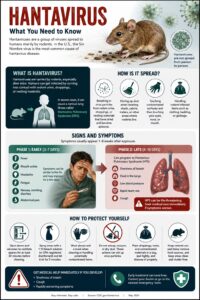
hantavirus explainer

“I intend to travel to Tenerife to observe this operation firsthand, to stand alongside the health workers, port staff, and officials who are making it happen,” he wrote.

The WHO chief also praised the ship’s captain, Jan Dobrogowski, the crew and the operating company for their cooperation during the crisis. “As I have said many times: viruses do not care about politics, and they do not respect borders. The best immunity any of us has is solidarity,” Tedros said.

The statement comes amid heightened public concern in Tenerife over the planned arrival of the vessel and fears of possible disease transmission linked to the hantavirus outbreak.

The WHO has repeatedly maintained that the public risk associated with the current outbreak remains low and that containment measures are being strictly implemented.

Curtains Down on Tamil Nadu’s 5-Day Drama: Vijay gets 120 last minute

For five days, Tamil Nadu witnessed a political battle that swung wildly between uncertainty and inevitability. Actor-turned-politician C. Joseph Vijay, who entered the Assembly election as an outsider challenging the state’s entrenched Dravidian order, spent nearly a week struggling to bridge the final gap between electoral victory and constitutional legitimacy. By Friday night, his party Tamilaga Vettri Kazhagam (TVK) had finally crossed the halfway mark with support from nearly 120 legislators, ending one of the most dramatic government-formation deadlocks in recent state history.

The numbers triggered the crisis from the very beginning. In the 234-member Tamil Nadu Assembly, the majority mark stands at 118. TVK emerged as the single-largest party with 108 seats, but Vijay vacated one constituency after winning from two seats, reducing the party’s effective strength to 107 MLAs. That left him 11 short of power despite delivering the biggest electoral upset in the state in decades.

Raj Bhavan became the centre of the storm almost immediately after the results. Vijay met Governor R. V. Arlekar within hours of the verdict, staking claim to form the government with assurances of outside support. But the Governor reportedly refused to invite him to take oath without documentary proof that he could survive a floor test. The decision transformed what should have been a straightforward swearing-in into a prolonged constitutional and political showdown.

How Day-2 Turned Feverish

By the second day, Tamil Nadu’s political atmosphere had turned feverish. Rival camps accused each other of attempting “horse-trading” as parties scrambled to prevent defections. TVK insiders claimed the party was in touch with independents and smaller regional groups, while opposition formations explored counter-combinations to stop Vijay from taking office. Reports surfaced that several MLAs had been moved to resorts and secure locations amid fears of poaching.

The uncertainty deepened after dramatic shifts among potential allies. Congress legislators backed Vijay early, taking the tally beyond 110, but support from other parties fluctuated through the week. At one stage, the Indian Union Muslim League publicly denied extending support to TVK, creating fresh doubts about whether Vijay could reach the majority mark before the Assembly deadline.

As negotiations intensified, TVK leaders began direct outreach to Left parties and the Viduthalai Chiruthaigal Katchi (VCK). Behind closed doors, discussions reportedly centred on preventing a rival coalition led by the DMK or AIADMK from claiming power through post-poll arithmetic. Political circles in Chennai were also rocked by speculation that the two Dravidian rivals were considering tactical cooperation solely to keep Vijay out of office — a possibility unthinkable in Tamil Nadu politics until this election.

When VCK Joined Chorus Last Minute

The breakthrough came late on Friday when VCK formally announced “unconditional support” to the TVK-led bloc. The CPI and CPI(M) also backed Vijay, arguing that the state required stability and should avoid prolonged uncertainty or President’s Rule. The support dramatically changed the numbers. TVK’s tally climbed from 107 to around 120 MLAs, finally crossing the constitutional threshold required to form government.

VCK chief Thol. Thirumavalavan said the decision was aimed at “protecting democratic stability” in Tamil Nadu and preventing a governance vacuum. CPI(M) leaders also publicly indicated that the oath-taking process was expected to move forward once formal support letters were submitted to the Governor.

On the fifth day of the deadlock, Vijay returned to Raj Bhavan carrying written support from allied parties and independents. Sources indicated that this was his third major meeting with the Governor since the election results were announced. Outside the Governor’s residence, thousands of TVK supporters gathered through the day as speculation mounted that the stalemate had finally ended.

Final Arithmetic Reflects Dramatic Turnaround:

  • TVK: 107 MLAs after vacancy adjustment
  • Congress: 5 MLAs
  • CPI: 2 MLAs
  • CPI(M): 2 MLAs
  • VCK: 2 MLAs
  • IUML and others: remaining support taking the bloc to nearly 120 MLAs.

For Tamil Nadu politics, the implications extend far beyond one government formation battle. The five-day crisis exposed the vulnerability of the traditional DMK-AIADMK structure and demonstrated how Vijay’s entry has disrupted electoral equations that dominated the state for nearly half a century. What began as a celebrity-led insurgency has now turned into a full-scale political realignment with consequences likely to reshape the state’s future.

Scientists stunned as Volcano cleans up after itself by removing methane from the air

When the submarine volcano Hunga Tonga–Hunga Ha’apai in the South Pacific erupted in January 2022, it was not only one of the most violent volcanic eruptions in modern times. The volcano also did something completely unexpected: it helped clean up some of the methane pollution it released. This phenomenon could potentially be key to how humans can slow global warming.

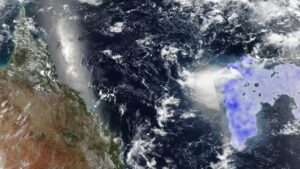
Using advanced satellite measurements, researchers observed unusually high concentrations of formaldehyde in the massive volcanic plume following the eruption. This was crucial evidence: when methane is destroyed in the atmosphere, formaldehyde forms as a short-lived intermediate.

“When we analysed the satellite images, we were surprised to see a cloud with a record-high concentration of formaldehyde. We were able to track the cloud for 10 days, all the way to South America. Because formaldehyde only exists for a few hours, this showed that the cloud must have been destroying methane continuously for more than a week,” explains Dr. Maarten van Herpen from Acacia Impact Innovation BV, first author of the study, which has just been published in Nature Communications.

“It is known that volcanoes emit methane during eruptions, but until now it was not known that volcanic ash is also capable of partially cleaning up this pollution,” he adds.

Satellite image using the VIIRS satellite on 16 January 2022, 13:30 UTC, showing in blue the cloud of formaldehyde measured by TROPOMI. To the left is the Australian coast of Queensland. Source: van Herpen et al. (2026)  Credit: van Herpen et al. (2026)

Salt, sunlight and new chemistry

According to the researchers, everything points to a very special process taking place—one they first discovered in 2023, but in a completely different part of the world.

They found that when dust from the Sahara is blown over the Atlantic Ocean, it mixes with sea salt from sea spray, forming small particles known as iron salt aerosols. When sunlight hits these aerosols, chlorine atoms are produced. These chlorine atoms react with methane and help break it down in the atmosphere. This discovery changed scientific understanding of tropospheric chemistry.

“What is new—and completely surprising—is that the same mechanism appears to occur in a volcanic plume high up in the stratosphere, where the physical conditions are entirely different,” says Professor Matthew Johnson from the Department of Chemistry at the University of Copenhagen, one of the researchers behind both discoveries.

The 2022 eruption hurled enormous amounts of salty seawater into the stratosphere along with volcanic ash. The theory is that when sunlight hit this mixture, highly reactive chlorine was formed, helping to break down the methane released during the eruption. The visible evidence of this methane breakdown was the large amounts of formaldehyde detected in satellite images.

Methane is currently responsible for one third of global warming. Over a 20-year period, methane is about 80 times as potent as CO2. However, methane breaks down relatively quickly in the atmosphere — typically within about 10 years.

This means that if we reduce methane emissions now it could have a noticeable impact on the climate within a decade. For this reason, researchers sometimes refer to methane reduction as an “emergency brake” on climate change—one that may help prevent climate tipping points in the coming decades. However, reducing CO₂ emissions remains essential to stabilise temperatures in the long term.

Inspiration for future solutions

The researchers behind the new study believe their findings could inform a growing field working on solutions to reduce methane emissions by artificially accelerating its breakdown in the atmosphere – similar to how the volcano effectively cleaned up after itself. Various methods are currently under investigation, but a key challenge is measuring and verifying how much methane is actually removed.

“How do you prove that methane has been removed from the atmosphere? How do you know your method works? It’s very difficult. But here we address that problem by showing that methane breakdown can in fact be observed using satellites,” says Dr Jos de Laat from the Royal Netherlands Meteorological Institute, senior author of the study.

The research was conducted with the advanced TROPOMI instrument aboard the European Space Agency’s Sentinel-5P satellite, which monitors air pollution and greenhouse gases worldwide on a daily basis.

“Retrieving formaldehyde from TROPOMI in a stratospheric volcanic plume is far outside the instrument’s standard operating conditions — we had to carefully correct the satellite’s sensitivity for the unusual altitude of the signal and account for interference from the high sulfur dioxide concentrations. Getting these corrections right was essential to confirm that what we were seeing was real.”, said Dr. Isabelle De Smedt, Royal Belgian Institute for Space Aeronomy.

The researchers believe the new findings will inspire engineers in industry:

“It’s an obvious idea for industry to try to replicate this natural phenomenon ­— but only if it can be proven to be safe and effective. Our satellite method could offer a way to help figure out how humans might slow global warming,” concludes Matthew Johnson.


Also Read:

How do giant caldera volcanoes refill magma after massive eruptions

Facing music from volcano eruption? Better listen to it before, says study

Massive Stars Found To Control Star Formation In Nearby Molecular Cloud

New evidence has been unearthed which show that massive stars can initiate star formation in nearby areas thus helping shape the evolution of star-forming regions.

Stars are born inside vast clouds of gas and dust known as molecular clouds. While most stars in our Galaxy have masses similar to the Sun, a few are much larger (more than eight times the mass of the Sun). Although these massive stars are rare, they play a significant role in shaping their surroundings and sometimes even contribute to the formation of the next generation of stars.

Scientists from the Aryabhatta Research Institute of Observational Sciences (ARIES), Nainital, an autonomous research institute under the Department of Science and Technology (DST), Government of India,  investigated a region known as Bright Rimmed Cloud 44 (BRC 44), situated approximately 900 parsecs from Earth within the Cepheus OB2 star-forming complex and found that massive stars give out UV radiation that propagates into the cloud, giving birth to new stars.


Fig: The CO (black color) and 1.4 GHz NVSS (white color) contours are overplotted on the 8 µm Spitzer image of the region. Circles represent the identified YSO candidates. The red circles are optically visible YSOs (Group 1), green circles are embedded. Young YSOs(Group 2), and magenta circles are identified as BD candidates.

Bright Rimmed Clouds get their name from their glowing edges, which shine brightly when exposed to intense ultraviolet (UV) radiation from nearby massive stars. In the case of BRC 44, the researchers found that UV radiation from a massive star ionizes the surface of the cloud, which leads to heating and compression of the gas. This compression creates shock waves that propagate into the cloud, increasing its density and triggering the formation of new stars.

The research, led by Mr. Rishi C., a PhD scholar along with Dr. Neelam Panwar and other researchers from India, UK, China & Thailand, employed a multi-wavelength approach to study the region. Observations were done using the 3.6-m Devasthal Optical Telescope (DOT) and the Devasthal Fast Optical Telescope (DFOT) in India, along with the data from the Spitzer Space Telescope and radio observations from the Purple Mountain Observatory in China. By combining optical, infrared, and radio data, the scientists were able to study both the stars and the surrounding gas in great detail.

One of the most exciting results of the study is the discovery of 22 new young stellar objects in BRC 44. Among these are several brown dwarfs—objects that are smaller than normal stars to sustain hydrogen fusion in their cores. Finding such low-mass objects provides essential clues about how stars and sub-stellar objects form under the influence of massive stars. Apart from this finding, they also found two groups of young stars, with one group formed from the interplay of cloud and radiation from the nearby massive star and the other group formed around the same time as the massive star.

The results, published in The Astrophysical Journal, show that massive stars play a complex role in the Galaxy. Instead of only destroying their surroundings, they can also trigger new star formation.


Also Read:

Astronomers Spot “Sneezing” Baby Stars Creating Massive Rings In Space

NASA’s Hubble finds spiraling stars ‘NGC 346’, providing window into early universe


OpenBind’s Debut Data And Model Release Signals Major Advance In AI-Driven Drug Discovery

The UK‑led OpenBind initiative has reached a major milestone with the release of its first publicly available dataset and predictive AI model, a groundbreaking step toward accelerating the discovery of new medicines using artificial intelligence. The release showcases how engineering the production of AI-ready data is not only feasible but essential to evolving AI tools for scientific fields, which all suffer from a lack of data. With this OpenBind release, both high‑quality, standardised experimental data, and a newly trained predictive model, OpenBind v1, become freely accessible to researchers worldwide, for immediate use in therapeutic discovery and to drive the next generation of AI models.

While AI has introduced a step‑change in predictive accuracy for protein structures, its impact on drug discovery has remained muted, limited above all by the global shortage of reliable experimental data measuring in atomic detail how molecules of drug discovery bind to disease‑related proteins. OpenBind aims to fill this critical gap. Led by Diamond Light Source, the collaboration of structural biologists and AI specialists – supported in its foundation phase by the Department for Science, Innovation and Technology (DSIT) – is the first initiative to generate these essential datasets at industrial scale, openly and continuously, and designed specifically for AI.

This first release demonstrates that OpenBind’s pipeline is now operational, having generated 800 high-quality measurements in only seven months – in the past, such large datasets took years to be produced and released. This integrated operation combines automated chemistry, robust binding measurements and high throughput crystallography at Diamond’s XChem Fragment Screening facility with an engineered data release process and AI model training using UK’s Isambard-AI compute cluster. It lays the groundwork for transformative progress in drug discovery, with future data tranches planned to address global‑health challenges such as COVID‑19, malaria, dengue, Zika, and cancer, where rapid development of new treatments remains vital.

Researcher Jasmin Aschenbrenner loading samples on the crystallography beamline at Diamond Light Source.  Credit: Stuart March-DNDi

Professor Mohammed Alquraishi of Columbia University said: “AlphaFold2 revolutionised protein structure prediction by leveraging decades of experimental data on protein structures in the PDB. The equivalent of such a dataset for protein-drug complexes does not yet exist, but OpenBind aims to create it, and in the process create the next generation of computational tools for modeling interactions between drugs and proteins.”

The initial dataset also reflects invaluable learning from the initiative’s early experimental cycles. Standardised workflows, strong metadata practices and high levels of automation have proven crucial in ensuring the consistency and reproducibility required for AI, while highlighting opportunities to further streamline data handling and release frequency.

Dr Fergus Imrie of the University of Oxford said: “High-quality experimental data is essential for developing new and improved AI models, and this first data release shows that OpenBind now has this foundation in place. We’re enabling AI to improve model performance and guide future experiments, helping to accelerate discovery. The lessons from these early cycles are already helping us improve the speed, consistency, and reproducibility of the pipeline, which will be critical as OpenBind grows.”

Professor Frank von Delft, principal beamline scientist at Diamond Light Source said: “We couldn’t have made such rapid progress without the contributions of our consortium members and operational team. Their expertise and commitment have enabled us to reach this ambitious milestone. We will now implement the lessons from this foundation phase to ramp up a long-term operation that links high-volume production of AI data with active discovery projects.”

Building on this foundation, OpenBind will expand to include many more targets, larger chemical series and deeper datasets, alongside community blind‑challenges that will validate AI models for newly generated experimental data. Ultimately, OpenBind aims to create a global, open data engine capable of supporting the development of faster, more accurate and more equitable therapeutics.


Als0 Read:

Artificial intelligence: Is this the future of early cancer detection?

New MetaRing Sensor Spots Breast Cancer Drug Response in 10 Minutes

21 Million Downloads Of New Aadhaar App In Three Months Reflect Massive Preference For Privacy

The new Aadhaar App has witnessed rapid public adoption, recording more than 21 million downloads within just three months of launch, reflecting growing acceptance of digital identity services and easier access to Aadhaar-related facilities.

According to official data, millions of users are increasingly relying on the app for services such as updating mobile numbers and addresses from anywhere without visiting enrolment centres.

More than 2.8 million users have already updated their mobile numbers through the app, while nearly 6 lakh people have used it to modify their address details.

Developed as a next-generation digital identity platform, the Aadhaar App enables Aadhaar Number Holders to securely carry, verify and share their identity through a privacy-focused mobile interface.

Officials said the rising usage demonstrates growing public trust in digital governance platforms while improving accessibility and convenience for Aadhaar users across the country.

The app also includes several advanced features such as face authentication for proof of presence, one-click biometric lock and unlock functionality, authentication history tracking and a QR-based editable contact card that can replace physical visiting cards.

The application has been designed to support a wide range of real-world use cases, including hotel check-ins through Offline Verification Seeking Entity (OVSE) QR scanning, hospital admissions, visitor management systems, event access, age verification services and identity authentication for gig workers and service partners.

Cabinet Clears Emergency Credit Line Guarantee Scheme 5.0, Earmarks Rs 5,000 Crore Support For Airlines Amid West Asia Crisis

The Union Cabinet, chaired by Prime Minister Narendra Modi, has approved the Emergency Credit Line Guarantee Scheme (ECLGS) 5.0 to provide targeted financial assistance to Indian airlines grappling with mounting operational and liquidity pressures arising from the ongoing West Asia crisis.

The move comes amid a steep rise in Aviation Turbine Fuel (ATF) prices, airspace restrictions and reduced international flight operations, factors that have adversely impacted aircraft utilisation and strained airline finances.

Under the scheme, the government has earmarked ₹5,000 crore specifically for the aviation sector. The initiative will provide 100 per cent credit guarantee coverage for MSMEs and 90 per cent coverage for non-MSMEs and airlines through the National Credit Guarantee Trustee Company Limited to Member Lending Institutions against defaults on additional credit facilities extended to eligible borrowers.

The scheme allows airlines to avail loans of up to ₹1,000 crore per borrower, with an additional ₹500 crore permitted subject to matching equity infusion by the borrower. The loans will carry a repayment tenure of up to seven years, including a two-year moratorium, aimed at easing immediate liquidity stress.

The government said the latest version of ECLGS is intended to strengthen financial resilience among MSMEs and airlines during a challenging global environment. It also allows conversion of up to 50 per cent of interest liabilities into a Funded Interest Term Loan (FITL), a measure expected to improve cash flow management and reduce short-term repayment burdens.

Civil Aviation Minister Ram Mohan Naidu said India’s aviation sector had remained resilient despite global disruptions due to timely government intervention.

“Under the decisive leadership of Hon’ble Prime Minister Narendra Modi Ji, India’s aviation growth story today stands out globally as a success story built on the foundation of reforms, resilience and resurgence,” he said.

He added that Indian airlines had benefited from measures such as capping ATF prices during global fuel spikes and reductions in airport landing and parking charges.

“By approving the Emergency Credit Line Guarantee Scheme (ECLGS) 5.0, airlines will be enabled to navigate short-term liquidity challenges and maintain seamless operations amid global disruptions. It will provide strong financial backing to safeguard jobs, sustain connectivity and ensure resilience across the aviation ecosystem, while also supporting MSMEs,” the minister said.

The scheme will provide additional credit support of up to 20 per cent of peak working capital utilised during the fourth quarter of FY26, capped at ₹100 crore for eligible sectors. For airlines, the support can extend up to 100 per cent, subject to a ceiling of ₹1,500 crore per borrower and fulfilment of prescribed conditions.

According to the government, the guarantee coverage will remain valid for the entire tenure of the loan. The scheme will apply to all loans sanctioned from the date of issuance of guidelines by the NCGTC until March 31, 2027.

The Centre said the initiative is expected to cushion airlines against the impact of rising fuel prices, currency volatility and operational disruptions while improving lender confidence and ensuring steady credit flow to the aviation sector. The measure is also aimed at protecting jobs, preserving sectoral capacity and preventing higher operational costs from being passed on to passengers.

Also Read:

Inter-Ministerial Briefing on Recent Developments in West Asia; Update on Domestic LPG Supply, Fuel, Exports

Government Holds Inter-Ministerial Briefing On West Asia Developments

ECINET Enabled Faster Reporting And Enhanced Cybersecurity During 2026 Elections

  1. Election Commission of India’s (ECI) robust IT platform ECINET played a central role in streamlining election processes including real-time monitoring, enabling faster reporting, and enhancing transparency during the General Elections to Legislative Assemblies and Bye-elections 2026.
  2. Since its official launch in January 2026, ECINET app has witnessed a significant surge in usage and has over 10 crore downloads till date. The beta version of ECINET was used in Bihar elections in November 2025.
  3. On poll-days, i.e., April 9, 23 and 29, ECINET recorded over 98.3 crore hits and on the counting day i.e. May 4, 2026, ECINET recorded an average of 3 crore hits per minute.
  4. ECINET cybersecurity protocols resulted in effectively countering over 68 lakh malicious hits on counting day originating from both within India and overseas, targeting key election platforms, including the results portal.
  5. In a significant step towards enhancing security at the Counting Centres, a new QR code–based Photo Identity Card system was used for the first time on counting day across all States/UTs in these elections through ECINET.
  6. On counting day, over 3.2 lakh QR codes were generated to ensure that only authorised personnel could access counting venues, thereby preventing any unauthorized entry in the Counting Centers.


Also Read:

General Elections And Bye-Elections 2026: Seizures Cross ₹1,000 Crore Mark In Tamil Nadu And West Bengal

General Elections to Legislative Assemblies and bye-elections 2026; Implementation of Dry-Day

Shashi Shekhar Vempati Appointed as Chairperson of CBFC

The Government of India, through a notification issued by the Ministry of Information and Broadcasting dated May 6, 2026, has appointed Shri Shashi Shekhar Vempati as the Chairperson of the Central Board of Film Certification (CBFC). He shall hold office for a period of three years from the date of joining.

Consequent upon the elevation of Shri Prasoon Joshi as Chairman of Prasar Bharati, he has stepped down from the position of Chairperson, Central Board of Film Certification (CBFC), leading to the present appointment.

Shri Shashi Shekhar Vempati brings with him extensive experience in media, broadcasting, and public communication. His appointment is expected to further strengthen the functioning of the CBFC.


Also Read:

Renowned Lyricist, Communication strategist Prasoon Joshi Appointed as Chairman, Prasar Bharati

WAVES Doc Bazaar Set To Return For Its Second Edition From June 16–18, 2026

The 2nd edition of WAVES Doc Bazaar will return from June 16 to 18, 2026, alongside the 19th Mumbai International Film Festival (MIFF), at the NFDC Complex, Mumbai.

WAVES Doc Bazaar is a premier one-stop platform designed to nurture and accelerate the journey of documentary, animation and short filmmakers by creating opportunities for collaboration, mentorship, market access and global visibility. Returning with its second edition, the platform aims to bring together established professionals and emerging talent from across the audiovisual industry. Further, the Bazaar will serve as a vibrant hub for creators, producers, distributors, broadcasters, funders and technology partners, supporting various stages of production and distribution while empowering exceptional storytelling and helping filmmakers reach global audiences. Participants will gain valuable insights into current industry trends, market demands, distribution strategies and audience preferences through direct engagement with experts and experienced practitioners.

Among the key segments of WAVES Doc Bazaar is the Viewing Room (VR), where documentary, short and animation films that are recently completed or in post-production will be showcased to a curated audience of registered delegates. Designed as a secure platform accessible only to selected buyers, programmers, distributors and investors, it offers filmmakers opportunities to secure distribution deals, connect with co-producers and world sales agents, explore film festival prospects, and access finishing funds. Through a specially designed system, buyers can browse films based on language, duration, stage of completion and other details, while selected titles will also be featured in the Viewing Room catalogue to be shared with all registered delegates and made available online ahead of the event.

The Work-In-Progress Lab (WIP) is specially designed for documentary and animation films in the rough-cut stage. Conducted in a closed-door setting, the lab enables selected participants to receive valuable feedback, guidance and mentorship from experienced filmmakers, editors and international mentors, helping them refine their projects for wider audiences.

Immersive Market to Premiere at WAVES Doc Bazaar with Focus on VR, AR and XR

For the first time, WAVES Doc Bazaar will also introduce the Immersive Market, a dedicated platform for immersive content creators, producers and technology partners. Focused on VR, AR, XR and interactive experiences, the market will provide a space to showcase innovative projects, explore new storytelling formats and foster meaningful collaborations.

With its dynamic programming and industry-focused initiatives, WAVES Doc Bazaar stands poised to strengthen the ecosystem for documentaries, animation and short films, while opening new pathways for creative excellence and international outreach.

Entries Open for Viewing Room and WIP Lab at WAVES Doc Bazaar 2026

Entries are now open for the Viewing Room and Work-in-Progress (WIP) Lab at WAVES Doc Bazaar 2026, a global platform that connects documentary and animation filmmakers with leading industry professionals. Interested participants may submit their applications until May 15, 2026, by 11:59 PM IST.

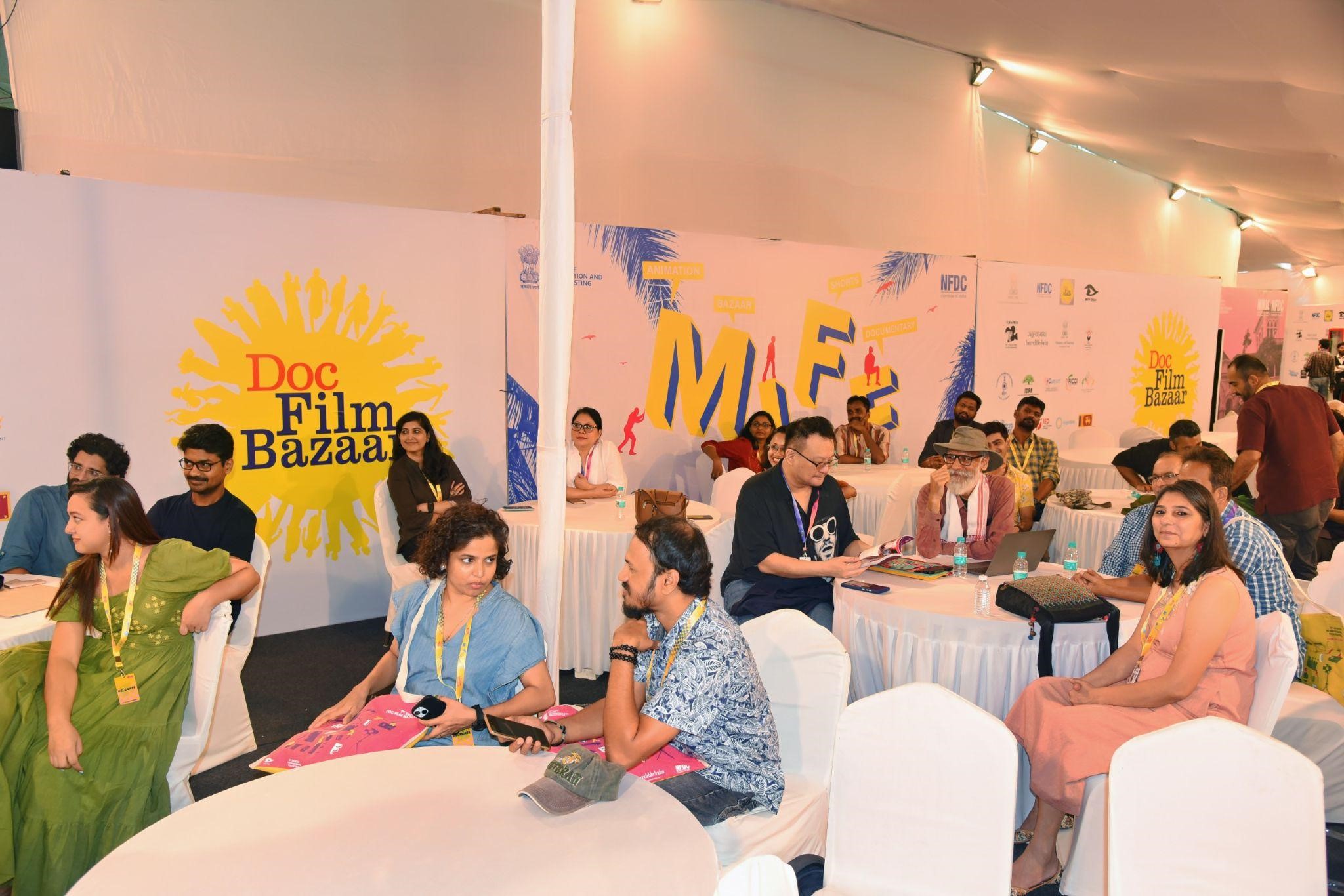
PIB File Photos of the inaugural edition of Doc Film Bazaar held in 2024.

Eligibility
The program is open to documentary and animation films from across the globe. Short, mid-length, and feature-length films are eligible to be showcased in the WAVES Doc Bazaar 2026. Films must be completed or in post-production, with most of the shooting already finished. Projects in development or pre-production are not eligible. Filmmakers with projects seeking festivals, sales, distribution, or finishing funds are especially encouraged to apply. Films with limited or no international exposure are welcome.

Submission Process

In the first stage, applicants must submit a password protected screener link of the full film or a rough cut for review. If selected, filmmakers must submit at least 10 minutes of footage for the Viewing Room. Submitting the full film is strongly encouraged. Final files will be securely uploaded and made accessible only to authorized participants.

Filmmakers are invited to take advantage of this opportunity to showcase their work on an international stage and connect with key decision-makers in the documentary and animation industry.

Interested candidates can submit their applications by clicking on the link below.

https://my.miff.in/vr/start/ 

Rules and Regulations, FAQs and more details on VR and WIP may be accessed here.


Also Read:

India, Portugal to Work Out Pact on Co-Production in Films Sector

Bollywood actress ‘Asha Parekh’ to be honoured with Dadasaheb Phalke Award, 2020

Dr Mansukh Mandaviya To Launch Nationwide Free Annual Health Check-Up Drive For Workers On May 7

Union Minister for Labour & Employment and Youth Affairs & Sports Mansukh Mandaviya will launch a nationwide Annual Health Check-Up Initiative for workers aged 40 years and above on May 7, 2026, under the provisions of the new Labour Codes. The programme will be inaugurated at the Employees’ State Insurance Corporation Medical College and Hospital in Basaidarapur, New Delhi.


Scientists Explore Differences in Extragalactic Jets Emerging From Black Holes

A team of international astrophysicists have uncovered new insights into the mystery behind the differences in the appearances of extragalactic jets emerging from the environments of supermassive blackholes. They showed that the plasma composition can affect the appearances of these jets. This may help to unravel the mystery of matter content of relativistic jets.

At the centers of many distant galaxies reside supermassive black holes with masses millions to billions of times that of our Sun. These black holes don’t just eat everything, but can also act like powerful engines, launching narrow beams of plasma and energy known as “jets” that shoot into space at nearly the speed of light. These extragalactic jets can travel for thousands of light-years and emit radiation ranging from low-energy radio waves to high-energy gamma rays.

For a long time, astronomers have been wondering about a noticeable difference in radio images of extragalactic jets, first identified by Fanaroff & Riley in 1974. They broadly classified radio jets into two main categories: FR I & FR II. The FR I jets are “core-brightened,” meaning they are brightest near the core and gradually fade into diffuse structures as they move outward. The FR II jets, on the other hand, are “edge-brightened,” meaning they are fainter near the core but stay tightly focused over long distances until they hit the surrounding gas, creating giant “hot spots” at their tips.

Scientists have for long continued to debate whether this difference is due to the black hole itself, the environment around it, or the intrinsic properties of the jet, such as its speed, temperature, and magnetic strength, etc.

A new research published in The Astrophysical Journal by Mr. Priyesh Kumar Tripathi, Dr. Indranil Chattopadhyay, and Mr. Sanjit Debnath from Aryabhatta Research Institute of Observational Sciences (ARIES), Dr. Raj Kishore Joshi from the Nicolaus Copernicus Astronomical Center, Poland, Dr. Ritaban Chatterjee from Presidency University, Kolkata, and Dr. M. Saleem Khan from MJPRU Barelly, used advanced computer simulations to reveal that the secret to these differences may be due to the jet’s composition and the environment it travels through. The research team performed large 3D magnetohydrodynamic (MHD) simulations of these jets at kiloparsec scales using a numerical simulation code developed by the Numerical and Theoretical Astrophysics Group at ARIES. Notably, this code incorporates a relativistic equation of state, which can accurately handle a very large range of temperatures encountered at different regions of the jet.

The team discovered that a phenomenon called the “kink instability” is a major player in shaping these powerful, narrow jets, causing wiggles (small bend). In space, if this wiggle grows faster than the jet can flow forward, the jet beam disrupts, spreading its energy into a faint, diffuse cloud – the classic look of an FR I jet. Astrophysical jets aren’t made of ordinary matter. Instead, they are composed of plasma, a soup of charged particles including electrons, positrons (the antimatter twin of electrons), and sometimes heavier particles like protons. One of the study’s most significant findings is that the composition of jet plasma can determine its fate.

Jets can be made of mostly electrons and protons (Hadronic plasma), a mixture that includes positrons (the antimatter twin of the electron– Leptonic/Mixed plasma).

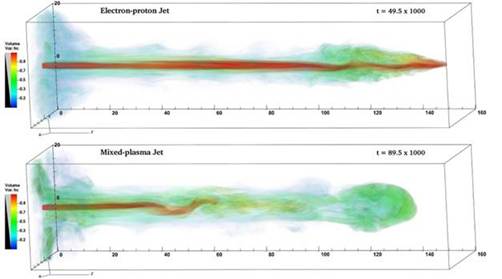
Fig: 3D Volume rendering of the jet tracer for electron-proton and mixed plasma jet

The simulations showed that jets rich in positrons (lepton-rich) are relatively hotter, causing them to expand and slow down. They often can’t stay straight and get twisted by the kink instability. As a result, they form a diffuse, FR I–like structure, where the jet gradually fades instead of ending in a bright hotspot. In contrast, jets composed primarily of electrons and protons were more likely to transition between morphologies, thereby changing their identity. This suggests that what we see through our telescopes might just be a snapshot of a long, evolving cosmic process.


Also Read:

Turning human waste into plastic, nutrients could aid long-distance space travel

ISRO to Explore Space With Japan Agency JAXA


Why Dolphins Swim So Fast: Scientists Decode The Role Of Eddies

Dolphins have long fascinated scientists with their remarkable speed and fluid movement through water. Now, new research offers a clearer explanation of the physics behind their efficiency, shedding light on how these marine mammals generate powerful propulsion.

A study published in Physical Review Fluids by researchers at The University of Osaka identifies a crucial mechanism: the formation of large, energetic vortices driven by the dolphin’s tail motion. Using advanced numerical simulations, the team mapped how these swirling water structures influence propulsion under varying conditions.

As dolphins swim, they move their tails in a rhythmic up-and-down motion, pushing water backward. This action produces a turbulent wake filled with vortices of different sizes. Until now, the exact contribution of these complex flow patterns to forward motion remained difficult to isolate.

Lead author Yutaro Motoori explained that the team aimed to pinpoint which elements of this turbulence actually aid speed. By deploying supercomputer-based simulations, the researchers were able to break down the flow into components and identify the dominant forces at play.

The findings reveal that large-scale vortex rings generated by the oscillating tail are the primary drivers of thrust. These powerful structures push water backward, effectively propelling the dolphin forward. In contrast, smaller vortices—formed through what scientists call an energy cascade—play only a minor role in movement, despite being more numerous.

Senior researcher Susumu Goto noted that understanding this hierarchy of vortices is key. While turbulence appears chaotic, it follows an organized structure where the largest vortices do most of the work, and smaller ones are largely by-products.

The simulation-based approach allowed the team to observe fluid dynamics in extraordinary detail—something that is nearly impossible through direct experimentation. It also enabled them to test different swimming speeds, with results remaining consistent across scenarios.

Beyond explaining dolphin agility, the research holds practical promise. Insights into efficient propulsion could inform the design of faster, energy-efficient underwater robots and improve technologies that manage turbulent flows.

For now, the study offers a compelling reminder that nature’s most graceful swimmers are guided by deeply intricate physics beneath the surface.

Also Read:

Aquatic plant reduces antibiotics in water and genetic damage in fish, but risks remain

Scared of spiders? A world without them is true nightmare tale: Study

Cabinet Approves Increase In Supreme Court of India Judges To 37 From 33

The Union Cabinet chaired by the Prime Minister Shri Narendra Modi today has approved the proposal for introducing The Supreme Court (Number of Judges) Amendment Bill, 2026 in Parliament to amend The Supreme Court (Number of Judges) Act, 1956 for increasing the number of Judges of the Supreme Court of India by 4 from the present 33 to 37 (excluding the Chief Justice of India).

Point-wise details:

Supreme Court (Number of Judges) Amendment Bill, 2026 provides for increasing the number of Judges of the Supreme Court by 04 i.e. from 33 to 37 (excluding the Chief Justice of India). 

Major Impact: 

The increase in the number of Judges will allow Supreme Court to function more efficiently and effectively ensuring speedy justice.

Expenditure:

The expenditure on salary of Judges and supporting staff and other facilities will be met from the Consolidated Fund of India.

Background:

Article 124 (1) in Constitution of India inter-alia provided “There shall be a Supreme Court of India consisting of a Chief Justice of India and, until Parliament by law prescribes a larger number, of not more than seven other Judges…”. 

An act to increase the Judge strength of the Supreme Court of India was enacted in 1956 vide The Supreme Court (Number of Judges) Act 1956. Section 2 of the Act provided for the maximum number of Judges (excluding the Chief Justice of India) to be 10.

The Judge strength of the Supreme Court of India was increased to 13 by The Supreme Court (Number of Judges) Amendment Act, 1960, and to 17 by The Supreme Court (Number of Judges) Amendment Act, 1977. The working strength of the Supreme Court of India was, however, restricted to 15 Judges by the Cabinet, excluding the Chief Justice of India, till the end of 1979, when the restriction was withdrawn at the request of the Chief Justice of India.

The Supreme Court (Number of Judges) Amendment Act, 1986 further augmented the Judge strength of the Supreme Court of India, excluding the Chief Justice of India, from 17 to 25. Subsequently, The Supreme Court (Number of Judges) Amendment Act, 2008 further augmented the Judge strength of the Supreme Court of India from 25 to 30.

The Judge strength of the Supreme Court of India was last increased from 30 to 33 (excluding the Chief Justice of India) by further amending the original act vide The Supreme Court (Number of Judges) Amendment Act, 2019.


Also Read:

ECI mandates all political Parties to get pre-certification of all political advertisements on electronic media


Astronomers study the surface composition of a nearby super-Earth

Using MIRI (Mid Infrared Instrument) on board the James Webb Space Telescope (JWST), a team of researchers led by former MPIA (Max Planck Institute for Astronomy, Heidelberg, Germany) PhD student Sebastian Zieba (Center for Astrophysics | Harvard & Smithsonian, Cambridge, USA) and Laura Kreidberg, MPIA Director and study PI (principal investigator), analysed the surface composition of the rocky exoplanet LHS 3844 b. Beyond characterizing exoplanetary atmospheres, this kind of deciphering the geological properties of planets orbiting distant stars is the next step in unveiling their nature. The results of this investigation are now published in the journal Nature Astronomy.

A dark and airless rocky super-Earth

LHS 3844 b is a rocky planet 30% bigger than Earth and orbits a cool red dwarf star once within roughly 11 hours. Whirling just three stellar diameters above the host star’s surface, the planet is tidally locked to its orbit. This means one rotation takes just as long as one revolution. As a result, the same hemisphere of LHS 3844 b always faces its star, producing a constant dayside with an average temperature of about 1000 Kelvin (approximately 725 Degrees Celsius or 1340 Degrees Fahrenheit). The LHS 3844 system is only 48.5 light-years (14.9 parsecs) away from Earth.

“Thanks to the amazing sensitivity of JWST, we can detect light coming directly from the surface of this distant rocky planet. We see a dark, hot, barren rock, devoid of any atmosphere.” – Laura Kreidberg, MPIA.

With its dark surface, LHS 3844 b may resemble a larger version of the Moon or the planet Mercury. This conclusion is based on analysing the infrared radiation received from the planet’s hot dayside. However, when measuring this radiation, we cannot see the planet directly; instead, we register the repeating change in brightness we receive from the star and the orbiting planet combined.

MIRI divided a portion of the planet’s infrared emission, ranging from 5 to 12 micrometres, into smaller wavelength sections and measured the brightness per wavelength bin. This is what astronomers call a spectrum, a rainbow-like distribution of the light’s components. Another data point, obtained from observations with the Spitzer Space Telescope and published a few years ago, augmented the analysis.

Constraining geological activity

Similar to how exoplanetary atmosphere research has benefited from climate science, this emerging field of exoplanetary geology draws on Earth-based geologic knowledge. Zieba, Kreidberg, and their collaborators ran models and accessed template libraries of rocks and minerals known from Earth, the Moon, and Mars to see what infrared signatures they would produce under the conditions on LHS 3844 b. Comparing observation-based data with these computations confidently ruled out a composition comparable to Earth’s crust, typically silicate-rich minerals such as granite.

Although this result is not very surprising – even in the Solar System, Earth is the only planet with such a crust – it may reveal details on LHS 3844 b’s geological history. Earth-like silicate-rich crusts are thought to form through a prolonged refinement process that requires tectonic activity and typically relies on water as a lubricant. The rocky material repeatedly melts and solidifies as it is mixed with mantle material, leaving the lighter minerals on the surface.

“Since LHS 3844 b lacks such a silicate crust, one may conclude that Earth-like plate tectonics does not apply to this planet, or it is ineffective,” says Sebastian Zieba. “This planet likely only contains little water.”

What can we deduce about the exoplanet’s rocky surface?

Instead, the dark surface points to a composition reminiscent of terrestrial or lunar basalt, or of Earth’s mantle material. However, the astronomers attempted an even more detailed characterization.

A statistical analysis of how well this spectrum fits various mineral mixtures and configurations revealed that extended solid areas of basalt or magmatic rock best match the observations. They are rich in magnesium and iron and can include olivine. Crushed material, such as rocks or gravel, also fits fairly well, whereas grains or powders are inconsistent with the observations due to their brighter appearance, at least at first glance.

Without a protective atmosphere, planets are subjected to space weathering, predominantly driven by hard, energetic radiation from the host star and impacts from meteorites of various sizes.

“It turns out, these processes not only slowly dissolve hard rocks into regolith, a layer of fine grains or powder as found on the Moon,” explains Zieba. “They also darken the layer by adding iron and carbon, making the regolith’s properties more consistent with the observations.”

Geologically fresh or weathered? Two possible scenarios

This assessment left the astronomers with two scenarios for the planet’s surface that match the data equally well. One involves a surface dominated by dark, solid rock composed of basaltic or magmatic minerals. Compared to geological timescales, space weathering alters its properties quickly. Therefore, the astronomers conclude that, in this scenario, the surface should be relatively fresh, produced by recent geological activity, such as widespread volcanism.

The second scenario also proposes a dark surface, comparable to the Moon or Mercury. Still, it accounts for prolonged space weathering, which leads to extended regions covered by a darkened regolith layer, a fine powder also present on the Moon, as evidenced by the iconic photos of the astronauts’ footprints. This alternative relies on longer periods of geological inactivity, thereby requiring conditions opposite to the first scenario.

Attempts to resolve the ambiguity

These two alternatives differ in the degree of recent geological activity required. On Earth and other active objects in the Solar System, a typical phenomenon during such activity is outgassing. Sulphur dioxide (SO2) is a gas commonly connected to volcanism. If present on LHS 3844 b in reasonable amounts, MIRI should have detected it. Still, it found nothing. Therefore, a recent period of activity seems unlikely, which leads the astronomers to favour the second scenario. If correct, LHS 3844 b may truly look much like Mercury indeed.

In order to test their idea, Zieba, Kreidberg, and their colleagues are already pursuing a more direct approach. They have obtained additional JWST observations, which should enable them to discern surface conditions by exploiting small differences in how solid slabs and powders emit or reflect light. The distribution of emission angles depends on surface roughness, which affects the amount of radiation received at a given viewing angle. This concept is successfully applied to characterizing asteroids in the Solar System. “We are confident the same technique will allow us to clarify the nature of LHS 3844 b’s crust and, in the future, other rocky exoplanets,” concludes Kreidberg.


Also Read:

Space News: Planetary-scale ‘heat wave’ discovered in Jupiter’s atmosphere

Future Spacecraft Material Found, Resists 4,000 Degrees Celsius

Two to tango: Study shows dancers experience ‘interbrain coupling’ as they move together

Scientists at the University of Colorado Boulder have discovered something that experienced ballroom dancers have long known: When dancers are in tune with each other, their brains may sync up, helping them move as one.

“When we dance, our brains are actually coupling,” said Thiago Roque, a graduate student in the Atlas Institute who led the study. We are synchronizing our brains through our behavior.”

For the unique experiment, the researchers placed electroencephalogram (EEG) caps, or devices that measure electrical activity in the brain, on pairs doing the Argentine Tango—a sensuous dance where a leader and follower hold each other tight while moving together to music.

The team found that when those dancers were moving together in time, the activity in their brains also began to look startling similar. Scientists call that phenomenon interbrain coupling” or neural synchronization.” Researchers have seen similar patterns in other social activities, such as playing duets on the guitar, but never before in dancing.

Roque presented the group’s results in March at the 20th International Conference on Tangible, Embedded and Embodied Interaction in Chicago.

The researchers also took their findings one step further, designing a wearable device that monitors dancers’ brains and vibrates when they sync up.

The tool, which dancers wear on their wrists, is still in its early stages. But Roque envisions that similar technologies could one day help people learn a wide range of tasks that require humans to coordinate without speaking—such as playing music or team sports.

When we are performing, we aren’t conscious of this sort of synchronization,” Roque said. My goal was to bring unconscious things to the conscious level.”

Shall we dance?

Ruojia Sun knows all about that kind of unconscious communication. She took part in the new study both as a researcher and co-author and as one of the dancers.

Sun started tangoing when she moved to Boulder five years ago. Unlike many other types of dances, the tango is rarely choreographed — dancers usually improvise their steps in the moment. Pairs signal their next moves through subtle signs like a light compression of the hands or a shift in the upper body.

I wound up loving so many aspects of it,” said Sun, who earned a master’s degree in creative technology and design at CU Boulder in 2024. It’s a really interesting way to connect with another human being.”

To explore that connection, Roque brought five pairs of experienced tango dancers, including Sun and her long-time dance partner, into the lab. In addition to the EEG caps, the pairs wore movement sensors on their ankles so that the research team could track their steps.

Then, the dancers began to tango.

Riding the wave

When neurons fire in the brain, they create pulses of electrical activity, or brainwaves.” EEG sensors measure those waves at different frequencies. Humans, for example, tend to produce fast pulses known as beta waves when they are concentrating or thinking hard. In contrast, they often generate slower, theta waves, when they’re relaxing.

Roque noted that how those waves behaved in the experiment depended on how in-step the dancers were with each other.

When a leader, for example, took a step forward and the follower took an immediate (within 200 milliseconds or less) step back, their brain waves tended to match up—rising and falling at about the same time. When their steps weren’t in sync, neither were their brains. Those trends were true for a range of brain waves, including beta and theta waves.

“When I started seeing the results—they were perfect,” Roque said. “The coupling was even better than I expected.”

Other co-authors of the new study included Grace Leslie, associate professor at ATLAS and the College of Music, and Ellen Do, professor at ATLAS and the Department of Computer Science.

From dancing to cycling

He and his colleagues wondered if a wearable device could enhance that experience of synchrony.

Sun tried out the team’s biofeedback device with her tango partner. The tool buzzed at all times but vibrated vigorously when the pair’s brain waves lined up. Sun noted that the buzzing was distracting when she and her partner weren’t in sync. But when they were, it just felt right.

“It almost enhanced that feeling of connection,” Sun said.

Roque still has a lot of work to do before dancers, or anyone else, can wear that kind of device in the real world. For a start, he’d like to flip the settings—making the wrist device buzz when dancers aren’t in tune with each other and go silent when they’re synchronizing.

He believes that technologies that make unconscious signals conscious could help humans learn and understand each other’s behavior—including during collective sports like soccer, cycling and more.

“In sports, you need to know what your teammates are going to do,” he said. “By using a system like this, they may be able to better learn how to understand each other during training.”


Also Read:

New Evaluation Framework Aims To Make Remote Collaboration Tools More Inclusive

Why Millions Of Americans Turn To AI For Medical Advice—Before, After, And Instead Of Doctor Visits

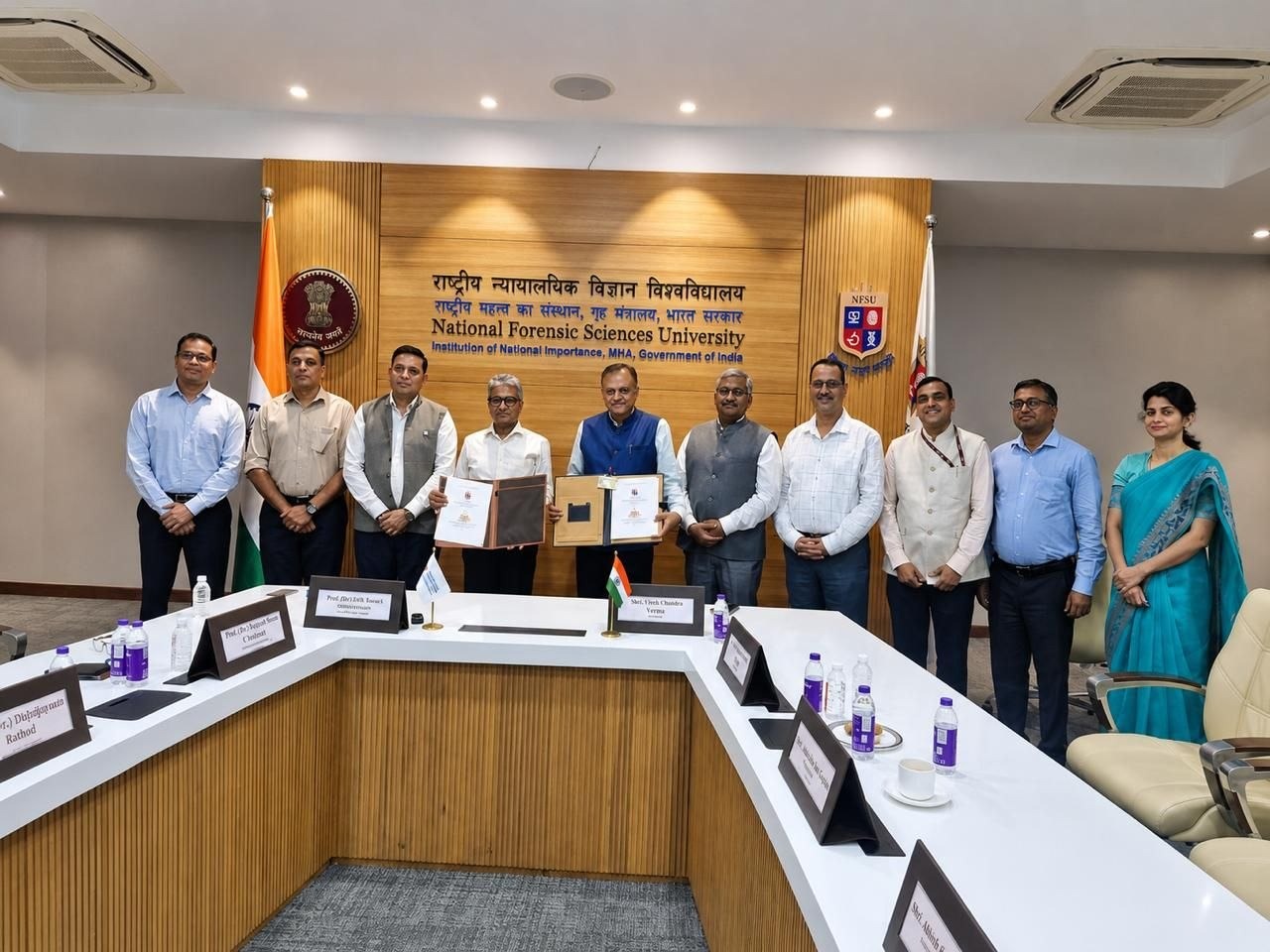
UIDAI Partners With NFSU To Strengthen Cybersecurity And Digital Forensics Capabilities

The Unique Identification Authority of India (UIDAI) and the National Forensic Sciences University (NFSU) have joined hands to establish a structured, five-year collaboration in the domains of digital forensics, cybersecurity, and advanced technology research.

The memorandum of understanding provides an umbrella framework for collaboration and brings together two key national institutions to further strengthen cyber resilience across UIDAI’s digital infrastructure, which underpins India’s digital identity ecosystem.

The MoU was exchanged between Shri Vivek Chandra Verma, CEO UIDAI and Prof (Dr.) S.O. Junare, Director Gujarat Campus, NFSU. The ceremony was attended by Shri Abhishek Kumar Singh, Deputy Director General of UIDAI and several senior officials from both the sides.

The collaboration will focus on six strategic pillars: academic and professional development, information security and system integrity, forensic infrastructure and lab excellence, technical support for cyber security activities, technical advisory and research including join research in emerging areas like AI, blockchain, deepfake detection, and cryptographic technologies etc, and strategic placement and outreach including a pathway for placement and outreach opportunities for NFSU students.

“This collaboration marks a significant step towards further strengthening the security, resilience, and forensic capabilities supporting India’s digital public infrastructure and ensuring further safeguards for India’s digital identity systems,” said Shri Vivek Chandra Verma, CEO UIDAI.


Also Read:

300 Cyber security experts to attend first ever Asia Pacific Computer Emergency Response Team Conference

India, Vietnam Sign MoU for Cyber Security Cooperation

New Evaluation Framework Aims To Make Remote Collaboration Tools More Inclusive

As remote work cements itself in modern workplaces, digital collaboration platforms such as Zoom and Google Docs have become indispensable. Yet, researchers argue that these tools are still built around a flawed assumption—that all users collaborate in similar ways.

A team of researchers has now introduced a new human-computer interaction (HCI) framework called RemoteCollabEval (RCE), designed to uncover hidden barriers in digital teamwork and help developers create more inclusive collaboration environments.

The research falls within the broader field of Human-Computer Interaction, which focuses on improving usability and user experience in digital systems.

According to Sandeep Kuttal, an associate professor at North Carolina State University, existing evaluation methods rely heavily on simplified assumptions. One widely used technique, known as a groupware walkthrough, involves designers simulating how a small group of users might interact on a platform. However, these simulations often overlook the diversity in communication and collaboration styles.

Kuttal notes that individuals from different backgrounds approach teamwork differently, but current inspection methods fail to capture this variation—limiting how effective and inclusive collaboration tools can be.

Six factors shaping collaboration

To address this gap, researchers identified six core personality traits that influence how people work together:

  • Leadership approach—ranging from democratic to authoritative
  • Interruption behaviour—whether someone speaks over others or waits
  • Use of non-verbal cues—expressive versus reserved communication
  • Relationship focus—prioritising rapport versus task completion
  • Social awareness—attention to team dynamics
  • Collaborative confidence—belief in the group’s ability to succeed

Using these dimensions, the team created detailed user “personas” to represent different collaboration styles. These personas allow developers to simulate real-world friction and identify what the researchers call “inclusivity bugs”—issues that standard testing methods often miss.

Rethinking how platforms are tested

The RCE framework builds on traditional groupware walkthroughs but requires designers to actively consider all six personality facets during evaluation. By combining structured personas with a revised walkthrough process, the method provides a more nuanced assessment of how platforms perform across diverse user behaviours.

To test the approach, researchers conducted a study involving 29 students divided into 10 teams. Half the teams used conventional evaluation methods, while the others applied the RCE framework to assess the same collaboration platform.

The results were striking. Teams using RCE identified six times more inclusivity-related issues compared to those using traditional methods.

Toward better digital teamwork

The findings suggest that incorporating behavioural diversity into design testing can significantly improve how collaboration tools function in real-world settings. By identifying friction points early, developers can refine features and interfaces to better support varied teamwork styles.

Importantly, researchers emphasise that RCE is both practical and scalable. It does not require extensive resources or specialised infrastructure, making it accessible for design teams across organisations.

As remote and hybrid work environments continue to evolve, such approaches could play a critical role in shaping collaboration tools that are not just functional, but genuinely inclusive.

Also Read:

IPL 2026: You feel different as Google’s AI is factored in

Emotional Blindness May Raise Risk of Short Video Addiction, TikTok: Study

Researchers find potential one-two punch against triple-negative breast cancer

  • Many breast cancer therapies work by causing DNA replication stress, but triple-negative breast cancer (TNBC) cells survive this stress, even at high levels
  • TNBC cells overexpress an enzyme, RNase H2, that helps them survive the DNA damage caused by replication stress
  • In this preclinical study, blocking RNase H2 directly damaged cancer cells and also activated the immune system, making this a promising therapeutic approach.

Blocking RNase H2 Enzyme Shows Promise Against Aggressive Breast Cancer

Scientists at University of Texas MD Anderson Cancer Center have identified a crucial enzyme that helps one of the most difficult forms of breast cancer withstand treatment, opening up a potential new therapeutic pathway.

The study, published in Cell Reports Medicine, focuses on RNase H2—an enzyme that appears to enable triple-negative breast cancer (TNBC) cells to survive intense DNA damage caused during treatment. TNBC is widely considered one of the most aggressive breast cancer subtypes due to its resistance to many standard therapies.

Led by researcher Shiaw-Yih Lin, the team found that RNase H2 plays a dual role. While it helps cancer cells cope with DNA replication stress, blocking the enzyme both damages tumour DNA and triggers the body’s immune system, effectively turning the cancer’s survival mechanism against itself.

Lin described this as a “one-two punch,” where inhibiting RNase H2 not only disrupts the tumour’s ability to manage stress but also activates immune signals that draw T cells to attack the cancer.

Why replication stress matters

Replication stress occurs when cells struggle to copy their DNA accurately, leading to structural damage. Many cancer treatments deliberately induce this stress to kill tumour cells. However, TNBC cells have developed ways to tolerate and survive it, allowing the disease to persist and progress.

One key contributor to this stress is the build-up of RNA fragments within DNA. RNase H2 typically removes these fragments to maintain genomic stability.

The enzyme’s hidden role in cancer survival

The researchers discovered that RNase H2 is significantly overproduced in TNBC tumours and is linked to poorer patient outcomes. This suggests that the enzyme helps cancer cells adapt to and survive high levels of DNA damage.

When the team blocked RNase H2—either through genetic methods or experimental drugs—tumour cells experienced heightened replication stress, leading to reduced tumour growth in preclinical models. At the same time, the resulting DNA damage activated the innate immune system, which then signalled T cells to target the cancer.

Implications for future treatment

Although the findings are still at a preclinical stage, they point to RNase H2 as a promising drug target. Inhibitors of the enzyme are already under development, and the study suggests they could be used alongside existing therapies.

Notably, blocking RNase H2 was found to enhance the effectiveness of ATR and PARP inhibitors—two classes of drugs already used in cancer treatment—raising the possibility of combination therapies in future clinical trials.

If validated in humans, this approach could offer a more effective strategy against TNBC, a cancer subtype that has long posed challenges due to its limited treatment options.

Also Read:

How being squeezed contributes to risk of breast cancer cells

Study Links High-Fat Diets To More Aggressive Breast Cancer Behavior