A team of professional and amateur Japanese astronomers found evidence for a thin atmosphere around a small body in the outer Solar System. The object is so small that it should not have a sustainable atmosphere, raising questions about when and how the atmosphere formed. Future observations to better characterize the atmosphere will help solve these mysteries.
In the cold reaches of the outer Solar System lie thousands of small objects known as trans-Neptunian objects (TNOs) because they lie outside the orbit of Neptune. A thin atmosphere has been observed around Pluto, the most famous TNO, but studies of other TNOs have yielded negative results. Most TNOs are so cold, and their surface gravity so weak, that they are not expected to retain atmospheres.
But astronomers like to expect the unexpected, so they took advantage of a lucky “natural experiment” to look for an atmosphere around a TNO known as (612533) 2002 XV93. This object, abbreviated as 2002 XV93, has a diameter of approximately 500 km. For reference, Pluto’s diameter is 2,377 km. The orbit of 2002 XV93 is such that, as seen from Japan, it passed directly in front of a star on January 10, 2024. As the star disappears behind 2002 XV93, it might gradually fade, indicating that the light is being attenuated as it passes through a thin atmosphere; or it might suddenly wink out as it slips behind the solid surface of the TNO.
Artist’s conception of this research showing an imagined time sequence as a star passes behind a TNO with an atmosphere. Credit:NAOJ
A team of professional and amateur astronomers, led by Ko Arimatsu at NAOJ Ishigakijima Astronomical Observatory, observed the star as 2002 XV93 passed in front of it from multiple sites in Japan. The obtained data are consistent with attenuation by an atmosphere.
Calculations show that the atmosphere found around 2002 XV93 is expected to last less than 1000 years unless it is replenished. So it must have been created or replenished recently. Observations by the James Webb Space Telescope show no signs of frozen gases on the surface of 2002 XV93 that might sublimate to form an atmosphere. One possibility is that some event brought frozen or liquid gases from deep inside the TNO to the surface. Another possibility is that a comet crashed into 2002 XV93, releasing gas that formed a temporary atmosphere. Further observations are needed to distinguish between these two scenarios.
A new study has found that children born to mothers lacking a specific fatty acid in their blood during pregnancy face a significantly higher risk of developing asthma in early life, shedding fresh light on how prenatal conditions shape long-term respiratory health.
Childhood asthma—often marked by shortness of breath, persistent coughing, and frequent respiratory infections—remains one of the most widespread chronic illnesses among children globally. Increasingly, scientists are tracing its origins back to the earliest stages of life, including the prenatal period.
Researchers from the University of Copenhagen and the Copenhagen Prospective Studies on Asthma in Childhood (COPSAC), based at the Danish Pediatric Asthma Center, examined the role of a fatty acid molecule known as 12-HETE in pregnant women. Their findings suggest that the absence of this molecule is associated with a markedly higher likelihood of children developing asthmatic bronchitis within their first year.
Over a ten-year observation period, the study found that children whose mothers lacked measurable levels of 12-HETE faced a 62 percent higher incidence of asthma compared to those whose mothers had detectable levels. However, researchers caution that the findings establish correlation rather than direct causation.
The study also identified broader health implications. Infants born to mothers without measurable 12-HETE were more prone to repeated respiratory infections and showed distinct differences in airway bacterial composition. These early-life changes in the microbiome and immune response are believed to contribute to the elevated asthma risk.
According to the researchers, differences in airway biology can be detected as early as one month after birth. Lower levels of the fatty acid during fetal development may impair immune system maturation, leading to an altered lung microbiome and increased vulnerability to infections.
The findings also add nuance to the role of omega-3 supplements during pregnancy. While earlier research has suggested that omega-3 intake—commonly through fish oil—can help reduce asthma risk in children, this study indicates that the benefit may depend on the presence of 12-HETE. Among mothers with measurable levels of the fatty acid, omega-3 supplementation was linked to a 58 percent reduction in early childhood asthma. No such effect was observed in mothers lacking the molecule.
This suggests that blanket supplementation strategies may not be equally effective for all pregnant women, and future interventions could be tailored based on individual biological markers.
Despite the promising insights, researchers stress that the findings are not yet ready for clinical application. More precise benchmarks for measuring 12-HETE levels are needed before it can be used to guide treatment or prevention strategies.
The research draws on data from two major cohorts—the Danish COPSAC2010 study and the US-based VDAART cohort—tracking more than 1,600 mothers and their children. The consistency of findings across both groups strengthens the reliability of the results, even as questions around causality remain unresolved.
Taken together, the study points to the potential of 12-HETE as a biomarker that could one day enable more personalised approaches to preventing childhood asthma—an area of growing urgency given the condition’s global prevalence.
India is emerging as a leading hub for Medical Value Travel (MVT) by integrating advanced medical infrastructure with traditional wellness systems such as AYUSH. Strong policy support, digital facilitation, and initiatives like AYUSH Visa and Regional Medical Hubs are strengthening the ecosystem. Rising global healthcare costs and demand for holistic care are driving international patients to India for affordable, high-quality treatment and preventive wellness solutions.
Across the world, rising healthcare costs, long waiting times, and the growing burden of lifestyle diseases are driving patients to seek treatment abroad. This global shift has led to the emergence of a multi-billion-dollar Medical Value Travel (MVT) industry.
The global Medical Value Travel market was valued at about USD 115.6 billion in 2022. It is projected to reach around USD 286.1 billion by 2030. The market is growing at a compound annual growth rate (CAGR) of about 10.8%.
India has emerged as one of the most significant destinations in this evolving global landscape. Industry estimates place the medical tourism market at about USD 8.7 billion in 2025, with projections of USD 16.2 billion by 2030.
For centuries, India has been regarded as a sanctuary for those seeking healing, balance and recovery. Today, this ancient legacy has evolved into a dynamic Medical Value Travel ecosystem. It combines modern medical science with the timeless wisdom of traditional systems.
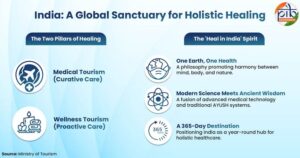
Through the flagship “Heal in India” initiative, the Government is positioning the country as a premier destination for integrated and holistic healthcare.
PIB
To understand the scope of this landscape, it is essyogaential to distinguish between its two vibrant pillars:
Medical Tourism: It focuses on curative interventions such as complex surgeries, organ transplants, and advanced diagnostic care provided by specialised hospitals and healthcare institutions.
Wellness Tourism: It centres on preventive and holistic well-being through traditional systems such as Yoga, Ayurveda, Naturopathy and other AYUSH practices. It offers therapies that promote physical, mental and spiritual health.
Together, these two pillars form the foundation of India’s Medical Value Travel ecosystem. They address both advanced clinical treatment needs and the rising global demand for preventive healthcare.
According to the Medical Tourism Index 2020–21:
India ranks 10th among the top 46 medical tourism destinations globally
12th among the world’s top 20 wellness tourism markets
5th among the top 10 wellness destinations in the Asia-Pacific region.
PIB
The 2025-26 Statistical Landscape
As per Ministry of Tourism estimates, in FY24, travel and tourism contributed 5.22 per cent to GDP, close to pre-pandemic levels. The sector also supported an estimated 8.46 crore direct and indirect jobs, accounting for about 13.3 per cent of total employment.
The latest data for 2025 highlights the sector’s momentum:
Foreign Tourist Arrivals (FTAs): In 2025, India recorded 9.15 million FTAs.
Medical Purpose Arrivals: In 2025, 507,244 foreign nationals arrived specifically for medical treatment.
Sectoral Share: 2025 data shows that medical tourism constitutes approximately 5.5% of total FTAs.
Leading Markets: According to 2025 figures, the top source countries for medical tourists include- Bangladesh (3,25,127 arrivals), followed by Iraq (30,989), Uzbekistan (13,699), Somalia (11,506), Turkmenistan (10,231), Oman (9738), and Kenya (9,357).
Patients from other countries primarily travel to India for specialised treatments such as:
Cardiac surgery
Orthopaedic procedures
Cancer treatment
Organ transplants
Neurological interventions
Cosmetic surgery
Dental care
Fertility treatment
AYUSH-based wellness therapies
India’s Competitive Edge: Quality, Expertise and Affordability
India holds a unique advantage that places it 10th globally in the Medical Tourism Index (MTI). The government identifies several pillars of this competitive advantage:
Robust Medical Resources
India’s healthcare system is supported by one of the world’s largest pools of trained medical professionals.
India has 69,364 hospitals (43,486 private hospitals, and 25,778 public hospitals) with 1.2 million registered doctors, achieving WHO recommended doctor population ratio.
Furthermore, English serves as the primary language of medical education and clinical practice in India, enabling seamless communication with international patients. Over the past decade, India has significantly expanded its medical education capacity and healthcare infrastructure. This has strengthened the availability of skilled healthcare professionals across specialised disciplines.
Advanced Technology and Accreditation
India’s healthcare system is supported by robust quality assurance mechanisms and internationally recognised accreditation standards. Hospitals and healthcare providers across the country obtain accreditation from the National Accreditation Board for Hospitals and Healthcare Providers (NABH).
NABH establishes rigorous benchmarks for patient safety and quality of care. As of 2026, NABH has accredited over 1,299 hospitals using more than 600 safety parameters. Meanwhile, the Quality Council of India oversees systematic quality improvement.
NABH accreditation is recognised globally through its affiliation with the International Society for Quality in Healthcare (ISQua). In addition, several Indian hospitals hold Joint Commission International (JCI) accreditation. It places the hospitals among healthcare institutions that meet globally accepted standards of clinical excellence.
Medical Value Travel (MVT) service providers are primarily concentrated in the Southern and Western States of India. As of 2022, the concentration of JCI-accredited hospitals by city is as follows:
City
Number of JCI Accredited Hospitals
Delhi
9
Mumbai
6
Bangalore
3
Chennai
2
Hyderabad
2
Ahmedabad
2
Kolkata
1
Nagpur
1
Cochin
1
Other notable cities with a concentration of service providers include Pune and Nashik.
Cost-Effective Medical Treatment
India’s medical tourism appeal is significantly strengthened by its cost competitiveness. High-quality medical treatment in India is often available at substantially lower cost compared to many developed countries, while maintaining comparable clinical standards.
This affordability is supported by advanced medical technology and skilled professionals.
It enables international patients to access specialised treatment without long waiting periods.
Strengthening AYUSH-led Medical Value Travel
India possesses a unique advantage in wellness tourism through its centuries-old traditional systems of medicine collectively known as AYUSH — Ayurveda, Yoga, Naturopathy, Unani, Siddha and Homeopathy.
As the birthplace of Yoga and Ayurveda, India continues to promote these systems as integral components of holistic health and preventive care.
AYUSH Visa Facilitation: To streamline access for international patients, the Government of India introduced a dedicated AYUSH Visa on 27 July 2023. It enables foreign nationals and their attendants to travel to India specifically for treatment under recognised AYUSH systems.
Quality Standards: Efforts are underway to strengthen credibility and standardisation in the sector. The Bureau of Indian Standards (BIS) has adopted ISO 22525, an international standard related to medical wellness tourism services.
Insurance Coverage: Insurance coverage for AYUSH therapies has also expanded significantly. Under the Health Insurance Regulations of the Insurance Regulatory and Development Authority of India (IRDAI), insurers are permitted to cover treatments under AYUSH. As a result, around 27 insurance companies now offer more than 140 policy products covering AYUSH treatments.
Global Engagement and Ecosystem Development: Medical Value Travel remains a key theme across major AYUSH initiatives. This includes the “Global Synergy in AYUSH: Transforming Health and Wellness through Medical Value Travel” Summit, held in Mumbai (2024) and Chennai (May 2025).
Capacity building is being strengthened through initiatives such as the AYUSH sub-council under the Health Sector Skill Council.
Global outreach is also expanding through platforms like the WHO Global Traditional Medicine Summit, the Know India Programme, and AYUSH initiatives showcased during Maha Kumbh Mela 2025.
PIB
Strategic Initiatives: Union Budget 2026-27 Highlights
The Government of India has unveiled a visionary path to cement the nation’s status as a global medical hub through the Union Budget 2026-27.
Regional Medical Hubs
A key proposal involves the establishment of five Regional Medical Hubs across the country in partnership with State Governments and the private sector. These Hubs are designed as integrated healthcare complexes that will house medical, educational, and research facilities under one umbrella.
To ensure a comprehensive healing experience, these hubs will feature:
Specialised Centres: Every hub will include AYUSH Centres and dedicated Medical Value Tourism (MVT) Facilitation Centres.
End-to-End Care: Infrastructure will be developed for advanced diagnostics, post-treatment care, and rehabilitation.
Employment Generation: These complexes are expected to create diverse job opportunities for doctors and Allied Health Professionals (AHPs).
Infrastructure for Wellness
In addition to strengthening modern healthcare infrastructure, the Government is also expanding the country’s capacity in traditional systems of medicine.
The establishment of three new All India Institutes of Ayurveda has been proposed to enhance education, research, and clinical services in Ayurveda.
Simultaneously, the WHO Global Traditional Medicine Centre in Jamnagar is being upgraded to strengthen evidence-based research and global collaboration in traditional medicine systems.
These initiatives reflect the Government’s integrated approach to developing both medical treatment services and wellness-based healing traditions as complementary pillars of India’s healthcare ecosystem.
Roadmap for Quality and Governance
To maintain India’s competitive advantage, the Ministry of Tourism has formulated a National Strategy and Roadmap for Medical and Wellness Tourism.
The roadmap focuses on three key areas of governance:
Institutional Framework: The National Medical & Wellness Tourism Promotion Board (NMWTB) serves as an umbrella organisation to coordinate between ministries, state governments, and the private sector.
Quality Assurance: The government is strengthening NABH accreditation for hospitals, wellness centres, and dental clinics. It is also encouraging the registration and rating of Medical Value Trave (MVT) facilitators to build international trust.
Skilling and Capacity Building: The Union Budget 2026-27 proposed a pilot scheme to upskill 10,000 guides in 20 iconic tourist sites through a 12-week training course. Additionally, paramedical and non-medical staff are being trained in cross-cultural sensitivities and foreign languages to better serve international patients.
By integrating these governance and quality measures, the government aims to project India as a 365-day destination for holistic healing. This integrated communication strategy, is promoted as a sub-brand of “Incredible India”. Through these initiatives, India is transitioning toward a more formalised, regulated, and trusted global hub for the “holistic health revolution”.
Government Facilitation and Digital Transformation
The government has streamlined the international patient’s journey through robust digital and policy interventions. A cornerstone of this is the liberalised visa regime, where the e-Medical Visa and e-Medical Attendant Visa facilities have been extended to nationals of 172 countries.
Additionally, new categories like the e-AYUSH Visa and e-AYUSH Attendant Visa have been introduced to support those seeking traditional Indian treatments.
Digital initiatives are further enhancing the “Heal in India” experience:
Revamped MVT Portal: The government is upgrading the one-stop Medical Value Travel Portal to provide an “end-to-end” solution. It enables patients to explore, plan, and book services, as well as make payments and access post-operative care.
Airport Facilitation: Plans include setting up MVT Concierge and Lounges at important airports. This is to greet travellers at the aerobridge and assist them through immigration, customs, and baggage claims.
Institutional Mechanism for Medical and Wellness Tourism
To ensure coordinated development of Medical Value Travel, the Government has established an institutional framework.
National Medical & Wellness Tourism Promotion Board (NMWTB): Constituted by the Ministry of Tourism in 2015, chaired by the Union Minister for Tourism. It promotes and facilitates medical and wellness tourism in India.
Multi-Stakeholder Platform: The Board brings together ministries, state governments, hospitals, wellness centres, accreditation bodies, and industry stakeholders. Together, they strengthen the Medical Value Travel ecosystem.
State-Level Coordination: States are encouraged to establish dedicated Medical and Wellness Tourism Promotion Boards or cells to support regional development and promotion.
Promoting Wellness and Cultural Integration
Wellness tourism represents an important component of India’s broader health tourism strategy. The country’s rich traditions in yoga, meditation, Ayurveda, and spiritual healing offer unique opportunities for integrating wellness with cultural tourism.
Yoga as a Global Brand for Holistic Health
Yoga is an invaluable gift of ancient Indian tradition derived from the Sanskrit root ‘yuj’ (meaning “to join” or “to unite”). It has emerged as a cornerstone of India’s global soft power. It symbolises the unity of mind, body, thought, and action, and promotes a holistic approach to well-being.
The 11th International Day of Yoga (IDY) 2025 served as the primary vehicle for integrating wellness into the national and global consciousness. Under the theme “Yoga for One Earth, One Health,” the event aligned yoga with sustainability and global well-being.
PIB
India is positioned as a favoured destination for Yoga and traditional therapies, attracting Foreign Tourist Arrivals (FTAs). They travel specifically to maintain their wellness lifestyle or seek preventive healthcare. This journey is now significantly streamlined by the government’s dedicated e-AYUSH Visa facility.
Towards a Global Healing Hub
India’s medical and wellness tourism ecosystem is evolving into a globally trusted model of integrated healthcare. It combines modern medical infrastructure with traditional systems such as AYUSH. This enables both curative and preventive care.
Strong government policy, digital facilitation, and international quality standards support this growth. Expanding global outreach is further strengthening India’s position as a comprehensive destination for Medical Value Travel.
As global demand rises, India is poised to play a key role in shaping the future of global healthcare and wellness travel.
The Ministry of Information and Broadcasting has appointed noted lyricist, writer and communications strategist Prasoon Joshi as the Chairman of Prasar Bharati, the country’s public service broadcasting body.
Joshi brings with him a wide creative and professional canvas, spanning literature, advertising, cinema and public messaging. Recognised for writing that blends cultural depth with contemporary relevance, his work across film lyrics, brand campaigns and social narratives has consistently resonated with diverse audiences.
Welcoming the appointment, Union Minister for Information and Broadcasting Ashwini Vaishnaw described Joshi as a rare creative voice whose work reflects Indian ethos while earning global recognition. He expressed confidence that Joshi’s leadership would infuse Prasar Bharati with renewed direction and creative vitality.
Prior to this role, Joshi served as Chairperson of the Central Board of Film Certification since 2017, where he navigated the balance between artistic freedom and regulatory oversight. His earlier corporate tenure includes leading McCann Worldgroup India as CEO and heading its Asia Pacific operations. He is also associated as a trustee with the Indira Gandhi National Centre for the Arts.
His appointment comes at a time when public broadcasting is undergoing rapid technological shifts and adapting to changing audience behaviour, placing renewed emphasis on digital engagement and content innovation.
About Prasar Bharati
Formed under the Prasar Bharati Act of 1990 and operational since 1997, Prasar Bharati functions as India’s autonomous public broadcaster. It operates through two key arms: All India Radio, one of the world’s largest radio networks reaching audiences across regions and languages, and Doordarshan, which delivers news, education, entertainment and cultural programming nationwide.
The organisation has also expanded its digital presence with its OTT platform, Waves, aimed at strengthening free-to-air digital broadcasting.
With an extensive terrestrial and digital network, Prasar Bharati continues to play a central role in delivering credible information, promoting cultural continuity and ensuring inclusive access to public service media across India.
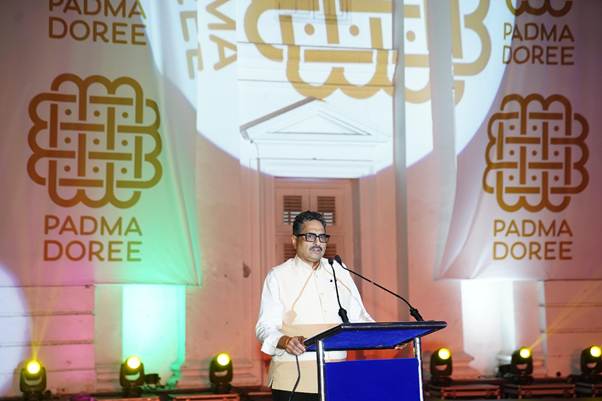
The North Eastern Handicrafts and Handlooms Development Corporation (NEHHDC), a CPSE under the Ministry of Development of North Eastern Region (MDoNER), today formally unveiled Padma Doree, a unique cross-cultural textile initiative that brings together the Eri (Ahimsa) silk traditions of Northeast India with the rich Chanderi weaving heritage of Madhya Pradesh.
The initiative was officially launched by Secretary, MDoNER, Sanjay Jaju, followed by a captivating fashion show that showcased the fusion of Eri silk—renowned for its ethical and sustainable production—with the intricate motifs and finesse of Chanderi textiles.
Speaking on the occasion Shri Sanjay Jaju said It is Hon’rable Prime Minister Narendra Modi`s vision of Ek Bharat Shresth Bharat that Padma Doree is come into being. He said that under the visionary leadership of Union Minister of Development of North Eastern Region Shri Jyotiraditya Scindia this new initiative as realised today .
He stated Padma Doree is distinct because it is coming from two different textile traditions – Chanderi from Madhya Pradesh and Eri Silk from the North East India. Shri Jaju said Padma Doree is not just bringing heritage, but also brining innovation.
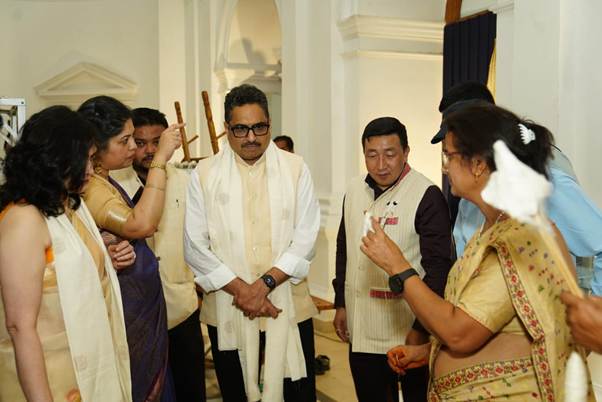
The launch event featured curated exhibition walkthroughs, offering insights into the development of the textiles and the collaborative processes behind them. Positioned within the broader discourse on Indian textiles, indigenous knowledge systems, and sustainable luxury, the initiative underscores the relevance of traditional crafts in contemporary markets.
The three-day exhibition, commencing today, has been designed as an interactive and evolving platform, allowing visitors to engage directly with artisans, understand textile processes, and experience the journey from fibre to fabric.
Artisans from Northeast India and Madhya Pradesh are actively participating in the showcase, offering live demonstrations and sharing insights into their craft traditions. The event also integrates regional culinary experiences, reflecting the cultural richness of the participating regions.
Speaking at launching programme NEHHDC Managing DirectoMara Kocho said, “Padma Doree brings together the fibre traditions of the North East and the handloom heritage of Chanderi, creating an integrated and sustainable textile ecosystem.
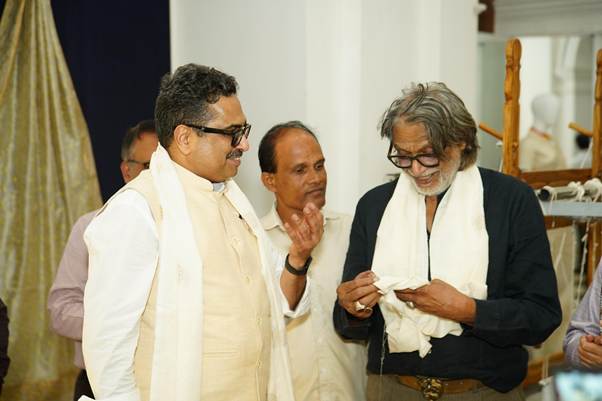
The unveiling event was graced by film Director Muzaffar Ali, Senior officials of MDoNER, officials from Madhya Pradesh Handloom along with other dignitaries, designers, and artisans associated with the initiative.
The Ministry of Information and Broadcasting has appointed noted filmmaker Ashutosh Gowariker as Festival Director for the 57th edition of the International Film Festival of India, scheduled to take place in Goa later this year.
Gowariker, known for his expansive body of work in Indian cinema, brings with him decades of association with the festival. His engagement with IFFI reflects a long-standing involvement with both Indian and global film cultures, positioning him as a seasoned choice for the role.
Reacting to the appointment, Gowariker said he was honoured to take on the responsibility. He recalled his journey with the festival, noting that he first attended IFFI in 1984 and has remained connected to it over the years, most recently serving as Jury President for International Cinema in 2024. He described the opportunity as both a privilege and a moment of pride.
He emphasised the legacy of the festival, which has been shaped by numerous contributors since its inception in 1952, and said he looks forward to working closely with the Union Ministry and the Government of Goa to build on that foundation.
Established in 1952, IFFI is among Asia’s most prominent film festivals and serves as a key platform for global cinema. Over the decades, it has evolved into a meeting point for filmmakers, industry professionals, and audiences, fostering cultural exchange through cinema.
Organised jointly by the National Film Development Corporation under the Ministry of Information and Broadcasting and the Entertainment Society of Goa, the festival has grown into a diverse showcase of cinematic expression. Its programming typically includes international competitions, country focus segments, retrospectives, masterclasses, and the Film Bazaar—an industry hub for collaboration and project development.
Set against Goa’s coastal landscape, the upcoming 57th edition, scheduled for November 2026, is expected to expand its scope further, bringing together a wide spectrum of storytelling traditions, languages, and emerging technologies in cinema.