

A brightly colored shirt, soft to the touch and designed for everyday wear, may carry more than dye.
Preliminary tests conducted by researchers at Marian University, a private university in Indianapolis, found elevated levels of lead in children’s fast fashion clothing, exceeding federal safety limits.
The findings were presented March 23 at the American Chemical Society Spring 2026 meeting in Atlanta, a major scientific conference featuring thousands of research presentations.
Researchers tested 11 children’s shirts from four retailers, including fast fashion and discount brands, and found that all samples exceeded the U.S. regulatory limit for lead in children’s products.
Lead levels in children clothing exceed U.S. safety limits
The U.S. Consumer Product Safety Commission, the federal agency responsible for product safety standards, sets a lead limit of 100 parts per million for children’s items such as toys and clothing.
Each of the tested shirts surpassed that threshold, according to the researchers.
Cristina Avello, a student researcher involved in the project, said the findings are particularly concerning for younger children.
“Not only are children the most vulnerable to the effects of lead, but they’re also the population that is going to be putting their clothes in their mouths,” she said. [1]
Lead exposure is considered harmful at any level. Health agencies, including the U.S. Environmental Protection Agency, have linked it to neurological damage, behavioral problems, and developmental issues, especially in children under six years old.
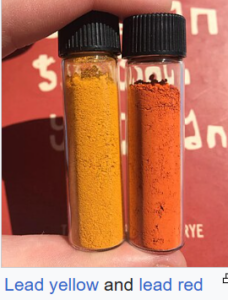
The study found that brightly colored garments, particularly red and yellow fabrics, tended to contain higher levels of lead than more muted tones.
Researchers said this may be tied to the chemicals used in dyeing processes.
Some manufacturers use lead(II) acetate, a compound that helps dyes adhere to fabric and maintain bright colors over time.

(https://commons.wikimedia.org/wiki/Vano3333)
Simulated ingestion tests show potential exposure risk for children
In a second phase of testing, researchers simulated stomach digestion to estimate how much lead could become bioaccessible if fabric is chewed or sucked.
The analysis modeled how gastric acid might break down the material and release lead into the body.
The results suggest that even brief mouthing behavior could expose children to lead levels exceeding daily intake limits set by the U.S. Food and Drug Administration.
Researchers described the estimates as conservative, meaning actual exposure could vary depending on behavior and frequency.
They said repeated chewing over time could raise blood lead levels to a point where clinical monitoring is recommended.
Kamila Deavers, the project’s principal investigator, said the research grew out of personal experience after her child showed elevated blood lead levels linked to toy coatings before stricter regulations were in place.
“I started to see many articles about lead in clothing from fast fashion, and I realized not too many parents knew about the issue,” she said.

commons.wikimedia.org
Fast fashion textile safety concerns and next research steps
Previous studies have identified lead in metal components of clothing, such as zippers and buttons, leading to recalls.
The new research expands that concern to the fabric itself, suggesting contamination may be more widespread than previously understood.
The team plans to test additional clothing items and examine whether washing affects the presence of lead compounds.
Researchers are also exploring whether contaminated clothing could transfer lead to other garments during laundering or leave residues inside washing machines. [
They said alternative dye fixing methods already exist, including plant based compounds and mineral mordants such as alum, which are considered safer.
Adopting those alternatives would likely increase production costs, which could slow industry adoption without regulatory or consumer pressure.
The researchers said their goal is to raise awareness and encourage more rigorous screening of clothing products.
“Everything that we’re doing is only important and helpful if we talk about it,” Avello said.
Also Read:
Indian Handicrafts shine in ‘Made in India- Trade Show’ Exhibition in Guatemala