World News in Brief: Houthi-Israel tensions, Sudan cholera cases rise, deadly attacks in Ukraine

These strikes occurred while the UN Mission to support the Hudaydah Agreement – established in 2018 to support the ceasefire between the Government of Yemen and the Houthis – was patrolling at locations to the northern parts of the Port. 

The Secretary-General also expressed deep concern about the continuing missile and drone strikes conducted by the Houthis against Israel. 

Risk of further escalation

Concerned about the risk of further escalation, the UN recalled that international law, together with international humanitarian law, must be respected by all parties at all times, including the obligations to respect and protect civilian infrastructure. 

“The Secretary-General remains profoundly concerned about the risk of further escalation in the region,” said Mr. Dujarric. 

As the UN Chief reiterated his call for “all involved to cease all military actions and exercise maximum restraint,” he also renewed his call for the immediate and unconditional release of all UN and other personnel arbitrarily detained by the Houthi authorities. 

Sudan: Crisis worsens as cholera and floods drive needs higher  

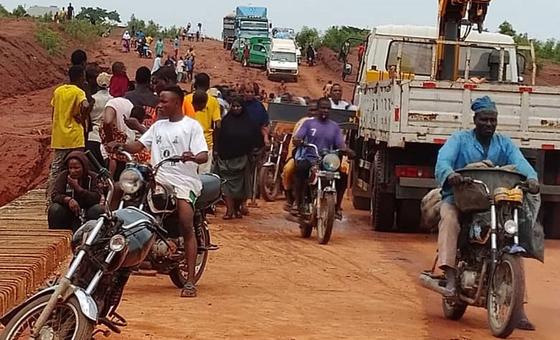
The humanitarian crisis in Sudan continues to deepen as cholera spreads, flooding displaces communities, and thousands of people return to areas with little to no support, according to the UN Office for the Coordination of Humanitarian Affairs (OCHA).

In the locality of Tawiola, in North Darfur State, over 1,300 confirmed cases of cholera in just one week were reported on Sunday by an association of Sudanese doctors. 

While local and international partners have set up cholera treatment centres, the current capacity is far from sufficient to cope with the rising caseload.  

As Tawila hosts several hundred thousand displaced people, partners on the ground have been struggling to keep pace with the growing needs, notably as such needs are set to increase as the upcoming rainy season sets in. 

Vulnerable returnees 

Across Sudan, people returning to their communities face serious challenges, including the lack of essential services and the threat posed by explosive remnants of war. 

In White Nile State, some residents have begun returning after being displaced for a year. Yet, an assessment by OCHA and its partners last week found that health, water, sanitation and hygiene support is urgently needed, even more so ahead of the rainy season.

Similarly, in eastern Sudan, OCHA warns that many families returning to Kassala State are struggling to cope with the impact of heavy rains and flooding, as heavy rains destroyed more than 280 homes in the village of Tirik earlier in July. 

Additionally, as insecurity continues to impede the work of humanitarians, challenges faced by returnee families often lead them to return to displacement sites, undermining the sustainability of return efforts. 

In this context, OCHA called for increased international support to meet soaring needs across Sudan. 

Ukraine: At least 20 civilians reportedly killed in recent attacks  

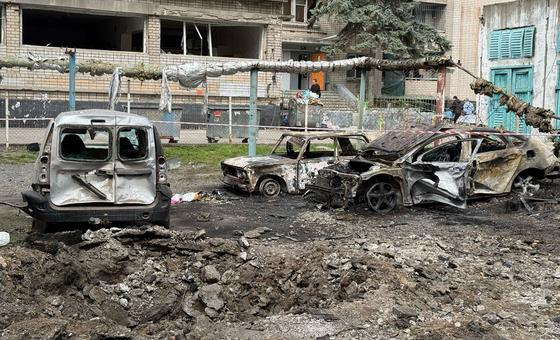
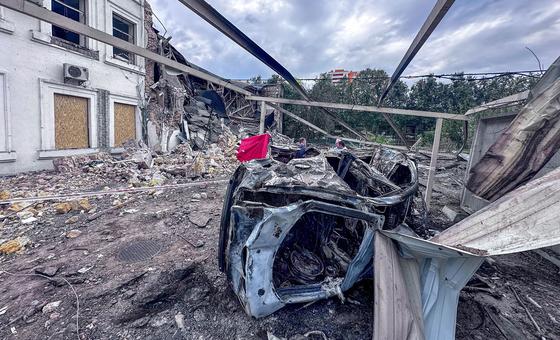
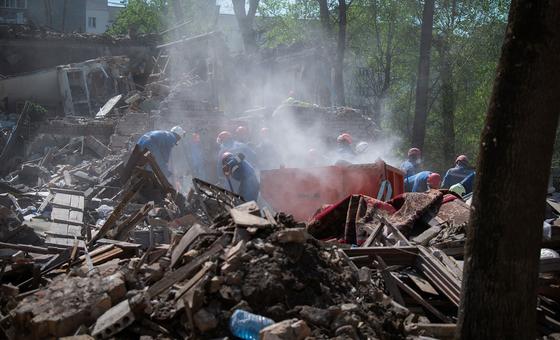
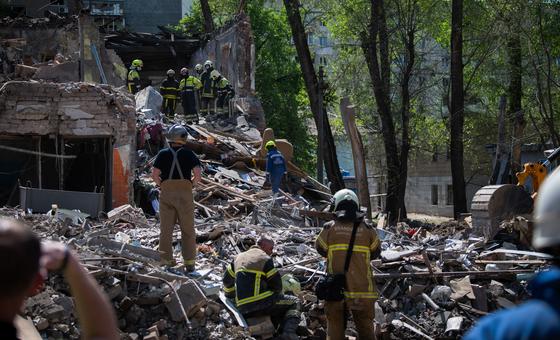
In Ukraine, attacks over the weekend and into Monday reportedly killed over 20 civilians and injured more than 100 others, including several children, according to authorities.

The strikes affected the capital Kyiv, as well as western and front-line regions, damaging homes, schools, and a health facility.

In Kyiv, a kindergarten, metro stations, shops and residential buildings were hit. 

The Ivano-Frakivsk region in western Ukraine which hosts many displaced people and had previously been less affected by hostilities, suffered the largest attack since the full-scale Russian invasion in February 2022.  

Frontline regions  

Meanwhile, in areas near the frontlines in the Donetsk, Dnipro and Kherson regions, hostilities caused civilian casualties and further damage to schools, a health facility, and apartment buildings. Odesa, Kharkiv, Sumy and other regions also reported that homes and shops were destroyed.  

With support from UN agencies, and coordinating with local authorities and first respondents, humanitarian organizations on the ground continue to provide shelter materials, non-food items, legal aid, psychosocial support and assistance for children across the country.  

Source link

UN rights office urges restraint in Kenya as fresh protests turn deadly

Office spokesperson Ravina Shamdasani cited Kenyan police reports of at least 11 deaths, 52 injured police officers, and 567 arrests. The Kenya National Commission on Human Rights reported slightly different figures: at least 10 fatalities, 29 injuries, 37 arrests, and two abductions.

Protests erupted in 16 counties, with police reportedly using live ammunition, rubber bullets, tear gas and water cannons.

Ms. Shamdasani also noted reports of looting and destruction of public and private property in several locations.

Crisis escalation

This week’s violence follows the deaths of 15 protesters and hundreds of injuries during demonstrations on 25 June in Nairobi and elsewhere.

Those protests were initially triggered by the anniversary of last year’s anti-tax demonstrations, which left at least 60 deaths and dozens allegedly abducted by the police.

The protests on Monday marked the 35th anniversary of the 1990 Saba Saba protests, which paved the way to multi-party democracy in Kenya.

Call for accountability

Ms. Shamdasani said that UN High Commissioner for Human Rights Volker Türk, “repeats his call for all reported killings and other alleged violations and abuses of international human rights law, including with respect to use of force, to be promptly, thoroughly, independently and transparently investigated.

She noted that Kenyan police announcement of an investigation into the 25 June incidents and added that the UN human rights office stands ready to support national authorities in their efforts, including on the investigations.

She stressed that under international law, law enforcement may only use lethal force when strictly necessary to protect life from an imminent threat.

High Commissioner Türk also renewed his call for calm, restraint, and full respect for the rights to freedom of expression, association, and peaceful assembly.

It is essential that legitimate grievances at the root of these protests are addressed,” Ms. Shamdasani said.

Source link

UN calls for restraint after deadly Kenya protests

At least 400 people were injured, including police officers, according to media reports. The official death toll has not been confirmed, with estimates ranging from eight to 16. 

The demonstrations marked the anniversary of last year’s anti-tax protests, when 60 people were reportedly killed and dozens abducted by police.

This year, anger intensified following the death of blogger Albert Ojwan, 31, who died in police custody earlier this month.

The demonstrators reportedly targeted government and police offices, chanted for the occupation of the presidential residence and attacked, looted and burned shops and businesses in Nairobi.

At a press conference, Kenyan Interior Minister Kipchumba Murkomen accused protestors of attempting to unconstitutionally enact “regime change.”

He also said nine police stations were attacked, dozens of vehicles destroyed, and five guns were stolen. 

UN Human Rights response

On Thursday, as smoke still rose from torched buildings in Nairobi, the UN human rights office, OHCHR, released a statement expressing concern.

Alarmed by reports that protesters had been wounded or killed by gunfire, OHCHR stressed that under international human rights law, law enforcement should only use lethal force when strictly necessary to protect life or prevent serious injury from an imminent threat.

The office welcomed the announcement that Kenya’s Independent Policing Oversight Authority will investigate the incidents and underlined the need for “prompt, thorough, independent and transparent investigations to bring those responsible to justice” and prevent recurrence. 

OHCHR also called for calm and restraint.

UN Spokesperson Stéphane Dujarric echoed these concerns at the daily press briefing in New York, saying: “We are obviously concerned about the violence we have seen in Kenya. We are closely monitoring the situation. We are very saddened by the loss of life.”

He also reiterated concerns over the reported gunshot wounds and welcomed plans for oversight investigations.

Source link

UN rights mission condemns civilian toll in deadly missile strikes on Ukraine

At least 24 people were reported killed and over 300 injured – including 32 children – when ballistic missiles struck Ukraine’s Dnipro and Odesa regions on Monday and Tuesday, the UN Human Rights Monitoring Mission in Ukraine (HRMMU) said on Wednesday.

The attacks destroyed homes, schools, hospitals, and other civilian infrastructure, and left hundreds wounded.

“The attacks struck during the day when civilians were at work, on trains, or at school,” said Danielle Bell, head of HRMMU.

“The timing alone made the high number of civilian casualties entirely foreseeable.”

On 23 June, two ballistic missiles launched by Russian forces hit Lyceum No. 1, a middle school in Bilhorod-Dnistrovskyi, Odesa region. Although the school year had ended, staff and students were present for administrative work. The strike killed three educators and injured 14 others, including two boys.

The school, which served over 700 students, sustained critical damage.

No military objective

HRMMU, which visited the attacks sites, reported no evidence of military presence at the school, and people confirmed that no military presence had been stationed there.

“The school in Bilhorod-Dnistrovskyi was not a military objective,” Ms. Bell said.

“Yet it was hit by two ballistic missiles, killing educators and injuring children.”

The following day, 24 June, missiles struck an industrial area of Dnipro city at around 11 AM local time. The blast shattered windows in nearby schools, hospitals and residential buildings.

HRMMU confirmed that two dormitories were hit, injuring numerous residents. A nearby passenger train was also impacted – windows blown out by the shockwave – injuring more than 20 travellers, according to a UN monitor onboard.

A troubling trend

These strikes followed a series of other attacks in June that have resulted in significant civilian harm, including in Kyiv city on 17 and 23 June, according to the human rights mission.

Civilian casualties in the first five months of 2025 were nearly 50 percent higher than during the same period last year, with increases typically seen during the summer months.

“Ballistic missiles, when used in densely populated areas, cause predictable and widespread harm to civilians, as demonstrated by these recent attacks,” Ms. Bell said.

“The rising civilian casualties reflect the severity of that risk.”

Source link

Guterres condemns deadly attack on peacekeepers in Central African Republic

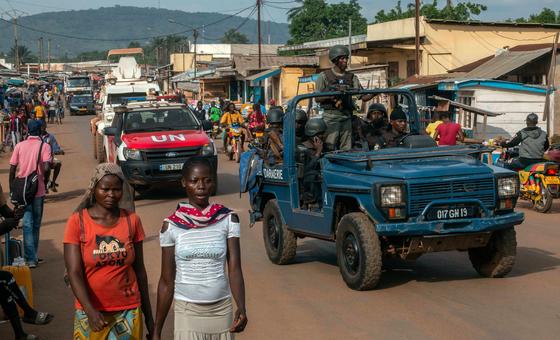
The ambush took place on Friday along the Birao-Am Dafock axis in the volatile Vakaga Prefecture, in northeastern CAR, close to the border with conflict-hit Sudan.

According to the stabilization mission, MINUSCA, the patrol was targeted by “unidentified armed elements” in the locality of Am-Sissia.

Attack may be a war crime

In a statement released by his Spokesperson on Sunday, Secretary-General António Guterres extended his deepest condolences to the bereaved families, as well as to the Government and people of Zambia, and wished a swift recovery to the injured soldier.

He stressed that attacks against UN peacekeepers may constitute war crimes under international law and urged the Central African authorities “to spare no effort in identifying the perpetrators of this tragedy so that they can be brought to justice swiftly”.

This marks the third fatal attack against MINUSCA peacekeeping patrols since the start of 2025.

In March, a Kenyan peacekeeper was killed in the Haut-Mbomou prefecture, and a month earlier, a Tunisian ‘blue helmet’ lost his life in the north. Earlier this week, two Nepalese peacekeepers were injured during an assault in the southwest.

Valentine Rugwabiza, head of the UN mission, decried the “multiplication of attacks against peacekeepers” and echoed the call for justice, urging the authorities to act decisively against those responsible.

Since its deployment in 2014, MINUSCA has suffered significant losses, with around 150 peacekeepers paying the ultimate price.

The 17,000-strong force was established to help stabilise CAR, a country wracked by decades of political instability, armed conflict, and humanitarian crises.

According to a February report by the UN refugee agency (UNHCR), worsening insecurity across parts of the country has forced MINUSCA to step up patrols in several regions, including areas near the border with Sudan where violence and displacement have surged in recent months amid the brutal civil war between rival militaries there.

The Secretary-General reaffirmed the UN’s solidarity with the people and Government of CAR, underlining the world body’s continued commitment to peace and stability in the region.

Source link

UN rights office ‘horrified’ by deadly violence at Gaza food distribution sites

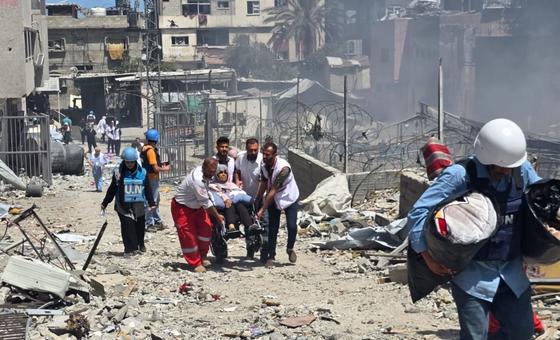
The UN human rights office (OHCHR) in the Occupied Palestinian Territory on Wednesday called on the Israeli military to cease the use of lethal force near aid convoys and food distribution sites.

It cited “repeated incidents” of Palestinians being shot or shelled while seeking food, warning that such attacks could constitute war crimes under international law.

“We are horrified at the repeated incidents, continuously reported in recent days across Gaza, and we call for an immediate end to these senseless killings,” the office said in a statement.

Hundreds killed

Since 27 May, when the Gaza Humanitarian Foundation (GHF), an initiative backed by Israel and the United States began food distribution in southern Gaza – bypassing the established UN-led system – hundreds have been killed and many more wounded near four distribution points or while waiting to pick up aid.

In one of the deadliest recent incidents, Israeli military reportedly shelled a crowd waiting for UN food trucks in southern Gaza on 17 June, killing at least 51 people and injuring some 200 others, according to Gazan health authorities.

A day earlier, three Palestinians were reportedly killed and several injured in a similar incident in western Beit Lahiya.

There is no information to suggest that the people killed or injured were involved in hostilities or posed any threat to the Israeli military or to staff of GHF distribution points,” OHCHR said.

Protect civilians, aid workers

The UN World Food Programme (WFP), which has managed to dispatch only 9,000 metric tons of food within Gaza over the past month – a fraction of what is required for the 2.1 million people in need – echoed calls for immediate protection of civilians and aid workers.

“Far too many people have died while trying to access the trickle of food aid coming in,” the agency said in a separate statement.

“Any violence resulting in starving people being killed or injured while seeking life-saving assistance is completely unacceptable.”

Massive scale-up needed

The UN emergency food relief agency said the fear of starvation and desperate need for food is causing large crowds to gather along well-known transport routes, hoping to intercept and access humanitarian supplies while in transit.

Only a massive scale-up in food distributions can stabilize the situation, calm anxieties and rebuild the trust within communities that more food is coming,” it said, calling urgently for safer convoy routes, faster permissions, restored communication channels and additional border openings.

“The time to act is now. Delays cost lives. We must be allowed to safely do our jobs,” the agency said.

Source link

UN condemns deadly Russian strikes on Ukrainian capital as civilian toll mounts

According to the UN Human Rights Monitoring Mission in Ukraine (HRMMU), more than 30 locations across seven districts of Kyiv were struck in what it described as “the deadliest attack” on the Ukrainian capital in nearly a year.

Last night’s attack exemplifies the grave threat posed by the tactic of deploying missiles and large numbers of drones simultaneously into populated areas,” said Danielle Bell, Head of HRMMU.

Humanitarian Coordinator for Ukraine, Matthias Schmale, also strongly condemned the attacks, which extended to Odesa, Zaporizhzhia and other areas.

“The people of Ukraine should not have to take cover in shelters night after night,” he said. “Each day, the war takes a devastating toll on civilians.”

In the southern port city of Odesa, strikes reportedly injured several civilians and damaged a kindergarten and a centre for children with special needs – places where children should feel safe. In Zaporizhzhia, residential buildings were hit.

First responders and humanitarian agencies are already on the ground, providing emergency care and supplies while assessing further needs.

Human toll rising

The barrage included 440 long-range drones and 32 missiles launched by Russian forces, HRMMU noted in a news release citing information from Ukrainian authorities, of which 175 drones and 14 missiles targeted Kyiv.

It marked the fourth time this month that more than 400 munitions were fired in a single night – far surpassing the 544 total launched during the entire month of June 2024.

Even before this latest attack, the human toll of such tactics had been rising sharply. HRMMU had already verified at least 29 civilian deaths and 126 injuries from long-range weapons in June alone.

The overall civilian casualty count in the first five months of 2025 is nearly 50 per cent higher than in the same period last year.

Mr. Schmale reiterated that attacks on civilians and civilian infrastructure are prohibited under international humanitarian law.

Civilians, including children, must never be a target,” he said. “We must not normalize the war.”

Refugee crisis deepens

Meanwhile, the broader humanitarian crisis continues to deepen. The intense conflict, now in its third year since Russia’s full-scale invasion, has driven more than 6.3 million Ukrainians to seek refuge across Europe.

Most are women, children, and older persons, many of whom rely on temporary protection directives extended by host countries like the European Union (EU) and Moldova, according to a report released on Tuesday by Office of the UN High Commissioner for Refugees (UNHCR).

Noting the volatile situation in Ukraine, the agency urged the respective governments to maintain legal status for refugees until conditions allow for safe, dignified, and sustainable returns.

Source link

World News in Brief: Global growth slows, deadly Ukraine attacks, Haiti hurricane hunger risk, legal migration for refugees

Growth is projected to weaken to 2.3 per cent, or nearly half a percentage point lower than expected at the start of the year, according to the Global Economic Prospects report.

“The global outlook is predicated on tariff rates close to those of late May prevailing,” it said.

“Accordingly, pauses to previously announced tariff hikes between the United States and its trading partners are assumed to persist.”

Although a global recession is not expected, average global growth is on track to be the slowest of any decade since the 1960s.

Poor countries suffer

Growth forecasts are being slashed in nearly 70 per cent of all economies, with the poorest countries most affected.

In most developing countries, nearly 60 per cent, growth should average 3.8 per cent in 2025 before reaching an average 3.9 per cent in the following two years – more than a percentage lower than the average in the 2010s.

The slowdown will impact efforts by developing countries in areas such as job creation, poverty reduction and closing income gaps with richer economies.

“The world economy today is once more running into turbulence. Without a swift course correction, the harm to living standards could be deep,” said Indermit Gill, Senior Vice President and Chief Economist.

The report calls for rebuilding trade relations as “economic cooperation is better than any of the alternatives – for all parties,” he said.

Countries are also urged to improve business climates and to promote employment by ensuring workers are equipped with necessary skills.

At least three dead in new Russian drone assault on Ukrainian cities 

A massive new wave of Russian drone attacks has killed at least three civilians and left Kyiv, Odesa and Zaporizhzhia engulfed in clouds of thick smoke, aid teams said on Tuesday. 

The attack was reportedly one of the largest since Russia’s full-scale invasion more than three years ago.

In an online update, the UN aid coordinating office, OCHA, said that a maternity ward in Odesa had come under fire, causing injuries and widespread damage to homes. 

Another terrible night

The UN Children’s Fund, UNICEF, underscored the impact of the violence on civilians, citing 16-year-old Sonya from Kyiv in an online post. “It was a terrible night,” she said. “The sounds were so frightening – a buzzing sound that was getting closer and explosions every five minutes.”

Russia has intensified its airstrikes on Ukraine in recent days. 

According to Moscow, it stepped up its bombing campaign in retaliation for Ukraine’s suprise drone attacks deep inside Russian territory last week codenamed operation spiderweb.

Amid the ongoing conflict, UN humanitarian teams and partners continue to work to help civilians in cities across Ukraine.

They provide first aid, protection services, food, construction materials and other support including counselling and legal advice.

Haiti: Hurricane season is here, but there are no food supplies

The World Food Programme (WFP) has reported that for the first time ever, it has no prepositioned food supplies in Haiti for the hurricane season, which lasts from June to November. 

WFP also said staffers do not have the financial resources to respond quickly to an emergency weather event in the country. 

Other UN agencies have prepositioned water and sanitation kits for 100,000 and health supplies for 20,000 people. However, these are not sufficient, especially in the absence of food, to meet needs during an emergency. 

“The current lack of contingency stocks and operational funds leaves Haiti’s most at-risk communities dangerously unprotected at a time of heightened vulnerability,” Deputy Spokesperson Farhan Haq said in a briefing Tuesday. 

Famine-like conditions

Food insecurity and malnutrition are already rampant, with over half the population facing acute hunger. Haiti is one of five countries worldwide which is experiencing famine-like conditions. 

Continuing armed violence by gangs in the capital and in other regions has displaced over one million people, compounding the hunger crisis and limiting access to other basic services such as clean water and health care. 

UN agencies in the country estimate that they will need $908 million to continue providing life-saving resources in Haiti, but currently, they have only received $78 million in emergency support. 

Refugees find hope through legal migration

Nearly one million refugees from eight countries with high asylum recognition rates were granted entry permits to 38 destination countries between 2019 and 2023, according to a new report from UN refugee agency, UNHCR, and the Organisation for Economic Co-operation and Development (OECD), Safe Pathways for Refugees

These permits were issued through existing systems for work, study, or family reunification.

“Refugees are using the same legal channels that millions rely on every day,” said Ruven Menikdiwela, UNHCR’s Assistant High Commissioner for Protection. 

“We don’t need new systems – just safer access to the ones already in place.”

In 2023 alone, nearly 255,000 permits were issued, marking a 14 per cent increase from 2022 and the highest number recorded since tracking began in 2010. 

Countries such as Germany, Canada, the United States, the United Kingdom and Sweden have played a leading role. 

UNHCR is urging States to remove obstacles for refugees and integrate them into regular migration systems. It also calls for stronger partnerships to expand access to legal pathways amid growing displacement and strained asylum systems. 

Source link

Deadly flooding in Nigeria displaces thousands

Nigerian officials estimate that over 500 people are still missing and presumed dead, according to news reports.

Deputy Secretary-General Amina Mohammed, a former Nigerian Government minister, said she was heartbroken at the extent of the loss and damage.

“My deepest condolences to all those affected – especially the families who have lost loved ones. My prayers are with you,” she said.

UN relief operation 

United Nations agencies and partners are working alongside the Nigerian Government to provide essential humanitarian aid to individuals and households in Niger State who have been affected.

Beginning 29 May, heavy rains in the Local Government Area of Mokwa – known as a trading hub – prompted flash flooding which flattened entire neighbourhoods.

Hundreds were killed, thousands displaced and key roads and bridges were damaged, disrupting movement and economic activity.

Nigeria’s rainy season extends from April-October, making it particularly prone to flooding, which has become more severe in recent years.

Climate change factor

In 2024, a flood in September killed 230 people in Borno state in eastern Nigeria and displaced over 600,000 people. In 2022, severe flooding across the country impacted 34 out of the 36 states, killed hundreds and displaced more than 1.3 million.

A recent report from the UN weather agency (WMO) said the worsening severity is related to climate change and increasing surface and water temperatures, all of which is taking a high toll throughout the African continent.

Agencies on the ground

According to UN Spokesperson Stéphane Dujarric Nigerian authorities are leading recovery efforts and UN agencies and partners are providing supplementary assistance.

The World Health Organization (WHO) is preparing to ship medicine and medical equipment to supplement and support existing primary care systems.

For their part, the International Organization for Migration (IOM) is providing materials for temporary shelter and other non-essential food items.

The UN reproductive health agency (UNFPA) is working to establish temporary clinics and safe spaces for women and girls displaced by the flooding. In these spaces, women can access maternal and reproductive health services, dignity kits and psychosocial assistance. UNFPA is also working to deploy midwives and nurses.

Mohammed M. Malik Fall, resident and humanitarian coordinator in Nigeria, commended Government efforts to respond to the humanitarian situation in Mokwa and said that the UN “stands ready to support the response.”

UN rights chief calls for end to daily killings in Ukraine after deadly weekend attacks

The majority of those killed and injured were in major cities such as Kyiv, Kharkiv, and Mykolaiv, or in populated areas in other regions.

Meanwhile, large numbers of long-range drones launched into Russia by Ukrainian armed forces injured at least 11 civilians over the weekend, according to Russian authorities.

Silence the guns

High Commissioner Volker Türk underscored the urgency for an end to hostilities.

“It is time to put an end to Russia’s invasion of Ukraine, to commit to – and implement – a comprehensive ceasefire that stops the daily killing and destruction, and to start genuine peace negotiations, built on respect for international law,” he said.

He highlighted that – even amid ongoing hostilities – people deprived of their liberty must be protected. Summary executions, torture and all forms of inhumane and degrading treatment of prisoners are always prohibited, in any circumstances, and must stop immediately.

In addition, civilian detainees should be released as soon as the lawful reason for their detention ceases to exist and their protection against refoulement must be ensured, he said.

Relief, but also loss

High Commissioner Türk welcomed the recent exchange of prisoners of war and civilian detainees.

Nearly 900 prisoners of war and 120 civilians from each side were exchanged. Most of the civilians appeared to have been detainees, but details on individuals included in the exchange are not yet available, according to his office, OHCHR.

“Many families can now breathe a sigh of relief because their loved ones have finally returned home,” Mr. Türk said.

“But at the same time, other families have lost relatives and their homes, as their communities across Ukraine came under attack.”

Impact on children

In a separate statement, the UN Children’s Fund (UNICEF) expressed deep concern for the impact of the latest attacks on Ukraine’s children.

Munir Mammadzade, UNICEF Representative in Ukraine, said that in the past three days, at least three children were reportedly killed in Zhytomyr, and at least 13 children were injured in several regions across the country.

“Ukraine’s children have suffered for far too long. How many more futures must be stolen? The senseless violence and loss of young lives must stop,” Mr. Mammadzade said.

According to UNICEF, more than 220 children were killed or injured between January and April 2025 – a 40 per cent increase compared to the same period last year.

“Attacks on civilian areas must end, and children must always be protected,” Mr. Mammadzade emphasised. “Above all, children need an end to this war.”

Source link

UN rights mission deplores deadly Russian strikes in Ukraine

According to the UN mission, the overnight assault from Saturday into Sunday – one of the largest of its kind since Russia’s full-scale invasion in February 2022 – resulted in civilian casualties and damage to homes and infrastructure across 10 regions of Ukraine, including the capital, Kyiv.

At least three children were among those killed and nine children were reported injured. The mission is currently working to verify the full extent of the casualties and the broader impact of the attack.

“With at least 78 people reported killed or injured across the country, last night’s attack tragically demonstrates the persistent deadly risk to civilians of using powerful weapons in urban areas, including those far away from the frontline,” Danielle Bell, HRMMU Head, said in a news release on Sunday.

“It is yet another addition to the staggering human toll this war continues to inflict on civilians, with more families across the country now grieving their losses.”

No place is safe

Matthias Schmale, the UN Humanitarian Coordinator for Ukraine, also voiced deep concern over the civilian suffering.

“I am horrified that yet again civilians – among them children – were killed in last night’s massive attacks,” he said in a statement posted on the social media platform X.

“Across Ukraine, no place is safe. Homes and civilian infrastructure were hit. Grateful to humanitarian NGOs and state services who are immediately supporting affected people. Civilians must never be a target.”

Use of long-range weapons

Ukrainian authorities reported that the Russian armed forces launched at least 367 missiles and loitering munitions during the night, in a coordinated attack with air, sea and land-based systems.

The strike followed a similar assault the previous night, which had mainly targeted the Kyiv region.

HRMMU noted that the use of long-range weapons in urban areas has been a major driver of civilian casualties in March and April. While the number of casualties in May had been somewhat lower than April before the latest attack, the toll from this weekend’s strikes will add to the monthly figures.

Source link

Gazans ‘in terror’ after another night of deadly strikes and siege

Updating journalists in Geneva, Dr. Margaret Harris described another night of terror in the war-torn enclave.

She said that some of those injured in the attacks had sought help from the Indonesian hospital in northern Gaza, even though it was now “just a shell” after 19 months of war.  

“We’ve done our best to bring it back together and they are doing their best to treat everyone, but [medical teams] lack everything needed,” she insisted.

Rejecting accusations that relief supplies have been handed over to Hamas, the WHO spokesperson said that “in the health sector, we’ve not seen that. All we see is a desperate need at all times.”

Echoing that message, the UN aid coordination office, OCHA, explained that a stringent system of checks and reports to donors meant that all relief supplies were closely tracked in real time, making diversion highly unlikely.  

Even if it were happening, “it’s not at a scale that justifies closing down an entire life-saving aid operation,” OCHA spokesperson Jens Laerke said.

If you had been in a coma for the last three years and you woke up and saw this for the first time, anyone with common sense would say this is insane.

The development comes more than 10 weeks since the Israeli authorities stopped all food, fuel, medicines and more from reaching Gaza.  

To date, their proposal for an alternative aid distribution platform bypassing existing UN agencies – widely criticized by the humanitarian community – has not been implemented.  

The result has been rising malnutrition – unknown in Gaza before the war – and looming famine, while thousands of truckloads of essential supplies have had to be stored in Jordan and Egypt, according to UNRWA, the UN agency for Palestine refugees and the largest aid operation in Gaza.

In its latest update, OCHA said that the UN and its partners have 9,000 truckloads of vital supplies ready to move into Gaza. More than half contain food assistance which could provide months of food for the enclave’s 2.1 million people.

An inventory of the relief supplies “waiting just outside the borders to get in” illustrates their humanitarian purpose, Mr. Laerke said.

Pasta and stationary: Weapons of war?

“It includes educational supplies, children’s bags, shoes, size three to four years old and up to 10 years old; stationery and toys, rice, wheat flour and beans, eggs, pasta, various sweets, tents, water tanks, cold storage boxes, breastfeeding kits, breastmilk substitutes, energy biscuits, shampoo and hand soap, floor cleaner. I ask you, how much war can you wage with this?

Mr. Laerke said that UN officials have held 14 meetings with the Israeli authorities about their proposed aid scheme, which if implemented would restrict aid “to only part of Gaza” and exclude the most vulnerable.

It makes starvation a bargaining chip,” he maintained.

More than 53,000 people have been killed in Gaza since war erupted on 7 October 2023 in response to Hamas-led terror attacks on Israel, according to the health authorities.  

WHO said only 255 patients needing specialist care outside the Strip have been evacuated since 18 March leaving more than 10,000 patients – including approximately 4,500 children – who also need urgent medical attention outside Gaza.

In response to this week’s attack on the European General Hospital in Khan Younis, WHO’s Dr. Harris noted that it had been used as a meeting point for an evacuation. “That first bombing, as you probably know, destroyed two of the buses that we’d assembled to take children,” she added.

On Tuesday, the Security Council heard the UN’s top aid official Tom Fletcher call for immediate international pressure to stop Gaza’s “21st century atrocity” – a message amplified by OCHA’s Mr. Laerke:

The situation as it has developed now is so grotesquely abnormal that some popular pressure on leaders around the world needs to happen,” he said.

“We know it is happening, I’m not saying that people are silent, because they are not. But it doesn’t appear that their leaders are listening to them.”

World News in Brief: Deadly attacks in South Sudan and Ukraine, World Court rejects Sudan case, lifesaving aid in Yemen

According to the UN relief coordination office (OCHA), the hospital in Old Fangak was struck early Saturday, killing seven civilians and injuring at least 20 more. The attack also destroyed vital supplies and forced the withdrawal of aid workers, leaving the town’s population without access to critical care.

“People in these areas are already battling flooding, food shortages and disease,” said Marie-Helene Verney, the UN’s acting Humanitarian Coordinator in South Sudan.

Too many lives at risk

“The destruction of critical health infrastructure and continued fighting puts innocent South Sudanese lives at risk.”

The bombing follows a wave of similar attacks in Upper Nile state, where health facilities in Ulang and Nasir have been targeted in recent months. The latest strike has heightened fears of renewed conflict as political and ethnic tensions rise nationwide.

The UN is now airlifting essential supplies to the area, but access remains limited. The violence has displaced over 130,000 people in the past two months, and aid agencies warn that South Sudan’s broader $1.7 billion humanitarian plan remains only 16 per cent funded.

Large scale attacks on densely populated cities across Ukraine

The UN’s top humanitarian official in Ukraine on Monday condemned a series of Russian strikes this weekend on densely populated towns and cities.

Between Friday and Monday, at least 12 people were killed and more than 100 others injured in attacks thar targeted Kharkiv, Kyiv and Cherkasy, and other regions in Ukraine.

These attacks also damaged homes, schools, a hospital and other civilian infrastructure, according to local authorities and partners, UN Deputy Spokesperson Farhan Haq told journalists in New York.

In the aftermath of the strikes, “humanitarian organizations provided first aid, psychosocial support, emergency shelter kits, repair materials, meals and drinks,” Mr. Haq said.

In the Kharkiv region, a fire triggered by a strike near the city of Izium on Sunday, burned 85 hectares of land and damaged over a dozen buildings. There were no casualties reported, Mr. Haq added.

Meanwhile, UN agencies alongside partners reached 600,000 people so far this year with first aid, medical transport, primary care and mental health support, including at transit centres for displaced people.

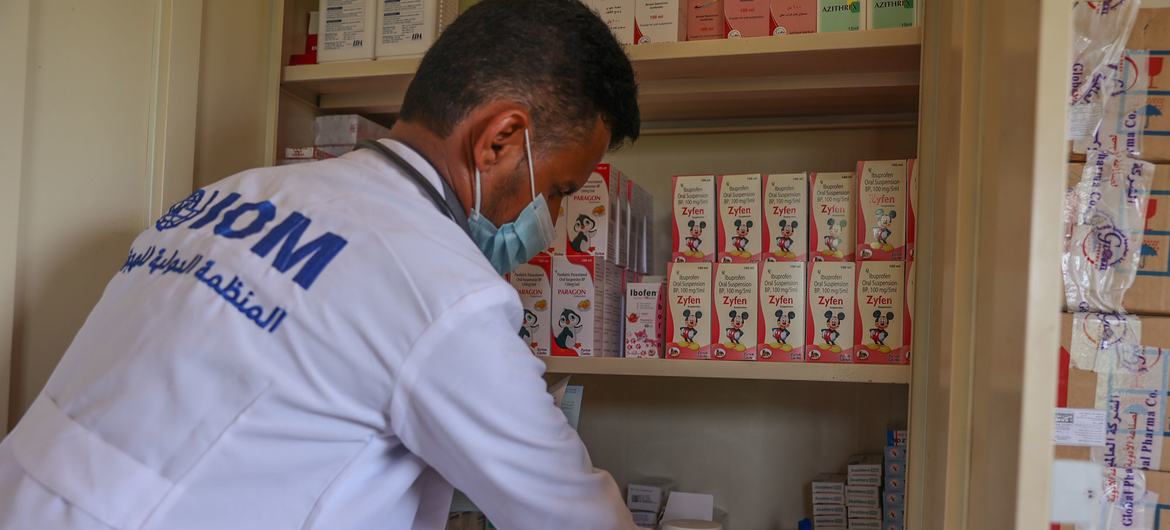
An IOM-supported health worker in Yemen accesses medical supplies.

Yemen: UN delivers lifesaving medical supplies

The UN International Organization for Migration (IOM) on Monday delivered critical medical supplies to seven health facilities in Yemen, where a collapsing health system and chronic shortages continue to endanger millions.

With support from the Government of the United Kingdom, IOM shipments are reaching hospitals and clinics in Aden, Lahj, Shabwah, Al Bayda and Sana’a – facilities serving both migrants and local communities.

“Every day, our teams see the impact of empty medicine shelves and overwhelmed clinics, on families and entire communities,” said Abdusattor Esoev, head of IOM in Yemen.

“By delivering essential supplies and supporting frontline staff, we are not just responding to urgent needs – we are keeping health services running for those who have nowhere else to turn.”

Crisis on crisis

The intervention comes amid an alarming health crisis.

Nearly 20 million people in Yemen require medical assistance in 2025, but over half of the country’s health facilities are only partially functioning or have shut down altogether. Funding gaps have left 382 facilities unsupported, forcing many to close or drastically cut services.

IOM’s assistance includes essential medicines, surgical equipment and infection prevention tools, as well as infrastructure repairs and support for health workers.

For many in the strife-torn country, IOM-supported clinics remain the only source of free medical care.

ICJ rejects Sudan’s genocide case against UAE

The International Court of Justice (ICJ) has rejected Sudan’s case accusing the United Arab Emirates (UAE) of complicity in genocide in Darfur, citing a lack of jurisdiction.

In the decision, the UN’s top judicial body ruled on Monday by a vote of 14 to two that it could not proceed with the case brought by Sudan under the Convention on the Prevention and Punishment of the Crime of Genocide (Genocide Convention) and declined to impose any provisional measures, as Sudan had requested.

The Court also removed the case from its general list by a vote of nine to seven.

“Having come to the conclusion that it manifestly lacks jurisdiction, the Court is precluded from taking any position on the merits of the claims made by Sudan,” the ruling stated.

Complicity charge

Sudan had accused the UAE of backing the paramilitary Rapid Support Forces (RSF), alleging its support amounted to complicity in genocidal acts against the non-Arab Masalit population in West Darfur.

The conflict between the RSF and the Sudanese army has claimed thousands of lives and displaced over 12.7 million people since April 2023.

The Court noted that while it could not hear the case, all States remain bound by their obligations under the Genocide Convention.

Source link