Gaza: Families deprived of the means for survival, humanitarians warn

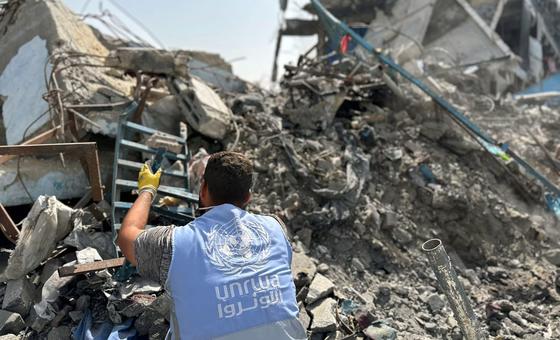
“As humanitarian assistance and basic services dwindle, people in Gaza have been increasingly deprived of the means for their survival,” UN Spokesperson Stéphane Dujarric told reporters at the UN Headquarters in New York.

It has been 17 weeks since any fuel has entered Gaza, according to Mr. Dujarric – a critical shortage that forced the Al-Shifa Medical Complex to suspend its kidney dialysis services and restrict its intensive care unit services to just a few hours per day.

Other hospitals, including Al-Aqsa in Deir al-Balah, have also come under attack, with the World Health Organization (WHO) reporting a strike on a tent sheltering displaced civilians in its courtyard.

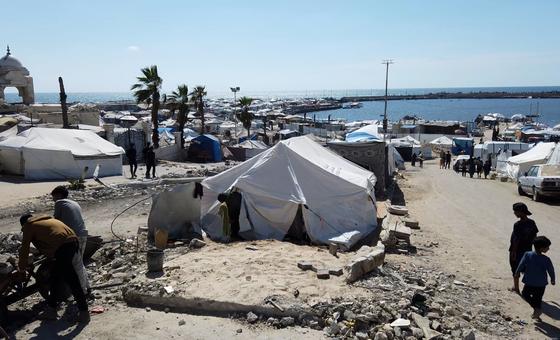
Over the past 48 hours, five school buildings sheltering displaced families  were also hit, reportedly causing deaths and injuries, while a new evacuation order issued on Sudan displaced 1,500 families from northern Gaza.  

Living in terror

Olga Cherevko, an official at the UN Office for the Coordination of Humanitarian Affairs (OCHA), described conditions for families in Gaza as “living in terror.”

“The only thing that is on their minds right now is a ceasefire and peace at last,” she said.  

Ms. Cherevko called for Israel to open all border crossings and allow a steady and sufficient flow humanitarian aid.

“The thing that needs to happen for us…to address the emergency on the ground, is to reopen additional crossings, to allow supplies to enter through multiple corridors and remove the constraints that are in place for us to deliver supplies to people in need,” she said.  

She warned that unless conditions change quickly, essential services will continue to shut down — and the broader humanitarian response could stall entirely.

“If the situation doesn’t change very, very urgently, more such services will continue shutting down,” Ms. Cherevko said.

“And if the situation doesn’t change going forward, the entire humanitarian operation could grind to a halt.” 

Source link

50 years of CITES: Shielding wildlife from trade-driven extinction

Originally conceived in 1963 at a meeting of the International Union for Conservation of Nature, the Convention entered into force in 1975, as the first global agreement of its kind. It continues to serve as a vital tool to help prevent the rapid decline of species.  

Why CITES matters?

The urgency of CITES’ mission is clear: international wildlife trade is now worth billions of dollars, and unregulated trade – alongside habitat loss and overexploitation – continues to drive vulnerable species towards extinction.

Because such trade span borders, international cooperation is critical.

“CITES is not a static agreement or self-sustaining,” said Ivonne Higuero, Secretary-General of CITES, marking the anniversary.

“It is a living promise to invest in nature – a commitment to the future, to each other and to the millions of species with whom we share this planet.”

With 185 parties – States or regional economic organizations – where the Convention has entered into force, CITES regulates trade for over 40,000 plant and animal, covering live animals, timber and herbal products.

Real world impact

CITES has established itself as one of the most effective multilateral environmental agreements by developing consensus-based governance and implementation tools such as the CITES Trade Database – the world’s most comprehensive source of global wildlife trade data – and guidelines for legal acquisition, permitting and enforcement.

Thanks to the Convention, international collaboration has brought critically endangered species from the brink, like African elephants, pangolin and crocodiles.

Michelle Henley/Elephants Alive

Pachyderm protection: Elephant mothers around baby.

A key initiative, the Monitoring the Illegal Killing of Elephants (MIKE) Programme, operates at over 70 sites across Africa and Asia, covering roughly half of the pachyderm population. MIKE data has contributed to a downward trend in illegal killings, especially in Africa.

Looking ahead

CITES Secretary-General Higuero called on the international community to remain committed to the cause.

“Let the next 50 years be marked by deeper unity, sharper focus and bolder action,” she said.

“We must continue aiming high and build a world where wild animals and plants thrive in their natural habitats, where trade supports – not threatens – biodiversity, and where people and planet prosper in harmony.”

UN and CITES

The CITES secretariat is supported by the United Nations Environment Programme (UNEP), which it with administrative and operational backing.  

CITES complements the work of other UN entities, such as the Food and Agriculture Organization (FAO) to improve fisheries management, capacity building and technical cooperation with the Economic and Social Commission for Asia and the Pacific (ESCAP), and initiatives focusing on the youth with the UN Development Programme. 

Source link

Spain and Brazil push global action to tax the super-rich and curb inequality

Presented during the UN’s 4th International Conference on Financing for Development, taking place this week in Sevilla, the proposal highlights a growing problem: the richest individuals often contribute less to public finances than ordinary taxpayers, thanks to lower effective tax rates and legal loopholes.

“Our countries need more and more public revenues to meet their needs. Inequality is a problem everywhere, and the richest pay less than the middle class – even less than lower-income taxpayers,” said Spain’s Secretary of State for Finance Jesús Gascón, during a press conference at the conference venue, where temperatures have soared to record highs in recent days.

The two governments are calling on others to join a drive for a fairer, more progressive global tax system. They point to a stark reality: the wealthiest one per cent of the global population owns more than 95 per cent of humanity combined.

The Spanish Secretary of State for Finance Jesús Gascón (on screen) addresses a meeting at the Financing for Development conference in Sevilla, Spain.

Sharing knowledge, closing gaps

In today’s interconnected world, access to reliable data is essential. The initiative prioritises information sharing – between governments and tax authorities – to help expose gaps in tax systems, close loopholes, and combat evasion and avoidance.

Improving data quality and building national capacities for data analysis will help tax administrations identify where and how wealth is concentrated, how much is currently being paid, and what needs to change.

Though some progress has already been made, the countries say much more must be done and many more countries should come on board.

There’s a real need to know who the beneficial owners are behind companies and legal structures used to conceal wealth,” said Mr. Gascón. The initiative also proposes technical cooperation, training in data analytics, and peer review mechanisms to strengthen national tax systems.

A global wealth registry?

Spain and Brazil are even considering steps toward a global wealth registry – acknowledging that this would take time, political will, and major national efforts.

But the aim is clear: more transparency, more accountability, and fairer contributions from the richest.

We cannot tolerate the intensity of inequality, which has been increasing in recent years,” said Brazil’s Minister-Counsellor to the UN, José Gilberto Scandiucci denying that this was some kind of far-leftist agenda.

This is a moderate initiative to confront a very radical reality.”

The proposal forms part of the Seville Platform for Action, which is turbocharging voluntary actions to help reach the Sustainable Development Goals (SDGs) – currently way off track for the 2030 deadline.

G20 highlights ‘high worth’ factor

It also follows the 2024 agreement by the G20 industrialised nations who met in Rio, Brazil, last year – the first international accord to commit to a joint tax agenda for high-net-worth individuals.

A three-month work plan is now being drawn up, with regular meetings planned to track progress. The goal: bring more countries, international organisations and civil society on board to push forward tax reforms targeting the ultra-rich.

“If we want to effectively tax the super-rich, fight inequality and make our tax systems fairer and more progressive, we need political will – and we need to act within our means,” Mr. Gascón added.

Source link

Iran crisis: UN stays and delivers

“In the early morning hours of 13 June, a number of attacks took place in Tehran, and other parts of Iran,” said Stefan Priesner, UN Resident Coordinator in Iran.

“Then over the next 12 days there were multiple attacks by either side…we know that there have been at least 627 people killed and almost 5,000 injured in Iran.

Underlining that the UN remained in Iran through the duration of the conflict, Mr. Priesner noted that discussions are ongoing with the Government on “how to adapt existing UN programmes to meet the country’s post-conflict needs”, he told journalists in Geneva via Zoom.

Tehran insight

Speaking from the Iranian capital, the UN official confirmed reports that Tehran had seen a population movement as several residents left the city seeking safety from the missile strikes. He mentioned the solidarity that Iranians had shown towards each other, with families in the north and the countryside hosting those coming from Tehran.

Looking ahead, Mr. Priesner said “we know that the health sector has very specific needs given the damage.” 

Stefan Priesner, UN Resident Coordinator in Iran.

The UN’s development and humanitarian presence in Iran spans 18 agencies with approximately 50 international staff and 500 national staff.

Last year’s budget amounted to around $75 million with two-thirds dedicated to the country’s roughly 3.5 million refugees or people in a refugee like situations.

Iran has been hosting one of the largest – and most protracted – refugee situations in the world for over four decades with inclusive policies for example in the fields of access to health and education, and UN has supported these efforts over the years.

The remainder of the budget is allocated for development projects including climate adaptation and mitigation work. Mr. Priesner said there was need for significant additional funding to support the most vulnerable groups in Iran including children, the elderly, female-headed households and persons with disabilities.

The UN official confirmed reports that increasing numbers of Afghan refugees have been heading back to their country across the Iranian border either voluntarily or through deportation.

According to the UN refugee agency, UNHCR, 36,100 Afghans returned on 26 June alone. The number of daily returns has continued to increase since 13 June, it said.

Every day, and sometimes every few hours, buses arrive and stop at the Afghanistan-Iran border, carrying exhausted and desperate Afghan refugee families with all their belongings,” said Arafat Jamal, UNHCR Representative in Afghanistan.

Afghanistan returnees’ plight

“Many are returning to a country they barely know, forced out of Iran after decades of living there. The recent Israel-Iran war accelerated their return, pushing numbers to a record high, while deep funding cuts have made humanitarian aid operations increasingly challenging.”

Having just returned from the Islam Qala border area, UNHCR Representative Arafat Jamal told UN News that the flow of people into Afghanistan has surged since the conflict, rising from around 5,000 daily crossings to a recent peak of nearly 30,000.

The UNHCR official warned that Afghan returnees are arriving in an impoverished country that is unprepared to support them. Women and girls who had access to education and jobs in Iran now return to a country where “extreme gender injustice” makes such opportunities impossible, he said.

Arafat Jamal, UNHCR Representative in Afghanistan, on returns from Iran.

Children’s lives ‘turned upside down’ by wars across Middle East, North Africa, warns UNICEF

Alarmingly, 110 million children in the region live in countries affected by war, with homes, schools and health facilities damaged or destroyed in fighting.

“A child’s life is being turned upside down the equivalent of every five seconds due to the conflicts in the region,” said Edouard Beigbeder, UNICEF Regional Director for the Middle East and North Africa, on Tuesday.

UNICEF estimates indicate that 45 million children across the region will require humanitarian assistance in 2025, a 41 per cent increase since 2020.  

Funding shortfalls  

However, funding gaps are affecting vital programmes across the region.

For instance, as of May, Syria faced a 78 per cent funding gap and the State of Palestine a 68 per cent gap for their 2025 appeals. UNICEF’s regional programmes are also under increasing financial strain.

The outlook for 2026 also remains bleak, UNICEF said, noting that its funding for Middle East and North Africa is projected to decline by 20 to 25 per cent, potentially resulting in shortfalls of up to $370 million.

Conflicts must stop  

This would jeopardize lifesaving programmes across the region, including treatment for severe malnutrition, safe water production in conflict zones and vaccinations against deadly diseases.

“As the plight of children in the region worsens, the resources to respond are becoming sparser,” said Mr. Beigbeder.

“Conflicts must stop. International advocacy to resolve these crises must intensify. And support for vulnerable children must increase, not decline.” 

Northern hemisphere heatwave underscores value of early-warning alerts

Three days after Spain’s national weather service confirmed a record 46°C reading in the southern town of El Granado, there’s been little let-up in stifling day and night temperatures across the continent and beyond.

In Barcelona, a road sweeper reportedly died on Saturday after completing her shift, prompting an investigation and widespread public appeals to keep out of the sun wherever possible.

“Everybody is at risk,” insisted Clare Nullis, spokesperson for the World Meteorological Organization (WMO): “If you go out without water in the middle of the day, to do jogging, have a bike ride, you will probably have health problems or even die.”

Fossil fuel factor

If part of the reason for Europe’s heat misery is because it is in the grip of a strong high-pressure weather front trapping hot air from northern Africa, Ms. Nullis noted that “human-induced climate change” is the source of these acute weather events.

Another part of the climate puzzle is that sea surface temperatures in the Mediterranean are exceptionally high for this time of year. “It’s the equivalent of a land heatwave”, the WMO spokesperson said.

“Extreme heat creeps up on you,” she added, while dangerously warm conditions are becoming “more frequent, more intense” because of global warming caused by burning fossil fuels.

“It’s something we have to learn to live with,” Ms. Nullis maintained, highlighting the importance of early warnings from national meteorological and hydrological services to prevent more deaths from extreme heat events – which are often “under-reflected” in official statistics.

Hot days – and nights

According to the UN agency, night-time minimum temperatures and daytime maximum temperatures broke monthly station records for June in parts of Western and Southwestern Europe, partly explaining why the heatwave is so draining.

“The frequency and intensity of extreme heat events is increasing in Europe and by 2050 about half the European population may be exposed to high or very high risk of heat stress during summer,” Ms. Nullis explained.

“What is exceptional – and I would stress exceptional but not unprecedented – is the time of year. We are 1 July, and we are seeing episodes of extreme heat which normally we would see later on.”

WMO insisted that warnings from national weather services and coordinated heat-health action plans are increasingly important to protect public safety and wellbeing.

The UN agency is promoting these efforts through its Early Warnings for All platform.

A key component is the WMO Coordination Mechanism (WCM) which supports crisis-prone and conflict-affected regions with advice. WMO curates authoritative weather, climate and water information from countries such as its WCM Global Hydromet Weekly Scan

Gaza: UN urges Israel to allow fuel into Strip

“Amid ongoing Israeli military operations, scores of people have reportedly been killed and injured, including while waiting for food,” the UN Office for the Coordination of Humanitarian Affairs (OCHA) said.

“Over the weekend, there were numerous reports of attacks hitting homes, as well as schools hosting displaced people,” it added.

Catastrophic hunger

OCHA noted that amid the “heavy constraints” on bringing in supplies and carrying out humanitarian operations across Gaza, people are going hungry.

“The World Food Programme (WFP) reports that one in five people faces catastrophic hunger, and more than 90,000 women and children urgently require treatment for malnutrition,” it said.

WFP has about 130,000 metric tons of food positioned in the region, ready to serve people in Gaza if improved access is granted.

Call for access

OCHA reiterated calls on Israel to facilitate the access and entry of essential supplies into Gaza, through the available crossing points and corridors, to address people’s desperate needs. Fuel, in particular, is urgently needed.

The UN and its partners call on the Israeli authorities, with utmost urgency, to allow the entry of fuel into Gaza. This is critically needed for life-saving operations – including hospitals, water and sanitation equipment, telecommunications, moving cargo from crossings, and operating community kitchens,” it said.

Displacement continues

Mass displacement continues in the war-torn enclave.

On Sunday, the Israeli military issued new evacuation orders for parts of Jabalya and Gaza City, impacting around 150,000 people. Those forced to flee join thousands already crowded into shelters lacking water, sanitation, and medical care. Shelter materials such as tents and timber have not entered Gaza in 17 weeks.

Most of the territory remains under displacement orders, OCHA said, and Israel, as the occupying power, has a legal obligation to protect civilians.

Search for the missing

Meanwhile, in war-torn Gaza, thousands of families remain trapped in a spiral of anxiety and despair as they search for their missing loved ones.

Among them is Anwar Hawas, a young woman in her twenties, searching desperately for Hadi, her 17-year-old autistic brother who has been missing for weeks.

“Every day I go out in the morning and return in the evening, hoping to find him,” she told UN News.

The Palestinian Central Bureau of Statistics reports that more than 11,000 individuals are missing in Gaza since the war started on 7 October 2023, the majority among them women and children. 

Source link

Report reveals significant rise in civilian casualties and rights violations in Ukraine

It covers the period from 1 December 2024 to 31 May 2025, during which 986 civilians were killed and 4,807 injured – a 37 per cent increase compared to the same period the previous year.

The war in Ukraine – now in its fourth year – is becoming increasingly deadly for civilians,” said Danielle Bell, Head of the UN Human Rights Monitoring Mission in Ukraine (HRMMU).

“We continue to document patterns of violence that are inconsistent with obligations under international humanitarian law.”

Concern over use of short-range drones

Most casualties occurred in areas under Ukrainian Government control, primarily due to Russian attacks using long-range explosive weapons in populated areas and short-range drones near frontline locations.

Nearly half of all casualties were caused by missiles, loitering munitions and air-dropped bombs in densely populated areas. At least three attacks involved the use of missiles with fragmentation warheads which detonated above ground and scattered fragments across large open areas, killing and injuring many civilians at once.

The use of short-range drones is driving the rise in civilian casualties, the report said. OHCHR verified that 207 civilians were killed and 1,365 injured in these attacks.

Among the deadliest incidents was a Russian drone strike on a civilian bus transporting employees of a mining company to work in the Dnipropetrovsk region. Eight women and two men were killed, and 57 people were injured.

“The high number of civilian casualties from the use of short-range drones, which allow operators to see their targets in real time, raises grave concerns,” Ms. Bell said.

Our findings strongly suggest a failure to distinguish between civilian and military targets, and to take all feasible precautions to verify the military nature of those targets – or worse, an intentional decision not to.

During the same period, Russian forces struck at least five hospitals directly. Some of the attacks used multiple loitering munitions, suggesting potential deliberate targeting of the hospitals in violation of international humanitarian law.

Prisoners of war

Serious violations against prisoners of war (POWs) also remain a major concern, according to the report. OHCHR documented credible allegations that at least 35 Ukrainian POWs and one Russian POW were executed during the reporting period.

Staff interviewed 117 recently released Ukrainian POWs and two detained medical personnel, nearly all of whom described being tortured and ill-treated in captivity. This included severe beatings, electric shocks, sexual violence, dog attacks, and deliberate humiliation, often carried out by personnel wearing balaclavas to conceal their identities.

Ms. Bell said the continued brutalization of Ukrainian prisoners of war is not only inhumane, but a serious violation of international law.

These are not isolated incidents – they point to well-documented patterns of widespread and systematic torture that demand urgent and unambiguous accountability, and measures toward prevention,” she said.

Meanwhile, more than half of the Russian POWs and third-country nationals held by Ukraine also reported abuse – including torture, ill-treatment, threats, and internment in unofficial facilities – which mostly occurred in transit places before arrival at official places of internment.

Rights concerns in Russian-occupied areas

The report highlights ongoing human rights concerns with Ukrainian civilians unlawfully detained by Russian authorities, predominantly in occupied territory. People who have been released described torture, ill-treatment, and dire conditions of detention.

Ukrainians in occupied territory faced increased coercion to adopt Russian citizenship. OHCHR documented over 16,000 homes listed by Russian occupation authorities as potentially “abandoned” and therefore at risk of being confiscated.

Displaced residents faced severe legal and logistical obstacles, as well as security risks, to reclaim their property.

Ukrainian children recruited

Another issue covered in the report is the recruitment and use of Ukrainian children “for sabotage activities of increasing gravity against Ukrainian military objectives.”

The children reportedly were recruited by unidentified actors, likely affiliated with Russia, according to Ukrainian law enforcement authorities. Some of these youngsters were killed or injured, while others are facing prosecution after being enticed via social media to commit arson or plant explosives.

“Using children to commit acts of sabotage or violence exploits their vulnerability and endangers their lives,” Ms. Bell said. “It compounds their suffering by exposing them to violence, coercion, and harsh legal consequences.

OHCHR also voiced concern over the situation of older people, mainly women, as well as persons with disabilities, who remain at disproportionate risk, particularly in frontline areas.

Many are unable to evacuate due to poverty and limited housing options, while those who can often face long stays in shelters that lack appropriate facilities, or they are placed in institutional settings due to the absence of suitable alternatives.


Source link

Afghanistan: Surging returns from Iran overwhelm fragile support systems, UN agencies warn

Ninety-nine per cent of the returnees were undocumented, and 70 per cent were forcibly returned, with a steep rise in families being deported – a shift from earlier months, when most returnees were single young men, according to the UN agency.

The rise follows a March decision by the Iranian Government requiring all undocumented Afghans to leave the country.

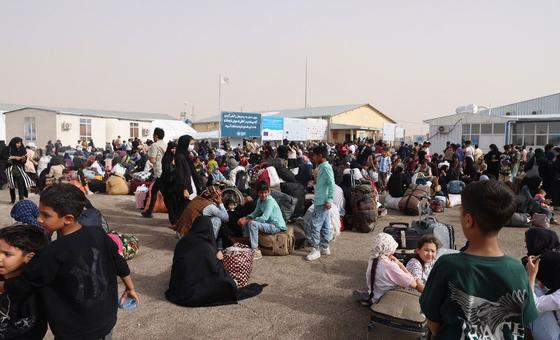
Conditions deteriorated further after the recent 12-day conflict between Iran and Israel, which caused the daily refugees crossings to skyrocket from about 5,000 to nearly 30,000, according to Arafat Jamal, the UN refugee agency (UNHCR) representative in Afghanistan.

“They are coming in buses and sometimes five buses arrive at one time with families and others and the people are let out of the bus and they are simply bewildered, disoriented, and tired and hungry as well,” he told UN News, describing the scene at a border crossing.

“This has been exacerbated by the war, but I must say it has been part of an underlying trend that we have seen of returns from Iran, some of which are voluntary, but a large portion were also deportations.” 

Strain on aid efforts

Afghanistan, already grappling with economic collapse and chronic humanitarian crisis, is unprepared to absorb such large-scale returns.

The 2025 Humanitarian Needs and Response Plan calls for $2.42 billion in funding, but only 22.2 per cent has been secured to date.

The scale of returns is deeply alarming and demands a stronger and more immediate international response,” said IOM Director General Amy Pope, “Afghanistan cannot manage this alone.”

Meanwhile, UNHCR alongside partners is working to address the urgent needs of those arriving – food, water, shelter, protection. However its programmes are also under severe strain due to limited funding. 

The agency had to drastically reduce its cash assistance to returnee families at the border from $2,000 per family to just $156.

We are not able to help enough women, and we are also hurting local communities,” added Mr. Jamal.

Some relief, but not enough

In response to growing crisis, the UN Central Emergency Response Fund (CERF) has allocated $1.7 million to the World Food Programme (WFP) to support drought-affected families in Faryab Province.

The funds will provide cash assistance to some 8,000 families in the region, where over a third of the rural population is already facing crisis or emergency levels of acute food insecurity.

“Acting ahead of predicted hazards to prevent or reduce humanitarian impacts on communities is more important than ever,” said Isabelle Moussard Carlsen, Head of OCHA Afghanistan, adding “when humanitarian action globally and in Afghanistan is underfunded…we must make the most of every dollar.” 

Source link

Gaza: ‘Unbearable’ suffering continues, UN official tells Security Council

Briefing ambassadors in the Security Council, Assistant Secretary-General for the Middle East Khaled Khiari said more than 1,000 Palestinians had been killed since mid-June alone, many of them while seeking aid.

Citing figures from the Gazan health authorities, he reported that the total number of Palestinian fatalities since 7 October 2023 had surpassed 56,500.

The level of suffering and brutality in Gaza is unbearable,” Mr. Khiari said. “The continued collective punishment of the Palestinian people is unjustifiable.

Killed trying to access aid

Mr. Khiari cited multiple incidents involving the Israel Defense Forces (IDF) opening fire near food distribution points.

On 17 June, at least 50 people were killed and 200 injured in Khan Younis when an IDF tank opened fire on a crowd waiting for UN World Food Programme (WFP) aid trucks.

Once again a week later, IDF troops reportedly opened fire near Gaza Humanitarian Foundation sites, this time killing 49 Palestinians and injuring 197 others.

“We strongly condemn the loss of lives and injuries of Palestinians seeking aid in Gaza,” Mr. Khiari said. “We call for an immediate and independent investigation into these events and for perpetrators to be held accountable.”

He emphasised that the UN “will not participate in any aid delivery modality that does not comply with the fundamental humanitarian principles of humanity, impartiality, independence, and neutrality,” a sentiment which other UN officials have repeatedly said as well.

Strong condemnation

Mr. Khiari reiterated the UN’s strong condemnation of Hamas and other Palestinian armed groups for their attacks in Israel, which killed over 1,200 people and led to more than 250 being taken hostage. Fifty hostages, including one woman, remain in captivity.

Nothing can justify these acts of terror. We remain appalled that hostages may be subjected to ongoing ill-treatment and that the bodies of hostages continue to be withheld,” he said.

At the same time, he also condemned “the widespread killing and injury of civilians in Gaza, including children and women, and the destruction of homes, schools, hospitals and mosques.”

Rising violence in the West Bank

In the occupied West Bank, Israeli raids and settler violence have escalated.  

Mr. Khiari reported that a 15-year-old boy and an elderly woman were killed in separate incidents on 25 June. Armed settlers also killed several Palestinians during attacks in Surif and Kafr Malik.

The escalating violence in the occupied West Bank is alarming,” Khiari said, warning that military operations and settler expansion are leading to fatalities, displacement and destruction.

Iran-Israel ceasefire brings hope to the region

Mr. Khiari concluded his briefing with comments on the wider Middle East region, particularly the recent flare-up between Israel and Iran.

He welcomed the 24 June ceasefire agreement between the two countries, announced by US President Donald Trump, and credited US and Qatari mediation.

We hope that this ceasefire can be replicated in the other conflicts in the region – nowhere is this more needed than in Gaza,” he said.