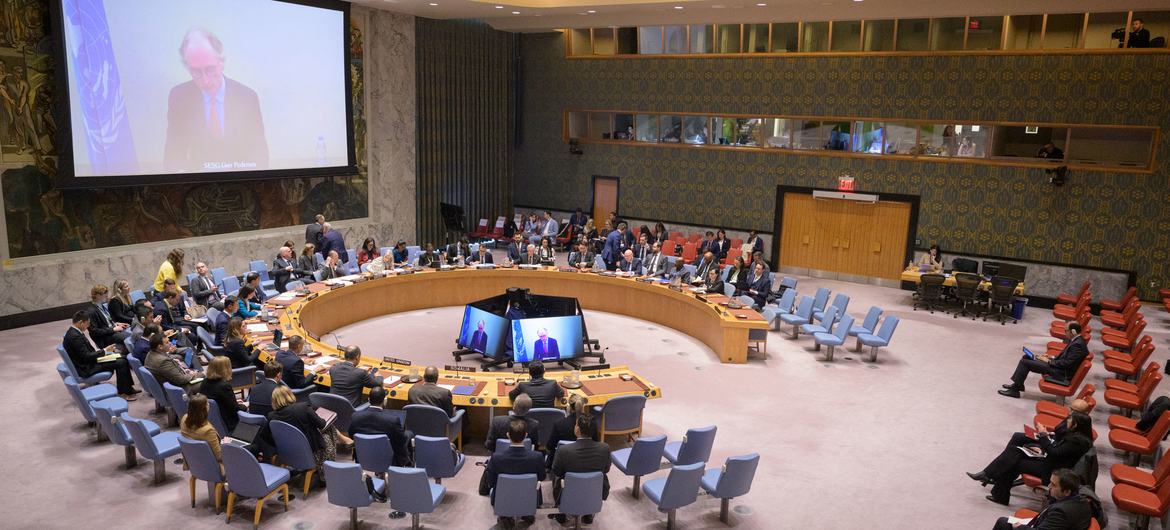
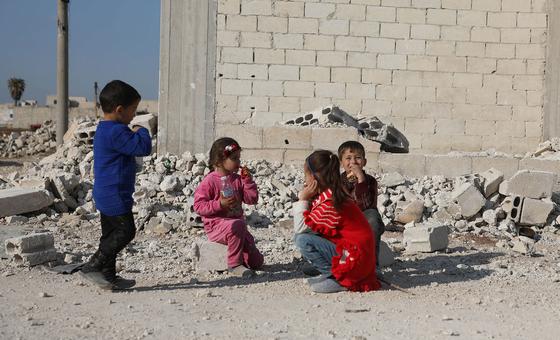
The Security Council met on Thursday afternoon for an emergency session on Syria after deadly violence in the south and a wave of Israeli airstrikes that reportedly hit military sites and key locations in Damascus. Khaled Khiari, a senior UN political affairs official briefed ambassadors, warning that renewed bloodshed could derail prospects for a credible, inclusive political transition and widen regional fault lines. UN News App users can follow here.
Tag Archives: Syria
Syria: UN chief urges de-escalation as Sweida violence escalates, Israel strikes Damascus
News reports estimate that the sectarian violence in the predominantly Druze city of Sweida, south of the capital, has killed more than 200.
Israel explained its attacks in the heart of the capital and on pro-government forces in Sweida as a defensive move in support of the Druze community, which has a significant presence within Israel and in the Israeli-occupied Golan.
The strikes on the defence ministry in Damascus also hit an area near the presidential palace, according to news reports and Syrian authorities.
Pledging to protect the Druze minority but also following up on its threat to attack any Syrian military operations taking place south of the capital, Israel said it would intensify strikes if government forces did not withdraw from the region, according to news reports.
Syrians ‘robbed’ of opportunity for peace
“The Secretary-General is alarmed by the continued escalation of violence in Sweida” and “unequivocally condemns all violence against civilians,” said UN Spokesperson Stéphane Dujarric on Wednesday.
It was the second day in a row that the UN chief has intervened to highlight the increasing civilian toll and “reports of arbitrary killings and acts that fan the flames of sectarian tensions and rob the people of Syria of their opportunity for peace.”
Mr. Guterres further condemned Israel’s “escalatory airstrikes” on Sweida, Daraa and central Damascus, together with “reports of the IDF’s redeployment of forces in the Golan,” the highly-contested mountainous region along the border of the two countries.
The UN also called on Israel to cease any violations of Syria’s sovereignty and respect for the 1974 Disengagement of Forces Agreement.
The UN chief also reiterated the need to support “a credible, orderly and inclusive political transition in Syria in line with the key principles of Security Council Resolution 2254.”
Extending his condolences to the people of Syria, the Secretary-General reiterated his call for an immediate de-escalation of violence measures to facilitate humanitarian access.
Civilians in peril
Mr. Dujarric said UN humanitarians were warning that “the deadly hostilities continue to put civilians at risk, with ongoing reports of significant displacement and damage to critical infrastructure, including water, electricity and telecommunications networks,” Mr. Dujarric said.
Access to Sweida and the impacted areas remains severely constrained due to insecurity and road closures, and civilians are unable to reach shelters.
The UN Humanitarian Coordinator in Syria, Adam Abdelmoula, said that the UN and its humanitarian partners plan to assess the needs and provide essential assistance in Sweida as soon as conditions allow.
Mr. Dujarric underscored that medical services in Sweida and the neighbouring Daraa Governorate are overstretched and hospitals are almost at capacity.
While the World Health Organization (WHO) has dispatched emergency medical supplies to Daraa, deliveries to Sweida have yet to get through due to the fighting.
UN urges de-escalation, protection of civilians as conflict roils Syria
On Sunday, violence erupted between Sunni Bedouin tribal fighters and Druze militias in Sweida, two days after a Druze merchant was abducted on the highway to Damascus.
The casualty figures are unclear according to local reports, but the death toll is at least 30, and hundreds have been injured.
As violent unrest continued Monday, interim government security forces were deployed to restore order, which reportedly led to clashes with local armed militia.
On the same day, Israeli forces struck tanks under the control of Syrian forces in defence of the Druze, whom it considers a loyal minority at home and in the occupied Golan area, according to news reports.
Shortly after forces of the caretaker government in Damascus arrived in Sweida on Tuesday, Syria’s defence chief announced a ceasefire.
Tensions have historically been high between minority groups in the city since Islamist rebels toppled former president Bashar al-Assad’s regime in December and a new caretaker government was installed which is gaining increasing international recognition.
Guterres expresses concern
Spokesperson for the Secretary-General, Stéphane Dujarric, addressed the situation in Syria on behalf of Secretary-General António Guterres at Tuesday’s briefing in New York.
“The Secretary-General is deeply concerned over the continued violence we have seen in the Druze-majority area in Sweida governorate,” Mr. Dujarric said, adding that he is particularly alarmed by reports of arbitrary violence against civilians.
Mr. Guterres condemned “all violence against civilians, especially acts that risk enflaming sectarian tensions,” and urged de-escalation, protection of civilians and a transparent investigation into those responsible for the killings and injuries.
Israel urged to end violations within Syria
“The Secretary-General is also concerned by Israel’s airstrikes on Syria’s territory and calls on Israel to refrain from violations of Syria’s independence, its sovereignty and its territorial integrity,” Mr. Dujarric stressed.
Mr. Guterres urged support for “a credible, orderly and inclusive political transition in Syria in line with the key principles of Security Council Resolution 2254.”
Mr. Dujarric also relayed reports from UN humanitarian partners in Sweida, noting that medical services are overstretched and that markets and essential services – including water, electricity and education – have been disrupted.
While UN aid operations have been suspended in impacted areas due to blocked roads, the UN is mobilising to respond when conditions allow.
Investigators raise alarm
Also on Tuesday, the UN Human Rights Council mandated Syria Commission of Inquiry released a statement expressing concern over the situation in Sweida and stressing the urgent need for de-escalation and the protection of human rights.
The statement cited reports from local residents of killings, abductions, property burnings, looting and a rise in hate speech both online and in person.
In addition to highlighting concern over sectarian violence and Israeli airstrikes, the Commission emphasized the interim government’s responsibility to uphold human rights and ensure safe passage and humanitarian aid access.
The independent human rights investigators said they had begun an investigation into alleged human rights abuses related to the killings in Sweida in recent days.
World News in Brief: Inter-ethnic violence in Syria, Indigenous Peoples’ rights, global information security
The violence erupted two days after a Druze merchant was abducted on the highway to Damascus.
The incident marks the latest episode of sectarian bloodshed in Syria, where fears among minority groups have surged since Islamist rebels toppled former dictator Bashar al-Assad in December and installed a new caretaker Government, which is gaining increasing international recognition.
Those targeted include the Druze sect, an offshoot of Shia Islam.
UN voices ‘deep concern’
On Monday, UN Deputy Special Envoy for Syria, Najat Rochdi, expressed “deep concern” over these reports and urged authorities and stakeholders to “take immediate steps to protect civilians, restore calm and prevent incitement.”
She also underscored the need for inclusion, trust-building and meaningful dialogue to advance a credible and inclusive political transition in Syria.
UN human rights chief says ‘wisdom’ of Indigenous Peoples needed in climate change, digital policy upgrades
The UN human rights chief spoke at a high-level political forum on the rights of Indigenous Peoples on Monday.
Underscoring how crucial such forums are to advancing the rights of Indigenous Peoples, Volker Türk highlighted developments in Colombia, Finland and Guatemala that have given them more self-determination.
But despite these advances, violations against Indigenous Peoples’ rights continue.
Many still lack formal land recognition, while mining activity, deforestation and large-scale agricultural development often cause environmental destruction.
Indigenous Peoples also experience immense discrimination and face the brunt of climate chaos, Mr. Türk stressed.
Toll on activists
Furthermore, data from the human rights office reveals that 26 per cent of rights activists killed in 2023 and 2024 were Indigenous, largely in the Americas.
Additionally, states are using AI in ways that harm Indigenous Peoples through surveillance, data exploitation and exclusion from decision-making. Türk thus called for human rights-based approaches that uphold Indigenous data sovereignty and self-determination.
The High Commissioner also called for future policies on climate, digital technologies and other areas to “reflect the wisdom and experience of Indigenous Peoples.”
“This is not only essential to respect and fulfil the human rights of Indigenous Peoples,” he concluded. “There is growing recognition that the ideas and approaches of Indigenous Peoples hold important lessons for all of us.”
Guterres welcomes step forward in securing digital technology worldwide
The UN chief Antonio Guterres on Monday, welcomed the adoption by consensus of the UN Open Ended Working Group on Information and Communication Technologies.
It was established in 2020 with a five-year mandate to promote regular institutional dialogue and initiatives focused on keeping digital technologies safe and secure.
The Secretary-General welcomed the Final Report of 10 July, which summed up the past five years of negotiations, said a statement issued by his Spokesperson.
It reflects shared views on current and emerging threats, responsible government policies, international law, norms and efforts such as confidence-building and capacity development.
Call for cooperation
It also establishes a permanent mechanism to continue discussions about responsible State behaviour in the use of information and communications technologies, which the Secretary General particularly appreciated.
“The Secretary-General now calls upon all States to work together through the Global Mechanism to tackle digital risks and ensure these technologies are leveraged for good,” the statement said.
The Secretary General congratulated the group on its accomplishments, saying the consensus adoption “demonstrates that even in the most challenging international security environment, collective action is still possible.”
Syria: UN commission hails recent action to address past violations
Paulo Sérgio Pinheiro highlighted the establishment of the National Transitional Authority and the National Authority for Missing Persons which are expected to help reveal the fate of the more than 100,000 Syrians estimated to have been forcibly disappeared or gone missing.
They are also expected to expose the truth about systematic violations like arbitrary detention, torture and ill-treatment, and about widespread attacks which killed hundreds of thousands of civilians and maimed millions during hostilities.
Syria continues along the path to transition following the overthrow of the Assad regime last December.
Wave of retaliatory attacks
Mr. Pinheiro said the security vacuum left after the dismissal of the armed forces and security services, together with a lack of clarity on the new framework for justice, contributed to an atmosphere where victims of past crimes and violations attempted to take the law into their own hands and settle scores.
Retaliatory attacks that took place in coastal areas in March, and on a smaller scale in other parts of the country, were “in part a response to five decades of systematic crimes perpetrated by security forces with impunity which affected all Syrians,” he said.
“More recently, sectarian fault lines have also been fuelled by widespread hate speech and incitement against Alawis, off and online, including posts with false information reportedly often originating from abroad.”
Eyewitness accounts
The Commission conducted its latest visit to Syria last week and travelled to several locations on the coast where killings and looting had occurred. The team met with several civil and security authorities, as well as eyewitnesses and victims’ families.
“First-hand accounts by survivors of these events…revealed in detail how residential areas were raided by large groups of armed men, many of them members of factions now affiliated with the State. They told us how the assailants detained, ill-treated and executed Alawis,” he said.
He acknowledged the interim authorities’ establishment of a National Inquiry to investigate the violations as well as an additional High-Level Committee to Maintain Civil Peace. Furthermore, dozens of alleged perpetrators have been arrested.
“Protection of civilians is essential to prevent further violations and crimes,” he said.
“We welcome the commitment of President (Ahmed) al-Sharaa to hold those responsible accountable to restore confidence for State institutions amongst the affected communities.”
He also pointed to a deadly attack on a Greek Orthodox church in Damascus last Sunday, saying the authorities must ensure the protection of places of worship and threatened communities, and perpetrators and enablers must be held accountable.
Foreign intervention
Mr. Pinheiro told the Council that “the Syrian conflict has had no shortage of internal challenges and grievances, many of which were made worse by foreign interventions.”
In recent weeks, Israel has carried out a wave of airstrikes in and around Damascus, including near the presidential palace. Military bases and weapons depots in Daraa, Hama, Tartous and Latakia have also been targeted as part of its sustained military campaign in Syria. Several civilians were killed.
Civilian casualties were also reported in the context of Israeli operations in the buffer zone in Quneitra and southwestern Daraa monitored by the UN Disengagement Observer Force (UNDOF)
“These actions raise serious concerns of violations of international human rights and humanitarian law as UN Secretary-General (António) Guterres further stated recently,” he said.
Millions in need
Mr. Pinheiro reported that more than two million Syrians have returned home since December, including nearly 600,000 from neighbouring countries and just under 1.5 million internally displaced persons (IDPs).
“For many of the over seven million Syrians who remain displaced, massive property-related challenges will need to be tackled in the wake of industrial-scale destruction, pillage and confiscation of homes and lands,” he said.
Moreover, he noted that “despite the recent encouraging steps towards lifting of sectoral sanctions and opening the country to new investments, nearly 16.5 million Syrians remain in need of humanitarian assistance.” Among them are nearly three million people facing severe food insecurity.
Mr. Pinheiro concluded his remarks, saying “the interim authorities’ repeated commitments to protect the rights of everyone and all communities in Syria without discrimination of any kind are encouraging” and “should be met with the necessary support from the international community.”
About the Commission
The Independent International Commission of Inquiry on the Syrian Arab Republic was by the Human Rights Council in August 2011 with a mandate to investigate all alleged violations of international human rights law since March 2011.
The members are Mr. Pinheiro and Commissioners Hanny Megally and Lynn Welchman.
They are not UN staff and do not receive any payment for their work.
Lacroix upholds role of UN peacekeeping in Lebanon and Syria
Jean-Pierre Lacroix briefed journalists on his recent visit to the two countries ahead of Security Council meetings on the extension of the mandates of the UN Interim Force in Lebanon (UNIFIL) and the UN Disengagement Observer Force (UNDOF) in the Golan.
He said UNIFIL “has been working very hard” in the wake of the cessation of hostilities.
Achievements in Lebanon
The agreement last November between Lebanon and Israel followed more than a year of fighting on Lebanese territory between Hezbollah militants and Israeli forces, linked to the war in Gaza.
“I believe that there are a number of achievements that have been realized with the support of UNIFIL,” he said.
Mr. Lacroix reported that the Lebanese Armed Forces (LAF) have continued to strengthen their presence south of the Litani river, with UNIFIL’s support. The Mission has also worked to identify and neutralize weapon caches.
Furthermore, UNIFIL also continues to play a critical liaison and de-conflicting role between the LAF and the Israel Defense Forces (IDF), and supports the local population, including through mine action and clearing roads.
While highlighting these achievements, he stressed that more needs to be done to achieve the full implementation of Security Council resolution 1701 (2006), which defines UNIFIL’s mandate, noting that violations continue.
Mr. Lacroix also interacted with the Lebanese authorities who “unequivocally” upheld the critical need for the Mission’s continuous presence.
His visit also coincided with last days in office of UNIFIL Force Commander Major General Aroldo Lázaro Sáenz, who he praised for heading the Mission “during extremely, extremely challenging times.”
He also welcomed incoming Force Commander Diodato Abagnara and wished him all the best going forward.
Developments in Syria
Meanwhile, UNDOF continues its “critically important” role liaising between the Syrian and Israeli authorities and working to resolve the conflict.
He said the presence of the IDF in the so-called area of separation is a violation as only UNDOF can have a military presence there, according to the 1973 Designation of Forces Agreement.
Mr. Lacroix interacted with senior officials from the interim authorities in Syria who expressed support for UNDOF, adding that communication between them has improved.
“At the same time, I heard very clearly from the Syrian authorities that they are ready to assume the full authority of the whole of Syrian territory, including deploying the military and security presence to all the Syrian territory,” he said.
“That includes the area where UNDOF is, of course, according to and consistent with the provisions of the 1973 Agreement.”
He welcomed this “expression of readiness” while emphasizing that UNDOF’s goal is a return to the full implementation of the accord.
Despite the fall of Assad, the illicit drug trade in Syria is far from over
Despite the current government’s hostility to the trade, the country remains a hub for the production and distribution of the drug.
During the country’s long-running civil war, the Assad regime was hit by sanctions and diplomatic isolation, and the trade in Captagon is believed to have brought in billions of dollars for the dictator and his allies.
The country’s attitude towards the trade changed markedly after the fall of Assad in December 2024, and the rise to power of a transitional government led by members of the Islamist group HTS and comprising members of many of Syria’s ethnic groups. The current administration has pledged to disrupt the supply chain and has demonstrated this by publicly destroying large quantities of seized Captagon.
Thousands of people gathered in Damascus on Friday to celebrate the fall of the Assad regime.
However, the most recent edition of the World Drugs Report, released by the UN Office on Drugs and Crime (UNODC) on 26 June, warns that Syria remains a major hub for the drug, despite the crackdown.
Ahead of the launch, Angela Me, the head of social affairs at UNODC, talked to UN News about the continued use of Captagon in the region,
Angela Me: Captagon is a stimulant, similar to methamphetamine, which is taken as a pill, and for many years it has been the main drug of concern in the Gulf state and parts of North Africa.
It was called the “Jihadi pill” after it was found that the perpetrators of some terrorist attacks had used it. On the battlefield it helps to maintain energy, which is one reason it is so widespread. But users quickly become dependent, and it causes physical and mental health problems.
UN News: The transitional government of Syria has indicated that they do not tolerate this trade, but your report shows that Syria is still a big hub for Captagon. Who is producing and selling?
Angela Me: There is a lot of uncertainty around that. We see a lot of large shipments going from Syria through, for example, Jordan. There are probably still stocks of the substance being shipped out, but we’re looking at where the production may be shifting to. We’re also seeing that the trafficking is expanding regionally, and we’ve discovered labs in Libya.
UN News: Given the large amounts of money generated by drugs, are there still groups in Syria that would like to carry on the trade in the parts of the country they control?
Angela Me: Definitely, and not only in Syria, but also in the wider region. These groups have been managing Captagon for a long time, and production is not going to stop in a matter of days or weeks.
We are helping countries to tackle the problem from an organised crime perspective, to understand the criminal groups involved, so that they can design responses and solutions: our research shows that there is not one single response to dismantle the groups.
We also help law enforcement to connect with their peers in the region, because this is not a national problem. It’s clearly a transnational problem which goes beyond the Middle East; we have been seeing Captagon traffic through Europe, for example.
Another way we can support is by addressing the health-related issues, sharing evidence-based treatment that can really help people to recover from their dependence on the drug.
From Syria, UN refugee chief calls for greater solidarity with displaced people
The UN High Commissioner for Refugees, Filippo Grandi, sounded the alarm on Friday, World Refugee Day, in a message from Syria.
He said the abject failure to end conflicts – including in Sudan, Ukraine, the Democratic Republic of the Congo and Gaza – continues to create immense suffering.
Difficulty seeking shelter
“Yet the innocent people who run for their lives as the bullets fly and the missiles rain down are unjustly stigmatised, making it harder to escape danger and to find somewhere to recover and rebuild,” he said.
Their situation is further compounded by brutal cuts to humanitarian aid, affecting millions who desperately need assistance.
“At this critical juncture, it is vital that we reaffirm our solidarity with refugees – not just with words but with urgent action,” he said.
He added that inspiring examples already exists, from countries that continue to welcome and host refugees, to local communities that “open their homes, workplaces and hearts” to them, as well as “the countless individual acts of kindness and compassion that reveal our common humanity.”
Share the responsibility
Mr. Grandi said the international community can and must support these countries and communities by sharing the responsibility for protecting refugees, calling in particular for action by wealthier States, development banks, businesses and others.
The High Commissioner spent the Day in Syria, where some 600,000 people have returned from neighbouring countries after 14 years of war. Overall, more than two million Syrians have gone back to their homes and communities since the fall of the Assad regime last December.
“In a region that has suffered so much violence – and suffers even now – we are nonetheless presented with an opportunity to help Syrians achieve stability and prosperity. We must not let it pass by,” he said.
Mr. Grandi met Syrian families who spent more than a decade as refugees, whose deep joy at being among familiar faces and surroundings serve as reminder of refugees’ yearning for home.
“Now more than ever, we must stand with refugees to keep alive their hopes of a better future,” he said.
‘Syria simply cannot withstand another wave of instability,’ Security Council hears
“Syria simply cannot withstand another wave of instability,” UN Deputy Special Envoy Najat Rochdi said on Tuesday in a briefing to the Security Council in New York.
“The risks of further escalation in the region are not hypothetical – they are immediate, severe, and risk unraveling the fragile progress toward peace and recovery in Syria.”
She echoed the Secretary-General’s condemnation of military escalation in Middle East and his call on Israel and Iran to show maximum restraint.
The UN Special Envoy for Syria, Geir Pedersen, has also expressed growing alarm over the potential consequences of any further escalation, which she also conveyed.
‘Constructive and cooperative’ engagement
Ms. Rochdi reported on the Special Envoy’s ongoing engagement in recent months, such as meetings with senior officials in Damascus, including interim foreign minister Asaad Hassan al-Shaibani.
Their discussions focused on recent positive developments in international relations as well as the importance of prioritizing domestic affairs towards a genuinely inclusive political transition in which all Syrians have a stake.
Overall, the meetings with Syrian officials “were marked by a constructive and cooperative tone, with a shared interest in strengthening engagement with the United Nations across multiple sectors,” she said.
Road to transition
“Particular attention was given to the next steps in the transition and to coordinating efforts with the newly established committees on transitional justice and missing persons,” she added.
Among the important next steps is the establishment of a new People’s Assembly as the transitional legislative authority. In this regard, she welcomed the recent presidential decree announcing the appointment of a supreme committee for elections to the Assembly.
The committee will be responsible for supervising the indirect election of 100 of the 150 members of the People’s Assembly via electoral colleges, she explained. It will also define the electoral timeframe and eligibility conditions for electors and candidates.
“We encourage the Supreme Committee to take measures that safeguard inclusivity, transparency and openness in all stages of this process,” she said.
Developments in the northeast
Turning to the northeast, Ms. Rochdi referred to the 10 March deal reached between the interim authorities and the Syrian Democratic Forces (SDF), which controls the region, to integrate the Kurdish-led group into the national army.
The agreement “continues to present a historical opportunity to solve one of the key outstanding issues in this conflict and restore Syria’s sovereignty and unity, a priority which the Special Envoy discussed with interim Foreign Minister Shaibani.”
She also welcomed recent detainee exchanges as well as cooperation that enabled several Syrian families at the Al-Hol camp to return to the northwest. Thousands of people from several countries have been held for years at the notorious complex for their alleged ties to ISIL extremists.
“We stress the importance of negotiations moving forward in earnest with bold steps and an active spirit of compromise from both sides to implement the 10 March agreement,” Ms. Rochdi told ambassadors.
“This is a priority for stability in Syria and the region, for the restoration of Syria’s sovereignty, unity, independence and territorial integrity, and for the success of the overall political transition.”
Women and civil society
Special Envoy Pedersen also engaged with a broad spectrum of Syrians including women, who continue to seek greater representation in leadership positions, including as candidates and delegates in the process for the People’s Assembly.
“Syrian civil society representatives also continue to be active on all fronts working for a new Syria founded on the principles of inclusivity, openness, and transparent participatory processes,” she added.
She stressed that the protection and safety of all components of society, along with prevention of incitement of communal tensions, “are absolute cornerstones for stability.”
Attacks against specific communities
She noted that sporadic violent incidents continued in Homs, Hama and other regions, including killings, kidnappings and infringements on individual liberties.
Furthermore, some of the people that the Special Envoy met in Damascus voiced concern over ongoing attacks targeting specific communities and groups, including Alawites, Druze, and women.
“While many interlocutors emphasized that these incidents did not appear to be systematic or part of official policy, they highlighted the persistent challenges faced by the interim authorities in controlling certain groups – whether affiliated with the interim authorities or operating independently,” she said.
Ms. Rochdi also pointed to encouraging signs the interim authorities have taken to ease tensions such as the recent issuance of a fatwa that prohibits revenge killings and extrajudicial retaliation. Additionally, recent decisions to reinstate judges who were removed by the former regime represent a welcome step towards rebuilding trust between the judiciary and the population.
Respect Syria’s sovereignty
Meanwhile, other security challenges persist, with sporadic and limited acts of violence this month, including at a border post with Iraq and on contact lines in Deir-ez-Zor, and in rural Homs.
“The southwest saw a serious incident of Israeli artillery fire and airstrikes on military sites and weapons depots across southern Syria, in response to a rare incident of small rocket fires out of Syria into the Israeli-occupied Syrian Golan,” she continued, noting that two groups unaffiliated with the interim authorities claimed responsibility.
Additionally, Israeli incursions, arrests, and drone strikes occurred last week in Beit Jinn in the Damascus countryside, which she said are unacceptable and must cease.
“Syria’s sovereignty, independence, and territorial integrity must be respected, along with the 1974 Disengagement of Forces Agreement. Diplomacy is possible and must be prioritised,” she said.
Ms. Rochdi further reported that “ongoing activity by ISIL remains notable, including attacks on SDF positions, and a US drone strike on an ISIL figure in northwest Syria.”
Returnees and economic measures
Before concluding, Ms. Rochdi reported that despite the fragile security and socioeconomic situation in their homeland, nearly 600,000 people are estimated to have returned to Syria in the past six months, mostly from neighbouring countries.
An estimated 1.34 million displaced people inside Syria have also gone back to their areas of origin during the same period.
She said the UN continues to welcome and encourage international actions which contribute to the reactivation of Syria’s economy. They include a six-month waiver of some US sanctions, the European Union’s (EU) lifting of economic sanctions, and a broad range of transactions authorized by the United Kingdom to facilitate commercial activity in some key sectors.
She also hailed a large contract for the construction of several gas and solar energy plants, signed between the interim authorities and a consortium of regional and international actors.
“These projects are expected to supply more than half of Syria’s national electricity needs, representing a big leap toward energy security, economic revival, and infrastructure resilience,” she said.
More to follow on this story…
Decades of memories and loss – searching for the missing in Syria
The Independent Institution on Missing Persons in the Syrian Arab Republic (IIMP) is the first entity of its kind established by the UN General Assembly in June 2023. It is dedicated to determining the fate and whereabouts of all missing persons in Syria and supporting survivors and families of the missing.
Here are five key things you need to know about the IIMP.
Dictatorship and disappearances
The IIMP was created to address the issue of missing persons in Syria, a country that has experienced significant turmoil and conflict over the past decades.
Cages in which prisoners were apparently held are pictured at the infamous Sednaya prison in Damascus.
Fifty years of dictatorship and 14 years of civil war all but came to an end in Syria following the fall of the brutal Assad regime in December 2024. This allowed the IIMP to begin its work properly, most notably by gaining access to infamous detention centres where people were tortured, murdered or disappeared.
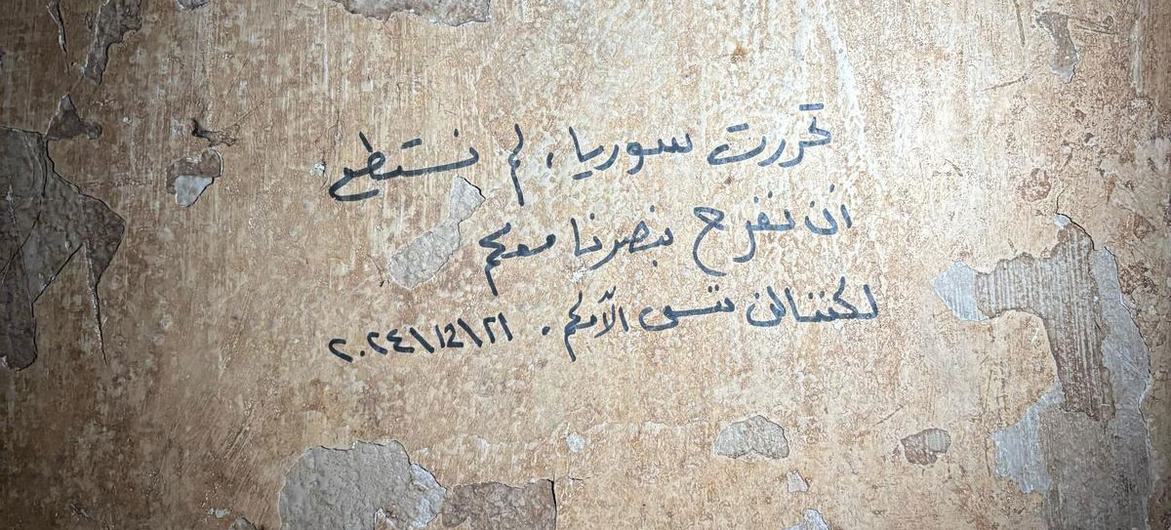
A message on the walls of Sednaya prison reads: ‘Syria is free; we couldn’t celebrate our victory with you, but we will not forget your pain.’
People went missing in Syria due to many reasons such as abductions, enforced disappearances, arbitrary deprivation of liberty, displacement, migration or military operations. It is not clear exactly how many missing persons there are, but it is thought to be in the tens of thousands.
Uncovering the truth
The institution’s primary role is to determine the fate and whereabouts of all missing people. This includes collecting and analysing information, conducting investigations, and working closely with families and survivors to provide them with the answers they seek.
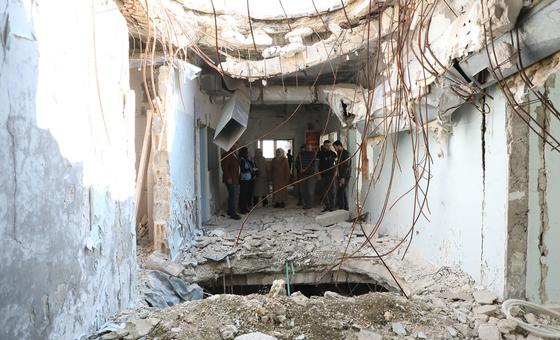
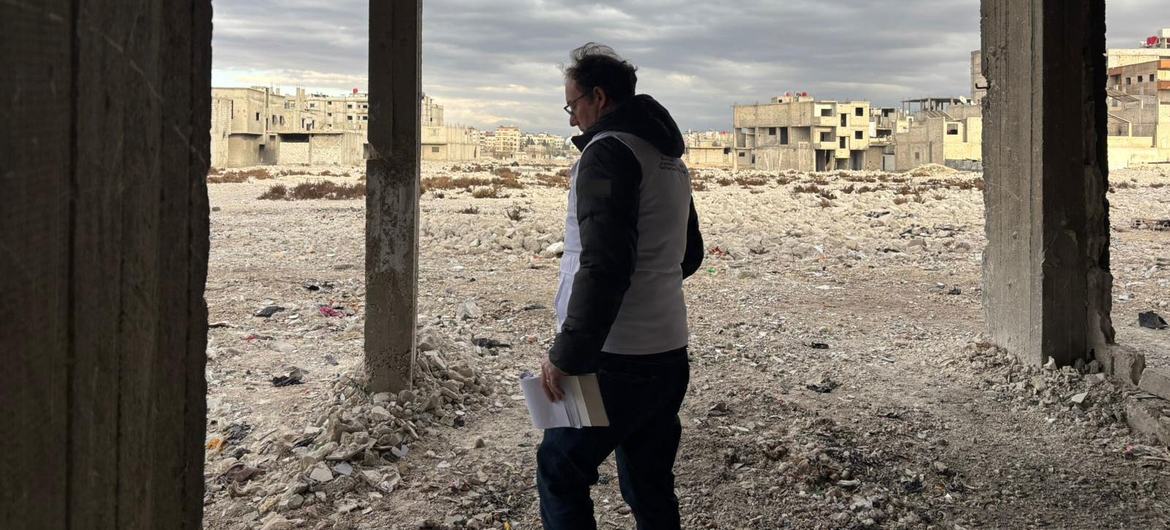
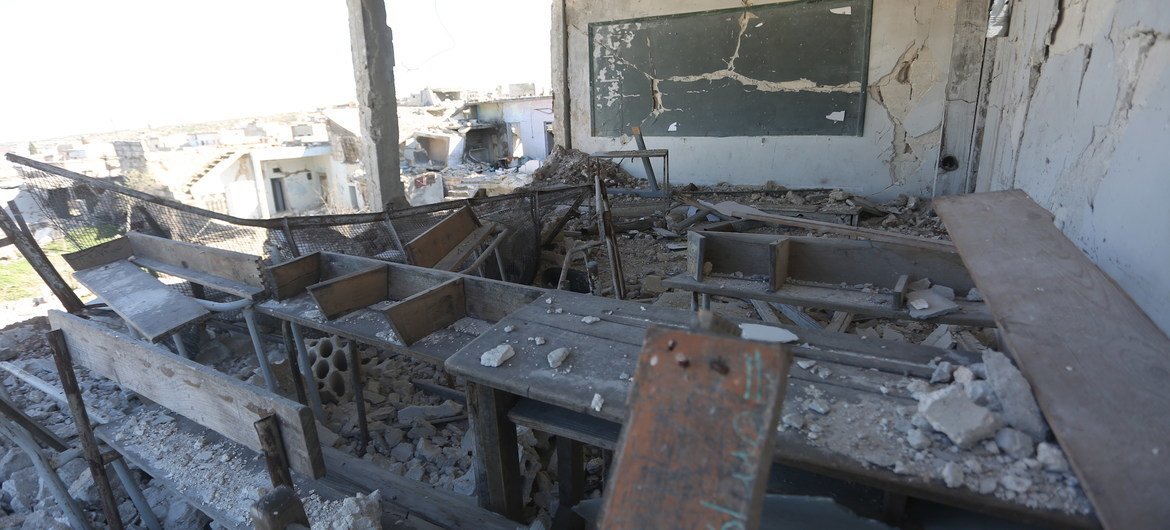
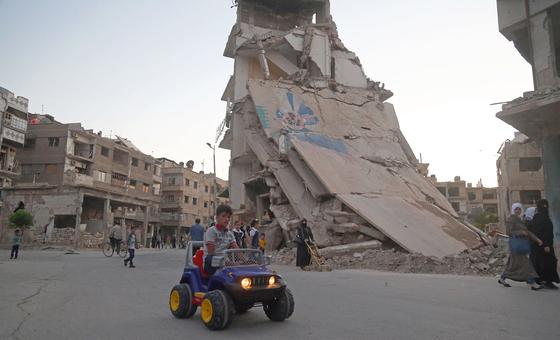
Much of Syria has been left in ruins following 14 years of civil war.
Uncovering the circumstances of disappearances will involve a massive effort, from checking prison arrival registers where detainee’s names were recorded and their exit to parts unknown.
Evidence of torture and mass graves will have to be carefully chronicled. Due process will have to uncover the elaborate former State network of secret police, prison and judicial officials who carried out orders and enabled the disappearance of thousands.
Supporting survivors and families of the missing
IIMP supports survivors and the families of the missing to cope with the uncertainty and trauma of having a missing loved one.
This includes offering psychological support, legal assistance, and facilitating communication between families and relevant authorities.
The institution looks for everyone who is missing in Syria regardless of their nationality, group, ethnicity, political affiliation, or the reasons and circumstances surrounding their disappearance.
‘Titanic mission’
The head of IIMP, Karla Quintana, has described the task the body faces as “titanic,” not least because it is still not clear how many Syrians are missing.
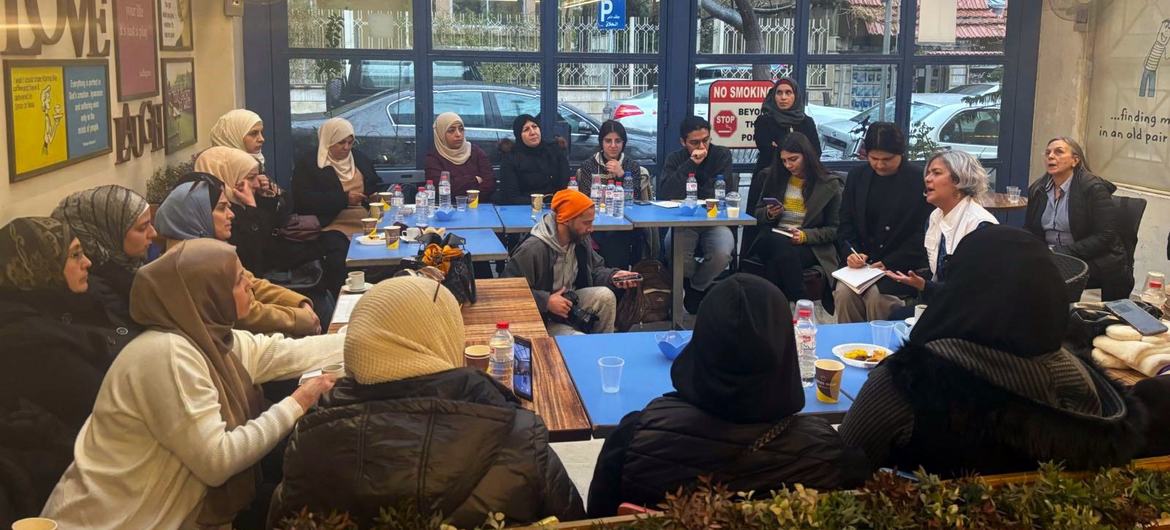
Karla Quintana (right in white jacket), the head of IIMP, meets women whose loved ones are missing.
Investigating the circumstances surrounding the disappearance of individuals can be costly, so securing the resources to do so is a “major challenge” according to Ms. Quintana. If resources are limited it will hinder the progress of investigations.
Searching for, processing, and analysing information is time-consuming – especially in Syria, where conflict has made many areas inaccessible, records may be incomplete or destroyed, and some regions remain unstable and dangerous to work in.
Working with Syrians
IIMP says searching for missing persons in Syria must be “locally owned and internationally supported.” The body operates through a collaborative approach partnering with local and international organizations, government agencies, and civil society groups.
It also engages with communities to raise awareness about the issue of missing persons and to encourage the sharing of information that could aid investigations.
Expectations of this unprecedented UN mechanism are high as it could play a pivotal role in contributing to peace and justice in Syria.
World News in Brief: Aid for Syria, children under attack in Mozambique, rights-based climate action
Despite limited resources, the UN and partners are reaching some 2.5 million people each month across the country. In May alone, more than one million people received assistance, according to the Office for the Coordination of Humanitarian Affairs (OCHA).
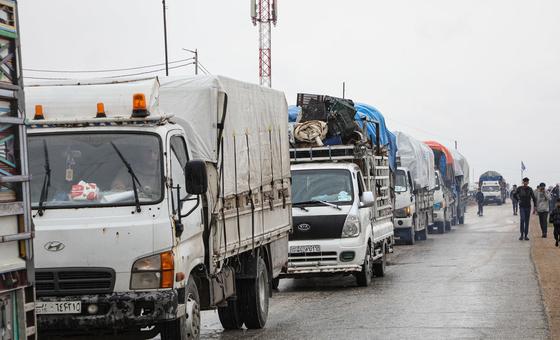
Cross-border aid has significantly increased this year. Since January, 1,185 humanitarian trucks have crossed from Türkiye into Syria – six times the number recorded during the same period last year. The uptick reflects growing needs and intensified delivery efforts.
Syria’s health system, however, remains under severe strain. Fewer than 60 per cent of hospitals and less than half of primary health centres are fully functional. Essential medicines are in short supply, treatment costs are beyond the reach of many families and overcrowded shelters continue to heighten the risk of disease outbreaks.
Meanwhile, explosive remnants of war and unexploded ordnance pose a deadly and ongoing threat to civilians. Since 8 December, 2024, more than 1,000 casualties have been reported – over 400 of them fatal and nearly 600 resulting in injuries – children accounting for over a third of the victims.
“The humanitarian community is calling for urgent support to expand risk education, professional clearance operations and assistance for survivors,” UN Spokesperson Stéphane Dujarric told journalists at the regular news briefing in New York.
Funding shortfalls are compounding the crisis. The Syria Humanitarian Response Plan requires $2 billion by the end of June to support 8 million of the most vulnerable people. To date, it has received just $236 million – less than 12 per cent of the total needed.
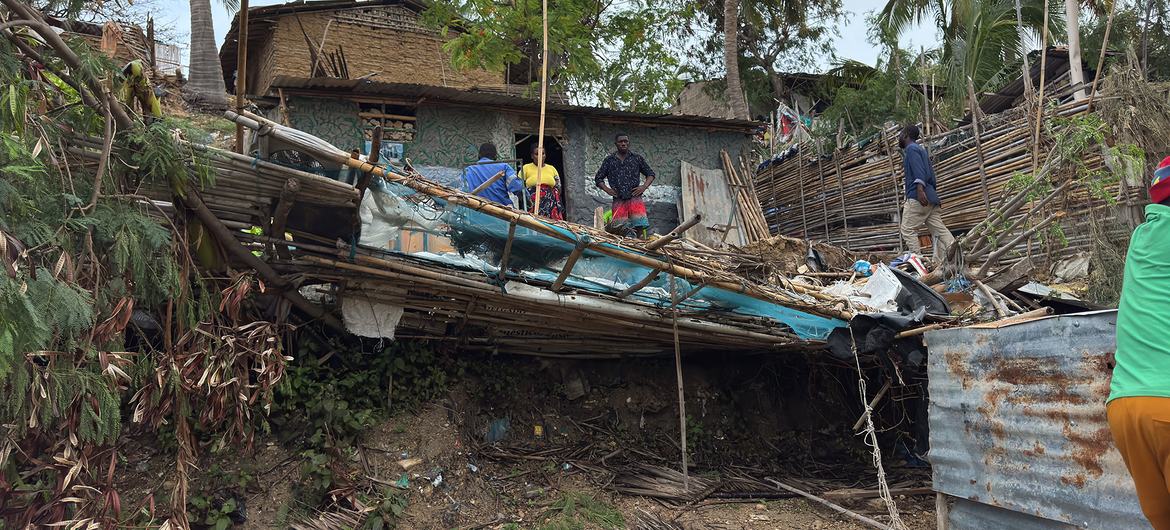
Northern Mozambique has been mired in what has been described as a “triple crisis” – violence and insecurity, climate shocks, and post-electoral unrest. (file photo)
Children targeted by armed groups in northern Mozambique
Children also continue to bear the brunt of a worsening crisis in Mozambique, where over 1.3 million people have been displaced by violence, extreme weather shocks and post-electoral unrest.
These crises have also left 5.2 million in urgent need of humanitarian assistance.
The situation is particularly dire in the northern Cabo Delgado province, which has witnessed a spike in reports of abduction, forced recruitment and use of children by non-state armed groups.
According to the UN Children’s Fund (UNICEF), at least three girls aged 12, 14 and 17 were killed in an attack last month, and eight other children abducted – highlighting the grave risks facing children in the conflict.
The agency expressed deep concern over such gross violations of children’s rights, stressing that “every child has the right to live in safety, free from violence and fear.”
UNICEF is working with partner agencies to assist impacted children and their families, support the safe return and reintegration of children abducted by non-state armed groups, and provide access to vital services such as health, protection, and education.
UN rights chief calls for bold climate action grounded in human rights
The UN’s top rights official warned on Tuesday that humanity’s survival is inseparable from the health of the planet.
Speaking at Oxford University, Volker Türk highlighted the need for a new kind of politics to tackle the climate crisis and rising global inequality, urging strong leadership to push for urgent, just and rights-based solutions.
“Not only have we created a false separation from nature, we are deluded enough to believe we can make nature bend to our will,” Mr. Türk said, criticizing the continued exploitation of fragile ecosystems.
The High Commissioner linked environmental degradation with systemic injustice, stating that the world’s richest one per cent are responsible for more carbon emissions than the poorest two-thirds. He stressed that those least responsible for the climate crisis are often the ones suffering its worst impacts.
He also expressed concern over the lack of adequate climate finance and called for reforms to international financial systems, noting growing support for a proposed fossil fuel non-proliferation treaty that would aim to end the expansion of new oil, coal and gas projects.
“Our rights call for all people, now and in the future, to live in safety, security and opportunity, on a healthy planet,” he said.
Mr. Türk concluded by urging governments, institutions and individuals to join a global movement for change, grounded in human rights, to address the climate emergency and build a more sustainable and equitable future.
Historic shifts offer Syria a path forward
The United States, European Union and United Kingdom have taken steps to ease long-standing sanctions – moves that, according to UN officials, could pave the way for long-overdue progress on the political and humanitarian front, provided they are sustained and inclusive.
Speaking to the Security Council from the capital Damascus on Wednesday, UN Special Envoy for Syria Geir Pedersen called the developments “historic,” highlighting their potential to improve conditions on the ground and allow a successful transition.
“They hold major potential to improve living conditions across the country and to support the Syrian political transition, giving Syrian people a chance to grapple with the legacy of misrule, conflict, abuses and poverty,” he said.
The sanctions, imposed mostly during the Assad era, have long been blamed for hindering economic recovery.
Regional powers including Saudi Arabia, Türkiye and Qatar are supporting renewed engagement, offering support to fund public salaries, energy infrastructure and Syria’s obligations to international financial institutions.
National political movements
The easing of sanctions comes amid significant domestic developments, with Syria’s interim government announcing last week the formation of two key bodies: the National Commission for Transitional Justice and the National Commission for Missing Persons.
Both are seen as essential to rebuilding trust and addressing the legacy of enforced disappearances and war crimes that have scarred nearly every Syrian household, Mr. Pedersen said.
He urged continued steps to ensure that the new People’s Assembly is truly representative and that the rights and aspirations of women and girls are protected.
“Syrians also continue to look ahead to the envisaged future constitutional process, which needs to be inclusive of all social and political components in shaping a new social contract and paving the way for the free and fair elections as called for by [Interim Prime Minister] Ahmed al-Sharaa from the outset.”
Years of conflict have left Syria in a state of ruin and over 16 million of its people in need of assistance.
Crisis on the ground
Despite political momentum, Syria’s humanitarian crisis remains dire. Over 16 million people need aid and over half the population faces hunger, senior UN humanitarian Ramesh Rajasingham warned ambassadors.
Sectarian violence has deepened the crisis, displacing more than 670,000 people since November, among them 15,000 during a recent flare-up in Druze-majority areas of rural Damascus.
The situation has been further complicated by Israeli airstrikes, including near the presidential palace and during the unrest in Druze-majority neighbourhoods.
UN agencies meanwhile face a severe funding shortfall, having received only 10 per cent of a $2 billion appeal for the first half of 2025. Dozens of hospitals, community support centres and safe spaces for women – especially in the northeast and northwest – have already closed.
“The consequences are already visible and will become more so as time passes and as funding cuts take hold,” said Mr. Rajasingham, who is the Director of Coordination at the UN relief wing, OCHA.
Seize the moment
Both officials stressed that lifting sanctions must lead to tangible progress in recovery and stability.
“The Syrian people have taken heart from the fact that the decisions to lift sanctions give them a better chance than before to succeed against great odds,” Mr. Pedersen said.
“They are looking to the interim authorities to seize this moment and push towards a fully inclusive transition…and to all of us to do our part as genuine partners in support.”
Geir Pedersen (on screen), UN Special Envoy for Syria briefs the Security Council on the situation in Syria.
US implementing sanctions relief
Speaking for the United States, John Kelley, Political Coordinator at the US mission, said government agencies are beginning the process of sanctions relief and restoring diplomatic ties with Syria.
He called on Syrian authorities to take bold steps and show sustained progress on the clear expectations the US has communicated.
This includes, removing foreign terrorist fighters, cooperate with the US and partners to prevent resurgence of ISIS detention facilities, and making peace with Israel through the Abraham Accords.
“We continue to urge the new government to choose policies that will reinforce stability, protect human rights of all Syrians, ensure peace with Syria’s neighbours, develop Syria’s economy and become at long last a responsible member of the international community.”
Syrians uniting for future prosperity
Riyad Khaddour, Syria’s Deputy Permanent Representative to the UN, told ambassadors in New York that his country is committed to becoming a nation of peace and partnership – not a battleground for conflict or foreign ambitions.
“As countries in the region and beyond extend their hands to Syria, Syrians themselves are uniting across all factions, rejecting extremism, terrorism, and hate speech,” he said.
Mr. Khaddour noted that Syrian institutions are committed to international standards, working to improve the investment climate and advancing economic reforms.
He hailed the lifting of sanctions as a long-awaited turning point, adding that it offers “real prospects” to alleviate the humanitarian crisis and accelerate recovery.
“Syrians have welcomed it with great hope, seeing it as a first step towards restoring normal life, reviving the economy, ensuring food security and returning to the path of sustainable development.”
Guterres condemns violence against civilians in Syria, urges Israel to stop attacks
UN Spokesperson Stéphane Dujarric said on Friday that the Secretary-General “has been monitoring with alarm the reports of violence in the suburbs of Damascus and in the south of Syria, including reports of civilian casualties and assassination of local administration figures.”
More than 100 people have reportedly been killed in recent days during clashes with sectarian overtones, including in Suweyda governorate.
Call for restraint
Mr. Dujarric said the Secretary-General condemns all violence against civilians, including acts which could risk inflaming sectarian tensions.
In this context, the UN chief also condemned Israel’s violation of Syria’s sovereignty, including the latest airstrike near the presidential palace in Damascus.
“It is essential that these attacks stop and that Israel respect Syria’s sovereignty, unity, territorial integrity, and independence,” the Spokesperson added.
The Secretary-General unequivocally called on all concerned to cease all hostilities, exercise utmost restraint and avoid further escalation.
He was encouraged by intra-Syrian efforts to de-escalate the violence and maintain security and stability.
Mr. Guterres took note of the statement by Syria’s interim President Ahmed al-Sharaa, which prioritizes “dialogue and cooperation within the framework of national unity.” He also appealed to the interim authorities to transparently and openly investigate all violations.
Rights experts’ warning
Experts appointed by the UN Human Rights Council also warned that the recent surge in violence “is deeply troubling” for peace efforts in Syria
The Commission of Inquiry on Syria said the fighting, combined with ongoing Israeli airstrikes, raises the risk of further fragmentation and harm to civilians.
Members noted that hate speech and incitement on social media are fuelling tensions, urging all sides to stop hostilities and commit to dialogue.
While a local agreement has reportedly been reached between Damascus authorities and community leaders, the interim government remains responsible for protecting civilians.
The Commission also called for credible investigations into alleged abuses.
“Impunity for grave violations has in the past been a consistent driver of Syria’s conflict and must not be allowed to persist,” it said.
“Only by upholding the rule of law and ensuring justice, accountability and reparations for victims and their families can Syria begin to rebuild trust across its fractured communities.”
Independent voices
The Commission of Inquiry was initially established in August 2011 and its mandate has been consistently renewed, most recently in April.
The three Commissioners serve in their individual capacity and are independent from any government or organization, including the UN.
They are not UN staff and do not receive payment for their work.
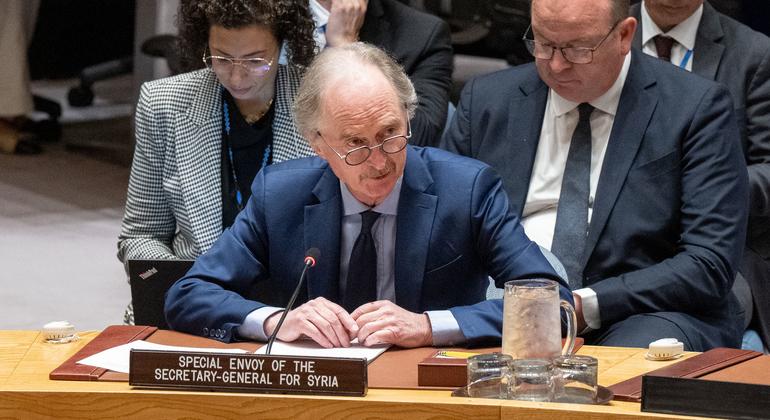
Syria: UN envoy warns of escalating violence in Syria
He described the latest clashes as “unacceptable” and warned of the risk of further escalation in what he called an “extremely fragile situation”.
Fighting erupted earlier this week in Ashrafiah Sahnaya, a town southwest of the capital, when unknown gunmen attacked a security checkpoint.
The following day, another deadly clash took place in the nearby suburb of Jaramana. In total, at least 16 civilians and security personnel were reported killed.
‘Immediate steps’ needed to protect civilians
“The reports of civilian casualties, and casualties among security personnel, are deeply alarming,” said Mr Pedersen in a statement. “Immediate steps must be taken to protect civilians, de-escalate tensions, and prevent any further incitement of communal conflict.”
The violence comes as tensions reportedly remain high between Syria’s interim Government and Druze communities near the capital.
The Druze, a religious minority in Syria, have been engaged in talks about their inclusion in the new Syrian State, following the overthrow of the Assad regime last December.
Many in the community are reportedly calling for some level of autonomy, concerned over the Islamist background of some of Syria’s current leadership.
Amid the domestic unrest, Israel has also carried out military strikes in Syria, reportedly targeting what the Prime Minister described as an “extremist group” allegedly preparing to attack the Druze population south of Damascus.
A second strike reportedly killed a Syrian security officer outside the capital.
Syrian sovereignty ‘must be fully respected’
Mr. Pedersen condemned the Israeli attacks, saying they must stop. “Syria’s sovereignty must be fully respected.”
He stressed the importance of accountability for those responsible for killing civilians and fuelling tensions.
“There can be no progress without genuine inclusion, trust-building, and meaningful dialogue,” he said.
The Special Envoy welcomed efforts already underway to calm the situation and urged all sides to work together to prevent further bloodshed.
Dialogue, not destruction
With tensions still simmering following last month’s sectarian violence in Latakia, which claimed over 1,000 lives, the UN is calling for restraint and unity at a critical juncture for Syria’s future.
“The people of Syria have suffered too much for too long,” Mr Pedersen said.
“They deserve peace, dignity, and a future built on dialogue, not destruction.”
Security Council debates precarious path forward for a new Syria
Four and a half months after the fall of the Assad regime, the interim authorities have begun taking formal steps towards political reform, the Security Council heard on Friday.
These include the formation of a broader, more diverse cabinet and initial plans to establish an interim People’s Assembly.
However, the process remains tenuous and incomplete, with many Syrians uncertain of their role in the country’s future.
Grave consequences of failure
“The challenges are huge, and the situation is extremely fragile,” UN Special Envoy for Syria Geir Pedersen told ambassadors.
“There is a need for much more political inclusion – and for much more economic action. With a sea-change on both these elements, the political transition in Syria can succeed. Without both, it likely will not – and the consequences would be grave.”
In his briefing, Mr. Pedersen emphasised that Syria’s new leadership must broaden political participation and enact measures that address deep-seated grievances, particularly after the March violence against mainly ethnic Alawite communities in their coastal stronghold.
Aid programmes risk closure
Meanwhile, the humanitarian situation remains dire. Over 70 percent of the population is in need of aid and more than half face food insecurity.
Despite some local improvements, especially in parts of Aleppo and the northeast, humanitarians warn that funding shortfalls are threatening life-saving operations.
Joyce Msuya, UN Assistant Secretary-General for Humanitarian Affairs, underscored that “we need more funding to sustain this work, let alone scale it further.”
She noted that to date, less than 10 per cent of the funds required for relief efforts for the first half of 2025 have been received.
Hospitals, food distribution and essential services are at risk of collapse without immediate support, she warned.
A woman holds the new Syrian flag outside UN Headquarters in New York.
Syria’s new flag raised at UN
Earlier in the day, Syria’s new flag was raised alongside those of other Member States at UN Headquarters, as supporters gathered on Manhattan’s First Avenue.
The new three-starred flag – one more than the Assad-era banner – was used by groups opposing the old regime and its forces.
More to follow…
Vice President flags off Jaipur Foot team to Syria to provide artificial limbs to amputees
‘Nothing is more religious than serving the people in need’ says Vice President Jagdeep Dhankhar.
Dhankhar lauds the efforts of Bhagwan Mahaveer Viklang Sahayata Samiti (BMVSS) for their untiring efforts, Says, ‘BMVSS’ service for humanity reflects India’s civilisational ethos of sharing and caring’.
The Vice President, Shri Jagdeep Dhankhar today said that “there is nothing more religious than serving the people in need” and urged people to give back to society in their capacity.
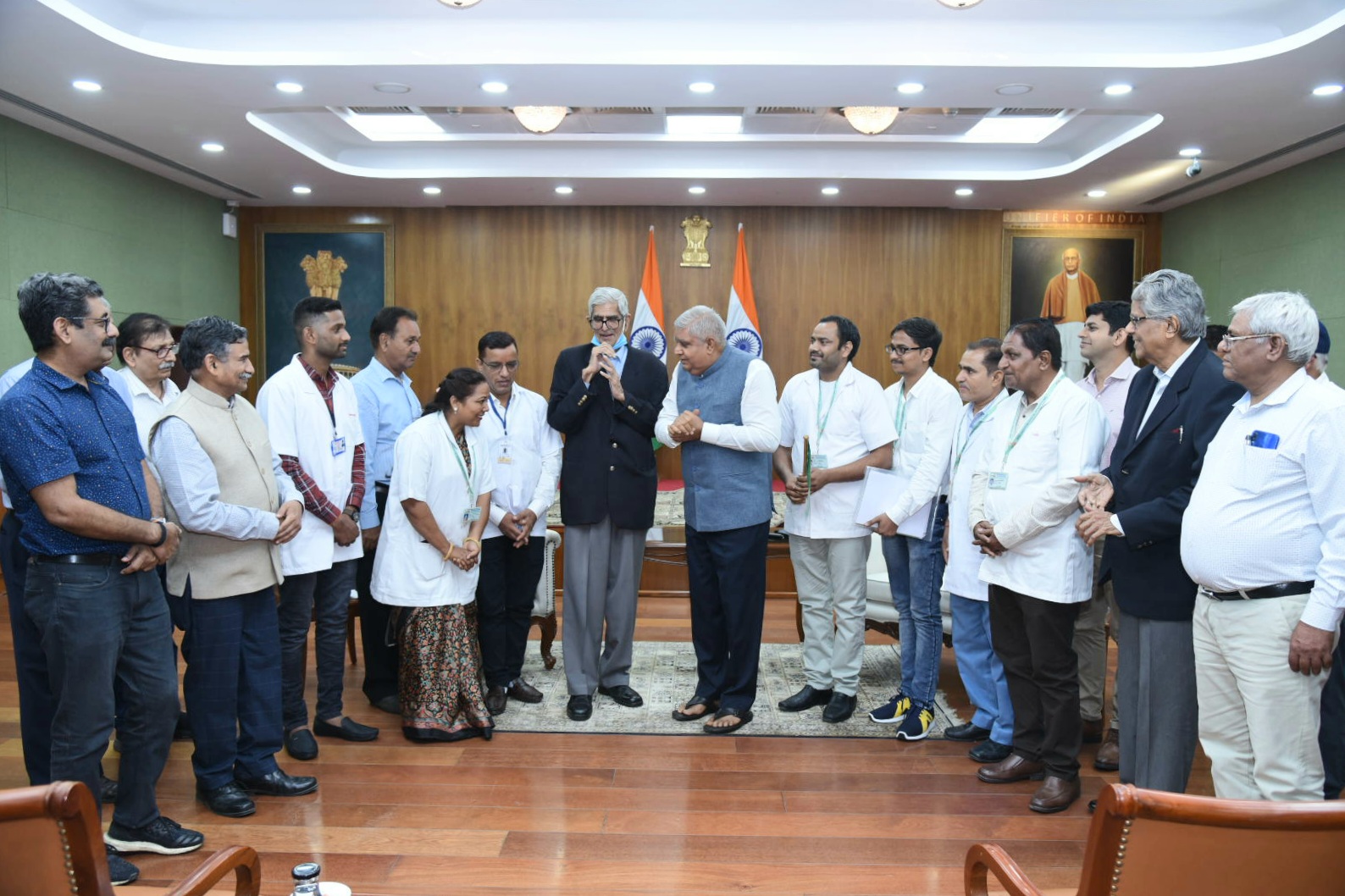
The Vice President flagged off a team of eight persons from Bhagwan Mahaveer Viklang Sahayata Samiti (BMVSS) going to Syria to set up an on-the-spot artificial limb (Jaipur Foot) fitment camp. The team will be setting up a camp in Damascus, Syria to provide 600 artificial limbs to amputees in 42 ensuing days.
Lauding the efforts of BMVSS, Shri Dhankhar said the organisation, by popularising the Jaipur Foot around the world and providing their services free of cost, has demonstrated India’s civilisational ethos of sharing and caring. He said that, as with their other initiatives, the latest effort will also generate enormous good-will for India.
Shri Dhankhar complimented the team for their courage to take up the mission in Syria and wished them all success in their endeavours. He also interacted with the team from BMVSS, led by its founder, Shri D.R. Mehta and some of its beneficiaries using the Jaipur foot.
The Vice President interacting with the beneficiaries of Bhagwan Mahaveer Viklang Sahayata Samiti (BMVSS) using the Jaipur Foot at Upa-Rashtrapati Nivas today.
It is notable that the Prime Minister, Narendra Modi visited one such centre of BMVSS in Philippines in 2017, and the former Vice President, Shri M. Venkaiah Naidu inaugurated a fitment camp of BMVSS in Hanoi, Vietnam in 2019.