As the issue of moonlighting or working elsewhere to make extra money in India is plaguing many tech giants after the Work From Home concession that entailed tech employees work remotely, several Indian tech giants are facing the challenge to keep their workforce committed and focused.
The ethical issue has been raised by tech services giant Infosys first, followed by cloud Major IBM on Wednesday. Infosys has already made it clear that the practice is not ethical and the company may fire those who are moonlighting.
However, no company has so far issued any framework to monitor its employees who are moonlighting as legally it is still daunting to gather evidence and withstand legal suits in courts. Secondly, the problem is not new in smaller and minor companies which have been struggling to pay higher wages to employees to retain them. Often, they blink to let the workforce work elsewhere in non-working hours.
Moreover, the issue is legally overwhelming for the companies as strict guidelines or framework of supervising or monitoring employees is often termed as violation of privacy rules in many courts and they may stand loose the legal battle even after firing such employees.
But the issue has already bogged down even major companies. Besides infosys, IBM Managing Director Sandip Patel said that the company’s position is exactly that of the overall industry in the country. “All of our workers when they are employed, they sign an agreement which says that they are going to be working full-time for IBM. So moonlighting is not ethically right for them to get into,” he said.
However, some startups are encouraging employees to opt for moonlighting or work outside their primary working hours. Swiggy has encouraged the practice but the traditional companies are calling it cheating and unethical and issued warning to employees from practising Moonlighting even in extra hours.
In one case, a techie who was interviewed by a Hyderabad-based company found that he hired another techie to work on his behalf, while he is engaged in working on other projects. He has been summarily fired now but the issue has brought to light the glaring anomaly in misuse of a pact with the company.
Infosys has already warned employees on Monday against moonlighting, saying that involvement in such practice can result in “disciplinary action including termination of employment”. “No two-timing, no moonlighting”, the company said in an internal memo, adding that it “strictly discourages dual employment”.
Wipro Chairman Rishad Premji recently said that the concept of a second job amounts clearly to “plain and simple” cheating. “There is a lot of chatter about people moonlighting in the tech industry. This is cheating — plain and simple,” he emphasised.
New research published in Current Biology on September 13 demonstrates the importance of carrying crying infants rather than simply holding them. Led by Kumi Kuroda at the RIKEN Center for Brain Science (CBS) in Japan, the study details how crying babies are physiologically affected by being held, carried, and laid down. The data yield a simple but cost-free and effective technique that increases the chance of getting a crying infant to calm down and sleep in bed.
Most parents know the occasional frustration and discomfort of dealing with a crying baby. For some, it’s a regular occurrence that affects the baby’s ability to sleep and stresses out the parents. What can you do in this situation? Kuroda and her team found a “Transport Response” in distressed mouse pups and human babies in which infants calm down when carried by their mothers. The response is a complex series of parallel biological processes that result in reduced crying and lower heart rates, which helps parents to transport the infants.
Based on the ‘Transport response’ in which distressed animals calm down when carried, the behavioral and physiological data in this study showed that when babies are crying a lot, walking for about 5 minutes, following by sitting for about 8 minutes should help calm them down and put them to sleep. Note, sitting and holding a crying baby never calmed them down and heart rates rose. Putting babies to sleep immediately after walking often led to higher heart rates and woke babies up./photo:RIKEN
The new study used a baby ECG machine and video cameras to systematically compare changes in heart-rate and behavior as mothers acted out activities that are commonly used to calm infants, including carrying, being pushed in a stroller, and holding while sitting. Data during these activities were recorded from babies that were crying, awake and calm, or sleeping. At each heartbeat, behavior was assessed as asleep, alert, or crying, and scored accordingly. This way the researchers could track changes in both behavior and physiology with sub-second precision.
The experiment led to a few important findings. First, as Kuroda explains, “walking for five minutes promoted sleep, but only for crying infants. Surprisingly, this effect was absent when babies were already calm beforehand.” Among the babies studied, all had stopped crying by the end of the five-minute walk and had reduced heart rates, and about half were asleep. Second, sitting and holding crying babies was not calming; heart rates tended to go up and crying persisted.
The heartbeat measure allowed the researchers to dissect the effect of each micro-activity as infants were handled. The researchers found that the babies were extremely sensitive to all movements by their mothers. For example, heartrates went up when mothers turned or when they stopped walking. The most significant event that disturbed the sleeping infants happened just when they became separated from their mothers.
infant-small child
Every mother has experienced the disappointment of having a finally sleeping baby wake up again after being put down. The researchers pinpointed the problem using the heartbeat data. “Although we did not predict it,” says Kuroda, “the key parameter for successful laydown of sleeping infants was the latency from sleep onset.” Babies often woke up if they were put down before they got about 8 minutes of sleep. Thus, based on the data, Kuroda recommends that when babies are crying too much and can’t sleep, mothers should carry them steadily for about 5 minutes with few abrupt movements, followed by about 8 minutes of sitting before laying them down for sleep.
Although this procedure does not address why some babies cry excessively and cannot sleep, it offers an immediate solution that can help parents of newborns. Additionally, the researchers recognize the usefulness of heartrate data in this age of wearable fitness devices. “We are developing a “baby-tech” wearable device with which parents can see the physiological states of their babies on their smartphoness in real-time,” says Kuroda. “Like science-based fitness training, we can do science-based parenting with these advances, and hopefully help babies to sleep and reduce parental stress caused by excessive infant crying.”
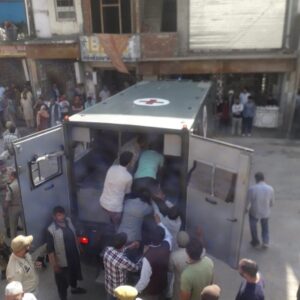
Jammu, Sep 14 (IANS): Twelve persons were killed and 27 others injured on Wednesday in a road accident in Jammu and Kashmir’s Poonch district.
Police sources said that a minibus went out of the driver’s control near Brari Ballah in the Sawjian area of Poonch district.
Death toll in the road accident in Jammu and Kashmir’s Poonch district rose to 12 on Wednesday as three injured persons succumbed to their injuries in the hospital while five were airlifted to Jammu city for specialised treatment, officials said here.
“Three persons among 27 injured succumbed to injuries in the hospital. Five have been airlifted to Jammu city for specialised treatment,” the officials said.
Road accident in Jammu and Kashmir
The accident occurred this morning when a minibus with registration number JK12 1419 went out of the driver’s control near Brari Ballah Sawjian in Poonch district and dropped into a gorge.
Rescue teams of the Army, local police and civilians rushed to the spot. Nine passengers died on the spot.
“Five of the 24 injured passengers have been airlifted to Jammu city for specialised treatment”, officials said.
President of India Droupadi Murmu said on the Rashtrapati Bhavan Twitter page, “The loss of lives in a tragic road accident in Sawjian, Poonch is deeply distressing. My thoughts and prayers are with the bereaved families. I wish speedy recovery of the injured”.
J&K Lt. Governor Manoj Sinha has announced ex gratia compensation of Rs 5 lakhs each to the next of kin of those who lost their lives in this accident.
Sinha said on his official Twitter page, “Saddened by loss of lives due to road accident in Sawjian, Poonch. Condolences to bereaved families. May the injured recover soon. Rs 5 lakh will be given to next of kin of deceased. Directed police and civil authorities to provide best possible treatment to the injured”.
In an interview at the Code Conference in Beverly Hills early this week, Google CEO Sundar Pichai retorted to a question about competition in artificial intelligence stating clearly that it’s not always the competition but lack of focus within that leads to failure.
“I have always held the view that you tend to go wrong by focusing too much on competition. Big companies, particularly, fail because they stumble internally.”
In a well-connected world, companies are often struck in their plans based on the capabilities and pursuit of their competitors than what their own assessment is. Almost every business ends up paying more attention and time about the competition than it should, which is detrimental, he elaborated.
He reiterated that big companies also fail because they make bad decisions or fail to execute decisions on time. While competition remains to be watched, it should not leverage on your own plans and future prospects. Instead, it should help you revamp inside and be prepared, he suggested.
Sundar Pichai on competition and “Dharma”
“You want to be aware of everything that is going outside. But at the end of the day, your success depends on your execution,” he reminded, which means not to be naive or ignorant of happenings around you but focus on your job first. Your job is to deliver whatever it is you do.
Here, people familiar with Hindu holybook ‘Bhagavad Gita’ can infer that Pichai was referring to Indian philosophy that a person’s “Dharma” is to do his job sincerely regardless of results or rewards. At a broader level, it encompasses ideas such as duty, rights, character, vocation, religion, customs and all behavior considered appropriate, correct or morally upright, but in this context, it entails doing one’s job properly.
Since nobody knows from where the competition might come, Pichai advised companies to focus on serving customers better and at the same time take a note of the competition. “Look, I think–the thing about being in tech is competition comes from nowhere. None of us were talking about TikTok three years ago,” he reminded the audience at the code conference.
His advise remains simple — focus on what you can control.
Air traffic in France will be severely disrupted this Friday due to a strike over wages, the French Civil Aviation Authority (DGAC) has warned. French air traffic controllers are taking action to demand higher wages due to soaring inflation.
The national strike will last from 6 a.m. on Friday to 6 a.m. on Saturday, DGAC announced on Tuesday.
In addition to calling for higher wages, air traffic controllers will also use this strike to force authorities to open up employment in aviation, especially in air traffic control, Xinhua news agency reported.
flight services
“From 2029 to 2035, a third of the body will be retiring, it is imperative to anticipate and plan recruitment,” the National Union of Air Traffic Controllers (SNCTA) said, adding that “failure to do so will have inevitable consequences in terms of public service, working conditions and mobility”.
The SNCTA and the DGAC have called on airlines to reduce their flight services by 50 per cent on Friday, both in Metropolitan France and in the French overseas territories. Passengers are being advised to postpone their trips.
Meanwhile, SNCTA said on Tuesday that a second strike could be expected between September 28 and 30.
Ranchi, Sep 14 (IANS) Peeved by the drinking habit of men coming from adjoining Bihar to villages of Jharkhand to consume liquor, women of a village in Jharkhand have embarked upon a unique liquor prohibition campaign where they stop such men from consuming liquor in their villages and have destroyed local breweries.
The liquor ban in Bihar has become a bane for many villages in Jharkhand.
Every day hundreds of group of men from Bihar cross over to the border areas of Jharkhand to consume liquor. Due to this the women living in villages across Jharkhand have decided to take up the onus upon themselves to protect their villages and banish such alcholic men from crossing over from neighbouring Bihar.
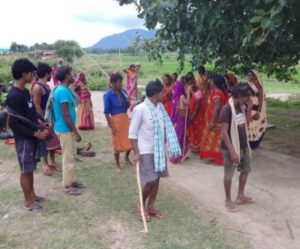
Women of Asnakoni village in Satgawan block of Jharkhand, located close to Nawada district of Bihar, have started guarding their village with sticks and wooden blocks to stop alcoholic men coming from outside the village outskirts. This campaign, which has been launched for the last one month has become the talk of the town.
Women raised sticks to stop alcoholics coming from Bihar to Jharkhand’s border villages.
The women living in Asanbani village have also demolished half a dozen liquor breweries selling liquor illegally. Police are also helping the women of this village to keep this initiative alive. A meeting of men and women living in the village was held on the instructions of a self-help organisation in which it was decided that all people would form a group and guard the village border carrying sticks and logs all day and night. As a result, alcoholic men in Bihar dare to enter this village.
Similar to Asanbani village, now a meeting of locals is being held against liquor consumption in Danua and Chordaha villages as well as Chatra district of Chauparan in Jharkhand, adjoining Bihar’s Gaya district. In these areas too, locals have started a movement against liquor prohibition.
Asha Devi, one of the women leading the liquor prohibition campaign in Asanbani village, says that due to such men entering her village it has compelled the locals here to take such a step.
The situation was such that there used to be a gathering of alcoholic men coming from Bihar entering the village each day. Incidents of frequent scuffles and assaults had become common sight in the village which had an adverse impact on children and women.
alcohol
The locals living in Asanbani village warned those selling liquor illegally after which they demolished several liquor breweries selling liquor illegally.
Anita Devi, a Anganwadi centre social activist in Asanbani village, says the identity of her village had been tarnished due to such men entering her village from Bihar.
People have now started knowing this village by its original name Kalali Mod. She says that the locals living in her village also sought help from the police and district administration.
“Police station In-charge Uttam Baidya has also fully supported our campaign against liquor prohibition,” Anita said.
Local youth led by Manoj Dangi of a local self-help organisation have also come forward in this liquor prohibition campaign.
Last week, people travelling in a Bolero car, who had come to consume liquor from Bihar, got washed away in the Dhadhar river in Parsatari under Bhaghar panchayat in Chauparan, adjoining Bihar. Three drunk men in the Bolero car also drowned in the river and were rescued with the help of locals here. Now the people of this village are also running a campaign to stop miscreants coming from Bihar to consume liquor here.
Jakarta, Sep 14 (IANS) Representatives of G20 countries have agreed to introduce an assessment instrument to measure how far each country’s policies have accommodated the needs of people with disabilities.
The agreement was concluded at the Sixth G20 Employment Working Group (EWG) meeting in Bali, which mainly discussed inclusive job opportunities.
“We aim to ensure that workers with disabilities could have the same opportunities as other workers. Thus, we agree to formulate an instrument that can evaluate whether the policies in every country have been friendly with the disabled people and how far their realisations of affirmative actions for the people with disabilities,” Secretary General of Indonesia’s Manpower Ministry Anwar Sanusi said on Tuesday in a written statement released after the G20 EWG meeting.
G20 flags
The G20 EWG, he added, also raised other development issues, including the development of capacity of human resources and social protection in the working environment.
“Inclusive job creation is one of the issues raised by Indonesia’s G20 Presidency at the EWG meeting that will later be discussed further at the Labor and Employment Ministers Meeting held tomorrow (Wednesday),” Sanusi said.
Russian troops have surrendered en masse in view of a rapid Ukrainian counter-attack that is pinning them to ground, leading to a turning point in the year-long war, media reports said.
Kiev’s military intelligence said large numbers of Moscow’s soldiers had laid down their weapons rather than fight troops advancing east out of Kharkiv as “they understand the hopelessness of their situation”, said a report in Daily Mail.
Oleksiy Arestovich, advisor to Ukrainian President Volodymyr Zelensky, said the military has captured so many Russian soldiers over the last several days that it is running out of space to house them – with military intelligence spokesman Andrey Yusov adding that “significant” numbers of Russian officers are among them, Daily Mail reported.
Ukrainian President Volodymyr Zelensky.(photo: https://www.instagram.com/zelenskiy_official/)
Meanwhile, Russian troops fighting a second counter-attack in the southern Kherson region were said to be negotiating their own surrender having apparently run out of ammunition but the information from the frontline is sparse due an information blackout imposed by Kiev.
In a late-night address, Zelensky said Ukraine‘s armies had captured a total of 2,300 square miles in the east and south since the beginning of September – an area about four times the size of Greater London – as he called on Western allies to supply more weapons to help consolidate the gains.
Ukraine and the West must “strengthen cooperation to defeat Russian terror”, he said, while calling specifically for air defence systems to help protect civilian areas that Putin’s commanders have begun targeting as ‘revenge’ for their battlefield defeats – blowing up power stations in the city of Kharkiv on Monday.
A new bank scam has come into light before a Delhi court which on Tuesday ordered a court-monitored investigation. The scam involving among other public sector banks, the State Bank of India, runs into Rs 800 crore, allegedly involving an infrastructure company director.
The FIR in this regard was registered by the Delhi Police’s Economic Offences Wing (EOW) and Chief Metropolitan Magistrate Shivani Chauhan of Saket District Court, heard an application filed by complainant Vaibhav Jalan against Gaurav Jalan, Director of JKM Infra Projects Ltd and ordered the probe.
The petitioner’s counsel argued that the accused allegedly created fictitious invoices and transferred the money from the company accounts to shell companies’ accounts, but no effective investigation has been carried out by the Investigating Officer and the complainant was not called for purpose of the probe in the last ten months.
Taking note of the submissions, the court directed the EOW to file a status report seeking the investigation carried out by it in the last 10 months and what investigation has been conducted on the discrepancies highlighted by a forensic audit of the company.
It also noted the apprehension that the accused may flee the country to evade the process of law. The matter will be further heard on November 11. (IANS)
As torrential rains wreaked havoc last week in Bengaluru, largely owing to encroachments and illegal unplanned buildings, the Bruhat Bengaluru Mahanagara Palike (BBMP) undertook a ruthless demolition drive at 18 locations in Bengaluru on Tuesday for the second day in a row.
The official note from BBMP stated that the demolition drive has been carried out in the Mahadevapura zone and Yelahanka zones. The Shantiniketan Layout, Papaiah Reddy Layout and Challaghatta localities in Mahadevapura are the major localities where the demolitions were carried out now.
As these two areas are singled out during the last week’s floods where roads were inundated with logged rain water. Several engineers, revenue officers, marshals and police personnel were present during the drive in which two Hitachi and eight JCB machines were used.
Nalapad Academy in Challaghatta has encroached upon 2.5 meters of width, and 150.5 meters of storm water drain has been encroached. So far, 50 meters of encroachment has been cleared and the drive will continue.
Bengaluru: BBMP started demolition of the residence and buildings constructed encroaching drains at Shanti Niketan layout, which was recently flooded due to heavy rainfall , in Bengaluru on Tuesday 13th September 2022.(PHOTO:IANS)
In Shantiniketan Layout, seven buildings and four compound walls have been removed though owners of flats and buildings complained that they have purchased from builders and banks have also given loans for them. Now, BBMP is demolishing without any notice, they said.
Chief Minister Basavaraj Bommai has informed the Assembly session that Rs 600 crore has already been released to build infrastructure across the state and Rs 1,800 crore for development of storm water drains in Bengaluru has been earmarked for the work to be finished in a set time-frame.
Robotic surgeons from the US, India and Spain were named the top three winners in the KS International Robotic Surgery Innovation competition, as robotic surgery slowly becomes mainstream.
The winners were selected by an international jury form Oxford and Stanford Universities, and New-Delhi based AIIMS, from the fields of urology, gynaecology, general surgery, hepato-biliary-pancreatic surgery, colorectal, head and neck, paediatric and joint replacement surgeries.
The winning entry of Dr Jihad Kaouk, department of urology, Cleveland Clinic in Ohio was titled Single Port Robot-Assisted Kidney Transplantation Extraperitoneal Approach’ in the unique competition organised by Michigan-based robotic surgery evangelist Vattikuti Foundation.
Dr Kaouk and his team modified the technique of robotic kidney transplant developed at the Vattikuti Urology Institute and Medanta Medicity.
Kaouk used a da Vinci single port robot for truly minimally invasive surgery.
Indian, US surgeons win global robotic surgery innovation award
“The early results of patients who had undergone robotic kidney transplant through this technique could go home in only 2 days,” the foundation said in a statement.
For Robotic Infraclavicular Approach for Minimally Invasive Neck Dissection,’ the second award went to Dr Sandeep Nayak, Director, Surgical Oncology, Fortis Cancer Institute, Bengaluru.
Dr Nayak innovated a robotic technique to perform very major cancer surgery of the head neck to clear the lymph nodes in the neck with quick patient recovery and minimal discomfort.
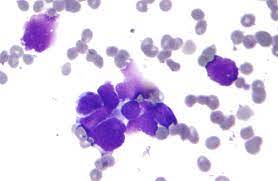
cancer cells/photo:en.wikipedia.org
The third award went to a team of Dr Alberto Piana, Dr Paolo Verri, and Dr Alberto Breda of Oncology Urology and Kidney Transplant Surgery, Fundacio Puigvert, Barcelona, Spain for their entry of 3D Augmented Reality Guided Robotic Assisted Kidney Transplantation’.
The KS National Robotic Surgery Video’ competition is being organised in India since 2015 by Vattikuti Foundation. This year, it went international for the first time.
“As surgeons continue to innovate newer procedures in robotic surgery, the Vattikuti Foundation will continue to invest and make it accessible to other surgeons,” said Raj Vattikuti, president of Vattikuti Foundation.
Hyderabad, Sep 13 (IANS) Jennifer Larson is the new Consul General of the US in Hyderabad.
She previously served as Deputy Principal Officer at the US Consulate General in Mumbai and as Acting Deputy Assistant Secretary for India.
“I couldn’t be more excited to be here in Hyderabad. I’ve spent the last five years working on the US-India relationship from Mumbai and Washington. Now I’m honored to have the opportunity to expand our partnership in Telangana, Andhra Pradesh, and Odisha,” she said.
“From joint military exercises and business ties to cultural exchanges and higher education, the US-India relationship is only growing broader and deeper in Hyderabad.”
Jennifer Larson new US Consul General in Hyderabad.
According to a statement from the Consulate General, Larson brings 19 years of diplomatic experience with her to Hyderabad.
She most recently served as Acting Deputy Assistant Secretary for India in Washington, where she supported the Assistant Secretary of State for the Bureau of South and Central Asian Affairs in formulating and implementing US-India policy.
In that capacity, she spoke at “A Roadmap for Indo-Pacific Regional Cooperation in a Post-Covid 19 World Order,” an international conference organised by the Indian School of Business in Hyderabad in March.
Larson was most recently overseas as Deputy Principal Officer at the US Consulate General in Mumbai from 2016-2020, the second-highest ranking official in the consulate.
In addition to serving as spokesperson in the Bureau of Near Eastern Affairs in Washington, D.C., she has also served in Libya, Pakistan, France, Sudan, Jerusalem, and Lebanon.
Before joining the Foreign Service, Consul General Larson worked for National Public Radio’s San Francisco affiliate as a talk show producer.
She completed her undergraduate and graduate work at the University of California, Berkeley in Comparative Literature (Arabic, Spanish and French) and Middle East Studies.
Starting twice daily flushing of the mucus-lined nasal cavity with a mild saline solution soon after testing positive for COVID-19 can significantly reduce hospitalization and death, investigators report.
They say the technique that can be used at home by mixing a half teaspoon each of salt and baking soda in a cup of boiled or distilled water then putting it into a sinus rinse bottle is a safe, effective and inexpensive way to reduce the risk of severe illness and death from coronavirus infection that could have a vital public health impact.
“What we say in the emergency room and surgery is the solution to pollution is dilution,” says Dr. Amy Baxter, emergency medicine physician at the Medical College of Georgia at Augusta University
“By giving extra hydration to your sinuses, it makes them function better.
If you have a contaminant, the more you flush it out, the better you are able to get rid of dirt, viruses and anything else,” says Baxter.
“We found an 8.5-fold reduction in hospitalizations and no fatalities compared to our controls,” says senior author Dr. Richard Schwartz, chair of the MCG Department of Emergency Medicine. “Both of those are pretty significant endpoints.”
Drs. Richard Schwartz and Amy Baxter/Photo:Medical College of Georgia
The study appears to be the largest, prospective clinical trial of its kind and the older, high-risk population they studied — many of whom had preexisting conditions like obesity and hypertension — may benefit most from the easy, inexpensive practice, the investigators say.
They found that less than 1.3% of the 79 study subjects age 55 and older who enrolled within 24-hours of testing positive for COVID-19 between Sept. 24 and Dec. 21, 2020, experienced hospitalization. No one died.
Among the participants, who were treated at MCG and the AU Health System and followed for 28 days, one participant was admitted to the hospital and another went to the emergency room but was not admitted.
Schwartz says Baxter brought him the idea early in the pandemic and he liked that it was inexpensive, easy to use and could potentially impact millions at a time where, like other health care facilities, the Emergency Department of the AU Health System was starting to see a lot of SARS-CoV-2-positive patients.
They knew that the more virus that was present in your body, the worse the impact, Baxter says. “One of our thoughts was: If we can rinse out some of the virus within 24 hours of them testing positive, then maybe we can lower the severity of that whole trajectory,” she says, including reducing the likelihood the virus could get into the lungs, where it was doing permanent, often lethal damage to many.
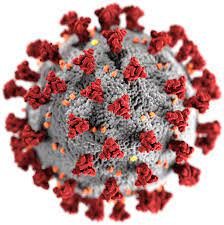
Covid/commons.wikimedia.org
Additionally, the now-infamous spiky SARS-CoV-2 is known to attach to the ACE2 receptor, which is pervasive throughout the body and in abundance in locations like the nasal cavity, mouth and lungs. Drugs that interfere with the virus’ ability to attach to ACE2 have been pursued, and Baxter says the nasal irrigation with saline helps decrease the usual robust attachment. Saline appears to inhibit the virus’ ability to essentially make two cuts in itself, called furin cleavage, so it can better fit into an ACE2 receptor once it spots one.
Participants self-administered nasal irrigation using either povidone-iodine, that brown antiseptic that gets painted on your body before surgery, or sodium bicarbonate, or baking soda, which is often used as a cleanser, mixed with water that had the same salt concentration normally found in the body.
But their experience indicates the saline solution alone sufficed. “It’s really just the rinsing and the quantity that matter,” Baxter says.
The investigators also wanted to know any impact on symptom severity, like chills and loss of taste and smell. Twenty-three of the 29 participants who consistently irrigated twice daily had zero or one symptom at the end of two weeks compared to 14 of the 33 who were less diligent.
Those who completed nasal irrigation twice daily reported quicker resolution of symptoms regardless of which of two common antiseptics they were adding to the saline water.
Others have shown the nasal irrigation, also called lavage, can also be effective in reducing duration and severity of infection by a family of viruses that include the coronaviruses, which are also known to cause the common cold, as well as the influenza viruses, the investigators write. “SARS-CoV-2 infection was another perfect situation for it,” Baxter says.
In fact, nasal irrigation is something that has been done for millennia in Southeast Asia, and Baxter had noted lower death rates from COVID-19 in countries like Laos, Vietnam and Thailand. “Those were places that I knew from having been there where they use nasal irrigation as a normal part of hygiene just like brushing their teeth,” she says. A 2019 pre-COVID study provided evidence that regular nasal irrigation in Thailand can improve nasal congestion, decrease postnasal drip, improve sinus pain or headache, improve taste and smell and improve sleep quality.
Saline water
Schwartz said the simplicity and safety of the treatment had him recommending nasal irrigation to positive patients early on and the published results make him even more confident in recommending nasal irrigation to essentially anyone who tests positive.
“Many of the people who have been using this now for months have told me their seasonal allergies have gone away, that it really makes a huge difference in any of the things that go through the nose that are annoying.”
A study released in September 2020 indicated that gargling with a saline-based solution can reduce viral load in COVID-19, and another released in 2021 suggested that saline works multiple ways to reduce cold symptoms related to infection with other coronaviruses and might work as well as a first-line intervention for COVID-19.
Despite the two nostrils, the nasal sinus is just one cavity, so the water is pushed into one side and comes out the other, Baxter notes.
Beating the blues with food? A new study adds evidence that meal timing may affect mental health, including levels of depression- and anxiety-related mood. Investigators from Brigham and Women’s Hospital, a founding member of the Mass General Brigham healthcare system, designed a study that simulated night work and then tested the effects of daytime and nighttime eating versus daytime eating only. The team found that, among participants in the daytime and nighttime eating group, depression-like mood levels increased by 26 percent and anxiety-like mood levels by 16 percent. Participants in the daytime-only eating group did not experience this increase, suggesting that meal timing may influence mood vulnerability. Results are published in theProceedings of the National Academy of Sciences.
“Our findings provide evidence for the timing of food intake as a novel strategy to potentially minimize mood vulnerability in individuals experiencing circadian misalignment, such as people engaged in shift work, experiencing jet lag, or suffering from circadian rhythm disorders,” said co-corresponding author Frank A. J. L. Scheer, PhD, Director of the Medical Chronobiology Program in the Brigham’s Division of Sleep and Circadian Disorders. “Future studies in shift workers and clinical populations are required to firmly establish if changes in meal timing can prevent their increased mood vulnerability. Until then, our study brings a new ‘player’ to the table: the timing of food intake matters for our mood.”
Shift workers account for up to 20 percent of the workforce in industrial societies and are directly responsible for many hospital services, factory work, and other essential services. Shift workers often experience a misalignment between their central circadian clock in the brain and daily behaviors, such as sleep/wake and fasting/eating cycles. Importantly, they also have a 25 to 40 percent higher risk of depression and anxiety.
Eating/Photo:en.wikipedia.org
“Shift workers — as well as individuals experiencing circadian disruption, including jet lag — may benefit from our meal timing intervention,” said co-corresponding author Sarah L. Chellappa, MD, PhD, who completed work on this project while at the Brigham.“Our findings open the door for a novel sleep/circadian behavioral strategy that might also benefit individuals experiencing mental health disorders. Our study adds to a growing body of evidence finding that strategies that optimize sleep and circadian rhythms may help promote mental health.”
To conduct the study, Scheer, Chellappa, and colleagues enrolled 19 participants (12 men and 7 women) for a randomized controlled study. Participants underwent a Forced Desynchrony protocol in dim light for four 28-hour “days,” such that by the fourth “day” their behavioral cycles were inverted by 12 hours, simulating night work and causing circadian misalignment. Participants were randomly assigned to one of two meal timing groups: the Daytime and Nighttime Meal Control Group, which had meals according to a 28-hour cycle (resulting in eating both during the night and day, which is typical among night workers), and the Daytime-Only Meal Intervention Group, which had meals on a 24-hour cycle (resulting in eating only during the day). The team assessed depression- and anxiety-like mood levels every hour.
food
The team found that meal timing significantly affected the participants’ mood levels. During the simulated night shift (day 4), those in the Daytime and Nighttime Meal Control Group had increased depression-like mood levels and anxiety-like mood levels, compared to baseline (day 1). In contrast, there were no changes in mood in the Daytime Meal Intervention Group during the simulated night shift. Participants with a greater degree of circadian misalignment experienced more depression– and anxiety-like mood.
“Meal timing is emerging as an important aspect of nutrition that may influence physical health,” said Chellappa. “But the causal role of the timing of food intake on mental health remains to be tested. Future studies are required to establish if changes in meal timing can help individuals experiencing depressive and anxiety/anxiety-related disorders.”
Belagavi (Karnataka), Sep 13 (IANS) Police in Karnataka on Tuesday arrested a man for firing at his wife after she refused to go with him from her parents’ home in Belagavi district’s Athani town.
The man, identified as Shivananda of Sindhagi in Vijayapura district, was arrested following a complaint lodged by his wife who escaped unhurt in the incident.
According to the police, the woman left the accused three months ago in the backdrop of his extra-marital affair.
Shivananda had pleaded her to return on many occasions.
Arrested
The accused then went to her parents’ residence and threatened to kill her if she did not return to him and then commit suicide.
Before anyone could realise what was happening, Shivananda took out his licensed pistol and opened fire.
Later, he was overpowered and handed over to the police.
A Canadian police officer was killed and a suspect is in custody following two daylight shootings in Toronto, local media reported.
Police said on Twitter that a suspect has been located and is in police custody, reports Xinhua news agency.
One person has been pronounced deceased at the scene and two others have been transported to hospital, the police said.
Multiple sources have confirmed that the victim of the fatal shooting is a Toronto police officer, according to the media reports.
Police officers are seen at the scene investigating on the double shootings in Mississauga, the Greater Toronto Area, Canada, on Sept. 12, 2022.
The police issued a public alert about an active shooter on Monday afternoon and said that they were searching for a suspect who was “armed and dangerous”.
The police are investigating the shootings and there is no word yet as to what led to the shootings, said the media reports.
Tourism in Hungary has bounced back to the pre-pandemic level, with 16.4 million guest nights registered this summer, the Hungarian Tourism Agency (MTU) said.
This is the same level as the summer of 2019, Xinhua news agency quoted the MTU as saying.
MTU welcomed the fact that domestic tourism has maintained its momentum in recent years.
“About 10.5 million of the guest nights were spent by domestic visitors in accommodation facilities, which is 12 per cent more than the data for the summer of 2019,” it said.
Hungary was able to welcome 2.5 times more international visitors this summer than in the summer of 2021, MTU added.
Hungary: People wearing face masks are seen on the elevator of a subway station in Budapest
In 2021, the proportion of foreign visitors was 20 per cent in the three summer months (June, July and August).
Meanwhile, this year it rose to 36 per cent, accounting for nearly 6 million international guest nights.
The famous Lake Balaton retained its title as the number one destination, with more than 5.4 million guests staying there, accounting for 41 per cent of total rural accommodation turnover.
The largest proportion of guests in the countryside were Hungarian (75 per cent of total guests), while in Budapest, 83 per cent of total guests this summer were foreign tourists.
Covid/commons.wikimedia.org
The largest numbers of tourists visiting Budapest came from the UK, Germany, the US, Israel, Italy and the Netherlands.
MTU also said that the general hotel-room occupancy rate stood at 60 per cent nationally during the three summer months.
New Delhi, Sep 13 (IANS) India has listed its priorities ahead of assuming the G20 Presidency for a year from December 1, 2022 to November 30, 2023.
In a statement on Tuesday, the Ministry of External Affairs said: “Our G20 priorities are in the process of being firmed up, ongoing conversations inter alia revolve around:
Inclusive, equitable and sustainable growth;
LiFE (Lifestyle For Environment);
women’s empowerment;
digital public infrastructure and tech-enabled development in areas ranging from health, agriculture and education to commerce,
skill-mapping,
culture and tourism;
climate financing;
circular economy;
global food security;
energy security;
green hydrogen;
disaster risk reduction and resilience;
developmental cooperation;
fight against economic crime; and multilateral reforms”.
Under the role, India is expected to host over 200 G20 meetings across the country, beginning from this December.
The G20 Leaders’ Summit at the level of Heads of State Government is scheduled to be held on September 9-10, 2023 in New Delhi, said the Ministry statement.
The G20 is an inter-governmental forum of the world’s major developed and developing economies.
G20 comprises 20 countries — India, Argentina, Australia, Brazil, Canada, China, France, Germany, India, Indonesia, Italy, Japan, South Korea, Mexico, Russia, Saudi Arabia, South Africa, Turkey, the UK, the US — and the European Union (EU).
Collectively, the G20 accounts for 85 per cent of the global GDP, 75 per cent of international trade and two-thirds of the world population, making it the premier forum for international economic cooperation.
G20 flags
India is part of the G20 Troika (current, previous and incoming G20 Presidencies), which includes Indonesia and Italy.
“During our Presidency, India, Indonesia and Brazil would form the Troika. This would be the first time when the Troika would consist of three developing countries and emerging economies, providing them a greater voice,” the statement said.
The G20 currently comprises Finance Track, with eight workstreams (Global Macroeconomic Policies, Infrastructure Financing, International Financial Architecture, Sustainable Finance, Financial Inclusion, Health Finance, International Taxation, Financial Sector Reforms)
Sherpa Track, with 12 workstreams — Anti-corruption, Agriculture, Culture, Development, Digital Economy, Employment, Environment and Climate, Education, Energy Transition, Health, Trade and Investment, Tourism.
Ten Engagement Groups of private sector/civil society/independent bodies (Business 20, Civil 20, Labour 20, Parliament 20, Science 20, Supreme Audit Institutions 20, Think 20, Urban 20, Women 20 and Youth 20).
In addition to G20 members, there has been a tradition of the G20 Presidency inviting some guest countries and international organizations to its meetings and summit.
Accordingly, in addition to regular international organizations (UN, IMF, World Bank, WHO, WTO, ILO, FSB and OECD) and Chairs of Regional Organizations (AU, AUDA-NEPAD and ASEAN).
India, as G20 Presidency, will be inviting Bangladesh, Egypt, Mauritius, the Netherlands, Nigeria, Oman, Singapore, Spain and UAE as guest countries, as well as the International Solar Alliance, Coalition for Disaster Resilient Infrastructure and the Asian Development Bank as guest international organizations.
The Karnataka Police’s Criminal Investigation Department (CID) has busted a gang of wildlife poachers, including a software professional, authorities said on Tuesday.
The arrested were identified as Byatappa Gowda, a resident of Arehalli in Tumakuru district; Vaishak from Kadehalli; and Charan, the software professional, from Bengaluru.
According to the CID Forest Cell wing, the accused were involved in poaching rabbits and wild boars.
Recently, Byatappa and Vaishak had shot a leopard and attempted to sell the animal’s nails, skin and jaws through accused Charan.
Arrested
CID officers, posing as religious seers, first approached the accused techie, and nabbed him. The other managed to escape initially, but they were tracked and arrested later.
The accused were arrested in Sri Ranganatha hill in Tumakuru district, where they had laid a trap for rabbits and wild boars.
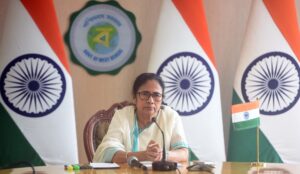
West Bengal Chief Minister Mamata Banerjee’s announcement about a proposed fresh investment by Tata Group at Raninagar in Jalpaiguri district was just a “slip of the tongue” on her part, state Chief Secretary H.K.Dwivedi has said.
On Monday afternoon, while addressing an event to hand over appointment letters to various beneficiaries under “Utkarsh Bangla,” a skill development scheme of the state government, the chief minister said that she is happy that the Tata Group will be investing Rs 600 crore at Japiguri’s Raninagar.
However, she did not divulge any further details on this count like the sector where the investment will take place or the time by when the investment will be made. On the other hand, there was neither any confirmation nor denial from Tata Group on this count.
Soon after, speculations started doing rounds prompting Chief Secretary Dwivedi to step in to set the records straight. “The chief minister did not intend to mean Tata Group. Actually, the investment at Jalpaiguri is by Hindustan Coca-Cola Beverages,” the chief secretary explained.
West Bengal Chief Minister Mamata Banerjee
At the same time, the West Bengal state secretariat of Nabanna issued a statement detailing the investment by Hindustan Coca-Cola Beverages at Raninagar in Jalpaiguri, the virtual inauguration of which was done by the chief minister herself on Monday from Kolkata.
The greenfield vertical unit built over Rs 6.9 acres of land and is meant for manufacturing juice and sparkling soft- drink items, has attracted a total investment of Rs 660 crore.
The unit will employ 100 individuals directly, while another 150 individuals will get indirect employment.
To recall, the Tata Group chairman, Ratan Tata announced the pull-out of Tata Motors’ small car, Nano factory from Singur in Hooghly district in West Bengal in October 2008 citing disruptive movement of Trinamool Congress, as the-then principal opposition party against the land acquisition for the project. Gujarat’s Sanand became the new destination of the Nano factory.
Since then, fresh investments by Tata Group in the state have just remained an illusion, even after 2011, when the 34-year-old Left Front regime collapsed in the state making way for the entry of Trinamool Congress regime with Mamata Banerjee at the helm.