
How Bengaluru’s costly metro, auto, taxi commute adds to peak housing options

Bengaluru’s expanding Namma Metro network offers commuters a faster and more predictable alternative to the city’s congested roads, but its relatively high cost and limited reach also add to the financial burden on residents.

Compared with Chennai, Delhi, Mumbai and Kolkata, Bengaluru has a smaller rail-based commuter network and lacks the extensive suburban railway systems that allow workers in those cities to live much farther from employment centres while keeping commuting costs relatively low.

For a commuter travelling about 15 km one way by Namma Metro, including an estimated cost for first- and last-mile connectivity, the monthly expense is around ₹3,520 for 22 working days. For someone earning ₹20,000 a month, that amounts to nearly 18% of monthly income. At a salary of ₹50,000, the same commute would account for about 7%.

Bengaluru has a smaller rail catchment

The difference becomes more pronounced when the distance between homes and employment centres is considered.

Mumbai, Kolkata and Chennai have long-established suburban rail networks that extend well beyond their core urban areas. Workers can live 50 km or more from central business districts and still commute by rail. Delhi’s extensive Metro network also connects the city with major parts of the National Capital Region.

Bengaluru’s rail network, by comparison, currently provides a much smaller practical commuter catchment. The metro connects areas such as Whitefield, Kengeri and Madavara with the city, but the rail-accessible distance from the core remains considerably shorter.

This has implications for housing. In cities with extensive suburban rail, workers can move farther from expensive central areas and still reach employment hubs at relatively low transport costs. Bengaluru’s smaller rail network gives commuters fewer such options.

Metro offers reliability, but at a premium

A comparison of monthly rail-based commuting costs for a 15-km one-way journey puts Bengaluru at roughly ₹3,520, compared with about ₹2,772 in Delhi, ₹2,200 in Chennai, ₹1,980 in Mumbai and ₹1,760 in Kolkata. The figures include assumptions about working days and last-mile connectivity and are therefore indicative rather than universal household expenses.

The underlying difference is partly historical. Mumbai and Kolkata inherited extensive suburban railway networks built decades before their modern metro systems. Chennai also has a long-established suburban rail network. These systems carry large numbers of passengers over long distances at comparatively low fares.

Bengaluru’s mass-transit infrastructure developed later and has relied heavily on Namma Metro. While the metro can provide more predictable journey times in a city known for severe road congestion, commuters bear a larger share of the cost through metro fares and connecting transport.

Road-based alternatives can be substantially more expensive. A 15-km daily commute by autorickshaw can cost more than ₹14,000 a month, according to the analysis, while app-based cabs and other road options also carry higher costs. A private car may cost around ₹6,000 a month when fuel, maintenance, depreciation, parking and other expenses are taken into account.

The comparison highlights a central trade-off for Bengaluru commuters: Namma Metro may not offer the lowest commuting cost among major Indian cities, but it provides greater predictability in a city where road congestion can make travel times highly uncertain.

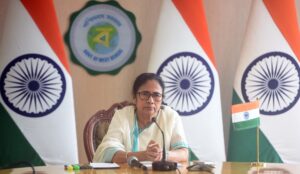
Tata Group’s investment announcement in West Bengal was ‘slip of tongue’ by Mamata Banerjee: Chief Secretary Dwivedi clarifies

West Bengal Chief Minister Mamata Banerjee’s announcement about a proposed fresh investment by Tata Group at Raninagar in Jalpaiguri district was just a “slip of the tongue” on her part, state Chief Secretary H.K.Dwivedi has said.

On Monday afternoon, while addressing an event to hand over appointment letters to various beneficiaries under “Utkarsh Bangla,” a skill development scheme of the state government, the chief minister said that she is happy that the Tata Group will be investing Rs 600 crore at Japiguri’s Raninagar.

However, she did not divulge any further details on this count like the sector where the investment will take place or the time by when the investment will be made. On the other hand, there was neither any confirmation nor denial from Tata Group on this count.

Soon after, speculations started doing rounds prompting Chief Secretary Dwivedi to step in to set the records straight. “The chief minister did not intend to mean Tata Group. Actually, the investment at Jalpaiguri is by Hindustan Coca-Cola Beverages,” the chief secretary explained.

West Bengal Chief Minister Mamata Banerjee

At the same time, the West Bengal state secretariat of Nabanna issued a statement detailing the investment by Hindustan Coca-Cola Beverages at Raninagar in Jalpaiguri, the virtual inauguration of which was done by the chief minister herself on Monday from Kolkata.

The greenfield vertical unit built over Rs 6.9 acres of land and is meant for manufacturing juice and sparkling soft- drink items, has attracted a total investment of Rs 660 crore.

The unit will employ 100 individuals directly, while another 150 individuals will get indirect employment.

To recall, the Tata Group chairman, Ratan Tata announced the pull-out of Tata Motors’ small car, Nano factory from Singur in Hooghly district in West Bengal in October 2008 citing disruptive movement of Trinamool Congress, as the-then principal opposition party against the land acquisition for the project. Gujarat’s Sanand became the new destination of the Nano factory.

Since then, fresh investments by Tata Group in the state have just remained an illusion, even after 2011, when the 34-year-old Left Front regime collapsed in the state making way for the entry of Trinamool Congress regime with Mamata Banerjee at the helm.

Mohammad Bhai surfaces on TV, denies Shami wife Hasin’s claim on match fixing

London-based Mohammed Bhai, who has been named as the man behind Mohammed Shami’s match-fixing allegations, has come out in open denying the allegations.

He said he never knew the Pakistani girl ‘Alishba’ named by Shami’s estranged wife Jahan as the conduit in Dubai who gave the money to Mohammad Shafi. He said he will join the investigation by the agencies.

A BCCI team is investigating the allegations made earlier by Shami’s wife Hasin Jahan blaming the pacer of fixing matches and receiving cash from a "Pakistani girl" named Alishba, while Mohammed Bhai was the middle man. Alishba in Dubai surfaced to deny meeting Mohammed Bhai, though she said she met Shami in Dubai.

The Anti-Corruption Unit (ACU) of the Board of Control for Cricket in India (BCCI) has already put Shami’s annual retainership contract on hold pending the probe.

Soon after Alishba’s version, Mohammad Bhai in London too surfaced to tell the media that the allegations made by Jahan were baseless. "Neither have I done anything wrong, nor am I associated with such things. I never talked of match-fixing or offered money to anyone. I was born in India and won’t ever let my country down," he told ABP News.

He said he is hearing the name Alishba for the first time and denied he ever met her. "I am open to any probe by the BCCI or anti-corruption agencies. Even if I have to go through a lie-detector or narco test, I am up for it. I will cooperate with the agencies," he said.

Mohammed Bhai, who was born in Surat, has been living in the United Kingdom for over two decades and he said he was running a mobile phones business, which he described as "small business".

"I had met Shami and Hasin when the cricketer was on England tour for matches. Hasin used to call me ‘bhaiya’ and I respect her because she is like a sister to me. Whenever they wanted to go for a meal or shopping, I used to take them out," he said. "We used to eat and travel together," he said.

"I earn money through lawful and legitimate ways. I am not any influential person but a commoner, who lives with his family happily in a small house," he added.

Four officials of the ACU on Saturday spoke to beleaguered pacer Shami’s wife Hasin Jahan over allegations that the player was involved in match-fixing. It was learnt that Jahan has handed over some documents supporting her allegations that Shami met a woman in Dubai who was supposed to give him money sent by another person in UK.

In addition, Jahan has levelled domestic violence charges against Shami. She has also released an alleged recording of her telephonic conversation with the pacer which had the names of Alishba and Mohammad Bhai.

"The Committee of Administrators is concerned only with such portion of the said audio recording in which the person who it is claimed is Md. Shami is heard saying another person by the name of ‘Mohammad Bhai’ had sent money to Md. Shami through a Pakistani lady by the name of ‘Alisba’," the CoA had said in a letter to Neeraj Kumar, the head of the BCCI’s anti-corruption unit.

ACU has also sought probe covering:
(i) the identity, antecedents of ‘Mohammad Bhai’ and ‘Alisba’;
(ii) whether any money was sent by the said Mohammad Bhai through the said Alisba to Md. Shami; and
(iii) if yes, the purpose for which the said money was received by Md. Shami.

As of now, the saga of Shami and his wife Jahan has kept the pacer’s ball in suspense.