
Indian, US, Spain surgeons win global robotic surgery innovation awards

Robotic surgeons from the US, India and Spain were named the top three winners in the KS International Robotic Surgery Innovation competition, as robotic surgery slowly becomes mainstream.

The winners were selected by an international jury form Oxford and Stanford Universities, and New-Delhi based AIIMS, from the fields of urology, gynaecology, general surgery, hepato-biliary-pancreatic surgery, colorectal, head and neck, paediatric and joint replacement surgeries.

The winning entry of Dr Jihad Kaouk, department of urology, Cleveland Clinic in Ohio was titled Single Port Robot-Assisted Kidney Transplantation Extraperitoneal Approach’ in the unique competition organised by Michigan-based robotic surgery evangelist Vattikuti Foundation.

Dr Kaouk and his team modified the technique of robotic kidney transplant developed at the Vattikuti Urology Institute and Medanta Medicity.

Kaouk used a da Vinci single port robot for truly minimally invasive surgery.

Indian, US surgeons win global robotic surgery innovation award

“The early results of patients who had undergone robotic kidney transplant through this technique could go home in only 2 days,” the foundation said in a statement.

For Robotic Infraclavicular Approach for Minimally Invasive Neck Dissection,’ the second award went to Dr Sandeep Nayak, Director, Surgical Oncology, Fortis Cancer Institute, Bengaluru.

Dr Nayak innovated a robotic technique to perform very major cancer surgery of the head neck to clear the lymph nodes in the neck with quick patient recovery and minimal discomfort.

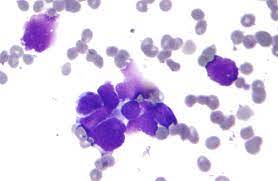
cancer cells/photo:en.wikipedia.org

The third award went to a team of Dr Alberto Piana, Dr Paolo Verri, and Dr Alberto Breda of Oncology Urology and Kidney Transplant Surgery, Fundacio Puigvert, Barcelona, Spain for their entry of 3D Augmented Reality Guided Robotic Assisted Kidney Transplantation’.

The KS National Robotic Surgery Video’ competition is being organised in India since 2015 by Vattikuti Foundation. This year, it went international for the first time.

“As surgeons continue to innovate newer procedures in robotic surgery, the Vattikuti Foundation will continue to invest and make it accessible to other surgeons,” said Raj Vattikuti, president of Vattikuti Foundation.

New blood test may transform the way cancer is monitored and treated

Stanford University scientists have described a new type of test that can detect genetic mutations in minute amounts of DNA released from cancer cells into the blood. The test, which is called single color digital PCR, requires only a fraction of a tube of blood and can detect as few as three mutation-bearing molecules in a single reaction. According to the report in The Journal of Molecular Diagnostics, this highly sensitive test has the potential to be personalized to recognize mutations unique to any individual cancer.

“For monitoring patient tumors, only a handful of blood tests are available which are limited to only several types of cancers. Nearly all cancer patients require monitoring by whole body imaging, which can be costly, complex, and time-consuming. In contrast, molecular tests like the one we have developed will enable patients to be monitored at every visit, and thus have the potential for quickly tracking cancer growth and spread. Moreover, the test’s rapid turnaround and relatively low cost, especially compared to next-generation DNA sequencing, provide a potential opportunity for universal monitoring of more patients than is currently done,” explained lead investigator Hanlee P. Ji, MD, Associate Professor in the Department of Medicine at Stanford University and Senior Associate Director of the Stanford Genome Technology Center.

The report describes the use of the test to analyze samples from six patients. Five patients were previously diagnosed with colorectal cancer and one with cholangiocarcinoma.

After generation of customized mutation detection assays, the researchers were able to identify tumor-derived circulating DNA from three out of six patients. In one patient, the assay was able to show the presence of three different mutations. The three patients, whose samples did not show elevated cancer DNA, were undergoing active treatment at the time of collection.

The single-color digital PCR test offers several advantages over other methods of circulating tumor DNA analysis, compared to next-generation targeted sequencing and fluorescent probe-based digital PCR assays. The main advantage is that the new technique does not rely on pre-amplification, which can introduce errors and biases.

“This test is simple enough to set up and analyze without extensive training, and therefore, it can be implemented by anyone, making it highly accessible to any laboratory. It has been truly motivating to work with a technology that will help transform the way that we monitor and treat individuals with cancer. I am excited to share our findings with the cancer research community,” noted lead author and researcher Christina Wood Bouwens, of the Stanford Genome Technology Center and the Division of Oncology, Department of Medicine, Stanford University School of Medicine, Stanford, California.