We know flash floods; what are ‘flash’ droughts [Details]

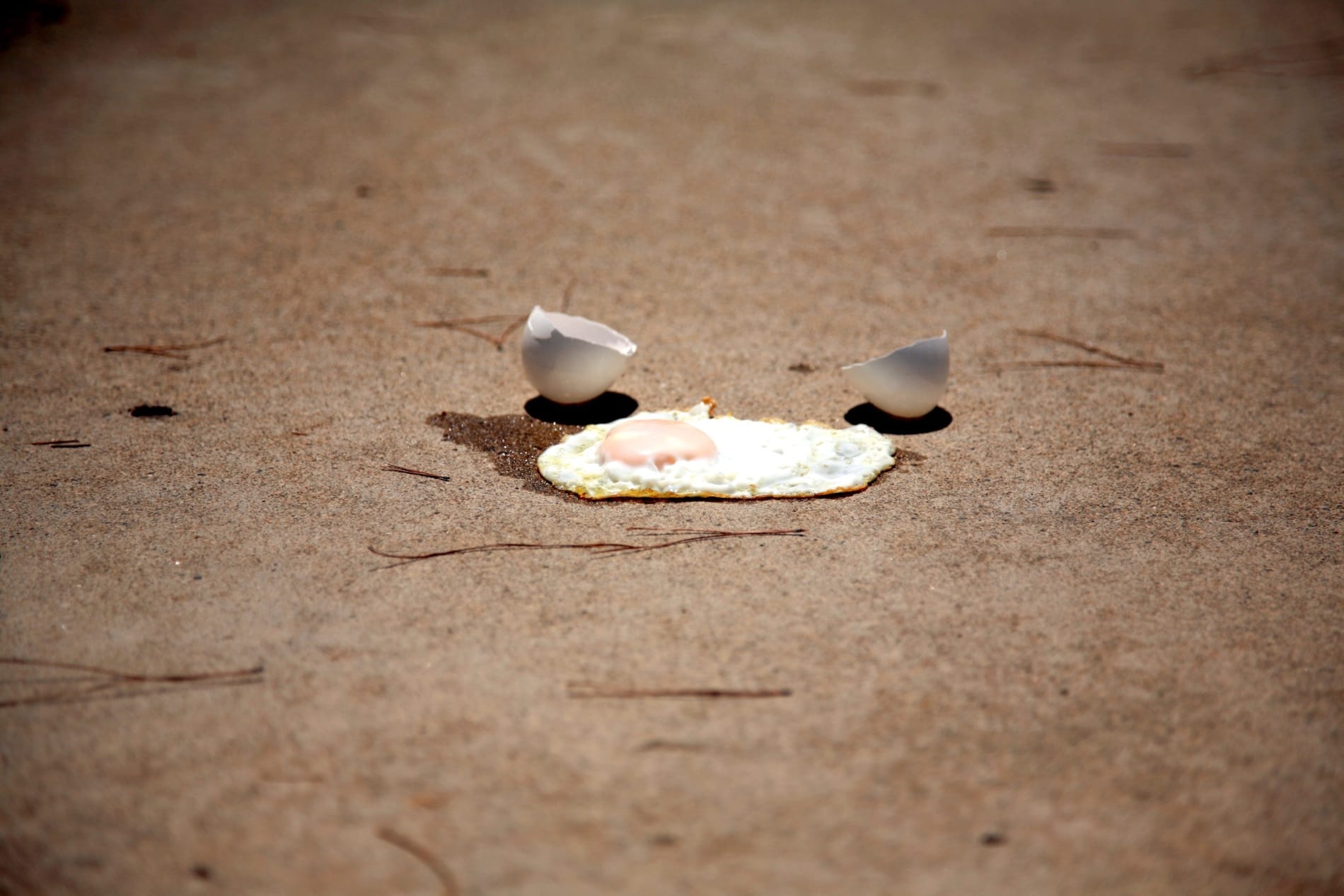
Sunny side up: Can you really fry an egg on the footpath on a hot day?

Ah, the Australian summer. When the temperatures top 40℃ and only the bravest or most foolhardy would venture outside in bare feet, there’s a cherished old saying: “It’s so hot outside, you could fry an egg on the footpath!”

But what does the science say? Does this claim stack up, or it half-baked?

To answer this question, we need to understand the chemicals inside an egg, what happens to them during the cooking process, and whether the footpath really gets hot enough to drive these chemical changes.

The first and most obvious point is that the egg’s yolk and white are chemically very different. The white, which makes up about two-thirds of an egg’s mass, is roughly nine parts water and one part protein. The key here is that the protein’s structure changes if you heat it above a certain temperature.

Omelette on road/Photo: Shutterstock

About half the yolk’s mass is water, about a quarter is “fat”, about one-sixth is protein, and less than 5% is carbohydrates. The protein in the yolk is a completely different type of protein, but much like with the egg white, it’s how the protein responds to heat that gives us the texture of fried, scrambled, poached or hard-boiled eggs.

Ok, so how does this work?

We can think of proteins as being long chains of molecules called amino acids. In a raw egg, the protein is suspended in the watery mixture. The chain is curled up in a very particular way, held in shape by weak chemical bonds between different parts of the chain as it folds over on itself. (The animation below shows the folded structure of ovalbumin, the main protein in egg white.) This keeps it stable, and able to mix with the water.

But once it’s heated up, the heat energy starts to break these weak chemical bonds and the chain begins to uncurl, rearrange itself and stick together again in a completely different way.

Suddenly, these reconfigured clumps of protein molecules are no longer water-soluble, so they solidify. This is why eggs get harder if you cook them for longer.

This process is called denaturation, and it can happen to any type of protein. Denaturation is what turns milk into curds and whey, and changes the texture of meat as it cooks.

For eggs, denaturation begins at around 60℃, but this is likely to only slightly cook the egg whites, and the yolk will not turn solid at all.

As you slowly go from 60℃ to 70℃, however, there’s more heat energy available, and all of the egg’s proteins now begin to denature. The egg white begins to turn gel-like and eventually rubbery, and the yolk begins to solidify into a viscous goo, before eventually becoming solid or even slightly powdery in texture.

Get the temperature right and this process unfolds nice and gradually, which means with a bit of practice you can get your eggs to turn out exactly how you like them.

Right, so is a footpath hot enough for this?

That leaves us with the crucial question: How hot does pavement get on a scorching summer day? Does it reach the almost 70℃ you would need for a footpath fry-up?

This depends on a lot of factors, including the air temperature, direct sunlight, the footpath material, and even its colour. Black-painted concrete, for example, absorbs more heat than white or unpainted concrete.

All in all, at the peak of these conditions, on a boiling summer day, a footpath can potentially just about reach the right temperature. But sadly, that’s still not enough to sizzle an egg.

First, concrete is a poor conductor, so it will transfer heat to the egg much more slowly than a metal frying pan. Second, after cracking the egg onto the footpath, the footpath’s temperature will drop slightly.

First underground radar images from Mars Perseverance rover reveal some surprises

Key takeaways:

  • Roving the Red Planet. Perseverance landed on Mars in February 2021 and has been gathering data on the planet’s geology and climate and searching for signs of ancient life.​​​​​​
  • What lies beneath. The rover’s subsurface radar experiment, co-led by UCLA’s David Paige, has returned images showing unexpected variations in rock layers beneath the Jezero crater.
  • Probing the past. The variations could indicate past lava flows or possibly a river delta even older than the one currently being explored on the crater floor.

After a tantalizing year-and-a-half wait since NASA’s Mars Perseverance rover touched down on our nearest planetary neighbor, new data is arriving — and bringing with it a few surprises.

The rover, which is about the size of car and carries seven scientific instruments, has been probing Mars’ 30-mile-wide Jezero crater, once the site of a lake and an ideal spot to search for evidence of ancient life and information about the planet’s geological and climatic past.

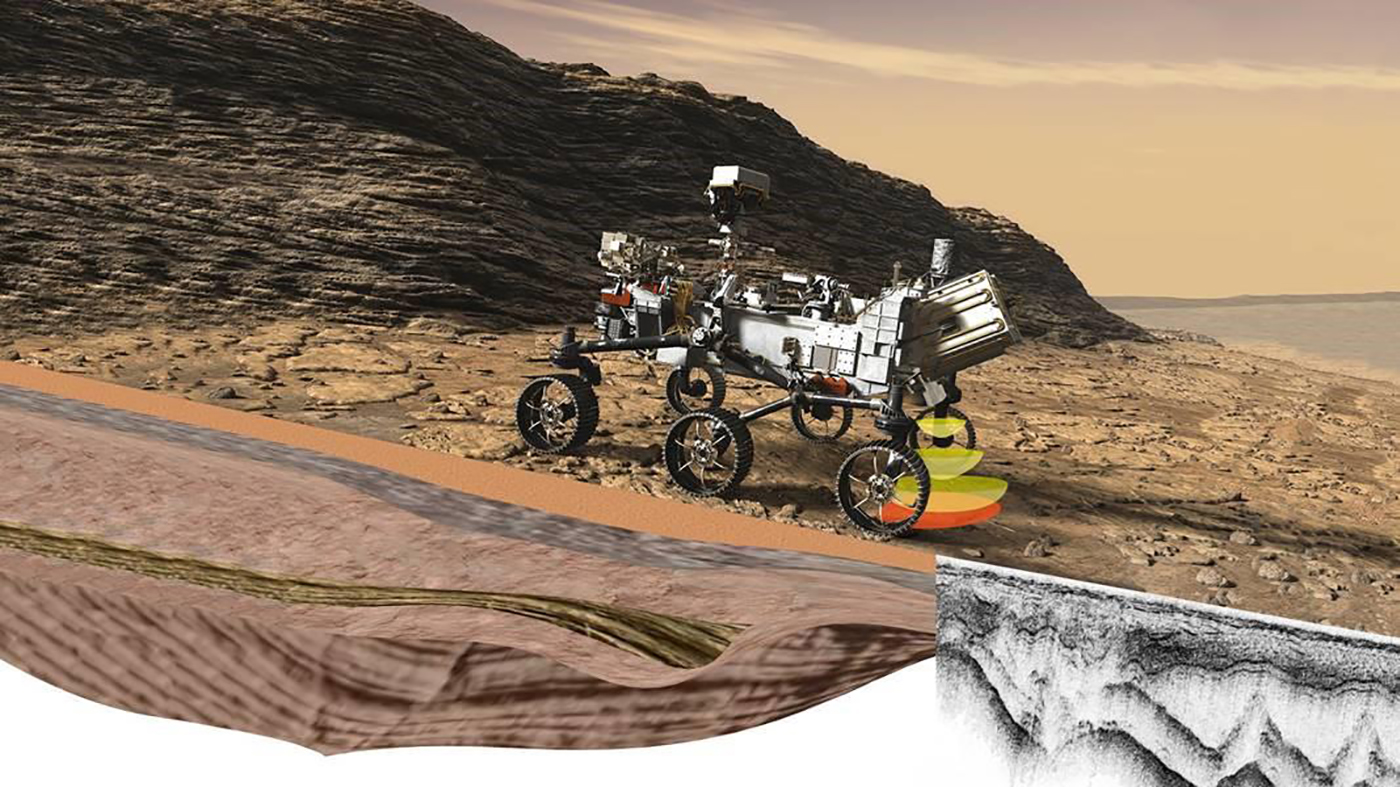
Rendering of Perseverance, whose RIMFAX technology is exploring what lies beneath the Martian surface. Photo: NASA/JPL/Caltech/FFI

In a paper published today in the journal Science Advances, a research team led by UCLA and the University of Oslo reveals that rock layers beneath the crater’s floor, observed by the rover’s ground-penetrating radar instrument, are unexpectedly inclined. The slopes, thicknesses and shapes of the inclined sections suggest they were either formed by slowly cooling lava or deposited as sediments in the former lake.

Perseverance is currently exploring a delta on the western edge of the crater, where a river once fed the lake, leaving behind a large deposit of dirt and rocks it picked up along its course. As the rover gathers more data, the researchers hope to clear up the complex history of this part of the Red Planet.

“We were quite surprised to find rocks stacked up at an inclined angle,” said David Paige, a UCLA professor of Earth, planetary and space sciences and one of the lead researchers on the Radar Imager for Mars Subsurface Experiment, or RIMFAX. “We were expecting to see horizontal rocks on the crater floor. The fact that they are tilted like this requires a more complex geologic history. They could have been formed when molten rock rose up towards the surface, or, alternatively, they could represent an older delta deposit buried in the crater floor.”

Paige said that most of the evidence gathered by the rover so far points to an igneous, or molten, origin, but based on the RIMFAX data, he and the team can’t yet say for certain how the inclined layers formed. RIMFAX obtains a picture of underground features by sending bursts of radar waves below the surface, which are reflected by rock layers and other obstacles. The shapes, densities, thicknesses, angles and compositions of underground objects affect how the radar waves bounce back, creating a visual image of what lies beneath.

During Perseverance’s initial 3-kilometer traverse, the instrument has obtained a continuous radar image that reveals the electromagnetic properties and bedrock stratigraphy — the arrangement of rock layers — of Jezero’s floor to depths of 15 meters, or about 49 feet. The image reveals the presence of ubiquitous layered rock strata, including those that are inclined at up to 15 degrees. Compounding the mystery, within those inclined areas are some perplexing highly reflective rock layers that in fact tilt in multiple directions.

“RIMFAX is giving us a view of Mars stratigraphy similar to what you can see on Earth in highway road cuts, where tall stacks of rock layers are sometimes visible in a mountainside as you drive by,” Paige explained. “Before Perseverance landed, there were many hypotheses about the exact nature and origin of the crater floor materials. We’ve now been able to narrow down the range of possibilities, but the data we’ve acquired so far suggest that the history of the crater floor may be quite a bit more complicated than we had anticipated.”

The data collected by RIMFAX will provide valuable context to rock samples Perseverance is collecting, which will eventually be brought back to Earth.

“RIMFAX is giving us the backstory of the samples we’re going to analyze. It’s exciting that the rover’s instruments are producing data and we’re starting to learn, but there’s a lot more to come,” Paige said. “We landed on the crater floor, but now we’re driving up on the actual delta, which is the main target of the mission. This is just the beginning of what we’ll hopefully soon know about Mars.”

The paper, “Ground penetrating radar observations of subsurface structures in the floor of Jezero crater, Mars,” is one of three simultaneously published papers discussing some of the first data from Perseverance.

Simple method destroys dangerous ‘forever chemicals,’ making water safe

Key takeaways:

  • World’s water tainted. Synthetic PFAS, which have been linked to cancer and other diseases, have contaminated nearly every drop of water on the planet.
  • Unbreakable bond. These chemicals contain a carbon-fluorine bond that is almost impossible to break, making it extremely difficult to eradicate them from water supplies.
  • Off with their heads! Researchers devised a “guillotine” solution that uses moderate heat and inexpensive reagents to remove the “heads” of PFAS, initiating their destruction.

If you’re despairing at recent reports that Earth’s water sources have been thoroughly infested with hazardous human-made chemicals called PFAS that can last for thousands of years, making even rainwater unsafe to drink, there’s a spot of good news.

Chemists at UCLA and Northwestern University have developed a simple way to break down almost a dozen types of these nearly indestructible “forever chemicals” at relatively low temperatures with no harmful byproducts.

Simple method destroys dangerous ‘forever chemicals,’ making water safe

In a paper published today in the journal Science, the researchers show that in water heated to just 176 to 248 degrees Fahrenheit, common, inexpensive solvents and reagents severed molecular bonds in PFAS that are among the strongest known and initiated a chemical reaction that “gradually nibbled away at the molecule” until it was gone, said UCLA distinguished research professor and co-corresponding author Kendall Houk.

The simple technology, the comparatively low temperatures and the lack of harmful byproducts mean there is no limit to how much water can be processed at once, Houk added. The technology could eventually make it easier for water treatment plants to remove PFAS from drinking water.

Per- and polyfluoroalkyl substances­ — PFAS for short — are a class of around 12,000 synthetic chemicals that have been used since the 1940s in nonstick cookware, waterproof makeup, shampoos, electronics, food packaging and countless other products. They contain a bond between carbon and fluorine atoms that nothing in nature can break.

PFAS used in shampoos

When these chemicals leach into the environment through manufacturing or everyday product use, they become part of the Earth’s water cycle. Over the past 70 years, PFAS have contaminated virtually every drop of water on the planet, and their strong carbon-fluorine bond allows them to pass through most water treatment systems completely unharmed. They can accumulate in the tissues of people and animals over time and cause harm in ways that scientists are just beginning to understand. Certain cancers and thyroid diseases, for example, are associated with PFAS.

For these reasons, finding ways to remove PFAS from water has become particularly urgent. Scientists are experimenting with many remediation technologies, but most of them require extremely high temperatures, special chemicals or ultraviolet light and sometimes produce byproducts that are also harmful and require additional steps to remove.

Explore the Solar System With NASA’s New, Improved 3D ‘Eyes’

The agency’s newly upgraded “Eyes on the Solar System” visualization tool includes Artemis I’s trajectory along with a host of other new features.

NASA has revamped its “Eyes on the Solar System” 3D visualization tool, making interplanetary travel easier and more interactive than ever. More than two years in the making, the update delivers better controls, improved navigation, and a host of new opportunities to learn about our incredible corner of the cosmos – no spacesuit required. All you need is a device with an internet connection.

 Trace the course Artemis I will take to lunar orbit, or touch down with Perseverance during its harrowing entry, descent, and landing on the Red Planet. Learn the basics about dwarf planets or the finer points of gas giants, and ride alongside no fewer than 126 space missions past and present. You can even follow the paths of spacecraft and celestial bodies as far back as 1949 and as far into the future as 2049.

While you’re at it, you can rotate objects, compare them side by side, and even modulate the perspective as well as the lighting. The visuals are striking. This latest version of “Eyes” also lets you scroll through rich interactive journeys, including Voyager’s Grand Tour of Jupiter, Saturn, Uranus, and Neptune.

“The beauty of the new browser-based ‘Eyes on the Solar System’ is that it really invites exploration. You just need an internet connection, a device that has a web browser, and some curiosity,” said Jason Craig, the producer of the “Eyes” software at NASA’s Jet Propulsion Laboratory.

Air pollution is more dangerous for women than men: Study

The impact of breathing diesel exhaust fumes may be more severe for females than males, according to new research that will be presented at the European Respiratory Society International Congress in Barcelona, Spain [1].

Researchers looked for changes in people’s blood brought about by exposure to diesel exhaust. In both females and males, they found changes in components of the blood related to inflammation, infection and cardiovascular disease, but they found more changes in females than males.

The research was presented by Dr Hemshekhar Mahadevappa, from the University of Manitoba, Winnipeg, Canada and was a collaboration between two research groups led by Professor Neeloffer Mookherjee at the University of Manitoba and Professor Chris Carlsten at the University of British Columbia, Vancouver, Canada. Dr Mahadevappa told the Congress: “We already know that there are sex differences in lung diseases such as asthma and respiratory infections.

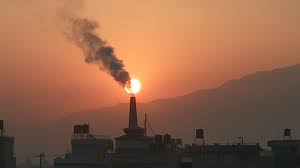
Air pollution/Photo:en.wikipedia.org

Research showed that breathing diesel exhaust creates inflammation in the lungs and has an impact on how the body deals with respiratory infections. In this study, we wanted to look for any effects in the blood and how these differ in females and males.”

The study involved ten volunteers, five female and five male, who were all healthy non-smokers. Each volunteer spent four hours breathing filtered air and four hours breathing air containing diesel exhaust fumes at three different concentrations – 20, 50 and 150 micrograms of fine particulate matter (PM2.5) per cubic metre – with a four-week break in between each exposure.

Volunteers donated blood samples 24 hours after each exposure and the researchers made detailed examinations of the volunteers’ blood plasma. Plasma is the liquid component of the blood that carries blood cells as well as hundreds of proteins and other molecules around the body. Using a well-established analysis technology called liquid chromatography–mass spectrometry, the researchers looked for changes in the levels of different proteins following exposure to diesel exhaust and compared the changes in females and males.

Airpollution/Photo:en.wikipedia.org

Comparing the plasma samples, the researchers found levels of 90 proteins that were distinctly different between female and male volunteers following exposure to diesel exhaust. Among the proteins that differed between females and males, were some that are known to play a role in inflammation, damage repair, blood clotting, cardiovascular disease and the immune system. Some of these differences became clearer when volunteers were exposed to the higher levels of diesel exhaust.

Professor Mookherjee explained: “These are preliminary findings, however they show that exposure to diesel exhaust has different effects in female bodies compared to male and that could indicate that air pollution is more dangerous for females than males.

“This is important as respiratory diseases such as asthma are known to effect females and males differently, with females more likely to suffer severe asthma that does not respond to treatments. Therefore, we need to know a lot more about how females and males respond to air pollution and what this means for preventing, diagnosing and treating their respiratory disease.”

Air pollution/photo:en.wikipedia.org

Professor Zorana Andersen from the University of Copenhagen, Denmark, is Chair of the European Respiratory Society Environment and Health Committee and was not involved in the research. She said: “We know that exposure to air pollution, especially diesel exhaust, is a major risk factor in diseases such as asthma and chronic obstructive pulmonary disease. There is very little we can do as individuals to avoid beathing polluted air, so we need governments to set and enforce limits on air pollutants.


Toxins in old toys can disrupt growth in children, an obstacle for circular economy

Letting children play with hand-me-down plastic toys could constitute a health risk. When researchers at the University of Gothenburg tested a large number of old toys and dress-up items made of plastic, 84 per cent of the items were found to contain toxins that can disrupt growth and development and reproductive capacities in children. These toxins are an obstacle for the circular economy in the future involving reuse and recycling, the researchers explain.

The current use-and-discard behaviour is wasteful with resources and a drain on the Earth’s finite resources. In 2021, the European Parliament adopted a Circular Economy Action Plan. It encourages the re-use, repair and recycling of products and materials. But the question is whether all products are good to reuse again?

Researchers from the University of Gothenburg have recently published an article in the Journal of Hazardous Materials Advances which shows that old toys and dress-up items may contain toxic chemicals that can cause cancer, damage DNA or disrupt the future reproductive capacities of children.

plastic toys/Photo: en.wikipedia.org

Toxic chemicals in most old toys

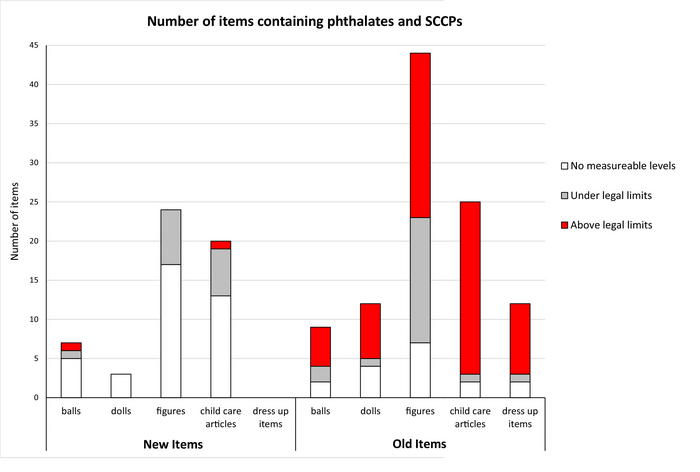
The hazardous chemicals that were discovered included phthalates and short chain chlorinated paraffins used as plasticizers and flame retardants in toys.

Professor Bethanie Carney Almroth at the University of Gothenburg conducts research on the environmental impact of plastics and plastic-related chemicals, and has led the research study conducted at the interdisciplinary Centre for Future Chemical Risk Assessment and Management Strategies (FRAM). For the study, researchers selected 157 different toys, new and old, and measured their chemical content.

The study showed that most of the older toys and items (84 per cent) contained quantities of chemicals that exceed current legal limits. A total of 30 per cent of the newer toys and items also exceeded the legal limits. By far however, the older toys were significantly worse.

“The concentrations of toxic substances were significantly higher in the older items. For example, many of the old balls were found to have concentrations of phthalates totalling more than 40 per cent of the toy’s weight, which is 400 times over the legal limit,” says Bethanie Carney Almroth.

Many of the older toys contained toxins.


Toxins an obstacle to a circular economy

EU legislation on the chemical content of toys, known as the Toy Safety Directive, regulates the permissible quantities of a number of chemical substances found in toys in an attempt to protect the health and safety of children. At present, the permissible limit values for new toys under the Toy Safety Directive are 0.1 per cent by weight for phthalates and 0.15 per cent by weight for short chain chlorinated paraffins.

“The study indicates that reuse and recycling is not always automatically a good thing. The transition to a more circular economy requires bans and other policy measures that get rid of hazardous chemicals from plastic and other materials. Although the Toy Safety Directive has been crucial in reducing the incidence of hazardous chemicals in toys, it has only been applicable to new toys, not old ones,” explains Daniel Slunge, Environmental Economist at the University of Gothenburg.

INS Vikrant commissioned, India’s first indigenous aircraft carrier

India commissioned the first indigenous aircraft carrier as INS Vikrant today, Friday Sept 2, 2022 after Prime Minister Narendra Modi opened the event and also unveiled the new Naval Ensign (Nishaan), doing away with the colonial past.

Addressing the gathering, the Prime Minister said every Indian, is witnessing the sunrise of a new future. This event being held on the INS Vikrant is a tribute to the rising spirits of India on the world horizon.

He said that today we are seeing a manifestation of the dream of the freedom fighters where they envisioned a capable and strong India. “Vikrant is not just a warship. This is a testament to the hard work, talent, influence and commitment of India in the 21st century. If the goals are distant, the journeys are long, the ocean and the challenges are endless – then India’s answer is Vikrant… a unique reflection of India becoming self-reliant.”

Commenting on the new mood of the nation, the Prime Minister said , no challenge is too difficult for today’s India. He said “today, India has joined those countries in the world, which manufacture such a huge aircraft carrier with indigenous technology. Today INS Vikrant has filled the country with a new confidence, and has created a new confidence in the country.”

The Prime Minister acknowledged and praised the contribution of the Navy, engineers of Cochin Shipyard, scientists and specially the workers who worked on the project. He also noted the happy and auspicious occasion of Onam that is adding even more happiness to the occasion.

Every part of INS Vikrant has its own merits, a strength, a development journey of its own. It is a symbol of indigenous potential, indigenous resources and indigenous skills. The steel installed in its airbase is also indigenous, developed by DRDO scientists and produced by Indian companies, he said.

Explaining the massive proportions of the Carrier, the Prime Minister said it is like a floating city. It produces electricity that is sufficient to power 5,000 households and the wiring used will reach Kashi from Kochi, he said. He said that INS Vikrant is a living embodiment of the Spirit of the Panch Prans that he proclaimed from the ramparts of Red Fort.

The Prime Minister remarked that when Vikrant descends to protect our maritime zone, many women soldiers of the Navy will also be stationed there. With the immense power of the ocean, the Indian Navy has decided to open all its branches for women. Just as there are no boundaries for the capable waves, there will be no boundaries or restrictions for the daughters of India.

Commenting on the changing geo-strategic situation, he said in the past, security concerns in the Indo-Pacific region and the Indian Ocean have long been ignored. But, today this area is a major defence priority of the country for us. That is why we are working in every direction, from increasing the budget for the Navy to increasing its capability, he said. The Prime Minister said that a strong India will pave the way for a peaceful and safe world.

INS Vikrant

INS Vikrant is designed by Indian Navy’s in-house Warship Design Bureau (WDB) and built by Cochin Shipyard Limited, a Public Sector Shipyard under the Ministry of Ports, Shipping & Waterways,  Vikrant has been built with with state of the art automation features and is the largest ship ever built in maritime history of India.


The Indigenous Aircraft Carrier is named after her illustrious predecessor, India’s first Aircraft Carrier which had played a vital role in the 1971 war. It has a large number of indigenous equipment and machinery, involving major industrial houses in the country as well as over 100 MSMEs. With the commissioning of Vikrant, India will have two operational Aircraft Carriers, which will bolster the maritime security of the nation.

During the event, the Prime Minister also unveiled the new Naval Ensign (Nishaan), doing away with the colonial past and befitting the rich Indian maritime heritage.


These blood groups linked to your risk of stroke before age 60: Study

Gene variants associated with a person’s blood type may be linked to their risk of early stroke, according to a new meta-analysis published in the latest online issue of Neurology.

Non-O blood types have previously been linked to a risk of early stroke, but the new findings by University of Maryland School of Medicine study showed a stronger link between these blood types with early stroke compared to late stroke, and in linking risk mostly to blood type A.

Study author Braxton D. Mitchell of University of Maryland School of Medicine in Baltimore said, “Specifically, our meta-analysis suggests that gene variants tied to blood types A and O represent nearly all of those genetically linked with early stroke. People with these gene variants may be more likely to develop blood clots, which can lead to stroke.”

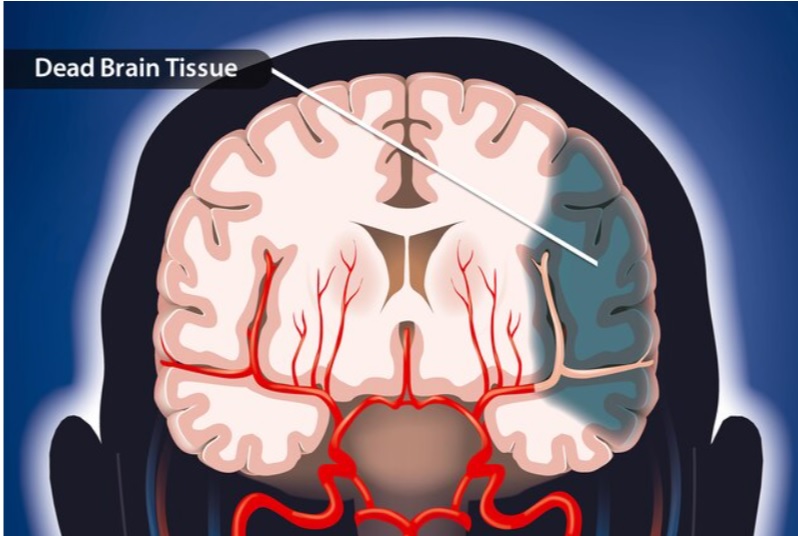
The meta-analysis involved a review of 48 studies on genetics and ischemic stroke from North America, Europe and Asia. The studies included 16,927 people with stroke and 576,353 people who did not have a stroke. Of those with stroke, 5,825 people had early onset stroke and 9,269 people had late onset stroke. Early onset stroke was defined as an ischemic stroke occurring before age 60 and late onset stroke was older than 60.

Researchers looked across all the chromosomes to identify genetic variants associated with stroke. They found a link between early stroke and the area of the chromosome that includes the gene that determines A, AB, B or O blood type.

They then divided participants into A, AB, B and O blood types. They compared the prevalence of those blood types in people with early stroke, late stroke and people who did not have a stroke.

Researchers found that people with early stroke were more likely to have blood type A and less likely to have blood type O compared to people with late stroke and people without stroke. Both early and late stroke were also more likely to have blood type B compared to controls.

Blood types/photo: en.wikipedia.org

When looking at people of European ancestry and comparing 5,825 people with early stroke to 29,320 people who did not have a stroke, the meta-analysis found that 48% of people with early stroke had blood type A compared to 45% of people with late stroke and 44% of people without stroke. They also found 35% of people with early stroke had blood type O compared to 39% of those with late stroke and 41% of people without stroke.

After adjusting for sex and other factors, researchers found those who had blood type A had an 16% higher risk of having an early stroke than people with other blood types. Those who had blood type O had a 12% lower risk of having a stroke than people with other blood types.


Apply now to experience the Launch of NASA’s SpaceX Crew-5 Mission[Full details]

Digital content creators are invited to register to attend the launch of the fifth SpaceX Crew Dragon spacecraft and Falcon 9 rocket that will carry astronauts to the International Space Station for a science expedition mission. This mission is part of NASA’s Commercial Crew Program.

The earliest targeted launch date for the agency’s SpaceX Crew-5 mission is Oct. 3, from Kennedy’s Launch Complex 39A. The launch will carry NASA astronauts Nicole Mann, commander; Josh Cassada, pilot; and mission specialists Koichi Wakata, of JAXA (Japan Aerospace Exploration Agency), and Roscosmos cosmonaut Anna Kikina.

If your passion is to communicate and engage the world online, then this is the event for you! Seize the opportunity to be on the front line to see and share the #Crew5 mission launch.

A maximum of 35 social media users will be selected to attend this two-day event and will be given access similar to news media.

NASA Social participants will have the opportunity to:

  • View a launch of the SpaceX Falcon 9 rocket
  • Tour NASA facilities at Kennedy Space Center
  • Meet and interact with Crew-5 subject matter experts
  • Meet fellow space enthusiasts who are active on social media

NASA Social registration for the Crew-5 launch opens on August 31 and the deadline to apply is September 6 at 3 p.m. EDT. All social applications will be considered on a case-by-case basis.


APPLY NOW


Do I need to have a social media account to register?
Yes. This event is designed for people who:

  • Actively use multiple social networking platforms and tools to disseminate information to a unique audience.
  • Regularly produce new content that features multimedia elements.
  • Have the potential to reach a large number of people using digital platforms.
  • Reach a unique audience, separate and distinctive from traditional news media and/or NASA audiences.
  • Must have an established history of posting content on social media platforms.
  • Have previous postings that are highly visible, respected and widely recognized.

Users on all social networks are encouraged to use the hashtag #NASASocial, and #Crew5.  Updates and information about the event will be shared on Twitter via @NASASocial and @NASAKennedy, and via posts to Facebook and Instagram.

How do I register?
Registration for this event opens August 31 and closes at 3 p.m. EDT on September 6. Registration is for one person only (you) and is non-transferable. Each individual wishing to attend must register separately. Each application will be considered on a case-by-case basis.

Can I register if I am not a U.S. citizen?
Because of the security deadlines, registration is limited to U.S. citizens. If you have a valid permanent resident card you will be processed as a U.S. citizen.

When will I know if I am selected?
After registrations have been received and processed, an email with confirmation information and additional instructions will be sent to those selected. We expect to send the first notifications on September 13 and waitlist notifications on September 14.

What are NASA Social credentials?
All social applications will be considered on a case-by-case basis. Those chosen must prove through the registration process they meet specific engagement criteria.

If you do not make the registration list for this NASA Social, you still can attend the launch offsite and participate in the conversation online. Find out about ways to experience a launch here.

What are the registration requirements?
Registration indicates your intent to travel to NASA’s Kennedy Space Center in Florida and attend the two-day event in person. You are responsible for your own expenses for travel, accommodation, food, and other amenities.

Some events and participants scheduled to appear at the event are subject to change without notice. NASA is not responsible for loss or damage incurred as a result of attending. NASA, moreover, is not responsible for loss or damage incurred if the event is cancelled with limited or no notice. Please plan accordingly.

Kennedy is a government facility. Those who are selected will need to complete an additional registration step to receive clearance to enter the secure areas.

IMPORTANT: To be admitted, you will need to provide two forms of unexpired government-issued identification; one must be a photo ID and match the name provided on the registration. Those without proper identification cannot be admitted. For a complete list of acceptable forms of ID, please visit: NASA Credentialing Identification Requirements.

All registrants must be at least 18 years old.

Photo: Nasa.gov

What if the launch date changes?
Hundreds of different factors can cause a scheduled launch date to change multiple times. The launch date will not be official until after the Flight Readiness Review. If the launch date changes prior to then, NASA may adjust the date of the NASA Social accordingly to coincide with the new target launch date. NASA will notify registrants of any changes by email.

If the launch is postponed, attendees will be invited to attend a later launch date. NASA cannot accommodate attendees for delays beyond 72 hours.

NASA Social attendees are responsible for any additional costs they incur related to any launch delay. We strongly encourage participants to make travel arrangements that are refundable and/or flexible.

What if I cannot come to the Kennedy Space Center?
If you cannot come to the Kennedy Space Center and attend in person, you should not register for the NASA Social. You can follow the conversation using the #NASASocial hashtag on Twitter. You can watch the launch on NASA Television or www.nasa.gov/live. NASA will provide regular launch and mission updates on @NASA@NASAKennedy, and @Commercial_Crew.

What are the safety protocols for this event?
COVID-19 safety protocols for this event will be communicated closer to the date of the event.

If you cannot make this NASA Social, don’t worry; NASA is planning many other Socials in the near future at various locations! Check back here for updates.

Turning fish waste into quality carbon-based nanomaterial

Scientists develop a simple, fast, and energy-efficient synthesis method for producing exceptional carbon nano-onions from fish scales.

Thanks to their low toxicity, chemical stability, and remarkable electrical and optical properties, carbon-based nanomaterials are finding more and more applications across electronics, energy conversion and storage, catalysis, and biomedicine. Carbon nano-onions (CNOs) are certainly no exception. First reported in 1980, CNOs are nanostructures composed of concentric shells of fullerenes, resembling cages within cages. They offer multiple attractive qualities such a s a high surface area and large electrical and thermal conductivities.

Unfortunately, the conventional methods for producing CNOs have some serious drawbacks. Some require harsh synthesis conditions, such as high temperatures or vacuum, while others demand a lot of time and energy. Some techniques can circumvent these limitations, but instead call for complex catalysts, expensive carbon sources, or dangerous acidic or basic conditions. This greatly limits the potential of CNOs.

Fish/Photo:en.wikipedia.org

Fortunately, not all hope is lost. In a recent study published in Green Chemistry (available online on April 25, 2022, and published in issue 10 on May 21, 2022), a team of scientists from Nagoya Institute of Technology in Japan found a simple and convenient way to turn fish waste into extremely high-quality CNOs. The team, which included Assistant Professor Yunzi Xin, Master’s student Kai Odachi, and Associate Professor Takashi Shirai, developed a synthesis route in which fish scales extracted from fish waste after cleaning are converted into CNOs in mere seconds through microwave pyrolysis.

But how can fish scales be converted into CNOs so easily? While the exact reason is not altogether clear, the team believes that it has to do with the collagen contained in fish scales, which can absorb enough microwave radiation to produce a fast rise in temperature. This leads to thermal decomposition or “pyrolysis,” which produces certain gases that support the assembly of CNOs. What is remarkable about this approach is that it needs no complex catalysts, nor harsh conditions, nor prolonged wait times; the fish scales can be converted into CNOs in less than 10 seconds!

Moreover, this synthesis process yields CNOs with very high crystallinity. This is remarkably difficult to achieve in processes that use biomass waste as a starting material. Additionally, during synthesis, the surface of the CNOs is selectively and thoroughly functionalized with (−COOH) and (−OH) groups. This is in stark contrast to the surface of CNOs prepared with conventional methods, which is typically bare and has to be functionalized through additional steps.

This “automatic” functionalization has important implications for applications of CNOs. When the CNO surface is not functionalized, the nanostructures tend to stick together owing to an attractive interaction known as pi−pi stacking. This makes it difficult to disperse them in solvents, which is necessary in any application requiring solution-based processes. However, since the proposed synthesis process produces functionalized CNOs, it allows for an excellent dispersibility in various solvents.

Yet another advantage associated with functionalization and the high crystallinity, is that of exceptional optical properties. Dr. Shirai explains: “The CNOs exhibit ultra-bright visible-light emission with an efficiency (or quantum yield) of 40%. This value, which has never been achieved before, is about 10 times higher than that of previously reported CNOs synthesized via conventional methods.

To showcase some of the many practical applications of their CNOs, the team demonstrated their use in LEDs and blue-light-emitting thin films. The CNOs produced a highly stable emission, both inside solid devices and when dispersed in various solvents, including water, ethanol, and isopropanol. “The stable optical properties could enable us to fabricate large-area emissive flexible films and LED devices,” speculates Dr. Shirai. “These findings will open up new avenues for the development of next-generation displays and solid-state lighting.

Furthermore, the proposed synthesis technique is environmentally friendly and provides a straightforward way to convert fish waste into infinitely more useful materials. The team believes their work would contribute to the fulfillment of several of UN’s Sustainable Development Goals. Additionally, if CNOs make their way into next-generation LED lighting and QLED displays, they could greatly help reduce their manufacturing costs.

Let us hope the efforts of these scientists tip the scales in favor of CNOs for more practical applications!

Diets rich in these minerals may help prevent recurrent kidney stones

Kidney stones can cause not only excruciating pain but also are associated with chronic kidney disease, osteoporosis and cardiovascular disease. If you’ve experienced a kidney stone once, you have a 30% chance of having another kidney stone within five years.

Changes in diet are often prescribed to prevent recurrent symptomatic kidney stones. However, little research is available regarding dietary changes for those who have one incident of kidney stone formation versus those who have recurrent incidents.

Mayo Clinic researchers designed a prospective study to investigate the impact of dietary changes. Their findings show that enriching diets with foods high in calcium and potassium may prevent recurrent symptomatic kidney stones.

Dietary factors were based on a questionnaire administered to 411 patients who had experienced first-time symptomatic kidney stones and a control group of 384 people — all of whom were seen at Mayo Clinic in Rochester and Mayo Clinic in Florida between 2009 and 2018. The findings, which were published in Mayo Clinic Proceedings, show that lower dietary calcium and potassium, as well as lower intake of fluids, caffeine and phytate, are associated with higher odds of experiencing a first-time symptomatic kidney stone.

Of the patients who had first-time stone formation, 73 experienced recurrent stones within a median of 4.1 years of follow-up. Further analysis found that lower levels of dietary calcium and potassium predicted recurrence.

“These dietary findings may have particular importance because recommendations for preventing kidney stones have been based primarily on dietary factors associated with first-time rather than recurrent stone formation,” says Andrew Rule, M.D., a Mayo Clinic nephrologist and senior author of the study. “Patients may not be likely to adjust their diet to prevent an incidence of kidney stones, but they are more likely to do so if it can help prevent recurrence.”

Fluid intake of less than 3,400 milliliters per day, or about nine 12-ounce glasses, is associated with first-time stone formation, along with caffeine intake and phytate, the study finds. Daily fluid intake includes intake from foods such as fruits and vegetables.

Low fluid and caffeine intake can result in low urine volume and increased urine concentration, contributing to stone formation. Phytate is an antioxidant compound found in whole grains, nuts and other foods that can lead to increased calcium absorption and urinary calcium excretion.

“Changing your diet to prevent kidney stones can be very difficult,” says Dr. Rule. “Thus, knowing the dietary factors that are most important for preventing kidney stone recurrence can help patients and providers know what to prioritize.”

Low dietary calcium and potassium was a more important predictor than fluid intake of recurrent kidney stone formation, says Api Chewcharat, M.D., the article’s first author and a postdoctoral research fellow at Mayo Clinic at the time of the study. “This is not to say high fluid intake is not important. We just did not find benefits of increasing fluid intake among those patients with a history of kidney stone formation.”

The study concludes that diets with daily intake of 1,200 milligrams of calcium may help prevent first-time and recurrent kidney stones. That daily intake is in line with the Department of Agriculture’s daily recommended nutrition.

While higher potassium intake also is recommended, the USDA does not make a recommendation for daily potassium intake. The study also doesn’t recommend an intake level.

Dr. Chewcharat says the takeaway is that patients should add more fruits and vegetables that are high in calcium and potassium to their diets. Fruits that are high in potassium include bananas, oranges, grapefruits, cantaloupes, honeydew melons and apricots. Vegetables include potatoes, mushrooms, peas, cucumbers and zucchini.

Discovery of Mbiresaurus gives birth to new theory on dinosaurs in Supercontinent Pangea

The discovery of Mbiresaurus in Zimbabwe has led the group of researchers to propose a new theory on dinosaur migration, as Africa was once part of the supercontinent called Pangea.

The climate across ancient Pangea continent is thought to have been divided into strong humid and arid latitudinal belts, with more temperate belts spanning higher latitudes and intense deserts across the lower tropics of Pangea. Scientists previously believed that these climate belts influenced and constrained animal distribution across Pangea.

“Because dinosaurs initially dispersed under this climatic pattern, the early dispersal of dinosaurs should therefore have been controlled by latitude,” said Christopher Griffin, who graduated in 2020 with a Ph.D. in geosciences from the Virginia Tech College of Science. “The oldest dinosaurs are known from roughly the same ancient latitudes along the southern temperate climate belt what was at the time, approximately 50 degrees south.”

Missing Middle bridged

Griffin and others from the Paleobiology and Geobiology Research Group at Virginia Tech purposefully targeted northern Zimbabwe as the country fell along this same climate belt, bridging a geographic gap between southern Brazil and India during the Late Triassic Age.

Moreover, these earliest dinosaurs were restricted by climatic bands to southern Pangea, and only later in their history dispersed worldwide. To prove the claim, the research team developed a novel data method of testing this hypothesis of climatic dispersal barriers based on ancient geography and the dinosaurian family tree. The breakdown of these barriers, and a wave of northward dispersal, coincided with a period of intense worldwide humidity, or the Carnian Pluvial Event.

After this, barriers returned, mooring the now-worldwide dinosaurs in their distinct provinces across Pangea for the remainder of the Triassic Period, according to the team. “This two-pronged approach combines hypothesis-driven predictive fieldwork with statistical methods to independently support the hypothesis that the earliest dinosaurs were restricted by climate to just a few areas of the globe,” Griffin said.

Brenen Wynd, also a doctoral graduate of the Department of Geosciences, helped build the data model. “The early history of dinosaurs was a critical group for this kind of problem. Not only do we have a multitude of physical data from fossils, but also geochemical data that previously gave a really good idea of when major deserts were present,” he said.

“This is the first time where those geochemical and fossil data have been supported using only evolutionary history and the relationships between different dinosaur species, which is very exciting,” he explained.


New dinosaur Mbiresaurus, a boon for Zimbabwe and Virginia Tech paleontology

The unearthing of one of the earliest dinosaurs ever found is a major win for the Natural History Museum of Zimbabwe.

The Mbiresaurus skeleton is almost complete, making it a perfect reference material for further finds. It is also the first sauropodomorph find of its size from Zimbabwe, where most of the earlier sauropodomorph finds are usually of medium- to large-sized animals.

“The discovery of the Mbiresaurus is an exciting and special find for Zimbabwe and the entire paleontological field,” said Michel Zondo, a curator and fossil preparer at the museum.

Darlington Munyikwa, deputy executive director of the National Museums and Monuments of Zimbabwe, said: “The unfolding fossil assemblage from the Pebbly Arkose Formation in the Cabora Bassa Basin, which was hitherto known for paucity of animal fossils, is exciting. A number of fossil sites [are] waiting for future exploration were recorded, highlighting the potential of the area to add more valuable scientific material.”

Much of the Mbiresaurus specimen is being kept in Virginia Tech’s Derring Hall as the skeleton is cleaned and studied. All of the Mbiresaurus skeleton and the additional found fossils will be permanently kept at Natural History Museum of Zimbabwe in Bulawayo, Zimbabwe.

“This is such an exciting and important dinosaur find for Zimbabwe, and we have been watching the scientific process unfold with great pride,” said Moira Fitzpatrick, the museum’s director. She was not involved in the study. “It has been a pleasure to work with Dr. Griffin,and we hope the relationship will continue well into the future.”

The discovery of Mbiresaurus also marks another highpoint for the Paleobiology and Geobiology Research Group. In 2019, Nesbitt authored a paper detailing the newly named tyrannosauroid dinosaur Suskityrannus hazelae. Incredibly, Nesbitt discovered the fossil at age 16 as a high school student participating in a dig expedition in New Mexico in 1998.

“Our group seeks out equal partnerships and collaborations all over the world and this project demonstrates a highly successful and valued collaboration,” Nesbitt said. “We will continue studying the many fossils from the same areas as where the new dinosaur came from and explore the fossil beds further.”


Africa’s oldest known dinosaur skeleton to bridge the ‘Missing Middle’

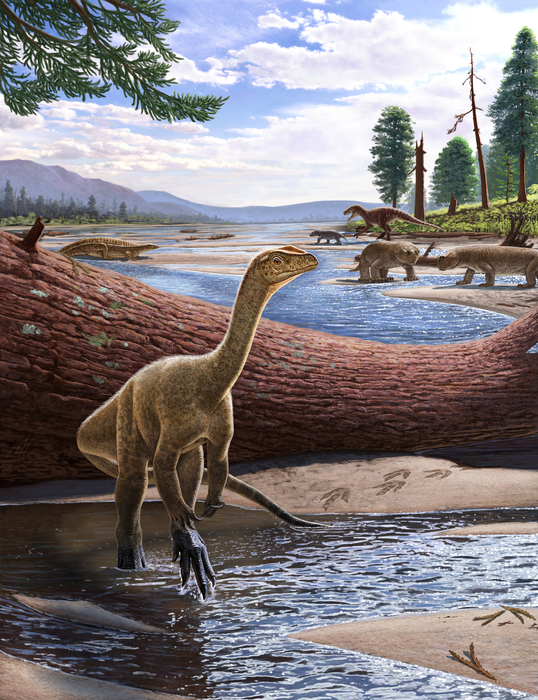
An international team of paleontologists led by Virginia Tech has discovered a skeleton of new long-necked dinosaur Mbiresaurus raathi, that fills a critical geographic gap in the fossil record of the oldest dinosaurs.

The skeleton, mostly intact, was first found by a graduate student in the Virginia Tech Department of Geosciences and other paleontologists during two excavations over the course of period in 2017 and 2019.

Published on Thursday in the journal Nature, the findings show that the skeleton is the oldest dinosaur skeleton ever found in Africa. The animal is estimated to have been 6 feet long with a long tail. It weighed anywhere from 20 to 65 pounds. The skeleton, missing only some of the hand and portions of the skull, was found in northern Zimbabwe.

Dinosaur

“The discovery of Mbiresaurus raathi fills in a critical geographic gap in the fossil record of the oldest dinosaurs and shows the power of hypothesis-driven fieldwork for testing predictions about the ancient past,” said Christopher Griffin, who graduated in 2020 with a Ph.D. in geosciences from the Virginia Tech College of Science.

Africa’s oldest-known definitive dinosaurs, it was roughly equivalent in age to the oldest dinosaurs found anywhere in the world. The oldest known dinosaurs — from roughly 230 million years ago, the Carnian Stage of the Late Triassic period — are extremely rare and have been recovered from northern Argentina, southern Brazil, and India.

Sterling Nesbitt, co-author of the study, said, “Early dinosaurs like Mbiresaurus raathi show that the early evolution of dinosaurs is still being written with each new find and the rise of dinosaurs was far more complicated than previously predicted.”


Twitter India rival Koo lays off 40 employees

Twitter rival Koo has laid off at least 40 people in India to prune redundant staff as per its current business requirements, hinting at another failure in overcrowded social media platforms. Currently, WhatsApp and Twitter are the two laeding social platforms in India.

The development was reported by news portal Inc42, which said that Koo CEO Aprameya Radhakrishna is currently abroad, seeking a fresh round of funding. The platform is seeking rapid growth as it plans expansion into other Indian languages soon.

“We recently attained a major milestone of 45 million downloads, growing 10x in the last 2 months. The growth that we are witnessing in our business is reflected in our employee strength of 350+ people strong,” said a spokesperson, as reported by IANS.

Koo, which is aiming to reach the 100 million-download mark, said that it wants to diversify recruitment of machine learning teams.

“Our workforce is streamlined to ensure it is aligned to the current business requirements. As a people-first company, we appreciate the talent and contributions of each of our associates,” the spokesperson added.

Launched in March 2020, Koo is currently available in 10 languages — Hindi, Marathi, Gujarati, Punjabi, Kannada, Tamil, Telugu, Assamese, Bengali and English. So far, the platform has over 45 million downloads but actively leveraged by 7,000 people from across the spectrum.

In February this year, Koo raised nearly $10 million in two different trances from investors, including Capsier Venture Partner, Ravi Modi Family Trust, Ashneer Grover, FBC Venture Partners, and Adventz Finance. Earlier, Koo raised its Series B funding from Tiger Global, Accel Partners, and Blume Ventures.