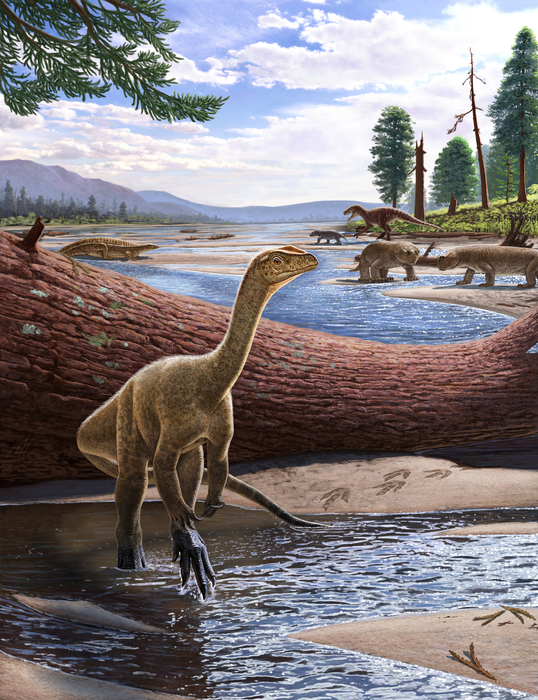
The unearthing of one of the earliest dinosaurs ever found is a major win for the Natural History Museum of Zimbabwe.
The Mbiresaurus skeleton is almost complete, making it a perfect reference material for further finds. It is also the first sauropodomorph find of its size from Zimbabwe, where most of the earlier sauropodomorph finds are usually of medium- to large-sized animals.
“The discovery of the Mbiresaurus is an exciting and special find for Zimbabwe and the entire paleontological field,” said Michel Zondo, a curator and fossil preparer at the museum.
Darlington Munyikwa, deputy executive director of the National Museums and Monuments of Zimbabwe, said: “The unfolding fossil assemblage from the Pebbly Arkose Formation in the Cabora Bassa Basin, which was hitherto known for paucity of animal fossils, is exciting. A number of fossil sites [are] waiting for future exploration were recorded, highlighting the potential of the area to add more valuable scientific material.”
Much of the Mbiresaurus specimen is being kept in Virginia Tech’s Derring Hall as the skeleton is cleaned and studied. All of the Mbiresaurus skeleton and the additional found fossils will be permanently kept at Natural History Museum of Zimbabwe in Bulawayo, Zimbabwe.
“This is such an exciting and important dinosaur find for Zimbabwe, and we have been watching the scientific process unfold with great pride,” said Moira Fitzpatrick, the museum’s director. She was not involved in the study. “It has been a pleasure to work with Dr. Griffin,and we hope the relationship will continue well into the future.”
The discovery of Mbiresaurus also marks another highpoint for the Paleobiology and Geobiology Research Group. In 2019, Nesbitt authored a paper detailing the newly named tyrannosauroid dinosaur Suskityrannus hazelae. Incredibly, Nesbitt discovered the fossil at age 16 as a high school student participating in a dig expedition in New Mexico in 1998.
“Our group seeks out equal partnerships and collaborations all over the world and this project demonstrates a highly successful and valued collaboration,” Nesbitt said. “We will continue studying the many fossils from the same areas as where the new dinosaur came from and explore the fossil beds further.”