Stressful life circumstances can affect how married couples interact, but can they affect how partners see each other? A person experiencing stress is more likely to notice their spouse’s negative behavior than positive, according to a new study published in Social Psychological and Personality Science.
Prior research has focused on how stress influences behavior, but this study suggests that stress could affect what actions partners notice in the first place. The negative actions being monitored included a spouse breaking a promise, showing anger or impatience, or criticizing their partner.
“We found that individuals who reported experiencing more stressful life events outside of their relationship, such as problems at work, were especially likely to notice if their partner behaved in an inconsiderate manner,” says lead author Dr. Lisa Neff, of the University of Texas at Austin.
Researchers asked 79 heterosexual newlywed couples to complete a short survey each night for 10 days, in which they documented both their own and their partner’s behavior. Before beginning this portion of the study, participants completed a questionnaire in which they shared details on stressful events in their life.
Stress
Studying newlyweds drives home the significance of the results, Dr. Neff notes, because couples are especially likely to focus on each other’s positive behavior and overlook negative actions during the “honeymoon” period.
“For many people, the past few years have been difficult – and the stress of the pandemic continues to linger,” says Dr. Neff. “If stress focuses individuals’ attention toward their partner’s more inconsiderate behaviors, this is likely to take a toll on the relationship.”
Researchers noted a single stressful day was not enough to make someone zero in on their partner’s negative behavior, but a longer accumulation of stressful life circumstances could cause this shift in focus. The findings also suggest that those under stress were not any less likely to notice their partner’s positive behavior, but they were more likely to notice inconsiderate actions.
While it’s possible that being aware of the effects of stress could allow couples to correct their behavior and limit harm to the relationship, Dr. Neff notes that this will remain speculation until it is studied further. She also says that future research would do well to expand this study beyond the honeymoon phase.
“One direction would be to examine if the harmful effects of stress might be even stronger among couples no longer in the newlywed phase of their relationships,” says Dr. Neff, “but the fact that we found these effects in a sample of newlyweds speaks to how impactful the effects of stress can be.”
As former Prime Minister Manmohan Singh turned 90 on Monday, leaders across party lines wished him and many remembered his contribution in turning the economy toward growth trajectory despite global recessions and pressures.
On this occasion, we bring 10 facts and key contributions made by Dr Manmohan Sing to India:
Born on September 26, 1932, in Gah, (now in Pakistan), he migrated to India along with his family
Lost his mother at a very young age and was raised by his grandmother
As there was no electricity in his village, he used to study under kerosene lamp
Manmohan Singh studied in Hindu College Amritsar, and did B.A. and M.A. from Panjab University
He did his Economics Tripos from Cambridge University and DPhil or doctorate from the University of Oxford
He worked for the United Nations Conference on Trade and Development (UNCTAD), from 1966 to 1969
He worked as an advisor to the Ministry of Foreign Trade under L.N. Mishra
In 1972, Manmohan Singh became the Chief Advisor in the Ministry of Finance
In 1976, he became a Secretary in the Ministry of Finance
In 1982, Manmohan Singh was appointed as the Governor of RBI
He became the Deputy Chairman of the Planning Commission of India from 1985 to 1987
In 1991, he was appointed as the Chairman of the University Grants Commission (UGC)
In June in 1991, he joined Prime Minister P V Narasimha Rao’s cabinet as Finance Minister
Initiated painful but crucial liberalisation policy for Indian economy
Became the 14th Prime Minister of India on May 22, 2004.
Best Wishes pour in
Congress leader Rahul Gandhi wrote, “Wishing one of India’s finest statesman, Dr Manmohan Singh ji a very happy birthday. His humility, dedication and contribution to India’s development, has few parallels. He is an inspiration to me, and to crores of other Indians. I pray for his good health and happiness.”
Congress General Secretary K C Venugopal said, “Visionary leadership & dedication defines what Dr. Manmohan Singh means for India. The architect of India’s economic reforms, it was his magnificent vision that launched India’s economic story to the next level.” Jairam Ramesh, Congress general secretary in-charge communications, said: “Today is Day 19 of #BharatJodoYatra and the day Dr. Manmohan Singh turns 90.”
Prime Minister Narendra Modi also wished his predecessor and said:“Birthday greetings to former PM Dr. Manmohan Singh Ji. Praying for his long and healthy life.” External Affairs Minister S Jaishankar said, “Warmest wishes to respected Dr. Manmohan Singh ji on his birthday. Pray for his long life, good health and happiness.”
S Jaishankar
“Many many congratulations to former Prime Minister of the country Dr. Manmohan Singh ji on his 90th birthday. I pray to God for his healthy life and long life,” tweeted Delhi Chief Minister Arvind Kejriwal.
Shashi Tharoor, Thiruvananthapuram MP, said he was “privileged to enjoy his blessings for many years & to learn so much from his sagacity, wisdom & profound understanding of human affairs,” adding: “Long May he continue to guide us all.”
Tamil Nadu Chief Minister MK Stalin said, “Birthday greetings to former Prime Minister & erudite scholar Dr Manmohan Singh. He provided stability in governance, maintained dignity in public life, alleviated poverty and did all this while being an epitome of humility.”
NCP leader Supriya Sule said, “Wishing Former Prime Minister of India, Great Economist Hon. Dr. Manmohan Singh Sir Happy Birthday. May you be blessed with a long and healthy life.”
Forty-seven suspects have been indicted so far on charges of defrauding a federally funded child nutrition program of more than $250 million, meant for reimbursements for the costs of serving meals to children in need during the COVID-19 pandemic.
The investigators believe few meals were ever provided and accused the defendants of misusing the money to purchase cars, vacations, coastal resort properties, electronics, and other luxury items for themselves. The large-scale scam represents the largest theft of federal funds allocated to pandemic aid to date, said FBI.
At the center of the investigation is a now-closed Minneapolis nonprofit called “Feeding Our Future” and its former founder and executive director, Aimee Bock, who oversaw the scheme and has been indicted on multiple fraud and bribery charges.
FBI agents, along with investigators from the IRS and the U.S. Postal Inspection Service, prepare to execute one of 25 search warrants carried out in the early morning hours of January 20, 2022, as part of the Feeding Our Future fraud investigation / FBI
FBI agents, along with investigators from the IRS and the U.S. Postal Inspection Service, carried out 25 search warrants in the early morning hours of January 20, 2022, as part of the fraud investigation.
Feeding Our Future had served as a sponsor for numerous organizations that signed up to participate in the Federal Child Nutrition Program, administered by the U.S. Department of Agriculture, with states distributing funds locally. Under the program, Feeding Our Future allegedly used its position as a sponsor to engineer a massive fraud scheme.
The charges allege that beginning in early 2020, the organization began recruiting individuals and entities to open fake Federal Child Nutrition Program sites throughout Minnesota., which fraudulently claimed to be serving meals to thousands of children a day within just days or weeks of being formed despite having few—if any—staff and little to no experience serving this volume of meals. In exchange, Feeding Our Future received more than $18 million in administrative fees it was not entitled to.
Feeding Our Future employees also allegedly solicited and received bribes and kickbacks from the individuals and companies it sponsored. Many of these kickbacks were paid in cash or disguised as “consulting fees” to shell companies. In total, Feeding Our Future opened more than 250 sites throughout Minnesota between March 2020 and January 2022 and falsely claimed to have served 125 million meals.
How the defendants perpetrated the fraud:
Conspirators submitted a fake attendance roster of 2,040 children who attended one of the sponsor’s afterschool programs during the pandemic but only 20 names matched.
One site claimed to serve 2,000 to 3,000 meals per day, seven days a week, from a restaurant that previously had only a few dozen customers a day and $500-$600 in daily sales the previous year.
One roster was created using names from a website called listofrandomnames.com. Because the program only reimbursed for meals served to children, other defendants used an Excel formula to insert a random age between 7 and 17 into the age column. In some reports, the names of the children would stay the same, but their ages would change.
More than 250 law enforcement personnel took part in executing the search warrants and then the evidence was brought to the FBI Minneapolis Field Office, where the FBI’s forensic accountants untangled the scheme.
During a news conference announcing the charges, FBI Special Agent in Charge Michael Paul said, “During this investigation, the FBI followed many trails—including both money trails and paper trails—filled with falsified invoices and receipts, fictitious names, and an inconceivable number of meals allegedly served, all representing an astonishing display of deceit and evidence of outright fraud.”
To date, the FBI and its law enforcement partners have conducted more than 100 search warrants, completed an additional 100 seizure warrants, and reviewed more than 1,000 bank accounts. The 18-month long investigation was extremely complex, but the crime was quite simple. “It was just a massive fraud scheme,” said Paul.
The government so far has been able to recover $50 million from 60 bank accounts, 45 pieces of property, and numerous vehicles and additional items, such as electronics and high-end clothing.
Under IT Rules, 2021, 45 YouTube videos from 10 YouTube channels were blocked by Ministry of Information & Broadcasting.
Videos containing hateful speech against religious communities and spreading communal disharmony blocked.
Morphed images and videos being used to harm India’s national security, foreign relations and public order.
Based on the inputs from intelligence agencies, the Ministry of Information & Broadcasting has directed YouTube to block 45 YouTube videos from 10 YouTube channels. Orders to block the concerned videos were issued on 23.09.2022 under the provisions of the Information Technology (Intermediary Guidelines and Digital Media Ethics Code) Rules 2021. The blocked videos had cumulative viewership of over 1 crore 30 lakh views.
The content included fake news and morphed videos spread with the intent to spread hatred among religious communities. Examples include false claims such as the Government to have taken away the religious rights of certain communities, violent threats against religious communities, declaration of civil war in India, etc. Such videos were found to have the potential to cause communal disharmony and disrupt public order in the country.
Some of the videos blocked by the Ministry were being used to spread disinformation on issues related to Agnipath scheme, Indian Armed Forces, India’s national security apparatus, Kashmir, etc. The content was observed to be false and sensitive from the perspective of national security and India’s friendly relations with foreign States.
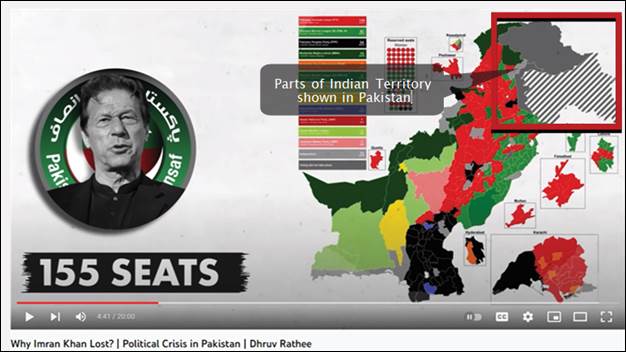
Certain videos depicted erroneous external boundary of India with parts of J&K and Ladakh outside the Indian territory. Such cartographic misrepresentation was found to be detrimental to the sovereignty and territorial integrity of India.
The content blocked by the Ministry was found to be detrimental to sovereignty and integrity of India, security of the State, India’s friendly relations with foreign States, and public order in the country. Accordingly, the content was covered within the ambit of section 69A of the Information Technology Act, 2000.
The Government of India remains committed to thwart any attempts at undermining India’s sovereignty and integrity, national security, foreign relations, and public order.
In vitro fertilization (IVF) using frozen embryos may be associated with a 74% higher risk of hypertensive disorders in pregnancy, according to new research published today in Hypertension, an American Heart Association journal.
In comparison, the study found that pregnancies from fresh embryo transfers – transferring the fertilized egg immediately after in vitro fertilization (IVF) instead of a frozen, fertilized egg – and pregnancy from natural conception shared a similar risk of developing a hypertensive disorder.
High blood pressure during pregnancy often signals preeclampsia, a pregnancy complication including persistent high blood pressure that can endanger the health and life of the mother and fetus. Approximately 1 out of every 25 pregnancies in the United States results in preeclampsia, according to the American Heart Association.
One IVF treatment process available utilizes frozen embryos: after an egg is fertilized by sperm in the lab, it is frozen using a cryopreservation process before being thawed and transferred to the uterus at a later date. The procedure is becoming more common because of the significantly improved freezing technology or cryopreservation methods that started in the late 2000s and because more patients are choosing to freeze embryos, according to the study authors. Yet, frozen embryo transfer is known to be associated with a higher risk of hypertensive disorders in pregnancy than both natural conception and fresh embryo transfer. However, prior to this study, it was unknown whether this was due to the freezing process or a risk factor from the parents.
“Frozen embryo transfers are now increasingly common all over the world, and in the last few years, some doctors have begun skipping fresh embryo transfer to routinely freeze all embryos in their clinical practice, the so-called ‘freeze-all’ approach,” said Sindre H. Petersen, M.D., the study’s lead author and a Ph.D. fellow at the Norwegian University of Science and Technology in Trondheim, Norway.
Researchers examined national data from medical birth registries from Denmark, Norway and Sweden of nearly 2.4 million women who were ages 20 to 44 years old who had single deliveries and gave birth during the study period – from 1988 through 2015. These data were the basis of a population-based study that also included a comparison of women who had both an IVF pregnancy and a naturally conceived pregnancy, called sibling comparison. This approach was used to isolate if the potential reason for the hypertensive disorders was attributable to parental factors or to the IVF treatment.
pregnant lady/Commons.wikimedia.org
The study included more than 4.5 million pregnancies, of which 4.4 million were naturally conceived; more than 78,000 pregnancies were fresh embryo transfers; and more than 18,000 pregnancies were frozen embryo transfers. Among all of the pregnancies, more than 33,000 were grouped for sibling comparison – mothers who conceived via more than one of these methods. The study is the largest to-date using sibling comparison. The odds of developing hypertensive disorders in pregnancy after fresh vs. frozen embryo transfers compared to natural conception were adjusted for variables such as birth year and the mother’s age.
“In summary, although most IVF pregnancies are healthy and uncomplicated,” Petersen said. “This analysis found that the risk of high blood pressure in pregnancy was substantially higher after frozen embryo transfer compared to pregnancies from fresh embryo transfer or natural conception.”
In the population analysis, women whose pregnancy was the result of a frozen embryo transfer were 74% more likely to develop hypertensive disorders in pregnancy compared to those who conceived naturally.
Among women who had both a natural conception and an frozen embryo transfer IVF conception (the sibling comparison), the risk of hypertensive disorders in pregnancy after frozen embryo transfer was twice as high compared to pregnancies from natural conception.
Pregnancies from fresh embryo transfer did not have a higher risk of developing hypertensive disorders compared to natural conception, neither in population level analysis nor in sibling comparisons.
“Our sibling comparisons indicate that the higher risk is not caused by factors related to the parents, rather, however, that some IVF treatment factors may be involved,” Petersen said. “Future research should investigate which parts of the frozen embryo transfer process may impact risk of hypertension during pregnancy.”
Among other findings, women in the study who gave birth after IVF pregnancies were average age 34 years for frozen embryo transfer, 33 years for fresh embryo transfer and 29 years for those who conceived naturally. About 7% of babies conceived from frozen embryo transfer were born preterm (before 40 weeks gestation) and 8% of babies after fresh embryo transfer were born preterm, compared to 5% of babies after natural conception.
In addition to preeclampsia, the researchers defined hypertensive disorders in pregnancy as a combined outcome, including gestational hypertension, eclampsia (the onset of seizures in those with preeclampsia) and chronic hypertension with superimposed preeclampsia.
One limitation of the study was the lack of data on the kind of frozen embryo cycle, so they were not able to pinpoint what part of the frozen cycle or frozen transfer may contribute to the higher risk of hypertensive disorders. Another limitation is that data from Scandinavian countries may limit generalizing the findings to people in other countries.
“Our results highlight that careful consideration of all benefits and potential risks is needed before freezing all embryos as a routine in clinical practice. A comprehensive, individualized conversation between physicians and patients about the benefits and risks of a fresh vs. frozen embryo transfer is key,” said Petersen.
Scientists estimate that more than 95 percent of Earth’s oceans have never been observed, which means we have seen less of our planet’s ocean than we have the far side of the moon or the surface of Mars.
The high cost of powering an underwater camera for a long time, by tethering it to a research vessel or sending a ship to recharge its batteries, is a steep challenge preventing widespread undersea exploration.
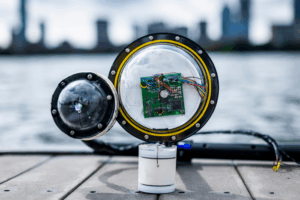
MIT researchers have taken a major step to overcome this problem by developing a battery-free, wireless underwater camera that is about 100,000 times more energy-efficient than other undersea cameras. The device takes color photos, even in dark underwater environments, and transmits image data wirelessly through the water.
The autonomous camera is powered by sound. It converts mechanical energy from sound waves traveling through water into electrical energy that powers its imaging and communications equipment. After capturing and encoding image data, the camera also uses sound waves to transmit data to a receiver that reconstructs the image.
Because it doesn’t need a power source, the camera could run for weeks on end before retrieval, enabling scientists to search remote parts of the ocean for new species. It could also be used to capture images of ocean pollution or monitor the health and growth of fish raised in aquaculture farms.
“One of the most exciting applications of this camera for me personally is in the context of climate monitoring. We are building climate models, but we are missing data from over 95 percent of the ocean. This technology could help us build more accurate climate models and better understand how climate change impacts the underwater world,” says Fadel Adib, associate professor in the Department of Electrical Engineering and Computer Science and director of the Signal Kinetics group in the MIT Media Lab, and senior author of the paper.
Joining Adib on the paper are co-lead authors and Signal Kinetics group research assistants Sayed Saad Afzal, Waleed Akbar, and Osvy Rodriguez, as well as research scientist Unsoo Ha, and former group researchers Mario Doumet and Reza Ghaffarivardavagh. The paper is published in Nature Communications.
The battery-free, wireless underwater camera could help scientists explore unknown regions of the ocean, track pollution, or monitor the effects of climate change./CREDIT-Image: Adam Glanzman
Going battery-free
To build a camera that could operate autonomously for long periods, the researchers needed a device that could harvest energy underwater on its own while consuming very little power.
The camera acquires energy using transducers made from piezoelectric materials that are placed around its exterior. Piezoelectric materials produce an electric signal when a mechanical force is applied to them. When a sound wave traveling through the water hits the transducers, they vibrate and convert that mechanical energy into electrical energy.
Those sound waves could come from any source, like a passing ship or marine life. The camera stores harvested energy until it has built up enough to power the electronics that take photos and communicate data.
To keep power consumption as a low as possible, the researchers used off-the-shelf, ultra-low-power imaging sensors. But these sensors only capture grayscale images. And since most underwater environments lack a light source, they needed to develop a low-power flash, too.
They solved both problems simultaneously using red, green, and blue LEDs. When the camera captures an image, it shines a red LED and then uses image sensors to take the photo. It repeats the same process with green and blue LEDs.
Even though the image looks black and white, the red, green, and blue colored light is reflected in the white part of each photo, Akbar explains. When the image data are combined in post-processing, the color image can be reconstructed.
Nature/water/Ians
Sending data with sound
Once image data are captured, they are encoded as bits (1s and 0s) and sent to a receiver one bit at a time using a process called underwater backscatter. The receiver transmits sound waves through the water to the camera, which acts as a mirror to reflect those waves. The camera either reflects a wave back to the receiver or changes its mirror to an absorber so that it does not reflect back.
A hydrophone next to the transmitter senses if a signal is reflected back from the camera. If it receives a signal, that is a bit-1, and if there is no signal, that is a bit-0. The system uses this binary information to reconstruct and post-process the image.
“This whole process, since it just requires a single switch to convert the device from a nonreflective state to a reflective state, consumes five orders of magnitude less power than typical underwater communications systems,” Afzal says.
The researchers tested the camera in several underwater environments. In one, they captured color images of plastic bottles floating in a New Hampshire pond. They were also able to take such high-quality photos of an African starfish that tiny tubercles along its arms were clearly visible. The device was also effective at repeatedly imaging the underwater plant Aponogeton ulvaceus in a dark environment over the course of a week to monitor its growth.
Now that they have demonstrated a working prototype, the researchers plan to enhance the device so it is practical for deployment in real-world settings. They want to increase the camera’s memory so it could capture photos in real-time, stream images, or even shoot underwater video.
They also want to extend the camera’s range. They successfully transmitted data 40 meters from the receiver, but pushing that range wider would enable the camera to be used in more underwater settings.
This research is supported, in part, by the Office of Naval Research, the Sloan Research Fellowship, the National Science Foundation, the MIT Media Lab, and the Doherty Chair in Ocean Utilization.
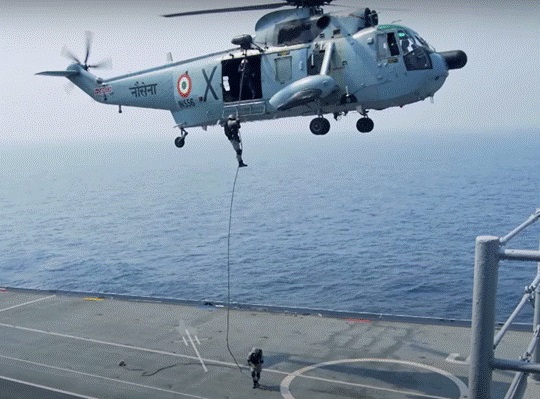
“Vikrant is not just a warship. This is a testament to the hard work, talent, influence and commitment of India in the 21st century. If the goals are distant, the journeys are long, the ocean and the challenges are endless – then India’s answer is Vikrant. The incomparable Amrit of Azadi ka Amrit Mahotsav is Vikrant. Vikrant is a unique reflection of India becoming self-reliant.”
Prime Minister Narendra Modi
India celebrated a historical milestone as it commissioned its first ever Indigenous Aircraft Carrier (IAC)- Vikrant. Designed by Indian Navy’s in-house Warship Design Bureau (WDB) and built by Cochin Shipyard Limited, a Public Sector Shipyard under the Ministry of Ports, Shipping & Waterways, Vikrant has been built with state-of-the-art automation features and is the largest ship ever built in the maritime history of India.
The Indigenous Aircraft Carrier is named in honour of her historic predecessor, India’s first aircraft carrier, which played an important part in the war of 1971. The ship has large number of indigenous equipment and machinery, involving major industrial houses in the country viz. BEL, BHEL, GRSE, Keltron, Kirloskar, Larsen & Toubro, Wartsila India etc. as well as over 100 MSMEs. Vikrant’s commissioning would provide India two operational aircraft carriers, which will greatly improve the country’s maritime security.
IAC serves as a shining example of the country’s pursuit of “Aatmanirbhar Bharat” and gives the Government’s “Make in India” initiative further momentum. With the IAC Vikrant, India has joined an elite group of countries with the specialised capacity to design and construct an aircraft carrier domestically, including U.S.A., U.K., France, Russia and China.
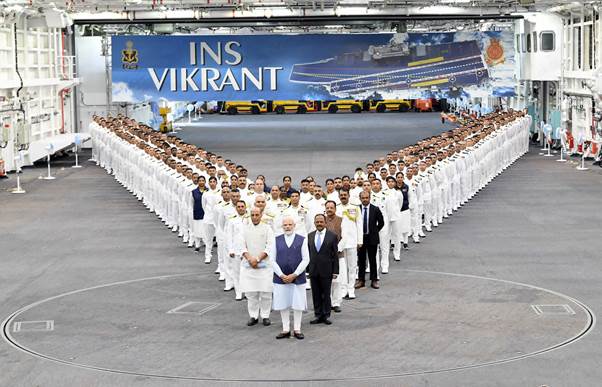
Prime Minister Narendra Modi commissioned INS Vikrant on the coast of Kerala on September 02, 2022, and noted that it is a symbol of indigenous potential, indigenous resources and indigenous skills. IAC Vikrant is a magnificent addition to the list of glorious aircraft carriers of the Indian Navy, which have proved to be extremely resourceful to the country.
Significance of Aircraft Carriers
Aircraft carriers are extremely strong and have powerful weapons. Their military capabilities, which include carrier borne aircraft, have completely changed the marine domain. An aircraft carrier offers a wide range of strategic benefits. It offers incredibly flexible operational options. Surveillance, air defence, airborne early warning, protection of Sea Lines of Communication (SLOC), and anti-submarine warfare are some of its principal functions.
For India, the carrier battlegroup, with its inherent combat elements and firepower, becomes a key capability to establish effective air dominance and efficient sea control.
History of Aircraft Carriers in India
Right from its Independence, India was well aware of the need for aircraft carriers to establish itself as a blue water navy. Since the sixties, the Indian Navy has had the unique distinction of operating all variants of aircraft launch and recovery systems.
Here is a walkthrough of India’s prestigious aircraft carriers till now:
INS Vikrant (R11)- India’s First Aircraft Carrier
The INS Vikrant was launched on September 22, 1945 as Hercules. However, its construction was stalled and was completed when India purchased it from Britain in 1957. On March 04, 1961 it was commissioned as Vikrant in its first avatar. It was placed under the command of Captain Pritam Singh Mahindroo. On March 05, 1961, Vikrant sailed from Belfast for Portsmouth and Portland to carry out sea trials, and on October 06, 1961, Vikrant finally sailed for India. It entered Bombay on November 03, 1961.
The 19,500-tonne Carrier, INS Vikrant was the first ever carrier for an Asian country and remained so for a long time. Soon after its commissioning, the INS Vikrant saw action during the Goa Liberation Operation in 1961.
It played a crucial role in the 1971 war with its aircrafts decimating the enemy. The Sea Hawks and Alizés pounded the enemy targets over Chittagong, Cox’s Bazar, Khulna and Mongla. Heavy damage was inflicted on the ships and harbour installations. The runways at the first two places were rendered inoperable, and along with other units of the fleet, Vikrant ensured a total blockade off East Pakistan. The INS Vikrant helped in preventing reinforcement of Pakistani forces from the sea, leading to the birth of Bangladesh.
The INS Vikrant emerged in a new avatar as a Vertical/ Short Take Off and Land (V/STOL) carrier in 1984, with the brand new, state-of-the-art aircraft Sea Harrier. Its new capability inspired the induction of INS Vikramaditya, and the plans of its reincarnation.
After serving for 36 years, it was decommissioned from active service on 31 January, 1997.[1]
INS Viraat- Over 30 Years of Service to the Nation
INS Viraat was originally commissioned by the British Royal Navy as HMS Hermes on November 18, 1959. It served the Royal Navy in three different avatars- 1959-1970: as the Strike Carrier, 1970-1980- as a Commando Anti-Submarine Warfare Carrier, and 1980 onwards it was a V/STOL Carrier, for which it underwent major structural modifications. This included a 12-degree ramp designed to optimally launch Sea Harrier Operations.
In 1982, Hermes saw action in the Falklands under the command of Captain Middleton where she distinguished herself as the Flagship of the Royal Navy in the campaign to regain Falklands and South Georgia from Argentina. The 74-day war in hostile weather saw the Sea Harriers undertake 2376 sorties and shoot down 20 enemy aircrafts with the loss of two Sea Harriers to enemy ground fire.
The Indian Navy, in need of a second aircraft carrier, acquired the HMS Hermes on April 24, 1986. INS Viraat was finally commissioned by the Indian Navy on 12 May 1987. After acing a set of tests and trials, on July 23, 1987 it sailed from Plymouth to India, reaching the Indian waters on 21 August 1987. It was 227 metres long and 49 metres wide and had a full load displacement of 28,700 tons.
INS Viraat’s first major operation was ‘Operation Jupiter’ in July 1989 as part of Peace Keeping Operations in Sri Lanka, following the breakdown of the Indo- Sri Lankan Accord of 1986. On July 27, 1989, the ship flew 76 helicopter sorties off Kochi to board more than 350 soldiers and more than 35 tonnes of supplies for the 7 Garhwal Rifles. The INS Viraat and its task group continued to be stationed out in the field for the next two weeks, using the opportunity to train soldiers, proving the Viraat’s operational adaptability.
It also played a pivotal role in Operation Parakram, which was carried out in the wake of the 2013 terrorist attack on the Indian Parliament. By establishing a blockade against Pakistan during the 1999 Kargil War, the INS Viraat also played a crucial part in Operation Vijay. The ship has additionally taken part in a number of foreign joint exercises, including Malabar (with the US Navy), Varuna (with the French Navy), and Naseem-Al-Bahr (with the Oman Navy), as well as being a crucial component of every year’s Theatre Level Operational Exercise (TROPEX). The ship’s last operational deployment was in February 2016 when it took part in the International Fleet Review (IFR-2016) at Vishakhapatnam.
The INS Viraat has played a pivotal role in spearheading India’s maritime resurgence. Since 1987, the ship’s deck launched 22,034 hours of flying, it spent 2,250 days at sea sailing over 5.8 lakh Nautical Miles. It was decommissioned from service on March 06, 2017.
INS Vikramaditya- Indian Navy’s Biggest Ship
Russia’s refurbished Admiral Gorshkov was commissioned into the Indian Navy as INS Vikramaditya at Severodvinsk, Russia on November 16, 2013. It is a state-of-the-art ship, capable of operating a versatile range of high-performance aircrafts, such as the MiG 29K fighters, KM 31 AEW helicopters, multi-role Seakings and utility Chetaks. The ship is over 285 meters long and 60 meters wide, making it the biggest ship in the Indian Navy. Her 23 decks scale a height of 60 meters
With over 1,600 personnel on board, INS Vikramaditya is literally a ‘Floating City’. With a capacity of over 8,000 tonnes of Low Sulphur High-Speed Diesel (LSHSD), she is capable of operations up to a range of over 7,000 nautical miles or 13000 kms. The ship has the ability to carry over 30 aircrafts, comprising an assortment of MiG 29K/Sea Harrier, Kamov 31, Kamov 28, Sea King, ALH-Dhruv and Chetak helicopters. The MiG 29K swing role fighter is the main offensive platform and provides a quantum jump for the Indian Navy’s maritime strike capability. These fourth-generation air superiority fighters provide a significant fillip for the Indian Navy with a range of over 700 nm and an array of weapons including anti-ship missiles, Beyond Visual Range air-to-air missiles, guided bombs and rockets.
The ship is equipped with state-of-the-art launch and recovery systems along with aids to enable smooth and efficient operation of ship borne aircraft. Major systems include the LUNA Landing system for MiGs, DAPS Landing system for Sea Harriers and Flight deck lighting systems.
INS Vikrant (IAC-1): The Self-Reliant Rebirth
The 262-metre-long carrier has a full displacement of close to 45,000 tonnes which is much larger and advanced than her predecessor. The ship is powered by four Gas Turbines totaling 88 MW power and has a maximum speed of 28 Knots. Built at an overall cost of close to Rs. 20,000 crores, the project has been progressed in three Phases of contract between MoD and CSL. It has an overall indigenous content of 76%.
Vikrant has been built with high degree of automation for machinery operation, ship navigation and survivability, and has been designed to accommodate an assortment of fixed wing and rotary aircraft. The ship would be capable of operating air wing consisting of 30 aircraft comprising of MIG-29K fighter jets, Kamov-31, MH-60R multi-role helicopters, in addition to indigenously manufactured Advanced Light Helicopters (ALH) and Light Combat Aircraft (LCA) (Navy). Using a novel aircraft-operation mode known as STOBAR (Short Take- Off but Arrested Landing), the IAC is equipped with a ski- jump for launching aircraft, and a set of ‘arrester wires’ for their recovery onboard.
The Prime Minister, Narendra Modi has greeted people on the auspicious occasion of Navratri. On the beginning of Navratri, Modi also prayed to Goddess Shailaputri and wished happiness, health and fortune the grace of the goddess.
“शक्ति की उपासना के महापर्व नवरात्रि की आप सभी को बहुत-बहुत शुभकामनाएं। आस्था और विश्वास का यह पावन अवसर हर किसी के जीवन में नई ऊर्जा और नए उत्साह का संचार करे। जय माता दी!”
“वन्दे वाञ्छितलाभाय चन्द्रार्धकृतशेखराम्।
वृषारूढां शूलधरां शैलपुत्रीं यशस्विनीम् ।।
देवी शैलपुत्री की आराधना के साथ आज से नवरात्रि का शुभारंभ हो रहा है। मेरी कामना है कि उनकी कृपा से हर किसी का जीवन सुख, सौभाग्य और आरोग्य से परिपूर्ण हो।”
Scientists have identified immune cell types that could be targeted to develop specific immunotherapies in chemotherapy-resistant breast cancers.
Researchers from King’s College London and The Institute of Cancer Research, London, with support from Breast Cancer Now, have performed a deep dive into the different immune markers within tumour tissues and blood samples of early breast cancer patients whose cancer failed to respond to chemotherapy given to them prior to surgery.
The research, published today in Clinical Cancer Research, a journal of the American Association for Cancer Research, gives insight into the function of immune cells in patients with chemotherapy-resistant breast cancers. While chemotherapy may not kill cancer cells in these high-risk patients, immunotherapy, a type of treatment that helps the immune system to attack cancer cells, may provide a benefit.
To investigate the immune environment that surrounds these chemotherapy resistant tumours, researchers employed multiple and novel complementary technologies looking at proteins and genes on both pre-treatment and post-treatment breast cancer tissue. They also measured how 1,330 cancer and immune-related genes within cancer tissues were affected by chemotherapy.
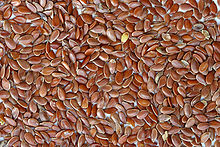
Flax seeds help women combat menstrual complications and fight post-menopausal risk of breast cancer, say studies
They found that chemotherapy resistant cancer cells had very few immune cells around them, but chemotherapy did induce changes in several immune cell types. Specifically, they found increases in the number of “innate” (first responder) cells such as neutrophils and natural killer (NK) cells. NK cells help the body to fight infection and cancer. But analysis found the increased NK cells in patients with chemotherapy resistant disease lacked cytotoxic activity – the ‘killing instinct’.
Researchers also found immune-related genes associated with NK cells were those associated with cell inhibition or exhaustion, which meant NK cells were unable to fight cancer cells. This new insight into the behaviour of NK cells could be used to develop specific immunotherapies for these high-risk patients. This would need to be investigated in future clinical trials.
These findings also show that blood monitoring during chemotherapy may help predict chemotherapy response early, potentially allow for tailoring of treatment prior to surgery.
Lead author Dr Sheeba Irshad, Cancer Research UK Clinician Scientist at King’s College London said: “Chemotherapy resistance in aggressive early breast cancers is a major reason why cancer regrows after treatment, contributing significantly to people not surviving their disease. In order to find the right targets for drug developments, it’s important to have a deep understanding of the complex mechanisms that allow some cancer cells to resist treatment, then hide from our immune system to only re-emerge later when they’re harder to eradicate.
“Our work has identified several cell types that would be worth investigating further to understand how they are interacting with the resistant cancer cell and how we can tweak that for our benefit. I am excited to continue to investigate these findings further.”
chemotherapy
Professor Andrew Tutt, Director of the Breast Cancer Now Toby Robins Research Centre at The Institute of Cancer Research, London, and of the Breast Cancer Now Research Unit at King’s College London, said: “Great strides have been made in harnessing immunotherapies to treat several types of cancer, but we need to do better to realise their potential for patients with breast cancer.
“This exciting work advances our understanding of the interaction between cancer cells and the immune system during treatment, and why existing treatments work well for some patients, but not others. I hope this research will help us to enhance the anti-cancer immune response in breast cancer, particularly for patients whose cancer has not responded well to chemotherapy.”
Dr Kotryna Temcinaite, Senior Research Communications Manager at Breast Cancer Now, said: “With an estimated 35,000 people living with incurable secondary (metastatic) breast cancer in the UK, it’s vital we develop smarter, more effective treatments to ensure fewer people hear the devastating news the disease has returned and spread to other parts of the body. This exciting early-stage research, which has been part-funded by Breast Cancer Now, helps to lay the groundwork for discovering a way to target breast cancer cells that resist chemotherapy treatment. We hope by building on these findings, scientists will ultimately be able to develop immunotherapy treatments that may help more people survive breast cancer.”
The cities of the ancient Maya in Mesoamerica never fail to impress. But beneath the soil surface, an unexpected danger lurks there: mercury pollution. In a review article in Frontiers in Environmental Science, researchers conclude that this pollution isn’t modern: it’s due to the frequent use of mercury and mercury-containing products by the Maya of the Classic Period, between 250 and 1100 CE. This pollution is in places so heavy that even today, it pose a potential health hazard for unwary archeologists.
Lead author Dr Duncan Cook, an associate professor of Geography at the Australian Catholic University, said: “Mercury pollution in the environment is usually found in contemporary urban areas and industrial landscapes. Discovering mercury buried deep in soils and sediments in ancient Maya cities is difficult to explain, until we begin to consider the archeology of the region which tells us that the Maya were using mercury for centuries.”
Ancient anthropogenic pollution
For the first time, Cook and colleagues here reviewed all data on mercury concentrations in soil and sediments at archeological sites across the ancient Maya world. They show that at sites from the Classical Period for which measurements are available – Chunchumil in today’s Mexico, Marco Gonzales, Chan b’i, and Actuncan in Belize, La Corona, Tikal, Petén Itzá, Piedras Negras, and Cancuén in Guatemala, Palmarejo in Honduras, and Cerén, a Mesoamerican ‘Pompeii’, in El Salvador –mercury pollution is detectable everywhere except at Chan b’i.
Concentrations range from 0.016 ppm at Actuncan to an extraordinary 17.16 ppm at Tikal. For comparison, the Toxic Effect Threshold (TET) for mercury in sediments is defined as 1 ppm.
Heavy users of mercury
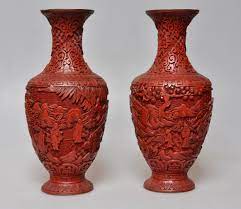
What caused this prehistoric mercury pollution? The authors highlight that sealed vessels filled with ‘elemental’ (ie, liquid) mercury have been found at several Maya sites, for example Quiriqua in Guatemala, El Paraíso in Honduras, and the former multi-ethnic megacity Teotihucan in Central Mexico. Elsewhere in the Maya region, archeologists have found objects painted with mercury-containing paints, mainly made from the mineral cinnabar.
The authors conclude that the ancient Maya frequently used cinnabar and mercury-containing paints and powders for decoration. This mercury could then have leached from patios, floor areas, walls, and ceramics, and subsequently spread into the soil and water.
“For the Maya, objects could contain ch’ulel, or soul-force, which resided in blood. Hence, the brilliant red pigment of cinnabar was an invaluable and sacred substance, but unbeknownst to them it was also deadly and its legacy persists in soils and sediments around ancient Maya sites,” said co-author Dr Nicholas Dunning, a professor at the University of Cincinnati.
cinnabar/wikipedia
As mercury is rare in the limestone that underlies much of the Maya region, they speculate that elemental mercury and cinnabar found at Maya sites could have been originally mined from known deposits on the northern and southern confines of the ancient Maya world, and imported to the cities by traders.
Health hazards and the ‘Mayacene’
All this mercury would have posed a health hazard for the ancient Maya: for example, the effects of chronic mercury poisoning include damage to the central nervous system, kidneys, and liver, and cause tremors, impaired vision and hearing, paralysis, and mental health problems. It’s perhaps significant that one of the last Maya rulers of Tikal, Dark Sun, who ruled around 810 CE, is depicted in frescoes as pathologically obese. Obesity is a known effect of metabolic syndrome, which can be caused by chronic mercury poisoning.
More research is needed to determine whether mercury exposure played a role in larger sociocultural change and trends in the Maya world, such as those towards the end of the Classic Period.
Co-author Dr Tim Beach, a professor at the University of Texas at Austin, said: “We conclude that even the ancient Maya, who barely used metals, caused mercury concentrations to be greatly elevated in their environment. This result is yet more evidence that just like we live today in the ‘Anthropocene’, there also was a ‘Maya anthropocene’ or ‘Mayacene’. Metal contamination seems to have been effect of human activity through history.”
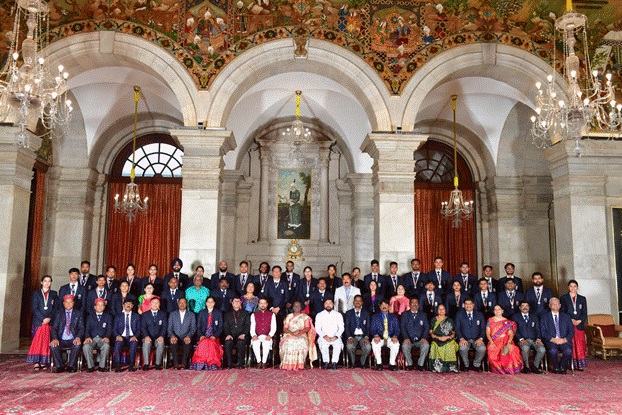
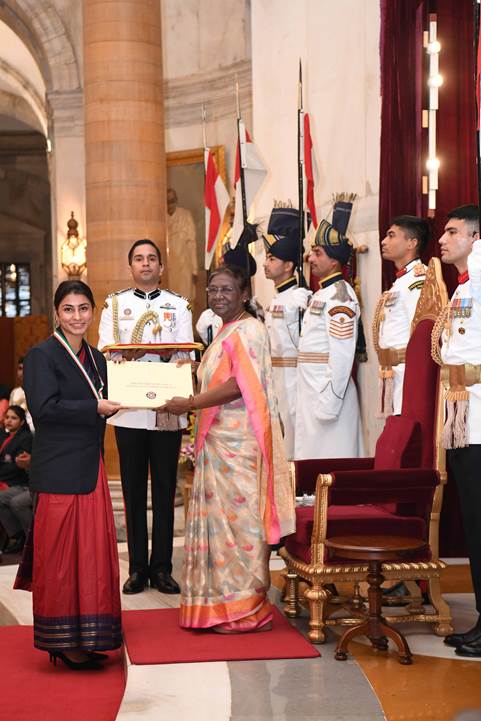
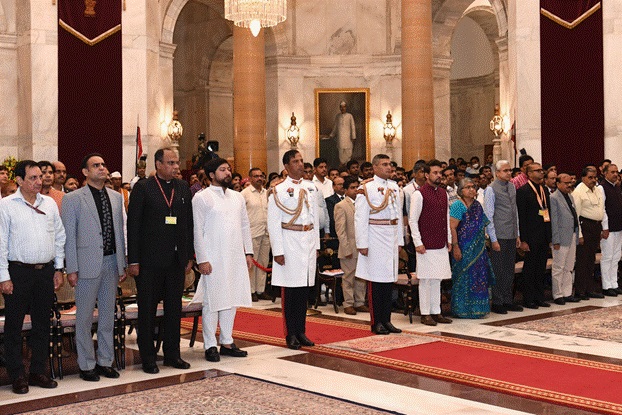
The President of India, Droupadi Murmu presented the National Service Scheme Awards for the year 2020-2021 at Rashtrapati Bhavan today.Union Minister of Youth Affairs and Sports Shri Anurag Thakur and Minister of State for Youth Affairs & Sports Shri Nisith Pramanik attended the awards ceremony. Secretary, Youth Affairs, Shri Sanjay Kumar and Secretary, Sports, Smt. Sujata Chaturvedi and senior officers of the Ministry and other dignitaries were also present on the occasion.
Ministry of Youth Affairs & Sports, Department of Youth Affairs confers every year the National Service Scheme Award to recognize and reward outstanding contributions towards voluntary community service made by the Universities/ +2 Council, Programme Officers/NSS Units and NSS Volunteers, with a view to further promote NSS in the country. At Present, NSS has about 40 lakh volunteers on its rolls spread over the country.The details of National Service Scheme (NSS) Award for the year 2020-21 in 3 different categories are as under:
S. No.
Categories
No. of Awards
Value of Award
1
University/ +2 Council
2
First Award: Rs.5,00,000/- (for NSS Programme Development) with a Trophy to the University/ +2 Council.
A Certificate and a Silver Medal to the Programme Coordinator.
Second Award: Rs.3,00,000 lakh (for NSS Programme Development) with a Trophy to the University/ +2 Council.
A Certificate and a Silver Medal to the Programme Coordinator.
2
NSS Units and their Programme Officers
10+10
Rs.2,00,000/- to each NSS Unit (For NSS Programme Development), with a Trophy.
Rs. 1,50,000/- to each Programme Officer with a Certificate and a Silver Medal.
3
NSS Volunteers
30
Rs. 1,00,000/- to each Volunteer, with a Certificate and a Silver Medal.
NSS is a Centrally Sector Scheme which was launched in the year 1969 with the primary objective of developing the personality and character of the student youth through voluntary community service. The ideological orientation of the NSS is inspired by the ideals of Mahatma Gandhi. Very appropriately, the motto of NSS is “NOT ME, BUT YOU”(‘स्वयं से पहले आप’).
Briefly, the NSS volunteers work on issues of social relevance, which keep evolving in response to the needs of the community, through regular and special camping activities. Such issues include (i) literacy and education, (ii) health, family welfare and nutrition, (iii) environment conservation, (iv) social service programmes, (v) programmes for empowerment of women, (vi) programmes connected with economic development activities, (vii) rescue and relief during calamities, (viii) Swachhata activities, etc.
The Export Promotion Council for Handicrafts (EPCH) in association with Indian mission in the Guatemala (Latin America) is organizing a Made in India – Trade Show Exhibition on Indian arts & crafts and other products of Indian Handicrafts Manufacturers & Exporters from 22 – 24 September, 2022 in Guatemala City, Guatemala. Ten National master craft persons and exporters from all parts of India are displaying the wide range of variety of handcrafted products like home décor, home furnishing, carpets, furniture, lamps, fashion jewellery & accessories, incense, aroma and wellness products.
Shri Rakesh Kumar, Executive Director, EPCH informed that H.E. Mr. Guillermo Castillo, Vice President of Guatemala & acting President and H.E. Ambassador of India to Guatemala, Dr. Manoj Kumar Mohapatra inaugurated the Made in India Trade Show in Guatemala and have extended their full cooperation and support to EPCH for organizing Made in India – Trade Show Exhibition in their Region reflecting the indomitable spirit of the handicraft exporting fraternity to continue furthering the efforts to strengthen the Handicrafts Sector.
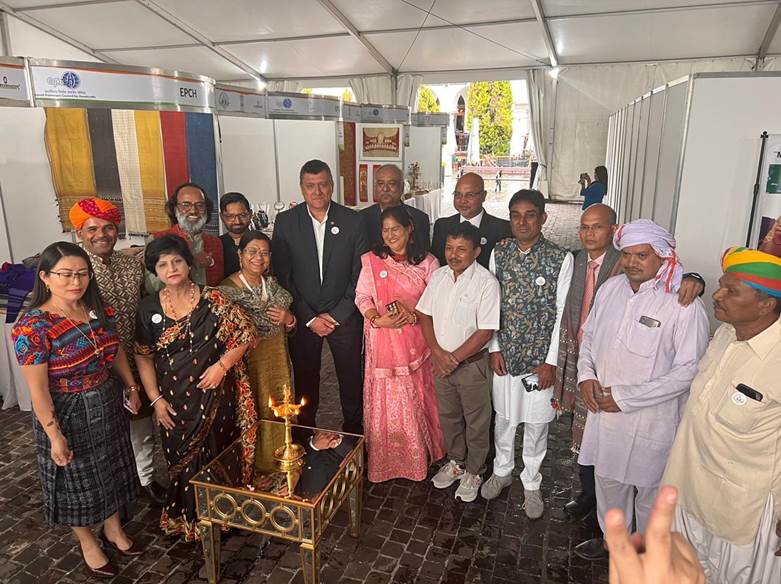
Mr.Guillermo Castillo, Vice President of Guatemala & acting President and H.E. Ambassador of India to Guatemala Dr. Manoj Kumar Mohapatra along with other dignitaries inaugurating Made in India – Trade Show Exhibition on Indian arts & crafts at Cayala, Guatemala City, Guatemala
Shri Raj Kumar Malhotra, Chairman, EPCH informed that this Made in India – Trade Show Exhibition on Indian arts & crafts will provide a viable business option to the exhibitors and buyers. It is expected that the Made in India – Trade Show Exhibition on Indian arts & crafts in association with Indian Missions will lead to enhance trade and people to people relations in the Latin American region.
His Excellency H.E. Ambassador of India to Guatemala, Dr. Manoj Kumar Mohapatra informed that the Made in India – Trade Show Exhibition is an opportunity to portray diversity of India, which the world is appreciative of. This will also be an opportunity to present to the world India’s abundant skills, competitive edge and adherence to quality compliances to the world.
EPCH being a nodal agency, promoting exports of handicrafts from the Country to various destinations of the world and projecting India’s image abroad as a reliable supplier of high quality handicrafts goods & services. The Handicrafts exports during the year 2021-22 was Rs. 33253.00 Crores (US $ 4459.76 Million) registering a growth of 29.49% in rupee term & 28.90% in dollar terms over previous year. However, exports of Handicrafts to Latin America is Rs. 682 crores (USD 92 million) in year 2021-22.
Mr.Guillermo Castillo, Vice President of Guatemala & acting President and H.E. Ambassador of India to Guatemala Dr. Manoj Kumar Mohapatra along with participating national awardees and master craft persons during Made in India – Trade Show Exhibition on Indian arts & crafts at Cayala, Guatemala City, Guatemala.
New UMBC-led research in Frontiers in Microbiology suggests that viruses are using information from their environment to “decide” when to sit tight inside their hosts and when to multiply and burst out, killing the host cell. The work has implications for antiviral drug development.
A virus’s ability to sense its environment, including elements produced by its host, adds “another layer of complexity to the viral-host interaction,” says Ivan Erill, professor of biological sciences and senior author on the new paper. Right now, viruses are exploiting that ability to their benefit. But in the future, he says, “we could exploit it to their detriment.”
Not a coincidence
The new study focused on bacteriophages—viruses that infect bacteria, often referred to simply as “phages.” The phages in the study can only infect their hosts when the bacterial cells have special appendages, called pili and flagella, that help the bacteria move and mate. The bacteria produce a protein called CtrA that controls when they generate these appendages. The new paper shows that many appendage-dependent phages have patterns in their DNA where the CtrA protein can attach, called binding sites. A phage having a binding site for a protein produced by its host is unusual, Erill says.
Even more surprising, Erill and the paper’s first author Elia Mascolo, a Ph.D. student in Erill’s lab, found through detailed genomic analysis that these binding sites were not unique to a single phage, or even a single group of phages. Many different types of phages had CtrA binding sites—but they all required their hosts to have pili and/or flagella to infect them. It couldn’t be a coincidence, they decided.
The ability to monitor CtrA levels “has been invented multiple times throughout evolution by different phages that infect different bacteria,” Erill says. When distantly related species demonstrate a similar trait, it’s called convergent evolution—and it indicates that the trait is definitely useful.
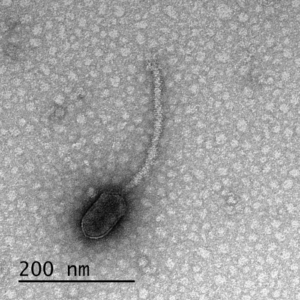
A delta bacteriophage, the first identified in a new study in Frontiers in Microbiology to have binding sites for CtrA, a protein produced by the bacteriophage’s host that regulates the production of pili and flagella. The presence of these binding sites only in phages that require their host cells to have pili/flagella in order to infect them suggests that the phage is monitoring the presence of this protein in order to “decide” whether to stay put or replicate and emerge from its host cell./CREDIT:Tagide deCarvalho/UMBC
Timing is everything
Another wrinkle in the story: The first phage in which the research team identified CtrA binding sites infects a particular group of bacteria called Caulobacterales. Caulobacterales are an especially well-studied group of bacteria, because they exist in two forms: a “swarmer” form that swims around freely, and a “stalked” form that attaches to a surface. The swarmers have pili/flagella, and the stalks do not. In these bacteria, CtrA also regulates the cell cycle, determining whether a cell will divide evenly into two more of the same cell type, or divide asymmetrically to produce one swarmer and one stalk cell.
Because the phages can only infect swarmer cells, it’s in their best interest only to burst out of their host when there are many swarmer cells available to infect. Generally, Caulobacterales live in nutrient-poor environments, and they are very spread out. “But when they find a good pocket of microhabitat, they become stalked cells and proliferate,” Erill says, eventually producing large quantities of swarmer cells.
So, “We hypothesize the phages are monitoring CtrA levels, which go up and down during the life cycle of the cells, to figure out when the swarmer cell is becoming a stalk cell and becoming a factory of swarmers,” Erill says, “and at that point, they burst the cell, because there are going to be many swarmers nearby to infect.”
Listening in
“Everything that we know about phages, every single evolutionary strategy they have developed, has been shown to translate to viruses that infect plants and animals,” he says. “It’s almost a given. So if phages are listening in on their hosts, the viruses that affect humans are bound to be doing the same.”
There are a few other documented examples of phages monitoring their environment in interesting ways, but none include so many different phages employing the same strategy against so many bacterial hosts.
This new research is the “first broad scope demonstration that phages are listening in on what’s going on in the cell, in this case, in terms of cell development,” Erill says. But more examples are on the way, he predicts. Already, members of his lab have started looking for receptors for other bacterial regulatory molecules in phages, he says—and they’re finding them.
New therapeutic avenues
The key takeaway from this research is that “the virus is using cellular intel to make decisions,” Erill says, “and if it’s happening in bacteria, it’s almost certainly happening in plants and animals, because if it’s an evolutionary strategy that makes sense, evolution will discover it and exploit it.”
For example, to optimize its strategy for survival and replication, an animal virus might want to know what kind of tissue it is in, or how robust the host’s immune response is to its infection. While it might be unsettling to think about all the information viruses could gather and possibly use to make us sicker, these discoveries also open up avenues for new therapies.
“If you are developing an antiviral drug, and you know the virus is listening in on a particular signal, then maybe you can fool the virus,” Erill says. That’s several steps away, however. For now, “We are just starting to realize how actively viruses have eyes on us—how they are monitoring what’s going on around them and making decisions based on that,” Erill says. “It’s fascinating.”
Amazon Great Indian Festival 2022 sale has picked up but the numbers are not available still still compared Flipkart’s Big Billion Deal as both entered the second day on Saturday.
The massive festive season sales are offering big discounts on popular smartphones, large appliances, and other electronic items. If you’re looking to get all your Diwali shopping done online, here is a look at some on offer on Amazon Great Indian Festival 2022 sale:
Apple iPhone 12 now at: Rs. 46,499 (MRP Rs. 65,900)
Samsung Galaxy S22 5G now at: Rs. 52,999 (MRP Rs.85,999)
OnePlus Nord CE 2 Lite now at: Rs. 18,499 (MRP Rs. 19,999)
Samsung Galaxy M13 now at: Rs. 9,499 (MRP Rs. 14,999)
iQoo Neo 6 5G now at: Rs. 27,999 (MRP Rs. 34,999)
Apple Watch SE now at: Rs. 23,900 (MRP Rs. 33,900)
Sony WH-1000XM4 wireless headphones now at: Rs. 19,990 (MRP Rs. 29,990)
2020 Apple Mac mini with M1 now at: Rs. 58,990 (MRP Rs. 64,900)
2021 iPad 10.2-inch now at: Rs. 25,999 (MRP Rs. 30,900)
Samsung Galaxy Buds Pro now at: Rs. 5,990 (MRP Rs. 17,990)
Sony Bravia 55-inch 4K Ultra HD Smart LED Google TV now at: Rs. 61,000 (MRP Rs. 99,900)
Echo Dot (4th gen) combo with Wipro smart bulb now at: Rs. 2,299 (MRP Rs. 6,598)
Fire TV Stick now at Rs. 1,999 (MRP Rs. 4,999) while the 4K model is down to Rs. 2,999 (MRP Rs. 5,999).
Shortly after Russian President Vladimir Putin announced that he will deploy citizens to fight Ukraine on Wednesday, long queues were witnessed at border with citizens flocking the borders to flee the country, which is finding huge manpower shortage to continue the Ukrainian war.
In an address, President Putin and military officials said 300,000 reservists would immediately be conscripted to fight in the unprovoked invasion after the warring country had lost significant ground in Ukraine amid recent counterattacks, said the report.
Putin on Wednesday ordered Russia’s first mobilisation since World War Two and warned the West he was not bluffing when he said he’d be ready to use nuclear weapons to defend Russia. He gave the citizens just four hours to pack their bags and say goodbyes to their families, said a report in Metro.
How to break an arm at home?
Soon after Putin’s announcement, the Google Search is inundated with the search string “how to break an arm at home”. It became the top search in Russia as Google Trends data showed a dramatic rise in the search term from 0 to 38 on a scale of 100, within 24 hours after the announcement.
On the other hand, the plane tickets out of Russia peaked $5,000 for one-way to neighbouring countries. Tens of thousands of Russians sought to flee the country, with five-hour long queues at the borders to Finland, Georgia, and Mongolia. Those who were lucky got the flight, but many others were blocked from departing despite a valid tickets or visa.
Social media groups started a variety of ideas and advice on how to get out of Russia while one news site in Russian gave a list of “where to run away right now from Russia.” But breaking the arm remains the best option for many who could not afford the above.
They are now searching for “how to break an arm at home” so they can be exempted from participating in the war, if aged between 18 and 65.
However, some Russian nationalists are adamant and have renewed calls for some kind of mobilisation to send more troops into the war campaign.
E-commerce major Flipkart witnessed record number of shoppers at 1.6 million users per second the moment it opened the ninth edition of its ‘Big Billion Days 2022’ festive sales on Friday.
Attributing the huge rush to its opening to shoppers from tier 2 and smaller cities, the number of Flipkart Plus customers using Early Access saw huge rise from its last year’s record, said the comnpany.
Electronic devices such as laptops, smartwatches and true wireless wearables saw the highest demand, while makeup and fragrance category floowed next. The groceries too saw a significant rise in customers, said the company in a statement.
“This year’s event is special for many reasons, like the growing strength of our seller and partner ecosystem and the innovations that have enabled access to greater inclusivity and affordability for consumers,” said Manjari Singhal, Flipkart’s Senior Director of sales.
Shopsy, the e-commerce platform by Flipkart for Bharat, drew a majority of customers from tier 2 cities and beyond and the number of kiranas partnering with Flipkart for the festive sales deliveries grew from 27,000 in 2019 to 2 lakh in 2022.
The company is expecting a sales pitch in the first festive week to touch $5.9 billion this year and predictions are at $11.8 billion worth gross merchandise value (GMV) during the entire festive month.
An unexpected ‘heat wave’ of 700 degrees Celsius, extending 130,000 kilometres (10 Earth diameters) in Jupiter’s atmosphere, has been discovered. James O’Donoghue, of the Japanese Aerospace Exploration Agency (JAXA), has presented the results this week at the Europlanet Science Congress (EPSC) 2022 in Granada.
Jupiter’s atmosphere, famous for its characteristic multicoloured vortices, is also unexpectedly hot: in fact, it is hundreds of degrees hotter than models predict. Due to its orbital distance millions of kilometres from the Sun, the giant planet receives under 4% of the amount of sunlight compared to Earth, and its upper atmosphere should theoretically be a frigid -70 degrees Celsius. Instead, its cloud tops are measured everywhere at over 400 degrees Celsius.
“Last year we produced – and presented at EPSC2021 – the first maps of Jupiter’s upper atmosphere capable of identifying the dominant heat sources,” said Dr O’Donoghue. “Thanks to these maps, we demonstrated that Jupiter’s auroras were a possible mechanism that could explain these temperatures.”
Just like the Earth, Jupiter experiences auroras around its poles as an effect of the solar wind. However, while Earth’s auroras are transient and only occur when solar activity is intense, auroras at Jupiter are permanent and have a variable intensity. The powerful auroras can heat the region around the poles to over 700 degrees Celsius, and global winds can redistribute the heat globally around Jupiter.
A panning-view of Jupiter’s upper atmospheric temperatures, 1000 kilometers above the cloud tops. Jupiter is shown on top of a visible image for context. In this snapshot, the auroral region (near the northern pole, in yellow/white) appears to have shed a massive, planetary-scale wave of heating towards the equator. The feature is over 130,000 kilometers long, or 10-Earth diameters, and is hundreds of degrees warmer than the background. For video see: https://youtu.be/gWT0QwSoVls/CREDIT:Hubble / NASA / ESA / A. Simon (NASA GSFC) / J. Schmidt. Credit: James O’Donoghue
Looking more deeply through their data, Dr O’Donoghue and his team discovered the spectacular ‘heat wave’ just below the northern aurora, and found that it was travelling towards the equator at a speed of thousands of kilometres per hour.
The heat wave was probably triggered by a pulse of enhanced solar wind plasma impacting Jupiter’s magnetic field, which boosted auroral heating and forced hot gases to expand and spill out towards the equator.
“While the auroras continuously deliver heat to the rest of the planet, these heat wave ‘events’ represent an additional, significant energy source,” added Dr O’Donoghue. “These findings add to our knowledge of Jupiter’s upper-atmospheric weather and climate, and are a great help in trying to solve the ‘energy crisis’ problem that plagues research into the giant planets.”
Wearable sensors styled into t-shirts and face masks
Imperial researchers have embedded new low-cost sensors that monitor breathing, heart rate, and ammonia into t-shirts and face masks.
Potential applications range from monitoring exercise, sleep, and stress to diagnosing and monitoring disease through breath and vital signs.
Spun from a new Imperial-developed cotton-based conductive thread called PECOTEX, the sensors cost little to manufacture. Just $0.15 produces a metre of thread to seamlessly integrate more than ten sensors into clothing, and PECOTEX is compatible with industry-standard computerised embroidery machines.
First author of the research Fahad Alshabouna, PhD candidate at Imperial’s Department of Bioengineering, said: “The flexible medium of clothing means our sensors have a wide range of applications. They’re also relatively easy to produce which means we could scale up manufacturing and usher in a new generation of wearables in clothing.”
The research team embroidered the sensors into a face mask to monitor breathing, a t-shirt to monitor heart activity, and textiles to monitor gases like ammonia, a component of the breath that can be used to track liver and kidney function. The ammonia sensors were developed to test whether gas sensors could also be manufactured using embroidery.
Fahad added: “We demonstrated applications in monitoring cardiac activity and breathing, and sensing gases. Future potential applications include diagnosing and monitoring disease and treatment, monitoring the body during exercise, sleep, and stress, and use in batteries, heaters, anti-static clothing.”
The research is published today in Materials Today.
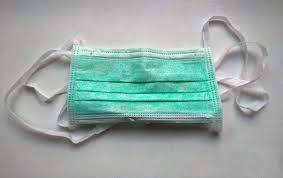
Mask
Seamless sensors
Wearable sensors, like those on smartwatches, let us continuously monitor our health and wellbeing non-invasively. Until now, however, there has been a lack of suitable conductive threads, which explains why wearable sensors seamlessly integrated into in clothing aren’t yet widely available.
Enter PECOTEX. Developed and spun into sensors by Imperial researchers, the material is machine washable, and is less breakable and more electrically conductive than commercially available silver-based conductive threads, meaning more layers can be added for to create complex types of sensor.[1]
Lead author Dr Firat Guder, also of the Department of Bioengineering, said: “PECOTEX is high-performing, strong, and adaptable to different needs. It’s readily scalable, meaning we can produce large volumes inexpensively using both domestic and industrial computerised embroidery machines.
“Our research opens up exciting possibilities for wearable sensors in everyday clothing. By monitoring breathing, heart rate, and gases, they can already be seamlessly integrated, and might even be able to help diagnose and monitor treatments of disease in the future.”
Next, the researchers will explore new application areas like energy storage, energy harvesting and biochemical sensing, as well as finding partners for commercialisation.
This study was funded by the Saudi Ministry of Education, Engineering and Physical Sciences Research Council (EPSRC, part of the UKRI), Cytiva, Imperial’s Department of Bioengineering, Bill and Melinda Gates Foundation, and the US Army.
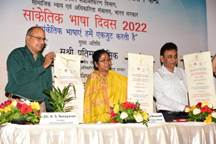
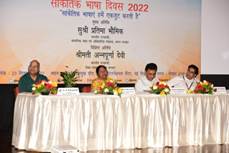
‘Sign Language Day’ with the theme ‘Sign Languages Unite Us’ was celebrated under Azadi ka Amrit Mahotsav by the Indian Sign Language Research and Training Centre (ISLRTC), an autonomous body under the Department of Empowerment of Persons with Disabilities, M/o Social Justice and Empowerment on 23rd September 2022 at C.D. Deshmukh Auditorium, India International Centre (IIC), New Delhi.
Ever since the United Nations declared 23rd September as the International Day of Sign Languages, the ISLRTC celebrates it every year on 23rd September. This year National Implementation Committee (NIC) chaired by Home Minister inter-alia approved the event – “Sign Language Day” on 23rd Sep, 2022 to be conducted and celebrated by Ministry of Social Justice and Empowerment” (Department of Empowerment of Persons with Disabilities), under “Azadi Ka Amrit Mahotsav” celebration.
As per the plan of action, approximately 3,200 organizations/ institutions were roped in for celebrating Sign Language Day-2022 under Azadi ka Amrit Mahotsav. The objective of the Sign Language Day celebration was to sensitize the general public about the importance of Indian Sign Language in the lives of persons with hearing disabilities.
Minister of Social Justice & Empowerment, Km. Pratima Bhoumik was the Chief Guest. Sh. Rajesh Aggrawal, Secretary, DEPwD, and Sh. Rajesh Yadav, Joint Secretary, DEPwD & Director, ISLRTC, and Sh. A.S. Narayanan, President, National Association of Deaf also graced the occasion.
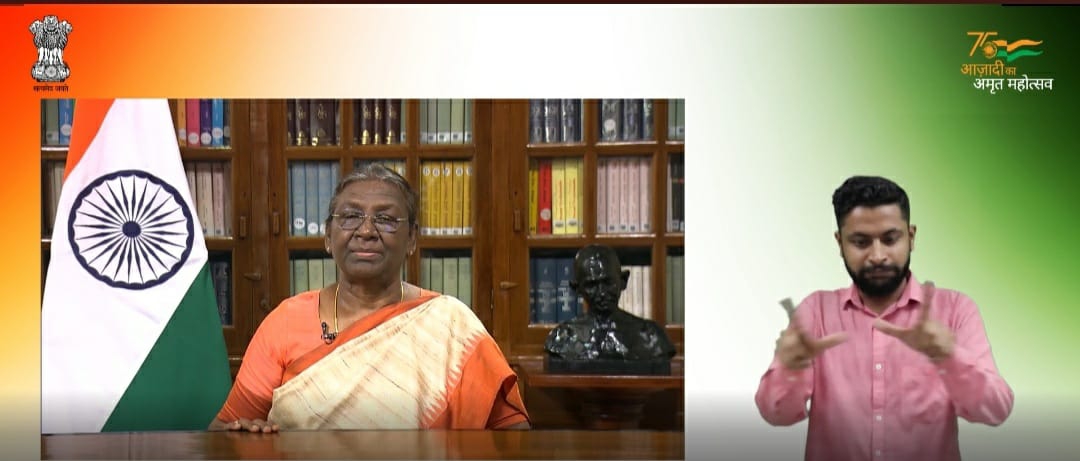
Via a video message, The President of India said that she feels proud and happy that entire world is adopting the principle of Indian culture i.e. Vasudhaiva Kutumbakam (All world is a family) and it be seen through the celebration of Sign language day throughout the world.
Minister of Social Justice & Empowerment, Km. Pratima Bhoumik mentioned that Persons with Disabilities (PwDs) are an integral part of our society and to provide them full accessibility is the utmost priority of the Government. Continuous efforts are being made to ensure the empowerment and mainstreaming of PwDs to make an inclusive society. She said that Sign language also plays an important role in the education of deaf people because it is easier for deaf people to get education and higher education through sign language. This day brings all the deaf people together socially across the country. Through sign language, our deaf brothers and sisters are getting inspiration and direction to move ahead in their lives. This year Sign Language Day celebration is being celebrated under the Amrit Mahotsav of Azadi, which will certainly lead to a positive success in increasing public awareness about the importance of sign language.
Addressing on the occasion, Sh. Rajesh Aggrawal, Secretary DEPwD highlighted the social significance of sign language as it integrates the deaf community socially as well as culturally. He praised the efforts of ISLRTC for doing commendable service to the people with hearing disability. Secretary, DEPwD, Shri.Rajesh Aggrawal mentioned that all the possible efforts will be made that every district to have an Indian Sign Language interpreter to facilitate accessible communication for Deaf persons.
Sh. Rajesh Yadav, Joint Secretary, DEPwD and Director, ISLRTC welcomed all the dignitaries and participants. He also presented a brief account of the remarkable works and achievements of ISLRTC in a short span of time from its establishment in 2015.
In his address, Shri A.S. Narayanan, President of the National Association of the Deaf thanked Prime Minister, Minister of State, SJ&E, DEPwD and ISLRTC for constantly promoting Indian Sign Language and Education of the Deaf to include them in the mainstream of the society. He informed that he has requested the Government for including Indian Sign Language (ISL) in the forthcoming Census.
During the programme, several important resource materials were launched:-
An ISL Dictionary app called Sign Learn was launched which is available in both Android and iOS versions.
ISLRTC had signed an MoU with National Council of Educational Research and Training (NCERT) on 06th October, 2020 for converting NCERT textbooks from Class I to XII into Indian Sign Language (digital format) to make the textbooks accessible to children with hearing disabilities. This year ISL e-content of NCERT textbooks of class VI was launched.
Under Azadi ka Amrit Mahotsav, the Centre launched ISL version of selected books of National Book Trust’s Veergatha series.
With the joint effort of ISLRTC and NCERT, a total of 500 academic words in Indian Sign Language were launched. These 500 academic words are words used at the secondary level, which are often used in history, science, political science, mathematics.
The Centre conducted 5th Indian Sign Language Competition, 2022, a national-level competition held for Deaf students and interpreters to showcase their ISL skills, creativity and knowledge. For the Competition, entries were invited on jokes, stories and essays in Indian Sign Language. During the Sign Language Day programme, all the winners of the 5th ISL competition were distributed trophy and certificate by Minister of Social Justice & Empowerment, Km. Pratima Bhoumik.
In the above event, vice chancellor MDU, Rohtak, Joint Director (NCERT) and other dignitaries from the field were also present.
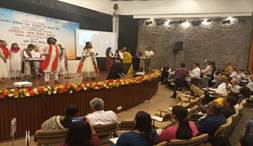
The programme also included cultural performances like songs and mime in ISL by the interpreter trainees and Deaf teacher trainees.
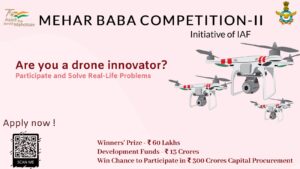
To provide a boost to the growing indigenous drone industry, Hon’ble Raksha Mantri had launched the “MEHAR BABA COMPETITION-II” on 06 April 2022 at Air Headquarters (Vayu Bhawan). The competition is aimed at developing technology for a “Swarm Drone Based System to Detect Foreign Objects on Aircraft Operating Surfaces”. The competition is named after the legendary Air Commodore Mehar Singh, MVC, DSO – affectionately also known as Mehar Baba. The first edition of the competition was launched in October 2018 and had culminated in October 2021.
All aircraft operators face a challenge in keeping the aircraft operating surfaces clean and clear of Foreign Object Debris (FOD). Very often, this is a labour-intensive task that needs to be repeated over a day. This manpower could be more gainfully employed if personnel could focus solely on their core tasks. Furthermore, visual spotting of FOD in low light conditions becomes rather challenging.
MEHAR BABA COMPETITION -II
Hence, the IAF is seeking innovative solutions towards detection of FOD without physical employment of manpower on the aircraft operating surfaces.
Registration for this competition is open to Indian citizens and Indian registered entities only.
The last date for registration is 02 October 2022. All relevant details regarding this competition have been placed at https:/lndianairforce.nic.in/mehar-baba/#.