Amazon Great Indian Festival 2022 sale has picked up but the numbers are not available still still compared Flipkart’s Big Billion Deal as both entered the second day on Saturday.
The massive festive season sales are offering big discounts on popular smartphones, large appliances, and other electronic items. If you’re looking to get all your Diwali shopping done online, here is a look at some on offer on Amazon Great Indian Festival 2022 sale:
Apple iPhone 12 now at: Rs. 46,499 (MRP Rs. 65,900)
Samsung Galaxy S22 5G now at: Rs. 52,999 (MRP Rs.85,999)
OnePlus Nord CE 2 Lite now at: Rs. 18,499 (MRP Rs. 19,999)
Samsung Galaxy M13 now at: Rs. 9,499 (MRP Rs. 14,999)
iQoo Neo 6 5G now at: Rs. 27,999 (MRP Rs. 34,999)
Apple Watch SE now at: Rs. 23,900 (MRP Rs. 33,900)
Sony WH-1000XM4 wireless headphones now at: Rs. 19,990 (MRP Rs. 29,990)
2020 Apple Mac mini with M1 now at: Rs. 58,990 (MRP Rs. 64,900)
2021 iPad 10.2-inch now at: Rs. 25,999 (MRP Rs. 30,900)
Samsung Galaxy Buds Pro now at: Rs. 5,990 (MRP Rs. 17,990)
Sony Bravia 55-inch 4K Ultra HD Smart LED Google TV now at: Rs. 61,000 (MRP Rs. 99,900)
Echo Dot (4th gen) combo with Wipro smart bulb now at: Rs. 2,299 (MRP Rs. 6,598)
Fire TV Stick now at Rs. 1,999 (MRP Rs. 4,999) while the 4K model is down to Rs. 2,999 (MRP Rs. 5,999).
Apple has recently unveiled two initiatives to help protect users who may be personally targeted by some of the most sophisticated digital threats, such as those from private companies developing state-sponsored mercenary spyware.
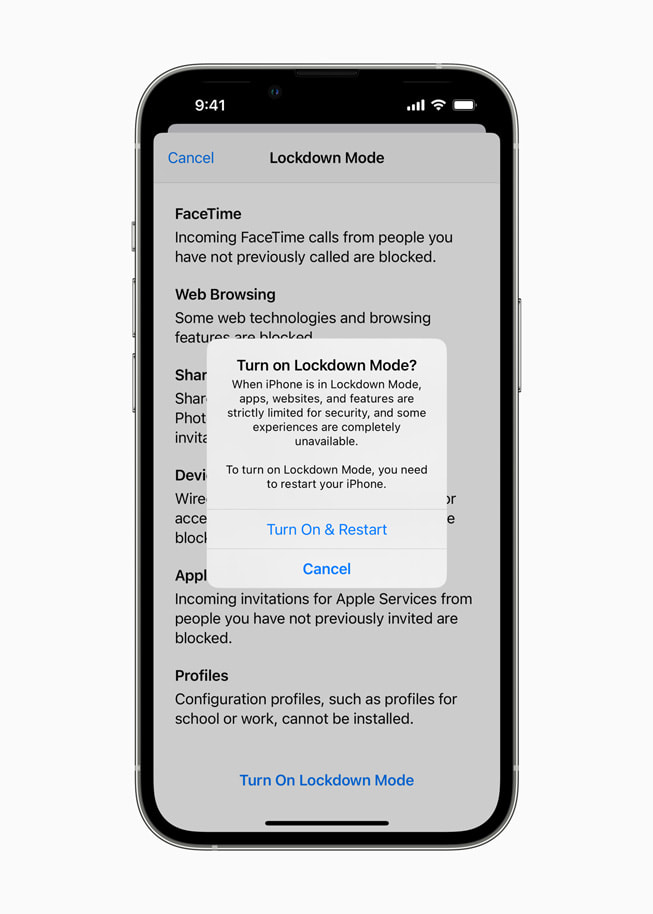
Lockdown Mode — the first major capability of its kind, coming this fall with iOS 16, iPadOS 16, and macOS Ventura — is an extreme, optional protection for the very small number of users who face grave, targeted threats to their digital security. Apple also shared details about the $10 million cybersecurity grant it announced last November to support civil society organizations that conduct mercenary spyware threat research and advocacy.
“Apple makes the most secure mobile devices on the market. Lockdown Mode is a groundbreaking capability that reflects our unwavering commitment to protecting users from even the rarest, most sophisticated attacks,” said Ivan Krstić, Apple’s head of Security Engineering and Architecture. “While the vast majority of users will never be the victims of highly targeted cyberattacks, we will work tirelessly to protect the small number of users who are. That includes continuing to design defenses specifically for these users, as well as supporting researchers and organizations around the world doing critically important work in exposing mercenary companies that create these digital attacks.”
Lockdown Mode offers an extreme, optional level of security for the very few users who, because of who they are or what they do, may be personally targeted by some of the most sophisticated digital threats, such as those from NSO Group and other private companies developing state-sponsored mercenary spyware. Turning on Lockdown Mode in iOS 16, iPadOS 16, and macOS Ventura further hardens device defenses and strictly limits certain functionalities, sharply reducing the attack surface that potentially could be exploited by highly targeted mercenary spyware.
At launch, Lockdown Mode includes the following protections:
Messages: Most message attachment types other than images are blocked. Some features, like link previews, are disabled.
Web browsing: Certain complex web technologies, like just-in-time (JIT) JavaScript compilation, are disabled unless the user excludes a trusted site from Lockdown Mode.
Apple services: Incoming invitations and service requests, including FaceTime calls, are blocked if the user has not previously sent the initiator a call or request.
Wired connections with a computer or accessory are blocked when iPhone is locked.
Configuration profiles cannot be installed, and the device cannot enroll into mobile device management (MDM), while Lockdown Mode is turned on.
The Lockdown Mode capability further hardens device defenses and strictly limits certain functionalities, sharply reducing the attack surface that could potentially be exploited by highly targeted mercenary spyware.
Apple will continue to strengthen Lockdown Mode and add new protections to it over time. To invite feedback and collaboration from the security research community, Apple has also established a new category within the Apple Security Bounty program to reward researchers who find Lockdown Mode bypasses and help improve its protections. Bounties are doubled for qualifying findings in Lockdown Mode, up to a maximum of $2,000,000 — the highest maximum bounty payout in the industry.
Apple is also making a $10 million grant, in addition to any damages awarded from the lawsuit filed against NSO Group, to support organizations that investigate, expose, and prevent highly targeted cyberattacks, including those created by private companies developing state-sponsored mercenary spyware. The grant will be made to the Dignity and Justice Fund established and advised by the Ford Foundation — a private foundation dedicated to advancing equity worldwide — and designed to pool philanthropic resources to advance social justice globally. The Dignity and Justice Fund is a fiscally sponsored project of the New Venture Fund, a 501(c)(3) public charity.
“The global spyware trade targets human rights defenders, journalists, and dissidents; it facilitates violence, reinforces authoritarianism, and supports political repression,” said Lori McGlinchey, the Ford Foundation’s director of its Technology and Society program. “The Ford Foundation is proud to support this extraordinary initiative to bolster civil society research and advocacy to resist mercenary spyware. We must build on Apple’s commitment, and we invite companies and donors to join the Dignity and Justice Fund and bring additional resources to this collective fight.”
The Dignity and Justice Fund expects to make its first grants in late 2022 or early 2023, initially funding approaches to help expose mercenary spyware and protect potential targets that include:
Building organizational capacity and increasing field coordination of new and existing civil society cybersecurity research and advocacy groups.
Supporting the development of standardized forensic methods to detect and confirm spyware infiltration that meet evidentiary standards.
Enabling civil society to more effectively partner with device manufacturers, software developers, commercial security firms, and other relevant companies to identify and address vulnerabilities.
Increasing awareness among investors, journalists, and policymakers about the global mercenary spyware industry.
Building the capacity of human rights defenders to identify and respond to spyware attacks, including security audits for organizations that face heightened threats to their networks.
The Dignity and Justice Fund’s grant-making strategy to research, track, and hold the enhanced cyber weapons trade accountable will be advised by an independent, global Technical Advisory Committee.
“There is now undeniable evidence from the research of the Citizen Lab and other organizations that the mercenary surveillance industry is facilitating the spread of authoritarian practices and massive human rights abuses worldwide,” said Ron Deibert, director of the Citizen Lab, a research group at the University of Toronto. “I applaud Apple for establishing this important grant, which will send a strong message and help nurture independent researchers and advocacy organizations holding mercenary spyware vendors accountable for the harms they are inflicting on innocent people.”
GST roll out has turned a retail sales extravaganza across the country with car makers and retailers turning it into a sales pitch with huge discounts on goods based on GST rate slabs and large queues were seen from Mumbai to Bhubaneshwar and New Delhi to Bangalore on Friday night.
Beginning today, Saturday, July 1, 2017, India switched over to new tax structure called the Goods and Services Tax (GST), bringing more than one billion population under one tax regime and controlling $2billion market under one federal structure, surpassing the state-level levies and local taxes.
Car makers have been the main beneficiary of the new GST and the No.1 car maker Maruti Suzuki has dropped prices on key models by up to 3 percent, passing on the benefit to customers, though erstwhile hybrid models ceased to avail concessions and become costlier now. The next major player Tata Motos has reduced prices by up to 7 per cent.
On retail front, Big Bazaar chain of retail stores has announced discounts of 2 percent to 22 percent on groceries and household goods across the country while online fashion e-commerce retailer Myntra is providing huge discounts as taxes on garments change from July 1.
Social media and WhatsApp are abuzz with discounts and how customers have been given huge discounts. One such message read:”I bought a refrigerator worth Rs.28,000 for Rs.800 only,” bragging on the unverified discount offer.
Those who have taken coffee in Mavalli center on Saturday morning were surprised to see huge tax on coffee. The actual rate of coffee was Rs.32.20 and the central GST was Rs.2.90 and the State GST was another Rs.2.90, making it Rs.2.90, with a total bill of Rs.38 for coffee. Ironic but South India, which consumes mostly coffee was the worst hit from the GST, while tea is enjoying lesser taxation.
Mobile phones, which are not daily consumables, have been reaping with huge discounts as the GST came calling on July 1, 2017. Apple is among those which has offered Rs.900 to Rs.6,600 discount on iPhone, iPad, Apple Watch, and Mac laptops.
iPhones prices are down from Rs. 1,200 to Rs.6,600, while iPad models are given discounts from Rs.900 to Rs.3,900, with the 12-inch MacBook and MacBook Pro models witnessing price drop of about Rs.5,100 to Rs.11,800.