Women with polycystic ovary syndrome (PCOS) in Alabama may be more likely to have excessive hair growth and insulin resistance, whereas women with PCOS in California may be more likely to have higher testosterone levels, according to new research published in the Endocrine Society’s Journal of Clinical Endocrinology & Metabolism.
PCOS affects 7–10% of women of childbearing age and is the most common cause of infertility. In the United States, an estimated 5 to 6 million women have PCOS, but the disorder is still underdiagnosed. Women are diagnosed with PCOS if they have two of the following criteria: androgen excess (excess male sex hormones such as testosterone), ovulatory dysfunction and polycystic ovaries.
“Our study found geographical differences in PCOS in black and white women, suggesting there are both genetic and environmental influences on how this disease manifests,” said Margareta D. Pisarska, M.D., of Cedars-Sinai Medical Center in Los Angeles, Calif. “Ongoing research is needed to identify modifiable risk factors for PCOS that may be race and ethnicity-specific to bring precision medicine to the management of this disease.”
PCOS/en.wikipedia.org
The researchers compared data from 1,620 back and white women with PCOS in Alabama and California. They found regional differences in the way these women met criteria for the diagnosis of PCOS and in symptoms associated with PCOS, with some variations among black and white women.
Overall, there were many similarities among the races. Women with PCOS in Alabama were more likely to have excessive hair growth and insulin resistance, whereas women with PCOS in California were more likely to have higher levels of testosterone.
When comparing black women with PCOS in Alabama and California, the average body mass index (BMI) did not differ between the locations, whereas in white women with PCOS, the average BMI was higher in Alabama than California.
“Since we have now identified that there are geo-epidemiologic differences, we intend to do follow up studies comparing black and white women with PCOS, controlling for geo-epidemiologic differences,” Pisarska said. “Furthermore, we are trying to look at factors that are contributing to these differences in order to tailor treatments based on specific needs for improvements in care for all women with PCOS.”
Up to 70 percent of mothers develop postnatal depressive mood, also known as baby blues, after their baby is born. Analyses show that this can also affect the development of the children themselves and their speech. Until now, however, it was unclear exactly how this impairment manifests itself in early language development in infants.
In a study, scientists at the Max Planck Institute for Human Cognitive and Brain Sciences in Leipzig have now investigated how well babies can distinguish speech sounds from one another depending on their mother’s mood. This ability is considered an important prerequisite for the further steps towards a well-developed language. If sounds can be distinguished from one another, individual words can also be distinguished from one another. It became clear that if mothers indicate a more negative mood two months after birth, their children show on average a less mature processing of speech sounds at the age of six months.
The infants found it particularly difficult to distinguish between syllable-pitches. Specifically, they showed that the development of their so-called Mismatch Response was delayed than in those whose mothers were in a more positive mood. This Mismatch Response in turn serves as a measure of how well someone can separate sounds from one another. If this development towards a pronounced mismatch reaction is delayed, this is considered an indication of an increased risk of suffering from a speech disorder later in life.
“We suspect that the affected mothers use less infant-directed-speech,” explains Gesa Schaadt, postdoc at MPI CBS, professor of development in childhood and adolescence at FU Berlin and first author of the study, which has now appeared in the journal JAMA Network Open. “They probably use less pitch variation when directing speech to their infants.” This also leads to a more limited perception of different pitches in the children, she said. This perception, in turn, is considered a prerequisite for further language development.
The results show how important it is that parents use infant-directed speech for the further language development of their children. Infant-directed speech that varies greatly in pitch, emphasizes certain parts of words more clearly – and thus focuses the little ones’ attention on what is being said – is considered appropriate for children. Mothers, in turn, who suffer from depressive mood, often use more monotonous, less infant-directed speech. “To ensure the proper development of young children, appropriate support is also needed for mothers who suffer from mild upsets that often do not yet require treatment,” Schaadt says. That doesn’t necessarily have to be organized intervention measures. “Sometimes it just takes the fathers to be more involved.”
The researchers investigated these relationships with the help of 46 mothers who reported different moods after giving birth. Their moods were measured using a standardized questionnaire typically used to diagnose postnatal upset. They also used electroencephalography (EEG), which helps to measure how well babies can distinguish speech sounds from one another. The so-called Mismatch Response is used for this purpose, in which a specific EEG signal shows how well the brain processes and distinguishes between different speech sounds. The researchers recorded this reaction in the babies at the ages of two and six months while they were presented with various syllables such as “ba,” “ga” and “bu.
Ever since she broke into the big league, the lissome Ashwini Ponnappa is used to being in the spotlight. But when she stepped into the badminton court earlier this week at the PDDU Indoor Stadium, she knew that the attention from the Indian badminton community would be even more intense.
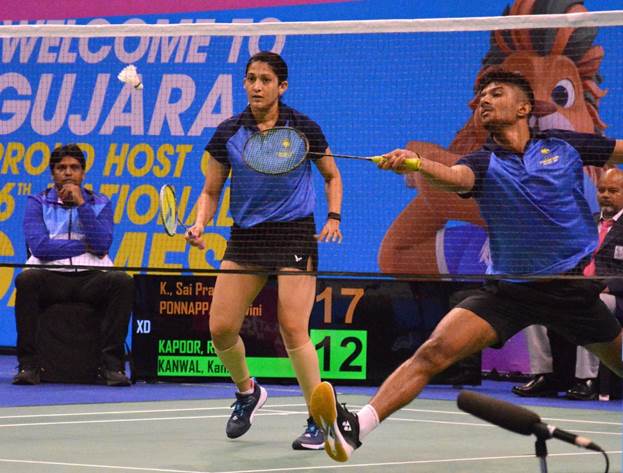
After all, the Women’s Doubles’ specialist was embarking on a new journey as a Mixed Doubles player. Her first partner: her own Karnataka statemate K Sai Prateek in the 36th National Games.
On Thursday, she took a successful first step, beating Delhi’s Rohan Kapoor and Kanika Kanwal in straight games to win the gold.
“I am very happy that we started with the National Games title,” 33-year-old Ashwini said after wrapping up their victory. “Incidentally, this is my first gold in the National Games,” she pointed out.
Ashwini has without doubt been one of the finest doubles players in India, having successfully partnered with left-handers Jwala Gutta and N Sikki Reddy in her distinguished career.
After coming through a test by fire in the semifinals against Tamil Nadu’s VR Nardhana and Hariharan Amsakarunan, Ashwini Ponnappa and Sai Prateek were more at ease in the final with a 21-15, 21-13 victory.
Analysing the partnership in its early days, Ashwini said Prateek looks a very confident player. “He hits the shuttle powerfully. He has a strong defence and has good court coverage. It is all about learning one another’s game and finding the right balance. Prateek is a quick learner,” she said.
The 33-year-old admitted the pair needs to be patient. “We don’t know one another’s styles yet and we didn’t have too much preparation. This gold will give us confidence,” she said.
Ashwini played the role of senior partner admirably. “I tell him to remain positive on court. We held our nerves. It was not easy. It was our first tournament and, being the top seeds, there was pressure. He dealt with it well. This is what makes a player stronger,” she said, hopeful of forging a strong combination with Sai Prateek.
On his part, 22-year-old Sai Prateek is intent on making the most of the experience of playing with Ashwini. “I have so much to learn from her. I believe she is the best mixed doubles player,’’ he said “I grew up admiring her game. I am now lucky enough to play alongside her. She is always calm on court.”
Talking about her career, Ashwini said her best moments as a doubles player was with Jwala Gutta. “We didn’t think or plan for any game. There was no match preparation as such. We just went into a match with a positive frame of mind. We were confident about one another’s game. It was a different experience. Jwala was a go-getter and very gutsy,” she said.
Ashwini said her partnerships with Sikki and Satwiksairraj Rankireddy were different. “We had to work on our game. It did not come easily. I tend to open up quickly. Now, I have become smarter with my game. I think I have been physically and mentally motivated in the last couple of years. In fact, I’m excited about my new partnership with Prateek.”
Second-seeded Aakarshi Kashyap (Chhattisgarh) dominated top-seeded Malvika Bansod (Maharashtra) to win the Badminton Women’s Singles gold in the 36th National Games at the PDDU Indoor Stadium in Surat on Thursday.
B Sai Praneeth (Telangana) justified his top billing by taking the Men’s Singles gold after an intense battle with Mithun Manjunath (Karnataka). He eventually won 21-11, 12-21, 21-16 in 63 minutes.
Aakarshi, who has a 1-1 head-to-head record this year against Malvika, won 21-8, 22-20 in three-quarters of an hour, beating back a late attempt by the left-hander to take the match into the third game.
In Rajkot, a Diving gold through Surajit Rajbansi on the 1M Springboard helped Services take their tally of gold to 41 so far. With 26 silver and 25 bronze for a total of 92 medals, the defending champions have stood head and shoulders above all States and UTs.
Though Haryana have 25 gold and are in the second place on the table, Maharashtra are right behind them with 24 gold at the time of writing. Maharashtra are in the race for 100 medals too.
36th National Games
The fancied N Sikki Reddy and Pullela Gayatri Gopichand expectedly won the Women’s doubles title for Telangana, making it a happy outing for the State with three gold to show from the Badminton competition.
Telangana had more reason to celebrate when their Women’s Basketball team prevented a Tamil Nadu double in Bhavnagar. Telangana beat Tamil Nadu 67-62 in a thriller, after leading 35-31 at half-time. Coming on the heels of their 3×3 side’s gold, this win meant that Telangana women would complete the golden double in the National Games. The formidable Tamil Nadu Men’s squad beat Punjab 97-89 after holding a 46-42 lead at the break to take the crown.
At the Sardar Patel Swimming Complex in Rajkot, the experienced Surajit Rajbansi and H London Singh earned the top two medals for Services. With good execution of his routines, Surajit Rajbansi tallied 275.35 points, relegating team-mate London Singh who logged 254.75 points. This was the third successive 1-2 for Sevices in Men’s Diving.
“I’m feeling good today. At the recent National Championships in Guwahati, I was not in the best of form and only won silver. I wanted to better my performance and succeeded,” said the 23-year-old who took the help of a mind trained to settle his nerves. It helped as this time he was able to overcome his fears and give off his best.
Yet, it was Aakarshi Kashyap’s victory over Malvika Bansod in the Women’s Singles final that was the highlight of the morning session. The Chhattisgarh player was quick and meant business with her well-placed strokes that wrong-footed an error-prone Malvika. The Maharashtra star regrouped in the second game but Aakarshi was up to speed.
“It was tough. There were two long rallies and she had a lucky point through a net cord to take the second game into extra points. But I held my nerves to win the next two points,” Aakarshi Kashyap said.
The 30-year-old Sai Praneeth faced a tough contest against Mithun. “Any gold medal is good for any player. I’m happy I could get my first-ever National Games gold,” the Telangana star said, adding that he was happy with the way he played, staying calm when Mithun gained the upper hand in the second game and riding on his greater endurance to claim gold.
Ashwini Ponnappa and K Sai Prateek made a perfect start to their journey as a mixed doubles pair, eking out a 21-16, 21-13 victory over Rohan Kapoor and Kanika Kanwal (Delhi). Ashwini Ponnappa was all praise for her 22-year-old partner. “He played a strong game. He hit hard and covered the court well. I’m very happy to win my first ever National Games gold,” she said.
The results (finals)
Aquatics
Diving
1M Springboard: Surajit Rajbansi (Services) 275.35 points; 2. H London Singh (Services)
254.75; 3. Anuj Shah (Maharashtra) 227.60 points.
Archery (Recurve)
Men
Individual Bronze medal play-off: Tarundeep Rai (Services) beat Gaurav Trambak Lambe (Maharashtra) 7-3.
Team Bronze medal play-off: Maharashtra beat Jharkhand 5-4.
Team Bronze medal play-off: Gujarat beat Assam 5-4.
Mixed Team Bronze medal play-off: Jharkhand beat Rajasthan 5-3.
Badminton
Men
Singles: B Sai Praneeth (Telangana) beat Mithun Manjunath (Karnataka) 21-11, 12-21, 21-16; Bronze medals: M Raghu (Karnataka) and Aryamann Tandon (Gujarat).
Doubles: PS Ravikrishna and Udaykimar Sankarprasad (Kerala) beat Hariharan Amsakarunan and R Ruban Kumar (Tamil Nadu) 21-19, 21-9; Bronze medals: HV Nithin and Vaibhaav (Karnataka) and Shyam Prasad and S Sunjith (Kerala)
Doubles: N Sikki Reddy and Pullela Gayatri Gopichand (Telangana) beat Shikha Gautam and K Ashwini Bhat (Karnataka) 21-14; 21-11. Bronze medals: Kavya Gupta and Khushi Gupta (Delhi) and Mehreen Riza and Arathi Sara Sunil (Kerala).
Mixed Doubles: K Sai Pratheek and Ashwini Ponnappa (Karnataka) beat Rohan Kapoor and Kanika Kanwal (Delhi) 21-15, 21-13. Bronze medals: Hariharan Amsakarunan and VR Nardhana (Tamil Nadu) and S Sunjith and TR Gowrikrishna (Kerala).
Basketball (5×5)
Men: Tamil Nadu beat Punjab 97-89 (Half-time 46-42); Bronze medal play-off: Services beat Karnataka 94-67 (40-31).
Women: Telangana beat Tamil Nadu 67-62 (35-31); Bronze medal play-off: Kerala beat Madhya Pradesh 75-62 (33-32).
Other results:
Football
Men
Group A: Kerala beat Manipur 3-2 (Half-time 0-1).
Women
Group B: Assam beat Maharashtra 2-0 (1-0)
Hockey
Men
Group A: Haryana beat Gujarat 7-0 (Half-time: 3-0).
Water Polo
Men
Kerala beat Maharashtra 7-6; Punjab beat Manipur 8-7.
Women
Karnataka beat Manipur 13-2; Bengal beat Kerala beat 10-8.
The Prime Minister, Shri Narendra Modi has shared glimpses of the Mysuru Dasara celebrations and lauded the commitment of the people of Mysuru to preserving their culture and heritage in a beautiful way. The Prime Minister recalled fond memories of his visit to Mysuru, the most recent one on the occasion of 2022 Yoga Day.
Quoting a tweet by a citizen, the Prime Minister tweeted;
“Mysuru Dasara is spectacular. I commend the people of Mysuru for preserving their culture and heritage so beautifully. I have fond memories of my Mysuru visits, the most recent one being during 2022 Yoga Day.”
A mother’s consumption of ultra-processed foods appears to be linked to an increased risk of overweight or obesity in her offspring, irrespective of other lifestyle risk factors, suggests a US study.
Researchers suggest that mothers might benefit from limiting their intake of ultra-processed foods, and that dietary guidelines should be refined and financial and social barriers removed to improve nutrition for women of child bearing age and reduce childhood obesity.
According to the World Health Organization, 39 million children were overweight or obese in 2020, leading to increased risks of heart disease, diabetes, cancers, and early death.
Ultra-processed foods, such as packaged baked goods and snacks, fizzy drinks and sugary cereals, are commonly found in modern Western style diets and are associated with weight gain in adults. But it’s unclear whether there’s a link between a mother’s consumption of ultra-processed foods and her offspring’s body weight.
To explore this further, the researchers drew on data for 19,958 children born to 14,553 mothers (45% boys, aged 7-17 years at study enrollment) from the Nurses’ Health Study II (NHS II) and the Growing Up Today Study (GUTS I and II) in the United States.
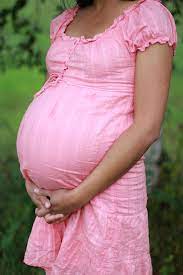
pregnant lady/Commons.wikimedia.org
The NHS II is an ongoing study tracking the health and lifestyles of 116,429 US female registered nurses aged 25-42 in 1989. From 1991, participants reported what they ate and drank, using validated food frequency questionnaires every four years.
The GUTS I study began in 1996 when 16,882 children (aged 8-15 years) of NHS II participants completed an initial health and lifestyle questionnaire and were monitored every year between 1997 and 2001, and every two years thereafter.
In 2004, 10,918 children (aged 7-17 years) of NHS II participants joined the extended GUTS II study and were followed up in 2006, 2008, and 2011, and every two years thereafter.
A range of other potentially influential factors, known to be strongly correlated with childhood obesity, were also taken into account. These included mother’s weight (BMI), physical activity, smoking, living status (with partner or not), and partner’s education, as well as children’s ultra-processed food consumption, physical activity, and sedentary time.
Overall, 2471 (12%) children developed overweight or obesity during an average follow-up period of 4 years.
The results show that a mother’s ultra-processed food consumption was associated with an increased risk of overweight or obesity in her offspring. For example, a 26% higher risk was seen in the group with the highest maternal ultra-processed food consumption (12.1 servings/day) versus the lowest consumption group (3.4 servings/day).
In a separate analysis of 2790 mothers and 2925 children with information on diet from 3 months pre-conception to delivery (peripregnancy), the researchers found that peripregnancy ultra-processed food intake was not significantly associated with an increased risk of offspring overweight or obesity.
This is an observational study, so can’t establish cause and the researchers acknowledge that some of the observed risk may be due to other unmeasured factors, and that self-reported diet and weight measures might be subject to misreporting.
Other important limitations include the fact that some offspring participants were lost to follow-up, which resulted in a few of the analyses being underpowered, particularly those related to peripregnancy intake, and that mothers were predominantly white and from similar social and economic backgrounds, so the results may not apply to other groups.
Nevertheless, the study used data from several large ongoing studies with detailed dietary assessments over a relatively long period, and further analysis produced consistent associations, suggesting that the results are robust.
The researchers suggest no clear mechanism underlying these associations and say the area warrants further investigation.
Nevertheless, these data “support the importance of refining dietary recommendations and the development of programs to improve nutrition for women of reproductive age to promote offspring health,” they conclude.
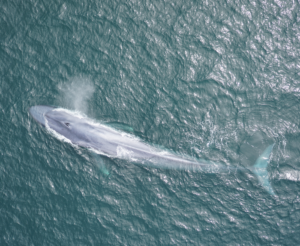
A study by MBARI researchers and their collaborators published today in Ecology Letters sheds new light on the movements of mysterious, endangered blue whales. The research team used a directional hydrophone on MBARI’s underwater observatory, integrated with other advanced technologies, to listen for the booming vocalizations of blue whales. They used these sounds to track the movements of blue whales and learned that these ocean giants respond to changes in the wind.
Along California’s Central Coast, spring and summer bring coastal upwelling. From March through July, seasonal winds push the top layer of water out to sea, allowing the cold water below to rise to the surface. The cooler, nutrient-rich water fuels blooms of tiny phytoplankton, jumpstarting the food web in Monterey Bay, from small shrimp-like krill all the way to giant whales. When the winds create an upwelling event, blue whales seek out the plumes of cooler water, where krill are most abundant. When upwelling stops, the whales move offshore into habitat that is transected by shipping lanes.
“This research and its underlying technologies are opening new windows into the complex, and beautiful, ecology of these endangered whales,” said John Ryan, a biological oceanographer at MBARI and lead author of this study. “These findings demonstrate a new resource for managers seeking ways to better protect blue whales and other species.”
The directional hydrophone is a specialized underwater microphone that records sounds and identifies the direction from which they originate. To use this technology to study blue whale movements, researchers needed to confirm that the hydrophone reliably tracked whales. This meant matching the acoustic bearings to a calling whale that was being tracked by GPS. With confidence in the acoustic methods established, the research team examined two years of acoustic tracking of the regional blue whale population.
This study built upon previous research led by MBARI Senior Scientist Kelly Benoit-Bird, which revealed that swarms of forage species—anchovies and krill—reacted to coastal upwelling. This time, researchers combined satellite and mooring data of upwelling conditions and echosounder data on krill aggregations with the acoustic tracks of foraging blue whales logged by the directional hydrophone.
“Previous work by the MBARI team found that when coastal upwelling was strongest, anchovies and krill formed dense swarms within upwelling plumes. Now, we’ve learned that blue whales track these dynamic plumes, where abundant food resources are available,” explained Ryan.
Blue whales recognize when the wind is changing their habitat and identify places where upwelling aggregates their essential food—krill. For a massive animal weighing up to 150 tonnes (165 tons), finding these dense aggregations is a matter of survival.
While scientists have long recognized that blue whales seasonally occupy Monterey Bay during the upwelling season, this research has revealed that the whales closely track the upwelling process on a very fine scale of both space (kilometers) and time (days to weeks).
“Tracking many individual wild animals simultaneously is challenging in any ecosystem. This is especially difficult in the open ocean, which is often opaque to us as human observers,” said William Oestreich, previously a graduate student at Stanford University’s Hopkins Marine Station and now a postdoctoral fellow at MBARI. “Integration of technologies to measure these whales’ sounds enabled this important discovery about how groups of predators find food in a dynamic ocean. We’re excited about the future discoveries we can make by eavesdropping on blue whales and other noisy ocean animals.”
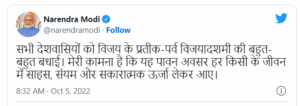
The Prime Minister, Narendra Modi has greeted everyone on the occasion of Vijaya Dashami. Shri Modi also wished that may this auspicious occasion brings courage, restraint and positive energy in everyone’s life.
“सभी देशवासियों को विजय के प्रतीक-पर्व विजयादशमी की बहुत-बहुत बधाई। मेरी कामना है कि यह पावन अवसर हर किसी के जीवन में साहस, संयम और सकारात्मक ऊर्जा लेकर आए।”
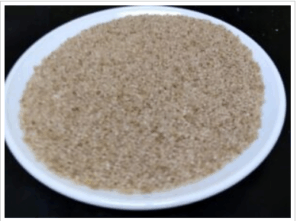
In one of the first studies to examine the relationship between different types of grain intake and premature coronary artery disease in the Middle East, researchers found a higher intake of refined grain was associated with an increased risk of premature coronary artery disease in an Iranian population, while eating whole grains was associated with reduced risk.
According to the researchers, previous epidemiological studies have reported an association between different types of grain intake with the risk of coronary artery disease. The current study evaluated the association between refined and whole grains consumption and risk of PCAD in an Iranian population.
Premature coronary artery disease (PCAD) refers to atherosclerotic narrowing of coronary arteries in males under 55 years old or in females under 65 years old. It is often asymptomatic early in the course of the disease but may lead to chest pain (angina) and/or heart attack with progressive development of narrowing (stenosis) or plaque rupture of the arterial wall. Risk factors for PCAD include smoking, high cholesterol, high blood pressure and diabetes.
Millets-Grains
“There are many factors involved in why people may be consuming more refined grains as opposed to whole grains and these cases differ between people, but some of the most important factors to consider include the economy and income, job, education, culture, age and other similar factors,” said Mohammad Amin Khajavi Gaskarei, MD, of the Isfahan Cardiovascular Research Center and Cardiovascular Research Institute at Isfahan University of Medical Sciences in Isfahan, Iran, and the study’s lead author. “A diet that includes consuming a high amount of unhealthy and refined grains can be considered similar to consuming a diet containing a lot of unhealthy sugars and oils.”
Whole grains are defined as containing the entire grain, while refined grains have been milled—ground into flour or meal—to improve shelf life but they lose important nutrients in the process. The 2019 ACC/American Heart Association Guideline on the Primary Prevention of Cardiovascular Disease recommends a diet that emphasizes the intake of vegetables, fruits, legumes, whole grains and fish to decrease heart disease risk factors.
The study recruited 2099 individuals with PCAD from hospitals. Participants were given a food frequency questionnaire for dietary assessments to evaluate dietary behaviors and evaluate the association between whole grain and refined grain intake and the risk of PCAD in individuals without a prior diagnoses of heart disease. After adjusting for confounders, a higher intake of refined grains was associated with an increased risk of PCAD, while whole grain intake was inversely related to reduced risk of PCAD.
“As more studies demonstrate an increase in refined grains consumption globally, as well as the impact on overall health, it is important that we find ways to encourage and educate people on the benefits of whole grain consumption,” Khajavi Gaskarei said. “Tactics to consider include teaching improved dietary choices in schools and other public places in simple language the general population can understand, as well as on television programs and by continuing to do high level research that is presented at medical conferences and published in medical journals. Clinicians must also be having these conversations with each other and their patients.”
The last date for submission of application for ‘NMCMSS for the year 2022-23 extended till 15th October, 2022’ Under the ‘National Means-cum-Merit Scholarship Scheme’ scholarships are awarded to meritorious students of economically weaker sections to arrest their drop out at class VIII and encourage them to continue their education at secondary stage. One lakh fresh scholarships are awarded to selected students from class IX every year and their continuation / renewal in classes X to XII for students studying in State Government, Government-aided and local body schools. The amount of scholarship is Rs. 12000/- per annum.
The National Means cum Merit Scholarship Scheme (NMMSS) is boarded on the National Scholarship Portal (NSP) – a one stop platform for scholarship schemes given to students. NMMSS scholarships are disbursed directly into the bank accounts of selected students by electronic transfer through Public Financial Management System (PFMS) following DBT mode. This is a 100% centrally sponsored scheme.
Students whose parental income from all sources is not more than Rs. 3,50,000/- per annum are eligible to avail the scholarships. The students must have minimum of 55% marks or equivalent grade in Class VII examination for appearing in the selection test for award of scholarship (relaxable by 5% for SC/ST students).
The last date of INO level (L1) verification is 31st October, 2022 and of DNO level (L2) verification is 15th November, 2022
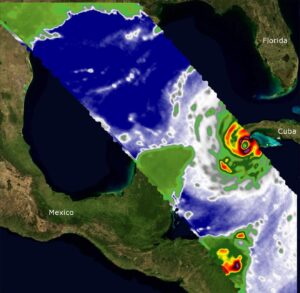
A pair of microwave radiometers collected data on the storm as they passed over the Caribbean Sea aboard the International Space Station.
Two recently launched instruments that were designed and built at NASA’s Jet Propulsion Laboratory in Southern California to provide forecasters data on weather over the open ocean captured images of Hurricane Ian on Tuesday, Sept. 27, 2022, as the storm approached Cuba on its way north toward the U.S. mainland.
COWVR (short for Compact Ocean Wind Vector Radiometer) and TEMPEST (Temporal Experiment for Storms and Tropical Systems) observe the planet’s atmosphere and surface from aboard the International Space Station, which passed in low-Earth orbit over the Caribbean Sea at about 12:30 a.m. EDT.
Ian made landfall in Cuba’s Pinar del Rio province at 4:30 a.m. EDT, according to the National Hurricane Center. At that time, it was a Category 3 hurricane, with estimated wind speeds of 125 mph (205 kph).
From aboard the International Space Station, NASA-built instruments Compact Ocean Wind Vector Radiometer (COWVR) and Temporal Experiment for Storms and Tropical Systems (TEMPEST) captured wind and water vapor data from Hurricane Ian as the storm neared Cuba. Credit: NASA/JPL-Caltech
The image above combines microwave emissions measurements from both COWVR and TEMPEST. White sections indicate the presence of clouds. Green portions indicate rain. Yellow, red, and black indicate where air and water vapor were moving most swiftly. Ian’s center is seen just off of Cuba’s southern coast, and the storm is shown covering the island with rain and wind.
“Congratulations @GiorgiaMeloni for leading your party @FratellidItalia to victory in the Italian general elections. We look forward to working together to strengthen our ties.”
PM congratulates Giorgia Meloni for leading her party Fratelli d’Itaia in Italian General Elections
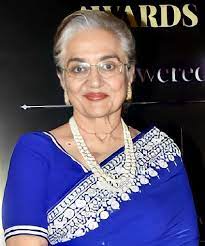
Ministry of Information and Broadcasting has today announced that the Dadasaheb Phalke Award for the year 2020 will be accorded to legendary actress Ms Asha Parekh. The award will be presented at the National Film Award ceremony in New Delhi on 30th September.
Announcing the decision Union Minister Anurag Thakur said “I am honoured to announce that the Dadasaheb Phalke Selection Jury has decided to recognise & award Ms Asha Parekh ji for her exemplary lifetime contribution to Indian Cinema.” The Minister also announced that the 68th National Film Awards will be held on 30th September, 2022 and will be presided over by President of India Smt Droupadi Murmu.
Ms Asha Parekh is a renowned film actress, director and producer and an accomplished Indian classical dancer. Starting her career as a child actor she made her debut as lead heroine in Dil Deke Dekho and has gone on to act in over 95 movies. She has acted in celebrated films like Kati Patang, Teesri Manzil, Love in Tokyo, Aya Saawan Jhoom Ke, Aan Milo Sajna, Mera Gaon Mera Desh.
Asha Parekh to be honoured with Dadasaheb Phalke Award, 2020
Ms Asha Parekh was conferred the Padma Shri in 1992. She has also served as the head of Central Board for Film Certification from 1998-2001.
Shri Anurag Thakur also announced that the decision to confer the award to Ms Parekh was taken by a jury of five members. The jury for the selection of 52nd Dadasaheb Phalke award consisted of five members from the film industry:
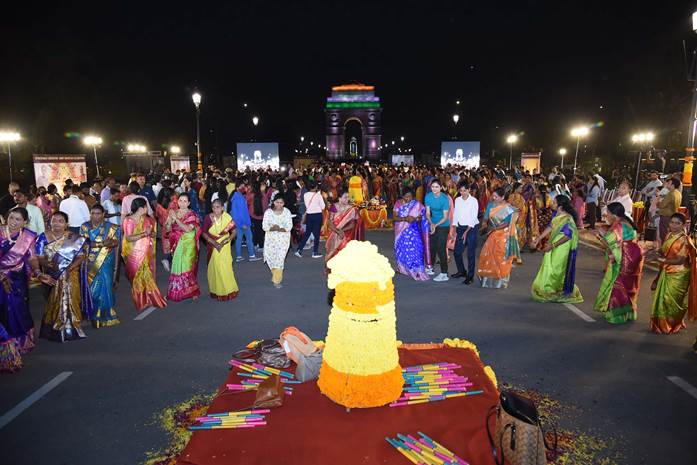
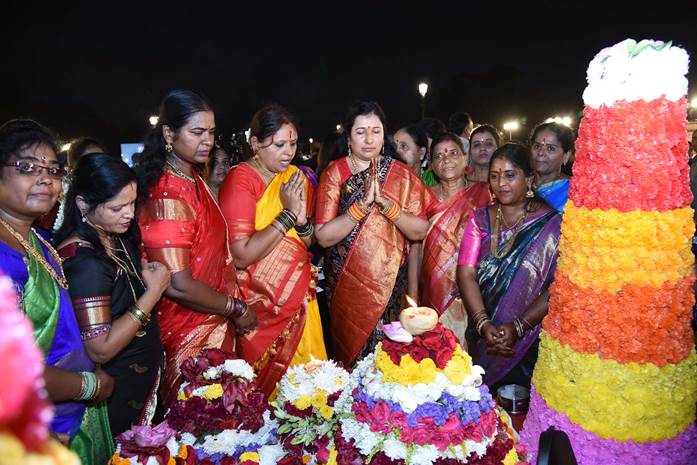
Bathukamma festival represents the culture and identity of the people of Telangana and involves the worship of Maha Gauri – “Life Giver” in the form of Gauri Devi.
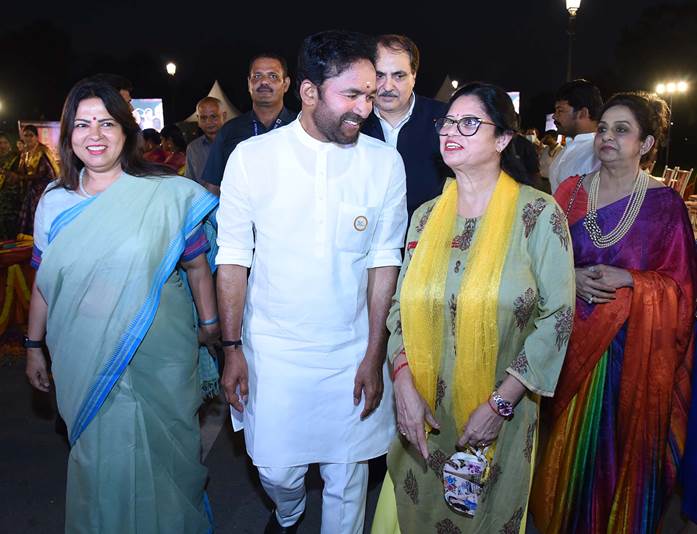
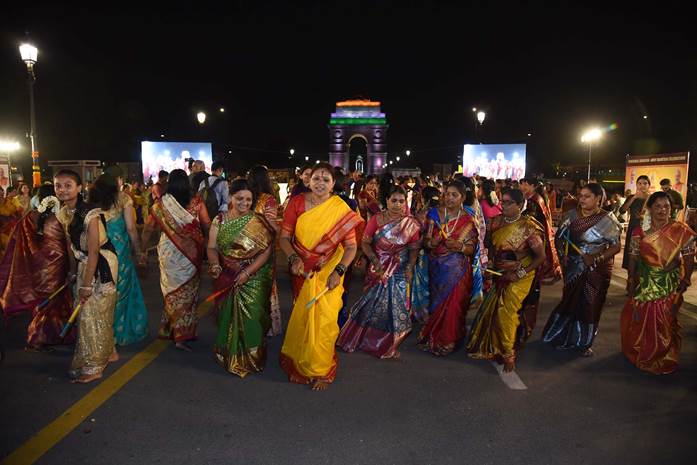
Ministry of Culture organizedthe celebration of Bathukamma festival being at Kartavyapath, India Gate, New Delhi, today. The event was attended by Union Minister for Culture, Tourism G Kishan Reddy, MoS Tourism Shri Ajay Bhatt and senior women officers in the administrative and law enforcement, and women HODs of different Government departments.
Bathukamma Festival is an annual celebration in Telangana that goes on for nine days and overlaps with the festival of Navratri. The festival is celebrated with colourful exotic flowers of the region and symbolises the collective spirit of the people of Telangana. This year Bathukamma celebrations are taking place from 25th of September till the 3rd of October.
This festival is to pray to the Goddess for the health and achievements of each family. Young women of the Hindu household get to pray to the Goddess for a life partner of their choice. Bathukamma means “The Mother Goddess comes to life”. It represents the culture and identity of the people of Telangana and involves the worship of Maha Gauri – “Life Giver” in the form of Gauri Devi (patron goddess of womanhood).
The festival involves young women arranging flowers in stacks and making rangoli to start the celebrations. The men also help celebrate this festival, by aiding in the preparations like by collecting different flowers such as Marigold, Lotus, Senna. Some of the women dip a few flowers in vibrant colours and then arrange them in a wide plate and stack them in a pile.The rituals of this festival are performed by the Hindu women, especially young girls, who gather around in large numbers in their local areas during the evening time. Forming a circle, they then perform the ritual which involves them singing a folk song and revolving around the Bathukamma, all the while clapping their hands and walking in synchronised steps. This entire performance is to invoke the blessings of the goddess for good health and prosperity for their families.
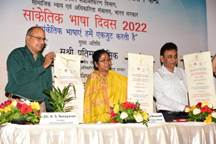
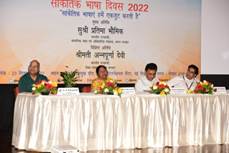
‘Sign Language Day’ with the theme ‘Sign Languages Unite Us’ was celebrated under Azadi ka Amrit Mahotsav by the Indian Sign Language Research and Training Centre (ISLRTC), an autonomous body under the Department of Empowerment of Persons with Disabilities, M/o Social Justice and Empowerment on 23rd September 2022 at C.D. Deshmukh Auditorium, India International Centre (IIC), New Delhi.
Ever since the United Nations declared 23rd September as the International Day of Sign Languages, the ISLRTC celebrates it every year on 23rd September. This year National Implementation Committee (NIC) chaired by Home Minister inter-alia approved the event – “Sign Language Day” on 23rd Sep, 2022 to be conducted and celebrated by Ministry of Social Justice and Empowerment” (Department of Empowerment of Persons with Disabilities), under “Azadi Ka Amrit Mahotsav” celebration.
As per the plan of action, approximately 3,200 organizations/ institutions were roped in for celebrating Sign Language Day-2022 under Azadi ka Amrit Mahotsav. The objective of the Sign Language Day celebration was to sensitize the general public about the importance of Indian Sign Language in the lives of persons with hearing disabilities.
Minister of Social Justice & Empowerment, Km. Pratima Bhoumik was the Chief Guest. Sh. Rajesh Aggrawal, Secretary, DEPwD, and Sh. Rajesh Yadav, Joint Secretary, DEPwD & Director, ISLRTC, and Sh. A.S. Narayanan, President, National Association of Deaf also graced the occasion.
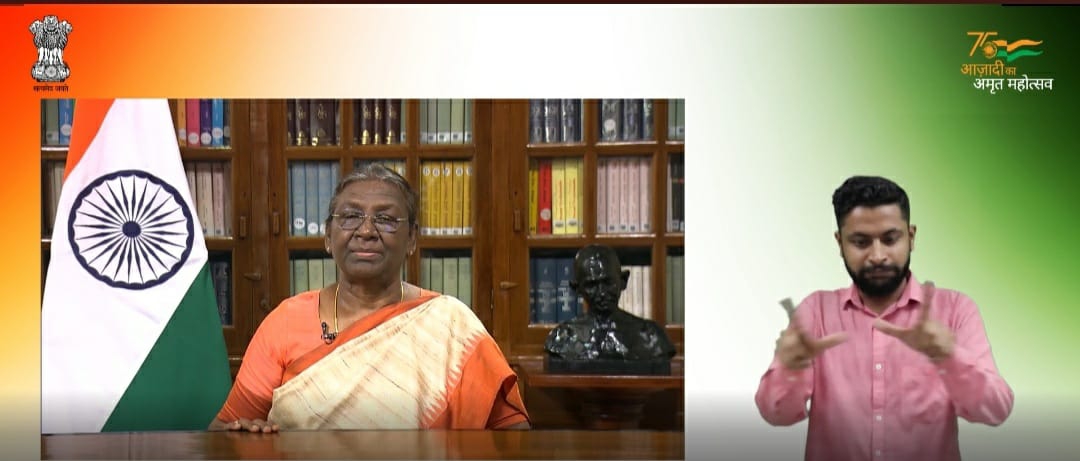
Via a video message, The President of India said that she feels proud and happy that entire world is adopting the principle of Indian culture i.e. Vasudhaiva Kutumbakam (All world is a family) and it be seen through the celebration of Sign language day throughout the world.
Minister of Social Justice & Empowerment, Km. Pratima Bhoumik mentioned that Persons with Disabilities (PwDs) are an integral part of our society and to provide them full accessibility is the utmost priority of the Government. Continuous efforts are being made to ensure the empowerment and mainstreaming of PwDs to make an inclusive society. She said that Sign language also plays an important role in the education of deaf people because it is easier for deaf people to get education and higher education through sign language. This day brings all the deaf people together socially across the country. Through sign language, our deaf brothers and sisters are getting inspiration and direction to move ahead in their lives. This year Sign Language Day celebration is being celebrated under the Amrit Mahotsav of Azadi, which will certainly lead to a positive success in increasing public awareness about the importance of sign language.
Addressing on the occasion, Sh. Rajesh Aggrawal, Secretary DEPwD highlighted the social significance of sign language as it integrates the deaf community socially as well as culturally. He praised the efforts of ISLRTC for doing commendable service to the people with hearing disability. Secretary, DEPwD, Shri.Rajesh Aggrawal mentioned that all the possible efforts will be made that every district to have an Indian Sign Language interpreter to facilitate accessible communication for Deaf persons.
Sh. Rajesh Yadav, Joint Secretary, DEPwD and Director, ISLRTC welcomed all the dignitaries and participants. He also presented a brief account of the remarkable works and achievements of ISLRTC in a short span of time from its establishment in 2015.
In his address, Shri A.S. Narayanan, President of the National Association of the Deaf thanked Prime Minister, Minister of State, SJ&E, DEPwD and ISLRTC for constantly promoting Indian Sign Language and Education of the Deaf to include them in the mainstream of the society. He informed that he has requested the Government for including Indian Sign Language (ISL) in the forthcoming Census.
During the programme, several important resource materials were launched:-
An ISL Dictionary app called Sign Learn was launched which is available in both Android and iOS versions.
ISLRTC had signed an MoU with National Council of Educational Research and Training (NCERT) on 06th October, 2020 for converting NCERT textbooks from Class I to XII into Indian Sign Language (digital format) to make the textbooks accessible to children with hearing disabilities. This year ISL e-content of NCERT textbooks of class VI was launched.
Under Azadi ka Amrit Mahotsav, the Centre launched ISL version of selected books of National Book Trust’s Veergatha series.
With the joint effort of ISLRTC and NCERT, a total of 500 academic words in Indian Sign Language were launched. These 500 academic words are words used at the secondary level, which are often used in history, science, political science, mathematics.
The Centre conducted 5th Indian Sign Language Competition, 2022, a national-level competition held for Deaf students and interpreters to showcase their ISL skills, creativity and knowledge. For the Competition, entries were invited on jokes, stories and essays in Indian Sign Language. During the Sign Language Day programme, all the winners of the 5th ISL competition were distributed trophy and certificate by Minister of Social Justice & Empowerment, Km. Pratima Bhoumik.
In the above event, vice chancellor MDU, Rohtak, Joint Director (NCERT) and other dignitaries from the field were also present.
The programme also included cultural performances like songs and mime in ISL by the interpreter trainees and Deaf teacher trainees.
NASA’s James Webb Space Telescope shows off its capabilities closer to home with its first image of Neptune. Not only has Webb captured the clearest view of this distant planet’s rings in more than 30 years, but its cameras reveal the ice giant in a whole new light.
Most striking in Webb’s new image is the crisp view of the planet’s rings – some of which have not been detected since NASA’s Voyager 2 became the first spacecraft to observe Neptune during its flyby in 1989. In addition to several bright, narrow rings, the Webb image clearly shows Neptune’s fainter dust bands.
“It has been three decades since we last saw these faint, dusty rings, and this is the first time we’ve seen them in the infrared,” notes Heidi Hammel, a Neptune system expert and interdisciplinary scientist for Webb. Webb’s extremely stable and precise image quality permits these very faint rings to be detected so close to Neptune.
Neptune has fascinated researchers since its discovery in 1846. Located 30 times farther from the Sun than Earth, Neptune orbits in the remote, dark region of the outer solar system. At that extreme distance, the Sun is so small and faint that high noon on Neptune is similar to a dim twilight on Earth.
Webb’s Near-Infrared Camera (NIRCam) images objects in the near-infrared range from 0.6 to 5 microns, so Neptune does not appear blue to Webb. In fact, the methane gas so strongly absorbs red and infrared light that the planet is quite dark at these near-infrared wavelengths, except where high-altitude clouds are present. Such methane-ice clouds are prominent as bright streaks and spots, which reflect sunlight before it is absorbed by methane gas. Credits: NASA, ESA, CSA, STScI
This planet is characterized as an ice giant due to the chemical make-up of its interior. Compared to the gas giants, Jupiter and Saturn, Neptune is much richer in elements heavier than hydrogen and helium. This is readily apparent in Neptune’s signature blue appearance in Hubble Space Telescope images at visible wavelengths, caused by small amounts of gaseous methane.
Webb’s Near-Infrared Camera (NIRCam) images objects in the near-infrared range from 0.6 to 5 microns, so Neptune does not appear blue to Webb. In fact, the methane gas so strongly absorbs red and infrared light that the planet is quite dark at these near-infrared wavelengths, except where high-altitude clouds are present. Such methane-ice clouds are prominent as bright streaks and spots, which reflect sunlight before it is absorbed by methane gas. Images from other observatories, including the Hubble Space Telescope and the W.M. Keck Observatory, have recorded these rapidly evolving cloud features over the years.
More subtly, a thin line of brightness circling the planet’s equator could be a visual signature of global atmospheric circulation that powers Neptune’s winds and storms. The atmosphere descends and warms at the equator, and thus glows at infrared wavelengths more than the surrounding, cooler gases.
Neptune’s 164-year orbit means its northern pole, at the top of this image, is just out of view for astronomers, but the Webb images hint at an intriguing brightness in that area. A previously-known vortex at the southern pole is evident in Webb’s view, but for the first time Webb has revealed a continuous band of high-latitude clouds surrounding it.
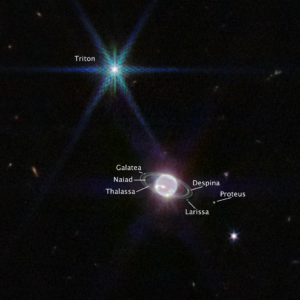
What do we see in Webb’s latest image of the ice giant Neptune? Webb captured seven of Neptune’s 14 known moons: Galatea, Naiad, Thalassa, Despina, Proteus, Larissa, and Triton. Neptune’s large and unusual moon, Triton, dominates this Webb portrait of Neptune as a very bright point of light sporting the signature diffraction spikes seen in many of Webb’s images. Credits: NASA, ESA, CSA, STScI
Webb also captured seven of Neptune’s 14 known moons. Dominating this Webb portrait of Neptune is a very bright point of light sporting the signature diffraction spikes seen in many of Webb’s images, but this is not a star. Rather, this is Neptune’s large and unusual moon, Triton.
Covered in a frozen sheen of condensed nitrogen, Triton reflects an average of 70 percent of the sunlight that hits it. It far outshines Neptune in this image because the planet’s atmosphere is darkened by methane absorption at these near-infrared wavelengths. Triton orbits Neptune in an unusual backward (retrograde) orbit, leading astronomers to speculate that this moon was originally a Kuiper belt object that was gravitationally captured by Neptune. Additional Webb studies of both Triton and Neptune are planned in the coming year.
The National Highway Traffic Safety Administration of the United States on Monday released its early estimates of traffic fatalities for the first half of 2022. An estimated 20,175 people died in motor vehicle traffic crashes, an increase of about 0.5% as compared to 20,070 fatalities NHTSA projected for the first half of 2021.
However, NHTSA projects that the second quarter of 2022, from April to June, had the first decline in fatalities after seven consecutive quarters of year-to-year increases in fatalities that began in the third quarter of 2020.
“Traffic deaths appear to be declining for the first time since 2020, but they are still at high levels that call for urgent and sustained action. These deaths are preventable, not inevitable, and we should act accordingly,” said U.S. Transportation Secretary Pete Buttigieg.
From 1987 to 2017, frontal air bags saved 50,457 lives.
934 children have died due to Pediatric Vehicular Heatstroke (PVH) since 1998.
6,549 people aged 65 or older were killed in traffic crashes in 2020, 17% of all traffic fatalities.
In January, Secretary Buttigieg unveiled the National Roadway Safety Strategy, which outlines the Department’s comprehensive approach to significantly reducing serious injuries and deaths on highways, roads and streets. President Biden’s Bipartisan Infrastructure Law provides unprecedented funding for safety to achieve the Department’s ambitious, long-term goal of reaching zero roadway fatalities.
“Although it is heartening to see a projected decline in roadway deaths in recent months, the number of people dying on roads in this country remains a crisis,” said Ann Carlson, NHTSA’s Acting Administrator.
USDOT has begun work on a number of action items in the NRSS, including:
In May, the Federal Highway Administration issued Complete Streets guidance and is encouraging States to develop complete streets using the formula funding delivered through the President’s Bipartisan Infrastructure Law.
In March, NHTSA issued a request for comment to proposed significant upgrades to the New Car Assessment Program, in part by proposing to add four more advanced driver assistance system technologies to those NHTSA already recommends. These new technologies would include blind spot detection, blind spot intervention, lane keeping assistance and pedestrian automatic emergency braking. The notice also describes the roadmap of the Agency’s plans to update NCAP in phases over the next 10 years, to potentially incorporate consideration of the vehicle’s safety features for people walking or biking around the car.
In June, NHTSA issued a final rulemaking on rear impact guards for trailers and semitrailers.
USDOT issued a notice of funding opportunity for $1 billion for the first year of the brand-new Safe Streets and Roads for All program funded by the President’s Bipartisan Infrastructure Law.
Additionally, NHTSA has issued a Standing General Order to collect more data about crashes that occur when automated driving systems and advanced driver assistance systems are engaged.
The preliminary data from the USDOT’s FHWA shows vehicle miles traveled in the first half of 2022 increased by about 43.2 billion miles, a 2.8% increase from the same time period last year. The fatality rate for the first half of 2022 decreased to 1.27 fatalities per 100 million VMT, down from the projected rate of 1.30 fatalities per 100 million VMT in the first half of 2021.
NHTSA has also announced that the projections for two of the regions (NHTSA Regions 3 and 9) were revised. Projected deaths during the first quarter of 2022 for Region 3 were revised lower, while projections for Region 9 were revised higher. There were minor changes to the projections for the other regions. This did not result in a revision of the projected fatalities for the Nation as a whole.
When a patient gets transferred from a hospital to a nearby specialist or rehabilitation facility, it is often difficult for personnel at the new facility to access the patient’s electronic health records – which includes important patient-specific information such as their medication history and allergies. This lack of electronic compatibility often leads to wasteful and expensive duplication of tests, X-rays and paperwork that can interfere with the treatment of patients.
A recent study at the University of Missouri highlights how the use of electronic health records have resulted better quality of care – which can direct the next steps of government programs to ensure hospitals use electronic health records in a way that promotes interoperability, or the ability for various health care organizations to quickly access a patient’s records, reduce waste and speed up decision-making to improve patient health outcomes.
So far, the adoption and implementation of electronic health records has been a bumpy road, said Kate Trout, assistant professor in the MU School of Health Professions and lead author on the study. Electronic health records have widely been cited in research literature as the most cumbersome technology ever implemented in the health care industry.
“They have the potential to be very helpful, but in practice they tend to be very disruptive because it’s time consuming to train personnel how to use them. They’re expensive, and there’s always new complicated updates and new forms that come out, and there is often a lack of interoperability for the data to be shared among different health care organizations,” Trout said. “Given the massive national investments, we wanted to see if electronic health records are being utilized in a meaningful way to promote interoperability and ultimately improve quality of care.”
electronic health records/University of Missouri
More than $30 billion has been invested by the federal government in the adoption and use of electronic health records by health care organizations in an attempt to improve the quality of care delivered to patients.
In 2011, Centers for Medicare and Medicaid established the “Meaningful Use” program – now known as the “Promoting Interoperability Program” – which offers financial incentives to health care providers who effectively utilize electronic health records in a way that promotes information sharing, public health reporting and interoperability.
Trout analyzed the impact of electronic health records on mortality rates for patients with various medical procedures and conditions. More than 5 million patients in 300 U.S. hospitals were included in the study, which merged large datasets from the electronic health records, the American Hospital Association and Centers for Medicare and Medicaid.
Three main categories emerged:
hospitals that meet the “Meaningful Use” requirements with their electronic health records,
hospitals that fully implement electronic health records but not in a way that meets the “Meaningful Use” requirements, and
hospitals that have either none or only partially implemented electronic health records.
Trout found that the hospitals that meet the “Meaningful Use” requirements were able to improve quality of care and reduce patient mortality rates to a greater extent than hospitals in the other two groups. While the results show some optimism, Trout cautions that more still needs to be done, including the need to analyze the impact of interoperability and advanced electronic health record functions on quality of care.
“This research highlights the importance of using electronic health records in a way that promotes interoperability to streamline processes, speed up decision-making, reduce wasted time and ultimately improve patient health outcomes,” Trout said. “Ideally, the United States could implement one standardized electronic health records system for everyone to ensure compatibility, so policy makers can hopefully benefit from this research.”
Trout added that with the use of data mining and analytics, electronic health records can be better used going forward to potentially identify patient characteristics that put them at higher risks for possible infections or other conditions.
healthcare
“With this information, are there alerts we can put in after a surgery to ensure we follow up at critical points in time?” Trout said. “Are there certain patient populations that we can use the data to catch them earlier and make sure we give them extra care and not just put them through the same routine protocols as everyone else? That is how we move away from only focusing on implementing the technology and progress toward encouraging innovative ideas that ultimately improve patient health outcomes.”
Trout said this research can be particularly useful for rural hospitals that historically have less resources and lag behind their urban counterparts in adopting health technology like telehealth and electronic health records. There have been many closures of rural hospitals, an issue that has been worsened by the COVID-19 pandemic, and rural patients tend to have more co-morbidities and worse health outcomes.
“I am passionate about helping vulnerable, underserved populations, and our personal health is often tied to where we live and various social determinants of health,” Trout said. “Those ideas are not incorporated into our clinical data yet, but they should be going forward. My overall goal is to harness the data in a way that we can hopefully start to spend less and get more.”
A federal jury convicted a Michigan man today for his role in devising and executing a $1.8 million scheme to defraud Medicare by billing for services under another doctor’s name after Medicare revoked his privileges to participate in the program.
The defendant, Dr. Kenneth Mitchell, 60, of Oakland County, Michigan, was also convicted for falsification of records designed to prevent detection of this fraud and aggravated identity theft for falsely corresponding with Medicare under the name of another physician.
According to court documents and evidence presented at trial, Mitchell was revoked from participating in the Medicare program in January 2015. Shortly thereafter, he convinced his then-partner to enroll in Medicare and assist in opening a new clinic called Urban Health Care Group PLLC.
healthcare
Once the new business was set up, Mitchell continued to bill Medicare for services just as he had prior to his revocation, only now exclusively under the name of his partner. Upon law enforcement’s discovery of this scheme, Medicare suspended payments to Urban Health Care Group PLLC.
Mitchell subsequently submitted false statements to Medicare regarding the fraud allegations (again, under his partner’s name) in an effort to undermine the government’s investigation and ensure the release of Medicare funds to the bank account he controlled.
Mitchell was convicted of one count of conspiracy to commit health care fraud and wire fraud; three counts of health care fraud; one count of falsification of records in a federal investigation; and one count of aggravated identity theft.
He is scheduled to be sentenced on Jan. 26, 2023 and faces a maximum penalty of imprisonment of 20 years for conspiracy to commit wire fraud and wire fraud, 10 years for health care fraud, 20 years for falsification of records, and two years for aggravated identity theft (to be served consecutive to any other sentence).
A federal district court judge will determine any sentence after considering the U.S. Sentencing Guidelines and other statutory factors.
Three men were found guilty in the District of Columbia of felony and misdemeanor offenses for their actions during the Jan. 6, 2021, Capitol breach, disrupting a joint session of the U.S. Congress.
In the 20 months since Jan. 6, 2021, more than 870 individuals have been arrested in nearly all 50 states for crimes related to the breach of the U.S. Capitol, including over 265 individuals charged with assaulting or impeding law enforcement.
The three defendants found guilty include Patrick E. McCaughey III, 25, of Ridgefield, Connecticut; Tristan Chandler Stevens, 26, of Pensacola, Florida, and David Mehaffie, 63, of Kettering, Ohio. The verdicts followed a bench trial before U.S. District Judge Trevor N. McFadden.
According to the evidence, on Jan. 6, 2021, McCaughey, Stevens, and Mehaffie all traveled to Washington, D.C. from their respective homes and made their way on to the restricted grounds of the U.S. Capitol. McCaughey and Stevens taunted officers at the West Front, and Mehaffie yelled at nearby rioters who were hesitating to illegally cross the outer perimeter, “if we can’t fight over this wall, we can’t win this battle!”
The three defendants ultimately broke through the police line after approximately 2:30 p.m., when the line on the West Front failed under the siege of the advancing mob. Each of the defendants scaled the Southwest scaffolding and staircase, to converge together at the tunnel created by the inaugural platform structure on the Lower West Terrace of the Capitol Building.
At the Lower West Terrace, the three defendants attempted to break into the building by directing other rioters, participating in heave-hos against the police line, using riot shields stolen from the Capitol Police, and assaulting three specific officers. Mehaffie hung from an archway and shouted direction from above, and McCaughey and Stevens were key players in the melee below.
McCaughey grabbed a riot shield and used it as a weapon. Even after officers finally cleared the tunnel area, the three defendants illegally remained on Capitol grounds. He was arrested on Jan. 19, 2021, in South Salem, New York. Stevens was arrested on Feb. 5, 2021, in Pensacola, Florida. Mehaffie was arrested on Aug. 12, 2021, in Kettering, Ohio.
McCaughey was found guilty of a total of nine offenses and Stevens was also found guilty of a total of nine offenses. Mehaffie was found guilty of a total of four offenses.
McCaughey is to be sentenced on Jan. 26, 2023. Stevens will be sentenced on Jan. 13, 2023 and Mehaffie is to be sentenced on Jan. 27, 2023. The Court will determine any sentence after considering the U.S. Sentencing Guidelines and other statutory factors.