Crushed Shells Could Protect Marine Life From Ocean Acidification

Adding crushed shells to beach sand could help protect shell-making animals from the harmful effects of ocean acidification, according to new research from the University of California, Davis. The study found that crushed shells, also known as shell hash, can change the chemistry of water trapped between sediment particles, making it less acidic and creating more favourable conditions for shell growth.

The researchers found that clams raised in sediment containing crushed shells developed larger shells on average. Their genetic responses to acidification were also substantially reduced when shell hash was present.

“We found that, on average, clams grew larger shells when shell hash was present in their treatment,” said study first author Hannah Kempf, an environmental scientist at the California State Water Board and a 2024 PhD graduate in earth and planetary sciences from UC Davis. “Interestingly, we also found that, on a genetic level, the ‘acidification’ signal was dramatically minimized when shell hash was present.”

The findings suggest that shell hash can provide local protection against ocean acidification and support the growth of marine organisms that depend on calcium-based shells.

Why Ocean Acidification Threatens Shell-Making Animals

Ocean acidification occurs when seawater absorbs excess carbon dioxide from the atmosphere. As acidity increases, shell-making organisms face greater difficulty building and maintaining their shells. More acidic conditions can make shell formation energetically costly and can even dissolve existing shells.

Young organisms, particularly larvae and juveniles, are considered especially vulnerable to these effects.

To investigate how crushed shells might reduce this impact, the researchers raised young Pacific littleneck clams under four different conditions: normal seawater with sediment, acidified seawater with sediment, normal seawater with sediment and shell hash, and acidified seawater with sediment and shell hash.

Over the 90-day experiment, the team sampled the water three times a week, measuring acidity, salinity, temperature and dissolved oxygen. They also monitored shell growth and collected mantle tissue from the clams at the end of the experiment for genetic sequencing.

Clams raised in sediments containing shell hash were larger on average. Furthermore, the gene expression profiles of clams exposed to acidified water in the presence of shell hash were largely indistinguishable from those raised in non-acidified water.

“Adding crushed shells removed the negative genetic changes that occur when young clams are raised in acidified water,” said corresponding author David Gold, an associate professor of earth and planetary sciences at UC Davis.

Gold noted that this was the first time researchers had investigated the question from a genetic perspective.

Indigenous Ecological Knowledge Offers Lessons for Coastal Protection

The research also highlights the value of Indigenous knowledge in understanding and protecting coastal ecosystems. Indigenous communities have long incorporated shell hash into coastal sediments to support the health of shellfish habitats.

Study co-author Tsim Schneider, an associate professor of anthropology at the University of California, Santa Cruz, pointed to traditional ecological practices in the Pacific Northwest. Some Indigenous communities have created large-scale structures that expand intertidal spaces, encouraging habitats for invertebrates and other marine organisms.

Schneider said the findings could create opportunities for researchers to work more closely with Indigenous communities and support their established environmental practices.

“For me, one of the interesting aspects of this research is the potential to engage more fully with tribes on designing projects that promote their long-standing expertise and Indigenous science,” said Schneider, who is also affiliated with the National Science Foundation’s Center for Braiding Indigenous Knowledges and Science. “If there’s a history of adding shell hash to clam beds in California, for example, western science might be able to better support communities interested in reawakening dormant cultural knowledge and coastal stewardship practices.”


Read More :

Swedish School Grades May Not Be Comparable Across Schools

Ancient DNA Reveals Hidden Connections Across Ice Age Europe

Sound reveals ‘Ocean giants’ dance with wind to find food

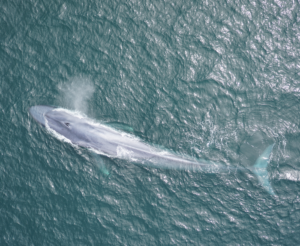
A study by MBARI researchers and their collaborators published today in Ecology Letters sheds new light on the movements of mysterious, endangered blue whales. The research team used a directional hydrophone on MBARI’s underwater observatory, integrated with other advanced technologies, to listen for the booming vocalizations of blue whales. They used these sounds to track the movements of blue whales and learned that these ocean giants respond to changes in the wind.

Along California’s Central Coast, spring and summer bring coastal upwelling. From March through July, seasonal winds push the top layer of water out to sea, allowing the cold water below to rise to the surface. The cooler, nutrient-rich water fuels blooms of tiny phytoplankton, jumpstarting the food web in Monterey Bay, from small shrimp-like krill all the way to giant whales. When the winds create an upwelling event, blue whales seek out the plumes of cooler water, where krill are most abundant. When upwelling stops, the whales move offshore into habitat that is transected by shipping lanes.

“This research and its underlying technologies are opening new windows into the complex, and beautiful, ecology of these endangered whales,” said John Ryan, a biological oceanographer at MBARI and lead author of this study. “These findings demonstrate a new resource for managers seeking ways to better protect blue whales and other species.”

CREDIT:Image: Goldbogen Lab/Duke Marine Robotics and Remote Sensing Lab (NMFS Permit 16111)

The directional hydrophone is a specialized underwater microphone that records sounds and identifies the direction from which they originate. To use this technology to study blue whale movements, researchers needed to confirm that the hydrophone reliably tracked whales. This meant matching the acoustic bearings to a calling whale that was being tracked by GPS. With confidence in the acoustic methods established, the research team examined two years of acoustic tracking of the regional blue whale population.

This study built upon previous research led by MBARI Senior Scientist Kelly Benoit-Bird, which revealed that swarms of forage species—anchovies and krill—reacted to coastal upwelling. This time, researchers combined satellite and mooring data of upwelling conditions and echosounder data on krill aggregations with the acoustic tracks of foraging blue whales logged by the directional hydrophone.

“Previous work by the MBARI team found that when coastal upwelling was strongest, anchovies and krill formed dense swarms within upwelling plumes. Now, we’ve learned that blue whales track these dynamic plumes, where abundant food resources are available,” explained Ryan.

Blue whales recognize when the wind is changing their habitat and identify places where upwelling aggregates their essential food—krill. For a massive animal weighing up to 150 tonnes (165 tons), finding these dense aggregations is a matter of survival.

While scientists have long recognized that blue whales seasonally occupy Monterey Bay during the upwelling season, this research has revealed that the whales closely track the upwelling process on a very fine scale of both space (kilometers) and time (days to weeks).

“Tracking many individual wild animals simultaneously is challenging in any ecosystem. This is especially difficult in the open ocean, which is often opaque to us as human observers,” said William Oestreich, previously a graduate student at Stanford University’s Hopkins Marine Station and now a postdoctoral fellow at MBARI. “Integration of technologies to measure these whales’ sounds enabled this important discovery about how groups of predators find food in a dynamic ocean. We’re excited about the future discoveries we can make by eavesdropping on blue whales and other noisy ocean animals.”

Also Read:

Giraffes, parrots, oak trees, cacti among many species facing extinction

How songbirds’ striking, unique colors put them at risk [Details]

Scientists sequence world’s largest pangenome to help unlock genetic mysteries behind finer silk