India wins UN awards for Initiative against Hypertension

In a significant achievement and recognition to country’s efforts against hypertension, India has won an UN award for its “India Hypertension Control Initiative (IHCI)”, a large-scale hypertension intervention under National Health Mission. IHCI has been recognized for its exceptional work within India’s existing primary healthcare system.

Complimenting the healthcare initiative, Dr. Mansukh Mandaviya, Union Minister of Health & Family Welfare stated in a tweet: “IHCI has strengthened PM @NarendraModi  Ji’s mission to ensure health & wellness for all”. We are committed to building a healthy & fit India, he further noted.

A collaborative initiative of Ministry of Health and Family Welfare, Indian Council of Medical Research (ICMR), State Governments and World Health Organization-India, IHCI has won the ‘2022 UN Interagency Task Force, and WHO Special Programme on Primary Health Care Award’ at the UN General Assembly side event held on 21st September 2022 at New York, USA. The award recognizes outstanding commitment and action of India to: (i) prevent and control Non-Communicable Diseases (NCDs) and (ii) deliver integrated people-centric primary care. The UN Task Force has identified organisation which has multisectoral approach in prevention and control of NCDs and multisectoral action with demonstrated results at primary care for prevention and control of NCDs and related Sustainable Development Goals (SDGs).

Significance of the initiative can be adjudged from the fact that one in four adults in India has high blood pressure. The control of hypertension at primary care system level will contribute  to reducing deaths due to heart attacks, stroke and kidney failures.

IHCI has been able to leverage and strengthen the existing healthcare delivery system, hypertension control interventions under National Health Mission and improve the linkages between populations-based screening initiative with health care.  The initiative was launched in 2017 and expanded in a phased manner to cover more than 130 districts across 23 states. Under the initiative, more than 34 lakh people with hypertension are taking treatment in government health facilities, including Ayushman Bharat Health Wellness Centres (HWCs).  The project strategies are easily scalable within the health system. The strategies include a simple drug-dose-specific standard treatment protocol, ensuring adequate quantity of protocol medications, decentralization of care with follow-up and refills of medicines at Health Wellness Centres, task sharing involving all health staff and a powerful real-time information system which can track every patient for follow-up and blood pressure control. Under IHCI, nearly half of those who were treated had blood pressure under control.

The IHCI complements the National Programme for Prevention and Control of Diabetes, Cardiovascular Disease and Stroke (NPCDCS) of the Ministry of Health & Family Welfare, Government of India. IHCI accelerates the achievement of targets of the Government of India by ensuring a continuum of care and giving a boost to the ongoing “Ayushman Bharat” programme.

Moonlighting: Wipro cracks whip, fires 300 employees found working with rival companies

Following uproar among IT companies on many workers indulging in moonlighting, Wipro had warned against it and now took stern action firing 300 employees for moonlighting with its key rivals at the same time.

Wipro Chairman Rishad Premji said in Wednesday that the “reality is that there are people today working for Wipro and working directly for one of our competitors and we have actually discovered 300 people in the last few months who are doing exactly that.”

Speaking at the All India Management Association (AIMA) National Management Convention, Premji reiterated that moonlighting is a complete violation of integrity “in its deepest form.” Wipro has now terminated their employment for “act of integrity violation”.

Premji recently said that the concept of a second job to the regular job is “plain and simple” cheating. “There is a lot of chatter about people moonlighting in the tech industry. This is cheating — plain and simple,” he had tweeted.

As the issue of moonlighting or working elsewhere to make extra money in India is plaguing many tech giants after the Work From Home concession that entailed them work remotely, several Indian tech giants are facing the challenge to keep their workforce committed and focused.

The ethical issue has been raised by tech services giant Infosys first, followed by cloud Major IBM last Wednesday. Infosys has already made it clear that the practice is not ethical and the company may fire those who are moonlighting.

Rishad Premji

However, Wipro has become the first to fire its employees who are moonlighting. Infosys, IBM are still pondering the issue though they are with the industry against moonlighting.

IBM Managing Director  Sandip Patel said, “All of our workers when they are employed, they sign an agreement which says that they are going to be working full-time for IBM. So moonlighting is not ethically right for them to get into.”

However, some startups are encouraging employees to opt for moonlighting or work outside their primary working hours. Swiggy has encouraged the practice but the traditional companies are calling it cheating and unethical and issued warning to employees from practising Moonlighting even in extra hours.


In one case, a techie who was interviewed by a Hyderabad-based company and hired in turn hired another techie to work on his behalf, while he is engaged in working on other projects. He has been summarily fired now but the issue has brought to light the glaring anomaly in misuse of a pact with the company.

Infosys has already warned employees that involvement in such practice can result in “disciplinary action including termination of employment”. “No two-timing, no moonlighting”, the company said in an internal memo.

Sudha Murthy nominated to Board of Trustees of PM CARES Fund

Prime Minister Narendra Modi chaired a meeting of the Board of Trustees of the PM CARES Fund on Tuesday in which new member Sudha Murthy from Bengaluru was appointed recently.

A presentation was made on the various initiatives undertaken with the help of PM CARES Fund, including the PM CARES for Children scheme which is supporting 4345 children. Trustees appreciated the role played by the fund at a crucial time for the country. PM Shri Narendra Modi appreciated the people of the country for contributing wholeheartedly to PM CARES Fund.

It was discussed that PM CARES has a larger vision on effectively responding to emergency and distress situations, not only through relief assistance, but also taking mitigation measures and capacity building.

Prime Minister welcomed the Trustees for becoming an integral part of the PM CARES Fund.

The meeting was attended by Trustees of the PM CARES Fund, i.e. Union Home Minister and Union Finance Minister as also, the newly nominated trustees of the PM CARES Fund:
  • Justice K.T. Thomas,  Former Judge, Supreme Court,
  • Kariya Munda, Former Deputy Speaker,
  • Ratan Tata, Chairman Emeritus, Tata Sons.

The Trust further decided to nominate following eminent persons for constitution of Advisory Board to PM CARES Fund:

  • Rajiv Mehrishi, Former Comptroller and Auditor General of India
  • Sudha Murthy, Former Chairperson, Infosys Foundation
  • Anand Shah, Co-founder of Teach for India and Former CEO of Indicorps and Piramal Foundation.

Prime Minister said that participation of new Trustees and Advisors will provide wider perspectives to the functioning of the PM CARES Fund. Their vast experience of public life would impart further vigour in making the fund more responsive to various public needs.

Scent, sweat from human skin attract disease-spreading mosquitoes

Mosquitoes that spread Zika, dengue and yellow fever are guided toward their victims by a scent from human skin. The exact composition of that scent has not been identified until now.

A UC Riverside-led team discovered that the combination of carbon dioxide plus two chemicals, 2-ketoglutaric and lactic acids, elicits a scent that causes a mosquito to locate and land on its victim. This chemical cocktail also encourages probing, the use of piercing mouthparts to find blood.

This chemical mixture appears to specifically attract female Aedes aegypti mosquitoes, vectors of Zika as well as chikungunya, dengue, and yellow fever viruses. This mosquito originated in Africa, but has spread to tropical and subtropical regions worldwide, including the U.S.

Mosquitoes use a variety of cues to locate their victims, including carbon dioxide, sight, temperature, and humidity. However, Cardé’s recent research shows skin odors are even more important for pinpointing a biting site.

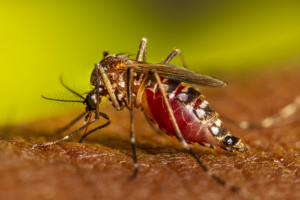
Aedes aegyptii mosquito biting a person./CREDIT CDC

“We demonstrated that mosquitoes land on visually indistinct targets imbued with these two odors, and these targets aren’t associated with heat or moisture,” Cardé said. “That leaves skin odor as the key guiding factor.”

Given the significance of odor in helping mosquitoes successfully feed on humans, Cardé wanted to discover the exact chemicals that make our scent so potent for the insects. Part of the equation, lactic acid, was identified as one chemical element in the odor cocktail as long ago as 1968.

Since then, several studies have identified that carbon dioxide combined with ammonia, and other chemicals produced by humans also attract these mosquitoes. However, Cardé, who has studied mosquitoes for 26 years, felt these other chemicals were not strong attractants.

Methods that chemists typically use to identify these chemicals would not have worked for 2-ketoglutaric acid, Cardé said. Gas chromatography, which separates chemicals by their molecular weight and polarity, would have missed this acid.

“I think that these chemicals may not have been found before because of the complexity of the human odor profile and the minute amounts of these compounds present in sweat,” said chemist Jan Bello, formerly of UCR and now with insect pest control company Provivi.

Searching for mosquito attractors, Cardé turned to Bello, who extracted compounds from the sweat in his own feet. He filled his socks with glass beads and walked around with the beads in his socks for four hours per odor collection.

Credit: MINDY TAKAMIYA/KYOTO UNIVERSITY ICEMS

“Wearing the beads felt almost like a massage, like squeezing stress balls full of sand, but with your feet,” said Bello. ‘The most frustrating part of doing it for a long time is that they would get stuck in between your toes, so it would be uncomfortable after a while.”

The inconvenience was worth the investment. Bello isolated chemicals from the sweat deposited on the sock beads and observed the mosquitoes’ response to those chemicals. In this way, the most active combination emerged.

Future studies are planned to determine whether the same compound is effective for any other mosquitoes, and why there is such variation in how individuals are apt to be bitten. “Some are more attractive than others to these mosquitoes, but no one’s yet established why this is so,” Cardé said.

Though this discovery may not lead to insights for the development of new repellants, the research team is hopeful their discovery can be used to attract, trap, and potentially kill disease-spreading mosquitoes.

Directorate of Revenue Intelligence foils attempts of gold smuggling, seizes 65.46 kg of gold at Mumbai, Patna, Delhi

Continuing the streak of significant seizures, in a major swoop down, the Directorate of Revenue Intelligence (DRI) has seized 394 pieces of foreign origin gold bars weighing approximately 65.46 kg and valued at Rs. 33.40 crore (approx.) which was being smuggled from neighbouring north eastern countries.

Specific intelligence indicated that a syndicate is actively planning to smuggle foreign origin gold from Mizoram and using domestic courier consignment of supply chain & logistic company (hereinafter referred as logistics company).

In order to interdict the contraband, “Op Gold Rush” was launched by DRI and a particular consignment declared to contain ‘Personal Goods’ destined to Mumbai was intercepted. Examination of the consignment at Bhiwandi (Maharashtra) on 19.09.2022 led to recovery and seizure of 120 pieces of foreign origin gold biscuits weighing approximately 19.93 Kg and valued at about Rs. 10.18 crore.

Further analysis and investigation revealed that 2 other such consignment, sent by same consignor from same location to same consignee, destined to Mumbai and in transit, were despatched through the same logistics company. The location of the consignments was traced.

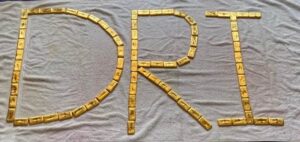
DRI foils attempts of gold smuggling.

The second consignment was located and intercepted in Bihar. Upon examination at the Warehouse of the logistics company, it led to recovery of 172 foreign origin gold bars weighing approximately 28.57 kgs and valued at about Rs.14.50 crore. Similarly, the third consignment was intercepted and examined at the Delhi hub of the logistics company which led to recovery and seizure of 102 pieces of foreign origin gold bars weighing approximately 16.96 kg and valued at about Rs. 8.69 crore.

Directorate of Revenue Intelligence foils attempts of gold smuggling.

These series of detections have helped unearth novel modus operandi of smuggling foreign origin gold into India from the north eastern part of the country and through domestic courier route of logistics company. Such detections reinforce DRI’s ability to detect and combat unique and sophisticated methods of smuggling. A total of 394 foreign origin gold bars weighing approximately 65.46 Kg and valued at approximately Rs 33.40 crore were recovered and seized in multi city operations.

PM Modi condoles the demise of Bollywood comedian Raju Srivastava

The Prime Minister, Narendra Modi has condoled the demise of renowned comedian Raju Srivastava.

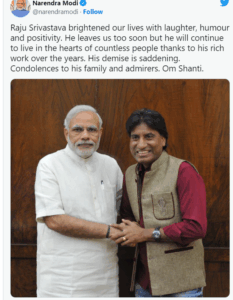
The Prime Minister tweeted;

“Raju Srivastava brightened our lives with laughter, humour and positivity. He leaves us too soon but he will continue to live in the hearts of countless people thanks to his rich work over the years. His demise is saddening. Condolences to his family and admirers. Om Shanti.”

Post-pandemic fallout: Road accident deaths in US increase in first half of 2022

The National Highway Traffic Safety Administration of the United States on Monday released its early estimates of traffic fatalities for the first half of 2022. An estimated 20,175 people died in motor vehicle traffic crashes, an increase of about 0.5% as compared to 20,070 fatalities NHTSA projected for the first half of 2021.

However, NHTSA projects that the second quarter of 2022, from April to June, had the first decline in fatalities after seven consecutive quarters of year-to-year increases in fatalities that began in the third quarter of 2020.

“Traffic deaths appear to be declining for the first time since 2020, but they are still at high levels that call for urgent and sustained action. These deaths are preventable, not inevitable, and we should act accordingly,” said U.S. Transportation Secretary Pete Buttigieg.

  • From 1987 to 2017, frontal air bags saved 50,457 lives.
  • 934 children have died due to Pediatric Vehicular Heatstroke (PVH) since 1998.
  • 6,549 people aged 65 or older were killed in traffic crashes in 2020, 17% of all traffic fatalities.

In January, Secretary Buttigieg unveiled the National Roadway Safety Strategy, which outlines the Department’s comprehensive approach to significantly reducing serious injuries and deaths on highways, roads and streets. President Biden’s Bipartisan Infrastructure Law provides unprecedented funding for safety to achieve the Department’s ambitious, long-term goal of reaching zero roadway fatalities.

“Although it is heartening to see a projected decline in roadway deaths in recent months, the number of people dying on roads in this country remains a crisis,” said Ann Carlson, NHTSA’s Acting Administrator.

USDOT has begun work on a number of action items in the NRSS, including:

  • In May, the Federal Highway Administration issued Complete Streets guidance and is encouraging States to develop complete streets using the formula funding delivered through the President’s Bipartisan Infrastructure Law.
  • In March, NHTSA issued a request for comment to proposed significant upgrades to the New Car Assessment Program, in part by proposing to add four more advanced driver assistance system technologies to those NHTSA already recommends. These new technologies would include blind spot detection, blind spot intervention, lane keeping assistance and pedestrian automatic emergency braking. The notice also describes the roadmap of the Agency’s plans to update NCAP in phases over the next 10 years, to potentially incorporate consideration of the vehicle’s safety features for people walking or biking around the car.
  • In June, NHTSA issued a final rulemaking on rear impact guards for trailers and semitrailers.
  • USDOT issued a notice of funding opportunity for $1 billion for the first year of the brand-new Safe Streets and Roads for All program funded by the President’s Bipartisan Infrastructure Law.

Additionally, NHTSA has issued a Standing General Order to collect more data about crashes that occur when automated driving systems and advanced driver assistance systems are engaged.

The preliminary data from the USDOT’s FHWA shows vehicle miles traveled in the first half of 2022 increased by about 43.2 billion miles, a 2.8% increase from the same time period last year. The fatality rate for the first half of 2022 decreased to 1.27 fatalities per 100 million VMT, down from the projected rate of 1.30 fatalities per 100 million VMT in the first half of 2021.

NHTSA has also announced that the projections for two of the regions (NHTSA Regions 3 and 9) were revised. Projected deaths during the first quarter of 2022 for Region 3 were revised lower, while projections for Region 9 were revised higher. There were minor changes to the projections for the other regions. This did not result in a revision of the projected fatalities for the Nation as a whole.

Bizarre mindset of Russian legislator bares open, says Queen’s funeral ideal time to nuke London

Russian TV anchors, known for crossing the lines of journaistic ethics, have been vociferously seeking blood in the countries which are opposed to the Ukraine war since the beginning of this year.

In a remark on the program 60 Minutes, Olga Skabeyeva of the Russia-1 channel said that there is a clamour for raids on Western countries for their support to Ukraine in the war.

As the defeat in several border towns s looming large, the Russian TVs are now joined by legislators drawing their attention to global events including the Queen’s funeral where 2,000 world leaders congregated on Monday.

In a bizarre remark on Monday, a legislator too joined the bllitzkriez suggesting that Moscow should have taken advantage of Queen Elizabeth II’s funeral to launch a nuclear missile strike on London, which did not invite the Russian Preesident Vladimir Putin for the event.

Queen Elizabeth II funeral

In a remark on during a discussion on Monday, Andrey Gurulyov, a Russian member of parliament and a former army commander, refuted US President Joe Biden’s appeal to Vladimir Putin not to use weapons of mass destruction, such as nuclear arms.

Target UK, not Ukraine

“What made him think we would conduct a nuclear strike against Ukraine? We’ll still have to live over there, in Ukraine. We have plenty of targets…Why would we bomb Ukraine and Germany when there is Britain, the root of evil?” he said.

Then Skabeyeva interrupted with a remark: “We should have done it today. All the best people are there for the funeral.”

Taking it further, Gurulyov hovered around the aftermath the UK would face in the event of a nuclear strike. “Will they defend a Martian desert as per their 5th Article?” he told Skabeyeva, referring to NATO’s collective defense pledge, “there will be nothing left. What do they call it, an unshakeable island? We’ll shake it up.”

Targeting UK

Co-anchor of 60 Minutes, Evgeny Popov, then joined the debate saying, “Let me remind you that Great Britain…also has nuclear weapons,” to which Gurulyov said the UK’s warheads could be “instantly decimated”. The legislator, already on sanctions list of the US, suggested last month that Putin should launch missile strikes on the UK which “would be the end of the British Crown.”

The Queen Elizabeth’s funeral on Monday was attended by leaders and state heads from around the world, including US President Joe Biden, Japanese Emperor Naruhito, French President Emmanuel Macron, Indian President Droupadi Murmu among others to pay their respects to the queen, after a week of national mourning in the UK which has seen an outpouring of grief and reverence over the death of the British monarch.

The ire against the British is apparently evident after TV news revealed several English-speaking foreigners are taking part in the Ukraine war, which helped Kyiv restore several bordering towns defeating the Russian forces.

On Track: Artemis I mission Cryogenic Demonstration Test Today at 4.45 Pm IST [Live schedule]

NASA Television will provide live coverage of the upcoming Artemis I cryogenic demonstration test on NASA TV beginning at 7:15 a.m. EDT or 4.30 pm IST on Wednesday, Sept. 21.

The demonstration test will allow teams to confirm the repair to a hydrogen leak seen during an early September Artemis I launch attempt, evaluate updated propellant loading procedures, and conduct additional evaluations. The demonstration will conclude when the objectives for the test have been met.

NASA remains on track for an Artemis I cryogenic demonstration test.In the days since the previous launch attempt, teams have analyzed the seals that were replaced on an interface for the liquid hydrogen fuel line between the Space Launch System (SLS) rocket and the mobile launcher and adjusted procedures for loading cryogenic, or supercold, propellants into the rocket. Engineers identified a small indentation found on the eight-inch-diameter liquid hydrogen seal that may have been a contributing factor to the leak on the previous launch attempt.

NASA’s Cryogenic Demonstration Test .Photo Credit: (NASA/Joel Kowsky)

During the test, teams will load propellants into both the core stage and upper stage tanks, and Orion and the SLS boosters will remain unpowered. Meteorologists currently predict favorable weather for the test with a 15% chance of lightning within 5 nautical miles of the area, which meets criteria required for the test, and will continue to monitor expected conditions.

FBI Warns on Scam to Provide Local Technical Support in Chicago Area

US investigating agency FBI’s agent Ashley T. Johnson is warning the public about a Technical Support Fraud currently targeting older Americans in the Chicago area.

Technical Support Fraud involves a criminal posing as technical support to defraud unwitting individuals. Criminals may offer support to resolve issues such as compromised email or bank accounts, computer viruses, or software renewals. In this scam currently affecting Illinois residents, it begins with a computer intrusion.

FBI response team in action

Victims of this scam experience a frozen computer followed by a pop-up on their screen advising that their computer has been hacked. The pop-up contains a number claimed to be for a well-known computer software company; however, this number really belongs to the scammers. Once the number is called, the scammer(s):

  • Answer the phone pretending to be an employee of the computer software company. The “employee” claims that the victim’s bank accounts and social security account number have been compromised and connects the victims with other scammers impersonating bank representatives and Social Security Administration employees.
  • Direct victims to download an application that allows remote computer access.
  • Convince victims to withdraw money from bank/investment accounts to avoid “hackers.” Victims are told their money will be transferred to the Social Security Administration where it will be converted to Bitcoin for safekeeping and returned once they are assigned a new social security account number.

Tips to avoid this scam:

  • Avoid installing apps or programs that allow strangers remote access to your computer.
  • Never call the number in a pop-up window.
  • Always disconnect your device from the Internet immediately if you see a scam-related pop-up screen. Do not turn your computer off or reboot.
  • Always be skeptical if someone tells you not to talk to your family about a money transfer.
  • Always be skeptical if a “government agency” asks you to conduct business in Bitcoin.
  • Always call companies, banks, or government agencies directly with numbers you have independently verified.
  • Always contact the FBI at ic3.gov to make a report.

Not just chemotherapy, now phototherapy is here for cancer treatment [Details]

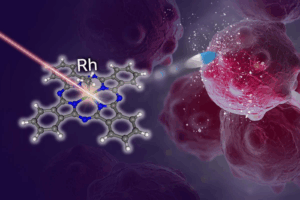
One approach to treating cancer is photodynamic therapy using photo-uncaging systems, in which light is used to activate a cancer-fighting agent in situ at the tumor. However, suitable agents must be stable under visible light, have an anti-tumor effect in low-oxygen environments, and have the ability to be activated by low-energy tissue-penetrative red light – a combination of properties that is difficult to achieve. Now, a team from The Institute of Industrial Science at The University of Tokyo has developed a new platform that uses, for the first time, organorhodium(III) phthalocyanine complexes to achieve this combination of traits.

Conventional photodynamic techniques depend on the formation of reactive oxygen species to destroy tumor cells, but many tumors contain environments that lack oxygen. Photo-uncaging systems, where the agent is administered in an inactive form and then activated, or “uncaged”, in the location of the tumor, address this issue. They uncage alkyl radicals, which are known to be capable of inducing cell death both with and without the presence of oxygen. Alkyl radicals are converted into terminal aldehydes in the presence of oxygen, and these terminal aldehydes can also induce cell death. The team used molecules called “organorhodium(III) phthalocyanine (Pc) complexes” to develop, for the first time, a novel platform for photo-uncaging therapy.

Researchers from The Institute of Industrial Science, The University of Tokyo have developed a streamlined photo-uncaging system for photodynamic cancer therapy, using a pulse of light for tumor-specific activation of a cancer-fighting agent/CREDIT
Institute of Industrial Science, The University of Tokyo

“The organorhodium(III) phthalocyanine (Pc) complexes we developed are highly stable under ambient light during the processes of synthesis, purification, and measurement, but can be activated by a laser that gives out nanosecond pulses of red light,” explains lead author Kei Murata. These nanosecond-pulsing lasers (pulsing for a billionth of a second) are relatively easy for medical staff to handle.

They went on to show that the compounds that were released after the organorhodium(III) phthalocyanine (Pc) complexes were activated showed toxicity to HeLa cells, a cell line developed from cancer, indicating that these compounds would have the ability to fight cancer if released inside a tumor.

“Our new technology could allow the photochemical generation of a wide variety of alkyl radicals and aldehydes, making possible the site-selective release of various bioactive molecules,” says senior author Kazuyuki Ishii. As an improvement on other photo-uncaging systems, it opens an exciting new avenue for the treatment of cancer by phototherapy.

Electronic health records: Quick access to patient’s records improves patient care

When a patient gets transferred from a hospital to a nearby specialist or rehabilitation facility, it is often difficult for personnel at the new facility to access the patient’s electronic health records – which includes important patient-specific information such as their medication history and allergies. This lack of electronic compatibility often leads to wasteful and expensive duplication of tests, X-rays and paperwork that can interfere with the treatment of patients.

A recent study at the University of Missouri highlights how the use of electronic health records have resulted better quality of care – which can direct the next steps of government programs to ensure hospitals use electronic health records in a way that promotes interoperability, or the ability for various health care organizations to quickly access a patient’s records, reduce waste and speed up decision-making to improve patient health outcomes.

So far, the adoption and implementation of electronic health records has been a bumpy road, said Kate Trout, assistant professor in the MU School of Health Professions and lead author on the study. Electronic health records have widely been cited in research literature as the most cumbersome technology ever implemented in the health care industry.

“They have the potential to be very helpful, but in practice they tend to be very disruptive because it’s time consuming to train personnel how to use them. They’re expensive, and there’s always new complicated updates and new forms that come out, and there is often a lack of interoperability for the data to be shared among different health care organizations,” Trout said. “Given the massive national investments, we wanted to see if electronic health records are being utilized in a meaningful way to promote interoperability and ultimately improve quality of care.”

electronic health records/University of Missouri

More than $30 billion has been invested by the federal government in the adoption and use of electronic health records by health care organizations in an attempt to improve the quality of care delivered to patients.

In 2011, Centers for Medicare and Medicaid established the “Meaningful Use” program – now known as the “Promoting Interoperability Program” – which offers financial incentives to health care providers who effectively utilize electronic health records in a way that promotes information sharing, public health reporting and interoperability.

Trout analyzed the impact of electronic health records on mortality rates for patients with various medical procedures and conditions. More than 5 million patients in 300 U.S. hospitals were included in the study, which merged large datasets from the electronic health records, the American Hospital Association and Centers for Medicare and Medicaid.

Three main categories emerged:

  1. hospitals that meet the “Meaningful Use” requirements with their electronic health records,
  2. hospitals that fully implement electronic health records but not in a way that meets the “Meaningful Use” requirements, and
  3. hospitals that have either none or only partially implemented electronic health records.

Trout found that the hospitals that meet the “Meaningful Use” requirements were able to improve quality of care and reduce patient mortality rates to a greater extent than hospitals in the other two groups. While the results show some optimism, Trout cautions that more still needs to be done, including the need to analyze the impact of interoperability and advanced electronic health record functions on quality of care.

“This research highlights the importance of using electronic health records in a way that promotes interoperability to streamline processes, speed up decision-making, reduce wasted time and ultimately improve patient health outcomes,” Trout said. “Ideally, the United States could implement one standardized electronic health records system for everyone to ensure compatibility, so policy makers can hopefully benefit from this research.”

Trout added that with the use of data mining and analytics, electronic health records can be better used going forward to potentially identify patient characteristics that put them at higher risks for possible infections or other conditions.

healthcare

“With this information, are there alerts we can put in after a surgery to ensure we follow up at critical points in time?” Trout said. “Are there certain patient populations that we can use the data to catch them earlier and make sure we give them extra care and not just put them through the same routine protocols as everyone else? That is how we move away from only focusing on implementing the technology and progress toward encouraging innovative ideas that ultimately improve patient health outcomes.”

Trout said this research can be particularly useful for rural hospitals that historically have less resources and lag behind their urban counterparts in adopting health technology like telehealth and electronic health records. There have been many closures of rural hospitals, an issue that has been worsened by the COVID-19 pandemic, and rural patients tend to have more co-morbidities and worse health outcomes.

“I am passionate about helping vulnerable, underserved populations, and our personal health is often tied to where we live and various social determinants of health,” Trout said. “Those ideas are not incorporated into our clinical data yet, but they should be going forward. My overall goal is to harness the data in a way that we can hopefully start to spend less and get more.”

Mars lander InSight’s power diminishing fast, end of mission in sight?

InSight, which has hit headlines this week with the realtime recording of sound from the Mars when meteoroids struck Mars’ surface at four places since its landing on the Red Planet in November 2018, is nearing the end of its mission by mid-2023.

The first NASA mission to explore Mars’ deep interior, InSight rover landed on Mars surface on Nov. 26, 2018, in the Elysium Planitia region and collected enormous data over the past four years.

To its credit, the lander has detected more than 1,300 marsquakes since touching down on Mars, providing information that has allowed scientists to measure the depth and composition of Mars’ crust, mantle, and core.

As power on the spacecraft diminishes, the InSight team hopes to maximize the science and increase the possibility of recording additional marsquakes.

However, the lander achieved a milestone when NASA released the sound of a meteoroid striking Mars that was captured by its Reconnaissance Orbiter’s High Resolution Imaging Science Experiment (HiRISE) camera. The sound resembled like a “bloop” due to a peculiar atmospheric effect and the sound can be heard three times.

In addition, the InSight lander has provided visuals of three craters created between 2020 and 2021, ranging between 53 and 180 miles (85 and 290 kilometers) at Elysium Planitia.

It has proved a point that Mars has escaped from many such meteoroids as its atmosphere is just 1 per cent as thick as Earth’s, and several meteoroids pass through it without disintegrating, according to NASA. InSight’s team also said other impacts may have been obscured by noise from wind or by seasonal changes in the atmosphere.

The data helps NASA scientists to know the impact rate and estimate the age of different surfaces by counting its impact craters. The more they find, the older is the surface.

Auto shutdown of seismometer deferred

Initially, the lander was to automatically shut down the seismometer, its last operational science instrument by the end of June in order to conserve energy, surviving on what power its dust-laden solar panels can generate until around December.

Now, the team plans to program the lander to keep the seismometer operate three more months though batteries get discharged sooner and cause the spacecraft to run out of power soon. The team hopes that it might enable the seismometer to detect additional marsquakes.

“InSight hasn’t finished teaching us about Mars yet,” said Lori Glaze, director of NASA’s Planetary Science Division in Washington. “We’re going to get every last bit of science we can before the lander concludes operations.”

This collage shows three other meteoroid impacts that were detected by the seismometer on NASA’s InSight lander and captured by the agency’s Mars Reconnaissance Orbiter using its HiRISE camera. / NASA/JPL

As of September 10, 2022, InSight was generating an average of 420 watt-hours of energy per Martian day, or sol. The tau, or level of dust cover in the atmosphere, was estimated at .80 (typical tau levels outside of dust season range from 0.6-0.7).

All instruments but the seismometer have already been powered down. Like other Mars spacecraft, InSight has a fault protection system that automatically triggers “safe mode” in threatening situations and shuts down all but its most essential functions, allowing engineers to assess the situation. Low power and temperatures beyond pre-determined limits can trigger safe mode.

Seisomometer helps detect more Marsquakes

To enable the seismometer to continue to run for as long as possible, the mission team is turning off InSight’s fault protection system. While this will enable the instrument to operate longer, it leaves the lander unprotected from sudden, unexpected events that ground controllers wouldn’t have time to respond to.

“The goal is to get scientific data all the way to the point where InSight can’t operate at all, rather than conserve energy and operate the lander with no science benefit,” said Chuck Scott, InSight’s project manager at NASA’s Jet Propulsion Laboratory in Southern California.

Railway Protection Force (RPF) celebrates its 38th Raising Day

The Railway Protection Force (RPF) celebrated its 38th Raising Day on 20th September 2022 by organizing a parade for the first time at the central level at Jag Jeewan Ram RPF Academy, Lucknow. This is the first time that a National Level Parade of RPF was organized outside New Delhi. The choice of venue at the Jagjivan Ram RPF Academy at Lucknow – the Centralized Training Institute of RPF and the alma mater of the officers of the Force recruited through the civil service exam, assumes notable significance.

Railway Protection Force (RPF) celebrated its 38th Raising Day

The Union Minister of State for Railways and Textiles, Smt. Darshana Vikram Jardosh, graced the occasion as the Chief Guest and took the salute of the Parade. The programme was attended by Shri Brij Lal, MP, Rajyasabha, senior officers of Central Armed Police Forces, State Police, various Government Departments, Railways and other dignitaries.

The Minister of State for Railways presented the ‘President’s Police Medal for Distinguished Service’, ‘Indian Police Medal for Meritorious Service’, ‘Sarvottam Jeevan Raksha Padak’, ‘Uttam JeevanRaksha Padak’ and ‘ Jeevan Raksha Padak’ to 23 RPF personnel, including award of Sarwottam Jeewan Raksha Padak posthumously to Late Shri Gyan Chand, Head Constable RPF NCR who laid down his life at the altar of duty while saving a lady who had jumped in front of a moving train with intention to commit suicide. The force remembered Shri Gyan Chand with tearful eyes and chest swelling with pride.

The Chief Guest inaugurated and hoisted a 100 feet high Monumental National Flag at the Academy Campus and unveiled and dedicated the installation of a Railway Coach with Engine for train intervention training. The renovated main-hall of the Academy, which has now been air-conditioned was also inaugurated by the Minister. A Special “Azadi ka Amrit Mahotsav” Edition of the “Rail Sainik”, the quarterly e-magazine of RPF was released on the occasion.

Railway Protection Force (RPF) celebrated its 38th Raising Day

The Minister of State for Railways praised the poise, turnout and march of the contingent. In her speech, she appreciated the role of RPF in ensuring safe travel for women passengers. She heaped fulsome praise on Meri Saheli teams for providing security to women traveling alone in long distance trains. She outlined the prominent role of training and skill up gradation in improving the performance of any organization and announced sanction of Rs 55 Crores for enhancing training facilities in RPF.

Smt. Jardosh also announced setting up of a skill up-gradation training centre in the premises of 3rd Battalion RPSF, Lucknow for up-gradation of skills of family members of RPF personnel, especially ladies at the cost of Rs 3 Crores. Further, she announced construction of rest shelters cum mobilization halls for lady RPF train escorting personnel at 75 locations across the country.

The Director General, RPF, Shri Sanjay Chander, welcomed the Minister and outlined the various new initiatives taken by the force to provide a safe and secure train travel to the passengers. He stated that the RPF is making use of technology in various spheres of its working to ensure an optimal utilization of the manpower. The force has been on the forefront in providing assistance to the needy passengers, the elderly and the children. The RPF has been doing commendable work in preventing Human Trafficking, Transport of Narcotics, Hawala Money, Prohibited Wildlife and other illegal activities on trains and stations. He pointed out that we have entered the Amrit Kaal which would last till 2047 during which we have to work with our heart and soul to take India to the pinnacle of glory that she deserves. The vision 2047 is the roadmap towards such a lofty ideal. He mentioned the vision 2047 of the force which will include innovation, use of technology, optimum utilization of resource to increase the response, reach and effectiveness of the force. He underlined that the goal of the force is Sewa Hi Sankalp and all members of the force, from Constable to DG, have to work towards reinforcing its service commitment.

The Railway Protection Force was constituted by an Act of Parliament in 1957 for providing security to Railway property. Subsequently, the force was empowered to enquire, arrest and prosecute the offenders involved in unlawful possession of railway property in 1966. Over the years, it was felt that the force needed to be given the status of “An Armed Force of the Union” and finally the status was bestowed upon the force on 20th September 1985 by amending the RPF Act by the Parliament. Therefore, 20th September is celebrated every year as the Raising Day of RPF by members of the force and their families.

The Raising Day is an important milestone in the growth of a force and celebrated with festive spirit by members of the force where they share their happiness with the public and reaffirm their commitment to serve them and work for the overall public good.

Earlier the Raising day was celebrated by organizing parades and other functions at the zonal, divisional and battalion levels. However, from this year it has been decided to organize only one parade at the central level to symbolize the national character of the force.

Central Bureau of Narcotics destroys 1,032 hectares of illicit cannabis (ganja) cultivation in Himachal Pradesh

In one of the biggest destruction operations conducted over 2 weeks in Himachal Pradesh, officers of Central Bureau of Narcotics (CBN) destroyed 1032 hectares (12,900 bighas) of illicit cannabis (ganja) cultivation.

On receiving specific intelligence about illicit cannabis (ganja) cultivation in Himachal Pradesh, teams of officers of CBN were formed and dispatched. Officers of CBN verified the intelligence and further carried out physical surveys resulting in detection of more areas of illicit cultivation. Subsequently, destruction operation was started with support of District Administration, Forest Department and the Police.

Narcotics Bureau destroyed 1032 hectares of illicit cannabis (ganja) cultivation in Himachal Pradesh

During this operation, two-pronged approach of creating awareness among villagers along with enforcement was adopted by officers of CBN.

Community mobilisation was adopted by sensitising villagers about adverse effects of drugs on body and mind. Threats that drugs tend to pose to the future of youth and children were explained. Relevant penal provisions of NDPS act were also explained to Village Pradhans and members, consequent to which resolutions were passed by villagers to destroy illicit cannabis plantations around the villages. Villagers assisted officers of CBN to destroy illicit cultivation by actively taking part in exercise under supervision of CBN officers.

4 teams of CBN Officers were simultaneously allotted different areas of operation and given the flexibility to work jointly in certain areas with large illicit cultivation of cannabis. Officials from Forest department, Revenue & the Police department also accompanied teams during operations in light of sensitive nature of operation. It is noteworthy to mention that since this is a season of apple & pomegranate harvesting, labour availability was a problem but it failed to deter the grit and determination of CBN teams which swung into action and conducted destruction operation in hostile terrain with steep slopes and rains. The officers climbed daily up to 11,000 feet above sea level and even camped in sensitive areas to expedite the destruction of illicit cultivation of cannabis. Later on, officers from DRI (Directorate of Revenue Intelligence) also joined this operation.

GPS coordinates were used to tag / mark the sensitive locations and DRONES were used for detection and surveillance of the illicit cannabis (ganja) cultivation areas which resulted in greater success of the entire operation.

Narcotics Bureau destroyed 1032 hectares of illicit cannabis (ganja) cultivation in Himachal Pradesh

“Mission Crackdown shall continue with same vigour in other parts of the country and CBN is fully committed against the Drug Menace” said Shri Rajesh F Dhabre, Narcotics Commissioner, Central Bureau of Narcotics.

Active support in terms of logistics and manpower was provided throughout the operation by the Office of Dist. Collector, CCF and SP Kullu and DRI.

Narcotics Bureau destroyed 1032 hectares of illicit cannabis (ganja) cultivation in Himachal Pradesh

The Central Bureau of Narcotics (CBN) is the Apex Drug Law Enforcement Agency under Department of Revenue, Ministry of Finance, Government of India tasked with identification and destruction of illicit cultivation of cannabis and Opium along with its other responsibilities.

Narcotics Bureau destroyed 1032 hectares of illicit cannabis (ganja) cultivation in Himachal Pradesh

CBN has conducted destruction operation in many states like West Bengal, Jammu & Kashmir, Arunachal Pradesh, Manipur, Uttarakhand etc., resulting in destruction of more than 25,000 hectares of illicit cultivation of Opium and Cannabis over the years. CBN had also destroyed approximately 3,600 hectares of Illicit Opium in Arunachal Pradesh in the month of February and March this year. CBN intends to continue such destruction operations of illicit cultivation across India in future as well.

People who are ‘night owls’ face greater risk of diabetes: Study

Are you an early bird or a night owl? Our sleep cycles could influence our risk of diseases, such as type 2 diabetes and heart disease, said a new study published in Experimental Physiology.

As sleep cycles cause metabolic differences and alter our body’s preference for energy sources, those who stay up later have a reduced ability to use fat for energy, meaning fats may build-up in the body and increase risk for type 2 diabetes and cardiovascular disease, said the study

The metabolic differences relate to how well each group can use insulin to promote glucose uptake by the cells for storage and energy use. People who are ‘early birds’ or individuals who prefer to be active in the morning rely more on fat as an energy source and are more active during the day with higher levels of aerobic fitness than ‘night owls’.

On the other hand, ‘night owls’ who prefer to be active later in the day and night use less fat for energy at rest and during exercise, found the study

Researchers from Rutgers University, New Jersey classified participants (n=51) into two groups (early and late) based on their ‘chronotype’ – our natural propensity to seek activity and sleep at different times. They used advanced imaging to monitor body vitals as well as insulin sensitivity and breath samples to measure fat and carbohydrate metabolism.

After monitoring them for a week, they were tested while at rest before completing two 15-minute bouts of exercise: one moderate and one high intensity session on a treadmill. Aerobic fitness levels were tested through an incline challenge where the incline was raised 2.5% every two minutes until the participant reached a point of exhaustion.

Researchers found that early birds use more fat for energy at both rest and during exercise than night owls. Early birds were also more insulin sensitive. Night owls, on the other hand, are insulin resistant, meaning their bodies require more insulin to lower blood glucose levels, and their bodies favoured carbohydrates as an energy source over fats.

This group’s impaired ability to respond to insulin to promote fuel use can be harmful as it indicates a greater risk of type 2 diabetes and/or heart disease. The cause for this shift in metabolic preference between early birds and night owls is yet unknown and needs further investigation.

Senior author Professor Steven Malin of Rutgers University said: “A sensitive or impaired ability to respond to the insulin hormone has major implications for our health. This observation advances our understanding of how our body’s circadian rhythms impact our health. ”

The study also found that early birds are more physically active and have higher fitness levels than night owls.

Facemask can detect coronavirus in air droplets or from infected person; wearers gets alert via smartphone[Details]

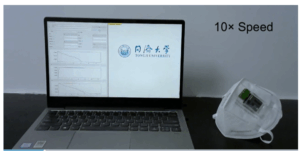
Scientists have created a face mask that can detect common respiratory viruses, including influenza and the coronavirus, in the air in droplets or aerosols. The highly sensitive mask, presented September 19 in the journal Matter, can alert the wearers via their mobile devices within 10 minutes if targeted pathogens are present in the surrounding air.

“Previous research has shown face mask wearing can reduce the risk of spreading and contracting the disease. So, we wanted to create a mask that can detect the presence of virus in the air and alert the wearer,” says Yin Fang, the study’s corresponding author and a material scientist at Shanghai Tongji University.

Respiratory pathogens that cause COVID-19 and H1N1 influenza spread through small droplets and aerosols released by infected people when they talk, cough, and sneeze. These virus-containing molecules, especially tiny aerosols, can remain suspended in the air for a long time.

Fang and his colleagues tested the mask in an enclosed chamber by spraying the viral surface protein containing trace-level liquid and aerosols on the mask. The sensor responded to as little as 0.3 microliters of liquid containing viral proteins, about 70 to 560 times less than the volume of liquid produced in one sneeze and much less than the volume produced by coughing or talking, Fang says.

Facemask

The team designed a small sensor with aptamers, which are a type of synthetic molecule that can identify unique proteins of pathogens like antibodies. In their proof-of-concept design, the team modified the multi-channel sensor with three types of aptamers, which can simultaneously recognize surface proteins on SARS-CoV-2, H5N1, and H1N1.

Once the aptamers bind to the target proteins in the air, the ion-gated transistor connected will amplify the signal and alert the wearers via their phones. An ion-gated transistor is a novel type of device that is highly sensitive, and thus the mask can detect even trace levels of pathogens in the air within 10 minutes.

“Our mask would work really well in spaces with poor ventilation, such as elevators or enclosed rooms, where the risk of getting infected is high,” Fang says. In the future, if a new respiratory virus emerges, they can easily update the sensor’s design for detecting the novel pathogens, he adds.

coronavirus

Next, the team hopes to shorten the detection time and further increase the sensitivity of the sensor by optimizing the design of the polymers and transistors. They are also working on wearable devices for a variety of health conditions including cancers and cardiovascular diseases.

“Currently, doctors have been relying heavily on their experiences in diagnosing and treating diseases. But with richer data collected by wearable devices, disease diagnosis and treatment can become more precise,” Fang says.

CUET PG Result 2022 to be out soon, where to check?

Following last week’s announcement of result for CUET-UG, the National Testing Agency (NTA) will release Central Universities Entrance Test Postgraduate (CUET PG) result 2022 today or tomorrow, reports said.

Candidates can check their CUET PG 2022 results through the official website of NTA CUET – cuet.nta.nic.in. There are 42 central universities participating in CUET PG 2022 for the academic session 2022-2023. The top colleges accepting CUET PG 2022 scores are mentioned in detail below.

Along with the CUET PG 2022 results, the NTA will also release the CUET 2022 final answer key following the closure of challenging was Sept 16. Candidates must visit the results page link and enter their roll number, date of birth on the CUET PG login page to check their results.

The CUET PG 2022 result will be published as a scorecard. The scorecard will include the candidate’s qualifying status, rank, sectional, and total marks. The CUET PG 2022 exam was conducted on September 1, 2, 3, 4, 5, 6, 7, 9, 10, 11 and 12, 2022.

Chinese spy working at Twitter? FBI asks company after whistleblower reveals it

Chinese rights activists overseas have said that they are concerned but unsurprised at recent allegations that an agent of the Chinese Communist Party (CCP) was working at Twitter, saying such infiltration is part of Beijing’s global influence operation, media reports said.

The FBI informed Twitter of at least one Chinese agent among its employees, according to US Senator Chuck Grassley, while hacker and whistleblower Peiter Zatko said the company’s lax security sparked fears that personal data on Chinese users was being collected by authorities in China, RFA reported.

Zatko, Twitter’s former head of security, levelled the allegations during his testimony before the Senate Judiciary Committee, detailing internal clashes between some who sought advertising revenue from China, and others who were concerned about doing business inside China amid rising geopolitical tensions, the report said.

“This was a big internal conundrum,” Zatko told the hearing, adding that Twitter appeared reluctant to turn away from China. “In a nutshell, if we were already in bed, it would be problematic if we lost that revenue stream,” he said.

Zatko said the FBI had told the company that China’s secret service, the Ministry of State Security, had an agent on the payroll, RFA reported.

A Twitter spokesperson said the microblogging platforms hiring process was independent of foreign influence, and that access to personal data was subject to stringent controls, adding that Zatko’s allegations were “riddled with inconsistencies and inaccuracies.”

France-based commentator Wang Longmeng said the CCP has long targeted Western social media platforms to wage its overseas influence campaigns, and that some of the company’s regional executives have close ties to the CCP, including Kathy Chen, RFA reported.

Chen’s 2016 appointment as Twitter’s managing director for Greater China raised concerns in particular, as it emerged she had served as a software engineer in the People’s Liberation Army’s strategic missile force.

“Kathy Chen, who had a military background, joined [the company], then Fei-fei Li became an independent director,” Wang said. “The CCP’s infiltration of Western media is one of its key strategies.”

“It’s not surprising that the whistleblower revealed there are Chinese agents at Twitter, because there have been suspensions and deleted accounts, and yet Twitter still allows CCP diplomats to spread rumors and lies,” he said, RFA reported.

While China bans Twitter, Facebook and other US social media firms, government agencies and diplomats use the platforms to reach an international audience.

Prince Harry not singing national anthem ‘God save the King’? Here’s the truth

The funeral of Queen Elizabeth II at the Westminster Abbey on Monday raised questions on Prince Harry for not singing in chorus the national anthem “God save the King”.

Besides the British royal family, 2,000 state heads gathered at Westminster Abbey for the funeral and they reportedly paid tribute to the monarch by singing ‘God Save the King’.

But some netizens were quick to point out on social media that Prince Harry didn’t join the royals in singing the anthem and the claim had a video of the Prince seemingly not singing.

The video shows the Duke of Sussex looking around and not syncing words frequently as the new anthem gets changed from the Queen to the King. Many Twitter users accused the Prince of being “disrespectful”.

One user wrote, “Prince Harry not singing the national anthem.” Others expressed their disappointment with Prince Harry’s actions.

Before the debate heated up, others were quick to point out that Prince Harry was, indeed, seen with lips moving. “Give him a chance. It’s changed since the last time he sang it – he hasn’t learnt the new words yet,” wrote a user. Many others said they could see him singing clearly.

“I can see Harry’s lips moving. He’s obviously not singing like he’s at karaoke, but he clearly forms the “Qu” sound and he shuts his mouth at the end. You’re a hateful non,” wrote another. Whoever sees the video (above) can make out that he is not singing loudly but at the end made lips sync with the tune.

A third user joined the debate saying, “Edward wasn’t singing either. I think it’s sometimes hard to sing when you’re emotional.”

Harry was seen sitting behind his father, King Charles III, and the Queen Consort Camilla. His wife Meghan Markle was seen by his side throughout the service.