A reliable smart app ‘DryEyeRhythm’ to assess Dry eye disease; What is the disease [Details]

Dry eye disease (DED) is a condition characterized by an array of different symptoms, including dryness, ocular discomfort, fatigue, and visual disturbances. This condition has become increasingly common in recent years owing to an aging society, increased screen time, and a highly stressful social environment. There are about 1 billion people, worldwide, who have DED. Undiagnosed and untreated DED can lead to a variety of symptoms, including ocular fatigue, sensitivity to light, lower vision quality, and a lower quality of life. Given the widespread prevalence of the condition, this can further lead to reduced work productivity and economic loss.

Despite the obvious disadvantages of DED, a large portion of the population remains undiagnosed, which ultimately leads to increased disease severity. DED is currently diagnosed through a series of questionnaires and ocular examinations (which can be invasive). But this method of diagnosis is not ideal. DED examinations do not always correspond with  patients’ subjective DED symptoms. Furthermore, non-invasive and non-contact dry eye examinations are required in the COVID-19 pandemic. These flaws point to a need for a simple, reliable, and accessible screening method for DED to improve diagnosis and prognosis of the disease.
To answer this need, a research group, led by Professor Akira Murakami and Associate Professor Takenori Inomata of the Juntendo University Graduate School of Medicine, developed a smartphone application called DryEyeRhythm. “DryEyeRhythm leverages the cameras in smartphones to measure users’ blink characteristics and determine maximum blink interval (MBI)—a substitute for tear film breakup time, an important diagnostic criterion of DED,” explains Associate Prof. Inomata. “The app also administers Ocular Surface Disease Index (OSDI) questionnaires, which are also a crucial component of DED diagnosis.

The research team conducted a prospective, cross-sectional, observational, single-center study.

The study revealed that the J-OSDI collected with DryEyeRhythm showed good internal consistency. Moreover, the app-based questionnaire and MBI yielded significantly higher discriminant validity. The app also showed good positive and negative predictive values, with 91.3% and 69.1%, respectively. The area under the Receiver operating characteristic (ROC) curve—a measure of clinical sensitivity and specificity—for the concurrent use of the app-based J-OSDI and MBI was also high, with a value of 0.910. These results demonstrate that the app is a reliable, valid, and moreover non-invasive, instrument for assessing DED.

Non-contact and non-invasive DED diagnostic assistance, like the kind provided by DryEyeRhythm, could help facilitate the early diagnosis and treatment of patients, as well as, DED treatment through telemedicine and online medical care,” says Associate Prof. Inomata. The research team plans to further validate its results by conducting a multi-institutional collaborative study in the future. They are also planning to obtain medical device approval and insurance reimbursement for the smartphone application.

The development of DryEyeRhythm is crucial step forward toward the management of DED and improving vision and quality of life among the population.

 

Facemask can detect coronavirus in air droplets or from infected person; wearers gets alert via smartphone[Details]

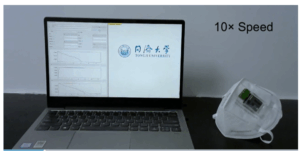
Scientists have created a face mask that can detect common respiratory viruses, including influenza and the coronavirus, in the air in droplets or aerosols. The highly sensitive mask, presented September 19 in the journal Matter, can alert the wearers via their mobile devices within 10 minutes if targeted pathogens are present in the surrounding air.

“Previous research has shown face mask wearing can reduce the risk of spreading and contracting the disease. So, we wanted to create a mask that can detect the presence of virus in the air and alert the wearer,” says Yin Fang, the study’s corresponding author and a material scientist at Shanghai Tongji University.

Respiratory pathogens that cause COVID-19 and H1N1 influenza spread through small droplets and aerosols released by infected people when they talk, cough, and sneeze. These virus-containing molecules, especially tiny aerosols, can remain suspended in the air for a long time.

Fang and his colleagues tested the mask in an enclosed chamber by spraying the viral surface protein containing trace-level liquid and aerosols on the mask. The sensor responded to as little as 0.3 microliters of liquid containing viral proteins, about 70 to 560 times less than the volume of liquid produced in one sneeze and much less than the volume produced by coughing or talking, Fang says.

Facemask

The team designed a small sensor with aptamers, which are a type of synthetic molecule that can identify unique proteins of pathogens like antibodies. In their proof-of-concept design, the team modified the multi-channel sensor with three types of aptamers, which can simultaneously recognize surface proteins on SARS-CoV-2, H5N1, and H1N1.

Once the aptamers bind to the target proteins in the air, the ion-gated transistor connected will amplify the signal and alert the wearers via their phones. An ion-gated transistor is a novel type of device that is highly sensitive, and thus the mask can detect even trace levels of pathogens in the air within 10 minutes.

“Our mask would work really well in spaces with poor ventilation, such as elevators or enclosed rooms, where the risk of getting infected is high,” Fang says. In the future, if a new respiratory virus emerges, they can easily update the sensor’s design for detecting the novel pathogens, he adds.

coronavirus

Next, the team hopes to shorten the detection time and further increase the sensitivity of the sensor by optimizing the design of the polymers and transistors. They are also working on wearable devices for a variety of health conditions including cancers and cardiovascular diseases.

“Currently, doctors have been relying heavily on their experiences in diagnosing and treating diseases. But with richer data collected by wearable devices, disease diagnosis and treatment can become more precise,” Fang says.

Take a deep breath, your smartphone could help measure blood oxygen levels at home [Details]

First, pause and take a deep breath.

When we breathe in, our lungs fill with oxygen, which is distributed to our red blood cells for transportation throughout our bodies. Our bodies need a lot of oxygen to function, and healthy people have at least 95% oxygen saturation all the time.

Conditions like asthma or COVID-19 make it harder for bodies to absorb oxygen from the lungs. This leads to oxygen saturation percentages that drop to 90% or below, an indication that medical attention is needed.

In a clinic, doctors monitor oxygen saturation using pulse oximeters — those clips you put over your fingertip or ear. But monitoring oxygen saturation at home multiple times a day could help patients keep an eye on COVID symptoms, for example.

In a proof-of-principle study, University of Washington and University of California San Diego researchers have shown that smartphones are capable of detecting blood oxygen saturation levels down to 70%. This is the lowest value that pulse oximeters should be able to measure, as recommended by the U.S. Food and Drug Administration.

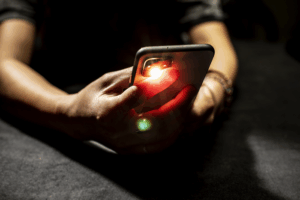
The technique involves participants placing their finger over the camera and flash of a smartphone, which uses a deep-learning algorithm to decipher the blood oxygen levels. When the team delivered a controlled mixture of nitrogen and oxygen to six subjects to artificially bring their blood oxygen levels down, the smartphone correctly predicted whether the subject had low blood oxygen levels 80% of the time.

In a proof-of-principle study, University of Washington and University of California San Diego researchers have shown that smartphones are capable of detecting blood oxygen saturation levels down to 70%. The technique involves having participants place their finger over the camera and flash of a smartphone, which uses a deep-learning algorithm to decipher the blood oxygen levels from the blood flow patterns in the resulting video./Photo:Dennis Wise/University of Washington

“Other smartphone apps that do this were developed by asking people to hold their breath. But people get very uncomfortable and have to breathe after a minute or so, and that’s before their blood-oxygen levels have gone down far enough to represent the full range of clinically relevant data,” said co-lead author Jason Hoffman, a UW doctoral student in the Paul G. Allen School of Computer Science & Engineering. “With our test, we’re able to gather 15 minutes of data from each subject. Our data shows that smartphones could work well right in the critical threshold range.”

Another benefit of measuring blood oxygen levels on a smartphone is that almost everyone has one.

“This way you could have multiple measurements with your own device at either no cost or low cost,” said co-author Dr. Matthew Thompson, professor of family medicine in the UW School of Medicine. “In an ideal world, this information could be seamlessly transmitted to a doctor’s office. This would be really beneficial for telemedicine appointments or for triage nurses to be able to quickly determine whether patients need to go to the emergency department or if they can continue to rest at home and make an appointment with their primary care provider later.”

The team recruited six participants ranging in age from 20 to 34. Three identified as female, three identified as male. One participant identified as being African American, while the rest identified as being Caucasian.

To gather data to train and test the algorithm, the researchers had each participant wear a standard pulse oximeter on one finger and then place another finger on the same hand over a smartphone’s camera and flash. Each participant had this same set up on both hands simultaneously.

“The camera records how much that blood absorbs the light from the flash in each of the three color channels it measures: red, green and blue,” said Wang, who also directs the UC San Diego DigiHealth Lab. “Then we can feed those intensity measurements into our deep-learning model.”

Each participant breathed in a controlled mixture of oxygen and nitrogen to slowly reduce oxygen levels. The process took about 15 minutes. For all six participants, the team acquired more than 10,000 blood oxygen level readings between 61% and 100%.

“Smartphone light can get scattered by all these other components in your finger, which means there’s a lot of noise in the data that we’re looking at,” said co-lead author Varun Viswanath, a UW alumnus who is now a doctoral student advised by Wang at UC San Diego. “Deep learning is a really helpful technique here because it can see these really complex and nuanced features and helps you find patterns that you wouldn’t otherwise be able to see.”


Smartphone app performs better to detect cardiac arrest

A smartphone application using the camera function was able to detect flawed blood flow in a wrist artery for patients undergoing coronary angiography, during a randomized trial, said some recent findings.

The results highlight the potential of smartphone applications to help physicians make decisions instantly, said researchers. "Because of the widespread availability of smartphones, they are being used increasingly as point-of-care diagnostics in clinical settings with minimal or no cost," said Dr. Benjamin Hibbert of the University of Ottawa Heart Institute, Ottawa, Ontario.

Built-in cameras with dedicated software or photodiode sensors using infrared light-emitting diodes have the potential to render smartphones into functional plethysmographs or instruments that measure changes in blood flow, he said. The researchers compared the use of a heart-rate monitoring application (the Instant Heart Rate application version 4.5.0 on an iPhone 4S) with the modified Allen test, which measures blood flow in the radial and ulnar arteries of the wrist, one of which is used to access the heart for coronary angiography.

A total of 438 participants were split into two groups; one group was assessed using the app and the other was assessed using a gold-standard traditional physical examination (known as the Allen test). The smartphone app had a diagnostic accuracy of 94% compared with 84% using the traditional method.

"The current report highlights that a smartphone application can outperform the current standard of diagnostics, said Dr. Hibbert. "However, it is important that they are evaluated in the same rigorous manner by which we assess all therapies and diagnostic tests," said lead author Dr. Pietro Di Santo.

Although this application is not certified at present for use in health care by any regulatory body, the study highlights the potential for smartphone-based diagnostics to aid in clinical decision-making at the patient’s bedside in the future, said Dr. Hibbert.

The findings have been published in the Canadian Medical Association Journal (CMAJ).