Mars lander records sound of meteoroids hitting Red Planet (Listen Now)

The Mars lander’s seismometer has picked up vibrations from four separate impacts in the past two years, which is the first of its kind to have recorded seismic and acoustic waves from an impact on the Red Planet.

NASA’s InSight lander has detected seismic waves from four space rocks that crashed on Mars in 2020 and 2021, detected by the spacecraft’s seismometer since its landing in 2018.

A new paper published Monday in Nature Geoscience details the impacts, which ranged between 53 and 180 miles (85 and 290 kilometers) from InSight’s location, a region of Mars called Elysium Planitia.

The first of the four confirmed meteoroids – the term used for space rocks before they hit the ground – made the most dramatic entrance: It entered Mars’ atmosphere on Sept. 5, 2021, exploding into at least three shards that each left a crater behind.

Credit: NASA/JPL-Caltech

Then, NASA’s Mars Reconnaissance Orbiter flew over the estimated impact site and confirmed the  location using its black-and-white Context Camera to find three darkened spots on the surface. After locating these spots, the orbiter used the High-Resolution Imaging Science Experiment camera, or HiRISE, to get a color close-up of the craters.

“After three years of InSight waiting to detect an impact, those craters looked beautiful,” said Ingrid Daubar of Brown University, a co-author of the paper and a specialist in Mars impacts. Finally, scientists confirmed three other impacts had occurred on May 27, 2020; Feb. 18, 2021; and Aug. 31, 2021.

Researchers have puzzled over why they haven’t detected more meteoroid impacts on Mars. The Red Planet is next to the solar system’s main asteroid belt, which provides an ample supply of space rocks to scar the planet’s surface. Because Mars’ atmosphere is just 1% as thick as Earth’s, more meteoroids pass through it without disintegrating.

InSight’s seismometer has also detected over 1,300 marsquakes. Provided by France’s space agency, the Centre National d’Études Spatiales, the instrument is so sensitive that it can detect seismic waves from thousands of miles away. But the Sept. 5, 2021, event marks the first time an impact was confirmed as the cause of such waves.

InSight’s team suspects that other impacts may have been obscured by noise from wind or by seasonal changes in the atmosphere. But now that the distinctive seismic signature of an impact on Mars has been discovered, scientists expect to find more hiding within InSight’s nearly four years of data.

Listen to a Meteoroid Hitting the Red Planet

The sound of a meteoroid striking Mars – created from data recorded by NASA’s InSight lander – is like a “bloop” due to a peculiar atmospheric effect. In this audio clip, the sound can be heard three times: when the meteoroid enters the Martian atmosphere, explodes into pieces, and impacts the surface.

The four meteoroid impacts confirmed so far produced small quakes with a magnitude of no more than 2.0. Those smaller quakes provide scientists with only a glimpse into the Martian crust, while seismic signals from larger quakes, like the magnitude 5 event that occurred in May 2022, can also reveal details about the planet’s mantle and core.

But the impacts will be critical to refining Mars’ timeline. “Impacts are the clocks of the solar system,” said the paper’s lead author, Raphael Garcia of Institut Supérieur de l’Aéronautique et de l’Espace in Toulouse, France. “We need to know the impact rate today to estimate the age of different surfaces.”

Scientists can approximate the age of a planet’s surface by counting its impact craters: The more they see, the older the surface. By calibrating their statistical models based on how often they see impacts occurring now, scientists can then estimate how many more impacts happened earlier in the solar system’s history.

InSight’s data, in combination with orbital images, can be used to rebuild a meteoroid’s trajectory and the size of its shock wave. Every meteoroid creates a shock wave as it hits the atmosphere and an explosion as it hits the ground. These events send sound waves through the atmosphere. The bigger the explosion, the more this sound wave tilts the ground when it reaches InSight. The lander’s seismometer is sensitive enough to measure how much the ground tilts from such an event and in what direction.

“We’re learning more about the impact process itself,” Garcia said. “We can match different sizes of craters to specific seismic and acoustic waves now.”

The lander still has time to study Mars. Dust buildup on the lander’s solar panels is reducing its power and will eventually lead to the spacecraft shutting down. Predicting precisely when is difficult, but based on the latest power readings, engineers now believe the lander could shut down between October of this year and January 2023.


Britain’s Queen Elizabeth II laid to rest, next to her beloved husband Prince Phillip after grand farewell

Sep 19 (IANS) Britain’s Queen Elizabeth II on Monday afternoon began her last journey- 25 mile stretch westward from Westminster Abbey in central London to Windsor Castle in the county of Berkshire, where she spent much of her time in recent years.

There she was to be laid to rest at the royal chapel next to her beloved husband Prince Phillip, who predeceased her in 2021. Only members of the British royal family, led by her successor King Charles III, attended the private ceremony.

Earlier, in an hour long church service at the Abbey, which has existed and expanded since 960 AD and is located in central London, Elizabeth, who reigned for 70 years, was given the grandest of final farewells. She had got married at the same Abbey 75 years ago.

President of India Droupadi Murmu was present at the proceedings. Compared to other Commonwealth heads of government or state, she unassumingly arrived early at the venue, wearing a dark blue silk sari and a cardigan. She took her appointed seat in the midst of 2,000 assembled invitees. On Sunday evening, she attended a reception hosted by Charles and Queen Consort Camilla for 500 foreign dignitaries. Charles greeted the President warmly and was seen engaged in a brief conversation with her.

Queen Elizabeth II/Ians

In an Anglican Christian service, with leaders of multiple religions in the audience, Baroness Patricia Scotland, Secretary General of the Commonwealth – an organisation near and dear to Elizabeth – read the first lesson from Paul’s first letter to the Corinthians about the ressurrection of Jesus Christ. She was followed by the British Prime Minister Liz Truss, who read a passage from John, which said: ‘Let not your heart be troubled…’

Then spoke the Archbishop of Canterbury Justin Welby, who is the global head of the Church of England. He said: “She (Elizabeth) was present to so many, touching a multitude of lives.”

Emperor Naruhito of Japan, President Joe Biden of the US and President Emmanuel Macron of France were among a galaxy of foreign dignitaries seated either side of the south and north aisles. “I’ll miss her terribly,” said Canadian Prime Minister Justin Trudeau. Canada, Australia and New Zealand, among other territories, were among the “realms” where Elizabeth was head of state and Charles now is.

All living former British Prime Ministers and their spouses were noticeable attired in black, like most others.

On what was declared a Bank Holiday, there was no Monday morning traffic in the British capital. Sniffer dogs, though, were busy in the area around the Abbey to prevent any untoward incident.

Queen Elizabeth II/Ians

The live television coverage by BBC was projected on big screens at spacious locations around Britain. Tens of thousands camped overnight in such places to ensure they got a ringside view of the state adieu to Elizabeth. 125 cinemas in the country reportedly showed the ceremonies live as well.

200 other nations, including India, watched simulcasts of the coverage via the BBC World News channel or bbc.com. Foreign TV networks like PBS, CNN and Fox of the US and ABC of Australia, with their own anchors and studio commentators, covered the event in parallel.

The scale of global interest was unprecedented. Increasingly, from 8 a.m., accredited reporters hovered around the Abbey. This day was inevitable and had been planned for years by the royal household. Nevertheless, the organisers gave themselves 11 days’ time between Elizabeth’s death to her funeral to get it right.

At 6.30 a.m., the last of the estimated three quarter of a million mourners filed past the coffin lying in state at Westminster Hall in the Houses of Parliament opposite the Abbey. Disruptions on trains arriving in London and parts of the city’s underground system inconvenienced commuters.

Queen Elizabeth II

15 minutes before the service commenced, the coffin was ceremonially moved in a gun carriage with soldiers in accompaniment from Westminster Hall to the Abbey. Charles, his brothers Andrew and Edward, sister Anne and sons William and Harry followed the body on foot.

Finally, the coffin, with Elizabeth’s crown placed on it – as it has been for days – was carried away from the Abbey on the shoulders of soldiers in bright red tunics into a sunny courtyard, which faces London’s Parliament Square, the centrepiece of which is a statue of Mahatma Gandhi.

Back on the gun carriage, Charles and family and soldiers of various armed forces marching around it, Elizabeth embarked on her triumphant last journey via Buckingham Palace, her London home, to the green and pleasant fields of Windsor.

APSRTC to operate 1,081 special buses to clear Dasara rush; Available buses on APSRTC website

Sep 19 (IANS) The Andhra Pradesh State Road Transport Corporation (APSRTC) will operate 1,081 special buses to clear festival rush before and after Dasara.

The buses will be operated from September 29 to October 10. The state-run transport operator announced on Monday that the buses will run from Vijayawada to various places in Andhra Pradesh and also to neighbouring states.

The special buses will run from Vijayawada to Visakhapatnam, Rajamahendravaram, Kakinada, Tirupati, Rayalaseema district, Amalapuram, Bhadrachalam and other destinations in Andhra Pradesh.

Dasara:/Iana

Officials said special buses will also be operated to Hyderabad, Bengaluru, and Chennai. Most of the buses will be operated from and to Hyderabad as a large number of people living there travel to their villages in Andhra Pradesh to celebrate Dasara.

The corporation will not charge extra fare for the special buses. Last year the APSRTC had charged 1.5 times more than the normal ticket prices. It had come under criticism for charging extra.

Reservation facility will also be available for the special buses. Details of these buses will be available on APSRTC website.

APSRTC Bus/Ians

Vijayadashami is scheduled to be celebrated on October 5. Every year, lakhs of people from various cities in Cnd also Hyderabad, Bangalore and Chennai travel to their native places for the festival.

Revoked Doctor Falsified Documents to Steal $1.8 Million Under Healthcare Scheme

A federal jury convicted a Michigan man today for his role in devising and executing a $1.8 million scheme to defraud Medicare by billing for services under another doctor’s name after Medicare revoked his privileges to participate in the program.

The defendant, Dr. Kenneth Mitchell, 60, of Oakland County, Michigan, was also convicted for falsification of records designed to prevent detection of this fraud and aggravated identity theft for falsely corresponding with Medicare under the name of another physician.

According to court documents and evidence presented at trial, Mitchell was revoked from participating in the Medicare program in January 2015. Shortly thereafter, he convinced his then-partner to enroll in Medicare and assist in opening a new clinic called Urban Health Care Group PLLC.

healthcare

Once the new business was set up, Mitchell continued to bill Medicare for services just as he had prior to his revocation, only now exclusively under the name of his partner. Upon law enforcement’s discovery of this scheme, Medicare suspended payments to Urban Health Care Group PLLC.

Mitchell subsequently submitted false statements to Medicare regarding the fraud allegations (again, under his partner’s name) in an effort to undermine the government’s investigation and ensure the release of Medicare funds to the bank account he controlled.

Mitchell was convicted of one count of conspiracy to commit health care fraud and wire fraud; three counts of health care fraud; one count of falsification of records in a federal investigation; and one count of aggravated identity theft.

He is scheduled to be sentenced on Jan. 26, 2023 and faces a maximum penalty of imprisonment of 20 years for conspiracy to commit wire fraud and wire fraud, 10 years for health care fraud, 20 years for falsification of records, and two years for aggravated identity theft (to be served consecutive to any other sentence).

A federal district court judge will determine any sentence after considering the U.S. Sentencing Guidelines and other statutory factors.


Man Sentenced to 43 Years for Victimizing 1,100 Minor Girls in Sextortion Scheme

A St. Paul man was sentenced to 516 months in prison followed by a lifetime term of supervised release for victimizing more than 1,100 minor girls across the country and abroad in an extensive online sextortion scheme.

“For several years, Yue Vang victimized more than 1,000 young girls – in Minnesota and beyond – through a vicious sextortion scheme. Using popular social media apps to prey on his victims, Vang’s manipulation began with compliments and expressions of flattery, which quickly turned into threats and extortion,” said U.S. Attorney Andrew Luger.

“There are few crimes as damaging and traumatic to a young person as sextortion. Vang is a predator who targeted innocent and impressionable young girls, exploiting their innocence for pictures and videos. He robbed them of their childhood and forever altered their lives and the lives of their families,” said Michael Paul, FBI Special Agent in Charge, Minneapolis Division.

According to court documents, for at least five years, Yue Vang, 31, created and used multiple Internet applications and social media services, including Kik, Snapchat, and Skype, to communicate with hundreds of minor girls throughout the United States and elsewhere.

Vang created fake female personae to prey on vulnerable minor girls he met online in order to entice and coerce them to create sexually explicit images and videos to send to him. Vang also threatened to disseminate sexually explicit images of the minor victims to their family members, friends, and classmates, unless they created and sent him additional images and videos of themselves nude or engaging in sexually explicit conduct.

For example, in June 2016, Vang contacted a 15-year-old girl and threatened to distribute sexually explicit pictures of her to her classmates and parents to “ruin her life” unless she complied with Vang’s demands to send additional sexually explicit images and videos.

On June 2, 2022, Vang pleaded guilty to two counts of production of child pornography, one count of possession of child pornography, and one count of interstate communications with intent to extort. Vang was sentenced today in U.S. District Court before Judge Eric C. Tostrud.

To date, at least 750 minor females have been identified, although law enforcement is attempting to confirm the identity of other victims.

3 Found Guilty of Felony, Misdemeanor Related to Capitol Breach

Three men were found guilty in the District of Columbia of felony and misdemeanor offenses for their actions during the Jan. 6, 2021, Capitol breach, disrupting a joint session of the U.S. Congress.

In the 20 months since Jan. 6, 2021, more than 870 individuals have been arrested in nearly all 50 states for crimes related to the breach of the U.S. Capitol, including over 265 individuals charged with assaulting or impeding law enforcement.

The three defendants found guilty include Patrick E. McCaughey III, 25, of Ridgefield, Connecticut; Tristan Chandler Stevens, 26, of Pensacola, Florida, and David Mehaffie, 63, of Kettering, Ohio.  The verdicts followed a bench trial before U.S. District Judge Trevor N. McFadden.

According to the evidence, on Jan. 6, 2021, McCaughey, Stevens, and Mehaffie all traveled to Washington, D.C. from their respective homes and made their way on to the restricted grounds of the U.S. Capitol. McCaughey and Stevens taunted officers at the West Front, and Mehaffie yelled at nearby rioters who were hesitating to illegally cross the outer perimeter, “if we can’t fight over this wall, we can’t win this battle!”

The three defendants ultimately broke through the police line after approximately 2:30 p.m., when the line on the West Front failed under the siege of the advancing mob. Each of the defendants scaled the Southwest scaffolding and staircase, to converge together at the tunnel created by the inaugural platform structure on the Lower West Terrace of the Capitol Building.

At the Lower West Terrace, the three defendants attempted to break into the building by directing other rioters, participating in heave-hos against the police line, using riot shields stolen from the Capitol Police, and assaulting three specific officers. Mehaffie hung from an archway and shouted direction from above, and McCaughey and Stevens were key players in the melee below.

McCaughey grabbed a riot shield and used it as a weapon. Even after officers finally cleared the tunnel area, the three defendants illegally remained on Capitol grounds. He was arrested on Jan. 19, 2021, in South Salem, New York. Stevens was arrested on Feb. 5, 2021, in Pensacola, Florida. Mehaffie was arrested on Aug. 12, 2021, in Kettering, Ohio.

McCaughey was found guilty of a total of nine offenses and Stevens was also found guilty of a total of nine offenses. Mehaffie was found guilty of a total of four offenses.

McCaughey is to be sentenced on Jan. 26, 2023. Stevens will be sentenced on Jan. 13, 2023 and  Mehaffie is to be sentenced on Jan. 27, 2023. The Court will determine any sentence after considering the U.S. Sentencing Guidelines and other statutory factors.

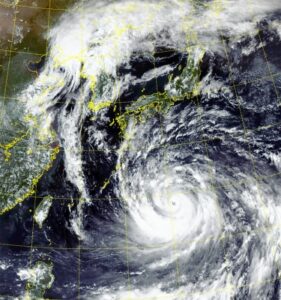
2 dead, 9 mn people to evacuate after super typhoon hits Japan; Typhoon expected to travel across Honshu

Sep 19 (IANS) At least two people were killed in Japan and some nine million others asked to evacuate from their homes after super typhoon Nanmadol, deemed to be one of the worst, made landfall in the region of Kyushu, bringing heavy rain and gales, local media reported on Monday.

In Fukuoka prefecture, a man who was believed to be on his way to find shelter from the typhoon was found collapsed and later confirmed dead, reports Xinhua news agency.

Another man was declared dead after being pulled out of a car submerged in a flooded farmland in Miyazaki prefecture, according to local authorities.

According to a Miyazaki prefectural official, a man in his 40s was reported missing after his cabin was destroyed by a landslide.

Typhoon/Ians

The 14th typhoon of the year was moving near Hagi, Yamaguchi prefecture on Monday afternoon, at a speed of some 20 km per hour.

It had an atmospheric pressure of 975 hectopascals at its centre, packing winds up to 108 kph with maximum gusts of 162 kph.

More than 70 people were injured amid the extreme weather, with bullet trains suspended in Kyushu on Monday and around 600 flights cancelled by the country’s two main airlines ANA and Japan Airlines, the local media reports said.

The typhoon is expected to travel across Japan’s largest island, Honshu through Tuesday, with the Japan Meteorological Agency continuing to issue warnings for strong winds, high tides and mudslides.

Typhoon/Ians

Tens of thousands of people spent Sunday night in emergency shelters, and almost 350,000 homes are without power.

Prime Minister Fumio Kishida has delayed a visit to New York, where he is due to give speech at the UN General Assembly, until Tuesday, to monitor the impact of the storm.

Take a deep breath, your smartphone could help measure blood oxygen levels at home [Details]

First, pause and take a deep breath.

When we breathe in, our lungs fill with oxygen, which is distributed to our red blood cells for transportation throughout our bodies. Our bodies need a lot of oxygen to function, and healthy people have at least 95% oxygen saturation all the time.

Conditions like asthma or COVID-19 make it harder for bodies to absorb oxygen from the lungs. This leads to oxygen saturation percentages that drop to 90% or below, an indication that medical attention is needed.

In a clinic, doctors monitor oxygen saturation using pulse oximeters — those clips you put over your fingertip or ear. But monitoring oxygen saturation at home multiple times a day could help patients keep an eye on COVID symptoms, for example.

In a proof-of-principle study, University of Washington and University of California San Diego researchers have shown that smartphones are capable of detecting blood oxygen saturation levels down to 70%. This is the lowest value that pulse oximeters should be able to measure, as recommended by the U.S. Food and Drug Administration.

The technique involves participants placing their finger over the camera and flash of a smartphone, which uses a deep-learning algorithm to decipher the blood oxygen levels. When the team delivered a controlled mixture of nitrogen and oxygen to six subjects to artificially bring their blood oxygen levels down, the smartphone correctly predicted whether the subject had low blood oxygen levels 80% of the time.

In a proof-of-principle study, University of Washington and University of California San Diego researchers have shown that smartphones are capable of detecting blood oxygen saturation levels down to 70%. The technique involves having participants place their finger over the camera and flash of a smartphone, which uses a deep-learning algorithm to decipher the blood oxygen levels from the blood flow patterns in the resulting video./Photo:Dennis Wise/University of Washington

“Other smartphone apps that do this were developed by asking people to hold their breath. But people get very uncomfortable and have to breathe after a minute or so, and that’s before their blood-oxygen levels have gone down far enough to represent the full range of clinically relevant data,” said co-lead author Jason Hoffman, a UW doctoral student in the Paul G. Allen School of Computer Science & Engineering. “With our test, we’re able to gather 15 minutes of data from each subject. Our data shows that smartphones could work well right in the critical threshold range.”

Another benefit of measuring blood oxygen levels on a smartphone is that almost everyone has one.

“This way you could have multiple measurements with your own device at either no cost or low cost,” said co-author Dr. Matthew Thompson, professor of family medicine in the UW School of Medicine. “In an ideal world, this information could be seamlessly transmitted to a doctor’s office. This would be really beneficial for telemedicine appointments or for triage nurses to be able to quickly determine whether patients need to go to the emergency department or if they can continue to rest at home and make an appointment with their primary care provider later.”

The team recruited six participants ranging in age from 20 to 34. Three identified as female, three identified as male. One participant identified as being African American, while the rest identified as being Caucasian.

To gather data to train and test the algorithm, the researchers had each participant wear a standard pulse oximeter on one finger and then place another finger on the same hand over a smartphone’s camera and flash. Each participant had this same set up on both hands simultaneously.

“The camera records how much that blood absorbs the light from the flash in each of the three color channels it measures: red, green and blue,” said Wang, who also directs the UC San Diego DigiHealth Lab. “Then we can feed those intensity measurements into our deep-learning model.”

Each participant breathed in a controlled mixture of oxygen and nitrogen to slowly reduce oxygen levels. The process took about 15 minutes. For all six participants, the team acquired more than 10,000 blood oxygen level readings between 61% and 100%.

“Smartphone light can get scattered by all these other components in your finger, which means there’s a lot of noise in the data that we’re looking at,” said co-lead author Varun Viswanath, a UW alumnus who is now a doctoral student advised by Wang at UC San Diego. “Deep learning is a really helpful technique here because it can see these really complex and nuanced features and helps you find patterns that you wouldn’t otherwise be able to see.”


Telangana paddler Akula Sreeja keen to make a strong impact in the 36th National Games

Sep 19 (IANS) After phenomenal performances in the senior National Championship and Commonwealth Games, Telangana paddler Akula Sreeja is keen to make a strong impact in the 36th National Games.

“Although there are no ranking points to be won in the competition, it is a prestigious event. But playing for your State is a matter of pride. This will be my first National Games. All the top players will be in action. It is good preparation for the World Championship,” she said, hoping to contribute to Telangana’s medal haul.

“The welcome at the airport was really great and the organisers are taking care of everything really well. Our accommodation and food are of really good quality and I’m very happy to be here in Surat,” she said, having enjoyed the carnival on Sunday evening. “We also participated in the tribal dance which was really fun.”

Sreeja has been in the spotlight after her recent displays when she stole the thunder from players like Manika Batra. “Surely, I’m relishing the challenges. The success in the Nationals, where I won my maiden women’s singles title, and then my Commonwealth Games Gold-winning show with Sharath Anna has given me more confidence. I want to maintain consistency.”


Telangana paddler Akula Sreeja /Ians

Coached by Somnath Ghosh, Sreeja said she always dreamt of winning a title in the senior National championships. “I did not win a title in cadet, sub-junior, junior and youth nationals. Therefore, my maiden title gave me immense satisfaction, though I did not expect to win the title this year. I worked very hard for it.”

Ranked World No. 73, Sreeja wants to break into the top 50. “Before next year’s Asian Games, I want to be among the top 50. The Commonwealth Games and National Championships performances instilled greater belief that I can compete in major events. Asian Games would be the toughest of them all as the continent’s best players will show up,” she said.

Talking about her success in Birmingham in her maiden Commonwealth Games appearance, Sreeja said she owes the Gold to Sharath Kamal. “After I won the National title, Sharath Anna readily agreed to a suggestion by my coach to let me partner him in the Commonwealth Games. The rest is history,” she said.

“Partnering Anna, as we call him, was a dream come true. He is a big inspiration. His behaviour on and off the court is amazing. We have all grown up watching him and others. He is the big game changer as far as table tennis is concerned in the country,” she said, hoping to emulate her Commonwealth Games doubles partner.

Two Karnataka II PUC students drown while taking selfie

 Sep 19 (IANS) The Karnataka Police, the Fire Force and Emergency personnel have retrieved the bodies of two students who fell into a water body on Monday in Raichur district.

The deceased students have been identified as Sujith and Vaibhav. Both students of II PUC (Class 12) in Vidya Nidhi College.

According to police, the students went for a picnic near Kalamala in Tungabhadra left bank canal. They slipped while taking selfies near the canal and drowned in the water.

Two K’taka students drown while taking selfie/Ians

The Raichur Rural police and fire force personnel had rushed to the spot and taken up operations. Further investigation is on.

NASA’s Perseverance Rover Investigates Geologically Rich Mars Terrain; Collects ‘Wildcat Ridge’, analyzes with SHERLOC instrument

NASA’s Perseverance rover is well into its second science campaign, collecting rock-core samples from features within an area long considered by scientists to be a top prospect for finding signs of ancient microbial life on Mars. The rover has collected four samples from an ancient river delta in the Red Planet’s Jezero Crater since July 7, bringing the total count of scientifically compelling rock samples to 12.

“We picked the Jezero Crater for Perseverance to explore because we thought it had the best chance of providing scientifically excellent samples – and now we know we sent the rover to the right location,” said Thomas Zurbuchen, NASA’s associate administrator for science in Washington. “These first two science campaigns have yielded an amazing diversity of samples to bring back to Earth by the Mars Sample Return campaign.

Twenty-eight miles (45 kilometers) wide, Jezero Crater hosts a delta – an ancient fan-shaped feature that formed about 3.5 billion years ago at the convergence of a Martian river and a lake. Perseverance is currently investigating the delta’s sedimentary rocks, formed when particles of various sizes settled in the once-watery environment. During its first science campaign, the rover explored the crater’s floor, finding igneous rock, which forms deep underground from magma or during volcanic activity at the surface.

“The delta, with its diverse sedimentary rocks, contrasts beautifully with the igneous rocks – formed from crystallization of magma – discovered on the crater floor,” said Perseverance project scientist Ken Farley of Caltech in Pasadena, California. “This juxtaposition provides us with a rich understanding of the geologic history after the crater formed and a diverse sample suite. For example, we found a sandstone that carries grains and rock fragments created far from Jezero Crater – and a mudstone that includes intriguing organic compounds.”

NASA’s Perseverance rover puts its robotic arm to work around a rocky outcrop called “Skinner Ridge” in Mars’ Jezero Crater. Composed of multiple images, this mosaic shows layered sedimentary rocks in the face of a cliff in the delta, as well as one of the locations where the rover abraded a circular patch to analyze a rock’s composition.
Credits: NASA/JPL-Caltech/ASU/MSSS

“Wildcat Ridge” is the name given to a rock about 3 feet (1 meter) wide that likely formed billions of years ago as mud and fine sand settled in an evaporating saltwater lake. On July 20, the rover abraded some of the surface of Wildcat Ridge so it could analyze the area with the instrument called Scanning Habitable Environments with Raman & Luminescence for Organics & Chemicals, or SHERLOC.  

SHERLOC’s analysis indicates the samples feature a class of organic molecules that are spatially correlated with those of sulfate minerals. Sulfate minerals found in layers of sedimentary rock can yield significant information about the aqueous environments in which they formed.

What Is Organic Matter?

Organic molecules consist of a wide variety of compounds made primarily of carbon and usually include hydrogen and oxygen atoms. They can also contain other elements, such as nitrogen, phosphorus, and sulfur. While there are chemical processes that produce these molecules that don’t require life, some of these compounds are the chemical building blocks of life. The presence of these specific molecules is considered to be a potential biosignature – a substance or structure that could be evidence of past life but may also have been produced without the presence of life.

In 2013, NASA’s Curiosity Mars rover found evidence of organic matter in rock-powder samples, and Perseverance has detected organics in Jezero Crater before. But unlike that previous discovery, this latest detection was made in an area where, in the distant past, sediment and salts were deposited into a lake under conditions in which life could potentially have existed. In its analysis of Wildcat Ridge, the SHERLOC instrument registered the most abundant organic detections on the mission to date.

“In the distant past, the sand, mud, and salts that now make up the Wildcat Ridge sample were deposited under conditions where life could potentially have thrived,” said Farley. “The fact the organic matter was found in such a sedimentary rock – known for preserving fossils of ancient life here on Earth – is important. However, as capable as our instruments aboard Perseverance are, further conclusions regarding what is contained in the Wildcat Ridge sample will have to wait until it’s returned to Earth for in-depth study as part of the agency’s Mars Sample Return campaign.”

Rendering of Perseverance, whose RIMFAX technology is exploring what lies beneath the Martian surface. Photo: NASA/JPL/Caltech/FFI

The first step in the NASA-ESA (European Space Agency) Mars Sample Return campaign began when Perseverance cored its first rock sample in September 2021. Along with its rock-core samples, the rover has collected one atmospheric sample and two witness tubes, all of which are stored in the rover’s belly.

The geologic diversity of the samples already carried in the rover is so good that the rover team is looking into depositing select tubes near the base of the delta in about two months. After depositing the cache, the rover will continue its delta explorations.

“I’ve studied Martian habitability and geology for much of my career and know first-hand the incredible scientific value of returning a carefully collected set of Mars rocks to Earth,” said Laurie Leshin, director of NASA’s Jet Propulsion Laboratory in Southern California. “That we are weeks from deploying Perseverance’s fascinating samples and mere years from bringing them to Earth so scientists can study them in exquisite detail is truly phenomenal. We will learn so much.”

More About the Mission

A key objective for Perseverance’s mission on Mars is astrobiology, including caching samples that may contain signs of ancient microbial life. The rover will characterize the planet’s geology and past climate, pave the way for human exploration of the Red Planet, and be the first mission to collect and cache Martian rock and regolith.

Subsequent NASA missions, in cooperation with ESA, would send spacecraft to Mars to collect these sealed samples from the surface and return them to Earth for in-depth analysis.

The Mars 2020 Perseverance mission is part of NASA’s Moon to Mars exploration approach, which includes Artemis missions to the Moon that will help prepare for human exploration of the Red Planet.

NASA/Photo: Nasa.gov

JPL, which is managed for NASA by Caltech, built and manages operations of the Perseverance rover.

Curse of not knowing English/Hindi: Telugu woman shifted from seat on IndiGo

Telangana Rashtra Samithi (TRS) working president K.T. Rama Rao has asked IndiGo to respect local languages after a woman was allegedly made to shift from her seat on a flight because she understood only Telugu.

KTR was reacting to an incident which occurred on the Vijayawada-Hyderabad IndiGo flight on September 16, where both cities fall within Telugu-speaking belt.

Devasmita Chakraverty, an assistant professor of education at Indian Institute of Management Ahmedabad tweeted that the woman aboard IndiGo 6E 7297 was originally sitting in 2A (XL seat, exit row) was forced to shift to seat 3C because she understood only Telugu, not English or Hindi.

Devasmita Chakraverthy, who posted a photograph with her tweet, called the incident a discrimination. Retweeting it, TRS leader and Telangana IT minister KTR requested IndiGo management to start respecting local languages and passengers who may not be well conversant in English or Hindi in regional routes.

Telangana assembly

“Dear @IndiGo6E Management, I request you to start respecting local languages & passengers who may not be well conversant in English or Hindi in regional routes, recruit more staff who can speak the local language like Telugu, Tamil, Kannada etc. This will be a win-win solution,” wrote KTR, as the minister is popularly known.

KTR received support from Trinamool Congress MP Mahua Moitra. “Short haul European flights ex London all have attendants who are native language speakers,” she tweeted, which is not followed in Indian domestic flights.

The minister’s tweet sparked a debate. Some Twitter users agreed with him while others found fault for turning it into a language issue. The attendant said it was a security issue.

“This is because the persons in the exit row seats need to be extra vigilant and support in an emergency by opening the door, communicating with others etc. It is unfair to showcase it as a language issue,” wrote a Twitter user Subbaraju.

Punjab police swing into action over alleged leak of objectionable videos of students

Punjab Director General of Police Gaurav Yadav on Monday constituted a three-member all-women Special Investigating Team (SIT), under the supervision of Additional DGP Gurpreet Deo, to investigate allegations by Chandigarh University hostellers over their alleged ‘leaked objectionable videos’.

The DGP said one student and two others were arrested. He thanked his counterparts in Himachal Police for excellent cooperation. “Electronic devices seized and sent for forensic examination. The SIT will go to the bottom of the conspiracy. No person to be spared, if found involved,” said Yadav in a video message.

He appealed to everyone to maintain peace and harmony. “Don’t fall to unverified rumours. Let’s work together for peace in society,” he added.

Responding immediately, Himachal DGP Sanjay Kundu said the police reacted to the request of Punjab Police with sensitivity and professionalism.

“We nabbed the accused. Congrats to Dr Monika, Superintendent of Police, Shimla, and her team for great professional work,” Kundu tweeted.

Huge protests broke out on the university campus in Mohali district after a girl allegedly leaked private videos of her hostel mates online.

A day after daylong protest, silence returned to the campus on Monday as the local administration and the university agreed to investigate the demand of the students over objectionable videos of several girl students that were recorded by a hosteller and shared with her friend in Shimla.

The police arrested an MBA first-year student of the university, while her friend and another person were held in Shimla.

As the matter drew angry political reactions, the university authorities clarified that “no videos were found of any student which are objectionable, except a personal video shot by a girl which she shared with her boyfriend”.

Also dismissing reports of suicide attempt by some students who were allegedly filmed, the authorities said “there are rumours that seven girls have committed suicide whereas the fact is that no girl has taken any such step”.

Senior Superintendent of Police Vivek Soni, who is leading the investigation team, categorically told the media on Sunday that no attempt to suicide was reported after the incident came to light. Also, he said, so far there is no evidence of the video going viral.

“As per the investigation, the accused made her own video and shared it with her boyfriend. There is no video of other students made by her. There is no evidence of that so far. A lot of misinformation and rumours are doing the rounds. We should respect the modesty of the accused student as we are investigating the matter,” he said.

As per reports, the accused hosteller sent nude images and videos to her male friend in Shimla, resulting in the footage being circulated online.

As the news spread, a massive protest was staged on the university campus on Saturday night with scores of hostellers raising the ‘we want justice’ slogan.

Meanwhile, terming the incident as unfortunate, Punjab Chief Minister Bhagwant Mann ordered a high-level probe into the matter.

The Chief Minister said that “daughters are our dignity and pride”, adding that any such incident is highly condemnable.

He categorically said that anyone found guilty will not be spared and severe action will be taken against the perpetrators of this crime.

Jaipur teen finds bug in Instagram, rewarded Rs. 38 lakh

A student, Neeraj Sharma from Jaipur, has received a reward of Rs 38 lakh from Instagram for saving social media accounts of crores of people from being hacked.

As per information, Sharma found a bug in Instagram due to which thumbnails could be changed in any user’s account without login and password.

Sharma apprised Instagram and Facebook about this mistake and after finding it authentic, he was rewarded with Rs 38 lakh for this work.

He said, “There was a bug in Facebook’s Instagram, through which the thumbnail of the reel could have been changed from any account. All it required was the media ID of the account to change it no matter how strong the password of the account holder is.

“In December last year, I started finding fault with my Instagram account. After a lot of hard work, on the morning of January 31, I came to know about the (bug) mistake of Instagram. After this, I sent a report to Facebook about this mistake on Instagram at night and received a reply from them after three days. It asked me to share a demo,” he said.

Sharma showed them in 5 minutes by changing the thumbnail. They approved his report and on the night of May 11, he got a mail from Facebook in which they informed him that he ahs been given a reward of $ 45,000 (about Rs 35 lakh). At the same time, in lieu of the delay of four months in giving the reward, Facebook also gave $ 4500 (about Rs 3 lakh) as a bonus.

Kate Winslet rushed to hospital after slip during shooting in Croatia

Titanic fame Kate Winslet, who has been rushed to a hospital in Croatia while shooting, is ready to get back to work. She is shooting her role in the historical drama film ‘Lee’.

The on-set accident led to her being taken to a nearby hospital to ensure that she was OK, her representatives confirmed to The Hollywood Reporter. Winslet will resume filming this week as scheduled.

“Kate slipped and was taken to hospital as a precautionary measure required by the production,” her team said. “She is fine and will be filming, as planned, this week.”

The 46-year-old Oscar winner will portray photographer Lee Miller in the film that focuses on her life, including her work as a war correspondent for Vogueduring World War II.

The cast for director Ellen Kuras’ movie includes Marion Cotillard, Jude Law, Andrea Riseborough and Josh O’Connor.

Winslet, who has a role in the upcoming aAvatar: The Way of Water’, was most recently seen on the small screen with aMare of Easttown’, which earned her an Emmy Award last year.

Recent film credits include ‘Ammonite’, ‘Blackbird’ and ‘The Mountain Between Us’.

Gauri says annoyed by this kind gesture of Shah Rukh Khan

Gauri Khan has said that her superstar husband Shah Rukh Khan is always seeing off the guests to their car when they are having a party in their house.

In the upcoming episode of ‘Koffee With Karan’ Season 7, Gauri, who will be seen gracing the show after 17 years, will be joined with her friends Maheep Kapoor and Bhavana Pandey.

Karan Johar shares, in the latest episode, how during parties at home, as a gracious host, he always walks a guest to their car.

Gauri Khan reveals how this ‘precious’ habit sometimes annoys her.

“He is always seeing off the guests to their car. Sometimes I feel like he spends more time outside than inside during parties. Then people start looking for him. It makes me feel like we are having the party outside on the road rather than inside the house!,” vented Gauri Khan.

‘Koffee with Karan’ airs on Disney+ Hotstar.

Starlink satellite link is global now, declares SpaceX chief Elon Musk

Tech billionaire Elon Musk on Monday announced that Starlink, the satellite Internet division of his rocket company, is now active on all the continents, including Antarctica, connecting the entire world on one internet provision at a speed of around 50-200 Mbps.

On the microblogging site Twitter, Musk wrote, “Starlink is now active on all continents, including Antarctica. Another batch with lasers reaches orbit” he said after the deployment of 54 Starlink satellites was confirmed by the company.

Recently, a report said that the McMurdo Station in Antarctica has nearly 1,000 people living and working there during the summer and they already have satellite internet, which is not reliable in rough conditions.

There is currently a 17 Mbps link for everyone, according to the US Antarctic Program. But with Starlink, the internet service will be better and not patchy like earlier, the report had said.

The McMurdo Station blocks scientists from using Netflix and video calls, with the exception of Skype or FaceTime sessions once a week at a public kiosk or mission-critical communications.

Telegram’s new update brings infinite reactions, emoji statuses

Sep 18 (IANS) Encrypted messaging app Telegram has announced that it is rolling out a new update that gives users more ways to use new emojis to express how they are feeling — with infinite reactions and emoji statuses.

The company said that premium users can pick reactions from an infinite selection of custom emojis. To make choosing from thousands of emojis easier, they can now attach up to three reactions per message.

“All users now have access to dozens of reactions – including those that were previously only available with Telegram Premium,” the company said in a blogpost.

“To accommodate all the new emojis, we have redesigned the reaction panel, making it expandable. The reactions you use frequently will show up at the top,” it added.

Telegram/Ians

These changes to reactions are currently available in groups and 1-on-1 chats.

With the new update, group admins can control whether custom reactions may be used in their groups.

Now, the premium users can add an animated emoji status displayed next to their name — to quickly let everyone know how they are feeling or what they are doing.

“This custom status takes the place of your Premium Premium Badge in the chat list, in your profile and in groups,” the company said.

Users can set one of seven standard statuses that change their colour to match different Telegram themes — or choose from an infinite number of custom emoji. Popular suggestions for working, sleeping, traveling and more will be shown at the top.

“Tap the premium badge at the top of your chat list or go to settings to change your status. Press and hold an emoji to set a status for a specific duration,” as per Telegram.

“Anyone can use Telegram’s open emoji platform to upload custom packs with unique art styles and characters for Telegram Premium users,” it added.

Users, who log out and log back in frequently, can now receive login codes through their email address or using Sign in with Apple or Sign in with Google.

What’s Lass fever? Death toll reaches 171 in Nigeria, 917 active cases, 6,660 suspected

An acute viral hemorrhagic illness caused by the Lassa virus, the Lassa fever in Nigeria this year has risen to 171, despite measures by the government to reduce infections across the country, the Nigeria Center for Disease Control (NCDC) said.

In its latest Lassa fever situation report, the NCDC said there have been a total of 917 confirmed cases, with 6,660 suspected cases recorded since the beginning of the year. In the week from September 5 to 11 alone, eight new confirmed cases and one death were recorded, reports said.

So far, 25 states have recorded at least one confirmed case across 102 out of the 774 local government areas in the most populous African country, with the death toll rising to 171, the NCDC said. The fatality rate was 18.6 percent, lower than that for the same period last year, which was 23.3 per cent.

The disease control center said the predominant age group affected is 21-30 years, with the male-to-female ratio for confirmed cases being 1:0.8.

What WHO says?

According to the World Health Organization, Lassa fever is an acute viral hemorrhagic illness caused by the Lassa virus, a member of the arenavirus family of viruses. Humans usually become infected with the Lassa virus through exposure to food or household items contaminated with urine or feces of infected Mastomys rats. The disease is endemic in the rodent population in parts of West Africa.

In some cases, Lassa fever has similar symptoms to malaria, appearing between one and three weeks after exposure to the virus. In mild cases, the disease causes fever, fatigue, weakness, and headache.

The NCDC said it remained committed to supporting state public health teams to achieve the goal of reducing the Lassa fever case fatality rate to a single digit.

The disease control agency said it is currently distributing medical response commodities to states and treatment centers as part of measures to control the spread of the disease.

Jaishankar in US, to push for Security Council reforms

External Affairs Minister S. Jaishankar begins his 10-day tour of the United States on Sunday that will be marked by another attempt to infuse new life into the stalled UN Security Council reforms process and steady bilateral ties with the US rocked by differences over Ukraine and a massive upkeep package for Pakistan’s F-16 fighter aircraft.

Jaishankar will spend the first and longer part of the visit in New York, attending the annual high-level meetings of the UN General Assembly and meeting counterparts in bilaterals and multilaterals such as the BRICS (with Brazil, China and South Africa), G-4 (with Japan, German and Brazil), IBSA (with Brazil and South Africa) and SAARC (with all other south Asian countries).

The minister will head out to Washington DC on September 25 for the second and last leg of the tour for bilateral meetings, including with his counterpart Antony Blinken and other senior officials of the Joe Biden administration. He will also meet industry leaders and Indian Americans, some of whom have felt disappointed by New Delhi’s refusal to condemn Russia’s invasion of Ukraine.

The highlights of Jaishankar’s UNGA meetings will be his address to a group of developing countries from Asia, Africa, Latin America, the Caribbean and Small Island called L69, which is focussed on the reform of the UN Security Council.

The meeting will be based on the theme “Reinvigorating Multilateralism and Achieving Comprehensive Reform of the UN Security Council”.

The UNSC reforms process has moved at a snail’s pace since formal discussions started as Intergovernmental Negotiations. The last expansion of the elite club took place in 1965 with the addition of four non-permanent seats, taking the total to 15 — five permanent members and 10 non-permanent members.

India, which is now serving its eighth two-year term as a non-permanent member, wants a permanent berth in the expanded council, but it has watched the process drag with mounting irritation, which shows through the stronger language used by its leaders to demand progress.

The United States is planning to put its weight behind the process at UNGA.

“We will be having discussions with our P3 colleagues (with the other two permanent members France and the United Kingdom) as well as others on the way forward,” US Ambassador to UN, Linda Thomas-Greenfield, had told reporters last week, adding, “The President will present a bit more on this in his speech. Secretary Blinken will also be engaging this week on the commitments we’ve made and how we see the process moving forward.”

Jaishankar may also meet for the first time — or, as is most likely — not meet his Pakistani counterpart Bilawal Bhutto at the conference of SAARC ministers. The annual ritual is marked by Pakistan’s efforts to stage a showdown with the Indian delegation and minister.

In Washington, Jaishankar is scheduled to meet his counterpart Blinken and others in the backdrop of the recent differences over Ukraine and the proposed US aid package of $450 million to Pakistan to furbish its F-16s.

The US had pressed India to condemn the Russian invasion and not increase its oil purchase from Russia so as to not allow Moscow any relief from the severe economic sanctions the West has imposed.

India had done neither, not until later, when Prime Minister Narendra Modi publicly told Russian President Vladimir Putin during their recent meeting on the sidelines of the Shanghai Cooperation Organisation (SCO) summit in Samarkand, “Today’s era is not of war.”

The remarks, which were noted approvingly by the US media, may pre-empt some of the tough discussions — “frank” exchanges, as they are invariably noted in press communiques — that could have taken place otherwise.

The Ukraine war has added an unforeseen and unwelcome wrinkle to a relationship that’s seen remarkable progress in recent years. Strategic cooperation — considered central to the relationship — has seen a sharp upswing with quick and frequent meetings of the Quad.

A US package of $450 million for Pakistan’s F-16s was seen unkindly by New Delhi. Defence Minister Rajnath Singh had conveyed the government’s concern in a telephone call to his counterpart Lloyd Austin. The US took no note of it in its readout of the call.

Jaishankar is a veteran of India’s ties with the US as former Ambassador to this country, and may have authored large parts of it. The next 10 days may prove to be another masterclass in diplomacy from India’s top diplomat.