In a bid to manage the annual spike in passenger movement, Indian Railways has rolled out an extensive summer operations plan, scheduling over 18,000 special train trips across the country over a three-month period.
The national transporter will run these services between April 15 and July 15, 2026, aligning with peak travel demand driven by school vacations, seasonal migration, and festival-related journeys. In total, 908 summer special trains have been sanctioned, together accounting for 18,262 trips aimed at easing congestion on key routes.
A significant portion of this capacity has already been activated. As per official data, 660 trains—covering 11,294 trips—have been notified, allowing passengers to begin advance bookings and plan travel ahead of the rush.
The move reflects a calibrated strategy by Indian Railways to distribute passenger load more evenly during high-demand months. By augmenting services well in advance, the railways aim to reduce waiting lists, improve seat availability, and ensure a more comfortable travel experience.
Officials indicate that the special trains will be deployed across major intercity and long-distance corridors, particularly those witnessing heavy seasonal traffic. The initiative is part of a broader effort to strengthen operational preparedness and maintain service reliability during one of the busiest travel periods of the year.
The scale of the rollout underscores Indian Railways’ continued reliance on advance planning and capacity augmentation to navigate cyclical demand spikes, a recurring challenge in one of the world’s largest rail networks.
Zone-Wise Details
The operation of summer special trains spans across all major zones of Indian Railways, ensuring balanced regional connectivity and efficient passenger handling:
South Central Railway leads with 124 trains (1,184 trips) approved and 76 trains (324 trips) notified.
🌞🚆 Summer Special Trains Alert
South Central Railway introduces special trains from Charlapalli to clear summer rush:
🔹 Services to Jasidih, Muzaffarpur & Barauni
🗓️ Running between 23 Apr – 03 May 2026
🔁 All trains will run 1 service each
🎟️ Booking opens: 20.04.2026 at… pic.twitter.com/uIBdtoXiMF
— South Central Railway (@SCRailwayIndia) April 20, 2026
Western Railway has approved 106 trains (2,078 trips) with 92 trains (1,667 trips) notified.
Western Railway Summer Special Trains Update 🚆
To clear extra passenger rush, WR will run the following special trains:
North Western Railway has approved 76 trains (2,245 trips) and with 62 trains (1,878 trips) notified.
Northern Railway has approved 76 trains (2,090 trips) with 56 trains (1,535 trips) notified.
Central Railway has approved 74 trains (3,082 trips) with 70 trains (2,238 trips) notified.
Southern Railway has approved 72 trains (558 trips) with 38 trains (133 trips) notified.
Summer Special Trains between Chennai and Shalimar!
Express Special trains, Train No. 06097/06098 Dr MGR Chennai Central – Shalimar – Chennai Beach Express Specials, (Trains on Demand) will be operated to clear extra rush of passenger during Summer Season. pic.twitter.com/ywZVd01sef
North Central Railway has approved 54 trains (1,163 trips) with 46 trains (688 trips) notified.
North Eastern Railway has approved 52 trains (814 trips) with 34 trains (477 trips) notified.
East Coast Railway has approved 28 trains (410 trips) with 18 trains (88 trips) notified.
West Central Railway has approved 28 trains (408 trips) with 18 trains (192 trips) notified.
Eastern Railway has approved 24 trains (392 trips) with 10 trains (276 trips) notified.
North Frontier Railway has approved 24 trains (220 trips) with 20 trains (141 trips) notified.
South Eastern Railway has approved 20 trains (276 trips) with 18 trains (250 trips) notified.
South East Central Railway has approved 10 trains (122 trips) with 8 trains (70 trips) notified.
South Western Railway has approved 76 trains (509 trips) with 56 trains (277 trips) notified.
Passenger Benefits:
The large-scale introduction of summer special trains is expected to significantly benefit passengers by:
Reducing waiting lists during peak travel season.
Providing additional berths and confirmed travel options.
Enhancing connectivity between major cities and regions.
Ensuring smoother and more comfortable journeys.
By deploying special trains across high-demand routes, Indian Railways is ensuring that passengers experience minimal inconvenience during the summer rush.
With timely planning and large-scale deployment of special train services, Indian Railways continues to prioritise passenger convenience and travel comfort. The extensive coverage across zones and the high number of notified trains reflect a strong commitment to meeting passenger demand efficiently and ensuring a hassle-free travel experience during the summer season.
In a notable push to expand India’s digital verification infrastructure, the Unique Identification Authority of India has onboarded 100 organisations as Offline Verification Seeking Entities (OVSEs) within just three months of launching the Aadhaar-based offline verification framework.
The newly integrated entities span a wide range of sectors, including central and state government departments, fintech firms, hospitality and event management companies, as well as education, examination, and background verification agencies. The rapid onboarding reflects growing institutional acceptance of Aadhaar-enabled, consent-driven identity verification systems.
The initiative allows organisations to verify identities using Aadhaar without needing real-time access to the central database. Instead, the system relies on offline mechanisms such as QR code-based authentication and digitally signed documents, enabling a “show, share, and verify” process that is both paperless and secure.
Officials say the move is expected to streamline service delivery by cutting down processing time, reducing paperwork, and lowering operational costs tied to manual verification. By removing dependence on physical documents, the system also aims to minimise friction in onboarding processes across sectors.
At the core of the framework is a privacy-first approach. Aadhaar holders retain control over their personal data, sharing only limited and necessary information with service providers. This consent-based model is designed to enhance trust while ensuring compliance with evolving data protection norms.
The distributed nature of offline verification is also being positioned as a strength. By eliminating the need for constant connectivity to central servers, the system improves scalability and resilience, particularly in regions with limited digital infrastructure.
The development aligns with India’s broader push to build robust Digital Public Infrastructure, where identity, payments, and data-sharing systems work seamlessly while prioritising user control. For citizens, the immediate impact is expected to be quicker access to services, reduced documentation burdens, and greater transparency in how personal data is used.
The UIDAI has framed the rollout as part of its ongoing effort to improve “ease of living,” signalling a shift towards simpler, faster, and more user-centric digital interactions across both public and private services.
Among the various plastic recycling methods being explored, one promising approach is biological plastic recycling, also known as biorecycling, which utilizes enzymes or microorganisms to break down polymer molecules. One group of enzymes attracting attention is microbial cutinases. These enzymes are naturally produced by bacteria and fungi to degrade the waxy outer layer of plants, known as the cuticle. Because they can act on similar chemical bonds, they are considered promising for recycling poly(ethylene terephthalate) (PET), a plastic used in bottles and synthetic fibers.
However, applying these enzymes in industrial settings is not straightforward. PET is most efficiently degraded at temperatures around 70 °C, where it becomes more flexible and easier to process. At such high temperatures, enzymes must maintain a stable overall structure to avoid unfolding, while also retaining flexibility at their active site for molecular recognition and catalysis. This creates a design challenge, as structural rigidity and flexibility are often opposing properties.
To better understand this balance, a team of researchers led by Professor Tatsuya Nishino from the Department of Biological Science and Technology, Tokyo University of Science (TUS), Japan, along with Assistant Professor Sho Ito from the same department, and graduate researchers Mr. Ryohei Nojima (M.Sc., 2022) and Ms. Lirong Chen (M.Sc., 2024) from TUS, examined a heat-tolerant cutinase enzyme from the fungusChaetomium thermophilum. The enzyme, known as CtCut, was analyzed under conditions relevant to high-temperature PET recycling to better understand how it maintains structural stability and catalytic potential. The study was published in Volume 16, Special Issue 4 of the journal Crystalson March 24, 2026.
“Plastic waste has become a severe problem in recent years, necessitating environmentally friendly recycling technologies. Thus, our aim was to contribute to the development of practical recycling technologies by clarifying the molecular basis of enzymes that function even under high-temperature conditions,” says Prof. Nishino.
For the study, the team created several versions of the enzyme. This included the wild-type (CtCutWT), which is the unmodified form, and a mutant version, CtCutS136A, in which the amino acid serine at position 136 is replaced with alanine.
They then determined the enzyme’s structure and assessed its thermal stability using differential scanning calorimetry, heating the protein from 30 °C to 100 °C to analyze how it absorbed heat.
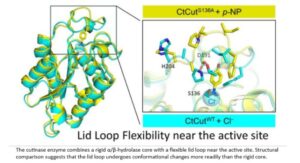
Structurally, the enzyme adopts a highly stable α/β-hydrolase fold, a common architecture among cutinases. Covering the active site is a flexible lid loop that can open and close. In its closed state, the active site is less accessible, but upon binding a molecule, the lid changes shape to allow binding and catalysis.
Notably, a chloride ion was found near the active site even when no substrate was present, suggesting that the active site forms a positively charged electrostatic microenvironment that may facilitate ligand binding.
As the enzyme was heated, it showed a two-step unfolding process, with a gradual transition beginning at around 60 °C, followed by a second transition near 65–70 °C. This indicates that different parts of the enzyme lose stability at different temperatures, suggesting the presence of structurally distinct regions within the protein.
The cutinase enzyme combines a rigid α/β-hydrolase core with a flexible lid loop near the active site. Structural comparison suggests that the lid loop undergoes conformational changes more readily than the rigid core. Credit:Professor Tatsuya Nishino from Tokyo University of Science, Japan
“Our findings suggest the possibility of functional division within the enzyme. We observed that the mobile region near the active site undergoes structural changes in response to ligand binding, and that thermal denaturation proceeds in multiple stages,” says Prof. Nishino.
These findings support the idea that enzymes designed for plastic degradation may require both a stable overall structure and a flexible active site. The rigid core provides the thermal stability needed to withstand industrial conditions, while the flexible lid loop may help the enzyme adapt to bound molecules.
By better understanding this balance between stability and flexibility, the study provides new insights into the function of heat-tolerant enzymes and how they can be improved.
“Our study may lead to the development of technologies for efficiently decomposing and recycling PET in the future by providing design guidelines for enzymes that possess both heat resistance and potential catalytic capabilities for polymer degradation. This may address the growing challenge of plastic waste and help realize a sustainable resource-recycling society,” concludes Prof. Nishino.
Archaeological Survey of India safeguards 3,686 centrally protected monuments, supported by strengthened conservation systems and scientific restoration methods.
Heritage and monument preservation has advanced through large-scale digitisation, creation of national heritage databases, and wider adoption of scientific and digital tools for documentation and conservation.
India’s global heritage profile has expanded, with 44 UNESCO World Heritage Sites, including the recent addition of the Maratha Military Landscapes.
India’s Approach to Monument Conservation
India’s cultural landscape is shaped by monuments, antiquities, manuscripts and historic sites that together reflect thousands of years of civilisational evolution. These structures and objects are not merely remnants of the past; they represent collective memory, inherited knowledge and a sense of continuity that binds generations.
Recognising this, the past decade has seen a renewed emphasis on strengthening the systems that safeguard India’s cultural assets. Heritage conservation has been increasingly integrated with tourism development, local livelihoods, and cultural diplomacy. This shift reflects a broader recognition of heritage as both a developmental asset and a source of India’s soft power on the global stage.
Tangible and Intangible Cultural Heritage
Cultural heritage in India encompasses both tangible and intangible forms, reflecting the country’s rich and diverse traditions.
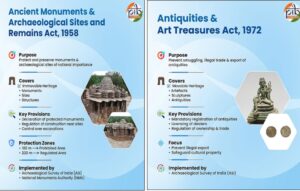
According to UNESCO, Tangible Cultural Heritage includes heritage of “outstanding universal value,” such as historic structures and cultural landscapes. Examples include the Taj Mahal, Sanchi Stupa, and ancient temple architecture. In India, such heritage is protected under the Ancient Monuments and Archaeological Sites and Remains Act, 1958, which empowers the government, through the Archaeological Survey of India (ASI), to declare monuments as protected, regulate construction in surrounding areas, and ensure their conservation.
Intangible Cultural Heritage (ICH) refers to living traditions and practices passed down through generations, including performing arts, rituals, festivals, oral traditions, and traditional knowledge. UNESCO defines it as practices recognised by communities as part of their cultural identity and continuously recreated. Examples include Yoga, Vedic chanting, and Buddhist chanting of Ladakh. In India, Intangible Heritage is safeguarded through the UNESCO Convention for the Safeguarding of Intangible Cultural Heritage, 2003, supported by national schemes and constitutional provisions such as Article 29.
Legislative and Institutional Framework for Ancient Monuments
India’s heritage conservation is guided by a legislative and institutional framework that brings together dedicated organisations, legal safeguards, and policy mechanisms to ensure systematic protection and management of cultural assets.
Legislative Framework
India’s approach to monument conservation has evolved into a structured and continuous process, combining institutional mechanisms, legal safeguards, and participatory models. The key legislations on Protection and Conservation of Ancient monuments are:
Article 49 – Protection of Monuments of National Importance
Article 49 of the Constitution places a duty on the State to protect monuments, places, and objects of artistic or historic interest declared to be of national importance. This provision forms the constitutional basis for legislative measures such as the Ancient Monuments and Archaeological Sites and Remains Act, 1958, and guides the State in ensuring preservation of cultural heritage.
Seventh Schedule – Division of Responsibilities
The Seventh Schedule of the Constitution provides a clear division of responsibilities between the Centre and the States in matters of heritage protection.
Union List (Entry 67): Monuments and archaeological sites of national importance fall under the jurisdiction of the Central Government.
State List (Entry 12): Monuments not declared of national importance are the responsibility of State Governments.
This division ensures coordinated governance and management of heritage across different levels of government.
Article 51A(f) – Fundamental Duty of Citizens
Article 51A(f) of the Constitution enshrines the fundamental duty of every citizen to value and preserve the rich heritage of India’s composite culture. This provision reinforces that heritage conservation is not only a State responsibility but also a collective societal obligation, encouraging public participation in preservation efforts.
National Policy for Conservation of Ancient Monuments, Archaeological Sites and Remains (2014)
It is a Government of India framework that guides the scientific preservation and management of monuments of national importance. Implemented primarily by the Archaeological Survey of India under the provisions of the Ancient Monuments and Archaeological Sites and Remains (AMASR) Act, 1958, the policy establishes principles for maintaining the authenticity, integrity, and longevity of heritage structures. It emphasises the use of scientific conservation methods, minimal intervention, and the integration of traditional materials and skills with modern techniques. The policy also recognises conservation as a continuous process, supported by documentation, research, capacity building, and community participation, while balancing the need for protection with public access and sustainable use of heritage sites.
Institutional Framework
India’s institutional framework for heritage conservation is anchored in specialised government bodies responsible for the protection, preservation, and management of cultural assets. These institutions ensure effective implementation of laws and policies through coordinated, decentralised, and technically driven mechanisms.
The Archaeological Survey of India (ASI)
Established in 1861 and functioning under the Ministry of Culture, the Archaeological Survey of India (ASI) is the country’s principal organisation for archaeological research and the protection of ancient monuments and sites of national importance. Operating under the Ancient Monuments and Archaeological Sites and Remains Act, 1958, it safeguards 3,686 centrally protected monuments across India. Its mandate includes structural and chemical conservation, archaeological exploration and excavation, epigraphy, and maintenance of site museums.
ASI carries out its functions through a network of around 38 Circles, which serve as regional administrative units. Each Circle, headed by a Superintending Archaeologist, is responsible for conservation, site management, inspections, and coordination with local authorities within its jurisdiction, ensuring decentralised implementation.
The ASI undertakes annual conservation programmes focusing on structural repairs, use of traditional materials, chemical treatment of monuments, and preventive conservation to address environmental and ageing-related deterioration.
The conservation of centrally protected monuments is undertaken through annual programmes and site-specific projects, and the conservation works are carried out regularly based on priority and the existing condition of the monument. For 2024–25 expenditure on conservation of monuments was 374 crores .
National Mission on Monuments and Antiquities (NMMA)
Established in 2007, the National Mission on Monuments and Antiquities (NMMA) is implemented under ASI. It plays a crucial role in supporting conservation by building a reliable national database of India’s built heritage and antiquities. The Mission aims to document and create an inventory of all monuments and antiquities in the country—information that directly informs planning, prioritisation and monitoring of conservation work. It has so far documented 11,406 Built Heritage and Sites and 12.48 Lakhs antiquities of this country.
Emerging Frameworks for Monument Conservation
India’s approach to monument conservation is evolving through the integration of technology, collaborative models, and digital knowledge systems.
Comprehensive Conservation
Government of India has reimagined tangible heritage as a living engine of economic opportunity. By linking the conservation of physical heritage with livelihood generation and local development, India is charting a course where preservation and prosperity go hand in hand.
A standout example of this philosophy in action is the Adopt a Heritage 2.0 programme, which brings together government and private partners to upgrade visitor amenities at iconic monuments. Sites such as Agra Fort, Qutub Minar, Ajanta Caves, Red Fort, and Mehrauli Archaeological Park have benefited from improved infrastructure, better facilities, and enhanced site management. The results have been tangible: increased tourist footfall, a boost to local businesses, and new employment avenues in guiding, hospitality, transport, site maintenance, and the sale of handicrafts and souvenirs. These are not incidental benefits but deliberate outcomes of a policy that treats monuments as community assets.
The Government promotes the organisation of dance, music, and cultural festivals at heritage sites as a means of integrating monumental conservation with tourism and local economic development. Notable examples include the Konark Dance Festival, held annually against the backdrop of the Sun Temple in Odisha, and the Khajuraho Dance Festival, organised at the Khajuraho Group of Monuments in Madhya Pradesh. These festivals attract large numbers of tourists, artists, and cultural practitioners, thereby generating livelihood opportunities for local communities through hospitality services, handicrafts, transport, and cultural industries. For instance, the Konark Festival, held in an open-air setting near the monument, draws national and international visitors and is often accompanied by craft fairs and related cultural activities, further boosting local economies. Other heritage-linked festivals include the Modhera Dance Festival (Gujarat) and temple-based cultural events like Natyanjali festivals at Chidambaram.
The Government is also strengthening museums as key institutional tools for the scientific conservation, preservation, and dissemination of tangible cultural heritage.The Museum Grant Scheme supports the establishment, modernisation, and digitisation of museums, strengthening infrastructure and preservation of artefacts. It emphasises capacity building of museum professionals through training and skill development, while promoting technology-driven upgrades such as improved displays, lighting, and digital tools. The scheme also enables digitisation of collections, creation of online catalogues, and development of conservation facilities, enhancing both preservation and public access.
Technology-Supported Conservation
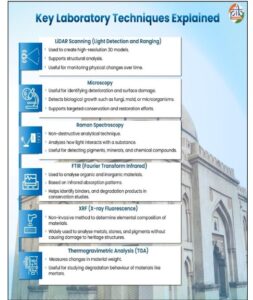
Technology has become an increasingly important pillar in India’s conservation ecosystem, complementing ASI’s traditional practices with tools that improve documentation, diagnostics and long-term preservation. Modern technologies/tools such as LiDAR scanning, GIS based mapping and drone-based surveys etc. are used as per requirement for proper documentation. There has been a growing use of scientific laboratory techniques to study heritage materials, understand patterns of deterioration and determine the most suitable conservation treatments.
In parallel, India has expanded the application of digital and spatial technologies that support accurate recording and proactive conservation planning. Key tools now used across heritage documentation and assessment include:
3D laser scanning – for high-precision mapping and digital documentation of complex structures
Photogrammetry – to capture detailed architectural features and condition changes
Drone-based surveys – for aerial mapping, structural monitoring and studying inaccessible or large sites
Geographic Information Systems or GIS-based mapping – to analyse environmental pressures, track development around protected zones and inform long-term planning
In addition to these technologies, the Government of India has begun integrating Artificial Intelligence (AI) within the broader cultural and heritage ecosystem, particularly in areas such as digitisation, documentation, and accessibility of cultural assets. AI-enabled platforms are being used to process and organise large volumes of heritage data, including manuscripts and cultural knowledge systems, and to enhance public access through digital interfaces and language technologies.
Additionally, drone-based surveys have been undertaken in collaboration with institutions such as the National Institute of Science Education and Research (NISER), demonstrating the integration of scientific institutions in heritage conservation efforts.
The Conservation and Restoration of the Kedarnath Temple
The Kedarnath Temple represents a significant example of the use of advanced scientific techniques and institutional collaboration in heritage preservation. Following the 2013 disaster in Uttarakhand, the Government of India, through the Archaeological Survey of India (ASI), undertook structural and chemical conservation of the temple, including debris removal, stone resetting using original architectural profiles, and preservation of stone surfaces. Importantly, a geotechnical team from the Indian Institute of Technology (IIT) Chennai collaborated with ASI to carry out scientific structural assessment and foundation analysis of the monument. This included the use of geophysical testing methods such as Multi-Channel Analysis of Spectral Waves (MASW) to evaluate the stability of the temple structure and underlying foundation.
The IIT team’s assessment enabled evidence-based decisions regarding foundation strengthening and conservation strategy, ensuring that interventions remained non-invasive and structurally appropriate. This collaboration highlights how the Government has integrated engineering expertise with traditional conservation practices, combining modern scientific diagnostics with the use of locally sourced materials and traditional craftsmanship in restoration.
Public–Private Partnership
In recent years, heritage conservation has increasingly incorporated public–private partnership (PPP) models to complement government-led efforts. The “Adopt a Heritage: Apni Dharohar, Apni Pehchaan” initiative, launched in 2017 by the Government of India under the Ministry of Tourism in collaboration with the Ministry of Culture and the Archaeological Survey of India (ASI), is one such initiative. The scheme was further revamped as “Adopt a Heritage 2.0” in 2023, to strengthen corporate participation through a structured CSR-based framework. Under this initiative, entities designated as “Monument Mitras” develop and maintain facilities such as cleanliness, accessibility, illumination, signage, and visitor services, while conservation and preservation remain the exclusive mandate of the ASI. By combining government oversight with private sector efficiency, the programme improves visitor experience, promotes sustainable tourism, and fosters a shared sense of responsibility towards safeguarding India’s cultural heritage.
The initiative also reflects a broader shift towards participatory heritage management, where private sector involvement and citizen engagement complement government-led conservation efforts.
Flagship National Platforms for Cultural Heritage
A key initiative in this direction is the Indian Culture Portal, a comprehensive digital platform that aggregates content from museums, libraries, archives and cultural institutions onto a single interface – https://www.indianculture.gov.in/3d-explorations.
This platform allows users to experience monuments remotely through two formats—Virtual Walkthroughs and 360-degree Virtual Tours—thereby enhancing accessibility and public engagement with cultural heritage.
Virtual Walkthroughs enable users to move through heritage sites in a guided, step-by-step manner, simulating a real visit. Examples include monuments such as:
360-degree Virtual Tours provide panoramic, interactive views where users can explore monuments in all directions. The Qutubh Minar Complex being one.
It also supports interactive learning through curated thematic sections, games and educational content, making cultural knowledge more engaging for a wider audience.
Global Heritage Recognition (UNESCO)
India’s presence on the global heritage map has strengthened considerably, with UNESCO inscriptions reflecting both the diversity and depth of the country’s civilisational legacy. The most recent addition—the Maratha Military Landscapes, inscribed in July 2024 marks India’s 44th UNESCO World Heritage Site, reaffirming the nation’s position among countries with the highest number of globally recognised heritage sites.
India’s expanding UNESCO footprint comprising 36 Cultural, 7 Natural, and 1 Mixed sites demonstrates how its historic monuments, archaeological landscapes and living traditions collectively contribute to global heritage.
A subtle tweak to cafeteria menus can significantly influence food choices while improving health and environmental outcomes, according to a new study published in the International Journal of Behavioural Nutrition and Physical Activity.
Researchers tested the intervention across six workplace cafeterias in England, where managers replaced one meat-based lunch option with a vegetarian alternative. Prices, overall choice, and other menu features remained unchanged, and customers were not informed of the adjustment. Meat options continued to be available alongside the new offering.
Over a seven-week period covering more than 26,000 meals, the shift led to a 41% increase in the likelihood of customers choosing a vegetarian main course.
The study also found that meals sold during the intervention were healthier and more environmentally sustainable. On average, they contained about 26 fewer calories—roughly equivalent to a cup of tea with milk and a teaspoon of sugar—along with reduced levels of saturated fat and salt. The environmental impact also improved, with greenhouse gas emissions per meal falling by 8.5%.
Importantly, the change did not hurt business performance. Researchers found no evidence of declining revenue, fewer meals sold, or increased food waste during the trial period.
The experiment, spanning both office and manual labour workplace settings, is among the first of its kind to test such interventions in real-world cafeteria environments. The findings suggest that even small adjustments in food availability can shape behaviour across a broad demographic.
food
Lead author Elisa Becker, a postdoctoral researcher at the Nuffield Department of Primary Care Health Sciences, said the results highlight the power of subtle environmental changes. She noted that improving food choices does not necessarily require consumers to actively seek information or exercise restraint, but can instead be driven by what is made available to them.
Feedback from both staff and customers indicated the change was easy to implement and largely went unnoticed, with no significant concerns about dissatisfaction or waste reflected in the data.
Researchers say the findings offer a practical and scalable approach to promoting healthier, lower-carbon diets, and could help shape future workplace food policies across the UK. The team now plans to extend similar interventions to other sectors, seeking partners interested in advancing health and sustainability goals.
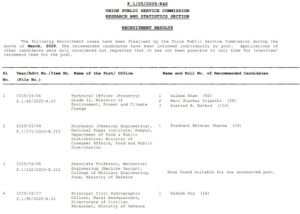
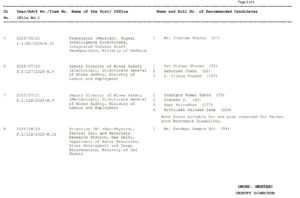
The Union Public Service Commission has finalised a set of recruitment results during March 2026. Candidates who have been recommended for appointment have been individually notified by post. Applications of other candidates were duly considered but regretted that it has not been possible to call them for interview/recommend them for the post.
One in four U.S. adults — the equivalent of over 66 million Americans — report having used artificial intelligence tools or chatbots for physical or mental healthcare information or advice, according to new research released today from the West Health-Gallup Center on Healthcare in America. Rather than replacing traditional care, more than half say they turn to AI to supplement their healthcare experiences, using the technology before or after seeing a doctor.
The findings are based on a nationally representative survey of more than 5,500 U.S. adults conducted from October through December 2025.
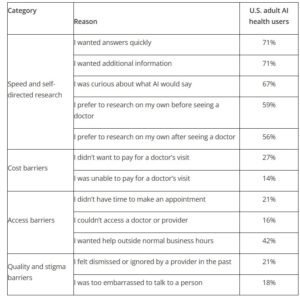
In the past 30 days, did you use an AI tool or chatbot for health-related information or advice for any of the following reasons?
% Yes, among adults who have used AI tools or chatbots for health-related information or advice in the past 30 days.
Note. Categories are for descriptive purposes only and were not shown on the survey.
Among Americans who have used AI for health-related information or advice in the past 30 days, the most frequently cited motivations are wanting answers quickly (71%) and wanting additional information (71%). Nearly seven in 10 (67%) say they were curious about what AI would say, and roughly six in 10 report using AI to do research on their own before (59%) or after (56%) seeing a doctor.
Regardless of the reason, almost half (46%) of Americans who used AI for healthcare information say the AI tool or chatbot made them feel more confident talking with or asking questions of a provider. Others say it helped them identify issues earlier (22%) or avoid unnecessary medical tests or procedures (19%).
“Artificial intelligence is already reshaping how Americans seek health information, make decisions and engage with providers, and health systems must keep pace,” said Tim Lash, President, West Health Policy Center, a nonprofit and nonpartisan organization focused on aging and healthcare affordability. “The risk isn’t that AI is moving too fast — it’s that health systems may move too slowly to guide its use in healthcare responsibly.”
A Smaller Share Turn to AI in Place of a Provider
While self-directed research is the primary driver of AI health use, a smaller but notable share of recent users report turning to AI instead of seeing a healthcare provider, particularly when faced with cost, access or quality barriers. Among recent AI health users, 27% say they didn’t want to pay for a doctor’s visit and 14% say they were unable to pay. One in five (21%) say they didn’t have time to make an appointment, and 16% say they couldn’t access a doctor or provider. Another 21% say they felt dismissed or ignored by a provider in the past, and 18% say they were too embarrassed to talk to a person.
In the past 30 days, did you use an AI tool or chatbot for health-related information or advice for any of the following reasons?
% Yes, among adults who have used AI for health-related information and advice in the past 30 days
I was unable to pay for a doctor’s visit
Household Income
% Yes, Among adults who have used AI for health-related
information and advice in the past 30 days
<$24k
32%
$24k – <$48k
21%
$48k – <$90k
14%
$90k – <$120k
9%
$120k – <$180k
8%
$180k+
2%
Among recent AI health users, 84% still saw a healthcare provider, but 14% report not seeing a provider they otherwise would have seen because of information or advice they received from AI. When projected to the full U.S. adult population, this represents roughly 14 million Americans who did not see a provider after receiving AI-generated health information.
Trust in that AI-generated health information, however, remains divided. Among those who consulted it in the past 30 days, roughly one-third say they trust it (33%), one-third neither trust nor distrust it (33%), and about one-third distrust it (34%). However, only 4% say they strongly trust the accuracy, indicating that many Americans are making healthcare decisions based on AI-generated information without full confidence in its accuracy.
About one in 10 (11%) who report using AI for health information or advice in the past 30 days say that AI recommended healthcare information or advice they believed was unsafe.
“This data indicates that while some Americans may be using artificial intelligence as a substitute for going to the doctor’s office, many see it as a tool to complement their healthcare, helping them understand symptoms they might be feeling and clarify any diagnosis they receive from their doctors,” said Joe Daly, Global Managing Partner at Gallup.
Motivations Vary by Age and Income
While information-seeking is the dominant reason Americans turn to AI for health purposes, use patterns differ by demographics. Younger adults are more likely than older adults to use AI for self-directed research — 69% of adults aged 18 to 29 say they do research before seeing a doctor, compared with 43% of those 65 and older.
Income differences are most visible in barrier-driven motivations. Among adults earning less than $24,000 annually, 32% say they used AI because they could not pay for a doctor’s visit, compared with just 2% among those earning $180,000 or more.
Everyday Health Questions Top the List of AI Use Cases
Americans who used AI for health information or advice in the past 30 days most often report using it to gather information about everyday health concerns, including physical symptoms (58%) and nutrition or exercise (59%). But AI use extends beyond symptom-checking — Americans who used AI in the past 30 days also report using AI to understand medication side effects (46%), interpret medical information (44%), or research a diagnosis or medical condition (38%). Nearly one in four (24%) report using AI to explore mental health or emotional concerns.
The Ministry of Youth Affairs and Sports will organise a nationwide Nari Shakti Vandan Run on April 17 and 18, 2026, spanning seven major cities as part of its push to promote women-led development and citizen engagement under the Viksit Bharat vision.
The event, themed #NariShaktiVandan, will be held in Delhi, Cuttack, Patna, Mumbai, Indore, Bengaluru and Jaipur. While Patna and Jaipur will host the run on April 17, the remaining cities—Delhi, Cuttack, Mumbai, Indore and Bengaluru—are scheduled for April 18.
The programme will begin early in the morning with participant registrations, followed by an inaugural session featuring the felicitation of dignitaries, an address by the chief guest, and the administration of the Nari Shakti pledge. The run itself, covering a distance of around 2 to 3 kilometres, will take place at prominent public venues in each city and conclude with certificate distribution.
The initiative seeks to draw wide participation from women across sectors, including students, professionals, entrepreneurs, athletes and civil society members. Participation is being facilitated through platforms and institutions such as MY Bharat, the National Service Scheme (NSS), and the Sports Authority of India (SAI), along with other partner organisations.
The event coincides with the ongoing Parliament session from April 16 to 18, during which discussions around women’s representation and delimitation are underway. It is aimed at deepening public awareness and encouraging greater engagement in democratic processes, particularly in the context of inclusive representation.
The ‘Nari Shakti Vandan Run’ underscores the government’s continued emphasis on women’s empowerment, positioning women as central stakeholders in India’s journey towards becoming a developed nation.
The Vice President of India, C. P. Radhakrishnan, on Wednesday called for a proactive embrace of Artificial Intelligence as a transformative force for governance, while delivering the 5th Dr. Rajendra Prasad Memorial Lecture at the Indian Institute of Public Administration.
Speaking at the institute’s Founders’ Day celebrations, he described the current era as the “Age of AI,” noting that emerging technologies are redefining how governments function and interact with citizens. He emphasised that governance must go beyond systems and regulations, focusing instead on empowering people and ensuring inclusivity.
Paying tribute to Rajendra Prasad, the Vice President highlighted his legacy of integrity, simplicity, and commitment to public service, calling the lecture series a fitting homage to the Chairman of the Constituent Assembly.
Radhakrishnan underlined that AI is playing a pivotal role in advancing India’s vision of becoming a developed nation by 2047. He said the technology is enabling faster, smarter, and more transparent governance, improving service delivery and ensuring targeted welfare distribution with minimal leakages.
He also pointed to India’s growing leadership in the AI space under Prime Minister Narendra Modi, citing initiatives such as the national language platform BHASHINI, which is helping bridge linguistic divides. AI applications in healthcare, including telemedicine services like eSanjeevani, were highlighted as examples of how technology is expanding access to essential services.
Vice President Shri C. P. Radhakrishnan graced the 72nd Founders’ Day celebrations of the Indian Institute of Public Administration (IIPA) in New Delhi today. On the occasion, he delivered the 5th Dr. Rajendra Prasad Annual Memorial Lecture on the theme “AI for Good Governance.”… pic.twitter.com/bXUTQEO7GZ
Beyond healthcare, he noted AI’s expanding footprint across agriculture, MSMEs, cybersecurity, judiciary, and administrative systems, reinforcing its role as a cross-sectoral enabler.
Highlighting India’s strong global standing in AI innovation, the Vice President referenced key initiatives such as the India AI Mission and the Anusandhan National Research Foundation, aimed at strengthening the country’s technological ecosystem.
He also urged young professionals to adapt to emerging technologies, drawing parallels with the early scepticism around computers, and emphasised the need to build an AI-ready workforce through initiatives like Skill India and the National Education Policy.
At the same time, Radhakrishnan cautioned against the unregulated use of AI, stressing that technological advancement must be guided by ethical principles, fairness, and accountability.
Concluding his address, he described Artificial Intelligence as not merely a technological shift but a broader human transformation, calling on stakeholders to harness its potential responsibly to build an inclusive and compassionate society.
A study led by University of California Riverside physicist Hai-Bo Yu suggests a new form of dark matter could explain three long-standing astrophysical anomalies. Published in Physical Review Letters, the research shows how dense clumps of self-interacting dark matter may shape structures across galaxies. The findings connect observations from distant gravitational lenses to stellar streams and nearby satellite galaxies through a single theoretical framework.
Key Takeaways
Self-interacting dark matter offers a new explanation for dense cosmic structures.
A single mechanism may explain anomalies in lenses, stellar streams, and dwarf galaxies.
The theory challenges the long-standing cold dark matter model.
Future observations could provide stronger evidence for or against SIDM.
Dark matter remains one of the most elusive components of the universe. It cannot be seen directly, yet it accounts for roughly 85 percent of all matter, shaping galaxies through its gravitational pull.
For decades, physicists have relied on the standard “cold dark matter” model, which assumes particles pass through one another without interaction. That framework explains large-scale cosmic structure but struggles with certain dense, small-scale phenomena observed in space.
New research from UC Riverside proposes an alternative. Instead of behaving like non-interacting particles, dark matter may collide with itself, exchanging energy and forming dense cores.
Yu and his team focus on what is known as self-interacting dark matter, or SIDM. In this model, particle collisions trigger a process called gravothermal collapse, leading to the formation of compact, high-density regions.
“The difference is like a crowd of people who ignore each other versus one where everyone is constantly bumping into one another,” Yu said. “In SIDM, these interactions can dramatically reshape the internal structure of dark matter halos.”
Self-interacting dark matter theory and gravothermal collapse explained
In the SIDM framework, dark matter halos do not remain diffuse. Repeated interactions allow energy to redistribute, causing matter to concentrate toward the center.
Over time, this produces clumps with extreme density, sometimes reaching masses equivalent to about a million suns. These compact structures can exert strong gravitational effects, even though they remain invisible.
Such behavior offers a possible explanation for anomalies that have puzzled astronomers. Many observed systems show signs of dense, unseen objects that do not align with predictions from standard models.
Yu’s study suggests these structures arise naturally in SIDM, without requiring additional exotic physics.
Astrophysical anomalies explained by SIDM clumps
The research identifies three distinct observations that may share the same underlying cause.
JVAS B1938+666 gravitational lens system: An ultra-dense object appears to distort light from distant galaxies more strongly than expected, indicating a compact mass concentration.
GD-1 stellar stream disruption: A spur-and-gap feature suggests that an unseen object passed through the stream, leaving a gravitational imprint that altered its structure.
Fornax 6 in the Fornax dwarf galaxy: A tightly bound cluster of stars may have formed around a dense dark matter clump acting as a gravitational trap.
Each case involves a different cosmic environment, from distant galaxies to structures within the Milky Way. Yet all show evidence of unusually dense, compact objects.
“What’s striking is that the same mechanism works in three completely different settings, across the distant universe, within our galaxy, and in a neighboring satellite galaxy,” Yu said. “All show densities that are difficult to reconcile with standard model dark matter but arise naturally in SIDM.”
Implications for cosmology and future observations
The study provides a unified explanation for phenomena that previously required separate interpretations. By linking them to a single mechanism, it strengthens the case for SIDM as a viable alternative to the standard model.
Researchers say the findings could guide future observations. If dense dark matter clumps are common, astronomers may detect more indirect signatures through gravitational effects.
The work also highlights the importance of studying small-scale structures, where differences between competing dark matter models become most apparent.
Further research will be needed to test the theory across additional systems and refine predictions. Observations from next-generation telescopes may offer more precise data to confirm or challenge the SIDM framework.
Veteran playback singer Asha Bhosle passed away on April 12, 2026, following a brief illness, marking the end of an era in Indian music. She was 92.
Her last rites will be held at Shivaji Park on Monday afternoon with full state honours, reflecting her immense contribution to Indian cinema and music. Family members, close associates from the film and music industry, and admirers gathering to pay their final respects.
Several leading personalities, including members of the Mangeshkar family and prominent figures from Bollywood, attended the ceremony, while fans across the country mourned her loss and remembered her timeless voice.
Your voice will live in our hearts forever. #AshaTai
A heartfelt tribute to Asha Bhosle Ji, a true legend.
Om Shanti 🙏 pic.twitter.com/g0pwrkxPbV
Ashalata Dinanath Mangeshkar was born in the small hamlet of Goar in Sangli, then part of the princely state of Sangli (now in Maharashtra), into a musically rich family. Her father, Pandit Deenanath Mangeshkar, of Marathi and Konkani heritage, was a noted classical singer and stage actor, while her mother Shevanti was of Gujarati origin. Tragedy struck early when her father passed away while she was just nine years old. Following his death, the family relocated from Pune to Kolhapur and eventually to Mumbai in search of livelihood. Alongside her elder sister Lata Mangeshkar, she began singing and acting in films to support the family. Her first recorded film song, “Chala Chala Nav Bala,” was for the Marathi film Majha Bal (1943).
Career
During the late 1940s and early 1950s, playback singing for leading actresses in Hindi cinema was largely dominated by voices like Geeta Dutt, Shamshad Begum, and Lata Mangeshkar. Despite this, Asha Bhosle steadily carved her own space and, by the 1950s, was recording more songs than many of her contemporaries.
Composer O. P. Nayyar played a pivotal role in shaping her early career between 1952 and 1956. However, her major breakthrough came with B. R. Chopra’s Naya Daur (1957), with music composed by Nayyar. Her duets with Mohammed Rafi—such as “Maang Ke Saath Tumhara,” “Saathi Haath Badhana,” and “Uden Jab Jab Zulfein Teri,” written by Sahir Ludhianvi—brought her widespread acclaim and recognition.
Over the years, she delivered numerous iconic songs, including “Piya Tu Ab To Aaja” from Caravan and “Yeh Mera Dil” from Don, among many others that remain timeless classics.
In 2013, at the age of 79, Bhosle made her acting debut in the film Mai, playing the titular role. She portrayed a 65-year-old mother suffering from Alzheimer’s disease who is abandoned by her children, earning praise from critics for her performance.
In May 2020, she expanded her digital presence by launching her YouTube channel, “Asha Bhosle Official.”
Personal Life:
At the age of 16, Asha married Ganpatrao Bhosle against her family’s wishes. The marriage, however, ended in separation in 1960, after which she returned to her maternal home with her children.
She later married music composer Rahul Dev Burman in 1980.
Awards:
Asha Bhosle won numerous awards. Some of them are :
Filmfare Best Female Playback Award
1967: “Garibon ki Suno” (Dus Lakh, 1966)
1969: “Parde Mein Rehne Do” (Shikar, 1968)
1972: “Piya Tu Ab To Aaja” (Caravan, 1971)
1973: “Dum Maro Dum” (Hare Rama Hare Krishna, (1971)
1974: “Hone Lagi Hai Raat” (Naina, 1973)
1975: “Chain Se Humko Kabhi” (Pran Jaye Par Vachan Na Jaye, 1974)
1979: “Yeh Mera Dil” (Don, 1978)
National Film Awards
Bhosle won the National Film Award for Best Female Playback Singer twice:
1981: Dil Cheez Kya Hai (Umrao Jaan)
1986: Mera Kuch Samaan (Ijaazat)
IIFA Awards
IIFA Award for Best Female Playback
2002: “Radha Kaisa Na Jale” (Lagaan)
Grammys
Bhosle is one of the very few Indian artists who have been nominated at the Grammy Awards.
39th Grammy Awards – 1997
– Grammy Award for Best Global Music Album – Ali Akbar Khan’s Legacy (nominated)
48th Grammy Awards – 2006
– Grammy Award for Best Contemporary World Music Album – You’ve Stolen My Heart (nominated)
Honours and recognitions
In 1997, Bhosle became the first Indian singer to be nominated for the Grammy Award, for Legacy, an album with Ustad Ali Akbar Khan.
She received seventeen Maharashtra State Awards.
She received the Dadasaheb Phalke Award in 2000 for her outstanding contribution to Indian cinema.
In 2011 the Guinness Book of World Records officially acknowledged Bhosle, at The Asian Awards, as the most recorded artist in the history of music. She was awarded a certificate for “the most studio recordings (singles) from Sebastian Coe for recording up to 11,000 solo, duet and chorus-backed songs and in over 20 Indian languages since 1947”. At the event she was also awarded the Lifetime Achievement Award.
Asha Bhosle, popular bollywood singer passed away today at the age of 92 in Mumbai. She died at Breach Candy Hospital following a chest infection, extreme exhaustion, multiple organ failure and a cardiac arrest. Her funeral is scheduled to take place at Shivaji Park.
Asha Bhosle, born Ashalata Dinanath Mangeshkar on September 8, 1933, was a towering figure in Indian music whose career spanned singing, acting, business, and television. Widely associated with Indian cinema, she earned acclaim for her remarkable versatility across genres and styles. Over the decades, she came to be regarded as one of the most influential and celebrated voices in the history of Hindi film music.
She is one of India’s most versatile and celebrated playback singers, with a career spanning over seven decades. She has recorded thousands of songs across multiple languages, becoming especially known for her wide range—from classical and ghazals to pop and cabaret numbers.
The younger sister of legendary singer Lata Mangeshkar, Asha carved her own identity through iconic songs in Bollywood and collaborations with composers like R. D. Burman.
She has received numerous honours, including the Dadasaheb Phalke Award, and remains an enduring symbol of adaptability and excellence in Indian music.
Her passing marks the end of an era in Indian music, with tributes pouring in across the country and globally.
Deeply saddened by the passing of Asha Bhosle Ji, one of the most iconic and versatile voices India has ever known. Her extraordinary musical journey, spanning decades, enriched our cultural heritage and touched countless hearts across the world. Be it her soulful melodies or… pic.twitter.com/SbFrzf1Meu
Artemis II launched aboard NASA’s Space Launch System, carrying four astronauts in the Orion spacecraft on a deep-space mission beyond low Earth orbit.
The crew conducted system checks and performed a historic lunar flyby, travelling thousands of kilometres beyond the Moon before beginning their return journey.
After completing a roughly 10-day mission, Orion safely re-entered Earth’s atmosphere and splashed down in the Pacific Ocean, marking the first crewed lunar mission since Apollo.
Artemis II Moon mission complete!
✅✅✅✅✅✅
– Space Launch System rocket launched crew into space
– Orion spacecraft kept astronauts safe
– Flew around the Moon, observed its far side
– New human spaceflight distance record
– Crew safely returned to Earth
– Inspired the WORLD pic.twitter.com/yc9TMRj97a
Welcome home Reid, Victor, Christina, and Jeremy! 🫶
The Artemis II astronauts have splashed down at 8:07pm ET (0007 UTC April 11), bringing their historic 10-day mission around the Moon to an end. pic.twitter.com/1yjAgHEOYl
Watch as the Artemis II crew returns to Earth, splashing down.
See visualization of plasma build up around the space craft, repelling of that heat on Integrity seat shield To splash down in pacific ocean( from timestamp 1:26:15) in below video posted by NASA on X.
LIVE: They are coming home.
Watch as the Artemis II crew returns to Earth, splashing down at around 8:07pm ET (0007 UTC April 11). https://t.co/n3vZE2rcFv
NASA’s Artemis II mission is scheduled to splash down at about 8:07 p.m. EDT (5:07 p.m. PDT) off the coast of San Diego. After splashdown, a combined NASA and U.S. military team, will retrieve the crew and transport them by helicopter to the USS John P. Murtha. Once aboard the ship, the astronauts will undergo post-mission medical evaluations before returning to shore to board an aircraft bound for NASA’s Johnson Space Center in Houston.
The Artemis II Crew – NASA astronauts Reid Wiseman, Victor Glover, Christina Koch and CSA (Canadian Space Agency) astronaut Jeremy Hansen are preparing for re-entry aboard the Orion spacecraft/NASA
7:33 p.m.
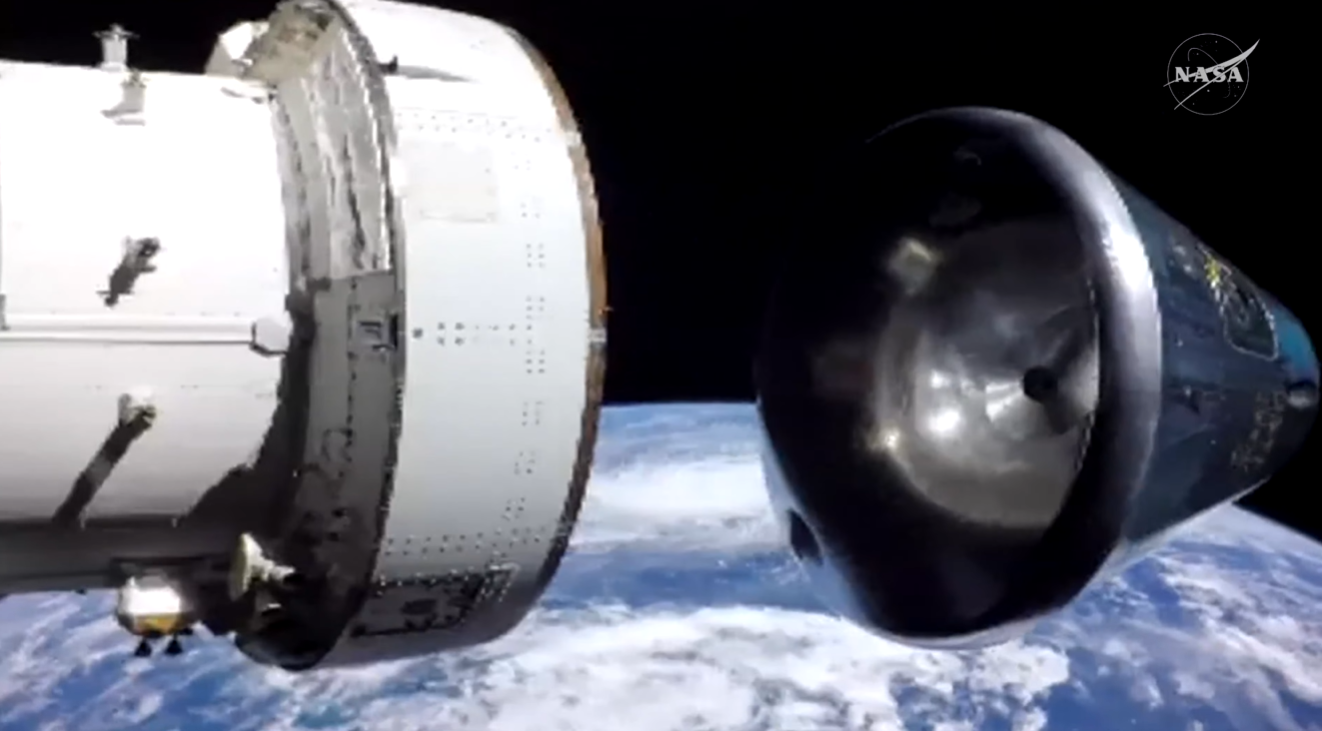
Orion’s crew and service module have separated. The crew module continues on its path towards Earth while the service module will harmlessly burn up in Earth’s atmosphere over the Pacific Ocean. The Artemis II return trajectory is designed to ensure any remaining debris does not pose a hazard to land, people, or shipping lanes.
7:37 p.m.
Orion performed the crew module raise burn, adjusting the spacecraft’s orientation to align its heat shield for re-entry.
7:53 p.m.
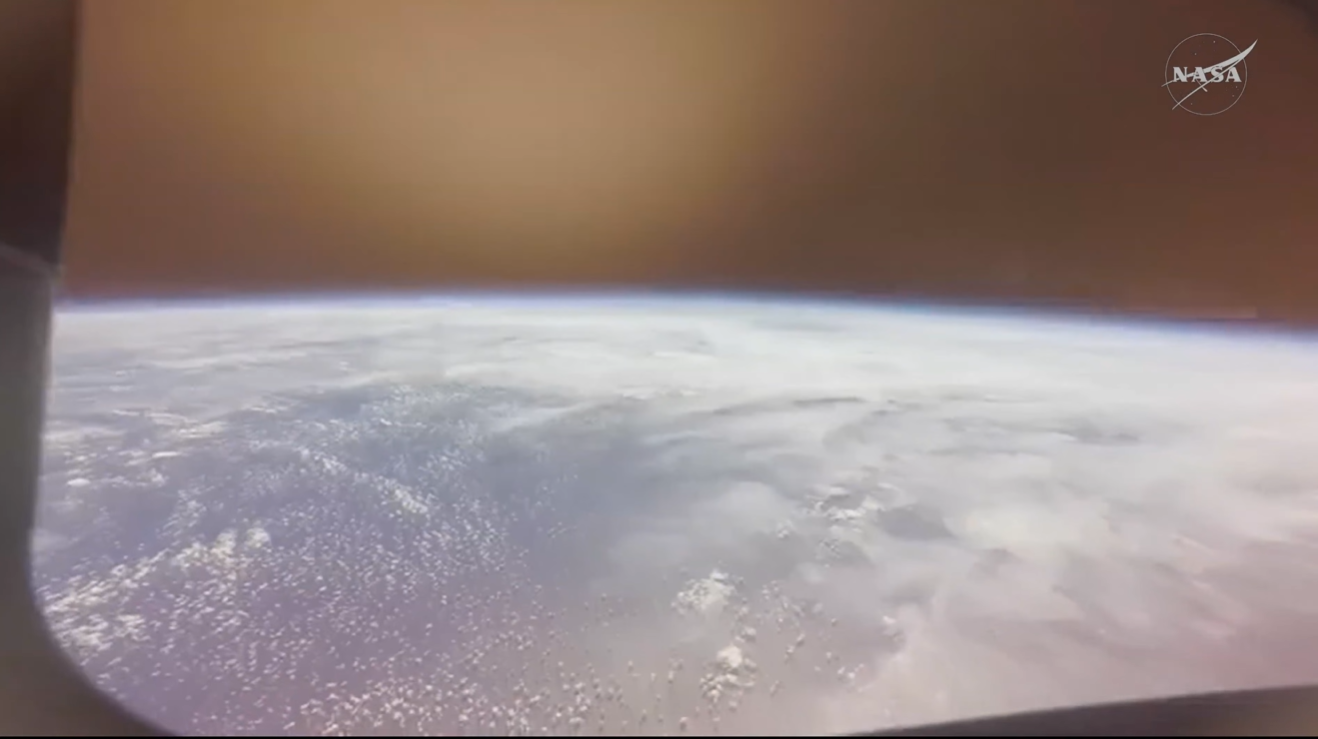
At 7:53 p.m. EDT, The Orion spacecraft reached Earth’s atmosphere 400,000 feet above the planet’s surface, traveling 35 times the speed of sound and about 1,956 statute miles from the splashdown site. This is where the spacecraft first encounters the upper atmosphere and begins its guided descent. Shortly after, Orion is in a planned communications blackout expected to last about six minutes as plasma built around the crew capsule during heating.
8:00 p.m.
NASA has reestablished communications contact with the Artemis II crew aboard the Orion spacecraft as it returns to Earth.
8:03 p.m.
At 23,400 feet, the drogue parachutes on Orion deployed to slow and stabilize the spacecraft. Orion’s velocity drops to 479 feet per second and is .8 miles from splashdown.
8:04 p.m.
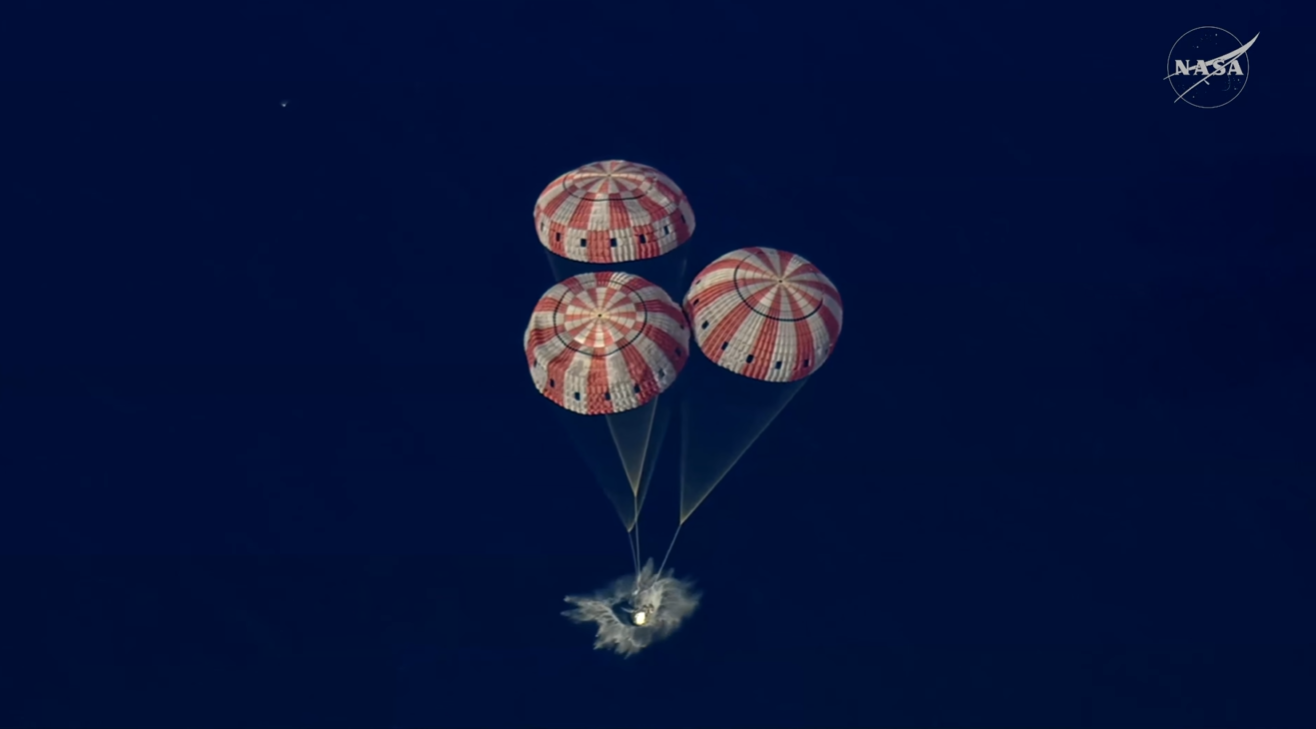
At 5,400 feet, Orion’s drogue parachutes were cut and the three main parachutes deployed, reducing velocity to less than 200 feet per second and guiding Orion on its final descent and splashdown.
8:07 p.m.
SPLASHDOWN!
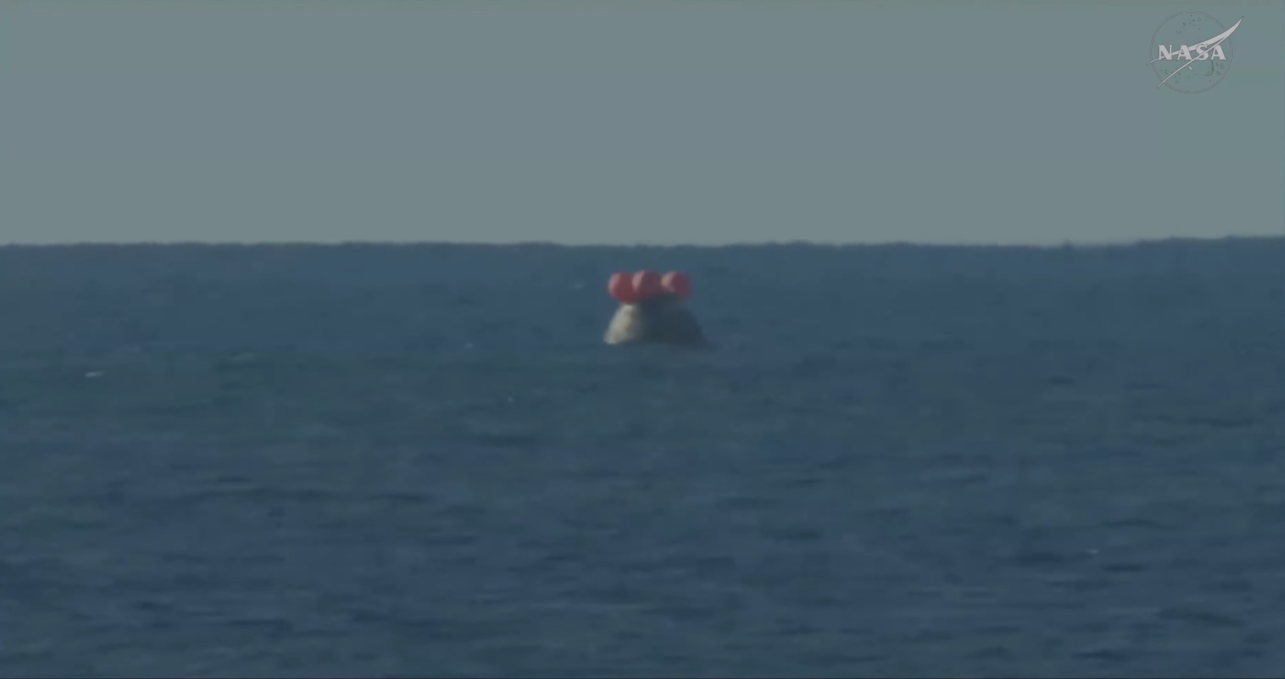
NASA’s Artemis II crew in their Orion spacecraft is back on Earth. They successfully completed a parachute-assisted splashdown in the Pacific Ocean off the coast of San Diego at 8:07 p.m. EDT (5:07 p.m. PDT).
NASA
NASA’s Artemis II crew in their Orion spacecraft is back on Earth. They successfully completed a parachute-assisted splashdown in the Pacific Ocean off the coast of San Diego at 8:07 p.m. EDT (5:07 p.m. PDT).
Engineers will conduct several additional tests while Orion is in the water before powering down the spacecraft and handing it over to the recovery team aboard the USS John P. Murtha. The recovery team is on site and headed to the capsule to begin assisting the crew out of Orion.
The Orion spacecraft with the Artemis II crew inside is seen floating in the Pacific Ocean after splashing down at 8:07 p.m. EDT on April 10, 2026.
NASA
Orion has begun crew module power down, a planned post-splashdown step in which flight controllers shut down nonessential systems and transition the capsule into its recovery configuration. This reduces power demand and prepares the spacecraft for crew extraction as recovery teams move in.
8:12 p.m.
At the direction of the NASA recovery director, team members from the agency and the U.S. military now are approaching the spacecraft in inflatable boats.
Approximately an hour after splashdown, the crew will be extracted from Orion and then flown to the USS John P. Murtha. U.S. Navy helicopters will then transport them to the ship. Once aboard, the astronauts will undergo post-mission medical evaluations before returning to shore to board an aircraft bound for NASA’s Johnson Space Center in Houston.
When ready, Navy divers will attach a cable, called the winch line, to Orion to pull the spacecraft into a specially designed cradle inside the ship’s well deck. Four additional tending lines will be secured to attachment points on the crew module while under tow.
Once Orion is positioned above the cradle assembly, technicians will drain the well deck and secure the capsule.
After it is secure aboard the ship, teams will return Orion to U.S. Naval Base San Diego before returning it to NASA’s Kennedy Space Center in Florida for inspection. Once there, technicians will thoroughly examine the spacecraft, retrieve onboard data, remove payloads, and conduct additional post-flight checks.
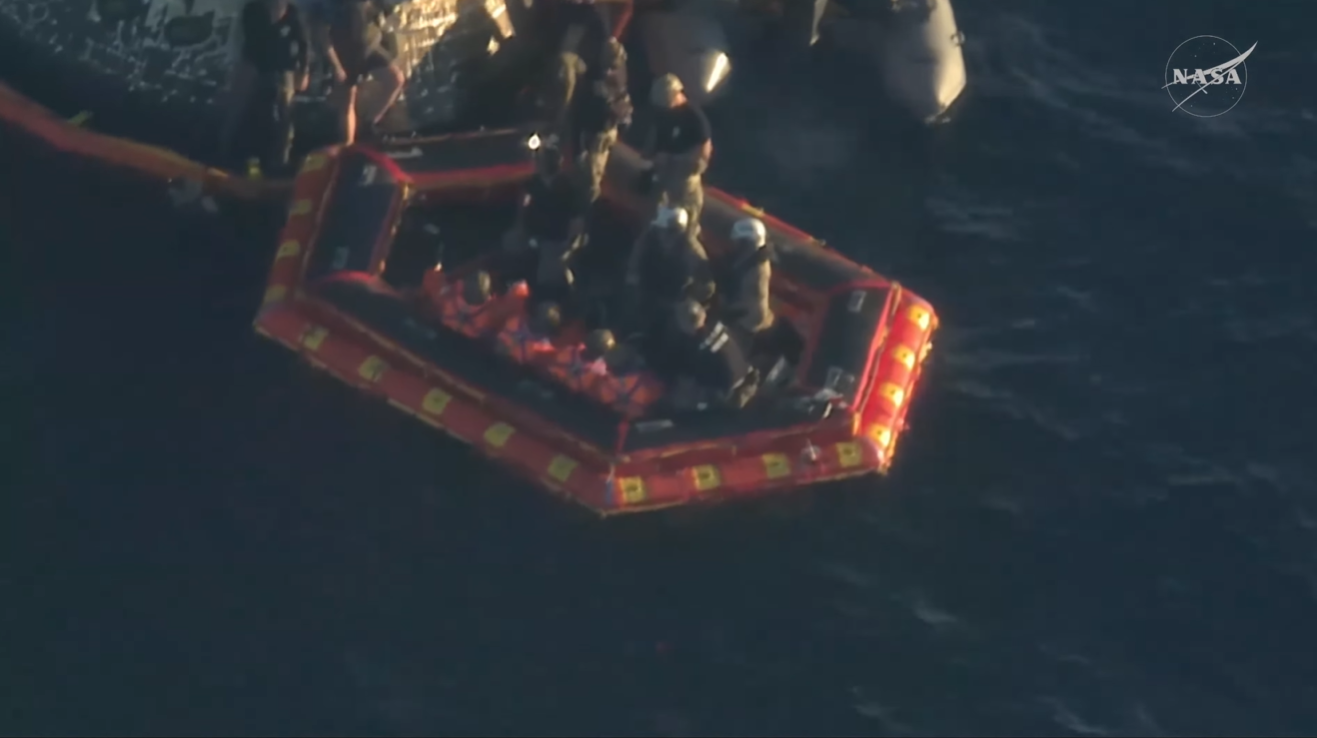
The Artemis II crew is seen on an inflatable raft, called the front porch, after exiting the spacecraft. The Artemis II mission successfully splashed down in the Pacific Ocean at 8:07 p.m. EDT on April 10, 2026.
9:56 p.m.
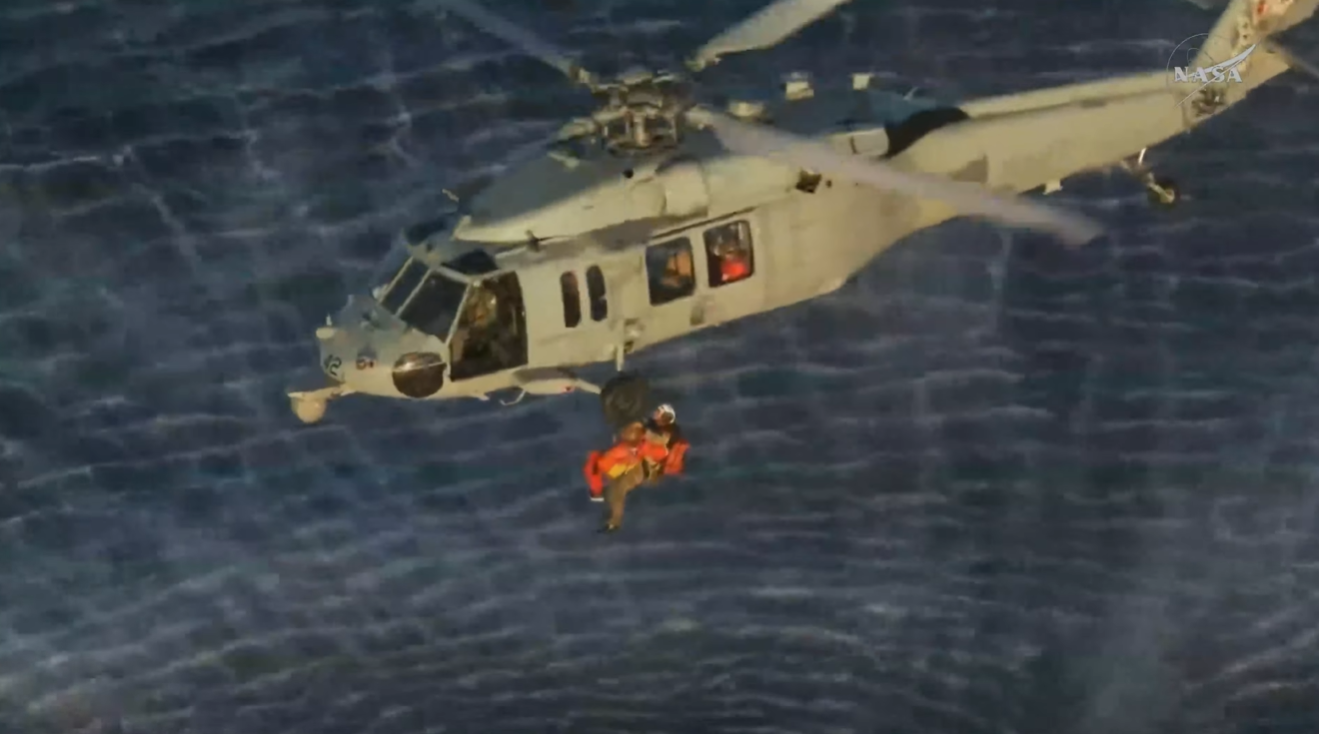
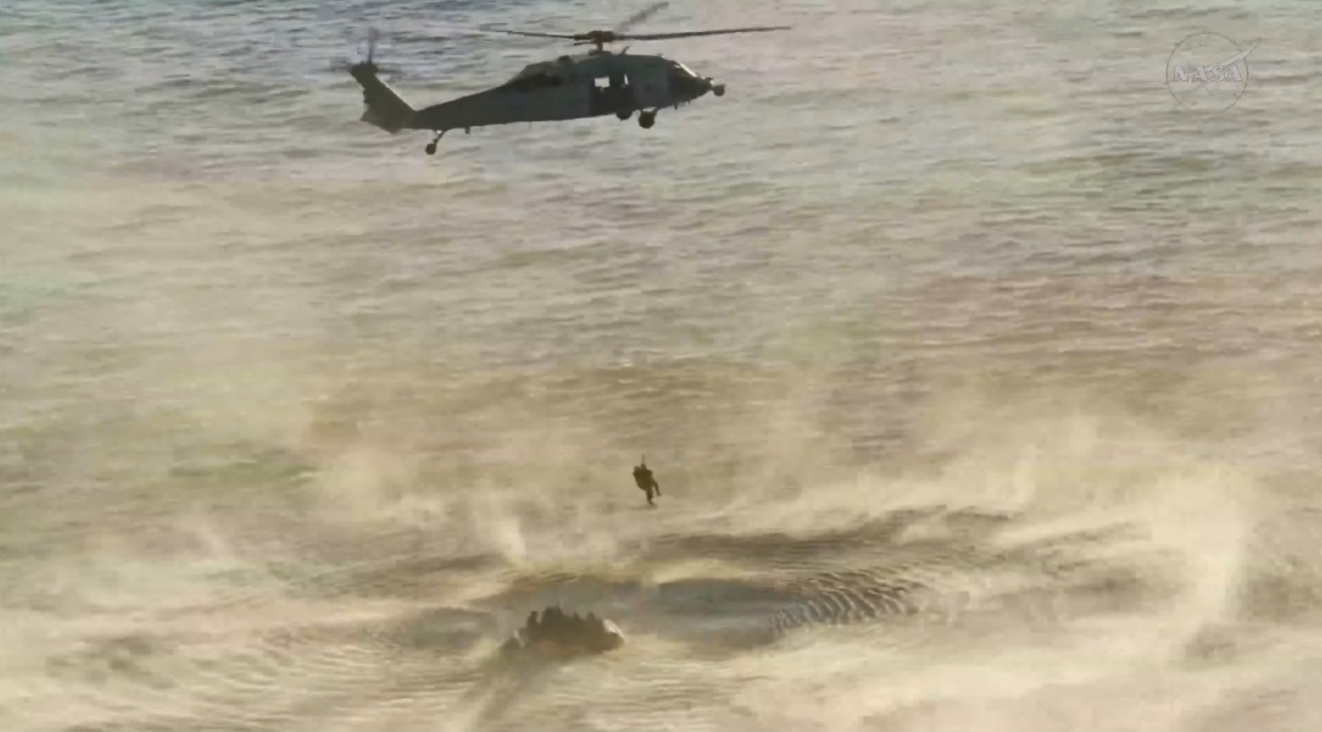
The Artemis II crew has been hoisted into U.S. helicopters and are being flown to the USS John P. Murtha.
Artemis II Commander and NASA astronaut Reid Wiseman is being hoisted into a U.S. military helicopter before being transported to the USS John P. Murtha.
Artemis II mission specialist and NASA astronaut Christina Koch is being hosted into a U.S. military helicopter before being flown to the USS John P. Murtha. NASA
9:58 p.m.
The Artemis II crew is safely aboard the USS John P. Murtha, where they will undergo post-mission medical evaluations in the ship’s medical bay before traveling back to shore to board a NASA aircraft bound for the agency’s Johnson Space Center in Houston.
NASA will hold a post-splashdown news conference at 10:35 p.m. EDT from the agency’s Johnson Space Center in Houston. Participants include:
NASA Associate Administrator Amit Kshatriya
Lori Glaze, acting associate administrator, Exploration Systems Development Mission Directorate
Rick Henfling, entry flight director, Artemis II
Howard Hu, manager, Orion Program
Shawn Quinn, manager, Exploration Ground Systems Program
At 2:53 p.m. EDT, the Orion spacecraft ignited its thrusters for 8 seconds, producing a change in velocity of 4.2 feet-per-second and pushing Artemis II toward Earth. NASA astronauts Reid Wiseman, Victor Glover, Christina Koch and CSA (Canadian Space Agency) astronaut Jeremy Hansen reviewed procedures and monitored the spacecraft’s configuration and navigation data.
The crew continues to wrap up cabin configuration for re-entry and move into their entry checklist.
Splashdown is targeted for 8:07 p.m. EDT (5:07 p.m. PDT) off the coast of San Diego, where NASA’s recovery team will be standing by to welcome the Artemis II crew home.
Watch live return coverage on NASA+, Amazon Prime, Apple TV, Netflix, HBO Max, Discovery+, Peacock and Roku, starting at 6:30 p.m. Learn how to stream NASA content through a variety of online platforms, including social media. Coverage will continue until NASA and Department of War personnel safely assist the crew out of Orion and transport them to the USS John P. Murtha.
The Artemis II crew — NASA astronauts Reid Wiseman, Victor Glover, Christina Koch and CSA (Canadian Space Agency) astronaut Jeremy Hansen — began the final phase of their journey home to the songs “Run to the Water” by Live, selected by the crew, and “Free” by Zac Brown Band, as they prepared for their third return trajectory correction burn and shifted into full re-entry and splashdown preparations. When they woke up, they were 61,326 miles from Earth.
Splashdown is targeted for 8:07 p.m. EDT (5:07 p.m. PDT) off the coast of San Diego, where a combined NASA and U.S. military recovery team will be standing by to welcome the Artemis II crew home.
The third return burn will occur at 2:53 p.m., refining Orion’s path for atmospheric entry and splashdown. During the maneuver, the spacecraft will make precise adjustments to stay on its targeted course home.
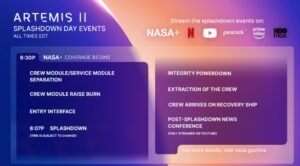
NASA’s Artemis II re-entry and splashdown timeline and streaming coverage. Splashdown is targeted for 8:07 p.m. EDT (5:07 p.m. PDT) off the coast of San Diego, where NASA’s recovery team will be standing by to welcome the Artemis II crew home.NASA
Artemis II splashdown timeline
A carefully timed sequence will guide Orion through the final stages of descent:
7:33 p.m.: Orion’s crew module will separate from the service module, exposing its heat shield for the spacecraft’s return through Earth’s atmosphere, where it will encounter temperatures of about 3,000 degrees Fahrenheit.
7:37 p.m.: Following separation, Orion will perform an 18 second crew module raise burn beginning to set the proper entry angle and align the heat shield for atmospheric interface.
7:53 p.m.: When Orion reaches 400,000 feet above Earth’s surface while traveling nearly 35 times the speed of sound. The crew is expected to experience up to 3.9 Gs in the planned entry profile. This moment marks the spacecraft’s first contact with the upper atmosphere and the start of a planned six-minute communications blackout as plasma builds around the capsule.
8:03 p.m.: Around 22,000 feet in altitude, the drogue parachutes will deploy, slowing and stabilizing the capsule as Orion nears splashdown.
8:04 p.m.: At around 6,000 feet, the drogues will release, and the three main parachutes will deploy, reducing Orion’s speed to less than 136 mph.
8:07 p.m.: Slowing to 20 mph, Orion will splash down in the Pacific Ocean off the coast of San Diego, completing the Artemis II crew’s return to Earth and a 694,481-mile journey.
From there, teams from NASA and the U.S. military will extract the crew from Orion and fly them via helicopter to the USS John P. Murtha.
Within two hours after splashdown, the crew will be extracted from Orion and flown to the USS Murtha. Recovery teams will retrieve the crew, assist them onto an inflatable raft, and then use helicopters to deliver them to the ship. Once aboard, the astronauts will undergo post‑mission medical evaluations before returning to shore where awaiting aircraft will take them to NASA’s Johnson Space Center in Houston.
The Artemis II mission began with the successful liftoff of NASA’s SLS (Space Launch System) rocket on April 1 at 6:35 p.m. from Launch Pad 39B at Kennedy Space Center in Florida, sending the first humans toward the Moon since 1972.
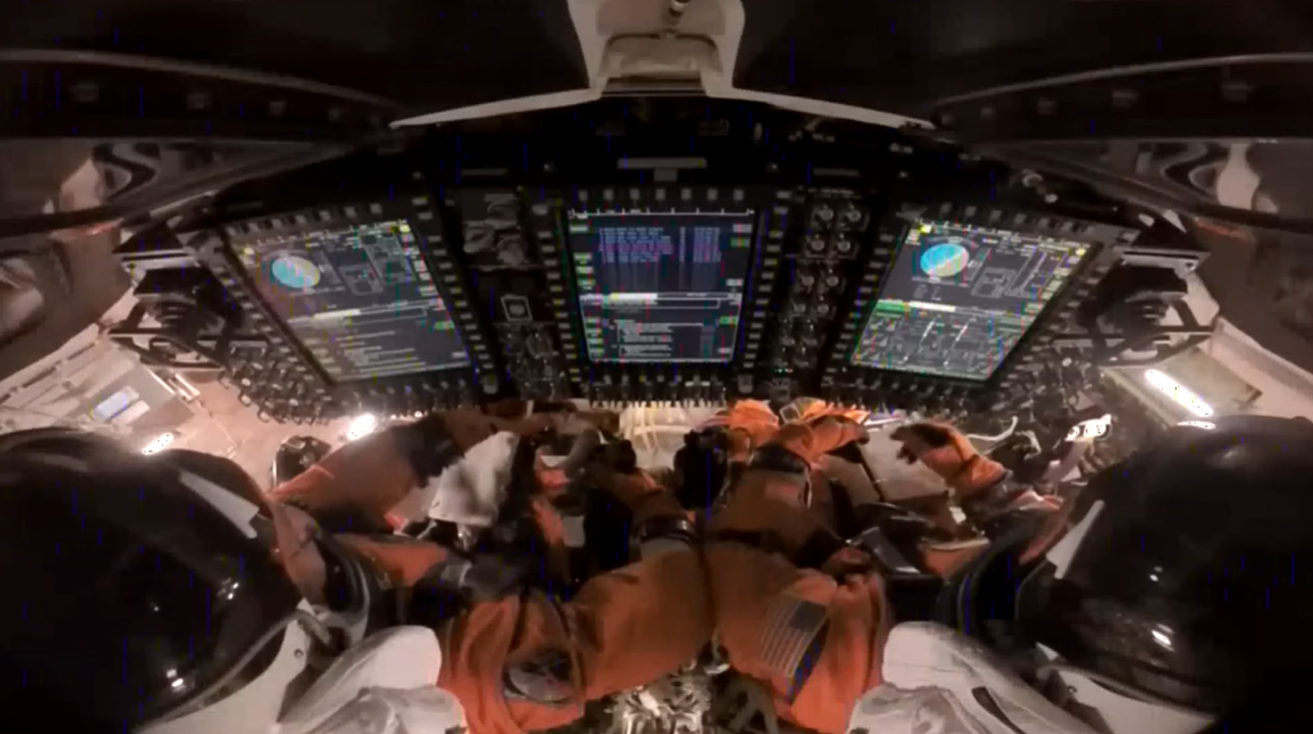
During the mission, the astronauts completed a historic lunar flyby, marking humanity’s return to the vicinity of the Moon for the first time in more than 50 years. Throughout the flight, the crew and teams on the ground have evaluated Orion’s systems in the deep‑space environment, including a series of tests in which astronauts directly operated and interacted with the spacecraft.
Mukta Arts Enters Global Animation Space With SGM Studios
Mukta Arts Ltd has announced its foray into the animation feature film segment for global cinema audiences, marking a strategic expansion into a rapidly growing entertainment vertical.
The company will operate through its newly formed division, SGM Animation Studios, and has partnered with Green Gold Animation—a well-established Hyderabad-based Indian animation company known for delivering successful animated content, founded by Rajiv Chilaka.
Green Gold Animation is widely recognised for producing popular titles such as Chhota Bheem, among other commercially successful projects.
Wikipedia
The collaboration is expected to position Mukta Arts in the global animation market, leveraging creative expertise and proven storytelling capabilities to develop feature films for worldwide audiences.
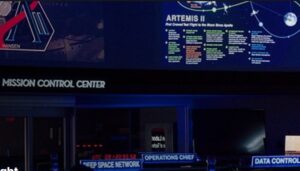
The acquisition of the radio frequency signal from the Artemis II crewed mission to the Moon by NASA’s Deep Space Network (DSN) is indicated by the peak in the data signal shown below on the computer screen.
Credits: NASA/JPL-Caltech
Soon after the mission’s launch on April 1, 2026, at 6:35 p.m. EDT, NASA’s Near Space Network led communications with the Orion capsule. Then, communications were handed off to the DSN, marking the first time in over 50 years that the network would be communicating with a crewed spacecraft traveling through deep space.
The Space Flight Operations Facility at NASA’s Jet Propulsion Laboratory in Southern California (where this photo was taken) operates the DSN, which comprises three complexes in Goldstone, California; Madrid, Spain; and Canberra, Australia. Each complex consists of several radio frequency antennas that communicate with dozens of robotic spacecraft exploring the solar system in addition to the Artemis II mission.
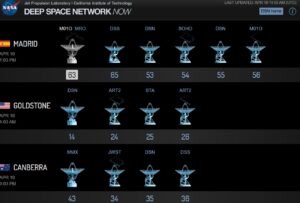
A graphical representation of the Deep Space Network’s radio frequency antennas indicate signal acquisition from NASA’s Artemis II mission to the Moon on April 1, 2026, inside the Space Flight Operations Facility at NASA’s Jet Propulsion Laboratory in Southern California. Two antennas at the Madrid Deep Space Communications Complex, Deep Space Station 54 and 56, can be seen communicating with Artemis II (the signals are labelled “EM2”, short for “Exploration Mission 2”; elsewhere they are labelled “ART2” for “Artemis II”).
A similar visualization can be found at DSN Now, which details all the missions that the network is communicating with 24 hours a day, seven days a week.
NASA
The DSN is managed by JPL for the agency’s Space Communications and Navigation program, which is located at NASA Headquarters within the Space Operations Mission Directorate. The DSN allows missions to track, send commands to, and receive scientific data from faraway spacecraft. JPL is managed by Caltech in Pasadena, California, for NASA.
A container of “lucky peanuts” was placed above workstations inside the Space Flight Operations Facility at Jet Propulsion Laboratory ahead of the Artemis II launch on April 1, 2026.
The quirky ritual—eating peanuts before major mission events—has long been observed at JPL, seen by teams as a symbol of good fortune before critical operations.
Control Centre Behind Deep Space Communication
The Space Flight Operations Facility oversees NASA’s Deep Space Network (DSN), a global communication system comprising three major complexes located in Goldstone, California; Madrid, Spain; and Canberra, Australia.
Each site houses multiple radio-frequency antennas that maintain constant contact with dozens of spacecraft across the solar system, including the crewed Artemis II mission.
NASA
A Critical Link To Spacecraft
Managed by JPL under NASA’s Space Communications and Navigation programme, the DSN operates from the agency’s headquarters within the Space Operations Mission Directorate.
The network plays a vital role in tracking spacecraft, transmitting commands, and receiving scientific data from distant missions. The Jet Propulsion Laboratory itself is run by the California Institute of Technology in Pasadena, California, on behalf of NASA.
Also Read:
JPL’s Mission Control Steps Up For Artemis II Deep Space Operations
Inside the Space Flight Operations Facility at Jet Propulsion Laboratory, the Artemis II mission took center stage on April 1, 2026, moments before liftoff. The central display featured the mission patch, while adjacent screens mapped real-time activity across the agency’s Deep Space Network (DSN), with active antennas highlighted as they transmitted and received signals.
From Launch To Deep Space Communication
Shortly after launch at 6:35 p.m. EDT from Kennedy Space Center, initial communications were managed through NASA’s Near Space Network.
Control was then handed over to the DSN, marking a significant milestone—the first time in more than five decades that the network was tasked with maintaining contact with a crewed spacecraft journeying through deep space.
Credits: NASA/JPL-Caltec
A Global Network Tracking The Mission
The DSN, operated from the Space Flight Operations Facility, consists of three major complexes located in Goldstone, California; Madrid, Spain; and Canberra, Australia.
Each site houses multiple high-powered radio antennas, forming a global system capable of maintaining continuous communication with spacecraft across the solar system—including Artemis II.
The Backbone Of Space Communication
Managed by JPL under NASA’s Space Communications and Navigation programme at headquarters, the DSN serves as a critical link between Earth and deep-space missions.
It enables mission teams to track spacecraft, transmit commands, and receive scientific data from vast distances. The Jet Propulsion Laboratory itself is operated by the California Institute of Technology in Pasadena, California, on behalf of NASA.
On their final full day in space, the Artemis II crew began the morning with “Lonesome Drifter” by Charley Crockett as their spacecraft closed in on Earth from a distance of 147,337 miles.
Astronauts Reid Wiseman, Victor Glover, and Christina Koch of NASA, along with Jeremy Hansen of the Canadian Space Agency, are spending the day preparing for their scheduled return on Friday, April 10. Activities include reviewing re-entry protocols and executing a trajectory correction maneuver.
Securing The Cabin For Re-Entry
Christina Koch and Jeremy Hansen are leading preparations inside the capsule, securing loose equipment, removing storage netting, and adjusting crew seating configurations for re-entry.
The crew will also assess updated weather forecasts, recovery team readiness, and the mission timeline. Simultaneously, they are reviewing post-landing procedures to ensure a smooth transition once back on Earth.
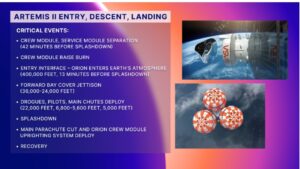
Artemis II infographic showcasing the missions entry, descent, and landing milestones. This graphic was presented by Artemis II Flight Director Rick Henfling during the mission status briefing to the media and public on April 8, 2026 at NASA’s Johnson Space Center in Houston.NASA
Trajectory Correction Burn
A key maneuver is scheduled for 9:53 p.m. EDT, when Orion’s thrusters will fire for a second return trajectory correction burn.
This adjustment is designed to fine-tune the spacecraft’s path toward Earth and align it precisely for atmospheric entry. During the burn, Jeremy Hansen will oversee procedure execution and monitor navigation and propulsion systems.
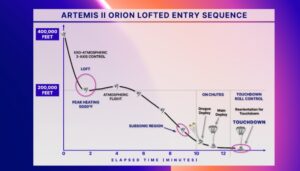
Infographic featuring the Artemis II Orion lofted entry sequence. This graphic was presented by Artemis II Flight Director Rick Henfling during the mission status briefing to the media and public on April 8, 2026 at NASA’s Johnson Space Center in Houston. NASA
Countdown To Splashdown
Ground teams are making final preparations for splashdown, expected around 8:07 p.m. (5:07 p.m. PDT) on April 10 off the coast of San Diego.
The re-entry sequence will begin with the separation of Orion’s service module at approximately 7:33 p.m., followed by a final trajectory adjustment at 7:37 p.m. The spacecraft will then execute roll maneuvers and accelerate to nearly 23,864 mph before entering Earth’s atmosphere.
A communications blackout is expected at 7:53 p.m. as plasma builds up around the capsule, lasting about six minutes. During this phase, astronauts may experience forces up to 3.9 Gs.
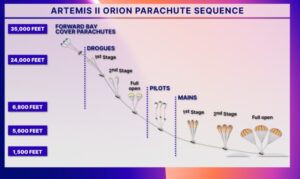
Infographic displaying the Artemis II Orion parachute sequence. This graphic was presented by Artemis II Flight Director Rick Henfling during the mission status briefing to the media and public on April 8, 2026 at NASA’s Johnson Space Center in Houston. NASA
Parachute Deployment And Landing
After re-establishing communication, Orion will jettison its forward bay cover and deploy drogue parachutes at around 22,000 feet. Main parachutes will follow at approximately 6,000 feet, slowing the capsule for a safe ocean landing.
Ground track map displaying the Artemis II Orion parachute sequence. This graphic was presented by Artemis II Flight Director Rick Henfling during the mission status briefing to the media and public on April 8, 2026 at NASA’s Johnson Space Center in Houston. NASA
Recovery And Return To Houston
Within two hours of splashdown, the crew will be retrieved and transported to the USS John P. Murtha via helicopter.
Once aboard, astronauts will undergo initial medical evaluations before returning to shore and boarding a flight to Johnson Space Center in Houston for post-mission debriefing and recovery.
U.S. Navy MH-60 Seahawks from Helicopter Sea Combat Squadron (HSC) 23 are seen arriving on the flight deck of USS John P. Murtha as they prepare to conduct air operations training as NASA, U.S. Navy, and U.S. Air Force teams prepare for the the return of the Artemis II crewmembers to Earth, Monday, April 6, 2026, in the Pacific Ocean off the coast of California. NASA’s Artemis II mission is taking NASA astronauts Reid Wiseman, commander; Victor Glover, pilot; Christina Koch, mission specialist; and CSA (Canadian Space Agency) astronaut Jeremy Hansen, mission specialist on a 10-day journey around the Moon and back aboard their Orion spacecraft. Wiseman, Glover, Koch, and Hansen are scheduled to splash down off the coast of San Diego at approximately 5:07 p.m. PDT (8:07 p.m. EDT) on Friday, April 10. NASA/Bill Ingalls