Arun has been associated with India International Times since 2018 and he has been a key reporter in covering science and space related stories. He can be reached at arunKnn@indiainternationaltimes.com.
UN Secretary General Antonio Guterres on Tuesday called for de-escalating the India-China border tensions after reports of army clashes in Arunachal Pradesh.
His spokesperson Stephane Guterres said: “We call for de-escalation to ensure that the tensions along the border in that area do not grow.”
India’s Defence Minister Rajnath Singh said that on Friday a physical scuffle took place between the armies of the two countries in the Yangtse area of the Tawang sector in Arunachal Pradesh.
Both sides suffered minor injuries and Indian troops turned back China’s incursion, he said.
The two nations’ troops commanders in the region met on Sunday and the matter has also been taken up with China through diplomatic channels, he said.
Following border clashes between India and China at Tawang in Arunachal Pradesh, the US said that it “strongly opposes” any unilateral attempt to advance territorial claims.
US State Department spokesperson Ned Price told reporters at the daily briefing that the US is “closely” monitoring the situation along the Line of Actual Control (LAC) in the aftermath of clashes and is in “close contact” with its Indian “partners”.
Price declined to detail conversations with India but stated, “We are glad to hear that both sides appear to have quickly disengaged from the clashes,” Price said and went on to appeal to the two countries to discuss their boundary disputes utilising the existing bilateral channels.
White House press secretary Karine Jean-Pierre also expressed similar sentiments. “We are glad to hear that both sides appear to have quickly disengaged from the clashes. We are closely monitoring the situation. We encourage India and China to utilise existing bilateral channels to discuss disputed boundaries,” she said.
Price was responding to questions about clashes between contingents of the Indian Army and the People’s Liberation Army (PLA) in the Tawang sector last week.
The Chinese soldiers, numbering about 300, came armed with tasers, knuckle dusters and other weapons – but not guns as per a bilateral pact not to use arms in the border. The Indian side deployed reinforcements and “compelled” them to return to their posts, said the Indian defence minister.
The largely unmarked LAC has seen several such clashes, of late with Galwan in Ladakh region in 2020 when 20 Indian soldiers were injured at the time and many Chinese soldiers too killed or injured.
Raja Krishnamoorthi, an Indian American member of the House of Representatives, expressed concern over the clashes and said, “I’m disturbed to learn of the latest show of aggression by the Chinese Communist Party through its violation of Indian territory with its armed forces.”
He said the clashes are a reminder of the growing belligerence of the Chinese Communist Party and the need for the United States to continue to work with India in the region to counter Beijing’s aggression.
The incident on Dec 9, 2022 happened when Chinese troops in Yangtse in the Tawang sector in Arunachal Pradesh clashed with three different battalions — Jammu and Kashmir Rifles, Jat regiment and Sikh Light Infantry — were present at the location in a bid to change the status quo in the border territory.
The update shows that there is 67% increase in Medical Colleges from 387 to 648 or 87% increase in MBBS seats from 51,348 to 96,077 and 105% increase in PG seats from 31,185 to 64,059. Currently, there are 22 AIIMS approved with 19 AIIMS of them having undergraduate courses.
A total of 96,077 MBBS seats are available in the country out of which 51,712 in Government Medical Colleges and 44365 in Private Medical Colleges. There are 49,790 PG seats of National Medical Commission (NMC) available in the country, out of which 30,384 in Government Medical Colleges and 19,406 in Private Medical Colleges.
There are also 12,648 Diplomate of National Board (DNB) / Fellowship of National Board (FNB) PG seats out of which 4185 in Government institutions and 8463 in Private institutions. In addition, 1621 PG seats are in College of Physicians and Surgeons (CPS), said a statement.
There is an increase of 67% in Medical Colleges from 387 before 2014 to 648 as of now. Further, there is an increase of 87% in MBBS seats from 51,348 before 2014 to 96,077 as of now and increase of 105% in PG seats from 31,185 before 2014 to 64,059 as of now. The measures/steps taken by the Government to increase the opportunities for medical studies and expansion of medical education in the Country include: –
Central Sector Scheme for establishment of new medical college by upgrading district/ referral hospital under which 94 new medical colleges are already functional out of 157 approved.
Central Sector Scheme for strengthening/ upgradation of existing State Government/Central Government Medical Colleges to increase MBBS and PG seats.
Central Sector Scheme for “Upgradation of Government Medical Colleges by construction of Super Specialty Blocks”. A total of 60 projects are complete out of 75 approved.
Under the Central Sector Scheme for setting up of new AIIMS, 22 AIIMS have been approved. Undergraduate courses have started in 19 of these.
Relaxation in the norms for setting up of Medical College in terms of requirement for faculty, staff, bed strength and other infrastructure.
DNB qualification has been recognized for appointment as faculty to take care of shortage of faculty.
Enhancement of age limit for appointment/ extension/ re-employment against posts of teachers/Dean/Principal/ Director in medical colleges upto 70 years.
As per information received from the State Government of Madhya Pradesh, the State in order to promote education in regional languages has taken a decision to impart medical education in Hindi as a pilot project.
The Union Minister of State for Health and Family Welfare, Dr. Bharati Pravin Pawar stated this in a written reply in the Rajya Sabha today.
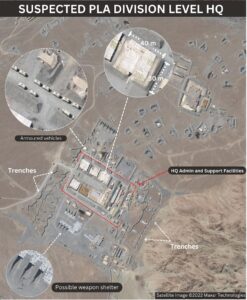
Amid border incursions with the Chinese soldiers coming with barbed sticks near the LAC on December 9, satellite images show that China has built villages on their side. As per a bilateral pact, weapons are not to be borne by soldiers on the border.
Along the India-China border abutting Arunachal Pradesh’s Tawang, the PLA army has also constructed a road, Indian Army sources told media on Tuesday, a day after a clash between troops of both sides last week became public.
On the clash, sources said that as many as 300 Chinese troops had arrived near the LAC on December 9 to gain control over the peak of a 17,000-feet-high mountain but the Indian troops foiled their attempt, the source said.
Meanwhile, China’s first statement on the clash has come, with its Foreign Ministry said that the situation on its border with India is “stable”. Responding to reports of clash between Indian and Chinese soldiers on the Line of Actual Control (LAC) near Tawang, China maintained that the situation on the border is stable.
Chinese Foreign Ministry spokesman Wang Wenbin said: “As far as we understand, the situation on the China-India border is overall stable. Continuous talks are going on, on the border issue through diplomatic and military channels.”
Union Defence Minister Rajnath Singh on Tuesday told Parliament that Indian troops successfully thwarted an attempt by Chinese soldiers to transgress the LAC in Arunachal Pradesh’s Tawang sector.
In a statement which the Defence Minister read out in both Houses of Parliament, he said that Indian troops in a brave and resolute manner pushed back the Chinese troops back to their positions after a physical scuffle, in which minor injuries were suffered by both sides in Yangtse area of Tawang sector.
However no fatalities were reported on the Indian side during the incident, Rajnath Singh informed the House. He said that subsequently a flag meeting between Indian and Chinese commanders was held on December 11, where the Chinese side was told to refrain from such actions and maintain peace and tranquility along the border.
The matter has also been taken up through diplomatic channels with China. Rajnath Singh expressed confidence that the House stands united in supporting Indian soldiers in their efforts as the Lok Sabha witnessed a pandemonium when he read out the statement.
Earlier in the day, Rajnath Singh had chaired a high-level emergency meeting with CDS Lieutenant General Anil Chauhan, Army chief General Manoj Pande and NSA Ajit Doval.
Congress leader Shashi Tharoor said, “No doubt that China has its eyes on Tawang. We’ve to be very alert there. I think what our Army did yesterday had the support of entire country.”
The clash between Indian and Chinese troops on December 9 took place at the 17,000 feet at Yangtse, some 35 km north-east of Tawang in western Arunachal Pradesh.
A source informed that there have been injuries to both Indian and Chinese soldiers and six of the injured Indian soldiers had been admitted to the military hospital at Guwahati, but here is no reports of any serious injury or death.
China has been repeatedly trying to take control of the 17,000-feet-high peak but Indian Army sources said that India has a firm control of the peak, which provides a commanding view on both sides of the border. Currently, Indian Air Force aircraft are patrolling the skies of Arunachal.
As the winter is setting in, the Delhi government is taking up the Winter Action Plan to rescue the homeless from the chill and provide them accommodation and food in ‘Rain Baseras’.
Delhi Deputy Chief Minister Manish Sisodia on Tuesday reviewed the plan with senior officials of various departments concerned. The Delhi Urban Shelter Improvement Board (DSUIB) has set up 15 rescue teams, each equipped with a vehicle, for surveillance and rescuing homeless people.
The Delhi government has also set up a 24×7 centralised control room and issued helpline numbers to join Rain Basera or night shelter.
To ensure that no one is left out in the cold during the peak winter season, the government has established food and lodging facilities for homeless people across 195 shelter homes which have the capacity of accommodating over 17,000 people, said Sisodia.
An official said that people can inform the DUSIB about the homeless through this helpline and DUSIB’s rescue team will reach the location to take the homeless to the nearest shelter.
About the night shelter facility, Sisodia said: “The Delhi government is determined to provide a dignified life to every person residing in the capital, including homeless people.
He also said that the government is planning to increase the capacity of these shelters, if needed, in the winter.
The DUSIB officials are responsible for managing the night shelter facility across the capital primarily, along with the existing facilities of food, lodging and medical care at the ‘Rain Baseras’.
So far, over 1,500 homeless people have been rescued by these teams in the past few weeks. Out of total 195 night shelters for homeless people in Delhi, 19 are for families, 17 for women, four for drug addicts, and three are recovery shelters.
Sky watchers can witness a meteor shower peaking between Tuesday night and well into the early hours of Wednesday, Dec 12-13 night as the Geminid meteor shower comes around this time of the year when several meteoroids, left behind by ‘rock comet’ 3200 Phaethon, enter the earth’s atmosphere.
While Bengaluru-based Jawaharlal Nehru Planetarium is organising an event to watch the night sky with naked eye between 10pm tonight till 4:30am Wednesday under expert advice and supervision after paying Rs. 500 per head, the winter night has become suddenly cloudy by evening that many may be left disappointed.
Following the Cyclone Mandous in Chennai and Andhra Pradesh coast, Bengaluru is under constant spell of rain in the last four days and the morning Sun soon disappeared on Wednesday.
However, people in other ares with clear sky can see meteors unless hindered by pollution and a cloudy sky, with a bright moon to add to that. However, if you are in luck, you will be able to observe around 30 to 40 meteors lighting up the night sky each hour, especially between 2am and 3am. Telescopes are not necessary for this event as they limit the view of the sky.
In a massive show of anger, more than 80 political parties and social organisations staged a silent march in Pune on Tuesday to protest the repeated slurs on Chhatrapati Shivaji Maharaj.
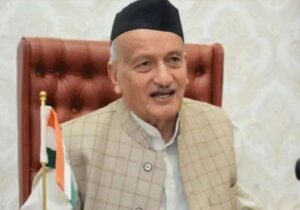
Several major areas of the city, including wholesale markets observed a shutdown and more than two lakh protesters joined the march sporting saffron flags, black banners and posts, demanding the removal of Governor Bhagat Singh Koshyari for his recent utterances vilifying great icons of the state.
Maha Vikas Aghadi members Congress, Shiv Sena-UBT, Nationalist Congress Party, around three dozen Maratha, Shiv Premi and Muslim organisations, the royal descendent Chhatrapati Udayanraje Bhosale and a large number of women walked in the silent march from Deccan to Lal Mahal areas of the city.
However, the ruling Balasahebanchi Shiv Sena-Bharatiya Janata Party and Raj Thackeray’s Maharashtra Navnirman Sena kept off the protest demonstration, where a massive police contingent of over 7,500 personnel was deployed to ward off any untoward incidents.
Bhosale questions
Shivaji’s descendent Bhosale asked the media that when Nupur Sharma (who made derogatory remarks on the Prophet Mohammed in May) was removed by the party, what prevented it from ousting the Governor for his utterances against the Chhatrapati, and initiating action against all others who keep making derogatory comments on icons which hurt public sentiments.
MVA’s leaders in the procession included Shiv Sena-UBT Deputy Leader Dr. Raghunath Kuchik, Sushma Andhare, Sena-UBT city chief Sanjay More, NCP’s city President Prashant Jagtap, office-bearers Rupali Patil, Deepak Mankar and Ankush Kakde, Ajinkya Palkar, Congress city chief Ramesh Bagwe, office-bearers Arvind Shinde, Sangeeta Tiwari, Mohan Joshi, Balasaheb Dabhekar, and the Sambhaji Brigade was represented by Santosh Shinde, Vikas Pasalkar, and Prashant Dhumal.
Other major groups which joined were the CPI, Maratha Mahasangh, Dalit Panthers, RPI, Aam Aadmi Party, Vanchit Bahujan Aghadi, over two dozen non-political, social, business organisations, youths, women and Muslim front groups.
Bhagat Singh Koshiyari
The MVA leaders have rejected the Governor’s letter (December 6) clarifying his position to Union Home Minister Amit Shah, and insisted that he had not apologised for his remarks against Chhatrapati Shivaji Maharaj or Mahatma Jyotirao Phule, hence he has lost the moral right to continue in his post.
Among other things in his letter, Koshyari said that he “cannot even dream” of insulting the great personalities as contended and sought Shah’s “guidance” in the matter.
The state has been rocked by a series of agitations and protests against the Governor for his recent utterances that have irked the state polity and top leaders also objected to him sharing the stage with Prime Minister Narendra Modi in Nagpur on Sunday.
Besides the Governor, other BJP leaders like state ministers Chandrakant Patil, Mangal Prabhat Lodha, Union Minister Raosaheb Danve, have been accused of making objectionable statements against the state’s icons.
Joining the Big Tech layoff season, networking major Cisco has reportedly started laying off 5 per cent of its workforce, which is more than 4,000 employees as a part of its “rebalancing” act and “rightsizing certain businesses”.
Silicon Valley Business Journal reported that many workers took to TheLayoff.com and Blind portal to post about the job cuts at the company. “Impacted by Cisco layoffs!” one company employees said on Blind while another sought “Looking for immediate (software engineering) referrals. Any help would be sincerely appreciated. Thanks.”
However, Cisco did not directly comment on severance packages but said in a statement that “we didn’t take this decision lightly, and we will offer those impacted extensive support, including generous severance packages”.
In its first quarter earning report (Q1 2023) last month, Cisco reported $13.6 billion in revenue, up 6 per cent year over year. Chuck Robbins, Chairman and CEO of Cisco, merely said that he would “be reluctant to go into a lot of detail here until we’re able to talk to them. I would say that what we’re doing is rightsizing certain businesses”.
Cisco Chief Financial Officer Scott Herren had described the move as a “rebalancing” act.
Stone’s remarkable tenure on NASA’s longest-operating mission spans decades of historic discoveries and firsts.
Edward Stone has retired as the project scientist for NASA’s Voyager mission a half-century after taking on the role. Stone accepted scientific leadership of the historic mission in 1972, five years before the launch of its two spacecraft, Voyager 1 and Voyager 2. Under his guidance, the Voyagers explored the four giant planets and became the first human-made objects to reach interstellar space, the region between the stars containing material generated by the death of nearby stars.
Until now, Stone was the only person to have served as project scientist for Voyager, maintaining his position even while serving as director of NASA’s Jet Propulsion Laboratory in Southern California from 1991 to 2001. JPL manages the Voyager mission for NASA. Stone retired from JPL in 2001 but continued to serve as the mission’s project scientist.
“It has been an honor and a joy to serve as the Voyager project scientist for 50 years,” Stone said. “The spacecraft have succeeded beyond expectation, and I have cherished the opportunity to work with so many talented and dedicated people on this mission. It has been a remarkable journey, and I’m thankful to everyone around the world who has followed Voyager and joined us on this adventure.”
Edward Stone, second from left, and other members of the Voyager team pose with a model of the spacecraft in 1977, the year the twin probes launched. Credit: NASA/JPL-Caltech
Linda Spilker will succeed Stone as Voyager’s project scientist as the twin probes continue to explore interstellar space. Spilker was a member of the Voyager science team during the mission’s flybys of Jupiter, Saturn, Uranus, and Neptune. She later became project scientist for NASA’s now-retired Cassini mission to Saturn, and rejoined Voyager as deputy project scientist in 2021.
Jamie Rankin, a research scientist at Princeton University and a member of the Voyager science steering group, has been appointed deputy project scientist for the mission. Rankin received her Ph.D. in 2018 from Caltech, where Stone served as her advisor. Her research combines data from Voyager and other missions in NASA’s heliophysics fleet.
The twin Voyager spacecraft launched in 1977, on a mission to explore Jupiter and Saturn, ultimately revealing never-before-seen features of those planets and their moons. Voyager 1 continued its journey out of the solar system, while Voyager 2 continued on to Uranus and Neptune – and remains the only spacecraft to have visited the ice giants.
Edward Stone, left, talks to reporters at a news conference to announce findings from Voyager 2’s flyby of Uranus in 1986. Credit: NASA/JPL-Caltech
Following this “grand tour” of the outer planets, the Voyager Interstellar Mission began. The goal was to exit the heliosphere – a protective bubble created by the Sun’s magnetic field and outward flow of solar wind (charged particles from the Sun). Voyager 1 crossed the boundary of the heliosphere and entered interstellar space in 2012, followed by Voyager 2 (traveling slower and in a different direction) in 2018. Today, as part of NASA’s longest-running mission, both spacecraft continue to illuminate the interplay between our Sun, and the particles and magnetic fields in interstellar space.
“Ed likes to say that Voyager is a mission of discovery, and it certainly is,” said Suzanne Dodd, Voyager project manager. “From the flybys of the outer planets in the 1970s and ’80s, to the heliopause crossing and current travels through interstellar space, Voyager never ceases to surprise and amaze us. All those milestones and successes are due to Ed’s exceptional scientific leadership and his keen ability to share his excitement about these discoveries to the world.”
Among the many honors bestowed on him, Stone has been a member of the National Academy of Sciences since 1984. He was awarded the National Medal of Science from President George H.W. Bush in 1991. When Stone was interviewed on the late-night TV show “The Colbert Report” in 2013, NASA arranged for host Stephen Colbert to present him with the NASA Distinguished Public Service Medal, the agency’s highest honor for a nongovernment individual. In 2019, he received the Shaw Prize in Astronomy from the Shaw Foundation in Hong Kong for his work on the Voyager mission.
NASA’s James Webb Space Telescope was specially designed to detect the faint infrared light from very distant galaxies and give astronomers a glimpse at the early universe. The nature of galaxies during this early period of our universe is not well known nor understood. But with the help of gravitational lensing by a cluster of galaxies in the foreground, faint background galaxies can be magnified and also appear multiple times in different parts of the image.
Today, we sit down with three astronomers working on Webb to talk about their latest findings. The team members are Dan Coe of AURA/STScI for the European Space Agency and the Johns Hopkins University; Tiger Hsiao of the Johns Hopkins University; and Rebecca Larson of the University of Texas at Austin. These scientists have been observing the distant galaxy MACS0647-JD with Webb, and they’ve found something interesting.
Dan Coe: I discovered this galaxy MACS0647-JD 10 years ago with the Hubble Space Telescope. At the time, I’d never worked on high redshift galaxies, and then I found this one that was potentially the most distant at redshift 11, about 97 percent of the way back to the big bang. With Hubble, it was just this pale, red dot. We could tell it was really small, just a tiny galaxy in the first 400 million years of the universe. Now we look with Webb, and we’re able to resolve TWO objects! We’re actively discussing whether these are two galaxies or two clumps of stars within a galaxy. We don’t know, but these are the questions that Webb is designed to help us answer.
Tiger Yu-Yang Hsiao: You can also see that the colors between the two objects are so different. One’s bluer; the other one is redder. The blue gas and the red gas have different characteristics. The blue one actually has very young star formation and almost no dust, but the small, red object has more dust inside, and is older. And their stellar masses are also probably different.
It’s really interesting that we see two structures in such a small system. We might be witnessing a galaxy merger in the very early universe. If this is the most distant merger, I will be really ecstatic!
Dan Coe: Due to the gravitational lensing of the massive galaxy cluster MACS0647, it’s lensed into three images: JD1, JD2, and JD3. They’re magnified by factors of eight, five, and two, respectively.
Rebecca Larson: Up to this point, we haven’t really been able to study galaxies in the early universe in great detail. We had only tens of them prior to Webb. Studying them can help us understand how they evolved into the ones like the galaxy we live in today. And also, how the universe evolved throughout time.
The U.S. Postal Service will issue a stamp highlighting NASA’s James Webb Space Telescope on Sept. 8, 2022. U.S. Postal Service Art Director Derry Noyes designed the stamp using existing art by James Vaughan and an image provided by NASA and the Space Telescope Science Institute. Credits: U.S. Postal Service
I think my favorite part is, for so many new Webb image we get, if you look in the background, there are all these little dots—and those are all galaxies! Every single one of them. It’s amazing the amount of information that we’re getting that we just weren’t able to see before. And this is not a deep field. This is not a long exposure. We haven’t even really tried to use this telescope to look at one spot for a long time. This is just the beginning!
The James Webb Space Telescope is the world’s largest, most powerful, and most complex space science telescope ever built. Webb will solve mysteries in our solar system, look beyond to distant worlds around other stars, and probe the mysterious structures and origins of our universe and our place in it.
Researchers at Johannes Gutenberg University Mainz (JGU) are pursuing a completely new and unconventional strategy to improve the way data can be processed and – in particular – stored. The team members, based in Mainz and Jerusalem, have come up with the idea of bringing together two different forms of chirality to develop new data storage systems that are faster, smaller, and more efficient than those currently available.
Chirality, also known as handedness in this context, describes objects that come in two distinctly different configurations that are mirror images of each other such as our left and right hand. “We were inspired by nature, where chirality is a common phenomenon. Chiral molecules can act like a filter for electron spin and ensure functionality even on the smallest scale,” said Professor Angela Wittmann of the JGU Institute of Physics.
Combining the chirality of spin configurations and molecules
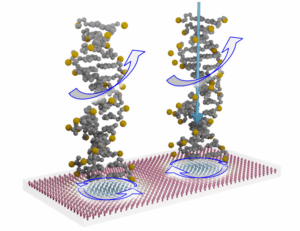
In their approach, the researchers from the fields of experimental solid state physics, atomic physics, and molecular chemistry will be using recently discovered chiral spin structures. These so-called skyrmions are tiny vortices in magnetic thin films protected by their chirality. It is this kind of chiral magnetic texture that the researchers intend to combine with chiral molecules over the course of the project. The assumption is that, based on the chiral-chiral interaction, they would have a unique, flexible, controllable, and efficient means of manipulating spin structures. “With the help of a chiral molecule, it should be possible to switch the handedness of the chiral magnetic textures in thin films, for instance, from clockwise to anticlockwise,” clarified Wittmann.
In this case, the chiral molecule with its DNA-like helix structure would act like a spin filter, allowing only certain electrons moving in one direction to pass while holding others back. The researchers will use highly sophisticated sensor technologies to determine how and whether this interaction actually works.
“Our project is groundbreaking in that it brings together two different types of chirality,” emphasized Wittmann. According to the researchers, there is a very real chance that their innovative concept involving the utilization of spintronic components will result in the creation of the next generation of innovative storage, logic, and sensor devices that could be employed in unconventional computing.
The consortium consists of four members of Johannes Gutenberg University Mainz and two members of the Hebrew University of Jerusalem, who will be contributing their expertise in various disciplines. At JGU, these are Professor Angela Wittmann and Professor Mathias Kläui of the Condensed Matter Physics group, Professor Dmitry Budker of the Quantum, Atomic, and Neutron Physics group and the Helmholtz Institute Mainz (HIM), and Professor Eva Rentschler of the Department of Chemistry, collaborating with their partners Professor Yossi Paltiel and Professor Nir Bar-Gill of the Department of Applied Physics at the Hebrew University of Jerusalem.
Carl Zeiss Foundation sponsoring innovative projects through its new CZS Wildcard program
In early 2022, the Carl Zeiss Foundation launched its CZS Wildcard program with the objective of promoting unconventional, interdisciplinary research in the STEM field. Each team must consist of at least three researchers. The purpose of the program is to support projects that are still in a very early phase of realization and are built on original and unconventional concepts with a high potential for innovation. The first five teams will be starting work in early 2023
Astronomers around the world are captivated by an unusually bright and long-lasting pulse of high-energy radiation that swept over Earth Sunday, Oct. 9. The emission came from a gamma-ray burst (GRB) – the most powerful class of explosions in the universe – that ranks among the most luminous events known.
On Sunday morning Eastern time, a wave of X-rays and gamma rays passed through the solar system, triggering detectors aboard NASA’s Fermi Gamma-ray Space Telescope, Neil Gehrels Swift Observatory, and Wind spacecraft, as well as others. Telescopes around the world turned to the site to study the aftermath, and new observations continue.
Called GRB 221009A, the explosion provided an unexpectedly exciting start to the 10th Fermi Symposium, a gathering of gamma-ray astronomers now underway in Johannesburg, South Africa. “It’s safe to say this meeting really kicked off with a bang – everyone’s talking about this,” said Judy Racusin, a Fermi deputy project scientist at NASA’s Goddard Space Flight Center in Greenbelt, Maryland, who is attending the conference.
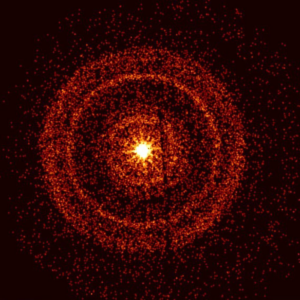
Swift’s X-Ray Telescope captured the afterglow of GRB 221009A about an hour after it was first detected. The bright rings form as a result of X-rays scattered from otherwise unobservable dust layers within our galaxy that lie in the direction of the burst./Credit: NASA/Swift/A. Beardmore (University of Leicester)
The signal, originating from the direction of the constellation Sagitta, had traveled an estimated 1.9 billion years to reach Earth. Astronomers think it represents the birth cry of a new black hole, one that formed in the heart of a massive star collapsing under its own weight. In these circumstances, a nascent black hole drives powerful jets of particles traveling near the speed of light. The jets pierce through the star, emitting X-rays and gamma rays as they stream into space.
The light from this ancient explosion brings with it new insights into stellar collapse, the birth of a black hole, the behavior and interaction of matter near the speed of light, the conditions in a distant galaxy – and much more. Another GRB this bright may not appear for decades.
According to a preliminary analysis, Fermi’s Large Area Telescope (LAT) detected the burst for more than 10 hours. One reason for the burst’s brightness and longevity is that, for a GRB, it lies relatively close to us.
NASA
“This burst is much closer than typical GRBs, which is exciting because it allows us to detect many details that otherwise would be too faint to see,” said Roberta Pillera, a Fermi LAT Collaboration member who led initial communications about the burst and a doctoral student at the Polytechnic University of Bari, Italy. “But it’s also among the most energetic and luminous bursts ever seen regardless of distance, making it doubly exciting.”
The burst also provided a long-awaited inaugural observing opportunity for a link between two experiments on the International Space Station – NASA’s NICER X-ray telescope and a Japanese detector called the Monitor of All-sky X-ray Image (MAXI). Activated in April, the connection is dubbed the Orbiting High-energy Monitor Alert Network (OHMAN). It allows NICER to rapidly turn to outbursts detected by MAXI, actions that previously required intervention by scientists on the ground.
“OHMAN provided an automated alert that enabled NICER to follow up within three hours, as soon as the source became visible to the telescope,” said Zaven Arzoumanian, the NICER science lead at Goddard. “Future opportunities could result in response times of a few minutes.”
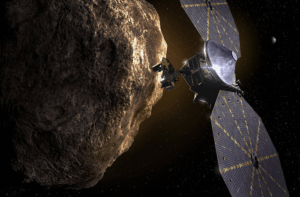
On Oct. 16, at 7:04 a.m. EDT, NASA’s Lucy spacecraft, the first mission to the Jupiter Trojan asteroids, will skim the Earth’s atmosphere, passing a mere 220 miles (350 kilometers) above the surface. By sling-shotting past Earth on the first anniversary of its launch, Lucy will gain some of the orbital energy it needs to travel to this never-before-visited population of asteroids.
The Trojan asteroids are trapped in orbits around the Sun at the same distance as Jupiter, either far ahead of or behind the giant planet. Lucy is currently one year into a twelve-year voyage. This gravity assist will place Lucy on a new trajectory for a two-year orbit, at which time it will return to Earth for a second gravity assist. This second assist will give Lucy the energy it needs to cross the main asteroid belt, where it will observe asteroid Donaldjohanson, and then travel into the leading Trojan asteroid swarm. There, Lucy will fly past six Trojan asteroids: Eurybates and its satellite Queta, Polymele and its yet unnamed satellite, Leucus, and Orus. Lucy will then return to Earth for a third gravity assist in 2030 to re-target the spacecraft for a rendezvous with the Patroclus-Menoetius binary asteroid pair in the trailing Trojan asteroid swarm.
This illustration shows the Lucy spacecraft passing one of the Trojan Asteroids near Jupiter./CREDIT:Southwest Research Institute
For this first gravity assist, Lucy will appear to approach Earth from the direction of the Sun. While this means that observers on Earth will not be able to see Lucy in the days before the event, Lucy will be able to take images of the nearly full Earth and Moon. Mission scientists will use these images to calibrate the instruments.
Lucy’s trajectory will bring the spacecraft very close to Earth, lower even than the International Space Station, which means that Lucy will pass through a region full of earth-orbiting satellites and debris. To ensure the safety of the spacecraft, NASA developed procedures to anticipate any potential hazard and, if needed, to execute a small maneuver to avoid a collision.
“The Lucy team has prepared two different maneuvers,” says Coralie Adam, Lucy deputy navigation team chief from KinetX Aerospace in Simi Valley, California. “If the team detects that Lucy is at risk of colliding with a satellite or piece of debris, then–12 hours before the closest approach to Earth –the spacecraft will execute one of these, altering the time of closest approach by either two or four seconds. This is a small correction, but it is enough to avoid a potentially catastrophic collision.”
NASA/Photo: Nasa.gov
Lucy will be passing the Earth at such a low altitude that the team had to include the effect of atmospheric drag when designing this flyby. Lucy’s large solar arrays increase this effect.
“In the original plan, Lucy was actually going to pass about 30 miles closer to the Earth,” says Rich Burns, Lucy project manager at NASA’s Goddard Space Flight Center in Greenbelt, Maryland. “However, when it became clear that we might have to execute this flyby with one of the solar arrays unlatched, we chose to use a bit of our fuel reserves so that the spacecraft passes the Earth at a slightly higher altitude, reducing the disturbance from the atmospheric drag on the spacecraft’s solar arrays.”
At around 6:55 a.m. EDT, Lucy will first be visible to observers on the ground in Western Australia (6:55 p.m. for those observers). Lucy will quickly pass overhead, clearly visible to the naked eye for a few minutes before disappearing at 7:02 a.m. EDT as the spacecraft passes into the Earth’s shadow. Lucy will continue over the Pacific Ocean in darkness and emerge from the Earth’s shadow at 7:26 a.m. EDT. If the clouds cooperate, sky watchers in the western United States should be able to get a view of Lucy with the aid of binoculars.
“The last time we saw the spacecraft, it was being enclosed in the payload fairing in Florida,” said Hal Levison, Lucy principal investigator at the Southwest Research Institute (SwRI) Boulder, Colorado office. “It is exciting that we will be able to stand here in Colorado and see the spacecraft again. And this time Lucy will be in the sky.”
Lucy will then rapidly recede from the Earth’s vicinity, passing by the Moon and taking a few more calibration images before continuing out into interplanetary space.
“I’m especially excited by the final few images that Lucy will take of the Moon,” said John Spencer, acting deputy project scientist at SwRI. “Counting craters to understand the collisional history of the Trojan asteroids is key to the science that Lucy will carry out, and this will be the first opportunity to calibrate Lucy’s ability to detect craters by comparing it to previous observations of the Moon by other space missions.”
The public is invited to join the #WaveToLucy social media campaign by posting images of themselves waving towards the spacecraft and tagging the @NASASolarSystem account. Additionally, if you are in an area where Lucy will be visible, take a photograph of Lucy and post it to social media with the #SpotTheSpacecraft hashtag.
Instructions for observing Lucy from your location are available here.
The Prime Minister, Narendra Modi has paid his tributes to Ex-President Dr APJ Abdul Kalam on his birth anniversary. The Prime Minister recalled the contributions of Dr Kalam as a scientist and as a President who struck a chord with every section of society.
The Prime Minister tweeted;
“Tributes to our former President Dr. APJ Abdul Kalam. He is greatly admired for his contribution to our nation as a scientist and as a President who struck a chord with every section of society.”
Tributes to our former President Dr. APJ Abdul Kalam. He is greatly admired for his contribution to our nation as a scientist and as a President who struck a chord with every section of society. pic.twitter.com/vPwICWxA3u
The Prime Minister, Narendra Modi flagged off the inaugural run of the new Vande Bharat Express from Amb Andaura, Una to New Delhi, today.
The Prime Minister inspected the train coaches of the Vande Bharat Express and took stock of the onboard facilities. Shri Modi also inspected the control centre of the locomotive engine of Vande Bharat Express. He also inspected Una railway station.
The Prime Minister was accompanied by Chief Minister of Himachal Pradesh, Jai Ram Thakur, Governor of Himachal Pradesh, Rajendra Vishwanath Arlekar, Union Minister of Railways, Ashvini Vaishnaw and Union Minister of Information & Broadcasting, Shri Anurag Singh Thakur when he arrived at Amb Andaura Railway Station in Una district of Himachal Pradesh.
The introduction of the train will help boost tourism in the region and provide a comfortable and faster mode of travel. The travel time from Una to New Delhi will be reduced by two hours. Running from Amb Andaura to New Delhi, it will be the fourth Vande Bharat train to be introduced in the country and is an advanced version compared to the earlier ones, being much lighter and capable of reaching higher speeds in a shorter duration. Vande Bharat 2.0 is equipped with more advancements and improved features such as reaching a speed of 0 to 100 kilometres per hour in just 52 seconds, and a maximum speed of up to 180 kilometres per hour. The improved Vande Bharat Express will weigh 392 tons when compared to the previous version of 430 tons. It will also have a Wi-Fi content on-demand facility. Every coach has 32” screens providing passenger information and infotainment compared to 24” in the previous version. Vande Bharat Express will also be environmentally friendly as the ACs will be 15 per cent more energy efficient. With dust-free clean air cooling of the traction motor, travel will become more comfortable. A side recliner seat facility provided only to Executive Class passengers earlier will now be made available for all classes. Executive Coaches have the added feature of 180-degree rotating seats
In the new design of Vande Bharat Express, a photo-catalytic ultraviolet air purification system is installed in the Roof-Mounted Package Unit (RMPU) for air purification. As recommended by Central Scientific Instruments Organisation (CSIO), Chandigarh, this system is designed and installed on both ends of RMPU to filter and clean the air free from germs, bacteria, viruses etc. coming through fresh air and return air.
The Vande Bharat Express 2.0 offers a myriad of superior and aircraft-like travelling experiences. It is equipped with advanced state-of-the-art safety features including an indigenously developed Train Collision Avoidance System – KAVACH.
On Monday, Russia pounded cities across Ukraine during rush hour, killing civilians and knocking out power and heat, in apparent revenge strikes after President Vladimir Putin declared a blast on Russia’s bridge to Crimea to be a terrorist attack.
Cruise missiles tore into busy intersections, parks and tourist sites in the center of downtown Kyiv with an intensity unseen even when Russian forces attempted to capture the capital early in the war, reported Reuters.
Belarusian President Alexander Lukashenko said he had ordered troops to deploy with Russian forces near Ukraine in response to what he said was a clear threat to Belarus from Kyiv and its backers in the West.
Ukr military source: “We were expecting it. Europeans should have been expecting it. It’s not February + out of blue. Where’s the reaction? Putin is looking for signal. Looking to see if someone will stand up + lead. Where is leadership? It’s as if people are waiting on Biden.”
At least 11 people were reported killed and scores injured, with warning of even more “severe retaliation” in the event of further Ukrainian attacks. “Let there be no doubt,” Putin said in televised comments addressed to his security council, “if attempts at terrorist attacks continue, the response from Russia will be severe.”
Many of the locations hit by cruise missiles and kamikaze drones in the midst of the morning rush hour appeared to be solely civilian sites or key infrastructure, including the country’s electric grid, apparently chosen to terrorise Ukrainians.
As the scale of Monday morning’s assault emerged, Moscow faced a chorus of international condemnation with EU foreign policy chief, Josep Borrell, saying such acts have “no place” in the 21st century”.
The UN’s secretary general, António Guterres, said he was “deeply shocked” by Russia’s most widespread air strikes since the start of the Ukraine war, a spokesperson said.
In a statement, the UN spokesperson Stéphane Dujarric said:”This constitutes another unacceptable escalation of the war and, as always, civilians are paying the highest price.”
Due to the war, some 7.6 million Ukrainian refugees have scattered around Europe since Russian President Vladimir Putin sent troops over the border, but many are having difficulty finding jobs and homes.
The European Commission unveiled a new online tool to help Ukrainians find a job as the bloc looks to extend its protection for those displaced.
Tech giant Apple might soon switch over to USB-C port in AirPods and Mac accessories by 2024, impacting many other gadget and smartphone makers to emulate or shun the new addition.
According to Bloomberg’s Mark Gurman, the company might introduce USB-C to its newest AirPods, AirPods Pro, and AirPods by the year 2024, while Mac accessories like the Magic Mouse, Magic Keyboard, and Magic Trackpad may convert to USB-C as soon as the next year.
“It’s a safe bet that those accessories will move to USB-C in their next incarnation”, Gurman said.
As the European Union moves to mandate USB-C charging on new smartphones, tablets, and headphones introduced in the territory in late 2024, there has been a rumoured shift away from Lightning ports.
Before EU legislation takes effect, Apple will replace its AirPods, the report said. Tony Fadell, inventor of the iPod, has said that Apple should include USB-C port in iPhones, as the European Union passed a resolution on USB Type-C as standard charging port.
The debate started when a Twitter user questioned if the iPod would succeed if Apple was forced to utilise USB 1.0 rather than the fast FireWire technology.
KBC 14: Jaya leaves hubby ‘Big B’ puzzled with her question
Megastar Amitabh Bachchan will be seen taking the hotseat along with his son and Bollywood actor Abhishek Bachchan, while veteran actress Jaya Bachchan is seen hosting the Big B’s birthday special episode of ‘Kaun Banega Crorepati 14’. Stay tuned to TV for the question on Tuesday.
Khushbu Sundar gets Golden Visa for UAE
Tamil and Telugu films yesteryears actress, and BJP leader Khushbu Sundar joins the ranks of many Indian film celebrities to get Golden Visa for United Arab Emirates. The UAE has granted her its prestigious Golden Visa.
And here comes my #GoldenVisa
Thank you to #UAEGovt for this. Sorry for picking it up so late. Humbled anyways. 🙏
And thank you #ECH for initiating and making this happen. 🙏🙏 pic.twitter.com/wVsqu63BZz
95th Oscars: India’s entry ‘Chhello Show’ to release in 95 cinemas at Rs 95
The makers of ‘Last Film Show’ (‘Chhello Show’), have chosen to celebrate the fact that the film is India’s official entry to the 95th Oscars by releasing the film in 95 cinemas on Thursday night, a day before its actual date of release, and fixing the price of tickets for the show at a nominal Rs 95 each. Will JJ Rajamouli’s RRR in private category makes it to 100?
‘Bigg Boss 16’: Salman Khan asks Ankit to shun silence
Host Salman Khan was seen taking to task ‘Bigg Boss 16’ contestants during the first ‘Weekend Ka Vaar’ episode and he advised everyone to show their real side and make the otherwise becoming a boring game interesting. While pointing towards ‘Udaariyan’ actor Ankit Gupta, he asked him to be visible in the game and be vocal. May be lots of jumping around is what’s required.
Trailer of Sivakarthikeyan-starrer ‘Prince’ released, hilarious for a change?
Telugu star Vijay Deverakonda has launched the hilarious theatrical trailer of Tamil star Sivakarthikeyan’s first Tamil-Telugu bilingual film, titled ‘Prince’. See it here and decide yourself:
Another book on Amitabh Bachchan maturing over years
Stars have an innate age like the quizzes on gaming sites. Jaya Bhaduri is ‘Guddi’ at heart, a teenager with enthusiasm and Nirupa Roy has never been young. Shammi is a young man in his early twenties while Raj Kapoor and others are in their late twenties. The book takes you along the ages of contemporary actors of Big B and how grew up over the decades.
Sayantani Ghosh on how her look in ‘Alibaba’
TV actress Sayantani Ghosh, who is currently seen in the show ‘Alibaba Dastaan-e-Kabul’, talks about her look in the show and says she is happy with the response she is getting for her highlighted blue hair, blue eyes and a long blue dress for her character of SimSim.
Why Ayushmann Khurrana carries cricket kit in his vanity?
Actor Ayushmann Khurrana has been a cricket enthusiast since he was a child. He carries a cricket kit in his vanity van so that whenever the opportunity arises, he can play. So desperate? Where would he find a bowler?
Ranveer makes NBA star Trae Young to dance to this tune
After making Shaquille O’Neal dance to the number ‘Khalibali’, ever-active Ranveer Singh went on to make another basketball star dance to his number in Abu Dhabi. And to whose tune does he dance at home?
Puneeth Rajkumar’s dream project ‘Gandhada Gudi to release on Oct 28
Late Kannada superstar Puneeth Rajkumar’s dream project ‘Gandhada Gudi’ is fast moving towards completion and the makers released the trailer on Sunday. The docu-drama is set to release on October 28.
That last scene, PUNEET RAJKUMAR soaking in water and his trademark smile, million dollars smile, made me emotional…in the teaser of PUNEET RAJKUMAR’s movie ‘GODHADA GUDI’. Probably the last movie of POWERSTAR. #GodhadaGudiTeaserhttps://t.co/pzPhUlkZTE
Veteran actress Neetu Kapoor has shared a set of pictures showcasing her son Ranbir Kapoor’s well chiseled body from the look test of his latest release ‘Brahmastra’. But it’s too late as the film is already off many theatres.
Researchers from Hokkaido University and Toppan have developed a method to detect build-up of amyloid β in the brain, a characteristic of Alzheimer’s disease, from biomarkers in blood samples.
Alzheimer’s disease is a neurodegenerative disease, characterised by a gradual loss of neurons and synapses in the brain. One of the primary causes of Alzheimer’s disease is the accumulation of amyloid β (Aβ) in the brain, where it forms plaques. Alzheimer’s disease is mostly seen in individuals over 65 years of age, and cannot currently be stopped or reversed. Thus, Alzheimer’s disease is a major concern for nations with ageing populations, such as Japan.
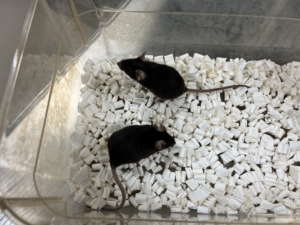
A team of scientists from Hokkaido University and Toppan, led by Specially Appointed Associate Professor Kohei Yuyama at the Faculty of Advanced Life Science, Hokkaido University, have developed a biosensing technology that can detect Aβ-binding exosomes in the blood of mice, which increase as Aβ accumulates in the brain. Their research was published in the journal Alzheimer’s Research & Therapy.
Alzheimer’s disease model mice (Photo: Kohei Yuyama)./CREDIT:Kohei Yuyama
When tested on mice models, the Aβ-binding exosome Digital ICATM (idICA) showed that the concentration of Aβ-binding exosomes increased with the increase in age of the mice. This is significant as the mice used were Alzheimer’s disease model mice, where Aβ builds up in the brain with age.
In addition to the lack of effective treatments of Alzheimer’s, there are few methods to diagnose Alzheimer’s. Alzheimer’s can only be definitively diagnosed by direct examination of the brain—which can only be done after death. Aβ accumulation in the brain can be measured by cerebrospinal fluid testing or by positron emission tomography; however, the former is an extremely invasive test that cannot be repeated, and the latter is quite expensive. Thus, there is a need for a diagnostic test that is economical, accurate and widely available.
Previous work by Yuyama’s group has shown that Aβ build-up in the brain is associated with Aβ-binding exosomes secreted from neurons, which degrade and transport Aβ to the microglial cells of the brain. Exosomes are membrane-enclosed sacs secreted by cells that possess cell markers on their surface. The team adapted Toppan’s proprietary Digital Invasive Cleavage Assay (Digital ICATM) to quantify the concentration of Aβ-binding exosomes in as little as 100 µL of blood. The device they developed traps molecules and particles in a sample one-by-one in a million micrometer-sized microscopic wells on a measurement chip and detects the presence or absence of fluorescent signals emitted by the cleaving of the Aβ-binding exosomes.
Clinical trials of the technology are currently underway in humans. This highly sensitive idICA technology is the first application of ICA that enables highly sensitive detection of exosomes that retain specific surface molecules from a small amount of blood without the need to learn special techniques; as it is applicable to exosome biomarkers in general, it can also be adapted for use in the diagnosis of other diseases.
The study of blastoids, a research model of an early embryo derived from stem cells rather than from a father’s sperm or a mother’s egg, offers great hope for researchers investigating why pregnancies are lost at an early stage, what causes birth defects, and other topics related to early human development. Their use potentially avoids the challenges of scarcity and potential ethical problems of using actual embryos for the same sort of research.
But a group of ethicists and a cellular biologist have warned that blastoids are not without their own set of ethical considerations. While mammalian blastoid research has advanced rapidly in recent years, often using mouse blastoids, there has been insufficient consideration of how to regulate the creation and research use of human blastoids—feasible only since 2021.
Blastoids, sometimes called embryoids, resemble the cells, structure (morphology) and genetics of the very earliest form an embryo takes. Such an early embryo is called a blastocyst. Blastoids mimic early embryonic development up to and potentially just beyond the blastocyst stage five to six days after the first cell division. A major step forward in recent years has been the ability to grow blastocyst-like structures from pluripotent stem cells (cells that are able to take on many different cell types or tissue forms).
“But whereupon implantation into the uterus, blastocysts ultimately develop into a fetus, blastoids do not, and so are considered a model of an embryo rather than an actual embryo,” said bioethicist and Associate Professor Tsutomu Sawai of the Graduate School of Humanities and Social Sciences at Hiroshima University, a co-author of the paper. “Or, more precisely, there is so far no evidence that they can develop into a fetus, which is the crux of the ethical conundrum.”
The scholars in their paper did not set out to make an argument for or against different regulatory or ethical attitudes toward human blastoid research, but instead wanted to explore what problems might arise around regulation of them to inform political, scientific and societal conversation about this research.
A team of bioethicists and a cellular biologist in Japan discuss the ethical challenges in human blastoid research./CREDIT:Kanon Tanaka (https://www.kanontanaka-illustration-webdesign-science.com/index.html)
What makes the issue ethically fraught is that just as people have different views as to the moral status of embryos, especially in the context of research, they are likely to have different views on the moral status of blastoids. Some feel that the key question is whether embryos or blastoids have properties such as sentience—the ability to feel pain or experience consciousness, while others feel that the key question is whether they have the potential to do so.
Some scientists have argued that blastoids and blastocysts are not functionally equivalent, and would therefore not require the same level of oversight and regulation as human embryos.
An opposing camp however has argued that blastoids will become functionally closer to blastocysts sooner or later if they are morphologically and genetically similar to normal blastocysts. As a result, this camp feels that blastoids and blastocysts should be treated the same by regulators as they may become functionally equivalent in the future.
There have been no reports yet of mouse blastoids developing to the fetal stage, and so it is believed that mouse blastoids do not possess the ability to do so. In turn, it is assumed that human blastoids are similarly incapable.
However, while mice are useful models, they are not the same as humans. Yet it would not be socially and legally permissible to implant a blastoid into the uterus of a woman to find out whether human blastoids can develop further than mouse ones do.
In addition, it may be the case that the failure of a mouse blastoid to develop into a fetus is the result of the ‘culture technique’, or method of growing the blastoid in a lab, which necessarily will be different from the environment of a uterus. Theoretically then, whether mouse or human, blastoids might indeed be able to develop further if culture techniques became available that perfectly mimic in utero development.
“The feasibility of lab techniques perfectly mimicking in utero however remains speculative, and policy-makers, researchers and wider society need to assess what to do right now, not wait until such technological advances occur,” added Professor Sawai.
Taking these arguments into account, there are two options for regulating blastoid research. One is to differentiate between blastoids and blastocysts since there is currently no convincing evidence to demonstrate that blastoids and blastocysts are functionally equivalent or are likely to become functionally equivalent in the near future. The other possibility is to regulate them in the same way, regardless of whether they are functionally equivalent or not by emphasizing the genetic and structural similarities between the two.
For example, Japan, the UK and US have taken a regulatory approach that embraces the first option, while Australia has chosen a path that embraces the latter option.
The scholars also note that such research regulation can be affected by whether human blastoids are derived from stem cells that come from embryos (ESC) or from what are called induced pluripotent stem cells (iPSC). This latter type comes from skin or blood cells that have been reprogrammed back into a pluripotent state akin to that of embryo stem cells. The ethical issues related to iPSC research are usually considered less severe than those for ESC research, as the latter involves the destruction of embryos.
But if regulators opt for a preference for iPSC-derived blastoids over ESC blastoids, thinking that they have avoided an ethical minefield, they may find that they are in one nevertheless.
This is because iPSCs have the same genetic information as the donor, and so it may be reasonable to consider iPSC-derived blastoids as falling within the regulatory framework of cloned embryos. In the public consciousness, human cloning for research purposes has proven to be just as if not more ethically fraught than creating human embryos for research purposes.
The very recent advent of the capacity to make human blastoids has meant that the debate over human blastoids has so far yet to leap much beyond the lab bench or regulatory office and pierce the public’s consciousness in the way that the moral status of human embryos in scientific research has. But this situation is unlikely to remain the case for long, and the scholars feel this is a good thing.
“The rules for early developmental research, whether on blastoids or embryos, should not be decided by scientists or bioethicists alone,” concluded Professor Sawai. “Instead, a wider societal discussion must take the lead.”