Arun has been associated with India International Times since 2018 and he has been a key reporter in covering science and space related stories. He can be reached at arunKnn@indiainternationaltimes.com.
New York City ushered in 2023 with a dazzling Saturday night spectacle in iconic Times Square, kicking off New Year’s celebrations across the United States.
The night culminated with a countdown as a glowing geodesic sphere or the iconic Ball Drop weighing almost six tons descended from its lofty perch atop One Times Square.
Its surface is comprised of nearly 2,700 Waterford crystals that were illuminated, officials said, by a palette of more than 16 million colors.
At the stroke of midnight, a ton of confetti rained down on revelers, glittering amid the jumbo screens, neon and pulsing lights.
New Year’s Eve Ball Design
The Ball is a geodesic sphere, 12 feet in diameter, and weighs 11,875 pounds.
The Ball is covered with a total of 2,688 Waterford Crystal triangles that vary in size,
and range in length from 4 ¾ inches to 5 ¾ inches per side.
For Times Square 2023, 192 Waterford Crystal triangles introduce the new Gift of
Love design represented by a circle of overlapping hearts entwined together.
192 are the Gift of Wisdom design of a central wheel with wedge cut petals of
knowledge growing ever forward.
192 are the Gift of Happiness design of a sunburst of bright cuts radiating outward like a beautiul sunny day brings warm smiles and happiness. 192 are the Gift of Goodwill design of three pineapples signifying the traditional symbol of hospitality and goodwill. 192 are the Gift of Harmony design of small rosette cuts flowing into each other in beautiful
harmony.
192 are the Gift of Serenity design of butterflies flying peacefully above a crystal meadow capturing the spirit of serenity. 192 are the Gift of Kindness design of a circle of rosettes symbolizing unity with the fronds reaching out in an expression of kindness.
192 are the Gift Of Wonder design of a faceted starburst inspiring our sense of wonder. 192 are the Gift of Fortitude design of diamond cuts on either side of a crystal pillar to represent the inner attributes of resolve, courage and spirit necessary to triumph over adversity.
The remaining 960 Gift of Imagination triangles are a series of intricate wedge cuts that are mirrored reflections of each other inspiring our imagination.
The 2,688 Waterford Crystal triangles are bolted to 672 LED modules which are
attached to the aluminum frame of the Ball.
The Ball is illuminated by 32,256 LEDs (light emitting diodes). Each LED module
contains 48 LEDs – 12 red, 12 blue, 12 green, and 12 white for a total of 8,064 of
each color.
The Ball is capable of displaying a palette of more than 16 million vibrant colors
and billions of patterns that creates a spectacular kaleidoscope effect atop One
Times Square.
Samsung Electronics said its new ‘Bespoke Refrigerator Family Hub Plus’, equipped with a large touch screen, will be unveiled at CES 2023 to be held in Las Vegas from January 5.
At 32 inches, it features a much larger display than the 21.5-inch screen found on previous generations of Samsung Family Hub refrigerators.
The new Family Hub has been enhanced to allow users to enjoy the “Samsung TV Plus” service, which allows users to watch approximately 190 US TV channels and approximately 80 Korean TV channels for free in “PIP (Picture in Picture) mode”, according to the company.
“Samsung Electronics newly introduced Bespoke Refrigerator Family Hub provides a vastly expanded experience as much as the larger screen. We will lead the innovation and evolution of refrigerators by reflecting style trends,” Junhwa Lee, vice president of Samsung Electronics home appliance division, said in a statement.
CES 2023: Samsung to showcase its new fridge with larger screen
The integrated SmartThings hub controls and monitors multiple SmartThings devices and supports six SmartThings Home Life services — Air Care, Home Care, Pet Care, Clothing Care, Energy, and Cooking, said the company.
The Amazon Your Essentials service is also supported by the new refrigerator, allowing users to order frequently purchased products and groceries via a widget on its touchscreen display.
Since the SmartThings hub is built-in, users can use the refrigerator as a home IoT hub by controlling lights, blinds, switches, motion detection sensors, and door open sensors from various companies with the Family Hub, the company added.
Michael James Pratt, one of the FBI’s ten most wanted fugitives was arrested last week by Spanish authorities, said the agency. Pratt has been a fugitive since 2019 and was named to the FBI’s Ten Most Wanted Fugitives List earlier this year.
Pratt is charged in a 19-count indictment with sex trafficking, production of child pornography, sex trafficking of a minor, and conspiracy to launder monetary instruments in connection with the operation of the GirlsDoPorn adult website.
Pratt was arrested by Spanish National Police on December 21, 2022, in Madrid, Spain, pursuant to an Interpol Red Notice. A Red Notice is a request to law enforcement worldwide to locate and provisionally arrest a person pending extradition, surrender, or similar legal action. Pratt is being held in Spain pending extradition.
“The capture of Michael Pratt is an example of how the FBI will pursue justice beyond U.S. borders—you can run but you can’t hide,” said Special Agent in Charge (SAC) Stacey Moy of the FBI San Diego Field Office. “Thank you to our determined FBI San Diego Human Trafficking Task Force and to our federal and international partners for their commitment to making sure that Michael Pratt is brought to justice.”
SAC Moy would like to thank the Spanish National Police, the U.S. Marshals Service, the U.S. Department of Homeland Security, and the U.S. Immigration and Customs Enforcement for their coordination in the arrest of Michael Pratt, and the public for their assistance in this investigation.
Pratt was the 529th person to be placed on the FBI’s Ten Most Wanted Fugitives list, which was established in 1950. Additional information concerning Pratt and the FBI’s Ten Most Wanted Fugitives can be found by visiting the FBI’s website at fbi.gov/topten.
The public is reminded that a complaint is not evidence of guilt and all defendants in a criminal case are presumed innocent until proven guilty in a court of law.
Any additional victims of the alleged crime are encouraged to call the FBI National Threat Operations Center at 1-800-CALL-FBI (1-800-225-5324).
Indian-American Rajeev Badyal has been chosen to be one the 30 members selected by US Vice President Kamala Harris to serve on the National Space Council’s Users Advisory Group (UAG) to provide advice on space-related projects and issues.
Rajeev Badyal presently leads Amazon’s Project Kuiper — an initiative to launch a constellation of Low Earth Orbit satellites to provide low-latency, high-speed broadband connectivity to unserved and underserved communities around the world.
As a selected member of the UAG, Badyal will serve to enable the Biden-Harris Administration’s effort to maintain a robust and responsible US space enterprise and preserve space for current and future generations, according to a White House statement.
The UAG will provide the National Space Council advice and recommendations on matters related to space policy and strategy, including but not limited to, government policies, laws, regulations, treaties, international instruments, programmes, and practices across the civil, commercial, international, and national security space sectors, the statement further read.
The candidates selected by Kamala Harris, who is Chair of the National Space Council, represent a cross-section of companies and organisations that support the large and highly skilled space workforce; users of space services, including climate scientists and agriculture providers; individuals focused on developing the next generation of space professionals; and leading experts in space.
The members are currently awaiting their official appointment by Bill Nelson, Administrator of the National Aeronautics and Space Administration (NASA).
The board will be chaired by retired US Air Force general Lester Lyles, Harris had announced at a space council meeting in September. Lyles also serves as chair of the NASA Advisory Council.
Before joining Amazon, Badyal was the vice president of Satellites at SpaceX. He is armed with a Masters in Electrical and Computer Engineering from Oregon State University.
The Congress on Thursday expressed its objections to the Election Commission proposal inviting political parties to observe the functioning of a prototype Multi-Constituency Remote Electronic Voting Machine on January 16, 2023 and to make written submissions by January 31, 2023.
The Election Commission of India earlier today said that it is ready to pilot remote voting for domestic migrants, and the migrant voters need not travel to their home states to vote and added that it has developed a prototype Multi-Constituency Remote Electronic Voting Machine inviting political parties for demonstration of the prototype RVM, which can handle multiple constituencies from a single remote polling booth.
“The migration based disenfranchisement is indeed not an option in the age of technological advancement. The voter turnout in General Elections 2019 was 67.4 per cent and the Election Commission of India is concerned about the issue of over 30 crore electors not exercising their franchise and also differential voter turnout in various states/UTs,” the commission said.
The ECI said that there are multifarious reasons for a voter not opting to vote in a new place.
“Inability to vote due to internal migration (domestic migrants) is one of the prominent reasons to be addressed to improve voter turnout and ensure participative elections. Although there is no central database available for migration within the country, the analysis of available data in public domain points to work, marriage and education related migration as important components of domestic migration,” it said.
The ECI team has deliberated at length to find inclusive solutions to facilitate electoral participation of migrants across all socio-economic strata and explored alternative voting methods like two-way physical transit postal ballots, proxy voting, early voting at special Early Voting Centres, one-way or two-way electronic transmission of postal ballots (ETPBS), Internet-based voting system.
Congress cites German court verdict
In its reaction to the remote voting system, Congress said, “Trust in the electoral system is paramount for democracy to function. The German Federal Constitutional Court struck down Electronic Voting Machines (EVMs) in Germany in 2009 because the opacity of the machine cannot give a voter the confidence that his or her vote is being correctly recorded.
“In spite of their widespread use, EVMs have aroused much controversy in India. Unfortunately, fears of their misuse have not been systematically addressed. Voters and parties must have confidence in the electoral system. However, this trust has been repeatedly violated in recent years on account of pressure being put on the Election Commission of India by the (Narendra) Modi government,” Congress General Secretary, in charge of communication, Jairam Ramesh said.
He said the most recent examples was the Election Commission delaying the announcement of the election schedule in Gujarat to give PM Modi more time for electioneering in his home state. “It also gave him yet another free pass to violate the model code of conduct by allowing a road show on voting day in Gujarat, ” he said.
Suspicious voting in last hour
“On issue after issue, our representations to the Election Commission result in no action. In Gujarat this time we also saw suspicious voting numbers which showed that 10-12 per cent of voters cast their votes in the last hour of voting. This translates into an impossible 25-30 seconds being taken to cast each vote. You need a minimum of 60 seconds to cast a vote.
“Now imagine if these suspicious patterns can be extended via a multi-constituency voting machine to other locations. This would seriously undermine trust in the system,” he added.
Ramesh said the Congress has made constructive suggestions in the past to increase confidence in the voting process by expanding the number of booths in which Voter Verifiable Paper Audit Trail (VVPAT) slips are counted. However this has also not been accepted.
1952 – Republic Day Cultural Parade In Connaught Place , Delhi ((Photo Division, PIB )
The Delhi Police on Thursday announced deployment of more than 18,000 personnel across the national capital ahead of New Year’s celebrations on Saturday night with usual traffic restrictions at Connaught Place from 8 p.m. onwards, besides testing drunk drivers.
The traffic will be restricted to enter Connaught Place and only authorised vehicles will be allowed there. Mobile teams will also be placed for checking in the city. Special arrangements have been made for the areas in the vicinity of Connaught Place and no vehicular traffic shall be allowed in its inner, middle, or outer circles, except for those carrying valid passes.
“The commuters coming towards Connaught Place can park their vehicles near Gole Dak Khana, Patel Chowk, Mandi House, Minto Road on D.D. Upadhyay Marg and Press Road area, Panchkuian Road, K.G. Marg-Ferozshah Road Crossing on Copernicus Lane as well as KG Marg towards C hexagon, round about Bengali Market,” the advisory said.
Otherwise, elaborate traffic arrangements have been made at and around India Gate for regulation of traffic, both pedestrian and vehicular. In case of heavy pedestrian movement, vehicles may not be allowed to go through C-Hexagon, India Gate area and diverted.
“Visitors are advised to use public transport as there is a shortage of parking space at India Gate. In view of large gatherings expected at Delhi Zoo resulting in congestion on Mathura Road, the general public/motorists are advised to avoid Bhairon Road, Mathura Road between Hazrat Nizamuddin and Pragati Maidan,” the advisory read.
Traffic cops said that strict action will be taken against drunk driving, stunt biking, over-speeding, sig-zag, reckless, and dangerous driving. Special Commissioner of Police, Law and Order, Dependra Pathak said that over 16,500 personnel from local police will be deployed across the city and more than 20 companies from outside forces.
“This time, there will be anti-terror measures in high footfall areas where local police, in real-time coordination with the Special Cell, have made the arrangements. Women safety will also be our focus area and more than 2,500 women personnel will be deployed in the city,” he said.
Pathak said that more than 1,600 pickets, over 1,200 mobile patrolling vehicles and 2,074 bikes will be deployed, mostly to keep vigil at footfall and celebrations areas in two shifts from 4 to 5 p.m. till early morning and both the shifts will overlap each other.
People may assemble for the celebration at Pitampura, Model Town, Hudson Lane, Mukherjee Nagar, Karol Bagh, Cross River Mall in Shahdara, Connaught Place, New Friends Colony, Lajpat Nagar Central Market, M&N Block Market of Greater Kailash, Defence Colony Club, INA Market, South Extension Market, Lodhi Institutional Area, Hauz Khas Village, Qutub Minar, Chattarpur, Vegas Mall in Dwarka, Janakpuri District Centre, Punjabi Bagh, and Tilak Nagar Market.
A special tea named ‘Manohari tea’ in Assam’s Dibrugarh district has been sold for Rs 1.15 lakh per kg at a private auction, compared to Rs.99,999 last year.
The proprietor of the tea estate, Rajan Lohia said that ‘Manohari Gold Tea’ fetched the price at an auction on the private portal ‘Tea Intech’ on Friday.
Due to a cap on the maximum selling price of tea being fixed at Rs one lakh per kg by the Tea Board India at Guwahati Tea Auction Centre (GTAC), he said they had to sell this year’s batch of tea at a private auction.
“It is the highest price fetched for tea at such auctions anywhere,” he said. Lohia informed that RK tea sales bought this one kg of special tea at this price.
Manohari Gold tea involves the cutting and rolling being done manually without any machines. The tea is made from a special clone, by plucking just the bud early morning – between 5 and 7.30 a.m. Monsoon time during June and July, according to Lohia.
Grown at the Manohari Tea Estate in the district of Dibrugarh, Assam, a unit of Suntok Tea Co. LLP, the tea variety is among the premium Assam teas and its taste is also different.
The Manohari tea, particularly its gold variety, had been fetching high prices at the GTAC over the years. It has set many records for the highest selling prices. In December 2021, Manohari Gold was sold for Rs 99,999 per kg through GTAC.
The London Underground is polluted with ultrafine metallic particles small enough to end up in the human bloodstream, according to University of Cambridge researchers. These particles are so small that they are likely being underestimated in surveys of pollution in the world’s oldest metro system.
The researchers carried out a new type of pollution analysis, using magnetism to study dust samples from Underground ticket halls, platforms and operator cabins.
The team found that the samples contained high levels of a type of iron oxide called maghemite. Since it takes time for iron to oxidise into maghemite, the results suggest that pollution particles are suspended for long periods, due to poor ventilation throughout the Underground, particularly on station platforms.
Some of the particles are as small as five nanometres in diameter: small enough to be inhaled and end up in the bloodstream, but too small to be captured by typical methods of pollution monitoring. However, it is not clear whether these particles pose a health risk.
Other studies have looked at overall pollution levels on the Underground and the associated health risks, but this is the first time that the size and type of particles has been analysed in detail. The researchers suggest that periodic removal of dust from Underground tunnels, as well as magnetic monitoring of pollution levels, could improve air quality throughout the network. Their results are reported in the journal Scientific Reports.
The London Underground carries five million passengers per day. Multiple studies have shown that air pollution levels on the Underground are higher than those in London more broadly, and beyond the World Health Organization’s (WHO) defined limits. Earlier studies have also suggested that most of the particulate matter on the Underground is generated as the wheels, tracks and brakes grind against one another, throwing up tiny, iron-rich particles.
“Since most of these air pollution particles are metallic, the Underground is an ideal place to test whether magnetism can be an effective way to monitor pollution,” said Professor Richard Harrison from Cambridge’s Department of Earth Sciences, the paper’s senior author. “Normally, we study magnetism as it relates to planets, but we decided to explore how those techniques could be applied to different areas, including air pollution.”
Pollution levels are normally monitored using standard air filters, but these cannot capture ultrafine particles, and they do not detect what kinds of particles are contained within the particulate matter.
“I started studying environmental magnetism as part of my PhD, looking at whether low-cost monitoring techniques could be used to characterise pollution levels and sources,” said lead author Hassan Sheikh from Cambridge’s Department of Earth Sciences. “The Underground is a well-defined micro-environment, so it’s an ideal place to do this type of study.”
Working with colleagues from Cambridge’s Department of Materials Science and Metallurgy, Sheikh and Harrison analysed 39 dust samples from the London Underground, provided by Transport for London (TfL). The samples were collected in 2019 and 2021 from platforms, ticket halls, and train operator cabins on the Piccadilly, Northern, Central, Bakerloo, Victoria, Northern, District and Jubilee lines. The sampling included major stations such as King’s Cross St Pancras, Paddington, and Oxford Circus.
The researchers used magnetic fingerprinting, 3D imaging and nanoscale microscopy to characterise the structure, size, shape, composition and magnetic properties of particles contained in the samples. Earlier studies have shown that 50% of the pollution particles in the Underground are iron-rich, but the Cambridge team were able to look in much closer detail. They found a high abundance of maghemite particles, ranging in diameter from five to 500 nanometres, and with an average diameter of 10 nanometres. Some particles formed larger clusters with diameters between 100 and 2,000 nanometres.
“The abundance of these very fine particles was surprising,” said Sheikh. “The magnetic properties of iron oxides fundamentally change as the particle size changes. In addition, the size range where those changes happen is the same as where air pollution becomes a health risk.”
While the researchers did not look at whether these maghemite particles pose a direct health risk, they say that their characterisation methods could be useful in future studies.
“If you’re going to answer the question of whether these particles are bad for your health, you first need to know what the particles are made of and what their properties are,” said Sheikh.
“Our techniques give a much more refined picture of pollution in the Underground,” said Harrison. “We can measure particles that are small enough to be inhaled and enter the bloodstream. Typical pollution monitoring doesn’t give you a good picture of the very small stuff.”
The researchers say that due to poor ventilation in the Underground, iron-rich dust can be resuspended in the air when trains arrive at platforms, making the air quality on platforms worse than in ticket halls or in operator cabins.
Given the magnetic nature of the resuspended dust, the researchers suggest that an efficient removal system might be magnetic filters in ventilation, cleaning of the tracks and tunnel walls, or placing screen doors between platforms and trains.
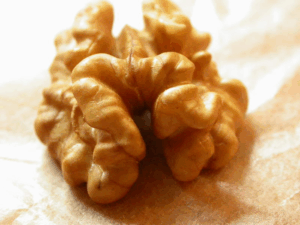
Stressed university students might want to add walnuts to their daily diet in the weeks leading up to their next exam.
A new clinical trial of undergraduate students during their university studies has shown positive effects of walnut consumption on self-reported measures of mental health and biomarkers of general health.
The University of South Australia study, published in the journal Nutrients, also suggests that walnuts may counteract the effects of academic stress on the gut microbiota during periods of stress, especially in females.
Lead researchers, PhD student Mauritz Herselman and Associate Professor Larisa Bobrovskaya, say the results add to the growing body of evidence linking walnuts with improved brain and gut health.
Walnuts may counteract the effects of academic stress on the gut microbiota during periods of stress, especially in women./CREDIT:Open Verse
“Students experience academic stress throughout their studies, which has a negative effect on their mental health, and they are particularly vulnerable during exam periods,” Herselman says.
Eighty undergraduate students split into treatment and control groups were clinically assessed in three intervals, at the beginning of a 13-week university semester, during the examination period and two weeks after the examination period. Those in the treatment group were given walnuts to consume daily for 16 weeks over these three intervals.
“We found that those who consumed about half a cup of walnuts every day showed improvements in self-reported mental health indicators. Walnut consumers also showed improved metabolic biomarkers and overall sleep quality in the longer term.”
Students in the control group reported increased stress and depression levels in the leadup to exams but those in the treatment group did not. The walnut consumers also reported a significant drop in feelings associated with depression between the first and final visits, compared to the controls.
Previous research has shown that walnuts are full of omega-3 fatty acids, antioxidants, as well as melatonin (sleep inducing hormone), polyphenols, folate and vitamin E, all of which promote a healthy brain and gut.
“The World Health Organization has recently stated that at least 75 per cent of mental health disorders affect people under the age of 24 years, making undergraduate students particularly vulnerable to mental health problems,” Herselman says.
Assoc Prof Larisa Bobrovskaya says mental health disorders are common in university students and can adversely affect students’ academic performance and long-term physical health.
“We have shown that consuming walnuts during stressful periods can improve mental health and general wellbeing in university students, as well as being a healthy and delicious snack and a versatile ingredient in many recipes, to fight some negative effects of academic stress,” Assoc Prof Bobrovskaya says.
“Due to fewer numbers of males in the study, more research is needed to establish sex-dependent effects of walnuts and academic stress in university students. It’s also possible that a placebo effect might have come into play as this was not a blind study.”
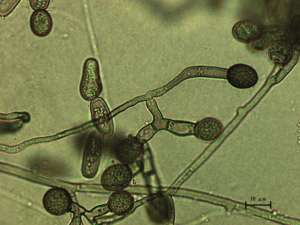
In many countries, the number of fig trees have been declining. While there are numerous explanations, one key problem is fig-wilting disease. A recognized cause of this disease is a fungus, Ceratocystis ficicola, which is transmitted by an ambrosia beetle, Euwallacea interjectus. Now, a group from Nagoya University in central Japan has identified another fungus, Fusarium kuroshium, which is harmless by itself, but ravages fig trees when found together with C. ficicola.
Along with known agents, such as C. ficicola, many other fungi are believed to be important in fig-wilting disease. These include F. kuroshium, a well-known infective agent of fig and avocado trees. As these fungi are frequently found on the heads, including a special organ for storing fungi, of wild and reared E. interjectus adult females, it has long been suspected that they are responsible for the spread of disease.
Ceratocystis ficicola/CREDIT:Zi-Ru Jiang and Hisashi Kajimura
To determine whether the fungi are related to the damage of the fig trees, Dr. Zi-Ru Jiang and Associate Professor Hisashi Kajimura of the Graduate School of Bioagricultural Sciences, Nagoya University, in partnership with the Hiroshima Prefectural Institute of Technology, Kobe University, and the Forestry and Forest Products Research Institute, inoculated fig saplings with various combinations of fungi collected from E. interjectus. As a control, they also included Neocosmospora metavorans, which is found in a wide range of plant hosts, including avocado and Robusta coffee. Some saplings received only one of the three fungi, and one group received a combination of F. kuroshium and C. ficicola.
As expected, the saplings infected with C. ficicola wilted, whereas the other two groups infected with only N. metavorans or only F. kuroshium did not, suggestingthat these two fungi are not harmful to fig trees. However, in the combination group, the saplings wilted less than two weeks after infection and had a larger area of dead wood. It seems that F. kuroshium and C. ficicola worked together in a symbiotic way that accelerated wilting in the saplings.
“A combination of the ambrosia beetle and its fungi may lead to symptoms of fig-wilting disease in the case of mass beetle attacks and decreased resistance in host trees. Therefore, understanding the relationship between C. ficicola and its symbionts may be useful in developing suitable disease control strategies,” explains Kajimura. “This study suggests that symbiotic fungi do not kill fig trees by themselves, but that synergistic effects are driven by their coexistence with companion fungi, and that they have a more detrimental effect on fig trees than the companion fungi alone. This fact leads to additional targets for control and provides important clues to improve integrated pest management methods in the future.”
A nonprofit group, Carbon Mapper, will use data from NASA’s EMIT mission, plus current airborne and future satellite instruments, to survey waste sites for methane emissions.
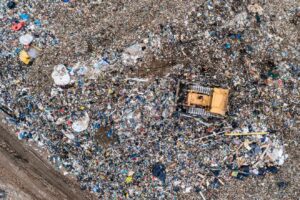
Observations from the Earth Surface Mineral Dust Source Investigation (EMIT) and other NASA science instruments will be part of a global survey of point-source emissions of methane from solid waste sites such as landfills. The multiyear effort is being developed and conducted by the nonprofit Carbon Mapper organization.
Methane is a potent greenhouse gas, the source of roughly a quarter to a third of global warming caused by humans. The aim of the new initiative is to establish a baseline assessment of global waste sites that emit methane at high rates. This information can support decision-makers as they work to reduce the concentration of the gas in the atmosphere and limit climate change.
NASA Sensors to Help Detect Methane Emitted by Landfills
Methane produced by the waste sector contributes an estimated 20% of human-caused methane emissions. Ton for ton, methane is more than 80 times more potent than carbon dioxide in trapping heat in the atmosphere. But where carbon dioxide remains in the air for centuries, methane has an atmospheric lifetime of only about a decade or two. That means some immediate slowing of atmospheric warming could be achieved if methane emissions were significantly reduced.
“Currently, there is limited actionable information about methane emissions from the global waste sector. A comprehensive understanding of high-emission point sources from waste sites is a critical step to mitigating them,” said Carbon Mapper CEO Riley Duren. “New technological capabilities that are making these emissions visible – and therefore actionable – have the potential to change the game, elevating our collective understanding of near-term opportunities in this often overlooked sector.”
NASA/Photo: Nasa.gov
Carbon Mapper received a grant from the Grantham Foundation for the Protection of the Environment to support its operations related to the waste-site initiative, including potential funding to cover airborne methane surveys using NASA airborne assets. The project will entail conducting an initial remote-sensing survey in 2023 of more than 1,000 managed landfills across the United States and Canada, and in key locations in Latin America, Africa, and Asia.
To collect data from these regions, researchers will use aircraft-based sensors, including the Airborne Visible/Infrared Imaging Spectrometer-Next Generation (AVIRIS-NG), which was developed at NASA’s Jet Propulsion Laboratory in Southern California. In addition, they will use Arizona State University’s Global Airborne Observatory from the Center of Global Discovery and Conservation Science, which uses another JPL-built imaging spectrometer.
The mission’s first two samples of regolith – broken rock and dust – could help scientists better understand the Red Planet and engineers prepare for future missions there.
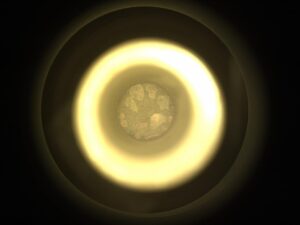
NASA’s Perseverance rover snagged two new samples from the Martian surface on Dec. 2 and 6. But unlike the 15 rock cores collected to date, these newest samples came from a pile of wind-blown sand and dust similar to but smaller than a dune. Now contained in special metal collection tubes, one of these two samples will be considered for deposit on the Martian surface sometime this month as part of the Mars Sample Return campaign.
Scientists want to study Martian samples with powerful lab equipment on Earth to search for signs of ancient microbial life and to better understand the processes that have shaped the surface of Mars. Most of the samples will be rock; however, researchers also want to examine regolith – broken rock and dust – not only because of what it can teach us about geological processes and the environment on Mars, but also to mitigate some of the challenges astronauts will face on the Red Planet. Regolith can affect everything from spacesuits to solar panels, so it’s just as interesting to engineers as it is to scientists.
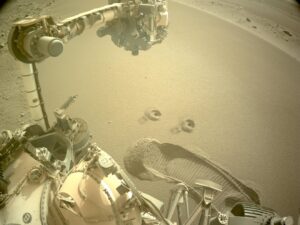
Two holes are left in the Martian surface after NASA’s Perseverance rover used a specialized drill bit to collect the mission’s first samples of regolith on Dec. 2 and 6, 2022. Credit: NASA/JPL-Caltech
As with rock cores, these latest samples were collected using a drill on the end of the rover’s robotic arm. But for the regolith samples, Perseverance used a drill bit that looks like a spike with small holes on one end to gather loose material.
Engineers designed the special drill bit after extensive testing with simulated regolith developed by JPL. Called Mojave Mars Simulant, it’s made of volcanic rock crushed into a variety of particle sizes, from fine dust to coarse pebbles, based on images of regolith and data collected by previous Mars missions.
NASA’s Perseverance Mars rover took this image of regolith – broken rock and dust – on Dec. 2, 2022. This regolith will be considered for deposit on the Martian surface as part of the Mars Sample Return campaign. Credit: NASA/JPL-Caltech
“Everything we learn about the size, shape, and chemistry of regolith grains helps us design and test better tools for future missions,” said Iona Tirona of NASA’s Jet Propulsion Laboratory in Southern California, which leads the Perseverance mission. Tirona was the activity lead for operations to collect the recent regolith sample. “The more data we have, the more realistic our simulants can be.”
The Challenge of Dust
Studying regolith up close could help engineers design future Mars missions – as well as the equipment used by future Martian astronauts. Dust and regolith can damage spacecraft and science instruments alike. Regolith can jam sensitive parts and slow down rovers on the surface. The grains could also pose unique challenges to astronauts: Lunar regolith was discovered to be sharp enough to tear microscopic holes in spacesuits during the Apollo missions to the Moon.
Regolith could be helpful if packed against a habitat to shield astronauts from radiation, but it also contains risks: The Martian surface contains perchlorate, a toxic chemical that could threaten the health of astronauts if large amounts were accidentally inhaled or ingested.
“If we have a more permanent presence on Mars, we need to know how the dust and regolith will interact with our spacecraft and habitats,” said Perseverance team member Erin Gibbons, a McGill University doctoral candidate who uses Mars regolith simulants as part of her work with the rover’s rock-vaporizing laser, called SuperCam.
“Some of those dust grains could be as fine as cigarette smoke, and could get into an astronaut’s breathing apparatus,” added Gibbons, who was previously part of a NASA program studying human-robot exploration of Mars. “We want a fuller picture of which materials would be harmful to our explorers, whether they’re human or robotic.”
Besides answering questions about health and safety hazards, a tube of Martian regolith could inspire scientific wonder. Looking at it under a microscope would reveal a kaleidoscope of grains in different shapes and colors. Each one would be like a jigsaw puzzle piece, all of them joined together by wind and water over billions of years.
“There are so many different materials mixed into Martian regolith,” said Libby Hausrath of University of Nevada, Las Vegas, one of Perseverance’s sample return scientists. “Each sample represents an integrated history of the planet’s surface.”
As an expert on Earth’s soils, Hausrath is most interested in finding signs of interaction between water and rock. On Earth, life is found practically everywhere there’s water. The same could have been true for Mars billions of years ago, when the planet’s climate was much more like Earth’s.
Here are today’s viral videos and the one-year-old video of faceoff between Indian and Chinese troops along the Tawang border is trending. See them here:
Womans’ propensity to deposit more fat in places like their hips, buttocks and the backs of their arms, so-called subcutaneous fat, is protective against brain inflammation, which can result in problems like dementia and stroke, at least until menopause, scientists report.
Males of essentially any age have a greater propensity to deposit fat around the major organs in their abdominal cavity, called visceral adiposity, which is known to be far more inflammatory. And, before females reach menopause, males are considered at much higher risk for inflammation-related problems from heart attack to stroke.
“When people think about protection in women, their first thought is estrogen,” says Alexis M. Stranahan, PhD, neuroscientist in the Department of Neuroscience and Regenerative Medicine at the Medical College of Georgia at Augusta University. “But we need to get beyond the kind of simplistic idea that every sex difference involves hormone differences and hormone exposure. We need to really think more deeply about the underlying mechanisms for sex differences so that we can treat them and acknowledge the role that sex plays in different clinical outcomes.”
Diet and genetics are other likely factors that explain the differences broadly assigned to estrogen, says Stranahan, corresponding author of a study in the American Diabetes Association journal Diabetes.
She acknowledges that the findings are potentially heretical and revolutionary and certainly surprising even to her. “We did these experiments to try and nail down, first of all, what happens first, the hormone perturbation, the inflammation or the brain changes.”
Brain Image (NIH)
To learn more about how the brain becomes inflamed, they looked at increases in the amount and location of fat tissue as well as levels of sex hormones and brain inflammation in male and female mice at different time intervals as they grew fatter on a high-fat diet.
Since, much like with people, obese female mice tend to have more subcutaneous fat and less visceral fat than male mice, they reasoned that the distinctive fat patterns might be a key reason for the protection from inflammation the females enjoy before menopause.
They found again the distinctive patterns of fat distribution in males and females in response to a high-fat diet. They found no indicators of brain inflammation or insulin resistance, which also increase inflammation and can lead to diabetes, until after the female mice reached menopause. At about 48 weeks, menstruation stops and fat positioning on the females starts to shift somewhat, to become more like males.
They then compared the impact of the high-fat diet, which is known to increase inflammation body wide, in mice of both sexes following surgery, similar to liposuction, to remove subcutaneous fat. They did nothing to directly interfere with normal estrogen levels, like removing the ovaries.
The subcutaneous fat loss increased brain inflammation in females without moving the dial on levels of their estrogen and other sex hormones.
Bottom line: The Womans’ brain inflammation looked much more like the males’, including increased levels of classic inflammation promoters like the signaling proteins IL-1β and TNF alpha in the brain, Stranahan and her colleagues report.
“When we took subcutaneous fat out of the equation, all of a sudden the females’ brains start to exhibit inflammation the way that male brains do, and the females gained more visceral fat,” Stranahan says. “It kind of shunted everything toward that other storage location.” The transition occurred over about three months, which translates to several years in human time.
Dr. Alexis Stranahan/CREDIT:Michael Holahan, Augusta University
By comparison, it was only after menopause, that the females who did not have subcutaneous fat removed but did eat a high-fat diet, showed brain inflammation levels similar to the males, Stranahan says.
When subcutaneous fat was removed from mice on a low-fat diet at an early age, they developed a little more visceral fat and a little more inflammation in the fat. But Stranahan and her colleagues saw no evidence of inflammation in the brain.
One take-home lesson from the work: Don’t get liposuction and then eat a high-fat diet, Stranahan says. Another is: BMI, which simply divides weight by height and is commonly used to indicate overweight, obesity and consequently increased risk of a myriad of diseases, is likely not a very meaningful tool, she says. An also easy and more accurate indicator of both metabolic risk and potentially brain health, is the also easy-to-calculate waist to hip ratio, she adds.
“We can’t just say obesity. We have to start talking about where the fat is. That is the critical element here,” Stranahan says.
ultra-processed foods
She notes that the new study looked specifically in the hippocampus and hypothalamus of the brain. The hypothalamus controls metabolism and exhibits changes with inflammation from obesity that help control conditions that develop bodywide as a result. The hippocampus, a center of learning and memory, is regulated by signals associated with those pathologies but doesn’t control them, Stranahan notes.
While these are good places to start such explorations, other regions of the brain could respond very differently, so she is already looking at the impact of loss of subcutaneous fat in others. Also, since her evidence indicates estrogen may not explain the protection Women have, Stranahan wants to better define what does. One of her suspects is the clear chromosomal differences between the XX female and the XY male.
Stranahan has been studying the impact of obesity on the brain for several years and is among the first scientists to show that visceral fat promotes brain inflammation in obese male mice, and, conversely, transplanting subcutaneous fat reduces their brain inflammation. Females also have naturally higher levels of proteins that can tamp down inflammation. It’s been shown that in males, but not females, microglia, immune cells in the brain, are activated by a high-fat diet.
She notes that some consider the reason that females have higher stores of subcutaneous fat is to enable sufficient energy stores for reproduction, and she is not challenging the relationship. But many questions remain like how much fat is needed to maintain fertility versus the level that will affect your metabolism, Stranahan says.
–Dr. Alexis Stranahan/CREDIT:Michael Holahan, Augusta University
What are the keys to “successful” or optimal aging? A new study followed more than 7000 middle aged and older Canadians for approximately three years to identify the factors linked to well-being as we age.
They found that those who were female, married, physically active and not obese and those who had never smoked, had higher incomes, and who did not have insomnia, heart disease or arthritis, were more likely to maintain excellent health across the study period and less likely to develop disabling cognitive, physical, or emotional problems.
As a baseline, the researchers selected participants who were in excellent health at the start of the approximately three-year period of study. This included the absence of memory problems or chronic disabling pain, freedom from any serious mental illness and absence of physical disabilities that limit daily activities — as well as the presence of adequate social support and high levels of happiness and life satisfaction.
Japan’s oldest woman Misao Owasa receiving Huinness Record for longest living person (http://www.guinnessworldrecords.com)
“We were surprised and delighted to learn that more than 70% of our sample maintained their excellent state of health across the study period,” says the first author, Mabel Ho, a doctoral candidate at the University of Toronto’s Factor-Inwentash Faculty of Social Work (FIFSW) and the Institute of Life Course and Aging. “Our findings underline the importance of a strength-based rather than a deficit-based focus on aging and older adults. The media and research tend to ignore the positive and just focus on the problems.”
There was considerable variation in the prevalence of successful aging based on the respondents’ age at the beginning of the study. Three quarters of the respondents who were aged 55 to 64 at the start of the study period maintained excellent health throughout the study. Among those aged 80 and older, approximately half remained in excellent health.
“It is remarkable that half of those aged 80 and older maintained this extremely high bar of cognitive, physical, and emotional well-being across the three years of the study. This is wonderful news for older adults and their families who may anticipate that precipitous decline is inevitable for those aged 80 and older.” says Mabel Ho. “By understanding factors associated with successful aging, we can work with older adults, families, practitioners, policymakers, and researchers to create an environment that supports a vibrant and healthy later life.”
Sleep/en.wikipedia.org
Older adults who were obese were less likely to maintain good health in later life. Compared to older adults who were obese, those who had a normal weight were 24% more likely to age optimally.
“Our findings are in keeping with other studies which have found that obesity was related to a range of physical symptoms and cognitive problems and that physical activity also plays a key role in optimal aging,” says co-author David Burnes, Associate Professor at the University of Toronto’s FIFSW and a Canada Research Chair in Older Adult Mistreatment Prevention. “These findings highlight the importance of maintaining an appropriate weight and engaging in an active lifestyle throughout the life course”.
Income was also as an important factor. Only about half of those below the poverty line aged optimally compared to three-quarters of those living above the poverty line.
“Although our study does not provide information on why low income is important, it is possible that inadequate income causes stress and also restricts healthy choices such as optimal nutrition. Future research is needed to further explore this relationship,” says senior author Esme Fuller-Thomson, Director of the Institute for Life Course & Aging and Professor at the University of Toronto’s Factor-Inwentash Faculty of Social Work.
Lifestyle factors are associated with optimal health in later life. Older adults who never smoked were 46% more likely to maintain an excellent state of health compared to current smokers. Previous studies showed that quitting smoking in later life could improve survival statistics, pulmonary function, and quality of life; lower rates of coronary events, and reduce respiratory symptoms. The study found that former smokers did as well as those who had never smoked, underscoring that it is never too late to quit.
The study also found that engaging in physical activity was important in maintaining good health in later life. Older adults who engaged in moderate to strenuous physical activity were 35% to 45% more likely to age well, respectively.
The findings indicated that respondents who never or rarely experienced sleep problems at baseline were 29% more likely to maintain excellent health across the study.
“Clearly, good sleep is an important factor as we age. Sleep problems undermine cognitive, mental, and physical health. There is strong evidence that an intervention called cognitive-behavioral therapy for insomnia (CBT-I) is very helpful for people living with insomnia,” says Esme Fuller-Thomson.
Oxygen is the key substance for life and one of the most abundant elements in the Earth. However, it’s still unknown whether oxygen is present and in which form in the inner core with extreme high pressure and temperature conditions, and almost composed of pure iron. Scientists co-led by Dr. Jin Liu from HPSTAR (the Center for High Pressure Science &Technology Advanced Research) and Dr. Yang Sun from Columbia University reveal that Fe-rich Fe-O alloys are stable at extreme pressures of nearly 300 GPa and high temperatures of more than 3,000 K.
The results published in the journal of The Innovation prove that oxygen can exist in the solid inner core, which provides key constraints for further understanding of the formation process and evolution history of the Earth’s core.
The Earth’s solid inner core, as one of the most mysterious places on the planet, is in the most extreme temperature and pressure environment on Earth, with a pressure of more than 3 million atmospheres and a temperature close to the surface of the Sun, about 6000 K. Because the inner core is far beyond the reach of humans, we can only infer its density and chemical composition from the seismic signals generated by earthquakes.
Iron-rich Fe–O compounds at Earth’s core pressures/CREDIT:Jin Liu
At present, it is believed that light elements exist in the inner core, but the type and content are still debated. Cosmochemical and geochemical evidence suggests that it should contain sulfur, silicon, carbon, and hydrogen. Experiments and calculations also confirmed that these elements mix with pure iron to form various Fe alloys under high temperatures and high-pressure conditions of the deep Earth.
However, oxygen, which is closely related to us, is usually excluded from the inner core. This is mainly because Fe-O alloys with iron-rich compositions have never been found in the surface or mantle environments. The oxygen content in all known iron oxides is greater than or equal to 50 atomic percent. Although people have been trying to synthesize iron oxide compounds with iron-rich compositions, such substances have never been found yet. Is the Earth’s inner core so “anoxic”? To answer this question, a series of experiments and theoretical calculations were carried out in this study.
To be close to the temperature and pressure of Earth’s core, pure iron and iron oxide were placed on the tips of two diamond anvils and heated with a high-energy laser beam. After many attempts, it was found that a chemical reaction between iron and iron oxide occurs above 220-260 GPa and 3000 K. The XRD results reveal that the reaction product is different from the common high-temperature and high-pressure structure of pure iron and iron oxide.
Theoretical crystal structure search using a genetic algorithm proved that the iron-rich Fe-O alloy could exist stably at approximately 200 GPa. Under such conditions, the new Fe-rich Fe-O alloys form a hexagonal close-packed structure, where the oxygen layers are arranged in between Fe layers to stabilize the structure. Such a mechanism produces many close-packed arrangements forming a large family of Fe-rich Fe-O compounds with large configurational entropy.
Based on this theoretical information, an atomic configuration of Fe28O14 was found to match the experimentally measured XRD pattern. Further calculations showed that Fe-rich Fe-O phases are metallic, in contrast with common iron oxides at low pressures. The electronic structure depends on O concentration and the Fe and O layer arrangements. The mechanical properties and thermal properties of the alloy need to be further studied in the future.
Understanding how water droplets spread and coalesce is essential for scenarios in everyday life, such as raindrops falling off cars, planes, and roofs, and for applications in energy generation, aerospace engineering, and microscale cell adhesion. However, these phenomena are difficult to model and challenging to observe experimentally.
In Physics of Fluids, by AIP Publishing, researchers from Cornell University and Clemson University designed and analyzed droplet experiments that were done on the International Space Station.
Droplets usually appear as small spherical caps of water because their surface tension exceeds gravity.
“If the drops get much larger, they begin to lose their spherical shape, and gravity squishes them into something more like puddles,” said author Josh McCraney of Cornell University. “If we want to analyze drops on Earth, we need to do it at a very small scale.”
Droplets (on the centimeter scale) merge during an experiment on the International Space Station./CREDIT:Josh McCraney
But at small scales, droplets dynamics are too fast to observe. Hence, the ISS. The lower gravity in space means the team could investigate larger droplets, moving from a couple millimeters in diameter to 10 times that length.
The researchers sent four different surfaces with various roughness properties to the ISS, where they were mounted to a lab table. Cameras recorded the droplets as they spread and merged.
“NASA astronauts Kathleen Rubins and Michael Hopkins would deposit a single drop of desired size at a central location on the surface. This drop is near, but not touching, a small porthole pre-drilled into the surface,” said McCraney. “The astronaut then injected water through the porthole, which collects and essentially grows an adjacent drop. Injection continues until the two drops touch, at which point they coalesce.”
NASA/Photo: Nasa.gov
The experiments aimed to test the Davis-Hocking model, a simple way to simulate droplets. If a droplet of water sits on a surface, part of it touches the air and creates an interface, while the section in contact with the surface forms an edge or contact line. The Davis-Hocking model describes the equation for the contact line. The experimental results confirmed and expanded the parameter space of the Davis-Hocking model.
As the original principal investigator of the project, the late professor Paul Steen of Cornell University had written grants, traveled to collaborators worldwide, trained doctoral students, and meticulously analyzed related terrestrial studies, all with the desire to see his work successfully conducted aboard the ISS. Tragically, Steen died only months before his experiments launched.
“While it’s tragic he isn’t here to see the results, we hope this work makes him and his family proud,” said McCraney.
Former RBI Governor Raghuram Rajan joined the Bharat Jodo Yatra of Rahul Gandhi in Rajasthan on Wednesday as many celebrities have joined the 3,500-km long Yatra in the course of last 98 days. But Rajan was singled out first time when BJP’s IT Cell chief Amit Malviya said the former RBI governor “fancies” himself as the next Manmohan Singh.
Raghuram Rajan was the 23rd Governor of the RBI and served his term between 2013 and 2016. He joined Congress leader Rahul Gandhi during the Yatra on Wednesday, December 14. He was shown having a discussion with Rahul Gandhi while marching as the Congress’ yatra resumed from Bhadoti of Sawai Madhopur in Rajasthan this morning.
Soon after Congress tweeted about his participation stating, “BharatJodoYatra Shri Raghuram Rajan, former Governor of RBI, shaking steps with @RahulGandhi ji… The increasing number of people standing up to unite the country against hatred shows that we will be successful,” the debate on social media kicked off as he was known for his opposition to Demonetisation and other economic policies of the country.
Otherwise, several personalities ranging from joined the Bharat Jodo Yatra from activist Medha Patkar to actor Swara Bhaskar but did not evoke reaction the way Rajan’s participation did.
“Just that his commentary on India’s economy should be discarded with disdain. It is coloured and opportunistic,” Malviya tweeted. He was soon joined by BJP national general secretary CT Ravi who said Raghuram Rajan joined Rahul Gandhi’s yatra to “repay his debt” to the “dynasty” that had made him the RBI governor. “Raghu Ram Rajan was glorified as a great economist by the Liberals. But he turns out to be just another jewel in the court of the Fake Gandhis,” CT Ravi tweeted.
Rajan, with Lionel Barber (left) and Lloyd Blankfein (right), at the FT and Goldman Sachs Business Book of the Year Award ceremony in 2010.
As an internationally renowned economist, Rajan was averse to the risks of both unnecessary government intervention as well as unregulated financial markets. He advocated more freedom for financial markets in the economy. In his book, Saving Capitalism from the Capitalists: Unleashing the Power of Financial Markets to Create Wealth and Spread Opportunity, he argued that deregulated financial markets facilitate access of the poor to finance and he was known for making the first move as RBI Governor who provided microfinance institutions become minibanks in the country for a greater financial inclusion.
He hols the view that “healthy and competitive financial markets are an extraordinarily effective tool in spreading opportunity and fighting poverty. ”
Known for his research work on banking and at IMF, Rajan early this year said even sanctions work as strongly as weapons of mass destruction. “When fully unleashed, sanctions, too, are weapons of mass destruction. They may not topple buildings or collapse bridges, but they destroy firms, financial institutions, livelihoods, and even lives. Like military WMDs, they inflict pain indiscriminately, striking both the culpable and the innocent,” he wrote in his article titled “Economic Weapons of Mass Destruction“, Project Syndicate.
Otherwie, the yatra will enter its 100th day on December 16 and move to Haryana next. The yatra started from Kanniyakumari on September 7 and has so far covered Tamil Nadu, Kerala, AP, Karnataka, Telangana, Maharashtra and Madhya Pradesh. It will conclude in Jammu and Kashmir in early February 2023.
Here’s a video that is going viral today on Twitter by Bahar Ke Kalesh that has garnered over 4.7 million views with over hundreds of likes. It shows how a girl in a white t-shirt is seen interacting with another and the second girl blows a punch on her face.
Annoyed, the girl turned violent and started hitting the other girl and brings her down to the ground. While the two are engaged in their fight, a third girl enters in between and gets hurt.
them and joins to take down the attacking girl. However, with her strength, the violent girl took down both of them and keeps on hitting them. It ended when a college authority interrupted them. Watch it:
The sudden disappearance of the Malaysian Airlines flight MH370 on March 8, 2014 was a deliberate attempt to crash the plane, said a report by The Independent, citing the discovery of a landing gear door of the ill-fated plane by a Madagascar fisherman. It further, suggested that the pilot “deliberately downed” the aircraft resulting in the loss of lives of all 239 passengers onboard.
The report said the gear door, found at the home of a fisherman named Tataly 25 days ago, was the material evidence that explains how the pilot “intended to destroy” the plane. It quoted British engineer Richard Godfrey and an American MH370 wreckage hunter Blaine Gibson to support the claim.
“The level of damage with fractures on all sides and the extreme force of the penetration right through the debris item lead to the conclusion that the end of the flight was in a high-speed dive designed to ensure the aircraft broke up into as many pieces as possible. The crash of MH370 was anything but a soft landing on the ocean,” Godfrey was quoted as saying.
File photo of MH370; A Madagascar fisherman found door gear of MH370, shows new evidence
In 2017, the fisherman found the landing gear door that washed ashore after the tropical storm Fernando and kept it with him for five years without knowing its significance, while his wife used it as a washing board.
“The combination of the high speed impact designed to break up the aircraft and the extended landing gear designed to sink the aircraft as fast as possible both show a clear intent to hide the evidence of the crash,” Independent quoted a report published by the experts as saying.
How MH370 disappeared on March 8, 2014?
The Beijing-bound MH370 disappeared off the radar about 40 minutes after take-off from Kuala Lumpur on the fateful night of March 8, 2014 when its communication systems were switched off and the flight changed the route into the southern Indian Ocean.
The probe concluded that the plane crashed in a remote area of about 232,000 kilometers off the sea bed. So far, some suspected fragments of the aircraft have been recovered from beaches in Reunion, Mozambique, Mauritius, South Africa, and Pemba Island (Zanzibar).
Malaysia, Australia, and China, who carried out the first search at a cost of over $151 million, suspended the probe in January 2017. even the US-based seabed exploration company Ocean Infinity, which conducted a second search, yielded no result.