Sep 18 (IANS) In a shocking case, a man shot dead a dog for barking at him in Bengaluru’s Madagondanahalli on Sunday.
The Karnataka Police filed a case against the man.
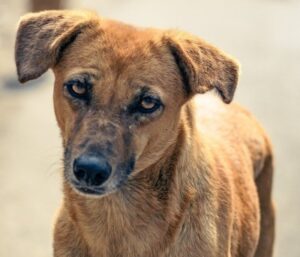
According to police, the person who shot the dog has been identified as Krishnappa, a local resident. Krishnappa was irked over the barking of the dog, named Rocky, at him and shot it in the head with an air gun.
Dog/Ians
Police said that Krishnappa had chased the dog for quite a distance before shooting at it in the village. The villagers were shocked to see the dog being killed in a public place.
The dog was nursed by Harish who also belonged to the same village. He lodged the complaint with Doddaballapura rural police station.
Animal lovers have expressed shock over the incident.
Sep 18 (IANS) Karnataka Chief Minister Basavaraj Bommai on Sunday said all three major rail projects, proposed by Kerala, have been rejected.
Talking to media after meeting with the delegation headed by the Kerala Chief Minister Pinarayi Vijayan at his official residence, Bommai said: “We are sister states and a lot of cultural exchange is also there. But, three railway projects proposed from Kasargod to Dakshina Kannada, Mysuru to Talacherry and Kanhangad – Kaniyur railway lanes come under eco-sensitive zones.”
“The railway department had rejected the Kangar – Bantur – Kaniyur railway project. Now, the railways is maintaining that if the two states agree, the project could be pursued. So, they brought this proposal and it was rejected,” Bommai said.
“This lane passes through eco-sensitive Sullia, Subramanya stretch. “We can’t agree. We will see how much it is beneficial for Karnataka passengers and check environmental challenges. We have clearly told them that until then, it is not possible to give consent,” Bommai said.
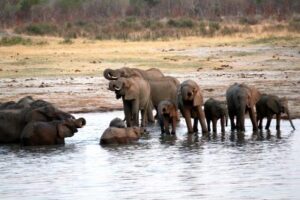
“The projects will pass through the national parks, tiger sanctuaries and elephant sanctuaries. These are old proposals. Earlier also we have rejected them and now also we have said no to them,” Bommai said.
“Talacherry-Mysuru railway lane passes through Bandipur and Nagarahole National Sanctuaries. They proposed to implement the project with new alignment. We have not agreed. We have told them that no compromise will be made with the environment,” he said.
elephants
“The Kerala delegation also proposed an underground tunnel in the forest stretch, which we have rejected,” he said.
Vijayan had asked for a meeting during South Zone Committee convention of South Indian Chief Ministers at Thiruvananthapuram. “Today we met,” Bommai said.
On arrival, Vijayan was honoured with the traditional ‘Mysuru Peta’ headgear and sandalwood garland.
Sep 18 (IANS) Twenty-seven people were killed and 20 others injured after a bus turned on its side in China’s Guizhou Province early Sunday morning.
The bus with 47 people on board was running on a highway section in Sandu Shui Autonomous County when the accident happened, Xinhua news agecy reported quoting the county’s public security bureau.
NASA will provide live coverage with commentary of the upcoming Artemis I cryogenic demonstration test beginning at 7:15 a.m. EDT on Wednesday, Sept. 21.
The demonstration test will allow teams to confirm the repair to a hydrogen leak seen during an early September Artemis I launch attempt, evaluate updated propellant loading procedures, and conduct additional evaluations. The demonstration will conclude when the objectives for the test have been met.+
Live coverage of the test will air on NASA Television, the NASA app, and the agency’s website. While NASA is airing coverage of the launch, rendezvous, docking, and hatch opening of the Soyuz MS-22 carrying NASA Astronaut Frank Rubio to the International Space Station on NASA’s Television’s Public Channel, the Artemis I demonstration test will air only on the Media Channel. During all other times, the test will air on both the Public and Media Channels.
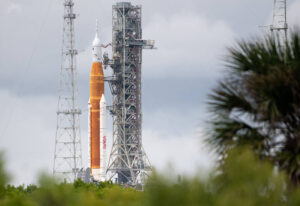
NASA’s Space Launch System (SLS) rocket with the Orion spacecraft aboard is seen atop a mobile launcher at Launch Pad 39B as preparations for launch continue, Sunday, Aug. 28, 2022, at NASA’s Kennedy Space Center in Florida. NASA’s Artemis I flight test is the first integrated test of the agency’s deep space exploration systems: the Orion spacecraft, SLS rocket, and supporting ground systems. Launch of the uncrewed flight test is targeted for no earlier than Aug. 29 at 8:33 a.m. ET. Photo Credit: (NASA/Joel Kowsky)
The agency also will host a media teleconference to preview the test at 11:30 a.m. Monday, Sept. 19. Participants include:
Tom Whitmeyer, deputy associate administrator for Common Exploration Systems Development, NASA Headquarters
Mike Sarafin, Artemis mission manager, NASA Headquarters
Jeremy Parsons, deputy manager, Exploration Ground Systems Program, NASA’s Kennedy Space Center
John Blevins, chief engineer, Space Launch System Program, NASA’s Marshall Space Flight Center
Audio of the media call will stream live on the agency’s website at:
To participate by telephone, media must RSVP no later than two hours prior to the start of the event to: ksc-newsroom@mail.nasa.gov.
Artemis I is an uncrewed flight test. It is the first in a series of increasingly complex missions to provide a foundation for human exploration in deep space and demonstrate our commitment and capability to extend human existence to the Moon and beyond.
Through Artemis missions, NASA will land the first woman and the first person of color on the Moon, paving the way for a long-term lunar presence and serving as a steppingstone to send astronauts to Mars.
For updates, follow along on NASA’s Artemis blog at:
NASA will provide live coverage of key events as a NASA astronaut and two cosmonauts launch and dock to the International Space Station on Wednesday, Sept. 21.
NASA astronaut Frank Rubio and Roscosmos cosmonauts Sergey Prokopyev and Dmitri Petelin will launch aboard the Soyuz MS-22 spacecraft from the Baikonur Cosmodrome in Kazakhstan at 9:54 a.m. EDT Wednesday, Sept. 21 (6:54 p.m. Baikonur time). Coverage will begin at 9 a.m. on NASA Television’s Public Channel, the NASA app, and on the agency’s website.
NASA also will air continuous coverage of an Artemis I tanking test on NASA TV’s Media Channel beginning at 7:15 a.m.
At the Baikonur Cosmodrome in Kazakhstan, NASA astronaut Frank Rubio performs preflight checkouts in the Soyuz MS-22 spacecraft. Rubio is scheduled to launch with crewmates Roscosmos cosmonaut Sergey Prokopyev and Dmitri Petelin Sept. 21 for a six-month mission on the International Space Station. Credits: NASA/Victor Zelentsov
Soyuz MS-22 launch and key events as well of coverage of the Artemis I tanking test will be available to watch online at:
After a two-orbit, three-hour journey, the Soyuz will dock to the space station’s Rassvet module at 1:11 p.m. About two hours after docking, hatches between the Soyuz and the station will open and the crew members will greet each other.
Once aboard station, the trio will join Expedition 67 Commander Oleg Artemyev, cosmonauts Denis Matveev and Sergey Korsakov of Roscosmos, as well as NASA astronauts Bob Hines, Kjell Lindgren, and Jessica Watkins, and ESA (European Space Agency) astronaut Samantha Cristoforetti. Rubio, Prokopyev, and Petelin will spend six months aboard the orbital laboratory.
This will be Prokopyev’s second flight into space and the first for Rubio and Petelin.
Mission coverage is as follows (all times Eastern):
Wednesday, Sept. 21
9 a.m. – Coverage begins on NASA TV’s Public Channel for 9:54 a.m. launch.
12:15 p.m. – Coverage begins on NASA TV’s Public Channel for 1:11 p.m. docking.
3:30 p.m. – Coverage begins on NASA TV for hatch opening and welcome remarks.
Sep 18 (IANS) India on Sunday reported 5,664 fresh Covid cases in the last 24 hrs, against 5,747 Covid cases reported on previous day, said the Union Health Ministry.
In the same period, the country has recorded 35 more Covid related deaths, taking the national fatalities tally to 5,28,337 as per the report.
Meanwhile, the active caseload of the country has marginally risen to 47,922 cases, accounting for 0.11 per cent of the country’s total positive cases.
The recovery of 4,555 patients in the last 24 hours took the cumulative tally to 4,39,57,929. Consequently, India’s recovery rate stands at 98.71 per cent.
Vaccine
Meanwhile, India’s Daily Positivity Rate has been reported to be 1.96 per cent, while the Weekly Positivity Rate in the country currently also stands at 1.79 per cent.
Also in the same period, a total of 2,89,228 tests were conducted across the country, increasing the overall tally to over 89.15 crore.
As of Sunday morning, India’s Covid-19 vaccination coverage exceeded 216.56 crore.
Over 4.08 crore adolescents have been administered the first dose of Covid-19 jab since the beginning of vaccination drive for this age bracket.
Sep 18 (IANS) The Tenkasi police has arrested Maheswaran, a shopkeeper for refusing to sell snacks and candies to Scheduled Caste children. The district administration sealed the shop and cancelled his license.
Police said that a group of Scheduled Caste children approached Maheswaran for buying snacks and candies on Saturday. He refused to sell them and told them that they won’t get snacks and candies or for that matter anything from his shop.
When the children asked him the reason, he told them that the village elders belonging to his community had decided that they wouldn’t sell anything to the Scheduled Caste people. The video of Maheswaran refusing to sell snacks and candies went viral and Tenkasi district collector, P. Akash intervened in the matter and ordered an investigation.
Arrested
It was found that there was a clash between a group of Scheduled Caste youths with the youths of the intermediate caste during a marriage function and police had registered a case against youths of both sides. A youth belonging to the intermediate caste, K. Ramachandran was to attend an interview with a defence force, but was not able to attend as he was charged under SC/ST Atrocities Act. This infuriated the intermediate caste people and decided to ostracise the Scheduled Caste youth.
Ramachandran was arrested by the Karivalamvanthallur police in Tenkasi district and later on Saturday night, Maheswaran was also arrested.
Sep 17 (IANS) Aiming decriminalisation of offences, the Central Board of Direct Taxes (CBDT) on Saturday issued revised guidelines for compounding of offences under the Income Tax Act, 1961 with reference to various offences covered under its prosecution provisions.
Some of the major changes made for the benefit of taxpayers include making the offence punishable under Section 276 of the Act as compoundable. Further, the scope of eligibility for compounding of cases has been relaxed whereby the case of an applicant who has been convicted with imprisonment for less than 2 years being previously non-compoundable, has now been made compoundable. The discretion available with the competent authority has also been suitably restricted.
CBDT /Ians
As per the department, the time limit for acceptance of compounding applications has been relaxed from the earlier limit of 24 months to 36 months now, from the date of filing of the complaint. Besides, procedural complexities have also been reduced and simplified.
Officials said that specific upper limits have been introduced for the compounding fee covering defaults across several provisions of the Act. Additional compounding charges in the nature of penal interest at the rate of 2 per cent per month up to 3 months and 3 per cent per month beyond 3 months have been reduced to 1 per cent and 2 per cent, respectively.
Sep 17 (IANS) Kavita Chawla, a homemaker from Kolhapur, Maharashtra, became the first ‘crorepati’ in the quiz-based reality show ‘Kaun Banega Crorepati 14’ hosted by Amitabh Bachchan.
The 45-year-old talked about how she was able complete her education, despite her father not being prepared to educate her after Class X. She was able to clear Class XII before marriage only because her teacher intervened and reasoned with her father.
Talking about how she prepared for the show, Chawla said: “I used to teach my son Vivek at home and have taught him from KG to Class VIII. I used to prepare for the show along with it because I have always dreamt about going to ‘KBC‘ since the time it began.
She continued: “When I used to teach him, I used to study as well and I knew that the knowledge would help me in the future. Whenever I used to get some time off from my household chores I would study to remain updated about current affairs and brush up my general knowledge.”
KBC 14./IANS
Kavita added that preparing for the show was not easy. “For a housewife, studies do feel like multitasking and on top of it I had a child and my in-laws to take care of,” Chawla said, adding: “Shouldering those responsibilities and also studying had me understand time management. I did not want to waste time by going out, for instance.”
It took her 21 years and 10 months to finally reach the hotseat and fulfil her dream. On many occasions, in fact, her son would prank her, claiming a call had come from the makers of the reality show.
“The journey from registrations to the hotseat is not that easy and is tediously long,” Chawla said. “Sometimes, when I would register, I would not get the call. Then when I did get the call, I did not get the call for the procedures that follow. If I got the call for an audition, I did not get the call for the interview. I took time to reach the hotseat because I was moving ahead step by step and it took really long to reach here,” she exclaimed.
Talking about meeting Amitabh Bachchan, Chawla said: “It was surreal. I was mesmerised by sir. The most beautiful part of meeting him was the conversations that we had and the most glorious part of meeting him was the time he announced my name for the hotseat and when I won Rs 1 crore.”
Chawla plans to invest the money she has won “in my son’s future because I want him to study further. I want my son to study and grow and make the country proud.” As for her, she said: “I want to travel across India and experience its beauty.”
Kavita Chawla will be seen on the hotseat on September 19 and 20 on ‘Kaun Banega Crorepati 14’, Sony Entertainment Television.
Burmese pythons are not just big snakes, growing to more than 18 feet and 200 pounds, but big eaters, taking on prey as large as a deer.
Biologists at the University of Cincinnati found that it’s not just the size of its head and body that puts almost everything on a python’s menu. They evolved super-stretchy skin between their lower jaws that allows them to consume prey up to six times larger than similar-sized snakes.
Since most snakes swallow prey whole, they must have wide mouths to accommodate a meal. Unlike our lower jawbone, the lower jawbones of snakes are not connected, allowing them to open wide.
“The stretchy skin between left and right lower jaws is radically different in pythons. Just over 40% of their total gape area on average is from stretchy skin,” lead author and UC biology professor Bruce Jayne said. “Even after you correct for their large heads, their gape is enormous.”
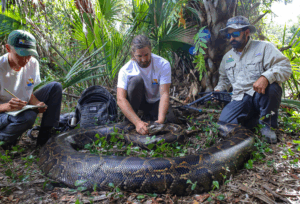
Ecologists with the Conservancy of Southwest Florida capture a 215-pound Burmese python in Everglades National Park./Photo:Ian Bartoszek/Conservancy of Southwest Florida
Pythons are constrictors. They bite their prey and wrap their powerful coils around it, fatally cutting off the animal’s vital blood flow, before consuming it whole at their leisure.
The bigger the prey, the more energy a snake derives from a meal. For pythons, that means not having to hunt as often, which can carry extensive risk in a world full of busy roads and dangerous predators.
Along with pythons, Jayne studied the gape size of brown tree snakes, a mildly venomous arboreal specialist that hunts birds and other animals in the forest canopy. Brown tree snakes were introduced in the 1950s to Guam, wiping out many bird species.
Besides measuring the snakes, Jayne also measured the dimensions and weight of potential prey animals. This allowed Jayne to use snake size to predict the maximal size of its prey and the relative benefits of consuming different types such as alligators, chickens, rats or deer.
Small snakes derive greater benefits in relative prey mass from a modest increase in gape size, the study found. This gives python babies an early advantage in taking on a broader range of prey compared to other snakes their size, Jayne said.
Being big also helps snakes avoid becoming meals themselves. Snakes fall prey to everything from wading birds to minks and raccoons to alligators and other snakes.
“Once those pythons get to a reasonable size, it’s pretty much just alligators that can eat them,” Jayne said. “And pythons eat alligators.”
Like invasive brown tree snakes in Guam, Burmese pythons are wreaking havoc on the ecology of Everglades National Park where they were introduced due to the release of captive animals from the exotic pet trade in the 1980s.
Study co-author Ian Bartoszek works as an environmental science project manager for the Conservancy of Southwest Florida, where he has led a project to track pythons. They implant radio transmitters in male snakes during breeding season to find females before they can lay more clutches of eggs. A big female python can lay more than 100 eggs.
Researchers routinely find deer hooves and the remains of other big animals in their stomachs. Bartoszek photographed one python regurgitating a full-grown white-tailed deer.
“The Everglades ecosystem is changing in real time based on one species, the Burmese python,” Bartoszek said.
The good news is that pythons rarely attack people. Bartoszek said the only defensive encounters he’s had with wild pythons are with females guarding their nests.
“It’s way more dangerous to drive there than to work with the snakes,” he said.
Sep 17 (IANS) On the occasion of Prime Minister Narendra Modi’s 72nd birthday, Tibetan spiritual leader, the Dalai Lama has written to him offering his warmest wishes and prayers for his continued good health.
“It’s wonderful that India has successfully met the challenges posed by the coronavirus pandemic. Although we have not seen the complete end to it, India today is better placed to address similar challenges in the future,” His Holiness wrote in a letter.
“As the longest-staying guest in India I have observed its development first hand. Now the country is also a rising economic power and a leader in science and technology.
“India’s strong democratic foundation is an example of peace and stability. Having one of the youngest populations is an asset that will enable further development and the fulfilment of positive aspirations. I am delighted to say India is poised to assume its rightful place in the world.
“I have great admiration for the way Mahatma Gandhi made the age-old practice of ‘ahimsa’ appreciated across the world.”
The spiritual leader ended his letter with thanks.
“Once again, I would like to take this opportunity to express deep gratitude to the government and people of India for the warm and generous hospitality we Tibetans have enjoyed since we were forced into exile in 1959.”
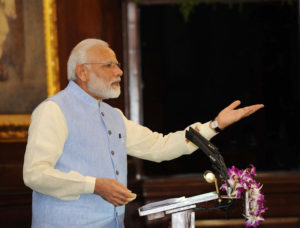
Indian Prime Minister Narendra Modi
Wishes kept pouring in for Prime Minister Narendra Modi’s 72nd birthday on Saturday amidst a packed schedule for the day.
In her message on Twitter in Hindi, President Droupadi Murmu wished that the “nation-building campaign” being carried out by the Prime Minister with “incomparable hard work, dedication and creativity, continues to progress” under his leadership
Union Home Minister Amit Shah called him the creator of a “safe, strong and self-reliant New India” and a symbol of service and dedication.
In a series of tweets in Hindi, he said with the parallel coordination of welfare of poor, good governance, development, national security and historical reforms, the Prime Minister has fulfilled his resolve to establish ‘Maa Bharti’ again at the top of the world.
Shah said all this has been possible only because of a decisive leadership and the firm faith of the people.
“The life of the creator of a safe, strong and self-reliant New India Narendra Modi is a symbol of service and dedication. For the first time after independence, by giving their rights to crores of poor, Modi has instilled a sense of hope and faith in them. Today, every section of the country is standing with Modi like a rock,” the Union Minister said.
In his tweet, Shah hailed the Prime Minister as the flag-bearer of Indian culture and “someone who has connected the country to its roots and led it forward in every field”.
He said that under Modi’s farsighted leadership, India has emerged as a world power and the Prime Minister has distinguished himself as a global leader.
In his message, Union Defence Minister Rajnath Singh praised Modi’s governance and leadership.
“Hearty congratulations and best wishes to the illustrious Prime Minister of India on his birthday. He has given unprecedented strength to progress and good governance in the country under his leadership and has given new heights to India’s prestige and self-respect all over the world,” he said.
Meanwhile, BJP national president J.P. Nadda called Modi the “world’s most popular leader”, adding that the Prime Minister’s leadership has “given a new direction to the destiny and future of India”.
Congress leader Rahul Gandhi tweeted a one-line greeting, saying: “Wishing PM Narendra Modi a happy birthday.”
Delhi Chief Minister Arvind Kejriwal wished for the Prime Minister’s long and healthy life. “Birthday greetings to Hon’ble Prime Minister Shri @narendramodi ji. Praying for your long and healthy life,” he said on Twitter.
To mark the Prime Minister’s birthday, the BJP has planned several events.
Nadda will inaugurate an exhibition on Modi’s life and leadership at the party headquarters in New Delhi.
But the most notable project planned for the day will take place in Madhya Pradesh’s Kuno National Park where Modi will release eight African cheetahs from Namibia, into the wild.
A special Jumbo Jet Boeing 747 carrying the big cats landed at the Gwalior airport on Saturday morning.
Besides this, the Prime Minister is also scheduled to launch the National Logistic Policy at the Vigyan Bhawan later in the day.
The viral Lumpy Skin disease has affected more than one million cows in northern states of the country, spreading fears among farmers and authorities as it may affect the procurement and production of milk products in affected states.
Gujarat reported on Saturday that the virus was reported in 109 new villages, taking the total number of affected villages in 23 districts in Gujarat to 3,268. While other states of Rajasthan, Punjab, Uttarakhand, Madhya Pradesh and Himachal Pradesh are also equally reporting the rapid spread of the disease among the cattle, authorities are procuring general vaccine meant for goat pox and sheep pox to contain it.
Gujarat is procuring 1.1 million doses of the goat pox vaccine and has vaccinated 300,000 cattle so far. Amul, one of the nation’s major milk dairies is located in Gujarat with major milk-sourcing booths all over the affected states in the North.
What’s Lumpy Skin Disease?
The Lumpy Skin disease is a vector-borne pox disease with symptoms of skin nodules all over the body of the cattle, as per the UN’s Food and Agriculture Organization (FAO). It affects cows more than buffalos.
The nodules or ringworm will usually heal itself without treatment, but it can take anywhere between three and nine months depending on treatment, which includes application of the medication directly onto the lesion, and giving anti-biotic medication after scraping the crusts.
Caused by Capripox virus, which is genetically similar to the goat pox and sheep pox, Lumpy Skin disease has become a major emerging threat to livestock worldwide. The Global Alliance for Vaccines and Immunisation (GAVI) in its report said the Lumpy Skin Disease (LSD) disease is caused by a virus called the Capripoxvirus and is “an emerging threat to livestock worldwide”.
FAO first recorded the endemic disease in Africa and then spread to South Asia in July 2019, with Bangladesh first reporting its outbreak and soon it entered India and China.
The infection is transmitted usually by some species of mosquitoes, ticks and other blood-feeding insects to cattle and often flies and other mosquitoes spread the disease to more animals. The outbreak spreads faster during the monsoon.
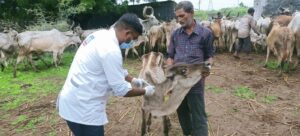
Cattles being vaccinated by veterinary doctors in worst affected Kutch and Jamnagar districts./IANS
Treatment
As there are no specific antiviral drugs for the treatment of lumpy skin disease, best supportive care includes treatment of skin lesions using wound care sprays and the use of antibiotics to prevent secondary skin infections and pneumonia.
The disease can cause fever and sterility in cattle, which may affect milk production adversely, affecting millions of rural households, which depend on selling milk for livelihood.
If not contained early, the Lumpy Sin Disease (LSD) has the potential to become another Covid-19 among the animals and affecting the rural economy the most.
Impact on Rural Economy
Due to the rapid spread of LSD, for the third consecutive year, Rajasthan’s famous cattle fair which bring around Rs 80 crore in business has been impacted as covid-19 affected them in the last two years.
“The competitive prices we used to get at the fairs were double of what we could manage at home. During the Covid-19 days, a local trader offered me just Rs 25,000 for a cow, which I could have easily sold for Rs 40,000 at the Tilwara fair. Similarly, for a Sindhi racer horse, I was offered Rs 50,000. I sold it for Rs one lakh at Tilwara, though I had to wait for two years,” says Rathod, who hails from Khara village.
Hanumangarh’s famous Gogomedi cattle fair, scheduled for August 11, is postponed indefinitely, as is the case of Parbatsar’s Shri Veer Tejaji fair. Even the Nagar Palika, Nagar Parishad and panchayat level fairs are not happening.
Backbone of rural economy
More than 250 fairs are organised across the state in a year. The high volume of people participating in them ensures that the cattle rearers get a fair price for their livestock and traders get supreme quality animals. Cattle rearers from nearby states also visit, thus promoting cultural relations and state economy.
These fairs also stand as a testimony to the rich history and culture of Rajasthan. Queues of colourfully-decorated animals, the smell of firewood, sounds of folk songs and the tinkling of ghungroo bells are common features of these large-scale events, which are organised by the Animal Husbandry Department to foster business between cattle traders and rearers. Some say the first cattle fair was organised in the region nearly 700 years ago.
Not simply an event of cultural importance, the cattle fairs also spur the local economy, in addition to bringing national and international tourists. Transporters, ornament makers, food vendors, craftspeople and other small businesses rely on these fairs.
Double trouble
“Local traders will never quote good prices for our animals. We have been suffering huge losses in the last two years,” says Chetram, a cattle rearer from Hanumangarh’s Rampura village. Cut from their main source of income, the rearers are forced to stretch their already tight budgets to spend on fodder. Added to this is the risk of losing their animals to LSD.
“During the Covid-19 days, at least our animals were healthy and the only loss was of business. Now, we are losing our livestock, and also our source of income,” laments Shankar Singh, a cattle rearer from Sangriya.
“As of now, the disease has affected about six lakh animals in the state, killing nearly 25,000 of them. The situation is serious,” informs Arvind Jaitly, Deputy Director (Disease Control), Animal Husbandry Department.
“We organise fairs in different locations all through the year, as it serves the interests of both rearers and traders. The department also earns during these fairs. But with the present level of spread of the LSD, stopping of fairs for a while is an imperative,” he adds.
According to a news report, the figures in other states have been soaring too — 74,325 cattle in Punjab, 58,546 in Gujarat, 6,385 in Jammu and Kashmir, 1,300 in Uttarakhand, 532 in Himachal Pradesh and 260 in Andaman and Nicobar Islands have been affected by the LSD.
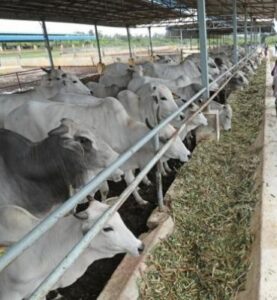
Cows/IANS
Milk supply, subsidiary activities hit
The cattle population in Rajasthan is already on the way down. According to the Animal Husbandry Department, the cattle population in the state came down from Rs 5.77 crore in 2012 to Rs 5.68 crore in 2019 — a drop of 1.61 per cent in seven years.
Rajasthan is also the second highest milk-producing state in the country — at 187.7 million metric tonne. In India, the per capita availability of milk is 394 gm, while it is 870 gm in Rajasthan.
With the spread of LSD, the production of both milk and dairy items has come down. If the situation persists, milk production is expected to drop further.
Even the subsidiary activities have been affected. Mangilal Gusai, who sells trinkets for decorating animals, says, “Cattle fairs are our only source of income. As they stand postponed, we don’t know what to do.”
Gusai’s family of seven works out of their home, readying the ornaments during the monsoon season — June to September. “We took a loan to buy raw materials. We have products worth Rs four lakh lying at home, with no place to sell them.”
Tourism hit
Even the Tourism Department is taking the hit, as it works in conjunction with the Animal Husbandry Department to organise events like the Pushkar Fair, a highly-desired travel experience for a tourist.
“The cattle fairs offer a glimpse into the local culture and rural lifestyle of Rajasthan. The trade, competitions and cultural events happening at the fairs draw huge crowds,” says Bikaner Krishan Kumar, Assistant Director, Tourism Department.
Engineers at the Georgia Institute of Technology and Stanford University have created a small, autonomous device with a stretchable/flexible sensor that can be adhered to the skin to measure the changing size of tumors below. The non-invasive, battery-operated device is sensitive to one-hundredth of a millimeter (10 micrometers) and can beam results to a smartphone app wirelessly in real-time with the press of a button.
In practical terms, the researchers say, their device—dubbed FAST for “Flexible Autonomous Sensor measuring Tumors”—represents a wholly new, fast, inexpensive, hands-free, and accurate way to test the efficacy of cancer drugs. On a grander scale, it could lead to promising new directions in cancer treatment.
Each year researchers test thousands of potential cancer drugs on mice with subcutaneous tumors. Few make it to human patients, and the process for finding new therapies is slow because technologies for measuring tumor regression from drug treatment take weeks to read out a response. The inherent biological variation of tumors, the shortcomings of existing measuring approaches, and the relatively small sample sizes make drug screenings difficult and labor-intensive.
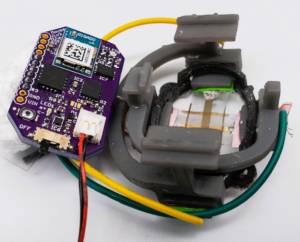
“FAST” sensor/Photo:Stanford University
“In some cases, the tumors under observation must be measured by hand with calipers,” says Alex Abramson, first author of the study and a recent post-doc in the lab of Zhenan Bao at the Stanford School of Engineering and now an assistant professor at Georgia Tech. The use of metal pincer-like calipers to measure soft tissues is not ideal, and radiological approaches cannot deliver the sort of continuous data needed for real-time assessment. FAST can detect changes in tumor volume on the minute-timescale, while caliper and bioluminescence measurements often require weeks-long observation periods to read out changes in tumor size.
FAST’s sensor is composed of a flexible and stretchable skin-like polymer that includes an embedded layer of gold circuitry. This sensor is connected to a small electronic backpack designed by former post-docs and co-authors Yasser Khan and Naoji Matsuhisa. The device measures the strain on the membrane—how much it stretches or shrinks—and transmits that data to a smartphone. Using the FAST backpack, potential therapies that are linked to tumor size regression can quickly and confidently be excluded as ineffective or fast-tracked for further study.
The researchers say that the new device offers few significant advances.
It provides continuous monitoring, as the sensor is physically connected to the mouse/human patients and remains in place over the entire experimental period.
FAST can detect changes in tumor volume on the minute-timescale, while caliper and bioluminescence measurements often require weeks-long observation periods to read out changes in tumor size.
FAST is both autonomous and non-invasive. It is connected to the skin, not unlike a band-aid, battery operated and connected wirelessly. The mouse/human patients are free to move unencumbered by the device or wires, and scientists do not need to actively handle the mice following sensor placement.
FAST packs are also reusable, cost just $60 or so to assemble and can be attached to the mouse/human patients in minutes.
FAST could significantly expedite, automate and lower the cost of the process of screening cancer therapies.
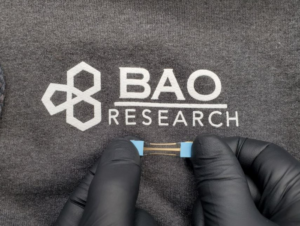
FAST’s sensor is composed of a flexible and stretchable skin-like polymer that includes an embedded layer of gold circuitry.\/Photo:Alex Abramson, Bao Group, Stanford University
The breakthrough is in FAST’s flexible electronic material. Coated on top of the skin-like polymer is a layer of gold, which, when stretched, develops small cracks that change the electrical conductivity of the material. Stretch the material and number of cracks increases, causing the electronic resistance in the sensor to increase as well. When the material contracts, the cracks come back into contact and conductivity improves.
Both Abramson and co-author Naoji Matsuhisa, an associate professor at the University of Tokyo, characterized how these crack propagation and exponential changes in conductivity can be mathematically equated with changes in dimension and volume.
One hurdle the researchers had to overcome was the concern that the sensor itself might compromise measurements by applying undue pressure to the tumor, effectively squeezing it. To circumvent that risk, they carefully matched the mechanical properties of the flexible material to skin itself to make the sensor as pliant and as supple as real skin.
“It is a deceptively simple design,” Abramson says, “But these inherent advantages should be very interesting to the pharmaceutical and oncological communities. FAST could significantly expedite, automate and lower the cost of the process of screening cancer therapies.”
Sep 17 (IANS) Actress Demi Moore will be seen starring alongside Tom Holland in the second season of ‘Feud’.
The second season of the Ryan Murphy anthology will tell the true story of how Truman Capote was friends with numerous members of New York high society until he published excerpts of his unfinished novel “Answered Prayers,” with the excerpts serving as a tell-all about the city’s elite, reports Variety.
According to sources, Moore would star as socialite Ann Woodward, a former showgirl and radio actress who was infamously accused of murdering her husband in 1955.
Moore joins previously announced cast members Tom Hollander, Diane Lane, Calista Flockhart, Naomi Watts and Chloe Sevigny, with Hollander set to play Capote.
Demi Moore/Ians
This is the latest TV role Moore has taken on in recent years.
She has previously been on shows like ‘Brave New World’ at Peacock, ‘Empire’ at Fox, and lent her voice to ‘Animals’.
She also appeared on the soap opera ‘General Hospital’ early in her career.
She is primarily known for her roles in films such as G.I. Jane, Striptease, Indecent Proposal, Ghost, and A Few Good Men.
Gus Van Sant is onboard to direct the entire eight-episode season of ‘Feud’.
It was originally reported that the new season of ‘Feud’ was meant to focus on Charles, Prince of Wales, and Diana, Princess of Wales, though that concept was eventually abandoned. The first season of ‘Feud’ aired back in 2017 and starred Jessica Lange and Susan Sarandon.
That season focused on the relationship between Joan Crawford (Lange) and Bette Davis (Sarandon) during the making of the 1962 film “What Ever Happened to Baby Jane?”
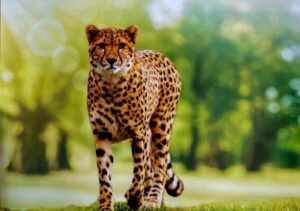
The Prime Minister, Shri Narendra Modi today released wild Cheetahs – which had become extinct from India – in Kuno National Park. Cheetahs – brought from Namibia – are being introduced in India under Project Cheetah, which is world’s first inter-continental large wild carnivore translocation project. Out of the eight Cheetahs there are five female and three male Cheetahs.
The Prime Minister released Cheetahs at two release points in Kuno National Park. The Prime Minister also interacted with Cheetah Mitras, Cheetah Rehabilitation Management Group and students at the venue. The Prime Minister addressed the Nation on this historic occasion.
The release of wild Cheetahs by the Prime Minister in Kuno National Park is part of his efforts to revitalise and diversify India’s wildlife and its habitat. The cheetah was declared extinct from India in 1952. The Cheetahs that would be released are from Namibia and have been brought under an MoU signed earlier this year. The introduction of Cheetah in India is being done under Project Cheetah, the world’s first inter-continental large wild carnivore translocation project.
Cheetah
Cheetahs will help restore open forest and grassland ecosystems in India. This will help conserve biodiversity and enhance the ecosystem services like water security, carbon sequestration and soil moisture conservation, benefiting society at large. This effort, in line with the Prime Minister’s commitment to environmental protection and wildlife conservation, will also lead to enhanced livelihood opportunities for the local community through eco-development and ecotourism activities.
The historic reintroduction of Cheetahs in India is part of a long series of measures for ensuring sustainability and environment protection in the last eight years which has resulted in significant achievements in the area of environment protection and sustainability. . The coverage of Protected Areas which was 4.90% of the country’s geographical area in 2014 has now increased to 5.03%. This includes an increase in Protected Areas in the country from 740 with an area of 1,61,081.62 sq.kms. in 2014 to present 981 with an area of 1,71,921 sq.kms.
Forest and tree cover has increased by 16,000 square kms in the last four years. India is among few countries in the world where forest cover is consistently increasing.
Kuno national park
There has also been an increase in the number of community reserves. From just 43 in 2014 their numbers are more than 100 in 2019.
India is home to 52 Tiger Reserves covering approximately 75,000 Sq Km area in 18 States with approximately 75% population of the wild tiger at global level. India achieved the goal of doubling the tiger numbers in 2018 itself, four years in advance from the targeted year 2022. The Tiger Population in India has increased from 2,226 in 2014 to 2,967 in 2018.
The budgetary allocation for tiger conservation has increased from Rs 185 crore in 2014 to Rs 300 crore in 2022.
The population of Asiatic Lions has shown a steady increase with a population of 674 individuals with an increase rate of 28.87 per cent (one of the highest growth rates so far) from the 523 lions in 2015.
India now (2020) has 12,852 leopards as compared to the previous estimate of 7910 conducted in 2014. More than 60% increase in population has been recorded.
Governor, Madhya Pradesh Shri Mangubhai Patel; Chief Minister, Shri Shivraj Singh Chouhan; Union Ministers, Shri Narendra Singh Tomar, Shri Bhupender Yadav, Shri Jyotiraditya M Scindia and Shri Ashwini Chobey were among those present on the occasion.
The Supreme Court on Friday agreed to hear a plea by the Karnataka government, challenging the Karnataka High Court judgment, which struck down provisions of law prohibiting betting and wagering in online games.
Senior advocates Mukul Rohatgi, A.M Singhvi, and Shyam Divan, represented the gaming companies’ associations, submitted before a bench of Justices S. Abdul Nazeer and V. Ramasubramanian that the issue was whether it was game of skill or chance or gambling.
The Karnataka government contended that cybercrime has become a major issue and cited filing of 28,000 cases in the last three years, while emphasising the need for a law against online gaming to maintain public order. It further argued that people have died by suicide and the online gaming has ruined many families, therefore it was necessary to deal with its ill effects.
online games/IANS
The state government’s plea said: “The Karnataka Police (Amendment) Act, 2021 made criminalised wagering, betting or risking money on the unknown result of an event.”
On February 14 this year, the high court struck down the government’s ban and the legal provision which criminalized playing games of skill, including online games, and betting.
The top court issued notice to online gaming industry body All India Gaming Federation and skill-based gaming firms. It directed to tag this matter with a similar matter, where the Tamil Nadu government has challenged the judgment by the Madras High Court.The Karnataka High Court had said that the Act was unconstitutional and there cannot be any ban on online games of skill. The state government contended before the apex court that the high court had grossly erred in not taking into account the material produced by it in connection with cases registered by the police authorities.
Apple has fixed a bug in the latest iOS 16 update that prevented some customers from activating new iPhone 14 devices.
The iOS 16.0.1 update resolves the activation or migration issues faced by the users of new iPhones.
According to a MacRumors report, the new iPhone 14 users facing the activation issues may need to restore with a Mac or PC to iOS 16.0.1 to fix the bug and fully activate their new devices.
The company has sent a memo to customers, saying “”there is a known issue for iOS 16 that may impact device activations on open Wi-Fi networks.”
Apple iPhone 14 series, Watch Series 8 now available in India/IANS
The tech giant said that there are no current official fixes and that support staff should “not create a repair (case) for the issue.”
In a separate support update, the company said that if you have an issue with Messages or FaceTime after setting up your new iPhone, “update to the latest version of iOS to address the issue”.
“iMessage and FaceTime might not complete activation on iPhone 14 and iPhone 14 Pro. To resolve this, update to the latest version of iOS,” said Apple.
The new Apple 14 series and Apple Watch Series 16 went on sale globally, including in India, on Friday.
Those interested can now buy iPhone 14, iPhone 14 Pro, Apple Watch Series 8 and Apple Watch SE from Apple Authorised resellers and Apple Store Online.
iPhone 14 Pro and iPhone 14 Pro Max will be available in deep purple, silver, gold, and space black in 128GB, 256GB, 512GB, and 1TB storage capacities.
The Pro models feature the Always-On display, Crash Detection, Emergency SOS via satellite, and an innovative new way to receive notifications and activities with the Dynamic Island.
The General Assembly has adopted a decision to exclusively allow the Ukrainian head of state to submit a pre-recorded speech to the General Debate next week, instead of physical presence.
Representatives of all other member states and observers will have to be physically present at the General Assembly Hall if they wish to make a statement at this year’s General Debate.
The decision on Friday said that Ukraine may submit a pre-recorded statement of its head of state, which will be played in the General Assembly Hall at the General Debate. The President of the General Assembly will circulate the pre-recorded statement as a document of the Assembly.
The decision says it will not set a precedent for future General Debates and mandated high-level meetings planned for future high-level weeks of the General Assembly, Xinhua news agency reported.
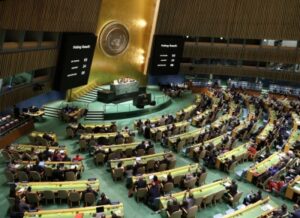
UN general Assembly/IANS
The draft resolution, tabled by Ukraine and some 50 other states, was adopted with 101 votes in favuor, 7 against and 19 abstentions.
Belarus tabled an amendment to the draft decision, which would have allowed leaders of other member states who cannot participate in person for reasons beyond their control to speak by pre-recorded statements. The amendment was rejected by the General Assembly in a vote.
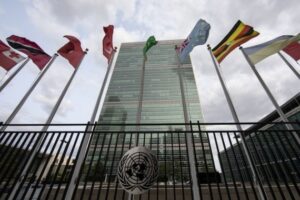
United Nations headquarters in New York, the United States.IANS
Before and after the vote on the draft decision tabled by Ukraine, several member states voiced concern that such a decision would jeopardise sovereign equality among member states and politicise a procedural issue of the General Assembly.
Jupiter is set to make its closest approach to Earth in the last 70 years and on September 26, stargazers can expect an excellent view when the giant planet reaches opposition.
From the viewpoint of Earth’s surface, opposition happens when an astronomical object rises in the east as the Sun sets in the west, placing the object and the Sun on opposite sides of Earth.
Jupiter’s opposition occurs every 13 months, making the planet appear larger and brighter than any other time of the year. But that’s not all.
“Jupiter’s closest approach to Earth rarely coincides with opposition, which means this year’s views will be extraordinary,” NASA said in a statement late on Friday.
Jupiter/IANS
At its closest approach, Jupiter will be approximately 365 million miles in distance from Earth.
The planet is approximately 600 million miles away from Earth at its farthest point.
“With good binoculars, the banding (at least the central band) and three or four of the Galilean satellites (moons) should be visible,” said Adam Kobelski, a research astrophysicist at NASA’s Marshall Space Flight Center in Huntsville, Alabama.
“It’s important to remember that Galileo observed these moons with 17th century optics. One of the key needs will be a stable mount for whatever system you use,” he noted.
Kobelski recommends a larger telescope to see Jupiter’s Great Red Spot and bands in more detail — a four inch-or-larger telescope and some filters in the green to blue range would enhance the visibility of these features.
According to Kobelski, an ideal viewing location will be at a high elevation in a dark and dry area.
Jupiter has 53 named moons, but scientists believe that 79 have been detected in total.
The four largest moons — Io, Europa, Ganymede and Callisto — are called the Galilean satellites.
NASA‘s Juno spacecraft, which has been orbiting Jupiter for six years, is dedicated to exploring the planet’s surface and its moons.
Scientists believe studying Jupiter can lead to breakthrough discoveries about the formation of the solar system.
At next week’s high-level UN General Assembly (UNGA) meeting, US President Joe Biden will present a ideas for moving forward the Security Council reform process that includes expanding it, according to Washington’s Permanent Representative Linda Thomas-Greenfield.
Giving a basic outline of US plans for “moving the needle forward” on reforms, she said on Friday that “the President will present a bit more on this in his speech”.
“We will advance efforts to reform the UN Security Council that includes forging consensus around sensible and credible proposals to expand Security Council membership,” Thomas-Greenfield, who is a member of Biden’s cabinet, said while briefing reporters about the country’s priorities for the Assembly session, which will draw leaders from several countries.
“We will be having discussions with our P3 colleagues as well as others on the way forward,” she said using the acronym “P3” for the three Western permanent members, the US, Britain and France.
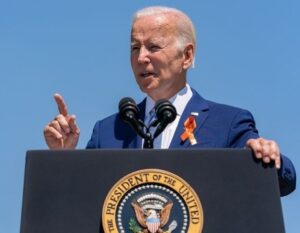
President Joe Biden.(photo:Instagram)
Secretary of State Antony Blinken “will also be engaging this week on the commitments we’ve made and how we see the process moving forward”, she said.
“And we will have further discussions with other member states on how we can just move the needle on this so that we can make some progress on UN reform and Security Council reform.”
Thomas-Greenfield confirmed that Biden would address the Assembly on September 21, a break with the tradition of the US President as the second speaker after Brazil at the opening of the annual high-level session known as the General Debate that starts on September 20.
This is because Biden is scheduled to be in London on Monday for Queen Elizabeth’s funeral.
Prime Minister Narendra Modi is staying away from the UN meeting this year, as are Presidents Xi Jinping of China and Vladimir Putin of Russia, who all met this week in Samarkand, Uzbekistan, at the 22nd Shanghai Cooperation Organisation Summit.
French President Emmanuel Macron will be in New York at the UN meeting and UK Prime Minister Liz Truss will make her debut there on the world stage following her election last week.
While the US, along with Britain and France, supports India getting a permanent seat on the Council, Washington’s agenda for reforms is broader.
Thomas-Greenfield laid out what she said were six new principles for the Council, one of which is expanding its membership.
Another relates to Russia blocking the Council from acting on its invasion of Ukraine and its fallout by using its veto power.
“Bilateral disputes must never be an excuse for obstructing the Council’s mandate or forgoing one’s responsibilities,” she said.
She proposed drastically cutting down the use of vetoes, tagging on the assurance that “we will refrain from the use of the veto except in rare, extraordinary circumstances”.
She pointed out that since 2009, Russia has cast 26 vetoes, in 12 of which China joined it, while the US had only used it only four times during that period.A
Another principle Thomas-Greenfield proposed was bringing transparency to the Council while enhancing cooperation.
“Council members should engage frequently and substantively with the General Assembly and other UN bodies and UN member states”, she said.
“These principles are the start of a dialogue, one that President Biden, Secretary Blinken, and myself and so many others will pick up and take into our conversations during High-Level Week and in the weeks ahead.
“Our hope is to rally the world behind the Charter that we all committed to 77 years ago in San Francisco, and together, we will work to shape and reform it and the system it has created for the future,” she said.
Her adding the key qualifiers “sensible and credible” to the Council expansion proposal opens it to several suggestions.
The ideas for reform that have been proposed by several countries and groups include adding permanent members with veto power or without it (which India is amenable to); instead only giving extended terms beyond the current two years to some elected members, and expanding only non-permanent membership under present terms.
The other issue is which countries get the permanent memberships.
It is a touchy matter for the US which is uneasy about certain countries from the African or Arab block getting permanent seats just as China and Russia are leery about the possible elevation of some countries.