Once-in-a-decade push for the ‘locked out’: Global leaders set for landmark UN conference in Turkmenistan

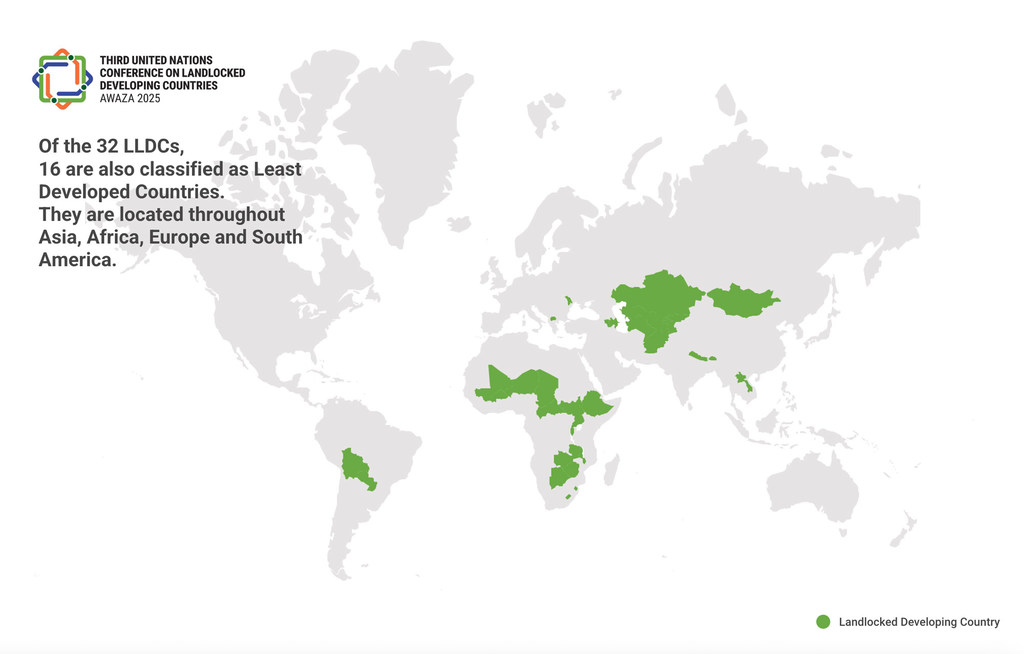
Backed by the new Awaza Programme of Action, the Third UN Conference on Landlocked Developing Countries or LLDC3 will push for freer transit, smarter trade corridors, stronger economic resilience and fresh financing to lift development prospects for the 570 million people living in those countries.

For landlocked nations, geography has long dictated destiny.  

Trade costs are up to 74 per cent higher than the global average and it can take twice as long to move goods across borders compared to coastal countries. As a result, landlocked nations are left with just 1.2 per cent of world trade.

UN Video | What to expect from LLDC3 in Awaza, Turkmenistan

And amid global economic shifts, these countries face the huge risk of being left behind.

LLDC3 is a pivotal opportunity to reverse this trajectory,” said Rabab Fatima, UN High Representative for Landlocked Developing Countries.

At its heart, this conference is about people – it is about the millions of children who lack internet or digital tools, the farmers who cannot get their goods to market because of poor roads, and the entrepreneurs whose dreams are held back by border delays and limited access to funding.

Broad engagement

The four-day event, from 5 to 8, August will feature plenary sessions, five high-level roundtables, and a Private Sector Forum focused on building partnerships and boosting investment.  

Dedicated forums with parliamentarians, women leaders, civil society and youth will bring voices from across society into the heart of the discussions.

UN Secretary-General António Guterres is expected to attend, underlining the urgency of the agenda.

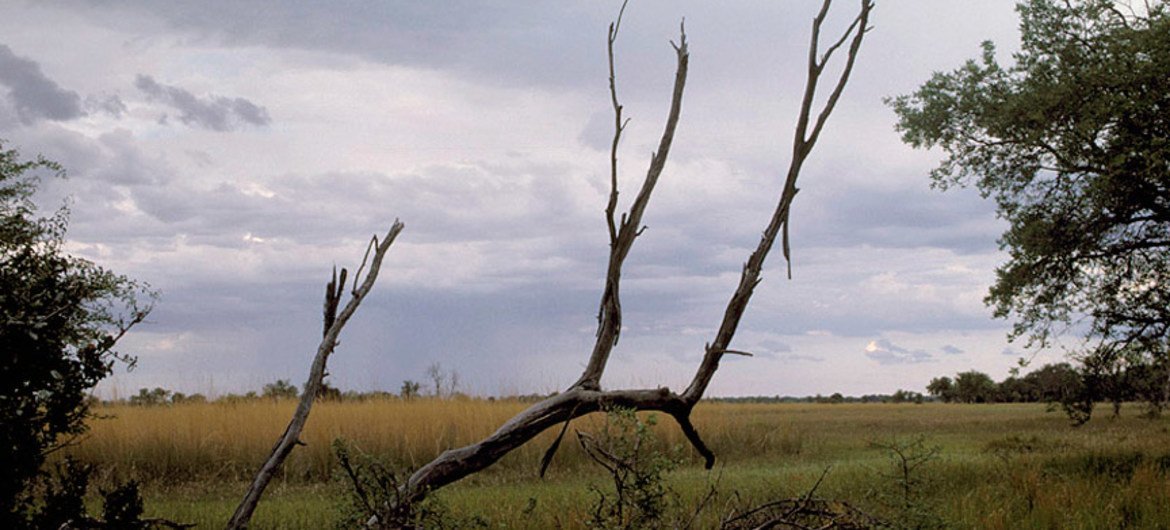
World Bank/Curt Carnemark

Many landlocked countries, such as Botswana (pictured) are also on the frontlines of the impact of climate change, highlighting their vulnerability.

The Awaza Programme of Action

Central to the conference is the Awaza Programme of Action for 2024-2034, adopted by the UN General Assembly in December.  

It lays out five priority areas – structural transformation, infrastructure and connectivity, trade facilitation, regional integration, and resilience building – supported by five flagship initiatives.  

These include:

  • A global infrastructure investment facility to close financing gaps.
  • Regional agricultural research hubs to boost food security.
  • A high-level UN panel on freedom of transit, ensuring smoother cross-border flows.
  • Digital connectivity initiatives to bridge the digital divide.
  • A dedicated landlocked developing countries trade work programme at the WTO.
© UNICEF/Giacomo Pirozzi

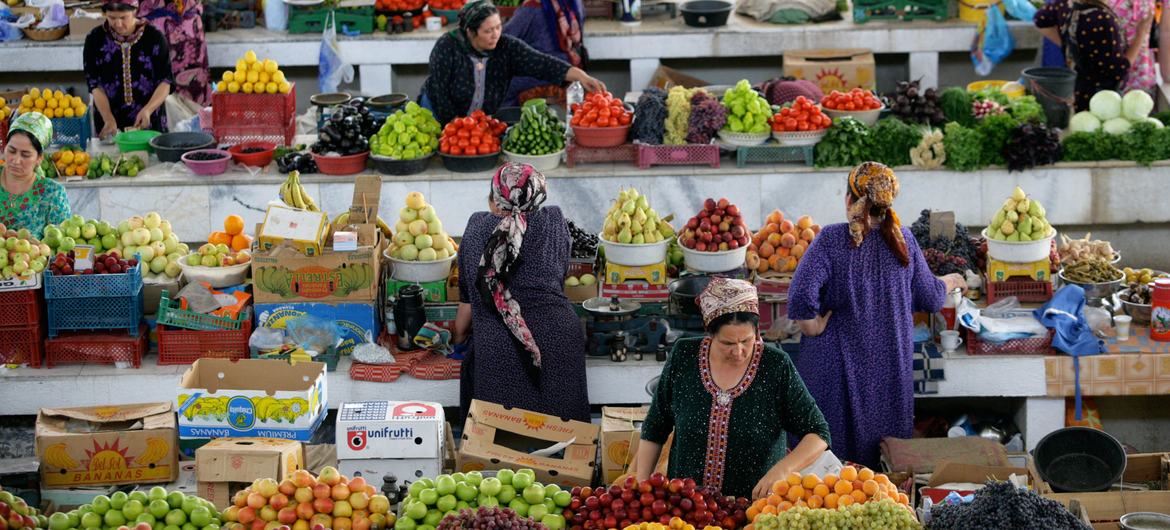
Women shop at a vegetable market in Ashgabat, the capital of Turkmenistan. Boosting food security is one of the priority areas of the Awaza Programme of Action.

Turkmenistan

For Turkmenistan, hosting LLDC3 is both a diplomatic milestone and a statement of intent.

We are proud to host it on the Caspian Sea coast in Turkmenistan,” said Aksoltan Ataeva, Ambassador and Permanent Representative to the UN.

We look forward to welcoming [everyone] to Awaza for a transformative, action-oriented conference that puts landlocked countries at the heart of global partnerships.

Organizers promise state-of-the-art facilities, cultural showcases and networking spaces designed to spur collaboration. Delegates will also experience Turkmen heritage firsthand, from local art to Caspian cuisine.
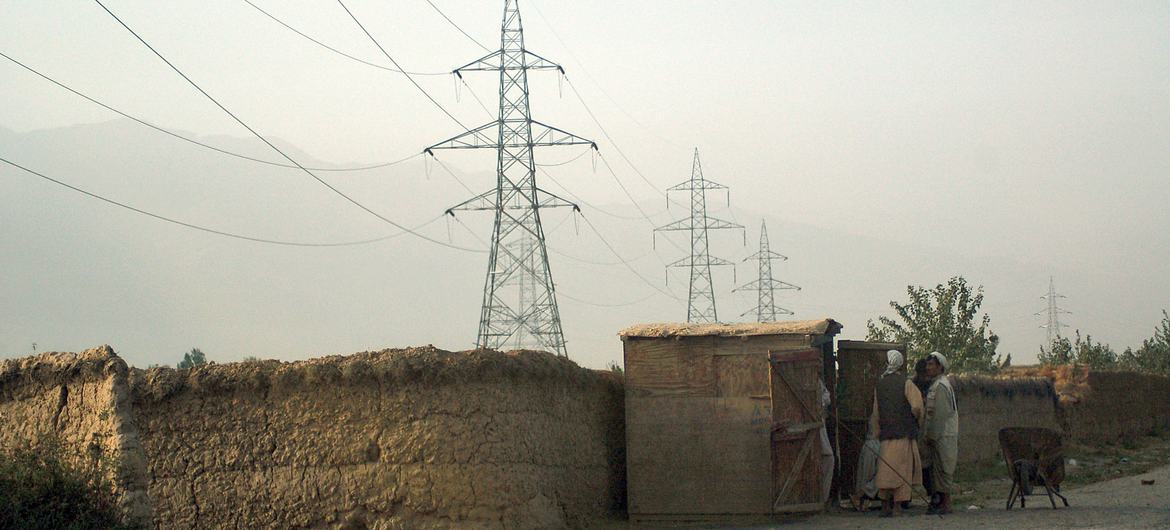
Cross-border infrastructure, such as these power lines, are crucial connections linking LLDCs with the regional and global electric grids.

The bigger picture

For the landlocked developing countries, the stakes are existential.  

These countries are among the most climate-vulnerable, least connected and furthest from global value chains. Without bold action, progress on the 2030 Agenda for Sustainable Development will remain out of reach.

The destiny of humanity is inseparably linked to the destiny of these countries,” said Diego Pacheco, Ambassador of Bolivia, who currently chairs the LLDC Group at the UN.

Together, we can unlock the potential of landlocked developing countries – not just for the benefit of our nations, but for the shared future of all humanity and the Mother Earth.

As the countdown to Awaza begins, expectations are high – not about whether geography matters (it does), but whether global solidarity can transcend its limits.

LLDC3 aims to prove that it can.

There are 32 landlocked developing countries, of which 16 are also least developed.

Source link

World News in Brief: First UN mission to Syria’s Sweida, fresh displacement in Haiti, new lightning record

The team went to Sweida City, as well as two districts – Shahba and Salkhad – where they met with local community representatives and partners, in addition to visiting displacement sites and reception centres. 

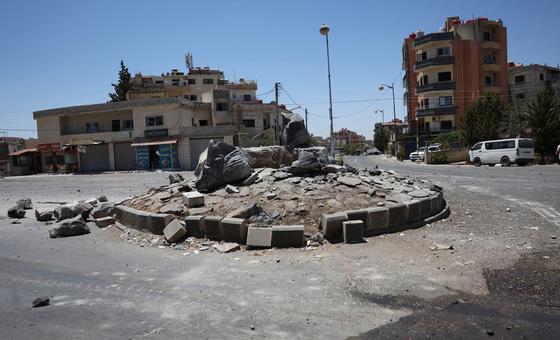
Members also conducted assessments in the three districts of the governorate, where hundreds of people have been killed, and some 175,000 people displaced, in recent sectarian violence amid Syria’s ongoing political transition since the fall of the Assad regime last December.

A senior UN official told the Security Council earlier this week that a fragile ceasefire is “largely holding”.

More aid delivered

OCHA said a fifth humanitarian aid convoy organized by the Syrian Arab Red Crescent also arrived in Sweida on Thursday. It was the largest so far, with 40 trucks.

The convoy, which included UN assistance, delivered medical supplies, flour, fuel, canned goods, hygiene kits and shelter materials, among other assistance. 

On Wednesday, the Syrian Arab Red Crescent also delivered four tankers carrying more than 120,000 litres of fuel.

Haiti: Armed groups expand activities

Armed groups in Haiti are expanding their presence and activities in the Artibonite region which has sparked waves of displacement, according to OCHA. 

Last Monday, violence linked to armed groups flared in the town of Liancourt, where a vehicle and several homes were set on fire. This followed a week of violent clashes.

As of 19 July, nearly 15,000 people have been displaced across four communes in Artibonite. They are staying with host families, many of whom were already finding it hard to meet basic needs.

OCHA said response efforts are underway, led by local humanitarian partners. They have distributed hygiene kits to more than 500 displaced households and host communities, as well as hundreds of hot meals.

2017 lightning flash in US Great Plains sets new world record

A lightning flash in a notorious storm hotspot in the United States nearly a decade ago has been certified as the longest on record, the World Meteorological Organization (WMO) announced on Thursday.

The megaflash – an incredible 829 kilometres long (515 miles) – occurred during a major storm in the Great Plains in October 2017 and was some 61 kilometres greater than the previous record, also set in the same region.

It extended from eastern Texas to near Kansas City, equivalent to the distance between Paris and Venice in Europe: a journey that would take roughly eight to nine hours by car, or at least 90 minutes by plane.

Value of early warning systems 

The flash was not identified in the original 2017 analysis of the storm but was discovered through re-examination. 

WMO’s Committee on Weather and Climate Extremes recognized the new record with the help of the latest satellite technologies and the findings were published in the Bulletin of the American Meteorological Society.

“Lightning is a source of wonder but also a major hazard that claims many lives around the world every year and is therefore one of the priorities for the international Early Warnings for All initiative,” said WMO Secretary-General Celeste Saulo.

Launched in 2022, the initiative aims to ensure that everyone on the planet is protected from hazardous weather, water, or climate events through early warning systems by the end of 2027. 

Source link

Trade measures critical to ending plastic pollution

That assessment by UN trade and development body, UNCTAD, comes in an update published on Thursday ahead of the final round of talks to develop a legally binding international instrument against plastic pollution.

“Although plastics are directly linked to the triple planetary crisis – pollution, biodiversity loss, and climate change – there is still no comprehensive international treaty governing their composition, design, production, trade, and disposal,” UNCTAD said.

Polluting our oceans

In 2023, plastic production reached 436 million metric tonnes worldwide, with the traded value surpassing $1.1 trillion.  It also accounted for 5 per cent of total merchandise trade.

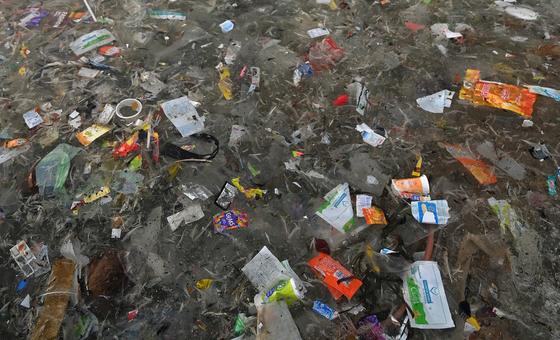
However, 75 per cent of all plastics ever produced have become waste, most of which has ended up in the world’s oceans and ecosystems.

This pollution also threatens food systems and human well-being, especially in small island and coastal developing countries with limited capacity to cope.

Support for substitutes

UNCTAD is advocating for tariff and non-tariff measures to support ecologically sustainable plastic substitutes which often are derived from natural sources such as minerals, plants or animals, and can be recycled or turned into compost.

Global trade in these substitutes reached $485 billion in 2023, with an annual growth of 5.6 per cent in developing economies.

Scaling up will require action to address challenges related to tariff and non-tariff measures, limited market access and weak regulatory incentives.

Tariff disparities

UNCTAD explained that a reduction in tariffs on plastic and rubber products over the past 30 years – from 34 per cent to 7.2 per cent – has made them “artificially inexpensive”.  Meanwhile, alternatives such as paper, bamboo, natural fibres and seaweed face average tariffs of 14.4 per cent

“These disparities in how materials are treated discourage investment in alternative products and hinder innovation in developing countries that aim to export safer and more sustainable alternatives to fossil fuel-based plastics,” it said.

Currently, 98 per cent of plastics are derived from fossil fuels, meaning that emissions and environmental damage are expected to rise if left unchecked. In response, many countries are using non-tariff measures such as bans, labelling requirements and product standards.

However, these regulations differ, leading to fragmentation and increased compliance costs. Furthermore, small businesses and low-income exporters struggle in the face of overlapping or inconsistent requirements, thus affecting how they can both participate in and benefit from sustainable trade.

Hope for treaty talks

For UNCTAD, the talks towards the plastic pollution treaty are promising. They began in 2022, with the final round taking place next week at the UN in Geneva.

The treaty would cover the entire life cycle of plastics – production, consumption, and waste – within a fair and comprehensive framework.

The UN agency said a successful treaty should include tariff and non-tariff measures to support sustainable substitutes for plastic, investment in waste management and circular infrastructure, digital tools for traceability and customs compliance, as well as policy coherence across frameworks reached through the World Trade Organization (WTO); the UN climate secretariat, UNFCCC; the Basel Convention on hazardous waste, and related regional measures.

Source link

Angola protests: UN urges restraint, investigations into deaths

The Office of the UN High Commissioner for Human Rights (OHCHR) on Thursday urged Angolan authorities to conduct prompt, thorough and independent investigations into the deaths as well as the reported use of excessive force during the demonstrations.

Unverified footage suggests that security forces used live ammunition and tear gas to disperse protesters, which points to an unnecessary and disproportionate use of force,” OHCHR spokesperson Thameen Al-Kheetan said.

He added that while some demonstrators resorted to violence and looting, any force used by authorities must comply with international human rights standards.

Any individuals who may have been arbitrarily detained must be immediately released.

Rapid escalation in situation

The protests began on Monday as a strike by minibus taxi drivers over a one-third rise in diesel prices, part of a government effort to reduce fuel subsidies. According to media reports, the demonstrations quickly spread, becoming one of Angola’s most disruptive protest waves in recent years.

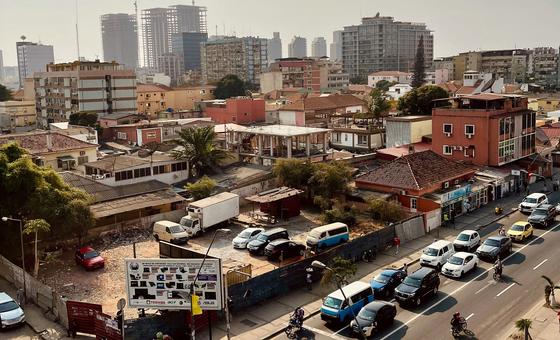
Government officials reported that at least one police officer was among those killed. Nearly 200 people are said to have been injured and shops and vehicles reportedly vandalised, mostly in the capital, Luanda.

Sporadic gunfire was also reported in parts of the city earlier in the week, and emergency services were overwhelmed. Many businesses remained shuttered Thursday, and hospitals reportedly struggled to cope with the number of casualties.

Ensure rights protection

OHCHR emphasised that while authorities have a responsibility to maintain public order, they must do so in a way that protects human rights.

All protesters taking to the streets to express their opinions should do so peacefully,” said Mr. Al-Kheetan. “All human rights violations must be investigated and those responsible held accountable.

The UN rights office also reiterated the importance of safeguarding fundamental freedoms, including the rights to life, expression and peaceful assembly, in any law enforcement response.

Source link

Gaza Strip: Humanitarians warn of worsening famine conditions, attacks on civilians

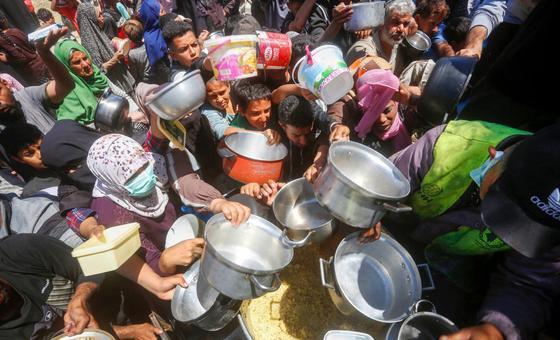
Of the 154 malnutrition-related deaths since October 2023 (including 89 children) reported by Gazan health authorities, the World Health Organization (WHO) said 63 occurred in July alone.

These deaths follow a steep drop in food consumption: 81 per cent of households reported poor food consumption in July (up from 33 per cent in April), and 24 per cent experienced severe hunger (up from 4 per cent), crossing the famine threshold, according to the humanitarian update issued by the UN Office for the Coordination of Humanitarian Affairs (OCHA) on Wednesday.

Acute malnutrition rates also surpassed famine thresholds in Khan Younis, Deir al Balah and Gaza City.

Given these recent figures, IPC food security experts warned that the worst-case famine scenario is unfolding. However, they added that while the third famine threshold of starvation-related deaths is rising, collecting data remains a challenge. 

UN agencies caution that time is running out for a full-scale humanitarian response. 22 per cent of the analyzed population is facing “catastrophic” level of food insecurity, and a further 54 per cent is at “emergency” level. 

At the same time, less than 15 per cent of essential nutrition services remain functional.

Attacks on civilians

Of the over 60,000 Palestinians reported killed since October 2023, nearly 9,000 died after hostilities reignited in March, and 640 between 23 and 30 July.

Civilian casualties while seeking food are also rising, with 1,239 killed and over 8,152 injured since 27 May.

OCHA further noted that displacement figures since 18 March have surpassed 767,800, though no new evacuation orders were issued by Israeli authorities since 20 July. The 20 July order affecting a humanitarian hub in Deir al Balah has since been rescinded.

Amid ongoing displacement, overcrowding in shelters, lack of privacy and worsening hunger has elevated the risk of gender-based violence (GBV) for women and girls.  

The conditions are especially dire in southern Gaza, where there are no longer any safe shelters for GBV survivors.

Humanitarian measures

Between 23 and 29 July, only 47 per cent of 92 coordinated aid movements were fully facilitated by Israeli authorities. About 16 per cent were denied, 26 per cent impeded after initial approval and 11 per cent withdrawn by organizers.

The Israeli military announced a daily 10-hour pause in military activity, beginning 27 July, in Al Mawasi, Deir al Balah and Gaza City “to increase the scale of humanitarian aid entering Gaza.”

They also announced measures including airdrops of flour, sugar and canned food; the reconnection of the power line from Israel to the southern Gaza desalination plant; the removal of customs barriers on food, medicine, and fuel from Egypt; and the designation of secure routes for UN humanitarian convoys.

However, humanitarian partners warned that airdrops could endanger civilians, lead to unequal distribution and fall short of needs.

Working with limited funding

In addition, lack of sufficient funding is also hampering response efforts.

As of 30 July, only about 21 per cent of the $4 billion requested for the 2025 urgent humanitarian appeal for the region has been secured, leaving critical gaps. 

Source link

Russian attack on Ukrainian capital kills at least 11 civilians

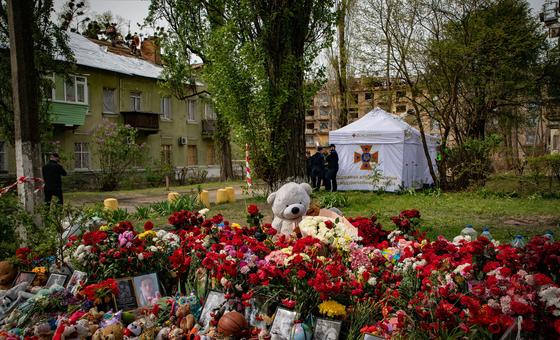
Among the confirmed dead is a six-year-old boy. At least 10 of the injured were children, the mission said, and news reports indicate that figure is rising.

City-wide damage

Russia reportedly launched 309 drones and eight cruise missiles during the night,  and despite air defences managing to destroy many of them, the damage across the capital was severe.  

At least 27 locations across Kyiv were hit by the attack, with the heaviest damage seen in the Solomianskyi and Sviatoshynskyi districts, where UN rescue efforts are ongoing.  

In the Sviatoshynskyi district, a missile destroyed a section of a nine-story apartment building.

In the Solomianskyi district, a five-story apartment building was severely damaged, and at least two people were killed.

UN Ukraine reported that witnesses described shock at the strike, which happened so quickly that they did not have time to seek shelter.

“Homes, businesses and public buildings are being destroyed, and it may take years to rebuild them. And each new attack compounds the psychological toll on people who have to spend night after night in shelters,” said Danielle Bell, Head of HRMMU.

More than 100 buildings were reportedly damaged in the capital, including homes, schools, kindergartens, medical facilities and universities, according to news reports.  

Unprecedented civilian toll

This attack follows a wave of violence close and far from the frontline, including weekend assaults that killed at least 20 civilians and injured over 120, a prison attack on Monday that killed 16 inmates, a hospital strike that killed three and the death of five civilians in the east on Tuesday.

This violent pattern continues from June, when HRMMU reported that Russia launched 10 times more missile and loitering munitions attacks against Ukraine compared with June 2024, killing 232 and injuring 1,343.

The UN Humanitarian Coordinator for Ukraine, Matthias Schmale, stressed on social media that “international humanitarian law must be respected. All efforts must be taken to protect civilians. They are not a target.” 

Source link

‘Delivering better’: New ECOSOC president emphasises climate action, food security

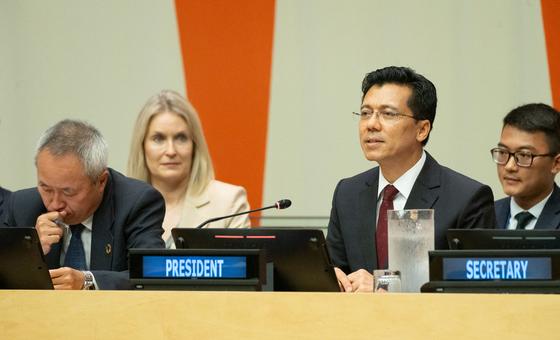
Mr. Thapa said that the motto of his presidency will be “Delivering Better,” which requires strengthening partnerships and multilateralism to achieve more effective implementation of initiatives, including the 2030 Agenda adopted 15 years ago.  

“Delivering better is not an option — it is an imperative. It is our pathway to restoring trust in multilateralism, bridging divides, empowering the most vulnerable and translating commitments into action,” he said.  

Four vice-presidents were also elected for the coming year: Amar Bendjama (Algeria), Héctor Gómez Hernández (Spain), Wellington Darío Bencosme Castaños (Dominican Republic) and Paruyr Hovhannisyan (Armenia).

80 years of ECOSOC 

The UN Economic and Social Council (ECOSOC) is one of the six principal organs of the United Nations, responsible for promoting international economic and social cooperation and development.

It has 54 member States, elected by the General Assembly for three-year terms on a rotating basis, with seats distributed by region.

ECOSOC coordinates the work of UN specialized agencies, commissions and bodies on issues ranging from sustainable development and human rights. It also serves as a central platform for fostering debate, forging consensus, and promoting action on global economic and social issues.

For Mr. Thapa, this body is central to shaping the world’s development agenda and ensuring that no one is left behind.  

“ECOSOC is our place. It needs dedication, participation and active engagement of all UN membership and stakeholders,” he said.  

Five ways to deliver better

While “delivering better” will be the motto of Mr. Thapa’s presidency, he outlined five specific areas upon which he and the Council will focus in the coming year.

With over 735 million people worldwide experiencing hunger, his first priority area is transforming agriculture to strengthen rural resilience and end hunger.  

Digital entrepreneurship and youth engagement are tied to this — and are his second priority area. He noted the “youth bulge” in many developing countries which he said will be a powerful demographic asset if it can be taken advantage of.  

Like ECOSOC presidents before him, his third priority area deals with climate action and resilience. This time, however, he would like ECOSOC to focus specifically on glacier lakes and floods.  

His final two priority areas are reforming the international financial architecture so that it is more inclusive and commemorating the 80th anniversary of ECOSOC.  

Mr. Thapa noted that he and ECOSOC’s membership will be working to achieve these challenges in the midst of multiple, interlinking crises including accelerating climate change, rising geopolitical tensions and decreasing trust in the multilateral system.  

“These challenges are systemic and interconnected. They demand integrated, inclusive and forward-looking responses,” Mr. Thapa said.  

Fix, repair, mend

Before Mr. Thapa’s remarks, Bob Rae, the outgoing president of ECOSOC and Canada’s Ambassador to the UN, reflected on his tenure. He acknowledged that the world is currently in a time of great hardship and genuine anguish.  

But he said that it must be the job of ECOSOC — and UN Member States more broadly — to not only give voice to this anguish and hardship but to actually find solutions for it as well.  

“We hear a lot in the UN discourse about how things are broken, how things have fallen apart, how things are unhinged … But our job is to fix, it’s to repair, it’s to mend, it’s to allow things to heal, it’s to make change happen,” Mr. Rae said.  

Both Mr. Thapa and Mr. Rae affirmed that multilateralism can work and that ECOSOC should play a unique role in rewriting the narrative surrounding international cooperation.  

“We must reaffirm our collective belief in the power of multilateralism — not as an abstract ideal, but as a pragmatic tool for delivering better outcomes for all,” Mr. Thapa said.  

Source link