Bhubaneswar, Sep 12 (IANS) The Visakhapatnam-Kirandul passenger special train (No. 08551) has been derailed mid-way between Jeypore and Chatriput stations in Odisha, a railway official said.
“After passing Jeypore station, one sleeper class and three general coaches got derailed on Monday afternoon. There were no casualties or injuries as the trollies of the train just derailed on to sleepers,” said an official of East Coast Railway (ECoR).
Accident relief trains have been ordered to proceed to site, officers are also rushed to the site for immediate restoration operations.
“Divisional Railway Manager Anup Satpathy, Additional Divisional Railway Manager (ADRM) (Infrastructure) Sudhir Kumar Gupta, ADRM (Operations) Manoj Kumar Sahoo and other officers are monitoring the relief operations. Alternate transport arrangements are made for the stranded passengers,” he informed.
A Twitter user Logan Smith had put out a tweet in July predicting the Queen’s death on September 8 and of course, made it private soon as too many visitors started seeing it. He also gave a warning that King Charles III’s reign will come to an end in 2026 predicting his death on March 28, 2026.
The prediction came true on Sept 8 when the Queen died and the Twitter is abuzz with his prediction on King Charles III. The man in question — Logan Smith, who posts on social media as @logan_smith526, has made his Twitter account private after the unprecedented traction.
Whether his prediction come right or not, social media is going viral with his name dragged in every debate. Screenshots of the post have been going viral including a TikTok by @zukosburnteye which shows the user looking shocked and it has triggered a storm in social media.
One user named Hailey, wrote: “RIP to logan I know the British are coming for him.” The video by her received more than 91,000 likes as people flocked to the comments divided. Another user said: “Hope not for King Charles.”
Queen Elizabeth II died on Sept.8, 2022 after illness ending a reign of 70 years as the British long-serving monarch. Her son ascended the throne as King Charles III at the age of 73.
New Delhi, Sep 11 (IANS) After a YouTuber claimed on social media that her aunt allegedly died after her Redmi 6A smartphone exploded near her on the bed while sleeping, Xiaomi said it was probing the unfortunate incident.
The YouTuber, who goes by the name MD Talk YT, shared screenshots of the exploded phone as well as her aunt lying in a pool of blood on the bed, claiming that an alleged battery explosion killed her relative who was living in the Delhi-NCR region.
“Yesterday in night my aunty was found dead, she was using a Redmi 6A, she was sleeping and she kept the phone near her face on the pillow side & after sometime her phone blasted. It’s a bad time for us. It’s a responsibility of a brand to support,” the tweet read.
Xiaomi replied in a tweet, saying the company is working to reach out to the impacted family and investigate the situation.
“At Xiaomi India, customer safety is of utmost importance and we take such matters extremely seriously. Our team is trying to get in touch with the affected family and determine the cause of the incident”.
The YouTuber from Haryana further posted that the victim’s son is serving in the Indian Army and the family lives a very simple life.
“Her family is so simple, her son is in the Indian Army. They don’t know so much. She only uses her phone just for calling & watching YouTube. Now if brands don’t accept their mistakes, don’t take responsibility directly, if a family has to fight for justice then what’s the use,” the YouTuber said in a tweet.
New York, Sep 12 (IANS) The risk of type 2 diabetes is more than halved by weekly injections of the new obesity drug semaglutide, which was recently approved in the US and has been provisionally approved in England, says a new study.
The researchers of the study, to be presented at the annual meeting of the European Association for the Study of Diabetes (EASD), said semaglutide reduces the future risk of diabetes by over 60 per cent in patients with obesity.
“Semaglutide appears to be the most effective medication to date for treating obesity and is beginning to close the gap with the amount of weight loss following bariatric surgery,” said researcher W. Timothy Garvey from the University of Alabama at Birmingham in the US.
diabetes
Obesity is known to increase the risk of type 2 diabetes at least six-fold and the team was interested in understanding whether semaglutide could reduce this risk. To learn more, they conducted a new analysis of the data from two trials of semaglutide.
In STEP 1, 1,961 overweight or obese participants received an injection of 2.4 mg of semaglutide or a placebo weekly, for 68 weeks.
STEP 4 involved 803 participants with overweight or obesity. All received weekly injections of 2.4 mg semaglutide for 20 weeks. They then either remained on semaglutide or were switched to placebo for the next 48 weeks.
In STEP 1 participants receiving semaglutide, 10-year risk scores for type 2 diabetes decreased by 61 per cent (from 18.2 per cent at week 0 to 7.1 per cent at week 68). This compares to a 13 per cent reduction in risk score for those given the placebo (17.8 per cent at week +0 to 15.6 per cent at week 68).
In the STEP 4 participants, the largest decreases in risk scores were seen in the first 20 weeks (from 20.6 per cent at week 0 to 11.4 per cent at week 20). In those who continued receiving semaglutide, the risk score decreased further to 7.7 per cent but in those who were switched to placebo, it rose to 15.4 per cent.
Mandya (Karnataka), Sep 12 (IANS) Scientists on Monday successfully fitted a GPS device to a pelican bird in Kokkare Bellur in Karnataka’s Mandya district.
A team of scientists attached to the Dehradun Wildlife Institute carried out the experiment for the first time in the country, according to the local officials.
The experiment was carried out to study the abodes of pelicans, food habits and international routes that these migratory birds traverse.
Sources said that the GPS device was imported from Greece. The animal lovers and scientists have described the experiment as historical.
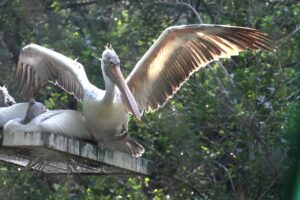
Spot-billed pelican birds
The GPS device will help ascertain the route, including countries the pelican’s travel through besides recording their activities. The scientists have also stated that they would be able to find out the origin place of the bird through this experiment.
Pelican birds travel across India, Sri Lanka and Myanmar. The GPS device will get charged automatically through sun rays. The device is designed to send all the information regarding various travelling routes for a period of four years.
Attractive pelican birds arrive in Kokkare Bellur in October and disappear after two months. This breed of birds are found in Karnataka, Tamil Nadu, Sri Lanka, Malaysia and Myanmar.
Chennai, Sep 12 (IANS) Director Soundarya Rajinikanth, who is also the younger daughter of Tamil superstar Rajinikanth, has now been blessed with a second baby — a boy.
The producer and her husband Vishagan have named the little one as Veer Rajinikanth. Taking to social media, Soundarya Rajinikanth made the announcement.
Posting a series of pictures that were shot during her pregnancy, she said: “With God’s abundant grace and our parents blessingsa Vishagan, Ved and I are thrilled to welcome Ved’s little brother Veer Rajinikanth Vanangamudi today 11/9/22.”
Soundarya Rajinikanth blessed with second boy child.
“A huge thank you to our amazing doctors Sumana Manohar, Dr.Srividya Seshadri,” she wrote. Several celebrities, friends, fans and well wishers have been congratulating the couple. Director Gitanjali Selvaraghavan, the wife of director Selvaraghavan, too was among those who congratulated Soundarya. She wrote, “Congratulations Mittu, Vishagan and Ved!!! Welcome to the world Veer!”
Mumbai, Sep 12 (IANS) A visually impaired contestant Aneri Arya shared with megastar Amitabh Bachchan that she is a big fan of his 2005 movie ‘Black’ starring Rani Mukerji on ‘Kaun Banega Crorepati 14’.
Directed by Sanjay Leela Bhansali ‘Black’ released in 2005. It also stars Shernaz Patel and Dhritiman Chatterjee in supporting roles. The film narrates the story of Michelle, a deaf-and-blind woman, and her relationship with her teacher Debraj, an elderly alcoholic who himself later develops Alzheimer’s disease.
Arya also says that she connects with the story of the film as she herself is blind and there is huge support she gets from her teacher.
She mentions: “Sir, you have played the role of a teacher in the film (Black) and with your influence, Rani Mukerji’s character was able to express herself and grow. Just like that, even I have a teacher, my PhD guide, Dr Sunil Shah.”
Kaun Banega Crorepati 14
For Aneri nothing was more exciting than taking the hotseat and telling Big B about her favourite book to movie and food.
Hailing from Surat, Gujarat, the 26-year-old ‘KBC 14’ contestant is an assistant professor of English at Shree Bhaikaka Sochitra Government Arts and Science College. During a conversation with the host she gives credit to her parents for helping her to complete her studies and also speaks about Gujarati cuisine.
Aneri says: “Mr Bachchan and I shared a lot of conversations, I told him about my favourite book, ‘The Metamorphosis’ by Franz Kafka and my favourite film of his, ‘Black’. My parents also conversed with him during the show and my mother told him about sending me out of the nest while my father told him about how proud he is of my journey.”
Aneri Arya will be taking the hotseat in the quiz-based reality show ‘Kaun Banega Crorepati 14’ on Sony Entertainment Television.
New York, Sep 12 (IANS) Spanish teenager Carlos Alcaraz displayed explosive power and demonstrated impressive touch around the net as he overcame a fighting Norwegian Casper Ruud 6-4, 2-6, 7-6(1), 6-3 to clinch his maiden Grand Slam trophy — the US Open crown — and secure the world No. 1 ranking on Monday (IST).
The 19-year-old Alcaraz won 76 per cent of net points (34/45) to outlast his opponent inside the Arthur Ashe Stadium after a nearly three hours and 20 minute slugfest. This was Alcaraz’s 51st tour-level victory of the season
Drained of energy, Alcaraz dropped to the floor following the victory and then climbed up the stands to embrace his coach and former player Juan Carlos Ferrero.
“It is something I have dreamt of since I was a kid. To be No. 1 in the world, to be champion of a Grand Slam, is something I have worked really, really hard (for),” Alcaraz was quoted as saying by ATP.
“It is tough to talk right now, I have lots of emotions. This is something I have tried to achieve. All the hard work I have done with my team and my family. I am just 19-years-old, all the tough decisions have been with my parents and my team as well. It is something that is really special for me,” he added.
Carlos Alcaraz
It has been an energy sapping US Open for Alcaraz, who endured three consecutive five-set matches to reach his first Grand Slam final. He spent 20 hours and 19 minutes on court across six games on way to the title showdown with Ruud.
“There is no time to be tired in the final rounds of a Grand Slam… You have to be ready and give everything you have inside. It is something I work really hard for,” Alcaraz said.
Alcaraz has become the youngest Grand Slam winner since Spanish stalwart Rafael Nadal, 19, lifted the French Open trophy in 2005, while he is the youngest US Open winner since American legend Pete Sampras, 19, in 1990.
Alcaraz arrived in New York as the world No. 4 but leaves the Flushing Meadows at the top-ranked player, becoming the youngest to rise to tennis’ pinnacle in the history of the ATP Rankings (since 1973).
The Spaniard has also equalled the biggest jump to No. 1, while he is the fourth Spaniard to climb to the top, joining coach Ferrero, Carlos Moya and Nadal.
Alcaraz spent a total of 23 hours and 39 minutes on court on way to the crown, passing Kevin Anderson at Wimbledon in 2018 for most time played at a single Grand Slam tournament on record (since 1999).
Ruud, who had lost to Nadal in the French Open final in June, was bidding to become the 28th player and first Norwegian to jump to No. 1
Casper Ruud
“Things have been going so well. Today was a special evening,” Ruud said. “Both Carlos (Alcaraz) and I knew what we were playing for and what was at stake. We will be No. 2 and No. 1 in the world, I think it is fitting. I am disappointed of course that I am not No. 1, but No. 2 is not bad either. I am happy with that number and I will continue to chase for my first Grand Slam title and No. 1 ranking,” added Ruud.
Varanasi, Sep 12 (IANS) The Varanasi court on Monday said that the Hindu petition for worship in Shringar Gauri was maintainable and the five Hindu women’s plea seeking right to worship in the Gyanvapi complex will be heard.
District judge A.K. Vishvesha dismissed the petition filed by the Muslim side citing the Places of Worship Act and questioning the maintainability of the petition.
Advocate Vishnu Shankar Jain, representing the Hindu side said, “The court rejected the Muslim side’s petition and said the suit is maintainable. The next hearing in the matter will be on September 22.”
“Muslim petitioners are likely to approach the Allahabad High Court in appeal,” petitioner Sohan Lal Arya said, but added that they will continue to contest the case.
A view of district court in Varanasi
Well known Sunni cleric Maulana Khalid Rashid Firangi Mahali said that their legal team would study the verdict and act accordingly.
He expressed concern over the fact that the Places of Worship Act 1991 was being set aside and such cases were being raised.
“We will fight the matter legally,” he added.
In May, the Supreme Court had assigned the case to the Varanasi district judge’s court, shifting it from a lower court where it was being heard till then.
The Supreme Court had ordered that “Keeping the complexity and sensitivity of the matter in view, the civil suit before the civil judge in Varanasi shall be heard before a senior and experienced judicial officer of the UP judicial service.”
A month before the Supreme Court’s intervention in the case, the Varanasi civil court had ordered the filming of the Gyanvapi mosque, based on the petition by the Hindu women who claimed that there are idols of Hindu Gods and Goddesses in the Gyanvapi mosque complex.
Varanasi: A view of the Gyanvapi Mosque in Varanasi on Thursday, May 19, 2022. Supreme Court ordered that if the ‘Shivling’ found in the mosque complex, the area should be protected but muslim people should not be stopped from offering Namaz. (Photo: Wasim Sarvar/IANS)
A report of the filming at the mosque was then submitted to the Varanasi court in a sealed cover, but the Hindu petitioners controversially released details just hours later.
The report claimed a ‘Shivling’ had been found in a pond within the mosque complex used for ‘wuzu’ or purification rituals before Muslim prayers.
The judge hearing the case at the time had ordered the sealing of this pond.
This filming inside the centuries-old mosque was challenged in the Supreme Court by the Gyanvapi mosque committee.
The petitioners said the filming goes against the Places of Worship Act of 1991, which maintains the religious status of any place of worship as of August 15, 1947.
“Such petitions and sealing of mosques will lead to public mischief and communal disharmony, will affect mosques across the country,” the mosque committee had argued.
The mosque committee made similar arguments before the Varanasi district judge’s court in the ‘maintainability’ case, while lawyers for the Hindu petitioners claimed the law does not bar their case and that they could establish in court that the mosque premises was actually a temple as on the day of Independence.
Indian scientists from the Dehradun Wildlife Institute on Monday successfully fitted a GPS device to a pelican bird in Kokkare Bellur in Karnataka’s Mandya district, first of its kind in the country.
The experiment was carried out to study the abodes of pelicans, food habits and international routes that these migratory birds traverse.
Sources said that the GPS device was imported from Greece. The animal lovers and scientists have described the experiment as historical.
The GPS device will help ascertain the route, including countries the pelican’s travel through besides recording their activities. The scientists have also stated that they would be able to find out the origin place of the bird through this experiment.
Pelican birds travel across India, Sri Lanka and Myanmar. The GPS device will get charged automatically through sun rays. The device is designed to send all the information regarding various travelling routes for a period of four years.
Attractive pelican birds arrive in Kokkare Bellur in October and disappear after two months. This breed of birds are found in Karnataka, Tamil Nadu, Sri Lanka, Malaysia and Myanmar. (IANS)
The attacks of Sept. 11, 2001 were a national tragedy that resulted in a staggering loss of life and a significant change in American culture. Each year, we pause and remember. Beyond honoring the Americans who died that day, NASA also assisted FEMA in New York in the days afterward, and remembered the victims by providing flags flown aboard the Space Shuttle to their families.
Expedition 3 Commander Frank Culbertson was aboard the International Space Station at the time of the attacks, and the only American on the crew. As soon as he learned of the attacks, he began documenting the event in photographs because the station was flying over the New York City area. He captured incredible images in the minutes and hours following the event. From his unique vantage point in space, he recorded his thoughts of the world changing beneath him.
The following day, he posted a public letter that captured his initial thoughts of the events as they unfolded. “The world changed today. What I say or do is very minor compared to the significance of what happened to our country today when it was attacked.”
Visible from space, a smoke plume rises from the Manhattan area after two planes crashed into the towers of the World Trade Center. This photo was taken of metropolitan New York City (and other parts of New York as well as New Jersey) the morning of September 11, 2001. Credits: NASA
Upon further reflection, Culbertson said, “It’s horrible to see smoke pouring from wounds in your own country from such a fantastic vantage point. The dichotomy of being on a spacecraft dedicated to improving life on the earth and watching life being destroyed by such willful, terrible acts is jolting to the psyche, no matter who you are.”
NASA science programs were called into action after Sept. 11, 2001, as the agency worked with FEMA to fly sensors over the affected areas on aircraft looking for aerial contaminants and used satellite resources to monitor from above.
Flags for Heroes and Families
NASA flew nearly 6,000 4 by 6 inch flags on Endeavour’s flight during STS-108 to honor the victims of the terrorist attacks in New York, Washington, D.C. and Pennsylvania. Students working at Johnson Space Center in Houston, Texas assembled the commemorative packages, including the U.S. flags flown in space, to be presented to relatives of the victims. Distribution began on June 14, 2002, National Flag Day, at a ceremony held at the American Museum of Natural History’s Rose Center for Earth and Space in New York.
“The ‘Flags for Heroes and Families’ campaign is a way for us to honor and show our support for the thousands of brave men and women who have selflessly contributed to the relief and recovery efforts,” said then-NASA Administrator Dan Goldin. “The American flags are a patriotic symbol of our strength and solidarity, and our Nation’s resolve to prevail.”
NASA/Photo: Nasa.gov
“NASA wanted to come up with an appropriate tribute to the people who lost their lives in the tragic events of September 11,” added Goldin. “America’s space program has a long history of carrying items into space to commemorate historic events, acts of courage and dramatic achievements. ‘Flags for Heroes and Families’ is a natural extension of this ongoing outreach project.”
australian media is abuzz with the news that a secret letter written by Queen Elizabeth II is locked inside a vault or time capsule in Sydney, to be opened in 2086, 100 years after it was written.
According to 7NEWS Australia, the letter is inside a vault in a historic building in Sydney was written in November 1986, addressed to the people of Sydney. Even the Queen’s personal staff are not aware of what the letter says.
Hidden inside a glass case in a secure location, it can’t be opened until 2085. The address was to the Lord Mayor of Sydney, and the instruction clearly says:
“On a suitable day to be selected by you in the year 2085 A.D, would you please open this envelope and convey to the citizens of Sydney my message to them.” It is simply signed, “Elizabeth R.”
Speculation is rife that it could be about a time capsule to be unearthed in 2086 for the people of Australia. The Queen had special place for Australia in her heart and visited almost all the regions during her visits.
Queen Elizabeth II has special ties with Australia, which honoured the Queen as Head of the State and defeated a referendum to replace her in 1999. She had visited Australia 16 times during her 70 years of reign.
“It was clear Her Majesty held a special place in her heart for Australia,” Australian Prime Minister Anthony Albanese said..
On Friday, Sydney’s iconic Opera House was lit with a tribute to the Queen.
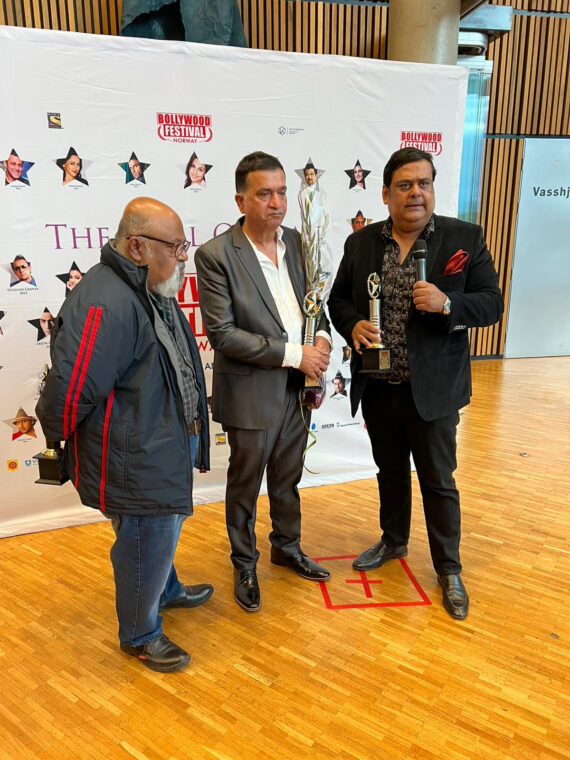
Oslo: Bollywood filmmaker-actor Rahul Mittra, veteran action director Sham Kaushal and writer-actor-director Saurabh Shukla were among those honoured at the 20th edition of Bollywood Festival Norway in a glittering ceremony at a packed Lorenskog kulturhus centre, few miles away from the capital city of Oslo.
Mayor of Lorenskog Ragnhild Bergheim presented the Lifetime Achievement Award to Sham Kaushal
while Saurabh Shukla and Rahul Mittra were awarded for their contribution to the Indian film
industry. An emotional Sham Kaushal thanked everyone with whom he worked in the film industry
in a career spanning four decades and urged everyone to never stop dreaming.
Saurabh Shukla shared his passion to become rich when he came to Mumbai years ago and finally
succeeded in getting paid for what he likes doing. “That for me is being rich,” said Shukla.
Norway Festival 2022
Rahul Mittra who has succeeded in making a name in the Indian film and entertainment industry in a short span of time, spoke about the power of Indian cinema as the strongest soft power and highlighted its role as a major tool of enhancing cultural diplomacy in the world.
Iranian actors Sam Nauri, Helia Emami and Sharifinia. The award function was followed by
spectacular Indian dance performances by Indian, Polish & Norwegian dance troupes and a stunning
act by The International stunt academy of Norway.
Festival Director Nasrullah Qureshi shared his journey of last twenty years to popularise Indian
cinema in this part of the world while head of festival programme Hemant Wason gave the vote of
thanks.
The festival will also have multiple film screenings of Indian and Iranian films, followed
by a concert which will pay to legendary Indian singer Lata Mangeshkar in the coming few days.
The rate that emerging wildlife diseases infect humans has steadily increased over the last three decades. Viruses, such as the global coronavirus pandemic and recent monkeypox outbreak, have heightened the urgent need for disease ecology tools to forecast when and where disease outbreaks are likely.
A University of South Florida assistant professor helped develop a methodology that will do just that – predict disease transmission from wildlife to humans, from one wildlife species to another and determine who is at risk of infection.
The methodology is a machine-learning approach that identifies the influence of variables, such as location and climate, on known pathogens. Using only small amounts of information, the system is able to identify community hot spots at risk of infection on both global and local scales.
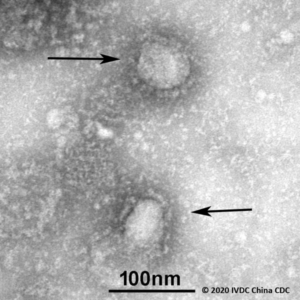
coronavirus
“Our main goal is to develop this tool for preventive measures,” said co-principal investigator Diego Santiago-Alarcon, a USF assistant professor of integrative biology. “It’s difficult to have an all-purpose methodology that can be used to predict infections across all the diverse parasite systems, but with this research, we contribute to achieving that goal.”
With help from researchers at the Universiad Veracruzana and Instituto de Ecologia, located in Mexico, Santiago-Alarcon examined three host-pathogen systems – avian malaria, birds with West Nile virus and bats with coronavirus – to test the reliability and accuracy of the models generated by the methodology.
The team found that for the three systems, the species most frequently infected was not necessarily the most susceptible to the disease. To better pinpoint hosts with higher risk of infection, it was important to identify relevant factors, such as climate and evolutionary relationships.
By integrating geographic, environmental and evolutionary development variables, the researchers identified host species that have previously not been recorded as infected by the parasite under study, providing a way to identify susceptible species and eventually mitigate pathogen risk.
“We feel confident that the methodology is successful, and it can be applied widely to many host-pathogen systems,” Santiago-Alarcon said. “We now enter into a phase of improvement and refinement.”
The results, published in the Proceedings of the National Academy of Sciences, prove the methodology is able to provide reliable global predictions for the studied host–pathogen systems, even when using a small amount of information. This new approach will help direct infectious disease surveillance and field efforts, providing a cost-effective strategy to better determine where to invest limited disease resources.
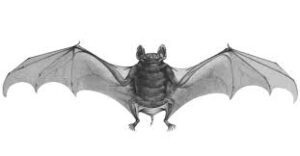
Bats/wikipedia
Predicting what kind of pathogen will produce the next medical or veterinary infection is challenging, but necessary. As the rate of human impact on natural environments increases, opportunity for novel diseases will continue to rise.
“Humanity, and indeed biodiversity in general, are experiencing more and more infectious disease challenges as a result of our incursion and destruction of the natural order worldwide through things like deforestation, global trade and climate change,” said Andrés Lira-Noriega, research fellow at the Instituto de Ecologia. “This imposes the need of having tools like the one we are publishing to help us predict where new threats in terms of new pathogens and their reservoirs may occur or arise.”
The team plans to continue their research to further test the methodology on additional host-pathogen systems and extend the study of disease transmission to predict future outbreaks. The goal is to make the tool easily accessible through an app for the scientific community by the end of 2022.
Research has established that there are traces of Neandertal DNA in the genome of modern humans. Now an exploratory study that assessed the facial structure of prehistoric skulls is offering new insights, and supports the hypothesis that much of this interbreeding took place in the Near East – the region ranging from North Africa to Iraq.
“Ancient DNA caused a revolution in how we think about human evolution,” says Steven Churchill, co-author of the study and a professor of evolutionary anthropology at Duke University. “We often think of evolution as branches on a tree, and researchers have spent a lot of time trying to trace back the path that led to us, Homo sapiens. But we’re now beginning to understand that it isn’t a tree – it’s more like a series of streams that converge and diverge at multiple points.”
“Our work here gives us a deeper understanding of where those streams came together,” says Ann Ross, corresponding author of the study and a professor of biological sciences at North Carolina State University.
Neanderthal/Photo:en.wikipedia.org
“The picture is really complicated,” Churchill says. “We know there was interbreeding. Modern Asian populations seem to have more Neandertal DNA than modern European populations, which is weird – because Neandertals lived in what is now Europe. That has suggested that Neandertals interbred with what are now modern humans as our prehistoric ancestors left Africa, but before spreading to Asia. Our goal with this study was to see what additional light we could shed on this by assessing the facial structure of prehistoric humans and Neandertals.”
“By evaluating facial morphology, we can trace how populations moved and interacted over time,” Ross explains. “And the evidence shows us that the Near East was an important crossroads, both geographically and in the context of human evolution.”
For this study, the researchers collected data on craniofacial morphology from the published literature. This ultimately resulted in a data set including 13 Neandertals, 233 prehistoric Homo sapiens, and 83 modern humans.
The researchers focused on standard craniofacial measurements, which are reproducible, and used those measurements to assess the size and shape of key facial structures. This then allowed the researchers to do an in-depth analysis to determine whether a given human population was likely to have interbred with Neandertal populations, as well as the extent of that likely interbreeding.
“Neandertals had big faces,” Churchill says. “But size alone doesn’t establish any genetic link between a human population and Neandertal populations. Our work here involved a more robust analysis of the facial structures.”
The researchers also accounted for environmental variables that are associated with changes in human facial characteristics, to determine the likelihood that connections they established between Neandertal and human populations were the result of interbreeding rather than other factors.
“We found that the facial characteristics we focused on were not strongly influenced by climate, which made it easier to identify likely genetic influences,” Ross says. “We also found that facial shape was a more useful variable for tracking the influence of Neandertal interbreeding in human populations over time. Neandertals were just bigger than humans. Over time, the size of human faces became smaller, generations after they had bred with Neandertals. But the actual shape of some facial features retained evidence of interbreeding with Neandertals.”
“This was an exploratory study,” Churchill says. “And, honestly, I wasn’t sure this approach would actually work – we have a relatively small sample size, and we didn’t have as much data on facial structures as we would have liked. But, ultimately, the results we got are really compelling.
“To build on this, we’d like to incorporate measurements from more human populations, such as the Natufians, who lived more than 11,000 years ago on the Mediterranean in what is now Israel, Jordan and Syria.”
After the simultaneous search and seizure operations conducted by the Ministry of Corporate Affairs on 8th Sept. 2022, on the offices of Jillian Consultants India Private Ltd, a wholly owned subsidiary of Jilian Hong Kong Ltd., at Gurgaon, Fininty Pvt Ltd at Bangalore and Husys Consulting Ltd, an erstwhile listed company at Hyderabad, the Serious Fraud Investigation Office (SFIO) has arrested Mr Dortse yesterday.
Mr Dortse is on the Board of Jillian India Ltd and has clearly emerged as the mastermind of the whole racket of incorporating large number of shell companies with Chinese links in India and providing dummy Directors on their Boards. The arrested person Mr. Dortse had shown himself to be a resident of Mandi in Himachal Pradesh as per the records filed with the Registrar of Companies.
Evidence procured during the enquiry by ROC Delhi and the simultaneous search operations clearly points to dummy Directors being paid by Jilian India Ltd. to act as dummies in several shell companies. Boxes filled with company seals and digital signatures of dummy directors have been recovered from the site. The Indian employees were in touch with the Chinese counterparts through a Chinese instant messaging app. Husys Ltd. was also found to be acting on behalf of Jilian India Ltd.. Initial observations reveal that Husys Ltd. had a pact with Jilian Hong Kong Ltd. Investigations so far have revealed the possible involvement of these shell companies in serious financial crimes detrimental to the financial security of the country.
Ministry of Corporate Affairs
The Ministry of Corporate Affairs, under whose aegis SFIO operates, had assigned the investigation of Jilian Consultants India Private Limited and 32 other companies to SFIO on 9th Sept., 2022. Mr. Dortse and one Chinese national are the two directors in Jilian Consultants India Private Limited. Based on inputs and the investigations carried out, it was gathered that Mr. Dortse had fled from Delhi NCR to a remote place in the state of Bihar and was attempting to escape India through the road route. Immediately, a special team was constituted in SFIO which was deputed to the said remote place. In the evening of 10th Sept., 2022, SFIO had arrested Mr. Dortse, who was later produced in the Jurisdictional Court and Orders for his transit remand were obtained.
The Prime Minister, Narendra Modi has expressed deep grief over the demise of Veteran telugu cinematic personality, Krishnam Raju Garu.
The Prime Minister tweeted;
“Saddened by the passing away of Shri UV Krishnam Raju Garu. The coming generations will remember his cinematic brilliance and creativity. He was also at the forefront of community service and made a mark as a political leader. Condolences to his family and admirers. Om Shanti.”
PM condoles demise of Veteran telugu actor, Krishnam Raju
‘Brahmastra’ seems to have finally broken the so-called boycott trollers and made a headway to cross the Rs.100 crore target by Monday, going by the expectations running high.
Released on Friday, the opening day collections were reported to be in the range of Rs 36.50 crore to Rs 38.50 crore, a figure far better than pre-pandemic blockbusters ‘Sanju’, ‘Tiger Zinda Hai’ and ‘Dhoom 3’.
Despite the boycott call and negative reviews and tweets by business analyst Taran Adarsh, who wrote,”Brahmāstra is a king-sized disappointment… High on VFX, low on content [second half nosedives]… Brahmāstra could’ve been a game changer, but, alas, it’s a missed opportunity… All gloss, no soul,” the film is doing well in its initial days.
Brahmastra posters
According to ‘Bollywood Hungama’, early estimates indicated that the Ayan Mukherji movie has collected the above figures. Whether the move, made at a whopping cost of Rs.415 cr will make at least Rs. 500 crore, however, remains to be seen.
According to ‘Bollywood Hungama’, its first-day earnings have surpassed those of the biggest post-pandemic grosser, the Akshay Kumar and Katrina Kaif-led ‘Sooryavanshi’.With no major release to counter the movie until the upcoming actioner ‘Vikram Vedha’ starring Hrithik Roshan and Saif Ali Khan on September 30, ‘Brahmastra’ is expected to carry on its run to a decent returns with high ticket rates ranging from Rs. 1,000 in Mumbai to Rs. 2,000 in Delhi at top malls.
“The film has fared exceptionally well in the multiplexes and the mass belts too stood their ground with spot bookings,” ‘Bollywood Hungama’ wrote.
Besides Hindi, the film’s other language versions are reportedly bringing in viewers going by the opening day’s collection of Rs. 5 crore each and the occupancy rate ranging anywhere between 40 and 50% in major South Indian cities.
After disconnecting the ground and rocket-side plates on the interface, called a quick disconnect, for the liquid hydrogen fuel feed line, teams have replaced the seals on the Space Launch System rocket’s core stage associated with the liquid hydrogen leak detected during the Artemis I launch attempt Sept. 3.
Both the 8-inch line used to fill and drain liquid hydrogen from the core stage and the 4-inch bleed line used to redirect some of the propellant during tanking operations were removed and replaced this week.
NASA’s Space Launch System (SLS) rocket is seen at Launch Pad 39B Thursday, Sept. 8, 2022, at NASA’s Kennedy Space Center in Florida as teams work to replace the seal on an interface, called the quick disconnect, between the liquid hydrogen fuel feed line on the mobile launcher and the rocket. Photo Credit: (NASA/Chad Siwik)
Coming up, technicians will reconnect the umbilical plates and perform inspections over the weekend before preparing for a tanking demonstration as soon as Saturday, Sept. 17. This demonstration will allow engineers to check the new seals under cryogenic, or supercold, conditions as expected on launch day and before proceeding to the next launch attempt.
NASA/Photo: Nasa.gov
During the operation, teams will practice loading liquid hydrogen and liquid oxygen in the rocket’s core stage and interim cryogenic propulsion stage and getting to a stable replenish state for both propellants.
Teams will confirm the leak has been repaired and also perform the kick-start bleed test and a pre-pressurization test, whichwill validate the ground and flight hardware and software systems can perform the necessary functions required to thermally condition the engines for flight. Following the test, teams will evaluate the data along with plans for the next launch opportunity.
Engineers are making progress repairing the area where a liquid hydrogen leak was detected during the Artemis I launch attempt Sept. 3, and NASA is preserving options for the next launch opportunity as early as Friday, Sept. 23.
Technicians constructed a tent-like enclosure around the work area to protect the hardware and teams from weather and other environmental conditions at Launch Pad 39B. They have disconnected the ground- and rocket-side plates on the interface, called a quick disconnect, for the liquid hydrogen fuel feed line, performed initial inspections, and began replacing two seals – one surrounding the 8-inch line used to fill and drain liquid hydrogen from the core stage, and another surrounding the 4-inch bleed line used to redirect some of the propellant during tanking operations. The SLS rocket and Orion spacecraft are in good condition while remaining at the launch pad.
Once the work is complete, engineers will reconnect the plates and perform initial tests to evaluate the new seals. Teams will check the new seals under cryogenic, or supercold, conditions no earlier than Sept. 17 in which the rocket’s core stage and interim cryogenic propulsion stage will be loaded with liquid oxygen and liquid hydrogen to validate the repair under the conditions it would experience on launch day. Engineers are in the process of developing a full plan for the checkouts.
Artemis I logo/NASA
NASA has submitted a request to the Eastern Range for an extension of the current testing requirement for the flight termination system. NASA is respecting the range’s processes for review of the request, and the agency continues to provide detailed information to support a range decision.
In the meantime, NASA is instructing the Artemis team to move forward with all preparations required for testing, followed by launch, including preparations to ensure adequate supplies of propellants and gases used in tanking operations, as well as flight operations planning for the mission. NASA has requested the following launch opportunities:
Sept 23: Two-hour launch window opens at 6:47 a.m. EDT; landing on Oct. 18
Sept. 27: 70-minute launch window opens at 11:37 a.m.; landing on Nov. 5
NASA’s teams internally are preparing to support additional dates in the event flexibility is required. The agency will evaluate and adjust launch opportunities and alternate dates based on progress at the pad and to align with other planned activities, including DART’s planned impact with an asteroid, the west coast launch of a government payload, and the launch of Crew-5 to the International Space Station.
NASA/Photo: Nasa.gov
Listen to a replay of today’s media teleconference on the status of the Artemis I mission. Artemis I is an uncrewed flight test to provide a foundation for human exploration in deep space and demonstrate our commitment and capability to extend human existence to the Moon and beyond.