

Varanasi, Sep 12 (IANS) The Varanasi court on Monday said that the Hindu petition for worship in Shringar Gauri was maintainable and the five Hindu women’s plea seeking right to worship in the Gyanvapi complex will be heard.
District judge A.K. Vishvesha dismissed the petition filed by the Muslim side citing the Places of Worship Act and questioning the maintainability of the petition.
Advocate Vishnu Shankar Jain, representing the Hindu side said, “The court rejected the Muslim side’s petition and said the suit is maintainable. The next hearing in the matter will be on September 22.”
“Muslim petitioners are likely to approach the Allahabad High Court in appeal,” petitioner Sohan Lal Arya said, but added that they will continue to contest the case.

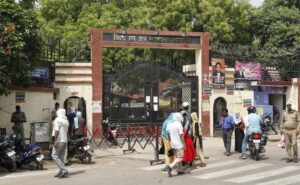
A view of district court in Varanasi
Well known Sunni cleric Maulana Khalid Rashid Firangi Mahali said that their legal team would study the verdict and act accordingly.
He expressed concern over the fact that the Places of Worship Act 1991 was being set aside and such cases were being raised.
“We will fight the matter legally,” he added.
In May, the Supreme Court had assigned the case to the Varanasi district judge’s court, shifting it from a lower court where it was being heard till then.
The Supreme Court had ordered that “Keeping the complexity and sensitivity of the matter in view, the civil suit before the civil judge in Varanasi shall be heard before a senior and experienced judicial officer of the UP judicial service.”
A month before the Supreme Court’s intervention in the case, the Varanasi civil court had ordered the filming of the Gyanvapi mosque, based on the petition by the Hindu women who claimed that there are idols of Hindu Gods and Goddesses in the Gyanvapi mosque complex.


Varanasi: A view of the Gyanvapi Mosque in Varanasi on Thursday, May 19, 2022. Supreme Court ordered that if the ‘Shivling’ found in the mosque complex, the area should be protected but muslim people should not be stopped from offering Namaz. (Photo: Wasim Sarvar/IANS)
A report of the filming at the mosque was then submitted to the Varanasi court in a sealed cover, but the Hindu petitioners controversially released details just hours later.
The report claimed a ‘Shivling’ had been found in a pond within the mosque complex used for ‘wuzu’ or purification rituals before Muslim prayers.
The judge hearing the case at the time had ordered the sealing of this pond.
This filming inside the centuries-old mosque was challenged in the Supreme Court by the Gyanvapi mosque committee.
The petitioners said the filming goes against the Places of Worship Act of 1991, which maintains the religious status of any place of worship as of August 15, 1947.
“Such petitions and sealing of mosques will lead to public mischief and communal disharmony, will affect mosques across the country,” the mosque committee had argued.
The mosque committee made similar arguments before the Varanasi district judge’s court in the ‘maintainability’ case, while lawyers for the Hindu petitioners claimed the law does not bar their case and that they could establish in court that the mosque premises was actually a temple as on the day of Independence.