‘Brahmastra’ makes Rs.36.5 Cr on Opening Day, Likely to cross Rs.100 Cr after weekend

‘Brahmastra’ seems to have finally broken the so-called boycott trollers and made a headway to cross the Rs.100 crore target by Monday, going by the expectations running high.
Released on Friday, the opening day collections were reported to be in the range of Rs 36.50 crore to Rs 38.50 crore, a figure far better than pre-pandemic blockbusters ‘Sanju’, ‘Tiger Zinda Hai’ and ‘Dhoom 3’.
Despite the boycott call and negative reviews and tweets by business analyst Taran Adarsh, who wrote,”Brahmāstra is a king-sized disappointment… High on VFX, low on content [second half nosedives]… Brahmāstra could’ve been a game changer, but, alas, it’s a missed opportunity… All gloss, no soul,” the film is doing well in its initial days.

Brahmastra posters

According to ‘Bollywood Hungama’, early estimates indicated that the Ayan Mukherji movie has collected the above figures. Whether the move, made at a whopping cost of Rs.415 cr will make at least Rs. 500 crore, however, remains to be seen.

According to ‘Bollywood Hungama’, its first-day earnings have surpassed those of the biggest post-pandemic grosser, the Akshay Kumar and Katrina Kaif-led ‘Sooryavanshi’.With no major release to counter the movie until the upcoming actioner ‘Vikram Vedha’ starring Hrithik Roshan and Saif Ali Khan on September 30, ‘Brahmastra’ is expected to carry on its run to a decent returns with high ticket rates ranging from Rs. 1,000 in Mumbai to Rs. 2,000 in Delhi at top malls.

“The film has fared exceptionally well in the multiplexes and the mass belts too stood their ground with spot bookings,” ‘Bollywood Hungama’ wrote.

Besides Hindi, the film’s other language versions are reportedly bringing in viewers going by the opening day’s collection of Rs. 5 crore each and the occupancy rate ranging anywhere between 40 and 50% in major South Indian cities.


IMF chief Kristalina Georgieva calls on President Murmu

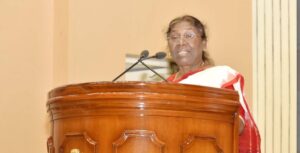
Ms Kristalina Georgieva, Managing Director of the International Monetary Fund (IMF) called on the President of India, Droupadi Murmu at Rashtrapati Bhavan today (September 9, 2022).

Welcoming Ms Georgieva to Rashtrapati Bhavan, the President said that the world is passing through the third year of the Covid pandemic. She noted that significant assistance has been provided to many low-income countries by multilateral institutions such as the IMF and the World Bank. She said that IMF has to play an important role in maintaining the stability of the International Monetary System.

The President said that today, India is one of the fastest growing major economies of the world. India’s start-up ecosystem ranks high in the world. The success of start-ups in our country, especially the growing number of Unicorns, is a shining example of our industrial progress. What is even more gratifying is that the development of our country is becoming more inclusive and regional disparities are also reducing. The basic mantra of today’s India is compassion – compassion for the downtrodden, compassion – for the needy and compassion – for the marginalized.

President Droupadi Murmu (PIB)

Speaking about the upcoming G-20 Summit in India in 2023, the President said that multilateral cooperation in the G-20 should be based on the principles of inclusion and flexibility, keeping in mind diversity. She expressed confidence that during India’s presidency, the G-20 Forum will move forward with an aspiration to make efforts to further strengthen multilateralism and global governance, in the direction of building a peaceful, sustainable and prosperous world for all.


Queen Elizabeth II Visits Goddard Space Flight Center in 2007: NASA

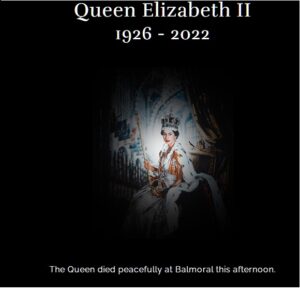
Queen Elizabeth II, Britain’s longest-reigning monarch, died on Sept. 8, 2022 at age 96. Her reign spanned all of spaceflight, predating both Sputnik and Explorer 1.

As NASA joins the planet in marking her passing, we are moved by the curiosity The Queen showed our explorers over the years.

Queen Elizabeth II passed away, Charles III becomes UK’s new King

In this photo, Queen Elizabeth II greets employees on her walk from NASA’s Goddard Space Flight Center mission control to a reception in the center’s main auditorium, Tuesday, May 8, 2007, in Greenbelt, Md. Queen Elizabeth II and her husband, Prince Philip, Duke of Edinburgh, visited the NASA Goddard Space Flight Center as one of the last stops on their six-day United States visit.


Hidden black diamond: Delicious, aromatic, rare ‘Appalachian truffle’

A hallmark of a truly luxurious meal is a sprinkling of truffle shavings — the fungal kind, not the chocolate. Nicknamed “diamonds” of the culinary world, these fanciful fungi are prized for their unique flavor and scent. But newer truffle species are fighting to achieve that same gourmet status. Now, researchers reporting in ACS Omega have performed the first full aroma characterization of the Appalachian truffle, unlocking the potential for a new North American “black diamond.”

The gourmet delicacies known as truffles are subterranean fungi of the Tuber species that require several years and very particular conditions to grow. Figuring out how to cultivate the fungi efficiently has been very difficult, so most people forage for them in the wild using trained animals, such as pigs or dogs, that can uncover these hidden gems. Because truffles are so rare and challenging to obtain, they are very expensive.

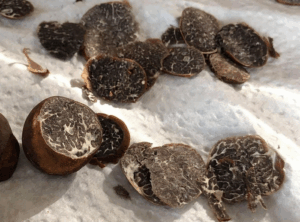
These Appalachian truffles might one day be just as prized as those from Europe/ Photo:David Fortier

For example, a large 3.3-pound behemoth from Italy cost $330,000 at auction several years ago. Commercial truffles most often originate from Europe, Australia and the western U.S., but different species exist all over the world. Unlike the fancy white or black truffles grown in Italy or France, however, many unearthed in North America have not been well studied. So, Normand Voyer and colleagues wanted to thoroughly analyze the aromatic profile of one of these North American varieties, known as Tuber canaliculatum, or Appalachian truffle.

To accomplish this, the researchers investigated three T. canaliculatum samples using headspace solid-phase microextraction (HS-SPME) and gas chromatography-mass spectrometry (GC/MS). With these techniques, the team identified the species’ “volatilome,” or the chemical fingerprint responsible for its aroma.

A total of 30 different compounds, including six that had never been reported in other truffle species, were identified. Some, such as 2,4-dithiapentane, are found in many truffle species and give truffle oil its unique smell. The most prevalent compounds were described as having strong odors of garlic, fungus and even a cabbage-like, rotten smell that was found in higher concentrations in older samples. The researchers say that this work could spur future studies of T. canaliculatum, which might one day place it at the same high status as its European cousins.

Finance Minister Nirmala Sitharaman chairs meeting on “Illegal Loan Apps”; Steps to prevent operations

Union Minister for Finance & Corporate Affairs Smt. Nirmala Sitharaman chaired a meeting yesterday to discuss the various issues related to “Illegal Loan Apps” outside the regular banking channels.

The meeting was attended by the Finance Secretary, Ministry of Finance; Secretary, Economic Affairs; Secretary, Revenue, & Corporate Affairs (Addl. Charge); Secretary, Financial Services; Secretary, Electronics & Information technology; Deputy Governor, RBI; and Executive Director, RBI.

The Finance Minister expressed concern on increasing instances of Illegal Loan Apps offering loans/micro credits, especially to vulnerable & low-income group people at exorbitantly high interest rates and processing/hidden charges, and predatory recovery practices involving blackmailing, criminal intimidation etc. Smt. Sitharaman also noted the possibility of money laundering, tax evasions, breach/privacy of data, and misuse of unregulated payment aggregators, shell companies, defunct NBFCs etc. for perpetrating such actions.

After detailed deliberations on legal, procedural & technical aspects of the issue, it was decided in the meeting that:

  • RBI will prepare a “Whitelist” of all the legal Apps and MeitY will ensure that only these “Whitelist” Apps are hosted on App Stores.
  • RBI will monitor the ‘mule/rented’ accounts that may be used for money laundering and to review/cancel dormant NBFCs to avoid their misuse.
  • RBI will ensure that registration of payment aggregators be completed within a timeframe and no un-registered payment aggregator be allowed to function after that.
  • MCA will identify shell companies and de-register them to prevent their misuse.
  • Steps should be taken to increase cyber awareness for customers, bank employees, law enforcement agencies and other stakeholders.
  • All Ministries/Agencies to take all possible actions to prevent operations of such Illegal Loan Apps.

The Ministry of Finance will monitor the actionable points for compliance on a regular basis.

28-ft statue of Netaji to grace vacant canopy at India Gate tomorrow

A grand statue of Netaji Subhas Chandra Bose, will be unveiled on 8th of September 2022 near India Gate in New Delhi in a jet black granite stone measuring 28 ft. under the Canopy near India Gate, which had King George’s statue originally.

Ever since the plan to install King George V statue by the British was scrapped owing to controversy, the canopy remained vacant. There was a move to install Mahatma Gandhi statue during the late 1980s but opposition from some circles that the Republic Day parade carrying arms and ammunition go against the Mahatma’s message of peace reigned on the government to reject the plan.

India Gate canopy in the 1940s had King George V statue but was removed later.

Finally, the canopy will have the grand statue of Netaji being unveiled on Sept 8, 2022, heralding a befitting tribute to the Indian National Army hero, who fought for Indian freedom based in Japan and Singapore. The statue has been carved from a monolithic block of granite weighing 280 MT after spending 26,000 man hours of intense artistic endeavor and the final statue weighing 65 MT will greet the visitors to India gate in New Delhi now.

The statue is completely hand sculpted using traditional techniques and modern tools under a team of sculptors led by Arun Yogiraj.

The statue of Netaji Subhas Chandra Bose will be unveiled by the Prime Minister in the same place where a hologram statue of Netaji was unveiled earlier this year on Parakram Diwas (January 23) by him to mark the 125th birth anniversary of Netaji.

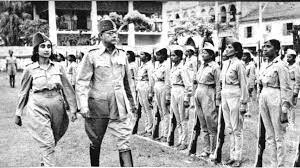
Netaji Subhas Chandra Bose inspecting Indian National Army

The 28 feet tall towering statue of Netaji is one of the tallest, realistic, monolithic, handmade sculptures in India.  A 100 feet long truck with 140 wheels was specially designed for this monolithic granite stone to travel the 1665-km distance from Khammam in Telangana to New Delhi.

Details of Netaji statue unveiling ceremony:

  • The  unveiling event at the canopy will begin with traditional Manipuri Shankh Vadayam and Kerala’s traditional Panch Vadayam and Chanda.  The unveiling of the statue of Netaji would be accompanied to the tune of Kadam Kadam Badhaye jaa, the traditional INA song.
  • To demonstrate the spirit of Ek Bharat – Shrestra Bharat & Unity in Diversity a cultural festival by 500 dancers drawn from all parts of the country, would be showcased on the Kartvya Path.
  • The glimpse of the same would be shown to the  Prime Minster on the step Amphitheatre near India Gate by around 30 artists who will perform tribal folk art forms such as Sambalpuri, Panthi, Kalbelia, Kargam and dummy horse with live music  by Nashik Dhol Pathik Tasha and Drums.
  • Mangalgaan penned by Pandit Shrikrishna Ratanjankarji on the auspicious occasion of 1st Independence Day of India in 1947 is being presented by Pandit Suhas Vashi along with a team of singers and musicians. Ashish Keskar will be the music director for the presentation.
  • The festival at renamed Kartvya Path (old Raj Path) would commence at 08.45 PM on 8th September, 2022 after the main function and will continue on 9th, 10, & 11th September, 2022 from 7.00 PM to 9.00 PM.
  • A special 10 minute Drone Show on Netaji’s life would be projected at India Gate at 08.00 PM on 9th, 10th & 11th September, 2022.  Both the cultural festival and the drone show would be open to public with free entry.


Centre helps Manipur to organize pineapples export promotion show in Dubai

In a move towards harnessing export potential of naturally grown, organic certified fresh pineapples of North-Eastern Region (NER), centre, through Agricultural & Processed Food Products Export Development Authority (APEDA) organized an in-store export promotion programme in Dubai, United Arab Emirates (UAE) for Manipur’s pineapples among consumers.

The ‘in-store promotion show’ of organic certified fibre rich Kwe variety of pineapples from Manipur, was organized at the Lulu hyper market, Dubai’s largest supermarket in association with Manipur Organic Mission Agency (MOMA) of Government of Manipur. This event is part of government’s strategy to promote locally produced agricultural products in the international markets.

Manipur Organic Mission Agency (MOMA) has supported the sourcing of organic certified Kwe variety of pineapples directly from the farmers of Manipur.

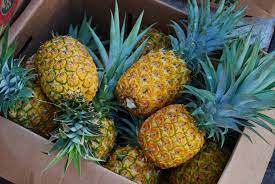
pine apple/Photo:en.wikipedia.org

The Manipur pineapple, which is showcased with the support from APEDA, is fibre-rich sweetener from North Eastern Region (NER). The showcased pineapples are procured from Thayong Organic Producer Company Ltd in Imphal East district, Manipur.

At the in-store export promotion show, consumers were offered Manipur pineapple to taste the sweetness of the fruit. Northeast pineapple is one of the most important tropical fruits grown in the NER and the fibre-rich fruit is cultivated in almost all the region.

With a production of 134.82 metric tonne (MT) in 2020-21, Manipur ranks sixth in pineapple production having a share of 7.46 per cent in total production in India.

The top ten importing countries of Indian pineapples are UAE, Nepal, Qatar, Maldives, USA, Bhutan, Belgium, Iran, Bahrain and Oman. A quantity of 7665.42 MT of pineapples valued at USD 4.45 million was exported in the year 2021-22.

Manipur/Photo:en.wikipedia.org

With the intervention of APEDA, there has been a significant increase in the export of agricultural produce from NE states like Assam, Nagaland, Manipur, Mizoram, Tripura, Arunachal Pradesh, Sikkim and Meghalaya in the last few years.

Besides pineapple, the APEDA has also decided to take forward the promotion of other locally grown unique horticultural products from Manipur to the international market. The other unique products from Manipur are tamenglong orange, kachai lemon, black rice, etc.

Tripura was the first North Eastern state to export its ‘queen’ variety of pineapple to Dubai and Doha in 2018. Tripura’s pineapple was also exported to Bangladesh in 2020. Assam also made a debut in pineapple export to Dubai in 2019.

The NE region witnessed an 85.34 percent growth in the export of agricultural products in the last six years as it increased from USD 2.52 million in 2016-17 to USD 17.2 million in 2021-22. The major destination of export has been Bangladesh, Bhutan, the Middle East, the UK and Europe.

In the last three years, APEDA organised 136 capacity building programmes on export awareness across the different parts of NER. Highest, 62 capacity building programmes were held in NER in 2019-20, while 21 in 2020-21 and 53 such programmes were organised by APEDA in the year 2021-22. Apart from capacity building initiatives, APEDA facilitated 22 International Buyer-Seller Meets as well as trade fairs in NER in the last three years.

APEDA also organized a conference on the Export Potential of Natural, Organic and Geographical Indications (GI) Agro Products in Guwahati on June 24, 2022 to tap the abundant export potential of organic agricultural products from Assam and neighbouring states of NER.

APEDA aims at creating a platform in Manipur for the exporters to get the products directly from the producer group and the processors. The platform will link the producers and processors of Assam and exporters from other parts of the country that would expand the base of the export pockets in the North-Eastern states, including Manipur and increase the employment opportunities among the people of the state.

On the occasion, APEDA chairman Dr. M. Angamuthu stressed on promoting processed form of value-added pineapple to sustain in the global export market for a longer time period.

“We need to focus on promoting pineapple sourced from farmers in processed form in the Gulf countries through Lulu Group. It will help farmers in better price realization of their produce,” Dr Angamuthu said. Shri P Vaiphel, Additional Chief Secretary, Government of Manipur also attended the meet.

Big Bull Rakesh Jhunjhunwala left behind Rs. 50,000 Crore for family; 4th child gets a bit

Legal fraternity sources have revealed that top stockbroker and Big Bull Rakesh Jhunjhunwala has left a will which will provide direction and intent on his heirs and the handling of his colossal fortune, believed to be worth approximately Rs 50,000 crore.

He had arranged in his will to ensure his estate, including shares and property, is bequeathed to his wife and three children. In fact, he would often speak about his fourth child – charity – and a little part of his fortune will go to his favourite charities though the exact amount is not known.

His assets – direct holdings in listed and unlisted companies as well as immovable properties pass on to his wife and three children, said a person from the legal fraternity on condition of anonymity.

The Big Bull is known to own 35 company holdings with huge investments in: construction and contracting (11 per cent), miscellaneous (nine per cent), banks (private sector) (6 per cent), finance (general) (6 per cent), construction and contracting (civil) (6 per cent), pharmaceuticals (6 per cent), and banks (public sector) (3 per cent).

Jhunjhunwala has three children – daughter Nishtha (18) and twin sons, Aryamaan and Aryavir (13). He would call charity his fourth child.

While his listed holdings are reportedly worth Rs 50,000 crore, his immovable properties include a sea-facing building in Malabar Hill, Mumbai, purchased from Standard Chartered Bank for Rs 176 crore in 2013, and a holiday home in Lonavala.

Moreover, his long time legal associate Berjis Desai is reportedly the main executor of the will. The will be read out in the presence of his family after all the Hindu rituals are completed.

Desai, who is ex-managing partner of J Sagar Associates, has known the value investor for close to 25 years. He is now an independent legal counsel engaged in private client practice and also a co-investor in Jhunjhunwala’s new aviation venture Akasa Air.

Wheat prices spike due to climate change: Study

Rising temperatures are harmful to wheat yields. However, crop yields do not provide a holistic vision of food security. The impacts of climate change on wheat price, livelihood and agricultural market fundamentals are also important to food security but have been largely overlooked.

An international research team has now estimated the comprehensive impact of climate change and extreme climate events on global wheat supply and the demand chain in a 2 ℃ warmer world by using a novel climate-wheat-economic ensemble modelling approach.

The effect of CO2 fertilization could cancel out temperature stress on crops, with a slightly greater wheat yield under 2 ℃ warming as a result. However, increases in global yield do not necessarily result in lower consumer prices. Indeed, the modelling results suggest that global wheat price spikes would become higher and more frequent, thus placing additional economic pressure on daily livelihood.

The findings, by scientists from six countries, were published in One Earth on August 19.

“This counterintuitive result is initially driven by uneven impacts geographically. Wheat yields are projected to increase in high-latitude wheat exporting countries but show decreases in low-latitude wheat importing countries,” said lead author ZHANG Tianyi, an agrometeorologist at the Institute of Atmospheric Physics, Chinese Academy of Sciences.

Co-author Karin van der Wiel, a climate scientist at the Royal Netherlands Meteorological Institute, further explained: “This leads to higher demand for international trade and higher consumer prices in the importing countries, which would deepen the traditional trade patterns between wheat importing and exporting countries.”

Earlier researchers pointed out that trade liberalization would help mitigate climate stress via improving market mobility. The current research team revealed that such policies could indeed reduce consumers’ economic burden from wheat products. However, the impact on farmers’ income would be mixed. For example, trade liberalization policy under 2 ℃ warming could stabilize or even improve farmers’ income in wheat exporting countries but would reduce income for farmers in wheat importing countries.

“These results would potentially cause a larger income gap, creating a new economic inequality between wheat importing and exporting countries,” said WEI Taoyuan, co-author and an economic scientist at the CICERO Center for International Climate Research. ZHANG further explained more dependence on imports could lower the wheat self-sufficiency ratio, thus causing a “vicious negative cycle” for wheat importing and less-developed countries in the long term.

“This study highlights that effective measures in trade liberalization policies are necessary to protect grain food industries in importing countries, support resilience, and enhance global food security under climate change,” said Frank Selten, a researcher at the Royal Netherlands Meteorological Institute and co-author of the study.

COVID mRNA vaccines are safe in patients with heart failure

COVID mRNA vaccines are associated with a decreased risk of death in patients with heart failure, according to research presented at ESC Congress 2022.1 The study also found that the vaccines were not associated with an increased risk of worsening heart failure, venous thromboembolism or myocarditis in heart failure patients.

“Our results indicate that heart failure patients should be prioritised for COVID-19 vaccinations and boosters,” said study author Dr. Caroline Sindet-Pedersen of Herlev and Gentofe Hospital, Hellerup, Denmark. “COVID-19 vaccines will continue to be important for preventing morbidity and mortality in vulnerable patient populations. Thus, studies emphasising the safety of these vaccines are essential to reassure those who might be hesitant and ensure continued uptake of vaccinations.”

Patients with heart failure are at increased risk of hospitalisation, need for mechanical ventilation, and death due to COVID-19.2 Vaccination reduces the risk of serious illness from COVID-19. However, “Due to perceptions about possible cardiovascular side effects from mRNA vaccines in heart failure patients, this study examined the risk of cardiovascular complications and death associated with mRNA vaccines in a nationwide cohort of patients with heart failure,” said Dr. Sindet-Pedersen.

The study included 50,893 unvaccinated patients with heart failure in 2019 and 50,893 patients with heart failure in 2021 who were vaccinated with either of the two mRNA vaccines (BNT162B2 or mRNA-1273).3 The two groups were matched for age, sex, and duration of heart failure. The median age of participants was 74 years and 35% were women. The median duration of heart failure was 4.1 years. Participants were followed for 90 days for all-cause mortality, worsening heart failure, venous thromboembolism, and myocarditis, starting from the date of the second vaccination for the 2021 group and the same date in 2019 for the unvaccinated group.

The researchers compared the risk of adverse outcomes in the two groups, after standardising for age, sex, heart failure duration, use of heart failure medications, ischaemic heart disease, cancer, diabetes, atrial fibrillation, and admission with heart failure less than 90 days before the first date of follow up. Dr. Sindet-Pedersen explained: “Standardisation imitates a randomised trial and is a way to obtain a better causal interpretation of the results from observational studies.”

Among 101,786 heart failure patients, the researchers found that receiving an mRNA vaccine was not associated with an increased risk of worsening heart failure, myocarditis or venous thromboembolism but was associated with a decreased risk of all-cause mortality. The standardised risk of all-cause mortality within 90 days was 2.2% in the 2021 cohort (vaccinated) and 2.6% in the 2019 cohort (not vaccinated), showing a significantly lower risk for all-cause mortality in 2021 versus 2019. The standardised risk of worsening heart failure within 90 days was 1.1% in both cohorts. Similarly, no significant differences were found between groups for venous thromboembolism or myocarditis.

Dr. Sindet-Pedersen concluded: “The study suggests that there should be no concern about cardiovascular side effects from mRNA vaccines in heart failure patients. In addition, the results point to a beneficial effect of vaccination on mortality.”


Streaming platform overtakes cable TV in US first time: Nielsen report

Streaming viewership in the United States has exceeded cable usage for the first time in the US as traditional television failed to cope up with the new content demand and reduced sports programming, said the industry monitoring agency Nielson.

According to Nielsen, streaming represented a 34.8 per cent share of total TV viewing in the US in July — an increase of 22.6 per cent compared to July 2021. Cable consumption was a little behind at 34.4 per cent, an 8.9 per cent drop from the year prior and a 2 per cent decline compared to June.

“Streaming claimed the largest share of TV viewing in July — a first after four consecutive months of hitting new viewership highs. Streaming viewership in a given month has exceeded broadcast viewing before, but this is the first time it has also surpassed cable viewing,” said Nielsen in a statement.

Overall, streaming usage grew 3.2 per cent from June. In July, Prime Video, Hulu, Netflix and YouTube reached new heights again.

Individually, Netflix gained 8 per cent per cent share, boosted by the nearly 18 billion minutes of ‘Stranger Things’ that viewers watched, complemented by the nearly 11 billion minutes of combined viewing of ‘Virgin River’ and ‘The Umbrella Academy’. Movies such as ‘The Gray Man’ and ‘The Sea Beast’ contributed over 5 billion minutes.

Amazon’s Prime Video reported 3 per cent share with new series ‘The Terminal List’ and new episodes of ‘The Boys’, which netted over 8 billion viewing minutes.

“In addition to claiming the largest viewership share during the month, audiences watched an average of 190.9 billion minutes of streamed content per week — easily surpassing the 169.9 billion minutes that audiences watched during the pandemic lockdown period back in April 2020,” the report said.

India Covid cases rise again to 15K today

India on Friday reported marginal rise at 15,754 fresh Covid-19 cases in the last 24 hours, against 12,608 infections on Thursday, with 47 more Covid deaths, taking the nationwide death toll to 5,27,253 so far.

The active caseload of the country stands at 1,01,830 cases, accounting for 0.23 per cent of the country’s total positive cases. The recovery of 15,220 patients in the last 24 hours took the cumulative tally to 4,36,85,535. Consequently, India’s recovery rate stands at 98.58 per cent, said the Union Health Ministry.

Meanwhile, India’s daily positivity rate has marginally declined to 3.47 per cent, while the weekly positivity rate in the country currently also stands at 3.90 per cent. In the same period, a total of 4,54,491 tests were conducted across the country, increasing the overall tally to over 88.18 crore.

As of Friday morning, India’s Covid-19 vaccination coverage exceeded 209.27 crore, achieved via 2,78,10,025 sessions. More than 3.99 crore adolescents have been administered with a first dose of Covid-19 jab since the beginning of vaccination drive for this age bracket.

S P Balasubrahmanyam, the legendary singer, passes away after battling Covid-19

Renowned Indian singer and legendary S.P. Balasubrahmanyam, 74, who worked predominantly in Telugu, Tamil, Kannada, Hindi and Malayalam passed away in Chennai on Friday at 13:04 Hrs, after battling coronavirus for over a month.

Balasubramanyam tested positive for COVID-19 and was admitted to a private hospital in Chennai early in August and his condition deteriorated by August 13. He was shifted to the ICU in a critical state and was kept on ventilator support till now. He was declared to be in “extremely critical” stage by Chennai-based MGM Hospital  on Thursday, Septemeber 24, 2020 and he was declared dead today.


Legend in Telugu

Balu, as he is known in the film fraternity, has recorded over 40,000 songs in 16 Indian languages and holds the Guinness World Record for recording the highest number of songs by a singer.

He received six National Film Awards for Best Male Playback Singer for his works in four different languages; Kannada, Telugu, Tamil, and Hindi; 25 Andhra Pradesh state Nandi Awards for his works towards Telugu cinema, numerous other state awards from Karnataka and Tamil Nadu.

In 2016, He was honored with the Indian Film Personality of the Year consisting of a Silver Peacock Medal and he received civilian awards such as Padma Shri (2001) and Padma Bhushan (2011) from the Government of India.

Early Life

Born on June 4, 1946 in Nellore, Balasubrahmanyam developed an interest towards music at an early age, studied notations and learned music. He enrolled at JNTU College of Engineering Anantapur for engineering but discontinued his studies due to typhoid and joined as an Associate Member of the Institution of Engineers, Chennai.

He started his singing career in 1966 with the Telugu film Sri Sri Sri Maryada Ramanna and he held the the rare distinction of rendering the most songs on a single day by any singer — recording 21 songs in Kannada for the composer Upendra Kumar in Bangalore from 9:00 am to 9:00 pm on 8 February 1981 and 19 songs in Tamil, 16 songs in Hindi in a day which is a notable achievement and a record.


Michelle Obama lashes out at Trump, overshadows Joe Biden, Kamala at 2020 Convention

Wearing a viral DNC ‘V-O-T-E’ necklace, Michelle Obama brought to the Democratic National convention Monday an entirely new twist to lash out at President Donald Trump with her fiery speech that obliterated the candidates.

Urging Americans to vote for Joe Biden, she said, he “is not perfect,” but “there is no perfect candidate, no perfect president… His ability to learn and grow — we find in that the kind of humility and maturity that so many of us yearn for right now.”

Reiterating the popular contention that things cannot go worse than what they are, she reminded the US voters that “if you think things cannot possibly get worse, trust me, they can — and they will if we don’t make a change in this election.”

Overshadowed Joe Biden, Kamala Harris

The former First Lady said in a pre-recorded two-hour video address, “If we have any hope of ending this chaos, we have to vote for Joe Biden like our lives depend on it.” She said the country had been “living with the consequences” of the 2016 election and reminded that apathy to vote for right candidate results in disaster.

The widely popular message caught up with Republicans who described it as overshadowing the main candidates — Joe Biden and Kamala Harris — in the 2020 Democratic National Convention. In fact, the message has obliterated all the negative views which may have gone in among the democrats since the selection of Kamala Harris and not other candidates in waiting.


“Whenever we look to this White House for some leadership or consolation or any semblance of steadiness, what we get instead is chaos, division, and a total and utter lack of empathy,” Michelle Obama said, defending the choice of candidates for Presidential race this time.

Divided Nation

Ever since the coronavirus pandemic started “people shouting in grocery stores, unwilling to wear a mask to keep us all safe has made the children of this country torn apart by “torch-bearing white supremacists,” she reminded them. “Sadly, this is the America that is on display for the next generation,” she said. “That’s not just disappointing; it’s downright infuriating.”

“He cannot meet this moment. He simply cannot be who we need him to be for us. It is what it is,” she said sending out a unity call stating that “we live in a nation that is deeply divided,” she reminded.”

Reiterating her infamous 2016 slogan, she said, “when they go low, we go high” and redefined going high means harder path and standing fierce against hatred, unlocking the shackles of lies and mistrust. Finally, she declared that “Donald Trump is the wrong president for our country.”


Trump targets Kamala Harris under oft-rejected ‘natural-born’ citizenship row

US President Donald Trump, who had once brushed aside Newsweek as a source of fakenews has embraced its dubiously opinionated article alleging that Kamala Harris, the Vice Presidential candidate of Joe Biden Kamala is not a natural-born citizen of the United States.

The Newsweek column was aimed at repeating the same old argument leveled against Barack Obama when he contested for the Presidential election in 2008 and Trump was among those who rallied behind it on social media. In fact, he had brought it up several times during his 2016 campaign but in vain. But it smacks of his prejudice against the natural born citizens from the immigrant parents.

What Does US Constitution Say?

In order to become the President or Vice President of the United States, a person must be a natural-born citizen under Section 1 of Article 2 of the US Constitution. Under the 14th Amendment, it clearly states: “All persons born or naturalized in the United States, and subject to the jurisdiction thereof, are citizens of the United States and of the state wherein they reside.”

The Newsweek article takes exception under the tweaked argument that the Amendment does not confer citizenship on everyone born in the US. During the elections, this old argument has often been revived to weaken the candidates and Obama in 2008 was a victim while Kamala Harris stands to witness the same in 2020. However, the poll outcome has remained neutral to such last-ditch efforts by already weakened opponents.

The column by John C. Eastman, a law professor at Chapman University, sought revive the old argument that undocumented immigrants aren’t subject to the jurisdiction of the U.S. and hence, their children though born in the US are not citizens. However, this argument was repeatedly rejected by federal courts and no legal luminary can take shelter to push forward such controversy.

Nervous Trump Camp?

Trump himself proposed such false claim against Obama that he was not born in Hawaii, but rather in Kenya, though he had to withdraw it later. The US Constitution holds the view that anyone born in the country — even if the parents are undocumented immigrants — is a citizen. And that stands unarguably for Kamala Harris, who is set to become the Vice President for sure as Trump camp is dwindling under pressure to prepare for a defeat.

In another article that appeared in Newsweek debate, UCLA law professor Eugene Volokh takes an entirely different view and supports Harris’ citizenship, with citations from the Constitution and the legal interpretation of it in William Rawle’s 1825 treatise on the Constitution. Rawle, who was a lawyer when  the US Constitution was being framed, and served as the federal prosecutor in Pennsylvania during the Washington and Adams administrations, said that “every person born within the United States, …whether the parents are citizens or aliens, is a natural-born citizen.”


It’s Official: Kamala Harris Becomes Joe Biden’s pick for Vice President

As expected, Joe Biden has chosen Kamala Harris, the voice for coloured people as well as Indian Americans and prominent senator from California, as his Vice President running mate, setting the speculations to rest on Tuesday. Her selection is likely to send shockwaves even among her own followers and India as well.

Harris, who was among those who pitched for Presidential race but withdrew later faced off Joe Biden in the 2020 first primary debate on racial issues. Her views, however, stood the ground that Biden has chosen her as she represents not onl the Indian-origin community but also the Black due to her descent.

Kamala’s grandfather was from Chennai who had participated in India’s freedom movement and later served as a senior diplomat when India attained independence. Moreover, she would be the first woman American vice president, if elected.

Harris represents the racial diversity that Biden wanted prominently to reassure the huge number of voters when the Black Lives Matter movement is knocking the very roots of the United states political system despite the vicious Covid-19 is downrating the country’s economy. Kamala Harris, 55, will be 22 years younger to Biden, who would be the oldest president-elect in U.S. history.

22 Years Younger

“You make a lot of important decisions as president. But the first one is who you select to be your Vice President. I’ve decided that Kamala Harris is the best person to help me take this fight to Donald Trump and Mike Pence and then to lead this nation starting in January 2021,” Biden wrote in an email from his campaign to supporters. “I need someone working alongside me who is smart, tough, and ready to lead. Kamala is that person,” he wrote. “I need someone who understands the pain that so many people in our nation are suffering. Whether they’ve lost their job, their business, a loved one to this virus.”

“This president says he ‘doesn’t want to be distracted by it.’ He doesn’t understand that taking care of the people of this nation — all the people — isn’t a distraction — it’s the job,” Biden continued. “Kamala understands that. I need someone who understands that we are in a battle for the soul of this nation. And that if we’re going to get through these crises — we need to come together and unite for a better America. Kamala gets that.”

In her reply, Kamala Harris tweeted, “can unify the American people because he’s spent his life fighting for us. And as president, he’ll build an America that lives up to our ideals. I’m honored to join him as our party’s nominee for Vice President, and do what it takes to make him our Commander-in-Chief.”

Joint Campaign Ahead

Both Biden and Harris will appear together at the campaign from Biden’s hometown of Wilmington, Delaware, on Wednesday.

Harris, a native of Oakland, California, and the child of Jamaican and Indian immigrants, worked as attorney general, closely with Biden’s late son, Beau Biden, when he was Delaware’s attorney general, particularly in challenging big banks amid the housing crisis. She also wrote a book, “The Truths We Hold: An American Journey,” where she revealed how she worked with Beau Biden.

Though Miami debate left behind a bad taste in their views, which Trump immediately tried to focus on. Soon after the announcement, at a White House press conference, Trump said Harris was “nasty” and “disrespectful” to Biden during the primary. “She was nasty to a level that was just a horrible thing, the way she was,” Trump said. “I won’t forget that soon.”

However, after she left the race, Harris had extended her full support to the Biden campaign, holding joint fundraisers and roundtables around issues like the racial disparities in coronavirus cases and protecting the Affordable Care Act. In a June she went on successfully raising $3.5 million for the campaign.

Kamala Opposed India’s Policies

However, back home in India, her selection and possibility to become the US Vice President may send shockwaves as she was among those who opposed New Delhi’s policies in Jammu and Kashmir and revocation of autonomy.

She has reportedly said: “We have to remind the Kashmiri people that they are not alone in the world. We are keeping track on the situation. There is a need to intervene if the situation demands.” Notably, Harris was among the India-origin Democrats, barring Raja Krishnamoorthy, who boycotted the Howdy Modi event in Texas.

When Biden wins the November Presidential election, it will be pertinent for Indian forign minister and the Indian diplomats to work their way through to meet her expectations, especially on Jammu and Kashmir issue.

Mega Millions: No winner for Tuesday numbers July 28, 2020, Next Jackpot Friday at $22 Million Now

The Mega Million Lottery Winning numbers for the draw held at 11 p.m. ET are — 17,20,27,31,34, and Gold Ball 19, with megaplier at 4X. The prize amount for Tuesday’s lottery is $20 Million and the cash option is for $16.2 Million but there is no winner of these jackpot numbers pushing the amount to 422 million for the next draw on Friday, July 31, 2020.

Mega Millions lottery game holds its draw every Tuesday and Friday. The last game on Friday, July 24, 2020, had the jackpot prize of Mega Millions lottery at $124 Million and the cash option was for $100.8 Million. It was won in New Jersey and the ticket was sold in Bayonne. So far, the state of New jersy won two jackpots this year.

Mega Millions lottery as mentioned earlier was drawn on Friday, July 24, 2020 and the winning numbers were 8, 33, 39, 54, 58, besides the Mega Ball number 17. The jackpot prize amount was $124 Million and the cash option is $100.8 Million. Prior to it, on June 9, 2020, a jackpot of $414 million ($319.9 million cash) was won by an anonymous player in Glendale, Ariz, and on February 11, 2020, a jackpot of $202 million ($142.6 million cash) was won for a ticket sold in Edison, N.J.

How to play Mega Millions game?

If you are interested in playing the Mega Millions lottery you need to purchase a ticket from a licensed lottery retailer. Ticket sales deadlines vary according to jurisdiction, usually one or two hours before the draw. After purchasing the lottery, you need to choose five numbers from one to 70 for the white balls and then you need to choose one number between 1 and 25 for the gold Mega Ball. Players have the option of choosing the number themselves or the lottery terminal will select them randomly for them.

Cost of the Mega Millions Lottery ticket

The price of the Mega Millions ticket is $2 per play. You can add the Megaplier to the Mega Millions lottery ticket by paying an additional $1. The Megaplier number is randomly selected just before the draw and it will range from X2, X3, X4, or X5. If a player wins a prize using the Megaplier their prize will be multiplied based on this configuration. The Megaplier number is chosen from a pool of 15 balls — 5 of them marked with X2, six with X3, while 3 of them with X4, and just 1 will have X5.

Here’s a hilarious video from film ‘Lootcase’ set for release on July 31

Fox Star Hindi’s upcoming film Lootcase has been making a lot of buzz ever since the trailer was released. As the film nears its release, the makers have been sharing hilarious promos with the most recent one being Gajraj Rao’s character MLA Patil as Uday Bhai from the film ‘Welcome.’

Gajraj Rao shared the video on his social media with a tweaked version of Nana Patekar’s famous dialog from the film and said, “Just like Uday bhai, MLA Patil ke paas bhagwaan ka diya hua sab kuch hai – daulat hai, shohrat hai, izzat hai. Par suitcase?

Watch #Lootcase on @DisneyplusHSVIP from July 31 to find out! @DailyWelcomePic”

Lootcase has a stellar star cast of Kunal Kemmu, Rasika Dugal, Gajraj Rao, Vijay Raaz, and Ranvir Shorey. As Lootcase nears its release, the excitement for the Kunal Kemmu starrer is getting higher and to ensure the same, the makers have been releasing dialog promos and songs from the film.

The most recent dialog promo shows Vijay Raaz talking to his goons about how to flush out someone by using an example that his subordinates don’t understand. Following which he asks them if they subscribed to Nat Geo or not.

Fox star shared the promo on their social media with the caption, “Yeh Junglee Don kaunsi Bhaasha bol raha hai? Lagta hai Nat Geo ka subscription lena hi hoga! See the Youtube bit here:

The story revolves around Nandan Kumar, a middle class family man who finds a suitcase with ?10 Crores in a lonely desolate market on his way back from his night shift. However, the dark past of the suitcase catches up and what happens next— Does he fight or take the survival flight?

Get ready to laugh out loud with this one on July 31 on Disney+ Hotstar


Tiny Dinosaur claim by Chinese Scientists in March Proved Wrong, could be lizard; Nature retracts paper

A diminutive bird-like skull, exquisitely preserved in amber for almost 100 million years, did not belong to the smallest dinosaur ever discovered. It was probably a lizard. The skull was believed to offer a whole new lineage of birds, but the paper was retracted on Monday.

The story on tiny dinosaur, its skull measuring only 7.1mm long, smaller than the bee hummingbird, was  reported by Prof Jingmai O’Connor and his team members referred to the specimen as “Teenie Weenie”.

When questioned whether it was a bird or a dinosaur, Prof O’Connor then told media that the lines were extremely blurry. “We think it’s a bird – the skull has a shape that only occurs in birds and some dinosaurs. However there are no skull characteristics that define birds, therefore it could be a dinosaur or even something else,” she said. “It’s the weirdest fossil I’ve ever been lucky enough to study.”

Co-author Dr Luis Chiappe, from the Natural History Museum of Los Angeles County, said: “It’s lucky this tiny creature was preserved in amber, as such small, fragile animals aren’t common in the fossil record.”

Retracted Now

New findings revealed that it did not belong to the smallest dinosaur ever discovered. “I agree we were wrong and an unpublished specimen will eventually prove it,” palaeontologist and study author Jingmai O’Connor told Retraction Watch, though she disagreed with the choice to retract the paper. New evidence suggests that the specimen, trapped in amber in what is now Myanmar nearly 100 million years ago, might actually be a lizard.

The authors of the paper, published in Nature on 11 March, say that their original description of the fossil — a bird-like skull less than 2 centimetres long, its mouth packed with dozens of teeth — is still accurate but its classification as a dinosaur is incorrect.

This fossil trapped in amber was thought to be a dinosaur but is likely a lizard.Credit: Lida Xing

The new data “do definitively say that we were wrong”, says O’Connor, a palaeontologist at the Chinese Academy of Sciences Institute of Vertebrate Paleontology and Paleoanthropology in Beijing, who co-led the now-retracted study.

Andrea Cau, a vertebrate palaeontologist in Parma, Italy,  said the fossil has several characteristics typical of lizards that have never before been seen in a bird-like fossil from that era. “The idea that it was instead a lizard could not be excluded,” said Cau who is not surprised by the retraction, and notes that reclassifications, especially of incomplete fossil specimens from unknown groups, are not uncommon in the field.

Although the fossil is no longer thought to be the smallest-known dinosaur, O’Connor and Cau both believe that it is still compelling because of its unusual combination of features. “The specimen is still very interesting to science,” O’Connor said.

Mexico cave stone tools hint Americans arrived much earlier, say 30,000 years ago

A massive haul of stone tools discovered in a cave in Mexico provide evidence that people occupied the area more than 30,000 years ago, suggesting that humans arrived in North America at least 15,000 years earlier than had been previously thought. The discovery is backed up by a separate statistical analysis incorporating data from sites in North America and Siberia.

But some researchers are not convinced. They question the age of the tools, and whether the artefacts are tools or rather created by natural processes. Data from caves are “notoriously troublesome” to interpret, says archaeologist François Lanoë from the University of Arizona in Tucson.

First Humans in America

The first humans in the Americas came from East Asia, but when the date of their arrival remains still debatable. Some researchers suggest that it could have been as early as 130,000 years ago, but lacking the archaeological evidence, this theory is disputed. Many stone artefacts are so simple that sceptics say they were probably produced by natural geological processes and not by humans.

The mainstream consensus is that the people ff the Americas began about 15,000 or 16,000 years ago — based on genetic evidence and artefacts found at sites including the 14,000-year-old Monte Verde II in Chile.  The latest discoveries, published on 22 July in Nature, question that consensus.

New evidence from Chiquihuite Cave in Mexico joins other sites across the Americas where scientists have found signs of early human occupation (kyr, a thousand years ago) / Nature

Since 2012, a team led by Ciprian Ardelean at the Autonomous University of Zacatecas in Mexico has been excavating Chiquihuite Cave in Astillero Mountains. The researchers found 2,000 stone tools, 239 of which were embedded in layers of gravel that have been carbon dated to between 25,000 and 32,000 years old.

Caves Occasional Camps

There are some tools that Ardelean thinks suggest the site could have been visited only occasionally, perhaps as a refuge every few decades, during severe winters. At the height of the last ice age, 26,000 years ago, North America would have been a dangerous place. “There must have been horrible storms, hail, snow,” he says. He adds that the Chiquihuite Cave is well insulated and could have provided shelter to any humans who were around to witness the blizzards.

Other controversial studies claim that humans reached Americas 100,000 years earlier than thought but the analysis was disputed pointing out that it purposely omitted information from the most controversial sites, to make its case stronger. If there were people in North America so early, it’s unclear what happened to them.

“There continues to be no convincing genetic evidence of a pre-15,000-years-ago human presence in the Americas,” says geneticist David Reich at Harvard Medical School in Boston, Massachusetts

However, Ardelean says there is a simple reason why genetic studies suggest that humans spread across the Americas only relatively recently, and early groups such as the one he thinks was present at Chiquihuite Cave didn’t survive to contribute to modern gene pools. “I definitely advocate for the idea of lost groups,” he says.