Sony Pictures Classics Acquires Worldwide Rights of ‘Gail Daughtry and the Celebrity Sex Pass’

Sony Pictures Classics has acquired worldwide rights to Gail Daughtry and the Celebrity Sex Pass, a comedy directed by David Wain. The film premiered at the Sundance Film Festival 2026 and features an ensemble cast led by Zoey Deutch and Jon Hamm. The acquisition marks one of Sony Pictures Classics’ key deals from this year’s festival.


West Bengal Elections 2026: 2,926 Candidates Enter Fray Across Polls

The Election Commission of India (ECI) announced the schedule for the General Election to Legislative Assemblies of Assam, Kerala, Puducherry, Tamil Nadu and West Bengal and bye-elections in 6 states on March 15,2026.

  1. The last date of filing of nominations for the State of West Bengal (Phase-II), which goes to polls on April 29, 2026 was April 9, 2026, while the date of scrutiny of nominations for West Bengal (Phase-II), was April 10, 2026 and the last date of withdrawal of nominations was April 13, 2026 by 3:00 PM.
  2. After the last date of withdrawal of nominations, details of the total number of candidates for West Bengal are as under:
Sl.

No.

Name of State/UT No. of ACs Total No. of candidates

after Withdrawals

1. West Bengal (Phase-I) 152 1,478
2. West Bengal (Phase-II) 142 1,448


  1. The Returning Officers (ROs) shall publish the list of contesting candidates in the Official Gazette as per the Conduct of Election Rules, 1961.
  2. ROs shall place all the election papers and proceedings relating to nominations, scrutiny and withdrawal of candidatures in each constituency together in his/her custody in a sealed packet/envelope with the seal.
  3. Citizens can view the details of their candidates including their educational qualifications, criminal antecedents, assets and liabilities and download their affidavits from the “Know Your Candidate” tab on the ECINet App.
  4. Moreover, in line with ECI’s initiative, the EVM Ballot papers will bear the coloured photographs of the candidates and their details including serial number, name and symbol in large font for the ease and convenience of the voters.

Also Read:

ECI Mandates Enhanced Voter Facilities Ahead of Assembly Polls in Five States

ECI mandates all political Parties to get pre-certification of all political advertisements on electronic media


NFDC Announces Nationwide Release of its Malayalam Film Achappa’s Album on 24th April 2026; Cast, Story details

The National Film Development Corporation Ltd. has announced the nationwide release of Malayalam feature film Achappa’s Album on April 24, 2026. Directed by Deepti Pillay Sivan, the film blends family drama, fantasy, and comedy through a time-travel narrative. The project, backed by the Ministry of Information and Broadcasting, explores generational relationships through a father-son role reversal.


Study Finds Teens Concerned Over Emotional Dependence on AI Companion Chatbots; Becoming Hard to Quit

A study from Drexel University finds that U.S. teens are increasingly worried about their growing attachment to AI companion chatbots. The research, based on hundreds of Reddit posts and set to be presented at the ACM Conference on Human Factors in Computing Systems in April, highlights patterns resembling behavioral addiction. Researchers say features like emotional responsiveness and personalization may be deepening these attachments and affecting teens’ offline lives.

Key Takeaways

  • Teens report growing emotional dependence on AI companion chatbots.
  • Usage patterns in the study show signs similar to behavioral addiction.0
  • Chatbot design features may intensify attachment and make disengagement difficult.
  • Researchers call for safer, more responsible AI design to protect young users.

For some teenagers, conversations with artificial intelligence are beginning to feel less like a tool and more like a relationship.

A new study from Drexel University examines how teens are using AI-powered companion chatbots and what happens when those interactions deepen over time. The findings suggest a growing unease among young users who say their reliance on these systems is becoming difficult to manage.

The research focused on platforms such as Character.AI, Replika, and Kindroid, which are designed to simulate conversation and provide companionship. More than half of U.S. teens are estimated to use such tools regularly, according to the study.

Teen AI chatbot usage patterns and emotional dependence

The study analyzed more than 300 Reddit posts written by users who identified themselves as between 13 and 17 years old. These posts described personal experiences with chatbot use, often beginning as entertainment or emotional support.

About a quarter of the users said they turned to chatbots to cope with loneliness, distress, or mental health struggles. A smaller portion reported using them for creative tasks or casual interaction.

Over time, many described a shift.

  • Teens reported using chatbots for emotional support and companionship.
  • Some said usage began as harmless or helpful.
  • Many described growing difficulty in limiting or stopping use.

“This study provides one of the first teen-centered accounts of overreliance on AI companions,” said Afsaneh Razi, an assistant professor in Drexel’s College of Computing and Informatics.

Researchers found that what began as occasional engagement often evolved into persistent, habitual use that extended into daily routines.

Signs of behavioral addiction in chatbot interactions

The research identified patterns that align with established components of behavioral addiction. Within the 318 posts reviewed, teens described experiences that matched all six major indicators.

  • Conflict: feeling torn between continued use and negative feelings about it
  • Salience: prioritizing chatbot interaction over real-world relationships
  • Withdrawal: experiencing anxiety or sadness when not using the chatbot
  • Tolerance: increasing usage to maintain satisfaction
  • Relapse: attempting to quit but returning to use
  • Mood modification: using chatbots to cope with stress or loneliness

“Many teens described starting with something that felt helpful or harmless, but over time it became something they struggled to step away from,” said Matt Namvarpour, the study’s lead author.

The interactive nature of these systems may intensify attachment. Unlike earlier digital tools, chatbots respond conversationally and can simulate empathy, which may blur the line between software and social connection.

“What makes this especially tricky is that chatbots are interactive and emotionally responsive, so the experience can feel more like a relationship than a tool,” Namvarpour said.

Why AI companion design may increase attachment

Researchers point to specific design features that may contribute to stronger emotional bonds.

Personalization allows chatbots to adapt responses based on user preferences. Memory features enable them to recall past conversations. Multimodal capabilities can simulate more human-like interaction.

These elements, the study suggests, make it harder for users to disengage.

“Personalization, multimodality and memory set AI companions apart from earlier technologies and make overreliance harder to disentangle from authentic-feeling relationships,” the researchers wrote.

The study highlights how these characteristics may increase susceptibility to overuse, especially among younger users still developing social and emotional frameworks.

Recommendations for safer chatbot design

The research team proposes a framework aimed at reducing harmful patterns while maintaining the benefits of AI tools.

  • Include usage tracking features to help users monitor time spent
  • Add emotional check-in prompts to encourage reflection
  • Provide customizable limits on interaction
  • Design clear and gradual exit options for disengagement

“It’s important for designers to ensure that chatbots are offering guidance that helps users build confidence in their abilities to form relationships offline,” Razi said.

The researchers also recommend involving mental health professionals and users in the design process to better address risks.

Expanding research on AI and youth behavior

The study is based on self-reported experiences from Reddit users, which researchers acknowledge as a starting point rather than a complete picture. They suggest future work should include broader demographics and multiple platforms.

Further research may also explore how different chatbot designs influence user behavior and whether certain features increase or reduce dependency.

Also Read:

Insufficient sleep in teenagers leads to obesity: Study

Deny teenagers any screen, they’ll soon go to sleep: Study

New Dark Matter Theory May Solve Three Cosmic Puzzles

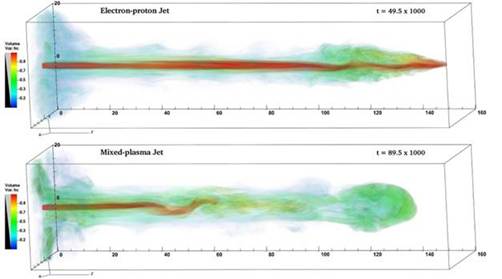
A study led by University of California Riverside physicist Hai-Bo Yu suggests a new form of dark matter could explain three long-standing astrophysical anomalies. Published in Physical Review Letters, the research shows how dense clumps of self-interacting dark matter may shape structures across galaxies. The findings connect observations from distant gravitational lenses to stellar streams and nearby satellite galaxies through a single theoretical framework.

Key Takeaways

  • Self-interacting dark matter offers a new explanation for dense cosmic structures.
  • A single mechanism may explain anomalies in lenses, stellar streams, and dwarf galaxies.
  • The theory challenges the long-standing cold dark matter model.
  • Future observations could provide stronger evidence for or against SIDM.

Dark matter remains one of the most elusive components of the universe. It cannot be seen directly, yet it accounts for roughly 85 percent of all matter, shaping galaxies through its gravitational pull.

For decades, physicists have relied on the standard “cold dark matter” model, which assumes particles pass through one another without interaction. That framework explains large-scale cosmic structure but struggles with certain dense, small-scale phenomena observed in space.

New research from UC Riverside proposes an alternative. Instead of behaving like non-interacting particles, dark matter may collide with itself, exchanging energy and forming dense cores.

Yu and his team focus on what is known as self-interacting dark matter, or SIDM. In this model, particle collisions trigger a process called gravothermal collapse, leading to the formation of compact, high-density regions.

“The difference is like a crowd of people who ignore each other versus one where everyone is constantly bumping into one another,” Yu said. “In SIDM, these interactions can dramatically reshape the internal structure of dark matter halos.”

Self-interacting dark matter theory and gravothermal collapse explained

In the SIDM framework, dark matter halos do not remain diffuse. Repeated interactions allow energy to redistribute, causing matter to concentrate toward the center.

Over time, this produces clumps with extreme density, sometimes reaching masses equivalent to about a million suns. These compact structures can exert strong gravitational effects, even though they remain invisible.

Such behavior offers a possible explanation for anomalies that have puzzled astronomers. Many observed systems show signs of dense, unseen objects that do not align with predictions from standard models.

Yu’s study suggests these structures arise naturally in SIDM, without requiring additional exotic physics.

Astrophysical anomalies explained by SIDM clumps

The research identifies three distinct observations that may share the same underlying cause.

  • JVAS B1938+666 gravitational lens system:
    An ultra-dense object appears to distort light from distant galaxies more strongly than expected, indicating a compact mass concentration.
  • GD-1 stellar stream disruption:
    A spur-and-gap feature suggests that an unseen object passed through the stream, leaving a gravitational imprint that altered its structure.
  • Fornax 6 in the Fornax dwarf galaxy:
    A tightly bound cluster of stars may have formed around a dense dark matter clump acting as a gravitational trap.

Each case involves a different cosmic environment, from distant galaxies to structures within the Milky Way. Yet all show evidence of unusually dense, compact objects.

“What’s striking is that the same mechanism works in three completely different settings, across the distant universe, within our galaxy, and in a neighboring satellite galaxy,” Yu said. “All show densities that are difficult to reconcile with standard model dark matter but arise naturally in SIDM.”

Implications for cosmology and future observations

The study provides a unified explanation for phenomena that previously required separate interpretations. By linking them to a single mechanism, it strengthens the case for SIDM as a viable alternative to the standard model.

Researchers say the findings could guide future observations. If dense dark matter clumps are common, astronomers may detect more indirect signatures through gravitational effects.

The work also highlights the importance of studying small-scale structures, where differences between competing dark matter models become most apparent.

Further research will be needed to test the theory across additional systems and refine predictions. Observations from next-generation telescopes may offer more precise data to confirm or challenge the SIDM framework.

Also Read:

Artemis II Mission Launch: NASA Sends Crew on First Moon Flyby in 50 Years

RRI scientists trace mysterious X-ray bursts to wobbling disk in distant galaxy

Too many cooks, or too many robots?

Researchers at Harvard University found that adding controlled randomness to robot movement improves efficiency in crowded environments. The study, published in the Proceedings of the National Academy of Sciences, shows how swarm systems can avoid congestion by balancing order and unpredictability. Conducted through simulations and lab experiments in the Netherlands, the work outlines how simple local rules can optimize performance in tasks like disaster cleanup and manufacturing.

Key Takeaways:

  • Harvard SEAS researchers show mathematically that when many robots share a space, adding a certain amount of randomness in their paths improves their efficiency.
  • Their study exemplifies how simple local rules can lead to the emergence of complex, self-organized task completion.
  • Their formulas could guide the design of robot swarms or crowded public spaces.

In a crowded workspace, more hands do not always mean faster results. That tension sits at the center of a new study from Harvard researchers, who examined how swarms of robots behave when tasked with completing jobs in confined areas.


Final farewell to Asha Bhosle: Music icon to be cremated in Mumbai with state honours

Veteran playback singer Asha Bhosle passed away on April 12, 2026, following a brief illness, marking the end of an era in Indian music. She was 92.

Her last rites will be held at Shivaji Park on Monday afternoon with full state honours, reflecting her immense contribution to Indian cinema and music. Family members, close associates from the film and music industry, and admirers gathering to pay their final respects.

Several leading personalities, including members of the Mangeshkar family and prominent figures from Bollywood, attended the ceremony, while fans across the country mourned her loss and remembered her timeless voice.

Family Background:

Ashalata Dinanath Mangeshkar was born in the small hamlet of Goar in Sangli, then part of the princely state of Sangli (now in Maharashtra), into a musically rich family. Her father, Pandit Deenanath Mangeshkar, of Marathi and Konkani heritage, was a noted classical singer and stage actor, while her mother Shevanti was of Gujarati origin. Tragedy struck early when her father passed away while she was just nine years old. Following his death, the family relocated from Pune to Kolhapur and eventually to Mumbai in search of livelihood. Alongside her elder sister Lata Mangeshkar, she began singing and acting in films to support the family. Her first recorded film song, “Chala Chala Nav Bala,” was for the Marathi film Majha Bal (1943).

Career

During the late 1940s and early 1950s, playback singing for leading actresses in Hindi cinema was largely dominated by voices like Geeta Dutt, Shamshad Begum, and Lata Mangeshkar. Despite this, Asha Bhosle steadily carved her own space and, by the 1950s, was recording more songs than many of her contemporaries.

Composer O. P. Nayyar played a pivotal role in shaping her early career between 1952 and 1956. However, her major breakthrough came with B. R. Chopra’s Naya Daur (1957), with music composed by Nayyar. Her duets with Mohammed Rafi—such as “Maang Ke Saath Tumhara,” “Saathi Haath Badhana,” and “Uden Jab Jab Zulfein Teri,” written by Sahir Ludhianvi—brought her widespread acclaim and recognition.

Over the years, she delivered numerous iconic songs, including “Piya Tu Ab To Aaja” from Caravan and “Yeh Mera Dil” from Don, among many others that remain timeless classics.

In 2013, at the age of 79, Bhosle made her acting debut in the film Mai, playing the titular role. She portrayed a 65-year-old mother suffering from Alzheimer’s disease who is abandoned by her children, earning praise from critics for her performance.

In May 2020, she expanded her digital presence by launching her YouTube channel, “Asha Bhosle Official.”

Personal Life:

At the age of 16, Asha married Ganpatrao Bhosle against her family’s wishes. The marriage, however, ended in separation in 1960, after which she returned to her maternal home with her children.

She later married music composer Rahul Dev Burman in 1980.

Awards:

Asha Bhosle won numerous awards. Some of them are :

Filmfare Best Female Playback Award

  • 1967: “Garibon ki Suno” (Dus Lakh, 1966)
  • 1969: “Parde Mein Rehne Do” (Shikar, 1968)
  • 1972: “Piya Tu Ab To Aaja” (Caravan, 1971)
  • 1973: “Dum Maro Dum” (Hare Rama Hare Krishna, (1971)
  • 1974: “Hone Lagi Hai Raat” (Naina, 1973)
  • 1975: “Chain Se Humko Kabhi” (Pran Jaye Par Vachan Na Jaye, 1974)
  • 1979: “Yeh Mera Dil” (Don, 1978)

National Film Awards

Bhosle won the National Film Award for Best Female Playback Singer twice:

  • 1981: Dil Cheez Kya Hai (Umrao Jaan)
  • 1986: Mera Kuch Samaan (Ijaazat)

IIFA Awards

IIFA Award for Best Female Playback

  • 2002: “Radha Kaisa Na Jale” (Lagaan)

Grammys

Bhosle is one of the very few Indian artists who have been nominated at the Grammy Awards.

  • 39th Grammy Awards – 1997

– Grammy Award for Best Global Music Album – Ali Akbar Khan’s Legacy (nominated)

  • 48th Grammy Awards – 2006

– Grammy Award for Best Contemporary World Music Album – You’ve Stolen My Heart (nominated)

Honours and recognitions

  • In 1997, Bhosle became the first Indian singer to be nominated for the Grammy Award, for Legacy, an album with Ustad Ali Akbar Khan.
  • She received seventeen Maharashtra State Awards.
  • She received the Dadasaheb Phalke Award in 2000 for her outstanding contribution to Indian cinema.
  • In 2011 the Guinness Book of World Records officially acknowledged Bhosle, at The Asian Awards, as the most recorded artist in the history of music. She was awarded a certificate for “the most studio recordings (singles) from Sebastian Coe for recording up to 11,000 solo, duet and chorus-backed songs and in over 20 Indian languages since 1947”. At the event she was also awarded the Lifetime Achievement Award.

(Courtesy:Wikipedia)

Also Read:

Legendary Singer Asha Bhosle Dies After Brief Illness, Leaves Behind Timeless Musical Legacy


Legendary Singer Asha Bhosle Dies After Brief Illness, Leaves Behind Timeless Musical Legacy

Asha Bhosle, popular bollywood singer passed away today at the age of 92 in Mumbai. She died at Breach Candy Hospital following a chest infection, extreme exhaustion, multiple organ failure and a cardiac arrest. Her funeral is scheduled to take place at Shivaji Park.

Asha Bhosle, born Ashalata Dinanath Mangeshkar on September 8, 1933, was a towering figure in Indian music whose career spanned singing, acting, business, and television. Widely associated with Indian cinema, she earned acclaim for her remarkable versatility across genres and styles. Over the decades, she came to be regarded as one of the most influential and celebrated voices in the history of Hindi film music.

She is one of India’s most versatile and celebrated playback singers, with a career spanning over seven decades. She has recorded thousands of songs across multiple languages, becoming especially known for her wide range—from classical and ghazals to pop and cabaret numbers.

The younger sister of legendary singer Lata Mangeshkar, Asha carved her own identity through iconic songs in Bollywood and collaborations with composers like R. D. Burman.

She has received numerous honours, including the Dadasaheb Phalke Award, and remains an enduring symbol of adaptability and excellence in Indian music.

Her passing marks the end of an era in Indian music, with tributes pouring in across the country and globally.

Also Read: 

Breaking: Indian Business Titan Ratan Tata Passes Away at 86

S P Balasubrahmanyam, the legendary singer, passes away after battling Covid-19


Artemis II Mission Accomplished: Crew Re-Entry Updates, Splash down and Safe return home [Watch Videos]

  • Artemis II launched aboard NASA’s Space Launch System, carrying four astronauts in the Orion spacecraft on a deep-space mission beyond low Earth orbit.
  • The crew conducted system checks and performed a historic lunar flyby, travelling thousands of kilometres beyond the Moon before beginning their return journey.
  • After completing a roughly 10-day mission, Orion safely re-entered Earth’s atmosphere and splashed down in the Pacific Ocean, marking the first crewed lunar mission since Apollo.

Watch as the Artemis II crew returns to Earth, splashing down.

See visualization of plasma build up around the space craft, repelling of that heat on Integrity seat shield To splash down in pacific ocean( from timestamp 1:26:15)  in below  video posted by NASA on X.

NASA’s Artemis II mission return home details:

6:25 p.m.

NASA’s Artemis II mission is scheduled to splash down at about 8:07 p.m. EDT (5:07 p.m. PDT) off the coast of San Diego. After splashdown, a combined NASA and U.S. military team, will retrieve the crew and transport them by helicopter to the USS John P. Murtha. Once aboard the ship, the astronauts will undergo post-mission medical evaluations before returning to shore to board an aircraft bound for NASA’s Johnson Space Center in Houston.

Watch live return coverage on NASA+, Amazon PrimeApple TVNetflixHBO MaxDiscovery+Peacock and Roku. Learn how to stream NASA content through a variety of online platforms, including social media.

7:15 p.m.

The Artemis II Crew – NASA astronauts Reid Wiseman, Victor Glover, Christina Koch and CSA (Canadian Space Agency) astronaut Jeremy Hansen are preparing for re-entry aboard the Orion spacecraft/NASA

7:33 p.m.

Orion’s crew and service module have separated. The crew module continues on its path towards Earth while the service module will harmlessly burn up in Earth’s atmosphere over the Pacific Ocean. The Artemis II return trajectory is designed to ensure any remaining debris does not pose a hazard to land, people, or shipping lanes.

7:37 p.m.

Orion performed the crew module raise burn, adjusting the spacecraft’s orientation to align its heat shield for re-entry.

7:53 p.m.

At 7:53 p.m. EDT,  The Orion spacecraft reached Earth’s atmosphere 400,000 feet above the planet’s surface, traveling 35 times the speed of sound and about 1,956 statute miles from the splashdown site. This is where the spacecraft first encounters the upper atmosphere and begins its guided descent. Shortly after, Orion is in a planned communications blackout expected to last about six minutes as plasma built around the crew capsule during heating.

8:00 p.m.

NASA has reestablished communications contact with the Artemis II crew aboard the Orion spacecraft as it returns to Earth.

8:03 p.m.

At 23,400 feet, the drogue parachutes on Orion deployed to slow and stabilize the spacecraft. Orion’s velocity drops to 479 feet per second and is .8 miles from splashdown.

8:04 p.m.

At 5,400 feet, Orion’s drogue parachutes were cut and the three main parachutes deployed, reducing velocity to less than 200 feet per second and guiding Orion on its final descent and splashdown.

8:07 p.m.

SPLASHDOWN!

NASA’s Artemis II crew in their Orion spacecraft is back on Earth. They successfully completed a parachute-assisted splashdown in the Pacific Ocean off the coast of San Diego at 8:07 p.m. EDT (5:07 p.m. PDT).
NASA

NASA’s Artemis II crew in their Orion spacecraft is back on Earth. They successfully completed a parachute-assisted splashdown in the Pacific Ocean off the coast of San Diego at 8:07 p.m. EDT (5:07 p.m. PDT).

Engineers will conduct several additional tests while Orion is in the water before powering down the spacecraft and handing it over to the recovery team aboard the USS John P. Murtha. The recovery team is on site and headed to the capsule to begin assisting the crew out of Orion.

The Orion spacecraft with the Artemis II crew inside is seen floating in the Pacific Ocean after splashing down at 8:07 p.m. EDT on April 10, 2026.
NASA

Orion has begun crew module power down, a planned post-splashdown step in which flight controllers shut down nonessential systems and transition the capsule into its recovery configuration. This reduces power demand and prepares the spacecraft for crew extraction as recovery teams move in.

8:12 p.m.

At the direction of the NASA recovery director, team members from the agency and the U.S. military now are approaching the spacecraft in inflatable boats.

Approximately an hour after splashdown, the crew will be extracted from Orion and then flown to the USS John P. Murtha. U.S. Navy helicopters will then transport them to the ship. Once aboard, the astronauts will undergo post-mission medical evaluations before returning to shore to board an aircraft bound for NASA’s Johnson Space Center in Houston.

When ready, Navy divers will attach a cable, called the winch line, to Orion to pull the spacecraft into a specially designed cradle inside the ship’s well deck. Four additional tending lines will be secured to attachment points on the crew module while under tow.

Once Orion is positioned above the cradle assembly, technicians will drain the well deck and secure the capsule.

After it is secure aboard the ship, teams will return Orion to U.S. Naval Base San Diego before returning it to NASA’s Kennedy Space Center in Florida for inspection. Once there, technicians will thoroughly examine the spacecraft, retrieve onboard data, remove payloads, and conduct additional post-flight checks.

9:34 p.m.

The Artemis II crew – NASA astronauts Reid WisemanVictor Glover, and Christina Koch, and CSA (Canadian Space Agency) astronaut Jeremy Hansen — have been safely extracted from the Orion spacecraft.

The Artemis II crew is seen on an inflatable raft, called the front porch, after exiting the spacecraft. The Artemis II mission successfully splashed down in the Pacific Ocean at 8:07 p.m. EDT on April 10, 2026.
9:56 p.m.

The Artemis II crew has been hoisted into U.S. helicopters and are being flown to the USS John P. Murtha.

Artemis II Commander and NASA astronaut Reid Wiseman is being hoisted into a U.S. military helicopter before being transported to the USS John P. Murtha.
Artemis II mission specialist and NASA astronaut Christina Koch is being hosted into a U.S. military helicopter before being flown to the USS John P. Murtha. NASA

9:58 p.m.

The Artemis II crew is safely aboard the USS John P. Murtha, where they will undergo post-mission medical evaluations in the ship’s medical bay before traveling back to shore to board a NASA aircraft bound for the agency’s Johnson Space Center in Houston.

NASA will hold a post-splashdown news conference at 10:35 p.m. EDT from the agency’s Johnson Space Center in Houston. Participants include:

  • NASA Associate Administrator Amit Kshatriya
  • Lori Glaze, acting associate administrator, Exploration Systems Development Mission Directorate
  • Rick Henfling, entry flight director, Artemis II
  • Howard Hu, manager, Orion Program
  • Shawn Quinn, manager, Exploration Ground Systems Program

Also Read:

Artemis II Update-25, Day 10: Crew Sets for Final Burn, Splashdown

What’s the longstanding tradition at JPL before any launch and other major space mission events


Artemis II Update-26, Day 10: Crew Completes Final Burn Before Splashdown

At 2:53 p.m. EDT, the Orion spacecraft ignited its thrusters for 8 seconds, producing a change in velocity of 4.2 feet-per-second and pushing Artemis II toward Earth. NASA astronauts Reid Wiseman, Victor Glover, Christina Koch and CSA (Canadian Space Agency) astronaut Jeremy Hansen reviewed procedures and monitored the spacecraft’s configuration and navigation data.

The crew continues to wrap up cabin configuration for re-entry and move into their entry checklist.

Splashdown is targeted for 8:07 p.m. EDT (5:07 p.m. PDT) off the coast of San Diego, where NASA’s recovery team will be standing by to welcome the Artemis II crew home.

Watch live return coverage on NASA+, Amazon PrimeApple TVNetflix, HBO Max, Discovery+, Peacock and Roku, starting at 6:30 p.m. Learn how to stream NASA content through a variety of online platforms, including social media. Coverage will continue until NASA and Department of War personnel safely assist the crew out of Orion and transport them to the USS John P. Murtha.


Also Read:

Deep Space Network Establishes Contact With Artemis II Spacecraft

JPL’s Mission Control Steps Up For Artemis II Deep Space Operations


Artemis II Update-25, Day 10: Crew Sets for Final Burn, Splashdown

The Artemis II crew — NASA astronauts Reid Wiseman, Victor Glover, Christina Koch and CSA (Canadian Space Agency) astronaut Jeremy Hansen — began the final phase of their journey home to the songs “Run to the Water” by Live, selected by the crew, and “Free” by Zac Brown Band, as they prepared for their third return trajectory correction burn and shifted into full re-entry and splashdown preparations. When they woke up, they were 61,326 miles from Earth.

Splashdown is targeted for 8:07 p.m. EDT (5:07 p.m. PDT) off the coast of San Diego, where a combined NASA and U.S. military recovery team will be standing by to welcome the Artemis II crew home.

Watch live return coverage on NASA+, Amazon PrimeApple TVNetflixHBO MaxDiscovery+Peacock and Roku starting at 6:30 p.m. Learn how to stream NASA content through a variety of online platforms, including social media.

Final return burn sets Orion for home

The third return burn will occur at 2:53 p.m., refining Orion’s path for atmospheric entry and splashdown. During the maneuver, the spacecraft will make precise adjustments to stay on its targeted course home.

NASA’s Artemis II re-entry and splashdown timeline and streaming coverage. Splashdown is targeted for 8:07 p.m. EDT (5:07 p.m. PDT) off the coast of San Diego, where NASA’s recovery team will be standing by to welcome the Artemis II crew home.NASA

Artemis II splashdown timeline

A carefully timed sequence will guide Orion through the final stages of descent:

  • 7:33 p.m.: Orion’s crew module will separate from the service module, exposing its heat shield for the spacecraft’s return through Earth’s atmosphere, where it will encounter temperatures of about 3,000 degrees Fahrenheit.
  • 7:37 p.m.: Following separation, Orion will perform an 18 second crew module raise burn beginning to set the proper entry angle and align the heat shield for atmospheric interface.
  • 7:53 p.m.: When Orion reaches 400,000 feet above Earth’s surface while traveling nearly 35 times the speed of sound. The crew is expected to experience up to 3.9 Gs in the planned entry profile. This moment marks the spacecraft’s first contact with the upper atmosphere and the start of a planned six-minute communications blackout as plasma builds around the capsule.
  • 8:03 p.m.: Around 22,000 feet in altitude, the drogue parachutes will deploy, slowing and stabilizing the capsule as Orion nears splashdown.
  • 8:04 p.m.: At around 6,000 feet, the drogues will release, and the three main parachutes will deploy, reducing Orion’s speed to less than 136 mph.
  • 8:07 p.m.: Slowing to 20 mph, Orion will splash down in the Pacific Ocean off the coast of San Diego, completing the Artemis II crew’s return to Earth and a 694,481-mile journey.
  • From there, teams from NASA and the U.S. military will extract the crew from Orion and fly them via helicopter to the USS John P. Murtha.
  • Within two hours after splashdown, the crew will be extracted from Orion and flown to the USS Murtha. Recovery teams will retrieve the crew, assist them onto an inflatable raft, and then use helicopters to deliver them to the ship. Once aboard, the astronauts will undergo post‑mission medical evaluations before returning to shore where awaiting aircraft will take them to NASA’s Johnson Space Center in Houston.

The Artemis II mission began with the successful liftoff of NASA’s SLS (Space Launch System) rocket on April 1 at 6:35 p.m. from Launch Pad 39B at Kennedy Space Center in Florida, sending the first humans toward the Moon since 1972.

During the mission, the astronauts completed a historic lunar flyby, marking humanity’s return to the vicinity of the Moon for the first time in more than 50 years. Throughout the flight, the crew and teams on the ground have evaluated Orion’s systems in the deep‑space environment, including a series of tests in which astronauts directly operated and interacted with the spacecraft.

Also Read:

Artemis II Update-24, Day 9: Second Return Correction Burn Complete

What’s the longstanding tradition at JPL before any launch and other major space mission events


Subhash Ghai’s Mukta arts enters into partnership with Green Gold to produce animation films

Mukta Arts Enters Global Animation Space With SGM  Studios

Mukta Arts Ltd has announced its foray into the animation feature film segment for global cinema audiences, marking a strategic expansion into a rapidly growing entertainment vertical.

The company will operate through its newly formed division, SGM Animation Studios, and has partnered with Green Gold Animation—a well-established Hyderabad-based Indian animation company known for delivering successful animated content, founded by  Rajiv Chilaka.

Green Gold Animation is widely recognised for producing popular titles such as Chhota Bheem, among other commercially successful projects.

Wikipedia

The collaboration is expected to position Mukta Arts in the global animation market, leveraging creative expertise and proven storytelling capabilities to develop feature films for worldwide audiences.

See the instagram post from Subhash Ghai:

Also Read:

Netflix’s Black Mirror Expands Universe with Launch of Interactive Game ‘Thronglets’


‘Mercy’ Trailer Ignites Debate On Passive Euthanasia Ahead Of April 24 Release

Following an acclaimed journey across international film festivals, award winning film Mercy is now set to come closer to home. The official trailer unveiled digitally on April 10, offering a deeply moving glimpse into a story that has quietly stayed with audiences long after the credits roll.

Set in Mumbai on Christmas Eve — a night of warmth, togetherness, and reflection — Mercy unfolds as an intimate portrait of a family navigating an unexpected emotional crossroads. At its heart is Shekhar (Raj Vasudeva), whose world is suddenly altered, leaving him caught between love, responsibility, and an unspoken question that has no easy answers. What follows is a deeply personal journey through silence, strength, and the quiet weight of choice.

Rather than seeking to explain or define, Mercy gently opens up space for reflection — on dignity, compassion, and what it truly means to hold on, and to let.


Also Read:

Madharaasi Nears ₹100 Crore Milestone, Sivakarthikeyan’s Film Dominates Tamil Box Office

Govt mandates features on OTT platforms for hearing and visually impaired

Artemis II Update-24, Day 9: Second Return Correction Burn Complete

Thrusters Fire To Steer Orion Home:

At 10:53 p.m. EDT, the Orion spacecraft executed a brief nine-second thruster burn, increasing its velocity by 5.3 feet per second and nudging the Artemis II crew further along their return path to Earth.

With the maneuver complete, the crew has now crossed the halfway mark on their journey home.

Temporary Signal Loss Resolved

Roughly two hours before the burn, mission teams encountered an unexpected return link loss of signal during a data rate transition, briefly disrupting the flow of communications and telemetry from the spacecraft.

Two-way contact was subsequently restored, allowing flight controllers and crew to resume preparations for the scheduled maneuver without further delay.

art002e016204 (April 6, 2026) – NASA astronaut and Artemis II Pilot Victor Glover pictured here in the Orion spacecraft during the Artemis II lunar flyby. Glover and his fellow crewmates spent approximately seven hours taking turns at the Orion windows capturing science data to share with their team back on Earth. At closest approach, they came within 4,067 miles of the Moon’s surface.NASA

Re-Entry Briefings And Next Steps

Earlier in the day, officials from NASA provided additional details on re-entry and splashdown procedures during a mission status briefing.

The next key milestone—a third return trajectory correction burn—is planned for April 10 at approximately 1:53 p.m., ahead of final re-entry operations.

Splashdown Target Remains On Track

NASA continues to target splashdown at 8:07 p.m. (5:07 p.m. PDT) on Friday, April 10, off the coast of San Diego, as the Artemis II mission enters its final phase of return.

Also Read:

Artemis II Update-21, Day 7: First Return Correction Burn Complete

Monitoring over deep space network before artemis II signal acquisition

Who is Dan Florez in Artemis Mission Program

Dan Florez is one of the NASA test directors for the Exploration Ground Systems Program. The test directors are a group of 20 engineers at the agency’s Kennedy Space Center in Florida who plan and execute integrated testing for Artemis missions. Their work includes developing timelines and procedures for launch countdown, propellant loading, emergency egress, pad and launch abort scenarios, recovery operations, and more. They help lead the ground systems team in all areas of testing.

At the time of Artemis I launch, Florez and his fellow test directors had already developed the launch countdown timelines for Artemis II.

“We were really focused on loading that spacecraft with cryogenic propellants and successfully launching it. With Artemis II, we’re going to have to do all that again, but in the middle of that, we’re going to have to embed the crew timeline to get the crew safely inside the spacecraft, get all the systems checked out, and launch them into space,” Florez said. “And we have to do the same thing on the tail end through recovery. So, there’s a lot of complexities when you have the human element thrown into the operation.”

Since Artemis I, Florez has focused his work even more heavily on the human element, taking on rescue and recovery operations.

“We have to have a plan to go get to the crew if we have an abort, if we land anywhere in the world within 24 hours,” said Florez. “My role right now is to do a lot of that coordination to make sure we have all the assets and all the resources in place to get to the crew.”

When the Artemis II crew returns to Earth aboard the Orion spacecraft, Florez will be there, prepared and ready with NASA’s Landing and Recovery Team and the U.S. military.

“We have a great partnership with the military. We have the Human Spaceflight Support Office within the Air Force that support us directly for not just for recovery operations, but also for any of the rescue operations”.

Dan Florez, NASA Test Director, Exploration Ground Systems Program

Recovery operations are routinely verified and validated in what is called an underway recovery test. NASA and Navy teams board a U.S. Navy ship and travel off the coast of San Diego to test retrieving the capsule and getting the crew safely on the ship. In late February 2024, the Artemis II crew joined the recovery team’s eleventh iteration of testing called, URT-11.

“It was really great to have that perspective of having astronauts in the loop during our test operations,” said Florez. “Everywhere along the way, we got feedback from them.”

Artemis II launched at 6:35 p.m. EDT April 1, from Launch Complex 39B, sending NASA astronauts Reid Wiseman, Victor Glover, and Christina Koch, and CSA (Canadian Space Agency) astronaut Jeremy Hansen, on their approximately 10-day mission around the Moon.

A wave breaks inside the well deck of USS Somerset as teams work to recover the Crew Module Test Article (CMTA), a full scale replica of the Orion spacecraft, as they practice Artemis recovery operations during Underway Recovery Test-12 off the coast of California, Thursday, March 27, 2025. NASA/Joel Kowsky

Florez and his colleagues are prepared and ready to apply everything they tested to recover the crew.

“Watching them launch is going to be great. I’m going to be happier when they land”.

Dan Florez, NASA Test Director, Exploration Ground Systems Program

Also Read:

Deep Space Network Establishes Contact With Artemis II Spacecraft

JPL’s Mission Control Steps Up For Artemis II Deep Space Operations


Deep Space Network Establishes Contact With Artemis II Spacecraft

The acquisition of the radio frequency signal from the Artemis II crewed mission to the Moon by NASA’s Deep Space Network (DSN) is indicated by the peak in the data signal shown below on the computer screen.

Credits: NASA/JPL-Caltech

Soon after the mission’s launch on April 1, 2026, at 6:35 p.m. EDT, NASA’s Near Space Network led communications with the Orion capsule. Then, communications were handed off to the DSN, marking the first time in over 50 years that the network would be communicating with a crewed spacecraft traveling through deep space.

The Space Flight Operations Facility at NASA’s Jet Propulsion Laboratory in Southern California (where this photo was taken) operates the DSN, which comprises three complexes in Goldstone, California; Madrid, Spain; and Canberra, Australia. Each complex consists of several radio frequency antennas that communicate with dozens of robotic spacecraft exploring the solar system in addition to the Artemis II mission.

A graphical representation of the Deep Space Network’s radio frequency antennas indicate signal acquisition from NASA’s Artemis II mission to the Moon on April 1, 2026, inside the Space Flight Operations Facility at NASA’s Jet Propulsion Laboratory in Southern California. Two antennas at the Madrid Deep Space Communications Complex, Deep Space Station 54 and 56, can be seen communicating with Artemis II (the signals are labelled “EM2”, short for “Exploration Mission 2”; elsewhere they are labelled “ART2” for “Artemis II”).

A similar visualization can be found at DSN Now, which details all the missions that the network is communicating with 24 hours a day, seven days a week.

NASA

The DSN is managed by JPL for the agency’s Space Communications and Navigation program, which is located at NASA Headquarters within the Space Operations Mission Directorate. The DSN allows missions to track, send commands to, and receive scientific data from faraway spacecraft. JPL is managed by Caltech in Pasadena, California, for NASA.

Also Read:

Monitoring over deep space network before artemis II signal acquisition

JPL’s Mission Control Steps Up For Artemis II Deep Space Operations


Monitoring over deep space network before artemis II signal acquisition

Blanca Renteria, operations chief for the Artemis Deep Space Network (DSN), monitored incoming data from the Space Flight Operations Facility at Jet Propulsion Laboratory shortly after Artemis II lifted off on April 1, 2026.

The launch took place at 6:35 p.m. EDT from Kennedy Space Center, with mission control teams quickly transitioning to deep space communication support.

The Space Flight Operations Facility manages NASA’s DSN, a worldwide system consisting of three primary complexes located in Goldstone, California; Madrid, Spain; and Canberra, Australia.

Each site is equipped with multiple radio-frequency antennas that maintain continuous communication with numerous robotic missions across the solar system, alongside the crewed Artemis II spacecraft.

NASA

Backbone Of Deep Space Communication

The DSN is operated by JPL under NASA’s Space Communications and Navigation programme, based at the agency’s headquarters within the Space Operations Mission Directorate.

This network enables mission teams to track spacecraft, transmit commands, and receive scientific data across vast distances. The Jet Propulsion Laboratory itself is managed by the California Institute of Technology in Pasadena, California, on behalf of NASA.

Also Read:

What’s the longstanding tradition at JPL before any launch and other major space mission events

JPL’s Mission Control Steps Up For Artemis II Deep Space Operations

What’s the longstanding tradition at JPL before any launch and other major space mission events

A Ritual Before Liftoff

A container of “lucky peanuts” was placed above workstations inside the Space Flight Operations Facility at Jet Propulsion Laboratory ahead of the Artemis II launch on April 1, 2026.

The quirky ritual—eating peanuts before major mission events—has long been observed at JPL, seen by teams as a symbol of good fortune before critical operations.

Control Centre Behind Deep Space Communication

The Space Flight Operations Facility oversees NASA’s Deep Space Network (DSN), a global communication system comprising three major complexes located in Goldstone, California; Madrid, Spain; and Canberra, Australia.

Each site houses multiple radio-frequency antennas that maintain constant contact with dozens of spacecraft across the solar system, including the crewed Artemis II mission.

NASA

A Critical Link To Spacecraft

Managed by JPL under NASA’s Space Communications and Navigation programme, the DSN operates from the agency’s headquarters within the Space Operations Mission Directorate.

The network plays a vital role in tracking spacecraft, transmitting commands, and receiving scientific data from distant missions. The Jet Propulsion Laboratory itself is run by the California Institute of Technology in Pasadena, California, on behalf of NASA.

Also Read:

JPL’s Mission Control Steps Up For Artemis II Deep Space Operations

Artemis II Update-23, Day 9: Crew Prepares To Come Home

JPL’s Mission Control Steps Up For Artemis II Deep Space Operations

Mission Control Comes Alive In California

Inside the Space Flight Operations Facility at Jet Propulsion Laboratory, the Artemis II mission took center stage on April 1, 2026, moments before liftoff. The central display featured the mission patch, while adjacent screens mapped real-time activity across the agency’s Deep Space Network (DSN), with active antennas highlighted as they transmitted and received signals.

From Launch To Deep Space Communication

Shortly after launch at 6:35 p.m. EDT from Kennedy Space Center, initial communications were managed through NASA’s Near Space Network.

Control was then handed over to the DSN, marking a significant milestone—the first time in more than five decades that the network was tasked with maintaining contact with a crewed spacecraft journeying through deep space.

Credits: NASA/JPL-Caltec

A Global Network Tracking The Mission

The DSN, operated from the Space Flight Operations Facility, consists of three major complexes located in Goldstone, California; Madrid, Spain; and Canberra, Australia.

Each site houses multiple high-powered radio antennas, forming a global system capable of maintaining continuous communication with spacecraft across the solar system—including Artemis II.

The Backbone Of Space Communication

Managed by JPL under NASA’s Space Communications and Navigation programme at headquarters, the DSN serves as a critical link between Earth and deep-space missions.

It enables mission teams to track spacecraft, transmit commands, and receive scientific data from vast distances. The Jet Propulsion Laboratory itself is operated by the California Institute of Technology in Pasadena, California, on behalf of NASA.

Also Read:

Artemis II Update-23, Day 9: Crew Prepares To Come Home

Artemis II astronauts actively shared experiences via live calls, press conferences from Orion [Watch]


Artemis II Update-23, Day 9: Crew Prepares To Come Home

Final Day In Orbit

On their final full day in space, the Artemis II crew began the morning with “Lonesome Drifter” by Charley Crockett as their spacecraft closed in on Earth from a distance of 147,337 miles.

Astronauts Reid Wiseman, Victor Glover, and Christina Koch of NASA, along with Jeremy Hansen of the Canadian Space Agency, are spending the day preparing for their scheduled return on Friday, April 10. Activities include reviewing re-entry protocols and executing a trajectory correction maneuver.

Securing The Cabin For Re-Entry

Christina Koch and Jeremy Hansen are leading preparations inside the capsule, securing loose equipment, removing storage netting, and adjusting crew seating configurations for re-entry.

The crew will also assess updated weather forecasts, recovery team readiness, and the mission timeline. Simultaneously, they are reviewing post-landing procedures to ensure a smooth transition once back on Earth.

Artemis II infographic showcasing the missions entry, descent, and landing milestones. This graphic was presented by Artemis II Flight Director Rick Henfling during the mission status briefing to the media and public on April 8, 2026 at NASA’s Johnson Space Center in Houston.NASA

Trajectory Correction Burn

A key maneuver is scheduled for 9:53 p.m. EDT, when Orion’s thrusters will fire for a second return trajectory correction burn.

This adjustment is designed to fine-tune the spacecraft’s path toward Earth and align it precisely for atmospheric entry. During the burn, Jeremy Hansen will oversee procedure execution and monitor navigation and propulsion systems.

Infographic featuring the Artemis II Orion lofted entry sequence. This graphic was presented by Artemis II Flight Director Rick Henfling during the mission status briefing to the media and public on April 8, 2026 at NASA’s Johnson Space Center in Houston.
NASA

Countdown To Splashdown

Ground teams are making final preparations for splashdown, expected around 8:07 p.m. (5:07 p.m. PDT) on April 10 off the coast of San Diego.

The re-entry sequence will begin with the separation of Orion’s service module at approximately 7:33 p.m., followed by a final trajectory adjustment at 7:37 p.m. The spacecraft will then execute roll maneuvers and accelerate to nearly 23,864 mph before entering Earth’s atmosphere.

A communications blackout is expected at 7:53 p.m. as plasma builds up around the capsule, lasting about six minutes. During this phase, astronauts may experience forces up to 3.9 Gs.

Infographic displaying the Artemis II Orion parachute sequence. This graphic was presented by Artemis II Flight Director Rick Henfling during the mission status briefing to the media and public on April 8, 2026 at NASA’s Johnson Space Center in Houston.
NASA

Parachute Deployment And Landing

After re-establishing communication, Orion will jettison its forward bay cover and deploy drogue parachutes at around 22,000 feet. Main parachutes will follow at approximately 6,000 feet, slowing the capsule for a safe ocean landing.

Ground track map displaying the Artemis II Orion parachute sequence. This graphic was presented by Artemis II Flight Director Rick Henfling during the mission status briefing to the media and public on April 8, 2026 at NASA’s Johnson Space Center in Houston.
NASA

Recovery And Return To Houston

Within two hours of splashdown, the crew will be retrieved and transported to the USS John P. Murtha via helicopter.

Once aboard, astronauts will undergo initial medical evaluations before returning to shore and boarding a flight to Johnson Space Center in Houston for post-mission debriefing and recovery.

U.S. Navy MH-60 Seahawks from Helicopter Sea Combat Squadron (HSC) 23 are seen arriving on the flight deck of USS John P. Murtha as they prepare to conduct air operations training as NASA, U.S. Navy, and U.S. Air Force teams prepare for the the return of the Artemis II crewmembers to Earth, Monday, April 6, 2026, in the Pacific Ocean off the coast of California. NASA’s Artemis II mission is taking NASA astronauts Reid Wiseman, commander; Victor Glover, pilot; Christina Koch, mission specialist; and CSA (Canadian Space Agency) astronaut Jeremy Hansen, mission specialist on a 10-day journey around the Moon and back aboard their Orion spacecraft. Wiseman, Glover, Koch, and Hansen are scheduled to splash down off the coast of San Diego at approximately 5:07 p.m. PDT (8:07 p.m. EDT) on Friday, April 10.
NASA/Bill Ingalls


Also Read:

Artemis II astronauts actively shared experiences via live calls, press conferences from Orion [Watch]

Artemis II mission: LUCA and LESA support Artemis safety, success as crew prepares return journey