India–U.S. Deal: What We Know, What We Don’t

The announcement by U.S. President Donald Trump and Prime Minister Narendra Modi that Washington will cut its “reciprocal” tariffs on Indian goods from 25% to 18% has brought immediate relief to Indian exporters and signalled a thaw after nearly a year of strained ties. The rollback also includes the removal of a punitive 25% penalty tariff imposed last August, which had pushed total U.S. tariffs on Indian exports to 50%, among the highest in the world, on par with Brazil.

Yet, beyond the headline tariff cut, the statements from Washington and New Delhi diverge sharply. While Mr. Trump has framed the move as part of a sweeping trade deal involving oil, investments and zero tariffs, Mr. Modi has confined himself to welcoming the tariff relief alone. This gap leaves several fundamental questions unanswered.

Is There Actually a US-India Trade Deal?

Mr. Trump’s repeated references to a “Trade Deal” have created ambiguity over whether the two sides have concluded a comprehensive agreement or merely agreed on a tariff rollback. One possibility is that he is referring to the long-discussed “first tranche” of an India–U.S. Free Trade Agreement (FTA), negotiations for which gathered pace after Mr. Modi’s visit to Washington in February 2025.

If so, the absence of detail is striking. Unlike the EU–India FTA concluded last week, where the negotiated text and scope were clearly outlined, neither Washington nor New Delhi has released any documentation, timelines or sectoral commitments for an India–U.S. FTA. Tariffs, non-tariff barriers, market access and investment rules were all meant to be part of this package, yet none of these elements has been formally disclosed.

Compounding the uncertainty is Mr. Trump’s claim that India has agreed to reduce “Tariffs and Non-Tariff Barriers against the United States, to ZERO”. New Delhi has not confirmed this, nor clarified which tariff lines would be reduced to zero. Sensitive sectors such as agriculture, particularly soyabean and dairy, which India has consistently opposed, remain conspicuously unaddressed.

The confusion is not new. In January, U.S. Commerce Secretary Howard Lutnick said a deal had been ready for months but stalled because, according to him, Mr. Modi did not make a phone call to clinch it, a claim the Ministry of External Affairs (MEA) firmly denied.

Does 18% Figure Indicate Level Playing Field for India?

The reduction to 18% is unquestionably an improvement from the earlier 25% rate imposed in April 2025. That earlier hike had left Indian exporters worse off than many regional competitors: Bangladesh and Vietnam faced tariffs of around 20%, Pakistan 19%, while China’s 34% rate was largely deferred until November 2026.

For labour-intensive sectors such as apparel, and for gems and jewellery exporters who were among the hardest hit, the new rate restores some competitiveness. However, Indian exporters are still not on equal footing. Many neighbouring and Asian economies continue to enjoy a Generalised System of Preferences (GSP) concession of about 5%, a benefit the U.S. withdrew from India in June 2019 during Mr. Trump’s first term.

As a result, Indian industry had hoped that any revised reciprocal tariff would land closer to 15%, not 18%. The current rate narrows the gap, but does not eliminate it.

What Is Actually Happening With Russian Oil?

Perhaps the most contentious claim from Washington is Mr. Trump’s assertion that Mr. Modi has “agreed to stop buying Russian Oil, and to buy much more from the United States and, potentially, Venezuela”, a move he linked to ending the war in Ukraine. The MEA has so far declined to comment on this assertion.

This silence matters because it cuts against India’s long-stated position. When the U.S. imposed a 25% penalty tariff last August over India’s Russian oil purchases, the MEA called the move “unfair, unjustified and unreasonable”, stressing that energy imports are driven by “market factors” and the need to ensure energy security.

In practice, however, India’s Russian oil imports have already been declining. After peaking in 2024, refiners began scaling back purchases. In October, imports of Russian Ural crude fell about 38% year-on-year. By December, the trend had deepened.

According to the European Centre for Research on Energy and Clean Air (CREA), “India’s Russian crude imports recorded a sharp 29% month-on-month reduction to the lowest volumes since the implementation of the price cap policy.” On January 6, 2026, Reliance Industries said it would not receive any Russian oil in January and had not taken Russian crude for the previous three weeks.

The key question is whether these reductions reflect commercial recalibration, or a political commitment now being formalised under U.S. pressure.

India Under US Sanctions Pressure?

There is historical precedent for concern. In 2019, India “zeroed out” imports of Iranian and Venezuelan oil after U.S. sanctions threats, with then U.S. Ambassador Nikki Haley publicly pressing New Delhi. Following the U.S. operation against Venezuelan President Nicolás Maduro in January this year, Mr. Trump has suggested that Washington would now “allow” imports of Venezuelan oil, a position that offers India flexibility, but also underscores how contingent its energy choices appear on U.S. approval.

The pressure extends beyond oil. The U.S. has warned of 25% tariffs on countries doing business with Iran and has withdrawn the sanctions waiver for Indian investment in Iran’s Chabahar port. Government sources indicate India is prepared to give up its “minimal levels” of trade with Iran to avoid further tariffs.

Significantly, the Union Budget presented on February 1 makes no allocation for Chabahar in the coming year. After 23 years of strategic investment, this omission suggests New Delhi may be preparing to pause or retreat from the project until the sanctions environment eases.

What’s $500 Billion Commitment?

Mr. Trump’s claim that Mr. Modi committed to “BUY AMERICAN” at a much higher level, including purchases of over $500 billion in U.S. energy, technology, agricultural products, coal and more, is one of the boldest assertions yet the least substantiated.

The MEA has declined to confirm any such commitment. Context matters here. India–U.S. bilateral trade in goods currently stands at about $131 billion. India’s cumulative investment in the U.S. has hovered around $40 billion.

A $500 billion figure, therefore, can only be meaningful if spread over many years and across multiple sectors, much like similar claims Mr. Trump has made about the European Union, Japan and others following their trade deals. Without timelines, sectoral break-ups or binding mechanisms, the number functions more as a political headline than a verifiable obligation.

The tariff cut to 18% is real, immediate and economically significant. Beyond that, much remains unresolved. The gulf between Washington’s expansive claims and New Delhi’s carefully limited confirmations raises fundamental questions about the scope of the agreement, India’s energy autonomy, and the true balance of concessions.

Until the fine print is released, the India–U.S. deal remains less a finished treaty and more a framework shaped as much by geopolitics and pressure as by trade economics.

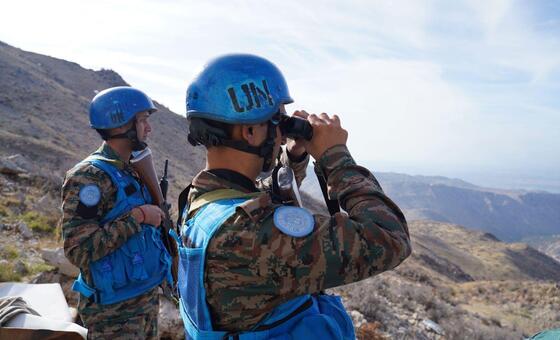
UN peacekeeping patrols suspended along Lebanon-Israel Blue Line

The incident took place north of the Blue Line on Sunday morning and led to the suspension of more than a dozen UN peacekeeping activities for over nine hours, according to UN Spokesperson Stéphane Dujarric.

Toxicology tests

The IDF said that peacekeepers should stay clear of the area,” Mr. Dujarric told reporters in New York. He added that peacekeepers had supported the Lebanese army in collecting samples dropped, for a toxicology report.

As of Monday afternoon, the test results had not been received.

The Blue Line stretches for approximately 120 kilometres along Lebanon’s southern frontier and serves as a “line of withdrawal” confirming Israel’s withdrawal from southern Lebanon.

The UN reiterated concerns about flight movements across the Blue Line, saying such activities violate Security Council resolution 1701, which brought an end to the 2006 hostilities between Israel and Hezbollah, and outlines UNIFIL’s mandate.

The latest cessation of hostilities agreement between the two sides was signed in November 2024, after violence flared between Hezbollah and Israeli across the Blue Line following the commencement of the Gaza war.

Any activity that may put peacekeepers and civilians at risk is of serious concern,” Mr. Dujarric said. “We reiterate our call on all parties to fully comply with their obligations under resolution 1701.”

Wider concerns

The UN Interim Force in Lebanon (UNIFIL) said the incident also raised concerns about the potential impact of the unidentified substance on civilians, agricultural land and the longer-term return of residents to their homes and livelihoods near the Blue Line.

This is not the first time that the IDF has dropped unknown chemical substances from airplanes over Lebanon,” the mission said, reiterating its call on the IDF “to stop all such activities and work with peacekeepers to support the stability we are all working to achieve.”

Source link

Global health systems ‘at risk’ as funding cuts bite, warns WHO

This is occurring as the risk from pandemics, drug-resistant infections and fragile health services are on the rise, said the WHO Director-General.

Addressing the WHO Executive Board in Geneva, Tedros Adhanom Ghebreyesus stressed the impact of workforce reductions last year due to “significant cuts to our funding,” which have had significant consequences.

Sudden and severe cuts to bilateral aid have also caused huge disruptions to health systems and services in many countries,” he told health ministers and diplomats, describing 2025 as “one of the most difficult years” in the agency’s history.

While WHO had managed to keep its lifesaving work going, Tedros said the funding crisis exposed deeper vulnerabilities in global health governance, particularly in low and middle-income countries struggling to maintain essential services.

What’s on the agenda?

The WHO Executive Board has a sweeping agenda covering pandemic preparedness, immunisation, antimicrobial resistance, mental health and health emergencies in conflict zones.

Key issue: Members are also reviewing budget pressures, governance reform and formal withdrawal notifications from the United States and Argentina.

Why it matters: The discussions come as global health risks rise, even as international cooperation and predictable financing are under strain.

What’s next: Outcomes from this week’s meeting will be forwarded to the World Health Assembly in May, shaping WHO’s direction amid mounting geopolitical and public health pressures.

Click here for more information on the session, and here for our recent coverage of key global health issues.

High stakes

The WHO funding crisis is part of a broader retreat from international health financing, forcing countries to make difficult choices, he added.

“In response to funding cuts, WHO is supporting many countries to sustain essential health services, and to transition away from aid dependency towards self-reliance,” Tedros said, pointing to domestic resource mobilisation – including higher health taxes on tobacco, alcohol and sugary drinks – as a key strategy.

Yet the scale of unmet needs remains vast.

According to WHO, 4.6 billion people still lack access to essential health services, while 2.1 billion face financial hardship because of health costs. At the same time, the world faces a projected shortage of 11 million health workers by 2030, more than half of them nurses.

Deeper crisis averted

Tedros said WHO has avoided a more severe financial shock only because Member States have agreed to increase mandatory assessed contributions, reducing the agency’s reliance on voluntary, earmarked funding.

“If you had not approved the increase in assessed contributions, we would have been in a far worse situation than we are,” he told the Board.

Thanks to those reforms, WHO has mobilised about 85 per cent of the resources needed for its core budget for 2026-27. But Tedros cautioned that the remaining gap will be “hard to mobilise,” particularly in a difficult global funding environment.

“Although 85 per cent sounds good – and it is – the environment is very difficult,” he said, warning of “pockets of poverty” in underfunded priority areas such as emergency preparedness, antimicrobial resistance and climate resilience.

WHO Director-General Tedros Adhanom Ghebreyesus. (file photo)

Gains have been made

Despite the financial climate, notable games have been made in recent months.

Tedros highlighted the adoption last year of the Pandemic Agreement and amended International Health Regulations (IHR), aimed at strengthening preparedness in the wake of COVID-19.

WHO also expanded disease surveillance, rolled out artificial intelligence (AI)-powered epidemic intelligence systems, and supported countries in responding to hundreds of health emergencies in 2025 – many of which never reached public attention because outbreaks were contained early.

However, one in six bacterial infections globally are now resistant to antibiotics, Tedros said, describing the trend as concerning and accelerating in some regions.

‘Solidarity is the best immunity’

“The pandemic taught all of us many lessons – especially that global threats demand a global response,” said Tedros. “Solidarity is the best immunity.”

He warned that without predictable and sufficient financing, the world risks being less prepared – not more – for the next health emergency.

“This is your WHO,” Tedros told the Board, “Its strength is your unity. Its future is your choice.

Invisible highways: The vast network of undersea cables powering our connectivity

The exchange of data in the blink of an eye has become a given in much of the world – and yet we rarely pause to think about what makes it all possible: a complex global network of cables in the depths of the ocean that silently connects us.

In the modern information age, undersea cables have become a strong foundation for digital connectivity, Tomas Lamanauskas, Deputy Secretary-General of the International Telecommunication Union (ITU) has told UN News, ahead of a global summit on the issue beginning in Portugal on Monday.

Trillions of dollars in transactions in the global economy and the continuous accessibility of information takes place through it.

“About 99 per cent of the international internet traffic goes through submarine cables. Even the conversation you and I are having right now is carried through these cables,” he said.

“People know the visible access points, such as mobile networks, satellites, and fixed internet, but the underlying infrastructure that supports them is the vast network of submarine cables — our digital highways.”

These invisible highways, consisting of fiber-optic wires connecting landing points, are placed hundreds of metres below the surface of the ocean by cable-laying ships.

Mr. Lamanauskas underscored that as our reliance on digital connectivity continues to grow, strengthening the resilience of these cables and developing collective strategies have become increasingly important. 

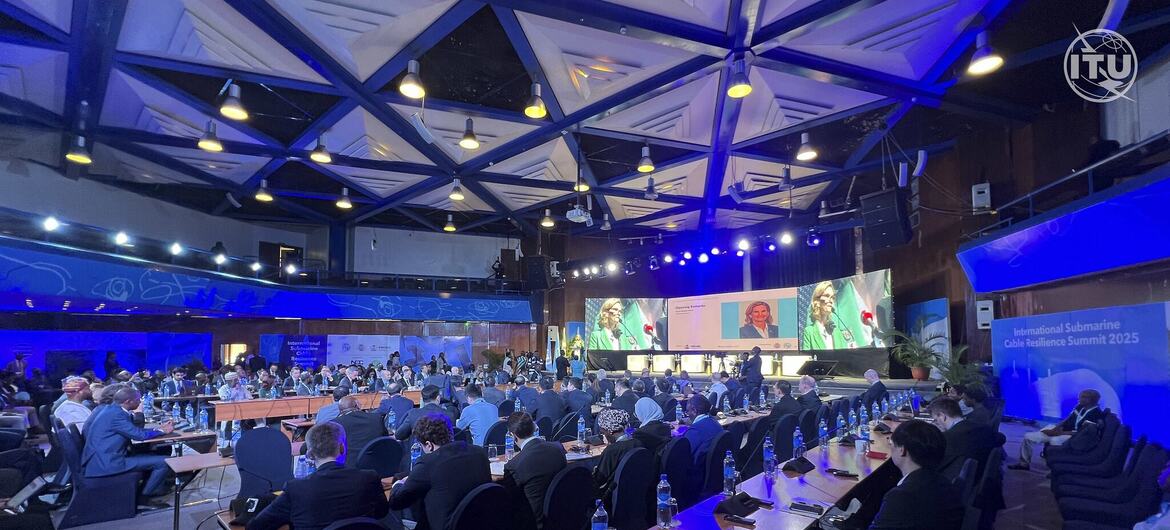
This will be a key focus of the Second International Submarine Cable Resilience Summit, taking place on Monday and Tuesday in Porto, Portugal.

Rapid data transmission

Connecting different parts of the world through communication cables is not a new idea. In 1850, England and France were linked for the first time by an undersea telegraph cable.

Since then, technology has steadily evolved, from telegraph services to telephone networks, and now to high-speed internet carried by fiber-optic cables. Today, hundreds of terabits of data pass per second through these cables laid along the seabed.

Across the globe, there are over 500 commercial submarine cables, linking continents, markets, and households. 

Relatively thin and roughly the width of a garden hose, these cables stretch for around 1.7 million kilometres – long enough to wrap around the Earth several times.

To lay them, the seabed is surveyed to find routes with fewer risks and less impact on the environment. Then, special ships unroll large reels of fibre-optic cable onto the ocean floor.

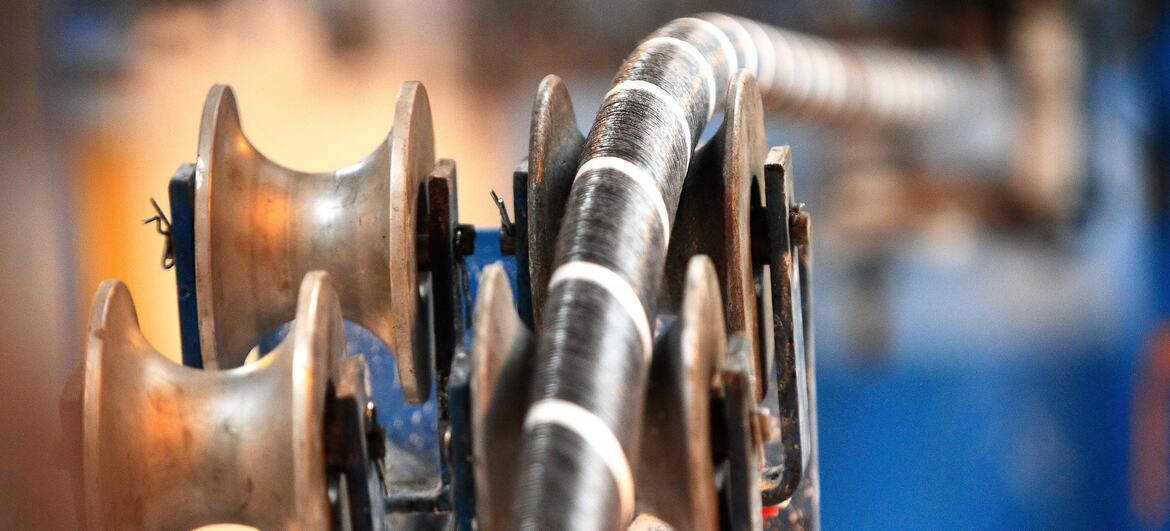
Close-up of submarine cable being wound onto industrial reels. The Second International Submarine Cable Resilience Summit will take place on 2–3 February 2026 in Porto, Portugal.

Cable traffic disrupted

With these cables increasingly forming the backbone of the global economy, any disruption in data flow can become instantly noticeable, impacting economic activities, emergency and tech services, security systems, and internet access for billions worldwide. 

There are typically 150 to 200 cable incidents each year, averaging about three to four per week.

The ITU senior official recalled that “in recent years, there have been quite a few high-profile incidents, from the Red Sea to West and East Africa. 

“For example, in 2024, submarine cable incidents in the Red Sea disrupted an estimated 25 per cent of data traffic between Europe and Asia.”

Outages in cable connectivity may result from earthquakes, underwater landslides, and volcanic eruptions. However, statistics show that around 80 per cent of incidents are caused by human activity, from ship anchors or fishing trawlers damaging cables.

Every millisecond matters

Mr. Lamanauskas cited the example of Tonga, which has experienced three major disruptions since 2019, caused by an earthquake, volcanic eruptions and improper anchoring. Because of the lack of a diverse network in remote regions, when a cable is cut, a vast territory can go offline.

Imagine yourself and your entire community being offline for a week, unable to access essential services like digital healthcare, access to information, and education.”

“Imagine the impact on stock traders in New York if even a millisecond delay occurs due to cable congestion or a submarine cable incident. Every moment matters.”

Repairing the invisible highways

Aside from abrasion and natural wear and tear, “a portion of the cable infrastructure laid around the dot-com boom of 2000 is now reaching maturity, as these cables were designed for an average 25-year lifespan,” he added.

DSG Lamanauskas explained that in the event of an incident, engineers are usually quickly able to identify the affected area and “the actual repair work itself is not always the most complicated piece. What’s often more complex is securing all the required permits and licenses, especially when multiple or overlapping jurisdictions are involved.”

Depending on the location and scale of damage, the summoning of cable ships and the repair work can range from days, weeks to months. In busy locations, these ships are usually close by but reaching remote areas can take longer. In many countries, the lack of a clear focal point to manage these operational requirements adds to the challenge.

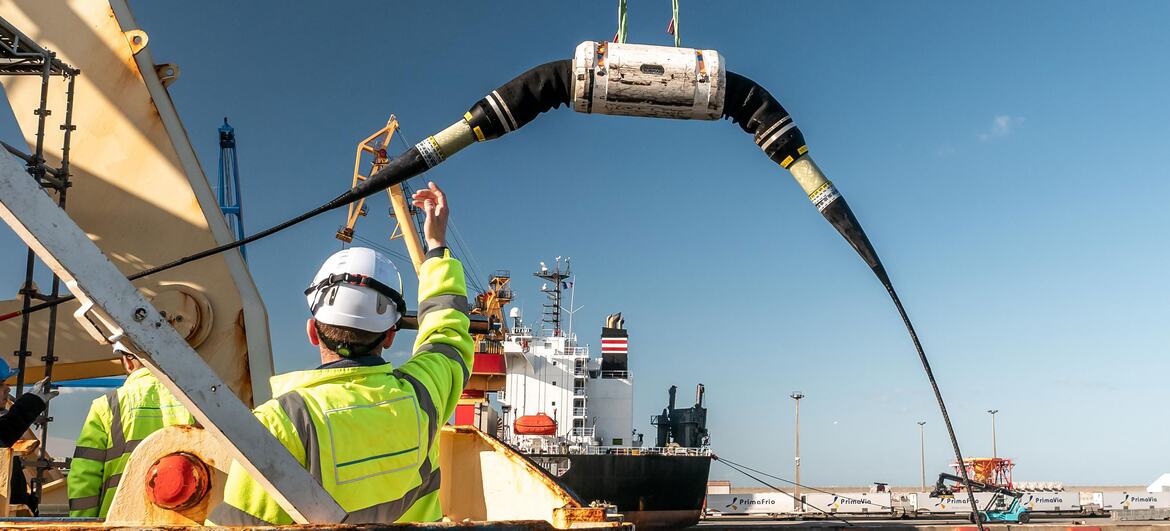
Worker directing deployment of submarine cable at port. The Second International Submarine Cable Resilience Summit will take place on 2–3 February 2026 in Porto, Portugal.

Mr. Lamanauskas noted that laying new cables is often a multi-year project that takes a significant amount of time. “There’s extensive planning involved, and it’s usually costly too. While shorter cables cost millions, the longer ones can run into the hundreds of millions.”

What is ITU doing?

As the UN agency for digital technologies, ITU works to enhance the resilience of global submarine cables through collaboration, standard setting, and technical guidance. Its priorities include developing resilient measures, streamlining maintenance and repair processes, and adopting more sustainable practices.

“Over the last 40 years, the capacity of these optical cables has been increasing by 40 per cent yearly. It’s an exponential growth which in turn powers the exponential growth of the internet,” Mr. Lamanauskas added.

International Submarine Cable Resilience Summit 2025, ITU Conference

Mr. Lamanauskas clarified that ITU isn’t an operational body and doesn’t repair cables. 

“Instead, we focus on creating the right enabling environment by shortening permitting timelines, establishing clear points of contact, raising awareness to prevent accidental damage, and facilitating faster repairs.”

As demand for connectivity and data surge with unprecedented speed, these efforts will play a key role in bolstering the foundation for shared progress and shaping the future of the global digital landscape.  

Source link

From Cape Town to London, Deo Kato runs to challenge racism and reclaim the migration narrative

The 8,262-mile journey took him through 21 countries, transforming an extraordinary physical feat into a powerful act of activism, aimed at confronting racism and reshaping how migration is understood.

Born in Uganda and raised in the United Kingdom, Deo first took up running to manage his health. Over time, that personal discipline grew into a journey of purpose, connecting endurance with identity, protest and hope.

Turning point

In 2020, a moment of global reckoning around racial injustice – the murder of George Floyd in Minneapolis – became a turning point for Deo. He realised his running could serve a purpose beyond endurance.

 “I thought, ‘I have to do something about this. Whether it’s small or big, I want to use my running to create change and speak out against racial injustice,’” he explained. 

That conviction led him to run ten kilometres every day for 381 days, marking each day of the Montgomery Bus Boycott, a pivotal moment in the United States civil rights movement. 

He told himself, “I’m going to keep doing this for as long as I can because this is how change happens.”

Day after day, Deo pushed forward, turning physical endurance into a form of activism aimed at confronting racism and amplifying conversations around migration and justice.

Retracing migration routes 

From this commitment, Deo set out to run from Cape Town to London, symbolically retracing humanity’s earliest migration routes from Africa.

The road ahead was long and arduous. Scaling mountains, crossing deserts, and running through wildlife reserves, Deo moved through landscapes that constantly shifted around him. 

“It feels incredible just to be moving. Then, suddenly, I see elephants and children start running beside me,” he shared. 

Barriers and restrictions

Along the way, Deo witnessed how complex and restrictive migration can be, particularly for people displaced by climate impacts, economic pressure, or conflict. 

He saw how limited regular pathways and movement restrictions leave many people effectively unable to move within their own regions, trapping them in unsafe or uncertain situations and cutting off routes to safety.

“Some people end up detained simply for trying to flee conflict or because they are seen as outsiders. Even when they have the correct paperwork, they can still be held.”

The further I travelled along the migration route, the more I was viewed as an irregular migrant.

Deo himself faced similar barriers. At one point, he was detained despite having the correct documents. In other areas, he was forced to reroute his journey because of conflict or restricted access. 

As he travelled north towards Europe, the scrutiny intensified. 

“The further I travelled along the migration route, the more I was viewed as an irregular migrant. People would call the police simply because they saw someone they thought didn’t belong passing through their area,” he explained. 

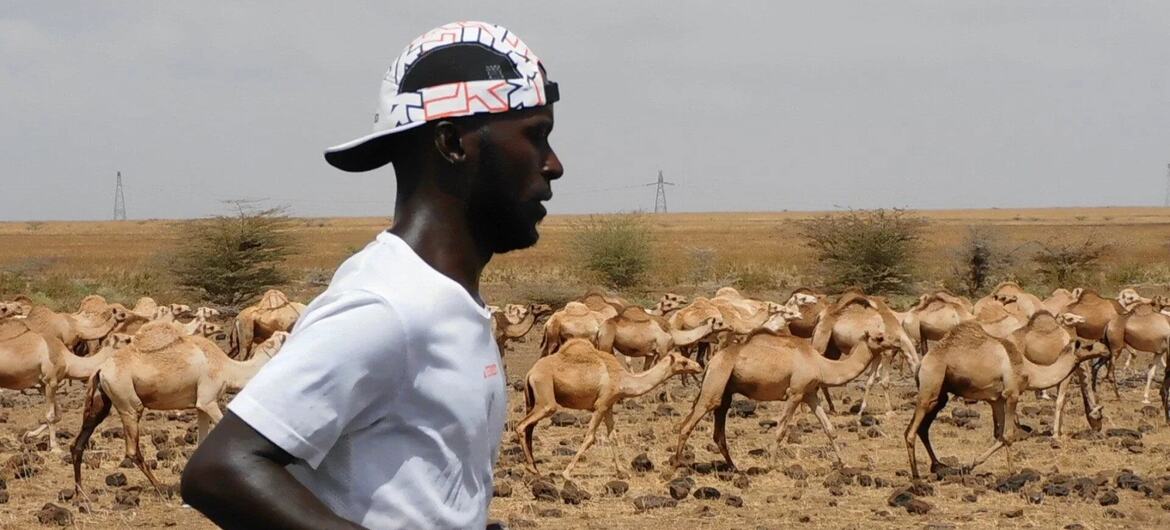
Crossing some of the world’s most spectacular and unforgiving terrain, Deo experienced Africa on foot, where nature and movement shaped every mile of his journey.

Community support 

Despite the challenges, Deo’s journey was sustained by community support. Along the way, local runners, strangers, and online supporters joined him. Those moments of shared effort and solidarity kept him going. 

“Without that community support, I would not have succeeded on this journey. It’s what truly gave it meaning,” he said. 

His journey was never about endurance alone. It was about reclaiming the story of migration – a story rooted in resilience, human progress, and development. 

“People move for so many reasons, and each journey tells a human story,” Deo emphasised. 

Looking ahead, he plans to keep using his platform as a form of activism, continuing to speak about migration, belonging, and shared humanity. As he puts it, “Don’t limit yourself. Believe in your power to create change.”

Source link

Budget 2026 Puts Technology At Heart Of Inclusive Growth, Says Nasscom

Industry body Nasscom on Sunday welcomed the Union Budget 2026, saying it firmly positions technology as a central driver of inclusive and sustainable economic growth under the government’s Viksit Bharat vision.

Reacting to Finance Minister Nirmala Sitharaman’s ninth consecutive Budget, Nasscom described it as forward-looking and consultative, reinforcing the partnership between government and industry while strengthening India’s ambition to remain a global technology and services hub.

Tax Certainty, Ease Of Doing Business Boost For IT Sector

Nasscom said a key positive for the technology industry was the rationalisation of international taxation and transfer pricing rules, noting that tax policy has been effectively deployed as a competitiveness lever.

It highlighted the consolidation of software development services, IT-enabled services, knowledge process outsourcing and contract R&D into a single category of Information Technology services, along with a uniform safe harbour margin of 15.5 per cent. The move, coupled with the expansion of the safe harbour eligibility threshold from Rs 300 crore to Rs 2,000 crore, is expected to significantly widen access to certainty mechanisms for routine cross-border IT service models.

The industry body also welcomed steps to strengthen the Advance Pricing Agreement (APA) framework, particularly the proposal to fast-track unilateral APAs for IT services with a targeted two-year resolution timeline, addressing long-standing concerns over delays and uncertainty.

Cloud, Semiconductors And Digital Infrastructure In Focus

Nasscom said the Budget made a decisive intervention to strengthen India’s cloud and digital infrastructure ecosystem. It pointed to the proposed tax holiday till 2047 for foreign companies providing global cloud services using Indian data centres, calling it a strong signal to attract long-term global investment and expand India’s compute capacity.

The industry body also welcomed the emphasis on building domestic capability in strategic technologies, including the launch of India Semiconductor Mission 2.0 and the enhanced Rs 40,000 crore outlay for the Electronics Components Manufacturing Scheme.

Taken together, Nasscom said, the measures reflect a more mature policy approach that places technology, digital infrastructure and tax certainty at the core of India’s long-term competitiveness, setting a clear direction for sustainable growth driven by innovation and manufacturing depth.

Indian Markets Crash After Budget Disappointment Over STT Hike

Indian equity markets witnessed a sharp sell-off on Budget Day, with benchmark indices sliding nearly 2 per cent after Finance Minister Nirmala Sitharaman announced a steep hike in Securities Transaction Tax (STT) on futures and options, unsettling investor sentiment in a special Sunday trading session.

The Sensex closed at 80,723, while the Nifty ended at 24,825, down 495 points, marking the steepest Budget Day decline in six years. The fall reflected disappointment over higher trading costs and the absence of immediate growth or sentiment-boosting triggers for the markets.

Sharp Intraday Volatility As Traders Unwind Positions

Markets were far more volatile during the session. The Sensex plunged nearly 3,000 points from the day’s high to hit an intraday low of 79,899.42, while the Nifty slipped to 24,572, before recovering modestly towards the close.

Traders attributed the sharp swings to rapid unwinding of leveraged positions following the STT announcement. The tax on futures trades was raised to 0.05 per cent from 0.02 per cent, while STT on options premium was increased to 0.15 per cent from 0.10 per cent, significantly raising transaction costs in the derivatives segment that drives daily market volumes.

PSU Banks, Metals Drag As Volatility Spikes

The sell-off was broad-based, extending well beyond frontline stocks. The Nifty Midcap 100 fell about 2 per cent, while the Nifty Smallcap 100 dropped nearly 2.7 per cent, underlining the risk-off mood across the market. Investor anxiety surged, with the India VIX jumping nearly 12 per cent, signalling heightened volatility.

Sector-wise, PSU banks were the worst hit, with the Nifty PSU Bank index tumbling close to 6 per cent, followed by metal stocks, which fell around 4 per cent. Banking and financial services indices declined over 2 per cent each. Among individual stocks, Bharat Electronics, Hindalco and ONGC fell about 6 per cent, while IT stocks offered limited relief, with Wipro, TCS and Max Healthcare gaining around 2 per cent each.

Budget 2026 Raises Aid For Nepal, Afghanistan; Allocation To Bangladesh Cut

India has recalibrated its neighbourhood development assistance in the Union Budget 2026–27, increasing allocations for countries such as Nepal, Afghanistan, Bhutan and Sri Lanka, while sharply reducing aid to Bangladesh, signalling a selective realignment of regional priorities.

According to Budget documents, India’s development assistance to Bhutan has been raised to Rs 2,288.56 crore, reaffirming Thimphu’s position as the largest recipient of Indian aid. Allocation for Afghanistan has been increased from Rs 100 crore to Rs 150 crore, indicating that New Delhi expects to scale up development projects in the country despite continuing political uncertainty.

Aid to Nepal has been enhanced by Rs 100 crore to Rs 800 crore, while Sri Lanka will receive Rs 400 crore, up from Rs 300 crore in the previous Budget. India has also significantly increased assistance to Mongolia, raising the allocation from Rs 5 crore to Rs 25 crore.

Bangladesh Aid Halved

In contrast, financial support for Bangladesh has been halved, with the allocation reduced from Rs 120 crore to Rs 60 crore. Assistance to the Maldives has been marginally cut from Rs 600 crore to Rs 550 crore, while funding for Myanmar has been lowered from Rs 350 crore to Rs 300 crore.

Beyond the immediate neighbourhood, allocations for Eurasian countries have been reduced to Rs 38 crore, while development assistance to Latin American nations has been increased to Rs 120 crore, reflecting a broader diversification of India’s external engagement.

3 Kartavyas

Overall, the Ministry of External Affairs’ budget has been increased to Rs 22,118.97 crore, up from Rs 20,516.62 crore in the previous financial year, providing additional headroom for diplomatic, development and strategic initiatives.

Presenting the Budget in Parliament, Finance Minister Nirmala Sitharaman said the government’s spending priorities were guided by three kartavyas—accelerating economic growth, empowering citizens, and ensuring inclusive development—an approach that now appears to extend to India’s external development partnerships as well.

The revised aid allocations are expected to be closely watched in the region, particularly in the context of evolving diplomatic ties and India’s broader neighbourhood-first and global outreach strategies.

Budget 2026 Signals A Clear Outreach To NRIs

• NRI equity investment limit per company doubled to 10%, aggregate cap raised to 24%.
• MAT exemption announced for non-residents under presumptive taxation.
• TCS on foreign education and medical remittances cut to 2%.
• Property sale compliance eased; buyers no longer need a separate TAN.

The Union Budget 2026–27 has marked a notable shift in the Centre’s approach towards Non-Resident Indians, positioning the global Indian diaspora as a more active participant in India’s investment and growth story. Finance Minister Nirmala Sitharaman unveiled a series of measures aimed at easing compliance, lowering tax friction and expanding investment access for non-residents, particularly in equities and real estate.

The most significant reform relates to equity investments. The budget has doubled the individual investment limit for NRIs and overseas residents in listed Indian companies from 5% to 10% of paid-up capital. At the same time, the overall ceiling for all non-resident investors has been increased to 24%. Officials see this as a move to deepen capital markets and attract stable overseas capital at a time of global financial uncertainty.

Tax relief formed the second pillar of the government’s NRI-focused initiatives. Non-resident taxpayers opting for the presumptive taxation regime will now be exempt from Minimum Alternate Tax (MAT), a change intended to simplify filings and reduce disputes. The finance ministry said the exemption would reduce compliance burdens and provide greater clarity to overseas taxpayers with limited operations in India.

Liberalised Remittance Scheme

The budget also addressed concerns around remittances under the Liberalised Remittance Scheme. Tax Collected at Source on overseas spending for education and medical treatment has been reduced to 2% from 5%, offering immediate relief to families supporting students and patients abroad. The move is expected to improve cash flows without altering reporting requirements.

In the real estate segment, long-standing procedural hurdles for NRIs were eased. Buyers of property from non-resident sellers will no longer be required to obtain a separate Tax Deduction and Collection Account Number to deduct TDS. The government said this simplification would reduce delays in transactions and encourage smoother property sales involving overseas Indians.

Taken together, the budget measures underline a broader policy intent to integrate NRIs more closely into India’s financial ecosystem, moving beyond remittances to long-term investment participation. Market experts note that while the reforms are structurally positive, their success will depend on clarity in implementation and stability in global markets.

The 2026 budget, analysts say, sends a clear signal that the government sees the Indian diaspora not just as external stakeholders, but as strategic partners in the country’s next phase of economic expansion.

‘Very Disappointing, No Relief For Ordinary People’: Opposition Slams Union Budget 2026

Opposition parties mounted a sharp attack on the Union Budget 2026 on Sunday, accusing the government of failing to address the concerns of ordinary citizens, farmers, unemployed youth and small businesses, even as Finance Minister Nirmala Sitharaman presented her ninth consecutive Budget in Parliament.

Leaders across parties said the Budget lacked concrete relief measures, ignored key states and sectors, and prioritised headline announcements over tackling deeper economic challenges.

Congress MP Shashi Tharoor said the Budget speech made no reference to Kerala, calling it disappointing though he noted that finer details would emerge once the documents were studied. “The speech itself contains very few details that are actually necessary,” he said.

Another Congress MP, Ujjwal Raman Singh, said the Budget lacked the energy required to revive confidence. “Farmers, unemployed youth and even large states like Uttar Pradesh have been neglected. People expected announcements for regions like Prayagraj, but there was nothing,” he said, alleging that several schemes appeared skewed towards election-bound states.

Congress leaders air opposition

Former Uttarakhand Chief Minister Harish Rawat said the Budget offered little to vulnerable sections. “There is nothing here for the poor, farmers or women. It is buried under slogans about a developed India by 2047,” he said.

Congress Rajya Sabha MP Jebi Mather echoed concerns over Kerala’s exclusion, saying the state had hoped for specific initiatives, including high-speed rail projects. “Kerala has once again been ignored,” she said.

Congress MP Shashikant Senthil described the Budget as lacking policy direction. “There is nothing that stands out as a major decision. There is nothing substantial for common citizens, farmers or MSMEs,” he said.

Raising broader economic concerns, former Union Minister Manish Tewari said structural issues remained unaddressed. “Nominal GDP growth has weakened, tax buoyancy is poor and private investment is not picking up. Increased public capital expenditure only highlights the lack of private investment momentum,” he said, adding that foreign direct investment was also slowing.

Congress MP Imran Masood criticised the absence of export-related relief, particularly for regions affected by global tariffs. “Exports have collapsed in places like Moradabad and Saharanpur, but there is no support for exporters,” he said.

SP slams Budget as ‘Disappointing’

Leaders from other opposition parties also voiced dissatisfaction. Aam Aadmi Party MP Malwinder Singh Kang said Punjab and Haryana had been overlooked in tourism and expressway projects, while inflation relief was missing. “The poor have received nothing from this Budget,” he said.

Samajwadi Party MP Rajeev Kumar Rai called the Budget confusing and disappointing, alleging it favoured a few corporate houses. His party colleague Neeraj Kushwaha Maurya said farmers and large states had been ignored, adding that welfare schemes such as MGNREGA had not received adequate support.

Shiv Sena (UBT) MP Priyanka Chaturvedi said the Budget fell short at a time of global economic uncertainty. “Exporters are suffering, common people have received nothing, and markets reacted negatively. A truly visionary Budget would have inspired confidence,” she said.

Shiv Sena (UBT) spokesperson Anand Dubey said the Budget failed to deliver fresh ideas. “There was no tax relief, no meaningful push for jobs or startups. It does not bring happiness to ordinary people,” he said.

The Opposition said it would examine the detailed Budget documents in the coming days but maintained that the initial presentation failed to inspire confidence or address pressing economic anxieties facing households and businesses.

Budget 2026 Sets Growth Push With Manufacturing, Infra, Tax Overhaul At Core

Finance Minister Nirmala Sitharaman on Sunday presented the Union Budget 2026–27, outlining an ambitious growth strategy anchored in manufacturing expansion, infrastructure investment and sweeping tax reforms, while maintaining a tight fiscal framework amid global economic uncertainty.

The Budget, the first to be prepared at Kartavya Bhawan, is built around three stated kartavyas—accelerating economic growth, building people’s capabilities, and ensuring inclusive access to opportunities under the vision of Sabka Sath, Sabka Vikas.

For 2026–27, the government pegged total expenditure at ₹53.5 lakh crore and non-debt receipts at ₹36.5 lakh crore, with net tax receipts estimated at ₹28.7 lakh crore. The fiscal deficit is projected at 4.3% of GDP, marginally lower than 4.4% in 2025–26, while the debt-to-GDP ratio is expected to ease to 55.6%.

Manufacturing, Infrastructure Take Centre Stage

A major thrust has been placed on scaling up manufacturing across seven strategic and frontier sectors, including biopharma, semiconductors, electronics, textiles, chemicals, capital goods and critical minerals.

The government announced a ₹10,000 crore Biopharma SHAKTI programme, expanded the Electronics Components Manufacturing Scheme to ₹40,000 crore, and unveiled India Semiconductor Mission 2.0 to strengthen domestic design, equipment and materials capacity.

To reduce dependence on imports of critical inputs, dedicated rare earth corridors will be developed in Odisha, Kerala, Andhra Pradesh and Tamil Nadu, covering mining, processing, research and manufacturing.

Public capital expenditure will rise to ₹12.2 lakh crore, alongside the creation of an Infrastructure Risk Guarantee Fund to crowd in private investment. Seven high-speed rail corridors have been proposed as growth connectors, while 20 national waterways will be operationalised over the next five years to promote greener logistics.

Support For SMEs, Textiles And Cities

The Budget proposed a ₹10,000 crore SME Growth Fund to nurture “Champion SMEs”, additional funding for the Self-Reliant India Fund, and schemes to modernise 200 legacy industrial clusters.

An integrated textile programme—including national fibre initiatives, mega textile parks and cluster modernisation—aims to boost exports and employment, particularly in traditional hubs.

Urban development will be driven through City Economic Regions, with ₹5,000 crore per region over five years, and incentives to encourage large municipal bond issuances.

On human capital, the government announced steps to bridge education and employment gaps, expand allied health institutions, establish regional medical hubs for medical tourism, and support creative industries under the “orange economy”.

Tourism and heritage also feature prominently, with 15 archaeological sites, including Adichanallur and Lothal, to be developed as experiential cultural destinations.

Major Tax Reforms Announced

A key highlight is the rollout of a new Income Tax Act from April 2026, aimed at simplifying compliance through redesigned rules and forms.

Personal tax relief measures include tax exemption on interest awarded by Motor Accident Claims Tribunals, rationalisation of TCS on overseas travel and remittances, and automated systems for lower or nil TDS certificates for small taxpayers.

The government also announced a major overhaul of penalties and prosecutions to reduce litigation, along with reforms to advance pricing agreements and safe harbour rules to support India’s IT services sector.

On capital markets, the Budget raised Securities Transaction Tax on futures and options, a move that triggered sharp market volatility on Budget Day.

On the indirect tax front, the Budget focused on tariff simplification, easing customs duties for critical minerals, clean energy inputs, electronics, aviation and nuclear power projects. Customs processes are set to move towards trust-based, technology-driven clearances, with AI-enabled risk assessment and a single digital window by FY26-end.

Fiscal Balance Maintained

Despite the scale of announcements, the Finance Minister reiterated the government’s commitment to fiscal discipline, with borrowing and deficit numbers signalling a calibrated approach to growth spending.

Overall, Budget 2026–27 signals a decisive push towards manufacturing-led growth, infrastructure expansion and tax simplification, while attempting to balance long-term structural reforms with macroeconomic stability.

Myanmar crisis deepens five years after coup, as military ballot entrenches repression

The people of Myanmar continue to suffer amid “widespread violations of international human rights law and international humanitarian law,” as the cycle of impunity persists, the spokesperson for UN Secretary-General António Guterres said in a statement, on Friday, marking the anniversary.

“The suffering of the people of Myanmar has deepened,” Farhan Haq, the UN Deputy Spokesperson, said, pointing to escalating military airstrikes hitting civilians, acute food insecurity and nearly 5.2 million people displaced, both inside the country and across borders.

The Secretary-General, he added, remains “deeply concerned by the rapidly deteriorating situation” and its serious regional repercussions, including rising transnational crime, economic volatility and soaring humanitarian needs.

Elections deepen divisions

The grim anniversary has coincided with the conclusion of three-phased elections imposed by the military, which UN officials say have further polarised society and intensified violence instead of providing a credible political pathway.

They warned that the military-controlled ballot has compounded the crisis rather than offering a route back to civilian rule.

The process “failed to respect the fundamental human rights” of Myanmar’s citizens and “served only to exacerbate violence and societal polarisation,” Volker Türk, UN High Commissioner for Human Rights, said.

The vote was held in only 263 of 330 townships, largely confined to urban areas under military control. Large swathes of conflict-affected regions were excluded, along with displaced populations and minorities, including the Rohingya.

The main opposition National League for Democracy (NLD), which won the 2020 elections in a landslide, was barred from participating. Dozens of other parties opposed to military rule were also banned, and many of their leaders remain detained.

Violence and coercion during voting

The voting period between December 2025 and January 2026 was reportedly marked by intense violence. Open sources documented 408 military air attacks, which killed at least 170 civilians during the election period alone.

On 22 January, a military airstrike on a populated area in Bhamo Township, Kachin State, reportedly killed up to 50 civilians, with no reported presence of combatants.

To suppress dissent, the military arrested 324 men and 80 women under a unilaterally adopted election protection law, including for minor online activity. In one case, a 49-year prison sentence was imposed for posting anti-election material.

Mounting humanitarian and economic toll

The political repression is unfolding alongside a rapidly worsening humanitarian and economic crisis.

Nearly one quarter of Myanmar’s population now faces high levels of acute food insecurity, while more than one third are in urgent need of humanitarian assistance. Humanitarian access has been repeatedly obstructed, including in Rakhine State, where desperately needed aid for starving communities has been blocked.

Myanmar’s economy has lost nearly $100 billion since the coup, with the gross domestic product (GDP) not expected to recover to pre-pandemic levels for years.

“The military’s usurpation of power has also been accompanied by disastrous mismanagement of the country’s economy,” Mr. Türk said.

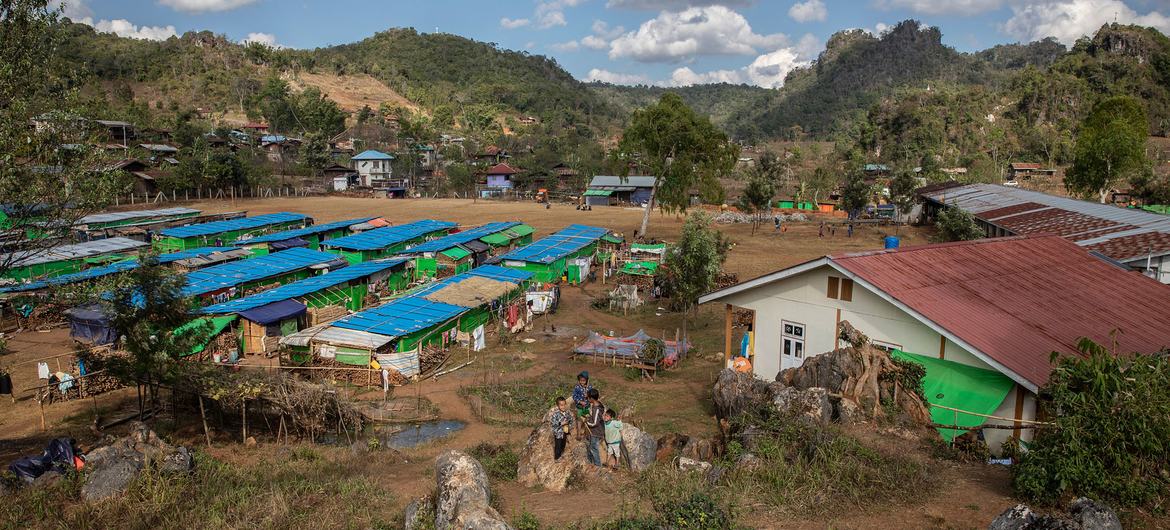
An IDP camp in Kayah (Karenni) state, eastern Myanmar / © UNOCHA/Siegfried Modola

At the same time, accountability mechanisms warn that serious international crimes against civilians continue unabated.

Nicholas Koumjian, head of the Independent Investigative Mechanism for Myanmar, said there is evidence that civilians across the country have endured atrocities amounting to crimes against humanity and war crimes since the military takeover.

The military has carried out air strikes, indiscriminately or deliberately attacking civilians in their homes, hospitals, and schools,” he said, adding that many detainees have been subjected to brutal torture.

The Mechanism is also investigating a growing number of allegations of atrocities committed by opposition armed groups.

Rohingya seek justice at world court

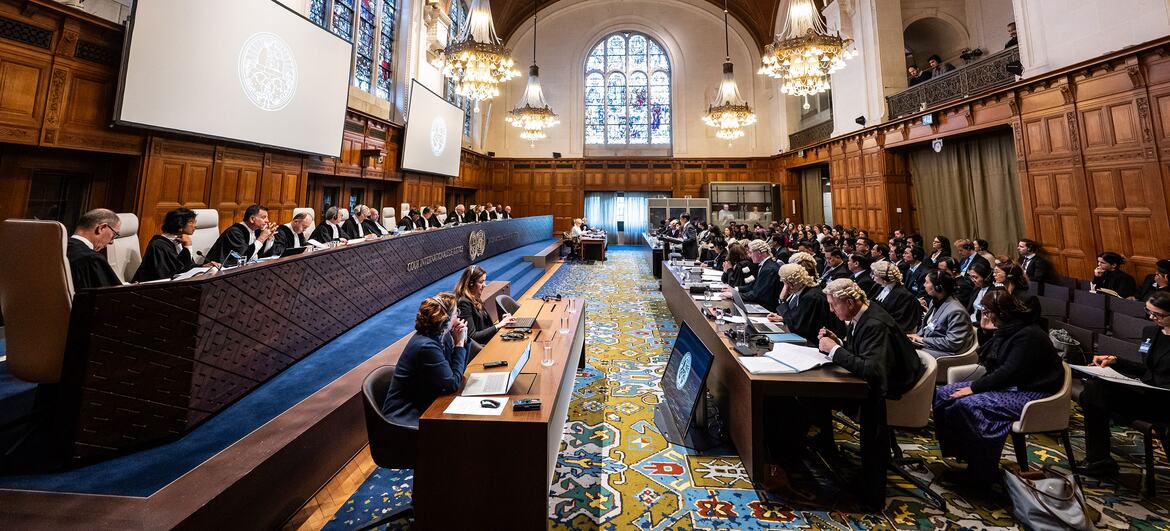
Amid the bleak outlook, an independent human rights expert pointed to a rare moment of accountability as Rohingya survivors testified before the International Court of Justice (ICJ) in the genocide case brought by the Gambia against Myanmar.

Special Rapporteur Tom Andrews praised the survivors’ courage, saying their testimony allows “the light of truth to shine through the darkness of the most horrific of crimes.”

He stressed that justice is not abstract, but “built on the courage of individuals who are willing to speak truth to power.”

Mr. Andrews has been appointed by the Geneva-based Human Rights Council to independently monitor and report on the situation in Myanmar. He is not a UN staff and does not draw a salary from the Secretariat.

The International Court of Justice (ICJ) in The Hague hears arguments concerning the case brought by the Gambia against Myanmar / UN Photo/ICJ/Frank van Beek

The Secretary-General reiterated that a viable path back to civilian rule must be founded on an immediate cessation of violence, a genuine commitment to inclusive dialogue and the swift release of all arbitrarily detained leaders, including President Win Myint and State Counsellor Aung San Suu Kyi.

“Regional and international unity and sustained engagement are needed,” the statement said, “to support a Myanmar-led solution that fully addresses the root causes of conflict, ensures accountability and responds to immediate humanitarian and development needs.”

The Secretary-General’s Special Envoy on Myanmar, Julie Bishop, continues to engage with all stakeholders, in close cooperation with ASEAN and regional partners, in the search for common ground toward a durable resolution and sustainable peace.


Can workers compete with machines and stay relevant in the AI era?

Whether you are a “doomer” or a “boomer” on the subject, it’s impossible to ignore AI, which is seeping into every corner of our personal and professional lives.

The UN has been banging the drum for a “people-first” approach to the subject for years now.

UN Secretary-General António Guterres warned the Security Council back in 2024 that the fate of humanity “must never be left to the ‘black box’ of an algorithm,” and that people must always retain oversight and control over AI decision-making to ensure that human rights are upheld.

Since then, the UN System has been consolidating work on the ethical global governance of AI, building on the guidelines and recommendations contained in the landmark Global Digital Compact.

Here is a selection of the key ideas.

1. Education is key

The UN consistently highlights education as central to ensuring people remain relevant in an AI-enabled future. This is not just about plugging AI tools into the education system but making sure that students and educators are “AI-literate.”

“The global education system will need 44 million teachers by 2030,” says Shafika Isaacs, head of technology and AI in education at UNESCO (the UN agency for education, science and culture). “We believe that it is a mistake to argue that we need to invest more in AI technologies rather than investing in teachers. AI can manage data transfer, but it cannot manage human development, Education is fundamentally a social, human and cultural experience and not a technical download.

2. Embrace the change

Many people across the world are concerned about losing their jobs in the AI era. The World Economic Forum NGO estimated in 2025 that some 41 per cent of employers were planning on cutting their workforce due to AI.

At the same time, new roles matching human strengths with machine capabilities are likely to emerge, because although machines are great at recognizing patterns and repetitive tasks – creativity, judgment, ethical reasoning, and complex interpersonal interactions require a human touch.

Working with global research partners, the International Labour Organization (ILO) has predicted that while one in four jobs is likely to be transformed by AI, this doesn’t necessarily mean net job losses

However, the way that work is performed is likely to significantly change, putting the onus on workers to be highly adaptable, and open to the idea of constantly learning new skills and training throughout their working lives.

© Unsplash/Aidin Geranrekab

Artificial Intelligence is currently revolutionising the smartphone industry.

3. Make AI available for all

A handful of tech giants are driving research into AI and dominating the creation of new tools. The UN is concerned that, unless access to the technology is widened, inequality between countries and within societies will grow.

Strategies developed by the UN emphasise that educational, economic, and governance policies should ensure that AI benefits are broadly shared, not confined to the privileged or technologically advanced.

4. Put human rights first

The UN has repeatedly stressed that AI development must respect human rights, dignity and inclusiveness, and warned that unchecked automation will have far reaching social consequences. 

In 2021, after extensive consultations with global experts, UNESCO released Recommendation on the Ethics of Artificial Intelligence, which argues that human rights can’t be optional – they have to be the binding baseline of sustainable AI systems. 

The document argues that tools that threaten dignity, equality or freedom should be restricted or banned, and that governments must actively regulate and enforce these standards. 

5. The whole world needs to agree on the way forward

This is not an issue that an individual government, private sector, or civil society can navigate alone, and the UN is calling for far greater international cooperation to manage the risks and opportunities of AI.

This could take the form of dialogues on governance and ethics, UN-supported platforms for coordination, and partnerships between the public and private sectors to fund education and workforce development.

Source link