Emmy Awards 2025: Colbert Gets Emotional Farewell; Adolescence, The Studio, The Pitt Dominate

Los Angeles, Sept 14: The 77th Primetime Emmy Awards turned into a night of surprises, historic wins and emotional moments as Adolescence, The Studio, The Pitt, and The Late Show With Stephen Colbert emerged as the biggest winners.

The limited series Adolescence led the tally with six awards, including Best Limited or Anthology Series. Stephen Graham won Best Actor, while young star Owen Cooper made history as the youngest-ever male Emmy winner with his supporting role. Erin Doherty also bagged Best Supporting Actress, with Philip Barantini and Graham-Jack Thorne duo recognized for directing and writing respectively.

Comedy belonged to Seth Rogen’s The Studio, which won Best Comedy Series, alongside trophies for Best Actor, Best Directing, and Best Writing. Jean Smart further solidified her legacy with Best Actress in a Comedy Series for Hacks, while her co-star Hannah Einbinder earned Best Supporting Actress. In a major upset, Jeff Hiller claimed Best Supporting Actor in a Comedy for Somebody Somewhere, beating veteran nominee Harrison Ford.

Drama gold went to The Pitt, crowned Best Drama Series, with Noah Wyle winning Best Actor and Katherine LaNasa scoring a surprise victory for Best Supporting Actress. Severance also celebrated, with Britt Lower taking Best Actress and Tramell Tillman making history as the first Black man to win Supporting Actor in a Drama. Adam Randall won directing honors for Slow Horses.

In variety and talk categories, Stephen Colbert’s recently canceled The Late Show won Best Talk Series, receiving a thunderous standing ovation. John Oliver’s Last Week Tonight outshone SNL to claim Best Scripted Variety Series and Best Writing for a Variety Series, though SNL50: The Anniversary Special secured the Best Live Variety Special.

Cristin Milioti won Best Actress in a Limited Series for The Penguin, while The Traitors triumphed as Best Reality Competition Program. The ceremony also featured reunions, tributes, and an In Memoriam led by Phylicia Rashad.

Hosted by Nate Bargatze at LA’s Peacock Theater, the show celebrated both fresh talent and industry veterans, leaving audiences with memorable firsts and farewells in Emmy history.

Emmy Awards 2025- Complete List of Winners:

Best Drama SeriesThe Pitt
Best Comedy SeriesThe Studio
Best Limited or Anthology SeriesAdolescence
Best Reality Competition ProgramThe Traitors
Best Talk SeriesThe Late Show With Stephen Colbert
Best Scripted Variety SeriesLast Week Tonight With John Oliver
Best Variety Special (Live)SNL50: The Anniversary Special

Best Actor in a Drama Series – Noah Wyle, The Pitt
Best Actress in a Drama Series – Britt Lower, Severance
Best Supporting Actor in a Drama Series – Tramell Tillman, Severance
Best Supporting Actress in a Drama Series – Katherine LaNasa, The Pitt

Best Actor in a Comedy Series – Seth Rogen, The Studio
Best Actress in a Comedy Series – Jean Smart, Hacks
Best Supporting Actor in a Comedy Series – Jeff Hiller, Somebody Somewhere
Best Supporting Actress in a Comedy Series – Hannah Einbinder, Hacks

Best Actor in a Limited or Anthology Series or Movie – Stephen Graham, Adolescence
Best Actress in a Limited or Anthology Series or Movie – Cristin Milioti, The Penguin
Best Supporting Actor in a Limited or Anthology Series or Movie – Owen Cooper, Adolescence
Best Supporting Actress in a Limited or Anthology Series or Movie – Erin Doherty, Adolescence

Best Writing for a Drama Series – Dan Gilroy, Andor
Best Writing for a Comedy Series – Seth Rogen, Evan Goldberg & team, The Studio
Best Writing for a Limited or Anthology Series or Movie – Jack Thorne & Stephen Graham, Adolescence
Best Writing for a Variety SeriesLast Week Tonight With John Oliver

Best Directing for a Drama Series – Adam Randall, Slow Horses
Best Directing for a Comedy Series – Seth Rogen, The Studio
Best Directing for a Limited or Anthology Series or Movie – Philip Barantini, Adolescence

Asia Cup: Kuldeep, Axar And Suryakumar Shine As India Outclass Pakistan In Dubai

Dubai, Sep 14:  India marked their biggest Asia Cup statement yet with a commanding seven-wicket victory over arch-rivals Pakistan, as skipper Suryakumar Yadav starred with an unbeaten 47 on his 35th birthday. Chasing a modest 128, India romped home with 25 balls to spare at the Dubai International Cricket Stadium, underscoring their supremacy with bat and ball.

Leading from the front, Suryakumar anchored the chase with characteristic composure, finishing unbeaten alongside Shivam Dube (10*). Earlier, openers Abhishek Sharma (31) and Tilak Varma (31) laid a solid foundation, attacking Pakistan’s bowlers with freedom. The clinical batting ensured India never looked under pressure, despite Saim Ayub’s triple strikes providing brief resistance.

The post-match atmosphere reflected the wider diplomatic frost between the neighbours. Once again, there were no handshakes exchanged between players, a symbolic reminder that this was more than just a sporting contest. The political shadow has turned cricket into yet another arena of silent hostility, even in Dubai’s neutral setting.

Spin dictates Pakistan’s struggle

Earlier in the evening, India’s spinners continued their dominance. Kuldeep Yadav (3/18) and Axar Patel (2/18) dismantled Pakistan’s middle order, while Varun Chakaravarthy (1/24) maintained pressure on a sluggish surface. Pakistan never recovered after early blows, with only Sahibzada Farhan (40) showing resistance before Shaheen Shah Afridi’s late fireworks (33* off 16) salvaged some respectability.

The match reinforced India’s tactical gamble of fielding just one frontline pacer, trusting their spinners to dictate terms. The move has worked in back-to-back games, highlighting a fresh blueprint ahead of the T20 World Cup year. By contrast, Pakistan’s batting once again appeared fragile against wrist-spin, exposing a recurring weakness in high-stakes encounters.

India in cruise control

This contest, often billed as cricket’s fiercest rivalry, proved one-sided. India’s superior depth, discipline and adaptability stood out, while Pakistan’s overreliance on cameos was ruthlessly exposed. For India, the ease of the win, without major contributions from Rohit Sharma or Virat Kohli, will be especially reassuring. For Pakistan, the defeat will raise questions about squad balance and their ability to handle spin-heavy attacks.

Brief Scores:
Pakistan: 127/9 in 20 overs (Sahibzada Farhan 40, Shaheen Afridi 33*; Kuldeep Yadav 3/18, Axar Patel 2/18)
India: 131/3 in 15.5 overs (Suryakumar Yadav 47*, Abhishek Sharma 31, Tilak Varma 31; Saim Ayub 3/22)

India won by 7 wickets.

Asia Cup: Kuldeep Spins Web As India Restrict Pakistan To 127/9 In Dubai

Dubai, Sep 14 — India’s reliance on spinners once again proved decisive in their Asia Cup Group A clash against Pakistan, as Kuldeep Yadav led a disciplined bowling effort to restrict their arch-rivals to a modest 127/9 at the Dubai International Cricket Stadium on Sunday.

India fielded just one frontline seamer, banking on a three-pronged spin attack. The sluggish surface validated the strategy as Kuldeep (3/18), Axar Patel (2/18) and Varun Chakaravarthy (1/24) choked the run flow and shared six wickets between them. Their combined economy rate stayed under five, leaving Pakistan struggling for momentum throughout the innings.

India struck early when Hardik Pandya dismissed Saim Ayub for a golden duck, followed by Jasprit Bumrah removing Mohammad Haris. Pakistan reached 41/2 in the powerplay, with Fakhar Zaman and Sahibzada Farhan showing brief resistance. But the introduction of spin turned the tide.

Axar dismissed Zaman and Salman Agha, before Kuldeep tightened the noose further. He outfoxed Hasan Nawaz and Mohammad Nawaz with sharp variations, then lured Farhan into holing out for 40. By the 15th over, Pakistan’s innings was in tatters, reduced to desperate hitting.

The lone spark came from Shaheen Shah Afridi, who smashed an unbeaten 33 off 16 balls, including a flurry of sixes that lifted Pakistan beyond 120. His counterattack, along with Sufiyan Muqeem’s brief support, ensured the innings avoided complete collapse.

India’s spin-first approach vindicated

The match reinforced India’s growing confidence in spin dominance, even in high-pressure fixtures. With Bumrah and Pandya offering control, the spinners operated with freedom, exploiting Pakistan’s long-standing discomfort against quality wrist spin. Pakistan, by contrast, leaned heavily on individual cameos, underlining a fragile middle order.

India’s chase of 128 should be straightforward, but the tactical win already lies in how Rohit Sharma’s side executed their spin blueprint — an approach that could shape their campaign ahead.

Empty Stands Mar India – Pakistan Asia Cup Clash As Politics Overshadow Cricket

Dubai, Sep 14: Cricket’s most anticipated rivalry delivered an unusual sight on Sunday as the India–Pakistan Asia Cup clash in Dubai was played before swathes of empty seats. The 25,000-capacity stadium, which usually sells out in minutes for this fixture, saw hundreds of unsold tickets, with terraces visibly sparse despite months of hype.

Local media estimated that attendance fell far short of expectations, leaving broadcasters and sponsors struggling with optics. The muted crowd contrasted with the history of electrifying atmospheres surrounding India–Pakistan matches, long considered the “Super Bowl” of cricket.

The emptiness was not due to lack of interest in cricket but rather the political climate. The match came just months after the Pahalgam terror attack that killed civilians and intensified anti-Pakistan sentiment in India. Calls for boycotts trended widely on social media, with sections of fans urging compatriots not to attend or even watch the game.

Streaming platforms like Hotstar and JioCinema reported heavy traffic, suggesting that fans chose the comfort of digital viewing over stadium attendance. But some analysts noted dips in early TV ratings, indicating that boycott campaigns had some impact. For advertisers, the absence of packed stands diminished brand visibility, even if online eyeballs remained robust.

For cricket administrators, staging the match in Dubai was meant to ensure neutrality and avoid direct political sensitivities. Yet, the optics of empty terraces underscored the limits of “cricket diplomacy.” Organisers balanced commitments to broadcasters and sponsors against public sentiment at home, but the subdued turnout shows how fragile this balance has become.

Sport caught in geopolitics

Sunday’s clash underlined a reality: marquee sporting events involving India and Pakistan no longer exist in isolation. Political violence, social media mobilisation and national mood can directly shape the economics of sport. Empty stands not only hurt revenues but also dent the rivalry’s global aura, once seen as cricket’s most compelling spectacle.

The incident is likely to influence future scheduling, with boards expected to rethink neutral venues, ticketing strategies and even whether such high-stakes matches can continue without explicit political endorsement. Commercial partners will also demand safeguards, recognising that politics is now as crucial a risk factor as on-field performance.

London’s Far-Right Rally Sends Shockwaves Through South Asian Communities

London witnessed one of its most dramatic confrontations between far-right activists and anti-racism campaigners in recent memory this weekend. A march led by Tommy Robinson, founder of the English Defence League, drew an estimated 110,000 to 150,000 supporters, marking it as one of the largest right-wing gatherings in decades.

While organizers claimed even higher turnout, the rally descended into violence, leaving 26 police officers injured, four seriously, and 25 protesters arrested. For South Asians in the UK, who make up one of the country’s largest ethnic minority blocs, the violent rhetoric and size of the rally raise fresh concerns about rising hate crimes, and their identity of belonging.

The event, branded the “Unite the Kingdom” march, was celebrated by Robinson as a “tidal wave of patriotism.” Yet for many observers, the gathering was less about unity and more about exclusion. Anti-immigrant chants, placards criticizing multiculturalism, and speeches targeting Muslim communities made clear the undercurrent of hostility.

ALSO READ: Massive Anti-Immigration Rally in London Turns Violent, 26 Police Officers Injured

South Asians, particularly Muslims of Pakistani and Bangladeshi heritage, were indirectly placed in the crosshairs of this rhetoric. The clash between Robinson’s supporters and counter-protesters organized by Stand Up to Racism only deepened the sense that Britain’s immigrant communities are caught in the middle of an escalating ideological battle.

The South Asian footprint in the UK

According to the 2021 Census (ONS), South Asians form about 9.3% of the population in England and Wales. The breakdown highlights their importance in Britain’s demographic fabric:

  • Indian-origin population: ~1.86 million (3.1%).

  • Pakistani-origin population: ~1.59 million (2.7%).

  • Bangladeshi-origin population: ~0.6 million (1.0%).

  • Sri Lankan, Nepali and other South Asians: collectively ~0.3 million.

These communities are not just statistically significant; they are deeply woven into Britain’s social, cultural, and economic life. Indians form the backbone of the NHS’s medical workforce, Pakistanis and Bangladeshis drive the retail, hospitality, and transport sectors, while newer groups like Nepalis contribute heavily to service and defense.

The London rally revives memories of earlier flashpoints when South Asians became targets of xenophobia. Hate crime data from the Home Office shows a persistent rise in racially and religiously motivated offenses, with spikes often following political events such as Brexit or terror attacks. In 2022–23, police recorded over 109,000 hate crimes, with nearly 70% related to race.

South Asians, especially Muslims and Sikhs who are often mistakenly identified as Muslims, report a heightened sense of vulnerability after such rallies. Grassroots organizations warn that even when physical violence is limited, the psychological toll of being depicted as outsiders can erode trust in institutions and fray inter-community ties.

Generational divides: Young South Asians feel the heat

Second- and third-generation South Asians in Britain are often proud to identify as both British and Asian. However, far-right mobilizations complicate that identity. University campuses have seen rising incidents of racial harassment, and South Asian students often bear the brunt of verbal abuse in public spaces.

Gen-Z South Asians in London spoke on social media about avoiding certain neighborhoods during the rally and expressed anger at being indirectly portrayed as incompatible with Britishness. This sentiment echoes findings from the British Social Attitudes Survey, which noted that younger minorities increasingly feel less secure about their status in society compared to a decade ago.

The rally also arrives at a politically sensitive moment with elections looming in the UK, where immigration is again a headline issue. Far-right rhetoric influences mainstream parties, pushing them to adopt stricter stances on asylum and border control.

Rishi Sunauk with Indian PM Narendra Modi

South Asian communities, however, are no longer passive observers. They represent influential voting blocs in constituencies across London, Birmingham, Leicester, and Manchester. Indian-origin politicians like Rishi Sunak, the former Prime Minister, and several Labour MPs of Pakistani and Bangladeshi origin reflect this growing political clout. But, many community leaders worry that rallies like Robinson’s could polarize voters further, hardening stereotypes and complicating their engagement with both major parties.

A global echo chamber

The London march did not exist in a vacuum. Elon Musk’s video address to the rally, criticizing Britain’s political class and invoking free speech anxieties—gave it international attention. Experts warn that far-right groups across Europe and North America are increasingly coordinated, sharing slogans, strategies, and even celebrity endorsements.

For South Asians, this global networking of extremist rhetoric is alarming. Indian, Pakistani, and Bangladeshi diaspora communities in the U.S. and Canada have already faced the spillover effects of anti-immigrant sentiment. Analysts fear that what starts on London’s streets can embolden similar rhetoric abroad, further tightening the pressure on immigrant communities.

ALSO READ: U.S. Immigration Policy Shift: No Renewal for Humanitarian ‘Migrant Parole’ Program

Despite anxieties, South Asian communities have demonstrated resilience in the face of hostility. Community organizations, interfaith groups, and student associations mobilized rapidly during the London rally, ensuring counter-demonstrations remained visible and peaceful.

Several South Asian MPs condemned the violence, while business leaders highlighted the economic contributions of migrants. The NHS, universities, and city councils used the moment to reaffirm the importance of diversity in sustaining Britain’s institutions.

The London rally was framed by organizers as an assertion of patriotism, but for Britain’s South Asians, it was a stark reminder that questions of belonging are far from settled. While the community has built a visible and influential presence across sectors, the persistence of far-right mobilization threatens to undo decades of integration.

For now, South Asians are cautiously navigating rising hostility while shaping Britain’s future through political engagement, cultural leadership, and economic dynamism. As one activist in Leicester put it after the rally: “They want us out, but Britain cannot run without us.”

Massive Anti-Immigration Rally in London Turns Violent, 26 Police Officers Injured

London witnessed one of its largest far-right demonstrations in recent memory on Saturday, as a march led by activist Tommy Robinson spiraled into violence, leaving at least 26 police officers injured and resulting in 25 arrests.

According to the Metropolitan Police, clashes erupted when sections of Robinson’s supporters attempted to push through barriers separating them from a counter-protest organized by the group Stand Up to Racism. Officers were reportedly punched, kicked, and struck with bottles before riot police were dispatched to regain control.

Authorities confirmed that four officers sustained serious injuries, including broken teeth, a concussion, a suspected broken nose, and a spinal injury. Reinforcements carrying riot shields and helmets were rushed to the scene to contain escalating tensions.

Crowd estimates placed attendance at between 110,000 and 150,000, making it one of the biggest far-right gatherings in the UK in recent years. Organizers, however, claimed turnout was even higher, branding it the “Unite the Kingdom” march. Robinson hailed the event as a “tidal wave of patriotism” and described it as the beginning of a “cultural revolution.”

Robinson, born Stephen Yaxley-Lennon, is the founder of the nationalist and anti-Islam English Defence League. He has long been a controversial figure in British politics and remains one of the most prominent voices on the UK’s far-right.

The rally drew prominent figures from across Europe’s far-right networks and even saw a surprise video address from billionaire Elon Musk. In his message, Musk criticized Britain’s political leadership, argued that citizens were “scared to exercise their free speech,” and urged a push for political change.

Police said more than 1,600 officers were deployed across London to manage the rally, which coincided with several other major public events including football matches and concerts. Authorities confirmed that investigations into the violence were underway and that additional arrests were likely.

‘We Don’t Take Part In Wars’: China Reacts Sharply After Trump’s NATO Tariff Call

China has strongly rejected US President Donald Trump’s proposal that NATO members impose steep tariffs on Beijing, saying such measures would only worsen global tensions.

Chinese Foreign Minister Wang Yi made the remarks on Saturday during a press conference in Ljubljana, Slovenia, following talks with Deputy Prime Minister and Foreign Minister Tanja Fajon. His comments came just hours after Trump suggested NATO should consider tariffs of 50–100 per cent on Chinese goods until the war in Ukraine ends.

“China does not participate in or plan wars, and what China does is to encourage peace talks and promote political settlement of hotspot issues through dialogue,” Wang was quoted as saying by China Daily.

Wang argued that sanctions and tariffs would not resolve crises but only complicate them further. “China and Europe should be friends rather than rivals, and should cooperate rather than confront each other,” he said. “Making the right choices amid the greatest changes in a century demonstrates the responsibilities that both sides should fulfill towards history and the people.”

Wang also stressed that Beijing remains committed to multilateralism and the principles of the UN Charter, adding that the current international situation was defined by “intertwined chaos and continuous conflicts.”

Ukraine war with Russia

Trump, in a post on his Truth Social platform, had said NATO should take collective action on tariffs: “I believe that this, plus NATO, as a group, placing 50 per cent to 100 per cent TARIFFS ON CHINA, to be fully withdrawn after the WAR with Russia and Ukraine is ended, will also be of great help in ENDING this deadly, but RIDICULOUS, WAR.”

The former president claimed China maintains “a strong control, and even grip, over Russia,” suggesting punitive tariffs would weaken Beijing’s leverage over Moscow.

Trump’s proposal is unusual because NATO is a military alliance with no mandate on trade issues. Analysts say his idea of collective tariffs under NATO reflects a broadening of security tools into the economic sphere.

Earlier this month, Trump had accused Chinese President Xi Jinping of “conspiring against” the United States after Beijing held its largest-ever military parade on September 3, attended by Russian President Vladimir Putin and North Korean leader Kim Jong Un. However, in a subsequent remark, Trump said his personal relationship with Xi was still “very good,” underscoring his oscillating stance towards Beijing.

China’s Consistent Refrain on Tariffs

Wang Yi’s latest remarks echo Beijing’s long-standing response to US tariff threats. Since the onset of Trump’s trade war in 2018, China has consistently positioned itself as a supporter of global free trade and multilateral cooperation, while rejecting what it calls Washington’s “unilateral protectionism.”

During earlier rounds of tariffs on Chinese goods, Beijing responded with targeted counter-tariffs but avoided escalating rhetoric, often reiterating that dialogue and mutual respect should guide US-China relations. For instance, in 2019 when Trump raised duties on $200 billion worth of imports, Chinese officials said the “only way forward is cooperation, not confrontation,” while rolling out measured relief for domestic exporters.

China’s playbook has also involved appealing to Europe and other global partners. Wang’s emphasis in Ljubljana that “China and Europe should be friends rather than rivals” reflects Beijing’s strategy of preventing Washington from rallying its allies into a united front against China. This mirrors past efforts when Beijing sought closer ties with the EU even as US tariffs intensified.

The rhetoric of “peace talks” and “multilateralism” serves a dual purpose: projecting China as a responsible power amid global instability, and contrasting Beijing’s image with Washington’s protectionist posture. At the same time, China has been careful not to openly distance itself from Russia, maintaining energy imports and high-level diplomacy while rejecting suggestions that it is actively fueling the war in Ukraine.

If NATO were to adopt Trump’s proposed tariff scheme, unlikely though it may be, China would almost certainly respond with both diplomatic protests and retaliatory economic measures, just as it did during the first trade war. For now, Wang Yi’s remarks suggest Beijing will continue its balancing act: opposing punitive measures, promoting dialogue, and seeking to court European partners wary of being drawn into Washington’s hardening stance.

Param Sundari Faces Box Office Hurdles, Hovers Around ₹3 to 5 Crore

Bollywood’s recent weekend offerings highlight a striking divergence in audience response and box office performance. Among them, Param Sundari, starring popular actors and backed by significant promotion, has struggled to maintain momentum in its second and third weeks. The film’s performance underscores the unpredictable nature of Bollywood’s domestic market, where star power and marketing do not always guarantee sustained commercial success.

Param Sundari arrived with considerable expectations, driven by its vibrant marketing campaign and a cast that included established stars and rising talent. The film’s music, energetic dance sequences, and glossy production design were positioned as key selling points to attract younger demographics and multiplex audiences.

However, despite these efforts, initial audience feedback pointed to mixed reviews regarding narrative coherence and character arcs. Critics praised the film’s visual appeal and choreography but noted pacing issues and a predictable storyline, elements that often affect repeat viewership and word-of-mouth momentum.

Weekend Box Office Performance

Industry trackers report that Param Sundari collected modest figures during its latest weekend, reflecting a significant drop from its opening week. While precise totals vary, estimates suggest weekend collections hovered in the range of ₹3–5 crore, a notable decline compared to expectations. This contrasts sharply with other Bollywood releases, which, despite competing for attention, fared better due to stronger narratives or novelty appeal.

The occupancy trends indicate that urban multiplexes in metros such as Mumbai, Delhi, and Bengaluru saw moderate attendance, while single-screen theatres in smaller cities and towns reported even lower footfalls. Analysts attribute this disparity to both competition from regional hits and changing audience preferences favoring pan-India or globally themed narratives.

Param Sundari released alongside The Bengal Files and ongoing runs of regional blockbusters like Madharaasi and Lokah: Chapter 1 – Chandra. The latter titles, with their strong word-of-mouth and fan engagement, captured a significant share of audience attention, leaving less room for Param Sundari to perform.


Param Sundari

Additionally, the Bollywood landscape is experiencing a paradigm shift. Films that rely primarily on star power are facing challenges from content-driven releases and regional cinema with pan-India appeal. The success of films like The Kashmir Files and Gangubai Kathiawadi in recent years demonstrates that compelling storytelling often outweighs celebrity presence alone.

Social media reactions for Param Sundari have been mixed. While the film’s music tracks and dance numbers garnered appreciation, discussions around plot, character development, and engagement levels reflected disappointment among certain segments of the audience. Viral memes and humorous critiques have dominated online discourse, sometimes inadvertently keeping the film in public attention, though not translating into box office gains.

Viewer demographics indicate that younger audiences, who initially formed a strong part of the opening week crowd, were less inclined to return for repeat viewings. Critics highlight that the film’s core appeal, while visually rich, lacked narrative depth, reducing long-term engagement.

Param Sundari’s marketing campaign was robust, leveraging digital promotions, influencer partnerships, and music video launches to build pre-release anticipation. Distribution focused on maximizing screen presence in metropolitan cities and premium multiplex chains, aiming to target urban youth demographics.

However, the reliance on metro-centric strategies may have limited rural penetration, which, for Bollywood releases, often constitutes a substantial portion of total collections. In contrast, regional films such as Madharaasi and Lokah achieved broader reach across both urban and semi-urban markets, amplifying their box office resilience.

Critical Insights

The underperformance of Param Sundari highlights several key insights for Bollywood stakeholders:

  1. Narrative Weight Matters: A strong storyline with emotional resonance is crucial for sustaining box office momentum beyond the opening weekend.

  2. Competition With Regional Films: Regional cinema’s rising pan-India appeal requires Bollywood to compete not just with fellow Hindi films but also with high-quality regional releases.

  3. Marketing Beyond Hype: Pre-release buzz is insufficient; sustained engagement through content and audience connect is critical for extended theatrical runs.

  4. Audience Fragmentation: Urban multiplex audiences are increasingly discerning, while rural and smaller-city markets may respond differently, requiring a nuanced release strategy.

When compared to Baaghi 4 and The Bengal Files, Param Sundari illustrates the challenges Bollywood faces in balancing star-driven appeal with compelling content. While Baaghi 4 saw a drop in occupancy but benefited from franchise recognition, The Bengal Files leveraged topical storytelling to maintain steady collections. Param Sundari, despite high production values, struggled to achieve similar traction.

Future Bollywood Releases

The performance of Param Sundari may influence how studios approach mid-budget Bollywood projects. The reliance on aesthetics and dance-centric marketing alone appears insufficient. Audience expectations are shifting toward stronger scripts, character-driven narratives, and experiences that resonate emotionally or thematically.

For actors and producers, this signals the need to innovate within conventional Bollywood frameworks. Incorporating elements that offer novelty or align with current societal interests may prove decisive in future box office outcomes.

Param Sundari’s weekend performance serves as both a reality check and a learning opportunity for Bollywood. While its music, visuals, and star cast contributed to initial interest, the film’s inability to sustain momentum underscores the importance of content-driven appeal in today’s market.

In a landscape increasingly dominated by pan-India hits, regional cinema, and global releases, Bollywood must adapt strategies to align with evolving audience preferences. Param Sundari, despite underwhelming numbers, remains a talking point for industry analysis, providing insights into the changing dynamics of box office success in India.


Madharaasi Nears ₹100 Crore Milestone, Sivakarthikeyan’s Film Dominates Tamil Box Office

Tamil cinema continues to assert itself as a powerhouse within India’s film ecosystem, with big-budget action entertainers driving both regional and pan-India revenue. The latest example is Madharaasi, starring Sivakarthikeyan and featuring Vidyut Jammwal in a pivotal antagonist role. In just a few days, the film has amassed nearly ₹50 crore, with analysts predicting it will soon cross the coveted ₹100 crore mark.

Over the past decade, Tamil cinema has demonstrated the ability to generate massive commercial returns without relying solely on Bollywood-style formulas. Films like Master, Leo, and Vikram have showcased the appeal of high-octane narratives combined with strong star power. Madharaasi continues this trajectory, delivering a blend of adrenaline-pumping action, engaging storytelling, and mass-appeal elements that cater to both metro and tier-2 audiences.

Industry trackers report that Madharaasi collected approximately ₹25 crore on its opening day, making it one of the highest openings for a Sivakarthikeyan-starrer. Strong word of mouth, coupled with strategic scheduling across multiplexes and single-screen theatres, has ensured steady collections. By the end of its first weekend, the film had already crossed ₹50 crore, cementing its status as a commercial hit.

The momentum is expected to continue in the following weeks, particularly as overseas collections from markets such as Singapore, Malaysia, and the UAE contribute significantly to the total. These regions, with large Tamil-speaking populations, often act as crucial revenue boosters for Tamil cinema’s big releases.

Star Power And Audience Appeal

Sivakarthikeyan, known for his charisma and mass appeal, anchors the film effectively, drawing audiences across demographics. Vidyut Jammwal’s inclusion as a formidable antagonist adds an edge to the narrative, bringing action credibility that resonates with thrill-seeking audiences.

The film also employs high-octane sequences, visually striking choreography, and a tightly woven screenplay that keeps viewers engaged. Its action-driven narrative ensures repeat viewing, a common feature of blockbuster Tamil films where audiences flock back to witness stunts and climactic showdowns.

Madharaasi exemplifies the increasing professionalism and scale of Tamil cinema. From elaborate sets to cutting-edge VFX sequences, the production quality rivals larger pan-India films. The promotional campaign has leveraged social media extensively, with teaser releases, behind-the-scenes content, and influencer-driven marketing fueling anticipation ahead of the premiere.

Madharaasi box office

Music has also played a pivotal role. The film’s soundtrack, released ahead of the movie, gained traction on streaming platforms, creating pre-release hype and helping draw audiences to theatres. Songs featuring Sivakarthikeyan and Jammwal’s on-screen confrontations became viral, amplifying the film’s visibility.

Timing has been a crucial factor in Madharaasi’s success. It avoided clashing with major Bollywood releases, focusing on maximizing occupancy across Tamil Nadu and Kerala. Its release coincided with school and college holidays, further boosting footfalls among younger demographics.

Regional And Pan-India Impact

While primarily a Tamil release, Madharaasi’s appeal extends beyond regional boundaries. Dubbed versions in Telugu, Kannada, and Malayalam are contributing to cumulative box office figures. Analysts suggest that Tamil films with universal action themes are increasingly able to compete with Hindi and Telugu blockbusters in non-Tamil-speaking regions.

This strategy of multi-lingual releases is reminiscent of the pan-India approach pioneered by Telugu cinema, and it reflects a larger trend where regional films are no longer confined by linguistic barriers.

With production costs reported at approximately ₹60 crore, Madharaasi’s rapid revenue generation ensures a high return on investment. The ₹100 crore benchmark is both a symbolic and financial milestone, underscoring the commercial viability of high-budget regional films. For distributors and exhibitors, the film has reinforced the profitability of Tamil action entertainers, encouraging further investment in large-scale projects.

Audience response has been overwhelmingly positive, particularly on social media platforms where discussions about stunts, dialogues, and performances have trended widely. Memes, reaction videos, and fan edits have contributed to a sustained marketing effect, ensuring the film remains in public discourse well beyond the opening weekend.

Critics have praised the film for balancing high-octane entertainment with a coherent narrative, a combination that ensures both commercial and critical appeal. While some noted predictable plot elements, the performances and production scale have mitigated potential criticism.

Madharaasi’s success exemplifies the growing trend of Tamil cinema exporting its content to wider Indian and international markets. With strategic multi-lingual releases, strong star power, and high-quality production, Tamil films are increasingly challenging the dominance of Bollywood and Telugu films in multiple regions.

The performance also highlights the potential of mid-to-high budget films in regional industries to deliver blockbuster returns, encouraging producers to invest in ambitious projects that balance storytelling with commercial appeal.

Tamil Cinema On The Rise

Despite its early success, challenges remain. Sustaining box office momentum beyond the first two weeks is critical. The arrival of other regional releases and potential Bollywood competition could impact long-term collections. Additionally, maintaining consistent quality in pan-India releases will be crucial for Tamil films seeking broader appeal.

Nevertheless, industry experts remain optimistic. The combination of star appeal, production scale, and audience engagement suggests that Madharaasi will comfortably cross ₹100 crore, further strengthening Tamil cinema’s standing in the Indian box office hierarchy.

Madharaasi is more than just another action entertainer, it is a testament to Tamil cinema’s evolving landscape. By nearing ₹100 crore in just a few days, it has showcased the market’s appetite for high-quality, action-driven films with universal appeal. For producers, distributors, and exhibitors, the film serves as both inspiration and blueprint for future pan-India successes.

Tamil audiences, meanwhile, have responded enthusiastically, proving that regional films with scale, star power, and compelling narratives can achieve blockbuster status, rivaling even the most dominant Bollywood and Telugu offerings.

Lokah: Chapter 1 – Chandra Shines Bright, Crosses ₹112 Crore In Malayalam Cinema’s Golden Year

The Malayalam film industry has long been admired for its storytelling finesse, sharp writing, and grounded realism. But when it comes to box office scale, it often found itself overshadowed by the pan-India juggernauts of Telugu and Tamil cinema. That perception is now changing. Lokah: Chapter 1 – Chandra has stormed past the ₹112 crore mark, cementing its position as one of the biggest Malayalam blockbusters of all time and underlining the industry’s evolution into a formidable commercial force.

Historically, Malayalam cinema has thrived on modest budgets and urban narratives. Its strength lay in critical acclaim rather than commercial clout. The emergence of directors experimenting with high-scale spectacles has shifted that balance. Lokah: Chapter 1 – Chandra epitomizes this shift, merging Malayalam cinema’s storytelling depth with the spectacle-driven appeal of pan-India productions.

Crossing ₹112 crore is no small feat for a regional film primarily driven by Kerala’s domestic market. The film’s success signals that Malayalam cinema can now consistently produce titles with nationwide, and even overseas, pull.

Box Office Trajectory: From Regional To National

Released in late August, Lokah: Chapter 1 – Chandra opened to packed theatres across Kerala. Within its first week, it had already grossed over ₹40 crore. Strong word of mouth and positive reviews ensured sustained momentum. As it expanded into Tamil Nadu, Karnataka, and the Gulf states—where the Malayali diaspora is significant—the collections accelerated.

Lokah Chapter 1: Chandra’ movie box office figures

By week three, the film had breached the ₹100 crore mark, becoming one of the fastest Malayalam titles to achieve that milestone. Its current tally of ₹112 crore underscores both its universal appeal and smart distribution strategy.

Why The Film Clicked

Several factors contributed to the film’s runaway success:

  1. Star Power: The lead actor’s magnetic performance resonated with audiences, elevating the film from regional hit to national sensation.

  2. Pan-India Storytelling: While deeply rooted in Malayalam culture, the narrative explored universal themes of power, betrayal, and resilience.

  3. Visual Grandeur: High production values, elaborate sets, and cutting-edge visual effects rivaled those of Tamil and Telugu big-budget spectacles.

  4. Music And Emotion: A powerful soundtrack, combined with emotional arcs, gave the film mass appeal across demographics.

To understand the significance of Lokah: Chapter 1 – Chandra, one must compare it with earlier milestones. Films like Drishyam and Lucifer were turning points, proving Malayalam films could compete at the box office. But Chandra has gone further, crossing revenue thresholds previously thought unattainable.

Where Lucifer stopped at around ₹125 crore worldwide, Chandra is on track to surpass it with its continued run in overseas markets. Trade experts predict a final tally near ₹140–150 crore, putting it firmly in pan-India blockbuster territory.

The Overseas Factor

The Gulf region has always been a stronghold for Malayalam cinema. Lokah: Chapter 1 – Chandra capitalized on this by launching aggressively in UAE, Qatar, and Oman, with multiple shows daily. The diaspora turned out in droves, making it one of the highest-grossing Malayalam films overseas.

Interestingly, the film has also done well in non-traditional markets like North America and Australia, aided by the rising curiosity around South Indian cinema post-RRR and KGF. This crossover appeal highlights Malayalam cinema’s growing recognition on the global stage.

While commercial performance has been stellar, critics have also lauded the film’s balance of scale and substance. Reviews praised its intricate screenplay, layered characters, and ability to weave grandeur without losing emotional depth.

On social media, the film has trended consistently, with fan edits, viral dialogues, and music reels amplifying its reach. The buzz has particularly resonated with younger audiences, who are increasingly engaging with South Indian cinema as “cooler” alternatives to Bollywood offerings.

The Pan-India Template

The film’s success underscores a larger industry trend: the “pan-India” model is no longer limited to Telugu and Kannada blockbusters. Malayalam cinema, once seen as too niche or arthouse for national expansion, is now firmly part of the conversation.

Producers are recognizing the need to balance authenticity with universal storytelling. Lokah: Chapter 1 – Chandra achieves this balance, presenting Kerala’s ethos while packaging it in a format digestible to audiences across India.

For the Malayalam industry, Chandra’s ₹112 crore haul is both validation and inspiration. It signals that investing in big-scale productions is viable, provided the content retains Malayalam cinema’s storytelling DNA. This could encourage more studios to experiment with higher budgets, advanced VFX, and broader distribution networks.

The film also raises expectations for its sequels. Being Chapter 1, the franchise model promises more to come, potentially creating a Malayalam cinematic universe that can rival its Telugu and Tamil counterparts.

Despite its success, challenges remain. Scaling consistently requires strong infrastructure, marketing muscle, and risk appetite. Malayalam cinema, known for its modest production ecosystem, must adapt to the logistical demands of pan-India blockbusters.

Another hurdle is linguistic accessibility. While dubbed versions have worked in Tamil Nadu and Karnataka, penetration in Hindi-speaking states remains limited. Building Hindi-market appeal will be crucial for future growth.

A New Dawn For Malayalam Cinema

Lokah: Chapter 1 – Chandra is more than a blockbuster; it is a statement of intent. By crossing ₹112 crore, it has demonstrated that Malayalam cinema can deliver not just critical gems but also mass-market spectacles. Its success contributes to what many are calling Malayalam cinema’s golden year, alongside other hits that have found both acclaim and box office validation.

As audiences across India embrace diverse storytelling, the barriers that once confined Malayalam cinema are fading. Chandra stands as a symbol of this transformation—a film that carries Kerala’s cinematic legacy into a bold new era of commercial dominance.

The Conjuring: Last Rites Crosses ₹70 Cr, Pushes Viewers’ Appetite For Horror

Horror has always been a niche genre in India, oscillating between cult classics and low-budget thrillers. Yet, the sustained success of The Conjuring franchise has rewritten that narrative, making supernatural horror a reliable box office draw. With The Conjuring: Last Rites crossing the ₹70 crore mark in India, the film has reaffirmed both the franchise’s popularity and the Indian audience’s growing comfort with global horror.

When The Conjuring debuted in 2013, few expected it to break through cultural barriers in India, where family dramas and star-driven vehicles ruled the roost. But James Wan’s taut storytelling and the chillingly authentic Ed and Lorraine Warren mythology struck a chord. Every installment since, Annabelle, The Nun, and The Conjuring sequels, has grown its fan base.

For Indian audiences, the blend of Hollywood-grade production with universal themes of fear, faith, and family protection made The Conjuring films resonate more than gore-heavy Western horror franchises. Last Rites is the latest example of this enduring formula.

Industry trackers reveal that Last Rites opened strong, with an opening weekend collection of nearly ₹30 crore. Multiplexes in Delhi, Mumbai, Bengaluru, and Hyderabad reported full houses, with late-night shows selling out, a rarity in the horror genre.

After three weeks in theatres, the film has now crossed ₹70 crore in India, placing it among the most successful Hollywood horror releases in the country. Globally, the film is inching towards the US$400 million mark, with India contributing a significant slice to its overseas revenues.

For context, this is more than many mid-tier Bollywood films this year, highlighting the widening gap between local star power and Hollywood franchises.

Why Indian Audiences Love The Conjuring

The appeal of The Conjuring franchise in India goes beyond jump scares. Experts cite several factors:

  1. Brand Recall: The Warren family narrative has become as recognizable in India as the Fast & Furious ensemble. Each installment builds familiarity.

  2. Word of Mouth: Horror thrives on community viewing, and Indian audiences relish collective theatre experiences, screams, laughs, and nervous chatter.

  3. Faith Factor: The films’ religious undertones, exorcisms, priests, and demonic possession, find cultural echoes in India’s own myths and beliefs.

  4. Youth Appeal: Gen Z audiences are leading the horror wave, often drawn by viral TikTok/Instagram reactions that amplify the scare factor.

Compared to other superhero blockbusters, horror films operate on modest budgets. Last Rites reportedly cost under US$40 million to make, yet its Indian box office alone has yielded nearly a quarter of that figure. The ROI makes horror an attractive genre for distributors and theatres, particularly in markets like India, where horror enjoys a communal pull.

The genre also benefits from repeat value. Fans often revisit screenings to watch friends’ reactions or relive scare sequences, boosting footfalls. OTT releases, when they arrive, sustain the hype, ensuring longevity of the franchise.

Last Rites enjoyed a relatively clean run in India with no major Bollywood releases clashing during its opening. This gap allowed the film to dominate multiplex schedules. Its release ahead of Halloween also positioned it well for extended traction, as horror films traditionally peak during festival seasons globally.

Meanwhile, regional releases like Lokah: Chapter 1 – Chandra and Madharaasi catered to different markets, allowing Last Rites to consolidate pan-India collections.

The film’s success also highlights Hollywood’s uneven year in India. While superhero tentpoles like Deadpool & Wolverine broke records, dramas and family titles underperformed. Horror, however, has been consistent, with films like The Nun II and Annabelle Comes Home doing solid business. Last Rites has built on that track record, positioning horror as Hollywood’s reliable weapon in India.

Audience Reactions And Cultural Fit

Social media reactions from Indian audiences underline how well Last Rites has connected. From memes about sleepless nights to viral clips of people screaming in theatres, the community-driven marketing has boosted its run.

Interestingly, cultural familiarity with ghost stories has helped. India has its own folklore of spirits, possessions, and haunted houses. This backdrop makes The Conjuring’s demonic universe more accessible, unlike Western slashers that often rely on niche tropes.

The ₹70 crore success of Last Rites raises tough questions for Bollywood. Despite mega budgets and big stars, many Hindi films have struggled to cross that benchmark this year. Hollywood horror, by contrast, is doing it with less noise, fewer stars, and relatively modest costs.

Some Indian filmmakers are now experimenting with horror-thrillers, recent examples include Stree and Bhediya, which mixed comedy with scares. But Hollywood’s slick production and global branding keep the bar high.

Distributors expect more horror franchises to capitalize on India’s appetite. The Nun III and rumored Annabelle spin-offs are already anticipated. At the same time, Netflix and Amazon Prime are pushing horror originals, hoping to capture the same audience on streaming.

For exhibitors, the lesson is clear: horror is no longer a niche weekend filler. It is a bankable genre that can deliver blockbuster returns with relatively lower investment.

Conclusion: Fear Is Profitable

The Conjuring: Last Rites is more than a box office hit—it is proof that horror has cemented its place in India’s mainstream entertainment. With ₹70 crore and counting, the franchise continues to defy odds, reminding us that fear, when packaged well, can be just as profitable as love stories or action spectacles.

For Indian audiences, the appeal lies in shared screams and heart-pounding nights. For Hollywood and theatres, it’s about steady revenue and expanding cultural dominance. And for Bollywood, it’s a wake-up call: perhaps the scariest competition comes not from rivals at home, but from ghosts abroad.

Demon Slayer: Infinity Castle Collects ₹12 Cr in First Weekend, Breathes Fire At Indian Box Office

The Indian box office has traditionally been dominated by Bollywood blockbusters, pan-India Telugu or Tamil juggernauts, and Hollywood’s superhero spectacles. But in recent years, a new genre has been quietly and steadily building a following: Japanese anime. The release of Demon Slayer: Infinity Castle marks a watershed moment in this trend, as the film’s numbers from its opening weekend suggest anime is no longer a niche segment in India—it is becoming mainstream entertainment.

Japanese anime films were once confined to small screenings in select metros, catering to dedicated fan clubs and subculture enthusiasts. Titles like Your Name and Weathering With You hinted at the potential, but the real explosion came with the Demon Slayer franchise. Its earlier film, Mugen Train, set the global box office on fire in 2020, becoming the highest-grossing Japanese film of all time.

In India, the pandemic delayed the anime boom, but once theatres reopened, anime quickly became a crowd-puller. Today, Infinity Castle is riding on this momentum, pulling in audiences far beyond its traditional base. Multiplex chains are reporting strong occupancy, not just in metros like Mumbai, Delhi, and Bengaluru, but also in Tier-2 cities such as Pune, Kochi, and Lucknow.

Box Office Numbers: A Strong Opening

Industry trackers note that Infinity Castle collected over ₹12 crore in its first weekend in India, an impressive figure for an anime title. While it pales in comparison to Bollywood tentpoles, the significance lies in the scale of growth. Just three years ago, anime films would barely manage a crore in lifetime collections. The new release, buoyed by aggressive fan campaigns and smart positioning by PVR INOX, is already on track to cross the ₹25 crore mark in its theatrical run.

This is more than just a financial milestone; it signals a cultural shift. The Indian youth demographic, heavily influenced by streaming platforms like Crunchyroll and Netflix, is willing to pay theatre prices to watch their favorite anime in dubbed or subtitled formats.

The Demon Slayer franchise combines emotional storytelling, stunning animation, and intense battle sequences, making it accessible even to those new to anime. In India, the dubbed versions, particularly in Hindi and Tamil, are driving footfalls. Parents accompanying teenagers to screenings are discovering anime as a cinematic experience, not just animated content for kids.

Moreover, the timing of the release has worked in its favor. With limited Bollywood competition this week and no major pan-India releases, anime had the space to shine. The makers also tapped into social media trends, with fan art, cosplay events, and influencer promotions building buzz in advance.

Anime vs Hollywood in India

The rise of Infinity Castle comes at a time when Hollywood itself is struggling at the Indian box office. While superhero films like Deadpool & Wolverine continue to draw big numbers, other mid-budget films are faltering. Anime seems to have carved out a stable niche, with better cost-to-revenue ratios, especially after the success of Indian animation film Mahavatar Narsimha. 

Trade experts argue that anime’s “event film” positioning, limited shows, fan-driven campaigns, and passionate word of mouth, creates an urgency to watch in theatres. This contrasts with Hollywood dramas or comedies, which often find themselves relegated to OTT.

The impact of Infinity Castle goes beyond ticket sales. Merchandise sales, from figurines to posters, are spiking online. Pop culture events in India now regularly feature anime cosplay, with Demon Slayer characters being among the most popular. This commercial ecosystem strengthens the franchise’s long-term prospects in India.

Streaming platforms, too, are beneficiaries. Fans who watched Infinity Castle are flocking to catch up on older Demon Slayer episodes on Crunchyroll and Netflix, driving up subscription retention. This creates a feedback loop where theatrical success boosts streaming, which in turn builds anticipation for future films.

Road Ahead For Anime In India

The success of Infinity Castle raises important questions for distributors and exhibitors. Will anime become a permanent fixture in India’s release calendar, or is it still too dependent on a handful of big titles? Industry insiders say more consistency is needed. Titles from franchises like One Piece, Jujutsu Kaisen, and Dragon Ball could sustain momentum, but their local distributors must ensure wide release patterns.

Additionally, Indian filmmakers are watching closely. With the younger audience embracing Japanese storytelling, studios may explore Indo-anime collaborations, a concept already popular in Southeast Asia.

Despite the glowing numbers, anime films still face hurdles in India. Ticket pricing is one. Premium screens with higher rates may alienate some fans, limiting reach. Language accessibility also remains uneven, while Hindi and Tamil dubs are common, Bengali, Telugu, and Marathi versions are rare.

Piracy is another challenge. The hardcore anime community is used to accessing content online, and leaks can dent box office momentum. Distributors need tighter release strategies to minimize this risk.

Turning Point For Indian Theatres

Demon Slayer: Infinity Castle is more than just a box office hit, it’s a signal of evolving tastes. Indian audiences, particularly Gen Z and millennials, are open to global pop culture influences beyond Hollywood. With strategic distribution, anime could become a ₹200–300 crore annual business in India over the next few years.

For theatres recovering from pandemic losses, this is welcome news. Anime screenings bring in younger audiences who may become lifelong moviegoers, ensuring cinemas remain relevant in a streaming-dominated era.

Gold Nears Record Highs of ₹1.13 Lakh: Check Where Will It Be By Year-End

Gold prices are once again dominating global headlines. Hovering near all-time highs, the yellow metal has emerged as one of the most closely watched assets this September, reflecting a mix of investor anxiety, central bank policies, and domestic demand surges in India ahead of the festive season. From Wall Street to Chandni Chowk, gold’s rally is shaping markets and household budgets alike.

The U.S. Federal Reserve remains the single most important influence on gold’s trajectory. Global spot prices touched US$3,673.95 per ounce earlier this week, just shy of fresh records, before consolidating around US$3,648–3,650. Weakness in the U.S. labor market, including higher jobless claims and downward revisions in non-farm payrolls, has reinforced expectations that the Fed could cut rates in its next policy meetings.

For gold investors, this matters because lower interest rates reduce the opportunity cost of holding a non-yielding asset like bullion. A weaker U.S. dollar also typically drives up international gold demand. As a result, bullion is increasingly seen as a hedge against both financial uncertainty and inflationary risks that remain sticky across major economies.

India’s Record-High Prices

In India, the world’s second-largest consumer of gold after China, the impact is immediate. Domestic gold prices have crossed ₹1,09,000 per 10 grams in key markets, with Delhi witnessing trades as high as ₹1,13,100 per 10 grams. Prices in Mumbai, Chennai, Kolkata, and Bengaluru are only marginally lower, averaging around ₹11,050–11,070 per gram for 24-carat gold. Even 22-carat gold, traditionally preferred for jewellery, now costs over ₹10,100 per gram.

The surge is pinching consumers but also fueling speculative interest. Jewellers report that buyers are cautious about bulk purchases, yet cultural factors, particularly weddings and festivals, ensure that demand does not collapse. Many households continue to view gold as both ornament and insurance, a long-standing tradition that resists market cycles.

Drivers Of The Rally

The current gold rally rests on five pillars:

  1. Global Monetary Policy: Expectations of Fed rate cuts are the biggest driver, but central banks worldwide are also increasing their gold reserves, adding to demand.

  2. Geopolitical Tensions: Uncertainty in regions from Eastern Europe to East Asia has pushed investors toward safe-haven assets.

  3. Inflationary Concerns: While consumer inflation in the U.S. and Europe has moderated, it remains above target in many regions, preserving gold’s appeal as an inflation hedge.

  4. Weaker Dollar: Any slide in the U.S. currency makes gold more affordable for buyers in other countries, reinforcing global flows.

  5. Indian Festive Demand: The upcoming Navratri, Dhanteras, and wedding season ensures a domestic consumption boost, regardless of price levels.

Market Volatility And Risks

Despite the bullish undertone, analysts caution that volatility is inevitable. Profit-taking is evident whenever gold hits a new high. The key risk lies in inflation cooling faster than expected. If price pressures ease and the Fed slows or limits its rate cuts, gold could lose momentum. A stronger dollar in such a scenario would likely pull bullion back to the US$3,450–3,500 per ounce range.

Domestically, government policy also poses a risk. Import duties on gold remain steep, and any further tweaks by New Delhi to curb imports could alter pricing dynamics. The rupee’s performance against the dollar will also play a role in determining how global prices translate into domestic rates.

India’s listed jewellers have reacted swiftly to soaring gold prices. Shares of Titan, Kalyan Jewellers, and Senco Gold have seen heightened trading volumes. While high prices can dampen near-term consumer purchases, the larger narrative is supportive for organised retail chains. Analysts argue that customers are likely to prefer branded outlets that offer exchange schemes, certified quality, and buy-back assurances in times of price volatility.

Scenario-Based Year-End Forecast

Looking ahead, analysts outline three possible scenarios for gold by December 2025:

  1. Aggressive Fed Rate Cuts
    If the Fed slashes rates by 50–75 basis points before year-end, gold could easily breach US$3,750–3,800 per ounce. In India, this translates to ₹1,15,000–1,18,000 per 10 grams, depending on rupee levels and duties.

  2. Gradual Easing
    A modest 25-basis-point cut or a more cautious Fed stance would keep gold range-bound. Spot prices may hover between US$3,600–3,700 per ounce, with Indian rates consolidating in the ₹1,09,000–1,13,000 per 10 grams range.

  3. Cooling Inflation
    If inflation drops sharply, easing the need for aggressive cuts, gold could retreat to US$3,450–3,500 per ounce. Domestic prices could slide back to ₹1,03,000–1,05,000 per 10 grams.

Current Gold Prices In Major Indian Cities

As of mid-September 2025, here are the prevailing gold rates across five major Indian metros:

  • Delhi: ~₹11,130 (24-carat per gram), ~₹10,205 (22-carat), ~₹8,352 (18-carat)

  • Mumbai: ~₹11,050–11,060 (24-carat), ~₹10,130–10,145 (22-carat), ~₹8,280–8,300 (18-carat)

  • Chennai: ~₹11,070 (24-carat), ~₹10,150 (22-carat), ~₹8,400 (18-carat)

  • Kolkata: ~₹11,051 (24-carat), ~₹10,130 (22-carat), ~₹8,288 (18-carat)

  • Bengaluru: ~₹11,051 (24-carat), ~₹10,130 (22-carat), ~₹8,288 (18-carat)

These figures underline the sharp escalation in costs across the board. For perspective, gold was trading below ₹60,000 per 10 grams barely two years ago.

For global and Indian investors alike, the lesson is clear: chasing highs is risky, but ignoring gold altogether could prove costly in uncertain times. Market experts recommend staggered buying, accumulating during pullbacks rather than entering at peaks.

In fact, exchange-traded funds (ETFs) and sovereign gold bonds provide safer avenues for exposure without the storage and purity concerns of physical bullion.

Why Speculative Fever Always Catches Up

Gold’s surge reflects more than speculative fever. It embodies anxiety about the global economy, inflation, and geopolitical tensions, while also highlighting India’s enduring cultural affinity for the metal.

Yet, the rally’s sustainability rests on forces beyond any single market’s control. The U.S. Fed’s choices, global inflation trends, and currency shifts will dictate whether 2025 ends with gold at dazzling new records or retreating from its highs.

For now, one thing is certain: gold is once again reminding the world why it has been the ultimate store of value for centuries.

Mittal’s Hike Shuts Down After India’s Real-Money Gaming Ban; Decade-Long Journey Over

Hike, once touted as India’s homegrown rival to WhatsApp and later a promising player in online gaming, has officially shut down after the Indian government imposed a ban on real-money gaming.

Founder and CEO Kavin Bharti Mittal confirmed the closure in a note shared on Substack, calling it “a difficult decision” made after discussions with investors and employees. “Scaling globally would require a full recap, a reset that is not the best use of capital or time,” he wrote, acknowledging that regulatory hurdles in India had curtailed the company’s ambitions.

Launched in 2016 as a messaging platform, Hike had repositioned itself in 2021 as a gaming venture with its platform Rush. Featuring 14 mobile titles, Rush integrated Web3 elements such as play-to-earn mechanics and digital asset ownership. The app grew rapidly, boasting more than 10 million users, $500 million in gross revenue, and nearly $480 million in annual winnings distributed to players.

Ban on Online Gaming

Despite the traction, India’s blanket ban on real-money gaming effectively shut off Hike’s largest market. Mittal noted that while the company’s U.S. operations launched nine months ago were “showing strong growth,” the inability to build scale at home made global expansion unviable.

At its peak, Hike employed about 100 people across India, the U.S., Dubai, and Singapore, organized into what Mittal described as lean, high-performance “SWAT teams.” The venture had backing from some of the world’s biggest investors, including SoftBank, Tencent, Tiger Global, Bharti, Foxconn, Jump Crypto, Tribe Capital, Republic, and Polygon. Individual investors such as Rajeev Misra, Elad Gil, and Zynga founder Mark Pincus had also placed bets on the company.

The shutdown brings an abrupt end to a startup that once symbolized India’s ambition to build global internet platforms, from social messaging to Web3 gaming. Moreover, the abrupt closure of Hike underscores a hard truth for India’s digital economy ahead such as scale, innovation, and marquee investors are no match for abrupt regulatory interventions. Kavin Bharti Mittal’s decision to shut down the once-celebrated startup reveals how vulnerable even well-backed ventures remain in sectors that lack policy clarity.

Platform Rush Experiment

Hike’s trajectory reflects both promise and pitfalls. From its early days as a homegrown rival to WhatsApp, the company successfully reinvented itself by riding India’s booming mobile gaming wave. Its platform, Rush, was no small experiment: it blended traditional casual games with Web3 features, drew over 10 million users, and claimed $500 million in gross revenues. Few Indian consumer internet firms outside e-commerce had achieved such traction in a short span. Yet, one regulatory stroke effectively erased its biggest market.

Above all, the challenge lies in the timing. Mittal argued that while Hike’s U.S. operations were beginning to show growth, building a truly global platform required strong domestic roots. India was intended to provide that base. Instead, the blanket ban on real-money gaming turned a growth story into a cautionary tale. This regulatory unpredictability does not just deter entrepreneurs, it shakes investor confidence in India’s broader digital ecosystem.

The investor roster behind Hike, SoftBank, Tencent, Tiger Global, Polygon, and others, signals that global capital is eager to back Indian startups. But sudden rule changes, without phased implementation or alternative frameworks, risk driving talent and capital abroad. The shutdown also raises questions about India’s ability to nurture world-class consumer internet products, even as the government pushes for “Digital India” and startup-led growth.

Concerns of Addiction Leads to Shutdowns

At the same time, the government cannot remain mute to concerns of addiction over inevitable financial risk without stifling gaming sector. innovation. In fact, the ban on real-money gaming in India has triggered a wave of shutdowns and exits across the country’s once-thriving gaming startup ecosystem. Hike, the messaging-app-turned-gaming company, was the first high-profile casualty, but several others have quickly followed.

Dream Sports, parent of fantasy sports giant Dream11, has begun winding down its real-money gaming divisions. The company has suspended its “cash contests” on platforms like Dream Picks and Dream Play, assuring users that deposits and winnings remain safe.

Mobile Premier League (MPL), another major player in India’s online gaming sector, also suspended deposits and halted its real-money operations. The company has reportedly laid off nearly 60% of its India workforce, underscoring the severity of the regulatory shock.

PokerBaazi, operated by Moonshine (a Nazara Technologies subsidiary), has also ceased offering real-money poker games. While Nazara continues to evaluate the regulatory environment, its gaming subsidiary has been forced to hit pause on its most lucrative business line.

Other firms, including Zupee, Probo, Gameskraft, and WinZO, have likewise suspended or shut down their real-money offerings. Zupee has retained its free-to-play titles, while Gameskraft’s rummy platforms have disabled all “add cash” features. Probo too has discontinued real-money segments to comply with the new rules.

RummyCulture, one of India’s largest online rummy brands, has also closed its cash-game services, further shrinking the space for real-money card-based gaming.

Together, these shutdowns highlight the scale of disruption caused by the new legislation. Startups that collectively served tens of millions of users and attracted billions of dollars in global investment have been forced to exit their primary business overnight.

iPhone 17 Pre-Orders Surge In India As Apple Expands Stores And Production

Apple’s latest iPhone 17 series has drawn record pre-orders in India, outpacing demand for earlier models, even as the company raised prices and expanded its product range.

According to retail sources, the surge has been driven by strong interest in the iPhone 17 Air with its titanium frame and lighter design, alongside the higher-end Pro and Pro Max versions. Buyers in urban markets have also shown a clear preference for models with larger storage capacity, despite higher price points.

The base iPhone 17, with 256 GB storage, has been priced at ₹82,900. Apple has increased the minimum storage across the lineup, a move seen as balancing higher costs with added value for consumers.

To meet rising demand, Apple has stepped up its local presence by opening two new company-owned outlets in Bengaluru and Pune. These add to its flagship stores in Mumbai and Delhi, besides a wide network of premium resellers across the country.

The company is also scaling up production in India as part of its broader diversification strategy to reduce dependence on Chinese manufacturing hubs. Under the ‘Made in India’ initiative, more units of the new iPhone series are being assembled locally, positioning India as both a consumption hub and an emerging export base.

Analysts said the strong pre-order response highlights India’s growing importance to Apple’s global growth strategy. While premium pricing could limit adoption beyond metros, industry experts note that the brand’s aspirational pull remains strong among Indian consumers.

Strategic Shift to India?

Apple’s iPhone 17 series has recorded strong pre-orders in India, with demand surpassing earlier models and prompting the company to accelerate its retail and production plans in the country. The response has been particularly strong for the iPhone 17 Air, which features a titanium frame and lighter build, as well as the higher-end Pro and Pro Max versions.

The entry-level iPhone 17, priced at ₹82,900 with 256 GB storage, marks a shift in Apple’s pricing strategy. By raising base storage across its lineup, the company has sought to offset higher price tags while appealing to urban buyers who prefer larger-capacity devices. Analysts said that the strategy, though costly, is resonating with India’s affluent middle-class consumers.

To strengthen its retail presence, Apple has opened two new company-owned stores in Bengaluru and Pune, expanding beyond its Mumbai and Delhi outlets and a wide premium reseller network. At the same time, Apple is scaling up local assembly of its newest devices, making India a critical hub not just for sales but also for production.

Supply Chain Diversification

The shift reflects Apple’s broader effort to diversify away from overdependence on China, where rising labor costs, U.S.-China tensions, and supply-chain disruptions have complicated operations. India, with its growing skilled workforce, government incentives under the “Made in India” program, and expanding consumer base, has emerged as a natural alternative.

For global markets, the change has two implications. First, it reduces Apple’s supply-chain risk by balancing output between China and India. Second, it positions India as both a large consumer market and an export base, with assembled iPhones expected to ship from India to Europe and other regions.

For U.S. investors, Apple’s India shift is a sign of how geopolitics and consumer demand are reshaping the future of one of the world’s most valuable companies.

Dalai Lama Extends Greetings To Sushila Karki On Becoming Nepal’s Interim Prime Minister

Tibetan spiritual leader, the Dalai Lama, on Saturday congratulated Sushila Karki on her appointment as the interim Prime Minister of Nepal, hailing her elevation as historic.

Karki, 73, who earlier served as Nepal’s first woman Chief Justice, was sworn in as the country’s first woman Prime Minister late Friday, taking charge after a week of political turbulence.

In a message released by his office, the Dalai Lama said the people of Tibet and Nepal shared long-standing ties of friendship. He recalled Kathmandu’s role in hosting Tibetan refugees after the 1959 uprising and lauded their contribution to Nepal’s economy despite being a small community.

“I wish you every success in fulfilling the hopes and aspirations of the people of Nepal in these challenging times. With my prayers and good wishes,” the Dalai Lama’s statement said, while noting Nepal’s progress in improving the lives of its poor and marginalized sections.

Karki’s appointment came after the resignation of K P Sharma Oli, whose government was toppled earlier this week amid massive Gen-Z-led protests against corruption and nepotism. Activists on the streets had rallied behind Karki, rejecting other non-political names that were floated for the post.

The unrest had also disrupted the Kailash Mansarovar Yatra for several Indian pilgrims stranded in Tibet via Nepal. With border points reopening on Thursday, their passage has now resumed, officials confirmed.

UN’s Guterres condemns gang attack in Haiti that killed at least 40

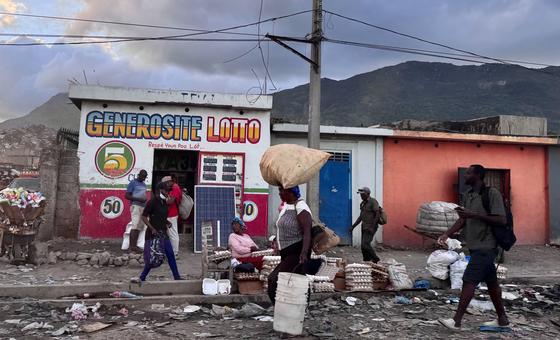
Representational Picture: Civilians left with no space safe to live in Haiti

The overnight assault on September 11 is the latest in a string of brutal incidents and ongoing gang violence that have plagued Haiti since last year.  In a statement issued by his spokesperson, Mr. Guterres expressed “condolences” to the victims’ families and urged Haitian authorities to pursue justice.

“The Secretary-General is alarmed by the levels of violence rocking Haiti,” said Stéphane Dujarric. “He calls on Member States to expedite support for the Multinational Security Support mission to assist the Haitian National Police.”

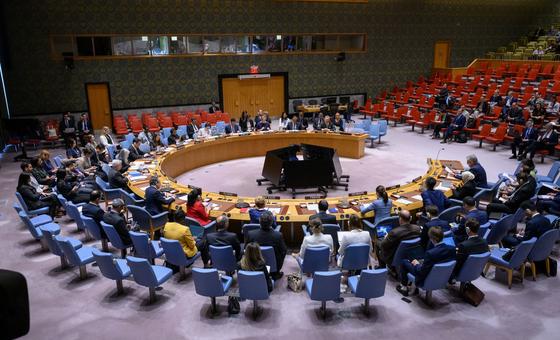
Just two weeks ago, Mr. Guterres addressed the UN Security Council, painting a grim picture of Haiti’s unraveling state. “State authority is crumbling,” he said, as armed groups tighten their grip on Port-au-Prince and surrounding regions, forcing families to flee and disrupting daily life.

With six million people in need of aid and 1.3 million displaced, Haiti’s humanitarian crisis is deepening. Yet less than 10 percent of the $908 million appeal has been funded. “Shamefully overlooked and woefully underfunded,” the UN chief said, warning that 1.7 million people may receive no assistance at all.

Violence unabated turns risky in future

The latest massacre in Labodrie, where dozens were killed this week, underscores the growing brutality of gangs such as Viv Ansanm, which now dominate major neighborhoods and supply routes. Kidnappings, extortion, and targeted attacks have surged, forcing families to abandon homes and seek refuge in makeshift shelters.

Since the 2021 assassination of President Jovenel Moïse, Haiti has struggled to restore political order. A Transitional Presidential Council governs today, but its legitimacy is widely questioned. Elections have been repeatedly delayed, fueling frustration and allowing gangs to fill the vacuum.

The Haitian National Police remain outnumbered and outgunned, even as international backers try to bolster its capacity. A U.N.-authorized security mission led by Kenya has deployed, but with limited personnel and resources, its ability to restore order remains in doubt. Proposals to expand the force to 5,500 troops are still under discussion.

The humanitarian fallout is staggering. According to U.N. estimates, nearly 1.3 million Haitians are displaced within the country. Food insecurity has reached emergency levels, with shortages worsened by blocked roads, gang control of supply chains, and inflation that has put basic staples out of reach for many. Hospitals and clinics are closing or operating at half capacity due to insecurity and lack of supplies.

International donors, including the United States, Canada, and members of CARICOM, have pledged support, but relief has been slow to materialize on the ground. Washington sees the crisis not only as a humanitarian catastrophe but also as a potential migration trigger that could push thousands toward U.S. shores.

Analysts warn that without a decisive and coordinated effort, Haiti risks sliding further into state collapse. “The longer the vacuum persists, the more gangs will consolidate power and the harder it will be to rebuild institutions,” a regional expert noted.

For now, ordinary Haitians face the brunt of the crisis, caught between a fragile state, predatory gangs, and an international community struggling to mount an effective response.


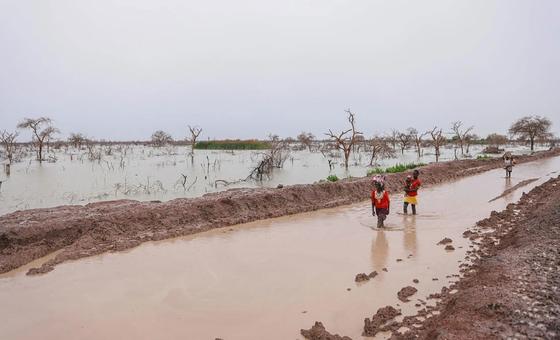
‘Deadly floods’ displace over 100,000 in South Sudan

In recent weeks, widespread flooding has engulfed large parts of Jonglei, Upper Nile and Unity states in the north of the country.

The agency’s representative in South Sudan, Marie-Helene Verney, said that “if the flooding continues, up to 400,000 people are likely to be displaced by the end of the year, exceeding flood displacement levels seen in 2024.”

The situation is expected to be at its worst between September and October and threatens to “cut off entire communities, exacerbate hunger and heighten protection risks, particularly for women and girls,” Ms. Verney added.

For several years, South Sudan has faced an ongoing humanitarian crisis due to underdevelopment, disasters and conflict that has displaced many communities. Recurrent floods have exacerbated this displacement, destroyed homes, and threatened livelihoods across the nation.

“Homes, schools, health facilities, farmlands, and pastures have been flooded,” said the UNHCR representative, “devastating livestock and inundating safe water sources and latrines, which have worsened sanitation and heightened health risks.”

Stagnant water, combined with limited access to safe drinking water, is raising the threat of further disease outbreaks on top of the ongoing cholera crisis, which had already affected over 12,000 internally displaced persons (IDPs) and 3,100 refugees by the end of August.

UN continues providing aid

In 2025, UNHCR, in collaboration with the South Sudanese authorities and UN partners, has continued to provide life-saving aid, including cash, emergency shelters, and plastic sheeting to 150,000 of the most vulnerable flood-affected individuals.

Over the past five years work has been carried out to mitigate flood impacts by reinforcing dykes, prepositioning supplies, supporting livelihoods, and assisting displaced communities, including IDPs.

UNHCR has appealed for more funds to carry out its life-saving work. As of 31 July, it had only received a third of the nearly $300 million required to protect and assist displaced people and local host communities in the country.

In Unity state, which is 70 per cent underwater, UNHCR has significantly scaled down operations due to the funding shortfall, leaving thousands of people in a more precarious situation.

Supporting climate resilience

To mitigate the ongoing crisis in South Sudan, the United Nations Office for Project Services (UNOPS) recently signed a $9.9 million Climate Resilience Project in South Sudan with the Ministry of Water Resources.

UNOPS continues to support efforts to strengthen climate resilience and assist flood-affected and refugee-hosting communities in South Sudan.


Gaza: International community must ‘match words with action’ now

Olga Cherevko, Spokesperson in Gaza for the UN aid coordination office OCHA, warned that history will not judge the international community “based on the speeches that we made” but rather on actions.

Speaking from Deir Al-Balah, she delivered a blunt message: “When Gaza burned, and children starved, and hospitals collapsed – did you act?”

Gaza City ‘death sentence’

She said this past Tuesday, Gaza City “was handed a death sentence”, with hundreds of thousands of battered civilians ordered to flee to an already overcrowded area where “even small animals have to search for spaces to squeeze between to move around.”

Across the Strip, the situation is dire.  A friend texted her on Thursday saying that they tried to find space in the south, but there was none.

“His 8-year-old cousin was killed instantly in an Israeli strike together with several other children last week while waiting for some bread to be baked,” she told journalists at UN Headquarters.

The friend’s daughter, who recently turned two, has known nothing but war, she added.

Death, despair and destruction 

The unmistakable smell of death is everywhere – a grisly reminder that the ruins lining the streets hide the remains of mothers, fathers, children,” Ms. Cherevko continued.

“Humans who used to laugh, cry, dream. Their lives cut short by the war’s killing machines, many to never be found again.”

As humanitarians drove back into Gaza on Thursday, distraught people crowded around their convoy “pleading for this horror to stop,” she said. 

“Dignity and hope have been stripped away, with every killing of a loved one, with every strike on a civilian lifeline, with every denial of access.”

She said that “the race against time, against death, against the spread of famine, feels as if we as humanitarians are running through quicksand. Even more so as humanitarian convoys are too often denied, delayed or obstructed by the Israeli authorities.” 

Humanity shines through

She noted that even amid hardship “humanity shines”, pointing to “the Palestinian doctors, nurses and paramedics working around the clock, often without pay, medicine or electricity.” 

This also includes aid workers from UN agencies, the Red Crescent and other organizations “delivering food, medicine and clean water under fire”, as well as ordinary people who share the little they have with strangers. 

“In every act of care – a refusal to let cruelty define the future. Proof that even in the darkest times, the human spirit endures,” she said.

Hope and action

Ms. Cherevko shared that she is often asked if she has any hope left. 

“Hope may be all we have left, so we must nurture it,” she said.  “But hope alone won’t keep people alive. Urgent decisions are needed that must pave the way to a lasting peace before it’s too late.”

She stressed that “the people of Gaza are not asking for charity. They are asking for their right to live in safety, in dignity, in peace,” adding that “our humanity – yours, mine, all of ours – demands that we act now.”

She concluded her remarks by insisting that “today, and every day, is a new chance for the international community to match words with action. Don’t miss it as it might be the last.” 

Source link

Security Council to meet following Russia’s violation of Polish airspace, as concern mounts over drone warfare

The meeting was requested by Poland after reporting that at least 19 violations by Russian drones of its territory overnight into Wednesday during a large-scale missile and drone strike against Ukraine.

The episode marked the most serious such incursion since the start of Russia’s full-scale invasion of Ukraine in 2022.  

While Poland and its NATO allies reportedly downed several of the drones, the incident has heightened tensions across the region – and put the new threats posed by drone warfare at the heart of diplomatic debate.

Russia’s Defence Ministry said the strikes were aimed at Ukraine’s military-industrial targets and that it did not intend drones to stray across the border.

UN political chief to brief

UN’s political official, Rosemary DiCarlo, is expected to brief ambassadors. Poland’s deputy foreign minister will attend, alongside regional states and the European Union.

The incident has raised deep concern over spillover of the conflict in Ukraine.

Stay with UN News as we bring you live coverage of the meeting…

Rise of the drone

The reported incursion into Polish airspace highlights the growing role of drones in modern conflict.

Relatively inexpensive and easy to deploy, drones are increasingly supplementing – and in some cases supplanting – conventional military hardware.  

Armies, armed groups and militias worldwide are rapidly adapting to their use, allowing for strikes and reconnaissance with lower risk to personnel.

However, malfunctions, loss of control and human error can lead to unintended strikes or impacts – especially when they’re deployed in towns and cities as opposed to the battlefield.

Analysts also say drones blur the line between traditional military operations and asymmetric warfare, raising the risk of unintended escalation across borders.

Read more in our explainer, here.

Source link