


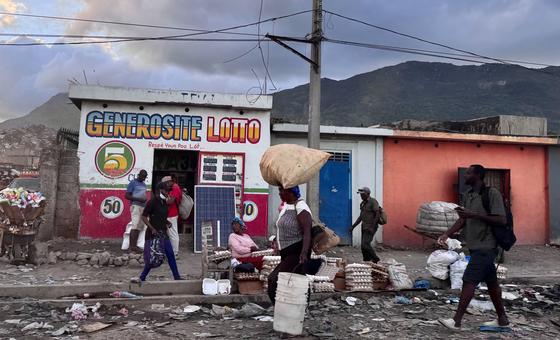
Representational Picture: Civilians left with no space safe to live in Haiti
The overnight assault on September 11 is the latest in a string of brutal incidents and ongoing gang violence that have plagued Haiti since last year. In a statement issued by his spokesperson, Mr. Guterres expressed “condolences” to the victims’ families and urged Haitian authorities to pursue justice.
“The Secretary-General is alarmed by the levels of violence rocking Haiti,” said Stéphane Dujarric. “He calls on Member States to expedite support for the Multinational Security Support mission to assist the Haitian National Police.”
Just two weeks ago, Mr. Guterres addressed the UN Security Council, painting a grim picture of Haiti’s unraveling state. “State authority is crumbling,” he said, as armed groups tighten their grip on Port-au-Prince and surrounding regions, forcing families to flee and disrupting daily life.
With six million people in need of aid and 1.3 million displaced, Haiti’s humanitarian crisis is deepening. Yet less than 10 percent of the $908 million appeal has been funded. “Shamefully overlooked and woefully underfunded,” the UN chief said, warning that 1.7 million people may receive no assistance at all.
Violence unabated turns risky in future
The latest massacre in Labodrie, where dozens were killed this week, underscores the growing brutality of gangs such as Viv Ansanm, which now dominate major neighborhoods and supply routes. Kidnappings, extortion, and targeted attacks have surged, forcing families to abandon homes and seek refuge in makeshift shelters.
Since the 2021 assassination of President Jovenel Moïse, Haiti has struggled to restore political order. A Transitional Presidential Council governs today, but its legitimacy is widely questioned. Elections have been repeatedly delayed, fueling frustration and allowing gangs to fill the vacuum.
The Haitian National Police remain outnumbered and outgunned, even as international backers try to bolster its capacity. A U.N.-authorized security mission led by Kenya has deployed, but with limited personnel and resources, its ability to restore order remains in doubt. Proposals to expand the force to 5,500 troops are still under discussion.
The humanitarian fallout is staggering. According to U.N. estimates, nearly 1.3 million Haitians are displaced within the country. Food insecurity has reached emergency levels, with shortages worsened by blocked roads, gang control of supply chains, and inflation that has put basic staples out of reach for many. Hospitals and clinics are closing or operating at half capacity due to insecurity and lack of supplies.
International donors, including the United States, Canada, and members of CARICOM, have pledged support, but relief has been slow to materialize on the ground. Washington sees the crisis not only as a humanitarian catastrophe but also as a potential migration trigger that could push thousands toward U.S. shores.
Analysts warn that without a decisive and coordinated effort, Haiti risks sliding further into state collapse. “The longer the vacuum persists, the more gangs will consolidate power and the harder it will be to rebuild institutions,” a regional expert noted.
For now, ordinary Haitians face the brunt of the crisis, caught between a fragile state, predatory gangs, and an international community struggling to mount an effective response.