Hydration strategy test for kidney stones is in water: Study

A large new clinical trial has taken a closer look at a long-standing piece of medical advice for kidney stone patients: drink more water. While the recommendation remains sound, the study suggests that actually sticking to it in real life is far harder than many assume.

Kidney stones are known for causing severe, often debilitating pain. In the United States, about one in 11 people will develop them at some point, and nearly half of those patients are likely to face a recurrence. Preventing that cycle has been a major focus for doctors, with high fluid intake widely seen as one of the most effective strategies.

To test how practical that advice is, researchers from the Urinary Stone Disease Research Network conducted what is now the largest behavioural study of its kind. The trial, coordinated by the Duke Clinical Research Institute and published in The Lancet on March 19, followed 1,658 adolescents and adults across six major U.S. medical centres over a two-year period.

Participants were split into two groups. One received standard care, while the other was enrolled in an intensive hydration programme designed to encourage higher fluid intake. This programme went beyond simple advice. It included smart water bottles that tracked how much participants drank, personalised daily hydration targets, reminder messages, financial incentives, and regular health coaching.

Each participant in the programme was given a tailored “fluid prescription,” calculated based on how much urine they typically produced and how much more fluid they would need to reach a target of at least 2.5 litres per day — a level believed to reduce the risk of stone formation.

The results showed that people in the programme did increase their fluid intake and produced more urine on average. However, the improvement was modest, and crucially, it did not translate into a significant reduction in the recurrence of symptomatic kidney stones across the group as a whole.

Researchers say this gap highlights a central challenge: adherence. Even with constant reminders, monitoring, and incentives, maintaining very high levels of daily fluid intake proved difficult.

Charles Scales, a senior author of the study and a professor at Duke University School of Medicine, noted that the findings underline how demanding such lifestyle changes can be. He pointed out that difficulty in maintaining these habits likely contributes to the high rate of recurrence seen in kidney stone patients.

Importantly, the study stands out for measuring actual stone recurrence rather than relying only on indirect markers such as fluid intake or urine output. Researchers used imaging and regular follow-ups to track whether new stones formed or existing ones grew, offering a more realistic picture of outcomes.

The findings are prompting experts to rethink a one-size-fits-all approach. Gregory Tasian, a co-senior author and paediatric urologist, said future strategies may need to be more personalised. Instead of asking every patient to meet the same hydration target, doctors may need to identify which patients benefit most from specific goals and why others struggle to maintain them.

The study also points to broader factors that may affect hydration habits — including work environments, daily routines, and individual health conditions — suggesting that behavioural solutions alone may not be enough.

Researchers are now calling for more tailored interventions, which could include customised hydration plans, better ways to address practical barriers to drinking more fluids, and even medical therapies aimed at preventing minerals from crystallising in urine.

For patients, the takeaway is clear but nuanced. Drinking more water still matters, but this study shows that turning that advice into a sustainable daily habit — and one that meaningfully reduces risk — is more complex than it appears.

As lead author Alana Desai put it, kidney stone disease is a chronic condition marked by sudden and often severe episodes that can disrupt everyday life. While many patients would welcome a simple solution, the path to prevention may require a more personalised and multifaceted approach.

Also Read:

Diets rich in these minerals may help prevent recurrent kidney stones

Kidney, Heart Transplants On Rise


Summer Travel Time: Full List of India’s UNESCO World Sites

There are 44 World Heritage Properties in the country, while the Government has sent the following proposals to the World Heritage Centre for consideration for inclusion in the World Heritage List two more sites:

  1. Ancient Buddhist Site, Sarnath (2025-26)
  2. JingkiengJri / Lyu Charai Cultural Landscape (2026-27)

The Archaeological Survey of India (ASI) undertakes conservation and maintenance of 3,686 monuments, including 27 World Heritage properties, along with the provision of amenities for tourists such as drinking water, toilet blocks, pathways and landscaping etc. for protected monuments/sites under the ASI’s jurisdiction. Conservation and maintenance of these monuments/sites is a continuous process and is carried out based on the needs of the monuments and the availability of resources.

(https://whc.unesco.org/en/list/1570/gallery/–Author: ASI)

Properties on World Heritage List (44)

  1. Cultural World Heritage Properties in India          :           36
  2. Natural World Heritage Properties in India           :           07
  3. Mixed World Heritage Properties in India             :           01


CULTURAL SITES:

Under Protection of Archaeological Survey of India (27)

S.

No


Name of Site State


Year of inscription
Agra Fort Uttar Pradesh 1983
Ajanta Caves Maharashtra 1983
Ellora Caves Maharashtra 1983
Taj Mahal Uttar Pradesh 1983
Group of Monuments at Mahabalipuram Tamil Nadu 1984
Sun Temple, Konarak Odisha 1984
Churches and Convents of Goa Goa 1986
Fatehpur Sikri Uttar Pradesh 1986
Group of Monuments at Hampi Karnataka 1986
Khajuraho, Group of Temples Madhya Pradesh 1986
Elephanta Caves Maharashtra 1987
Great Living Chola Temples at Thanjavur, Gangaikondacholapuram and Darasuram Tamil Nadu 1987 & 2004
Group of Monuments at Pattadakal Karnataka 1987
Buddhist Monuments at Sanchi Madhya Pradesh 1989
Humayun’s  Tomb, Delhi Delhi 1993
QutbMinar and its Monuments, Delhi Delhi 1993
Rock Shelters of Bhimbetka Madhya Pradesh 2003
Champaner-Pavagarh Archaeological Park Gujarat 2004
Red Fort Complex, Delhi Delhi 2007
Hill Forts of Rajasthan

(Chittaurgarh, Kumbhalgarh, Jaisalmer and Ranthambhore, Amber and Gagron Forts)

(Amber and Gagron Forts are under protection of Rajasthan State Archaeology and Museums)

Rajasthan 2013
Rani-ki-Vav (The Queen’s Stepwell) at Patan Gujarat 2014
Archaeological Site of Nalanda Mahavihara(Nalanda University) at Nalanda Bihar 2016
Dholavira: A Harappan City Gujarat 2021
Kakatiya Rudreshwara (Ramappa) Temple, Telangana Telangana 2021
Sacred Ensembles of the Hoysalas Karnataka 2023
Moidams-the Mount-Burial system of the Ahom Dynasty Assam 2024
27. Maratha Military Landscapes of India Maharashtra 2025


Under Protection of Ministry of Railways (2)

28. Mountain Railways of India ( Darjeeling,1999), Nilgiri (2005), Kalka-Shimla West Bengal,  Tamil Nadu, Himachal Pradesh 2008
29. Chhatrapati Shivaji Terminus (formerly Victoria Terminus) Maharashtra 2004


Under Protection of Bodhgaya Temple Management Committee (1)

30. Mahabodhi Temple Complex at Bodh Gaya Bihar 2002


Under Protection of Rajasthan State Archaeology and Museums (1)

31. The Jantar Mantar, Jaipur Rajasthan 2010


Under Protection of Chandigarh Administration (1)

32. The Architectural Work of Le Corbusier, an Outstanding Contribution to the Modern Movement Chandigarh 2016


Under Protection of Ahmedabad Municipal Corporation (1)

33. Historic City of Ahmedabad Gujarat 2017


Under Protection of Bombay Municipal Corporation (1)

34. Victorian and Art Deco Ensemble of Mumbai Govt of Maharashtra 2018

Under Protection of Jaipur Municipal Corporation (1)

35. Jaipur City, Rajasthan Govt of Rajasthan 2019


Under Vice Chancellor, Visva Bharati (1)

36. Santiniketan Visva Bharati 2023

NATURAL PROPERTIES: (7)

Under Protection of Ministry of Environment, Forest and Climate Changes

37. Kaziranga National Park Assam 1985
38. Keoladeo National Park Rajasthan 1985
39. Manas Wildlife Sanctuary Assam 1985
40. Sunderbans National Park West Bengal 1987
41. Nanda Devi  and Valley of Flowers National Parks Uttarakhand 1988, 2005
42. Western Ghats Karnataka, Kerala, Maharashtra,Tamil Nadu 2012
43. Great Himalayan National Park Himachal Pradesh 2014

MIXED PROPERTIES: (1)

Under Protection of Ministry of Environment, Forest and Climate Changes

44. Khangchendzonga National Park (2016) Sikkim


2016


This information was given by Union Minister for Culture and Tourism Gajendra Singh Shekhawat in a written reply in Lok Sabha today.


Also Read:

Ahmadabad Joins 36 UNESCO’s World Heritage Properties in India


Want to shift a group’s opinion? Encourage opponents to sit on the fence

Efforts to change strongly held opinions often hit a wall. Push too hard, and people tend to dig in further, making consensus even harder to achieve. But a new study suggests a counterintuitive approach: instead of trying to convert opponents, it may be more effective to encourage them to step back and remain neutral.

Researchers at the University of Bath, led by mathematician Professor Kit Yates, have found that creating space for neutrality — such as allowing people to abstain rather than choose sides — can make groups more flexible and open to change. Their findings, published in Advanced Science, point to a quieter but more effective path to shifting group opinion.

The idea is simple. When individuals are not forced into binary positions, they gain room to reassess their views. This “breathing space,” as the researchers describe it, can make it easier for a group to gradually move toward consensus or adapt when circumstances change.

Yates argues that neutrality should not be seen as indecision or weakness, but as a useful feature of how groups function. According to the study, once neutrality is allowed, even basic one-on-one interactions — where one person influences another — can lead to meaningful shifts in collective opinion without the need for complex social dynamics.

To understand this, the researchers built a mathematical model of group decision-making. It revealed two distinct pathways to consensus. The first is familiar: persuading undecided individuals to pick a side. The second, less explored route involves “de-escalation,” where disagreement pushes individuals into a neutral position before they later adopt a stance independently.

This second pathway turned out to be particularly powerful. When more people move into a neutral state, the number of active decision-makers shrinks. As a result, small influences or random shifts carry more weight, allowing a new consensus to emerge more quickly.

The team tested this theory beyond models, looking at both animal behaviour and human decision-making.

In swarms of locusts, they observed that when the group changes direction, it first goes through a brief pause. Many locusts stop moving altogether, effectively becoming neutral. During this moment, only a small number remain active, and their movements disproportionately shape the swarm’s new direction. This temporary pause amplifies small changes, helping the group realign بسرعة.

Human experiments showed a similar pattern. In voting-based games, groups that were given the option to abstain shifted their decisions more smoothly and quickly than those forced to choose between fixed options.

The implications extend well beyond the lab. From corporate boardrooms to online debates, the findings suggest that reducing intensity — rather than escalating persuasion — may be key to breaking deadlocks. Encouraging strongly opposed individuals to adopt a neutral stance, even temporarily, could help groups reset and move forward.

Co-author Professor Tim Rogers notes that while fence-sitting is often seen as frustrating, it may actually play a constructive role. By easing tension and reducing polarisation, neutrality can create the conditions needed for more responsive and adaptive decision-making.

In a world increasingly defined by sharp divisions, the study offers a subtle but important insight: sometimes, the fastest way to change minds is not to push harder, but to allow people the space to pause.

NASA’s Artemis II Rocket Reaches Launch Pad 39B, Final Countdown Begins

Cape Canaveral, March 22, 2026: NASA’s Artemis II mission has reached a critical milestone, with the Space Launch System (SLS) rocket and Orion spacecraft now standing at Launch Pad 39B at the agency’s Kennedy Space Center in Florida, setting the stage for the first crewed lunar mission in more than five decades.

The towering 322-foot-tall Moon rocket arrived at the pad at 11:21 a.m. EDT on Friday, March 20, completing an 11-hour journey from the Vehicle Assembly Building. The slow and steady trek began at 12:20 a.m. EDT, as NASA’s crawler-transporter 2 carried the integrated SLS and Orion, secured atop the mobile launcher, along the 4-mile path at a maximum speed of just 0.82 mph.

With the rocket now in place at Pad 39B, the historic launch site of Apollo missions and numerous space shuttle flights, NASA teams are entering the final phase of prelaunch preparations. The mission is targeting liftoff as soon as Wednesday, April 1, with the early April launch window extending through Monday, April 6.

Artemis II will mark the first crewed test flight of the SLS rocket and Orion spacecraft, carrying a four-member astronaut team on a 10-day journey around the Moon and back. The crew includes NASA astronauts Reid Wiseman as Commander, Victor Glover as Pilot, and Christina Koch as Mission Specialist, alongside Canadian Space Agency (CSA) astronaut Jeremy Hansen as Mission Specialist.

The mission represents a pivotal step in what NASA describes as a “Golden Age of innovation and exploration.” Artemis II will pave the way for subsequent U.S.-crewed missions to the lunar surface, with the goal of establishing a sustained presence on the Moon that will ultimately enable the agency to prepare for human exploration of Mars.

As the world watches, the final countdown has begun for humanity’s return to deep space.

Also Read:

NASA to stream launch and docking of ‘Progress 94 cargo spacecraft’ to ISS

Huge Craters On an Asteroid Psyche Could Provide Clues to Early Planets


‘Mini New York in Punjab’: NRI’s Statue of Liberty Replica on Jalandhar Rooftop Takes Internet by Storm

A quiet neighbourhood in Punjab’s Jalandhar has found itself at the centre of attention, thanks to an unexpected addition to the local skyline, a miniature replica of the iconic Statue of Liberty standing proudly atop a residential rooftop.

The unusual installation, built by NRI Gurjeet Singh Matharu, has quickly turned an ordinary home into a local landmark, drawing curious onlookers and sparking widespread discussion on social media.

Matharu, who lived in New York City for over two decades, placed the replica on the fourth floor of his house in the Kishanpura area. What began as a personal tribute to the city he called home for so many years has now become a talking point far beyond his neighbourhood.

Speaking about the inspiration behind the structure, Matharu explained that the idea came from his frequent encounters with the Statue of Liberty during his time in New York. The monument, for him, became deeply intertwined with memories of his life abroad. He decided to bring a piece of that memory back to India in a tangible form.

“The idea came from seeing the Statue of Liberty often in New York and keeping it as a memory of the city when I visit India each year,” he said.

Stopping-by Locals Catch a Glimpse

While the replica was intended as a personal reminder, it has since captured the imagination of locals, many of whom have been stopping by just to catch a glimpse of the rooftop structure.

As images and videos of the installation circulated online, reactions poured in from across the spectrum. Some users noted that unconventional rooftop structures are not entirely new to the region. One user commented, “Mostly in Chandigarh and Mohali they build water tanks in the shape of tractors, balls and other shapes; now he makes Statue of Liberty.”

Others, however, viewed the installation with appreciation. “This is such a unique way to stay connected to memories abroad,” one user wrote. Another added, “Looks like a mini New York in Punjab, quite creative.”

For Matharu, the replica of the world-renowned symbol of freedom and hope now serves as a bridge between his years in New York and his roots in Jalandhar—turning a simple rooftop into a testament of personal journey and cross-cultural connection.

INS Trikand Concludes Seychelles Port Call, Participates in First Tri-Services Exercise Lamitiye

Indian Naval Ship Trikand, a stealth frigate of the Indian Navy, departed from Port Victoria, Seychelles, on March 20, 2026, following an enriching port call that underscored India’s deepening defence cooperation with the island nation.

During the visit, Captain Sachin Kulkarni, Commanding Officer of the ship, called on senior government functionaries and the High Commissioner of India to Seychelles. In a gesture of collaborative partnership, the ship also handed over critical spares and essential stores to the Government of Seychelles.

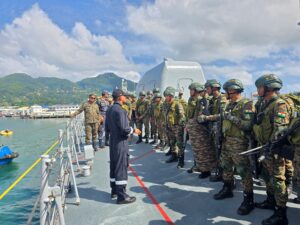
The port call coincided with INS Trikand’s participation in the first tri-services edition of Exercise Lamitiye 2026, alongside contingents from the Indian Army and Indian Air Force, as well as the Seychelles Defence Forces (SDF). The exercise marked the maiden participation of the Indian Navy in Lamitiye, reflecting a significant milestone in joint military engagement between the two nations.

During the harbour phase, Visit, Board, Search and Seizure (VBSS) training was conducted onboard the ship, which included joint boarding drills. The sea phase that followed saw the ship exercise with SCGS Le Vigilant, with joint boarding operations at sea carried out by a team comprising Indian Navy Marine Commandos and Special Forces of the SDF. Subsequently, Army troops from the Indian Army and the Seychelles Defence Forces conducted landing operations on Praslin Island.

Maj Gen Michael Rosette, Chief of Defence Forces, SDF, along with Brig Jean Attala, Deputy Chief of Defence Forces, SDF, and other senior officers embarked INS Trikand during the sea phase to witness the conduct of the exercise.

Exercise Lamitiye, which means ‘friendship’ in Creole, provided a valuable opportunity to enhance interoperability and strengthen maritime cooperation between India and Seychelles, reaffirming the historic ties between the two nations.

The port call aligns with India’s vision of MAHASAGAR or Mutual and Holistic Advancement for Security and Growth Across Regions. It also reinforces the Indian Navy’s commitment to remain the Preferred Security Partner and First Responder in the Indian Ocean Region.

ECI Mandates Enhanced Voter Facilities Ahead of Assembly Polls in Five States

With the General Election to the Legislative Assemblies of Assam, Kerala, Puducherry, Tamil Nadu, and West Bengal, along with bye-elections in six states, scheduled to begin following the announcement on March 15, 2026, the Election Commission of India (ECI) has issued firm directives to ensure a seamless and voter-friendly experience across all polling stations.

The Commission has instructed Chief Electoral Officers (CEOs) of all states and union territories to guarantee that each of the 2,18,807 polling stations is equipped with Assured Minimum Facilities (AMFs) and robust voter assistance mechanisms on poll day.

As part of the AMF framework, every polling station will be provided with drinking water, a waiting area with shade, a toilet with water facility, adequate lighting, a ramp with proper gradient for Persons with Disabilities (PwD) electors, a standard voting compartment, and clear signage. In a move to enhance comfort, CEOs have also been directed to place benches at regular intervals along queues, allowing electors to sit while awaiting their turn to vote.

To strengthen voter awareness, four uniform and standardized Voter Facilitation Posters (VFPs) will be prominently displayed at all polling stations. These posters will contain key information, including polling station details, the list of candidates, do’s and don’ts, approved identification documents, and the voting process.

Additionally, Voter Assistance Booths (VABs) will be established at every polling station location. Staffed by Booth Level Officers (BLOs) and officials, these booths will assist electors in locating their polling booth number and serial number in the electoral roll. The VABs will feature prominent signage to ensure easy visibility as voters approach the premises.

In one of several initiatives aimed at voter convenience, a mobile phone deposit facility will be provided outside the entrance of each polling station. Voters can hand over their switched-off phones to a designated volunteer before entering, and collect them after casting their vote.

The Election Commission has reiterated that the provisioning of AMF and related accessibility measures is mandatory, and strict compliance will be monitored across all polling stations. All field functionaries have been directed to complete necessary works well in advance of poll dates to ensure a seamless and pleasant voting experience for every elector.

Also Read:

Over 25 Lakh Officials Deployed For Assembly Polls in 5 States

What are PM MITRA Parks and where are they set up?


Centre to Launch 7th Tranche of Critical Mineral Auctions on March 23

Union Minister of Coal & Mines, G. Kishan Reddy, alongside Minister of State for Coal & Mines, Satish Chandra Dubey, will launch the 7th Tranche of Auction of Critical and Strategic Mineral Blocks on March 23, 2026.

The initiative underscores the growing strategic importance of critical minerals, which are vital to the country’s economic development and mineral security. With the global shift toward clean energy and advanced technologies, demand for minerals such as lithium, graphite, rare earth elements (REE), tungsten, vanadium, and titanium has surged. Given their limited availability and concentrated geographical distribution, securing a resilient supply chain has become a national priority.

In a landmark move to address these challenges, the Government of India amended the Mines and Minerals (Development and Regulation) Act, 1957 (MMDR Act) on August 17, 2023, notifying 24 minerals as critical and strategic. The amendment empowers the Central Government to conduct auctions for Mining Leases and Composite Licences for these resources, with all revenue generated accruing to the respective State Governments.

To date, the Ministry of Mines has successfully concluded six tranches of auctions, resulting in 46 critical and strategic mineral blocks being auctioned—a testament to robust industry participation and growing investor confidence in India’s mineral sector.

The upcoming seventh tranche will offer 19 blocks across multiple states under both Mining Lease and Composite Licence categories. The blocks feature a diverse range of minerals essential for clean energy, advanced technologies, fertilizers, and strategic industries.

The auction framework has been progressively strengthened to enhance transparency, efficiency, and speedy operationalisation of mineral blocks. Recent regulatory reforms, including the Mineral (Auction) Second Amendment Rules, 2025, have streamlined post-auction processes such as the submission of performance security, upfront payments, and issuance of Letters of Intent. Further, the Mineral (Auction) Amendment Rules, 2026 have introduced the provision of Insurance Surety Bonds as an alternative to bank guarantees, offering greater flexibility to bidders.

The auction will be conducted online through a transparent two-stage ascending forward auction process, with the successful bidder selected on the basis of the highest percentage of the value of mineral dispatched quoted.

Also Read:

Japan Launches High-Seas Gamble to Break China’s Grip on Critical Minerals

India’s Wholesale Price Inflation Rises to 1.84% in September

Aquatic plant reduces antibiotics in water and genetic damage in fish, but risks remain

A new study from researchers at the University of São Paulo has shed light on a growing environmental concern: the presence of antibiotic residues in freshwater systems, and their impact on aquatic life and potentially human health.

The research, conducted in Brazil’s Piracicaba River basin, found traces of multiple commonly used antibiotics in water, sediments, and fish. Scientists also explored whether a floating aquatic plant, Salvinia auriculata, could help reduce this contamination. The findings suggest it can—but not without complications.

Pollution Builds Up in Dry Seasons

The team, led by Patrícia Alexandre Evangelista, monitored samples from a region near the Santa Maria da Serra dam, where pollutants from across the river basin tend to accumulate. The area receives runoff from urban sewage, agriculture, aquaculture, and livestock farming.

Twelve antibiotics, including tetracyclines, fluoroquinolones, sulfonamides, and phenols, were tracked across both rainy and dry seasons. A clear pattern emerged: during the rainy season, most antibiotics were barely detectable, likely diluted by higher water volumes. In the dry season, however, concentrations rose significantly as water levels dropped and pollutants became more concentrated.

Sediments, rich in organic matter and minerals, acted as reservoirs for these compounds, storing them and potentially releasing them back into the environment over time.

Contaminated Fish Raise Health Concerns

One of the study’s most striking findings was the detection of chloramphenicol, a banned veterinary antibiotic, in lambari fish collected from local fishermen. The substance appeared only during the dry season, but at levels significant enough to raise concern.

Because this species is widely consumed in the region, researchers flagged a possible route of human exposure through food.

A Plant-Based Solution, With Limits

The study also tested whether Salvinia auriculata, a fast-growing floating plant often considered a nuisance, could help remove antibiotics from contaminated water.

In controlled experiments, the plant proved highly effective at absorbing enrofloxacin, eliminating more than 95% of it within days under certain conditions. Its performance was less impressive with chloramphenicol, removing only 30% to 45%, and over a longer period.

The antibiotics were found to accumulate mainly in the plant’s roots, suggesting that filtration and absorption at the root level play a key role.

A Complex Ecological Trade-Off

However, the picture is not straightforward. Even when the plant reduced antibiotic levels in the water, fish did not always benefit. In some cases, absorption rates in fish actually increased, possibly because the plant altered the chemical form of the antibiotics, making them easier for organisms to absorb.

Chloramphenicol, in particular, showed a strong tendency to persist in fish tissue, with a half-life exceeding 90 days. Enrofloxacin, by contrast, was eliminated more quickly and showed lower accumulation.

The study also examined genetic damage in fish. Chloramphenicol exposure led to increased DNA damage, but this effect was reduced when the plant was present, suggesting a possible protective role. No similar benefit was observed for enrofloxacin.

Not a Silver Bullet

Researchers caution against viewing Salvinia auriculata as a simple fix. While it can reduce antibiotic levels, it may also change how these substances behave in the ecosystem. There are additional concerns about how to safely dispose of contaminated plant biomass, which could otherwise reintroduce pollutants.

Still, the findings point to the potential of low-cost, nature-based solutions in regions where advanced water treatment technologies are not feasible.

Bigger Picture: A Growing Environmental Threat

The presence of antibiotics in rivers is more than just a local issue. It contributes to the broader global challenge of antimicrobial resistance, raising the risk of so-called “superbugs” emerging in natural environments.

As co-author Valdemar Luiz Tornisielo noted, the study underscores both the scale of human impact on ecosystems and the need for integrated solutions that consider not just pollutant removal, but long-term ecological effects.

In essence, the research reveals a problem that is measurable and widespread—and solutions that are promising, but far from simple.

Also Read:

‘Plenty of fish in the sea’? Not anymore, say UN experts in Nice

Seals Can Serve As ‘Smart Sensors’ to Know Fish Populations in Ocean’s Twilight Zone: Study

NASA to stream launch and docking of ‘Progress 94 cargo spacecraft’ to ISS

NASA is set to broadcast the launch and arrival of a Russian cargo spacecraft carrying essential supplies to astronauts aboard the International Space Station, as part of routine resupply operations that keep the orbital lab running.

The uncrewed Progress 94 spacecraft, operated by Russia’s space agency Roscosmos, is scheduled to lift off on Sunday, March 22, at 7:59 a.m. EDT from the Baikonur Cosmodrome in Kazakhstan. The mission will ride aboard a Soyuz rocket and is loaded with nearly three tonnes of food, fuel, and other critical materials for the station’s crew.

NASA will begin live coverage of the launch at 7:30 a.m. EDT. The broadcast will be available on NASA+, Amazon Prime, and the agency’s official YouTube channel, alongside other digital platforms.

Following a two-day journey in orbit, the spacecraft is expected to dock automatically with the space-facing port of the Poisk module at around 9:34 a.m. EDT on Tuesday, March 24. Live coverage of the rendezvous and docking is scheduled to start at 8:45 a.m.

Once attached, Progress 94 will remain at the station for roughly six months. During that time, it will serve both as a supply vessel and a storage unit for waste. At the end of its mission, it will detach and burn up upon re-entry into Earth’s atmosphere, safely disposing of onboard trash.

The mission follows the departure of Progress 92, which undocked from the station on March 16 and disintegrated over the Pacific Ocean without incident.

The International Space Station has been continuously inhabited for over 25 years, serving as a hub for scientific research in microgravity. The platform continues to support studies that cannot be conducted on Earth, while also helping space agencies prepare for longer missions beyond low Earth orbit, including NASA’s Artemis programme aimed at returning humans to the Moon, and eventual crewed missions to Mars.

Also Read:

New NASA DART mission data reveals asteroids throw ‘cosmic snowballs’ at each other

NASA’s Webb Cameras Explore Largest Star-Forming Cloud in Milky Way


NASA to Brief Media on X-59 Supersonic Aircraft Flight Tests After 2nd California Mission

NASA is scheduled to host a media teleconference Friday at 6 p.m. EDT to outline the next phase of flight testing for its X-59 quiet supersonic aircraft, with the briefing set to follow the plane’s second test flight over California the same day.

The call will include NASA leadership, representatives from the agency’s Quesst mission, and officials from primary contractor Lockheed Martin Skunk Works. The X-59’s test pilots are also expected to participate, addressing questions about flight conditions and pre-flight preparation protocols.

The Quesst mission, short for Quiet SuperSonic Technology, is designed to gather data on how communities on the ground perceive sonic disturbances from supersonic flight, with the goal of informing potential regulatory changes to current restrictions on overland supersonic commercial travel in the United States. The X-59 is engineered to reduce the sonic boom typically associated with supersonic aircraft to what NASA describes as a quieter “sonic thump.”

Lockheed Martin Skunk Works, the advanced development division behind the aircraft’s construction, has been working alongside NASA on the program since the agency awarded the contract in 2018. The X-59 completed its first flight in March 2024 at Lockheed’s facility in Palmdale, California.

Full teleconference details and dial-in credentials are expected to be made available through NASA’s media channels ahead of the Friday briefing, which will be streamed on NASA’s YouTube channel. An instant replay will be available online.

Participants include:

  • Bob Pearce, associate administrator, NASA Aeronautics Research Mission Directorate, Washington
  • Cathy Bahm, project manager, Low Boom Flight Demonstrator, NASA’s Armstrong Flight Research Center, Edwards, California
  • Peter Coen, Quesst mission integration manager, NASA’s Langley Research Center, Hampton, Virginia
  • Jim “Clue” Less, X-59 test pilot, NASA Armstrong
  • Pat LeBeau, Lockheed Martin X-59 project manager

To participate in the virtual call, members of the media must RSVP no later than two hours before the start of the event to: kristen.m.hatfield@nasa.gov. NASA’s media accreditation policy is available online.


Also Read:

NASA Sensors to Help Detect Methane Emitted by Landfills

NASA’s Swift, Fermi missions detect exceptional cosmic blast

Priyanka Chopra Faces Online Scrutiny Over Oscars Moment After Javier Bardem’s Statement

Priyanka Chopra Jonas returned to the Academy Awards stage for the first time in a decade on Sunday, only to find herself at the center of a social media debate, not for anything she said, but for how she appeared to react when her co-presenter said it.

At the 98th Academy Awards, Priyanka Chopra Jonas took the stage alongside Spanish actor Javier Bardem to present the Best International Feature Film award, which went to Norway’s Sentimental Value, directed by Joachim Trier. Before announcing the nominees, Bardem said, “No to war and Free Palestine,” while wearing a “No to War” pin on his tuxedo. His statement drew loud applause from inside the Dolby Theatre. Chopra Jonas stood beside him, nodded, and proceeded with the presentation. She has not publicly commented on the moment.

Clips of the exchange circulated rapidly across platforms, with users fixating on Priyanka Chopra Jonas’ expression during Bardem’s remarks. Interpretations ranged widely — some read discomfort into her body language, others pushed back against that characterization entirely. The disagreement itself became the story.

Indian content creator and political commentator Dhruv Rathee escalated the conversation days later when he posted a video on Instagram publicly criticizing Chopra Jonas, accusing her of maintaining “privileged neutrality” and suggesting that Bollywood figures are broadly reluctant to take moral stands on international human rights issues. Rathee also directed criticism at the wider Bollywood community, contrasting Indian celebrities with Hollywood stars who have more openly addressed the Gaza conflict. As of the time of publication, neither Chopra Jonas nor her representatives had issued a public response.

Attends Major Hollywood Events

The controversy arrived at a moment otherwise meant to mark a career milestone. Her 2026 appearance was her first time presenting at the Oscars since 2016, when she shared the stage with Liev Schreiber to present the Best Film Editing award. Over the years, Priyanka  Chopra Jonas has established herself as one of the few Indian actors with a consistent presence at major Hollywood industry events. On the professional front, she was most recently seen in The Bluff, currently streaming on Prime Video, and is attached to SS Rajamouli’s upcoming production Varanasi, opposite Mahesh Babu.

The evening brought a separate wave of headlines as well. Reports emerged that Priyanka  Chopra Jonas and husband Nick Jonas were forced to switch to a golf cart after their vehicle was denied clearance near the venue, and that the cart nearly tipped over on a sharp corner while they were en route to make her presentation slot on time.

A separate controversy resurfaced in the days following the ceremony when a 2017 video began recirculating online appearing to show the same two individuals approaching Priyanka  Chopra Jonas for autographs on two separate occasions at LAX, prompting accusations that the encounters were staged for publicity. Neither Chopra Jonas nor her team addressed the claim.

Further noise was added when a fabricated tweet, falsely attributed to Indian actress Swara Bhasker, began spreading in connection with the Oscars moment. Bhasker denied authorship of the post on X, calling it fake and attributing it to politically motivated bad actors.

The backlash directed at Priyanka Chopra Jonas reflects a recurring tension in global celebrity culture, the expectation that high-profile figures take explicit positions on geopolitical conflicts, weighed against the professional and personal consequences of doing so. For South Asian stars navigating both Bollywood and Hollywood simultaneously, that calculus is often more complicated than the discourse around it tends to acknowledge.

The Gulf Is on Fire, Gas Fields Up In Flames, Arab Nations Wary: Fallout of Diplomacy Failure

A single Israeli airstrike on the world’s largest gas field has ignited a chain of retaliatory attacks across the Middle East, crippling energy infrastructure from Tehran to Doha and sending shockwaves to petrol pumps from Mumbai to Minneapolis.

The flames that erupted over Iran’s Bushehr Province on the night of March 18 were visible from fishing boats miles out in the Gulf. On shore, they signalled something far more consequential than a military strike: the opening of a new and terrifying chapter in the Middle East’s long war over energy.

Israeli jets had struck the South Pars gas field (the world’s largest, shared between Iran and Qatar) and the sprawling Asaluyeh processing hub on Iran’s southern coast. Within hours, Tehran’s military commanders promised not merely retaliation but systemic destruction. They kept that promise.

In the days that followed, drones and missiles rained down on refineries, liquefied natural gas plants, and export terminals across Saudi Arabia, Kuwait, Qatar, the United Arab Emirates and Bahrain. The Gulf, the artery through which nearly a third of the world’s traded oil flows, was effectively at war with itself. “If strikes on Iran’s energy facilities happen again, further attacks on your energy infrastructure and that of your allies will not stop until it is completely destroyed,” said Ebrahim Zolfaqari, Iranian Military Spokesman.

KEY FIGURES AT A GLANCE

Gul oil and gas field up in flames / AI Generated

The Strike That Started It All

South Pars is not merely a gas field. Shared with Qatar, which calls its half the North Field, the reservoir holds enough natural gas to power civilisations for generations. Disrupting it was not simply a military calculation. It was an economic declaration of war.

Israel’s stated rationale was to sever a critical revenue artery for the Islamic Revolutionary Guard Corps. According to Israeli officials, the strike was coordinated with Washington, a claim that put the White House in a diplomatically delicate position. President Donald Trump subsequently said the United States “knew nothing” about the strikes, even as an Israeli official told CNN the two governments had acted in concert. Trump later ruled out further American-sanctioned attacks on Iranian energy sites, though the damage was already done.

The Asaluyeh processing hub took offline approximately 100 million cubic metres per day of gas processing capacity, roughly 14 per cent of South Pars output and close to 12 per cent of Iran’s total national gas production. Eyewitness videos showed the field ablaze in the night sky, an orange glow reflected in the waters of the Persian Gulf.

Iran’s response was swift, coordinated, and designed to demonstrate that the Islamic Republic could exact a symmetrical price. The Iranian military announced it had entered “a new stage in the war,” one in which energy facilities linked to the United States were legitimate targets.

Drone and missile strikes hit refineries in Riyadh, LNG plants in Kuwait and Qatar, and export terminals along the UAE coast. Missile debris alone, intercepted by air defences, forced the shutdown of Abu Dhabi’s massive Habshan gas complex. The Fujairah export terminal, through which significant volumes of oil bypass the Strait of Hormuz entirely, was struck repeatedly.

Bahrain declared force majeure after its Sitra refinery was hit. Iraq sharply curtailed output from its southern oilfields as a precautionary measure, even though no direct strikes landed on Iraqi soil.

Perhaps most significantly for the global energy market, an Iranian strike hit Qatar’s Ras Laffan industrial city, the nerve centre of its LNG export operations.

“The attacks have knocked out a sixth of Qatar’s LNG export capacity, worth $20 billion a year. Repairs will take three to five years.” CEO, QatarEnergy, speaking to Reuters

Qatar accounts for roughly 20 per cent of global LNG supply. A sixth of that capacity gone overnight means dozens of energy-hungry nations, from Japan and South Korea to India and Germany, scrambling for alternative supply in a market with none readily available.

The violence did not spare Israel. Iranian forces struck oil facilities at the port of Haifa, Israel’s largest commercial harbour and a key energy terminal. Israeli media confirmed structural damage, though authorities reported no casualties. The symbolism was unmistakable: in this new phase of the conflict, no energy installation on either side is sacred.

Markets in Meltdown

Global energy markets reacted with a ferocity not seen since the early days of the Russia-Ukraine war. Middle East crude benchmarks hit record highs. In the United States, diesel crossed the $5-per-gallon mark, a politically charged threshold that sends inflationary pressure cascading through the entire economy. Gasoline reached its highest levels since late 2023.

In Asia, refiners from China to South Korea began cutting processing runs, unable to secure adequate feedstock at workable prices. Beijing and Seoul imposed export controls or price caps on refined products, prioritising domestic supply over export revenues. For India, which sources nearly 45 per cent of its crude from the Gulf, the disruption carries particular weight, both at the pump and at the policy table in New Delhi.

The insurance industry moved with unusual speed. Lloyd’s of London and major reinsurers imposed war-risk exclusions on Gulf energy infrastructure almost immediately. War-risk premiums for vessels transiting the Strait of Hormuz, the narrow chokepoint through which 21 million barrels of oil pass every day, multiplied tenfold within days.

The International Energy Agency took the extraordinary step of calling for the release of 400 million barrels from global strategic reserves, a scale of intervention that underscored just how severe the shock has been.

The strikes have laid bare two uncomfortable truths. First, that even the most sophisticated air defence systems, American, Israeli and Saudi alike, cannot fully protect the Gulf’s most critical and geographically exposed energy infrastructure. Second, that Iran retains a formidable capacity to impose costs on its adversaries and their regional allies, even as its own installations burn.

The world is watching a war fought not merely with missiles but with energy itself as both weapon and target. The question is no longer whether global supply chains will be disrupted. They already have been. The question is how long the disruption lasts, and whether diplomacy can find a foothold before another salvo makes that question moot.

(Disclaimer: The story has used AI assistance in images and online research but filed by reporter and vetted by human editor entirely.)

Iran War Update: Day 20 Witnesses Steep Surge in Brent Crude at $116

Iranian forces struck energy infrastructure across the Gulf on Thursday, triggering sharp movements in global oil and gas markets and widening a conflict that has now claimed more than 2,200 lives across four parties in 20 days. Brent crude, the international benchmark, surged past $116 a barrel while European gas prices rose more than 30 percent in a single session, as traders priced in the risk of prolonged supply disruption across the world’s most critical energy corridor.

The Trump administration responded on two fronts: a direct threat to destroy one of the world’s largest gas reserves if Iranian attacks on Qatari infrastructure continued, and a separate signal that Washington was prepared to release sanctioned Iranian oil to keep prices in check.
Energy and Market Impact

Brent crude closed above $116 a barrel on Thursday, a level not seen since the early months of Russia’s invasion of Ukraine in 2022, driven by Iranian attacks on Qatari LNG sites and widening threats to Gulf energy facilities. European gas prices climbed more than 30 percent in the same session.

The immediate trigger was “extensive” damage to Qatari LNG facilities, confirmed by state-owned QatarEnergy. Qatar supplies roughly one-fifth of the world’s LNG, making its export terminals among the most price-sensitive infrastructure in the global energy system. Any sustained outage there amplifies cost pressure across European importers still managing reduced Russian pipeline volumes.

Compounding market anxiety is Iran’s ongoing effective blockade of the Strait of Hormuz, through which passes a critical share of the world’s seaborne oil. The U.S. Navy has reported 20 commercial vessels targeted in or around the Strait since Iranian operations began, with seven fatalities and four crew members still unaccounted for.

Treasury Secretary Scott Bessent indicated the administration was weighing a partial sanctions waiver to release approximately 140 million barrels of Iranian oil, described as roughly two weeks of supply, currently immobilised in and around the Strait. “We will be using the Iranian barrels against the Iranians to keep the price down,” Bessent told Fox News.

Iran and the Gulf States

Iran’s Islamic Revolutionary Guard Corps (IRGC) issued advance evacuation warnings before launching strikes against what it described as “U.S.-linked” energy facilities across the Gulf. Saudi Arabia and Kuwait confirmed that drones struck three oil refineries. The UAE reported Iranian missiles directed at the Habshan gas facilities and the Bab oil field, both close to Abu Dhabi; Habshan was shut down after debris impacts, according to local officials.

Tehran framed the strikes as retaliation for Israeli attacks on Iranian coastal gas infrastructure connected to the South Pars field, carried out on Wednesday. South Pars is a joint Iranian-Qatari offshore reserve and Iran’s primary domestic gas source. President Trump warned publicly that the United States would “massively blow up” the South Pars Gas Field if Tehran continued targeting Qatari LNG sites, while distancing Washington from the preceding Israeli strikes.

Israel and Lebanon

Israel reported striking an Iranian military helicopter in Hamadan, in western Iran. In Lebanon, the Israel Defense Forces said operations in the south killed more than 20 Hezbollah fighters in the previous 24-hour period. Lebanese health authorities put the country’s total death toll at 968, as Israeli ground forces continued advancing north through southern Lebanon and conducting strikes on Hezbollah-linked districts of Beirut.

Air raid sirens sounded across Israel on multiple occasions Thursday. Iranian state media reported that nine medium-range ballistic missiles fitted with cluster warheads were fired at targets in central and northern Israel. Cluster munitions disperse dozens to hundreds of sub-munitions across a wide area, creating a broader pattern of damage than a single warhead but with less precision.

U.S. Policy Outline

Defense Secretary Pete Hegseth declined to specify a timeline for ending U.S. involvement when speaking to reporters Thursday, saying only that the military was “on plan” and “on target.” Hegseth addressed reports that the Pentagon had submitted a request to Congress for $200 billion in supplemental funding, saying: “It takes money to kill bad guys.”

Reuters, citing four unnamed U.S. officials, reported that the White House was actively considering deploying thousands of additional troops to the region. The U.S. has recorded 13 military fatalities since operations began in late February and a further 200 wounded.

On the diplomatic front, Treasury Secretary Bessent’s comments about sanctioned Iranian oil represented the clearest public signal yet that Washington is prepared to use economic tools, including partial sanctions relief, to manage energy market fallout, even as the military campaign continues.

Escalation Signals

Several indicators suggest the conflict is broadening rather than contracting. The expansion of Iranian strikes from the Strait of Hormuz to Gulf state energy facilities marks a geographic widening of Tehran’s targeting. The deployment of ballistic missiles with cluster warheads against Israeli population centres represents an escalation in weapons type. The Pentagon’s $200 billion supplemental funding request, if approved by Congress, would authorise sustained operations well beyond the current posture.

The sole de-escalatory signal on Thursday came from the economic track: Bessent’s sanctions-relief proposal, if implemented, would release Iranian oil into global markets without lifting pressure on Tehran politically. Whether that distinction holds under further military escalation remains uncertain.

Python Blood is finding itself into a new way of making safer weight loss treatments

According to scientists at the University of Colorado Boulder, the next generation of weight-loss therapies may be shaped with the help of an unexpected source namely the python blood.

Researchers did name a compound found in pythons, which was published in Nature Metabolism on March 19, that seems to naturally inhibit appetite but maintain the muscle and general metabolic well-being. The discovery may open the path to some weight-loss medications that do not have some of the side effects experienced with the existing drugs.

The study, which was carried out in partnership with the researchers at Stanford and Baylor universities, focuses on the way in which the pythons cope with the extreme feeding patterns. These snakes are able to eat enormous meals and then spend months and even longer without eating it without ill-effect on their organs and even muscle tissue.

The senior author of the research, Leslie Leinwand, remarked that the work was a feeling of learning through the extreme of nature: the scientific perspective. Animals such as pythons, according to her, are capable of doing biological things that mammals cannot, and this provides hints on medical innovation.

Pythons are also characterized by great metabolic plasticity. Once they have eaten, their bodies change dramatically: the size of their heart may grow by approximately 25 percent and their metabolism may kick into overdrive to digest food effectively.

In a bid to determine the cause of these changes, scientists examined blood samples of ball pythons and Burmese pythons after feeding cycles. They discovered over 200 metabolites that were highly increased after a meal.

A single compound, para-tyramine-O-sulfate (pTOS) was outstanding. Its levels increased in almost 1000 times following feeding.

Subsequent experiments, which were implemented along with Baylor researchers revealed that, when pTOS was given to mice, it worked on the appetite-controlling centre in the brain- the hypothalamus, resulting in weight loss. Notably, this has been achieved without inciting gastrointestinal distress, muscle wastage or energy deficiency.

Gut bacteria in snakes synthesize the compound which is not inherent to mice. It is found in humans at low concentrations, especially after meals, but has remained largely undetected, since most metabolic research is done on rodents.

The results are published when the use of drugs affecting the GLP-1 hormone like Ozempic and Wegovy is popular in weight loss management, but may cause side effects and may be quit in the first year.

According to Leinwand, the new discovered compound might be another course. She indicated that even the available GLP-1 medicines were nature-inspired, namely, a hormone present in Gila monster venom.

Based on the finding, the research group has started a start-up, Arkana Therapeutics, to examine how python-related metabolic compounds may be converted into medication.

In addition to the loss of weight, the scientists are also exploring wider applications. Sarcopenia or age-related muscle loss is a significant unresolved medical issue and no current effective treatments exist. The fact that the python can maintain muscle mass, even with many days of starvation, could be of considerable importance.

The researchers intend to explore more into the pTOS mechanism in human beings and examine other metabolites that were found in the study some of which rose by up to 500 to 800 percent following a meal.

The present findings, he said, are but the tip of the iceberg as there is much more to discover about nature-inspired metabolic therapies.

Also Read:

Black tea may help with weight loss, too

Weight Loss, Diabetes Interlinked, Says New Study

Is your brain aging faster than you are? What holds the key

Accurate research indicates that the solution to that question of whether or not your brain is aging faster or slower may be in something as mundane as your sleep.

Scientists in the University of California, San Francisco and Beth Israel Deaconess Medical Center, Boston, have discovered that subtle changes in how the brain puts up during sleep may be used to establish the risk of getting dementia many years before it occurs.

The study published on March 19 on JAMA Network Open applies machine learning to analyse brain waves captured by EEG on individuals at sleep. The findings indicate that there is an alarming pattern: the older a person is, based on such clues, the more prone to dementia.

Based on the findings every interval between 10 years during which the brain ages at a pace exceeding that of the body raises the chances of dementia by close to 40 percent. Conversely, people whose brain age is less than their real age are less likely to be in danger.

The study is based on the data of approximately 7,000 participants of the age between 40 and 94, none of whom had dementia in the beginning. They were followed up between 3.1/2 and seventeen years and in this time, about one thousand individuals contracted the condition.

Instead of using more traditional measures of sleep, including the overall duration of sleep or the duration of various sleep states, the researchers concentrated on more granular characteristics of brain-wave activity. Overall, the model analysed 13 micro-level features of EEG signals.

The authors claim that this method gives a more insight into the health of the brain. Conventional measures of sleep have never demonstrated significant relationships with dementia risks presumably due to the fact that they lack the complexity of the way the brain operates in sleep.

Yue Leng, the senior author, has indicated that sleep is a process that is extremely multidimensional in nature and broad indicators can fail to pick vital warning signs.

What the Brain Waves Reveal

Some of the brain-wave patterns that are associated with brain age are already known to play major roles in the cognitive process.

The slow rolling waves observed in the deep sleep (Delta waves) are linked to recovery and restoration. The spindles of sleep which are short periods of heightened activity are assumed to aid memory consolidation.

Sleep/en.wikipedia.org

Among other discoveries was the contribution of sharp spikes in brain activity which is referred to as kurtosis. These have been associated with reduced susceptibility to dementia and it can be concluded that some types of neural variability during sleep can be protective.

Notably, the correlation between an older age of the brain and dementia remained constant despite the broad-based consideration of other factors such as education, smoking status, body weight, physical activity, and the presence of other predisposing health conditions as well as genetic risk.

Toward Earlier Detection

Since EEG-based sleep monitoring is non-invasive researchers indicate that someday the results of the study can be applied to practical applications to screen early in life – possibly even outside the clinical environment using wearable devices.

The concept is simple sleep may provide a quantifiable, real-time measurement of brain aging.

An implication of the study is the broader implication, as well, which is that the enhancement of the sleep health can impact the aging of the brain. Past studies have revealed that therapeutic intervention of sleep disorders can have significant effects on the pattern of brain-wave.

Researchers, however, warn that this should not be seen as a problem-solving way. Change in lifestyle such as healthy weight and physical exercise especially in preventing a condition like sleep apnea may assist but there is no specific one-fit-all-purpose intervention that can reverse brain aging.

According to one of the authors of the study, there is no magic pill to the health of the brain yet, well, in any case.


Also Read:

A scientific recipe that helps babies stop crying, calm down and sleep in bed

Insufficient sleep in teenagers leads to obesity: Study


Stay Fit While You Fly: Ayush ministry launches Smart yoga regime to Air Travellers

Everything appears to get slower at 35,000 feet above ground, though the body does, as well. Even the most experienced traveller can get a sore back, tired and mentally exhausted because of hours in a tight seat. To combat such a contemporary issue of traveling, a very uncomplicated yet effective remedy is flying: Yoga for Air Travel – the 5-minute on-flight wellness system made with the intent of being very easy to follow.

An innovative project launched at Yoga Mahotsav 2026 by Shri Prataprao Jadhav, Hon. Union Minister of State (Independent Charge), Ayush This is an innovative project where the timeless yoga can be practiced in the octant and convert your seat into a rejuvenation zone. The protocol was designed by the Morarji Desai National Institute of Yoga to suit the needs of the modern frequent fliers – giving a fast, safe and efficient method to refresh oneself in the air.

Emphasizing the idea behind the project, Hon’ble Union Minister of State (Independent Charge) of Ayush Shri Prataprao Jadhav, stated that yoga has an immense preventive health and well-being power. This in-flight yoga guideline is an indication of our desire to ensure that yoga is available in all environments including those at the 35,000 feet location so that people can remain active, relaxed, and balanced when people are on the move.

Why In-Flight Yoga Matters

Long-haul travel especially by air can cause a lot of immobility. This may cause muscle stiffness, lack of circulation, fatigue, jet lag and in some instances, more severe issues such as deep vein thrombosis (DVT). The necessity to have a basic wellness intervention is clear in a combination with travel stress and change of cabin pressure.

The 5-minute Yoga protocol will help with these challenges with the help of gentle movements, mindful breathing and short meditation, and will help to restore the balance in the body and mind.

Insisting on the scientific and preventive touch, Vaidya Rajesh Kotecha, the Secretary, the Ministry of Ayush, stressed that the practice of yoga in everyday life, even in rather limited conditions such as flights, may play an enormous role in enhancing circulation, alleviating stress, and maintaining the well-being. This is because such practical interventions simplify preventive healthcare and make it accessible.

Eating and Exercising at Your Desk

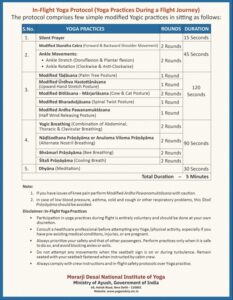
The protocol is easy and accessible and does not need any special equipment or can be conducted when one is seated. It is a smooth combination of physical mobility and breath awareness and mental relaxation:

Centring (15 seconds): Start with a silent awareness or intent to get yourself grounded.
Light Joint movements (45 seconds): rotations of shoulders, stretching of ankle, and any simple movements to enhance blood flow and lessen stiffness.
Seated Yoga Poses: Altered poses include Tadasana (Palm Tree Pose), seated Cat-Cow, spinal rotations, and mild movements involving the legs in order to relieve tension and posture.
Pranayama (Breathing Practices): Deep breathing, Anulom Vilom, Bhramari, and Sheetali to relax the nervous system and improve the flow of oxygen.
Meditation (30 seconds): A short break to re-focus the mind and help bring about relaxation.
Enhancing the greater picture of changing behaviour, Ms Monalisa Dash, Joint Secretary, Ministry of Ayush, stressed, “The initiative shows how yoga may be effectively applied in day-to-day circumstances. We want to establish a culture of wellness, which will accompany a person wherever he or she may go by encouraging so easy habit.

Small Practice, Big Impact

Within five minutes, this routine can:

Improve blood circulation
Decrease muscle stiffness and fatigue.
Ease stress and anxiety
Help in digestion and hydration awareness.
Help manage jet lag
Most importantly, it enables travellers to be in-charge of their well-being- even in-flight.

Wellness, Anywhere You Go

Yoga is beautiful because of its flexibility. It finds you at home, in the office, or at the altitude of the clouds. This in-flight procedure is an instructional notice that wellness does not need additional time or area–only purpose.

The next time you buckle in your seatbelt, take a moment to pay attention to yourself. It is better to stop and rest to reconnect with oneself sometimes, the best way to travel far.

Fly well. Breathe easy. Stay balanced.

Also Read:

‘One Earth, One Health’: Yoga Day provides respite in a tumultuous world

AYUSH Ministry Launches Yoga Life-size Mascots

ECI mandates all political Parties to get pre-certification of all political advertisements on electronic media

The Election Commission of India (ECI) has declared the program of the General Election to Legislative Assemblies in Assam, Kerala, Puducherry, Tamil Nadu and West Bengal and bye-elections in 6 states recently where in the rules have been spelt out for the political parties and independent contestants.

ECI has made a requirement of all registered political party and any group of organization/ association or any contesting candidate/individual seeking to be pre-certified by the Media Certification and Monitoring Committee (MCMC) on all political advertisements in the electronic media (e.g. TV, Radio, AV displays at public places, e-papers, bulk SMS/ voice messages) and social media.

Any individual or competing candidates may seek advertisement certification at District MCMC. A certification of such advertisements can be sought by all registered political parties with their respective head offices located in a State/UT by the State Level MCMC. The applications have to be submitted in accordance with the given timelines. The State level too constitutes an Appellate Committee headed by the CEO to listen to the appeals against the decision of District/State MCMC.

Without the prior certification of the MCMC, political parties/ candidates must not release any political adverts on internet based media/ websites such as social media websites.

MCMCs will also maintain a high alert on possible incidents of paid news in the media and act accordingly.

Moreover, the candidates must provide the information regarding their original social media profiles in their affidavit during nomination.

Section 77(1) of Representation of the People Act, 1951 and the guidelines of the Hon’ble Supreme Court of India states that political parties are also required to present a statement of expenditure incurred on campaigning using internet including social media websites to the ECI within 75 days after completion of assembly elections.

This spending among other things shall involve payment to internet companies and websites to carry adverts and campaign related spending on content development and operational spending incurred to maintain their social media accounts.

To this effect, the representatives of the Social Media Platforms (SMPs), the CEOs, State Police Nodal Officers and state IT Nodal Officers of all poll-bound States/UT were held to sensitise them of the above provisions and to validate and ensure a timely action against reported cases of misinformation, disinformation and fake-news during elections on March 19, 2026.


Also Read:

PM Modi Lauds Retiring Rajya Sabha Members, Calls Their Experience ‘Nation’s Asset’

Over 25 Lakh Officials Deployed For Assembly Polls in 5 States

AI sheds light on ancient board game mystery

The breakthrough that enabled a new form of unlocking past secrets using artificial intelligence (AI) was the first time an international research team utilized the code of an ancient board game and unlocked its secrets that have existed long before the new century.

The study of an engraved limestone object in the Roman Netherlands allowed the team to identify the probable game rules, depending on its specific markings.

A new study, which was published in the Antiquity journal, was directed by Maastricht University (The Netherlands) and Leiden University (The Netherlands) and contributed by Flinders University (South Australia), the Universite Catholique de Louvain (Belgium) and The Roman Museum and restoration studio Restaura in Heerlen.

The item, located in what is now Heerlen in the Netherlands, includes a design of bizarre crossing lines that for decades had bewildered archeologists.

Since majority of playing games in Roman world were drawn either in dust or in wood (where it was not likely to survive), this well-hewn limestone fragment provided a unique possibility of studying ancient rules.

The stone exhibits a pattern of geometric design and visible wear that are all conducive to sliding game pieces on its surface, a fact that highly suggests repeated play, and not an alternative use as to the stone, lead archaeologist, Dr Walter Crist, who is an archaeologist and ancient games expert.

In order to identify the type of game board the stone was and its functionality, the research team applied AI to run hundreds of potential rule sets, to identify which would generate identical patterns of wear on the object.

Can AI Recreate Simulated Play?

The fact that the carved lines are unevenly worn begs a major question regarding whether simulated play developed by AI can recreate the same pattern.

The researchers used the AI-driven play system Ludii to play two AI agents using the object as a board with rule sets of many of the board games in Europe recorded in the history, including haretavl of Scandinavia and gioco dell’orso of Italy.

Flinders University computer scientist Dr Matthew Stephenson states that it is possible to reconcile the historical and computational studies of games through the use of modern AI techniques.

The simulations were repeated, with the rules varied each time, to determine which movements would result in the same focused friction as in the original stone-surface, according to Dr Stephenson, of the Flinders College of Science and Engineering.

The simulations strongly indicated some form of strategy game called a blocking game. In the blocking games, the player attempts to put their opponent in check by denying them any movements instead of capturing the opponent.

Since there is very little written evidence of blocking games prior to the Middle Ages, the results indicate that blocking games may have a more ancient history than previously written up, whilst the work also proves the transformative power of AI in archeology.

Archaeological Approach

This is the first attempt, which employs AI-based simulated play along with the archaeological approach to recognize a board game, says Dr Crist.

It provides an archeologist with a way forward in study of ancient games not similar to those studied in surviving texts or art.

It was done at Maastricht University and as part of the Digital Ludeme Project in Europe which applied artificial intelligence to create more plausible reconstructions of ancient games both historically and mathematically.

The combination of archaeology, digital modelling and the history of cultures made the team give a better explanation of something that previously appeared to be inexplicable.

The success of this method of finding indicates that there are numerous other puzzling artefacts that could hold some concealed stories that can be uncovered by the use of modern technology, as per Dr Stephenson.

It demonstrates how AI can be used in our knowledge of materials that otherwise cannot be analyzed.


Also Read:

Footage of Grand Theft Auto game 6 gameplay leaks online

Sony opens Play Station 5 at 12 noon for pre-order in India, here’s how to book

How Israel is Dragging Middle East War Beyond America’s Control? (Analysis)

The unfolding drama in the Persian Gulf is just baffling the pundits around the world. Just yesterday, US President Donald Trump took to Truth Social and dropped a bombshell that should have every strategist in Washington squirming. “The United States knew nothing about this particular attack,” he wrote, referring to Israel’s audacious strike on Iran’s South Pars gas field.
“The country of Qatar was in no way, shape, or form, involved with it, nor did it have any idea that it was going to happen.” Iran, he added, retaliated “unjustifiably and unfairly” against Qatar’s LNG facilities. And then came the thunder: if Tehran hits Qatar again, America will “massively blow up the entirety of the South Pars Gas Field at an amount of strength and power that Iran has never seen.
This is not some routine tit-for-tat. South Pars, the world’s largest natural gas field, shared with Qatar’s North Dome, accounts for 70-75 per cent of Iran’s total gas production. It pumps out record volumes, over 727 million cubic metres a day at its peak, powering Iranian homes, industries and, crucially, the regime’s ability to fund its proxies.

Israel hit its processing plants at Asaluyeh on 18 March, knocking out phases that handle nearly 20 per cent of capacity in one surgical blow. Fires raged. Production halted. Oil prices promptly jumped over 5 per cent, Brent crossing $110 a barrel.

From Regime Change to Oil Depletion

Here’s the rub. The Iran war, which kicked off on February 28, with massive US-Israeli strikes that reportedly took out key Iranian leadership – was supposed to be under American management. Nuclear sites, missile batteries, command centres: that was the playbook. But Israel has quietly shifted the battlefield to Iran’s economic jugular. And Washington is left scrambling, publicly claiming ignorance while privately coordinating, then forced to issue threats that tie America’s hands deeper into the mess.
Trump’s own words expose the control slip. He insists Israel “violently lashed out” out of anger and has now been told “NO MORE ATTACKS” on South Pars unless Iran escalates on Qatar. Yet multiple American and Israeli sources confirm the strike was pre-cleared with the White House. The contradiction screams louder than any missile: even a staunchly pro-Israel president like Trump feels compelled to distance himself publicly. Why? Because the strike risked dragging America’s key Gulf ally, host to the massive Al Udeid airbase with 10,000 US troops and CENTCOM’s forward headquarters, straight into the line of fire.
Iran’s tit-for-tat expected?
Tehran’s Revolutionary Guards fired on Qatar’s Ras Laffan LNG hub, the planet’s biggest liquefied natural gas export terminal, causing “extensive damage.” Saudi and UAE sites faced drone and missile barrages too. Iran’s President Masoud Pezeshkian warned of “uncontrollable consequences that could engulf the entire world.” The Guards vowed “powerful action” against Gulf energy infrastructure. Qatar expelled Iranian attaches. Global LNG markets trembled.

above, this is classic Israeli strategic genius at work, manipulating the superpower for a long-term benefit. Benjamin Netanyahu has never minced his words: not just degrade Iran’s nuclear and missile threat, but “eradicate the Iranian regime” and create conditions for the Iranian people to “cast off tyranny.” Hitting South Pars does precisely that. It chokes Iran’s domestic energy supply, spikes inflation, breeds public anger, and starves the cash flow that arms Hamas, Hezbollah and the Houthis.
Israel Achieves Strategic Depth 
Meanwhile, America gets pulled in as the reluctant firefighter. US bases in Qatar, Saudi Arabia and the UAE are now on high alert. Global oil and gas prices threaten inflation waves that hit every American wallet and, closer home, every Indian importer reliant on Gulf crude. Trump’s warning is no bluff; it commits US firepower directly. But notice the fine print: “with or without the help or consent of Israel.” Washington is now the enforcer cleaning up after Jerusalem’s move.
One cannot overlook the pattern. From Gaza to Lebanon to now Iran’s gas fields, Netanyahu has repeatedly pushed boundaries – Rafah operations despite Biden’s red lines, targeted killings that risked wider war. US aid keeps flowing: $3.3 billion in annual military financing, plus hundreds of millions more in wartime supplements, on top of the historic $300 billion-plus adjusted total. Israel enjoys the qualitative military edge and the political cover. Yet it operates with a free hand, knowing America’s strategic interests with stable Gulf allies, secure energy flows, containing China-Russia influence will compel Washington to backstop the fallout.
Israel’s calculation is cold and brilliant. By striking a field literally shared with Qatar, it ensured any Iranian reply would hit a US partner. Tehran takes the bait, Qatar screams, Trump threatens Armageddon on South Pars. Result? Iran’s economy bleeds further, Gulf states lean harder on America for protection, and Israel emerges as the region’s indispensable security guarantor. The tail is wagging the dog.
The South Pars episode proves the superpower no longer calls every shot. As Trump himself had to admit ignorance and then pledge massive retaliation, the control is slipping. For the rest of us watching from afar, whether in Delhi, Riyadh or Brussels, the lesson is stark. Alliances are tools, not chains. Israel has mastered turning its biggest patron into an unwitting co-author of its grand strategy.
The Middle East war is no longer contained, and America is paying the price both in terms of treasure, credibility and stability in the Gulf.  The question now is whether Washington will finally reassert command, or not.