

There are 44 World Heritage Properties in the country, while the Government has sent the following proposals to the World Heritage Centre for consideration for inclusion in the World Heritage List two more sites:
- Ancient Buddhist Site, Sarnath (2025-26)
- JingkiengJri / Lyu Charai Cultural Landscape (2026-27)
The Archaeological Survey of India (ASI) undertakes conservation and maintenance of 3,686 monuments, including 27 World Heritage properties, along with the provision of amenities for tourists such as drinking water, toilet blocks, pathways and landscaping etc. for protected monuments/sites under the ASI’s jurisdiction. Conservation and maintenance of these monuments/sites is a continuous process and is carried out based on the needs of the monuments and the availability of resources.

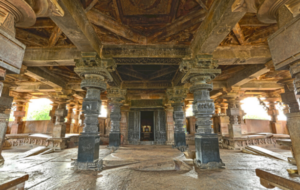
(https://whc.unesco.org/en/list/1570/gallery/–Author: ASI)
Properties on World Heritage List (44)
- Cultural World Heritage Properties in India : 36
- Natural World Heritage Properties in India : 07
- Mixed World Heritage Properties in India : 01
CULTURAL SITES:
Under Protection of Archaeological Survey of India (27)
| S.
No
|
Name of Site | State
|
Year of inscription |
|
|
Agra Fort | Uttar Pradesh | 1983 |
|
|
Ajanta Caves | Maharashtra | 1983 |
|
|
Ellora Caves | Maharashtra | 1983 |
|
|
Taj Mahal | Uttar Pradesh | 1983 |
|
|
Group of Monuments at Mahabalipuram | Tamil Nadu | 1984 |
|
|
Sun Temple, Konarak | Odisha | 1984 |
|
|
Churches and Convents of Goa | Goa | 1986 |
|
|
Fatehpur Sikri | Uttar Pradesh | 1986 |
|
|
Group of Monuments at Hampi | Karnataka | 1986 |
|
|
Khajuraho, Group of Temples | Madhya Pradesh | 1986 |
|
|
Elephanta Caves | Maharashtra | 1987 |
|
|
Great Living Chola Temples at Thanjavur, Gangaikondacholapuram and Darasuram | Tamil Nadu | 1987 & 2004 |
|
|
Group of Monuments at Pattadakal | Karnataka | 1987 |
|
|
Buddhist Monuments at Sanchi | Madhya Pradesh | 1989 |
|
|
Humayun’s Tomb, Delhi | Delhi | 1993 |
|
|
QutbMinar and its Monuments, Delhi | Delhi | 1993 |
|
|
Rock Shelters of Bhimbetka | Madhya Pradesh | 2003 |
|
|
Champaner-Pavagarh Archaeological Park | Gujarat | 2004 |
|
|
Red Fort Complex, Delhi | Delhi | 2007 |
|
|
Hill Forts of Rajasthan
(Chittaurgarh, Kumbhalgarh, Jaisalmer and Ranthambhore, Amber and Gagron Forts) (Amber and Gagron Forts are under protection of Rajasthan State Archaeology and Museums) |
Rajasthan | 2013 |
|
|
Rani-ki-Vav (The Queen’s Stepwell) at Patan | Gujarat | 2014 |
|
|
Archaeological Site of Nalanda Mahavihara(Nalanda University) at Nalanda | Bihar | 2016 |
|
|
Dholavira: A Harappan City | Gujarat | 2021 |
|
|
Kakatiya Rudreshwara (Ramappa) Temple, Telangana | Telangana | 2021 |
|
|
Sacred Ensembles of the Hoysalas | Karnataka | 2023 |
|
|
Moidams-the Mount-Burial system of the Ahom Dynasty | Assam | 2024 |
| 27. | Maratha Military Landscapes of India | Maharashtra | 2025 |
Under Protection of Ministry of Railways (2)
| 28. | Mountain Railways of India ( Darjeeling,1999), Nilgiri (2005), Kalka-Shimla | West Bengal, Tamil Nadu, Himachal Pradesh | 2008 |
| 29. | Chhatrapati Shivaji Terminus (formerly Victoria Terminus) | Maharashtra | 2004 |
Under Protection of Bodhgaya Temple Management Committee (1)
| 30. | Mahabodhi Temple Complex at Bodh Gaya | Bihar | 2002 |
Under Protection of Rajasthan State Archaeology and Museums (1)
| 31. | The Jantar Mantar, Jaipur | Rajasthan | 2010 |
Under Protection of Chandigarh Administration (1)
| 32. | The Architectural Work of Le Corbusier, an Outstanding Contribution to the Modern Movement | Chandigarh | 2016 |
Under Protection of Ahmedabad Municipal Corporation (1)
| 33. | Historic City of Ahmedabad | Gujarat | 2017 |
Under Protection of Bombay Municipal Corporation (1)
| 34. | Victorian and Art Deco Ensemble of Mumbai | Govt of Maharashtra | 2018 |
Under Protection of Jaipur Municipal Corporation (1)
| 35. | Jaipur City, Rajasthan | Govt of Rajasthan | 2019 |
Under Vice Chancellor, Visva Bharati (1)
| 36. | Santiniketan | Visva Bharati | 2023 |
NATURAL PROPERTIES: (7)
Under Protection of Ministry of Environment, Forest and Climate Changes
| 37. | Kaziranga National Park | Assam | 1985 |
| 38. | Keoladeo National Park | Rajasthan | 1985 |
| 39. | Manas Wildlife Sanctuary | Assam | 1985 |
| 40. | Sunderbans National Park | West Bengal | 1987 |
| 41. | Nanda Devi and Valley of Flowers National Parks | Uttarakhand | 1988, 2005 |
| 42. | Western Ghats | Karnataka, Kerala, Maharashtra,Tamil Nadu | 2012 |
| 43. | Great Himalayan National Park | Himachal Pradesh | 2014 |
MIXED PROPERTIES: (1)
Under Protection of Ministry of Environment, Forest and Climate Changes
| 44. | Khangchendzonga National Park (2016) | Sikkim
|
2016 |
This information was given by Union Minister for Culture and Tourism Gajendra Singh Shekhawat in a written reply in Lok Sabha today.
Also Read:
Ahmadabad Joins 36 UNESCO’s World Heritage Properties in India