Myanmar begins defence in landmark genocide case at UN World Court


Addressing judges in The Hague, Ko Ko Hlaing, speaking as Myanmar’s agent, said his country fully recognizes the importance of the 1948 Convention on the Prevention and Punishment of the Crime of Genocide but firmly denies breaching its obligations under international law.

“A finding of genocide would place an indelible stain on my country and its people,” he said, describing the proceedings as “of fundamental importance for my country’s reputation and future.”

Mr. Hlaing accused the applicant of relying on what he called rudimentary and partisan, including reports by a fact-finding mission, “which are neither reliable nor objective, and were a condemnation without trial of Myanmar.”


UN Photo/ICJ-CIJ/ Frank van Beek

Ko Ko Hlaing, Agent of Myanmar, addresses judges at the International Court of Justice (ICJ) in The Hague.

Myanmar acted against terrorists

Myanmar also rejected claims that its military’s so-called “clearance operations” in northern Rakhine state in 2016 and 2017 were genocidal in intent, maintaining they were counter-terrorism operations launched in response to attacks by the armed groups.

“Obviously, Myanmar was not obliged to remain idle and allow terrorists to have free rein of northern Rakhine state,” Mr. Hlaing told the Court, while acknowledging that civilians were killed and large numbers of people fled to Bangladesh as a result of the clashes.

He further disputed allegations that Myanmar denies the existence or rights of the Muslim population in northern Rakhine state, arguing that questions of citizenship, terminology and identity “have nothing to do with genocide.”

Myanmar said it has complied with all procedural orders of the Court, including provisional measures issued in January 2020, and has submitted regular reports on steps taken.

It also reiterated its stated commitment to the repatriation of displaced people from Bangladesh, citing bilateral agreements and delays caused by the COVID-19 pandemic and natural disasters.

The case before the ICJ

The case stems from an application filed by Gambia in November 2019, accusing Myanmar of violating the Genocide Convention through acts allegedly committed during military operations in Rakhine state.

Those operations escalated in 2017, forcing more than 700,000 Rohingya to flee to Bangladesh amid widespread killings, sexual violence and village burnings, according to UN investigations. Nearly one million Rohingya remain refugees in Bangladesh.

The hearings, which will continue through late January, mark the first time the Court is examining the merits of the case. The Court’s final judgment, which could take months after the hearings conclude, will be legally binding.


Iran: UN urges ‘maximum restraint’ to avert more death, wider escalation

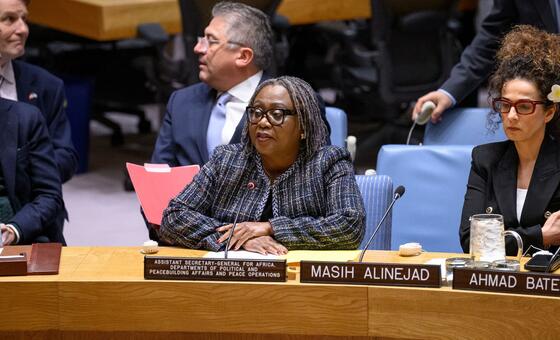
Assistant Secretary-General Martha Pobee briefed an emergency meeting of the Security Council in New York called by the United States to address the crisis.

Ms. Pobee described the situation in Iran as “fluid and deeply concerning”, noting that “protests continue, albeit reportedly at a smaller scale than last week.”

Against military strikes

She voiced alarm, however, over public statements suggesting possible military strikes on the country.

This external dimension adds volatility to an already combustible situation. All efforts must be undertaken to prevent any further deterioration,” she said.

Moreover, UN Secretary-General António Guterres “remains convinced that all concerns regarding Iran, including those related to the nuclear issue and ongoing protests, are best addressed through diplomacy and dialogue.”

He also “urges maximum restraint at this sensitive moment and calls on all actors to refrain from any actions that could lead to further loss of life or ignite a wider regional escalation.”

Largest protests in recent years

The protests erupted on 28 December after shopkeepers in the Iranian capital Tehran took to the streets to rail against the collapse of the national currency, soaring inflation and worsening living conditions.

Demonstrations quickly spread across the country, turning into mass anti-government protests – the largest since the movement sparked by the September 2022 death in custody of Kurdish woman Jina Amini who was arrested for allegedly violating hijab laws.

Authorities imposed a near-total communications blackout that is still largely in place.  Hundreds and even possibly thousands of protestors and bystanders have been killed, and more than 18,000 people are estimated to be detained, though the UN has not been able to verify these figures.

‘Terrorists’ and ‘rioters’ blamed

“The Government of Iran has stated that it was compelled to act after what it deemed ‘organized terrorists’ and ‘rioters’ infiltrated the protests and opened fire on both security forces and demonstrators, aiming to provoke foreign military intervention,” said Ms. Pobee.

“It has also blamed these elements for the killing of hundreds of civilians and members of the security forces.”

In a recent statement, the UN Secretary-General expressed deep concern over the reported excessive use of force by the authorities and upheld the rights to freedom of expression, association and peaceful assembly.

Civil society voices

Iranian journalist and political dissident Masih Alinejad was one of two civil society representatives invited to brief the Council.

“What is needed now to bring justice to those who order massacres in Iran is real and concrete action,” she said.

Iranian-American human rights activist and journalist Ahmad Batebi spoke about how he was arrested for protesting while a student and sentenced to death.

Mr. Batebi said that he was held in solitary confinement for two years, tortured, and forced to admit that he was a paid American spy.

US warns of wider repercussions

US Ambassador Mike Waltz stated that “the level of violence, the level of repression that the Iranian regime has unleashed on its own citizens…has repercussions for international peace and security.”

The Iranian people “are demanding their freedom like never before in the Islamic Republic’s brutal history,” he said, and underscored that President Donald Trump and the United States “stands by the brave people of Iran”.

He stressed that “the regime is solely responsible for the economic misery of the Iranian people and the repression of their freedom” and will be held accountable.

US ‘steering unrest’ in Iran, ambassador claims

Iran’s Deputy Permanent Representative Gholamhossein Darzi began his remarks by denouncing the two civil society briefers, saying they “represent the political agenda of the United States and Israeli regimes.”

Turning to the situation in Iran, the ambassador said that he was speaking on behalf of a “nation in mourning”.

“It is deeply regrettable that the representative of the United States regime, which requested this meeting, has today resorted to lies, distortions of facts and deliberate disinformation to conceal his country’s direct involvement in steering unrest in Iran towards violence,” he said.

Source link

Will AI kickstart a new age of nuclear power?

The world’s demand for electricity is soaring at an unprecedented pace. Projections indicate that by 2035, global consumption will surge by over 10,000 terawatt-hours, a figure matching the combined current usage of every advanced economy on Earth today.

A primary driver of this explosive growth is the rise of artificial intelligence. The technology is fueled by vast data centers, whose energy needs are staggering. A single medium-sized data center now consumes as much electricity as 100,000 homes. According to the International Energy Agency, demand from these facilities skyrocketed by more than 75% between 2023 and 2024. By 2030, they are expected to be responsible for over 20 percent of all electricity demand growth in advanced nations.

In the United States, the epicenter of the AI industry, the scale is even more pronounced. Forecasts suggest that before this decade ends, the power required for AI data processing will surpass the total combined electricity consumption of the country’s entire aluminium, steel, cement, and chemical manufacturing sectors.

The Nuclear Industry Sees Its Moment

Facing this daunting challenge, a unique summit took place last December. Policymakers, tech executives, and nuclear leaders from across the globe gathered at the International Atomic Energy Agency (IAEA) headquarters in Vienna. Their mission: to explore a symbiotic future where nuclear power enables AI’s expansion, and AI, in turn, innovates the nuclear sector.

The logic is rooted in AI’s relentless operational needs. Training a top-tier AI model can require tens of thousands of computer processors to run non-stop for months. Meanwhile, daily AI applications are spreading into every corner of society, from healthcare and transport to education and agriculture. Every digital interaction consumes power.

“We need clean, stable zero-carbon electricity that is available around the clock,” said Manuel Greisinger, a senior manager at Google focused on AI. “This is undoubtedly an extremely high threshold, and it is not achievable with wind and solar power alone. AI is the engine of the future, but an engine without fuel is almost useless. Nuclear energy is not only an option, but also an indispensable core component of the future energy structure.”

A Bullish Vision for Atomic Energy

This view is championed at the highest levels. IAEA Director General Rafael Mariano Grossi believes the nuclear industry is destined to be the bedrock of the AI revolution. “Only nuclear energy can meet the five needs of low-carbon power generation, round-the-clock reliability, ultra-high power density, grid stability and true scalability,” he declared.

The industry is mobilizing. Currently, 71 new reactors are under construction worldwide, adding to the 441 already operating. The United States, which hosts 94 plants has plans for ten more.

Tech giants are putting their money where their data is. Major companies have pledged support for the goal of trippling global nuclear capacity by 2050. In a landmark move, Microsoft signed a 20-year power purchase agreement that directly facilitated the restart of Unit One at Pennsylvania’s Three Mile Island nuclear plant.

The trend is worldwide. “Europe has the world’s densest digital corridors, with Frankfurt, Amsterdam and London as hubs,” explained Grossi. Traditional nuclear powers like France and the UK are reinvesting heavily, while newcomers like Poland are accelerating plans.

Russia remains a dominant exporter and developer of reactor technology. China is achieving parallel leadership, leading the world simultaneously in both AI development and the construction of new nuclear reactors. Japan is upgrading its data center infrastructure, and the United Arab Emirates has coupled its new nuclear program with ambitions to become a regional AI hub.

The Promise of Smaller, Faster Reactors

The urgent timeline is fueling interest in small modular reactors (SMRs). Unlike traditional mega-projects that take a decade to build, SMRs offer a nimble alternative.

“These kinds of reactors have a small footprint and upgraded safety systems, and can be deployed in nearby industrial areas, including data centre campuses,” Grossi said. “Tech companies that use them don’t have to worry about regional grid supply constraints or transmission losses. This will be a decisive advantage in areas where grid upgrades are slow.”

Though still emerging from the development phase, progress is swift. Google has signed a pioneering global agreement to purchase nuclear power from a fleet of SMRs, targeting operational status by 2030.

The search for reliable power is pushing boundaries. Google is also looking skyward, researching space-based solar networks to power massive machine-learning operations in orbit, taking advantage of constant, unfiltered sunlight. The company plans to launch two prototype satellites in early 2027 to test the concept.

Whether it’s reviving dormant reactors, betting on compact new designs, building traditional plants, or even gazing at the stars, the trajectory is clear. The world’s digital and energy futures are converging, pointing toward an energy system fundamentally reliant on nuclear power to sustain the civilization of tomorrow.

Training cutting-edge AI models requires tens of thousands of central processing units (CPUs) to run continuously for weeks or even months. At the same time, the daily application of artificial intelligence is expanding to almost all sectors such as hospitals, public administration, transportation, agriculture, logistics and education.

Every query, every simulation, every recommendation consumes power. “We need clean, stable zero-carbon electricity that is available around the clock,” says Manuel Greisinger, a senior manager at Google, focusing on AI. “This is undoubtedly an extremely high threshold, and it is not achievable with wind and solar power alone. AI is the engine of the future, but an engine without fuel is almost useless. Nuclear energy is not only an option, but also an indispensable core component of the future energy structure.”

A data centre in Ireland © Unsplash/Geoffrey Moffett


Bullish nuclear industry

Mr. Greisinger’s view is shared by IAEA Director General Manuel Grossi, who believes that the nuclear industry is destined to be the energy partner of the AI revolution. “Only nuclear energy can meet the five needs of low-carbon power generation, round-the-clock reliability, ultra-high power density, grid stability and true scalability,” he declared.

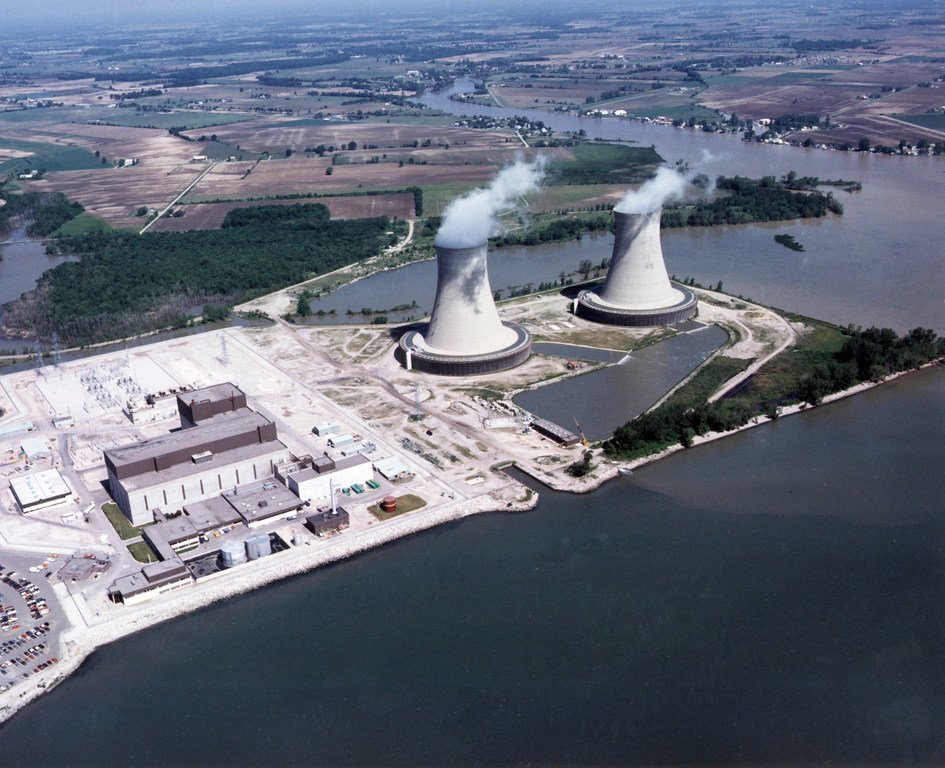
The nuclear industry appears to be in bullish mood. Seventy-one new reactors are under construction, adding to the 441 that are currently operating globally. Ten are scheduled to be built in the US, which is already home to 94 plants, the largest amount of any country.

The tech giants that are using the data centres have pledged to support the goal of at least tripling global nuclear power capacity by 2050. Microsoft, for example, has signed a 20-year power purchase agreement that allowed Unit One of the Three Mile Island nuclear power plant in Pennsylvania, USA, to be restarted.

NOAA/OAR/Great Lakes Environmental Research Laboratory

Russia, with a research base proficient in mathematics and computer science, remains the world’s largest exporter in the field of nuclear energy, and is a leading operator and developer of advanced reactor technology, whilst China is making major achievements in both AI and nuclear energy.

“AI technology and the construction of artificial intelligence data centres are advancing simultaneously, and the number of new nuclear reactors in the world also ranks first in the world during the same period,” said the UN nuclear agency chief.

Japan is investing heavily in building and upgrading data centres to meet growing demand whilst, in the Middle East, the United Arab Emirates has established a nuclear energy programme and has emerged as a regional AI hub.

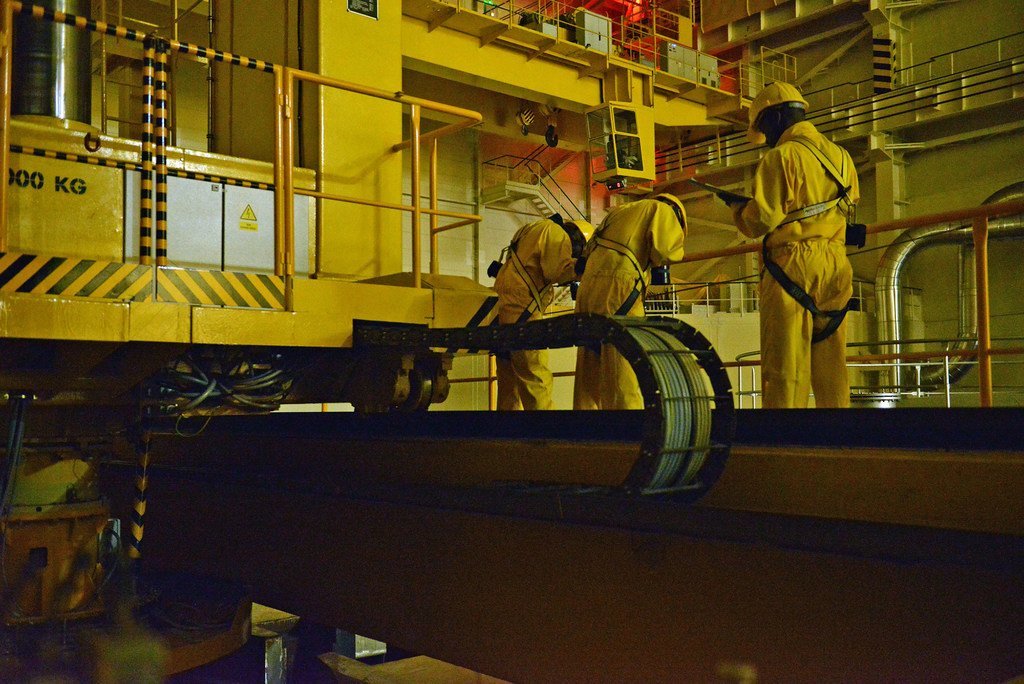
The IAEA supports training to ensure the safety of nuclear power plants like this one in the Czech Republic.


 

Tech Giants Bet on Mini-Reactors to Power AI Boom

The relentless growth of artificial intelligence is creating an energy crisis of its own. To feed the staggering power demands of massive data centers, the technology industry is turning to a new, compact solution: small modular reactors, or SMRs.

These next-generation nuclear units represent a stark departure from the traditional, colossal power plants that can take a decade to build and require enormous upfront investment. Instead, SMRs are designed to be leaner, safer, and faster to deploy.

“These kinds of reactors have a small footprint and upgraded safety systems, and can be deployed in nearby industrial areas, including data centre campuses,” explained Rafael Mariano Grossi, Director General of the International Atomic Energy Agency (IAEA). He highlighted a key advantage for tech companies, noting they “don’t have to worry about regional grid supply constraints or transmission losses. This will be a decisive advantage in areas where grid upgrades are slow, and interconnection queues are long.”

While SMR technology is still advancing from research into real-world application, momentum is building. The IAEA is actively collaborating with global regulators and the nuclear industry to clear the path for widespread deployment. The goal is to see these smaller units operating in large numbers to meet surging electricity demands.

Google’s Nuclear Energy Pact

In a landmark move, Google has signed a pioneering agreement to purchase nuclear energy generated from multiple small modular reactor, a first-of-its-kind deal globally. If development stays on track, the reactors could be supplying clean power to Google’s operations by 2030.

Not content with terrestrial solutions alone, Google is also gazing skyward. The company is investigating the potential of space-based solar networks, which would use unfiltered solar energy in orbit to power large-scale machine learning operations. To test the concept, two prototype satellites are scheduled for launch in early 2027, where their radiation tolerance and data processing capabilities will be put to the test.

From restarting shuttered plants to constructing giant new reactors, and from betting on miniature atomic units to capturing sunlight in space, the strategies vary wildly. Yet energy experts observe that all these paths converge on the same inevitable conclusion: building a future-proof energy system capable of supporting advanced civilization will require a foundation built largely upon nuclear power.

Game-changing international marine protection treaty comes into force

Officially known as the Biodiversity Beyond National Jurisdiction (BBNJ) Agreement, the legally binding UN treaty covers the ocean zones that lie beyond national waters (the “high seas”) and the international seabed area. 

These regions make up over two-thirds of the ocean’s surface, representing over 90 per cent of Earth’s habitat by volume. This is because the ocean is deep, and most living space on Earth is underwater.

Here are some of the key things to know: 

Why it matters

The BBNJ is designed to transform the “high seas” and international seabed into an environment to be managed sustainably for the benefit of all humanity. 

It is also the first legally binding ocean instrument to provide for inclusive ocean governance, with provisions on the engagement of Indigenous Peoples and local communities and on gender balance.

It is hoped that, once it is fully implemented, the Agreement will make a vital contribution to addressing the so-called “triple planetary crisis” of climate change, biodiversity loss and pollution.

Speaking to UN News, Tanzanian diplomat Mzee Ali Haji, who led his country’s negotiation team during BBNJ discussions, said that the agreement marks a major step in the protection of international waters. 

© The Ocean Story/Vincent Kneefel

Everyone should bear in mind that there is now control of the activity in the high seas. For instance, when you pollute, you are responsible for your acts”.

The BBNJ strengthens the current international legal framework: it builds on the UN Convention on the Law of the Sea – in effect the “constitution for the oceans” – which has set the rules for maritime and seabed exploitation and marine protection since it came into force in 1994.

The agreement addresses gaps in the Convention, includes more detail on how to manage biodiversity and aligns ocean governance with modern challenges like climate change and the 2030 Agenda for Sustainable Development (the UN-brokered blueprint for solving the world’s most intractable challenges).

What does ‘entry into force’ mean?

After the entry into force, it becomes legally binding for the 81 nations that have ratified it so far, meaning that they agree to incorporate it into their national legislation.

The treaty specifies that it enters into force this Saturday: 120 days after it was ratified – accepted as legally by binding – by at least 60 countries.

Who’s signed up, and who hasn’t?

Many major economies have ratified the BBNJ, notably China, Germany, Japan, France and Brazil

China has a particularly important impact on industries connected to the ocean (such as shipbuilding, aquaculture, fisheries and offshore oil and gas), exporting some $155 billion of ocean-related goods in 2023, according to UN trade agency figures.

The holdouts include the United States, India, the UK and Russia.

The US, the world’s biggest economy, is one of the top five ranked ocean-related goods exporters ($61 billion). Although the country adopted the treaty in 2023, it is not yet ratified, and the Senate has not acted on it.

India, one of the top developing-economy exporters ($19 billion), adopted the treaty in 2024 but domestic legislation on ratification is still pending. While the UK did introduce legislation on the matter in 2025, parliament is still to ratify it.

Russia remains one of the minority of nations that has neither adopted nor ratified the treatyciting its wish to preserve existing governance frameworks, and ensure that freedom of navigation and shipping in international waters is guaranteed.

Is this a big setback for the treaty?

Despite the reluctance of some major economies to commit fully by ratifying, Mr. Haji is positive about the impact that the BBNJ, in its current state, will have.

 “Developing countries and small island countries need support,” he says. “We expect that, in the future, they will accept this agreement, because it will help them. The protection of the high seas is the responsibility of all of us.”

What happens next?

The door remains open for more countries to ratify, which will make it more effective. 

“When you negotiate something, you can’t get 100 percent people to ratify it or to accept it in one term,” says Mr. Haji. “Some just observe and then, when they see the advantages, they join. I believe that, in the future others will join”.

Apart from universal participation, the key to making the BBNJ work will be implementation – in other words, acting against those who break the rules. 

According to the text of the agreement, the first meeting to monitor progress on both these fronts will take place no later than one year after the Agreement’s entry into force.

Japan Launches High-Seas Gamble to Break China’s Grip on Critical Minerals

In a bold move to secure its economic future, Japan has dispatched a research ship on a pioneering mission to the depths of the Pacific Ocean. The goal: to test the viability of mining rare earth elements from the seabed, a high-stakes effort to loosen China’s commanding hold on these vital resources.

The deep-sea drilling vessel Chikyu set sail Monday from Shizuoka port, beginning a month-long expedition to waters near remote Minamitori Island, nearly 2,000 kilometers southeast of Tokyo. Its crew of 130 researchers and sailors will attempt a world-first feat: continuously lifting mineral-rich mud from a staggering six kilometers below the surface to test if the rare earths within can be practically recovered.

“For seven years, we have been preparing steadily for this. It is deeply moving to finally begin the confirmation tests,” said project leader Shoichi Ishii, speaking to Reuters as the ship departed against the iconic backdrop of Mount Fuji. “If this project succeeds, it will be of great significance in diversifying Japan’s rare earth resource procurement.”

A Mission Born of Strategic Urgency

The expedition is not merely a scientific endeavor; it is a direct response to growing geopolitical tensions. Japan’s urgency has intensified as Beijing tightens controls on exports of minerals with both civilian and military uses. Reports of broader restrictions on rare earth shipments to Japanese firms have added fuel to the fire, making resource security a top agenda item for global finance leaders.

Japan knows the cost of dependency firsthand. A 2010 diplomatic spat with China led to a sudden curtailment of rare earth exports, sending shockwaves through its high-tech manufacturing sector. Since then, Japan has halved its direct reliance on China from nearly 90% to about 60% by investing in overseas mines and boosting recycling.

Yet, the Minamitori project represents a more fundamental shift—the first serious attempt to establish a domestic source for these critical materials.

“The fundamental solution is to be able to produce rare earths inside Japan,” explained Takahide Kiuchi, an executive economist at Nomura Research Institute. He cautioned, however, that Japan remains almost completely dependent on China for certain heavy rare earths essential for technologies like electric vehicle motors.

A Long and Costly Road Ahead

Success is far from guaranteed. The Japanese government has already invested roughly 40 billion yen ($250 million) since 2018, with no production targets yet set and estimated reserves still undisclosed. If the current tests prove successful, a full-scale mining trial is tentatively scheduled for early 2027.

The economics remain a formidable hurdle. Seabed mining is notoriously expensive, though analysts note that sustained supply disruptions or sharply higher prices could eventually make the venture viable.

The venture is also being closely watched—and subtly challenged—by Beijing. During preliminary survey work last June, Chinese naval vessels operated near the research area, actions Ishii described as “intimidating.” China maintains its activities were lawful and has urged Japan not to “hype up threats.”

As the Chikyu steams toward its destination, it carries not just scientific equipment, but Japan’s hopes for a more secure and self-reliant technological future. The world will be watching to see if those hopes can be raised from the ocean floor.

11-year streak of record global warming continues, UN weather agency warns

The World Meteorological Organization (WMOconfirmed on Wednesday that 2025 was one of the three warmest years on record, continuing the streak of extraordinary global temperatures.

After analysing eight international datasets, the organization said that global average surface temperatures last year were 1.44°C above the 1850 to 1900 average.

Two of these datasets ranked 2025 as the second warmest year in the 176-year record, and the other six ranked it as the third warmest year.

Warm despite La Niña 

The fact that 2025 was very slightly cooler than the three-year average from 2023 is partly explained by the La Niña phenomenon, which is associated with colder weather.

But WMO insisted that any temporary cooling from La Niña is not reversing the long-term trend of warmer temperatures.

“The year 2025 started and ended with a cooling La Niña and yet it was still one of the warmest years on record globally because of the accumulation of heat-trapping greenhouse gases in our atmosphere,” said WMO Secretary-General Celeste Saulo.

The organization added that the high temperatures on land and sea last year helped to fuel extreme weather, including heatwaves, heavy rainfall and deadly tropical cyclones, underlining the need for early warning systems.

Ocean heat

Citing a separate study, WMO highlighted that ocean temperatures were also among the highest on record last year, reflecting the long-term accumulation of heat within the climate system.

Regionally, about 33 per cent of the global ocean area ranked among its historical (1958–2025) top three warmest conditions, while about 57 per cent fell within the top five, including the tropical and South Atlantic Ocean, Mediterranean Sea, North Indian Ocean and Southern Oceans, underscoring the broad ocean warming across basins.

WMO will provide full details of key climate change indicators, including greenhouse gases, surface temperatures, ocean heat and other trends, in its State of the Global Climate 2025 report to be issued in March.

Chinese tourist defiles shrine inside Buddhist monastery, triggers anger on social media

An alleged act of sacrilege by a Chinese tourist at a prominent Buddhist monastery has triggered widespread anger among Tibetans, with many calling for swift action against the individual involved.

Public outrage intensified after a video of the incident began circulating online, quickly drawing condemnation across social media platforms.

The footage shows the tourist consuming a liquid taken directly from an altar before pouring the remaining drink into a butter lamp. Many Tibetans described the act as a grave violation of religious sanctity and a profound insult to their spiritual traditions.

According to a report published by Phayul, a widely read Tibetan news outlet, the individual was recorded engaging in behaviour widely viewed as desecration of a sacred space.

Tibetans from across the community strongly criticised the act, labelling it a deliberate affront to their faith rather than a moment of cultural misunderstanding. They stressed that monasteries are places of worship and reverence, not backdrops for sensational behaviour or online attention.

Online reactions reflected deep frustration. One social media user wrote that the incident could not be dismissed as ignorance, calling it humiliating and intentionally provocative. Another urged authorities to uphold cultural dignity and conduct a thorough investigation.

 “It’s not that I don’t know the rules. This is not a simple disrespect. It’s humiliating. This is blatant provocation,” said the X user, while another comment read, “The bottom line of culture cannot be trampled. I hope the relevant departments investigate this thoroughly.”

The incident also drew comment from prominent Tibetan writer and poet Tsering Woeser, who linked such conduct to what she described as prolonged leniency toward inappropriate tourist behaviour in Tibet.

Tsering Woeser, a renowned Tibetan writer and poet, said such behaviour to what she described as long-term tolerance by authorities toward tourists’ misconduct in Tibet. “The outrageous behaviour of tourists is a direct result of long-term tolerance,” Tsering wrote on her X account.

NSE Chief Offers Prayers At Tirupati Ahead of IPO

Ashishkumar Chauhan, Managing Director and Chief Executive Officer of the National Stock Exchange, on Sunday visited Tirupati with his family and offered prayers at the Lord Venkateshwara temple, seeking blessings for the exchange, its members, shareholders and the country.

Speaking after the visit, Chauhan said the darshan took place early in the morning and described the experience as peaceful and deeply fulfilling. He noted that prayers were offered for the well-being of NSE and for the broader growth of the nation.

“Today we had a great darshan in the early morning at Tirupati. We took blessings for NSE, for all our members, all our shareholders and for the country,” Chauhan said, adding that the visit had been planned well in advance.

The temple visit coincided with a key regulatory signal for the exchange. On Saturday, the Chairman of the Securities and Exchange Board of India indicated that NSE is likely to receive approval for its long-pending initial public offering within the month. The remarks were made by SEBI Chairman Tuhin Kanta Pandey.

Chauhan said the timing felt particularly auspicious, as the announcement became public just as he arrived in the temple town. He described it as a positive omen and a blessing.

“When we arrived in Tirupati, the announcement was made. We see it as a good omen and God’s blessing that this development has come,” he said. He added that the darshan would remain a memorable moment, especially given the significance of the period for the exchange.

The visit comes as market participants closely track regulatory progress on NSE’s proposed IPO, which is expected to be one of the largest and most consequential listings in India’s capital markets, marking a milestone both for the exchange and the broader financial ecosystem.

Indian Idol 3 Winner And Actor Prashant Tamang Dies At 43

Actor-singer Prashant Tamang, who recently appeared as an assassin in the second season of the acclaimed streaming series Paatal Lok, has passed away at the age of 43. He is reported to have suffered a cardiac arrest.

Tamang rose to national prominence after winning Indian Idol Season 3 in 2007, a victory that marked one of the most decisive audience-driven moments in the history of Indian reality television. His triumph, achieved with a record number of votes, came after a closely watched finale against fellow contestant Amit Paul.

Before stepping into the limelight, Tamang served in the Kolkata Police, a detail that became central to his public narrative during the competition. Hailing from a Nepali-speaking Gorkha family, he drew extraordinary grassroots support from the Gorkha community across India and abroad. His appeal lay less in technical virtuosity and more in a restrained, heartfelt singing style that resonated widely with viewers.

Following his win, Tamang released his debut album Dhanyavaad in 2007, featuring tracks in Hindi and Nepali. The album found significant acceptance in eastern India and Nepal. While he went on to record playback songs for Hindi and regional films, his presence in mainstream Bollywood remained limited. In later years, he increasingly focused on Nepali-language music, where he built a steady career and a loyal listener base.

Tamang also explored acting, appearing in several Nepali films, including Gorkha Paltan, a project rooted in the historical legacy of the Gorkha military tradition. More recently, his appearance in Paatal Lok Season 2 marked a notable return to wider public attention.

Reacting to the news, Amit Paul shared an emotional tribute on Instagram, posting a throwback photograph of Tamang and writing that he was struggling to process the loss of “my brother, my friend, my dosti.”

Though he may not have remained a constant fixture in national pop culture, Prashant Tamang’s legacy endures. He is widely remembered as one of the earliest reality-show winners whose success was powered by regional identity, collective mobilisation, and audience voting strength—often cited as a turning point in how popular participation reshaped Indian television talent shows.

Also Read: London’s Far-Right Rally Sends Shockwaves Through South Asian Communities

Signature Global’s Q3 Sales Bookings Fall 27% Despite Festive-Season Demand

Gurugram-based real estate developer Signature Global reported a sharp year-on-year decline in sales bookings for the October–December quarter, a period typically marked by robust housing demand due to the festive season.

In a regulatory filing on Sunday, the company said sales bookings fell 27 per cent to ₹2,020 crore in the December quarter, compared with ₹2,770 crore in the corresponding period of the previous financial year. The number of housing units sold during the quarter plunged to 408, from 1,518 units a year earlier.

Measured by area, sales bookings declined to 1.44 million sq ft, down from 2.49 million sq ft in the year-ago quarter.

The October–December period is traditionally considered one of the strongest quarters for residential real estate sales, driven by festival-related buying. However, the company did not spell out any specific reason for the slowdown in its exchange filing.

Rolls Out New Projects

Industry observers point to the timing of new launches as a possible factor. Signature Global rolled out a major housing project on the Dwarka Expressway only toward the end of December, which may have curtailed sales momentum during the quarter.

For the first nine months of the current financial year, the company’s sales bookings declined 23 per cent to ₹6,680 crore, from ₹8,670 crore in the same period last year. Unit sales during this period also more than halved to 1,746 units, compared with 3,539 units a year ago.

Commenting on the performance, Chairman Pradeep Kumar Aggarwal said the company had delivered a healthy showing in the first nine months of FY26, supported by steady demand across its key micro-markets. He added that the launch of the wellness-focused premium project, Sarvam at DXP Estate on the Dwarka Expressway, had received an encouraging response, underlining evolving buyer preferences.

Signature Global had posted sales bookings of ₹10,290 crore in the previous financial year, ranking it as the fifth-largest listed real estate developer by sales. For the current 2025–26 fiscal, the company has guided for sales bookings of ₹12,500 crore, implying that it will need to clock close to ₹6,000 crore in sales in the ongoing quarter to meet its annual target.

What US withdrawal from UN bodies could mean?

When UN Spokesperson Stéphane Dujarric briefed correspondents in New York on Thursday following the release of the White House Memorandum, he insisted that the Organization will continue to carry out its mandates from Member States “with determination.”

Wednesday’s memorandum states that the US administration is “ceasing participation in or funding to those entities to the extent permitted by law.”

Several of the bodies listed in the memo are funded principally or partially by the regular UN budget, implying that voluntary funding will be impacted, although central funding will continue.

However, the White House notes that its funding review of international organisations “remains ongoing,” and it is currently unclear what the impact of the announcement will be.

Here’s a breakdown of the 31 UN entities mentioned in the memorandum, and how they are making a positive difference to people, communities and nations, worldwide.

Development

  • UN Human Settlement Programme (UN Habitat): Promotes sustainable towns and cities and provides technical and policy advice for the improvement of living conditions and the reduction of urban poverty

Education and training

  • UN Institute for Training and Research (UNITAR): Provides training and capacity-building for individuals, organisations, and countries (especially developing nations) on areas like diplomacy, sustainable development, climate change and crisis management
  • UN System Staff College: Equips UN personnel with learning, training and advisory services to ensure a capable, adaptable and collaborative UN workforce
  • UN University: The UN’s global think tank and postgraduate teaching organisation conducts research and provides policy advice on pressing global issues
  • Education Cannot Wait: The UN global fund dedicated to education in emergencies and protracted crises, to ensure that children and youth affected by conflict, displacement, and disasters have access to safe, quality education

Gender

Health

  • UN Population Fund (UNFPA): Promotes sexual and reproductive health and rights for all, promotes gender equality and collates population data for development, helping to reduce maternal mortality and expand access to family planning

International Law

  • International Law Commission: Mandates the development and codification of international law by drafting legal instruments and clarifying principles; fostering the rule of law, and supporting peaceful relations among states
  • International Residual Mechanism for Criminal Tribunals: Carries out essential functions of the former International Criminal Tribunals for Rwanda and the former Yugoslavia, completing ongoing cases, protecting witnesses and preserving archives, ensuring accountability for serious international crimes