NASA’s Webb Cameras Explore Largest Star-Forming Cloud in Milky Way

The difference longer wavelengths of light make, even within the infrared spectrum, are stark when comparing the images from Webb’s MIRI and NIRCam (Near-Infrared Camera) instruments. Glowing gas and dust appear dramatically in mid-infrared light, while all but the brightest stars disappear from view.

In contrast to MIRI, colorful stars steal the show in Webb’s NIRCam image, punctuated occasionally by bright clouds of gas and dust. Further research into these stars will reveal details of their masses and ages, which will help astronomers better understand the process of star formation in this dense, active galactic center region. Has it been going on for millions of years? Or has some unknown process triggered it only recently?

Astronomers hope Webb will shed light on why star formation in the galactic center is so disproportionately low. Though the region is stocked with plenty of gaseous raw material, on the whole it is not nearly as productive as Sagittarius B2. While Sagittarius B2 has only 10 percent of the galactic center’s gas, it produces 50 percent of its stars.

“Humans have been studying the stars for thousands of years, and there is still a lot to understand,” said Nazar Budaiev, a graduate student at the University of Florida and the co-principal investigator of the study. “For everything new Webb is showing us, there are also new mysteries to explore, and it’s exciting to be a part of that ongoing discovery.”

More about Webb and MIRI

The James Webb Space Telescope is the world’s premier space science observatory. Webb is solving mysteries in our solar system, looking beyond to distant worlds around other stars, and probing the mysterious structures and origins of our universe and our place in it. Webb is an international program led by NASA with its partners, ESA (European Space Agency) and CSA (Canadian Space Agency).

Webb’s MIRI was developed through a 50-50 partnership between NASA and ESA. A division of Caltech in Pasadena, California, JPL led the U.S. contribution to MIRI. JPL also led development of MIRI’s cryocooler, done in collaboration with Northrop Grumman in Redondo Beach, California, and NASA’s Goddard Space Flight Center in Greenbelt, Maryland.

PHDCCI Seeks Creation Of Critical Minerals Dept, Calls For Aggressive Resource Diplomacy

The PHD Chamber of Commerce and Industry (PHDCCI) has urged the Centre to establish a dedicated Department of Critical Minerals and adopt a policy of “aggressive mineral diplomacy” to safeguard India’s economic interests amid mounting global supply-chain risks.

At a brainstorming session hosted by the chamber, industry experts underscored the urgency of developing a complete value chain for critical minerals—covering exploration, extraction, refining, value addition, and marketing—similar to the integrated strategy followed by China under its National Mission framework.

Anil Chaudhary, Senior Member of the Minerals & Metals Committee at PHDCCI and former Chairman of SAIL, lauded the government for shortlisting 30 critical minerals but insisted that coking coal be added to the list.

“India has been importing 90 per cent of the coking coal requirement, worth $15 billion, every year, which is likely to double in the next 10–12 years,” Chaudhary cautioned.

He further noted that critical mineral supplies are increasingly vulnerable to geopolitical tensions and trade restrictions, adding that India must build strategic partnerships with smaller, resource-rich nations such as Congo, Mozambique, Afghanistan, and several Latin American countries to cut reliance on China.

Speakers at the event also pressed for stronger coordination among ministries, stockpiling of key minerals, and the creation of buffer inventories, akin to how the United States manages its oil and gas reserves. They emphasised simplifying regulations and offering incentives to private players for exploration, extraction, and downstream processing.

Deepak Bhatnagar, Secretary General of the Pellet Manufacturers’ Association of India, advocated a mission-driven approach for the sector.

“We need a holistic and time-bound mission-mode approach for the development of critical minerals, on the lines of Mission Agni started by former President Dr APJ Abdul Kalam,” he said.

Linking the minerals strategy to India’s clean energy ambitions, Abhinav Sengupta, Associate Director at PricewaterhouseCoopers, pointed out that renewable technologies and electric vehicles (EVs) are far more resource-intensive than their conventional counterparts.

“The energy transition will be critical mineral-intensive, as EVs are six times more mineral-intensive than conventional vehicles due to batteries, and solar PV and onshore wind are around three times more mineral-intensive than conventional sources,” Sengupta explained.

Experts agreed that without a structured policy framework and international partnerships, India’s renewable energy, defence, and advanced manufacturing goals could face major hurdles.

They urged the government to adopt a comprehensive national mission integrating technology-led exploration, resource diplomacy, and private sector collaboration to secure India’s long-term mineral security and industrial competitiveness.

Asteroid 2025 FA22 Set for Close Flyby on September 18

The night sky often brings a sense of awe, but every so often, a rocky visitor from deep space captures global attention. This week, astronomers are tracking asteroid 2025 FA22, which will sweep past Earth on Thursday, 18 September, 2025, in one of the year’s most closely monitored celestial events.

According to NASA, FA22 is about 520 feet (160 metres) wide and hurtles through space at over 24,000 miles per hour. On its closest approach, it will pass at a distance of 523,000 miles (841,900 km), tht is slightly farther than the Moon. While that might not sound close, in astronomical terms, it qualifies as a near miss.

The asteroid is part of the Aten group, a class of Near-Earth Objects (NEOs) whose orbits cross Earth’s path. Because of their trajectories, they are among the most carefully tracked objects in the solar system.

Despite its size, experts stress that FA22 poses no risk. NASA designates an asteroid as hazardous if it comes within 7.4 million kilometres of Earth and measures more than 85 metres across. Although FA22 fits the size category, its trajectory keeps it well outside the danger zone.

Still, scientists emphasise that close monitoring is essential. Even small shifts in an asteroid’s orbit, caused by gravitational nudges or solar radiation effects, can change its future path dramatically.

ALSO READ: London’s Far-Right Rally Sends Shockwaves Through South Asian Communities

NASA noted that shortly after its discovery in March 2025, FA22 briefly reached Torino Scale 1, a category that flags objects worth monitoring, though unlikely to impact Earth. Further observations quickly ruled out any threat.

2025 – A Busy Year for Sky Watchers

The September encounter comes during a year filled with notable asteroid activity.

  • January 2025: Asteroid 2025 AB10, a 200-foot rock, passed at 1.2 million kilometres, offering astronomers early tracking practice for the year.

  • March 29, 2025: FA22 was first spotted by the Pan-STARRS 2 telescope in Hawaii, triggering the global observing campaign now underway.

  • July 2025: A smaller asteroid, 2025 JX3, skimmed within 400,000 kilometres, just inside the Moon’s orbit, sparking public interest.

  • September 2025: FA22 now headlines as the largest close-approaching asteroid of the year.

  • Later in 2025: Astronomers also anticipate the flyby of 2025 QH5 in December, which, while smaller, will pass even closer than FA22.

These encounters remind us that the Blue Planet shares a dynamic neighbourhood with thousands of NEOs, most harmless, but all worth studying.

Why Should We Care About Every Flyby?

Even when no danger exists, each asteroid provides a chance to refine tracking systems and test planetary defense protocols. The International Asteroid Warning Network (IAWN) has organised a worldwide observing campaign around FA22. Telescopes across the globe will collect data on its orbit, size, spin, and surface features.

IAWN explained: “For the purpose of the exercise, we will treat this object as a current virtual impactor with a hypothetical impact on September 19, 2089.” In reality, updated orbital calculations show no risk of impact.

Beyond FA22, attention is building toward Apophis, a much larger asteroid due in 2029. In fact, ISRO chief S. Somanath recently outlined India’s plans to join NASA, ESA, and JAXA in asteroid exploration, including potential landing missions. The goal is to understand their makeup, test resource extraction technologies, and sharpen defense strategies.

Past close approaches, such as 2019 OK, which flew within 73,000 kilometres, and 2020 QG, which zipped by at just 3,000 kilometres—show how unexpectedly close asteroids can appear. While FA22 will pass at a safe distance, its visit underscores why constant vigilance is critical.

For amateur astronomers, the event is also a spectacle. On September 18–19, FA22 is expected to reach magnitude 13, visible through small backyard telescopes. The Virtual Telescope Project will livestream the passage for global audiences.

Though harmless, FA22’s arrival highlights a core truth about our place in the cosmos: the skies above are far from static. Each asteroid encounter is both a reminder of Earth’s vulnerability and a chance to sharpen humanity’s readiness for the unexpected.

World News in Brief: Pandemic Treaty Update, DR Congo Ebola Response, More Casualties in Ukraine

Pandemic Treaty

Tedros Adhanom Ghebreyesus called the world’s first pandemic trety “a generational accomplishment”, while speaking at the start of a meeting of the Intergovernmental Working Group on the WHO Pandemic Agreement, taking place in Geneva through Friday. It comes four months after countries adopted the pact.

Tedros said the next step “is to bring this historic achievement to fruition” by finalizing the Pathogen Access and Benefit-Sharing (PABS) system. He urged countries to use this week to pave the way to developing the platform, with the ultimate goal of adoption next year.

“It is in every country’s interest that this process is not delayed any further. Because, as we are all aware, the next pandemic or major global health emergency is not a question of if, but when,” he said.

DR Congo: UN and partners support Ebola response in Kasai province

The Democratic Republic of the Congo (DRC) is facing an Ebola outbreak in Kasai province, located in the southwest, with 35 confirmed cases including 27 deaths.

The UN and partners are supporting the Government in the response, the Spokesperson for the Secretary-General said on Monday in New York. Stéphane Dujarric told reporters that partners working in health have facilitated the delivery of over 350 doses of the Ebola vaccine to the Bulape health zone, the epicentre of the outbreak.

“We have also mobilized rapid response teams focusing on case detection and surveillance, clinical case management, infection and prevention control, and risk communication and community engagement,” he added.

Meanwhile, health partners are mobilizing to contain the outbreak. He warned, however, that gaps in medical supplies and logistical capacity are hindering the response, and urgent funding is needed.

Ukraine: Dozens of casualties reported in weekend hostilities

Hostilities continued over the weekend in Ukraine, with the Donetsk region particularly affected, the UN Office for the Coordination of Humanitarian Affairs (OCHA) reported on Monday.

Several civilians have been killed and 40 injured in the region since Friday, while local authorities also documented damage to nearly 190 civilian facilities, including homes, schools, a hospital and a pharmacy.

Other parts of Ukraine also experienced hostilities which damaged homes, farmland and other civilian infrastructure. Nearly 5,000 people remain without electricity in the Zaporizhzhia region.

OCHA said the continuing violence has forced more than 2,700 people, including roughly 340 children, to flee their homes between 12 and 14 September.

IAEA Chief Urges Countries to Recommit to Nuclear Non-Proliferation

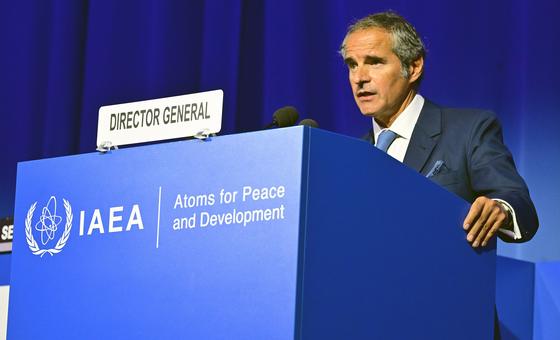
He stressed that their support for the non-proliferation regime, the Nuclear Non-proliferation Treaty (NPT), and the IAEA, is crucial.

“I urge Member States to recommit to a system that has been one of the most important foundations for international peace, even during the tensest decades of our generation,” he said.

He noted that the conference comes at a time when “acts of terrorism, multiple military conflicts, and the erosion of nuclear norms are all happening against a growing gap between poverty and prosperity.”

Mr. Grossi went on to speak about the ways in which the IAEA is working to stop the spread of nuclear weapons and is putting nuclear science to good use, including for cancer treatment, food security, plastic pollution monitoring, disease detection, and artificial intelligence.

Nuclear safety around the world

Earlier this year, Syria agreed to cooperate with the IAEA, and just last week, the agency reached an agreement with Iran to resume the implementation of nuclear safeguards – technical measures used by the IAEA to ensure that if countries make advancements in nuclear technology, they do so for peaceful purposes.

“When the IAEA confirms the peaceful use of a State’s nuclear material, confidence over nuclear activities is established,” said Mr. Grossi.

Meanwhile, in Ukraine, where nuclear power plants are at risk from conflict, the IAEA has sent over 200 missions and is “present on the ground at all the sites.”

But more challenges remain. The Democratic People’s Republic of Korea (DPRK) continues its nuclear weapons programme, while even countries abiding by the NPT, the landmark international agreement meant to abolish nuclear weapons, are debating adding them.

“Think for a minute about a world where instead of a few, we would have 20 or 25 countries armed with nuclear weapons,” he warned.

Peaceful uses of nuclear science

Three years ago, the IAEA launched its flagship programme, Rays of Hope, becoming a “catalyst for real, substantial progress in cancer care.” Through the initiative, concrete actions have been taken in 40 countries: hospitals have been built, radiotherapy machines procured, and physicists trained.

Additionally, the IAEA’s joint programme with the UN Food and Agriculture Organization (FAO), Atoms4Food, is helping boost food security and reduce the environmental strain arising from agriculture.

“In a world of abundance, 700 million people should not have to go to bed hungry every night,” he said.

Mr. Grossi highlighted more ways in which the agency is benefiting the people and the planet, including through its initiative supporting many countries in addressing plastic pollution and waste, and another on improving global preparedness for diseases.

An optimistic outlook

With powerful tools like artificial intelligence and machine learning, “the future is too exciting to miss.”

Nuclear energy can power artificial intelligence infrastructure, while artificial intelligence can improve nuclear technology. To further explore this mutually beneficial relationship, the IAEA will organise the first ever symposium dedicated to the topic in December this year.

Fusion energy, which has been progressing thanks to public and private capital, is another technological development soon expected to take off.

“Every challenge is an opportunity,” concluded Mr. Grossi. “Peace is not simply the absence of conflict. It is dynamic, hopeful striving that I see in what we do all around the world.”

The 69th IAEA General Conference will take place from 15-19 September in Vienna, Austria, where over 3,000 participants are registered to attend.

Source link

How Local Leadership Powers Indonesia’s Climate Ambitions

Indonesia’s national climate strategy aims to achieve net-zero emissions by 2060. A key component of this strategy is for forests to absorb 140 million tonnes of CO₂ annually, equivalent to taking 30 million cars off the road.

Riau’s contribution to this goal is critical.

The province has historically faced some of the highest rates of deforestation and land degradation, largely due to peatland drainage, fires and rapid land-use conversion to agriculture.

Green for Riau

Launched earlier this year, the Green for Riau initiative is transforming the implementation of forest-based climate solutions to these challenges.

“Economic and climate goals can very much co-exist,” said Abdul Wahid, Governor of Riau. “This is what our programme is about. We are proud to lead the way in showing that local action can deliver global results.”

The new initiative, a collaboration between the Government of Indonesia, the UN Environment Programme (UNEP) and the Food and Agriculture Organization (FAO), with support from the United Kingdom, is already finding local solutions to global problems.

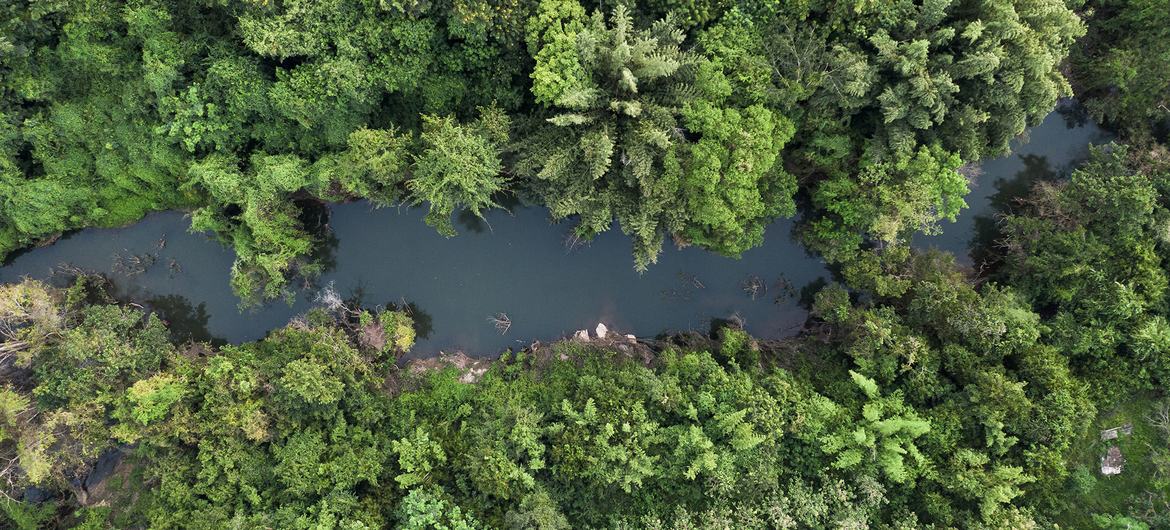
Indonesia is home to vast tropical rainforests.

Local leadership is key

Local leadership is key to achieving the Sustainable Development Goals (SDGs). While national governments pass legislation and set up the policy framework, implementing these policies falls to local authorities who lead the transition to a green economy.

Nearly half of Riau’s seven million residents live in rural areas, many of whom depend on forests for their livelihoods. The initiative supports these communities through sustainable agroforestry, eco-tourism and non-timber forest products, ensuring that conservation efforts go hand-in-hand with economic development.

“By aligning provincial action with national climate goals, Riau is showing how the Sustainable Development Goals can be realised from the ground up,” said Gita Sabharwal, the UN Resident Coordinator for Indonesia, on her return from Riau last month. “This shows how local leadership can drive national and global impact.”

Rewarding emission reductions

At the heart of the transformation is the REDD+ mechanism, which stands for Reducing Emissions from Deforestation and Forest Degradation.

The mechanism supports and rewards measurable emission reductions. Riau, with nearly five million hectares of carbon-rich peatland is poised to become Indonesia’s first province to access REDD+ finance.

The approach is also about marrying technology with consent and customary knowledge. International organizations calculate carbon credits using artificial intelligence (AI) tools, satellite imagery, field verification and carbon forecasting models, in line with global REDD+ guidelines.

AI meets generations of local wisdom

Beyond forest monitoring, AI can generate robust data needed to unlock climate finance, supporting emissions tracking, reporting verification and benefit sharing.

You cannot entirely depend on AI for environmental decision making; it needs to take into account traditional practices developed from observing nature for generations

But, the effectiveness of these new technologies, particularly in environmental decision making, depends on the knowledge included as input.

To be transformative, AI systems must be designed to respect, integrate and learn from customary knowledge systems.

“You cannot entirely depend on AI for environmental decision making,” said Datuk H. Marjohan Yusuf, Chairman of the Council of the Malay Customary Institute of Riau.

“It needs to take into account adat, or local wisdom, traditional practices developed and learned from observing nature for generations.”

During the launch of Green for Riau, customary communities signed a joint declaration, aligning with national legal frameworks and policies that recognise and strengthen the rights and roles of customary communities in forest protection.

This commitment will guide the development of safeguards and the distribution of benefits in accordance with Indonesia’s Social Safeguards Information System in compliance with national and international standards.

“This project is not only protecting forests; it is also empowering communities,” said Marlene Nilsson, Deputy Director of UNEP in Asia-Pacific. “Riau’s leadership is a model for how to drive climate action while supporting livelihoods and biodiversity.”

Green Riau is a joint effort with Indonesia, local leaders and UN agencies to protect forests and advance climate goals.

Model for inclusive climate finance

With UN support and community involvement, new schemes under REDD+ provide incentives to local populations to safeguard rather than exploit forests. This also strengthens land-use governance and sets up financial frameworks to attract both public and private investment into forests. 

The benefits go beyond carbon. Riau is home to iconic and endangered species such as the Sumatran orangutan, tiger and elephant. Protecting these habitats safeguards biodiversity and enhances climate resilience.

The initiative is piloting REDD+ results-based payments at the provincial level, providing a scalable model for inclusive, high-integrity forest finance. This will be done through REDD’s facilitation of mutual recognition arrangements between the government and international carbon crediting programmes.

Forest transition could unlock millions

These efforts could unlock hundreds of millions of dollars annually in carbon finance and develop an investment pipeline, creating a sustainable funding stream for conservation and development.

“Riau is becoming the first Indonesian province to adopt global standards for sustainable forest management,” Ms. Sabharwal said. “This bold step will unlock high-integrity, results-based payments and demonstrates how global standards can translate into sustainable, inclusive growth.”

At the 2025 REDD+ investment roundtable in London, global investors expressed strong interest in supporting Riau’s forest transition, Ms Nilsson said, providing an example for other jurisdictions in Indonesia and beyond.

“The interest from financers signals that climate solutions rooted in local leadership and customary knowledge are not only just, but viable,” she said.

Facing rising risks, landlocked nations launch climate alliance at UN summit

Operating within the UN Framework Convention on Climate Change (UNFCCC), the group aims to amplify their voices in global climate talks, where their distinct vulnerabilities have long been overlooked.

Disproportionate climate risks

Although LLDCs account for approximately 12 per cent of the world’s land surface, they have experienced nearly 20 per cent of the world’s droughts and landslides over the past decade – underscoring their disproportionate exposure to climate-related disasters.

Lacking access to the sea, these countries rely heavily on neighboring transit states, which further increases their vulnerability to climate-induced disruptions.

The Awaza Programme of Action is not the first global framework to address the development needs of LLDCs, but for the first time, such an action plan includes a strong focus on adaptation to climate-related disasters.

A call for resilience and preparedness

Natalia Alonso Cano, Chief of the UN Office for Disaster Risk Reduction (UNDRR) Regional Office for Europe and Central Asia, emphasized this in an interview with UN News.

LLDCs, she said, face overlapping risks: over half of their territory is classified as dryland; many are in mountainous regions; and some sit in seismically active zones.

“Landlocked countries in general, they suffer about three times the economic losses compared to the global average,” she said. “Also, the mortality rates [when disasters strike these countries] much higher than the global average. Such big difference explained by a combination of this vulnerability, but also a combination of exacerbating impacts.”

Limited capacity, growing challenges

Landlocked developing countries often struggle to respond to climate challenges due to limited financial capacity, dependence on undiversified, commodity-based economies, and weak governance. In 2024, one-third of LLDCs were either in conflict or considered unstable.

The new 10-year UN action plan aims to support LLDCs in climate adaptation, sustainable development, and disaster risk reduction.

“We know that early warning saves lives. It’s a fact,” Ms. Alonso Cano explained. “When you can communicate to the communities affected that something is going to happen and they need to prepare – to evacuate, for example – they need to do certain things. If they know what they need to do, that’s part of the early warning system. Obviously, it saves lives, and it saves livelihoods as well.”

She gave an example of drought preparedness: “If there [is] a systemic drought in an area, you work in the preparedness with the communities, they can, for example, take certain measures, reduce maybe the amount of cattle in the case of that, they can congregate towards points of water, etc. There are a number of measures to address that.”

Ms. Alonso Cano stressed the need for long-term planning: “We need to take into account what is going to happen in 10, 20, 30 years. And climate change will become more extreme – we know this for sure.”

Women and girls at the forefront

Within LLDCs, women and girls are particularly at risk, making gender a key concern at Thursday’s events at LLDC3 in Awaza. One highlight was a Women Leaders’ Forum, opened by UN Under Secretary-General Rabab Fatima, who emphasized that sustainable development cannot be achieved without the full participation of women and girls.

Ms. Fatima, the High Representative for the Least Developed Countries, Landlocked Developing Countries and Small Island Developing States, noted progress over the last 25 years: women now occupy one-third of parliamentary seats in LLDCs, compared to just 7.8 per cent in 2000.

“This is higher than the global average,” she said, adding that 11 of the world’s 54 female speakers of parliament come from LLDCs.

Persistent gender gaps

Yet challenges remain. “Progress is uneven and far too slow. One in four women in LLDCs live in extreme poverty – that is nearly 75 million women; and nearly half – about 150 million – face food insecurity.”

Employment statistics show wide gender disparities. While 80 per cent of women in LLDCs work informally, without contracts or protections, the global average is 56 percent. One in three girls in LLDCs marries early – nearly twice the global rate – and only one in three completes secondary education. In addition, just 36 per cent of women in these countries have access to the internet.

“That is why gender-responsive industrial and development policies are so important,” Ms. Fatima stressed. “These policies must be tailored to national contexts, and industrial development in rural areas, business support, formalization of employment, and strengthened partnerships must be priorities.”

Digital inclusion for women and girls

She also called for improved internet access and education for women and girls.

The International Telecommunication Union (ITU), a UN specialized agency, is addressing these challenges.

Dr. Cosmas Luckysin Zavazava, Director of the ITU Telecommunication Development Bureau, told UN News that while some regions such as the CIS have achieved gender parity in internet access, LLDCs still face major barriers.

“That’s why we’ve developed special programmes for women and girls in this region,” he said. “It’s not just about access, but also about building coding skills and introducing girls to fields like robotics. Our programmes aim to motivate young women and girls to pursue careers in STEM sectors.”

Turning point for action

As the Awaza conference nears its conclusion, participants are expected on Friday to reaffirm their political commitment to the Awaza Programme of Action, which was adopted by the UN General Assembly in 2024.

The time has come for implementation – or as High Representative Rabab Fatima put it, “Let this forum be a turning point.

Source link

Pollution, melting microbes, undamming rivers, risks for elders: 4 key climate issues

From ancient microbes awakening in melting glaciers to toxic pollutants unleashed by floods, the dangers are no longer distant or theoretical. They are here, and they are growing.

The Frontiers Report 2025, released by the UN Environment Programme (UNEP), highlights four critical areas where environmental degradation intersects with human vulnerability: legacy pollution, melting glacier microbes, undamming rivers and climate risks for an ageing population that is growing.

The report paints a vivid picture of how climate change is not only altering ecosystems but also exposing communities – especially the most vulnerable – to new and intensifying dangers. Some issues may be local or relatively small-scale issues today, but have the potential to become issues of regional or global concern if not addressed early, the report warned.

UNEP Executive Director Inger Andersen said action must be taken “to protect people, nature and economies from threats that will only grow with each passing year”.

Here’s what’s at stake and why it matters to all of us:

UN Nepal/Narendra Shrestha

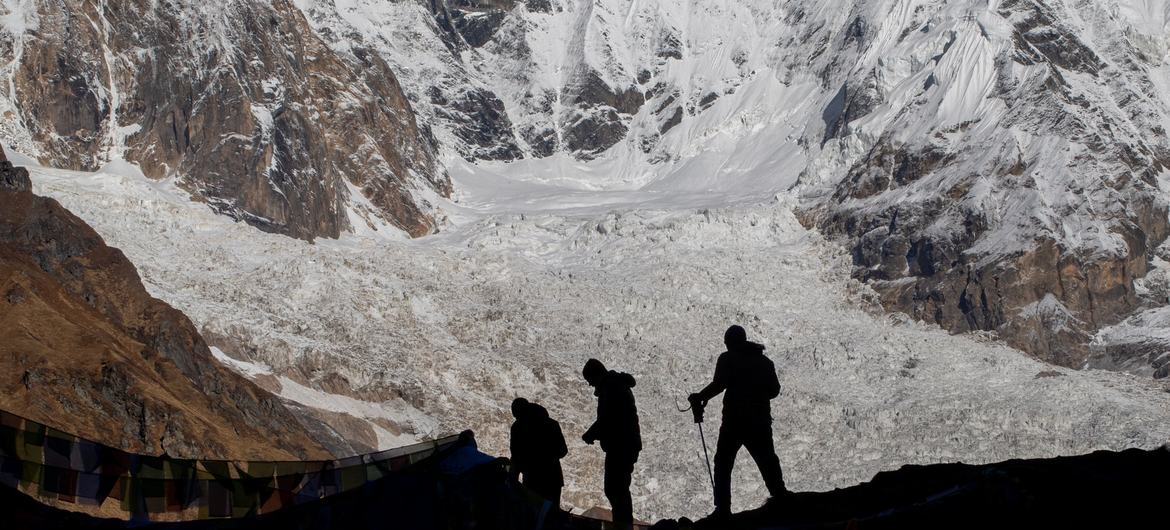
UN Secretary-General António Guterres visits the Annapurna base camp in Nepal in 2023. (file)

Melting glacier microbes

Climate scientists are saying many glaciers will not survive this century unless action is taking to slow the melting rate caused by climate change. That means those living downstream will face a tide of floods alongside threats posed by reactivated microbes in a warming cryosphere or frozen parts of the Earth.

Frozen in ice sheets, glaciers and permafrost are bacteria, fungi and viruses. While most are dead, some are dormant and some are active. As global temperatures hit record highs, these microorganisms will become more active in many ecosystems. Even if the melting can be slowed down by mitigating greenhouse gas emissions, efforts must assess and prepare for possible threats from potential pathogens.

Also crucial is documenting and preserving cryospheric microorganisms, which can shed light on the history of climate and evolution, help in finding therapies for diseases and develop innovative biotechnologies.

© UNICEF/Felipe Chic Jiménez

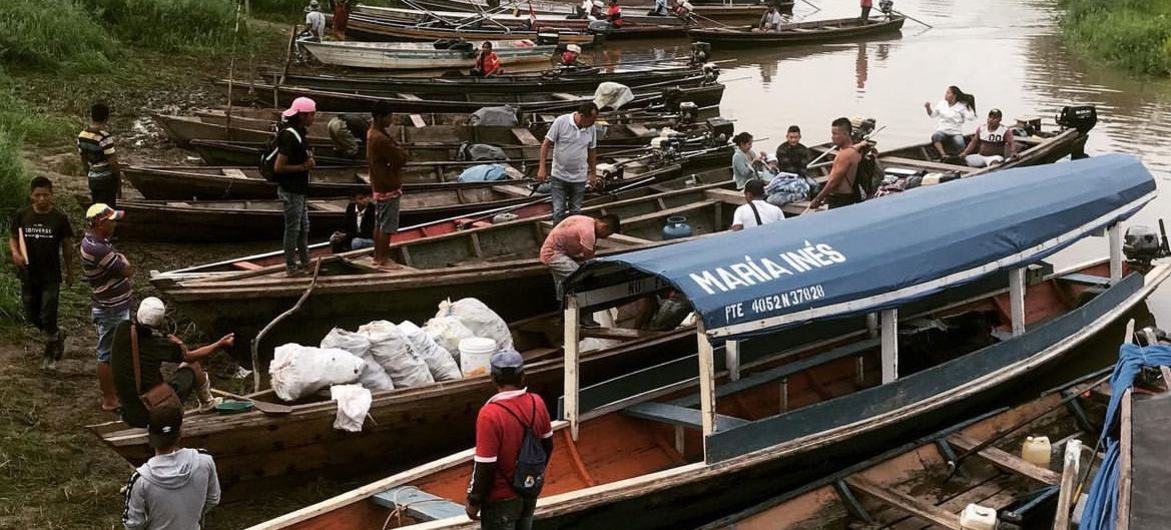
Indigenous communities in the Amazonía region in southern Colombia. (file)

Dismantling dams

In the Colombian Amazon, river water levels have dropped by up to 80 per cent, restricting access to drinking water and food supplies, leading to shuttering 130 schools, increasing children’s risk of recruitment, use and exploitation by non-State armed groups and resulting in increased respiratory infections, diarrhoeal diseases, malaria and acute malnutrition among youngsters under age five.

Part of what is making the problem worse in Colombia and other hot spots around the world are the plethora of dams operating at a time when climate change is triggering droughts around the world. Drought is keeping more than 420,000 children out of school in Brazil, Colombia and Peru alone, according to a report by the UN Children’s Fund (UNICEF).

As such, there is a growing need to remove dams and other barriers to rehabilitate river ecosystems, a process increasingly initiated by local communities, Indigenous Peoples, women and youth. Rivers and streams can recover remarkably once barriers are gone, but other stressors, from pollution to climate change, need to be addressed in parallel. Understanding the restoration outcomes of barrier removal is necessary not only to guide future removals, but also to inform decisions about existing and future barriers.

Elderly people suffer disproportionately from climate change consequences.

Climate risks for the elderly

Older people face increased risks during extreme weather and suffer more from ongoing environmental degradation. As the World Meteorological Organization (WMO) predicts ever more hot weather, the elderly are suffering disproportionately, as seen in rising numbers of deaths and illnesses amid recent heat waves around the world.

At the same time, the world’s ageing population is growing: the global share of people over 65 years old will rise from 10 per cent in 2024 to 16 per cent by 2050. Most of them will live in cities, where they will be exposed to extreme heat and air pollution and experience more frequent disasters.

Older people are already more at risk, so effective adaptation strategies will need to evolve to protect these older populations.

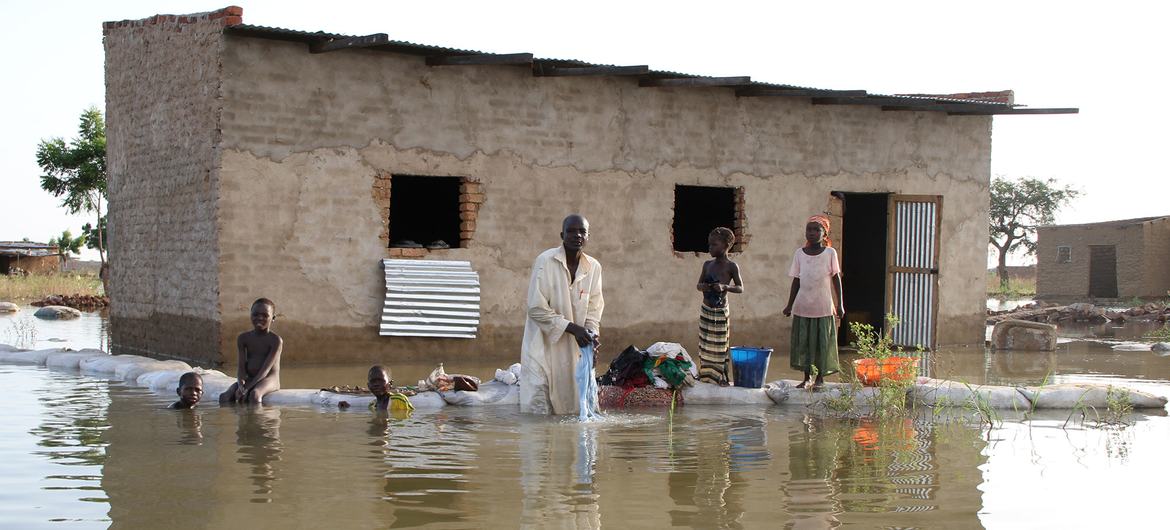
A family outside their flood damaged home in N’Djamena, Chad. (file)

Legacy pollutants

Flooding has crippled communities in all regions of the world as the number of extreme weather events climb. Among the hidden dangers are legacy pollutants that have been secreted into the ground over time and released as extreme rainfall and floods wash away sediments and debris.

The Pakistan floods of 2010, flooding in the Niger Delta in 2012 and Hurricane Harvey off the coast of Texas in 2017 are all examples when floodwaters stirred up sediments, releasing heavy metals and persistent organic pollutants.

Evaluating sediments to understand hazards, rethinking flood protection to lean on nature-based solutions and investments in natural remediation of contaminated sediments are all options to deal with this problem.

Read the full Frontiers Report here.

Indian-British Scientist’s Exoplanet Discoveries Stir Hope On Alien Life

The vast cosmos has always been a source of intrigue, with the quest for life beyond Earth spanning decades. The recent revelation of potential biosignatures on the exoplanet K2-18b has sent ripples through the astronomical community. This has prompted a retrospective look at the past decade of discoveries that have revolutionized our understanding of planetary habitability.

The journey began with NASA’s Kepler mission, which opened the floodgates to the discovery of thousands of exoplanets, planets beyond our solar system. Among these, a select few have been found within the coveted habitable zone, a region around a star where conditions could potentially support liquid water, a key ingredient for life as we know it.

One of the earliest and most celebrated discoveries was Kepler-186f, a rocky planet approximately 500 light-years away from Earth. Similar in size to our home planet and orbiting within its star’s habitable zone, the discovery of Kepler-186f in 2014 marked a significant milestone in the search for Earth-like planets.

New Discoveries

In 2017, the discovery of a system of seven Earth-sized planets orbiting a dim red dwarf named TRAPPIST-1 further piqued the interest of the scientific community. Three of these planets, named e, f, and g, were found within the habitable zone. Their size and proximity to each other made them ideal candidates for atmospheric analysis. However, subsequent studies raised concerns about the extreme stellar flares of their host star, which could potentially strip away their atmospheres, casting a shadow over their habitability.

Closer to home, the discovery of Proxima b in 2016, a mere 4.2 light-years away, sparked global interest. Slightly larger than Earth and orbiting within a potentially temperate zone, Proxima b seemed a promising candidate for life. However, its parent star, Proxima Centauri, is known for its volatility, raising doubts about the planet’s long-term habitability.

In recent years, LHS 1140 b, a dense, rocky planet 40 light-years away, has emerged as a strong contender in the search for extraterrestrial life. With a stable orbit and early indications of an atmosphere, it is a prime target for upcoming investigations by the James Webb Space Telescope (JWST).

The Spotlight on K2-18b

Adding to the growing list of potential life-supporting planets is TOI 700 d, confirmed in 2020 by NASA’s TESS observatory. Receiving nearly the same amount of light as Earth and orbiting a quiet red dwarf, it raises hopes for a relatively undisturbed environment. However, atmospheric data remains elusive, leaving its habitability status uncertain.

The current spotlight, however, is on K2-18b, a sub-Neptune-sized planet first identified in 2015. Located 124 light-years away, the planet has shown signs of water vapor, methane, and carbon dioxide. In 2023, astronomer Nikku Madhusudhan and his team reported faint traces of dimethyl sulfide (DMS), a molecule produced on Earth only by life. New observations in 2025 using a different JWST instrument strengthened the case for DMS and a related compound, dimethyl disulfide (DMDS).

Despite these promising findings, experts urge caution. Dr. Ryan MacDonald of the University of Michigan stated, “These new JWST observations do not offer convincing evidence that DMS or DMDS are present.” Others, like NASA’s Nicholas Wogan, have acknowledged the improved data but stress the need for independent verification.

The consensus among scientists is that while these planets show potential, confirming life—or even just conditions for it—remains an immense challenge. The “five-sigma” statistical confidence required to claim a discovery in physics is still a long way off for most of these detections.

As we continue to explore the cosmos, we are reminded of the words of Dr. Thomas Beatty of the University of Wisconsin-Madison, who encapsulated the current state of affairs, saying, “Right now, we’re seeing a lot of ‘maybes.’” He added, “But even a maybe is remarkable, considering how far we’ve come.”

The search for extraterrestrial life has transformed our place in the cosmos—from passive observers to active explorers of worlds that, not so long ago, existed only in science fiction. As technology advances and instruments like JWST continue to refine their vision, the quest continues, reminding us of the vastness of the universe and the potential it holds.

NASA’s Curiosity rover unearths largest organic molecules ever detected on Mars

In a stunning new development, NASA scientists have confirmed that the Curiosity rover has discovered the largest organic molecules ever found on the Martian surface. The groundbreaking analysis of an existing rock sample, “Cumberland,” within Curiosity’s onboard lab revealed the presence of decane, undecane, and dodecane – compounds with 10, 11, and 12 carbon atoms respectively.

These molecules are believed to be fragments of preserved fatty acids, key building blocks of life as we know it on Earth. While non-biological origins are possible, the size of these newly detected molecules significantly boosts the potential for the preservation of complex biosignatures on the red planet.

This discovery builds upon years of tantalizing findings by Curiosity, including the detection of smaller organic molecules, organic salts, and the measurement of total organic carbon comparable to Earth’s most extreme environments. The new data suggests that larger, more complex organic compounds could have survived for billions of years despite harsh Martian conditions.

The network of cracks in this Martian rock slab called “Old Soaker” may have formed from the drying of a mud layer more than 3 billion years ago. The view spans about 3 feet (90 centimeters) left-to-right and combines three images taken by the MAHLI camera on the arm of NASA’s Curiosity Mars rover.
Credits: NASA/JPL-Caltech/MSSS

Lead author Caroline Freissinet emphasized the significance, stating, “Our study proves that, even today, by analyzing Mars samples, we could detect chemical signatures of past life—if it ever existed on Mars.”

Scientists are particularly intrigued by the carbon chain length of the presumed fatty acids (11-13 carbons), as non-biological processes typically yield shorter chains. This raises the exciting possibility of longer-chain fatty acids, often associated with biological activity, being present.

While the exact origin of these molecules remains under investigation, this major breakthrough reinforces the critical need for Mars Sample Return missions to conduct in-depth analysis with advanced Earth-based instruments.

“We are ready to take the next big step and bring Mars samples home to our labs to settle the debate about life on Mars,” declared Dr. Daniel Glavin.

This latest discovery marks a significant leap in our understanding of Martian organic chemistry and further fuels the compelling narrative that Mars may have once harbored the conditions necessary for life. The search for evidence of past life on the red planet has just intensified.