Port Sudan: No let-up in drone attacks as UN chief urges peace

The UN chief warned that any further escalation of the conflict could result in massive civilian casualties and worsen the already catastrophic humanitarian situation across the country.

The expansion of the conflict into an area that has served as a place of refuge for a large number of displaced people is alarming,” he said in a statement issued by his Spokesperson’s office.

Mr. Guterres’s appeal follows days of drone strikes on key infrastructure in Port Sudan that have opened a new front in the fighting between forces of the military government and heavily armed paramilitaries.

The city is a main entry point for relief supplies, hosting airports and direct access to the Red Sea. It is also a shelter for hundreds of thousands of displaced people and the seat of government after generals lost control of the capital Khartoum to the Rapid Support Forces (RSF).

Aid flights suspended

In response to the drone attacks, flights of the UN Humanitarian Air Service (UNHAS) to and from Port Sudan have been suspended since 4 May.

The UN World Food Programme (WFP) which manages the airline said that operations will resume as soon as conditions allow. For the moment, amid reported gun and weapons fire overnight, the insecurity has impacted the movement of aid workers into Sudan and across the country.

A country in flux

Drone strikes have also been reported elsewhere in Sudan, including the states of Kassala and River Nile. In Kassala, strikes near the airport displaced about 2,900 people and led to the temporary suspension or relocation of some aid activities, according to the UN aid coordination office, OCHA.

As of Wednesday evening, River Nile State was still without power following a drone strike on the transformer station in Atbara on 25 April. The outage has contributed to growing fuel and bread shortages and long queues at petrol stations and bakeries.

The situation remains dire across Sudan, the UN chief continued, citing intense attacks on critical infrastructure since January that have hampered people’s access to essential services and left them without food, clean water, healthcare and electricity.

“All parties to the conflict must comply with their obligations under international humanitarian law,” Mr. Guterres insisted. “They must not direct attacks against civilians and civilian objects; must take all feasible precautions to avoid, and in any event to minimize, incidental civilian casualties; and must allow and facilitate rapid and unimpeded passage of humanitarian relief for civilians in need.”

Sudan’s war stems from the breakdown in the transition to civilian rule following the overthrow in April 2019 of Omar al-Bashir, who had been president for 30 years.

Mr. Guterres decried a “lack of political will” by the warring parties to engage in constructive dialogue as they pursued their military goals.

“Dialogue is the only way to achieve the peace that the people of Sudan demand,” the Secretary-General insisted.

A hunger catastrophe

The turmoil caused by relentless heavy fighting across Sudan has reportedly killed more than 18,800 civilians and injured tens of thousands more. UN aid agencies say that the country’s people are in the grip of the largest hunger catastrophe on the planet.

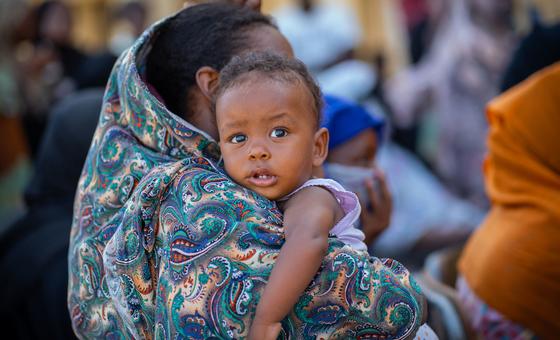
Today, more than half of Sudan’s population – 30.4 million people – need humanitarian assistance, including more than 15 million children. They lack access to food, water, shelter, electricity, education and healthcare, aid veterans have warned repeatedly.

“Across Sudan, 25 million people face acute hunger,” WFP spokesperson Leni Kinzli told UN News. “And people are displaced across the country, nearly 13 million people forced from their homes. We are seeing waves of displacement in North Darfur, where around 450,000 people have fled horrific levels of violence.

Reaching those in need

Despite the dangers, UN agencies and partners are doing everything they can to reach the most vulnerable uprooted by intensifying attacks on government-controlled El Fasher town and Zamzam displacement camp.

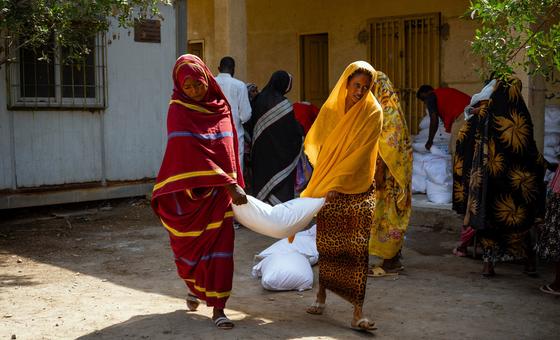
“We’ve distributed assistance food assistance and emergency food packages to 335,000 people who recently fled that violence in and around El Fasher,” Ms. Kinzli explained. “We are also ramping up assistance in Khartoum, aiming to support one million people across the coming month.”

Distributions are ongoing in Jabalia, in the South of Khartoum, which is one of the risk of famine areas, as well as the central Khartoum neighbourhood of Burri, “where we finally reached the centre of the city…just last week”, the WFP officer noted.

To reach 21 million people in desperate need this year the UN needs $4.2 billion which is only seven per cent funded.

And over the next six months, WFP requires around $700 million to ramp up assistance and expand assistance to seven million people per month. 
Source link

Port Sudan: Aid officials call for greater protection as drone attacks continue

The escalation is occurring as war grinds on between the Sudanese Armed Forces (SAF) and the paramilitary Rapid Support Forces (RSF), who appear to be targeting airports in each other’s areas of control.

“Very concerned by ongoing drone strikes on Port Sudan,” UN Emergency Relief Coordinator Tom Fletcher tweeted on Wednesday. 

“International humanitarian law must be respected. Constant care must be taken to spare civilians and civilian infrastructure.”

Suffering will worsen

The latest strikes in Port Sudan took place early on Tuesday morning, reportedly targeting the international airport and other infrastructure, including a fuel storage facility and a power transformer. 

The UN Resident and Humanitarian Coordinator in Sudan, Clementine Nkweta-Salami, issued a statement that day, saying the attacks “will deepen humanitarian suffering and needs, as well as exacerbate the already severe access and logistical challenges that humanitarian actors face in the delivery of urgently needed aid to the rest of the country.” 

She underlined that the airport is a “lifeline for humanitarian operations” as it is the primary entry point for aid personnel, medical supplies and other life-saving relief. 

“Moreover, the availability of fuel in Port Sudan is critical to the dispatch of humanitarian supplies to areas across Sudan in dire need of assistance,” she added.

She stressed that damage to critical infrastructure could also disrupt supply chains and increase the price of basic goods, thus worsening what is already the world’s largest humanitarian crisis.

Displacement and aid suspension

Drone attacks have also affected Kassala and River Nile states, according to the UN humanitarian affairs office OCHA.

Earlier this week, strikes near the airport in Kassala displaced about 2,900 people and led to the temporary suspension or relocation of some aid activities.

Meanwhile, River Nile state is still facing a power blackout following a drone strike on the transformer station in Atbara on 25 April. The outage is contributing to growing fuel and bread shortages and long lines at gas stations and bakeries.

Cease hostilities now

Ms. Nkweta-Salami noted that since January, attacks on infrastructure across Sudan, such as power stations, water sub-stations, and oil refineries, have caused widespread electricity outages and disrupted access to essential services, including safe drinking water, healthcare and food supplies. 

These are serious violations of international humanitarian law and “reflect a consistent failure to comply with the principles of distinction, proportionality and precaution,” she said. 

“Every measure must be taken to spare civilians and civilian objects,” she said. “Once again, I call on all those involved in this conflict to cease hostilities.”

Source link

World News in Brief: Deadly attacks in South Sudan and Ukraine, World Court rejects Sudan case, lifesaving aid in Yemen

According to the UN relief coordination office (OCHA), the hospital in Old Fangak was struck early Saturday, killing seven civilians and injuring at least 20 more. The attack also destroyed vital supplies and forced the withdrawal of aid workers, leaving the town’s population without access to critical care.

“People in these areas are already battling flooding, food shortages and disease,” said Marie-Helene Verney, the UN’s acting Humanitarian Coordinator in South Sudan.

Too many lives at risk

“The destruction of critical health infrastructure and continued fighting puts innocent South Sudanese lives at risk.”

The bombing follows a wave of similar attacks in Upper Nile state, where health facilities in Ulang and Nasir have been targeted in recent months. The latest strike has heightened fears of renewed conflict as political and ethnic tensions rise nationwide.

The UN is now airlifting essential supplies to the area, but access remains limited. The violence has displaced over 130,000 people in the past two months, and aid agencies warn that South Sudan’s broader $1.7 billion humanitarian plan remains only 16 per cent funded.

Large scale attacks on densely populated cities across Ukraine

The UN’s top humanitarian official in Ukraine on Monday condemned a series of Russian strikes this weekend on densely populated towns and cities.

Between Friday and Monday, at least 12 people were killed and more than 100 others injured in attacks thar targeted Kharkiv, Kyiv and Cherkasy, and other regions in Ukraine.

These attacks also damaged homes, schools, a hospital and other civilian infrastructure, according to local authorities and partners, UN Deputy Spokesperson Farhan Haq told journalists in New York.

In the aftermath of the strikes, “humanitarian organizations provided first aid, psychosocial support, emergency shelter kits, repair materials, meals and drinks,” Mr. Haq said.

In the Kharkiv region, a fire triggered by a strike near the city of Izium on Sunday, burned 85 hectares of land and damaged over a dozen buildings. There were no casualties reported, Mr. Haq added.

Meanwhile, UN agencies alongside partners reached 600,000 people so far this year with first aid, medical transport, primary care and mental health support, including at transit centres for displaced people.

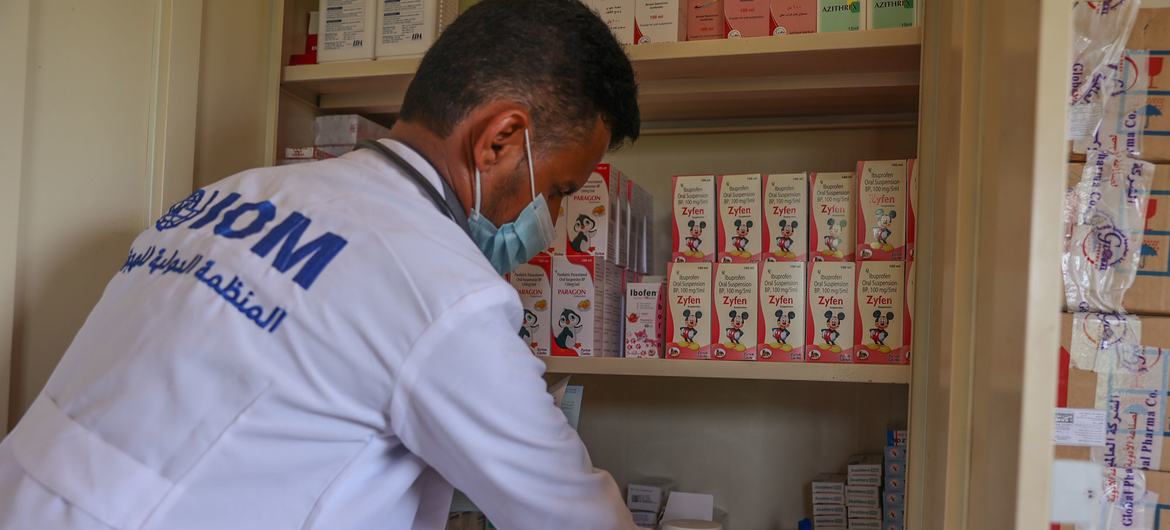
An IOM-supported health worker in Yemen accesses medical supplies.

Yemen: UN delivers lifesaving medical supplies

The UN International Organization for Migration (IOM) on Monday delivered critical medical supplies to seven health facilities in Yemen, where a collapsing health system and chronic shortages continue to endanger millions.

With support from the Government of the United Kingdom, IOM shipments are reaching hospitals and clinics in Aden, Lahj, Shabwah, Al Bayda and Sana’a – facilities serving both migrants and local communities.

“Every day, our teams see the impact of empty medicine shelves and overwhelmed clinics, on families and entire communities,” said Abdusattor Esoev, head of IOM in Yemen.

“By delivering essential supplies and supporting frontline staff, we are not just responding to urgent needs – we are keeping health services running for those who have nowhere else to turn.”

Crisis on crisis

The intervention comes amid an alarming health crisis.

Nearly 20 million people in Yemen require medical assistance in 2025, but over half of the country’s health facilities are only partially functioning or have shut down altogether. Funding gaps have left 382 facilities unsupported, forcing many to close or drastically cut services.

IOM’s assistance includes essential medicines, surgical equipment and infection prevention tools, as well as infrastructure repairs and support for health workers.

For many in the strife-torn country, IOM-supported clinics remain the only source of free medical care.

ICJ rejects Sudan’s genocide case against UAE

The International Court of Justice (ICJ) has rejected Sudan’s case accusing the United Arab Emirates (UAE) of complicity in genocide in Darfur, citing a lack of jurisdiction.

In the decision, the UN’s top judicial body ruled on Monday by a vote of 14 to two that it could not proceed with the case brought by Sudan under the Convention on the Prevention and Punishment of the Crime of Genocide (Genocide Convention) and declined to impose any provisional measures, as Sudan had requested.

The Court also removed the case from its general list by a vote of nine to seven.

“Having come to the conclusion that it manifestly lacks jurisdiction, the Court is precluded from taking any position on the merits of the claims made by Sudan,” the ruling stated.

Complicity charge

Sudan had accused the UAE of backing the paramilitary Rapid Support Forces (RSF), alleging its support amounted to complicity in genocidal acts against the non-Arab Masalit population in West Darfur.

The conflict between the RSF and the Sudanese army has claimed thousands of lives and displaced over 12.7 million people since April 2023.

The Court noted that while it could not hear the case, all States remain bound by their obligations under the Genocide Convention.

Source link

Sudan drone attacks raise fears for civilian safety and aid efforts

These attacks appear to be the latest in a series of retaliatory military operations, conducted by the Rapid Support Forces and the Sudanese Armed Forces, targeting airports in each other’s areas of control,” UN Deputy Spokesperson Farhan Haq told reporters in New York on Monday.

The fighting between troops of the military Government and former allies-turned-rivals for power, the RSF, began in April 2023. The war has devastated much of the country, killing thousands and displacing over 8.6 million people, according to UN agencies.

As conflict rages in Khartoum, Darfur, and other areas, Port Sudan on the Red Sea coast has remained a relative safe haven and a key hub for UN and international relief efforts.

Multiple drone strikes

The RSF carried out drone attacks on a military base and other targets on Sunday near the airport – and on Monday, there was a second series of attacks targeting fuel depots in the eastern part of Port Sudan, according to latest news reports.

© UNICEF/Ahmed Mohamdeen Elfatih

Mothers tend to their children suffering from severe acute malnutrition at a hospital in Port Sudan.

The RSF has not so far claimed responsibility for Monday’s strikes which left fuel storage facilities ablaze in what the army characterised as an attack on civilian infrastructure.

The Secretary-General is “concerned with the recent reports of drone attacks on military and civilian infrastructure” in the area, which until now had largely been spared from the devastation of the year-long war.

Call for urgent dialogue

Mr. Haq stressed that the attack on Port Sudan was a “worrying development threatening the protection of civilians and humanitarian operations” in the city, which has become a lifeline for humanitarian aid across the country.

The Secretary-General “renews his call for urgent dialogue between the warring parties towards an immediate cessation of hostilities and an inclusive political process,” Mr. Haq said. “This is essential to prevent further escalation, protect civilians, and put Sudan back on a path towards peace and stability.”

On the humanitarian front, the UN’s aid coordination office OCHA said the drone strikes have not directly affected its operations in Port Sudan.

UN aid operations continuing

“None of our offices, premises or warehouses have been impacted, and we continue to carry out our regular operations,” Mr. Haq confirmed.

However, he added that the situation is being closely monitored, and that UN Humanitarian Air Service flights in and out of the city have been temporarily paused.

Beyond Port Sudan, recent strikes on power stations across Sudan have disrupted electricity and clean water supplies – worsening conditions for displaced families and returnees.

We call on all parties to this conflict to ensure that civilians and civilian infrastructure are not targeted,” the Deputy Spokesperson said. “Wars have rules, and international humanitarian law must be respected.”

© UNICEF/Ahmed Mohamdeen Elfatih

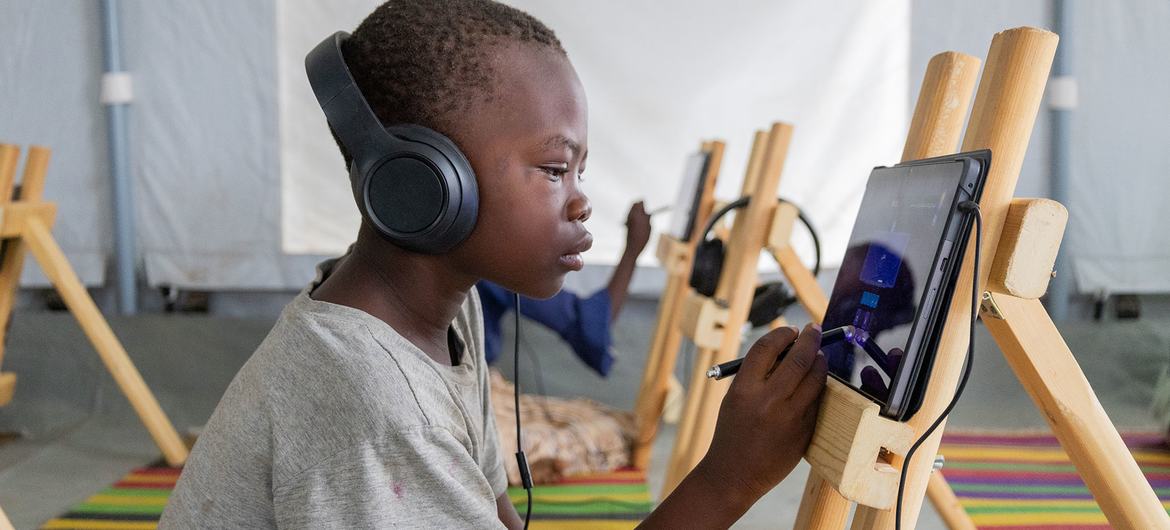
Children participate in an e-learning session at the Al Seniyaa internally displaced people’s gathering site in Port Sudan.

Sudan: UN rights chief appeals for greater protection of civilians in besieged El Fasher

The horror unfolding in Sudan knows no bounds,” Volker Türk said in a statement calling for an end to the war between the Sudanese Armed Forces (SAF) and former ally the Rapid Support Forces (RSF), now in its third year.

He noted that three days ago, the RSF launched coordinated attacks from multiple directions on the North Darfur capital El Fasher and nearby Abu Shouk camp, killing at least 40 civilians.

Fear of more bloodshed

This brings the confirmed number of civilians killed in the region to at least 542 in just the last three weeks, he said, although the actual death toll is likely much higher.

“My fears are all the greater given the ominous warning by the RSF of ‘bloodshed’ ahead of imminent battles with the Sudanese Armed Forces (SAF) and their associated armed movements,” Mr. Türk said.

“Everything must be done to protect civilians trapped amid dire conditions in and around El Fasher.”

Stop the fighting

Furthermore, reports of extrajudicial executions in Khartoum state are also extremely disturbing, he added.

The High Commissioner said he has personally alerted both leaders of the RSF and SAF to the catastrophic human rights consequences of the war. 

These harrowing consequences are a daily, lived reality for millions of Sudanese. It is well past time for this conflict to stop,” he said.

Diplomatic efforts continue

Meanwhile, the UN Secretary-General’s Personal Envoy for Sudan, Ramtane Lamamra, was in Cairo this week where he met with senior Egyptian officials, including Foreign Minister Badr Abdelatty, to discuss the Sudan crisis. 

They shared the view that an inclusive Sudanese-led political path is needed to restore peace in the country, preserving the unity of Sudan, its sovereignty and territorial integrity,” said UN Spokesperson Stéphane Dujarric, speaking on Thursday in New York.

Mr. Lamamra also exchanged views with Ahmed Aboul Gheit, the Secretary General of the League of Arab States, on coordinating efforts between the UN, the Arab League and concerned multilateral organizations to advance a lasting peace in Sudan.  


Source link

UN alert over deepening crisis in Sudan as famine spreads and violence escalates

In a statement issued by his Spokesperson on Wednesday, UN Secretary-General António Guterres said he was “appalled” by the deteriorating situation in North Darfur, where the regional capital, El Fasher, is under intense and sustained attack.

The onslaught comes just two weeks after deadly assaults on the nearby Zamzam and Abu Shouk displacement camps, where hundreds of civilians, including humanitarian workers, were reportedly killed.

Mass displacement

More than 400,000 people have fled Zamzam camp alone, with the majority now seeking safety in Tawila, west of El Fasher.

There are also increasing reports of harassment, intimidation and arbitrary detention of displaced people at checkpoints, adding to the already dire humanitarian emergency.

“With the conflict now in its third year and increasingly destabilizing the broader region, the Secretary-General reiterates his call for the facilitation of safe and unhindered humanitarian access to all areas of need by all necessary routes,” UN Spokesperson Stéphane Dujarric said.

He also called for the protection of civilians, in line with the warring parties’ clear obligations under international humanitarian law.

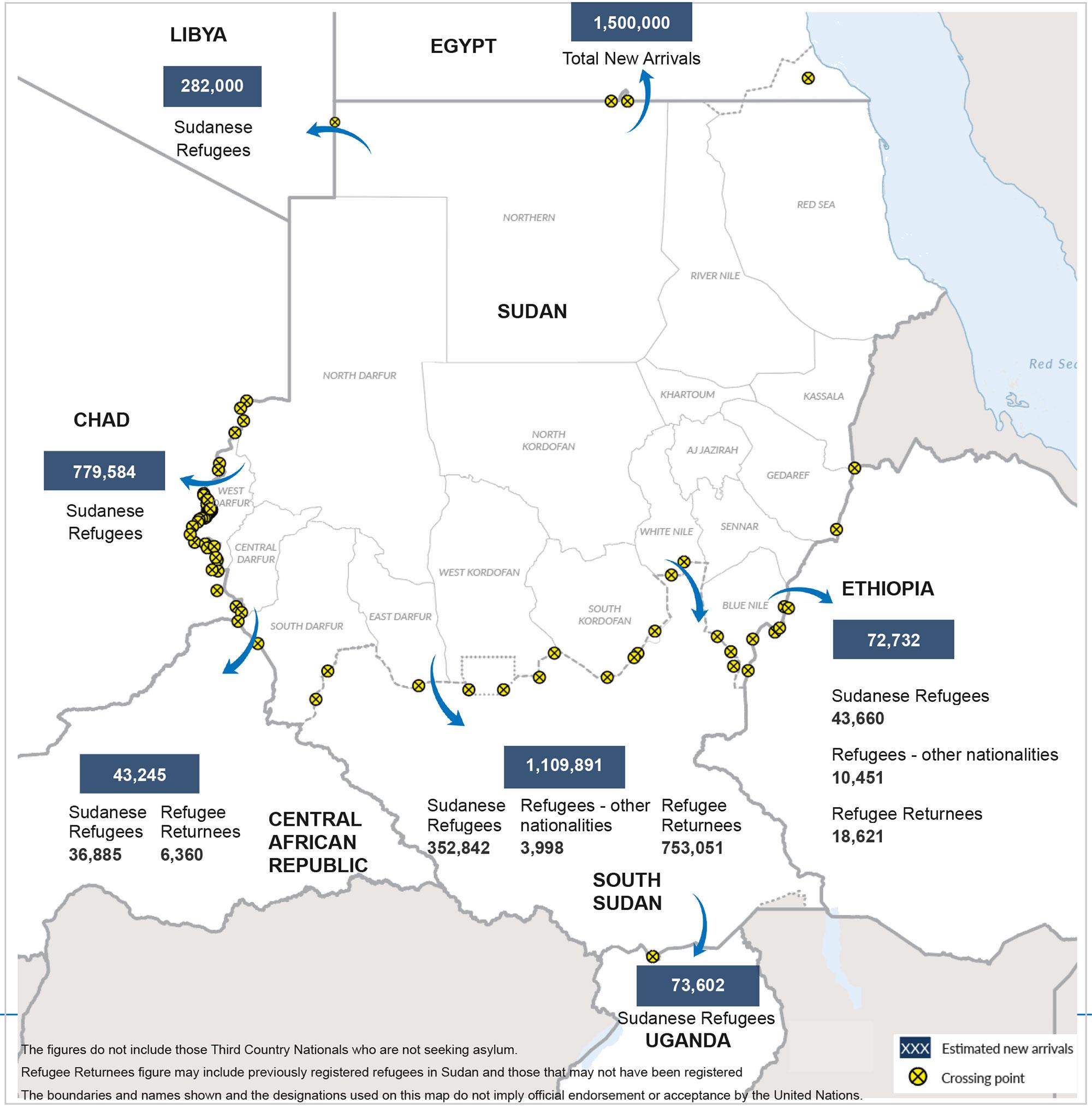
Refugee movements from Sudan.

Accountability is paramount

Perpetrators of serious violations must be held accountable,” Mr. Dujarric stressed.

The civil war between rival militaries – the national Sudanese Armed Forces (SAF) and the paramilitary Rapid Support Forces (RSF) and allied militias – has claimed tens of thousands of lives and driven more than 12.7 million people from their homes, including nearly four million as refugees in neighbouring countries.

Violence and insecurity has also sparked a catastrophic hunger crisis, with over half the population suffering acute food insecurity and famine conditions confirmed in various regions, leaving millions at risk of starvation.

Emergency response underway in Tawila

Despite the escalating violence and dwindling funds, humanitarian agencies continue their efforts to deliver lifesaving aid.

The UN relief coordination office, OCHA, reported on Wednesday that an inter-agency convoy led by UN Deputy Humanitarian Coordinator Antoine Gérard crossed into Darfur from Chad earlier this week via the Adré border, en route to Tawila.

The convoy is transporting critical supplies including nutrition and medical items, dignity kits, and other essential goods.

Food and nutrition assistance for approximately 220,000 people has already reached Tawila, with the UN World Food Programme (WFP) confirming that distributions began this week and are already 20 per cent complete.

Additional convoys are in motion, including one expected to depart Chad on Wednesday with 19 trucks of nutrition supplies.

Aid reaches capital Khartoum

WFP has begun the first food distributions in the centre of the capital Khartoum since the conflict erupted two years ago.

Deliveries of 70 metric tonnes of food to the Burri neighbourhood are set to begin on Thursday, attempting to reach nearly 8,000 people.

Aid distributions have also started in Alazhari, one of the areas at high risk of famine, where 20,000 people are receiving assistance.

Despite these efforts, WFP warned that the impending rainy season and severe funding shortfalls could undermine recent progress.

The agency, which assists about four million people monthly, aims to expand coverage to seven million – but that still represents only a fraction of those in need.

Source link

Sudan situation ‘absolutely devastating’ as UN ramps up food aid

Speaking in Port Sudan after a visit to Khartoum, Samantha Chattaraj, Emergency Coordinator for the UN’s World Food Programme (WFP) in Sudan, said that “vast parts of the city are destroyed. Levels of hunger and desperation are extremely high,” but she added “people remain hopeful.”

Sudan is currently the only country in the world where famine has been officially confirmed.

Half of its population is facing extreme hunger, and nearly five million children and breastfeeding mothers are severely malnourished.

Ms. Chattaraj said that in March, WFP was able to reach four million people across Sudan, the highest number since the conflict broke out over two years ago.

“This marked an important step in getting food to people who have been cut off from aid for a long time,” she added.

However, she added that “the need is far greater. With 27 areas either in famine or at high risk, the recent progress still covers only a small part of what’s required to stop the crisis.”

Destruction and hunger

In Darfur, in the west of Sudan, nearly 450,00 people who were already facing famine and horrific levels of violence have been forced to flee from El Fasher and Zamzam camps in the last few weeks, amidst an increase in fighting.

Reports from the ground are shocking,” said Mrs Chattaraj, explaining that WFP is currently mobilising assistance to reach populations wherever they have fled to – across various parts of Darfur and Northern State.

Planning for returnees

Many people are expected to return to Khartoum in the coming months and WFP is working to strengthen its presence in the city and ensure it can deliver food regularly to those coming back.

Together with local authorities, the UN aims to provide emergency food aid to one million people in the greater Khartoum area next month.

Racing against the rain

Ahead of the rainy season set to begin in June, which will leave many routes across Darfur impracticable, WFP only has a few weeks to pre-stock food close to populations in need, Ms. Chattaraj said.

In preparation WFP is setting up mobile warehouses across Darfur to safely store food supplies and keep operations running even during the rains.

Meanwhile, around 100,000 people remain trapped in the besieged city of El Fasher.

WFP is urgently calling for more funding and safe access to areas in need so it can continue its work in what is now the world’s largest humanitarian crisis.

Source link