Gaza: UN warns of ‘weaponised hunger’ and growing death toll amid food chaos

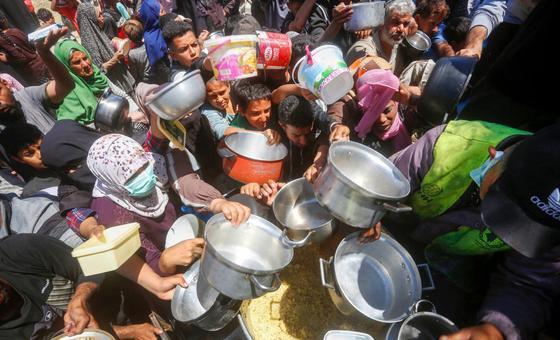
Speaking to journalists in Deir al Balah on Saturday, Jonathan Whittall, who heads the UN humanitarian coordination office (OCHA) in Gaza and the West Bank, said: “The attempt to survive is being met with a death sentence.”

Since Israel eased its total blockade last month, more than 400 people are reported to have died trying to reach food distribution points.

We see a chilling pattern of Israeli forces opening fire on crowds gathering to get food,” Mr. Whittall said, noting many of these sites are in militarised zones. Others have been killed along access routes or while protecting aid convoys.

“It shouldn’t be this way,” he said. “There shouldn’t be a death toll associated with accessing the essentials for life.”

Empty warehouses, overwhelmed hospitals

Conditions across Gaza continue to deteriorate. Water wells have run dry or are located in dangerous areas, sanitation systems have collapsed, and disease is spreading rapidly.

“Our warehouses stand empty,” Mr. Whittall said. “Displaced families flee with nothing – and we have nothing to give them.”

Partially functioning hospitals are overwhelmed by near-daily mass casualty events. Some have been directly hit, while others are choked by fuel shortages and forced evacuation orders.

UNICEF reports more than 110 children are being treated for malnutrition every day. Mr. Whittall said humanitarian agencies are capable of reaching every family in the shattered enclave but are being systematically blocked. “We have a plan…but we are prevented from doing so at every turn.”

Death sentence

He described the situation as “weaponised hunger”, “forced displacement”, and “a death sentence for people just trying to survive”.

“This is carnage,” Mr. Whittall said. “It appears to be the erasure of Palestinian life from Gaza.”

He urged the international community to act: “We need a lasting ceasefire, accountability, and real pressure to stop this. This is the bare minimum.”

World News in Brief: Global investment plunges, hurricane season in Haiti, rising cholera and hunger in South Sudan

Their latest data shows that the outlook for international investment this year “is negative”, a sharp course correction from January, when “modest” growth seemed possible.

The reasons for this range from trade tensions and tariffs whose main effect has been a “dramatic increase in investor uncertainty”, said UNCTAD Secretary-General Rebeca Grynspan.

She said that investment in renewable energy, water and sanitation fell by some 30 per cent and that agriculture saw a 19 per cent drop in investor confidence.

Only the health sector saw an increase of nearly 20 per cent, Ms. Grynspan said, although that only accounts for “less than $15 billion globally”.

‘Very real consequences’

“Behind those numbers are very real consequences. Jobs not created,” she said. “Infrastructure not built, sustainable development delayed. What we see here is not just a downturn. It is a pattern.”

Ms. Grynspan also cited “growing geopolitical tensions” in addition to rising trade barriers around the world as reasons for the fall in global investment for development.

In critical sectors as hi-tech industries and rare earth minerals, governments are also tightening screening measures on proposed foreign investment, the UN agency noted.

Supplies to limit hurricane impact in Haiti critically low

The Humanitarian Country Team in Haiti warned Wednesday that funding and pre-positioned contingency supplies are critically low ahead of what is forecast to be an above-average hurricane season.

Haiti is highly vulnerable to extreme weather, with 96 per cent of the population at risk. Forecasts project 12 to 19 tropical storms and up to five major hurricanes this year.

The alert comes as the fragile island nation grapples with a worsening humanitarian crisis. Armed gangs control much of the country, the collapse of essential services and growing displacement have left 5.7 million people food insecure, 1.3 million displaced and 230,000 living in makeshift shelters ill-equipped to withstand severe weather.

Limited preparations  

Humanitarian actors have pre-positioned limited stocks of essential items, but they are at a record low for a hurricane season posing such high risk.  

For the first time, Haiti will begin the hurricane season without pre-positioned food supplies or the financial resources necessary to initiate a rapid response.  

Meanwhile, UN Humanitarian Office (OCHA) is coordinating missions with UN agencies and partners to assess how to safely resume aid operations in high-need areas, following their suspension on 26 May due to insecurity.

“I am deeply concerned for communities, families, and vulnerable groups who have already been affected by violence and are living in precarious conditions,” said Ulrika Richardson, Humanitarian Coordinator in Haiti, calling for immediate support.

As of mid-June, the $908 million Humanitarian Response Plan for Haiti is just 8 per cent funded.

Worsening cholera and hunger in South Sudan

OCHA raised the alarm on Thursday over rising malnutrition and cholera cases in war-torn South Sudan.

An estimated 2.3 million children under five urgently need treatment for acute malnutrition, a 10 per cent increase since last July.

This crisis is unfolding amid the world’s most severe cholera outbreak this year, with almost 74,000 cases and at least 1,362 deaths reported as of 16 June.  

The start of the rainy season and waning immunity risk a significant surge in infections.

UN response

The 2025 Humanitarian Needs and Response Plan for South Sudan is only 20 per cent funded.

Despite limited resources and many challenges, the UN and partners have scaled up efforts, delivering vaccines and life-saving aid to contain the disease and protect the most vulnerable.

“This dire situation is a stark reminder that we need funding urgently to expand food assistance, to expand nutrition and expand health services to those who need it the most,” said UN Spokesperson Stéphane Dujarric at the daily briefing in New York. 

Source link

Without urgent funding, global hunger hotspots are set to grow, UN warns

But hunger has followed them. Over 57 per cent of the population in the world’s youngest country to the south is already facing high levels of acute food insecurity.

Sudan and South Sudan are among five global hunger hotspots of “highest concern”, trapped in a worsening cycle of conflict, climate shocks and economic decline.

Continued fighting in Sudan, anticipated flooding impacting its southern neighbour and deteriorating economic conditions in both countries are set to intensify hunger in the coming months.

A new report released on Monday by the World Food Programme (WFP) and the Food and Agriculture Organization (FAO) also identified Palestine, Mali and Haiti as the other top-priority hunger hotspots, with a further seven countries likely to see worsening food security over the next five months.

The report, which analyses existing data to project the nature of food insecurity, emphasised that without immediate humanitarian assistance, people living in these hotspots will face severe food conditions and high risks of starvation and death.  

“This report makes it very clear: hunger today is not a distant threat  – it is a daily emergency for millions. We must act now and act together to save lives and safeguard livelihoods,” said FAO Director General QU Dongyu.  

Conflict-driven hunger

The report identified that the main driver of hunger is conflict which is often compounded by climate and economic shocks.  

“There’s an on-going famine in Sudan and also a risk of famine in the case of Gaza. And all of those are driven by conflict and lack of access for humanitarians,” said Jean-Martin Baucer, FAO food security analysis director.

In Gaza, the entire population of 2.1 million people is projected to experience crisis levels of food insecurity in the next months as a result of protracted military operations, with almost 500,000 projected to face catastrophic levels of food insecurity.  

Sawsan was an artist in Gaza before the conflict began. Since then, she and her four children have been displaced, losing everything that they owned. They do not have enough to eat: Sawsan described to WFP that she now reduced to crushing macaroni to make bread for her children.  

The report also noted that climate shocks and conflict often cause protracted economic declines, diminishing the purchasing power and self-sustaining capacity of households and communities.

Window closing fast 

In recent months, humanitarian food operations have faced significant food shortages and have been geographically impeded by security crises which make the delivery of aid simply dangerous.  

WFP and FAO are calling for the international community to drastically step up funding for food and nutrition related humanitarian aid in the coming months and advocate for an end to the fighting.  

“Urgent, sustained investment in food assistance and recovery support is crucial as the window to avert yet more devastating hunger is closing fast,” said WFP executive director Cindy McCain.

‘Red alert’

In May, the food aid sector estimated that it would need $12.2 billion, but only nine per cent of this was funded.  

The report also underlined the importance of moving towards longer-term humanitarian strategies which equip communities with self-sustaining capabilities and are less expensive.

“This report is a red alert. We know where hunger is rising and we know who is at risk. We have the tools and experience to respond but without funding and access, we cannot save lives,” said Ms. McCain.   

Rising hunger in Gaza highlights urgent need for ‘unfettered’ aid supplies

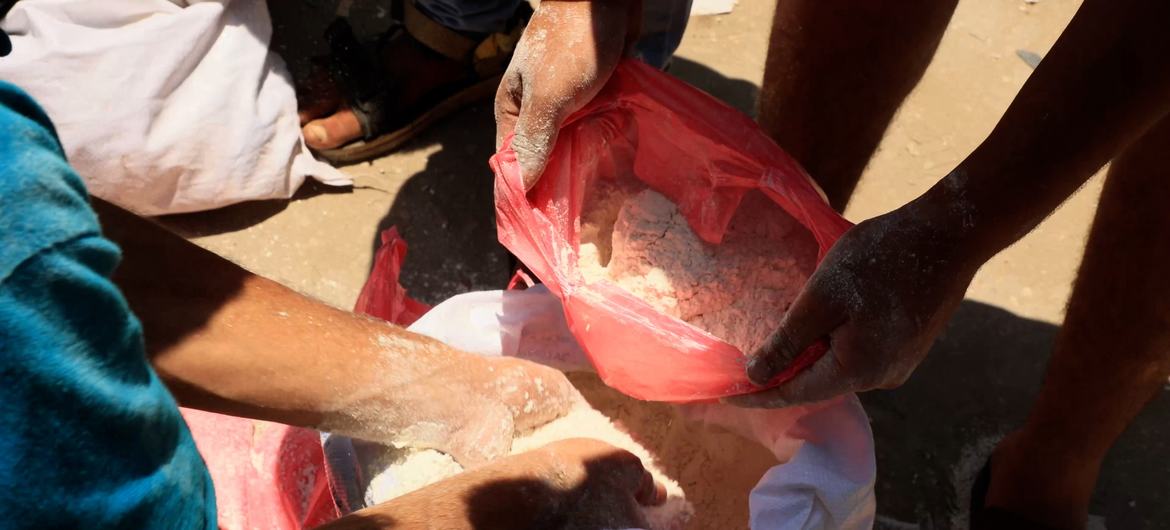
Only around 6,000 tonnes of wheat flour have entered the war-torn enclave since Israel began to allow limited supplies back in last month.  

However, 10,000 tonnes are urgently needed in the face of rising malnutrition, according to the UN aid coordination office OCHA.

The only way to address the situation on the ground is by re-opening additional crossings,” said OCHA’s Olga Cherevko, speaking to UN News from Khan Younis.

Beyond food aid

She also stressed the need to allow “unlimited and unfettered supply of aid to enter,” which includes items that go beyond food such as shelter materials, fuel, cooking gas, “and other necessary elements to sustain life in Gaza.”

Ms. Cherevko urged the Israeli authorities to make the task of delivering aid easier by “providing a safe and enabling environment,” reducing waiting times for humanitarian missions and ensuring access to people in need. 

People in Gaza are suffering from harsh living conditions. Since March, Israeli restrictions on border crossings have tightened, making it even more difficult for Gaza’s population – more than two million people – to access food. 

Senior UN officials, including Secretary-General António Guterres and Humanitarian Affairs chief Tom Fletcher, have described the aid that has entered as merely  “a trickle” or a  “a drop in the ocean”.

Difficult decisions

Although markets are crowded with people, they lack two essential elements: liquidity and goods.

Most residents thus face three bitter choices: either seek food aid from the newly established US and Israel-backed distribution mechanism, which has already claimed dozens of lives in recent days; watch their children starve; or pay dearly for what’s left of the goods and looted humanitarian aid in markets.

“Prices are unnatural, much higher than in Europe,” civil servant Akram Yousef recently told our UN News correspondent in Gaza.

“The situation is very difficult, and we have been like this for two years. In addition to displacement, homelessness, bombing, destruction, and devastation, traders are raising prices, and citizens are unable to bear this burden. What can we do?”

More than 20 months of conflict have made living conditions in the Gaza Strip unbearable, and the cost of living is now among the highest in the world. 

Ahmed Al-Bahri, who was displaced from Beit Lahia with his family, said a loaf of bread now sells for seven shekels, or roughly $2.

There is no flour, no milk, no diapers for children, or anything to eat,” he said. “We live in a state of constant hunger. Where can I get seven shekels to buy a loaf of bread for my child? What is this child’s sin?”

A flour seller in Gaza.

Exorbitant fees 

The cessation of Palestinian banks’ operations since the start of the war in October 2023 has exacerbated the suffering. 

People are forced to use phone apps to withdraw money from their bank accounts and to access their pensions through local merchants who charge exorbitant commissions.

Mr. Youssef, the civil servant, said the commission for withdrawing his salary was 20 per cent, but over time it has increased to nearly 50 per cent.

‘We have become envious of the dead’

Several residents told UN News that the price of one kilogramme of flour is now 100 shekels, equivalent to roughly $29.

“If a salary is 2,000 shekels, it becomes 1,000 shekels after commission,” another man, Ashraf Al-Deiri, explained.

“The daily expenses of an average or small family are no less than 500 shekels (roughly $143). So, we are experiencing great suffering and need someone to have mercy on us and stand by us.”

A young man called Raed Tafesh expressed shock over the high prices, especially since most of his peers are unemployed and lack any source of income. 

We don’t earn a single shekel. We are not employed, and we don’t have jobs. We are dying slowly. We have become envious of the dead,” he said.

The tragic conditions are reflected in the eyes of mothers and fathers who see their children starving, such as Nimir Ghazal.  She said her salary is not even enough to buy fruits, vegetables or any healthy food for her children.

“Sometimes I cry when my hungry children ask for a piece of bread. A kilo of flour costs 100 shekels, and lentils cost 50. One kilo is not enough for my family, but I buy it and share it among them,” she said.

UN efforts continue

On Monday, UN teams were able to collect some supplies, mainly flour, from the Kerem Shalom border crossing.  The aid was bound for Gaza City when hungry and desperate people snatched it directly from the trucks.

There have also been previous instances of looting and attacks on truck drivers which the UN categorically rejects. 

OCHA has emphasized that Israel, as the occupying power, bears responsibility for maintaining public order and safety in Gaza. This should include allowing more essential supplies to enter through multiple crossings and roads to meet humanitarian needs and help curb looting. 

Source link

World News in Brief: Global growth slows, deadly Ukraine attacks, Haiti hurricane hunger risk, legal migration for refugees

Growth is projected to weaken to 2.3 per cent, or nearly half a percentage point lower than expected at the start of the year, according to the Global Economic Prospects report.

“The global outlook is predicated on tariff rates close to those of late May prevailing,” it said.

“Accordingly, pauses to previously announced tariff hikes between the United States and its trading partners are assumed to persist.”

Although a global recession is not expected, average global growth is on track to be the slowest of any decade since the 1960s.

Poor countries suffer

Growth forecasts are being slashed in nearly 70 per cent of all economies, with the poorest countries most affected.

In most developing countries, nearly 60 per cent, growth should average 3.8 per cent in 2025 before reaching an average 3.9 per cent in the following two years – more than a percentage lower than the average in the 2010s.

The slowdown will impact efforts by developing countries in areas such as job creation, poverty reduction and closing income gaps with richer economies.

“The world economy today is once more running into turbulence. Without a swift course correction, the harm to living standards could be deep,” said Indermit Gill, Senior Vice President and Chief Economist.

The report calls for rebuilding trade relations as “economic cooperation is better than any of the alternatives – for all parties,” he said.

Countries are also urged to improve business climates and to promote employment by ensuring workers are equipped with necessary skills.

At least three dead in new Russian drone assault on Ukrainian cities 

A massive new wave of Russian drone attacks has killed at least three civilians and left Kyiv, Odesa and Zaporizhzhia engulfed in clouds of thick smoke, aid teams said on Tuesday. 

The attack was reportedly one of the largest since Russia’s full-scale invasion more than three years ago.

In an online update, the UN aid coordinating office, OCHA, said that a maternity ward in Odesa had come under fire, causing injuries and widespread damage to homes. 

Another terrible night

The UN Children’s Fund, UNICEF, underscored the impact of the violence on civilians, citing 16-year-old Sonya from Kyiv in an online post. “It was a terrible night,” she said. “The sounds were so frightening – a buzzing sound that was getting closer and explosions every five minutes.”

Russia has intensified its airstrikes on Ukraine in recent days. 

According to Moscow, it stepped up its bombing campaign in retaliation for Ukraine’s suprise drone attacks deep inside Russian territory last week codenamed operation spiderweb.

Amid the ongoing conflict, UN humanitarian teams and partners continue to work to help civilians in cities across Ukraine.

They provide first aid, protection services, food, construction materials and other support including counselling and legal advice.

Haiti: Hurricane season is here, but there are no food supplies

The World Food Programme (WFP) has reported that for the first time ever, it has no prepositioned food supplies in Haiti for the hurricane season, which lasts from June to November. 

WFP also said staffers do not have the financial resources to respond quickly to an emergency weather event in the country. 

Other UN agencies have prepositioned water and sanitation kits for 100,000 and health supplies for 20,000 people. However, these are not sufficient, especially in the absence of food, to meet needs during an emergency. 

“The current lack of contingency stocks and operational funds leaves Haiti’s most at-risk communities dangerously unprotected at a time of heightened vulnerability,” Deputy Spokesperson Farhan Haq said in a briefing Tuesday. 

Famine-like conditions

Food insecurity and malnutrition are already rampant, with over half the population facing acute hunger. Haiti is one of five countries worldwide which is experiencing famine-like conditions. 

Continuing armed violence by gangs in the capital and in other regions has displaced over one million people, compounding the hunger crisis and limiting access to other basic services such as clean water and health care. 

UN agencies in the country estimate that they will need $908 million to continue providing life-saving resources in Haiti, but currently, they have only received $78 million in emergency support. 

Refugees find hope through legal migration

Nearly one million refugees from eight countries with high asylum recognition rates were granted entry permits to 38 destination countries between 2019 and 2023, according to a new report from UN refugee agency, UNHCR, and the Organisation for Economic Co-operation and Development (OECD), Safe Pathways for Refugees

These permits were issued through existing systems for work, study, or family reunification.

“Refugees are using the same legal channels that millions rely on every day,” said Ruven Menikdiwela, UNHCR’s Assistant High Commissioner for Protection. 

“We don’t need new systems – just safer access to the ones already in place.”

In 2023 alone, nearly 255,000 permits were issued, marking a 14 per cent increase from 2022 and the highest number recorded since tracking began in 2010. 

Countries such as Germany, Canada, the United States, the United Kingdom and Sweden have played a leading role. 

UNHCR is urging States to remove obstacles for refugees and integrate them into regular migration systems. It also calls for stronger partnerships to expand access to legal pathways amid growing displacement and strained asylum systems. 

Source link

Helpless in the face of hunger: Gaza families pray for deliverance – or death

Zeenat and her husband, Moamen Abu Asr, live with their children in a flimsy canvas tent, one of thousands that now line Gaza’s coastline. 

Once a place of rest and leisure, the beach has become a last refuge for Palestinians displaced by relentless Israeli bombardment and military operations.

As displacement orders push people into ever smaller pockets of land, the strip of coast around Gaza’s seaport has turned into a makeshift camp. Its frayed tents and overcrowded conditions reflect the gravity of a humanitarian crisis that has plunged to unprecedented depths after more than 600 days of conflict between Israeli forces and Hamas.

The seaport, once a centre of Gaza’s fishing economy, is now a wasteland. All the boats have been destroyed, and in their place stands a sprawling encampment – a harsh and barren environment with almost none of the basic necessities for survival.

Moamen Abu Asr fixing a water tank by his tent.

A family with nothing left

Moamen and his family have been living in the camp for around two months, surviving in a tent cobbled together from salvaged mats and broken utensils recovered from nearby rubble.

He sits outside with his children, scrolling through pictures on his phone – fragments of a past life left behind in Shujaiya, east of Gaza City, when residents were ordered to evacuate without warning.

“There have been times when we’ve been displaced once every two months,” he told UN News. “Every day is suffering for us. We came to Gaza port with no food, no water – not even our iron tent.”

“There is nothing of life’s basics for us,” he said. To feed his family, Moamen repairs small water tanks for five shekels – about $1.43 – barely enough for anything in a place where prices have soared. “One kilo of flour is a hundred shekels [around $28.60],” he explained. “Our situation is very difficult, and we do not know what to do. By God, this is not life. We would rather die.”

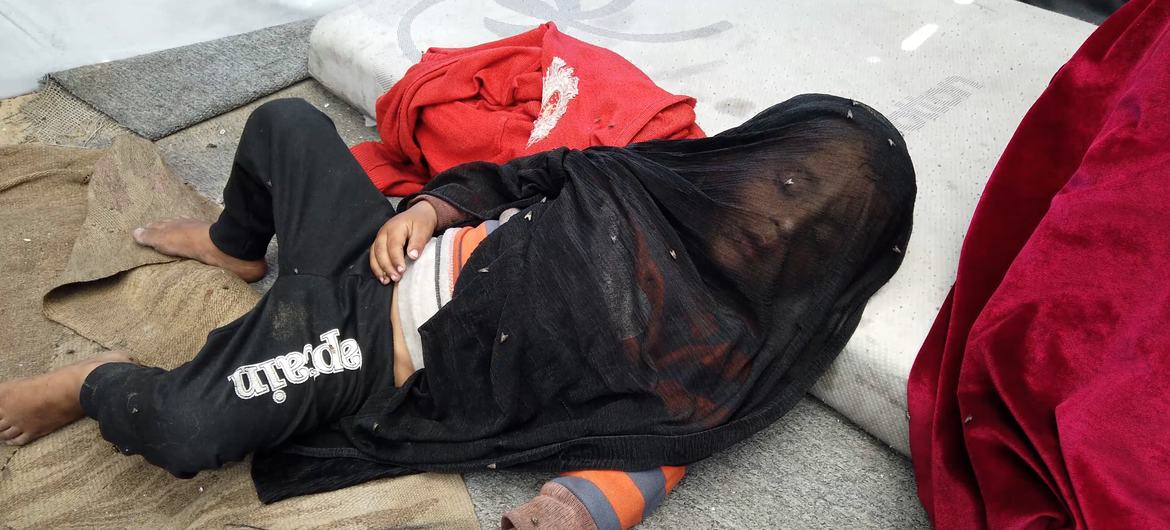
Flies hover over one of the Abu Asr family’s sleeping children in their tent in Gaza.

‘We live on water’

The humanitarian situation has worsened since March, when Israeli authorities imposed a complete blockade on aid. Though this was slightly eased in recent weeks, the limited trickle of supplies cannot meet the overwhelming demand. Desperate civilians, starving and fearful, have resorted to looting whatever aid does arrive.

In their tent, Zeenat washes a few cooking utensils – all she could find in the communal makeshift kitchen. Most days, there is no food to prepare.

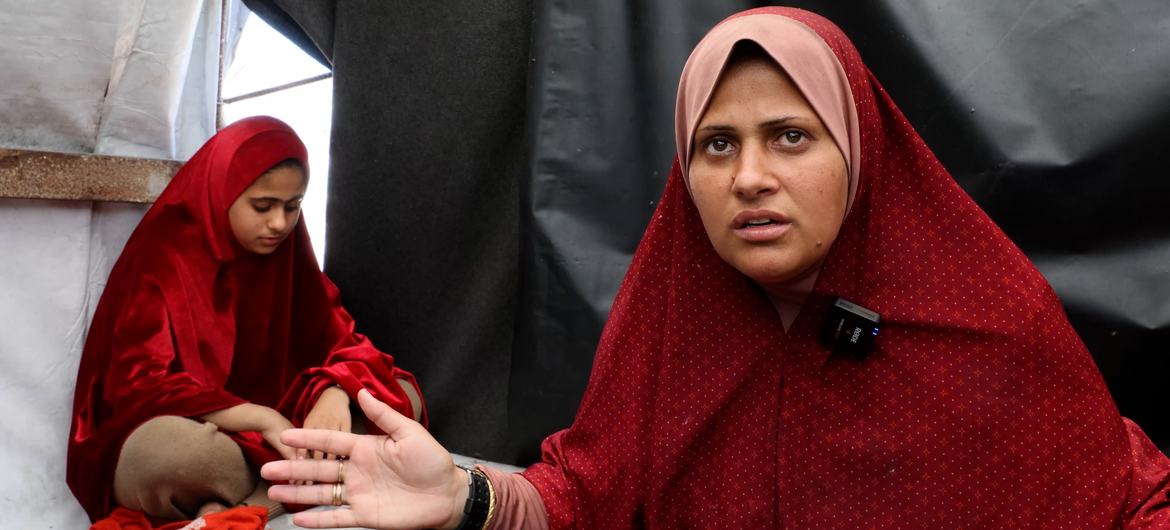
“Yesterday I cried a lot about my son,” she said. “He told me, ‘Mum, I want to eat.’ I stood helpless, not knowing what to do. The food didn’t come from the charity kitchen. We now live on fresh water. I recommend it to my children to help fill their stomachs. Today, thank God, we got a plate of food and ate it.”

Zeinat Abu Asr describes the hardship her family is facing in Gaza.

‘Enough is enough’

Conditions in the tent are dire. Flies swarm everywhere, and stray dogs – thin and hungry – prowl nearby. “Yesterday, a dog came into the tent and was pulling on a tarpaulin while my son was sleeping. I thought it was pulling my baby. I screamed and my husband kicked the dog out.”

“We don’t know where to go or what to do. They uprooted us. Our hearts are extinguished. We can’t be patient anymore. Our patience has run out.”

The tents scattered along Gaza’s coastline are a stark symbol of the deepening humanitarian tragedy. The cries of hunger are louder than any voice of hope. There is no shelter left – only the sea remains.

Nothing encapsulates the despair more than Zeenat’s final plea: “Let the war end. Give us a break. Otherwise, let all countries come together and drop a nuclear bomb on us and end our misery, because we are tired of this life. Enough is enough.”

Desperate hunger drives crowd to storm UN food warehouse in Gaza

UN agencies warn that the decimated enclave is teetering on the brink of further chaos after months of war and the collapse of all essential services.

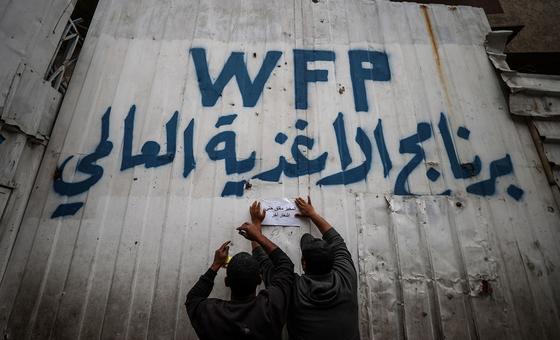
The incident took place at WFP’s Al-Ghafari facility in Deir Al-Balah, where limited stocks of wheat flour had been pre-positioned for use by the few bakeries which have been able to resume operations.

Tragic consequences

Corinne Fleischer, WFP’s Regional Director for the Middle East, described it as a “tragedy [that] should never have happened”.

She called for immediate and steady flow of aid to avoid further scenes desperation.

When people know food is coming, desperation turns to calm,” she said.

The storming of the warehouse is the latest sign of a hunger crisis spiralling out of control after 80 days of near-total blockade on aid into Gaza. While limited supplies of aid have resumed, “it is a drop in the ocean of what is urgently needed,” UN officials have said.

In a statement, WFP said it has consistently warned of alarming and deteriorating conditions on the ground, and the risks of limiting humanitarian aid – despite the looming threat of famine.

The agency reiterated its call for safe, unimpeded humanitarian access to enable orderly food distributions across Gaza immediately.

Collapse of fishing sector

The UN-led Protection Cluster – a coalition of UN entities and NGOs working on protecting civil rights during crisis – warned on Thursday of a collapse of Gaza’s fishing sector.

The sector was a vital source of food and livelihoods before the conflict erupted on 7 October 2023, when Hamas and other Palestinian armed groups attacked Israeli communities.

Monitoring from the UN human rights office, OHCHR, “found a consistent pattern” of Israeli military attacks on fishers in Gaza.

This included firing on vessels at sea by Israeli Naval Forces, as well as drone attacks at sea and on land.

According to the UN Food and Agriculture Organization (FAO), Gaza’s fishing industry is now operating at just 7.3 per cent of its pre-October 2023 capacity, with the fleet all but decimated.

Around 94 per cent of trawlers, 100 per cent of large fishing vessels and 70 per cent of smaller boats have been destroyed.

This dramatic decline is having a devastating impact on food security, income generation, and community resilience across Gaza, triggering negative coping strategies and risks to fishers,” the Protection Cluster said in a report.

Darkest point

Meanwhile, the UN Humanitarian Country Team (HCT) warned that the humanitarian situation in Gaza, six hundred days into the crisis, is at its darkest point yet.

As relentless, deadly bombardment and mass displacement intensify, families are being starved and denied the basic means of survival,” the team said in statement on Wednesday, adding that conditions for humanitarians to deliver aid safely and at scale are absent.

The HCT noted that over the past days, it had submitted 900 truckloads for Israeli approval – about 800 were cleared and just over 500 were cleared for offloading on the Israeli side of Kerem Shalom.

However, humanitarians have been able to collect only about 200 on the Palestinian side of the crossing due to insecurity and restricted access.

“While letting us bring in some nutrition and medical supplies, as well as flour, Israeli authorities have banned most other items, including fuel, cooking gas, shelter and hygiene products,” the HCT said.

Let us work

The UN and partners underscored Israel’s obligations under international humanitarian law, and urged it to treat civilians humanely, with respect for their inherent dignity, refrain from forcible transfer and facilitate the aid that is needed.

“We echo the Secretary-General’s calls: a permanent ceasefire, the immediate and unconditional release of all hostages, and full humanitarian access,” it said, adding:

We are ready to save lives. Let us work. The window to prevent famine is closing fast.

Source link

More than 50 million in West and Central Africa at risk of hunger

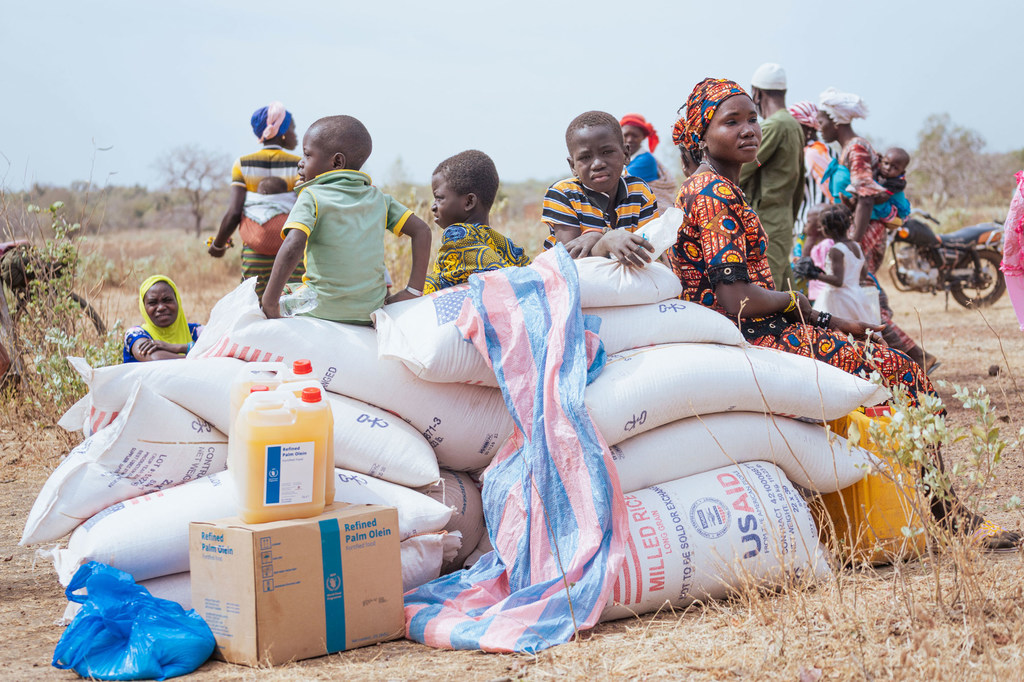
More than 36 million are struggling to meet their basic food needs, which is projected to rise to over 52 million during the lean season from June to August, latest analysis reveals.

This includes almost three million people facing emergency conditions, and 2,600 people in Mali who are at risk of catastrophic hunger.

Although needs are at a historic high, resources are limited, with millions of lives at stake. 

Without immediate funding, WFP will be forced to scale down even further both in the number of people reached and the size of food rations distributed,” said Margot van der Velden, Regional Director for West and Central Africa. 

‘Extremely difficult and dire’ 

In 2019, only four per cent of the population was food insecure compared to 30 per cent today, according to Ollo Sib, a senior research adviser with WFP.

“We hope that our voice will be heard because this food security situation in the Sahel remains extremely difficult and dire,” he said, speaking from Dakar to journalists in Geneva.

Mr. Sib recently travelled to some of the affected areas, such as communities in northern Ghana grappling with unprecedented drought.

“They were forced to replant two to three times, and for them, each failed sowing is an additional financial burden as the cost of fertilisers and seeds were extremely high in those locations,” he said.

The assessment team also went to northern Mali, which is the only place in the region where people are facing catastrophic food security conditions.

“We had the opportunity to interact with pastoralist elders who typically sell their livestock to buy cereals,” he said. 

“This year they were worried because the cost of food rose by 50 per cent compared to the five-year average. But at the same time, they are not able to access markets to sell their goods.” 

Fighting, food inflation and floods

WFP said unyielding conflict is among the factors driving deepening hunger in West and Central Africa.  

Fighting has displaced more than 10 million of the most vulnerable people across the region, including more than two million refugees and asylum seekers, in Chad, Cameroon, Mauritania and Niger. 

Nearly eight million more have been internally displaced, mainly in Nigeria and Cameroon. 

Meanwhile, food inflation exacerbated by rising food and fuel costs are pushing hunger levels to new highs.

At the same time, recurrent extreme weather “erodes the ability of families to feed themselves,” WFP said. 

© WFP/Desire Joseph Ouedraogo

Vulnerable populations in Morolaba, Burkina Faso, receive emergency airlifted food assistance.

Five million at risk

WFP stands ready to respond and scale up vital assistance in West Africa and the Sahel. The UN agency is seeking $710 million to support its life-saving operations through the end of October.

The aim is to reach almost 12 million people this year with critical assistance.

So far, teams have already reached three million of the most vulnerable including refugees, internally displaced people, malnourished children under five, and pregnant or breastfeeding women and girls.

The agency said that five million risk losing assistance unless urgent funding is found.

Address root causes

WFP also called for governments and partners to invest in sustainable solutions aimed at building resilience and reducing long-term dependency on aid.

Since 2018, the UN agency has been working with regional governments to address the root causes of hunger through a programme that has rehabilitated over 300,000 hectares of land to support over four million people in more than 3,400 villages. 

Source link

Gazans face hunger crisis as aid blockade nears two months

Both the UN agency that assists Palestine refugees, UNRWA, and the World Food Programme (WFP) report that food stocks are now exhausted, even as supplies of lifesaving assistance pile up at border crossings waiting to be brought in.

Humanitarians continue to warn that hunger is spreading and deepening in the enclave, amid the blockage, access constraints, ongoing Israeli military operations and a rise in looting.

Scarcity, sharing and shame

UNRWA shared the testimony of a woman called Um Muhammad who is staying at a shelter in Gaza City and prepares food for 11 family members daily. Although she still has some flour, most families nearby have already run out.

“When I knead and bake, I feel very ashamed of myself, so I distribute some bread to the children who come asking for a piece of bread,” she said.

“We eat one meal a day, dividing bread among each person daily. We eat canned goods, lentils, and rice. When this stock runs out, I don’t know what we will do because what is available in the market is scarce.”

Longest blockade

Gaza has a population of more than two million people who mostly depend on aid, but no humanitarian or commercial supplies have entered since 2 March when Israel imposed a full blockade on the territory.  

This is by far the longest ban on aid moving into the Strip since the start of the war in October 2023, following the deadly Hamas-led terror attacks on Israel.

The situation has led to shortages – not just of food, but other items including medicine, shelter supplies and safe water.  WFP recently noted a 1,400 per cent increase in food prices when compared to the ceasefire period, which lasted from 19 January to 18 March of this year.

Malnutrition and looting

On Friday, the UN agency delivered its last remaining stocks to hot meals kitchens, which have been a lifeline in recent weeks. The kitchens are expected to fully run out of food within days, and another 16 closed over the weekend.  Furthermore, all 25 WFP-supported bakeries are now shuttered.

There has been an increase in reports of looting incidents, the UN humanitarian affairs office OCHA said on Monday. Over the weekend, armed individuals reportedly ransacked a truck in Deir Al-Balah and a warehouse in Gaza City.

Meanwhile, the latest famine review analysis by the Integrated Food Security Phase Classification (IPC) got underway this week.

Humanitarian partners warn that the nutrition situation across Gaza is worsening. Since January, about 10,000 cases of acute malnutrition among children have been identified, including 1,600 cases of severe acute malnutrition

Although treatment supplies remain available in the south, accessing them continues to be extremely challenging due to operational and security restrictions.

Healthcare also affected

OCHA stressed that the depletion of critical stocks in Gaza goes far beyond food. For example, trauma-related medical supplies are running out at a time when the number of people injured in mass casualty incidents continues to increase. 

Gaza also lacks surgical supplies, including gowns, drapes and gloves.  The World Health Organization (WHO) informed that their warehouse has run out of therapeutic milk, intravenous antibiotics and painkillers, as well as spare parts for ambulances and oxygen stations. 

Partners working in health add that an increasing number of critical staff are being denied access to Gaza, with a rise in the denial of entry for emergency medical teams, particularly highly specialized professionals – including orthopedic and plastic surgeons – and a recent restriction of movement across the enclave.  

Aid awaiting entry

As the aid ban continues, humanitarians are doing everything possible to reach people with whatever supplies remain available.

They also have stocks of food and other lifesaving items ready and waiting to enter the Gaza Strip as soon as border crossings re-open.

This includes nearly 3,000 UNRWA trucks of aid, while WFP has more than 116,000 metric tonnes of food assistance – enough to feed one million people for up to four months. 

Source link

Hunger-controlling brain cells may offer path for new obesity drugs

Is the solution to the obesity epidemic all in our heads? A study by researchers at The Rockefeller University suggests that it might be.

“We have identified two new populations of cells in the brain that potently regulate appetite,” says Alexander Nectow, first author of the paper, published in Cell on July 27. The two types of cells, located in a part of the brainstem called the dorsal raphe nucleus, are potential targets for new drugs to treat obesity by controlling the hunger signals that drive the search for and consumption of food.

The new findings are the latest evidence that eating is a complex biological behavior mediated by multiple sites in the brain. They also offer a possible solution to a problem that has dogged previous efforts to address obesity at the neuronal level.

In 1994, Jeffrey Friedman, Marilyn M. Simpson Professor and head of Rockefeller’s Laboratory of Molecular Genetics, launched a new era in obesity research by discovering a hormone called leptin, which acts on neurons in the brain’s hypothalamus region to suppress hunger. Injections of the hormone have been shown to promote dramatic weight loss in patients with a rare leptin deficiency, however many obese people don’t respond to this therapy.

“Obesity is generally associated with leptin resistance,” says Friedman, whose lab produced the new study. “And our recent data suggest that modulation of the activity of specific neurons with drugs could bypass leptin resistance and provide a new means for reducing body weight.”

The cells that trigger eating

Nectow and his colleagues zeroed in on the dorsal raphe nucleus, or DRN, when whole-brain imaging made with iDISCO, an advanced technique developed at Rockefeller, revealed that this part of the brain becomes activated in hungry mice. Subsequent imaging of other mice that were fed more than their normal amount of food, until they were full, revealed a different pattern of DRN activity. These results indicated quite clearly that neurons in that part of the brain played a role in feeding behavior.

The next step, explains Nectow, now an associate research scholar at Princeton University who did the research while a Ph.D. student and visiting fellow in Friedman’s lab, was to determine which of the several types of neurons that make up the DRN were involved. Genetic analysis of the activated cells in the two groups of mice showed that the neurons triggered by a full belly released glutamate, a chemical that nerve cells use to signal one another, while the neurons triggered by hunger released a different neurotransmitter, known as GABA.

“There are two possibilities when you see something like that,” Nectow says. “One is that the cells are just along for the ride–they are getting activated by hunger but they’re not actually driving the food intake process. The other possibility is that they are in fact part of the sense and respond mechanism to hunger–and in this case, we suspected the latter.”

Manipulating the system

Armed with two proven methods for activating targeted neurons at will–one optical, one chemical–the researchers were able to turn on the glutamate-releasing cells in obese mice. This suppressed the animals’ food intake and made them lose weight. And it confirmed that the DRN neurons turned on by hunger did indeed drive food intake.

Similarly, flipping on the GABA-releasing neurons in the same part of the brain had the opposite effect and increased food intake. Notably, turning on the “hunger neurons” automatically turned off the “satiety neurons,” maximizing the effect.

The researchers also studied the effect of switching off hunger neurons in obese mice. “We were excited to see that prolonged inhibition of these neurons could dramatically reduce body weight,” says postdoctoral fellow Marc Schneeberger Pane, a co-first author of the paper.

The findings open up new avenues of research into exactly how the brain controls eating, and suggest that drugs designed to activate or inhibit neurons in the DRN could be effective in treating obesity and preventing its related disorders, such as diabetes and hypertension.

And it offers fresh hope to hundreds of millions of obese people around the world. As it turns out, the brainstem, the oldest part of the brain in evolutionary terms, is the new frontier.

###

Disclaimer: AAAS and EurekAlert! are not responsible for the accuracy of news releases posted to EurekAlert! by contributing institution