Secretary Rubio briefs PM on the sustained progress in bilateral cooperation.
Secretary Rubio shares US perspective on various regional and global issues.
PM reaffirms India’s consistent support for peace efforts and reiterates the call for peaceful resolution of the conflicts.
PM conveys warm greetings to President Trump.
The U.S. Secretary of State, H.E. Mr. Marco Rubio, called on Prime Minister Shri Narendra Modi today.
Secretary Rubio briefed Prime Minister on the sustained progress in bilateral cooperation across a wide range of sectors, including defence, strategic technologies, trade and investment, energy security, connectivity, education and people-to-people ties.
Secretary Rubio shared U.S. perspective on various regional and global issues, including the situation in West Asia.
Prime Minister reaffirmed India’s consistent support for peace efforts and reiterated the call for peaceful resolution of the conflicts through dialogue and diplomacy.
Prime Minister requested Secretary Rubio to convey his warm greetings to President Trump and said that he looked forward to their continued exchanges.
U.S. Secretary of State Marco Rubio calls on Prime Minister @narendramodi
Secretary Rubio briefs PM on the sustained progress in bilateral cooperation
Secretary Rubio shares the US perspective on various regional and global issues
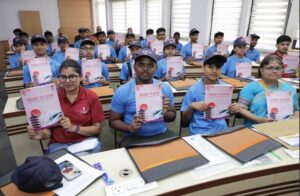
A group of Indian school students will travel to Japan next week under the Sakura Science Programme 2026, an academic exchange initiative aimed at exposing young learners to advanced scientific research and technological innovation.
The delegation was formally flagged off on Friday by the Department of School Education and Literacy under the Union Ministry of Education during a ceremony held at the campus of National Council of Educational Research and Training in New Delhi.
Among those present at the event were Archana Sharma Awasthi, Additional Secretary in the Department of School Education and Literacy, NCERT Director Prof. Dinesh Prasad Saklani, and Economic Advisor A. Srija.
The week-long visit to Japan will take place from May 24 to May 30 and will include 56 students and four supervisors from India. The Indian contingent will participate alongside students from Ghana, Nigeria and South Africa under the international youth exchange initiative.
Officials said the selected students include 24 boys and 32 girls studying in government schools across 15 states and Union Territories. The participants have been chosen from beneficiaries of the National Means-cum-Merit Scholarship (NMMS) Scheme, a centrally sponsored programme designed to support academically talented students from economically weaker backgrounds.
The students represent Assam, Dadra and Nagar Haveli and Daman and Diu, Goa, Gujarat, Haryana, Jharkhand, Karnataka, Madhya Pradesh, Maharashtra, Odisha, Punjab, Rajasthan, Tamil Nadu, Telangana and West Bengal.
The Sakura Science Programme, officially known as the Japan-Asia Youth Exchange Program in Science, has been run by the Japan Science and Technology Agency since 2014 to encourage scientific collaboration and cultural exchange among students across Asia and Africa. India joined the initiative in 2016.
Under the programme, students spend a week in Japan visiting educational institutions, research centres and technology facilities while also experiencing Japanese culture and society.
PIB
According to government data, 674 Indian students and 96 supervisors have visited Japan through the programme so far. The previous batch travelled to Japan in August 2025.
The Ministry of Education said the initiative aligns with the vision of the Ministry of Education under the National Education Policy 2020, which stresses experiential and interdisciplinary learning.
Officials said international exposure visits play an important role in helping students understand scientific developments, innovation ecosystems and cultural diversity beyond classroom education.
Japan is widely regarded for its technological capabilities in sectors such as robotics, electronics, manufacturing and scientific research, making it an important destination for educational exchange programmes focused on science and innovation.
A new study by researchers at Edith Cowan University has explored why many university students listen to music while studying and whether it actually improves concentration or becomes a distraction.
The research, led by Lindsey Cooke, surveyed more than 220 university students about their habits of listening to music while reading for academic purposes.
The findings showed that the effects of background music on studying vary significantly from person to person, rather than following a universal pattern.
According to the study, 54 percent of students said they regularly listened to music while studying, while 46 percent preferred complete silence. Nearly all students who listened to music believed it improved their reading and study experience.
Participants said they used music to stay motivated, improve concentration and block out distracting background noise. Classical and Rock emerged as the most popular genres among students, with many favoring slow, non-lyrical music to help maintain focus.
“Many students feel music helps them get into the zone, especially when they’re studying in noisy or distracting environments,” Cooke said.
The researchers said the results challenge the long-standing assumption that listening to music while studying automatically reduces cognitive performance.
“There’s a widespread belief that music automatically drains cognitive resources, but our data shows the story is far more individual,” Cooke said.
The study found that factors such as working memory capacity and a tendency to daydream did not significantly influence whether students listened to music or how distracting they found it.
Instead, researchers found that a student’s level of emotional connection and personal engagement with music played a much stronger role in determining whether background music was perceived as helpful during study sessions.
Cooke said the findings underline the importance of personal preference in creating effective study environments.
“For some students, music genuinely supports their reading experience. For others, it gets in the way. The key is understanding your own relationship with music rather than assuming one-size-fits-all advice,” she said.music
The next phase of the research will examine students’ actual reading comprehension while listening to different kinds of music, rather than relying only on self-reported perceptions.
The study, titled “Music as a distraction during reading: Music listening habits of university students,” was published in the journal Psychology of Music and co-authored by Ross Hollett and Craig Speelman.
Gold’s legendary resistance to tarnish may owe as much to the behavior of its surface atoms as to the metal’s chemical properties, according to a new study by researchers at Tulane University.
The study, published in Physical Review Letters, found that atoms on certain gold surfaces spontaneously rearrange themselves into protective patterns that sharply reduce reactions with oxygen.
The discovery sheds new light on why gold jewelry and artifacts can retain their shine for centuries and may also help scientists develop more efficient gold-based catalysts for industrial and energy applications.
“People have generally thought gold doesn’t tarnish simply because it doesn’t interact strongly with oxygen,” said Matthew Montemore, associate professor of chemical engineering at Tulane’s School of Science and Engineering. “What we show is that for two of the most common gold surface types, the surface atoms actually rearrange themselves in a way that makes the gold much more resistant to oxidation.”
Using advanced computer simulations, Montemore and co-author Santu Biswas examined how oxygen molecules interact with two widely occurring gold surface structures. The researchers discovered that without these atomic rearrangements, oxygen molecules could split apart and react with gold far more easily.
Instead, the self-organized surface patterns suppress oxygen reactions by factors ranging from a billion to a trillion, effectively creating an atomic-scale protective shield that allows gold to remain untarnished over long periods.
Beyond explaining gold’s enduring luster, the findings could have important implications for catalysis — the process of speeding up chemical reactions in industrial manufacturing and energy systems.
Gold-based catalysts are already used in several industrial oxidation processes. However, gold’s resistance to breaking apart oxygen molecules, while beneficial for jewelry and electronics, can also reduce its effectiveness in certain chemical reactions.
Gold-palladium catalysts, for example, are used in the production of vinyl acetate, a key ingredient in plastics and other materials. Scientists are also investigating gold catalysts for reducing carbon monoxide emissions in vehicle exhaust systems and producing propylene oxide, a widely used industrial chemical.
“If you can trick gold into dissociating oxygen, it can actually become a very effective catalyst for certain reactions,” Montemore said. “Our work suggests a new strategy for potentially doing that by preventing or reversing these surface rearrangements.”
Researchers have traditionally attempted to enhance gold catalysts by mixing gold with other metals or using nanoscale gold particles on oxide surfaces. The new study suggests that manipulating surface geometry itself could provide another pathway for improving gold’s catalytic performance.
Indian Railways is increasingly deploying advanced technologies such as artificial intelligence, drones and CCTV surveillance systems to strengthen the safety and security of trains, passengers, station premises and the country’s vast railway network.
The Railway Ministry on Wednesday held a high-level security review meeting in New Delhi, bringing together senior officials and field officers from across the country to assess security preparedness and improve intelligence coordination. The meeting, chaired by Railway Minister Ashwini Vaishnaw at Rail Bhawan, was attended by Ministers of State for Railways V. Somanna and Ravneet Singh Bittu, along with the Chairman of the Railway Board and other senior officials.
PIB
Railways stated that swift intervention and timely action by railway staff in several instances helped prevent major mishaps. Officials also stressed the need to strengthen intelligence gathering at the grassroots level, particularly through improved beat-level monitoring by the RPF.
PIB
The discussions focused on expanding the use of technology-driven security systems, including wider CCTV coverage across railway stations and rail corridors, deployment of AI-based monitoring tools and upgrades to surveillance camera specifications. Strengthening cyber security infrastructure and improving operational coordination between Railway Board headquarters and zonal field units also figured prominently during the review.
The ministry further emphasized the need for closer coordination between the RPF and the Government Railway Police (GRP) through enhanced information-sharing mechanisms to ensure more effective security management across the railway network.
What Passengers Need To Do
Remain alert and vigilant while travelling on trains and waiting at railway stations.
Immediately report any suspicious person, activity or unattended object noticed on railway premises.
Use the Railway helpline number 139 to report security concerns.
Cooperate with railway authorities and security personnel during checks and investigations.
Support Railways’ efforts to curb anti-social activities by sharing timely information.
What The Government/Railways Is Doing
Deploying advanced technologies such as AI-based surveillance systems, drones and CCTV networks to improve railway security.
Strengthening intelligence gathering mechanisms at the Railway Protection Force (RPF) beat level.
Conducting investigations into recent fire incidents and suspected anti-social activities.
Expanding CCTV coverage across railway stations and rail routes.
Upgrading surveillance camera specifications and monitoring systems.
Enhancing cyber security systems across the railway network.
Improving coordination and information-sharing between the RPF and Government Railway Police (GRP).
Holding high-level security review meetings with railway officials and field officers nationwide.
Improving operational coordination between Railway Board headquarters and field zones for faster response and monitoring.
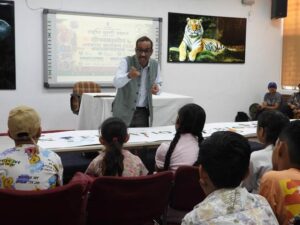
The National Zoological Park on Wednesday launched its Summer Vacation Programme (SVP) 2026 at the zoo’s Education Centre, drawing enthusiastic participation from students across the Delhi-NCR region.
Held under the Mass Mobilisation Campaign for Mission LiFE and aligned with the World Environment Day theme, “Inspired by Nature. For Climate. For Our Future.”, the initiative seeks to raise awareness among school students on biodiversity conservation, wildlife protection, climate action, cleanliness and sustainable living through a series of interactive learning activities.
National Zoological Park Launches Summer Vacation Programme 2026 PIB
According to zoo officials, 854 students registered online for the programme through a Google form hosted on the National Zoological Park’s official website. Of them, 60 participants were selected on a first-come, first-served basis and later contacted for confirmation. On the opening day, 39 students representing 15 schools from across Delhi-NCR attended the sessions.
The inaugural day began with an orientation programme introducing participants to the objectives and schedule of SVP 2026. Students were later taken on a guided tour of the zoo, including visits to herbivore and carnivore enclosures. An expert lecture on biodiversity was delivered by Dr. Faiyaz A. ahead of the International Day for Biological Diversity.
The two-week programme has been divided into two phases — Slot A and Slot B — each accommodating 50 students, including 25 junior and 25 senior participants.
National Zoological Park Launches Summer Vacation Programme 2026 PIB
The schedule features a diverse range of educational and creative activities, including wildlife photography, poster-making, slogan-writing, heritage walks, essay competitions, clay modelling, art and craft sessions, exhibitions, cleanliness awareness drives and Mission LiFE campaigns. Expert talks on conservation and environmental sustainability are also planned throughout the programme.
The Summer Vacation Programme will run from May 21 to June 6, 2026, engaging students from Classes VI to XII in experiential learning focused on conservation and environmental awareness.
Zoo Director Dr. Sanjeet Kumar interacted with the participants and stressed the need to involve young minds in biodiversity conservation through innovative and technology-driven educational initiatives.
Researchers have developed a cost-effective, efficient thermal energy storage material that can significantly improve the efficiency of thermal batteries used in concentrated solar power plants and industrial waste heat recovery systems.
Effective thermal energy storage (TES) systems are essential for efficient utilization of concentrated solar power (CSP) and capturing industrial waste heat. Scientists are trying to develop materials with enhanced specific heat capacity, thermal conductivity, and operating temperature range for improved performance of the TES system.
Researchers at the International Advanced Research Centre for Powder Metallurgy and New Materials (ARCI), an autonomous institution of the Department of Science and Technology (DST) have developed a cost-effective, scalable process to produce spinel nano composite Phase Change Material (PCM) with an unprecedented increase in specific heat capacity for thermal energy storage applications.
The process developed by ARCI team led by Dr. Mani Karthik, employs a simple co-precipitation method to produce spinel-type metal oxide nanoparticles with controlled particle size. These nanomaterials exhibited excellent thermal stability and uniform dispersion, making them suitable for producing high-performance nanocomposite PCM.
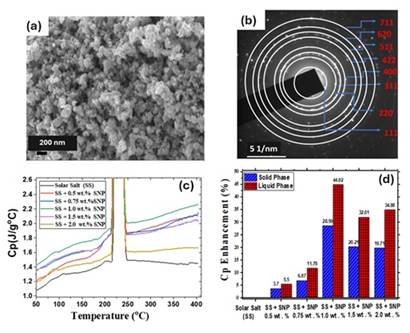
By the addition of only 1% spinel oxide nanoparticles to the PCM, the nanocomposite phase change material showed a remarkable increase in the specific heat capacity (ability to store the thermal energy) as high as 45% when compared to the PCM without nanocomposites.
Fig: (a) HR-TEM image of spinel nanoparticles, (b) Selected Area Electron
Diffraction (SAED) pattern of spinel nanoparticles, (c) Differential Scanning
Calorimetry (DSC) profile, (d) Cp enhancement of Spinel-PCM nanocomposite
When these nanoparticles are well dispersed in the PCM, they significantly improve its thermal properties by increasing the specific surface area. This leads to the formation of a stable spinel oxide layer at the interface, which increases surface energy and contributes to the nanocomposite’s higher specific heat capacity compared to the base PCM.
As a result, the material can store more thermal energy per unit mass, improving energy storage efficiency. This improvement results in smaller storage tanks with reduced construction materials, which significantly lowers both capital and operational costs.
Overall, this development offers a compact and cost‑effective thermal energy storage solution, paving the way for next‑generation materials with superior performance.
This research published in the Materials Today Chemistry (Elsevier) aligns with India’s clean energy objectives and the Aatma Nirbhar Bharat initiative by advancing indigenous expertise in next-generation energy storage materials. Furthermore, the superior thermal capacity of these materials enables the development of more compact, high-performance, and cost-efficient thermal energy storage systems.
Multi-year La Niña events — so-called “double-dip” or even “triple-dip” La Niñas — are becoming more common. But why do these events persist for multiple years in the first place?
Researchers from the Nanjing University of Information Science and Technology and the University of Hawaii discovered two distinct pathways that can lead to long-lasting La Niña conditions and highlighted an important mechanism that has been largely overlooked.
El Niño and La Niña are the warm and cool phases of a recurring climate pattern in the tropical Pacific Ocean that influences weather worldwide. El Niño is characterized by unusually warm sea surface temperatures in the central and eastern Pacific, while La Niña brings cooler-than-normal conditions to the same region.
Whilst it is rather uncommon for El Niño to last more than a year, it is no longer rare to see La Niña events persist for two years, a phenomenon often referred to as a “double-dip” La Niña. These prolonged events could result in extended climate extremes and devastating weather events that take a toll on community resilience, the tourism industry and agriculture.
“Currently, a widely accepted hypothesis is that multi-year La Niña events are triggered by preceding extreme El Niño events, but this mechanism explains only about 30% of the total multi-year La Niñas observed over the past century,” said Tim Li, the corresponding author of the study.
So, what accounts for the remaining 70%?
The answer, the team found, may lie in a pattern of anomalous sea surface temperatures south of the equator, known as the South Pacific Meridional Mode (SPMM).
When cooling extends farther into the South Pacific in spring, it alters atmospheric circulation by strengthening easterly winds along the equator. These winds enhance the upwelling of cold water from the deep ocean and push warm surface waters away, reinforcing the cooling at the ocean’s surface.
Using atmospheric model experiments, the researchers confirmed that such a wind response can further sustain La Niña by slowing its natural decay. As a result, the cooling persists through the summer and can re-intensify in the following autumn when ocean-atmosphere feedbacks become stronger. This process, known as a season-dependent coupled ocean-atmosphere instability, is a positive, or self-reinforcing, feedback between the ocean and atmosphere that becomes particularly strong at certain times of year.
The findings suggest that when determining whether La Niña will persist into the following year, how it evolves after it peaks is just as important as how it begins. Multi-year La Niña events can develop through two key routes.
“The first route is driven by strong upper-ocean heat discharge associated with a preceding super El Niño, which induces thermocline anomalies that slow La Niña decay via Bjerknes feedback,” Li said.
The Bjerknes feedback is a special type of ocean-atmosphere interaction where changes in sea surface temperatures affect atmospheric conditions, which in turn influence sub-surface ocean temperatures, creating a self-reinforcing cycle.
“The second route involves the influence of meridionally extended sea surface temperature anomalies, which strengthen equatorial easterlies, enhance upwelling, and delay the decay of La Niña,” Li said.
In both cases, the cold anomalies can persist through summer and re-develop in autumn, leading to multi-year events.
By uncovering this dual mechanism, the researchers provide a more complete framework for understanding one of the most influential drivers of global climate variability. Their findings could help improve predictions of prolonged La Niña events, which have been linked to extended droughts, flooding and other extreme weather impacts worldwide.
The researchers aim to test how well current climate models capture these two distinctive routes and to explore how longer-term climate conditions may influence their behavior.
“Our ultimate goal is to improve forecasts of multi-year La Niña events and their far-reaching impacts, an advance that could strengthen climate preparedness and resilience on seasonal to decadal timescales,” Li said.
A collaboration between electrical and chemical engineers at Newcastle University is responsible for a reversible glue that can change how we recycle electronic waste.
The team has already demonstrated reversible adhesive technology with wide applicability in general packaging applications, but this new glue is electrically conductive. This means that it can join electronic components, just like solder does. Unlike solder, however, a simple wash with a green solvent like acetone, or using an alkaline solution, will allow the components to be separated for reuse or recycling.
This is a “one-pot” glue and is water-based, so it does not emit organic solvent vapours and does not require a hardener, unlike some glues. It is also as strong as other water-based glues. The glue is made in the same way as a paint, but silver particles are added rather than pigments, and this gives the formulation its electrical properties. Other conducting glues exist, and many of these also include silver for optimal conductivity, but none can easily be debonded.
Electronic waste (e-waste) is a massive problem with 62 billion kilos produced globally (similar to the weight of a million semi-detached houses), and less than a quarter of this is recycled. Much of this electronic waste contains critical minerals that are mined in only very few locations, some of which are politically unstable. The glue will help address the e-waste problem.
The glue is based on current industrial manufacturing processes – those for making a paint – and is developed from cheap materials so it can be scaled up easily. It is water-based and so it does not have the volatile organic solvents used in many commercial glues, but unlike other water-based adhesives, exposure to humid environments does not cause bond failure.
The glue works very well on metal surfaces, but it also sticks to other surfaces too, such as plastics and printed circuit boards.
Published in the journal, Advanced Electronic Materials, the work was funded by the Engineering and Physical Sciences Research Council (EPSRC) and the Royal Commission for Jubail and Yanbu of the Kingdom of Saudi Arabia, which provided a PhD scholarship for the first author of the paper, Bassam Aljohani.
Bassam, a PhD student at the School of Engineering, said: “Electrically conductive adhesives have been around for a long time, and making them reversible provides the solution to a very real problem that urgently needs addressing.”
The lead investigator on the project, Mark Geoghegan, who is Roland Cookson Professor of Engineering Materials, added: “One of the reasons that conducting glues are rarely used is because silver is expensive and toxic in the environment. Being reversible, our glue means that the silver can be recovered and reused, which is important to keep costs down and the environment clean.”
Professor Volker Pickert, who is Professor of Power Electronics and co-investigator on the project, pointed out: “Solder has the best conductivity, but the best formulations contain lead and now companies need to ask themselves whether the conductivity outweighs environmental considerations. In some cases, it will, but there is an opportunity here to revisit how we join electrical components.”
Dr Ama Asiedu-Asante, who is a researcher in Professor Pickert’s group and a co-author of the work said: “It’s not just about solder. The electronics industry relies on permanent joining methods, including screws, which can make automated recycling more difficult. There is now increasing recognition that water-based formulations can support more sustainable electronics, and this work demonstrates how they can deliver both performance and reversibility.”
Dr Adriana Sierra-Romero, co-author of this publication, stated: “Alongside the article, the publication of our patent highlights the broader potential of this technology to enable more sustainable, repairable, and reusable electronic systems.”
Professor Katarina Novakovic, co-author on the paper and a project co-investigator commented: “As international policy focus shifts away from sustainability, we remain committed to advancing critical solutions for the unsustainable use of resources.”
Controlling heat flow is a major challenge for many technologies. In electronic and photonic devices, for example, heat dissipation can limit the performance and efficiency, as well as their potential for further miniaturisation. At the same time, two-dimensional (2D) materials, which are made of layers just a few atoms thick, have emerged as a promising platform in these fields. For example, 2D semiconductors are expected to be used in conduction channels of future transistors. However, their thermal behaviour remains difficult to predict and control.
Now, an international team of researchers led by ICN2, UAB, TU/e, and McGill has discovered a new regime of heat transport in ultrathin materials. The study shows that in 2D semiconductors, in particular molybdenum disulfide (MoS₂) and molybdenum diselenide (MoSe₂), heat can behave in a completely new way, known as hydro-thermoelastic transport, where thermal diffusion is highly impeded. These findings, published in Nature Physics, could have a significant impact on the development of new strategies for thermal management in devices.
A combination of unexpected phenomena
Under normal conditions, heat spreads gradually from hot regions to cold ones. However, in these ultrathin materials, more complex effects occur. As Dr Sebin Varghese, first author of the paper, remarks: “Our results challenge the conventional picture of diffusive heat transport and reveal a richer, more complex transport mechanism in ultrathin semiconductors.” One of the effects that occur is phonon hydrodynamics, whereby heat is carried collectively and behaves like a viscous fluid. At the same time, heating induces mechanical deformations in the material, which also affect how heat moves. Although these types of effects were already known, they had never been observed in this type of materials.
The interplay of these phenomena results in unexpected behaviour: heat propagates much more slowly than predicted, with the thermal diffusivity reduced by up to an order of magnitude. To reach these conclusions, the researchers used an advanced optothermal technique that enabled them to track heat flow in real time with nanometre resolution. Prof. F. Xavier Alvarez from the Department of Physics at the UAB, who led the theoretical part of the work, notes that “for the first time, we observe how mechanical stress can redirect — and even obstruct — the flow of heat in a material.”
Can heat flow “the opposite way”?
The experiments show that, in these ultrathin materials, heat tends to remain concentrated around the heated region for longer than expected. This happens because heating causes the material deformations that alter how heat moves through the material, even pushing the heat flow in unexpected directions.
As Prof. Klaas-Jan Tielrooij (ICN2 and TU/e), who led the study, explains: “What surprised us most is that heat can, under certain conditions, resist leaving the hot region, which is due to contributions to the heat flux that point from cold to hot regions, rather than the conventional flux that points from hot to cold regions. This opens up a completely new way to control heat flow intrinsically, without the need to modify the material’s structure.”
This discovery provides new fundamental insight into how heat is transported at the nanoscale and could pave the way for designing electronic, photonic, and thermal devices with new functionalities. The ability to control rather than simply dissipate heat could be pivotal for future technologies, from improving the thermal management of chips to making thermoelectric systems more efficient.
A new scientific review has highlighted a growing shift in anti-aging research toward highly targeted therapies designed to remove harmful senescent cells while preserving those that play beneficial roles in the body.
The review, published in Volume 18 of Aging-US on May 4, 2026, examines the complex role of cellular senescence in aging and age-related diseases.
The study was led by Jian Deng and Dong Yang from the Department of Targeting Therapy and Immunology at the Cancer Center of West China Hospital, part of Sichuan University.
Cellular senescence refers to a state in which cells permanently stop dividing and begin releasing inflammatory molecules. These cells have long been considered harmful contributors to aging and chronic disease. However, the review notes that emerging evidence suggests senescent cells can also support important biological processes such as wound healing, tissue repair, embryonic development and maintenance of tissue balance.
The researchers analysed how senescence affects multiple organs, including the liver, lungs, kidneys, heart, brain, skin and adipose tissue. They found that aging-related damage is driven by several interconnected factors, including oxidative stress, mitochondrial dysfunction, DNA damage, chronic inflammation, metabolic stress, telomere shortening and environmental exposure such as ultraviolet radiation and pollution.
According to the review, senescent cells accumulate across highly specialised cell types — including fibroblasts, macrophages, endothelial cells, hepatocytes, epithelial cells and astrocytes — where they can disrupt tissue structure and accelerate disease progression.
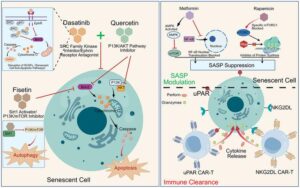
Mechanistic landscape of pro-longevity strategies. This figure illustrates the mechanistic action of key small-molecule drugs in clearing senescent cells, alongside immunotherapy strategies designed for the same purpose. Furthermore, it depicts the mechanisms by which anti-aging agents, such as SASP inhibitors, reduce the secretion of the senescence-associated secretory phenotype to achieve therapeutic anti-aging effects.
Credit Creative Commons Attribution License (CC BY 4.0),
The paper stresses that senescent cells are not a single uniform group. Depending on their biological environment, some may help prevent fibrosis and support regeneration, while others promote inflammation, tissue degeneration, metabolic disorders and cancer development.
This growing understanding has led scientists to rethink anti-aging therapies. Instead of broadly eliminating all senescent cells, researchers are increasingly exploring “precision geroprotection” — a strategy aimed at selectively targeting harmful senescent cells while preserving beneficial ones important for tissue stability and recovery.
“Based on these insights, this review summarizes the induction mechanisms of cellular senescence and the subsequent evolution of their functional phenotypes across diverse tissues,” the authors wrote.
The review also outlines emerging anti-aging treatments. Early senolytic drugs such as Dasatinib, Quercetin and Fisetin were developed to destroy senescent cells by disrupting their survival pathways.
Newer approaches now include advanced immunotherapies such as CAR-T cell therapies targeting senescence-associated markers, along with “senomorphic” treatments that suppress harmful inflammatory signalling without killing the cells themselves.
The authors said technologies such as single-cell omics, lineage tracing and spatial profiling could help scientists better identify different senescent cell subtypes and develop safer, more precise therapies.
At the same time, the review warns that major clinical challenges remain. These include the lack of reliable biomarkers for senescent cells, difficulties in delivering targeted drugs, risks of unintended tissue damage and limited understanding of how senescent cells evolve over time in different organs.
The researchers cautioned that removing senescent cells indiscriminately could interfere with tissue repair, immune defence and structural stability in organs such as the brain, heart and lungs.
Overall, the review presents a more balanced understanding of cellular aging, arguing that future anti-aging medicine will likely depend on carefully tailored interventions rather than broad elimination of senescent cells.
For decades, scientists have struggled to explain one of the biggest mysteries in human evolution: why nearly 90 per cent of people across cultures are right-handed, while no other primate species shows such a strong population-wide preference.
A new study led by researchers at the University of Oxford suggests the answer may be tied to two major evolutionary developments that helped shape modern humans — walking on two legs and the growth of larger brains.
The research, published in PLOS Biology, analysed data from 2,025 individuals across 41 species of monkeys and apes. The study was conducted by Thomas A. Püschel and Rachel M. Hurwitz from Oxford’s School of Anthropology and Museum Ethnography, along with Chris Venditti from the University of Reading.
Using Bayesian evolutionary modelling, the researchers tested several long-standing theories behind handedness, including the influence of tool use, diet, habitat, body size, social structure, brain development and movement patterns.
Humans initially appeared to be a clear outlier compared with other primates. However, when the researchers factored in brain size and the ratio between arm and leg length — an important anatomical indicator of upright walking — humans no longer stood apart from the broader evolutionary pattern.
The findings suggest that bipedalism and brain expansion together may have driven the development of strong right-handedness in humans.
The researchers also used the model to estimate handedness patterns among extinct human ancestors. Early hominins such as Ardipithecus and Australopithecus likely showed only mild right-hand preferences, similar to those seen in modern great apes.
The tendency appears to strengthen significantly with the emergence of the genus Homo, including species such as Homo erectus and Neanderthals, before reaching the strong right-handed dominance seen in modern Homo sapiens.
One notable exception was Homo floresiensis, often referred to as the “hobbit” species. Researchers predicted that this small-brained species had a much weaker right-hand preference, possibly because it retained a mix of climbing and upright walking adaptations rather than full bipedalism.
According to the study, the evolutionary shift likely occurred in two stages. Walking upright may have first freed the hands from locomotion, encouraging specialised manual activity. Later, as human brains expanded and reorganised, right-handedness became increasingly dominant.
“This is the first study to test several of the major hypotheses for human handedness within a single framework,” said Dr Püschel. “Our findings suggest handedness is closely linked to key traits that define humans, especially upright walking and larger brains.”
The researchers said several questions still remain unanswered, including why left-handedness continues to persist in human populations and whether similar limb preferences observed in animals like parrots and kangaroos reflect a broader evolutionary pattern across species.
Jaggery, commonly known as gur, is a traditional, unrefined, natural sweetener. It is produced by concentrating sugarcane juice without the use of chemicals. Often called “medicinal sugar”, it is nutritionally comparable to honey. Jaggery is widely consumed across Asia, Africa, Latin America, and the Caribbean under various local names. It is valued for its natural origin, traditional processing methods, and growing consumer preference for chemical-free sweeteners.
India accounts for over 70 percent of global jaggery production. This makes it the world’s largest jaggery producer. Nearly 20–30 percent of the country’s sugarcane production is used for jaggery production. It is one of the major agro-processing industries in rural India. The sector is marked by decentralized processing, low transport costs, small-scale entrepreneurship and cottage industries. It supports approximately 2.5 million livelihoods.
India’s jaggery sector is supported by substantial sugarcane production. In 2024-25, total sugarcane output was estimated at 444.9 million tonnes (MT). Uttar Pradesh contributed 48.5 percent of total production, followed by Maharashtra (24.1 percent) and Karnataka (10.5 percent). Other producing states include Gujarat, Tamil Nadu, Bihar, Uttarakhand, Punjab, Madhya Pradesh, and Haryana.[1]
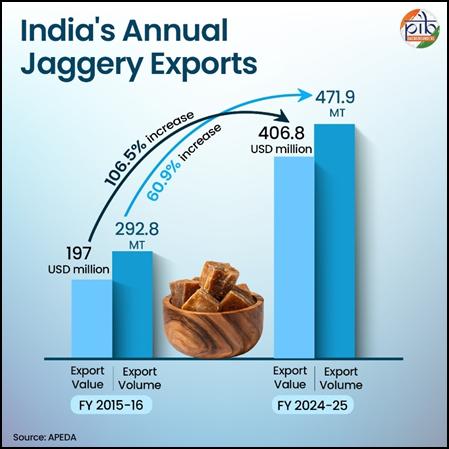
India is one of the leading exporters of jaggery and confectionery products (including traditional Indian sweets and candies). In 2015-16, exports stood at USD 197 million with a volume of 292.8 MT. By 2024-25, exports increased to USD 406.8 million with a volume of 471.9 MT. This is a rise of about 106.5% in value and 61.2% in volume over the period.[2] Major export destinations in 2024-25 included Indonesia, the USA, the UAE, Nigeria, and Nepal.[3]
If we compare year-on-year growth, exports during April-January (2025-26) reached 450.1 MT, valued at USD 384.4 million, registering an increase of about 16.5% in volume and 15.9% in value over the same period in 2024-25, when exports stood at 386.2 MT, valued at USD 331.4 million.
Domestic demand for natural sweeteners has also increased. In the sweetener segment, jaggery and honey have recorded a compound annual growth rate (CAGR) of 15–20 percent during 2021-24. Jaggery sales in domestic markets had reached approximately 5,000 metric tonnes annually by August 2024. This indicates growing consumer preference for traditional and natural sweetening products.
The Ancient Roots of India’s Jaggery Tradition
Jaggery is widely regarded as an indigenous Indian product. Its history is closely linked to the cultivation and processing of sugarcane, dating back to the Vedic period. Early references to sugarcane cultivation appear in Indian texts from around 1400–1000 BCE. Scholars have suggested that early thin varieties of sugarcane evolved in the moist regions of north-eastern India. Over time, sugarcane cultivation spread across tropical and subtropical regions, making it an important global crop. The word “sugar” is derived from the Sanskrit term sarkara, indicating deep cultural roots of sweetener production in the subcontinent. Historical accounts note that in 647 AD, a Chinese mission travelled to Magadha to learn sugarcane processing techniques. This demonstrates the early diffusion of Indian knowledge in the production of sweeteners. This long tradition of cultivation, processing, and knowledge transfer laid the foundation for India’s enduring prominence in jaggery production.
Jaggery for Nutrition and Public Health
Jaggery is increasingly recognized as a superfood, a natural, nutrient-rich alternative to refined sugar. Jaggery is produced from concentrated sugarcane juice without chemical refining. It therefore retains essential minerals and micronutrients that are typically lost during the sugar-refining process. In India, sugarcane is processed into jaggery, khandsari, and sugar through distinct production methods. Jaggery is the most naturally processed of the three, and nutritionally the richest. Jaggery is widely used in a range of traditional foods and in liquid form. Its demand is steadily increasing, driven by growing health consciousness and a consumer shift towards natural sweeteners.
Besides its traditional use, jaggery is increasingly recognized as a healthier sweetener in processed foods such as bakery and confectionery products. With the continued expansion of this sector, jaggery variants such as cane jaggery, palmyra jaggery, and raw jaggery are progressively gaining market presence. This shift reflects evolving consumer preferences for natural, minimally processed foods.
Nutritional Value of Jaggery
Jaggery retains most of the nutrients present in sugarcane juice, making it one of the most nutritionally rich natural sweeteners. It retains minerals like calcium, magnesium, potassium, phosphorus, sodium, iron, zinc, copper, and manganese that are lost in the intense refining for white sugar. A good-quality jaggery typically contains more than 70% sucrose, small amounts of glucose and fructose, and about 5% minerals, with low moisture content. Iron content (about 10-13 mg per 100 grams) contributes to improved haemoglobin levels, while potassium and magnesium support cardiovascular and muscle function.
Jaggery also contains trace amounts of vitamins, including folic acid and B-complex vitamins, as well as vitamins A, C, D, and E. These micronutrients make jaggery an energy-rich food that can help address deficiencies in these nutrients. Its mineral salt content is significantly higher than that of refined sugar. This makes it a suitable alternative for dietary supplementation, particularly in undernourished populations.
Integrating Jaggery into Nutrition Interventions
Jaggery has been included in Tamil Nadu’s nutrition interventions to address child malnutrition and support school participation. The state provides complementary weaning foods under its nutritious meal program and the Integrated Child Development Services (ICDS) framework. This is distributed as Take-Home Rations to eligible beneficiaries for 300 days each year. Jaggery constitutes approximately 27 percent of this complementary food mix, enhancing its energy value and micronutrient content. The supplementary food is popularly known as Sathumavu. It is procured from 25 women-run weaning food manufacturing cooperative societies and two private manufacturers in a 65:35 ratio.
These cooperatives collectively include about 1,450 members. A significant proportion of them are widows, deserted, or economically vulnerable women. Jaggery thus integrates nutrition support with livelihood generation. As per NITI Aayog, the program provides nutritious food to nearly 32.75 lakh beneficiaries across Tamil Nadu. While reducing malnutrition, the programme simultaneously promotes the use of nutrient-rich traditional ingredients such as jaggery.
Health Benefits of Jaggery
Jaggery provides sustained energy because its complex sucrose is digested slowly. It therefore releases energy gradually rather than causing rapid spikes in blood glucose. Iron gets absorbed during preparation in traditional iron vessels, making it beneficial to address anaemia. The presence of mineral salts and micronutrients supports overall health and strengthen immunity.
In traditional practices, like Ayurveda, jaggery has long been utilized as a therapeutic sweetener. Ayurvedic medicine considers it beneficial in treating throat and lung infections and supporting digestion. Its cleansing properties aid in detoxifying the respiratory tract and gastrointestinal system. This makes it especially beneficial for individuals exposed to dust and environmental pollutants. Its thermogenic (warming) effect is associated with relief from cough, congestion, and related respiratory discomfort.
Furthermore, jaggery is regarded as a natural detoxifying agent that supports blood purification. It is also believed to reduce fatigue, promote muscular and neural relaxation, and help maintain blood pressure. The presence of essential minerals such as calcium, phosphorus, and zinc supports bone health. Its reported anti-toxic and potential anti-carcinogenic properties contribute to overall physiological well-being.
From Cane to Livelihoods: Jaggery’s Role in Rural Development
Jaggery production in India forms part of the unorganized agro-processing sector. It plays a significant role in supporting rural livelihoods and local economies. As a leading producer and exporter, the sector sustains farmers while catering to both domestic consumption and growing export demand.
As consumer preferences evolve and global demand rises, it has become necessary to diversify along the sugarcane value chain. This is needed to enhance farm incomes and ensure environmentally and economically sustainable production systems. Value addition through Jaggery production offers substantially higher returns than selling raw sugarcane to mills. Empirical evidence indicates that integrating jaggery production with practices like crop diversification and intercropping can significantly improve net returns per unit area.
Jaggery processing contribute to rural development by fostering entrepreneurship, generating local employment, and strengthening regional economies. Jaggery processing generates year-round employment opportunities and supports migrant labour engagement. The production of high-quality jaggery enables access to premium markets, augmenting farmer incomes. Strengthening jaggery-based cottage industry thus represents a viable pathway for promoting value addition, livelihood enhancement, and inclusive agricultural growth.
Organic Jaggery Powder as a Profitable Value-Addition Enterprise
Anthonisamy, a farmer from Tirunelveli district, Tamil Nadu, has successfully demonstrated the viability of jaggery production as a value-added enterprise. He produces organic jaggery powder. His product is known for its purity and superior taste. It has gained strong demand across local markets, neighbouring states, and even export channels. By adopting organic cultivation practices and processing a local sugarcane variety, he has transformed a traditional activity into a profitable enterprise.
The value-added approach has significantly improved profitability. According to the farmer, organic jaggery powder is sold at about ₹75 per kg, compared to ₹50 per kg for conventional jaggery. Production costs, for both, are about ₹30 per kg.
Though production is seasonal, market demand for jaggery remains consistent throughout the year, ensuring steady income opportunities. Building on this success, diversified products like jaggery flavored chocolate and coconut, are further expanding market reach. Backed by central government support, the enterprise highlights how small-scale processing can enhance incomes, promote rural entrepreneurship, and strengthen agro-based livelihoods.
Unlocking the Sweet Value Chain: India’s Policy Push for Jaggery Ecosystem
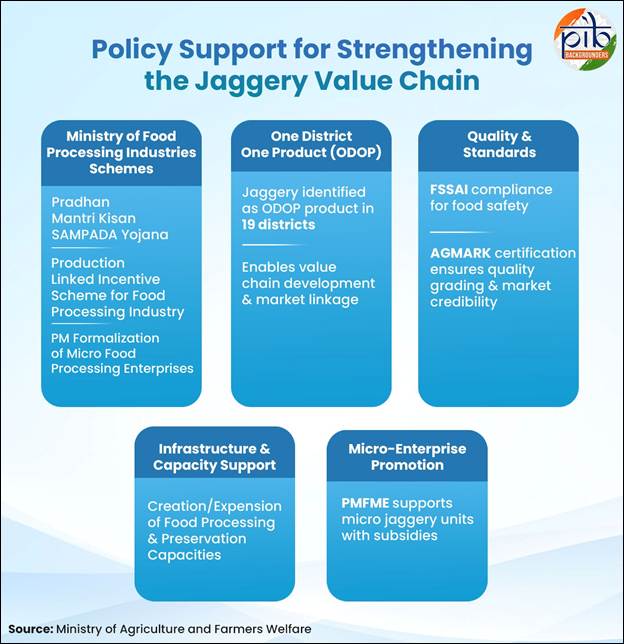
The Ministry of Food Processing Industries (MoFPI) promotes infrastructure development and enterprise growth for the food processing sector through several central sector schemes. These include
Pradhan Mantri Kisan SAMPADA Yojana (PMKSY),
Production Linked Incentive Scheme for Food Processing Industry (PLISFPI), and
Pradhan Mantri Formalization of Micro Food Processing Enterprises (PMFME) Scheme.
These demand-driven initiatives are implemented nationwide. They facilitate the establishment and expansion of processing units by adopting modern technologies. Beneficiary units are required to comply with Food Safety and Standards Authority of India (FSSAI) regulations. They are also encouraged to align with international food safety standards to improve export competitiveness.
PMKSY has a component called Creation/Expansion of Food Processing & Preservation Capacities (CEFPPC). Five jaggery processing units have been approved under this as of December 31, 2025.Total grants-in-aid for this was ₹17.07 crore. The PMFME Scheme has supported3,528 jaggery based micro food processing units with subsidiestotalling₹102.31 crore. The scheme also provides branding and marketing assistance of up to 50 percent to collectives. These may include Farmer-Producer Organizations (FPOs), Self-Help Groups (SHGs), cooperatives, or special-purpose vehicles of micro-enterprises.
The One District One Product (ODOP)promotes local agro-based industries by enabling economies of scale in input procurement, shared services, and market access. Jaggery and allied products have been identified as ODOP items in 19 districts. This has facilitated value chain development and strengthened support infrastructure.
Quality assurance and standardization are supported through the Directorate of Marketing & Inspection (DMI). Agricultural commodities that meet prescribed standards are certified under the AGMARK system. These standards define quality grades and enable consumers to access reliable products. They also ensure graded raw materials for producers’ remunerative prices for farmers. Jaggery is a notified commodity covered under AGMARK certification, reinforcing quality assurance, market credibility, and export readiness.
Geographical Indication (GI) Tagged Jaggery Varieties in India
A Geographical Indication (GI) is a name or sign given to certain products that relate to a specific geographical location or origins. This could be a region, town, or country. In the jaggery sector, GI recognition strengthens regional branding. It promotes traditional processing practices, and improves market access for rural producers. India has several GI-tagged jaggery varieties, each known for distinct regional qualities and traditional processing methods. Kolhapur jaggery (Maharashtra) is valued for its golden colour and high sucrose content. Muzaffarnagar gur (Uttar Pradesh) is export-oriented and made from high-quality cane. In Keralam, Marayoor and Central Travancore jaggery are recognized for their purity, medicinal value, traditional processing and regional distinctiveness.
Towards a Resilient and Value-Driven Jaggery Sector
Jaggery production and processing form an important pillar of India’s agro-processing economy. It links agriculture, nutrition, rural livelihoods, and export potential. As the world’s largest producer, India benefits from a strong sugarcane base. Traditional processing knowledge and rising domestic and global demand for natural sweeteners further strengthen the case. The sector supports millions of livelihoods through decentralized cottage industries, offering opportunities for value addition, rural entrepreneurship, and enhanced farmer incomes.
In addition to its economic role, jaggery’s mineral content and therapeutic properties make it a healthier alternative to refined sugar. It is a useful dietary supplement for addressing micronutrient deficiencies. Government initiatives promoting food processing infrastructure, micro-enterprises, quality certification, GI tagging, and value chain development are strengthening market access and product credibility. With continued policy support, improved processing practices, and diversification into value-added products, the jaggery sector holds strong potential to drive inclusive and sustainable rural growth.
It’s a choice you may face multiple times a day—and, at this point, your reaction is probably reflexive. Are you going to accept those internet cookies, reject them, or spend a little time customizing your settings?
Increasingly, internet users are pushing back against cookies—the digital crumbs used by websites and advertisers to spot returning customers—by choosing privacy-enhancing browsers or clicking that reject button. But ditching the cookies may have big implications for the free web. If digital companies, content creators, and advertisers aren’t making money from our surfing, the quality and usefulness of the products they offer might suffer too.
In a new study, Boston University researchers highlight the potential impact the loss of cookies has on advertisers and how alternative systems designed to balance privacy and revenue fail to recoup the costs.
They analyzed 200 million ad impressions—or views—worldwide and found that removing cookies cut website publishers’ revenue by more than a third. They also discovered that privacy-enhanced alternatives, notably a major Google project called Privacy Sandbox, only clawed back a small portion of that lost revenue. The findings were published in PNAS, the National Academy of Sciences’ flagship journal.
“Internet cookies—especially third-party cookies—have been central to how online advertising works,” says Garrett Johnson, a BU Questrom School of Business associate professor of marketing. Third-party cookies are those placed by an organization, like an advertiser, not connected to the site you’re on. “In our study, removing third-party cookies reduced publisher ad revenue by about 35 percent—and about 66 percent in the European Union—showing that cookies still play a major economic role in supporting the open web.” The European Union has tougher online privacy rules than much of the rest of the world.
According to Zhengrong Gu, a Questrom PhD candidate, because cookies help advertisers spot users around the web, they can better target and measure their ads. That makes advertisers’ spending more efficient, putting more ad money in the pockets of content creators and publishers. “If more users decline cookies, it would likely reduce the effectiveness of digital advertising and the revenue that supports much of the open web,” says Gu (Questrom’26).
The downside of cookies: no one really likes being followed. “Website cookies are online surveillance tools,” wrote Wayne State University researcher Elizabeth Stoycheff in a Conversation article, “and the commercial and government entities that use them would prefer people not read those notifications too closely.”
There have been a couple of different responses to the decline in cookie use. One is the implementation of paywalls and subscriptions to keep the cash flowing; another is requiring customers to use log-ins that work across multiple sites. Tech companies are also experimenting with privacy-enhancing technologies (PETs) that try to balance advertising needs with user privacy concerns. One of the best known PETs is Privacy Sandbox, Google’s now-defunct six-year experiment in cookie alternatives, which included innovations such as a browser tool that shared a customer’s interests rather than their detailed online history.
“In our study, Privacy Sandbox recovered only about 4 percent of the revenue lost when cookies were removed,” says Shunto J. Kobayashi, a Questrom assistant professor of marketing. That weak impact was in part due to the limited adoption of the new tools and because they changed the user experience, he says, introducing “technical frictions, especially slower ad loading times.”
In their paper, the researchers write that their findings, alongside those from other studies, “informed Google’s decision to abandon its plan to replace cookies with Privacy Sandbox. The episode underscores the difficulty of aligning privacy, performance, and competition goals in digital markets.”
To examine privacy technologies in a real-world setting, the BU team used data from ad management firm Raptive, and leveraged an experiment conducted by Google and overseen by the United Kingdom’s Competition and Markets Authority. During the study, Chrome users were randomly assigned to one of three groups: cookies-enabled, cookies-disabled, or cookies replaced by Privacy Sandbox. The study included around 60 million desktop and mobile Chrome users.
“The experiment created a rare opportunity for independent, large-scale evaluation open to external participants,” says Johnson, an expert on digital marketing who has studied privacy regulations, online ad effectiveness, and the economics of digital advertising.
He adds that many European regulators are considering even tighter online privacy rules, which could have a negative impact: “Our results provide unusually strong evidence—from a global, industry-wide field experiment—that restricting cookies carries significant economic downsides that regulators should consider.”
As for users faced with that daily accept or reject decision, Johnson recognizes that everyone will make the call that works for them—but he leans toward clicking “accept.”
“From my perspective, accepting cookies creates substantial benefits for the advertising ecosystem and the publishers I care about,” he says, “with what I perceive to be little personal risk.”
Northwestern University engineers have developed a small, wireless polygraph system you can wear.
Unlike polygraphs used in television crime dramas, this wearable version isn’t optimized to detect lies. Instead, engineers and physicians designed it to sense underlying stress hidden deep within the body — no interrogation room required.
The lightweight, bandage-like device gently adheres to the chest, where it simultaneously measures heart activity, breathing patterns, sweat response, blood flow and temperature. Together, these signals capture a real-time, whole-body view of stress.
By continuously tracking multiple physiological signals at once, the device could help clinicians detect stress and potential discomfort in patients — including infants or the elderly — who may be unable to communicate, diagnose sleep disorders without cumbersome in-laboratory equipment, monitor mental health over time and even sense early warning signs of medical complications.
“Sometimes, the body manifests signs of stress before a person is consciously aware of it,” said Northwestern’s John A. Rogers, who led the device development. “Even if people don’t realize how much pressure they are under, stress is quietly affecting their health. Prolonged stress can have adverse consequences, especially for pregnant mothers, children and critically ill patients. An ability to track stress based on quantitative measurements could empower people to take stress-relieving actions with direct benefits to their health. Importantly, we aimed to design a device, conceptually like a polygraph system, that operates on the basis of biophysical body responses, without requiring access to chemical biomarkers found in body fluids.”
A world-renowned bioelectronics pioneer, Rogers is the Louis Simpson and Kimberly Querrey Professor of Materials Science and Engineering, Biomedical Engineering and Neurological Surgery at Northwestern, where he has appointments in the McCormick School of Engineering and Northwestern University Feinberg School of Medicine. He also directs the Querrey Simpson Institute for Bioelectronics and the Querrey Simpson Institute for Translational Engineering and Advanced Medical Systems. Rogers is co-corresponding author of the study along with Dr. Debra E. Weese-Mayer, the Beatrice Cummings Mayer Professor of Pediatric Autonomic Medicine and professor of pediatrics (neurology) at Feinberg and Jae-Young Yoo of Sungkyunkwan University in Korea.
A voice for the vulnerable
The project started as a request from pediatricians at Ann & Robert H. Lurie Children’s Hospital of Chicago. Over the years, Rogers’ team has developed a suite of wireless, wearable electronics for infants and children — to track vital signs, monitor illness
, treat congenital conditions and diagnose disease. Now, pediatricians asked Rogers to create a soft, non-invasive device to detect and continuously track stress levels in babies throughout hospital stays, without measuring stress’ biochemical signatures in saliva and blood.
Currently, detecting babies’ stress often depends on what caregivers can see and hear — crying, facial expressions and movement — along with basic vital signs. But these signals can be subtle, inconsistent or even entirely absent.
“Stress is often scored using survey sheets and nursing assessments,” Rogers said. “The entries include things like tonality and volume of crying. Infants obviously cannot describe their own pain levels. So, unlike with adults, determining stress in babies can be incredibly challenging. We wanted to take subjectivity out of these assessments.”
“This new device tracks the body’s stress signals around the clock, helping quantify how long someone is stressed each day and how intense that stress is,” said Weese-Mayer, Rogers’ long-time collaborator. “The beauty of the device is that both individuals and healthcare providers can now identify stress and objectively monitor the effectiveness of interventions to decrease stress and restore a healthy balance, in a completely non-invasive manner.”
All-in-one stress sensing
To do that, Rogers and his team found inspiration in a surprising place: polygraphs. Although they are colloquially called “lie detectors,” polygraphs actually don’t detect lies. They measure the body’s response to stress, which can be triggered by many factors besides deception. Rogers saw an opportunity to build on that core idea. But, while traditional polygraph machines rely on a patchwork of bulky, wired sensors, Rogers aimed to capture those same physiological signals — and then some — in a more comprehensive, fully integrated, accurate and wearable form.
The resulting technology combines several tiny sensors into a single, soft device. Together, these sensors continuously track multiple physiological signals, all of which respond when the body senses stress. A built-in motion sensor and miniature microphone capture subtle mechanical and acoustic signals from the heart and lungs. Other sensors detect skin temperature and heat flow associated with near-surface blood circulation. And another sensor measures changes in the skin’s electrical conductivity caused by sweat gland activity — a well-known marker of stress.
“Measuring stress is a complex task because it’s multi-dimensional,” Rogers said. “It’s not possible to reliably determine stress by measuring just one or two, or even three or four, parameters. A broad collection of factors is necessary. So, we crammed as many sensors of physiological processes into this device platform as we could, while maintaining a compact size and lightweight construction and avoiding the need to access biofluids.”
The system wirelessly transmits these synchronized data streams to a smartphone, smart watch or tablet, where machine learning algorithms analyze patterns associated with stress in real time. Weighing less than 8 grams (equivalent to eight paperclips) and designed to move naturally with the skin, the device can operate continuously for more than 24 hours.
Proven across realistic scenarios
After developing the system, Rogers’ team validated it across a wide range of scenarios, including controlled experiments and real-world environments. During simulated lie-detector tests, the wearable device accurately captured stress responses triggered by sensitive questions and closely matched measurements from commercial polygraph systems.
In cognitive tests, such as understanding speech in noisy environments, the device detected clear increases in stress-related signals as tasks increased in difficulty. The results aligned with simultaneous, independent measurements of pupil dilation, a common method to determine stress.
In another experiment, study participants placed their hands in ice-cold water, and the system recorded coordinated changes across cardiac activity, breathing patterns, sweat responses and temperature signals. In pediatric sleep studies, the wearable device identified key clinical events, including breathing irregularities and nighttime awakenings, with accuracy comparable to hospital-grade sleep tests but with far fewer disruptions.
And, finally, during emergency room training sessions with medical students, the device revealed a striking pattern. Participants with stronger stress responses tended to perform worse, suggesting stress may impair decision-making in high-pressure situations.
“Ultimately, the device could send an alert to a user or caregiver when stress levels hit a certain limit,” Rogers said. “Many people might not fully appreciate the level of stress they are under and might not realize it’s affecting their performance.”
What’s next
Next, the team aims to move its technology beyond validation studies and into broader clinical use. Next steps will include testing the device in larger patient groups, refining its ability to personalize stress detection and integrating it into hospital and at-home monitoring systems to provide continuous, real-time insight into patient health.
Rogers also is exploring opportunities for incorporating even more sensors into the device, including the ability to measure brain activity. Adding electroencephalogram (EEG) capabilities would allow the device to move beyond measuring the body’s stress response to capturing how the brain perceives that stress. That could bring scientists closer to distinguishing stress from pain — even in the home setting — and understanding how it is experienced in the context of the simultaneously recorded stress biomarkers.
“We are living in stressful times, without sufficient measures to proactively detect stress,” Weese-Mayer said. “By identifying stress — whether environmental or disease-induced — earlier, we can introduce intervention before stress’ effects become irreversible.”
The study, “Wireless, skin-interfaced multimodal sensing system for continuous psychophysiological monitoring — a wearable polygraph device,” was supported by the Querrey Simpson Institute for Bioelectronics.
A new type of long-necked plant-eating dinosaur – the largest ever found in Southeast Asia – has been revealed in a study led by researchers at University College London (UCL), Mahasarakham University, Suranaree University of Technology and Sirindhorn Museum in Thailand.
The dinosaur, described in a new paper in the journal Scientific Reports, was identified from bones found at the edge of a pond in north-eastern Thailand 10 years ago.
Analysing spine, rib, pelvis and leg bones, including a front leg bone 1.78 metres long (as long as a human), the research team estimated that the dinosaur would have weighed 27 tonnes – about the same as nine adult Asian elephants – and measured 27 metres in length.
It has been named Nagatitan chaiyaphumensis, with“Naga” referring to a mythological aquatic serpent in Thai and Southeast Asian folklore, “Titan” referring to the giants of Greek mythology and chaiyaphumensis meaning “from Chaiyaphum”, the Thai province where the fossils were discovered. It is the 14th dinosaur to be named in Thailand.
It belonged to the sauropod family of dinosaurs – long-necked, long-tailed plant-eaters that included the Diplodocus and Brontosaurus – and lived in theEarly Cretaceous period between 100 and 120 million years ago.
Lead author Thitiwoot (Perth) Sethapanichsakul, a Thai PhD student at UCL Earth Sciences, said: “Our dinosaur is big by most people’s standards – it likely weighed at least 10 tonnes more than Dippy the Diplodocus (Diplodocus carnegii). However, it is still dwarfed by sauropods like Patagotitan (60 tonnes) or Ruyangosaurus (50 tonnes).
“We refer to Nagatitan as ‘the last titan’ of Thailand. That is because it was discovered in Thailand’s youngest dinosaur-bearing rock formation. Younger rocks laid down towards the end of the time of the dinosaurs are unlikely to contain dinosaur remains because the region by then had become a shallow sea. So this may be the last or most recent large sauropod we will find in Southeast Asia.”
During the Early Cretaceous the environment would have been arid to semi-arid – a preferred habitat for sauropods who appeared to thrive in these environments, relying on the surface area of their long necks and tails to shed heat and regulate their body temperature.
The area where the specimens were found also appeared to be part of a meandering river system, which would have been home to fish, freshwater sharks and crocodiles.
Nagatitan would have lived alongside smaller plant-eating dinosaurs such as iguanodontians and early branching ceratopsians (cousins of the Triceratops), as well as big meat-eaters including carcharodontosaurians and spinosaurids, and flying reptiles called pterosaurs eating fish from the river.
Nagatitan was a somphospondylan sauropod – a subgroup of sauropod that became widespread about 120 million years ago. The authors found that it specifically belonged to a narrower group within the somphospondylans called Euhelopodidae, which represents a group of somphospondylan sauropods only found in Asia.
Nagatitan is distinct from other species due to a combination of unique features on its spine, pelvis and legs. A life-size reconstruction of the dinosaur is on display at the Thainosaur Museum at Asiatique in Bangkok.
Sethapanichsakul said: “My dream is to continue pushing to get Southeast Asian dinosaurs recognised internationally. More international collaborations between Thailand and other institutions like UCL can further our understanding of the region’s palaeobiology and apply it to a global context. This all starts with identifying and describing the specimens we have found first. We have a large collection of sauropod fossils that have not yet been formally described – these may include a number of new species.
“I’ve always been a dinosaur kid. This study doesn’t just establish a new species but also fulfils a childhood promise of naming a dinosaur.”
Co-author Professor Paul Upchurch, based at UCL Earth Sciences, said: “This discovery comes out of a new collaboration between UCL and colleagues in Thailand. The material was studied both in Thailand and at UCL – 3D scanning and printing has meant that we can study the specimen and collect data without having to travel (good for reducing carbon footprint).
“We have had a long-standing interest in the evolution of these gigantic plant eaters and have good collaborative links with researchers around the world. It is great to work with Thai colleagues and start to get insights into what was happening in Southeast Asia during the Jurassic and Cretaceous.”
A team of five academics work on different aspects of dinosaur evolution at UCL, with strong collaborative links to the Natural History Museum. The extended research group comprises four research fellows and postdoc researchers, and more than 10 PhD students. At least four of the PhD students are working on dinosaur evolution, with the others looking at a wider array of other evolutionary questions relating to vertebrates, including crocodiles and birds.
Project leader and National Geographic Explorer Dr Sita Manitkoon, researcher at the Palaeontological Research and Education Centre, Mahasarakham University said: “Although Thailand is a small country within Asia, we have a very high diversity in dinosaur fossils, possibly the third most abundant in Asia in terms of dinosaur remains. We’ve only really been studying dinosaurs in Thailand about 40 years (since the first dinosaur was named in 1986), and already we have a surge of younger generation palaeontologists, who are actively undertaking research and promoting palaeontology and its importance within the country.”
In a special ceremony hosted in Oslo, His Majesty King Herald V of Norway conferred upon Prime Minister Shri Narendra Modi the ‘Grand Cross of the Royal Norwegian Order of Merit’. The award is Norway’s highest honour bestowed on foreign Heads of Government, and is conferred in recognition of the outstanding service in the interest of Norway and humankind.
Prime Minister @narendramodi awarded Grand Cross of the Royal Norwegian Order of Merit by His Majesty King Harald V of #Norway
Speaking on the occasion, Prime Minister Modi expressed his deep gratitude to His Majesty King Herald V and to the people of Norway for this honour. He dedicated the award to the historic friendship between India and Norway, calling it a tribute to the enduring warmth, trust, and affection shared between the people of India and the people of Norway.
The conferment stands as a symbol of the deep bonds of goodwill that exists between India and Norway, and will guide their journey of friendship and collaboration into the future.
Researchers have developed an ultrathin flexible film embedded with nanoscale gold particles that can efficiently convert tiny temperature changes into electrical signals — a breakthrough that could enable self-powered sensors, wearable electronics, smart photodetectors, low-grade heat harvesters, and next-generation energy-efficient devices for healthcare and environmental monitoring.
As demand rises for lightweight, flexible, and low-power materials capable of harvesting ambient thermal energy, scientists are increasingly exploring hybrid systems that combine plasmonic materials with pyroelectric polymers. While earlier plasmonic-pyroelectric and PVDF-based composite systems improved thermal-to-electrical conversion, many depended on micron-thick structures or poorly controlled interfaces, limiting their use in compact, wearable technologies.
Addressing these challenges, researchers from the Institute of Nano Science and Technology (INST), an autonomous institute under the Department of Science and Technology, demonstrated that incorporating a tiny amount of nanogold into polyvinylidene fluoride (PVDF) — a widely used ferroelectric polymer — significantly enhances its pyroelectric performance, or its ability to generate electricity from temperature fluctuations.
The research team, led by Dipankar Mandal along with collaborators including Sudip Naskar, engineered ultrathin PVDF films less than 100 nanometres thick containing hexagonal nanogold particles. Their approach focused on understanding how nanoscale gold-polymer interactions, dipole alignment, and confined plasmonic excitations influence pyroelectric behaviour in ultrathin films.
The researchers found that embedding hexagonal nanogold particles created a nearly pure polar phase in the PVDF matrix with highly ordered dipoles — a key requirement for efficient pyroelectric energy conversion. The study further revealed that a metastable hexagonal close-packed gold nanoparticle phase could be integrated into a robust two-dimensional hybrid thin film, where plasmon-dipole-electron coupling worked cooperatively to improve pyroelectricity, dipole ordering, and broadband optical absorption.
Published in Advanced Functional Materials, the study demonstrated efficient pyroelectric energy conversion within a narrow ambient temperature range of 294–301 K. The findings represent an important advance toward self-powered thermal sensing and wearable energy-harvesting technologies designed to operate under everyday environmental conditions.
Tehran has formally responded to a United States proposal aimed at ending the ongoing conflict and reopening negotiations over Iran’s nuclear program, according to Iranian state media and multiple international reports.
The Iranian response was reportedly delivered through Pakistan, which has emerged as a key intermediary in backchannel diplomacy between Washington and Tehran. Iranian officials said the current phase of negotiations should focus primarily on ending hostilities and easing tensions in the region.
US President Donald Trump, however, rejected Tehran’s latest position, calling it “totally unacceptable” amid continuing friction over the future of Iran’s uranium enrichment program and the status of the Strait of Hormuz.
According to reports, the US proposal includes a temporary 14-point memorandum designed to halt fighting, reopen shipping routes through the Strait of Hormuz and launch broader negotiations on Iran’s nuclear activities. Washington is seeking a long-term freeze on uranium enrichment, removal of highly enriched uranium stockpiles and dismantling of key nuclear facilities.
Iran has reportedly opposed dismantling its nuclear infrastructure and instead proposed a narrower agreement focused on ending military action, lifting sanctions and restoring commercial navigation in the Gulf.
The Strait of Hormuz remains at the centre of the crisis. The strategically vital waterway, through which a major share of the world’s oil shipments passes, has faced severe disruptions for more than two months amid the conflict. Oil prices rose sharply on Sunday after Trump rejected Iran’s response and tensions in the Gulf intensified further.
US Secretary of State Marco Rubio said Washington had largely achieved its military objectives in operations against Iran, but acknowledged that Tehran still retains significant quantities of enriched uranium.
Meanwhile, regional tensions remain high, with reports of drone incidents near Gulf states and continued military deployments linked to efforts to secure maritime routes through Hormuz.
Ukrainian President Volodymyr Zelensky said Ukraine has submitted a list of 1,000 detainees to Russia as part of preparations for a major prisoner exchange between the two sides amid the ongoing conflict.
According to Ukraine’s presidential press service, Zelensky said the proposed “1,000 for 1,000” prisoner exchange was being actively prepared and was expected to take place soon.
“The prisoner exchange, 1,000 for 1,000, is being prepared and must take place. The Americans assumed responsibility for these guarantees,” Zelensky said in his evening address on Sunday. He also reiterated the need to end the conflict with Russia and ensure long-term security guarantees for Ukraine.
Referring to Russian President Vladimir Putin, Zelensky said Moscow was now indicating readiness for direct talks. “Now Putin himself says that he is finally ready for real meetings. We pushed him a little toward this, and we have long been ready for such meetings ourselves, now a format must be found,” he said.
3-Day Ceasefire in Effect
Russia and Ukraine had on Friday agreed to a three-day ceasefire coinciding with Victory Day commemorations, along with the planned exchange of 1,000 prisoners from each side.
However, both countries on Sunday accused each other of repeatedly violating the temporary truce.
Russia’s Defence Ministry claimed Ukrainian forces committed 16,071 ceasefire violations over the previous 24 hours. Moscow said its troops responded with retaliatory strikes targeting artillery systems, command centres and drone launch sites. A day earlier, the ministry had reported 8,970 alleged ceasefire breaches across several regions.
Meanwhile, Ukrainian authorities said at least one person was killed and 15 others injured in Russian attacks across Ukraine despite the ceasefire arrangement. The General Staff of the Ukrainian Armed Forces said Russian troops carried out around 60 attacks on Ukrainian positions on Sunday.
The temporary ceasefire was scheduled to remain in effect from Saturday through Monday during Russia’s Victory Day celebrations.