Artemis II Update-11, Day 4: Crew Enters Deep Space, Lunar Flyby Prep

 As the Orion spacecraft continues its path toward the Moon, the Artemis II crew will spend their fourth flight day preparing for their lunar flyby on Monday, April 6. Traveling more than 169,000 miles from Earth aboard the Orion spacecraft, astronauts are set to manually pilot the vehicle and study the Moon from a distant vantage point. The mission will also include a planned communications blackout and record-breaking distance milestone as Orion moves deeper into space.


Artemis II Update-9, Day 3: NASA cancels first trajectory correction burn

NASA confirmed on April 4 that Artemis II’s first planned trajectory correction burn was canceled after Orion remained on its precise path to the Moon. The crew, traveling toward a scheduled lunar flyby on April 6, continues operations without the need for immediate adjustments. Mission controllers in Houston determined the spacecraft’s trajectory required no correction at this stage, with future burns still available if needed.


Artemis II Update-8, Day 3 : Crew prepares for first correction burn, readies lunar flyby tasks

NASA’s Artemis II crew began Flight Day 3 on April 4 after departing Earth’s orbit earlier in the mission, preparing for their first trajectory correction burn as Orion heads toward the Moon. The four astronauts, currently nearly 100,000 miles from Earth, are also training for lunar observations scheduled during a flyby on April 6. The day’s schedule includes spacecraft operations, medical drills, and communication system tests as the mission advances deeper into space.


Artemis II Update-7, Day 2 : Orion completes Translunar Injection burn , crew begins journey to Moon

NASA’s Artemis II crew began their journey to the Moon on April 2 after Orion completed a translunar injection burn lasting nearly six minutes. The maneuver sent astronauts Reid Wiseman, Victor Glover, Christina Koch, and Jeremy Hansen out of Earth orbit for the first time since 1972. The spacecraft is now on a trajectory toward a planned lunar flyby, with scientific observations scheduled in the coming days.

For the first time in more than half a century, humans are no longer orbiting Earth. They are heading for the Moon.

At 7:49 p.m. Eastern Time on April 2, NASA’s Orion spacecraft ignited its engine and began accelerating out of Earth’s gravitational hold. The burn lasted five minutes and 50 seconds. When it ended, Artemis II had crossed a threshold not reached since the Apollo era.

The mission, led by the National Aeronautics and Space Administration, is now on a trajectory that will carry its crew around the Moon and back.

Translunar injection burn performance and Orion trajectory

The translunar injection burn marked the mission’s most consequential maneuver to date. Orion’s main engine, capable of producing up to 6,000 pounds of thrust, fired as planned, pushing the spacecraft onto a path toward the Moon.

At the time of ignition, Orion had a mass of about 58,000 pounds. During the burn, it consumed roughly 1,000 pounds of propellant, according to NASA mission data.

The maneuver required precise timing and alignment. Even small deviations could shift the spacecraft’s trajectory over the distance between Earth and the Moon.

With the burn complete, Orion is no longer bound to low Earth orbit. It is now traveling along a translunar path that will bring the crew into the Moon’s vicinity in the coming days.

The milestone places Artemis II alongside historic missions such as Apollo 17, which marked the last time astronauts traveled beyond Earth orbit.

NASA

Crew operations, exercise systems, and onboard experiments

As Orion moves deeper into space, the crew has begun settling into daily operations designed for long-duration missions.

NASA astronauts Reid Wiseman, Victor Glover, and Christina Koch are joined by Jeremy Hansen of the Canadian Space Agency.

The astronauts are using a compact flywheel exercise device to maintain physical conditioning. The system relies on a cable-based mechanism that provides resistance based on applied force, supporting both aerobic and strength exercises. It can generate loads of up to 400 pounds while weighing only about 30 pounds, a design suited to the mass constraints of deep space missions.

By comparison, exercise equipment aboard the International Space Station weighs several thousand pounds and occupies far more space. Orion’s system is designed to deliver similar benefits in a much smaller footprint.

During exercise sessions, ground teams monitored Orion’s air revitalization system, which regulates oxygen, carbon dioxide, and cabin conditions. Engineers also assessed how crew movement affects spacecraft stability.

The crew has also completed checks on the AVATAR scientific payload, part of the mission’s broader research objectives.

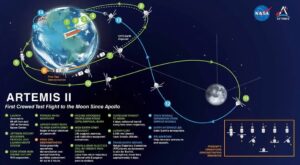
Trajectory for Artemis II, NASA’s first flight with crew aboard SLS, Orion to pave the way for long-term return to the Moon, missions to Mars

Communications glitch resolved and lunar science plan begins

Engineers investigated a brief loss of two-way communication that occurred earlier in the mission. NASA determined the issue stemmed from a ground configuration problem involving the Tracking and Data Relay Satellite system.

The system, which supports communication between spacecraft and Earth, was quickly reconfigured. NASA reported no impact on mission operations.

Attention is now shifting toward the upcoming lunar flyby. A dedicated science team has begun developing a Lunar Targeting Plan, which will guide what the crew observes during a roughly six-hour window near the Moon on April 6.

The plan includes studying surface features such as impact craters, ancient lava plains, and tectonic structures. These observations are intended to support research into the Moon’s formation and the broader history of the solar system.

One planned highlight is a solar eclipse visible from Orion’s vantage point. As the Moon blocks the Sun, the crew will have an opportunity to observe the solar corona, the Sun’s outer atmosphere, and look for flashes caused by meteoroid impacts on the lunar surface.

The sequence of events marks a transition point. Artemis II has moved beyond Earth orbit and into deep space, carrying its crew toward a destinatio:n that has not hosted human visitors in decades.

Also Read:

Artemis II Update-6, Day 2 : Crew, houston poll ‘Go’ for Translunar injection burn, crew prepares for Moon flight

Artemis II Update-5: Perigee raise burn complete, translunar injection burn next

Artemis II Update-6, Day 2 : Crew, houston poll ‘Go’ for Translunar injection burn, crew prepares for Moon flight

NASA approved the translunar injection burn for Artemis II on April 2, clearing the Orion spacecraft to leave Earth orbit at 7:49 p.m. EDT. The burn will send astronauts Reid Wiseman, Victor Glover, Christina Koch, and Jeremy Hansen toward the Moon for the first time since 1972. The decision follows a mission management review confirming spacecraft readiness and system performance.

The call came from Houston after a day of checks and calculations. The answer was simple. Go.

With that, NASA cleared Artemis II to attempt the maneuver that will send its crew beyond Earth orbit. If executed as planned, the burn will place humans on a path toward the Moon for the first time in more than five decades.

The mission marks a major step for the National Aeronautics and Space Administration and its Artemis program, which aims to return astronauts to deep space operations.

Translunar injection burn timing and Orion engine performance

The translunar injection burn is scheduled to begin at 7:49 p.m. Eastern Time. Orion’s main engine will fire for five minutes and 49 seconds, providing the acceleration needed to break free from Earth’s orbit.

The engine, located on the spacecraft’s service module, produces up to 6,000 pounds of thrust. NASA compares that output to accelerating a car from zero to 60 miles per hour in about 2.7 seconds.

The burn must be executed with precise timing and orientation. Even minor deviations can alter the spacecraft’s path over the hundreds of thousands of miles between Earth and the Moon.

Flight controllers will track engine performance, guidance systems, and navigation data in real time to ensure Orion remains aligned with its intended trajectory.

NASA flight directors Rick Henfling (right) and Judd Frieling (left) sit on console in Mission Control’s White Flight Control room during NASA’s Artemis II mission launch on Wednesday, April 1, 2026.
ROBERT MARKOWITZ NASA-JSC

Crew activities and first full day operations in space

Earlier in the day, the Artemis II crew began their first full schedule of in-space operations. NASA astronauts Reid Wiseman, Victor Glover, and Christina Koch were joined by Jeremy Hansen of the Canadian Space Agency.

Mission control woke the crew at 2:35 p.m. Eastern Time with the song “Green Light” by John Legend and Andre 3000, continuing a long-standing NASA tradition of musical wake-up calls.

The astronauts moved into preparations for the burn, reviewing procedures and monitoring spacecraft systems. They also conducted their first exercise session using Orion’s flywheel-based device, designed to help maintain muscle and bone health in microgravity.

Exercise equipment is a standard feature for crewed missions, particularly those that extend beyond low Earth orbit. Maintaining physical conditioning becomes critical as mission duration increases.

The hours leading up to the burn are structured around system checks, communication with ground teams, and final readiness confirmations.

The Artemis II mission is designed as a test flight. Yet the stakes of this maneuver are clear. Once the engine fires, the crew will begin a journey that carries them away from Earth and toward the Moon, retracing a path last taken during the Apollo era.

Also Read:

Artemis II Update-5: perigee raise burn complete, translunar injection burn next

Artemis II Update-4: Crew completes proximity test, perigee raise burn up next

Artemis II Update-5: Perigee raise burn complete, translunar injection burn next

NASA confirmed the Artemis II crew completed the perigee raise burn on April 2, firing Orion’s engine for 43 seconds to refine its orbit around Earth. The maneuver placed the spacecraft into a stable high Earth orbit ahead of a planned translunar injection later the same day. Mission managers will review system performance before approving the burn that would send astronauts toward the Moon for the first time since 1972.

The Artemis II crew woke to music and a tightly timed task. Minutes later, they were watching their spacecraft reshape its path around Earth.

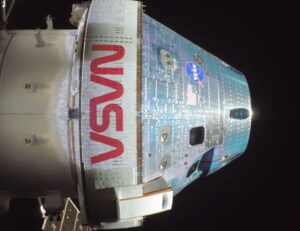
Inside Orion, the capsule named Integrity, astronauts monitored systems as the engine fired for just over 40 seconds. The burn was brief. Its impact on the mission trajectory was not.

The maneuver marked another step in a sequence designed by the National Aeronautics and Space Administration to prepare astronauts for a return to deep space operations.

Perigee raise burn details and Orion orbit adjustment

The perigee raise burn began after a scheduled wake-up at 7:06 a.m. Eastern Time, when mission control in Houston signaled the crew with the song “Sleepyhead” by Young and Sick.

Shortly after, Orion’s service module main engine ignited. It burned for 43 seconds, increasing the spacecraft’s perigee, the lowest point in its orbit around Earth.

This adjustment refined Orion’s trajectory, placing it into a stable high Earth orbit. The new orbit aligns with the spacecraft’s planned path for departure toward the Moon.

Engineers design these burns to test propulsion precision under real mission conditions. Small timing or thrust variations can significantly alter a spacecraft’s trajectory over long distances.

Following the maneuver, astronauts returned to a rest cycle lasting about four and a half hours, part of a schedule structured to balance workload and recovery during the mission’s early phase.

Trajectory for Artemis II, NASA’s first flight with crew aboard SLS, Orion to pave the way for long-term return to the Moon, missions to Mars

Translunar injection burn timing and mission approval process

Attention now shifts to the next and more consequential maneuver, the translunar injection burn.

Mission management teams are scheduled to meet later in the day to assess spacecraft health, propulsion data, and navigation accuracy. Their approval is required before proceeding.

If cleared, the translunar injection burn is set for 7:49 p.m. Eastern Time. The maneuver will last five minutes and 49 seconds and is expected to increase Orion’s velocity by 1,274 feet per second.

That acceleration would push the spacecraft out of Earth orbit and onto a trajectory toward the Moon. It would mark the first time humans leave low Earth orbit since the Apollo era, which concluded with the final Moon mission in 1972.

Flight controllers will monitor engine performance and guidance systems throughout the burn. Navigation data must remain within tight tolerances to ensure Orion stays aligned with its intended path.

The Artemis II mission is designed as a test flight, but each milestone carries operational weight. With the perigee burn complete, the next decision point will determine whether the crew begins its journey beyond Earth orbit.

Also Read:

Artemis II Update-4: Crew completes proximity test, perigee raise burn up next

Artemis II Update-3: Apogee Raise burn complete, Crew prepares critical Proximity Test

NASA to stream launch and docking of ‘Progress 94 cargo spacecraft’ to ISS

NASA is set to broadcast the launch and arrival of a Russian cargo spacecraft carrying essential supplies to astronauts aboard the International Space Station, as part of routine resupply operations that keep the orbital lab running.

The uncrewed Progress 94 spacecraft, operated by Russia’s space agency Roscosmos, is scheduled to lift off on Sunday, March 22, at 7:59 a.m. EDT from the Baikonur Cosmodrome in Kazakhstan. The mission will ride aboard a Soyuz rocket and is loaded with nearly three tonnes of food, fuel, and other critical materials for the station’s crew.

NASA will begin live coverage of the launch at 7:30 a.m. EDT. The broadcast will be available on NASA+, Amazon Prime, and the agency’s official YouTube channel, alongside other digital platforms.

Following a two-day journey in orbit, the spacecraft is expected to dock automatically with the space-facing port of the Poisk module at around 9:34 a.m. EDT on Tuesday, March 24. Live coverage of the rendezvous and docking is scheduled to start at 8:45 a.m.

Once attached, Progress 94 will remain at the station for roughly six months. During that time, it will serve both as a supply vessel and a storage unit for waste. At the end of its mission, it will detach and burn up upon re-entry into Earth’s atmosphere, safely disposing of onboard trash.

The mission follows the departure of Progress 92, which undocked from the station on March 16 and disintegrated over the Pacific Ocean without incident.

The International Space Station has been continuously inhabited for over 25 years, serving as a hub for scientific research in microgravity. The platform continues to support studies that cannot be conducted on Earth, while also helping space agencies prepare for longer missions beyond low Earth orbit, including NASA’s Artemis programme aimed at returning humans to the Moon, and eventual crewed missions to Mars.

Also Read:

New NASA DART mission data reveals asteroids throw ‘cosmic snowballs’ at each other

NASA’s Webb Cameras Explore Largest Star-Forming Cloud in Milky Way


NASA to Brief Media on X-59 Supersonic Aircraft Flight Tests After 2nd California Mission

NASA is scheduled to host a media teleconference Friday at 6 p.m. EDT to outline the next phase of flight testing for its X-59 quiet supersonic aircraft, with the briefing set to follow the plane’s second test flight over California the same day.

The call will include NASA leadership, representatives from the agency’s Quesst mission, and officials from primary contractor Lockheed Martin Skunk Works. The X-59’s test pilots are also expected to participate, addressing questions about flight conditions and pre-flight preparation protocols.

The Quesst mission, short for Quiet SuperSonic Technology, is designed to gather data on how communities on the ground perceive sonic disturbances from supersonic flight, with the goal of informing potential regulatory changes to current restrictions on overland supersonic commercial travel in the United States. The X-59 is engineered to reduce the sonic boom typically associated with supersonic aircraft to what NASA describes as a quieter “sonic thump.”

Lockheed Martin Skunk Works, the advanced development division behind the aircraft’s construction, has been working alongside NASA on the program since the agency awarded the contract in 2018. The X-59 completed its first flight in March 2024 at Lockheed’s facility in Palmdale, California.

Full teleconference details and dial-in credentials are expected to be made available through NASA’s media channels ahead of the Friday briefing, which will be streamed on NASA’s YouTube channel. An instant replay will be available online.

Participants include:

  • Bob Pearce, associate administrator, NASA Aeronautics Research Mission Directorate, Washington
  • Cathy Bahm, project manager, Low Boom Flight Demonstrator, NASA’s Armstrong Flight Research Center, Edwards, California
  • Peter Coen, Quesst mission integration manager, NASA’s Langley Research Center, Hampton, Virginia
  • Jim “Clue” Less, X-59 test pilot, NASA Armstrong
  • Pat LeBeau, Lockheed Martin X-59 project manager

To participate in the virtual call, members of the media must RSVP no later than two hours before the start of the event to: kristen.m.hatfield@nasa.gov. NASA’s media accreditation policy is available online.


Also Read:

NASA Sensors to Help Detect Methane Emitted by Landfills

NASA’s Swift, Fermi missions detect exceptional cosmic blast

NASA’s Webb Cameras Explore Largest Star-Forming Cloud in Milky Way

The difference longer wavelengths of light make, even within the infrared spectrum, are stark when comparing the images from Webb’s MIRI and NIRCam (Near-Infrared Camera) instruments. Glowing gas and dust appear dramatically in mid-infrared light, while all but the brightest stars disappear from view.

In contrast to MIRI, colorful stars steal the show in Webb’s NIRCam image, punctuated occasionally by bright clouds of gas and dust. Further research into these stars will reveal details of their masses and ages, which will help astronomers better understand the process of star formation in this dense, active galactic center region. Has it been going on for millions of years? Or has some unknown process triggered it only recently?

Astronomers hope Webb will shed light on why star formation in the galactic center is so disproportionately low. Though the region is stocked with plenty of gaseous raw material, on the whole it is not nearly as productive as Sagittarius B2. While Sagittarius B2 has only 10 percent of the galactic center’s gas, it produces 50 percent of its stars.

“Humans have been studying the stars for thousands of years, and there is still a lot to understand,” said Nazar Budaiev, a graduate student at the University of Florida and the co-principal investigator of the study. “For everything new Webb is showing us, there are also new mysteries to explore, and it’s exciting to be a part of that ongoing discovery.”

More about Webb and MIRI

The James Webb Space Telescope is the world’s premier space science observatory. Webb is solving mysteries in our solar system, looking beyond to distant worlds around other stars, and probing the mysterious structures and origins of our universe and our place in it. Webb is an international program led by NASA with its partners, ESA (European Space Agency) and CSA (Canadian Space Agency).

Webb’s MIRI was developed through a 50-50 partnership between NASA and ESA. A division of Caltech in Pasadena, California, JPL led the U.S. contribution to MIRI. JPL also led development of MIRI’s cryocooler, done in collaboration with Northrop Grumman in Redondo Beach, California, and NASA’s Goddard Space Flight Center in Greenbelt, Maryland.