After the big development pledges in Seville, UN says action starts now

That’s where the Sevilla Platform for Action (SPA) comes in – a major step to begin implementing the Seville Agreement without delay.

It features over 130 concrete actions to support the renewed global financing framework that world leaders just adopted at the international conference.

They will help countries mobilise resources for an SDG investment push, build developing countries’ development capacity, help address the sustainable development debt crisis, and take steps to improve the system by which the developing world can borrow money for national investment without crippling debt burdens.

Launching the platform, Spain’s Prime Minister Pedro Sánchez, highlighted the urgency of collective action saying the platform represents “a critical opportunity to restore trust in multilateralism and deliver tangible financing.”

UN Secretary-General António Guterres underscored the importance of the SPA as a catalyst for joint action and delivery.

In a world divided, it is “a springboard towards a more just, inclusive and sustainable world for all countries,” he said.

Countries can make up for absence of US

Speaking earlier at press conference for the hundreds of journalists here in Sevilla, he said the absence of the United States which left negotiations earlier this month was a challenge but there are always ways to raise the money needed: “It’s a question of political will.”

This can be done if leaders are willing to take the necessary measures such as working through multilateral development banks and carbon taxes, for example.

Power shifts

To have the United States on board would be excellent but it can be done in any case by those willing to do so.”

“I have a clear message to the powerful,” the UN chief continued. “It’s better to lead the reform of the system now than to wait and eventually suffer the resistance later when power relations change.

“And I believe that the reforms that are proposed in Sevilla in line with the work that was done in the Summit of the Future are reforms that are absolutely needed both for developing and developed countries.”

Following the opening remarks, interventions demonstrated strong political commitment to start implementing the historic funding agreement.

Notable initiatives include a global hub for debt swaps for development at the World Bank and a debt pause clause alliance – championed by Spain and a coalition of partners.

Sevilla Platform for Action at a glance:

  • It aims to bring together countries, organisations, businesses and others to make real, measurable progress in tackling global financial and development challenges.
  • Any group – from governments to charities, businesses to universities – can put forward a new or significantly expanded plan that supports the UN’s sustainable development goals.
  • Proposals must set out clear, achievable actions with specific results, a timeline, and show how they will be funded.
  • Submissions were open from 1 May to 6 June 2025, using an online form.
  • Each plan had to name the lead group behind it, list any supporting partners, explain what makes it new or ambitious, and include a communications plan.
  • Selected initiatives will be presented to the public and media during FFD4 in Sevilla.
  • All approved commitments will be listed online, with progress tracked and reported through future UN reviews and meetings.

‘Everyone’s business’

A further essential part of turning words in Sevilla into action on the ground, is mobilising the business community.

Business leaders on Monday issued an urgent appeal to unlock more private capital at the opening of the International Business Forum on Monday.

António Guterres told delegates: “Development is everyone’s business”, emphasising the private sector’s essential role alongside public institutions in achieving the SDGs.

Sevilla in the south of Spain is the venue for FFD4.

Five priorities for delivery

A new communique from the conference’s Business Steering Committee – co-chaired by the International Chamber of Commerce (ICC) and Global Investors for Sustainable Development (GISD) – outlines five priority areas for action:

  • Create more ways to invest in development: Set up tools and platforms that make it easier and safer for private money to flow into projects that help people, especially in poorer countries.
  • Work more closely with governments: Join forces to plan and support projects from an early stage, making them ready for investment.
  • Make sustainability rules clearer and more consistent: Align standards across countries so businesses can invest more confidently and support national development goals.
  • Fix financial rules that get in the way: Update regulations that make it harder to invest long-term in developing countries.
  • Help small businesses get funding: Improve access to finance for entrepreneurs by reducing risks and partnering with development banks and governments.

The communiqué complements the newly endorsed Seville Agreement and business leaders described the moment as pivotal. “Private finance is essential to bridge the global gap,” said José Viñals, co-chair of GISD.

At the forum, developing countries are showcasing over $1 billion worth of investable projects in sectors including energy, agriculture and digital infrastructure.

“The focus now must be on action,” said UN economic chief and conference Secretary-General Li Junhua.

Source link

Syria: UN commission hails recent action to address past violations

Paulo Sérgio Pinheiro highlighted the establishment of the National Transitional Authority and the National Authority for Missing Persons which are expected to help reveal the fate of the more than 100,000 Syrians estimated to have been forcibly disappeared or gone missing.

They are also expected to expose the truth about systematic violations like arbitrary detention, torture and ill-treatment, and about widespread attacks which killed hundreds of thousands of civilians and maimed millions during hostilities.

Syria continues along the path to transition following the overthrow of the Assad regime last December.

Wave of retaliatory attacks

Mr. Pinheiro said the security vacuum left after the dismissal of the armed forces and security services, together with a lack of clarity on the new framework for justice, contributed to an atmosphere where victims of past crimes and violations attempted to take the law into their own hands and settle scores.

Retaliatory attacks that took place in coastal areas in March, and on a smaller scale in other parts of the country, were “in part a response to five decades of systematic crimes perpetrated by security forces with impunity which affected all Syrians,” he said.

“More recently, sectarian fault lines have also been fuelled by widespread hate speech and incitement against Alawis, off and online, including posts with false information reportedly often originating from abroad.”

Eyewitness accounts

The Commission conducted its latest visit to Syria last week and travelled to several locations on the coast where killings and looting had occurred.  The team met with several civil and security authorities, as well as eyewitnesses and victims’ families.

“First-hand accounts by survivors of these events…revealed in detail how residential areas were raided by large groups of armed men, many of them members of factions now affiliated with the State. They told us how the assailants detained, ill-treated and executed Alawis,” he said.

He acknowledged the interim authorities’ establishment of a National Inquiry to investigate the violations as well as an additional High-Level Committee to Maintain Civil Peace.  Furthermore, dozens of alleged perpetrators have been arrested.

“Protection of civilians is essential to prevent further violations and crimes,” he said. 

“We welcome the commitment of President (Ahmed) al-Sharaa to hold those responsible accountable to restore confidence for State institutions amongst the affected communities.”

He also pointed to a deadly attack on a Greek Orthodox church in Damascus last Sunday, saying the authorities must ensure the protection of places of worship and threatened communities, and perpetrators and enablers must be held accountable.

Foreign intervention

Mr. Pinheiro told the Council that “the Syrian conflict has had no shortage of internal challenges and grievances, many of which were made worse by foreign interventions.”

In recent weeks, Israel has carried out a wave of airstrikes in and around Damascus, including near the presidential palace. Military bases and weapons depots in Daraa, Hama, Tartous and Latakia have also been targeted as part of its sustained military campaign in Syria. Several civilians were killed.

Civilian casualties were also reported in the context of Israeli operations in the buffer zone in Quneitra and southwestern Daraa monitored by the UN Disengagement Observer Force (UNDOF)

“These actions raise serious concerns of violations of international human rights and humanitarian law as UN Secretary-General (António) Guterres further stated recently,” he said.

Millions in need 

Mr. Pinheiro reported that more than two million Syrians have returned home since December, including nearly 600,000 from neighbouring countries and just under 1.5 million internally displaced persons (IDPs).

“For many of the over seven million Syrians who remain displaced, massive property-related challenges will need to be tackled in the wake of industrial-scale destruction, pillage and confiscation of homes and lands,” he said.

Moreover, he noted that “despite the recent encouraging steps towards lifting of sectoral sanctions and opening the country to new investments, nearly 16.5 million Syrians remain in need of humanitarian assistance.” Among them are nearly three million people facing severe food insecurity.

Mr. Pinheiro concluded his remarks, saying “the interim authorities’ repeated commitments to protect the rights of everyone and all communities in Syria without discrimination of any kind are encouraging” and “should be met with the necessary support from the international community.”

About the Commission

The Independent International Commission of Inquiry on the Syrian Arab Republic was by the Human Rights Council in August 2011 with a mandate to investigate all alleged violations of international human rights law since March 2011.

The members are Mr. Pinheiro and Commissioners Hanny Megally and Lynn Welchman.

They are not UN staff and do not receive any payment for their work.

Guterres to launch life-saving campaign strengthening mine action worldwide

António Guterres announced the move in a statement issued on Monday, in response to plans by several UN Member States to withdraw from the Anti-Personnel Mine Ban Convention.

The 1997 treaty, also known as the Ottawa Convention, prohibits the use, stockpiling, production and transfer of these weapons. 

Landmark global agreeement

Since then, it “has led to a virtual halt in global production of anti-personnel mines, and a drastic reduction in their deployment,” and “more than 40 million stockpiled mines have been destroyed,” according to the UN Office for Disarmament Affairs (UNODA).

To date, 165 States are party to the treaty and 133 have signed it.  

Five European countries – Estonia, Finland, Latvia, Lithuania and Poland – have recently announced that they intend to leave, or taken steps in this direction, reportedly due to security concerns related to Russia.

Weakening protection, undermining progress

Without naming countries, the Secretary-General expressed grave concern over the development.

“At a time when civilians face heightened risks from widening conflicts, it is imperative that we strengthen the frameworks that protect human life and dignity,” he said. 

“These announcements are particularly troubling, as it risks weakening civilian protection and undermining two decades of a normative framework that has saved countless lives.”

He urged all States “to adhere to humanitarian disarmament treaties and immediately halt any steps towards their withdrawal,” and appealed to the 32 States that have yet to join the treaty to do so without delay.

These countries include China, Iran, Israel, Russia, and the United States.

ICBL/Gwenn Dubourthoumieu

A 33-year old landmine survivor tries on a new prosthesis at the fitting and rehabilitation centre in Kabalaye, Chad. (file)

About the campaign

The Secretary-General’s campaign will centre around upholding the norms of humanitarian disarmament, accelerating mine action as an enabler of human rights and sustainable development, and driving forward the vision of a mine-free world.

“To achieve these aims, over the next six months this campaign will aim to re-energise public support for disarmament and will also facilitate concrete actions by States to uphold humanitarian norms and strengthen mine action,” he said.

He concluded by stressing that “the urgency of this matter cannot be overstated,” saying “the protection of innocent lives depends on our collective action and commitment.” 

Source link

Yemen at breaking point as UN envoy urges action to end suffering

Speaking via videoconference, UN Special Envoy for Yemen Hans Grundberg said the country remains trapped in a prolonged political, humanitarian and development crisis.

Yemen is so much more than the containment of a threat,” he said. “The cost of inaction is high.”

Mr. Grundberg stressed the urgent need for progress towards a sustainable political solution, calling on all parties to show the will to move beyond the current deadlock.

Meanwhile, over 17 million people, nearly half of Yemen’s population, are estimated to be suffering acute malnutrition.

Without sustained humanitarian support, six million more could face emergency levels of food insecurity, said Joyce Msuya, Assistant Secretary-General of UN humanitarian wing (OCHA), speaking on behalf of Humanitarian Affairs chief Tom Fletcher.

Economic hardships

Yemeni citizens continue to shoulder the impact of an economy in freefall,” said Mr. Grundberg, calling for more international support to alleviate the humanitarian and economic hardships they face.

Despite operating under extremely difficult conditions, humanitarian efforts in Yemen continue, but the UN’s response remains constrained and far from meeting the scale of need, according to OCHA.

Still, there are signs of progress. “There is real scope to make progress on the economy,” said Special Envoy Hans Grundberg, pointing to the reopening last May of a key road between Aden and Sana’a, closed for nearly seven years, which has restored a faster and more direct route for civilians and commercial traffic.

“With trust and the right tools, there remains hope,” said Deputy Emergency Relief Coordinator Joyce Msuya.

Fragile frontlines

Marking one year since the arbitrary detention by Houthi rebels – or Ansar Allah – of dozens of aid workers, civil society representatives and diplomatic personnel, Mr Grundberg urged Security Council members to use their “powerful voices” to exert maximum pressure on the group for the unconditional release of the detainees.

While attacks on shipping in the Red Sea and counter measures by Western forces have largely abated since a cessation of hostilities agreement between the United States and the Houthi leadership, the group has launched several recent attacks targeting Israel, in solidarity with the Palestinian cause in Gaza.

With multiple frontlines still fragile and the risk of renewed fighting ever-present, the UN continues to work on a roadmap to help Yemen move beyond its divisions, secure a comprehensive ceasefire, implement critical economic measures and advance an inclusive political process.

Global action needed as progress stalls on disability-inclusive development goals

“The message is stark: persons with disabilities face higher poverty, greater unemployment, deeper food and health insecurity and more limited access to education, jobs, and digital technologies,” said Amina Mohammed.

But action is underway.

The 18th Session of the Conference of States Parties to the Convention on the Rights of Persons with Disabilities (COSP18) will focus on enhancing public awareness of the rights and contributions of persons with disabilities for social development.

Progressive roots

Chair of the Committee on the Rights of Persons with Disabilities, Kim Mi-Yeon, underscored the importance of the Convention on the Rights of Persons with Disabilities, now 20 years old, even amid growing global challenges.

The CRPD is the most progressive human rights treaty of the 21st century…It marked a decisive shift – from medical and charity models to a rights-based approach – and affirms the duty to dismantle structural and gender-based discrimination,” said Mr. Kim.  

Even with the ongoing UN liquidity crisis, he highlighted the momentum across the world for bolstering rights, including the International Forum on Disability Employment in Korea.  

Gaining momentum

The social development agenda aims to continue building momentum for disability rights and social development ahead of two major upcoming events: the Second World Summit for Social Development in November and the Fourth International Conference on Financing for Development later this month, FFD4, taking place in the Spanish city of Sevilla.

This week’s agenda

From Tuesday to Thursday, the conference will feature speeches by UN and civil society leaders, a public debate on the rights and contributions of persons with disabilities and three roundtables.

The roundtables will explore financing for disability-inclusive development, harnessing artificial intelligence for inclusion and advancing the rights of Indigenous persons with disabilities

Government officials, civil society representatives, UN agencies, and experts will share strategies and best practices throughout the event. 

Source link

World News in Brief: Aid for Syria, children under attack in Mozambique, rights-based climate action

Despite limited resources, the UN and partners are reaching some 2.5 million people each month across the country. In May alone, more than one million people received assistance, according to the Office for the Coordination of Humanitarian Affairs (OCHA).

Cross-border aid has significantly increased this year. Since January, 1,185 humanitarian trucks have crossed from Türkiye into Syria – six times the number recorded during the same period last year. The uptick reflects growing needs and intensified delivery efforts.

Syria’s health system, however, remains under severe strain. Fewer than 60 per cent of hospitals and less than half of primary health centres are fully functional. Essential medicines are in short supply, treatment costs are beyond the reach of many families and overcrowded shelters continue to heighten the risk of disease outbreaks.

Meanwhile, explosive remnants of war and unexploded ordnance pose a deadly and ongoing threat to civilians. Since 8 December, 2024, more than 1,000 casualties have been reported – over 400 of them fatal and nearly 600 resulting in injuries – children accounting for over a third of the victims.

“The humanitarian community is calling for urgent support to expand risk education, professional clearance operations and assistance for survivors,” UN Spokesperson Stéphane Dujarric told journalists at the regular news briefing in New York.

Funding shortfalls are compounding the crisis. The Syria Humanitarian Response Plan requires $2 billion by the end of June to support 8 million of the most vulnerable people. To date, it has received just $236 million – less than 12 per cent of the total needed.

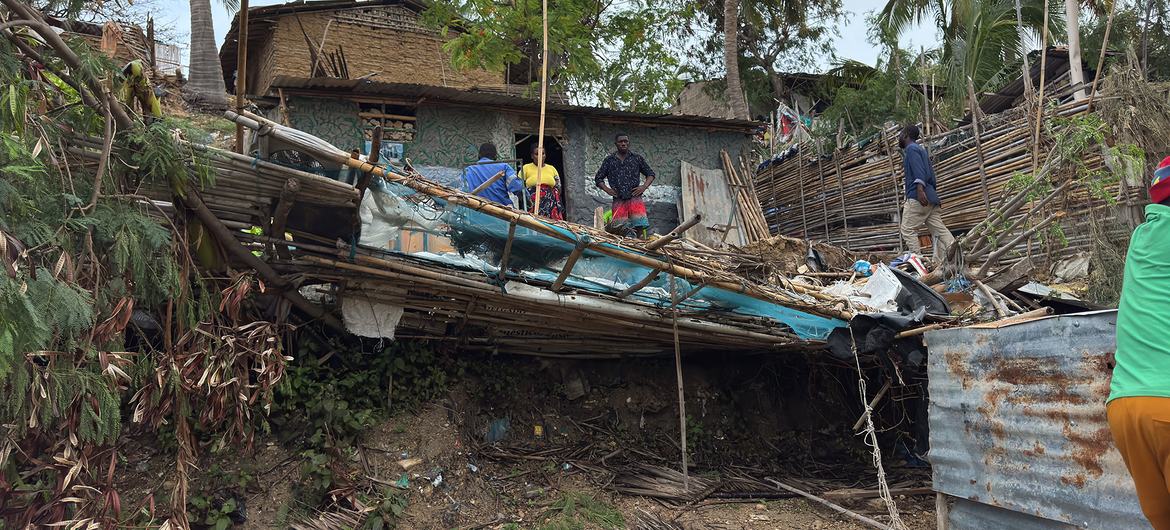
Northern Mozambique has been mired in what has been described as a “triple crisis” – violence and insecurity, climate shocks, and post-electoral unrest. (file photo)

Children targeted by armed groups in northern Mozambique

Children also continue to bear the brunt of a worsening crisis in Mozambique, where over 1.3 million people have been displaced by violence, extreme weather shocks and post-electoral unrest.

These crises have also left 5.2 million in urgent need of humanitarian assistance.

The situation is particularly dire in the northern Cabo Delgado province, which has witnessed a spike in reports of abduction, forced recruitment and use of children by non-state armed groups.

According to the UN Children’s Fund (UNICEF), at least three girls aged 12, 14 and 17 were killed in an attack last month, and eight other children abducted – highlighting the grave risks facing children in the conflict.

The agency expressed deep concern over such gross violations of children’s rights, stressing that “every child has the right to live in safety, free from violence and fear.”

UNICEF is working with partner agencies to assist impacted children and their families, support the safe return and reintegration of children abducted by non-state armed groups, and provide access to vital services such as health, protection, and education.

UN rights chief calls for bold climate action grounded in human rights

The UN’s top rights official warned on Tuesday that humanity’s survival is inseparable from the health of the planet.

Speaking at Oxford University, Volker Türk highlighted the need for a new kind of politics to tackle the climate crisis and rising global inequality, urging strong leadership to push for urgent, just and rights-based solutions.

“Not only have we created a false separation from nature, we are deluded enough to believe we can make nature bend to our will,” Mr. Türk said, criticizing the continued exploitation of fragile ecosystems.

The High Commissioner linked environmental degradation with systemic injustice, stating that the world’s richest one per cent are responsible for more carbon emissions than the poorest two-thirds. He stressed that those least responsible for the climate crisis are often the ones suffering its worst impacts.

He also expressed concern over the lack of adequate climate finance and called for reforms to international financial systems, noting growing support for a proposed fossil fuel non-proliferation treaty that would aim to end the expansion of new oil, coal and gas projects.

“Our rights call for all people, now and in the future, to live in safety, security and opportunity, on a healthy planet,” he said.

Mr. Türk concluded by urging governments, institutions and individuals to join a global movement for change, grounded in human rights, to address the climate emergency and build a more sustainable and equitable future.

Source link

UN aims to transform urgency into action at Nice Ocean Conference

The third United Nations Ocean Conference (UNOC 3) from 9-13 June will bring together Heads of State, scientists, civil society and business leaders around a single goal: to halt the silent collapse of the planet’s largest – and arguably most vital – ecosystem.

The ocean is suffocating due to rising temperatures, rampant acidification, erosion of biodiversity, plastic invasion, predatory fishing.

‘A state of emergency’

Our planet’s life support system is in a state of emergency,” said Li Junhua, head of the UN Department of Economic and Social Affairs (DESA) and the Secretary-General of the upcoming summit. 

He insisted that there is still time to change course.

The future of the ocean is not predetermined.  It will be shaped by the decisions and actions that we are making now,” Mr. Li said on Tuesday during a press briefing at UN Headquarters in New York. 

In the eyes of the senior official, UNOC 3 “will not be just another routine gathering.” 

“We hope that it proves to be the pivotal opportunity to accelerate action and mobilize all stakeholders across the sectors and borders.”

World-class conference

More than 50 world leaders are expected on the Côte d’Azur, alongside 1,500 delegates from nearly 200 countries. 

The programme includes 10 plenary meetings, 10 thematic roundtables, a blue zone reserved for official delegations, and a series of parallel forums during five days of negotiations.

For France, which is co-hosting the conference alongside Costa Rica, the challenge is clear: to make Nice a historic milestone. 

“This is an emergency,” declared Jérôme Bonnafont, Permanent Representative of France to the UN, during the press conference.

“An ecological emergency: we are witnessing the deterioration of the quality of the oceans as an environment, as a reservoir of biodiversity, as a carbon sink.”

France hopes to make the conference a turning point and the goal “is to produce a Nice agreement that is pro-oceans, as the Paris Agreement 10 years ago now was for the climate.” 

This agreement will take the form of a Nice Action Plan for the Ocean, a “concise action-oriented declaration,” according to Mr. Li, accompanied by renewed voluntary commitments.

Three milestones

Three events will prepare the ground for UNOC 3.

The One Ocean Science Congress, from 4-6 June, will bring together several thousand researchers. The Summit on Ocean Rise and Coastal Resilience to be held the following day will explore responses to rising sea levels. Finally, the Blue Economy Finance Forum, on 7-8 June in Monaco, will mobilize investors and policymakers.

For Costa Rican Ambassador Maritza Chan Valverde, there is no more time for procrastination.

We’re expecting concrete commitments with clear timelines, budgets and accountability mechanisms. What is different this time around, zero rhetoric, maximum results,” she said.

‘Transform ambition into action’

The conference’s theme Accelerating Action and Mobilizing All Stakeholders to Conserve and Sustainably Use the Ocean will address several topics, ranging from sustainable fishing to marine pollution and the interactions between climate and biodiversity.

This is our moment to transform ambition into action,” Mr. Li concluded, calling for governments, businesses, scientists, and civil society to come together in a common spirit. 

He also praised the “visionary leadership” of France and Costa Rica, without whom this large-scale mobilization would not have been possible.

A slogan promoted by Costa Rica seems to sum up the spirit of the summit: “Five days. One ocean. One unique opportunity.” 

Source link

Biodiversity loss demands urgent global action, says UN chief

In a message marking Thursday’s International Day for Biological Diversity, the UN chief raised alarm over the “lightning pace” of degradation of the natural world.

Biodiversity is the bedrock of life and a cornerstone of sustainable development,” Mr. Guterres said.

Yet humanity is destroying biodiversity at lightening pace, the result of pollution, climate crisis, ecosystem destruction and – ultimately – short-term interests fuelling the unsustainable use of our natural world.”

He stressed that no country, “however rich or powerful,” can address the crisis in isolation, nor thrive without the ecological richness that defines life on Earth.

Alarm bells ringing

The International Day comes amid stark concern for the future: one million species are at risk of extinction, 75 per cent of land ecosystems and two-thirds of marine environments have been significantly altered by human activity.

Furthermore, if current trends continue, progress towards eight of the 17 Sustainable Development Goals (SDGs) could be jeopardized.

Mr. Guterres called for urgent implementation of the Kunming-Montreal Global Biodiversity Framework, the landmark agreement adopted to halt and reverse nature loss by 2030.

This includes delivering on national biodiversity action plans, scaling finance for conservation, shifting harmful subsidies, and supporting local communities, Indigenous Peoples, women and youth.

Live in harmony with nature

Biological diversity underpins food security, livelihoods, health and climate resilience.

Roughly three billion people eat fish for 20 a per cent of their animal protein intake, and 80 per cent of rural populations in developing countries rely on plant-based medicine.

Yet the destruction of natural habitats is also increasing the risk of zoonotic disease transmission, making biodiversity preservation a key factor in global health.

Living in harmony with nature and sustainable development is humanity’s path to a better world for all,” Mr. Guterres said, echoing this year’s theme.

“Together, let us take it.”

The International Day

The UN officially designated 22 May as the International Day for Biological Diversity in 2000 to increase understanding and awareness of biodiversity issues.

The date marks the adoption of the Convention on Biological Diversity in 1992.

Urgent action needed to ‘pull Yemen back from the brink of catastrophe’

Tom Fletcher said that with “time and treatment” Noor was able to recover fully.

But what happens to a child such as Noor when treatments are limited and time runs out?

A group of 116 aid organizations, including 10 UN agencies, called on Tuesday for “urgent, collective action” to prevent Yemen from descending into a humanitarian catastrophe.

They warned that without such action, specifically increased funding, their ability to provide life-saving assistance will be severely curtailed.

Without immediate action, the vital gains achieved through years of dedicated assistance could be lost,” they said.

Non-stop crises

For more than a decade, Yemen has endured a series of crises – armed conflicts, climate disasters and economic decay. As a result, close to 20 million depend on humanitarian aid to survive and five million are internally displaced.

Half of all Yemeni children – some 2.3 million – are malnourished. Over 600,000 are severely malnourished, like Noor. Malnutrition also impacts over 1.4 million pregnant women, creating an intergenerational cycle.

The healthcare system is also in disrepair, with Yemen accounting for more than one-third of cholera cases worldwide and 18 per cent of related deaths. 20 per cent of children under the age of one are fully unvaccinated.

Providing humanitarian aid in Yemen has also come with extreme difficulties for aid workers, with some being arbitrarily detained, including UN staffers.

Strikes against the Hodeida port and Sana’a Airport have also damaged vital humanitarian pathways for food and medicine.

Time and treatment running out

The aid community’s call for urgent action comes amidst extensive funding shortages. The Yemen Humanitarian Needs and Response Plan is less than 10 per cent funded.

We urgently appeal to donors to scale up flexible, timely, and predictable funding for the Humanitarian Needs and Response Plan,” the aid organizations said.

Already, the UN and aid partners are working to minimize operational costs while maximizing aid provision and there is no doubt suffering will increase due to the reduction in aid.

In the first quarter of 2025, over five million people in Yemen received emergency food assistance, 1.2 million received clean water and sanitation services and 154,000 children were able to resume their education.

But without immediate funding, Emergency Relief Coordinator Fletcher estimates that there will be gaps in this aid as early as June or July.

Nearly 400 health facilities will be forced to stop operating, including 64 hospitals, which will impact over 7 million individuals. Funding for more than 700 midwives is also quickly drying up.

Call to the international community

While the humanitarian crisis in Yemen has been overshadowed by other vast humanitarian crises in Gaza and Sudan among other places, the 116 aid organizations emphasized that “donor support saves lives.”

The 7th Humanitarian Senior Officials Meeting will be held Wednesday and should be a moment to work to avoid catastrophe in Yemen, the aid organizations urged.

Now more than ever, swift and resolute support is crucial to prevent Yemen from sliding deeper into crisis and move towards a lasting peace,” they said.

Time and treatment are running out for children like Noor.

Source link

FAO calls for action amid foot-and-mouth disease outbreaks

FMD is a highly contagious viral disease affecting cloven-hoofed animals, including cattle, pigs, sheep, goats, and various wild species. 

Europe is currently facing its worst outbreak so far this century at the same time as an exotic viral strain has been introduced in Iraq and other countries in the Near East.

Concern for potential spread

FAO is recommending urgent biosecurity measures and enhanced surveillance following the recent detection of foot-and-mouth disease (FMD) serotype SAT1 in Iraq and Bahrain,” the agency said in an alert.

“This serotype is exotic to the Near East and West Eurasia regions,” the agency continued – meaning the strain is not normally found there – which raises “serious concerns” about its potential spread.

FMD is typically characterized by fever and blisters in the mouth and on the feet of affected livestock, accompanied by lameness. Although few adult animals succumb to disease, young ones may die from sudden heart failure. 

The virus spreads rapidly and can affect large numbers of animals, especially in countries or regions that are usually free of the disease or do not regularly use vaccination.

Although FMD is not a public health threat, it severely impacts animal health and welfare, food security and incomes by reducing agricultural productivity, including through decreased milk and meat yields.

The economic impact is also substantial, with global direct production losses and vaccination costs in endemic regions estimated to be $21 billion annually. FAO noted that the true economic burden is likely much higher when disruptions to both international and local trade are taken into consideration. 

A major outbreak in the United Kingdom in 2001 led to the culling of more than six million animals and cost the economy billions, devastating the livestock industry and tourism. A series of new measures in response have reportedly reduced the risk and improved resilience, including local and national contingency plans for outbreaks.

Outbreaks and response

The FMD virus was recently detected in parts of Europe normally free of the disease and the continent is now experiencing its worst outbreak since 2001.  

Germany detected an outbreak this past January but has since been declared FMD-free, however subsequent outbreaks in Hungary and Slovakia have persisted.

In response, the UK recently announced that it has banned imports of meat or dairy products from European countries where the virus has been detected, as well as Austria due to the outbreak in neighbouring Hungary. 

FMD is endemic in the Near East, but the recent upsurge is due to an exotic serotype likely introduced from East Africa.  Cases have been reported in Bahrain, Iraq and Kuwait, although other countries are at high risk.

Many strains of the FMD virus continue to circulate in different parts of the world, and the recent outbreaks in both Europe and the Near East highlight the ongoing risk the disease poses to livelihoods, food security and safe trade, said FAO.

Raising awareness

While all governments are urged to be vigilant, the agency said affected and high-risk countries should consider awareness-raising measures among farmers and communities to protect livestock. 

Other recommendations include biosecurity measures such as separating sick animals from other livestock and having them examined by professionals, alongside checking vaccination records and verifying FMD contingency plans.

FAO said that by implementing these measures, countries can significantly reduce risks. 


More action needed to beat malaria for good, says UN

Ahead of World Malaria Day on Friday, UN health agency WHO is calling for renewed efforts at all levels – from global policy to community action – to accelerate progress towards elimination.

Malaria is spread by some types of mosquitoes and is mostly found in tropical countries. Symptoms – which can be mild or life-threatening – include fever, chills and headache, seizures, and difficulty breathing.

Africa continues to carry a disproportionately high share of the global malaria burden.  In 2023, approximately 94 per cent of all cases, and 95 per cent of deaths, occurred in the region. Most deaths, 76 per cent, were among children under five.

Eye on elimination

WHO recalled that during the late 1990s, world leaders adopted effective policies which led to the prevention of more than two billion cases and nearly 13 million deaths since the year 2000.

As a result, 45 countries and one territory have been certified as malaria-free, and many other countries continue along the path towards elimination. 

Of the remaining 83 malaria-endemic countries worldwide, 25 reported fewer than 10 cases in 2023.

However, WHO Director-General Tedros Adhanom Ghebreyesus said history has shown that these gains are fragile because “when we divert our attention, the disease resurges, taking its greatest toll on the most vulnerable.” (HOW ABOUT USING THIS AS A PULL-QUOTE?) 

But history also reveals what is possible, he added.  Tedros insisted that “with strong political commitment, sustained investment, multisectoral action and community engagement, malaria can be defeated.”

Net investment

WHO said years of investments in the development and deployment of new malaria vaccines, as well as tools to prevent and control the disease, are paying off.

On World Malaria Day, Mali will join 19 other African countries in introducing malaria vaccines, representing a vital step towards protecting young children from one of the deadliest diseases on the continent. It is expected that the large-scale rollout of malaria vaccines in Africa will save tens of thousands of young lives every year.

Meanwhile, the expanded use of a new generation of insecticide-treated mosquito nets is set to make further inroads against the disease. 

Progress in peril

Yet, despite significant gains, malaria remains a major public health challenge. Nearly 600,000 deaths occurred in 2023 alone, with the African region hardest hit.

In many areas, progress has been hampered by fragile health systems and rising threats such as drug and insecticide resistance, WHO said. Many at-risk groups also continue to miss out on the services needed to prevent, detect and treat malaria. 

These challenges are further compounded by climate change, conflict, poverty and displacement, while funding cuts this year could further derail progress in many endemic countries, putting millions of additional lives at risk. 

A renewed call 

World Malaria Day 2025 is being celebrated under the theme Malaria ends with us: reinvest, reimagine, reignite, and WHO is calling for stepped up political and financial commitment to protect hard-won gains to date.

To reinvest, WHO is joining partners and civil society in calling on malaria-endemic countries to increase domestic spending, particularly in primary healthcare.

The agency is also stressing the need to reignite commitment to help end malaria transmission at all levels – from communities and frontline health workers, to governments, researchers, private sector innovators and donors.