FBI’s 2023 Internet Crime Report Reveals Alaskans Suffered Losses Exceeding $31 Million

The FBI’s Internet Crime Complaint Center (IC3) unveiled its 2023 Internet Crime Report along with detailed state breakdowns, showing a concerning trend in cybercrime affecting Alaskans. With over 880,000 complaints nationwide, totaling potential losses of $12.5 billion, the report underscores the growing threat of online scams and fraud.

Alaska’s portion of the report reveals a staggering figure: residents filed more than 2,300 complaints with losses surpassing $31 million, marking a significant spike of nearly $15 million compared to the previous year. The impact spanned across all age groups, with the state’s senior population bearing the brunt of reported losses.

Among the myriad of internet crimes reported, three schemes stood out as particularly costly for Alaskans:

  1. Business Email Compromise (BEC): This sophisticated scam targets businesses and individuals involved in wire transfer payments. By compromising email accounts and other communication channels, fraudsters manipulate victims into unauthorized fund transfers, resulting in losses totaling $12.2 million.
  2. Investment Fraud: Deceptive practices lure investors with false promises of high returns and low risk. Victims, often targeted in retirement or 401K schemes, reported losses amounting to $6.6 million.
  3. Confidence/Romance Fraud: Perpetrated through social media or dating platforms, victims are duped into believing they’re in a genuine relationship, only to be swindled out of money or personal information. This scheme accounted for losses of $2.8 million.

The report serves not only as a testament to the prevalence of internet crimes but also as a resource for prevention and protection. The FBI urges victims to report suspected internet crimes to IC3 at www.ic3.gov, the primary platform for reporting cybercrimes nationwide.

IC3’s mission is twofold: to provide a reliable reporting mechanism for internet crimes and to forge effective partnerships with law enforcement and industry stakeholders to combat cyber threats. Information gathered through reports aids in both investigative efforts and public awareness campaigns.

For those seeking further information or assistance, resources such as IC3 Annual Reports and FBI’s Scams and Safety guidelines offer invaluable insights into recognizing and thwarting common cyber threats.

NY Consulate of India rules out foul play in AP student’s death; Toll reaches 9 in 2024

The Indian Consulate in New York said on Monday that preliminary investigation into the death of an Indian student, reportedly discovered deceased in a forest in the US state of Massachusetts last week, has ruled out any foul play.

Abhijeeth Paruchuru, hailing from Andhra Pradesh and a student of Boston University, was found inside an abandoned car by local law enforcement, as per reports from local media.

Expressing deep sorrow over Paruchuru’s “unfortunate demise,” the Consulate conveyed on X: “Mr. Paruchuru’s parents, residing in Connecticut, are in direct contact with investigators. Initial inquiries indicate no evidence of foul play.”

The Consulate facilitated the necessary documentation and repatriation of Paruchuru’s remains to India. “We are maintaining communication with local authorities and the Indian-American community regarding this matter,” the Consulate added.

Beginning this year, a series of mysterious deaths have raised concerns about the security and safety of Indian students in the US, with the latest incident bringing the toll to nine.

Earlier this month, the Ministry of External Affairs stated that its consulates in the US have reached out to Indian students, assuring them of all possible assistance in case of any difficulties.

“We have engaged with our students there, providing guidance and urging them to promptly contact either the embassy or the consulates in case of any issues or emergencies so that we can provide them with better assistance,” commented External Affairs Ministry spokesperson, Randhir Jaiswal.

The White House emphasized in February that there is no justification for violence based on race or gender, affirming that the US is diligently working to prevent and disrupt attacks on Indians and Indian-origin students. External Affairs Minister S. Jaishankar reiterated that the welfare of Indian students abroad remains a top priority for the government.

India responds to China on Arunachal: “Repetitive baseless arguments”

The Ministry of External Affairs (MEA) on Tuesday lashed out at China for “advancing absurd claims” over the territory of Arunachal Pradesh and strongly reiterated that the northeastern state will remain an “integral and inalienable part” of India forever.

The Ministry’s response followed Beijing’s statement that it “never acknowledges and firmly opposes” the “so-called Arunachal Pradesh illegally established by India.”

In a statement, MEA spokesperson Randhir Jaiswal remarked on the comments made by the Spokesperson of the Chinese Defence Ministry, dismissing them as “absurd claims” regarding the territory of the Indian State of Arunachal Pradesh.

Jaiswal reiterated that such baseless arguments hold no validity, emphasizing that Arunachal Pradesh has always been and will remain an integral and inalienable part of India. He affirmed that the people of Arunachal Pradesh will continue to benefit from India’s development programs and infrastructure projects.

Senior Colonel Zhang Xiaogang, a spokesperson for the Chinese Defence Ministry, asserted that the southern part of Xizang, the Chinese name for Tibet, is an inherent part of its territory. This statement came after Prime Minister Narendra Modi’s recent visit to Arunachal Pradesh to inaugurate the strategically significant Sela tunnel, situated at an altitude of 13,000 feet, which will ensure all-weather connectivity to Tawang in Arunachal Pradesh.

Zhang criticized India’s actions, stating that they contradict efforts made by both sides to ease border tensions and are not conducive to maintaining peace and tranquility in border areas.

Chinese Foreign Ministry spokesperson Wang Wenbin expressed strong disapproval of PM Modi’s visit, stating that it would only complicate the boundary issue. In response, Jaiswal rejected Wenbin’s remarks, asserting that India has consistently communicated its position on Arunachal Pradesh to the Chinese side on numerous occasions.

Sensex, Nifty tank lower, midcaps see sharper decline

The Nifty hit a new low, marking its lowest point in over a month, as it closed down by 1.08 percent or 238.3 points at 21,817.5 on Tuesday.

Trading volumes in the NSE cash market were modest at Rs. 0.83 lakh crore. Despite the negative advance-decline ratio at 0.36:1, the midcap index experienced a sharper decline compared to the Nifty.

In Asia, stock performance was mixed on Tuesday following the Bank of Japan’s decision to raise its benchmark interest rate for the first time in 17 years, signaling the end of its long-standing negative rate policy. This move by the Bank of Japan marks the termination of the world’s final negative interest rate policy in the country.

Analysts pointed out a breach of the Nifty’s support level at 21,745 could potentially intensify the downward trend, while resistance might be encountered around 21,905. The next significant support levels to monitor are around 21,500 within the next week. Any upward movement towards 22,000 could present a selling opportunity, they advise.

After a long period of consolidation, the Nifty experienced a significant downward breakout on Tuesday, closing lower by 238 points. From the opening bell, the market displayed weakness throughout the session on Tuesday. It may further decline shortly, analysts said.


China raises again its claim over Arunachal Pradesh

Despite India’s stand, Chinese Senior Colonel Zhang Xiaogang, a spokesperson for the Chinese Defence Ministry, reiterated that Arunachal Pradesh is their territory, aimed at keeping the issue burning as ever.

Zhang’s comments came in response to India’s recent reinforcement of military infrastructure in Arunachal Pradesh, specifically through the construction of the Sela Tunnel, aimed at improving connectivity and troop movement in the strategically significant area.

China consistently maintained that Indian leaders’ visits to Arunachal Pradesh, which it refers to as South Tibet,  undermine its territorial claims. However, India firmly rejected China’s assertions, maintaining Arunachal Pradesh’s integral status within the nation and disregarding China’s attempts to rename the region.

Prime Minister Narendra Modi’s recent visit to Arunachal Pradesh, where he inaugurated the Sela Tunnel, drew criticism from China. Zhang criticized Modi’s visit, stating that it hinders efforts to ease border tensions and disrupts peace in the region. He urged India to refrain from actions complicating the border issue and emphasized China’s commitment to safeguarding its sovereignty and territorial integrity.

China’s response followed a diplomatic protest lodged earlier against India by the Chinese Foreign Ministry over Modi’s visit.

India, in turn, firmly rejected China’s objection, reaffirming Arunachal Pradesh as an integral part of India. External Affairs Ministry spokesperson Randhir Jaiswal reiterated India’s stance, emphasizing that objections to Indian leaders’ visits or developmental projects in Arunachal Pradesh lack rationale and do not change the factual status of the state.

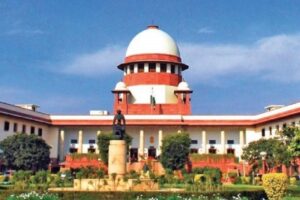
Electoral Bonds: SC asks SBI to declare all details by Thursday, March 21

On Monday, the Supreme Court issued directives to the State Bank of India (SBI) to disclose comprehensive details concerning electoral bonds. These details include the date of purchase and redemption, the names of purchasers and recipients, denominations, and alphanumeric numbers and serial bonds.

Furthermore, the court instructed SBI Chairman Dinesh Kumar Khara to submit an affidavit by 5 pm on Thursday, confirming the disclosure of all pertinent details in the bank’s possession and affirming that no information has been withheld.

Chief Justice DY Chandrachud emphasized the necessity for SBI to provide all available details, including alphanumeric and serial numbers of purchased bonds, to prevent potential future controversies. The court underscored the importance of transparency by mandating the filing of an affidavit to confirm the disclosure and absence of withheld information.

supreme court/IANS

Additionally, the Supreme Court dismissed a petition by the ‘Citizens Rights Trust’ seeking to pre-date the disclosure of bond details. Instead, the court directed SBI to disclose information from April 12, 2019, to Feb 15, 2024. The plea alleged the sale of 9,159 bonds worth ₹4,000 crores during this period.

The court declined pleas by industry bodies like Ficci and Assocham to defer the disclosure of bond numbers, asserting that anonymity cannot supersede the requirement for information disclosure.

During the proceedings, Solicitor General Tushar Mehta raised concerns about misinformation on social media regarding the court’s electoral bond judgment. He highlighted deliberate misrepresentation by petitioners in press interviews and emphasized a hidden agenda behind such actions. In response, the court reiterated its readiness to handle social media commentary, asserting its commitment to the rule of law and transparency.

In the previous hearing, the Supreme Court instructed the Election Commission to return sealed covers containing electoral bond information. The court directed the digitization of this data by 5 pm on Saturday and its subsequent public release in accordance with the court’s directives.

Rahul Gandhi denies ‘Shakti’ he referred to was ‘Shakti Mata’; Offers elaborate explanation

Amid attacks over his ‘Shakti’ remarks, senior Congress leader Rahul Gandhi on Monday said that the statement had been taken out of context and blamed the “lies-manufacturing machinery” of the BJP for creating a needless controversy over his statement.

While addressing a large gathering on the culmination of the Congress’ Bharat Jodo Nyay Yatra in Mumbai on Sunday, Rahul Gandhi said, “There is a word ‘shakti’ (might) in Hindi. We are fighting against the ‘shakti’ (might of the state). The question is, what is that ‘shakti’ and what does it entail for us?”

He took potshots at Prime Minister Narendra Modi, alleging that the latter twists his remarks if he doesn’t like them but the fact is that he spoke the plain truth though it left the ruling party offended and the BJP, which has “begun a smear campaign” against him.

Taking to X, Rahul Gandhi posted an explanation of what he meant by taking on the ‘shakti’, which the BJP equated with the revered and venerated figure in Hinduism. “The ‘shakti’ which we are fighting is deeply enmeshed in system, the PM is just a mask of it,” he wrote on X.

“It is the ‘shakti (might)’ that has destroyed constitutional bodies like the Election Commission, made agencies like the CBI, ED a puppet and taken the whole constitutional set-up for a ride,” MP Rahul Gandhi explained.

“It’s because of this ‘shakti’ that poor and marginalised farmers are being driven to more pitiable situations, while big corporates are getting bank waivers of hundreds to thousands of crores,” he explained.

He further said that the media had stopped reporting facts and was saluting this ‘shakti.’ He made it clear that his assertions and fight against this ‘undeclared power’ is not about any religion but it is against corruption and fake narratives.


Telangana Governor Tamilisai resigns, likely to contest Lok Sabha elections

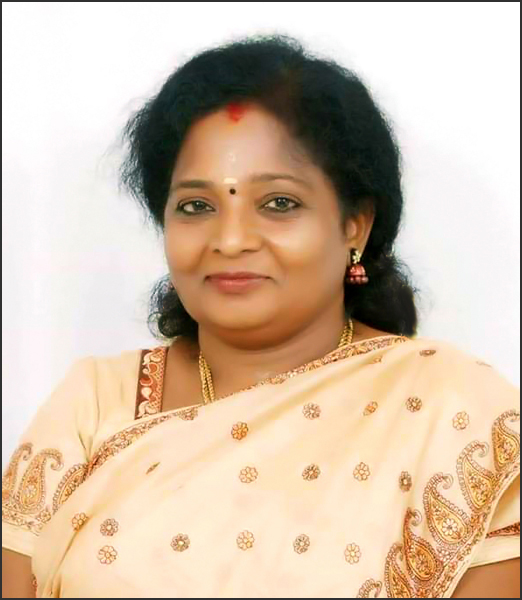
Confirming earlier speculation, Telangana Governor Tamilisai Soundararajan officially tendered her resignation from her post on Monday. Sources within Raj Bhavan revealed that she is expected to run as a BJP candidate in the upcoming Lok Sabha elections, possibly from Central Chennai or Puducherry.

Tamilisai Soundararajan has previously expressed her desire to play an active role in politics on numerous occasions. It may be noted that her resignation coincides closely with Prime Minister Narendra Modi’s recent visit to Telangana and his stay at Raj Bhavan during his electoral campaign in Telangana.

Tamilisai Soundararajan’s resignation comes on a day PM Modi is scheduled to hold a roadshow in Tamil Nadu’s Coimbatore.

Tamilisai Sounderrajan, Governor of Telangana resigns to the post


“The Hon’ble Governor of Telangana and Lieutenant Governor of Puducherry Dr.Smt.Tamilisai Soundararajan has tendered her resignation with immediate effect. The resignation has been submitted to the Hon’ble President of India,” the Raj Bhavan said in a statement.

Tamilisai also resigned from the post of Lieutenant Governor of Puducherry. “She has been asked to be prepared to contest the Lok Sabha elections from Tamil Nadu or Puducherry,” a BJP party official said.


‘One Step Short of World War’, Warns Putin on France’s Idea of Deploying NATO Troops in Ukraine

Russian President Vladimir Putin cautioned the US-led NATO military alliance against deploying troops in Ukraine, stating that such action would bring the world “one step closer to a full-scale World War III.”

During a speech to his supporters and the media following his decisive presidential election victory, Putin hinted at the presence of fighters from NATO countries on Ukrainian soil.

“We hear both French and English speech there. There is nothing good in this, first of all for them, because they die there and in large numbers,” he was quoted by Russian media as saying. “Anything is possible in the modern world… But everyone knows that this would be one step shy of a full-scale World War III. I don’t think that anyone is interested in that.”

Putin emphasized that Moscow is well aware of NATO’s efforts to send troops to Ukraine, noting the presence of French and English speakers in the region. He expressed concerns about the consequences, particularly the loss of lives.

In response to French President Emmanuel Macron’s suggestion that the West might consider sending soldiers to assist Ukraine, Putin urged France to focus on de-escalating the conflict and aiding in finding a peaceful resolution.

In response to Macron’s stance, French politicians criticized his interview expressing support for Ukraine. Elina Valtonen, Finland’s Minister of Foreign Affairs said that Western nations, including the US, should not completely dismiss the possibility of deploying troops to Ukraine if the situation deteriorates.

Even Antonio Tajani, Italian Foreign Minister and Deputy Prime Minister, rebuffed French President Emmanuel Macron’s suggestion of deploying Western troops to Ukraine, stating, as reported by media outlets.

He asserted that it “would be a mistake” for NATO to send troops to Ukraine, emphasizing that it is a nation “we must help defend,” as cited by a report from Ukrainska Pravda.

“To enter into war with Russia would mean the threat of World War III,” Tajani remarked. “Our military is effectively fulfilling their duties in the Red Sea to protect our ships; they are also operating efficiently in Lebanon, Africa, and Iraq. Our armed forces uphold peace, security, and freedom. We are not at war with Russia.”


Trump Threatens ‘Dire Consequences’ If Loses Presidential Race, Biden Team Calls Him ‘Loser’

Former President Donald Trump rallied supporters in Ohio over the weekend, declaring the upcoming November presidential election as pivotal in American history. Trump, who recently secured the presumptive Republican nomination, emphasized the significance of the date, November 5, while lambasting his opponent, President Joe Biden.

During his speech in Vandalia, Ohio, Trump criticized Chinese plans to manufacture cars in Mexico for the American market, asserting that such endeavors would falter under his leadership. He issued a stark warning, suggesting dire consequences for the nation should he not be re-elected, albeit without specifying details.

Following Trump’s remarks, Biden’s campaign swiftly responded, labeling the former president as a “loser” and condemning his rhetoric as a veiled incitement to political violence, alluding to the events of January 6, 2021, when the Capitol was stormed by Trump supporters.

Later, speaking at a dinner in Washington, Biden reiterated the gravity of the moment, highlighting threats to democracy posed by falsehoods surrounding the 2020 election and attempts to overturn its results.

Trump’s and Biden’s victories in securing their party nominations for the 2024 presidential race virtually guarantee a rematch, setting the stage for an extended campaign period. Among Trump’s focal points is a critique of Biden’s immigration policies, which he denounces as a “horror show,” particularly targeting their impact on minority communities.

Trump’s rally in Ohio, a state historically regarded as a battleground, underscores the enduring importance of its electoral influence despite shifting political landscapes. The event followed a notable announcement from Trump’s former vice president, Mike Pence, who declared his decision not to endorse Trump for a second term.

Rahul Gandhi’s Bharat Jodo Nyay Yatra ends in Mumbai today, INDIA bloc leaders to join

Congress leader Rahul Gandhi’s Bharat Jodo Nyay Yatra, is set to culminate today (Sunday, March 17, 2024) in Mumbai after covering a staggering 6,700 kilometers from Manipur. The event marks a significant milestone in his journey across the country to connect with people from different walks of life.

Key political figures including Tamil Nadu Chief Minister MK Stalin, Samajwadi Party chief Akhilesh Yadav, and RJD leader Tejashwi Yadav are expected to grace the concluding ceremony at Shivaji Park, underscoring the solidarity among opposition leaders. Joining them will be Uddhav Thackeray and his son Aaditya, Sharad Pawar, and Jharkhand Chief Minister Champai Soren, reflecting a unified stance ahead of the forthcoming Lok Sabha elections.

Sources indicate the presence of Rahul Gandhi’s mother and former Congress chief, Sonia Gandhi, at the event, along with scheduled discussions with Maharashtra alliance leaders earlier in the day. The Congress’s general secretary, Priyanka Gandhi Vadra, has already arrived in Mumbai to partake in the finale of the yatra, emphasizing the journey’s objective of raising public awareness about the country’s realities.

Rahul Gandhi’s Bharat Jodo Nyay Yatra to enter Maharashtra on March 12, 2024 (INC)

“Today ‘Bharat Jodo Nyay Yatra’ is coming to an end. We both are very happy to be here. Rahul Gandhi ji did this journey so that you understand the reality of the country. This entire journey was to make the public aware,” she said.

Commencing from Imphal on January 14, the east-west Bharat Jodo Nyay Yatra traversed over 100 Lok Sabha constituencies across 15 states, including Assam, West Bengal, Gujarat, Uttar Pradesh, Bihar, and Maharashtra.

This nationwide Padayatra was launched in anticipation of the Lok Sabha elections, following the success of the party’s previous Bharat Jodo Yatra from Kanniyakumari to Kashmir last year, which contributed to electoral victories in Telangana and Karnataka assembly elections.

Maharashtra: MVA Leaders Criticize EC’s Decision on 5-Phased Schedule, BJP Welcomes

The ruling coalition front led by Bharatiya Janata Party (BJP) welcomed the five-phased poll schedule of the Election Commission (EC) in the state, saying it was ready for the poll-battle starting from April 19 till May 20.

However, the Maha Vikas Aghadi (MVA) leaders of Congress, Nationalist Congress Party (NCP), and Shiv Sena have voiced criticism against the Election Commission (EC) for scheduling the Maharashtra polls in five phases over a month, arguing that a shorter election duration could have sufficed.

Chandrashekhar Bawankule, president of the Maharashtra unit of the BJP, assured that his party is fully prepared for the elections and emphasized the importance of fair play in the electoral process. Bawankule asserted the BJP’s commitment to adhering to EC regulations and the Model Code of Conduct while aiming for significant victories both in the state and nationally.

However, Congress President Nana Patole expressed strong reservations about the five-phased election schedule, alleging that it favors the BJP. Patole criticized the EC for granting what he sees as undue advantage to the BJP, particularly after the party’s fracturing of key alliances in the state.

Similarly, Nationalist Congress Party (NCP) State President Jayant Patil questioned the necessity of such a prolonged election process, particularly with significant gaps between phases.

Shiv Sena MP Sanjay Raut raised concerns about the credibility of Electronic Voting Machines (EVMs) and questioned the motive behind the extensive five-phase schedule.

Adding to the chorus of dissent, NCP National Spokesperson Clyde Crasto questioned the BJP’s intentions behind the lengthy poll schedule, hinting at apprehensions surrounding the use of EVMs.

In contrast, BJP leader Bawankule exuded confidence in his party’s prospects, dismissing the opposition’s concerns as reflective of a defeatist mindset. He expressed optimism about the NDA and BJP’s chances of securing another term under the leadership of Prime Minister Narendra Modi.


Andhra Pradesh Set for Single-Phase Lok Sabha, Assembly Elections on May 13

The Election Commission of India announced on Saturday that Andhra Pradesh will hold simultaneous elections for the state Assembly and Lok Sabha in a single phase on May 13, involving over four crore eligible voters across 175 Assembly and 25 Lok Sabha seats.

According to the election schedule, notification for the polls will be issued on April 18, with the deadline for nominations set for April 25. Scrutiny of nominations will take place on April 26, while the last date for withdrawal of candidature is April 29. Vote counting is scheduled for June 4.

Of the 175 Assembly constituencies, 29 are reserved for Scheduled Castes (SCs) and 7 for Scheduled Tribes (STs). Additionally, four Lok Sabha constituencies are reserved for SCs and one for STs.

Chief Electoral Officer Mukesh Kumar Meena stated that the poll schedule was crafted considering various factors such as climatic conditions, academic calendar, board examinations, major festivals, law and order situation, availability of security forces, and ground realities.

The state requires 1,14,950 civil police personnel, 58 companies of Special Armed Police (SAP), and 465 companies of Central Armed Police Force (CAPF) for the election process.

Chief Electoral Officer M.K. Meena of Andhra Pradesh

As of March 16, 2024, Andhra Pradesh has 4,09,37,352 voters, including 2,00,84,276 males, 2,08,49,730 females, and 3,346 third gender individuals. The state boasts 46,165 polling stations, with 34,120 in rural areas and 12,045 in urban areas, averaging 887 electors per polling station.

The Election Commission plans to set up 179 polling stations managed entirely by women, 63 stations run by persons with disabilities, and 50 stations operated by youth. Additionally, 555 model polling stations will be established.

To assist voters, Voter Information Slips containing details like polling station, date, and time will be issued without photographs but with a QR code. These slips will be distributed to all enrolled electors at least five days before polling day.

Regarding Electronic Voting Machines (EVMs), a total of 1,43,037 Ballot Units, 1,15,410 Control Units, and 1,37,190 Voter Verifiable Paper Audit Trail (VVPAT) machines will be used, with 3,82,219 personnel deployed for polling duties.

The Commission plans to deploy 50 general observers, 115 expenditure observers, and 13 police observers to oversee the electoral process.

CEO Meena disclosed that authorities had seized cash, liquor, drugs, precious metals, and other items worth over Rs 164 crore until March 11, with inter-state check posts established along borders to curb malpractices.

Elections 2024: Tamil Nadu remains strong bastion for INDIA bloc

Lok Sabha elections will be held in Tamil Nadu in a single phase on April 19.  All 39 seats in Tamil Nadu and one seat in Puducherry will vote in a single phase on April 19 and the counting of votes will be held on June 4.

Ahead of the April 19 Lok Sabha polls, Tamil Nadu’s ruling DMK appears to be confident after implementing several welfare measures including the Rs 1,000 per month assistance to women.

Led by Chief Minister M K Stalin, the DMK and its other key constituent of the INDIA alliance, the Congress are approaching the polls in good humour with full confidence to win at least 35 out of 39 seats of the Lok Sabha in Tamil Nadu, and Congress retain its lead in Puducherry’s single seat.

Since the major regional rival AIADMK, shadowed by infighting, walked out of the BJP alliance, it’s likely to split the NDA-vote seen in the 2019 elections. The BJP is, however, hopeful of reversing the fortune under an aggressive K Annamalai who is the state BJP head.

Since the Congress’ alliance with DMK and other Left parties under INDIA bloc is going strong in the state, the results may upset all other rival candidates in the state.


Elections 2024: Kerala prepares for a straight fight between Left and Congress

Following the Election Commission of India’s declaration of dates for the Lok Sabha polls, Kerala’s major political factions aligned under the UDF or LDF, led by either Congress or Left parties, have initiated strategic maneuvers to secure the highest number of seats.

Kerala is slated for polling on April 26, with the deadline for nominations set for April 4. Scrutiny of nominations will occur on April 5, while the last date for withdrawal is April 8.

In the previous 2019 general elections, the Congress-led UDF clinched 19 seats, while the CPI(M)-led Left secured one. State Congress President, and incumbent Lok Sabha member from Kannur, expressed confidence in the UDF’s victory.

State CPI(M) secretary M. V. Govindan said the Left is already working hard in the field. “Our aim is to win all the 20 seats and we are ready for it. The fight in Kerala is between the Left and the Congress-led UDF. The BJP will not be able to open its account here,” said M. V. Govindan.

CPI(M)-led Left convener E. P. Jayarajan said people are “just gearing to vote for all the Left candidates as they know only if the Left candidates reach Delhi will, it be good for the state.”

Leader of Opposition V. D. Satheesan of Congress said there is no doubt, they will win all the 20 seats. “People are just waiting to express their ire against the Pinarayi Vijayan government for his “inept” governance as life has become really tough. We will explain this to the electorate,” said V. D. Satheesan.

Veteran IUML legislator P. K. Kunhalikutty said, “By now itself, a few poll predictions have come and it is hugely loaded in favour of the Congress-led UDF candidates and that is the reality.”

Three-time sitting Congress Lok Sabha member from Thiruvananthapuram, Shashi Tharoor, said the only problem is the delay in counting of votes as from now, we have to wait for more than two and a half months to know the future of our country. “With regards to the election date, we do have adequate time from now till the counting date and things are looking very good,” said Shashi Tharoor.

Besides the dominant parties, the BJP will field Union Minister Rajeev Chandrasekhar in Thiruvanathapuram constituency.

Both the CPI(M)-led Left and Congress-led UDF have finalized their candidates for the polls, with the enforcement of the model code of conduct following the announcement.

Elections 2024: Full Schedule of Lok Sabha, 4 State Assemblies announced in 7 Phases; Counting on June 4

The Election Commission of India announced the schedule for the 543 parliamentary constituencies for the 18th Lok Sabha elections, marking the commencement of the world’s largest democratic exercise encompassing 96.8 crore voters, including 21.5 crore young voters aged between 18 to 29 years.

Additionally, the election schedule for four state assemblies was announced, comprising Sikkim (32 seats), Arunachal Pradesh (60 seats), Andhra Pradesh (175 seats), and Odisha (147 seats).

Polling in Arunachal Pradesh and Sikkim in the Northeastern region is slated for April 19, while Andhra Pradesh will witness elections on May 13. Odisha’s elections will be conducted over four phases on May 13, May 20, May 25, and June 1, with results declared on June 4, coinciding with the announcement of Lok Sabha poll results.

The Lok Sabha elections will unfold across seven phases, commencing on April 19 and concluding on June 1.

Additionally, by-elections for 26 Assembly seats in Bihar, Gujarat, Haryana, Tripura, Telangana, and Tamil Nadu will be held. The Model Code of Conduct has been enforced with immediate effect, following the announcement.

Chief Election Commissioner Rajiv Kumar, accompanied by newly appointed Election Commissioners Gyanesh Kumar and Sukhbir Singh Sandhu, declared that the elections will span seven phases, mirroring the pattern from 2019.

Spanning from April 19 to June 1, the elections will unfold across 10.5 lakh polling stations, with vote counting scheduled for June 4. The phases are scheduled as follows: April 19 (Phase 1), April 26 (Phase 2), May 7 (Phase 3), May 13 (Phase 4), May 20 (Phase 5), May 25 (Phase 6), and June 1 (Phase 7).

The current term of the 17th Lok Sabha concludes on June 16. Despite widespread anticipation, the Jammu and Kashmir Assembly elections have not been synchronized with the parliamentary elections, possibly due to security concerns in the region.

The Supreme Court has directed that elections for the Union Territory of Jammu and Kashmir must be completed by the end of September.

Jaishankar on 3-nation tour to Singapore, Philippines, Malaysia

India’s External Affairs Minister Dr. S Jaishankar is set to undertake a diplomatic tour to Singapore, the Philippines, and Malaysia from March 23 to 27, aiming to bolster bilateral ties.

According to a statement from the Ministry of External Affairs (MEA) issued on Saturday, the visit to these Southeast Asian nations will serve as a platform for discussions on shared regional concerns.

This tour follows closely on the heels of Minister Jaishankar’s recent visit to Japan, where efforts were made to strengthen the Special Strategic and Global Partnership between the two nations.

Jaishankar’s previous visit to Singapore in October 2023 was focused on deepening the Strategic Partnership between the two nations, during which he held meetings with President Tharman Shanmugaratnam and Foreign Minister Vivian Balakrishnan.

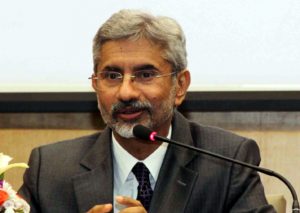
S Jaishankar

In November 2023, then Malaysian Foreign Minister Zambry Abdul Kadir visited India at Jaishankar’s invitation to co-chair the sixth India-Malaysia Joint Commission Meeting in New Delhi.

Furthermore, in June 2023, Jaishankar and Secretary for Foreign Affairs of the Philippines, Enrique A. Manalo, chaired the fifth meeting of the Joint Commission on Bilateral Cooperation in New Delhi. Discussions during this meeting encompassed various regional and global issues of mutual interest, as highlighted by the MEA.

Both India and the Philippines stressed their commitment to a free, open, and inclusive Indo-Pacific region during these discussions, emphasizing the importance of resolving disputes peacefully and upholding international law.


‘Misplaced, Misinformed, Unwarranted’: India Rebuffs US Remarks on CAA Implementation

India has rejected the US State Department’s “concerns” regarding the implementation of the Citizenship Amendment Act (CAA), and termed it as “misplaced, misinformed, and unwarranted.”

In a press briefing, Randhir Jaiswal, spokesperson for the Ministry of External Affairs, emphasized that the CAA primarily aims at granting citizenship rather than revoking it. Jaiswal dismissed critiques from those with limited comprehension of India’s diverse traditions and the historical context following partition.

Addressing concerns raised by the US State Department and others, Jaiswal reiterated that India views the criticism as unfounded. He urged international partners to acknowledge the goodwill underlying the enactment of the CAA, framing it as consistent with India’s inclusive ethos and enduring commitment to human rights.

The Citizenship Amendment Act 2019 provides refuge to persecuted minorities, including Hindus, Sikhs, Buddhists, Parsis, and Christians from Afghanistan, Pakistan, and Bangladesh, who arrived in India before December 31, 2014.

Jaiswal contended that there are no justifiable grounds for apprehension or mistreatment of minorities, cautioning against allowing political considerations to influence perceptions of a commendable initiative aiding distressed individuals.

India’s assertive response followed comments from US State Department Spokesperson Matthew Miller expressing concern over the notification of CAA rules and signaling close scrutiny of its implementation.

The Central government implemented the CAA on Monday, offering a pathway to citizenship for undocumented non-Muslim migrants from neighboring countries who entered India before December 31, 2014.

Critics argue that the law undermines the secular principles enshrined in the Indian Constitution by excluding Muslims from its provisions.

Bitcoin Future: What happens If The Cryptocurrency Creator Satoshi Nakamoto’s Identity Is Revealed?

The enigmatic figure behind Bitcoin’s creation, known as Satoshi Nakamoto, has captivated the imagination of the cryptocurrency community since the inception of Bitcoin. The potential unveiling of Nakamoto’s identity has spurred intense speculation and debate, prompting considerations about the ramifications for Bitcoin’s future.

Satoshi Nakamoto, the pseudonymous individual or group responsible for birthing Bitcoin, remains a mystery to this day. Despite numerous inquiries and investigations, the true identity behind this alias remains elusive. Nakamoto’s presence was notably active during Bitcoin’s genesis, with contributions ceasing around 2010, leaving behind a legacy veiled in anonymity.

The Elusive Bitcoin Holdings Estimates suggest that Satoshi Nakamoto may possess approximately 1.1 million BTC, though precise figures estimate it to be much lower. These holdings, valued between $43 billion to $80 billion, are presumed to be amassed from early mining rewards. However, verifying Nakamoto’s ownership with absolute certainty remains an insurmountable challenge.

Researchers at The University of New Mexico find digital cryptocurrency Bitcoin is more comparable to the impacts of extracting and refining crude oil than mining gold./CREDIT:
University of New Mexico

To unmask the mysterious identity, numerous endeavors have come into vogue to uncover Satoshi Nakamoto’s identity, alongside claims from individuals purporting to be the elusive creator. Recent legal proceedings involving Craig Wright in the UK brought renewed attention to this quest. Despite Wright’s assertions, a UK High Court ruled decisively against his claim to be Nakamoto, affirming the prevailing mystery surrounding Bitcoin’s originator.

Implications for Bitcoin and the Market The hypothetical unmasking of Satoshi Nakamoto raises questions about Bitcoin’s future trajectory. Gady Kohanov, founder of BitcyClub, underscores the intentional obscurity surrounding Nakamoto’s identity as integral to Bitcoin’s allure and adoption.

“Poking the bear often leads to undesirable consequences,” warned Kohanov. “If the veil of secrecy surrounding Bitcoin’s creator is lifted, it could shatter the idealized image that many hold of the cryptocurrency,” he added. It could potentially undermine Bitcoin’s perceived security and appeal, disrupting investor confidence and leading to market volatility, he insisted.

Kohanov anticipates two plausible outcomes if Nakamoto’s identity were disclosed. Firstly, the mystique surrounding Bitcoin could diminish, tarnishing its reputation and eroding investor trust. Secondly, the unveiling could trigger market instability, potentially resulting in significant losses for existing investors.


Electoral Bonds: Furnish unique numbers, SC tells SBI while hearing EC plea

The highest judicial authority today issued a stern rebuke to the State Bank of India (SBI) concerning its handling of information regarding electoral bonds, a program enabling discreet donations to political parties by individuals and entities.

Following the court’s previous decision to nullify the electoral bonds scheme, SBI was instructed to divulge comprehensive data regarding donations spanning the past half-decade.

Responding to a plea from the Election Commission, the Supreme Court pointed out deficiencies in the data furnished by SBI. Presiding over a five-judge panel, Chief Justice DY Chandrachud directed SBI to not only provide existing details but also disclose the electoral bond numbers.

Chief Justice Chandrachud wasted no time in highlighting the absence of bond numbers, querying the representation for the State Bank of India at the onset of the session.

In a notification served to SBI, the Supreme Court bench requested clarification regarding this oversight, scheduling a follow-up hearing for March 18. The inclusion of electoral bond numbers is deemed crucial for establishing connections between donors and political entities.

Electoral bonds were introduced in 2018 by the BJP administration as a measure to substitute cash contributions, purportedly enhancing transparency in political funding.

Last month, the Supreme Court invalidated the program, citing constitutional concerns and the potential for quid pro quo arrangements. Furthermore, the court urged SBI to furnish the Election Commission with all pertinent details regarding bond transactions.

In its submission, the Election Commission reiterated the court’s directive to retain copies of documents submitted during the proceedings, emphasizing the importance of maintaining records at the commission’s office.

The Election Commission clarified that it had not retained any copies of the documents and requested their return to facilitate compliance with the court’s instructions.