
Who’s Sarath Chandra Reddy? Liquor scam approver who paid crores in EBs

Hyderabad-based businessman Sarath Chandra Reddy, the man whose revelations led to the arrest of BRS MLC K. Kavitha and Delhi CM Aravind Kejriwal over the past week, also paid Rs 55 crore to the Bharatiya Janata Party through electoral bonds, the data released on March 21 reflected.

Sarath Chandra Reddy won licences for five liquor retail zones under the excise policy that was implemented in Delhi from November 2021 to July 2022. He was arrested by the Enforcement Directorate on November 11, 2022 and four days later, Aurobindo Pharma, in which he is a director, paid Rs 5 crore to the BJP through electoral bonds, reports said.

After his bail in May 2023, Reddy turned approver and his firm paid another Rs 25 crore to the BJP through bonds on November 8, 2023. Also, two other companies connected to Aurobindo Pharma — Eugia Pharma Specialities Ltd and APL Healthcare Ltd are wholly-owned subsidiaries of Aurobindo Pharma — donated Rs 25 crore to the BJP.

The Enforcement Directorate has alleged that the “South Group”, which includes Reddy and others from Telangana and Andhra Pradesh, gave Rs 100 crore to AAP leaders, which it said was used by the party in 2022 Goa Assembly elections. ED further said that the loss to the Delhi government under this excise policy amounts to Rs 2,873 crore in revenues.

In Andhra Pradesh, Aurobindo Pharma donated to the Telugu Desam Party and In Telangana to BRS, according to the data available on Electoral Bonds.



Andhra Pradesh Set for Single-Phase Lok Sabha, Assembly Elections on May 13

The Election Commission of India announced on Saturday that Andhra Pradesh will hold simultaneous elections for the state Assembly and Lok Sabha in a single phase on May 13, involving over four crore eligible voters across 175 Assembly and 25 Lok Sabha seats.

According to the election schedule, notification for the polls will be issued on April 18, with the deadline for nominations set for April 25. Scrutiny of nominations will take place on April 26, while the last date for withdrawal of candidature is April 29. Vote counting is scheduled for June 4.

Of the 175 Assembly constituencies, 29 are reserved for Scheduled Castes (SCs) and 7 for Scheduled Tribes (STs). Additionally, four Lok Sabha constituencies are reserved for SCs and one for STs.

Chief Electoral Officer Mukesh Kumar Meena stated that the poll schedule was crafted considering various factors such as climatic conditions, academic calendar, board examinations, major festivals, law and order situation, availability of security forces, and ground realities.

The state requires 1,14,950 civil police personnel, 58 companies of Special Armed Police (SAP), and 465 companies of Central Armed Police Force (CAPF) for the election process.

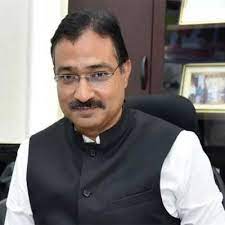
Chief Electoral Officer M.K. Meena of Andhra Pradesh

As of March 16, 2024, Andhra Pradesh has 4,09,37,352 voters, including 2,00,84,276 males, 2,08,49,730 females, and 3,346 third gender individuals. The state boasts 46,165 polling stations, with 34,120 in rural areas and 12,045 in urban areas, averaging 887 electors per polling station.

The Election Commission plans to set up 179 polling stations managed entirely by women, 63 stations run by persons with disabilities, and 50 stations operated by youth. Additionally, 555 model polling stations will be established.

To assist voters, Voter Information Slips containing details like polling station, date, and time will be issued without photographs but with a QR code. These slips will be distributed to all enrolled electors at least five days before polling day.

Regarding Electronic Voting Machines (EVMs), a total of 1,43,037 Ballot Units, 1,15,410 Control Units, and 1,37,190 Voter Verifiable Paper Audit Trail (VVPAT) machines will be used, with 3,82,219 personnel deployed for polling duties.

The Commission plans to deploy 50 general observers, 115 expenditure observers, and 13 police observers to oversee the electoral process.

CEO Meena disclosed that authorities had seized cash, liquor, drugs, precious metals, and other items worth over Rs 164 crore until March 11, with inter-state check posts established along borders to curb malpractices.