Electoral Bonds Data Published on Election Commission Website, Initial Revelations

The electoral bonds data published by the Election Commission of India on its official website reveals the donor side and the political parties but not connect who received from whom. However, initial data interpretation showed that political parties received more than Rs 12,769 crore as donations from corporates and individuals since 2019.

A total of 20,421 electoral bonds were encashed since 2019 and of these, 12,207 bonds were of Rs 1 crore each; 5,366 bonds (Rs 10 lakh each); 2,526 (Rs 1 lakh each); 219 bonds (Rs 10,000 each); and 103 were of Rs 1,000 each.

The BJP received a maximum Rs 6,060 crore as donations and encashed 5,854 bonds of Rs 1 crore each and 1,994 bonds of Rs 10 lakh each. Apart from bonds of Rs 1 lakh and Rs 10,000, it also encashed 31 bonds worth Rs 1000 each.

The next recipient was Trinamool Congress which redeemed 3,275 electoral bonds of about Rs 1,609 crore of which 1,467 were of Rs 1 crore each and 1,384 bonds were of Rs 10 lakh each.

The Congress came third with 3,141 encashed electoral bonds of about Rs 1,421 crore, which included 1,318 bonds of Rs 1 crore each and 958 bonds of Rs 10 lakh each.

In all, there were 1,260 companies and individuals who purchased electoral bonds worth ₹12,769 crore. Ms SN Mohanty is the biggest individual donor on the list with total donations of ₹45 crore, followed by Lakshmi Niwas Mittal who donated ₹35 crore.

Gyanesh Kumar and Sukhbir Singh Sandhu appointed new EC commissioners: Adhir Ranjan

A committee led by Prime Minister Narendra Modi on Thursday announced the selection of bureaucrats Gyanesh Kumar and Sukhbir Singh Sandhu as election commissioners, according to Congress leader Adhir Ranjan Chowdhury, who shared the information insisting that he had raised objections at the selection process.

The decision follows the recent resignation of Election Commissioner Arun Goel just ahead of the Lok Sabha elections.

The committee, which includes the Prime Minister, the leader of the Opposition, and a designated Union Cabinet minister, opted for Sukhbir Singh Sandhu and Gyanesh Kumar. Adhir Ranjan Chowdhury, as the opposition member, represents the Congress party on the three-member panel.

In addition to the Prime Minister and the Congress leader, Union Home Minister Amit Shah attended the meeting. However, Chowdhury criticized the Centre for a law that replaced the Chief Justice of India with a Union Minister on the selection committee.

“The Chief Justice of India should have been part of this committee,” Chowdhury remarked, expressing discontent over a law enacted last year that reduced the meeting to a mere “formality.”

Chowdhury further commented, “The government holds the majority on the panel. Their preferences prevail,” highlighting concerns over the selection process.

He disclosed that he received 212 names for review the previous night before the noon meeting. “How can one examine so many candidates in a single day? Then, I was provided with six shortlisted names just before the meeting. With the majority on their side, they selected the candidates they desired,” Chowdhury added.

4 Years After India, US House Passes Legislation to Ban TikTok

While the US House of Representatives recently passed legislation that could pave the way for a ban on TikTok, utilized by over 170 million Americans, it was India that initially took action to block the Chinese short-video platform, which boasts a global user base.

On June 29, 2020, India enforced a ban on TikTok, a platform controlled by the Chinese conglomerate ByteDance, despite the country being one of its largest markets outside of China.

Citing security concerns, the Indian government blocked TikTok along with 59 other Chinese apps, including WeChat, Shareit, Helo, and Likee, among others. Subsequently, over 300 Chinese apps have faced bans in India, including those related to betting and loans, all found in violation of Section 69 of the IT Act, posing threats to India’s sovereignty and integrity.

TikTok ban

Following the ban, TikTok terminated its entire India-based workforce, comprising approximately 40 employees. In 2020, the Indian Army instructed its personnel to remove 89 mobile apps, including several Chinese ones, from their devices to prevent data leakage.

Concerns regarding TikTok’s security implications stem from its ties to the Chinese government, with lawmakers and officials suggesting Beijing’s potential access to user data through the app. In response, TikTok has maintained that data of American users is stored within the United States.

In November of the same year, Nepal joined in banning TikTok, citing its content as “detrimental to social harmony.”

Meanwhile, India has witnessed a surge in short-form video platform users, exceeding 250 million, with around 70% hailing from tier-2 cities and other semi-urban and rural areas, often representing middle and high-income demographics, according to recent reports.

India bans 18 OTT Platforms due to obscene content

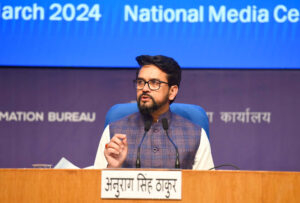
In a decisive move, the Indian government has announced the prohibition of 18 over-the-top (OTT) platforms due to their dissemination of obscene, vulgar, and in some cases, pornographic content. This action follows repeated warnings issued by the Ministry of Information and Broadcasting, as disclosed by Union Minister Anurag Thakur.

Among the targeted platforms, one app alone had accrued over 10 million downloads, with two others surpassing 5 million downloads on the Google Play Store.

Collaborating with various intermediaries, the Ministry orchestrated the blocking of these 18 OTT platforms, alongside disabling access to 19 websites, 10 apps (7 on Google Play Store, 3 on Apple App Store), and 57 associated social media accounts within the country.

The Union Minister for Information & Broadcasting, Youth Affairs and Sports, Shri Anurag Singh Thakur briefing the media on Cabinet decisions in New Delhi on March 13, 2024. (PIB)

The decision, executed under the purview of the Information Technology Act, 2000, was made in consultation with relevant government ministries/departments and domain experts in media, entertainment, women’s rights, and child rights.

The Minister reiterated the platforms’ obligation to refrain from promoting obscenity, vulgarity, and abuse disguised as “creative expression.”

  • The banned OTT platforms include:
    Dreams Films,
    Voovi, Yessma,
    Uncut Adda,
    Tri Flicks,
    X Prime,
    Neon X VIP,
    Besharams,
    Hunters,
    Rabbit,
    Xtramood,
    Nuefliks,
    MoodX,
    Mojflix,
    Hot Shots VIP,
    Fugi,
    Chikooflix, and
    Prime Play.

Highlighting the objectionable nature of the content, Minister Thakur pointed out its depiction of nudity, sexual acts, and demeaning portrayals of women, often within inappropriate contexts such as teacher-student relationships and incestuous scenarios.

Furthermore, the content contained sexual innuendos and explicit scenes devoid of thematic or societal significance, leading to violations of various legal statutes including sections of the IT Act, IPC, and the Indecent Representation of Women (Prohibition) Act, 1986.

The Minister also noted the extensive use of social media by these platforms to disseminate trailers, specific scenes, and links to attract audiences, accumulating over 3.2 million followers across their social media accounts.

While implementing this ban, the government reiterated its commitment to nurturing the growth and advancement of the OTT industry.

Agni-5: Simple tweet by Indian embassy in China on Mission Divyastra goes viral

The Indian embassy’s social media post celebrating the successful test flight of the indigenously developed Agni-5 ballistic missile has gone viral, accumulating more than 10,000 likes and 3,000 reposts.

The post, shared on microblogging platform X (formerly Twitter) by the Indian embassy in China, praised the achievement and shared Prime Minister Narendra Modi’s congratulatory message to the Defence Research & Development Organisation (DRDO) scientists.

Prime Minister Modi on Monday hailed Mission Divyastra, the first flight test of homegrown Agni-5 ICBM with multiple independently targetable re-entry vehicle technology (MIRV), terming it a landmark achievement by DRDO scientists.

“Proud of our DRDO scientists for Mission Divyastra, the first flight test of indigenously developed Agni-5 missile with Multiple Independently Targetable re-entry vehicle technology,” he posted on X.

While the Agni-5 missile is a potent ingredient in defence preparedness as it puts India in the select league of nations with ICBM capability, the development of MIRV technology – where the payload contains several warheads, each capable of being aimed to hit a different target, makes India only the sixth country with this technology.

This system is equipped with indigenous avionics systems and high-accuracy sensor packages, which ensure that the re-entry vehicles (warheads) reach the target points within the desired accuracy. The capability is an enunciator of India’s growing technological prowess, sources said.

India’s successful test of the Agni-5 missile with Multiple Independently Targetable Reentry Vehicle (MIRV) technology, dubbed Mission Divyastra, marks a significant milestone in enhancing the nation’s nuclear deterrence capabilities, particularly against adversaries like China. India becomes the sixth nation globally to possess this advanced technology, joining the ranks of the P5 countries (China, France, Russia, the United Kingdom, and the United States).

With a range of 5,000-7,000 km, the Agni-5 missile is specifically aimed at bolstering India’s defense posture against China. Previous successful tests in November 2021 and December 2022 laid the groundwork for this latest achievement. The new MIRV capability allows a single missile to deploy multiple warheads, significantly enhancing India’s strategic capabilities.

Electoral Bonds: What to expect from SBI’s submission of details to Supreme Court today

The State Bank of India (SBI) has reportedly indicated its readiness to disclose details regarding electoral bonds, as mandated by the Supreme Court. Following the Court’s directive on Monday, SBI was instructed to provide information on electoral bonds encashed by political parties to the Election Commission of India by the close of business hours on Tuesday, March 12.

Expressing dissatisfaction with SBI’s initial reluctance, the Supreme Court warned the public sector lender of potential consequences for non-compliance, emphasizing the seriousness of the matter. The five-judge constitution bench, led by Chief Justice DY Chandrachud, dismissed SBI’s plea for an extension until June 30 to reveal the details, instead setting a deadline for disclosure to the Election Commission by 5pm on March 15, with publication on the Commission’s official website.

The court also said that matching names of electoral bond buyers with specific political parties was not required at the stage since it was cited as the sole reason government lawyer to the Supreme Court bench. Hence, all the available information on purchasers, bond denominations, and redemptions by political parties is readily available with the bank which is expected to be disclosed today by the end of working hours.


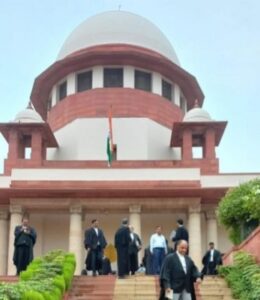
Supreme Court


The Supreme Court had previously invalidated the controversial electoral bonds scheme on February 15, deeming it unconstitutional and mandating disclosure of donor information, donation amounts, and recipients by March 13. The apex court also instructed SBI to furnish details of electoral bonds purchased since April 12, 2019, by March 6.

During the latest hearing, the Supreme Court addressed SBI’s request for an extension, as well as separate pleas seeking contempt action against the bank for alleged defiance of previous directives. Agency reports suggest that SBI’s submissions imply the availability of the requested information, further underscoring the importance of compliance with the court’s directives.

CAA Move: Home Ministry launches web portal to apply for Indian citizenship

Following the enactment of rules governing the Citizenship Amendment Act (CAA) by the government, the Ministry of Home Affairs (MHA) launched a web portal on Tuesday to facilitate applications for Indian citizenship from individuals persecuted on religious grounds in Afghanistan, Pakistan, and Bangladesh.

The newly introduced web portal (accessible at https:/indiancitizenshiponline.nic.in) coincides with the MHA’s notification of the rules under CAA 2019, now referred to as CA 2024. These rules extend Indian citizenship to refugees belonging to six minority communities – Hindus, Sikhs, Buddhists, Jains, Parsis, and Christians – who sought refuge in India before December 31, 2014.

Notably, the previous law required migrants to reside in India for ‘not less than 11 years’ to qualify for citizenship, a duration reduced to ‘not less than five years’ for eligible persecuted minorities under CAA.

According to the MHA’s annual report for 2021-22, a total of 1,414 individuals from these non-Muslim minority communities in Pakistan, Bangladesh, and Afghanistan were granted Indian citizenship through registration or naturalization under the amended Citizenship Act, 1955.

The original Citizenship Act of 1955 (57 of 1955) was instituted to regulate the acquisition and determination of Indian citizenship.

Against the backdrop of historical trans-border migration between India and the regions encompassing Pakistan, Afghanistan, and Bangladesh, millions of individuals of varied faiths from undivided India found themselves residing in what became Pakistan and Bangladesh post the 1947 partition.

A notable aspect is the designation of specific state religions in the constitutions of Pakistan, Afghanistan, and Bangladesh, leading to persecution of individuals from Hindu, Sikh, Buddhist, Jain, Parsi, and Christian communities on religious grounds.

The severity of persecution prompted many to seek refuge in India, albeit often with expired or incomplete travel documents, rendering them technically illegal migrants under previous legislation.

To address their plight, the Central government exempted these migrants from penalties under the Passport (Entry into India) Act, 1920, and the Foreigners Act, 1946, while also granting them long-term visas.

However, under the leadership of Prime Minister Modi, the government has extended eligibility for Indian citizenship to these persecuted non-Muslim migrants, specifying a cutoff date of December 31, 2014.

The Citizenship Amendment Act (CAA) streamlines the citizenship acquisition process for migrants from these communities, enabling them to apply for Indian nationality, subject to prescribed conditions and procedures.

Notably, the CAA provides immunity to these migrants against any ongoing proceedings regarding their migration status or citizenship matters, facilitating their citizenship applications.

Furthermore, amendments to the Third Schedule of the Citizenship Act allow applicants from these communities to qualify for citizenship by naturalization after five years of residency, instead of the previous requirement of eleven years.

Importantly, the CAA safeguards the constitutional rights of indigenous populations in northeastern states covered under the Sixth Schedule and those in areas protected by the “Inner Line” system of the Bengal Eastern Frontier Regulation, 1873.


Hindus in UK, US, Canada upbeat Over India’s Citizenship Amendment Act, Call it Human Rights Win

Now that the Citizenship Amendment Act (CAA) has been implemented to offer Indian citizenship to persecuted minorities, reactions from all over the world are pouring in. A “big win for human rights”, say Hindu organisations across the US, the UK, and Canada, hailing the announcement of the Indian government.

The move was lauded by international advocacy groups. The India’s Citizenship Amendment Act (CAA), a key promise of the ruling BJP’s 2019 electoral agenda, has drawn praise for its provisions to grant citizenship to persecuted religious minorities from neighboring countries.

The Hindu Forum Canada commended the Indian government’s decision, emphasizing India’s commitment to international human rights obligations. The group expressed hope for similar measures in Pakistan and Bangladesh to promote harmony among Indian nationals.

Likewise, the Coalition of Hindus of North America (CoHNA) hailed the CAA as a victory for human rights, stressing its positive impact on persecuted minorities from Pakistan, Bangladesh, and Afghanistan. CoHNA clarified that the act does not affect existing Indian citizens of any faith but expedites citizenship for approximately 31,000 religious minorities facing persecution.

Union Home Minister Amit Shah 

Highlighting the plight of minority communities in Pakistan, CoHNA cited instances of forced conversions and kidnappings, driving families to seek refuge in India. The Hindu American Foundation (HAF) echoed these sentiments, emphasizing the necessity of CAA to protect vulnerable refugees and uphold human rights.

Comparing the CAA to the Lautenberg Amendment in the US, HAF’s Executive Director Suhag Shukla praised both countries for extending support to persecuted individuals based on their religion.

Similarly, a London-based Hindu advocacy group praised India’s dedication to religious freedom and equality, emphasizing its secular values.

Despite widespread support, the enactment of CAA in December 2019 faced opposition from Muslim communities and political parties, alleging discrimination.


Rahul Gandhi’s Bharat Jodo Nyay Yatra to enter Maharashtra today

Congress leader Rahul Gandhi’s Bharat Jodo Nyay Yatra (BJNY) will enter Maharashtra at Nandurbar on Tuesday, March 12, 2024 and will culminate at the Chaityabhoomi in Mumbai’s Dadar, where the cremation of B.R. Ambedkar, the Architect of Constitution, was held.

A significant aspect of the event will be the formal closure of BJNY at Chaityabhoomi, officially known as Dr. Babasaheb Ambedkar Mahaparinirvan Memorial, which features his bust and a statue of Lord Buddha. Chaityabhoomi holds reverence as a pilgrimage site annually on December 6, observed as ‘Mahaparinirvan Day’.

Chhatrapati Shivaji Maharaj Park holds historical significance, having hosted major meetings and gatherings during the British era and post-independence, drawing leaders from all political spectrums.

Congress President Mallikarjun Kharge will be among the key speakers at the INDIA bloc public meeting, marking the formal launch of the united campaign for the 2024 Lok Sabha elections.

Notably, former Congress President Sonia Gandhi addressed a massive rally at the same venue on December 28, 2003, ahead of the 2004 parliament elections, which saw the UPA, led by former Prime Minister Manmohan Singh, come to power.

Rahul Gandhi’s Bharat Jodo Nyay Yatra to enter Maharashtra on March 12, 2024 (INC)

Kharge and Rahul Gandhi announced BJNY on December 27, 2023, the eve of Congress’ 139th anniversary, in the presence of top party leaders. Recently, a delegation of senior Congress leaders, including AICC Secretary Ashish Dua, Leader of Opposition Vijay Wadettiwar, Congress Legislature Party Leader Balasaheb Thorat, Mumbai unit party chief Varsha Gaikwad, met Director-General of Police Rashmi Shukla to ensure adequate security arrangements for Rahul Gandhi’s travel and the upcoming mega-rally on March 17.

Leaders such as Maharashtra unit party president Nana Patole, Working President M. Arif Naseem Khan, former CMs Sushilkumar Shinde, Prithviraj Chavan, among others, are finalizing Rahul Gandhi‘s BJNY route in the state and preparations for the CMS Park public meeting.

The BJNY, which started from Manipur on January 15, 2024 has traversed 6,700 km, spanning 110 Lok Sabha constituencies across 15 states. It will conclude with a public rally on March 17 at Chhatrapati Shivaji Maharaj Park, where top leaders of the national Opposition INDIA bloc will be attending.


CAA comes into effect, Minorities from Pakistan, Bangladesh, Afghanistan to get India Citizenship

The Union Home Ministry on Monday, March 11, 2024, notified the rules for the Citizenship Amendment Act (CAA), providing for granting citizenship to people of certain faiths facing persecution in neighbouring countries like Pakistan, Bangladesh, and Afghanistan and it applies to those who moved to India before 2015.

An MHA spokesperson announced that immigrants eligible for citizenship under the CAA must submit their applications online through a dedicated web portal. The CAA, a key component of the BJP’s 2019 Lok Sabha manifesto, facilitates citizenship for non-Muslims, particularly Hindus, Sikhs, Jains, Buddhists, and Parsis who migrated to India before December 31, 2014, due to religious persecution in neighboring countries.

Despite protests from the Muslim community and opposition parties, the CAA was passed by Parliament in December 2019. Home Minister Amit Shah reaffirmed that the CAA would be implemented before the upcoming Lok Sabha elections in April/May.

Shah emphasized that the CAA, which excludes Muslims because they do not face religious persecution in their home countries, aims to provide citizenship rather than revoke it. He assured Indian Muslim citizens that the bill would not affect their citizenship status and urged the opposition not to politicize the issue along communal lines.

According to Shah, the CAA seeks to grant citizenship retroactively from the immigrants’ entry into India, closing legal proceedings against them and safeguarding their business interests. Expired passports and visas of eligible minorities will not be considered illegal.

Shah highlighted the decline of minority populations in Pakistan and Bangladesh due to persecution, leading many to flee to India. He attributed the necessity of the CAA to the failure of the Nehru-Liaqat pact in safeguarding minority rights in these countries after India’s partition based on religious lines.

Strengthening Bonds: President Droupadi Murmu’s Historic State Visit to Mauritius

President Droupadi Murmu embarked on a significant state visit to Mauritius from March 11th to 13th, strengthening the longstanding ties between the two nations.

As a chief guest, President Murmu attended the National Day celebrations in Mauritius, underscoring the deepening bilateral relations. The visit saw the participation of a contingent from the Indian Navy, including two ships from the First Training Squadron, INS Tir and CGS Sarathi, in the festivities on March 12th.

The Ministry of External Affairs highlighted the milestone in India-Mauritius relations, emphasizing the significance of President Murmu’s presence at the National Day celebrations.

During her visit, President Murmu, along with Mauritius Prime Minister Pravind Jugnauth, inaugurated 14 India-assisted projects, showcasing the diverse facets of India’s development partnership with Mauritius.

President Murmu’s visit followed the recent joint inauguration by Prime Ministers Narendra Modi and Pravind Jugnauth of infrastructure projects in Agalega Island.

As the sixth Indian President to grace Mauritius’ National Day as Chief Guest since 2000, President Murmu’s visit symbolized the enduring bond between the two nations, as stated by the Ministry of External Affairs spokesperson Randhir Jaiswal.

President Murmu held bilateral meetings with Mauritius President Prithvirajsing Roopun and Prime Minister Jugnauth, besides engagements with other Mauritian leaders, including the Speaker of the National Assembly and the Chief Justice of the Supreme Court.

The visit also witnessed the exchange of key bilateral agreements aimed at bolstering institutional collaboration and capacity-building cooperation.

President Murmu paid homage to Mauritian leaders at the Pamplemousses Botanical Garden and visited significant historical and cultural sites, including the Aapravasi Ghat and the Intercontinental Slavery Museum.

Addressing Mauritian youth at the University of Mauritius and engaging with socio-cultural organizations and the Indian diaspora highlighted the multifaceted aspects of the visit, fostering people-to-people ties between India and Mauritius.

96th Academy Awards: ‘Oppenheimer’ with 7 Oscar wins, ‘Poor Things’ with 4, dominate Awards

As expected, Christopher Nolan’s film ‘Oppenheimer’ dominated the 96th Academy Awards, with seven trophies including Best Picture, Best Director, Best Actor and Best Supporting Actor, while ‘Poor Things’ bagged four honors at the grand ceremony held in Los Angeles.

“We made a film about the man who created the atomic bomb, and for better or for worse, we’re all living in Oppenheimer’s world,” Cillian Murphy said while accepting the honor. The Best Director award went to him as a first, despite being nominated seven times previously.

He said: “Movies are just a little bit over 100 years old.. I would imagine being 100 years into painting or theater. We don’t know where this incredible journey is going from here, but to know that you think that I’m a meaningful part of it means the world to me.”

Emma Stone earned her second best actress Oscar for ‘Poor Things’. She thanked her director Yorgo Lanthimos, with whom she has just made another movie, ‘Kinds of Kindness’, as well as the rest of the film’s team.

Da’vine Joy Randolph was feted Best Supporting actress for her role as a grieving cafeteria manager grappling with the death of her son in ‘The Holdovers’.

Robert Downey Jr. won the Best Supporting actor for the Cillian Murphy-starrer. The actor, who struggled with drug addiction for much of the 1990s and early aughts before getting sober and launching his comeback, thanked Tom Hansen, his lawyer of 40 years, “half of which he spent trying to get me insured and bailing me out.”

Jonathan Glazer, director of the best international feature winner ‘The Zone of Interest’, a drama set in Auschwitz, spoke about violence in the Middle East and to draw parallels with the message of his searing look at the Holocaust.

‘American Fiction’, a satire that explores race and art, won Best Adapted Screenplay, while ‘Anatomy of a Fall’, earned Best Original Screenplay.

’20 Days in Mariupol’, won Best Documentary, its director Mstyslav Chernov drew attention to the human costs of Russia’s invasion.

Billie Eilish shattered records, becoming the youngest two-time Oscar winner at age 22 after earning best song for her ‘Barbie’ ballad ‘What Was I Made For?’

Jimmy Kimmel returned to host the Oscars for the fourth time. He started the ceremony with jokes about the Academy snub of ‘Barbie’ filmmaker Greta Gerwig, the excessive lengths of many of the nominated films and Robert De Niro’s much younger girlfriend.

Full List of winners:

Best Picture

American Fiction (Ben LeClair, Nikos Karamigios, Cord Jefferson and Jermaine Johnson, Producers)
Anatomy of a Fall (Marie-Ange Luciani and David Thion, Producers)
Barbie (David Heyman, Margot Robbie, Tom Ackerley and Robbie Brenner, Producers)
The Holdovers (Mark Johnson, Producer)
Killers of the Flower Moon (Dan Friedkin, Bradley Thomas, Martin Scorsese and Daniel Lupi, Producers)
Maestro (Bradley Cooper, Steven Spielberg, Fred Berner, Amy Durning and Kristie Macosko Krieger, Producers)
Oppenheimer (Emma Thomas, Charles Roven and Christopher Nolan, Producers) (WINNER)
Past Lives (David Hinojosa, Christine Vachon and Pamela Koffler, Producers)
Poor Things (Ed Guiney, Andrew Lowe, Yorgos Lanthimos and Emma Stone, Producers)
The Zone of Interest (James Wilson, Producer)

Best Directing

Justine Triet (Anatomy of a Fall)
Martin Scorsese (Killers of the Flower Moon)
Christopher Nolan (Oppenheimer) (WINNER)
Yorgos Lanthimos (Poor Things)
Jonathan Glazer (The Zone of Interest)

Best Actor in a Leading Role

Bradley Cooper (Maestro)
Colman Domingo (Rustin)
Paul Giamatti (The Holdovers)
Cillian Murphy (Oppenheimer) (WINNER)
Jeffrey Wright (American Fiction)

Best Actress in a Leading Role

Annette Bening (Nyad)
Lily Gladstone (Killers of the Flower Moon)
Sandra Hüller (Anatomy of a Fall)
Carey Mulligan (Maestro)
Emma Stone (Poor Things) (WINNER)

Best Actor in a Supporting Role

Sterling K. Brown (American Fiction)
Robert De Niro (Killers of the Flower Moon)
Robert Downey Jr. (Oppenheimer) (WINNER)
Ryan Gosling (Barbie)
Mark Ruffalo (Poor Things)

Best Actress in a Supporting Role

Emily Blunt (Oppenheimer)
Danielle Brooks (The Color Purple)
America Ferrera (Barbie)
Jodie Foster (Nyad)
Da’Vine Joy Randolph (The Holdovers) (WINNER)

Best Writing (Adapted Screenplay)

American Fiction (Written for the screen by Cord Jefferson) (WINNER)
Barbie (Written by Greta Gerwig & Noah Baumbach)
Oppenheimer (Written for the screen by Christopher Nolan)
Poor Things (Screenplay by Tony McNamara)
The Zone of Interest (Written by Jonathan Glazer)

Best Writing (Original Screenplay)

Anatomy of a Fall (Screenplay by Justine Triet and Arthur Harari) (WINNER)
The Holdovers (Written by David Hemingson)
Maestro (Written by Bradley Cooper & Josh Singer)
May December (Screenplay by Samy Burch; Story by Samy Burch & Alex Mechanik)
Past Lives (Written by Celine Song)

Best Animated Feature

The Boy and the Heron (Hayao Miyazaki and Toshio Suzuki) (WINNER)
Elemental (Peter Sohn and Denise Ream)
Nimona 
(Nick Bruno, Troy Quane, Karen Ryan and Julie Zackary)
Robot Dreams (Pablo Berger, Ibon Cormenzana, Ignasi Estapé and Sandra Tapia Díaz)
Spider-Man: Across the Spider-Verse (Kemp Powers, Justin K. Thompson, Phil Lord, Christopher Miller and Amy Pascal)

Best Documentary Feature Film

Bobi Wine: The People’s President (Moses Bwayo, Christopher Sharp and John Battsek)
The Eternal Memory (Maite Alberdi)
Four Daughters (Kaouther Ben Hania and Nadim Cheikhrouha)
To Kill a Tiger (Nisha Pahuja, Cornelia Principe and David Oppenheim)
20 Days in Mariupol (Mstyslav Chernov, Michelle Mizner and Raney Aronson-Rath) (WINNER)

Best International Feature Film

Io Capitano (Italy)
Perfect Days (Japan)
Society of the Snow (Spain)
The Teacher’s Lounge (Germany)
The Zone of Interest (United Kingdom) (WINNER)

Best Animated Short Film

Letter to a Pig (Tal Kantor and Amit R. Gicelter)
Ninety-Five Senses (Jerusha Hess and Jared Hess)
Our Uniform (Yegane Moghaddam)
Pachyderme (Stéphanie Clément and Marc Rius)
War Is Over! Inspired by the Music of John & Yoko (Dave Mullins and Brad Booker) (WINNER)

Best Live-Action Short Film

The After (Misan Harriman and Nicky Bentham)
Invincible (Vincent René-Lortie and Samuel Caron)
Knight of Fortune (Lasse Lyskjaer Noer and Christian Norlyk)
Red, White and Blue (Nazrin Choudhury and Sara McFarlane)
The Wonderful Story of Henry Sugar (Wes Anderson and Steven Rales) (WINNER)

Best Documentary Short Film

The ABCs of Book Banning (Sheila Nevins and Trish Adlesic)
The Barber of Little Rock (John Hoffman and Christine Turner)
Island in Between (S. Leo Chiang and Jean Tsien)
The Last Repair Shop (Ben Proudfoot and Kris Bowers) (WINNER)
Nǎi Nai & Wài Pó (Sean Wang and Sam Davis)

Best Cinematography

El Conde (Edward Lachman)
Killers of the Flower Moon (Rodrigo Prieto)
Maestro (Matthew Libatique)
Oppenheimer (Hoyte van Hoytema) (WINNER)
Poor Things (Robbie Ryan)

Best Costume Design

Barbie (Jacqueline Durran)
Killers of the Flower Moon (Jacqueline West)
Napoleon (Janty Yates and Dave Crossman)
Oppenheimer (Ellen Mirojnick)
Poor Things (Holly Waddington) (WINNER)

Best Makeup and Hairstyling

Golda (Karen Hartley Thomas, Suzi Battersby and Ashra Kelly-Blue)
Maestro (Kazu Hiro, Kay Georgiou and Lori McCoy-Bell)
Oppenheimer (Luisa Abel)
Poor Things (Nadia Stacey, Mark Coulier and Josh Weston) (WINNER)
Society of the Snow (Ana López-Puigcerver, David Martí and Montse Ribé)

Best Original Song

“The Fire Inside” from Flamin’ Hot (Music and Lyric by Diane Warren)
“I’m Just Ken” from Barbie (Music and Lyric by Mark Ronson and Andrew Wyatt)
“It Never Went Away” from American Symphony (Music and Lyric by Jon Batiste and Dan Wilson)
“Wahzhazhe (A Song for My People)” from Killers of the Flower Moon (Music and Lyric by Scott George)
“What Was I Made For?” from Barbie (Music and Lyric by Billie Eilish and Finneas O’Connell) (WINNER)

Best Original Score

American Fiction (Laura Karpman)
Indiana Jones and the Dial of Destiny (John Williams)
Killers of the Flower Moon (Robbie Robertson)
Oppenheimer (Ludwig Göransson) (WINNER)
Poor Things (Jerskin Fendrix)

Best Production Design

Barbie (Production Design: Sarah Greenwood; Set Decoration: Katie Spencer)
Killers of the Flower Moon (Production Design: Jack Fisk; Set Decoration: Adam Willis)
Napoleon (Production Design: Arthur Max; Set Decoration: Elli Griff)
Oppenheimer (Production Design: Ruth De Jong; Set Decoration: Claire Kaufman)
Poor Things (Production Design: James Price and Shona Heath; Set Decoration: Zsuzsa Mihalek) (WINNER)

Best Film Editing

Anatomy of a Fall (Laurent Sénéchal)
The Holdovers (Kevin Tent)
Killers of the Flower Moon (Thelma Schoonmaker)
Oppenheimer (Jennifer Lame) (WINNER)
Poor Things (Yorgos Mavropsaridis)

Best Sound

The Creator (Ian Voigt, Erik Aadahl, Ethan Van der Ryn, Tom Ozanich and Dean Zupancic)
Maestro (Steven A. Morrow, Richard King, Jason Ruder, Tom Ozanich and Dean Zupancic)
Mission: Impossible — Dead Reckoning Part One (Chris Munro, James H. Mather, Chris Burdon and Mark Taylor)
Oppenheimer (Willie Burton, Richard King, Gary A. Rizzo and Kevin O’Connell)
The Zone of Interest (Tarn Willers and Johnnie Burn) (WINNER)

Best Visual Effects

The Creator (Jay Cooper, Ian Comley, Andrew Roberts and Neil Corbould)
Godzilla: Minus One (Takashi Yamazaki, Kiyoko Shibuya, Masaki Takahashi and Tatsuji Nojima) (WINNER)
Guardians of the Galaxy Vol. 3 (Stephane Ceretti, Alexis Wajsbrot, Guy Williams and Theo Bialek)
Mission: Impossible — Dead Reckoning, Part One (Alex Wuttke, Simone Coco, Jeff Sutherland and Neil Corbould)
Napoleon (Charley Henley, Luc-Ewen Martin-Fenouillet, Simone Coco and Neil Corbould)

SpaceX Launches Double Satellite, Deploys 46 Satellites in Record Time; Crew to Return Tomorrow [Watch Live]

US private space agency SpaceX completed the flawless deployment of 46 Starlink internet satellites into low-Earth orbit within a span of just six hours on Monday, heralded as the Elon Musk-owned firm’s reusable Falcon 9 rocket embarked on its mission from Space Launch Complex 40 (SLC-40) at Cape Canaveral Space Force Station in Florida.

SpaceX and NASA are targeting as early as Monday, March 11 at 11:05 a.m. ET for Dragon to autonomously undock from the International Space Station. After performing a series of departure burns to move away from the space station, Dragon will conduct multiple orbit-lowering maneuvers, jettison the trunk, and re-enter Earth’s atmosphere for splashdown off the coast of Florida almost 19 hours later at approximately 5:50 a.m. ET on Tuesday, March 12.

Live webcast coverage of Crew-7’s return to Earth will begin on X @SpaceX about 15 minutes prior to undocking.

Watch live.

Aboard the spacecraft will be Crew-7 NASA astronaut Jasmin Moghbeli, ESA astronaut Andreas Mogensen, JAXA astronaut Satoshi Furukawa, and Roscosmos cosmonaut Konstantin Borisov, who flew to the space station on Dragon when Falcon 9 launched the spacecraft from Launch Complex 39A (LC-39A) at Kennedy Space Center in Florida on Saturday, August 26.

The company confirmed in an official statement that the first batch of 23 satellites blasted off at 4:35 am IST, marking the 11th successful flight for the first-stage booster. Notably, this booster has previously supported missions such as Crew-5 and GPS III Space Vehicle 06. Shortly after liftoff, the Falcon 9’s first stage returned to Earth, executing a flawless vertical landing on the SpaceX drone ship “Just Read the Instructions” in the Atlantic Ocean.

SpaceX launches 60 Starlink satellites June 3, 2020 / SpaceX

SpaceX confirmed the deployment of the initial 23 Starlink satellites via Twitter approximately an hour after liftoff.

Subsequently, the second set of 23 Starlink satellites launched at 9:39 am Indian time, marking the 17th flight for its first stage booster. This booster has a notable history, having supported missions like Sentinel-6 Michael Freilich and DART. Following separation, the first stage is slated to land on the droneship “Of Course I Still Love You” stationed in the Pacific Ocean.

These accomplishments come on the heels of SpaceX’s recent launch of 23 Starlink satellites. With over 5,000 operational Starlink satellites currently in orbit and approval to launch up to 12,000, SpaceX continues to push the boundaries of satellite internet connectivity.

In 2024 alone, SpaceX has already completed 22 orbital missions, with plans to conduct a staggering 144 launches by year’s end.