SEBI Announces New Curbs on F&O Trading, Derivatives to Benefit

The Securities and Exchange Board of India (SEBI) has announced a series of new measures aimed at curbing speculative trading in the futures and options (F&O) segment, after data revealed that nine out of ten participants have consistently lost money over the past three years.

As part of the new regulations, SEBI has increased the minimum contract size in index derivatives from ₹5 lakh to ₹15 lakh. Additionally, the regulator has reduced the number of weekly index expiries to just one per exchange. This means that each exchange can now offer only one weekly expiry on a single benchmark index.

“In order to address the issue of excessive trading in index derivatives on expiry day, it has been decided to rationalize the number of index derivatives products with weekly expiries. Henceforth, each exchange may offer derivatives contracts for only one of its benchmark indices with a weekly expiry,” SEBI stated in its circular.

The move comes as a response to the heavy losses sustained by retail investors in the F&O segment. According to a recent study by SEBI, over the past three years, a staggering ₹1.81 lakh crore has been lost by 1.10 crore traders. Only 7% of traders have managed to make a profit.

With the implementation of this new circular, the size of derivatives contracts in benchmark indices such as Nifty and Sensex will increase, with the range moving from ₹5 lakh-₹10 lakh to ₹15 lakh-₹20 lakh. The new rules will take effect for all index derivatives contracts introduced after November 20, 2024.

India’s derivatives market has seen substantial growth in recent years. According to SEBI’s report, India’s derivatives market has now surpassed the cash market, accounting for 30% to 50% of global derivatives trading. The turnover in India’s cash market has doubled between FY20 and FY24, while the turnover of index options has surged 12-fold, reaching ₹138 lakh crore in FY24 from ₹11 lakh crore in FY20.


Ola Electric’s EV Market Share Drops 27% to ₹100 Amid Mounting Challenges

Ola Electric, led by Bhavish Aggarwal, continues to witness a decline in its market share within the Indian electric vehicle (EV) sector. In September, the company’s share dropped further to 27%, impacted by intensifying competition and issues surrounding its service centers.

According to data from the government transportation portal Vahan, Ola Electric sold 24,665 e-scooters in September, a decline from the 27,587 units sold in August. The company’s market share, which had already fallen to 31% in August, has seen a consistent downward trend due to increasing pressure from competitors like TVS Motor and Bajaj Auto.

Both TVS Motor and Bajaj Auto gained ground in September, further closing the gap with Ola. Bajaj Auto registered 19,103 units, up from 16,789 in August, while TVS Motor saw an increase to 18,084 units from 17,649 units. Ather Energy also experienced growth, with sales rising to 12,676 units in September compared to 10,980 units the previous month.

The intensifying competition is partly driven by the launch of new models from Ola’s rivals, which are priced competitively against Ola’s offerings.

In addition to losing market share, Ola Electric’s stock has struggled, currently trading around ₹100 — a significant drop from its all-time high of ₹157.40, representing a 38% decline. The stock has fallen in nine of the last 11 sessions, reflecting the challenges the company is facing.

Reports indicate that Ola’s flagship S1 series e-scooter has been plagued by problems, including hardware malfunctions, software glitches, and a shortage of spare parts, leading to delays in service. Market analysts point to rising competition and persistent service-related issues as key factors behind the company’s volatility.

Trade analysts have also noted that Ola Electric’s stock is currently loss-making and trading at high valuations, contributing to its instability in the market.

Gautam Adani Takes QIP Route, To Sell Flagship Company Shares Next Week To Raise $1.3 Bn

Billionaire Gautam Adani’s flagship firm, Adani Enterprises, is gearing up to roll out its share sale as early as next week, according to sources familiar with the matter. This marks the company’s return to the public equity markets after a previous plan was shelved following a damning short-seller report in 2023.

Adani Enterprises is planning to raise approximately $1.3 billion through a qualified institutional placement (QIP). The process is expected to commence in the week starting October 7, said the sources, who requested anonymity as the information is not yet public.

The company is also considering including a greenshoe option, with the final terms likely to be confirmed by the board by the end of this week, according to one of the sources. There is reportedly strong interest from several domestic institutional investors in the offering.

In May, the Adani Enterprises board had approved a plan to raise up to ₹16,600 crore (approximately $2 billion) through various methods, including share sales to institutional investors.

While an official response from the Adani Group is yet to be made, sources indicated that the deliberations are still ongoing, and the specifics of the share sale, including its size and timing, are subject to change.

Adani’s Fundraising Amidst IPO Boom in India

The fundraising effort comes at a time when India is experiencing a surge in investor activity, making it the busiest IPO market globally. This marks another significant milestone for the Adani Group, which has been working to recover after U.S.-based short-seller Hindenburg Research accused the conglomerate of corporate fraud in January 2023.

Despite the group’s firm denial of these allegations, the accusations triggered a sharp stock decline that wiped out over $150 billion from Adani Group’s market value and forced the cancellation of a $2.5 billion share sale in February 2023.

Since then, Adani has resumed its growth strategy with notable moves including the acquisition of a port in Africa, a $10 billion chip plant project, and cement company buyouts in India. A successful share sale by Adani Enterprises — which acts as an incubator for the group’s new ventures — would serve as a major vote of confidence from investors.

According to earlier reports by Bloomberg News, ICICI Securities, Jefferies Financial Group, and SBI Capital Markets are advising Adani Enterprises on the share sale.

Adani’s Market Performance and Future Plans

Shares of Adani Enterprises have risen by nearly 12% this year, though they still trail the broader market. The company’s performance has lagged behind the 18.7% rise in the benchmark NSE Nifty 50. However, the stock remains about 7% below the level it was at before the Hindenburg report was published.

This upcoming transaction follows the successful $1 billion share sale by Adani Energy Solutions Ltd. in August, which was also targeted at institutional investors.

In addition to the share sale, Adani Group and its joint venture partner, Wilmar International, are planning to sell a 13% stake in Adani Wilmar Ltd., aligning with India’s shareholding regulations.

NTPC Green Energy Files for ₹10,000 Crore IPO, To Open in Nov 1st Week

NTPC Green Energy, the renewable energy arm of state-run NTPC, has submitted draft papers to the Securities and Exchange Board of India (SEBI) to raise ₹10,000 crore through an initial public offering (IPO). The entire IPO consists of a fresh issue of equity shares, with no offer-for-sale (OFS) component, according to the draft red herring prospectus (DRHP).

The company plans to use ₹7,500 crore of the IPO proceeds to repay or prepay loans of its subsidiary, NTPC Renewable Energy Ltd (NREL), while the remaining funds will be allocated for general corporate purposes.

Expected Launch Date

Media reports suggest that the NTPC Green Energy IPO is likely to open in the first week of November. The company has planned investor roadshows in India, particularly in Mumbai, and internationally, with a focus on Singapore.

A portion of the IPO will be reserved for NTPC shareholders. Investors who hold NTPC shares on the record date of the RHP (which will be filed later) will be eligible to participate in this category.

To maximize chances of securing an allotment in the IPO, investors can buy at least one NTPC share now. This will make them eligible for the shareholders’ quota when the IPO launches. Those holding NTPC shares as of the record date can apply under this preferential category.

NTPC Green Energy: A ‘Maharatna’ PSU

NTPC Green Energy, a ‘Maharatna’ central public sector enterprise, manages a portfolio of renewable energy assets, including solar and wind power projects across six states.

As of August 2024, the company operates 3,071 MW of solar projects and 100 MW of wind projects. The broader NTPC group has set an ambitious goal of reaching 60 GW of renewable energy capacity by 2032. Currently, the group has 3.5 GW of installed capacity with over 28 GW in development.

India’s renewable energy sector has seen significant growth in recent years, positioning the country as the fourth-largest globally in renewable energy capacity, which includes wind and solar power. The draft papers, citing a Crisil report, state that India’s renewable energy capacity grew from 63 GW in FY12 to 191 GW by March 2024, including large hydro. As of March 2024, renewable energy accounts for nearly 43% of India’s total power generation capacity, with solar energy leading the way.

IDBI Capital Markets & Securities, HDFC Bank, IIFL Securities, and Nuvama Wealth Management are the lead book-running managers for the IPO. Kranthi Bathini, Director of Equity Strategy at WealthMills Securities, highlighted that the IPO comes at a critical time as NTPC looks to diversify its revenue streams by moving away from its dependence on thermal power.

“With green energy gaining focus in the near future, investors are likely to be keen on getting a slice of this pie,” Bathini told Reuters.

Global Markets Dovetail After Iran Unleashes Overnight Missile Attacks on Israel

Iran’s overnight ballistic missile strike on Israel has sent shockwaves through global markets on expected lines with a significant shift in investor behavior rushing for safer assets. Besides a decline in U.S. Treasury bond yields and a surge in gold prices, the safe-haven dollar has strengthened against the euro, trading close to its strongest in three weeks.

The missile strike, which occurred on October 2, 2024, has had a profound impact on oil prices. Brent crude has gained more than 1% to reach $74.40 per barrel, reflecting the market’s concern over potential supply disruptions in the Middle East due to the heightened tensions.

The geopolitical unrest has also affected stock markets in Asia, with Japan’s Nikkei slumping 1.5%, South Korea’s KOSPI dropping 1.3%, and Australia’s benchmark losing 0.3%. Due to a holiday on Mahatma Gandhi’s birth anniversary, India’s markets were closed on Wednesday.

The U.S. S&P 500 futures also weakened, indicating a risk-averse sentiment among investors. This shift in investor sentiment is a clear indication of the market’s reaction to the escalating geopolitical tensions and the potential impact on the global economy.

Impact on Central Banks’ Policies

The U.S. Federal Reserve’s potential interest rate cut in November is being influenced by a resilient U.S. job market, suggesting a smaller cut might be appropriate. Additionally, eurozone inflation trends are pointing towards an expected European Central Bank (ECB) easing, which could affect the global economic outlook and the Fed’s decision.

Fed Chair Jerome Powell’s comments have pushed back against the likelihood of another large rate cut, as the U.S. economy is seen as being on solid footing. Market expectations for a smaller cut are also shaped by data on job openings and the potential for continued economic growth. These factors are playing a crucial role in shaping investor sentiment and market expectations.

The Federal Reserve’s indication of a smaller interest rate cut in November, due to a resilient U.S. job market, has influenced market sentiment, with investors adjusting their expectations for a more measured approach to monetary easing. This has contributed to a slight unwind of long Treasury bets and a focus on economic data like job openings for further cues.

History Repeats

The geopolitical tensions and their impact on global markets are reminiscent of similar historical events. For instance, the 1990-1991 Gulf War led to a spike in oil prices and a sell-off in global stock markets due to fears of a wider conflict and potential disruptions to oil supplies. Similarly, the 2008 Russia-Georgia war led to a brief spike in oil prices and a dip in global stock markets. These historical events underscore the significant impact geopolitical conflicts can have on global markets and the economy.

The ECB’s expected quarter-point rate cut in response to inflation falling below its target has also shaped expectations, with investors anticipating a supportive monetary policy to boost the eurozone economy. These central bank policies are crucial in managing market expectations, affecting bond yields, the dollar’s strength, and overall investor confidence in the global economic outlook.

Iran Declares Missile Attacks on Tel Aviv Over But Israel and US Vie for Retaliation

In an overnight escalation of hostilities in the Middle East, Iran on Wednesday declared that its missile strikes on Israel were over unless further provoked, even as Israel and the United States vowed retaliation. This development has intensified fears of a broader conflict in the region, potentially turning it into another World War.

Washington D.C. pledged to work with its ally, Israel, to ensure that Iran faces “severe consequences” for the attack, which Israel claims involved over 180 ballistic missiles. The United Nations Security Council has called an urgent meeting on Wednesday to address the situation, while the European Union has demanded an immediate ceasefire.

“We have completed our action unless the Israeli regime invites further retaliation. In that case, our response will be even stronger,” Iranian Foreign Minister Abbas Araqchi stated on social media platform X early on Wednesday.

Meanwhile, Israel continued its airstrikes on Beirut’s southern suburbs, a known Hezbollah stronghold, with at least a dozen attacks on Wednesday morning. These strikes followed Iran’s largest-ever military assault on Israel, with large plumes of smoke seen rising over the city. Evacuations in the area have been ongoing amid relentless bombings.

Iran’s missile barrage represents its most extensive military strike against Israel to date. Sirens blared across Israel, with explosions reported in Jerusalem and the Jordan River Valley, forcing the population into bomb shelters. While Israel reported no injuries, authorities in the West Bank confirmed one casualty.

Iran described the missile strike as a defensive response, targeting Israeli military facilities, with Tehran claiming that three Israeli military bases were hit. Iranian state media reported that the attack was in retaliation for Israel’s recent actions in Lebanon and Gaza, including the assassination of militant leaders.

Israel’s missile defense system intercepted most of the Iranian missiles with the help of a U.S.-led defense coalition, according to Israeli Rear Admiral Daniel Hagari. “This attack by Iran is a serious and dangerous escalation,” he warned.

Retaliation Fears Grip Global Nations 

Israeli Prime Minister Benjamin Netanyahu, addressing an emergency cabinet meeting, vowed retaliation. “Iran has made a grave mistake tonight, and it will pay the price,” he declared.

The Iranian military has warned that any Israeli response will lead to “vast destruction” of Israeli infrastructure and threats to regional allies. The Revolutionary Guards also claimed to have used hypersonic Fattah missiles for the first time, with a reported 90% success rate in hitting Israeli targets.

In response, U.S. naval forces fired interceptors to defend against Iranian missiles targeting Israel. U.S. President Joe Biden expressed full support for Israel and dismissed Iran’s attack as “ineffective.” Vice President Kamala Harris echoed Biden’s stance, asserting that the U.S. would defend its interests and punish Iran.

The situation has drawn international concern. UN Secretary-General Antonio Guterres condemned the escalating violence, calling for an immediate ceasefire. French President Emmanuel Macron and EU foreign policy chief Josep Borrell also urged restraint, warning that the ongoing cycle of attacks and retaliations risks spiraling into a larger regional conflict.

With the death toll rising in Lebanon due to weeks of cross-border fighting, the world watches anxiously as tensions between Iran, Israel, and the U.S. threaten to ignite a wider war.

Iran Fires Missiles at Israel – Live Twitter Coverage

Iran fired a salvo of ballistic missiles at Israel on Tuesday in retaliation for Israel’s campaign against Tehran’s Hezbollah allies in Lebanon, reports Reuters. Soon, social media platforms are abuzz with videos covering the skies lighted with an endless rows of missiles, catching the attention of the whole world.

Alarms sounded across Israel and explosions could be heard in Jerusalem and the Jordan River valley after Israelis piled into bomb shelters.
Iran’s Revolutionary Guards said Iran had launched tens of missiles at Israel, and that if Israel retaliated Tehran’s response would be “more crushing and ruinous”.

Here’s a round-up of some tweets on Iran’s attack on Israel live:

Tirupati Laddu Probe Paused As Supreme Court Steps In

In a recent development that has gripped the nation, the Special Investigation Team (SIT) constituted by the Andhra Pradesh government has temporarily halted its probe into the alleged adulteration of Tirupati laddus. The decision comes in the wake of the Supreme Court’s statement that there is currently no evidence to suggest animal fat was used in the preparation of the laddus during the previous YSRCP regime. The matter is now sub-judice in the Supreme Court.

Andhra Pradesh DGP Ch Dwaraka Tirumala Rao confirmed the development, stating that the SIT had been instructed to stall further proceedings until October 3. Over the last two days, the SIT had visited various places in TTD, the procurement area, and the sample collection area, collecting a significant amount of information. However, in adherence to the Supreme Court order, the investigation has been paused for the time being.

The Supreme Court’s intervention came after a petition was filed regarding the constitution of the SIT. The court is currently examining the case and has asked for the probe to be stalled until it decides whether the SIT should continue the investigation or if an independent agency should take over.

The Tirupati Laddu Controversy

The controversy began when Andhra Pradesh Chief Minister N Chandrababu Naidu made public allegations about the possible use of adulterated ghee in the preparation of Tirupati laddus, suggesting that animal fat might have been used. However, the Supreme Court criticized this move, stating there was no conclusive evidence and that such allegations should not have been made publicly without certainty.

The Tirupati laddus, also known as ‘Srivari Laddus’, hold great significance as they have been the main prasadam (offering) at the Sri Venkateswara Swamy Temple for over 300 years. It is believed to be the favorite offering of Lord Venkateswara. The laddus are prepared in large quantities daily to meet the demands of devotees and are renowned for their unique taste and long shelf life due to advanced packaging techniques. The tradition of making these laddus is deeply rooted in the temple’s culinary history, with the recipe and preparation methods passed down through generations.

The controversy has sparked a heated debate among the public and political circles, with some accusing the Chief Minister of using the issue for political advantage. Despite the controversy, the sale of Tirupati laddus has remained unaffected, with over 16 lakh sold in just five days.

The Role of Judiciary in the Controversy

The Supreme Court’s intervention and the subsequent halt of the SIT probe mark a significant turn in the controversy. The court’s decision to examine the case underscores the gravity of the issue, which affects the religious sentiments of millions of devotees of Lord Venkateswara, the deity of the Tirumala temple.

The case also highlights the role of the judiciary in ensuring the integrity of religious practices and the administration of justice. The Supreme Court’s decision to intervene and examine the case is a testament to its commitment to uphold the rule of law and protect the rights and beliefs of citizens.

As the nation awaits the Supreme Court’s directives on October 3, the controversy serves as a reminder of the delicate balance between religion and politics, and the importance of maintaining the sanctity of religious practices. It also underscores the need for thorough and unbiased investigations in matters of public interest, and the crucial role of the judiciary in upholding justice and truth.

Tension Grips As Iran Missiles Pound Israel, Iron Dome Shelters Targets

Iran, as warned earlier, fired missiles at Israel at 10 PM (IST) in response Israel’s ground offensive in Lebanon to target Hezbollah and days after the militant outfit’s commander Hassan Nasrallah and a top official from Iran’s Islamic Revolutionary Guard were killed in airstrikes on Beirut.

The Israel Defence Forces (IDF) said at 10.08 pm IST that the missiles were fired a “short while ago”. The launch was confirmed by Iran’s official IRNA news agency, which said the country had launched “a missile attack on Tel Aviv” and confirmed by news agency Reuters quoting Israeli media as saying that as many as 100 missiles had been launched.

Videos showed debris from missiles intercepted by Israel’s famed Iron Dome and Arrow defence systems raining down on Tel Aviv. The Israeli defence forces also confirmed that blasts had been heard in “Jerusalem and elsewhere”. There have been no reports of any casualties so far.

“Iran’s attack is continuing. You are requested to remain in a protected space until further notice. The explosions you are hearing are from interceptions or fallen projectiles,” the IDF said in a statement.

However, the Israeli Defense Forces (IDF) have reaffirmed their high state of preparedness and readiness to respond to any attacks from Iran. In response to the escalating situation, Israel has launched a ground offensive in Lebanon, targeting the Iran-backed militia Hezbollah. This move is seen as a direct response to the killing of Hezbollah’s leader, Hassan Nasrallah, in an Israeli air strike last week.

US Backs Israel’s Defensive Measures

The United States and other Western allies have previously stepped in to help defend Israel against a combined Iranian missile and drone attack in April. This attack was launched by Tehran in retaliation for an Israeli strike on the Iranian consulate in Damascus. The US official added, “A direct military attack from Iran against Israel will carry severe consequences for Iran.”

Despite the escalating tensions, Iran has stated that it would not deploy soldiers to confront Israel. However, Iran’s foreign ministry spokesman, Nasser Kanani, has said that local groups possess the capability to defend themselves against aggression. Israeli Prime Minister Benjamin Netanyahu has issued a stark warning to Iran, stating, “There is nowhere in the Middle East, Israel cannot reach.” He also expressed hope for a future when Iran is finally free, predicting that this would come a lot sooner than people think.

The United States has cautiously backed Israel’s move to dismantle Hezbollah’s ability to attack northern Israel, even as President Joe Biden has called for a ceasefire. US Secretary of State Antony Blinken said that Washington was tracking events in the Middle East very closely. He said, “The United States is committed to Israel’s defense.”

US Boosts Military Presence in the Middle East

In a show of support, the US has boosted its forces in the Middle East by a few thousand troops, bringing in new units while extending others that are already there. The Pentagon has also announced the deployment of more fighter jets to the region. US Defense Secretary Lloyd Austin has offered support to his Israeli counterpart Yoav Gallant for dismantling attack infrastructure belonging to Hezbollah along the border with Lebanon.

The escalating conflict has raised fears of a wider regional conflict that the United States and other world powers have said they want to avoid in the Middle East. The situation remains complex and can change quickly depending on the political situation and recent events.

2006 Lebanon War

The current situation bears a striking resemblance to the 2006 Lebanon War, also known as the July War, which was a 34-day military conflict in Lebanon, Northern Israel, and the Golan Heights. The principal parties were Hezbollah paramilitary forces and the Israel Defense Forces (IDF).

The conflict started on 12 July 2006 and continued until a United Nations-brokered ceasefire went into effect in the morning on 14 August 2006, though it formally ended on 8 September 2006 when Israel lifted its naval blockade of Lebanon.

As the world watches with bated breath, the hope is for a swift resolution to the escalating tensions, with diplomatic efforts being made to ensure civilian safety on both sides of the border. The international community is eager to prevent a full-blown conflict that could have devastating consequences for the region and beyond in the form of a Third World War.

The unfolding events serve as a stark reminder of the fragile peace in the Middle East with potential to upset the global order.

Under Currents of RBI Flagging Irregularities in Gold Loans

The Reserve Bank of India (RBI) has recently raised concerns over deficiencies in gold-lending practices, urging gold lenders to review their policies and practices and implement corrective measures within a three-month timeframe. This directive comes in the wake of a review conducted by the RBI, which revealed several irregularities in the gold loan sector.

Gold loans, which are granted against a pledge of gold ornaments and jewellery, have come under the RBI’s scrutiny as they defy the lending norms of other assets and often fail to contribute to overall growth.

The review, as well as the findings of the onsite examination of select supervised entities by the RBI, indicated several irregular practices in this activity. The major deficiencies include shortcomings in the use of third parties for sourcing and appraisal of loans, valuation of gold without the presence of the customer, inadequate due diligence, and lack of end-use monitoring of gold loans.

RBI’s Advisory Too Late?

The RBI has pointed out the lack of transparency during the auction of gold ornaments and jewellery on default by the customer, weaknesses in monitoring of loan-to-value, and incorrect application of risk-factors, among others. These irregularities were observed across various supervised entities, including commercial banks, small finance banks, urban cooperative banks, and non-banking financial companies (NBFCs).

In response to these findings, the RBI has advised lenders to comprehensively review their policies, processes, and practices on gold loans to identify gaps and initiate appropriate remedial measures in a timebound manner. The central bank has also emphasized the need for close monitoring of gold loan portfolios, especially in light of significant growth in the portfolios in certain entities.

The RBI’s directive also highlighted the need for entities to ensure that adequate controls are in place over outsourced activities and third-party service providers. The central bank has warned that non-compliance with regulatory guidelines will be viewed seriously and will attract supervisory action by the RBI.

Impact on the Gold Loan Sector

This warning on gold loan practices follows a similar caution issued by the RBI in August 2024, highlighting issues with home equity or top-up housing loans such as non-adherence to loan-to-value (LTV) ratios and lack of end-use monitoring. The RBI Governor, Shaktikanta Das, had then noted that such loans may lead to funds being deployed in unproductive segments or for speculative purposes.

The RBI’s advisory to gold lenders also highlighted several specific cases of irregularities or deficiencies with respect to gold loans being granted. These included instances where gold loans were given through partnerships with fintechs and business correspondents (BCs), and practices such as valuation of gold being carried out in the absence of the customer, credit appraisal and valuations being done by the BC itself, and gold being stored in the custody of BC.

The review also revealed a lack of a robust system for periodical LTV (loan-to-value) monitoring with instances of breach of regulatory LTV ceilings observed in some entities. In other instances, the application of risk weights was at variance with the prudential regulations. The end use of funds was also usually not verified for non-agriculture loans and there was a lack of proof or proper documentation obtained and retained in respect of agriculture gold loans.

The RBI’s directive has likely led to a negative impact on the share prices of major gold financing companies, as indicated by mentions of stocks slipping for companies like Muthoot Finance and Manappuram Finance. These companies would have to review and potentially tighten their practices, which could involve increased costs and possibly affect their short-term business operations. The directive also suggests increased regulatory scrutiny, which might lead to a more cautious approach by investors in the sector.

Otherwise, the RBI’s directive serves as a wake-up call for gold lenders to tighten their practices, lest the RBI may tighten the rules to  maintain the stability of the financial system. Certainly, the directive is going to impact on gold loans segment of many banks and NBFCs.

Gold as Crisis Saver

Whether Covid-19 or Forex crisis, over the period gold remained the single instrument to save the nations to sustain and India stands to benefit from the gold as a reserve, as the case with many other central banks across the globe. From a low of 7% seen in CY20, the share has improved significantly to 26% at present.

As per World Gold Council report, Central Bank of Turkey was the largest buyer, followed by People’s Bank of China and Reserve Bank of India. This may be on account of attaching greater weight to gold’s value in crisis response, diversification of portfolio and credibility on account of store-of-value. But the value erodes when the asset changes hands from the owners to the lenders. Here, the RBI is quite cautious.

Sensex and Nifty Down But Surge In Midcaps and Smallcaps Push Market Sentiment

The Indian equity market recently closed with marginal losses, primarily due to the impact of heavyweight shares such as Reliance Industries and HDFC Bank. The Sensex, a benchmark index of the Bombay Stock Exchange (BSE), closed 33 points lower at 84,266. Concurrently, the Nifty, the National Stock Exchange’s key index, was down by 13 points, closing at 25,796.

Despite the marginal losses in the primary indices, the market witnessed a surge in midcap and smallcap stocks. The Nifty Midcap 100 index rose by 204 points or 0.34%, closing at 60,358. Similarly, the Nifty Smallcap 100 index saw an increase of 151 points or 0.79%, ending the day at 19,331.

Market Sentiment

The overall market sentiment remained positive, with 2,308 shares on the BSE closing in the green, 1,655 in the red, and 91 remaining unchanged. This positive sentiment was reflected in the performance of various sectoral indices. The Auto, IT, PSU bank, pharma, metal, and media sectors were the primary contributors to the market’s performance. However, the Fin service, FMCG, realty, energy, private bank, and PSE sectors lagged behind. In the Sensex pack, several companies emerged as top gainers, including Tech Mahindra, M&M, Kotak Mahindra Bank, Infosys, SBI, HCL Tech, Wipro, Nestle, ICICI Bank, TCS, UltraTech Cement, Bajaj Finserv, and Sun Pharma. On the other hand, IndusInd Bank, Asian Paints, HUL, Tata Motors, Tata Steel, Titan, Reliance, NTPC, and L&T were among the top losers.

Technical Analysis

Rupak De, Senior Technical Analyst at LKP Securities, provided a technical perspective on the market’s performance. He noted that the Nifty formed a Doji pattern with a long upper shadow on the daily chart, indicating market indecision. He further explained that heavy call writing at 25,800 suggests it may act as strong resistance if sustained. Immediate support lies at 25750, and a decisive break below this could push the index to 25600/25500.

On the higher side, a move above 25800 may propel the Nifty towards 26050, where sellers could become active again. In the commodities market, gold prices showed a positive trend. In the MCX, gold prices rose by Rs 300, closing at Rs 75,890 per 10 grams. Similarly, in the Comex, gold prices were up by $15, closing near $2649 per ounce.

In a related development, L&T Finance Holdings (L&TFH) is showing signs of a potential bullish breakout after a period of consolidation. The momentum indicator, RSI, has provided a positive crossover, signaling a potential reversal in the stock’s direction. There is visible support at the 125 level, which is expected to act as a cushion for the bulls. If this support holds, it may pave the way for a move towards upside targets of 145 and 150.

While the equity market closed with marginal losses, the overall market sentiment remained positive. The surge in midcap and smallcap stocks, the positive performance of several sectoral indices, and the potential bullish breakout in L&T Finance Holdings are all positive signs for the market. However, investors should closely monitor key resistance and support levels as indicated by market experts tomorrow.

Tragic School Bus Fire In Thailand Sparks Debate On Stringent Safety Measures

In a horrifying incident that unfolded on the outskirts of Bangkok, Thailand, a school bus carrying students and teachers on a field trip caught fire. The tragic event, which occurred on October 1, 2024, has left an estimated 25 people feared dead and 16 passengers hospitalized.

The incident has sent shockwaves through the nation and the international community, triggering debate on the importance of stringent safety measures in school transportation everywhere.

The bus was transporting students and teachers from the province of Uthai Thani, located approximately 250 km (155 miles) north of the capital, Bangkok. The exact cause of the fire remains under investigation, according to Transport Minister Suriya Juangroongruangkit. The minister also confirmed that 16 students and three teachers were sent to a hospital for treatment.

The horrifying scene was captured in early images posted on social media and carried by local news outlets, showing thick grey smoke pouring out of the bus, parts of which were still ablaze. Firefighters later managed to extinguish the fire.

A Reuters photographer at the scene reported seeing fire trucks, police, and rescue vehicles parked around the blackened vehicle, with a cluster of firefighters at the entrance.

PM Shinawatra condoles

Thailand Prime Minister Paetongtarn Shinawatra expressed her condolences in a social media post, stating, “As a mother, I would like to express my deepest condolences to the families.” The Prime Minister also confirmed that the students were on a field trip from Uthai Thani province. She assured that the government would take care of the medical expenses and provide compensation to the families of the deceased.

Rescue group Hongsakul Khlong Luang 21, in a post on its Facebook page, reported finding at least 10 bodies on the bus. The students and teachers belonged to the Wat Khao Phraya School, according to a report by Reuters.

Similar incidents elsewhere

This tragic incident is not a sole example. In November 2023, a bus carrying high school students was involved in a deadly crash on westbound Interstate 70 in Licking County, Ohio. The bus was carrying students and chaperones from the Tuscarawas Valley Local School District in eastern Ohio, who were headed to perform at an educational conference.

In another incident in August 2023, wildfires in Maui, Hawaii, claimed 67 lives, with some residents alleging that they were not sufficiently warned through emergency alerts as the crisis deepened. This incident, similar to the school bus fire in Thailand, called for the importance of effective emergency response systems and the need for stringent safety measures, particularly when it involves the transportation of children.

As the nation mourns the loss of young lives, it is hoped that the incident will lead to a thorough review of safety measures and protocols, particularly in school transportation, to prevent such tragedies in the future.

NEET Row: Bengal Assembly passes resolution on scrapping of NEET; Karnataka next?

On Wednesday, the West Bengal Assembly passed a resolution, introduced by the ruling Trinamool Congress, demanding the abolition of the National Eligibility cum Entrance Test (NEET) and advocating for the return to state-level entrance exams. This move positions West Bengal as the second state, after Tamil Nadu, to formally call for the scrapping of NEET.

This resolution follows recent incidents of NEET paper leaks across the country. Prior to the motion, West Bengal Chief Minister Mamata Banerjee had written to Prime Minister Narendra Modi, urging the same change.

With the passage of this motion, the West Bengal Treasury Bench has officially documented its opposition to NEET. Education Minister Bratya Basu reiterated that his party has consistently opposed NEET due to its nationwide scope, arguing that it undermines the federal structure of the country.

Previously, in 2021, the DMK government in Tamil Nadu had passed legislation seeking exemption from NEET, with Chief Minister MK Stalin calling the exam as discriminatory and disadvantageous to rural aspirants aspiring to pursue medical careers. A similar attempt was made by the AIADMK government under Edappadi K Palaniswami, but the bill failed to receive presidential approval in 2017.

Meanwhile, the Central Bureau of Investigation (CBI) has initiated investigations into multiple alleged irregularities and instances of paper leaks in the NEET-UG 2024 exams, lodging six FIRs so far.

Karnataka Next?


Meanwhile, the Karnataka Cabinet, led by Chief Minister Siddaramaiah, approved a resolution on Monday to abolish the National Eligibility-cum-Entrance Test (NEET) in the state, proposing a new entrance exam for undergraduate and postgraduate medical students.

During a late-night session, the Cabinet also approved two additional resolutions: one addressing the delimitation of state legislative assemblies and Lok Sabha constituencies, and another opposing the ‘One Nation, One Election’ concept. It will be taken up by the current legislative session next.

This move comes amid increasing concerns about NEET. Last week, Deputy Chief Minister DK Shivakumar urged the central government to scrap NEET and allow states to conduct their own entrance examinations.

“The irregularities in the NEET exam are serious. It is a question of the future of lakhs of students. The Centre must scrap NEET and allow states to conduct their own entrance tests. Students from across the country can participate in the tests conducted by states,” Shivakumar stated.

He also highlighted the negative impact on Karnataka students, saying, “Injustice is being meted out to the students from Karnataka. Karnataka has built colleges, but it is benefitting students from North India and depriving its own students. We have to fight unitedly against this. The Centre must conduct an inquiry into the NEET exam irregularities.”


2019 Easter Sunday Bombings: Why Did Lanka Ignore Prior Intelligence Info From India? Probe Ordered

The Easter Sunday bombings in Sri Lanka in 2019, which claimed around 270 lives, finally prompted President Ranil Wickremesinghe to initiate an inquiry into why prior intelligence from Indian sources regarding the attacks was disregarded.

This move follows the revelations of the final report from the Commission of Inquiry released on January 31, 2021, which underscored the existence of advance warnings provided by Indian intelligence agencies and other sources.

The Committee of Inquiry, led by retired high court judge A.N.J. De Alwis, has been granted extensive powers by President Wickremesinghe to thoroughly investigate the actions taken by the State Intelligence Service (SIS), Chief of National Intelligence (CNI), and other relevant authorities in response to the prior intelligence.

Additionally, the committee will scrutinize the circumstances surrounding the Directorate of Military Intelligence’s (DMI) initial assessment linking the killing of two police officers in Vavunathivu to the LTTE (Liberation Tigers of Tamil Eelam), a belief held for four months before suspects with alleged links to the National Thowheed Jamath (NTJ) were identified.

With access to the final report of the Commission of Inquiry and supported by a Senior Assistant Secretary to the President as Secretary, the committee aims to submit its findings and recommendations to President Wickremesinghe by September 15, 2024.

The 2019 Easter Sunday bombings, orchestrated by ISIS suicide bombers targeting three star hotels and three churches in Colombo, resulted in the tragic loss of 270 lives, including at least 45 foreign nationals, and left over 500 others injured.

World Bank Forecasts 6.7% GDP Growth in India Next Three Years

In its latest report, the World Bank anticipates India to maintain its status as the world’s fastest-growing economy, fueled by robust domestic demand, increased investment, and a thriving services sector. The forecast predicts a steady growth trajectory, with India expected to achieve a GDP growth rate of 6.7% over the next three fiscal years.

The ‘Global Economic Prospects’ report underscores India’s resilience, projecting a growth rate of 6.6% for the fiscal year 2025. Despite expectations of a moderation in expansion, India is poised to outpace other major economies.

The World Bank’s projections extend further, with the Indian economy forecasted to grow at rates of 6.7% and 6.8% for fiscal years 2026 and 2027, respectively. The report highlights factors such as a recovery in agricultural output and declining inflation contributing to buoyant private consumption growth.

Echoing similar sentiments, the International Monetary Fund (IMF) and the Reserve Bank of India (RBI) have raised their growth forecasts for India. The IMF cites strong domestic demand and a burgeoning working-age population as catalysts for the upward revision.

RBI Governor Shaktikanta Das recently revised India’s GDP growth forecast for the current financial year to 7.2%, anticipating sustained momentum across all quarters. Notably, India recorded a robust GDP growth of 7.8% in the January-March quarter of 2024, contributing to an impressive annual growth rate of 8.2% for the fiscal year 2023-24.

The Ministry of Statistics attributes this stellar performance to the remarkable strides made by the manufacturing and mining sectors, underscoring India’s economic resilience amidst global uncertainties.

Kuwait Fire Tragedy Claims 49 Lives of Indian Migrant Workers

The death toll from a devastating fire that engulfed a six-floor building in the al-Mangaf area has surged to 49, as reported by Kuwait’s state news agency Kuna, citing the Interior Ministry. The blaze, which erupted while residents were asleep, primarily housed migrant workers, according to local media.

Eyewitnesses recounted harrowing scenes of residents leaping from the burning building in a bid to escape. Kuwait’s Emir Meshal Al Ahmad has ordered a thorough investigation to ascertain the cause of the inferno and to hold accountable those responsible, Kuna revealed.

Interior Ministry spokesman Nasser Abu Salib emphasized that stringent actions would be taken against the building’s proprietors. Meanwhile, efforts are underway to identify the victims and probe the circumstances surrounding the tragedy.

Initial reports had estimated the death toll at over 35, with most fatalities attributed to smoke inhalation, as confirmed by a security official. The Health Ministry disclosed that 43 individuals had been hospitalized for treatment.

In response to the catastrophe, Indian Prime Minister Narendra Modi convened a review meeting, extending condolences to the families of the deceased and announcing ex-gratia relief of Rs 2 lakh from the Prime Minister Relief Fund for affected Indian nationals.

Modi directed swift government assistance and dispatched Minister of State (MoS) for External Affairs to Kuwait to oversee relief efforts and facilitate the repatriation of victims’ remains. Key officials including External Affairs Minister S. Jaishankar and National Security Advisor Ajit Doval were present at the meeting to address the unfolding crisis.

Four-year-long AP farmers’ protest over Amaravati ends hours after Naidu’s Govt sworn-in

Farmers in Amaravati have brought an end to their four-year protest with the swearing-in of the Naidu government. Following the inauguration of the Chandrababu Naidu-led administration in Andhra Pradesh, farmers from Amaravati have dismantled their protest camps after a lengthy struggle against the previous YSR Congress government’s decision to establish three capitals.


AP’s new cabinet with PM Modi.

After Naidu and his Cabinet took their oaths in Vijayawada, the farmers, who had persevered for 1,631 days, including women, dismantled their protest sites across the villages. Their demand throughout this period had been for the development of Amaravati as the sole capital.

The protest commenced in December 2019, triggered by Chief Minister Y.S. Jagan Mohan Reddy’s announcement of the three-capital plan, which overturned the previous TDP government’s commitment to Amaravati as the sole capital.

Moid and Naidu / X

Under the new plan, Visakhapatnam was designated as the administrative capital, Kurnool as the judicial capital, leaving Amaravati solely as a legislative capital, a decision vehemently opposed by the farmers who had contributed 33,000 acres of land under a land pooling system during the TDP’s tenure.

The Amaravati Parirakshana Samithi (APS), leading the movement against the three-capital idea, organized two padyatras in the past two years to garner public support for their cause.

Earlier in the day, farmers watched the swearing-in ceremony of Chandrababu Naidu and his Cabinet members on specially installed screens. During a meeting of NDA’s newly-elected MLAs on Tuesday, Naidu affirmed that Amaravati would be developed as the singular state capital, with Visakhapatnam as the financial capital and comprehensive development planned for Kurnool.

The return of Naidu to power has injected fresh optimism among the farmers and other stakeholders who have been advocating for justice. Naidu had envisioned Amaravati as a dream capital and a global city nearly a decade ago. However, development works were abruptly halted in 2019 after the YSRCP assumed power.

Amaravati’s foundation stone was laid by Prime Minister Narendra Modi in October 2015 during the BJP-led NDA government, with Naidu overseeing the preparation of the master plan by Singapore. Spanning an area of 217 square kilometers, the city was envisaged in three phases: seed area or core capital, capital city, and capital region, comprising nine theme cities and 27 townships.

Mount Everest Cleanup Operation Yields Four Bodies and Tonnes of Debris

In a monumental effort to preserve the sanctity of Mount Everest and its neighboring peaks, the Nepalese Army has successfully retrieved four bodies and a skeleton, alongside a staggering 11 tonnes of rubbish, during a recent cleaning operation.

Since April, Nepalese soldiers have been diligently combing through the iconic peaks of Mount Everest, Lhotse, and Nuptse, striving to rid these majestic landscapes of accumulated waste and human remains.

Standing tall at 8,849 meters, Mount Everest holds the esteemed title of the world’s highest mountain, yet sadly, it has also become infamous for bearing the burden of being the planet’s highest rubbish dump.

Among the debris littering the slopes are broken tents, discarded clothing, food packaging, cookers, empty water bottles, beer cans, and oxygen cylinders, remnants left behind by the countless adventurers who have dared to conquer its formidable heights.

Tragically, along with the discarded waste, lies the somber reminder of human mortality, with dozens of corpses scattered across the terrain, some serving as morbid trail markers for passing climbers.

Recovering these fallen climbers presents a formidable challenge. The harsh conditions and extreme altitude make retrieval efforts perilous and prohibitively expensive, with estimates ranging between $32,000 to $64,500 per mission, as revealed by US mountaineer and blogger Alan Arnette.

Typically, a specialized team comprising six to ten experienced Sherpas equipped with oxygen cylinders is mobilized for the arduous task. In some instances, helicopters are employed to airlift the bodies from the mountain, a costly endeavor that underscores the immense logistical and financial burden associated with such operations.

As the cleanup initiative continues, the Nepalese Army remains steadfast in its commitment to preserving the pristine beauty of Mount Everest while honoring the memories of those who have perished on its unforgiving slopes.

Breaking News: Malawi’s Vice President Saulos Chilima Confirmed Dead in Tragic Plane Crash

In a devastating turn of events, Malawi’s Vice President, Saulos Chilima, has been confirmed dead following a fatal plane crash. President Lazarus Chakwera made the somber announcement on Tuesday, revealing that Chilima, along with nine other passengers aboard a military aircraft, lost their lives after the plane disappeared on Monday morning.

The wreckage of the aircraft, which was carrying Vice President Chilima, has been discovered with no survivors, President Chakwera declared.

Chilima, aged 51, was en route to attend the funeral of Ralph Kasambara, Malawi’s former Attorney General and Minister of Justice, who was found deceased in a lodge in Lilongwe last Friday.

The ill-fated journey was marred by adverse weather conditions, leading to the aircraft’s inability to land at its intended destination, Mzuzu Airport in northern Malawi. The pilot was instructed to return to Kamuzu International Airport in Lilongwe, but tragically, the plane vanished from radar screens at approximately 10 a.m. local time (0800 GMT) on Monday.

A tireless search effort ensued, with soldiers combing through Chikangawa Forest overnight and into the morning in hopes of locating the missing aircraft.

During a news briefing on Tuesday, President Chakwera conveyed the news that the Malawi Defence Force commander had confirmed the completion of the search and rescue operation, with the discovery of the wreckage. Expressing profound sorrow, Chakwera extended his condolences to the nation, acknowledging the immense loss suffered.

The President revealed that the aircraft was found in a completely demolished state. In a poignant tribute, Chakwera hailed Chilima as “a good man,” a “devoted father,” and a “formidable VP.” He reflected on the honor of working alongside Chilima, describing him as a valued deputy and counselor.

The nation of Malawi mourns the untimely loss of Vice President Saulos Chilima, as investigations into the cause of the tragic plane crash are set to commence.

‘Big cat’ seen in background as ministers being sworn-in at Rashtrapati Bhavan? Mystery resolved

During the oath-administering ceremony at Rashtrapati Bhawan, a peculiar video has captivated netizens’ attention. In the footage, as BJP MP Durga Das Uikey greeted President Droupadi Murmu after completing the oath procedure, a feline-like creature appeared in the background, sparking astonishment among viewers.


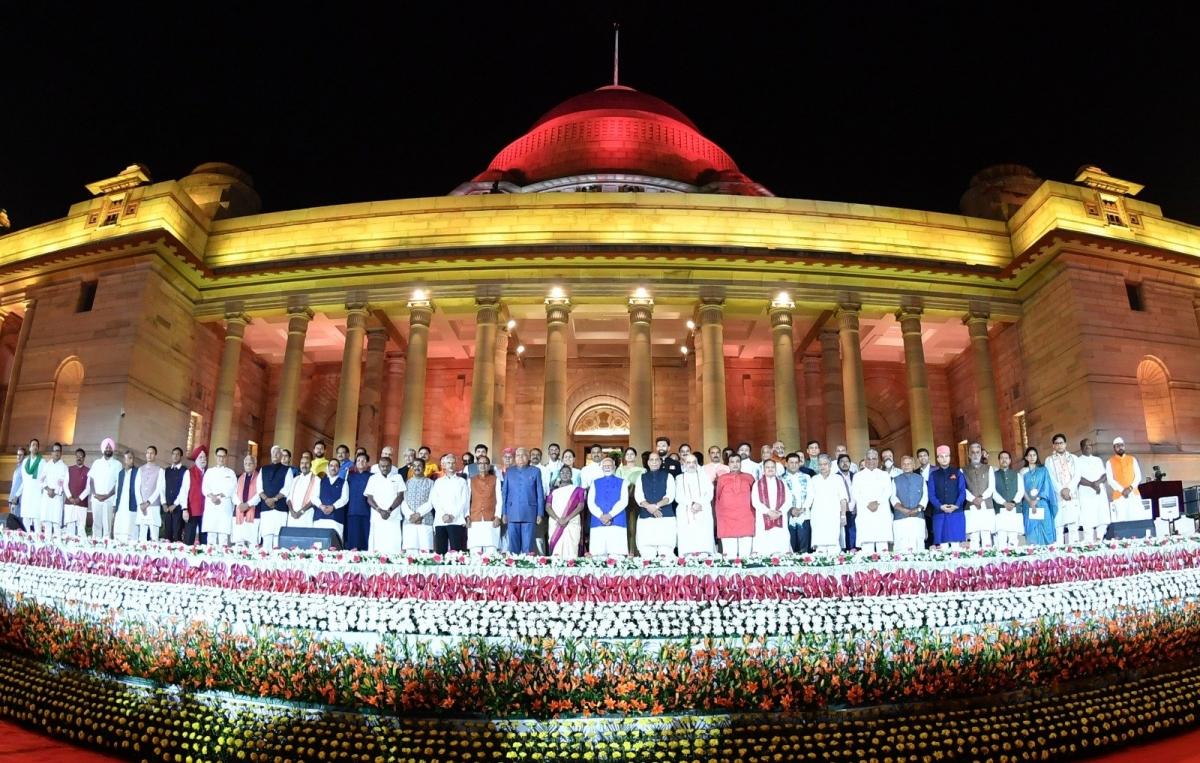
The incident occurred when the President was administering the oath of office and secrecy to a 72-member Council of Ministers, including 30 cabinet ministers, 36 Ministers of State (MoS), and five MoS with independent charge. The grand ceremony, attended by 8,000 guests including foreign leaders, dignitaries, industrialists, and film stars, took place at Rashtrapati Bhawan on Sunday.

The video clip, now widely circulated, has ignited various speculations about the identity of the animal leisurely wandering the presidential palace. Some viewers question whether it was a leopard, a common house cat, or even a dog.

Modi 3.0 cabinet after oath-taking ceremony at Rastrapati Bhavan (Twitter/BJP)


Social media users expressed their surprise, with one remarking, “Lmao..is it edited or what? How come no one noticed this. Looks like a big cat,” while another commented, “Seems a damn leopard due to tail and gait. People were really lucky it peacefully passed.”

Amidst the speculation, the police intervened, clarifying that the animal captured on camera was a common house cat, dispelling rumors of a wild creature. An official explained, “The camera angle and the lighting made the cat look bigger than it actually was.”

Delhi Police officials confirmed the presence of only dogs and ‘domestic’ cats within the complex, refuting claims of a leopard sighting. The Forest Department also stated no prior reports of leopards in the presidential estate.